Infosheets
06. Stepping Stone Pathways and Small Patios
See the “Installing Stepping Stones” Green Desk Post
Stepping stones are versatile and durable ground surface components used to create outdoor play and learning settings. They can be installed linearly as secondary pathways in sensory gardens. Wide stepping stone pathways with fragrant, “stepable” plants between the stones create sensory pathways for crawling infants. Select durable stones and, if possible, from a local quarry to represent local geology and reduce expense. Stones should be smooth and flat to avoid becoming tripping hazards, and 1–2 inches thick (depending on the stone) to prevent cracks.
Types of Stone
Flagstone is highly recommended for stepping stone pathways because it is generally smooth and appropriately sized. Flagstone typically comes in a variety of thicknesses, from 1–4 inches. Soft and porous stone, such as sandstone and limestone, is better suited to warm areas. If working in an area that regularly freezes, select a dense stone, such as granite or bluestone. These stones are less likely to crack as they freeze and thaw with winter temperatures.
Steps
- Layout the stones along the desired path based on your design. Make sure they are closely spaced (12–18 inches on center) so that a child can easily step from one to the next.
- Use a garden trowel or shovel to cut and mark the soil around the edge of each stone.
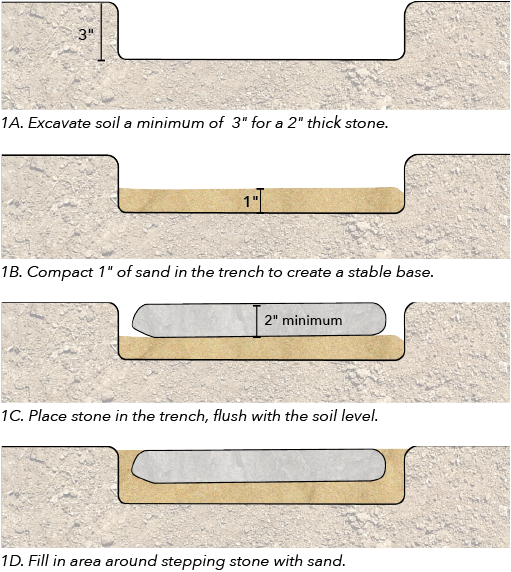
- Remove the stone. Excavate as deep as the stone is thick, plus one inch to allow for the sand base. For example, if the stone is 2 inches thick, excavate 3 inches (Figure 1A).
- Level and compact the existing earth where the stone will be placed.
- Spread, level, and compact 1 inch of sand to create a stable base (Figure 1B).
- Place the stone back in place. The top of the stone should be flush with the surrounding lawn, mulch, or soil (Figure 1C).
- Fill between existing soil and stepping stone with sand and compact to create an even surface (Figure 1D).
- Spread grass seed or install small plants between stepping stones for added sensory value.
Installing a Small Patio
To broaden the pathway into a small patio, space stepping stones 12-18 inches apart on center and follow steps 2-8 (p1).
Health and Safety
- Before digging on-site, call 811 to check for underground utilities. The service is free but can take several days, so call in advance before starting a project.
- Wear sturdy boots and gloves during installation.
Materials & Tools:
- Flat stones, 2 inches thick
- Garden trowel or shovel
- Leveling tool
- Sand for leveling
- Grass seed or small, durable plants
- Work gloves
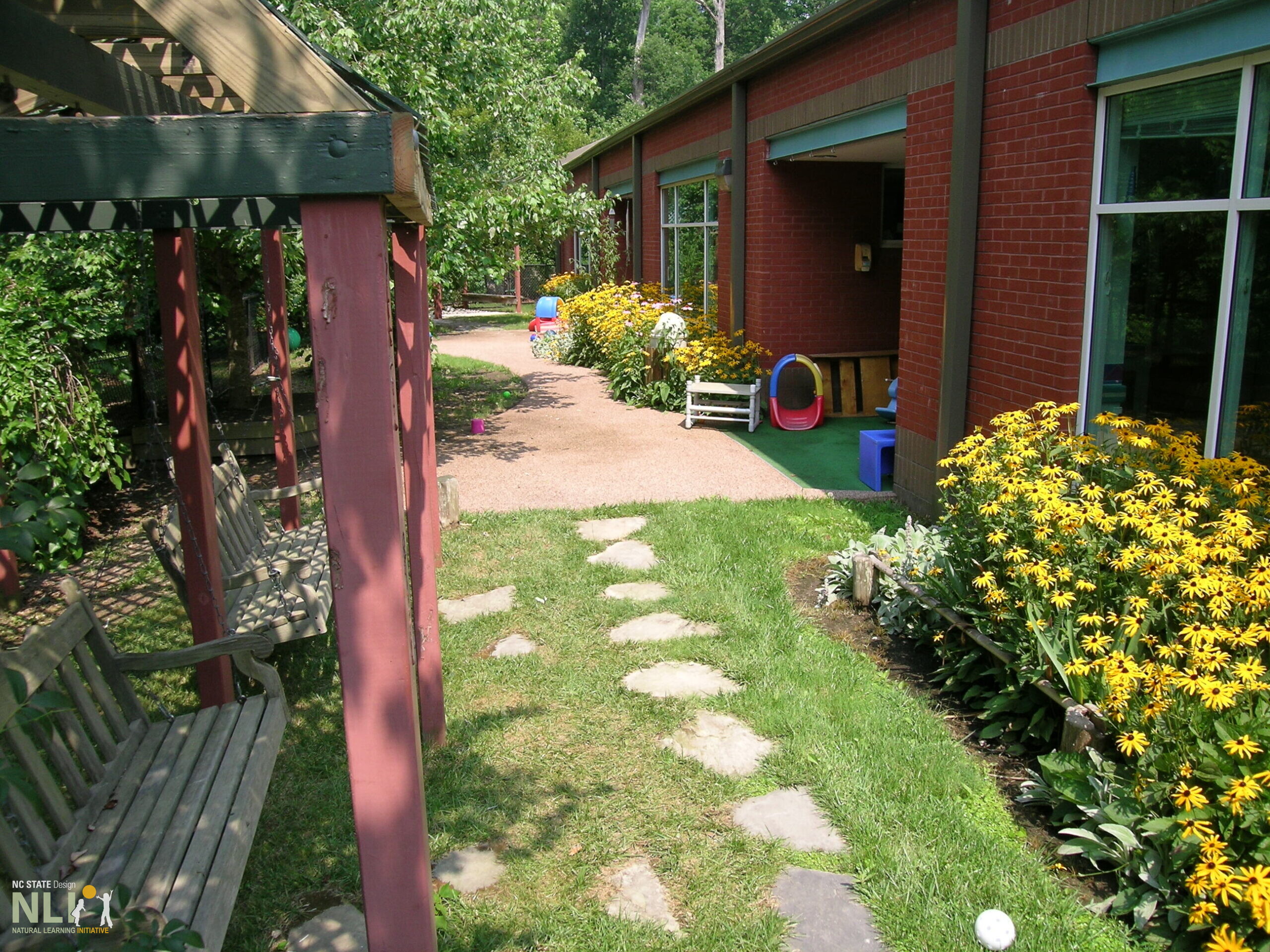
Stepping stone pathway in an infant outdoor play and learning space.
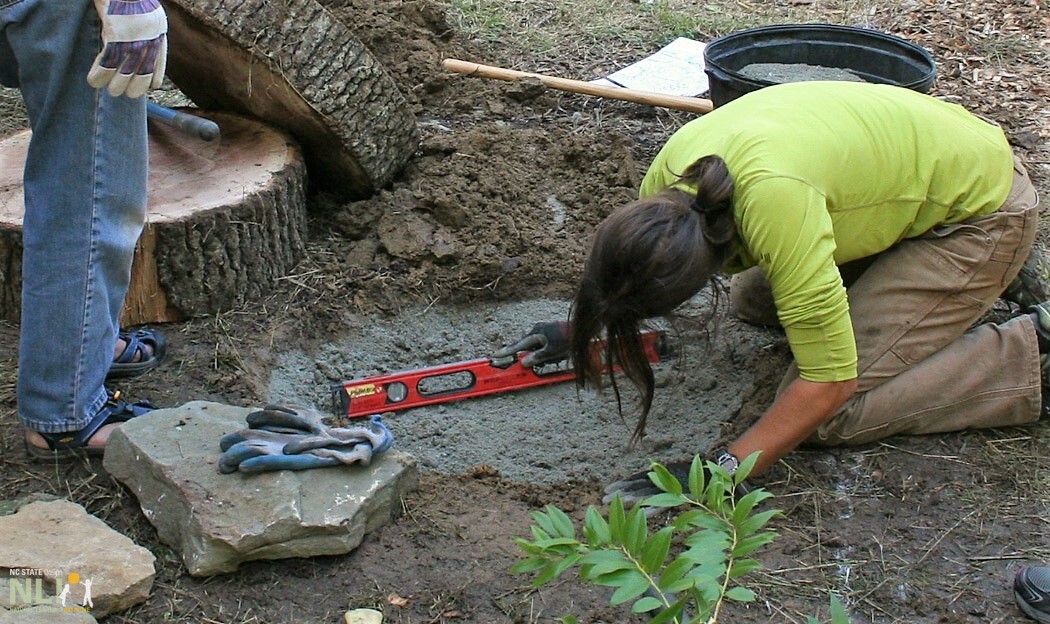
Checking sand to ensure it is level.
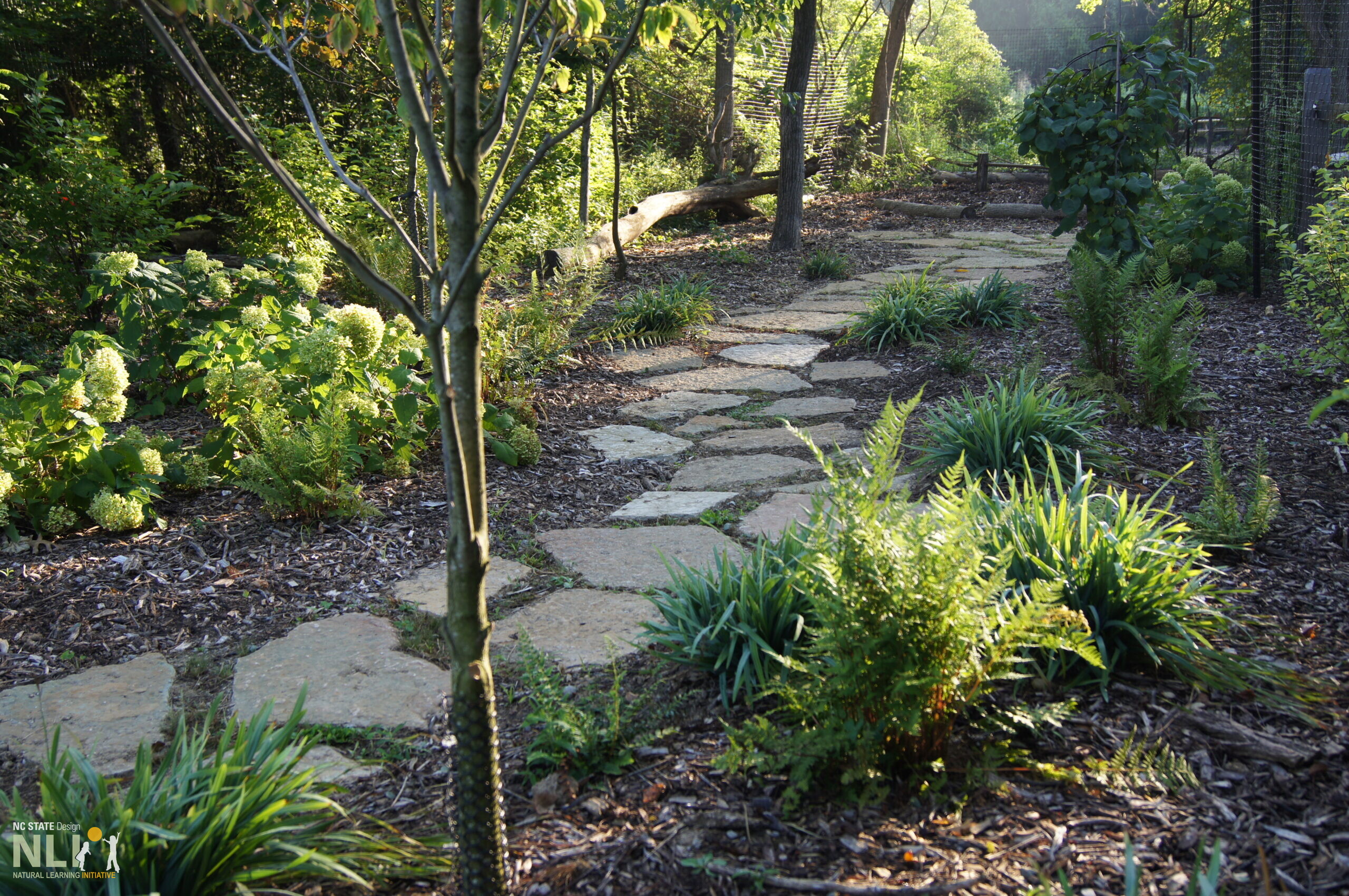
Stone pathway through a garden provides close contact with plants.
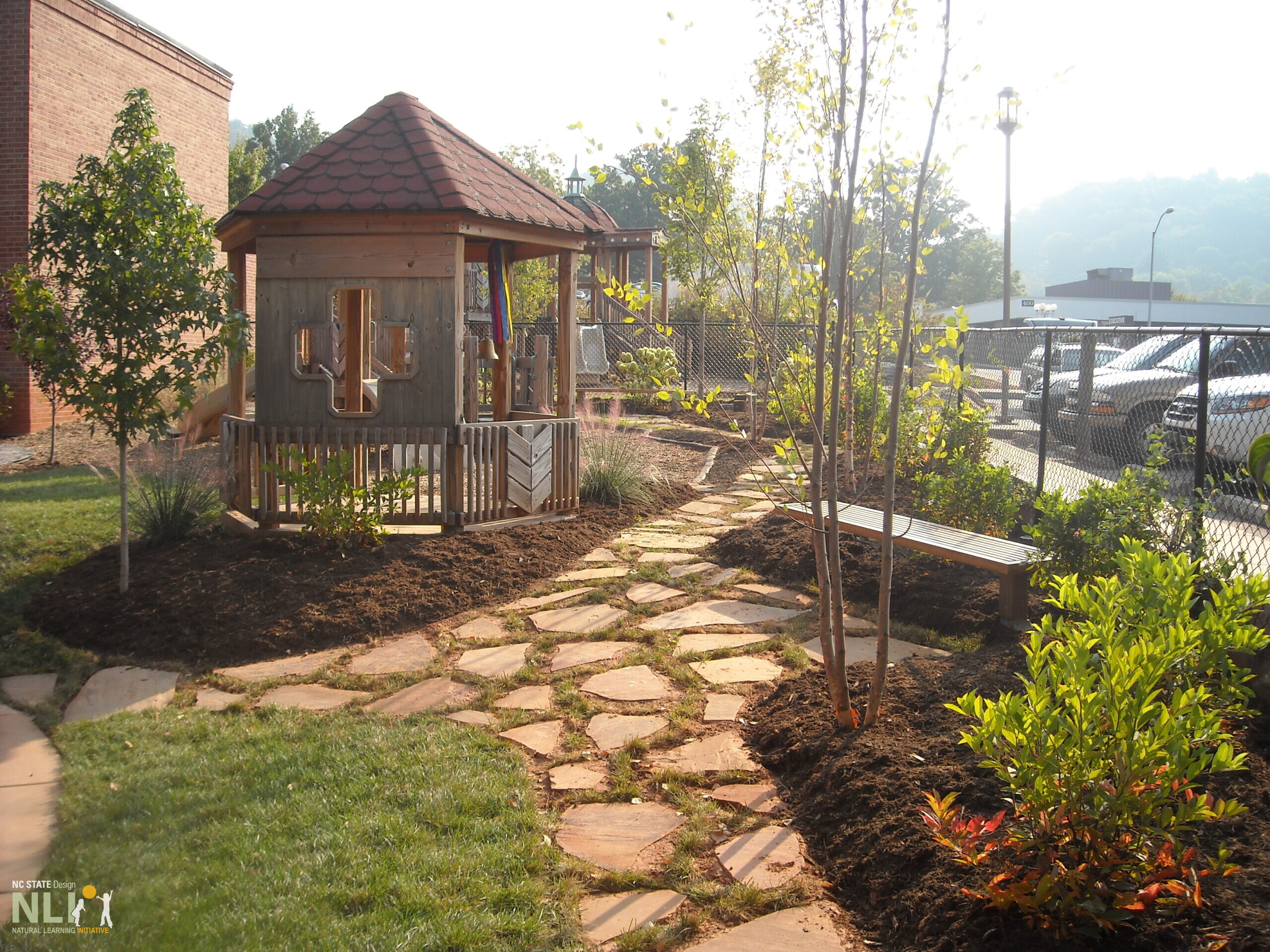
Flagstone secondary pathway creates a small patio suitable for crawling infants and a bench for caregiver comfort.
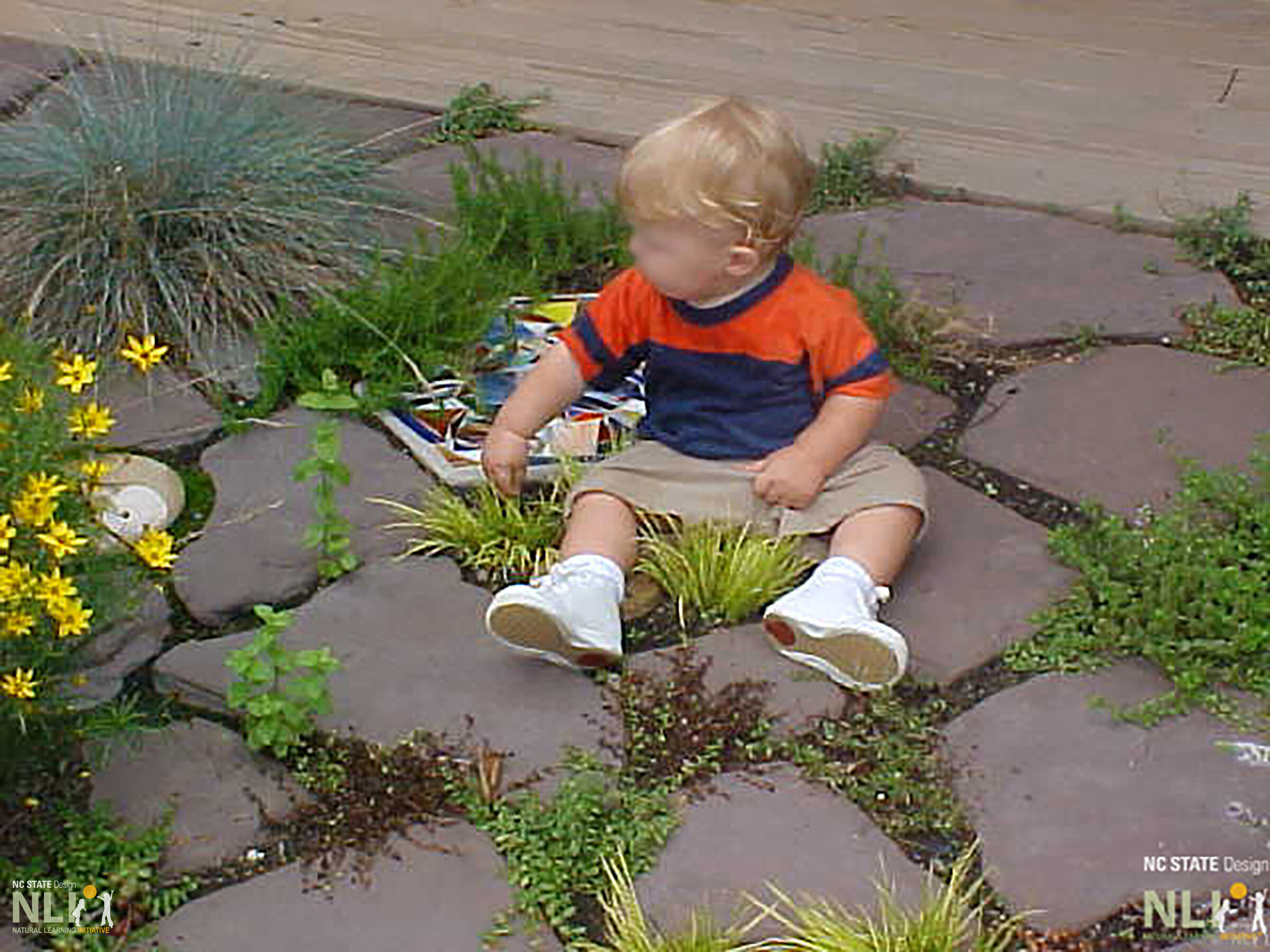
Stone patios provide textured, multi-sensory play for infants.

Flagstone patio connects adjacent settings.
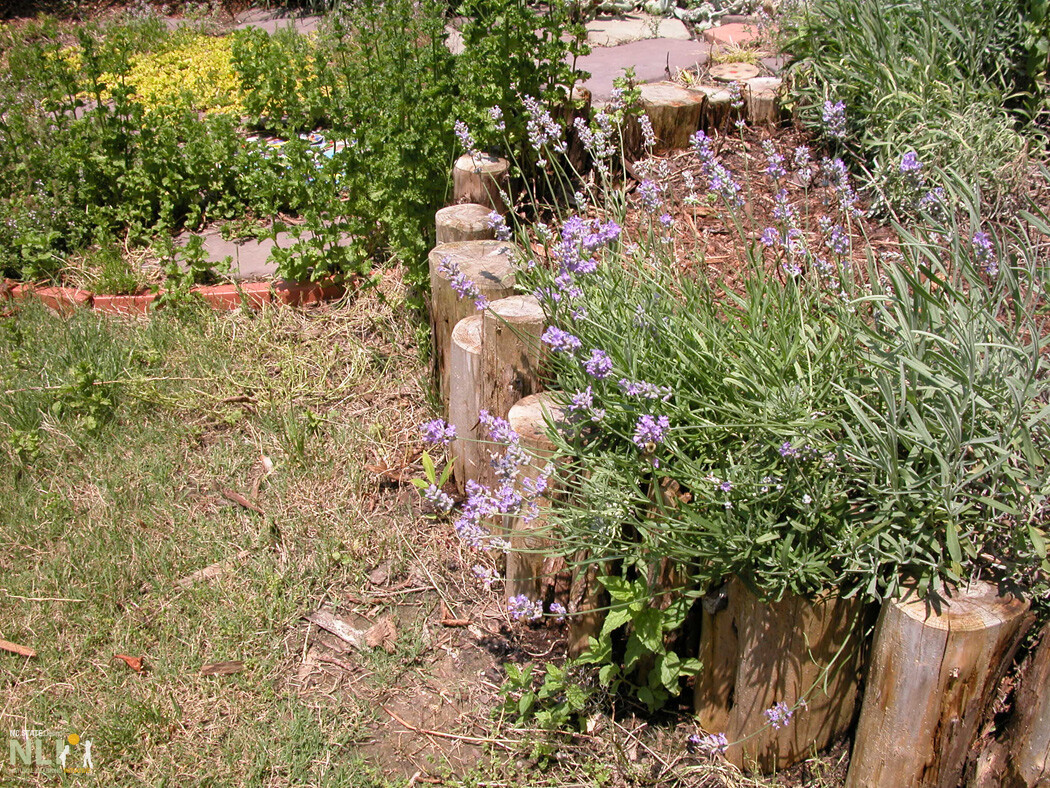
Log edging slows the migration of weeds, lawn turf, and mulch.
Leave a Reply