Infosheets
35. Natural Construction Settings
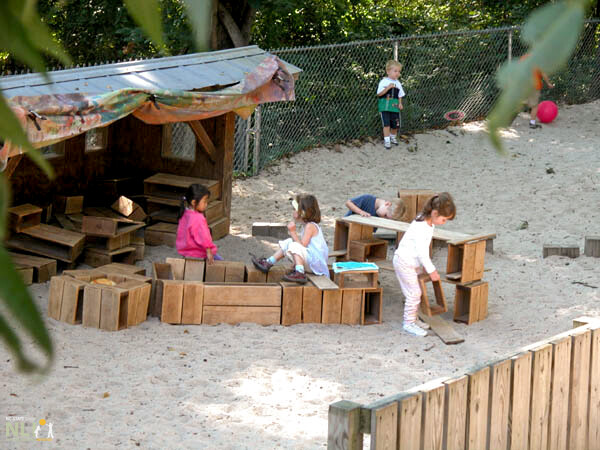
Natural construction in the outdoor learning environment (OLE) supports open-ended, creative, and free play using diverse natural materials such as sticks, tree limbs, large leaves, and bamboo. Children can construct anything they desire. The only limit is children’s imaginations. The setting needs to be kept stocked with prepared natural loose parts (storage racks recommended). Dress-up props can add play value. Traditional, wooden block play may be combined with a Deck.
Materials
Natural building materials. can be diverse in shape, size, texture, and type. Larger “structural” materials may include logs, hay bales, bamboo, tree limbs, and cookies. Limit the length of branches and bamboo poles according to age group.
Natural loose parts, such as leaves, sticks, small pieces of wood, and movable stones can be stacked, manipulated, and re-arranged in infinite combinations. Use components found and pruned in the OLE for free materials. Show children how they can harvest their own play materials. Prepare all natural materials for child use by smoothing or removing sharp, splintered edges and protrusions. Ensure items are age-appropriate.
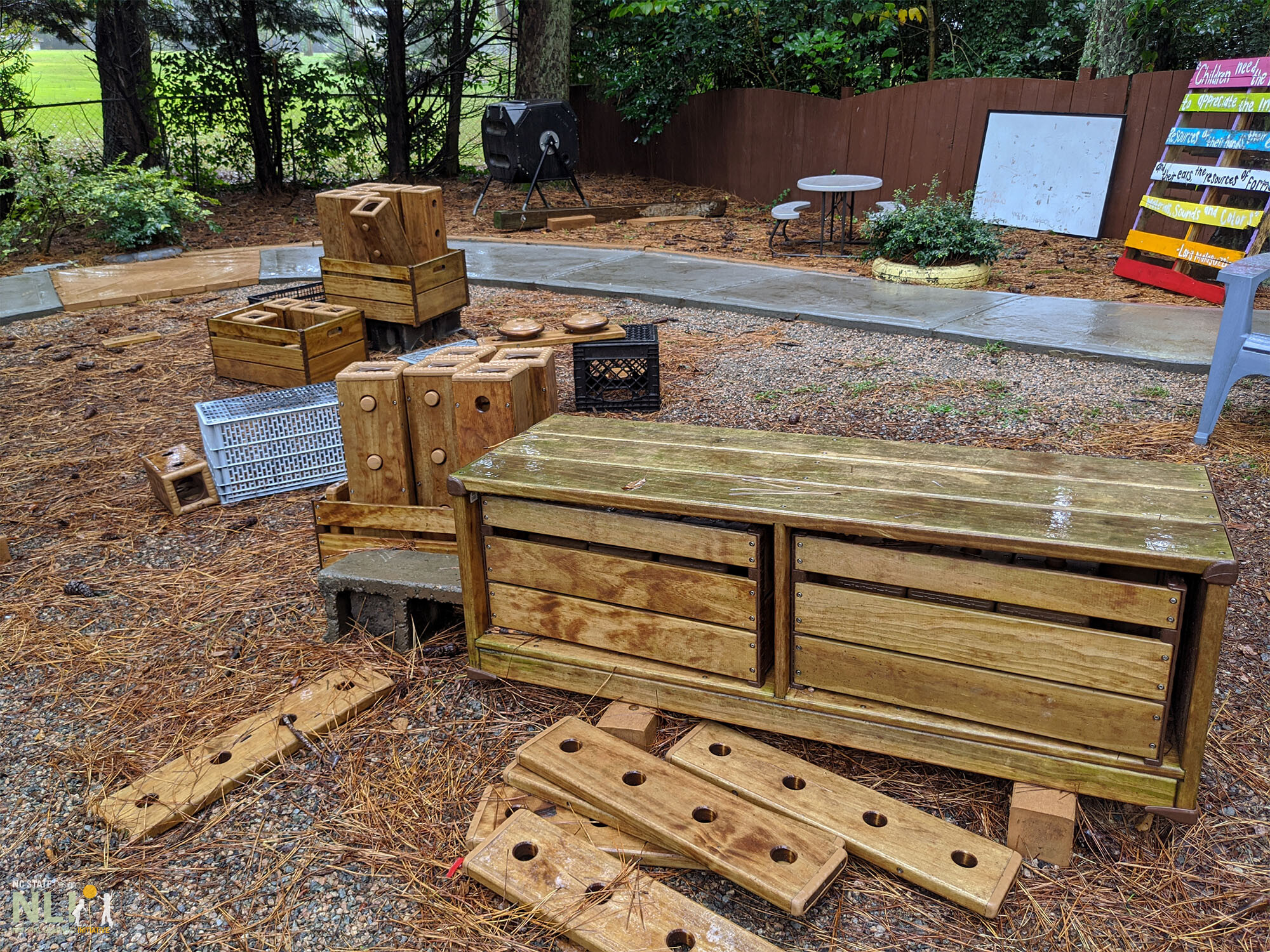
Manufactured materials can support children’s creativity and “building” process, providing tools to expand play opportunities. Suitable materials include tarps, buckets, shovels, PVC pipes, cardboard boxes, tubes, used tires, light plastic barrels, and more. All manufactured materials should be child-safe, age-appropriate, and non-toxic. Engage families by asking them to contribute household items.
Design Considerations
Location. Choose a shady area that includes trees, logs, fences, walls, or posts to provide supports for children to build against. Alternatively, create a permanent armature to support children’s ever-changing, imaginative constructions. Consider storage.
Plants for play. Design or locate natural construction settings with adjacent plants that can be used and harvested by children to expand play and learning opportunities. By caring for and then harvesting plant materials, children learn about natural cycles of growth and decay. Suitable plants include hardy perennials and their flowers, perenial grasses along with trees or shrubs that shed branches, leaves, and seeds.
Storage. should be designed to allow autonomous and independent play while minimizing clean-up for teachers and caregivers. Five-gallon buckets can be used to organize materials by type and size. Metal or wooden storage shelves provide ease of use and durability. Covered storage including sheds, shelves, and lean-to structures protect construction materials from the elements and increase longevity. Although covered storage may increase initial cost, materials will need replacement less frequently.
Shade is important for extended periods of play in natural construction settings. For younger children playing with small components, large shrubs, shade settings such as shade sails, pergolas, and umbrellas may be used. For larger natural construction intended for older children, settings should be located in the shade of trees to provide adequate sun protection.
Health and Safety
- All natural construction play materials should be prepared for child-use by removing protrusions and sanding rough or splintered edges.
- All components in the natural construction play areas should be regularly inspected and immediately replaced if showing signs of damage or decay.
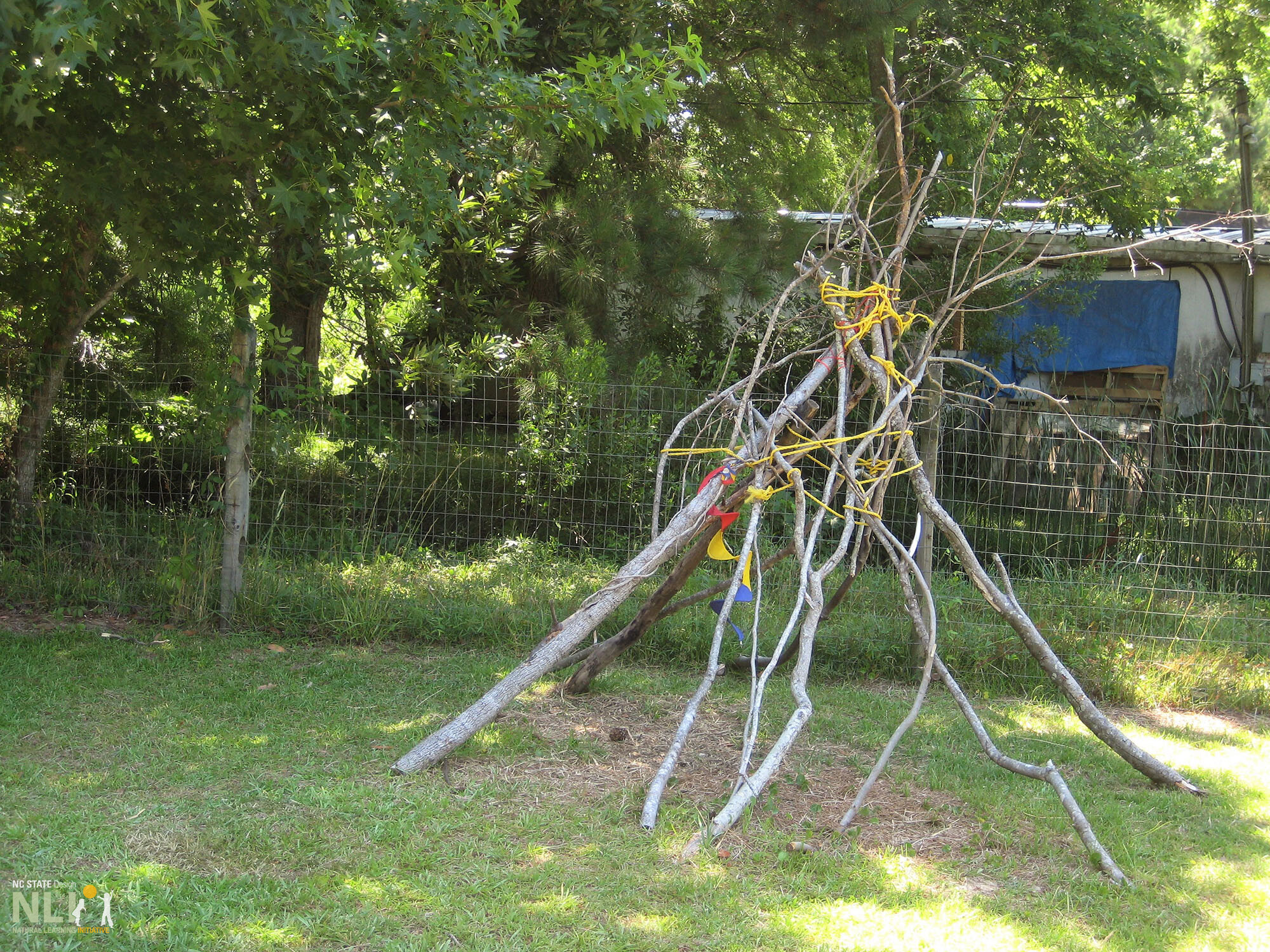
Rudimentary “shelter” structure built by children from on-site, “found” natural objects.
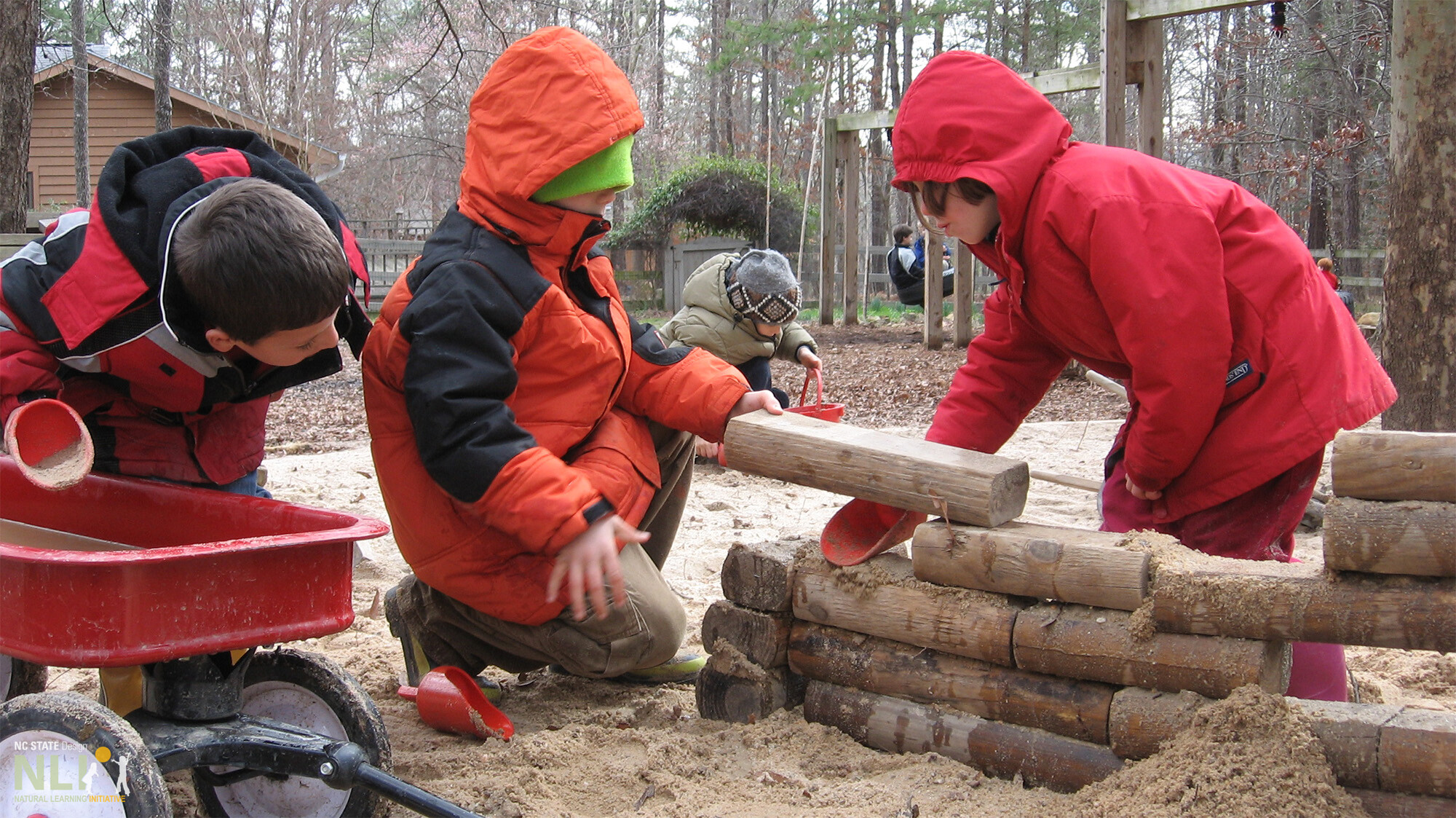
Prepared wooden logs can be used for stacking and building
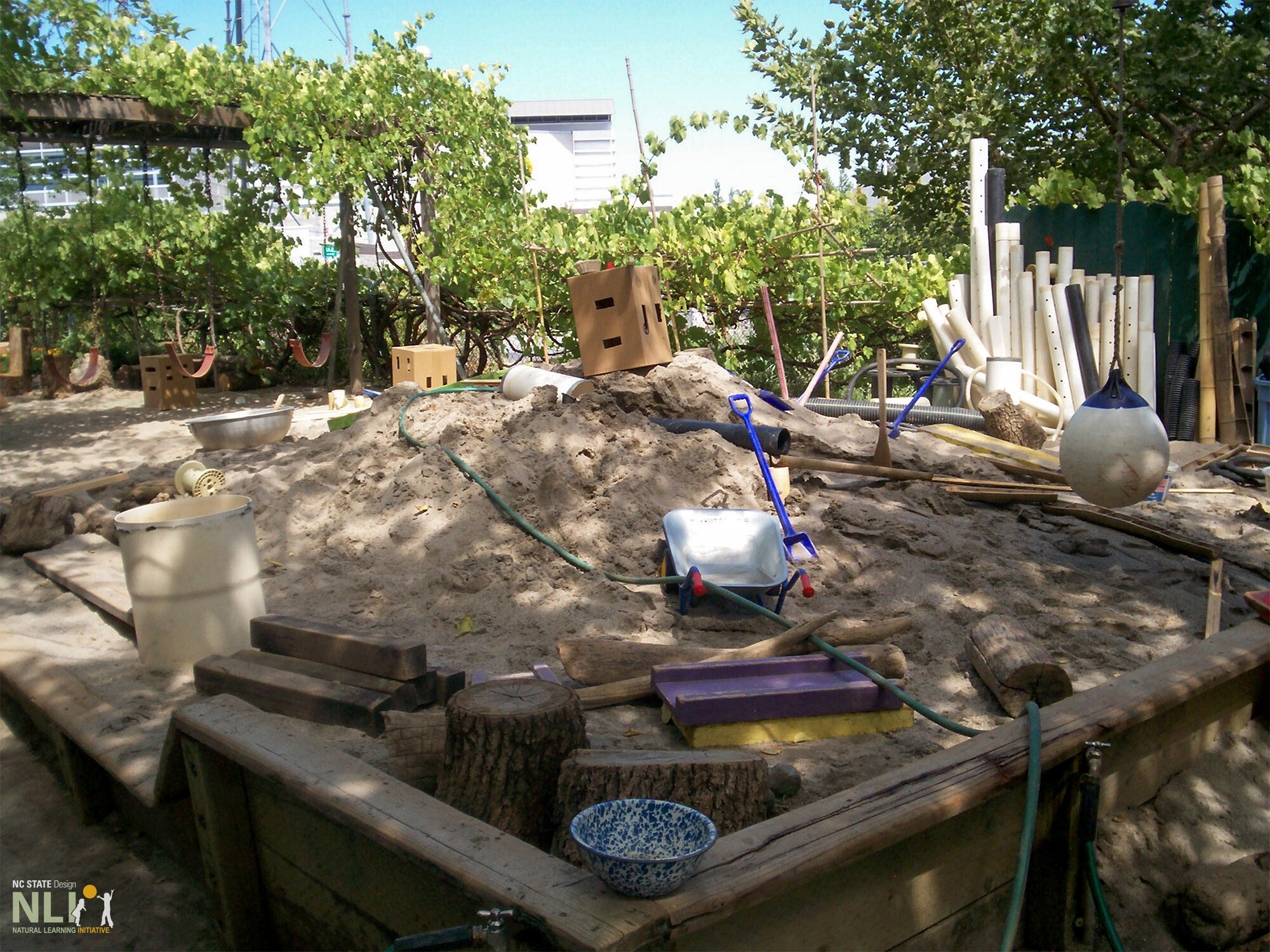
A diverse natural construction area with a variety of natural and manufactured materials including PVC pipes and cardboard boxes.
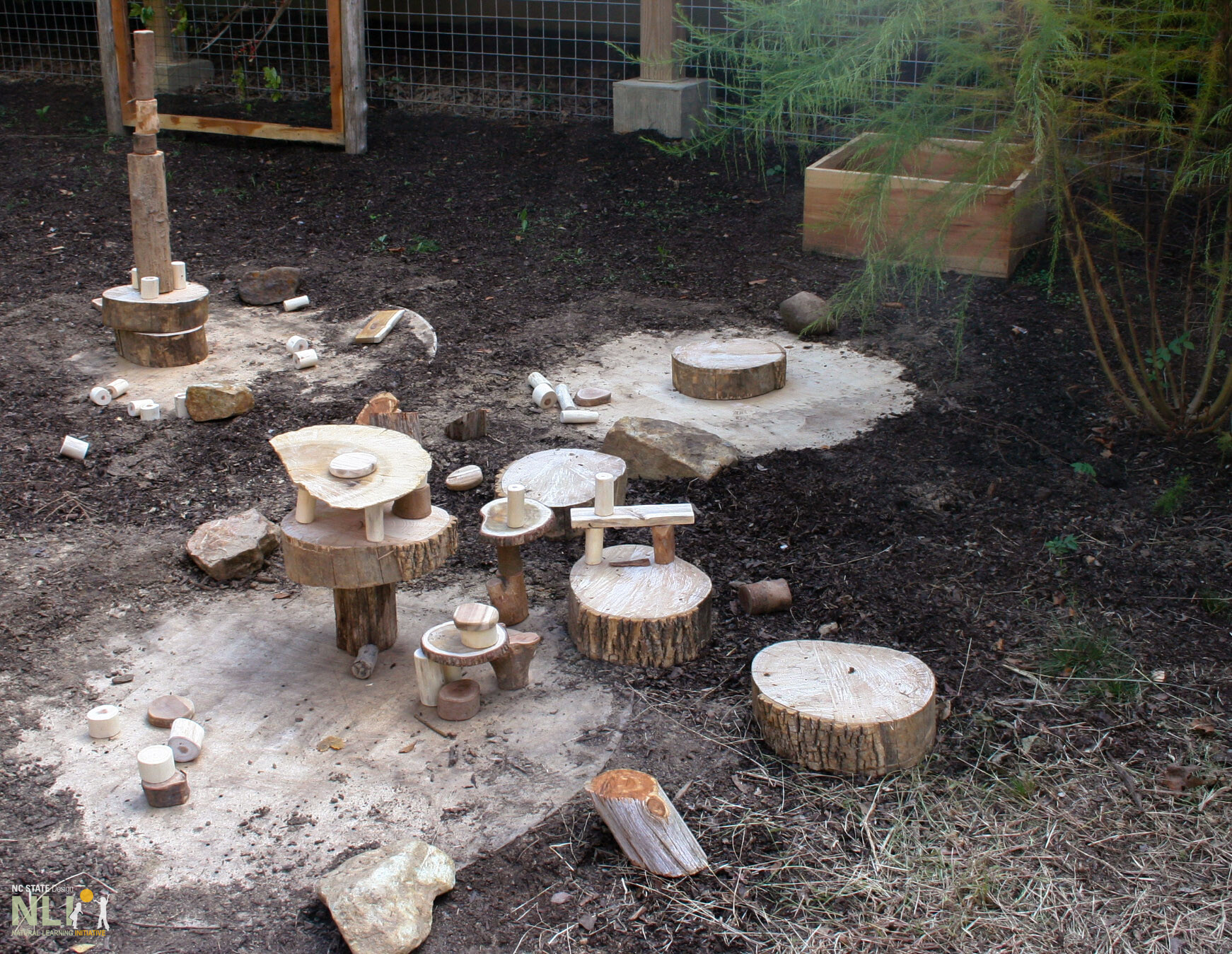
Stacked trees cookies of various shapes and sizes.
Leave a Reply