Infosheets
04. Gathering Settings
Gathering settings support formal and informal play and learning activity. Sizes may vary to accommodate a group as small as two (e.g., child and teacher) or a whole class. They can be designed to suit specific play and learning needs, including dramatic play, formal learning, and informal socializing. Gathering settings can be as simple as a single large, flat, “sit-able” boulder or elaborate timber constructions. Timber decks can also serve a gathering function (see InfoSheet: Decks/Stages). Manufactured outdoor furniture can be used to create social spaces and formal learning settings. Best practice includes a diversity of gathering settings created with different natural and manufactured materials, which may be sourced through community groups or local businesses.
MATERIALS
Logs are a valuable, low-cost solution that can be acquired from felled trees, including street trees and trees harvested from parkland in urban areas. For further information on treatment and installation of log-based gathering settings, see Infosheet 05: Gathering Settings Created with Logs.
Boulders and stones may be donated or sourced from a landscaping company. Boulders should be too heavy to move once in place. Make sure any sharp edges are ground down. Stones should be smooth. Stones and boulders may need to be purchased but they basically last forever. Their unchanging character can provide long-term identity to a space.
Bamboo can be used to make teepees and similar structures as discussed below.
Straw bales can be used to make instant, temporary, and playful gathering settings. Bales can be replaced as permanent location decisions are made and funds become available.
Bamboo and straw bales can be combined with other natural materials such as burlap, cloth fabric, and tarps to create temporary or semi-permanent shady hideaways of various sizes and shapes.
Manufactured outdoor structures and furniture, including gazebos, benches, chairs, and tables, are useful for creating more formal gathering settings that may include learning functions. Although the initial cost may be higher, they last longer than untreated natural materials. Gazebos can also support classroom activity.
TYPES OF GATHERING SETTINGS
Council rings are a classic form of gathering setting invented by Danish-American landscape architect, Jens Jensen, to symbolize American democratic values. They are particularly appropriate for programmed activities, such as storytime, outdoor lessons, and group games. Placed near an entrance, a council ring can serve as a meeting point and as a place to gather before going on a field trip – for counting heads and briefing. The circular shape may lend formality to a central location such as a path intersection. Council rings can be made of anything sit-able: stones, logs, wood benches, or a low masonry wall. For preschoolers, the interior diameter should be no larger than 8 feet. A small campfire pit in the center can add social value. Located toward the back of a site, separated from the louder play activities, a council ring offers a quiet, shady corner for classroom activity.
Amphitheaters large and small, designed by arranging seating elements in a semi-circle around a performance area, provide opportunities for formal presentations. At other times they can accommodate informal, playful, fun performances. The performance space can take the form of a timber deck or otherwise designated “stage” where dramatic play is encouraged. Ensure seating components are spaced appropriately so children can see the stage. Combine with outdoor storage for play props and costumes.
DESIGN CONSIDERATIONS
Play and learning value. Small group gathering places afford mainly social play and interaction. Provision for adults to “sit in” may increase learning value provided that sensitivity is observed about when it is appropriate to join in children’s play without interrupting the flow. Larger group gathering places may accommodate classroom activities. When constructed as regular geometrical shapes (see council rings below), gathering spaces offer learning potential (shape recognition) and visual identity to a location.
Configuration. Gathering settings of various sizes and materials provided throughout the outdoor learning environment provide diverse play and learning opportunities. Intimate, quiet settings for two or three children, located away from highly trafficked play areas and surrounded by fragrant, colorful plantings can create a sense of privacy and peacefulness. Formal gathering settings using benches and/or tables can serve as indoor-outdoor transition areas near building entrances. Gathering settings intended as outdoor classrooms or settings for extended stays should be centrally located and adequately shaded.
Shade is critical to protect children from harmful sun exposure and can be provided by “shade sails” suspended above settings or with vine-covered pergolas constructed from lumber or welded rebar. Umbrellas and other temporary components such as tarps may also be used. Shade trees planted adjacent to shade sails will eventually replace them permanently.
Adjacent planting, including vines on fences, ornamental grasses, and overhanging shade trees, provide a sense of privacy and enclosure, and facilitate intimate gatherings and “hiding places.”
HEALTH AND SAFETY
Regularly inspect materials for signs of decay. If unstable, replace before becoming a possible hazard.
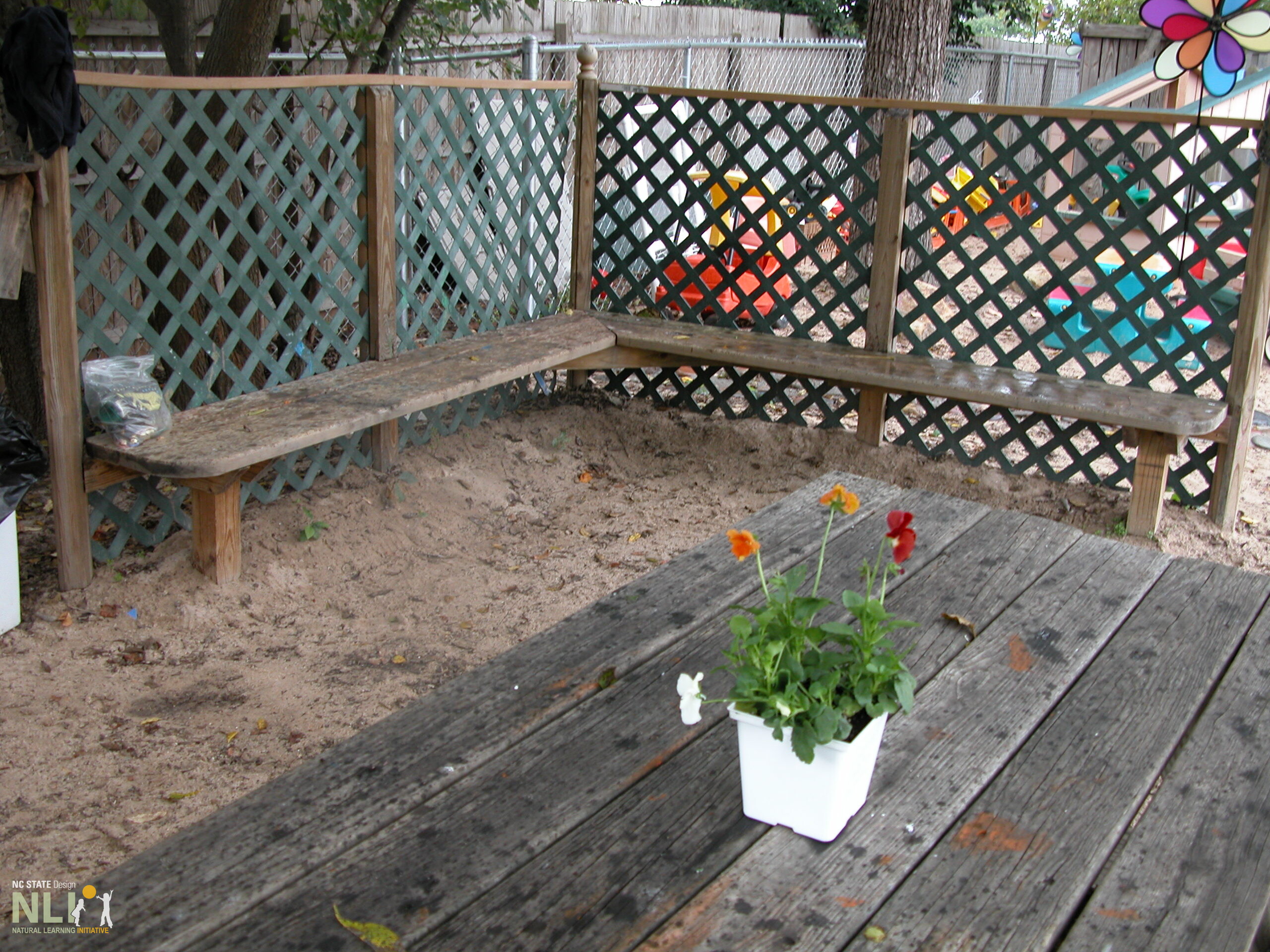
Corner bench, backed by trellis, combined with mobile table provides cost-effective setting.
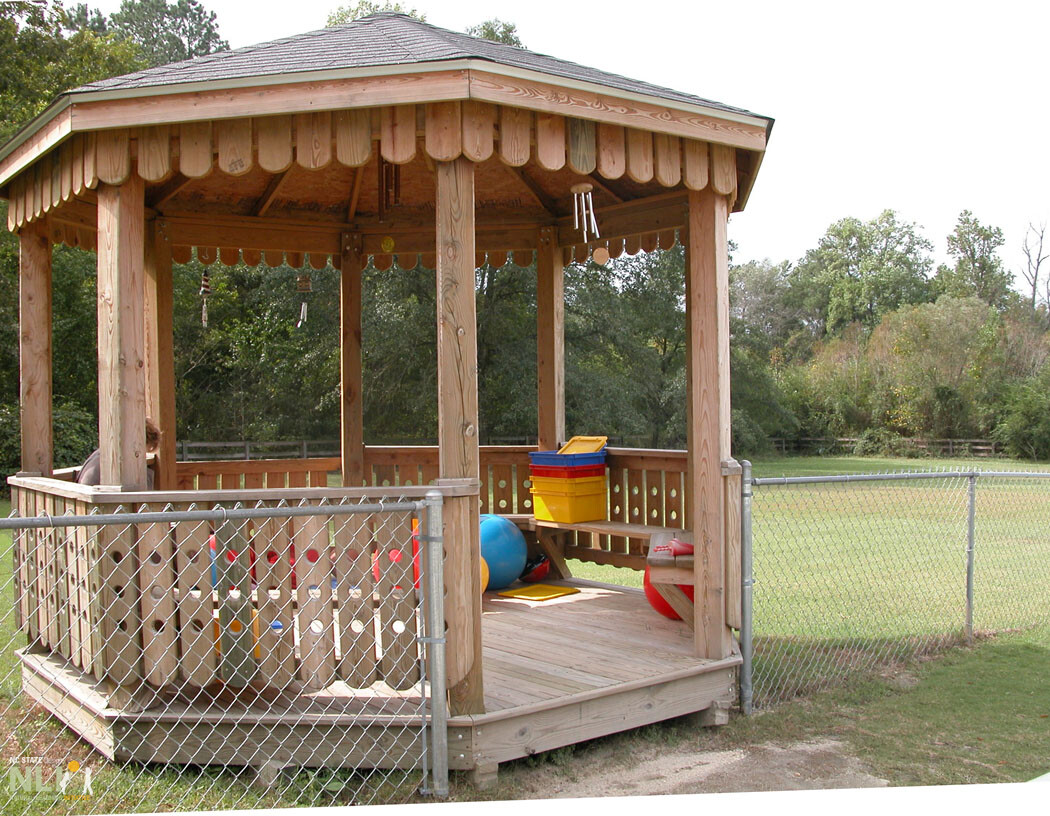
Octagonal gazebo with benches can shelter a dozen+ individuals and provide a warm, dry wooden floor for activities. Three-dimensional form is easily identified. In this example, the structure is set in the boundary fence visibility issues are avoided.
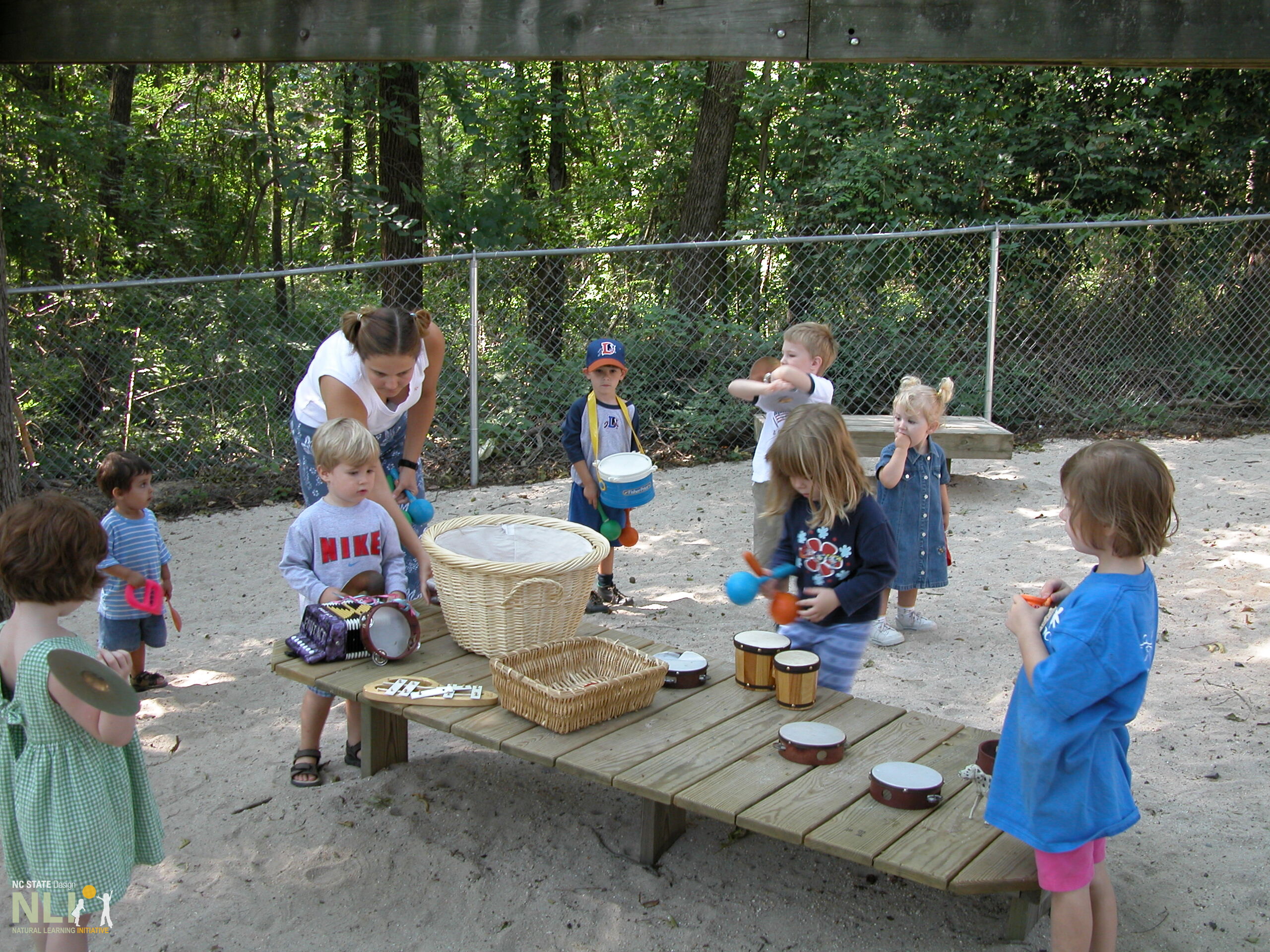
Multi-purpose, open-sided bench/low table affords sitting and a defined, clean place for learning activities—in this case, examining musical instruments and preparing for a parade.
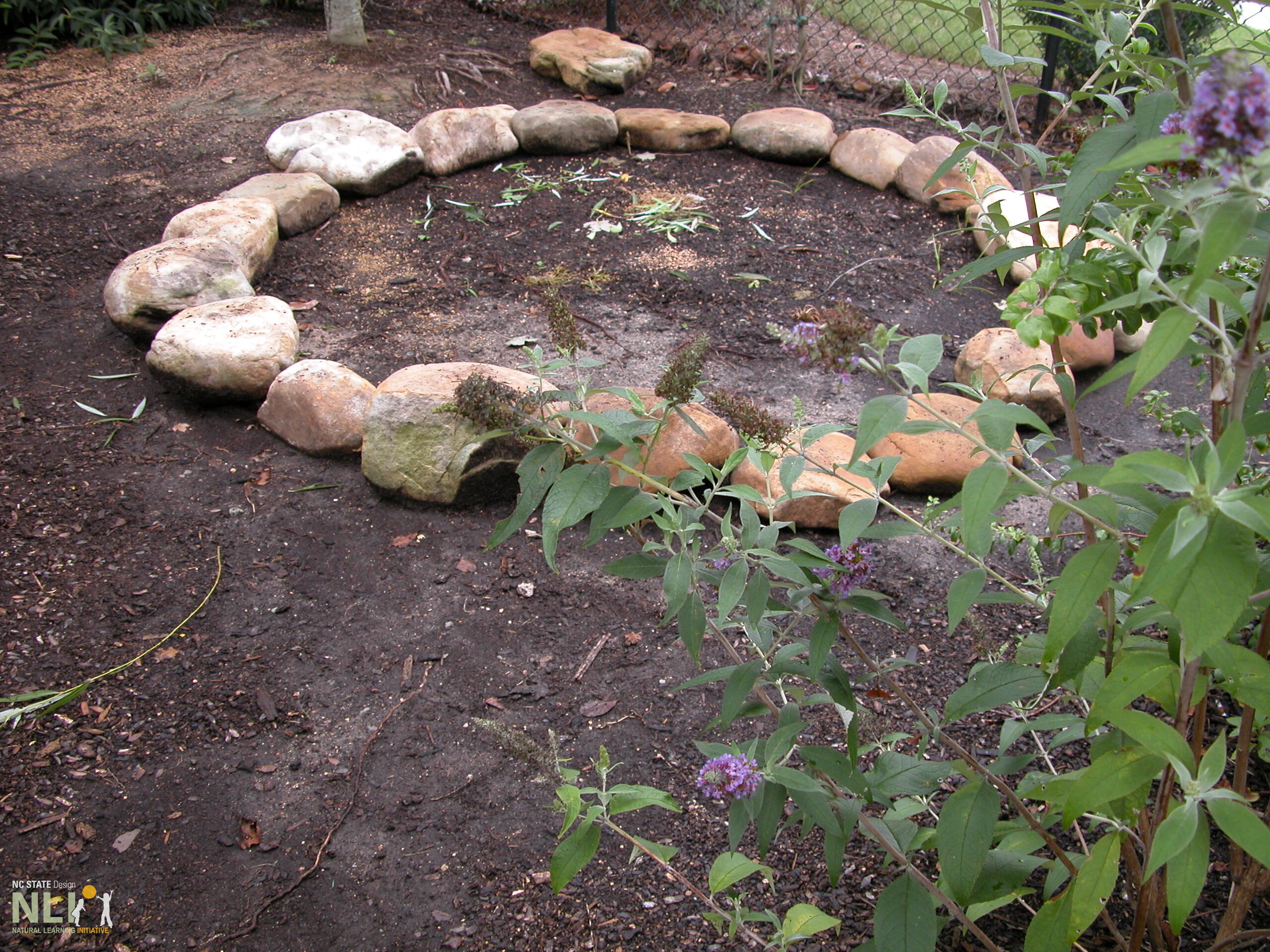
Stone circle of large river rocks, provides a miniature “council ring.”
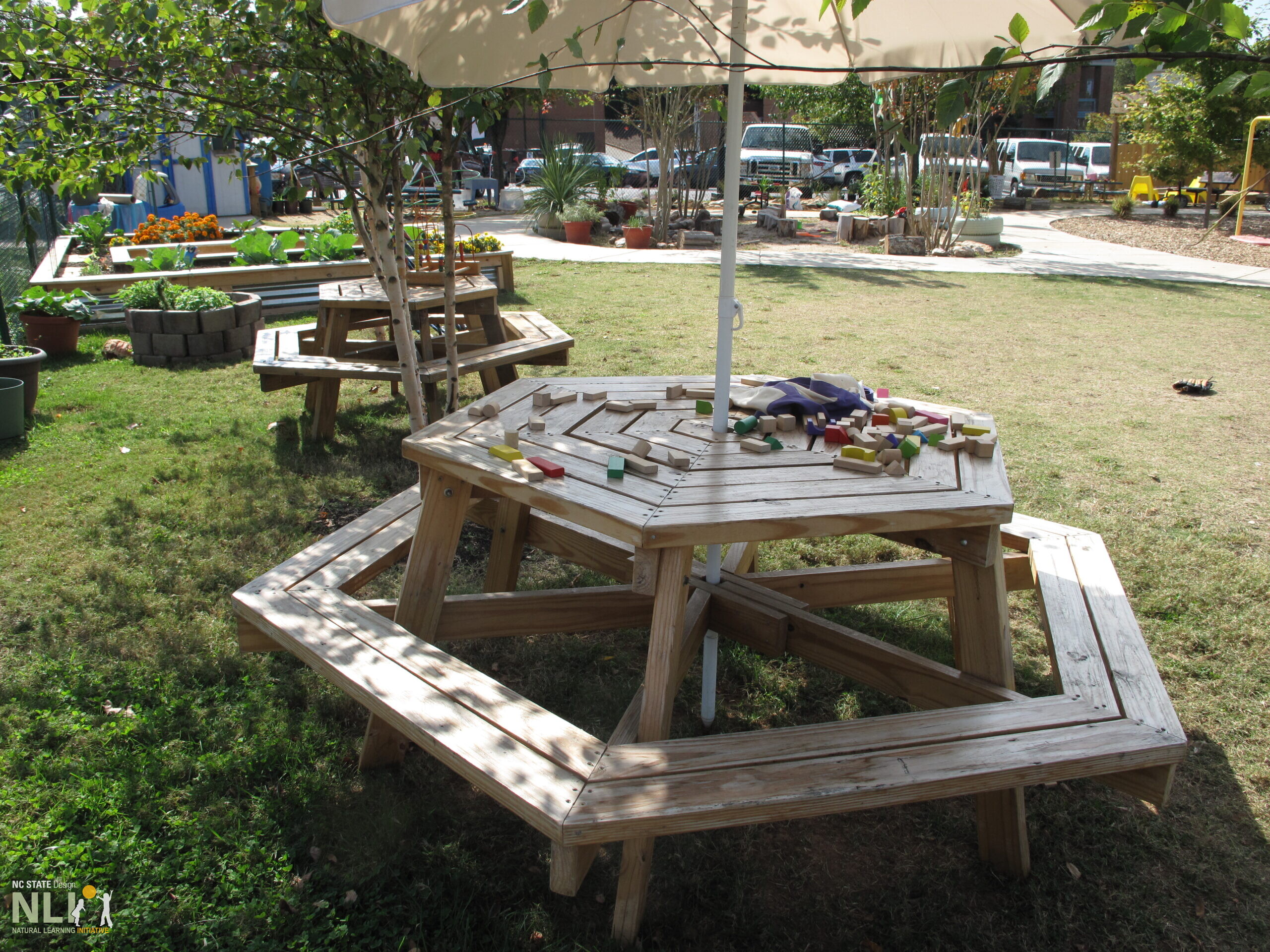
Hexagonal tables with umbrellas in quiet corner of preschool OLE support peaceful, afterschool social setting for school-aged children. Hexagonal shape works better socially than rectangular.

Bamboo teepee created from lengths of giant bamboo loosely tied together up against a fence.
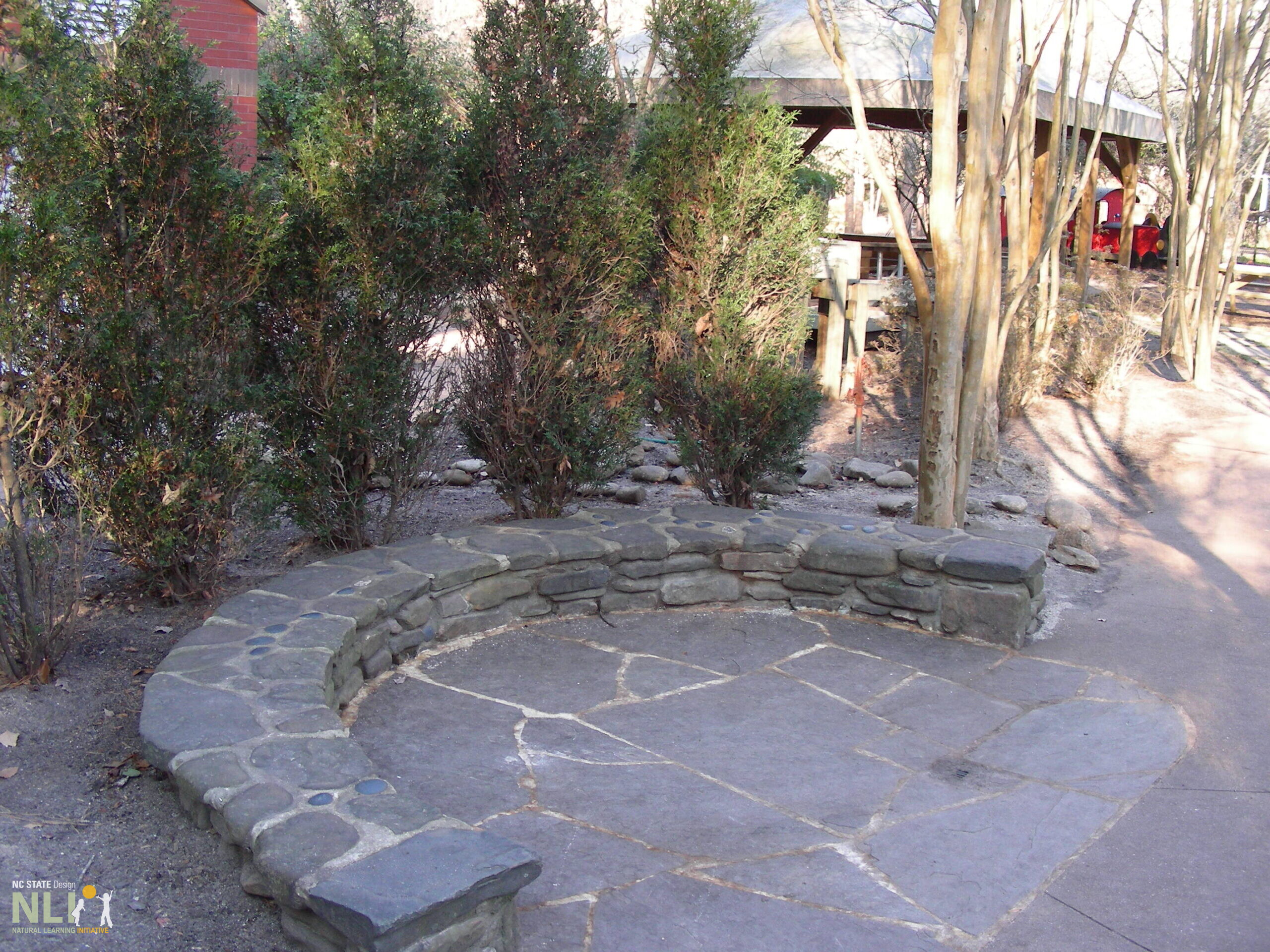
Semi-circular sitting/balancing wall backed by conifers invites social interaction and adds play value to the primary pathway.

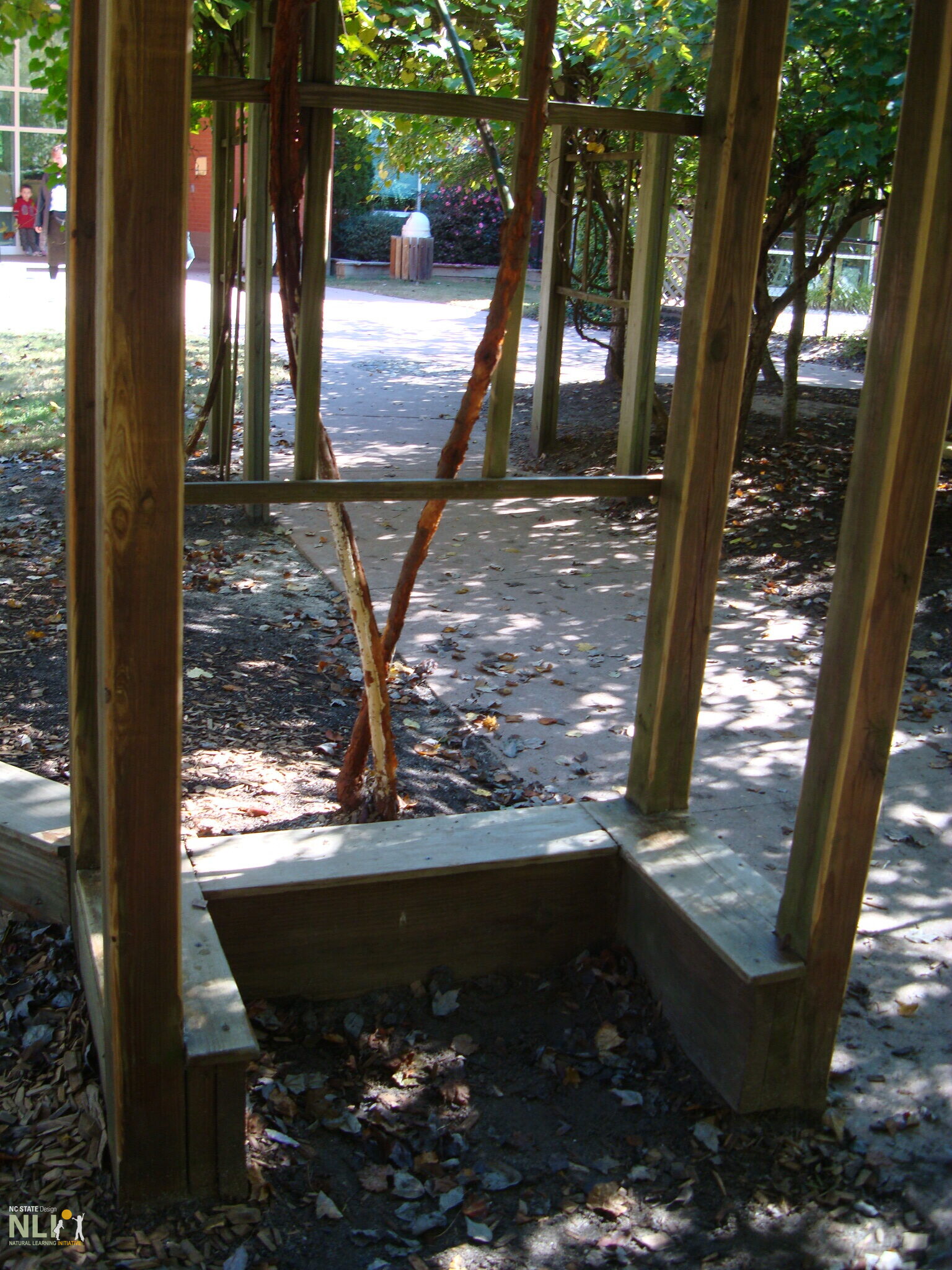
Bench between planter boxes offers a colorful, fragrant resting spot. Logs under can be rolled out for group activity.
Leave a Reply