The Green Desk
Pathway Installation: Alternatives to concrete
What are the steps for installing fine crushed stone or mulch pathways?
Pathway installation will depend on site variables. Pathways can either be installed on top of the existing ground surface (on-grade) or by removing soil and installing the pathway material in the resulting excavated area (excavation). In most situations, NLI recommends removing soil and installing in the pathway in the excavated area to maintain existing drainage patterns.


Resources
Option 1: Excavation
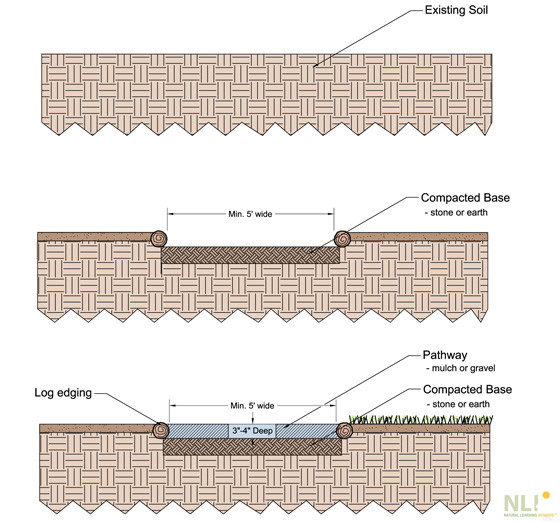
Figure 1.
- Excavate 3”-4” deep and five feet wide plus the width of the edging. If you are going to use a compacted gravel base, you will need to excavate an additional 3”-4”.
- Compact the existing earth with a vibrating plate compactor.
- Add the 3”-4” gravel base, smooth with a garden rake and compact with a vibrating plate compactor.
- Prepare and lay edging along excavated edge. To avoid creating a trip hazard, the edging should be no more than 2” above finished grade.
- For fine crushed stone pathways:
- Add 1.5”-2” of fine crushed stone. Lightly spray with a hose on the mist setting and compact with a vibrating plate compactor.
- Add the remaining fine crushed stone. Lightly spray with a hose on the mist setting and compact with a vibrating plate compactor.
- For mulch pathways
- Add the 3”-4” of mulch and smooth with a garden rake.
Option 2: On grade
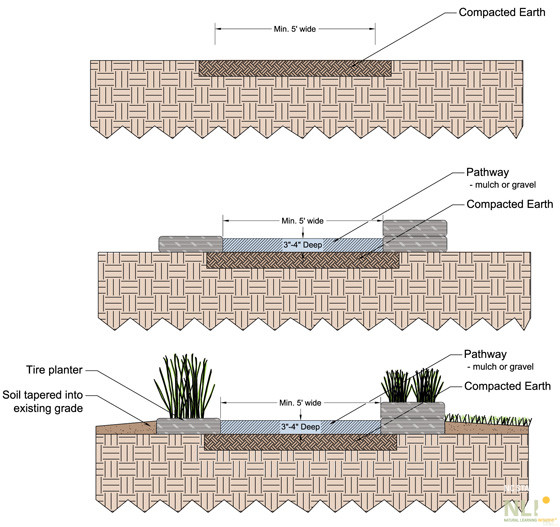
Figure 2.
- Compact the existing earth sub-base with a vibrating plate compactor approximately 1’ beyond the edges of the path.
- Layout and secure the edging. Note: Edging should be at least as tall as the path will be deep, 3”-4”. To avoid creating a trip hazard, the edging should no more than 2” above finished grade.
- For mulch pathways:
- Add the 3”-4” of mulch and smooth with a garden rake.
- Backfill with topsoil to top edge of edging and taper topsoil into existing landscape.
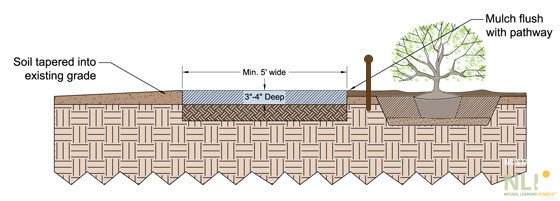
Figure 3.
- Pathway and mulched planting beds adjacent to pathway should be at the same finished elevation. Take this into consideration when planting. Plant protection railing added to define the pathway and protect adjacent plants.
Leave a Reply