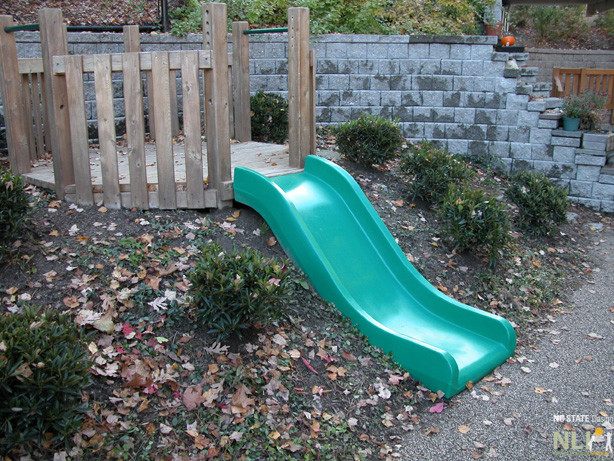
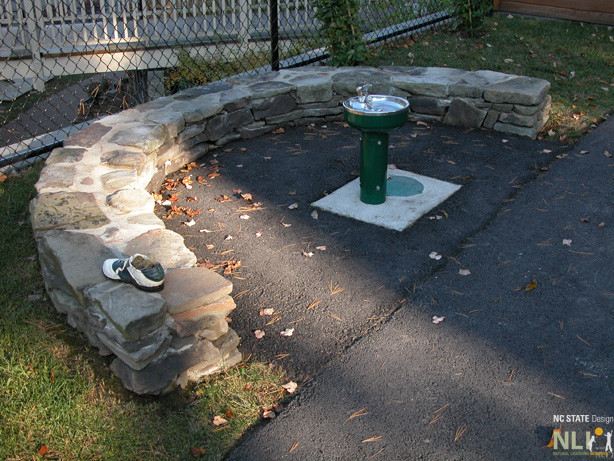
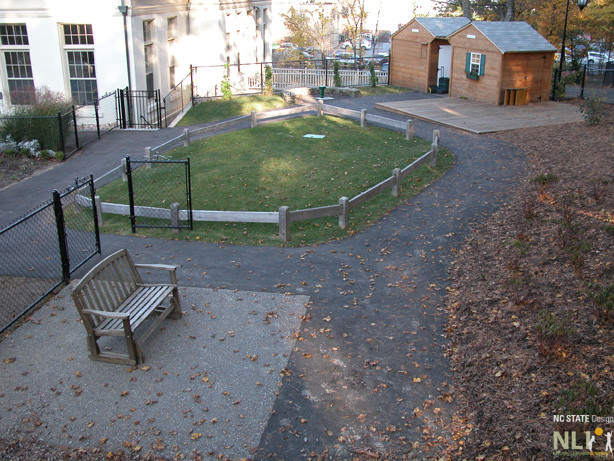
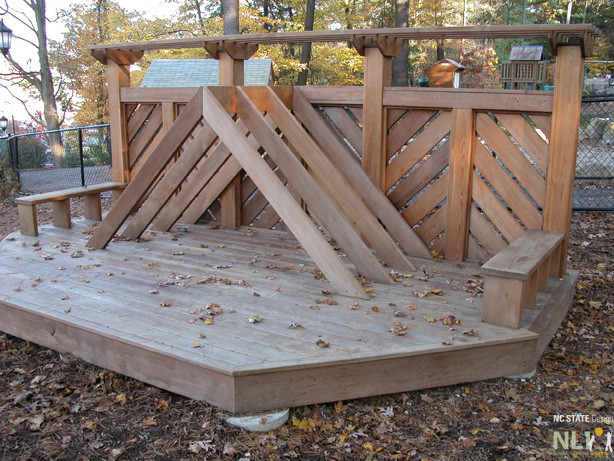
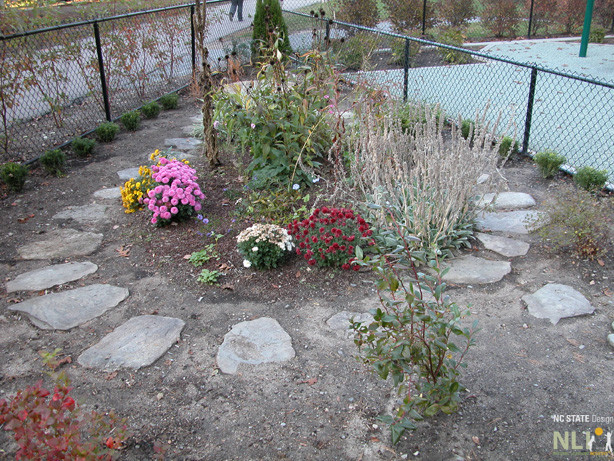
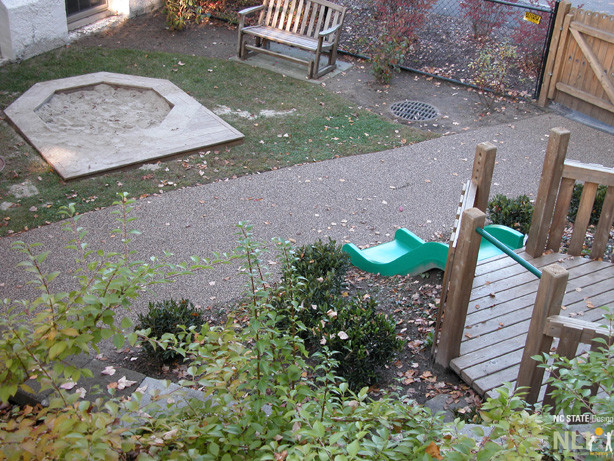
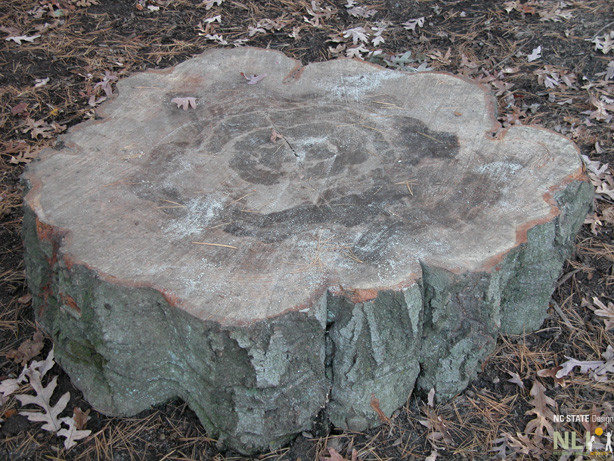
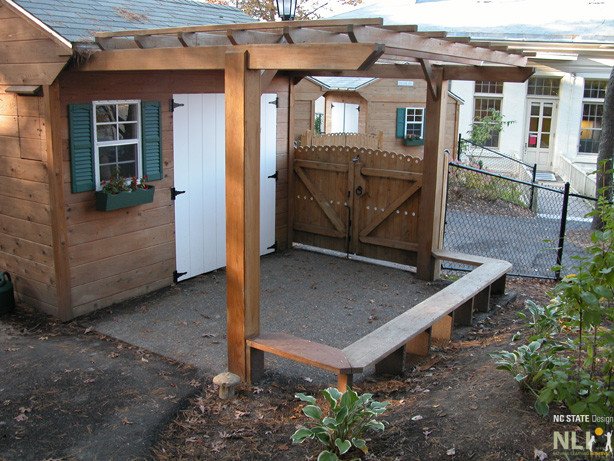
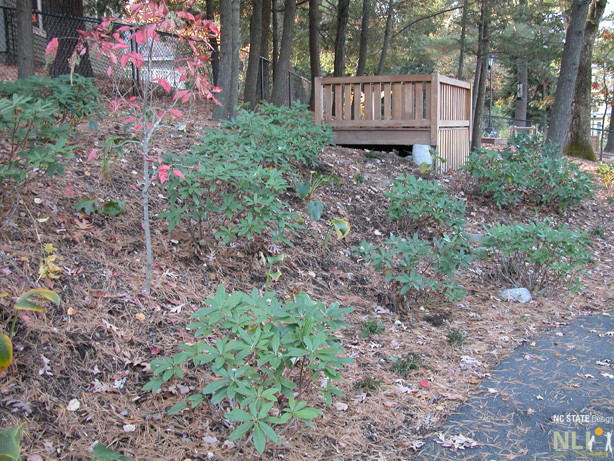
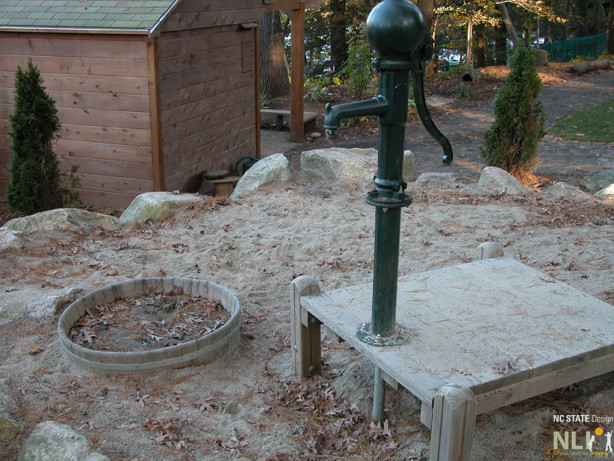
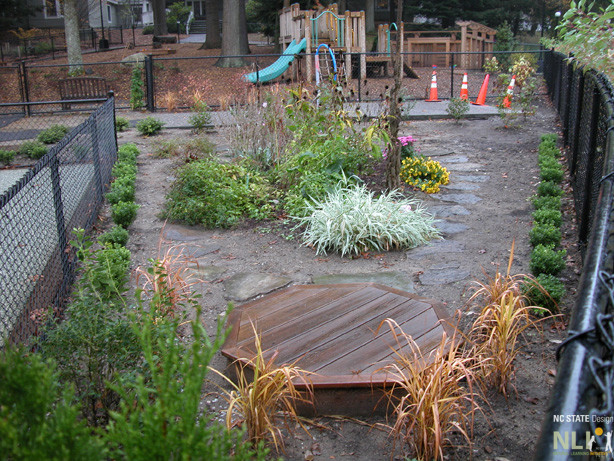
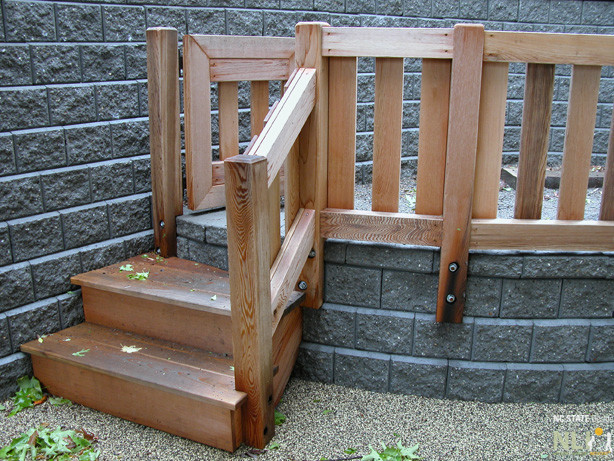
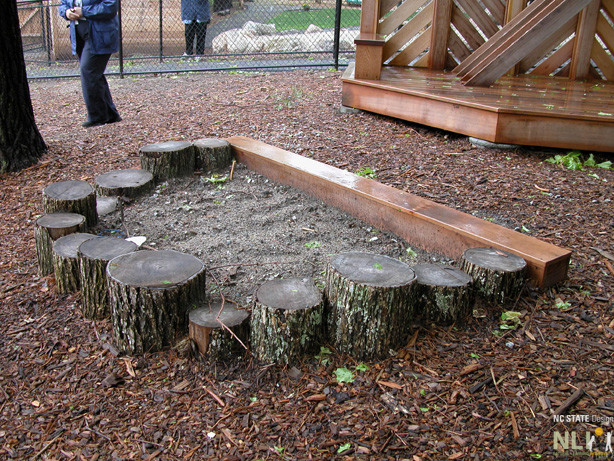
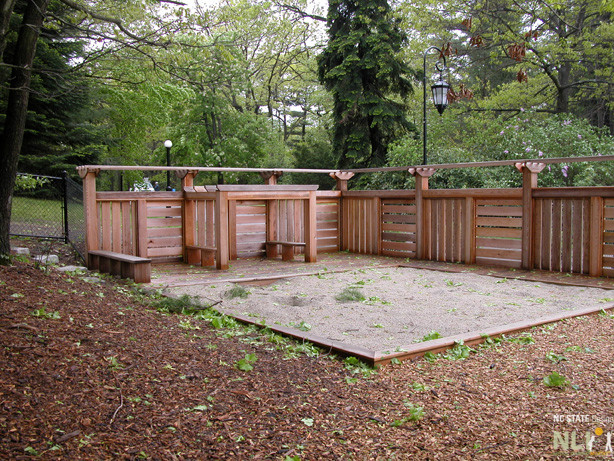
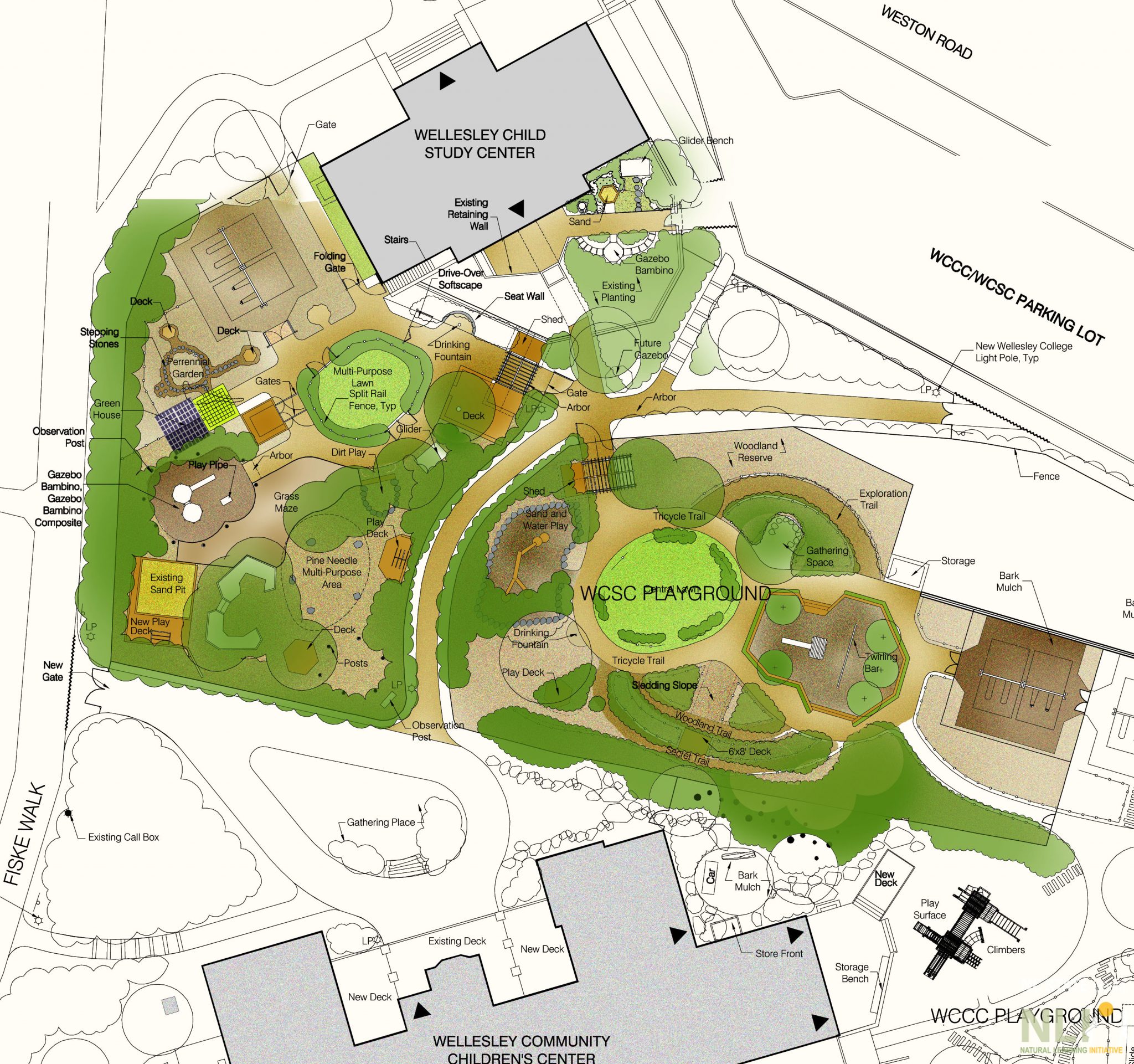
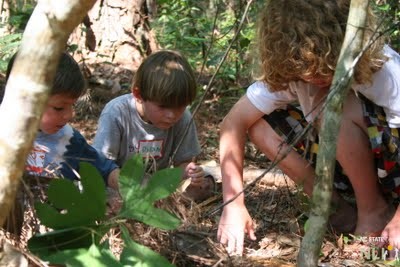
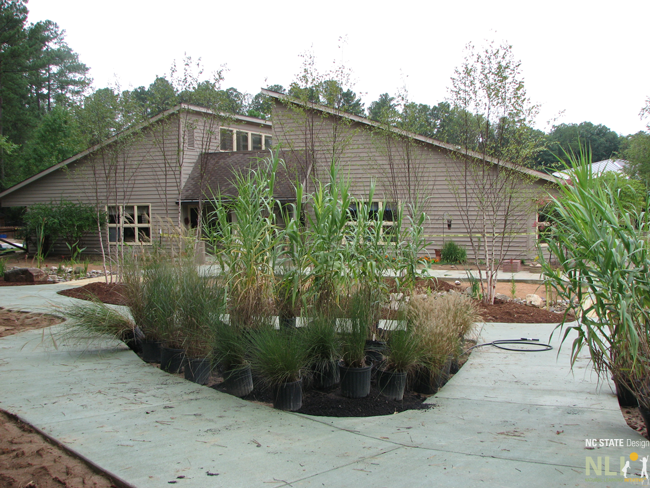
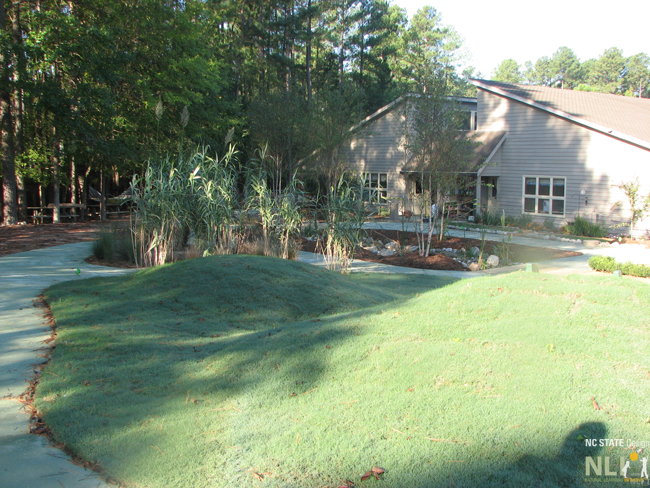
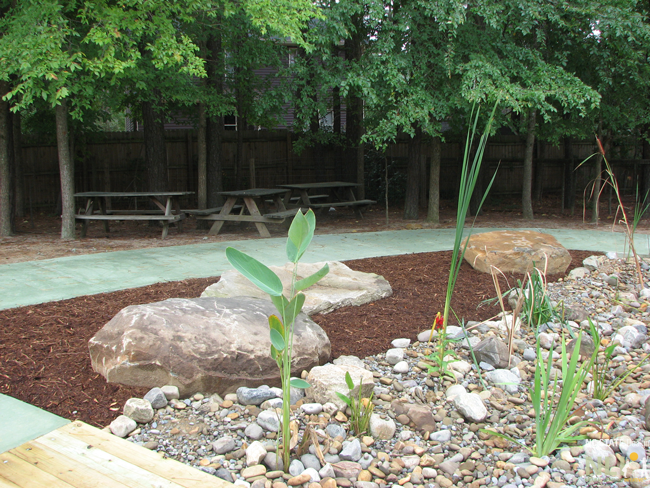
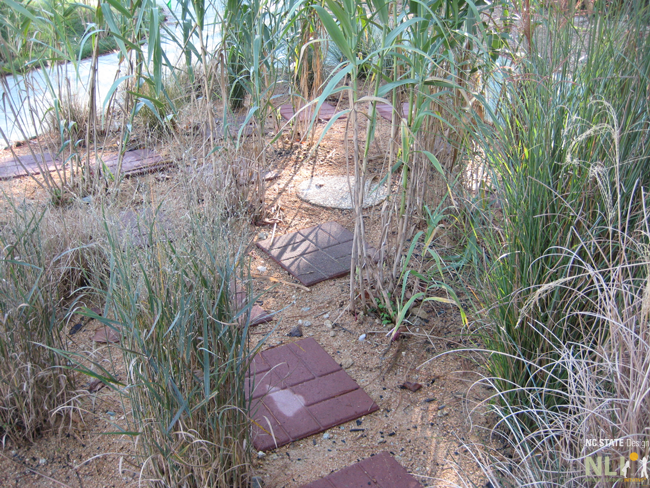
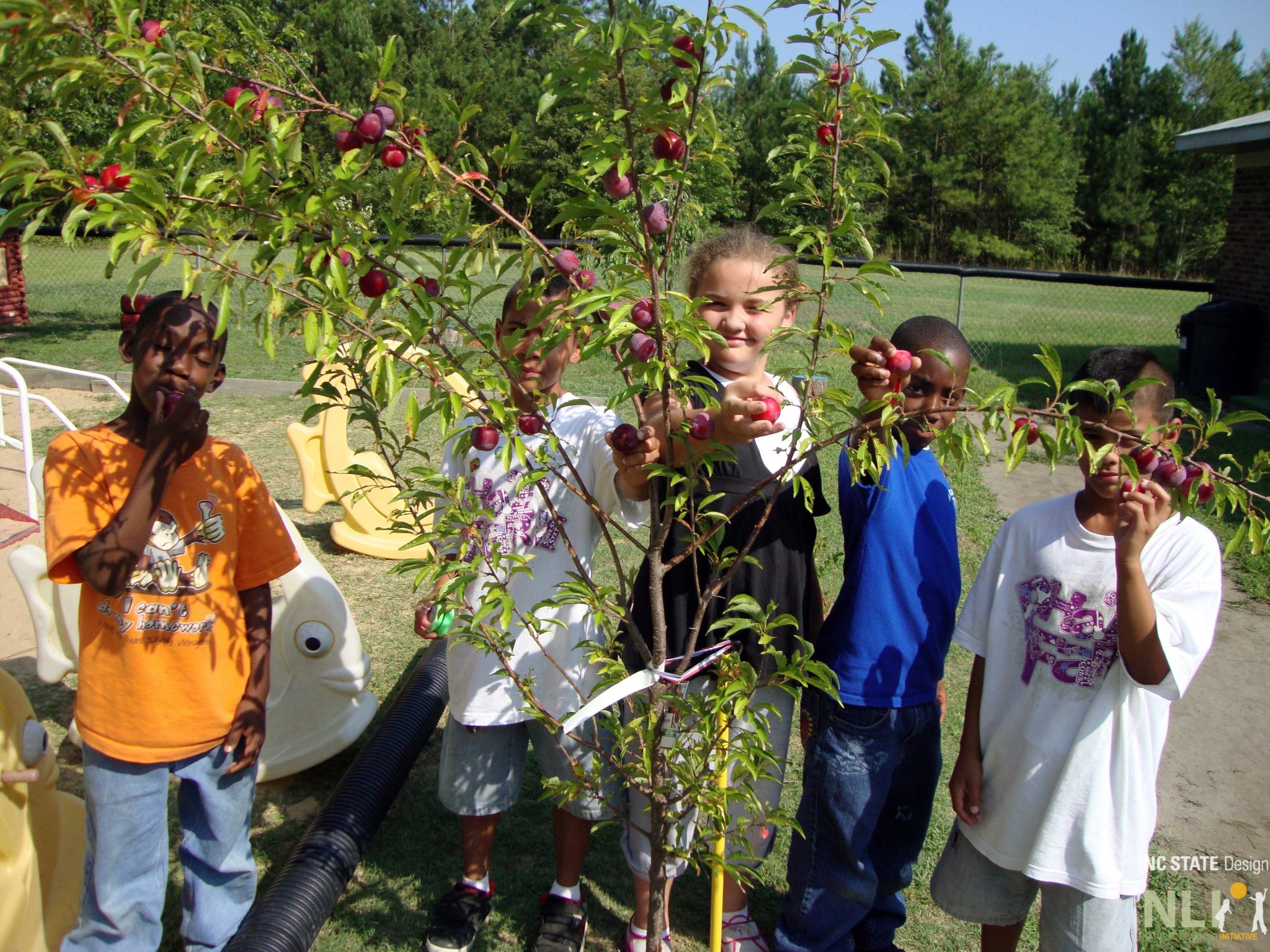
WCSC emphasizes the essential connection between human development and experience of the natural world. Responding to this philosophy, the new play and learning gardens contain a mix manufactured elements and natural settings that provide a rich diversity of experiences and curricular connections for children and teachers. Engagement with nature encourages children to know the rhythms of life, understand seasonal change, and experience variable weather (WCSC has a tradition of “outdoors in all weather”). Running water, exploration trails, decks, digging places, planting gardens, and stepping stones involve children in direct relationships with their natural surroundings. A greenhouse helps introduce spring early on for children in a traditional nursery school that is closed during the summer.
The design also recognizes the needs of adults by providing settings for teachers to rest and observe children (keeping out of their way), research observation stations, and parental gathering spaces.
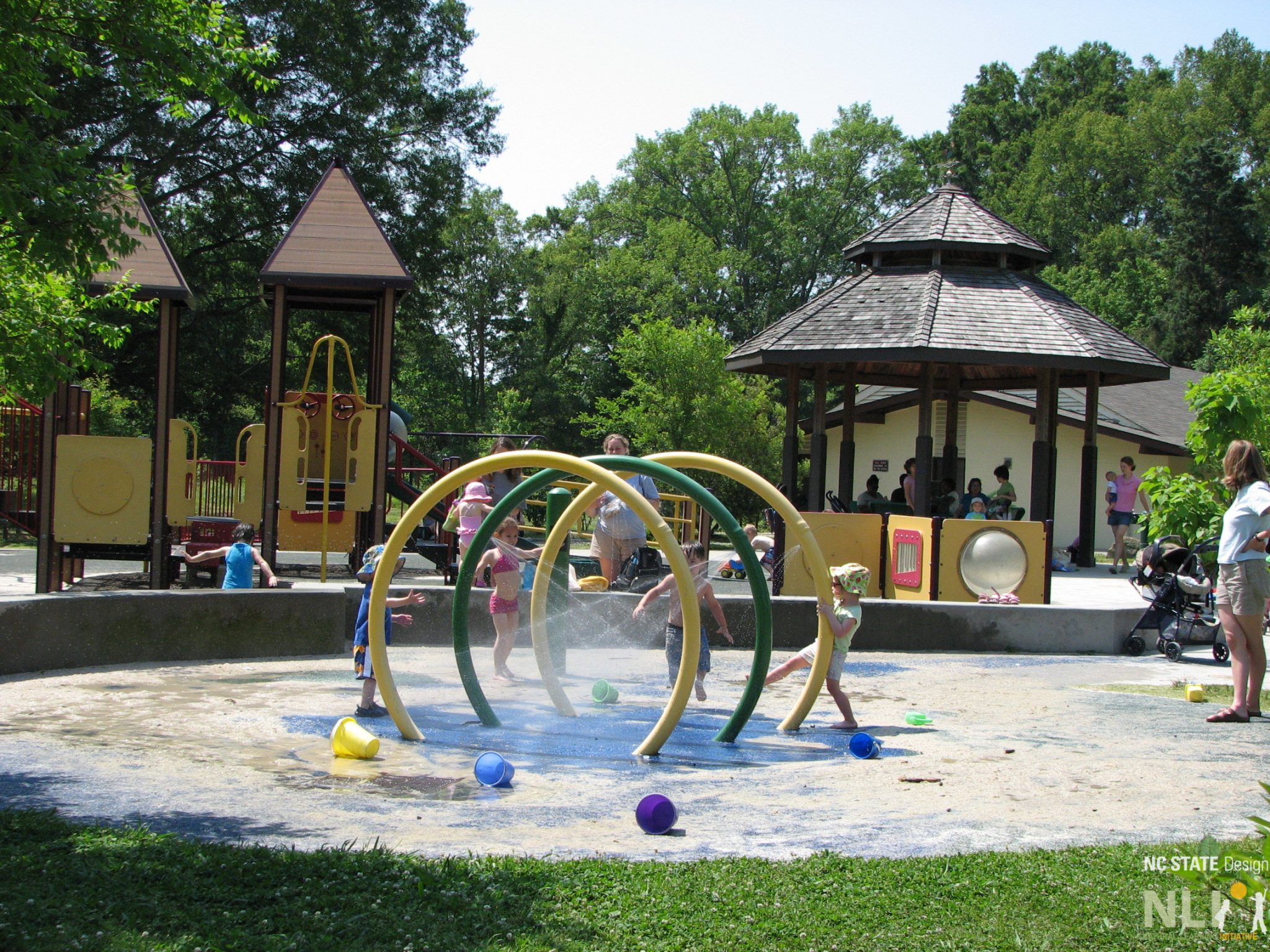
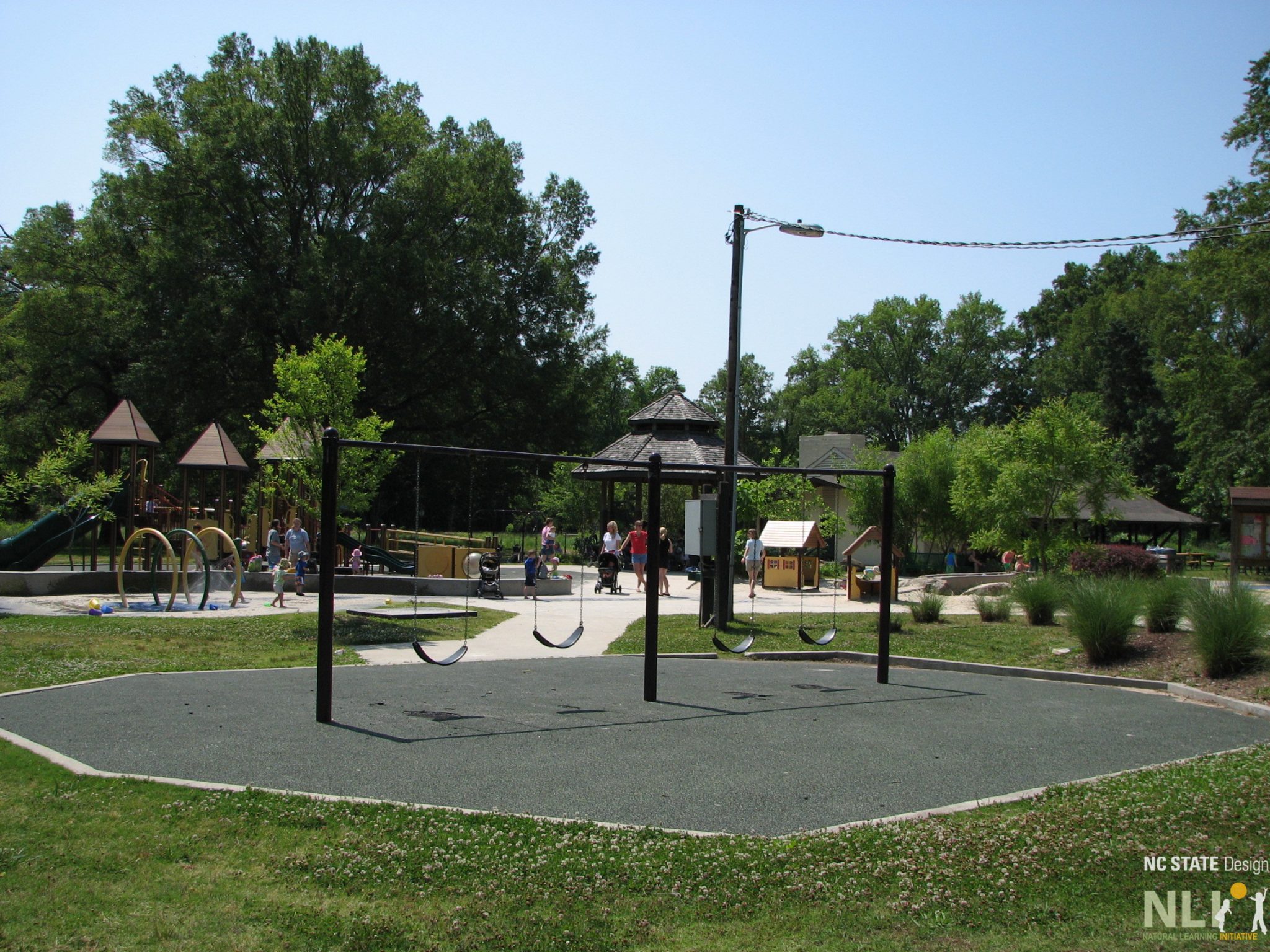
NLI collaborated with NC State University colleagues to implement the interdisciplinary I-PARK research project, which employed a two-nested ecological systems perspective to integrate social-environmental (neighborhood characteristics and park characteristics) and individual characteristics.
Determine the relationship between specific elements within neighborhood parks and objective measures of children’s physical activity;
Assess objectively measured neighborhood park characteristics in explaining children’s physical activity in parks;
Determine how objective measures of neighborhood environments relate to children’s use of parks for physical activity;
Assess the impact of parent and adult supervision for children’s use of parks for physical activity;
Determine extent of park use and how children’s physical activity differs by race/ethnicity, socioeconomic status and gender.
Research Methods
Study design – cross-sectional, correlational, with four components:
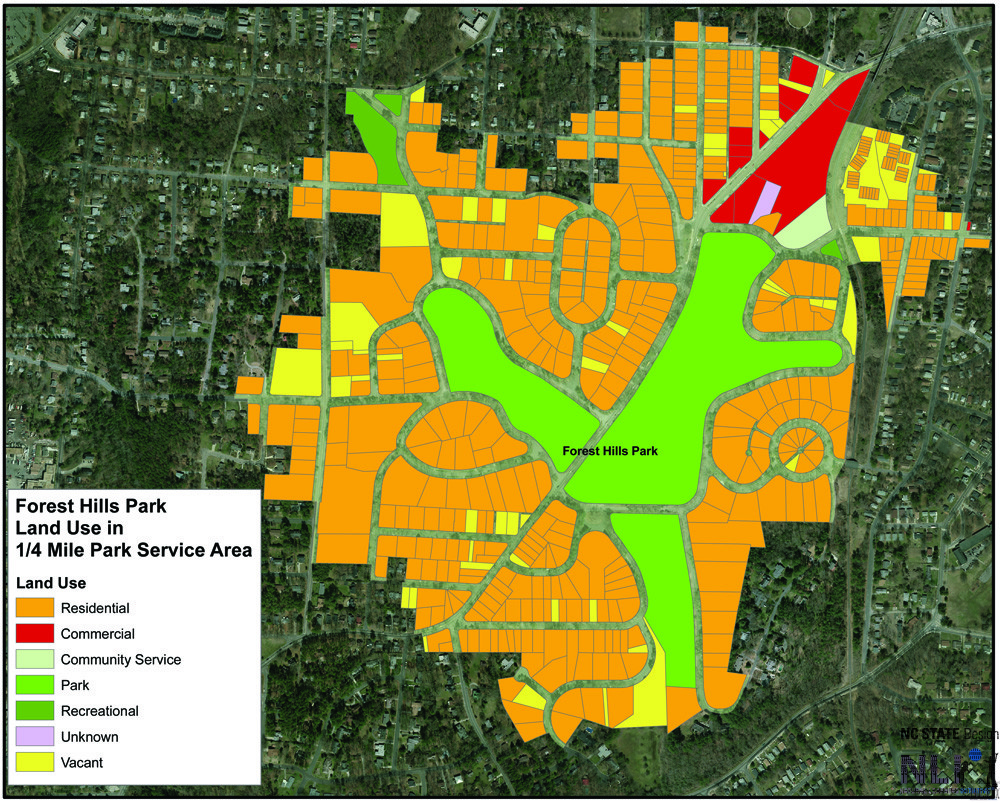
Park use analysis using GIS to develop measures of neighborhood characteristics within 1/4-mile network distance to park entrance service area (PESA).
Park behavior mapping using SOPARC.
In-park interviews of park users.
Substudy of three well-used parks using behavior mapping method developed by NLI, in-park interviews, and a simplified park environment audit tool developed by NLI to assess children and family park facilities.
Location
Durham, North Carolina, population 205, 000, median age 31 years, 14% under 10 and 13% 10 to 19 years. Combined majority are African American and Hispanic, 44% and 9% respectively, concentrated in the central area where study is focused and where small, closely spaced parks are accessible to young residents. Endorsement by Durham County Board of Commissioners Fitness Leadership Council, ensured excellent cooperation from the Durham Schools and other city/county agencies to implement the study.
Measures
Urban form measures: Net residential density, street connectivity, average block size, percentage of retail use, lot coverage;
Community crime data;
Sociodemographic characteristics;
Park characteristics: EAPRS, shade/sun exposure, and archival Durham Parks Assessment data.
Park physical activity using SOPARC with geo-coded behavior mapping.
In-park interviews.
Behavior mapping of three, well-used parks.
Analysis
The two dependent variables, park use and physical activity within the park analyzed separately. For children’s park use, environmental variables, including neighborhood characteristics and park characteristics are primary independent variables. For physical activity within the park, environmental variables, including neighborhood characteristics, park characteristics, environmental codes from SOPARC, and behavior setting type are the primary independent variables. Data reported as proportion of children observed walking or active (moderate-to-vigorous physical activity) and estimates of energy expenditure rates by age group, gender, and ethnicity. Both dependent variables, multivariate analyses, including HLM, incorporate statistical controls for neighborhood characteristics, population density, children density, crime incidence, and other recreation areas in the neighborhood to account for broader neighborhood contextual factors.
Measuring Physical Activity Affordances in Preschool Outdoor Environments
Childcare and child development centers have become the places where the majority of young children spend most of their waking hours almost every day of the year. If enrolled as infants less than a year old, the total amount hours spent in centers closely matches those spent in a child’s remaining school career through grade 12. Considering how critical early childhood is to children’s health and future success in life, it can be argued that the environmental quality of early childhood settings where children spend the majority of their time is equally important. The quality of the center outdoor environment is particularly relevant because this is where children can learn to be physically active, can be motivated to play in nature, and feel comfortable outdoors – lifestyle habits that may persist in later life.
Childcare centers are highly regulated, policy-sensitive systems. The overall purpose of this research project is to contribute to national effort to improve early childhood outdoor environments.
The specific research goal is to identify discriminatory environmental items in preschool play areas to be included in a pilot tool that will rate their potential to produce physical activity when three-to five-year-old children are exposed to them. Currently, no tool exists that links the amount of physical activity and preschool play areas, with the potential of affecting policy. This study will characterize behavior settings, their components and attributes, in terms of the physical activity patterns of an understudied population: preschool childcare centers.
NIEHS Obesity and the Built Environment R-21 RFA-ES-04-003
Research has shown
Time spent outdoors is an environmental determinant most strongly correlated with greater amounts of physical activity in children and opportunities for whole body exercise;
Children’s physical activity is strongly motivated by diversity of outdoor environments;
Preschoolers with higher levels of outdoor physical activity retain higher levels as school age children;
Active outdoor childhood tracks into and influences the preference for outdoor experiences in adulthood; and
The preschool and, more specifically the preschool outdoors is a strong determinant of physical activity.
Primary Aims
Primary Aim 1: To measure the amount of physical activity (using SOPLAY codes), exhibited by three-to-five-year-old children exposed to different behavior settings present in preschool play areas. Hypothesis 1a: Different outdoor settings in preschool play areas will vary in the amount of physical activity that they afford.
Primary Aim 2: To measure the amount of physical activity (using SOPLAY codes), exhibited by three-to-five-year-old children in similar behavior settings across different preschool play areas. Hypothesis 2a: Similar behavior settings across different preschool play areas will not vary in the amount of physical activity they afford.
Primary Aim 3: To identify the physical components and attributes common among behavior settings located in preschool play areas that may explain greater amounts of physical activity exhibited by three-to five-year-year old children. Hypothesis 3a: Defined environmental components and attributes associated with greater amounts of physical activity will constitute discriminatory items to assess physical activity affordances in different behavior settings present in preschool play areas.
Primary Aim 4: To prepare and pilot test a tool for measuring the physical settings, components, and attributes of preschool outdoor play areas that will rate their potential to produce adequate physical activity when three-to five-year-old children are exposed to them. A preliminary validity check will be performed using the Preschool Outdoor Environment Measuring Scale (POEMS) developed by a team including three members of the current research team (Cosco, Hestenes, & Moore).
In a subsequent phase, not covered by this grant, the measuring tool will be fully developed and tested for reliability and validity, including seasonal and other site differences across multiple U.S. geographical regions. This study will characterize behavior settings, their components and attributes, in terms of the physical activity patterns of an understudied population (preschool children) in a critically important built environment (childcare centers) where many children spend up to ten hours a day, fifty weeks each year. (The methodology developed will be applicable in the future to other outdoor built environments such as parks and public playgrounds, including other age groups in the population.)
This study responds to the Strategic Plan for NIH Obesity Research, including the goals to “Assess children’s environments…to determine barriers to increasing physical activity”; to “Identify… environmental and behavioral factors to obesity… prevention… and assess… environments such as… childcare… for specific barriers to increasing physical activity”; and to “Use prospective observational studies to identify modifiable behavioral and environmental determinants of weight gain and obesity in children… [related to] critical periods for inappropriate weight gain” i.e., in childcare centers.
Sample
Two sets of fifteen NC childcare centers (including respondents to the 2002 Baseline Survey of Environmental Conditions of Outdoor Areas in NC Childcare Centers), matched across urban, suburban and rural contexts, and containing diverse ethnic and socioeconomic groups. The first set used for gathering data to develop the measuring tool. The second set used to pilot test the tool.
Research Activities
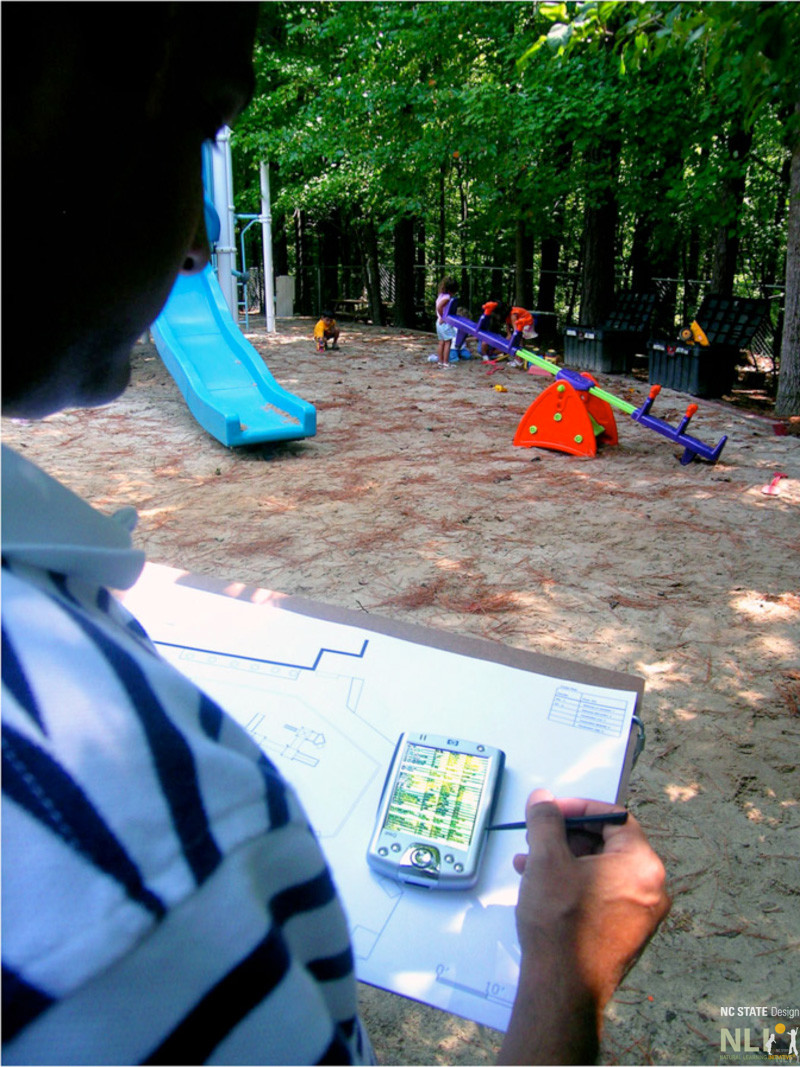
Behavior mapping (GIS coded) of preschool play areas to identify physical activity patterns in specific behavior settings (spatial location of subjects and physical activity amount);
Inventory of environmental components and attributes of behavior settings associated with different amounts of physical activity;
Identification of discriminatory environmental items to be included in a draft measuring tool;
NLI partnered with the National Wildlife Federation (NWF) in 2011, in a pilot project funded by the Fish and Wildlife Service, to engage youth with nature as a step towards to careers in conservation.
From fields ranging from landscape architecture to mathematics, 15 highly motivated college interns from across the US, passionate about interacting with children and families outdoors, spent three weeks in the Alligator River Wildlife Refuge learning to be playworkers in nature. Guided by a NLI training curriculum, interns designed and managed natural play and learning environments, developed pilot “play animation scenarios,” delivering them to children and families, learning how to connect kids to nature through play on the coast of North Carolina. Course leaders included playwork trainers from the NC Zoo, the UK Eden Project, NLI and NWF.
National Wildlife Federation (NWF) and the Natural Learning Initiative (NLI) at North Carolina State University built a team of The program included developing recommendations on how to expandthis pilot project to other parks and nature centers as well as designing and prototyping future installations near the Refuge Visitor Center.
Nature Play Corps Internship Project Objectives
Youth will understand and appreciate the Refuge’s existing resources and management practices.
Youth will assess natural resources at the Refuge for nature play potential.
Youth will plan and lead nature play programs for the Refuge’s visitors.
Youth will develop a conceptual plan and prototype for a natural play area appropriate to a National Wildlife Refuge.
Schedule Overview
Project objectives were achieved by a mix of seminars, interactive sessions, involvement in USFWS planned activities, ideation, and preparation and delivery of nature play programs (prototypes).
Each week ended with the installation of a number of nature play prototypes created, installed, and managed by subgroups of interns. Prototypes were associated with the conceptual master plan developed for the future Education Pavilion and Trails at the Gateway Visitor Center, Manteo, NC.
Activities were conducted at the Alligator River National Wildlife Refuge and Pea Island National Wildlife Refuge, North Carolina, June 6th – 24th, 2011.
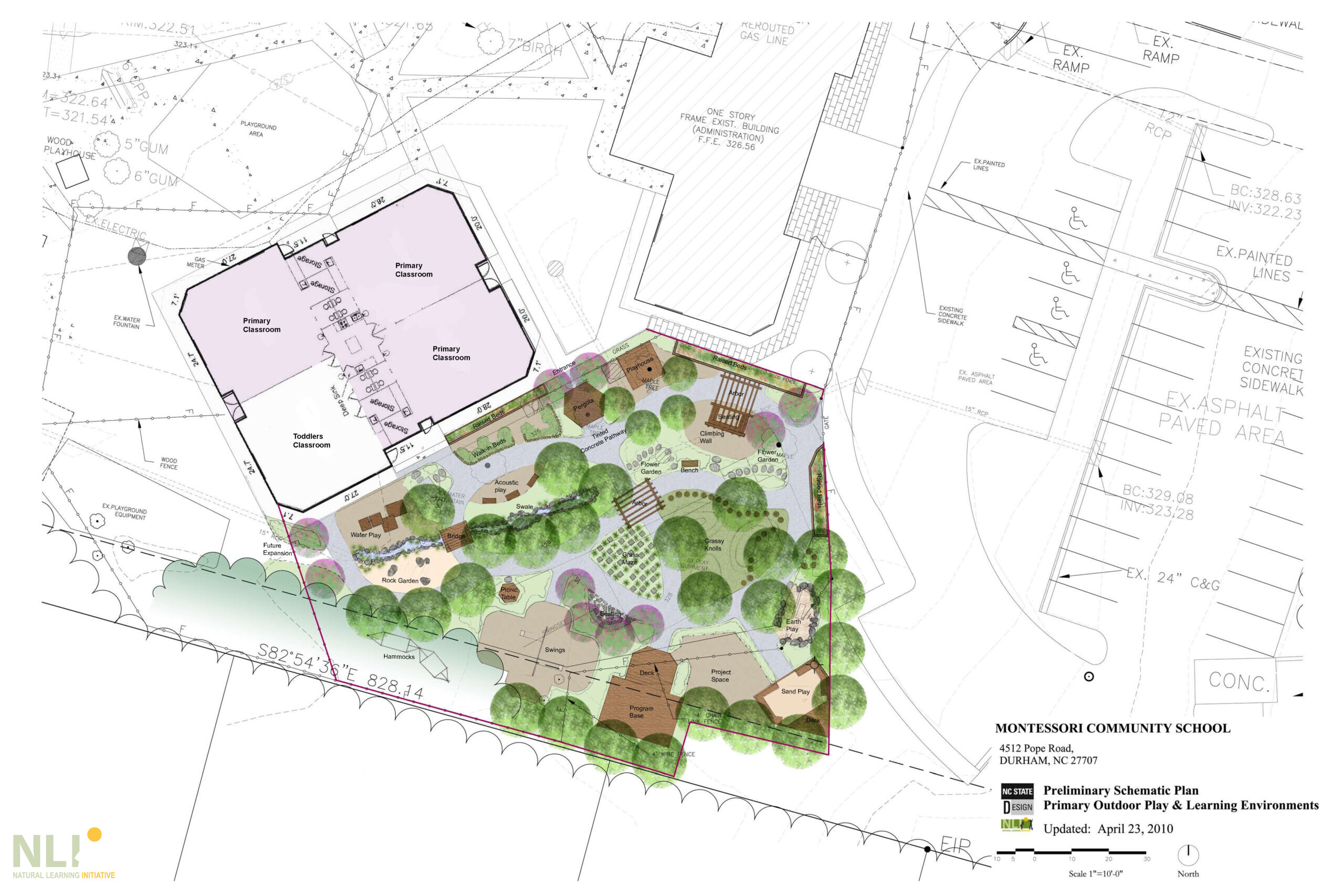
Located on the border of Chapel Hill and Durham, the Montessori Community School (MCS) campus is home to 230 students, ages 18 months to 14 years. The campus includes twelve classrooms, a gym, art and music center, outdoor learning centers, a field, and an existing wooded area. “MCS is a learning community of children, parents, faculty, and staff, each with distinct roles and responsibilities. Adults work in concert to support children’s development as active, peaceful, life-long learners and global citizens.” The school emphasizes outdoor learning.
The Natural Learning Initiative (NLI) worked with the Montessori Community School and the Montessori Community Association (MCA, parent-led organization) to create naturalized play and learning settings for the primary school area and the Spark Center (arts and music center) serving the elementary school.
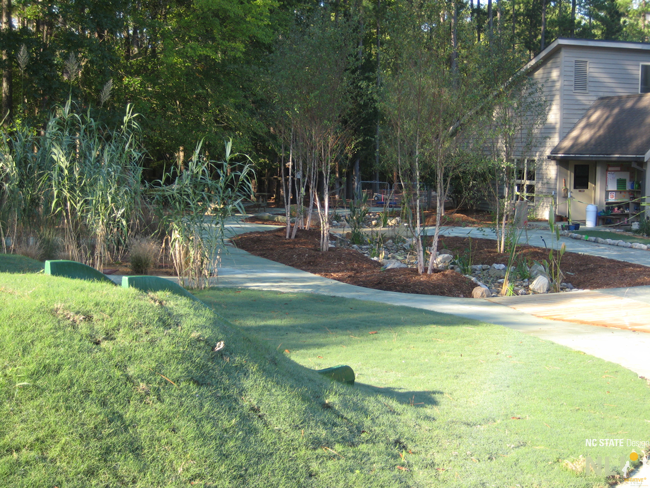
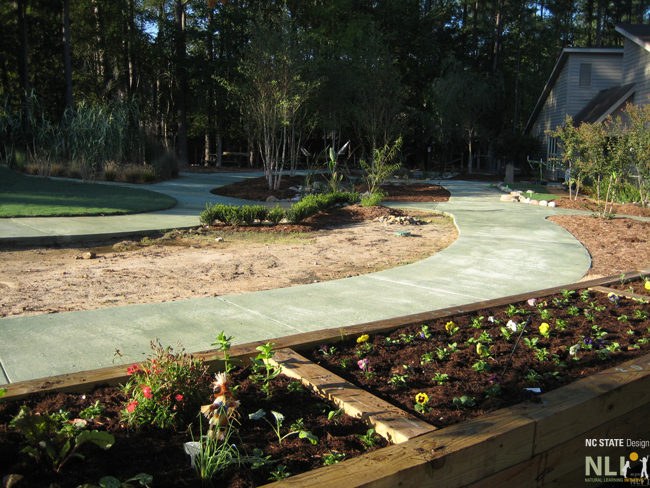
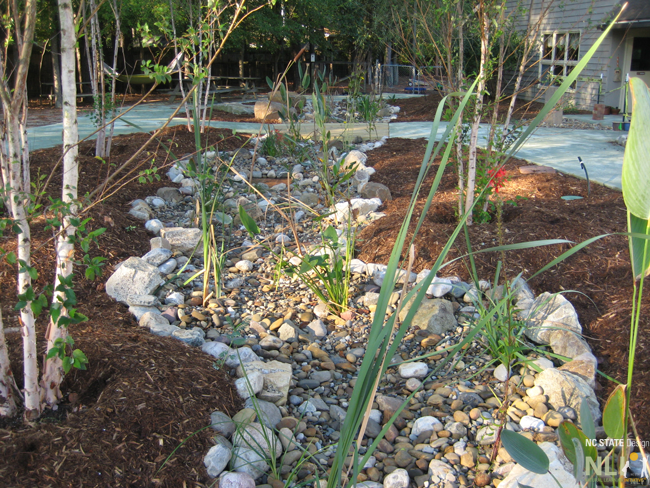
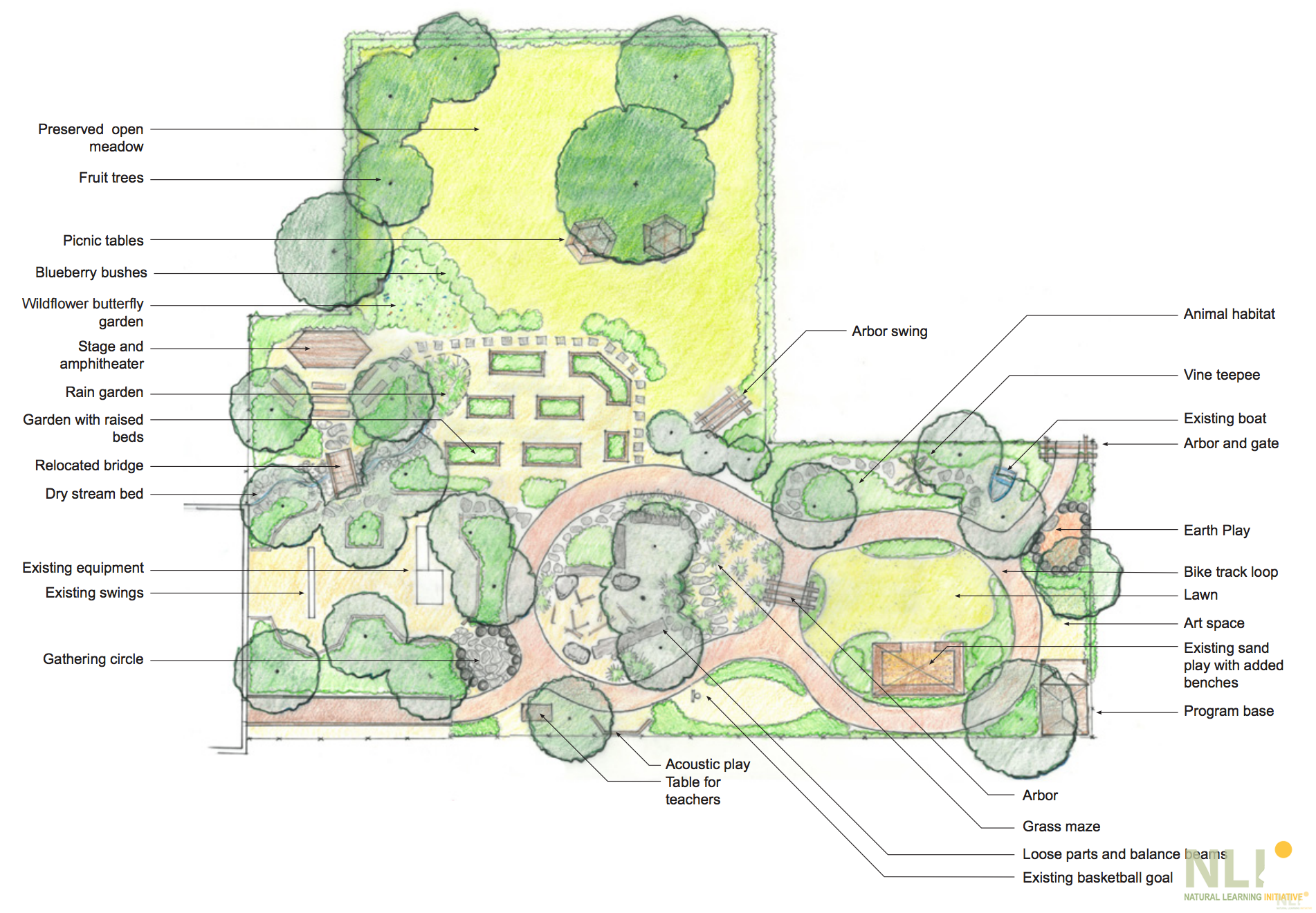
The outdoor environments focus on the interaction between indoors and outdoors, which offers naturalized play and learning settings including earth play, a grass maze, rain gardens, and grassy knolls connected with wide curvilinear paths. The outdoor areas of the Spark Center provide opportunities outside the classroom for group lessons in peaceful green surroundings.
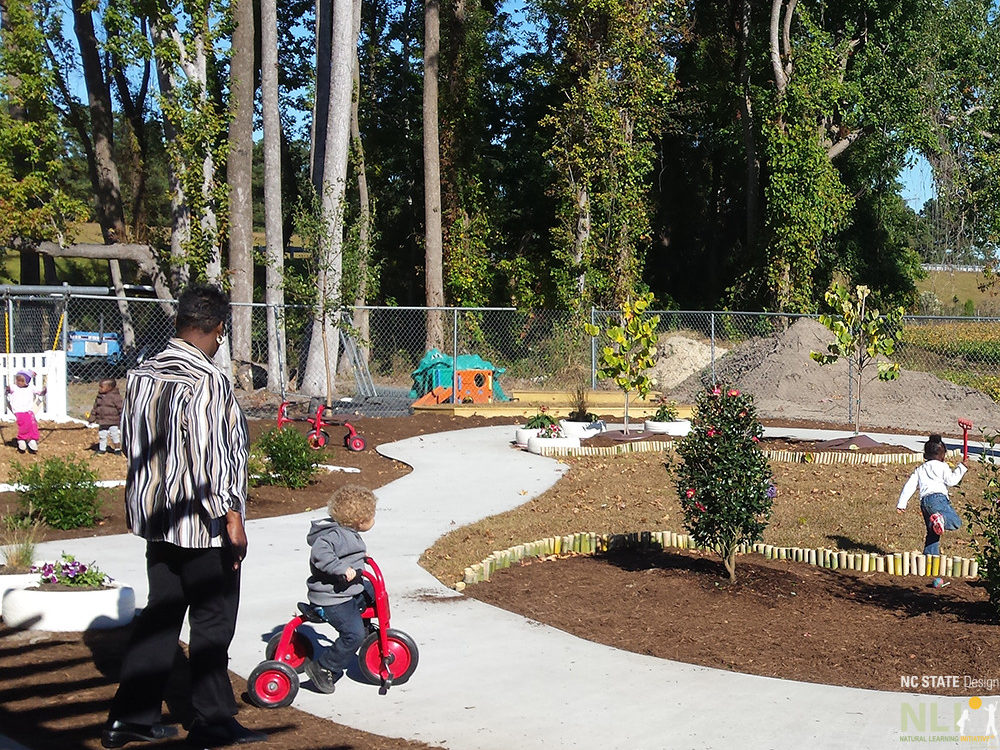
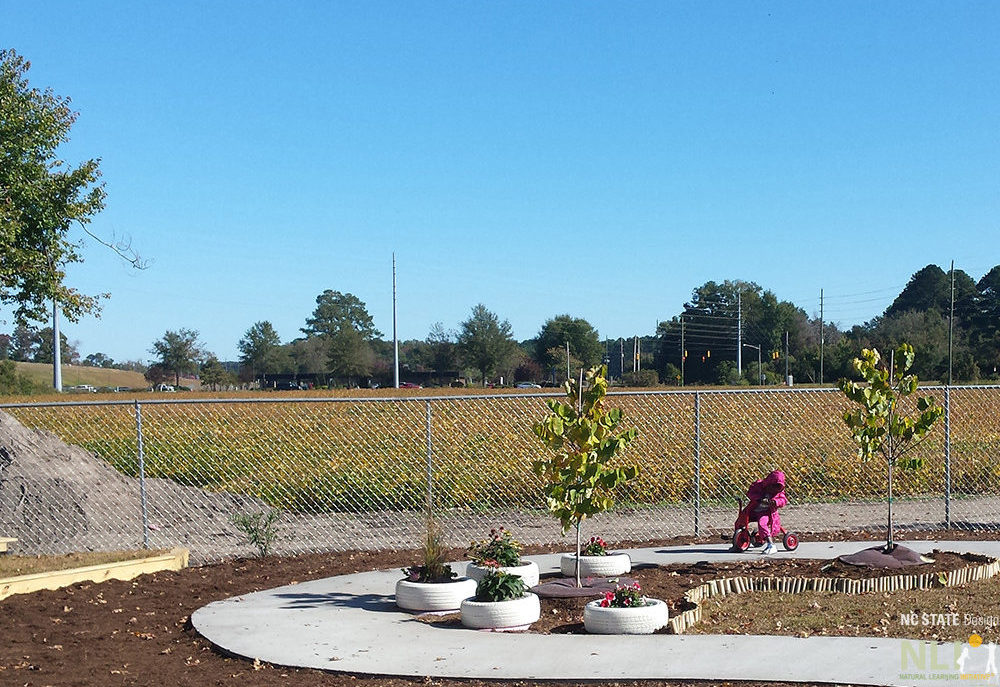
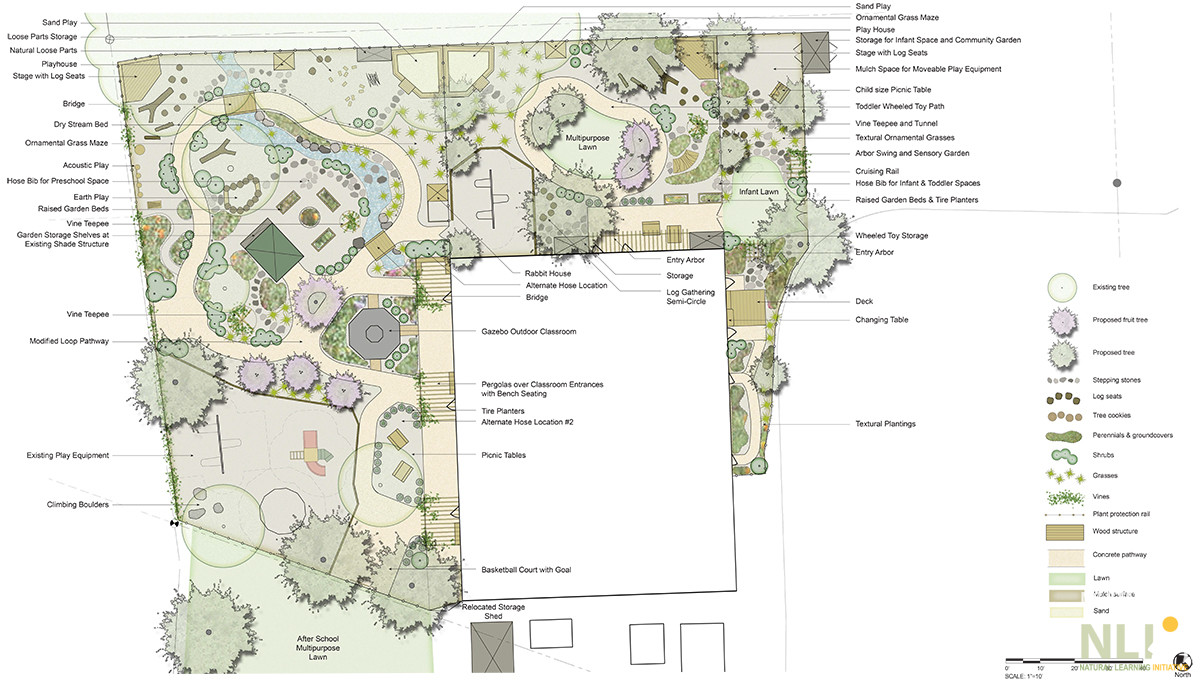
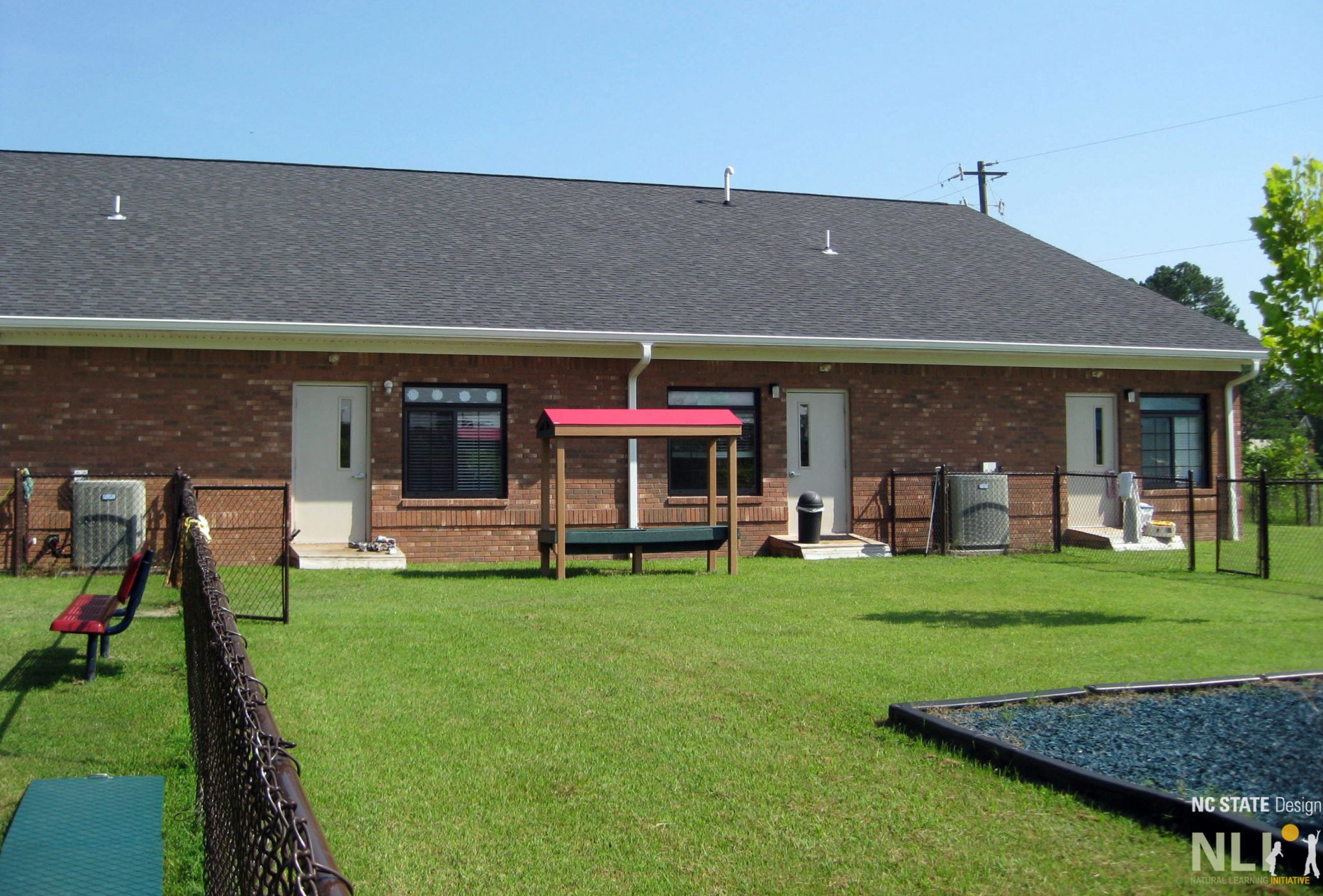
Care-O-World Early Learning Center, located in Washington, NC has renovated almost the entirety of their outdoor learning environment to meet best practice standards.
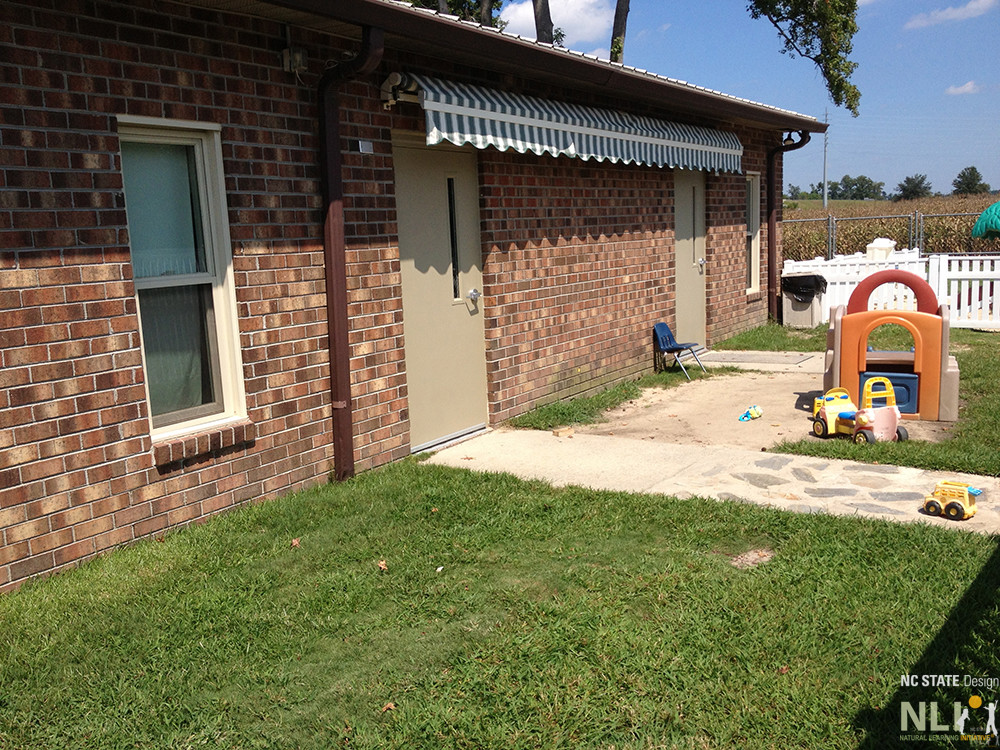
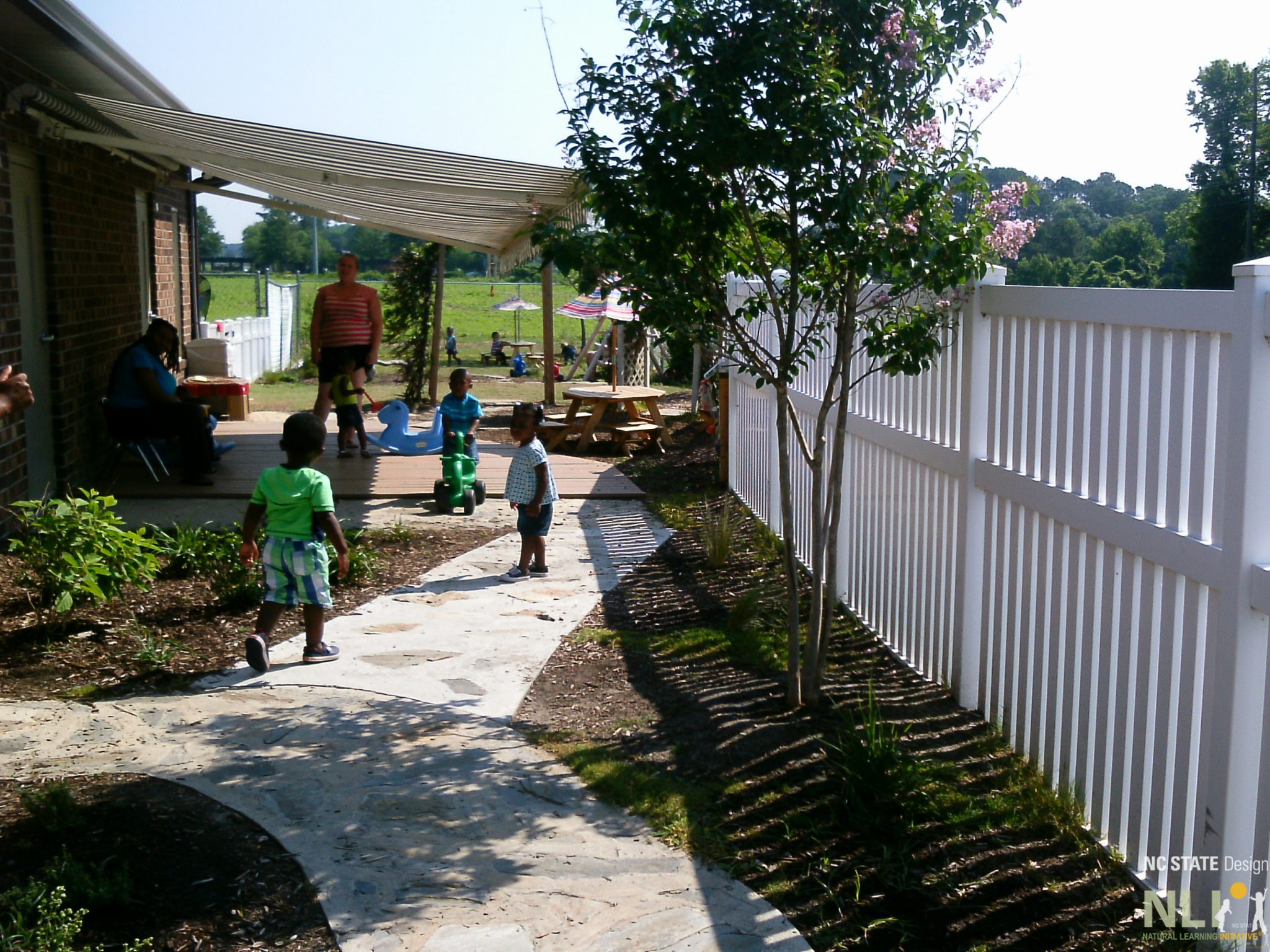
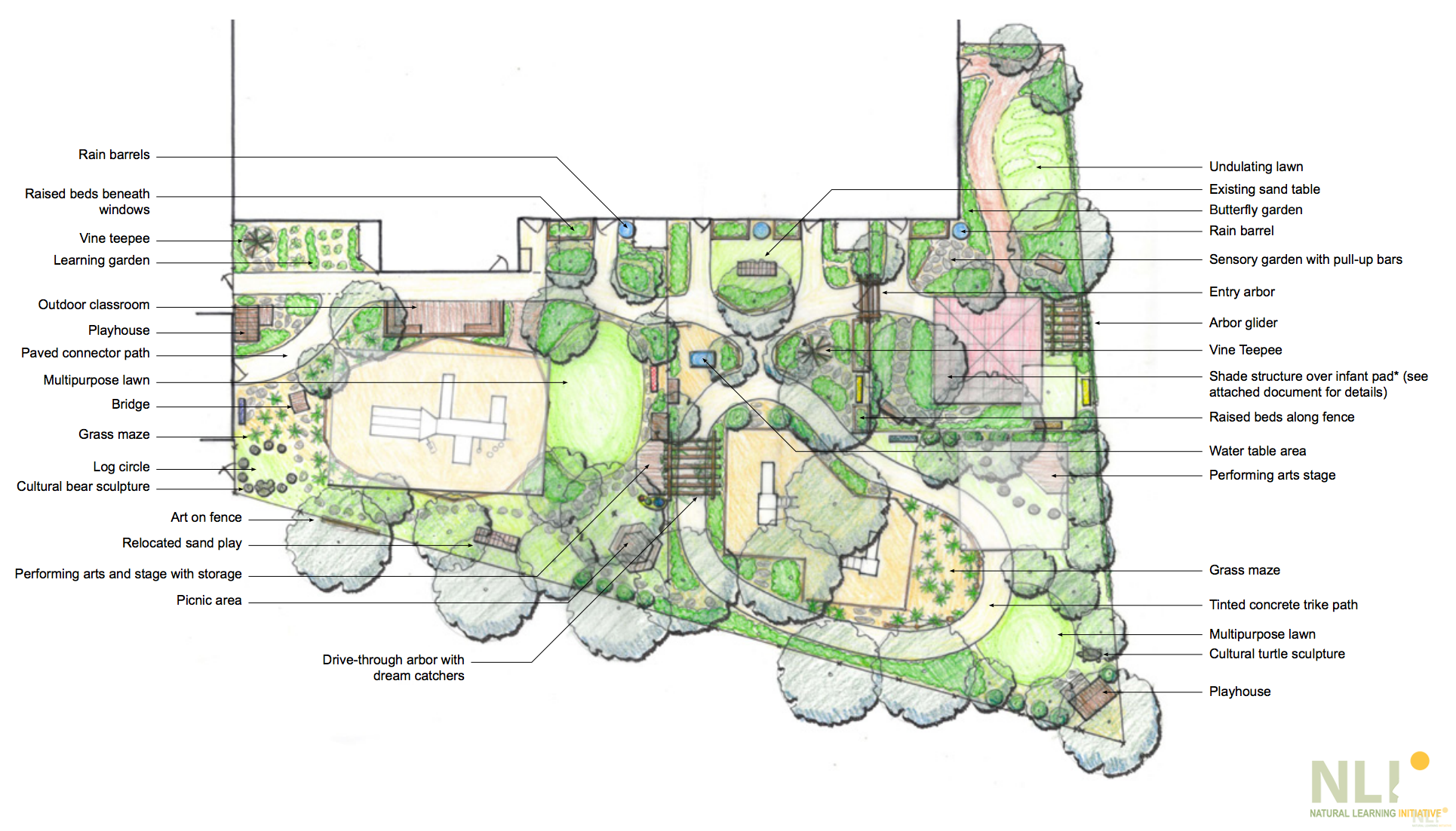
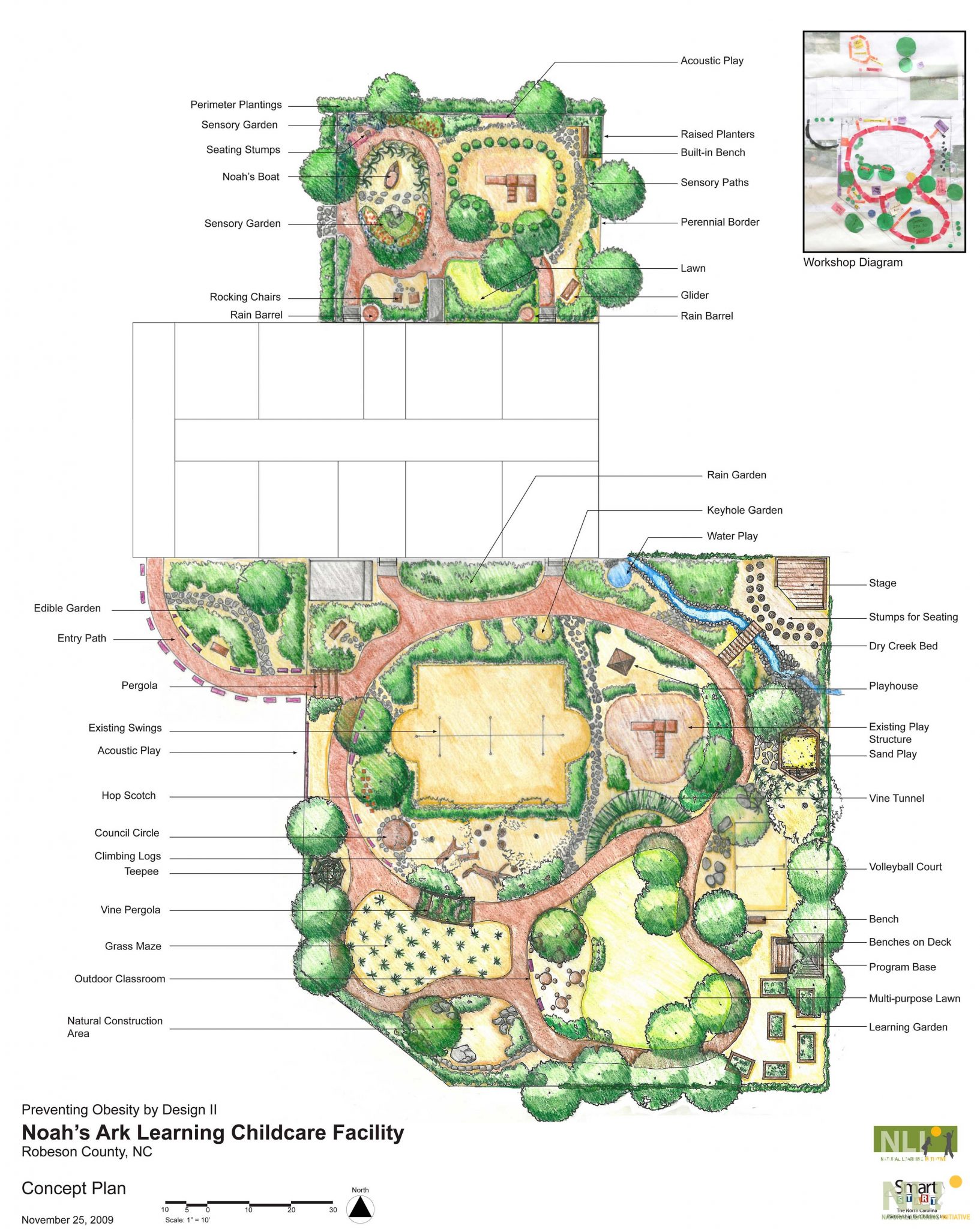
Their first steps began in the infant/toddler space: expanding it to double its previous size, adding sensory plantings, shade trees, low stump seats, cruising rails, a play lawn, a stepping stone pathway, child-size picnic tables, a porch swing, an outdoor classroom deck, and an entry arbor with vines.
After the infant space, the center focused on creating a community garden just outside the infant space, in an existing vacant lawn next to the center parking lot. With assistance from local cooperative extension agents and families from the center community, they installed a water line, plowed the garden into rows, and planted the first crops in summer 2014.
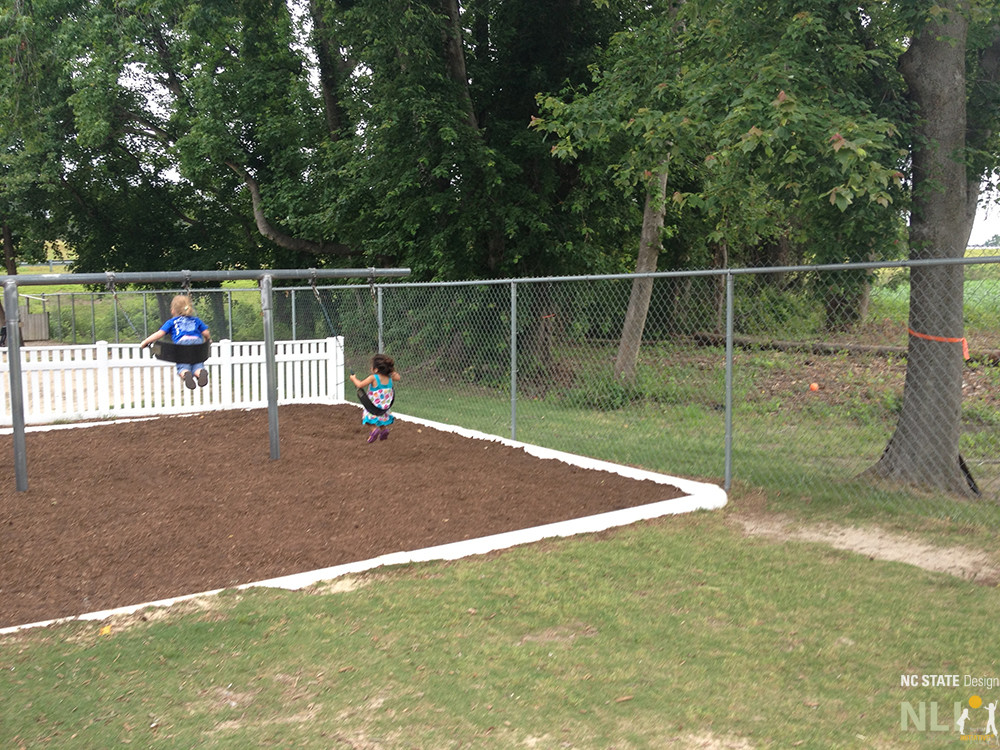
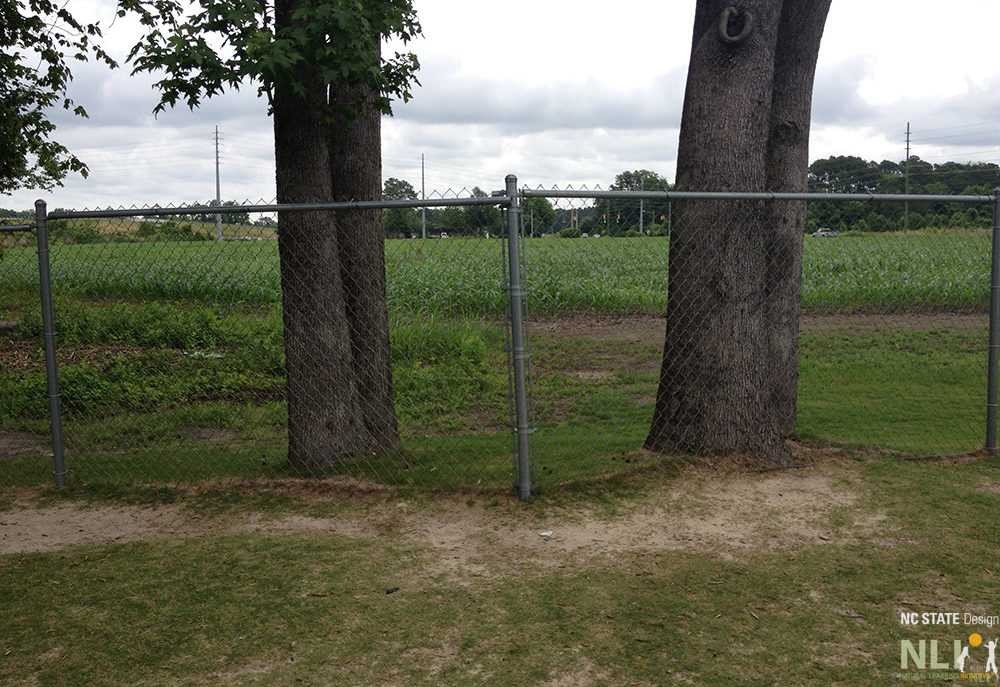
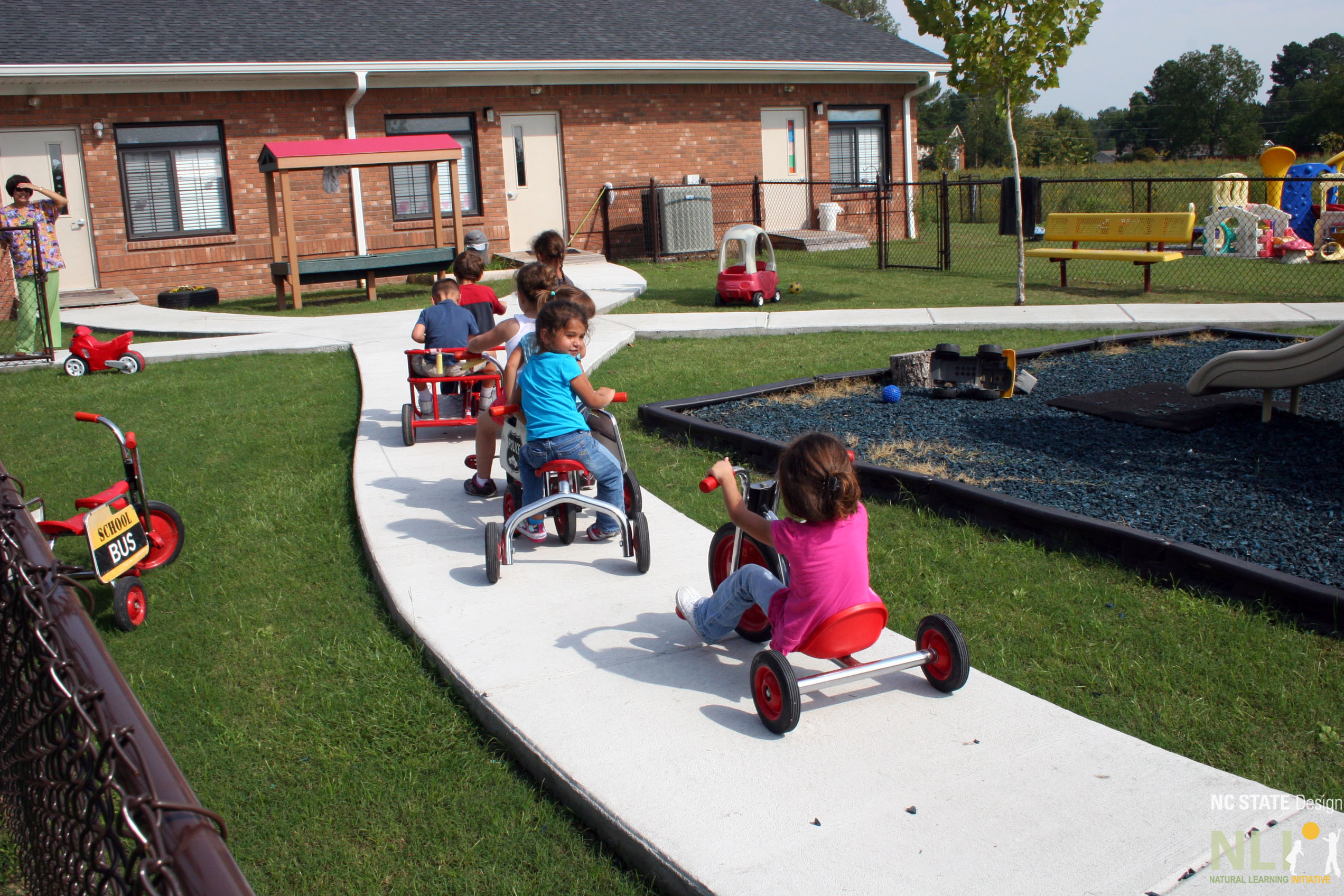
Next, tackling their toddler/two-year-old space, they again expanded the fence line, removed damaged existing trees, created a looping paved wheeled-toy pathway, added a play lawn, a new sand play area, a large pergola over their existing concrete patio, a new storage structure, stump seats, and various tree, shrub, and ornamental grasses.
In addition, the center plans to completely renovate their existing preschool/after school play area, by expanding an existing concrete loop path, expanding the space, adding natural play settings, and installing additional plants and trees.
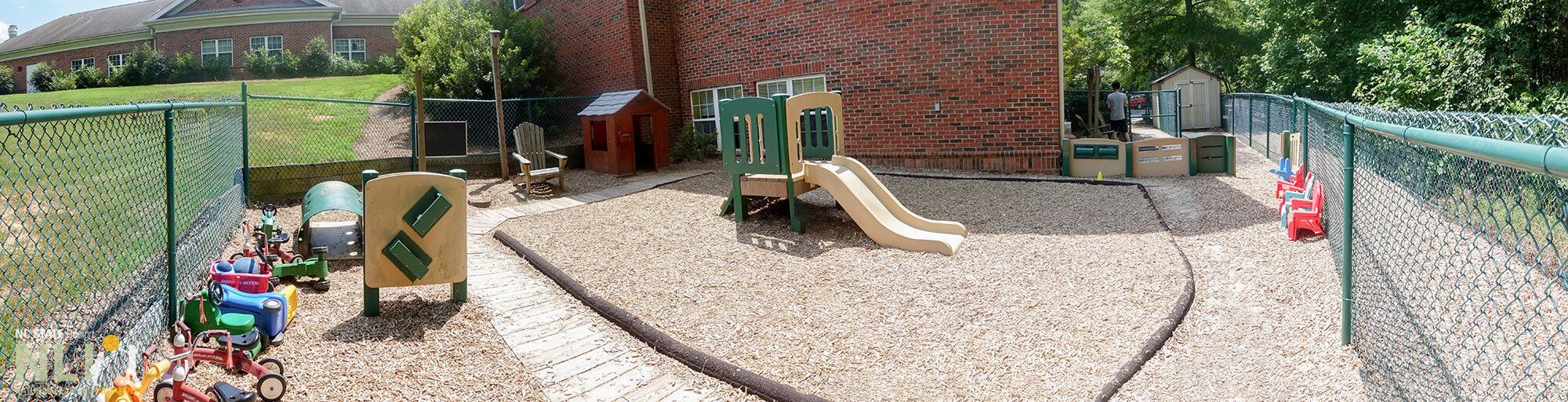
Shepherd’s Way Day School serves infants up to school-age children in Colfax, NC. As a part of the Healthy Starts Infant/Toddler grant, they would like to create an area within the toddler space specifically for infants, which would include a low deck, an artificial turf lawn, and a porch swing.
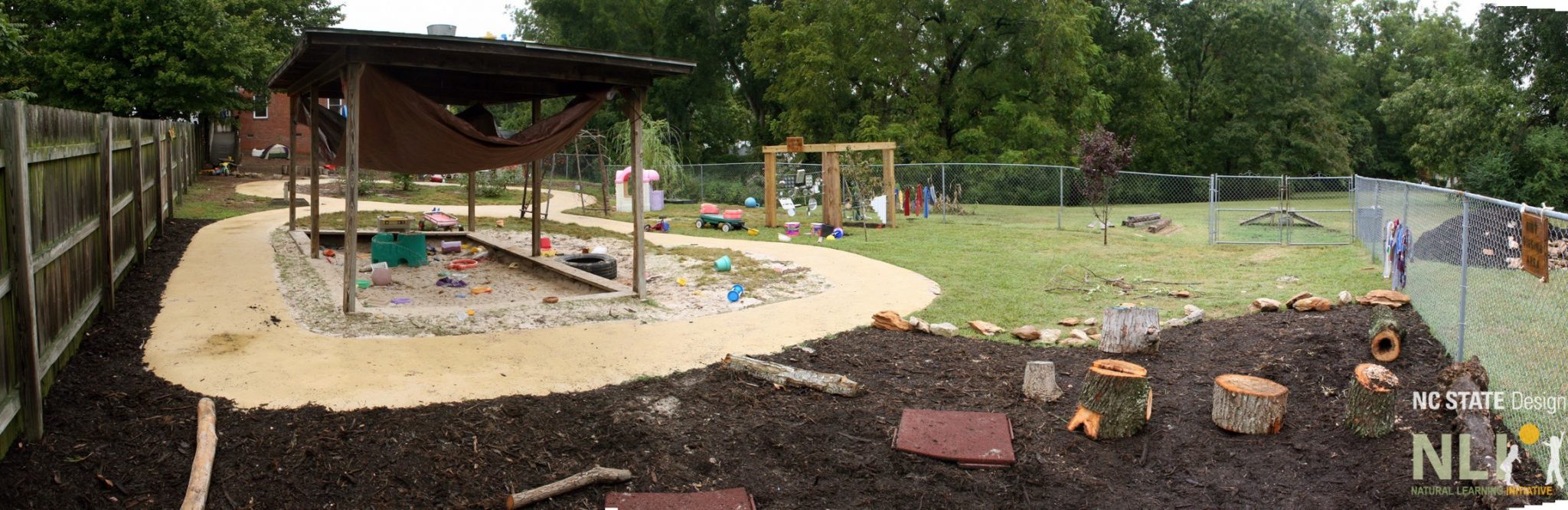
They are planning to take advantage of the space between their existing boardwalk that encircles a piece of manufactured play equipment and the fence to add more settings and to naturalize their outdoor learning environment. Their short-term goals for this project are to add raised beds, a sand play area, and plant trees, shrubs, perennials, and grasses.
Address: 1575 John Knox Drive Colfax, NC 27235
Phone Number: (336) 665-5007
County: Guilford Local Partnership: Guildford County Partnership for Children