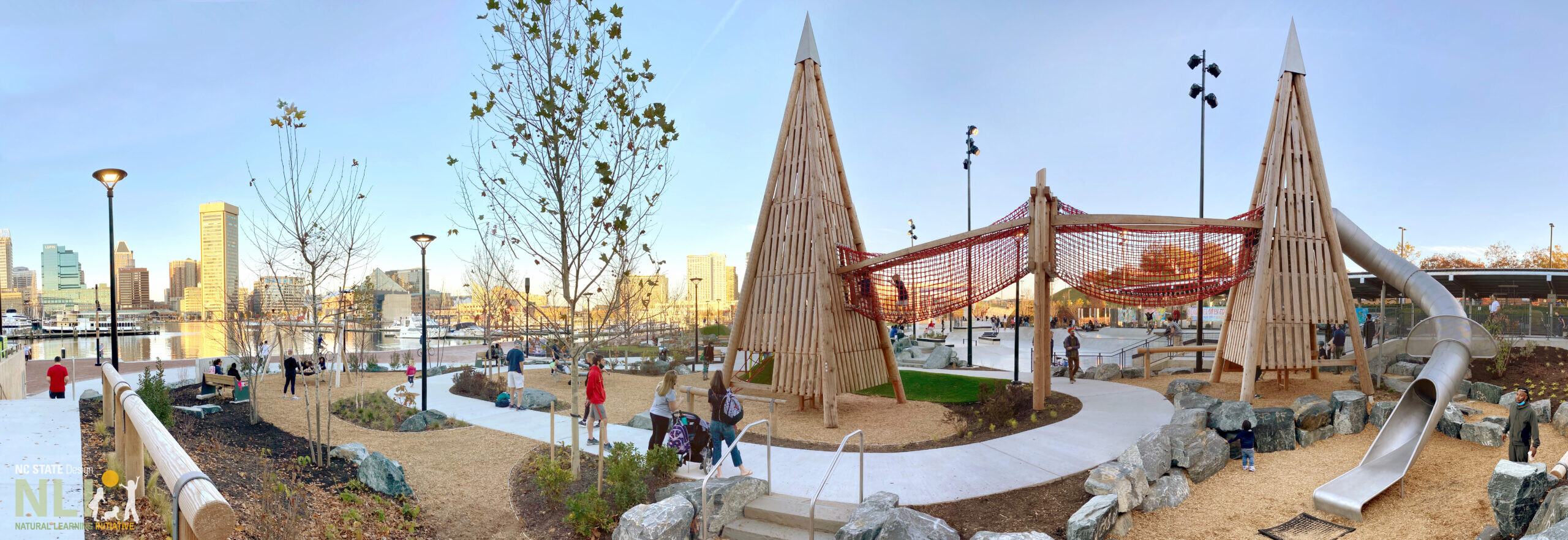
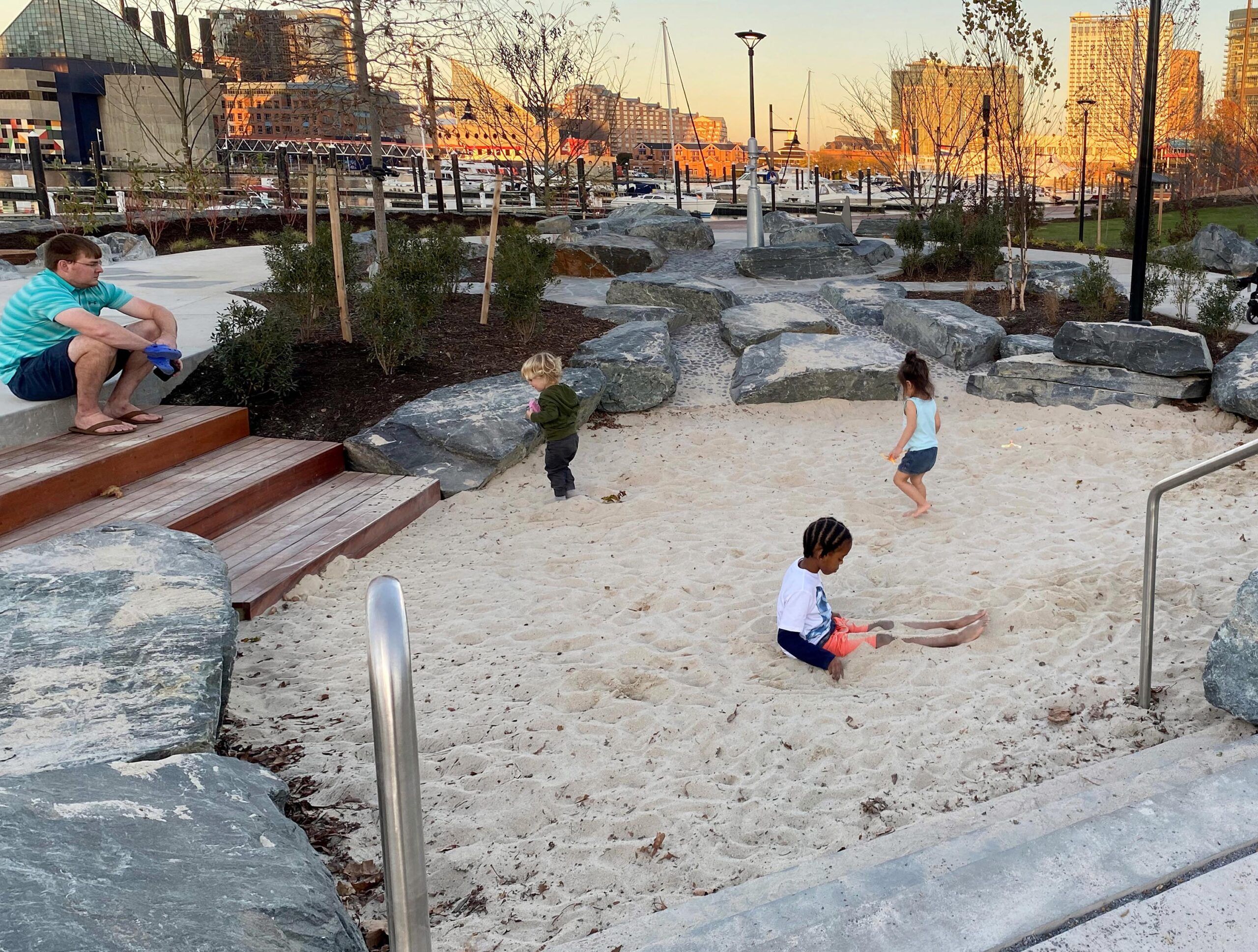
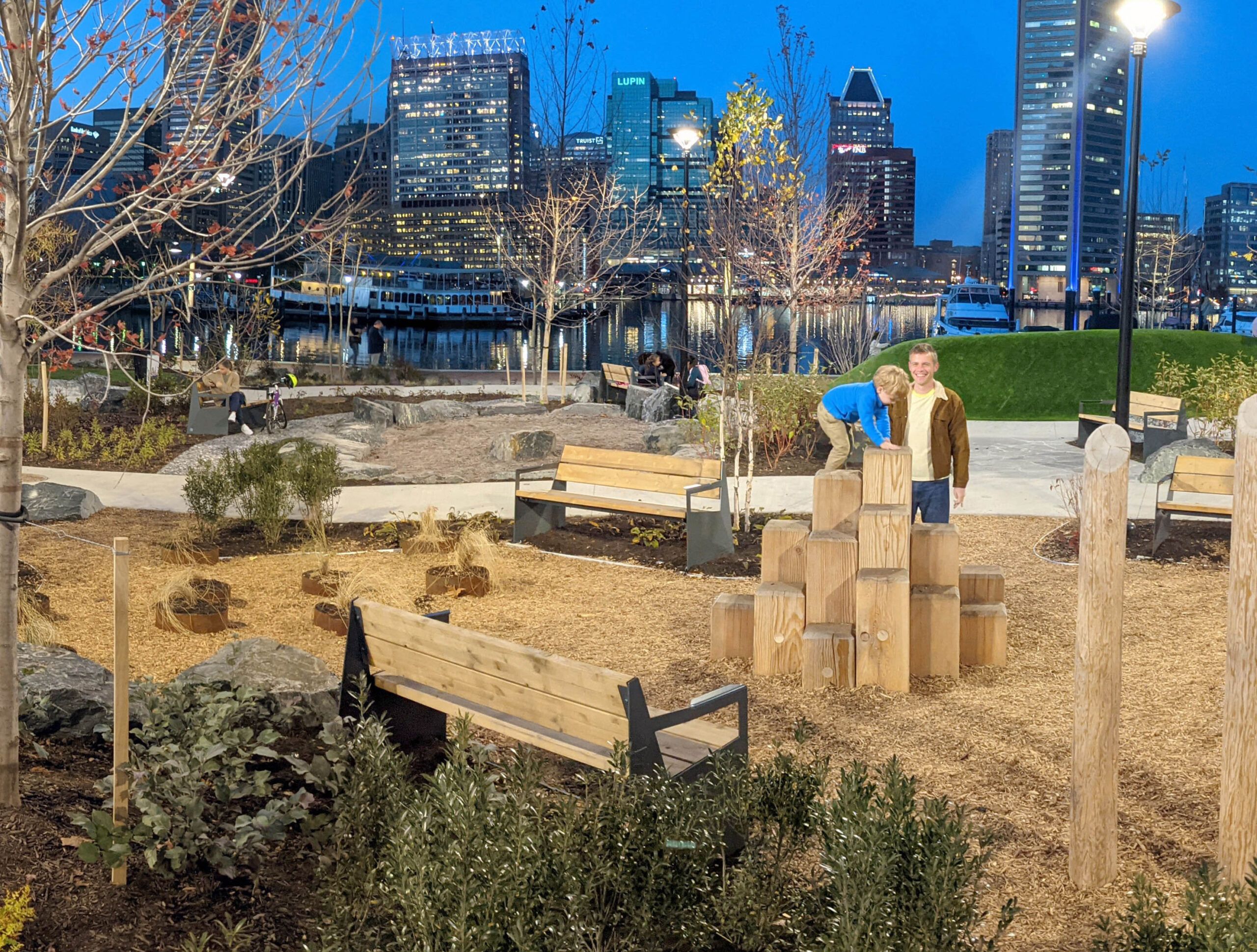
Partnered with MRA and Waterfront Partnership of Baltimore, NLI worked on the creation of two contrasting, high-quality play areas overlooking the Inner Harbor. One playfully engages children in adventure play, exploring an undulating landscape of naturalized settings, including digging, water play along a meandering stream down a rocky slope, sand play, and mounds to conquer interlaced with native plantings and shade trees. The other area, in dramatic contrast, stimulates high-energy kinetic play in diverse 3-D settings, including iconic Richter Spielgerate towers and a connecting “sky run.”
Kinetic playscape, on and above ground!
NLI team members Mary Archer and Brandon Dupree had the pleasure of visiting Rash Field Park to observe children and family enjoyment firsthand, just after the grand opening in November 2021.
The first phase of Baltimore Inner Harbour Rash Field Park, includes two innovative play areas designed by a Mahan Rykiel Associates (MRA) team, including NLI, which won two awards from Baltimore ULI (Urban Land Institute): the People’s Choice Award, selected by popular vote, and the WaveMaker Award, recognizing community need and qualities including sense of place, sustainability, and visionary emulation.
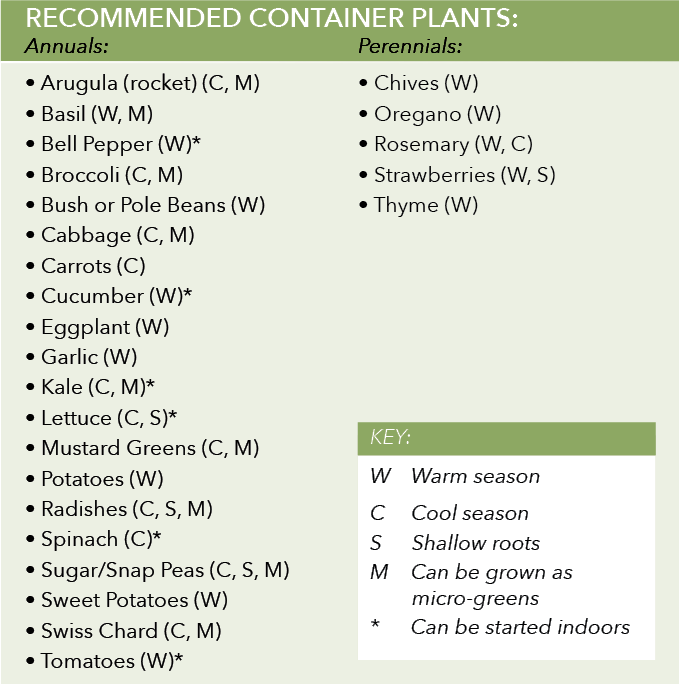
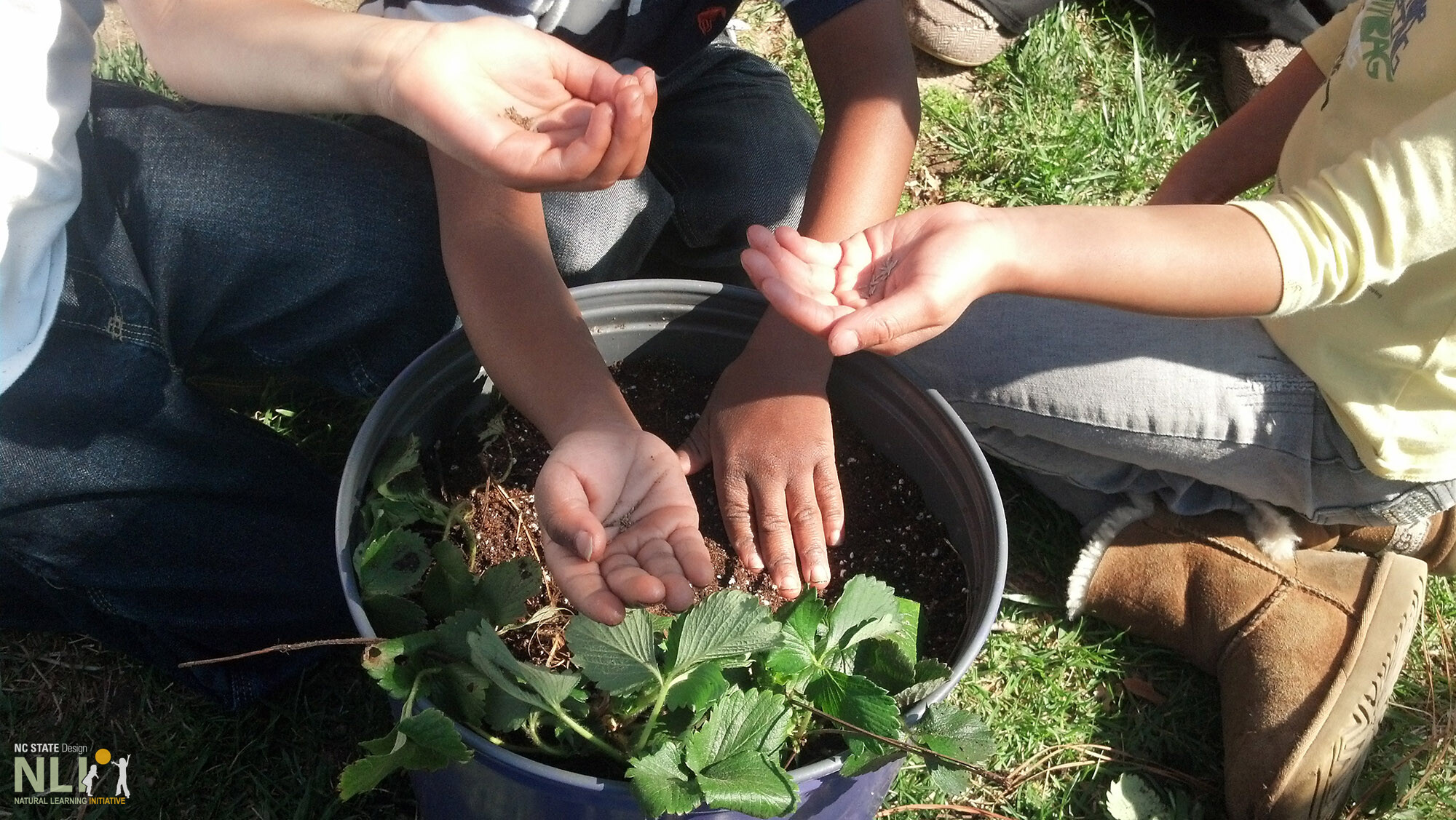
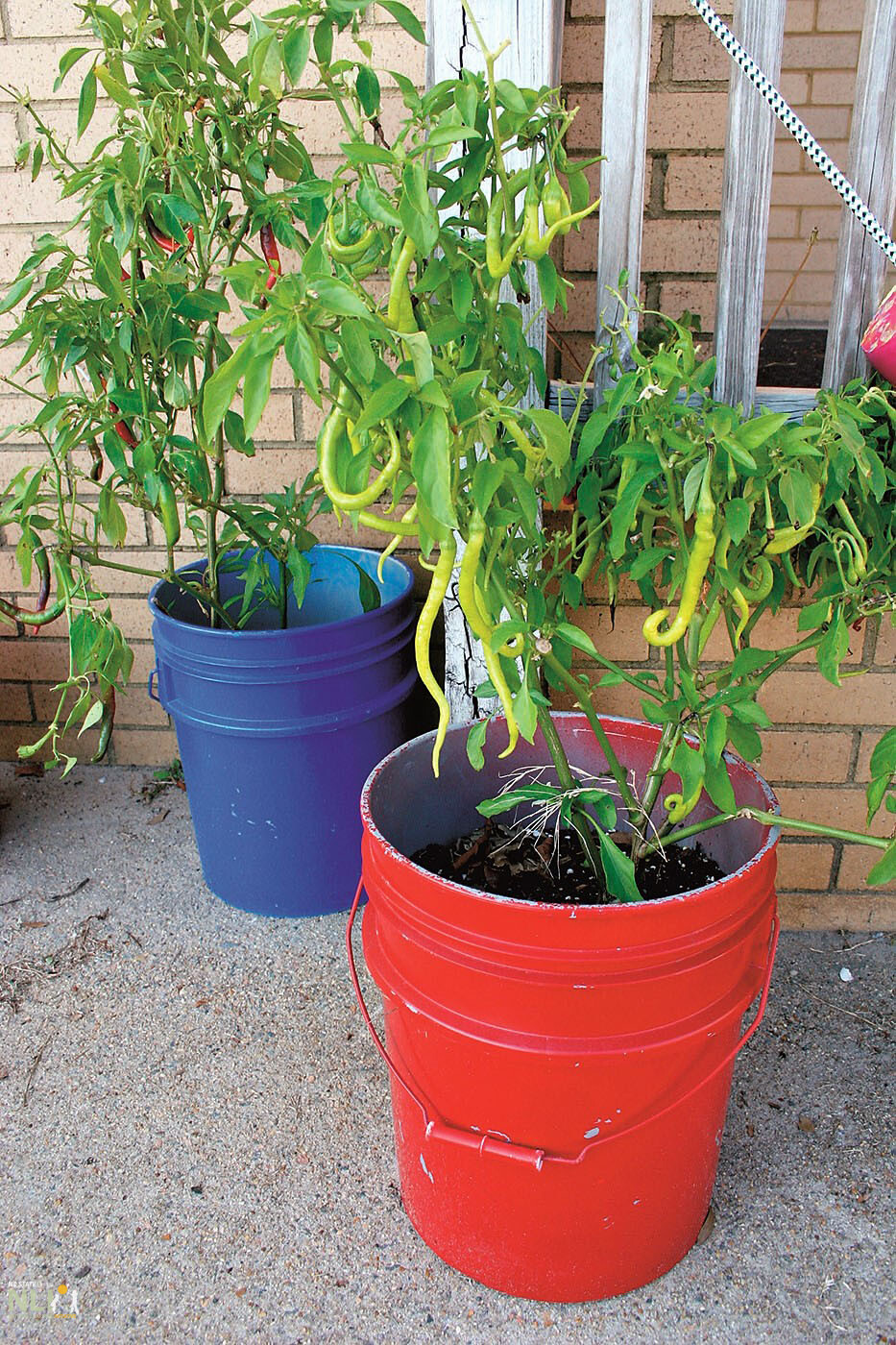
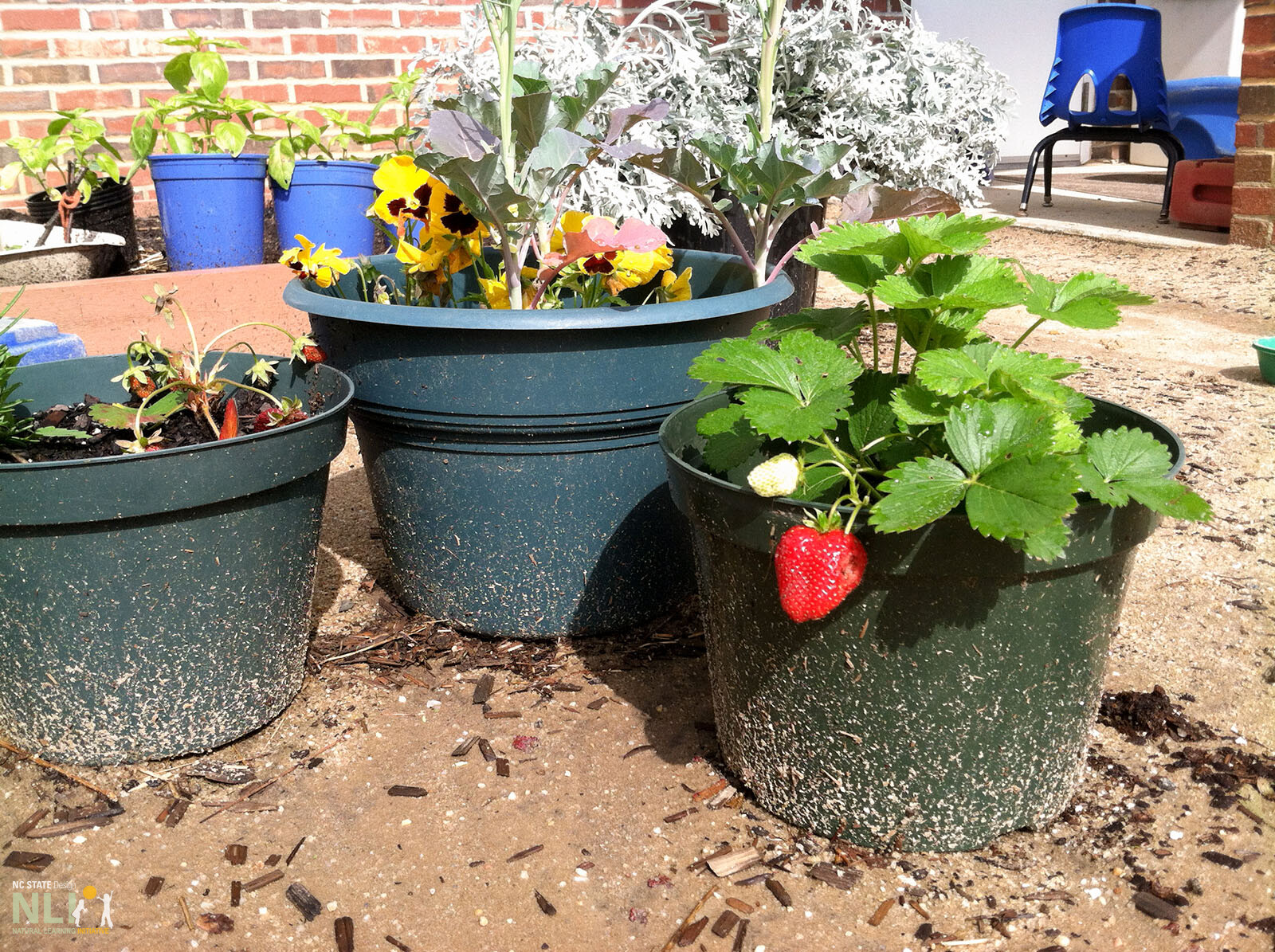
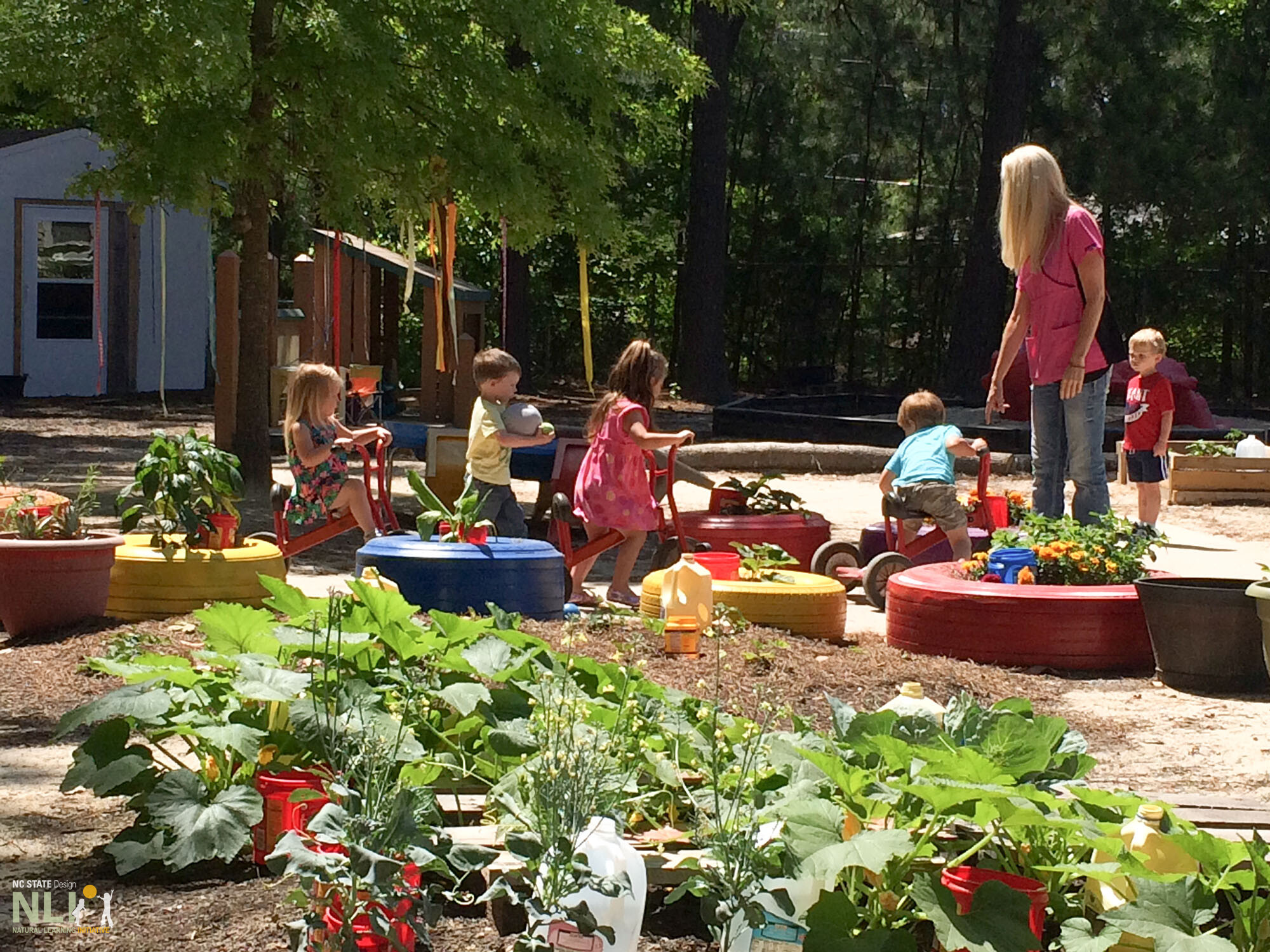
Container gardening is a practical, low-cost, space-efficient, and child-friendly approach to growing fresh produce at home, schools, and in childcare centers. Children delight in growing and eating their own food. Research shows that repeated experience with healthy food options increases the likelihood of learning healthy eating habits. Using containers can be a permanent, flexible gardening strategy or a short-term first step towards a larger scale installation. Either way, containers are great for growing tasty herbs, delicious salad lettuce, succulent strawberries, and much more (see listing, p.2). Success depends on six key considerations.
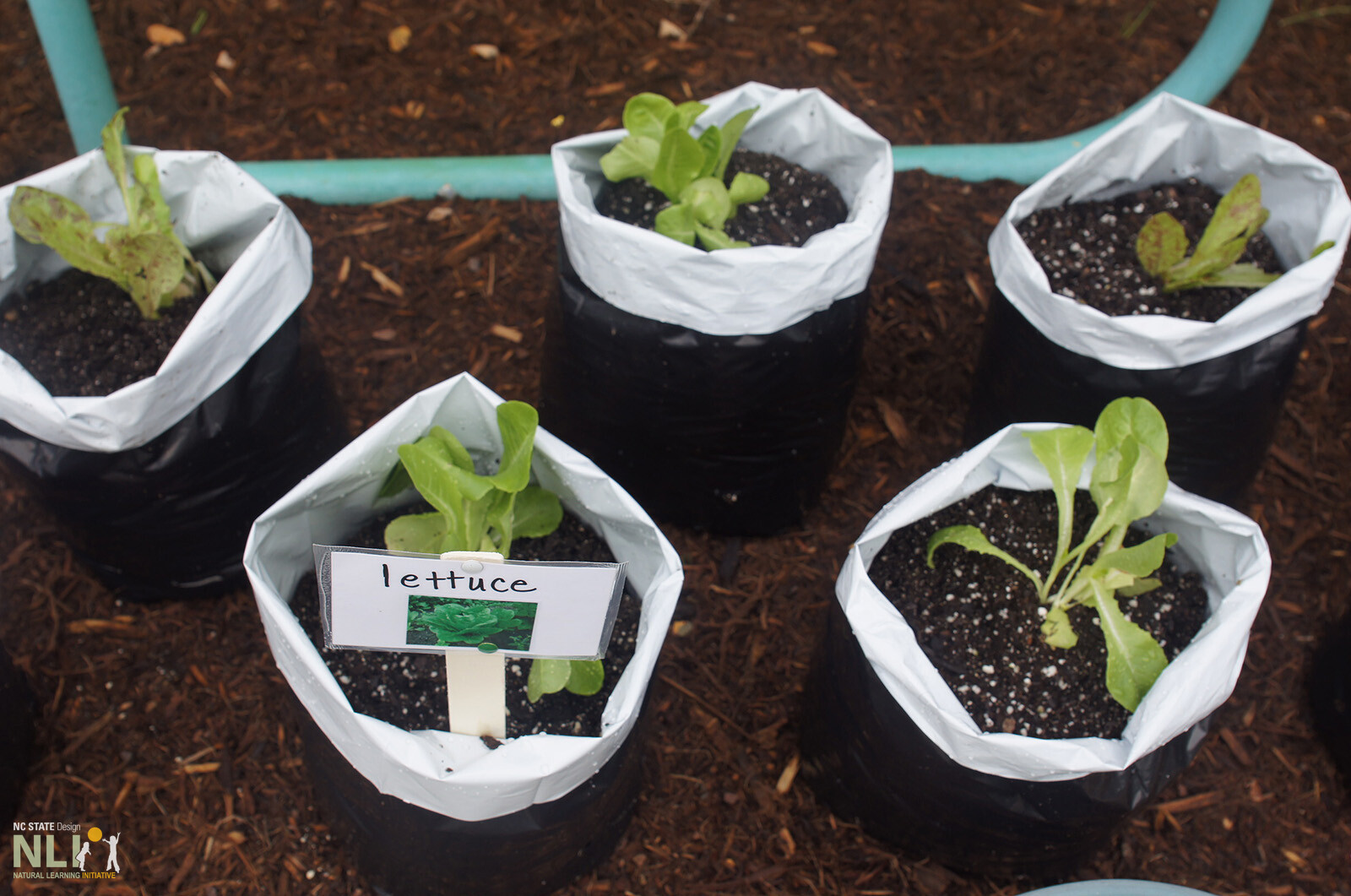
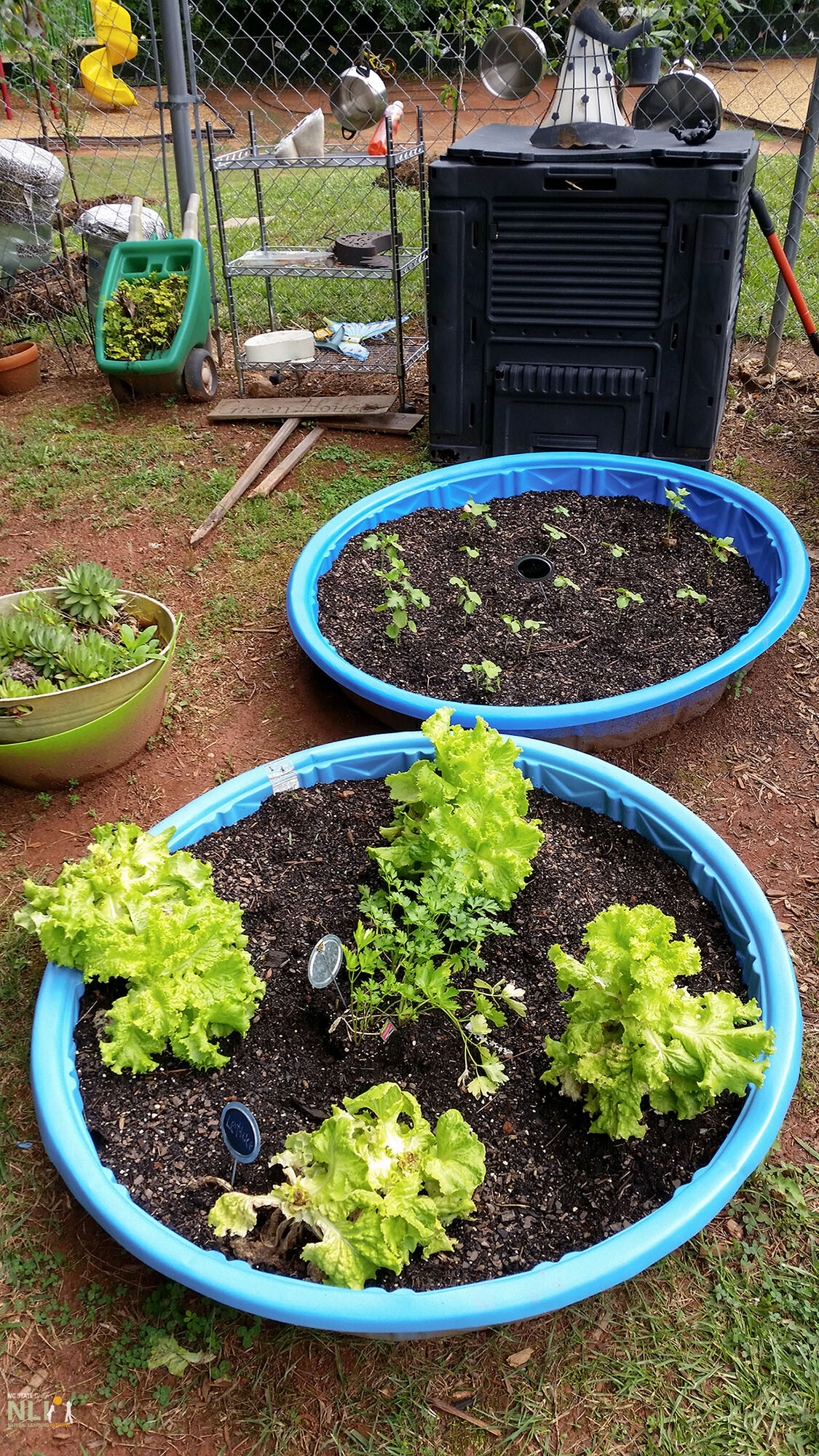
Container selection Edible plants can be grown in purchased, repurposed, or recycled containers, as long as they meet two basic requirements: enough space for fully mature plants and adequate drainage (holes drilled in container bottom). Recycled or purchased 5-gallon paint pails (10” dia.) are a sturdy, inexpensive, temporary or permanent choice. Handles make them easy to carry around. Repurposed dishpans/tubs, children’s wagons and splash pools, canvas bags, and even boots or shoes can work. Store-bought “grow bags” are another inexpensive choice. Available in different sizes, they are foldable and easily stored when not in use. Engage children in decorating containers to encourage ownership.
Suitable edible plants Many annual edibles and some perennial edibles can be grown in containers, guided by USDA hardiness zone constraints (see 4, below). Plants can be grown directly from seed or as transplants (see companion InfoSheets: Making Newspaper Seedling Pots and Starting Veggies Indoors. Plants that spread, such as melons and pumpkins, are not recommended. For plants that climb, such as peas, beans, and cucumbers, provide vertical support using stakes, cages, trellises, or adjacent fences to grow on. Plants with similar needs can share the same container if large enough. Many annual edibles make tasty micro-greens (see ‘M’ listing, p.2).
High-quality growing medium Usually called “potting mix,” a high-quality growing medium is critical to ensure that plants thrive in containers. Purchase in 2-cu.ft. bags from local garden supply stores. Using exclusively native soils in containers is not recommended. They are usually less absorbent, compacted, and less likely to provide enough nutrients to sustain vigorous plant growth.
Health and safety Although recycled tire planters work well for flowering, ornamental plants, do not use for edibles as toxins may leach into the soil and be absorbed by plants. Do not use harvested rainwater to water edibles. Use only potable water.
Transforming a play environment doesn’t require endless resources. With a few easy-to-find materials and willing volunteers, many settings and elements can be made at minimal cost, providing affordable opportunities for learning and play. This InfoSheet provides examples of creative and cost-effective ways to naturalize your outdoor learning environment (OLE).
Sunflower playhouse, maze, or path
Materials: sunflower seeds, garden soil, sunlight
Sunflowers are easy to grow — they just need water and sunlight! It’s always best to prepare the planting beds first, mixing in compost or good soil if existing soil is compacted. Try different sunflower varieties to see how they grow and compare them with the kids. After the sunflowers have bloomed, use them for flower arrangements or let the flowers dry out and hang down on the stalks for birds to enjoy as a food source.
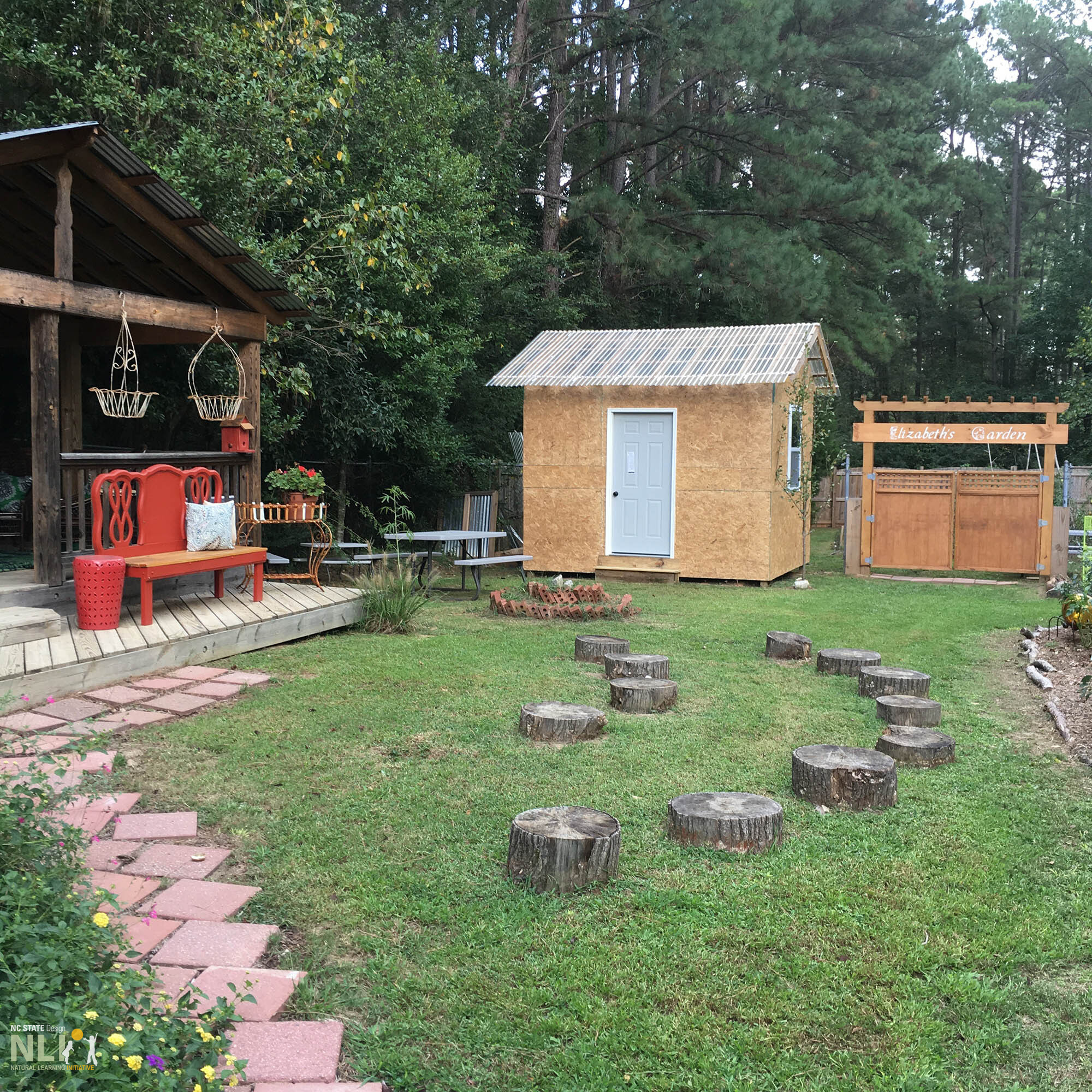
Log seat gathering place
Materials: Sliced segments of logs (8-18 in. thick)
Logs can usually be found in communities for free — talk to tree pruning companies to reserve tree segments before they grind them. Logs and stumps don’t have the same life span as a stone circle and will need replacing every five years or so. Red cedar, oak, maple, and other hardwoods last the longest. Make sure the edges of logs are smooth, using a power sander if necessary. Logs can also serve as a temporary boundary for earth and sand play settings.
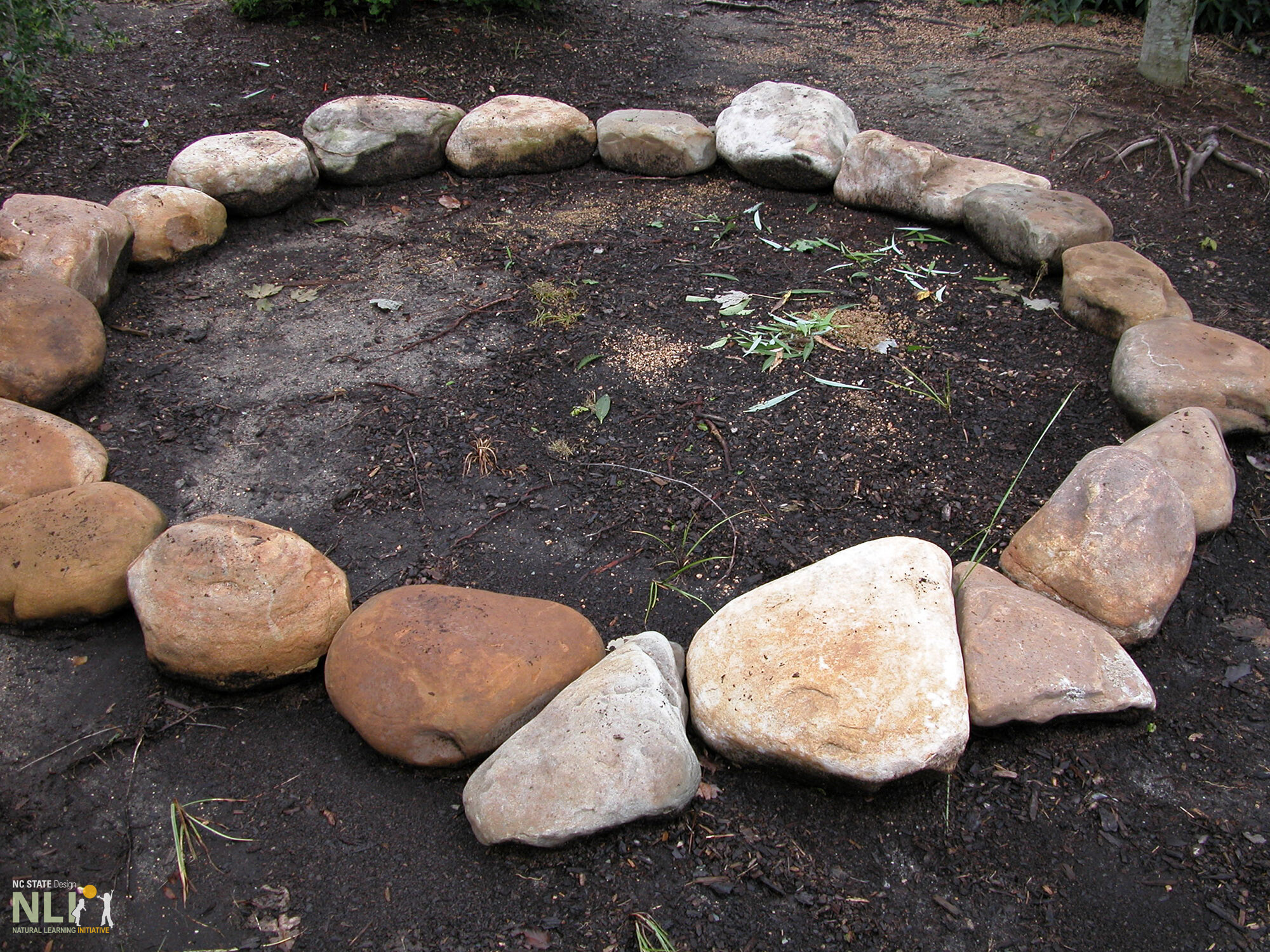
Boulder/stone gathering place
Materials: Rounded boulders or smaller stones
If located in a rocky region, rounded stones or boulders may be easy to find. If not, they may add cost to project installation. They last forever, however. In addition, they have many uses including seating and climbing. Smaller stones can provide loose parts, and path edging. Be sure to choose smooth, rounded materials and grind down any sharp edges.
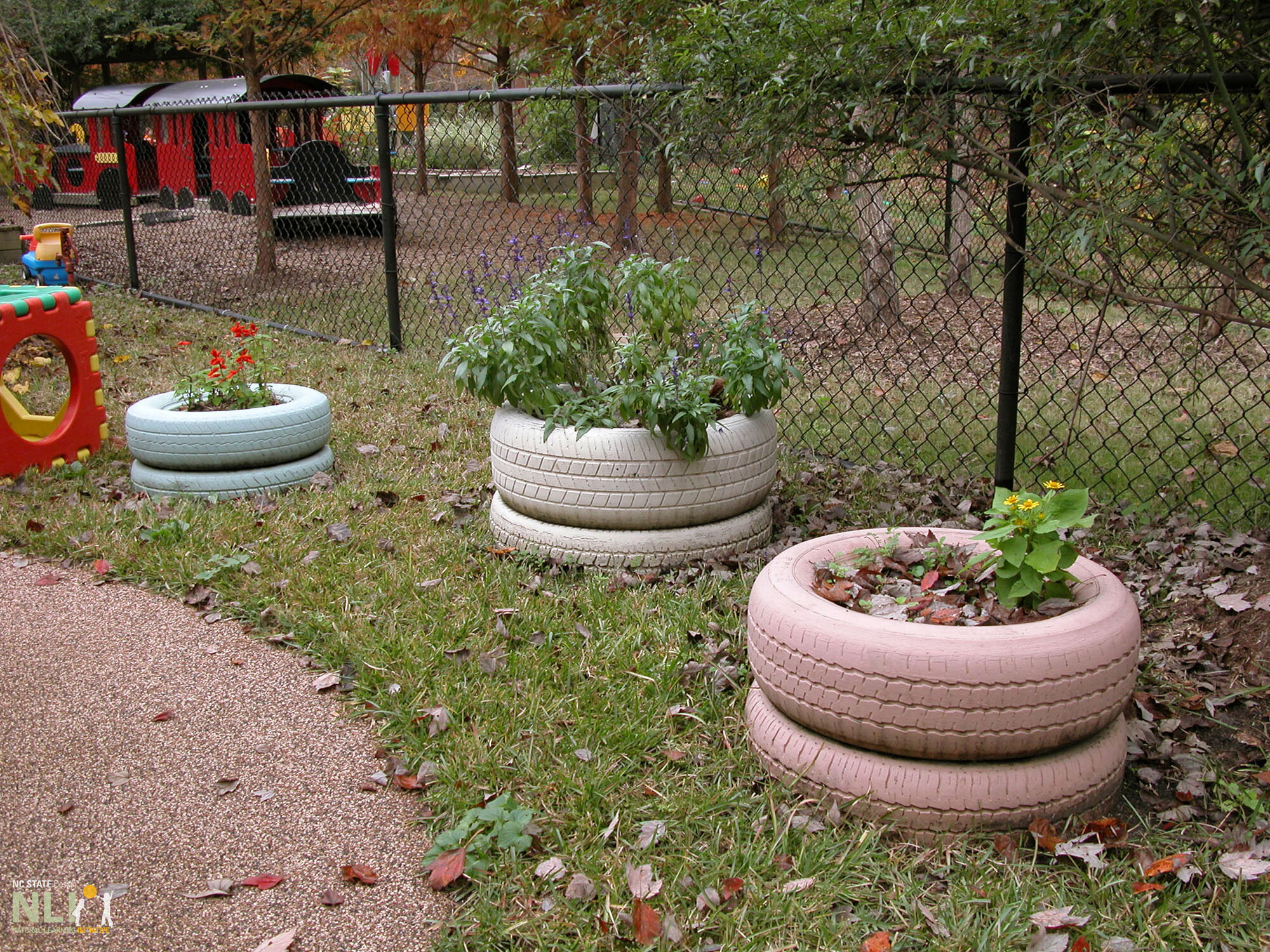
Tire planters
Materials: Tires, soil, non-edible plants, non-toxic paint, primer
Old tires can be used to create instant planting beds, path buffers, or border plantings. Tires can be found inexpensively at almost any local car repair shop or tire store. If stacking more than one tire, fasten them together so they don’t slide apart, using bolts to connect adjoining tire walls. Prime and paint tires with outdoor, nontoxic paint to enliven the outdoor learning environment. Choose light colors to minimize heat absorption and high temperatures! Note: Never grow edible plants in tire planters. As tires degrade over time, the plants may absorb toxic chemicals from the rubber.
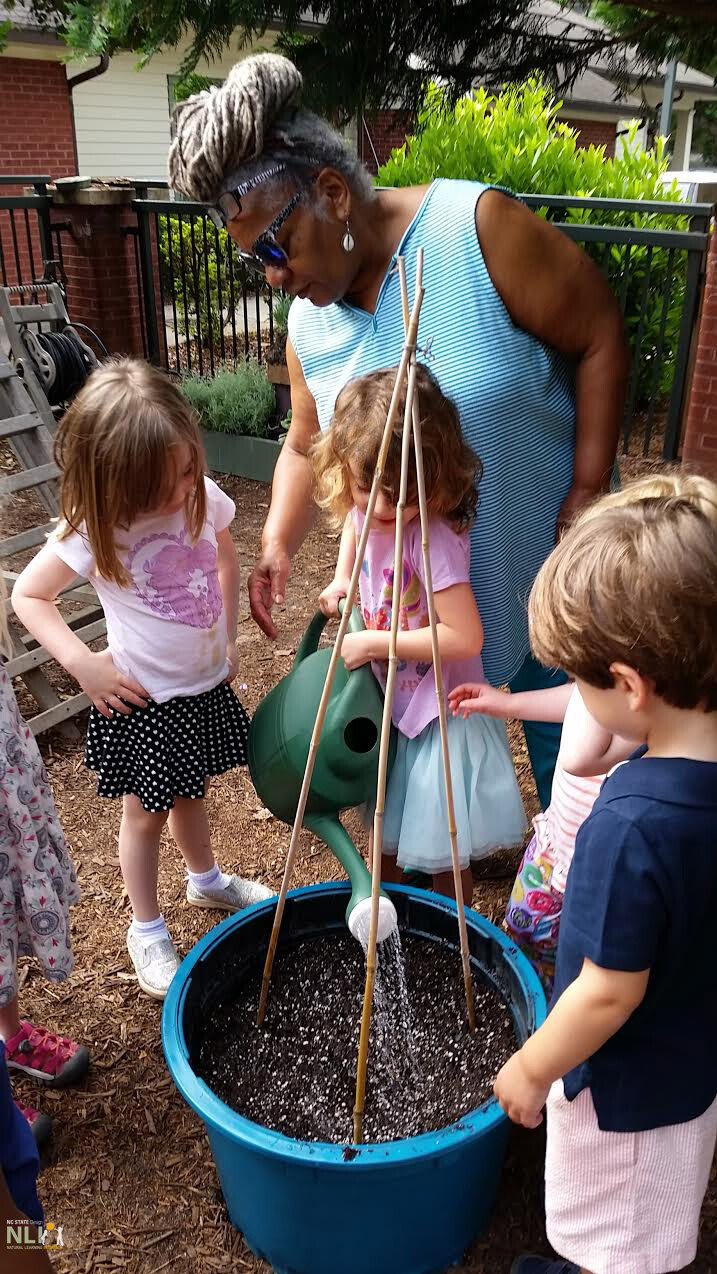
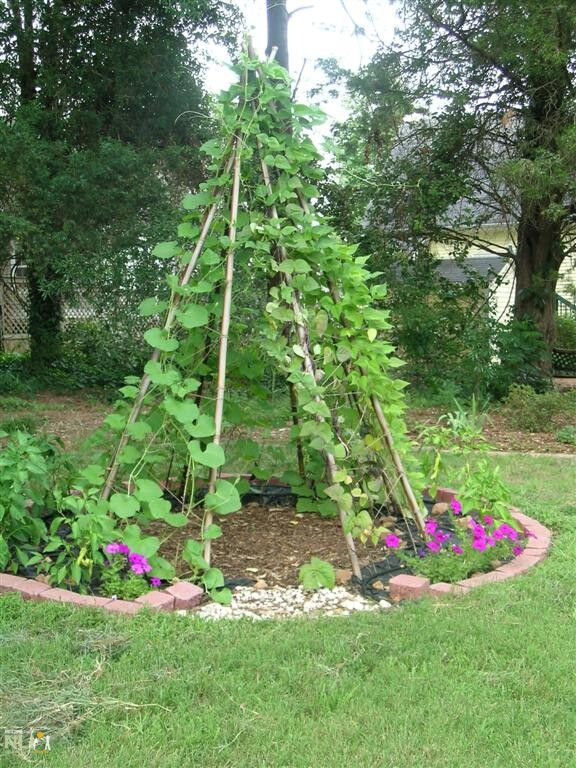
Vine teepee
Materials: Bamboo segments, zip-ties, vines
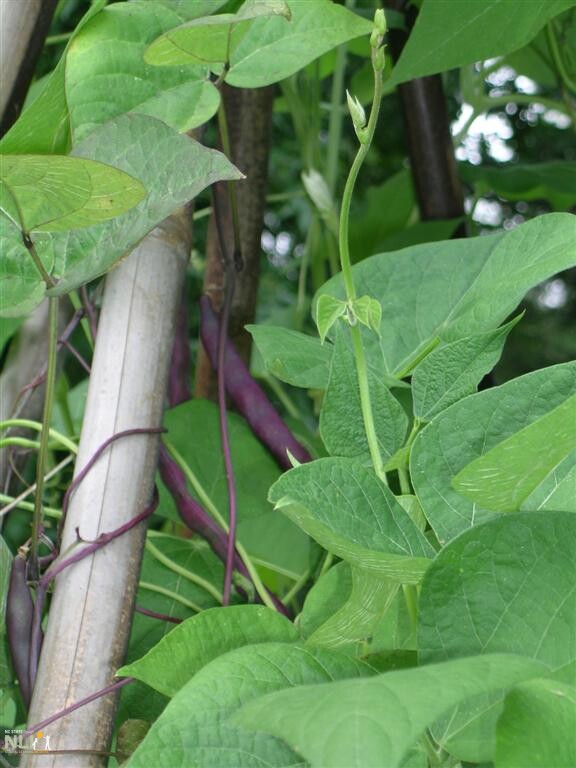
Vine teepees can serve as instant playhouses, secret spots, or vegetable trellises. “Escaped bamboo” in domestic yards may be harvested for play structures. Ask around the neighborhood, and be sure to get permission before extracting. The sturdier the bamboo, the better. Even the hardiest bamboo will need replacing after several years. Many kinds of climbing vines work well on teepees. Edible peas or beans, annual flowers, and perennial vines will all thrive.
Log benches
Materials: Sliced Log Segments, sandpaper
Log benches require a moderate amount of skill and tools to build and keep stable. Look for skilled volunteers and community support for log bench projects. Talk to tree removal companies to reserve tree segments. Logs can often be found for free. Red cedar and hardwoods provide the longest lasting logs. Sand edges smooth if necessary.
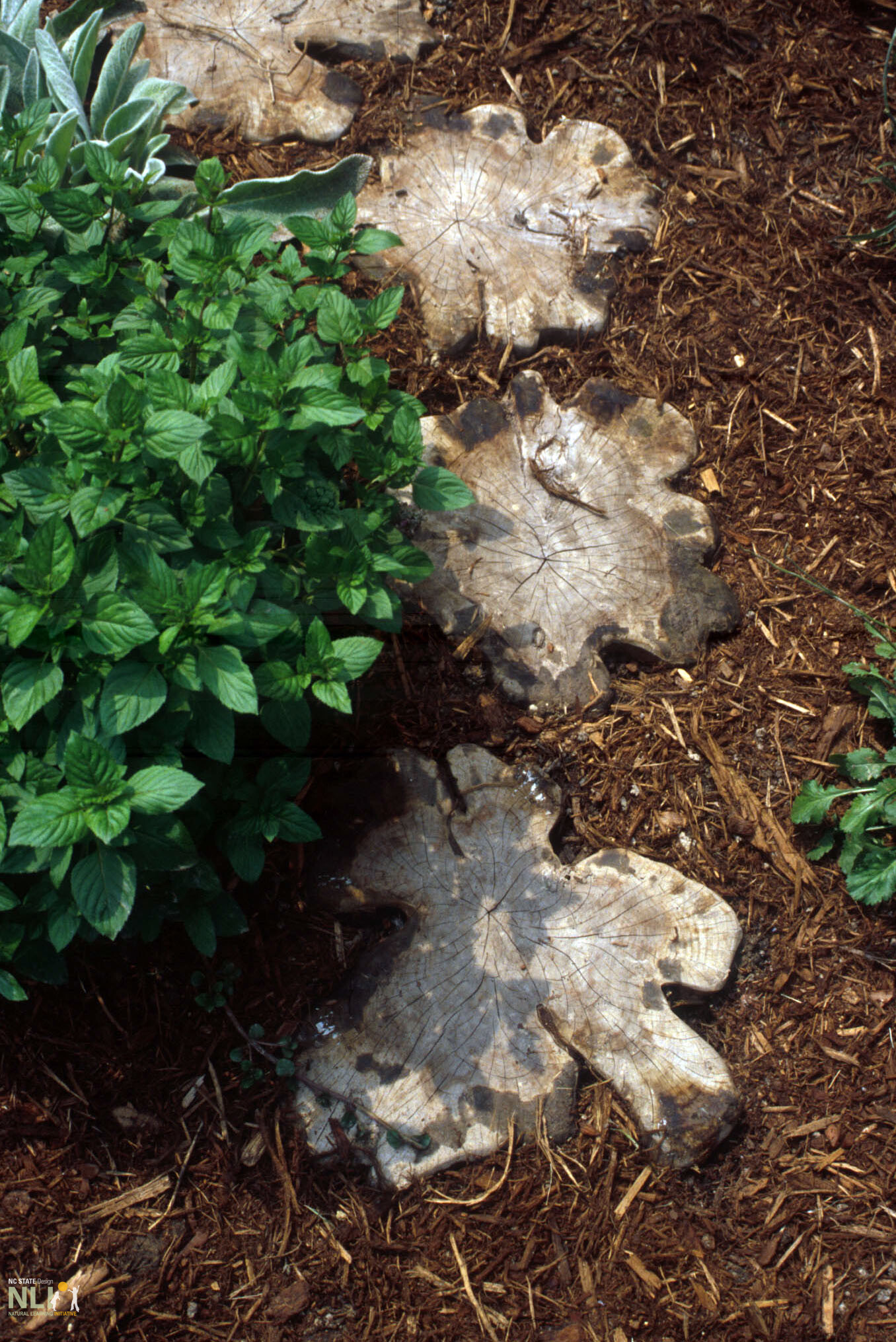
Tree cookies
Materials: Sliced segments of logs (3-6” thick)
Look around the community for sources of free logs to slice into tree cookies. Tree cookies can be used for a fun, temporary pathway As tree cookie lifespans are short, they will need replacing every few years. Hardwoods last longer than softwoods. Red cedar is ideal due to its resistance to decay; plus, the cookies have fun shapes.
Natural construction
Materials: Assorted safe and natural building elements
Natural materials are all that’s needed — kids do the rest! Materials may include bamboo poles, bark wedges, straw bales, small stones, log stumps, tree cookies, trimmed branches, pine cones, large leaves, burlap, cardboard boxes, and other readily available materials. Locate the natural construction area near a structure to build against, such as a wall or a grove of trees. Control stick length according to age group to avoid injury. All materials should be frequently inspected to ensure there are no sharp edges.
Natural playhouse
Materials: Sturdy logs, branches, zip-ties/rope
Collaborate with tree removal or landscape companies/crews to receive prunings, tree branches, and stumps before they grind them. The natural playhouses shown here required a moderate amount of skill and a few hand tools to assemble. The lifespan of a natural playhouse is variable but can be increased by using a sturdy timber frame to provide structure to the natural materials. Consider rebuilding the playhouse every few years as a fun learning project.
Raised garden beds
Materials: Boards or logs, good soil, time and effort
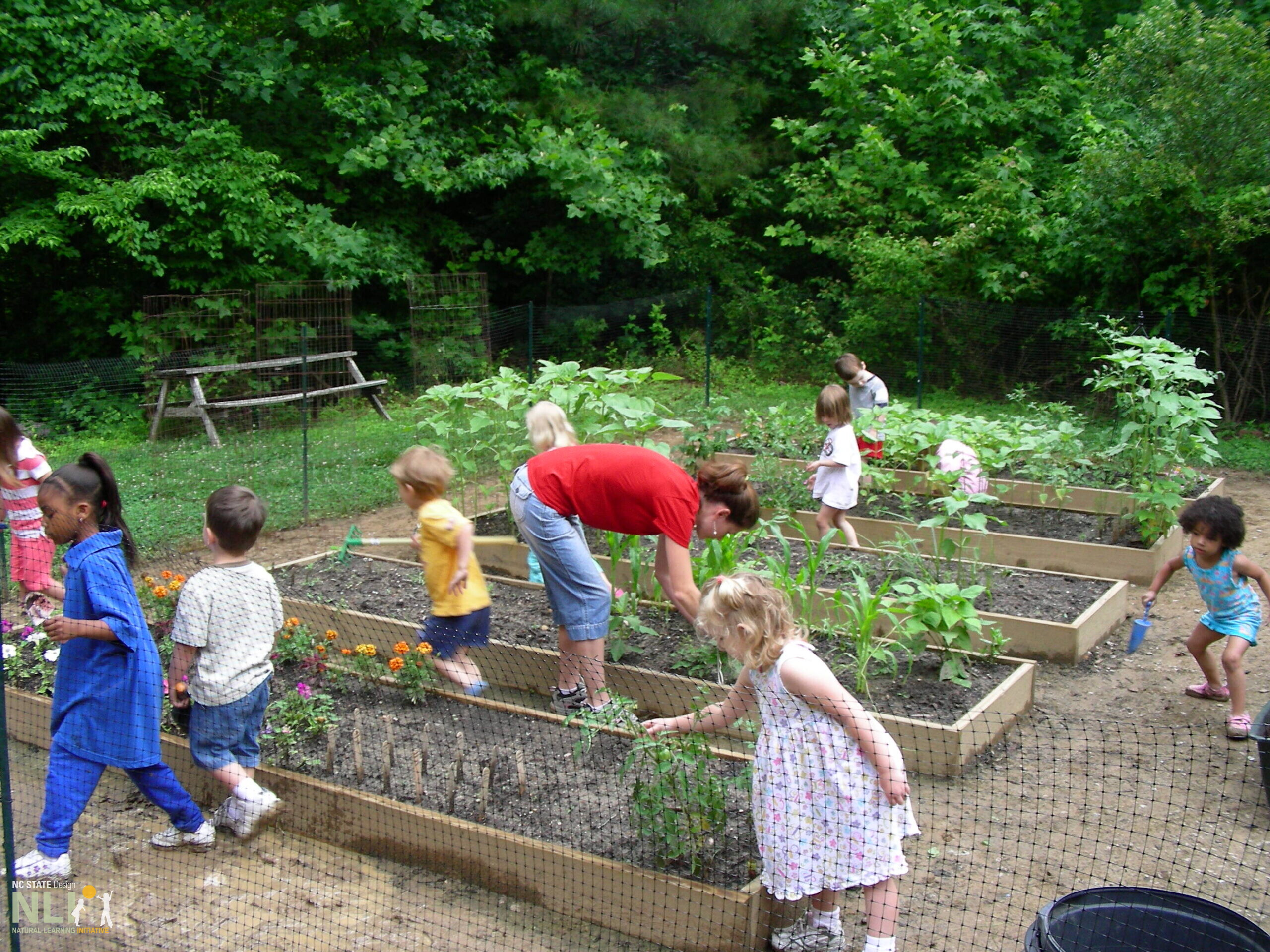
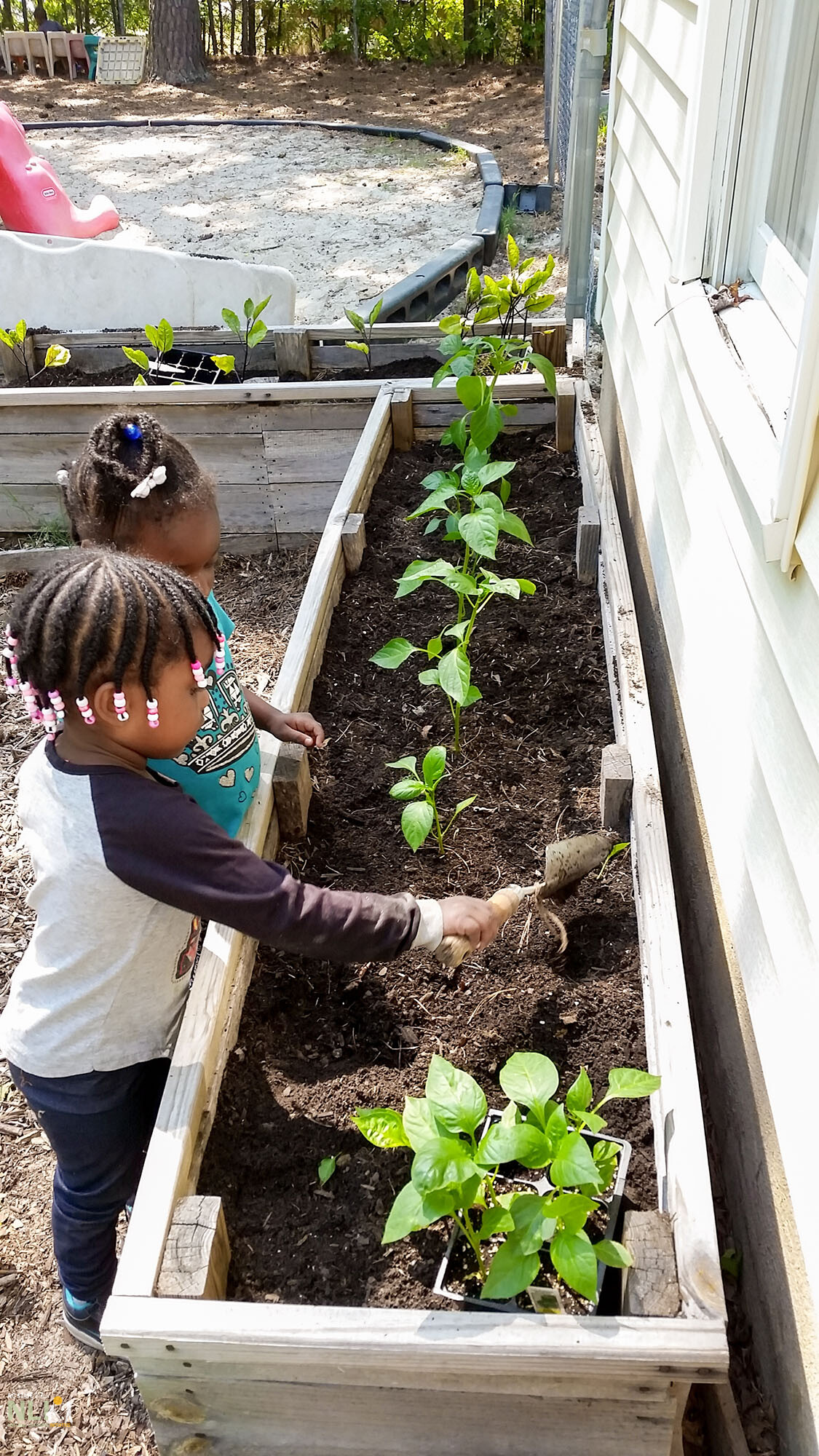
Raised garden beds can be constructed 12 to 24 inches tall. A wealth of information is available online on how to construct beds. Ready-made kits can be easily purchased. Railroad ties are not recommended for edible beds, as they may leach chemicals. If using pressure-treated lumber, add an impervious liner between the boards and the soil to protect against rot. To improve the soil, check local municipal yard waste centers — usually they give away or sell leaf mulch compost from street leaf collections.
Wildflower patch
Materials: Wildflower seeds, garden soil, full sun
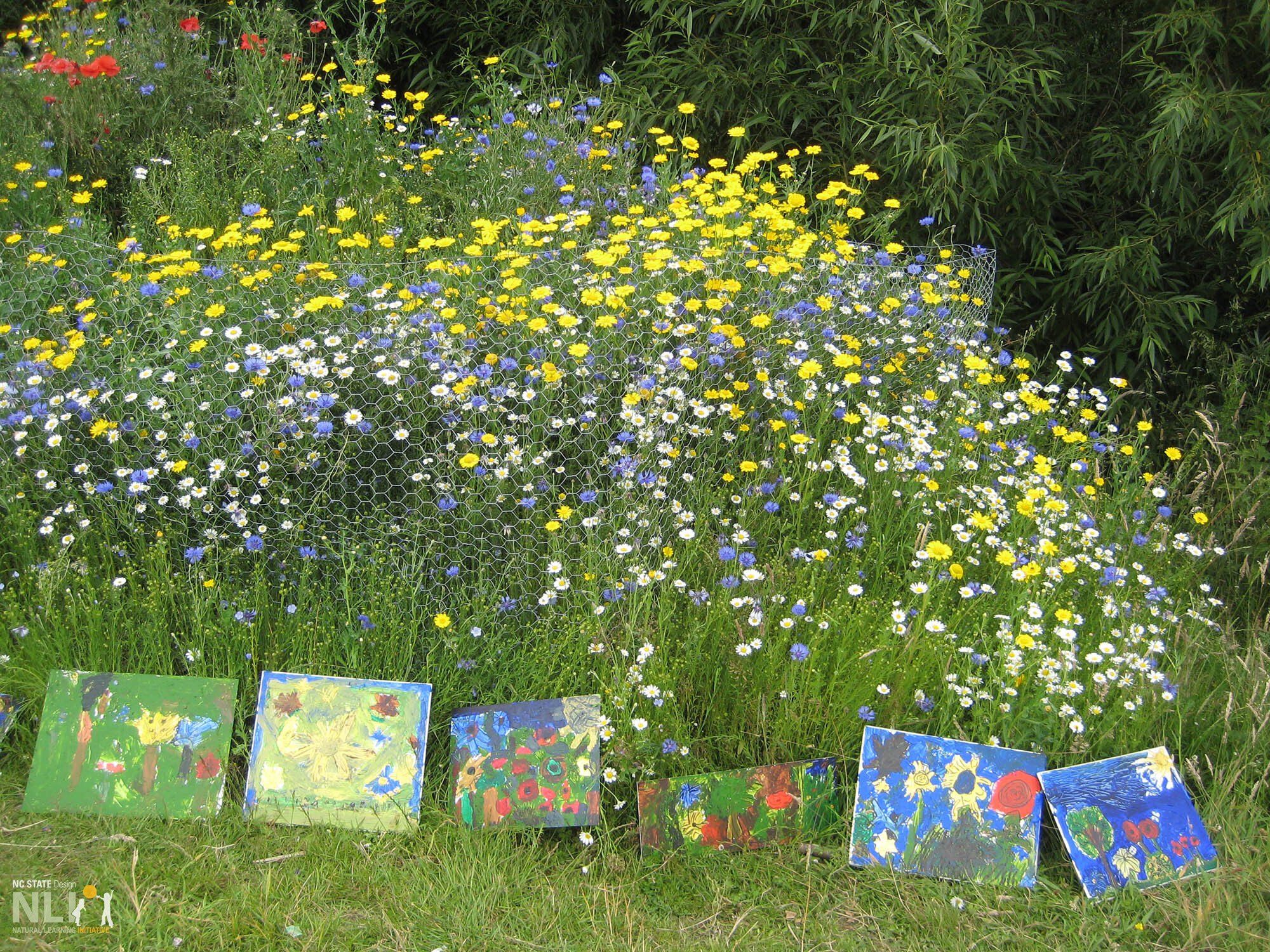
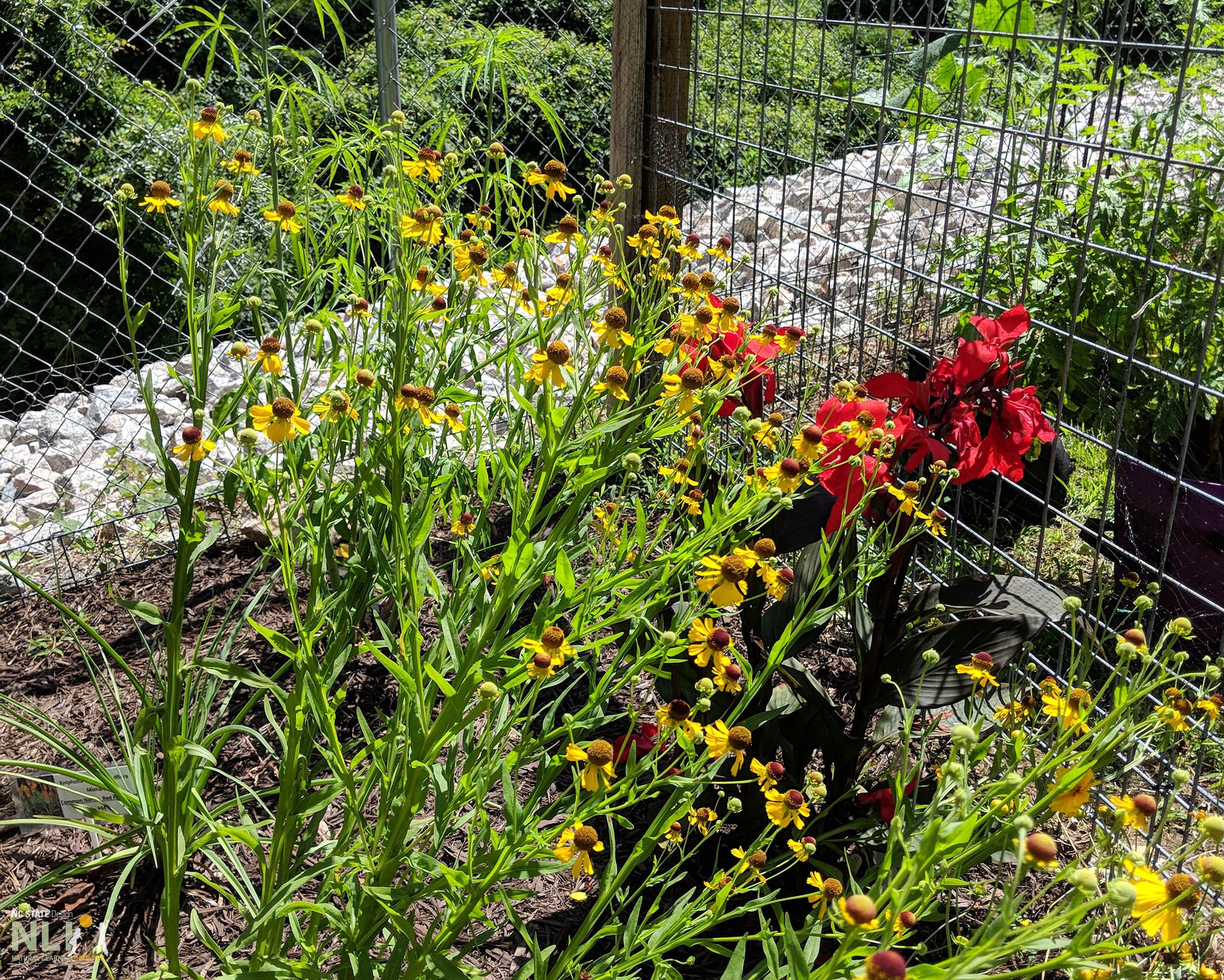
Packets of wildflower seeds are easy to find at local garden centers. Use the wildflower patch to replace grass or bare earth. Be sure to remove the grass before seeding. Prepare the beds by first mixing in some compost or good soil. Buy a few different mixes. Follow the instructions on the packet and see what comes up!
Terraced garden beds
Materials: Wood, sloped earth, amended soil
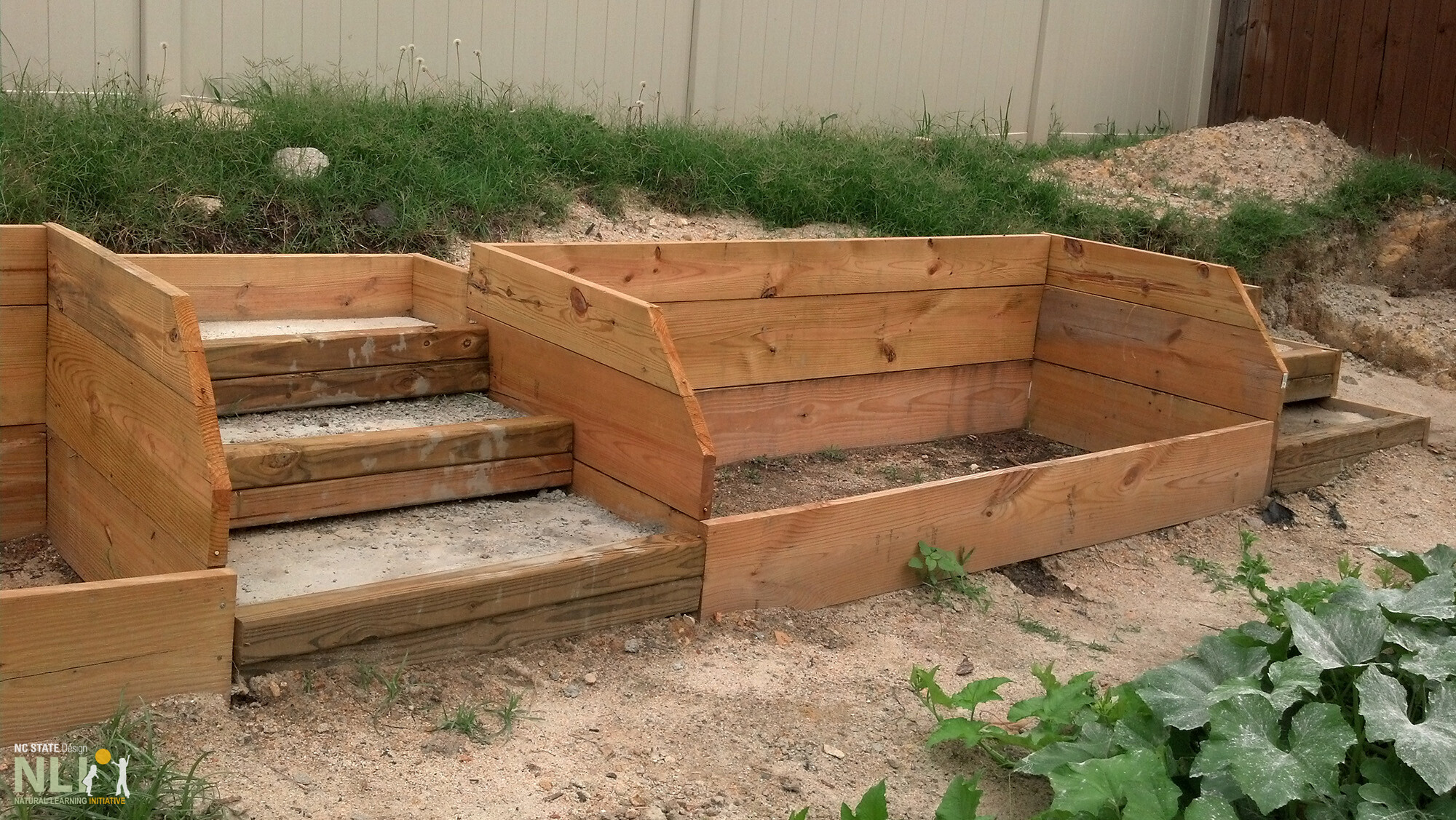
When planning an outdoor vegetable garden, consider uneven ground as a terracing opportunity. Terraced garden beds provide a flexible solution to otherwise difficult planting conditions. Terraces require a moderate amount of skill and effort to build — solicit help from skilled volunteers in the community.
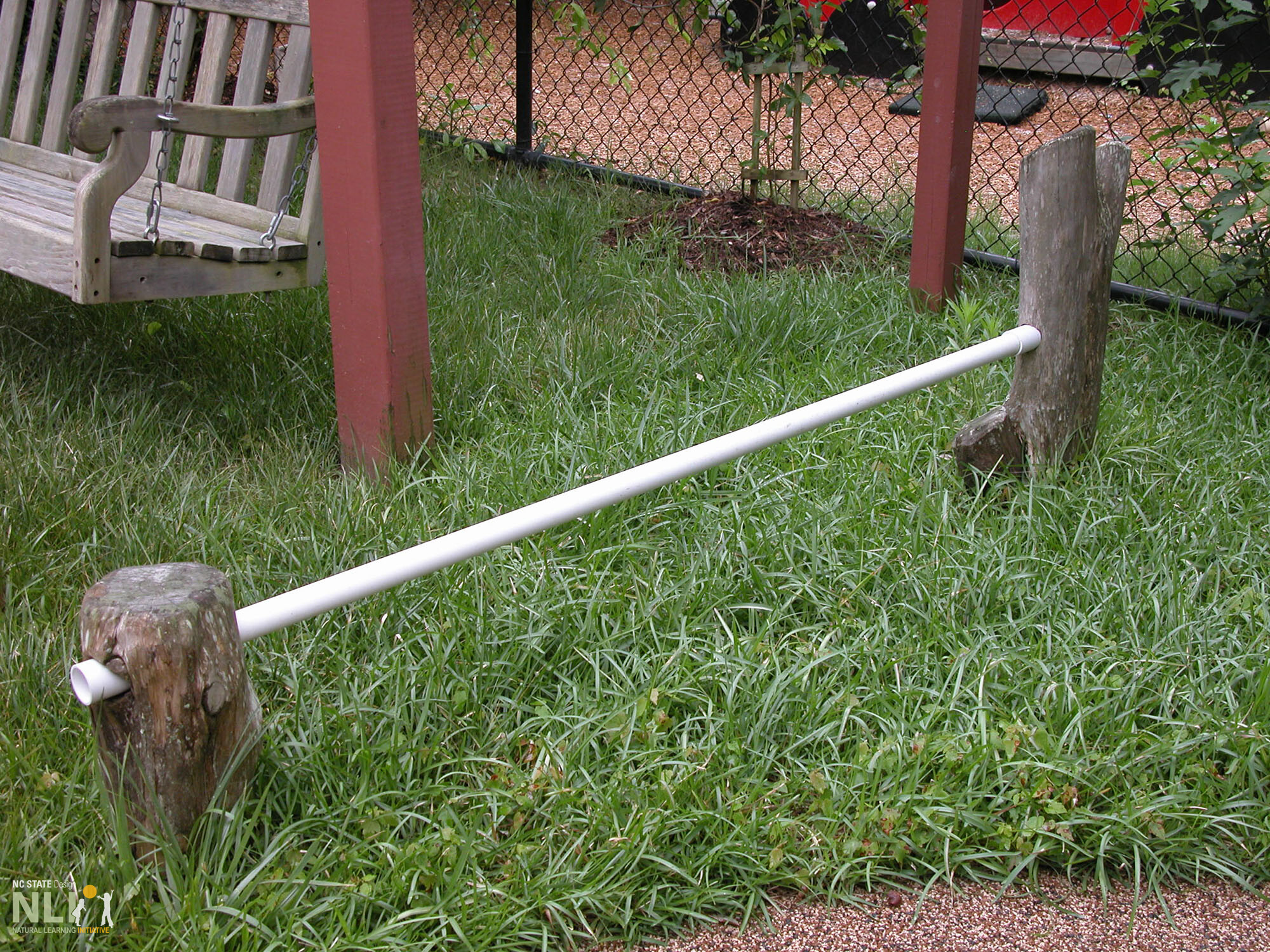
Pull-up bars
Materials: Log segments, bamboo/PVC pipe, drill
Pull-up bars help infants learning to walk to gain skill and confidence. They require a moderate amount of know-how and tools to install. Drill a hole (using a hole saw bit) in the side of each log so the bamboo or pipe can slide in. Bury the log 12—18 inches for stability. Dig a hole 4 inches wider than the log and tamp sand in the hole around the log to maximize stability. For a long-lasting solution use red cedar or other hardwood.
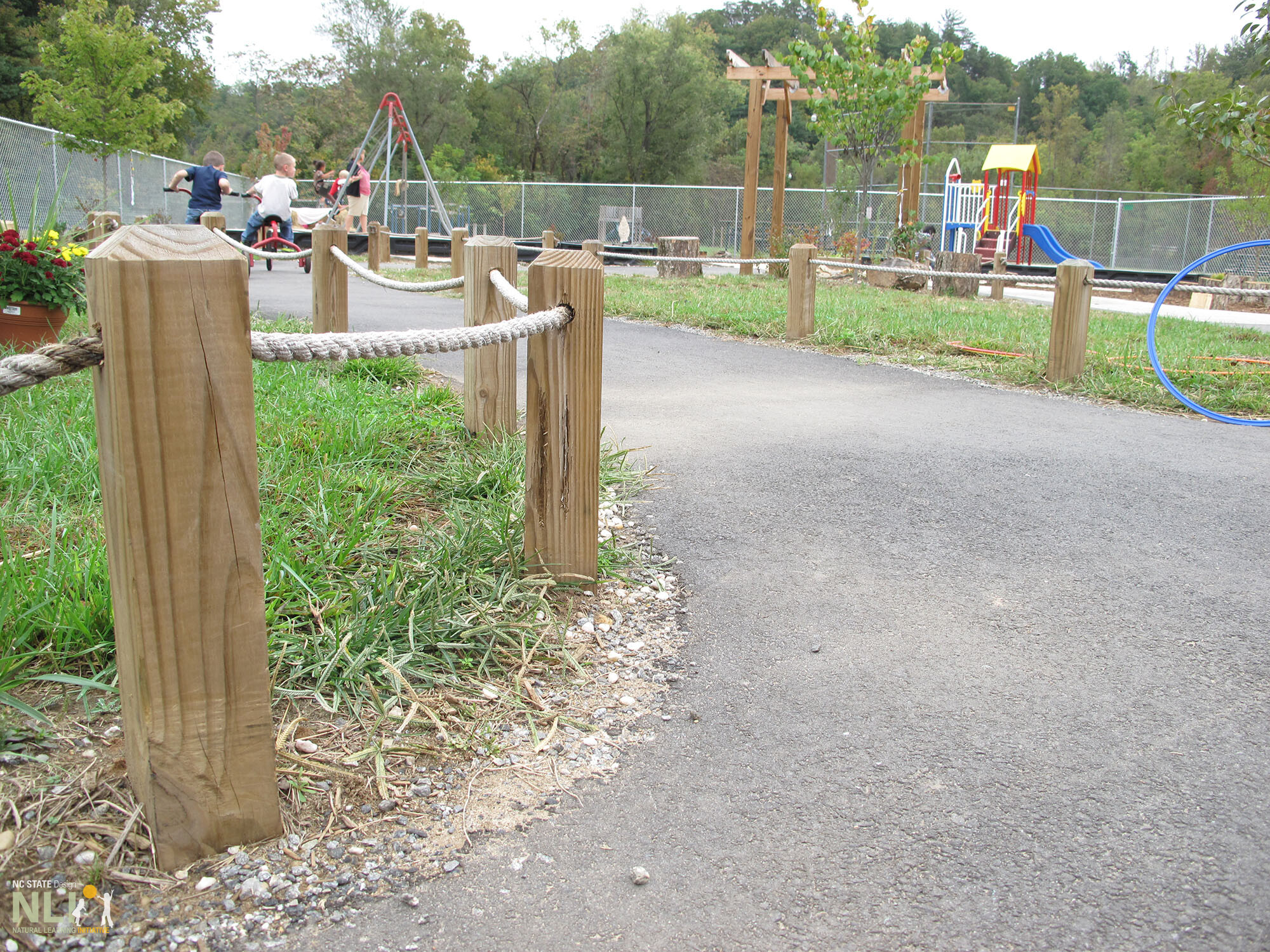
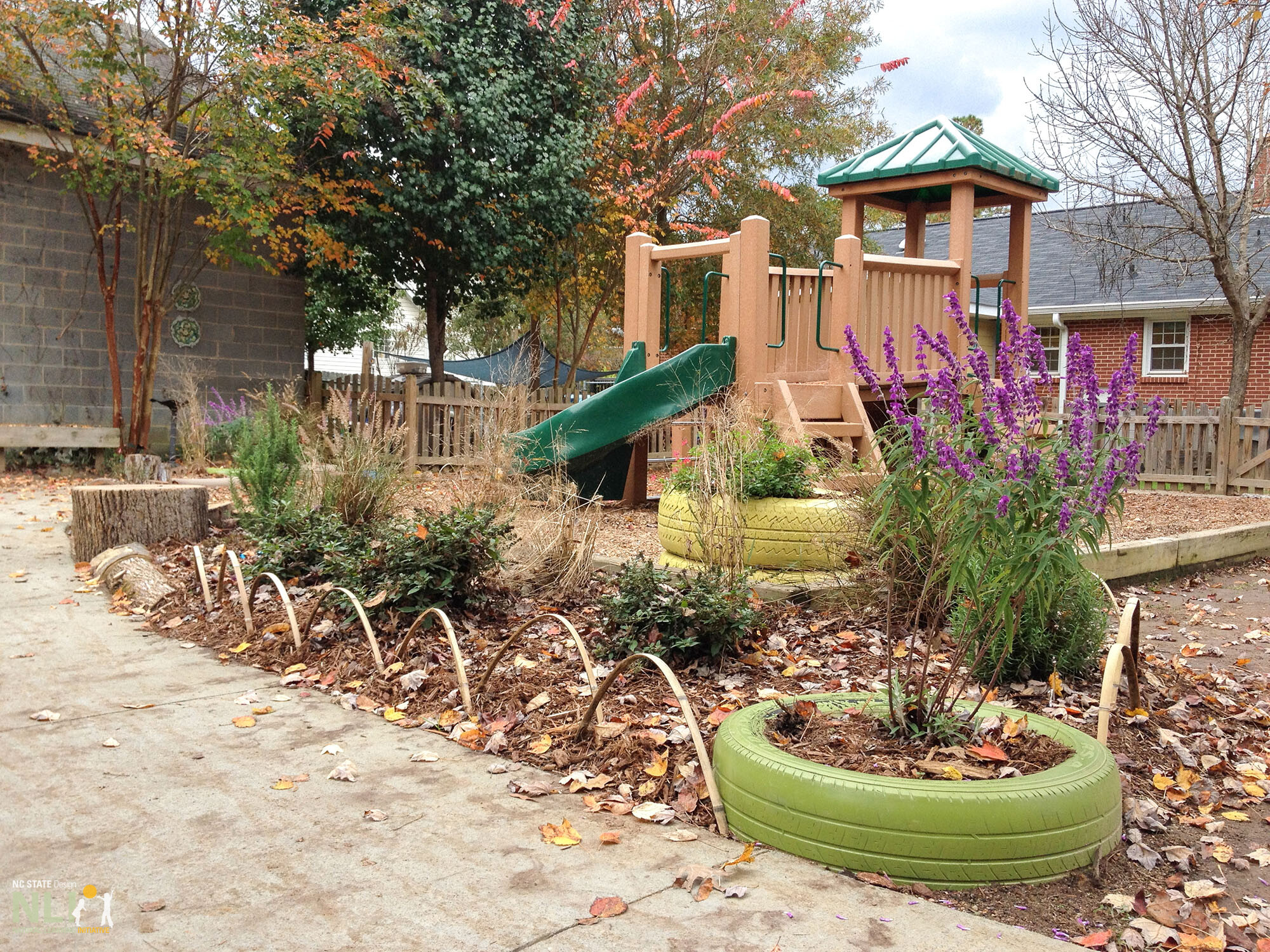
Plant protection boundary
Materials: bamboo, log segments, ropes, or any other material that creates a protective barrier
There are many ways to protect plantings from trampling feet. Regardless of chosen material, ensure that plant protection barriers are between 15—18 inches high to redirect the flow of foot traffic. Prefabricated, low fencing purchased from a home improvement store can be used or implement creative solutions with readily-available materials. Protection will nurture healthy and happy plant growth and increase the chance of successful plant establishment. Remember that OLE plants are an investment worth protecting!
A sunflower patch supports varied learning activities.
Log seating creates a gathering place and small amphitheater.
A stone circle gathering place.
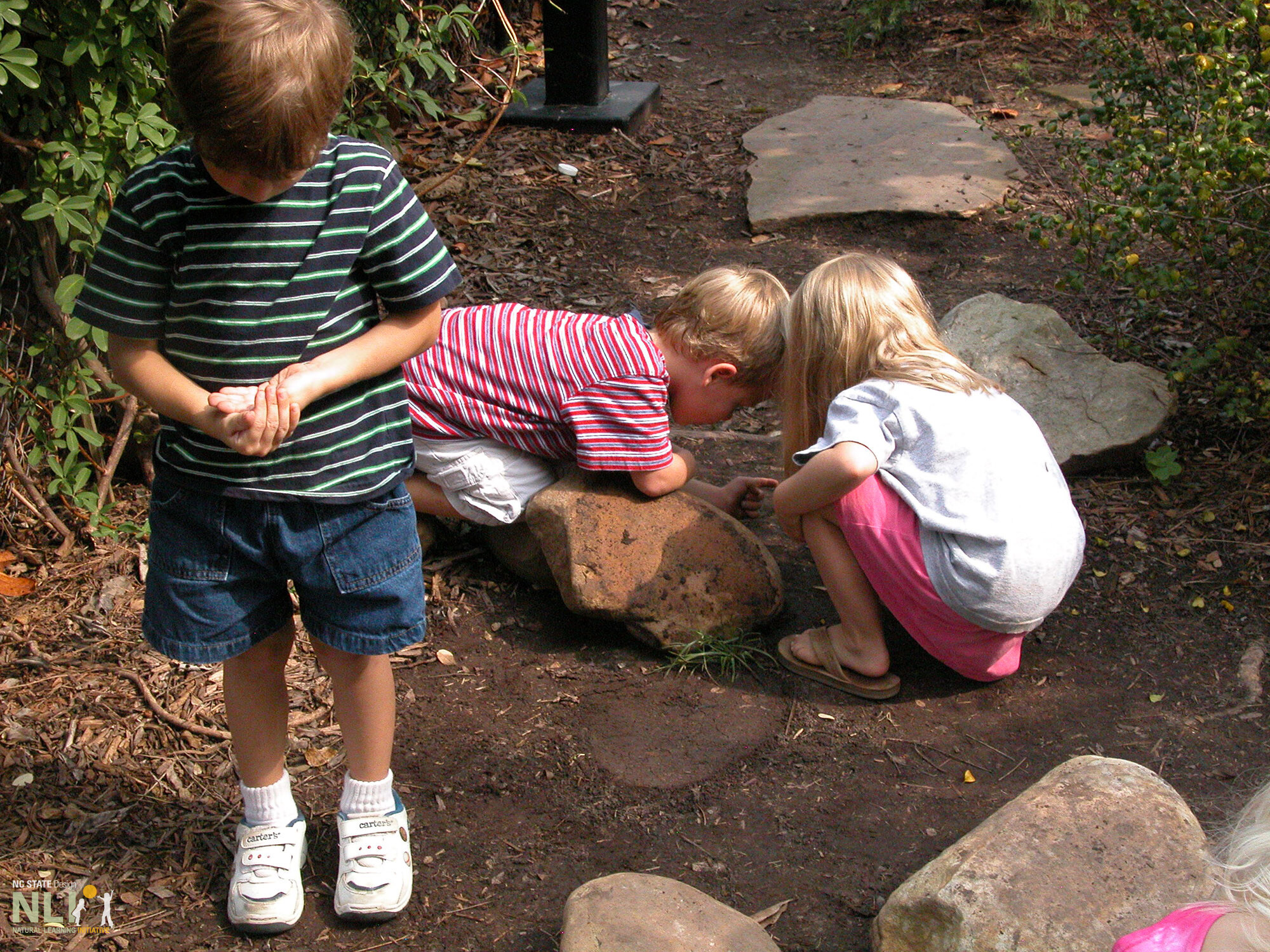
Turnover stones invite discovery.
Stacked tire planters, painted with light colors to deflect heat.
A teepee growing supporting vines.
Teepee vine beans.
Logs have been carved and cut into outdoor furniture.
Tree cookies form a secret, sensory pathway.
Semi-enclosed natural construction setting with tree cookies.
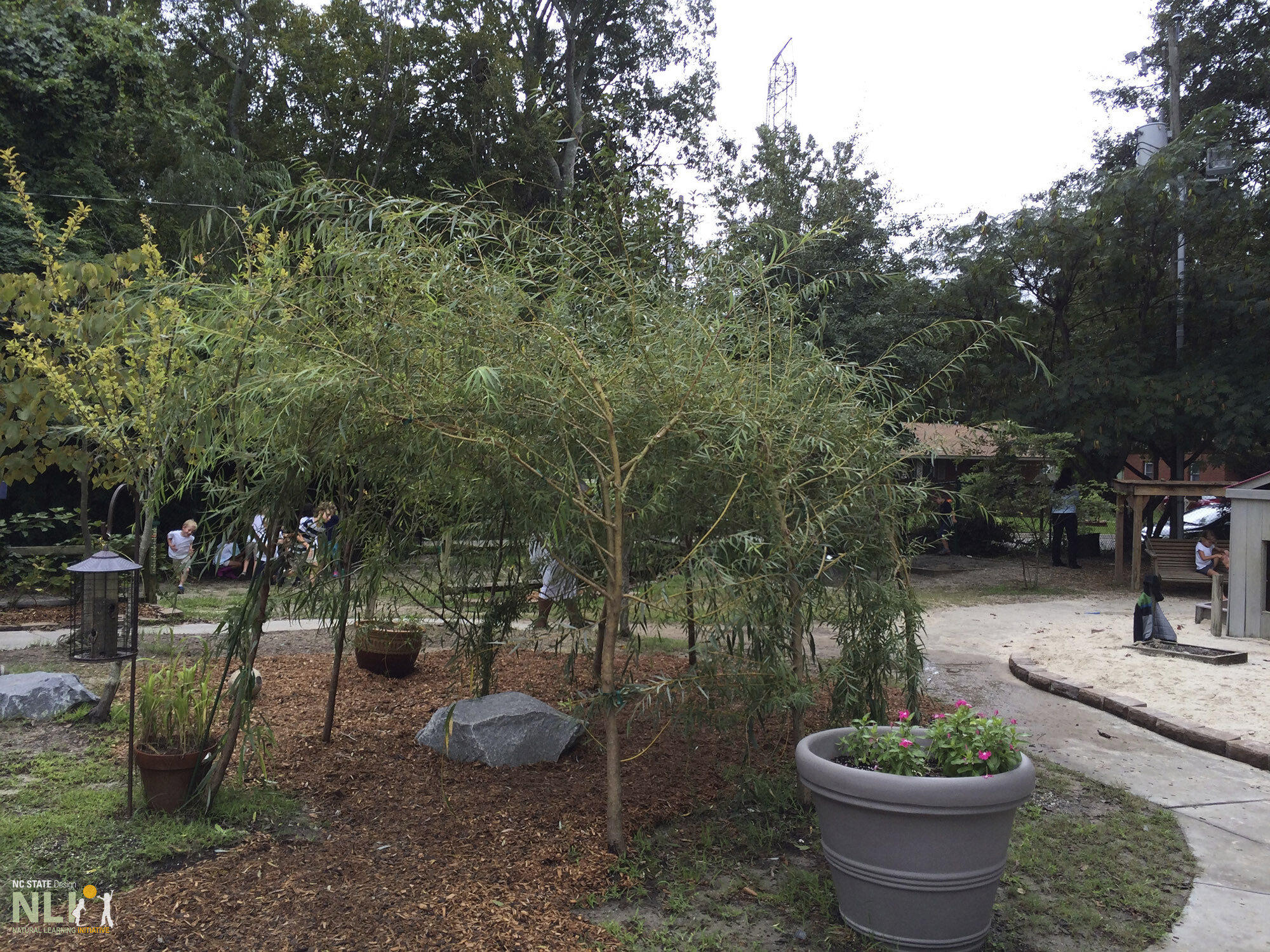
Natural playhouse made from willow trees woven together.
Raised bed gardens connect children to healthy eating.
Wildflower gardens inspire art expression.
Terraced beds allow for gardening in elevated or uneven areas.
A pull-up bar made from PVC pipe and hardwood logs.
Plant protection made from ropes and posts.
Rounded bamboo hoops protect plants adjacent to path.
Naturalized outdoor learning environments (OLEs) stimulate the diversity of children’s play experiences and contribute to healthy childhood development. Best practice design of OLEs incorporates trees, shrubs, vines, flowers, grasses, edible fruits and vegetables to connect children with nature and diversify their outdoor experience. This Infosheet discusses the benefits of engaging children with nature and presents examples of simple ways to naturalize OLEs in childcare centers and schools.
WHY NATURALIZE OUTDOOR PLAY AND LEARNING ENVIRONMENTS?
Today’s children and families may have limited opportunities to connect with the natural environment. Richard Louv called this phenomenon “nature-deficit disorder” in his book The Last Child in the Woods, and opened the nation’s eyes to the positive effects that nature can have on children’s development. Louv documented how modern family life has changed dramatically in the last two decades. Children spend more time watching television and playing video games than they do being physically active outside.
Families are eating more processed, high-calorie foods due to their busy schedules. Family sit-down meals are becoming a rare event. These changes have helped lead to an epidemic of childhood obesity, which presents serious health threats including heart disease, diabetes, sleep apnea, and social and psychological problems. Today in North Carolina more than one-third of young children are considered overweight and obese.
In the past decade, the benefits of children engaging with nature have been well documented in numerous scientific research publications. Collectively, this body of research shows that children’s social, psychological, and physical health are positively impacted through daily contact with nature, including:¹
Supports multiple development domains.
Nature is important to children’s development in every major way—intellectually, emotionally, socially, spiritually and physically.
Supports creativity and problem-solving.
Studies of children in schoolyards found that they engage in more creative and cooperative forms of play. Play in nature is especially important for developing capacities for creativity, problem-solving, and intellectual development.
Enhances cognitive abilities.
Proximity, views of, and daily exposure to natural settings increases children’s ability to focus and enhances cognitive abilities.
Improves academic performance.
U.S. studies show that schools using outdoor classrooms and other forms of nature-based experiential education support significant student gains in social studies, science, language arts, and math. Students in outdoor science programs improved science testing scores by 27%.
Contact with the natural world can significantly reduce symptoms of ADD in children as young as five years old.
Increases physical activity.
Children who experience school grounds with diverse natural settings are more physically active, more aware of nutrition, more civil to one another, and more creative.
Improves nutrition.
Children who grow their own food are more likely to eat fruits and vegetables and to show higher levels of knowledge about nutrition. They are also more likely to continue healthy eating habits throughout their lives.
Improves eyesight.
More time spent outdoors is related to reduced rates of nearsightedness (also known as myopia), in children and adolescents.
Improves social relations.
Children will be smarter, better able to get along with others, healthier and happier when they have regular opportunities for free and unstructured play outside.
Improves self-discipline.
Access to green spaces, and even a view of green settings, enhances peace, self-control and self-discipline within inner city youth, and particularly in girls.
Reduces stress.
Green plants and vistas reduce stress among highly stressed children. Locations with a greater number of plants, greener views, and access to natural play areas show more significant results.
CHILDREN NEED VITAMIN “G”
“Green environments are an essential component of a healthy human habitat” according to Frances Ming Kuo, a researcher documenting the positive link between nature and human health and social and psychological functioning. Kuo summarizes various research studies that show that humans benefit from exposure to green environments (parks, forests, gardens, etc.) and conversely, people with less access to green places report more medical symptoms and poorer health. Kuo uses the phrase “Vitamin G” (G for “green”) to capture nature’s role as a necessary ingredient for a healthy life. Evidence suggests that, like a vitamin, contact with nature and green environments is needed in frequent, regular doses.
Resources
For more information, including scientific references, see the NLI Research Brief: Impact of Early Childhood Outdoor Learning Environments (2019).
1. Children playing in a naturalized Outdoor Learning Environment.
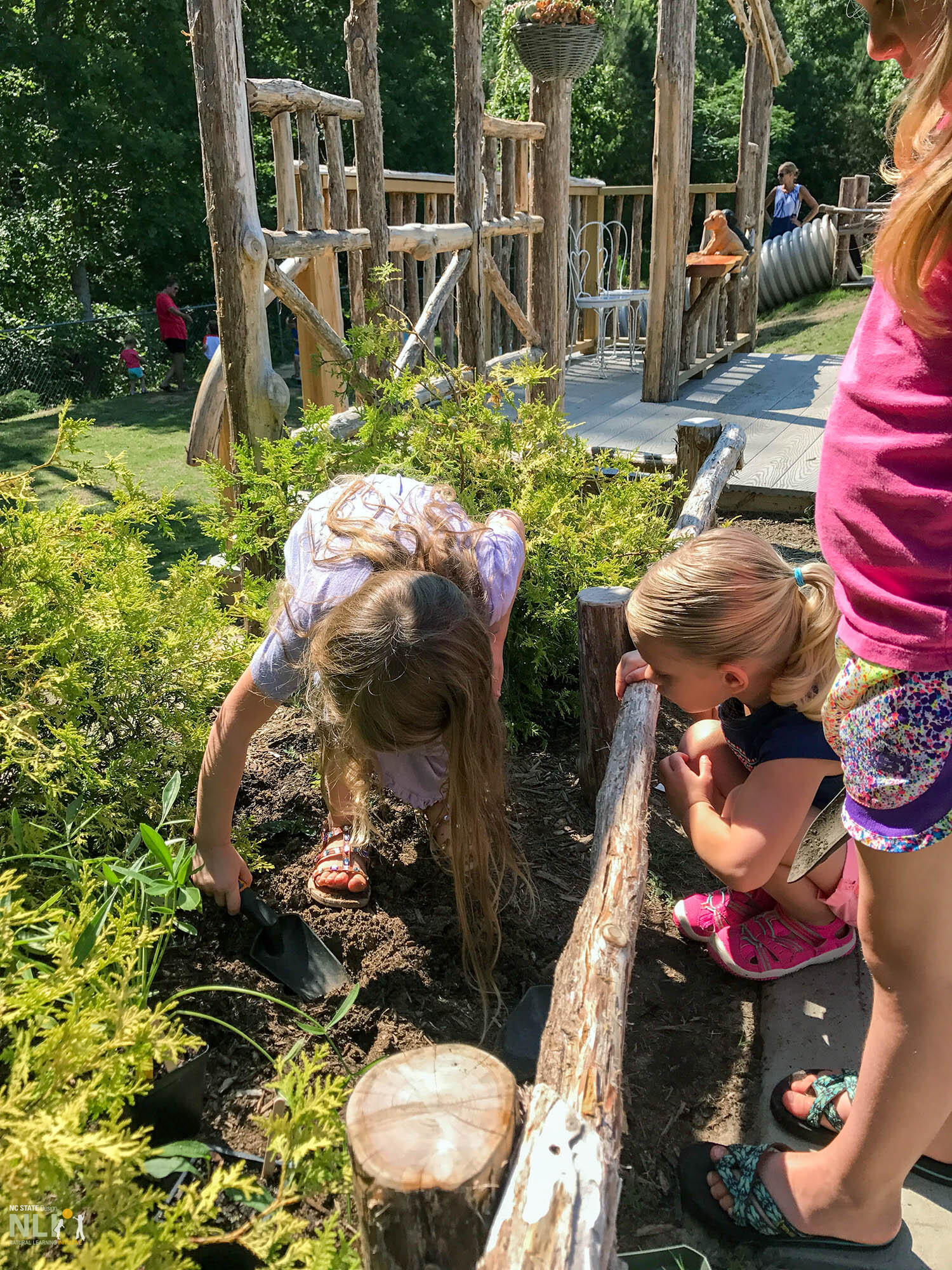
2. Digging in the soil of a raised planter.
3. Building together in a natural construction play setting.
4. Exploring a dry stream bed.
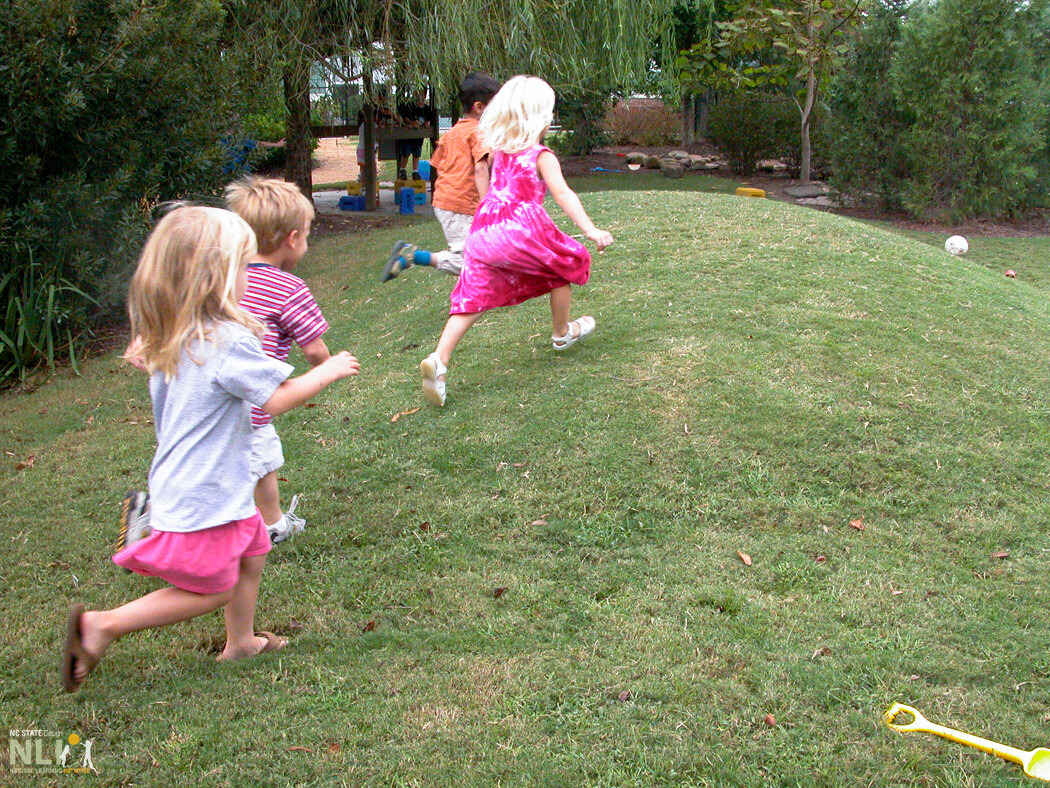
5. Hills and grassy lawns encourage active play.
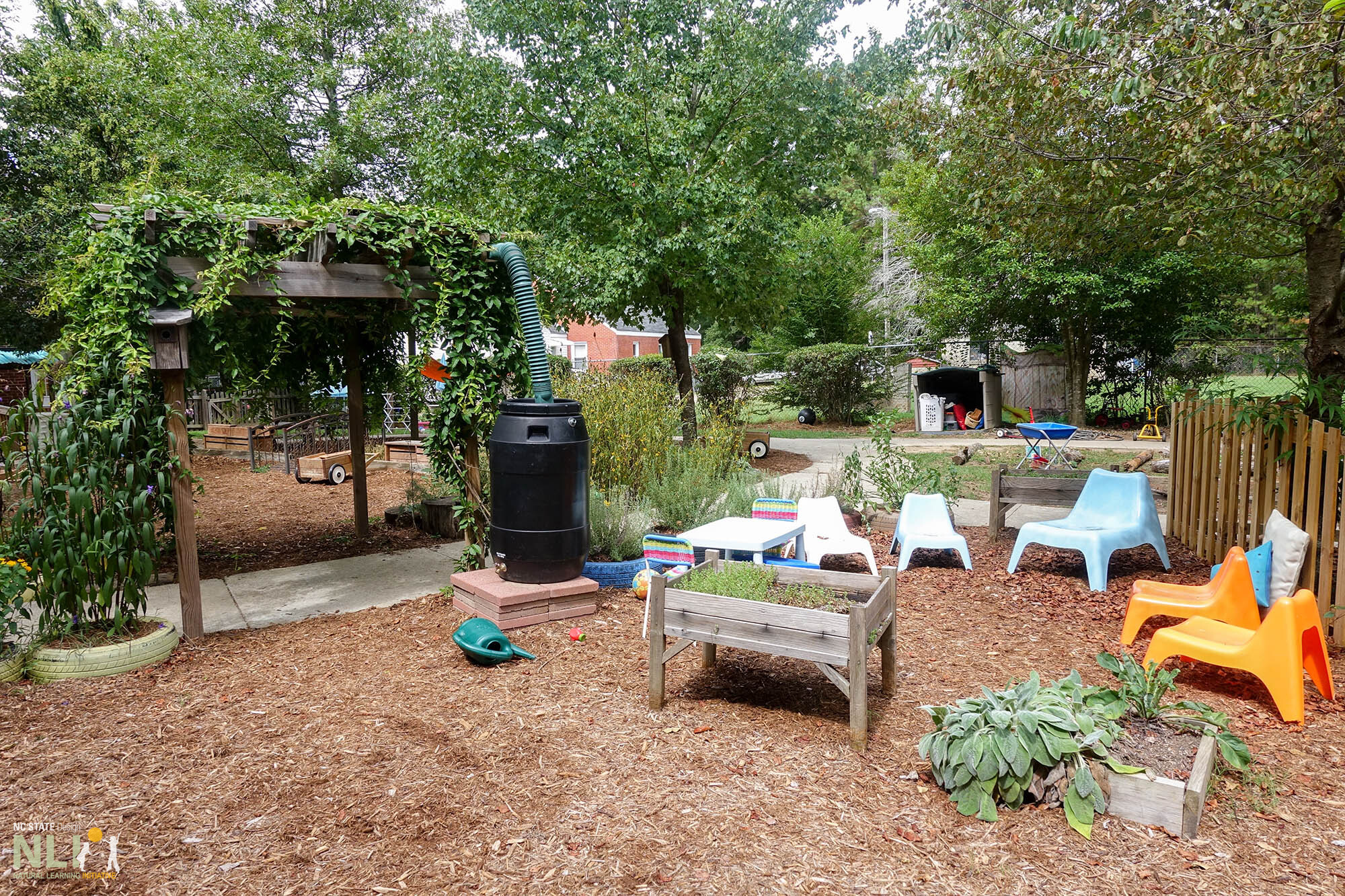
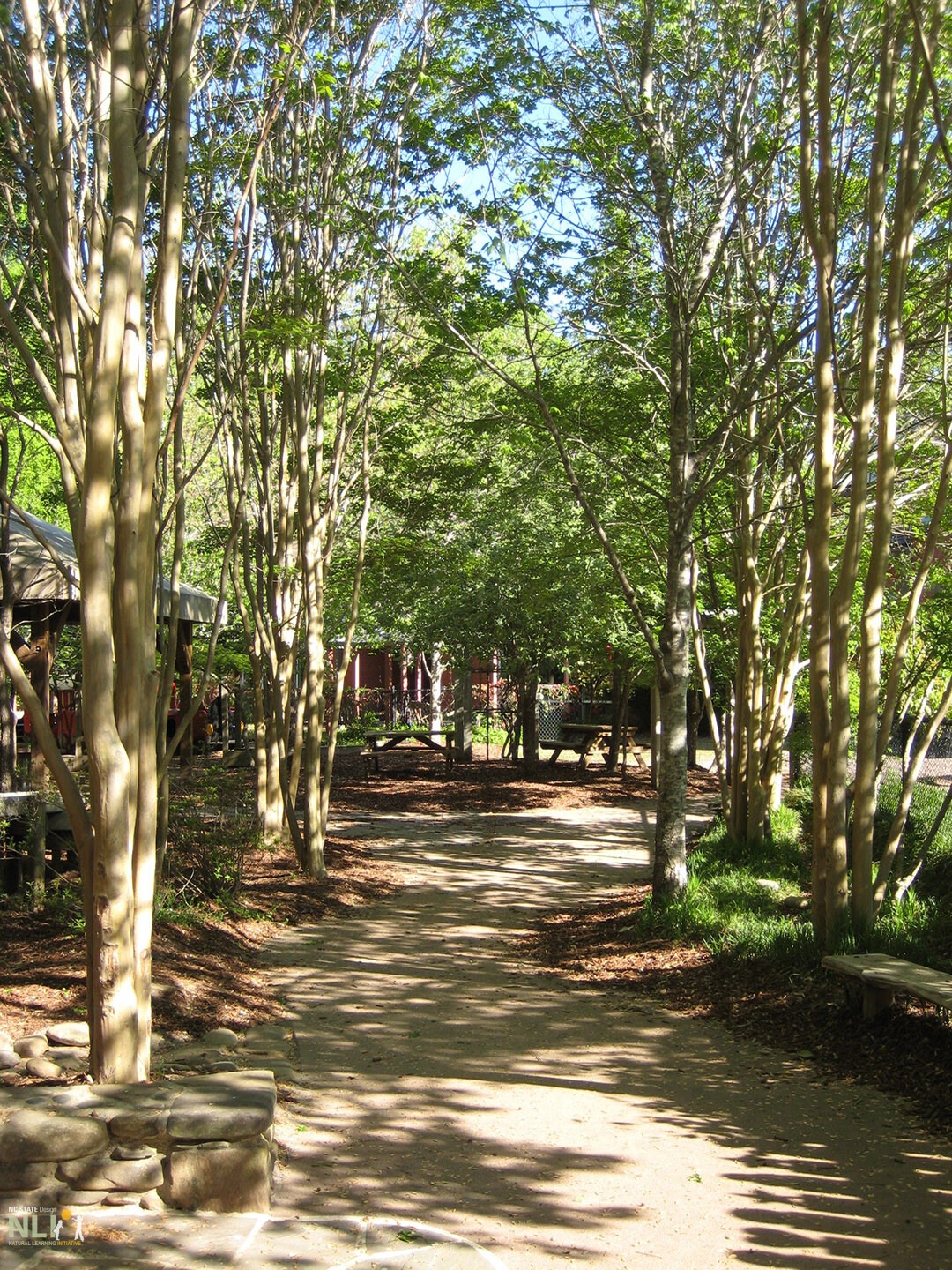
6. Gathering area at A Safe Place childcare center in Raleigh, N.C.
7. Raised bed gardening.
8. Primary pathways stimulate vigorous physical activity and access to the natural settings.
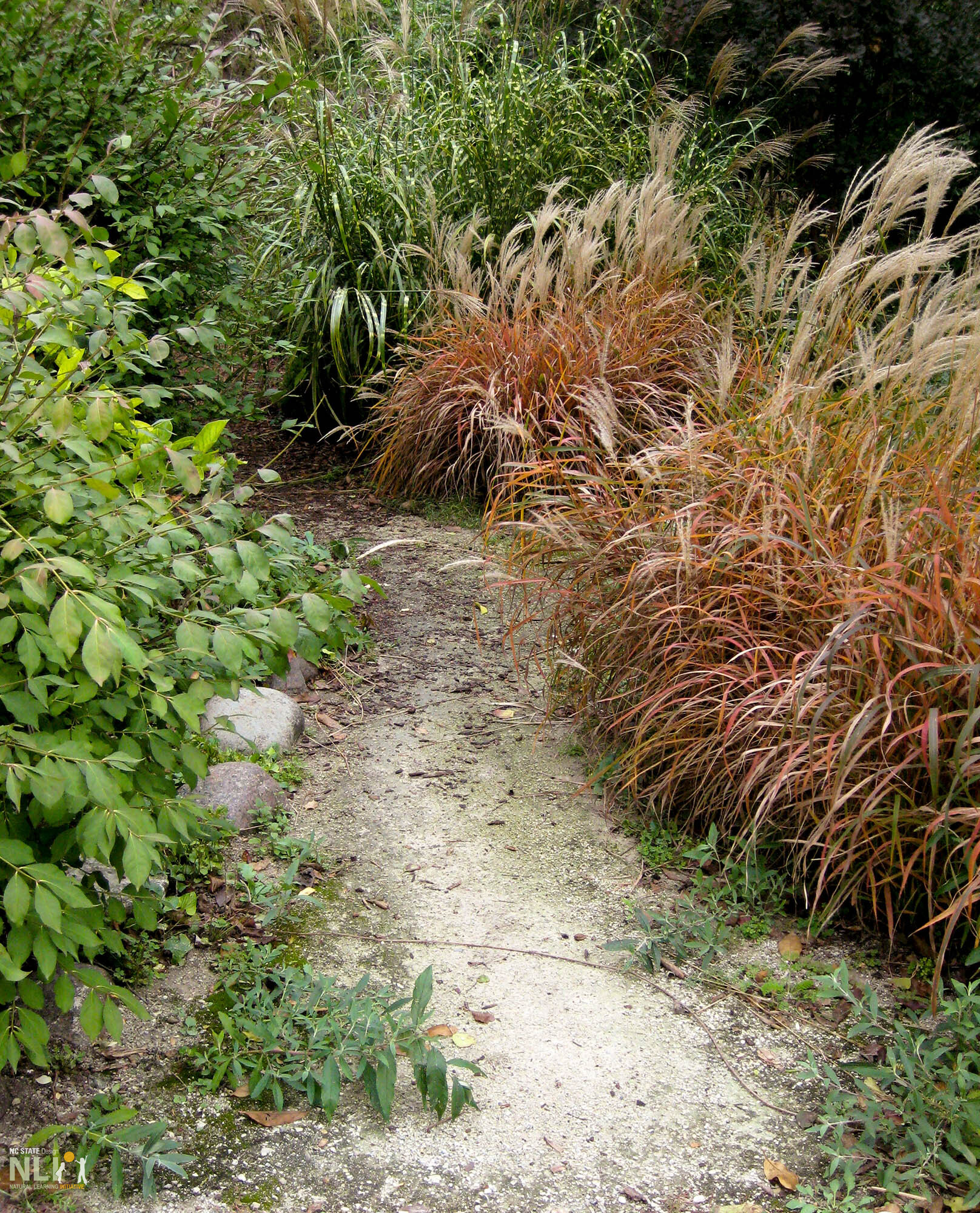
9. Secondary pathway bordered by decorative grasses and other perennial plants invites exploration.
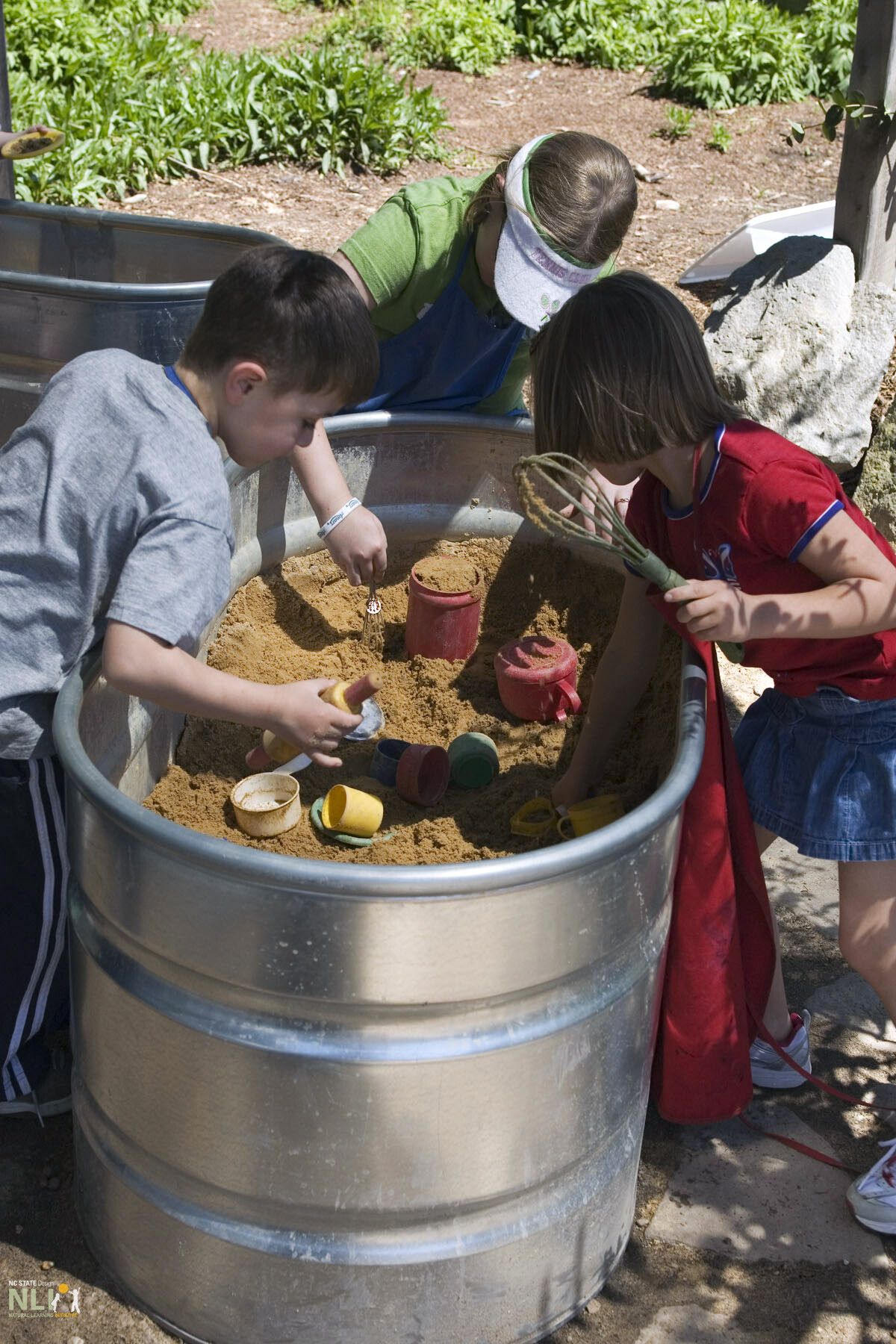
10. Fun at a mud cafe.
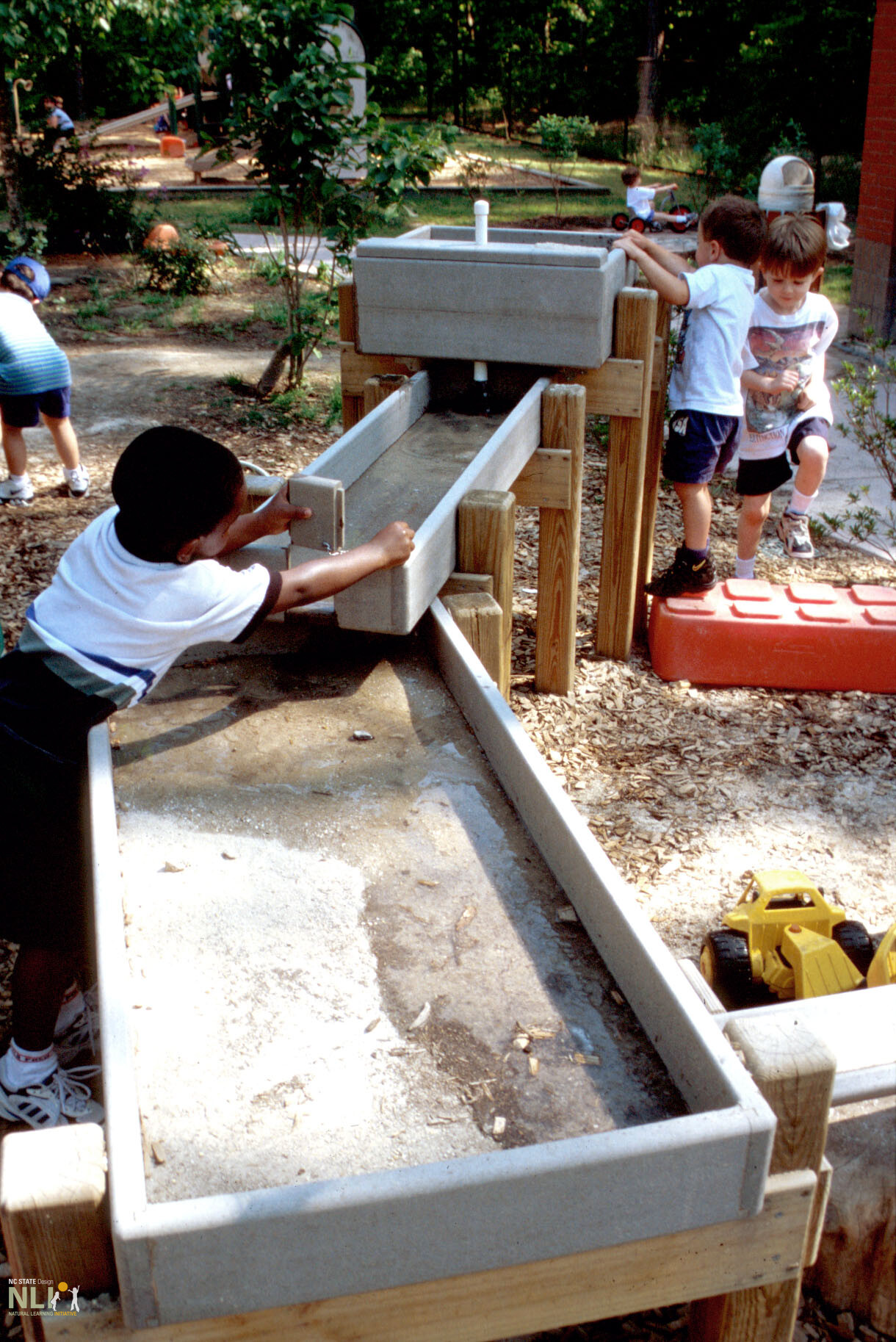
11. Hands-in water play in raised troughs fed by reservoirs.
NATURALIZING OUTDOOR LEARNING AND PLAY ENVIRONMENTS
The majority of children are in childcare or school for extended periods of time, often eight to ten hours per day, which makes green environment vital to their physical and emotional well-being. Childcare centers and schools with naturalized outdoor environments allow children to have safe, ready-made access to green places and engagement with nature. A wide range of naturalized settings and elements stimulate a diversity of play and learning experiences for children, adding endless value to an outdoor environment.
NATURALIZED SETTINGS AND ELEMENTS
Multi-use lawns
support high-energy group games and the exuberant joy of running — activities that promote cooperation and gross motor development (Figure 5). Lawns provide an ideal space for play with balls and other types of mobile equipment that require a soft surface. Grassy areas can accommodate social gatherings such as story time, and offer a place for simply relaxing.
Gathering places
encourage children to meet and work together in small groups, stimulating social interaction and cooperative relationships. Such spaces can support art-making, storytelling, and science exploration (Figure 6).
Sun protection
is essential for the health and comfort of children outdoors. This can be achieved by installing medium-size trees, large shrubs, arbors, pergolas, tunnels, and trellises. When scattered throughout the play and learning area, they create frequent patches of shade and three-dimensional spaces scaled to children. Vine-covered teepees provide shade and an exciting play space.
Experience of edible landscape
offer an essential introduction to healthy eating. They include annual vegetable gardens and permanent edible landscape elements such as perennial vegetables, fruiting trees, shrubs, and vines. Gardens can be a small, single bed or a large managed garden of 200-300 square feet. Edible landscapes get children excited about eating fresh fruit and vegetables and connect them intimately with nature.
Pathways
promote active, play, and learning by providing children and teachers with easy access throughout the outdoor learning environment. Primary pathways stimulate vigorous activity, while secondary and tertiary pathways provide sensory interest and opportunities to explore (Figures 8 & 9).
Sand and mud play
allow children to move, mold, dig, sift, sculpt, and pour. Sand and mud are classic natural materials that provide a multitude of opportunities for creative play and social interaction (Figure 10).
Water play settings
create multi-sensory play opportunities. Water features allow children to interact with diverse objects, manipulate water flow with movable stones, pour with containers, splash, paint with water, and more. Primary methods of providing water play include elevated water tables (lower) or in-ground, hard-surfaced streams.
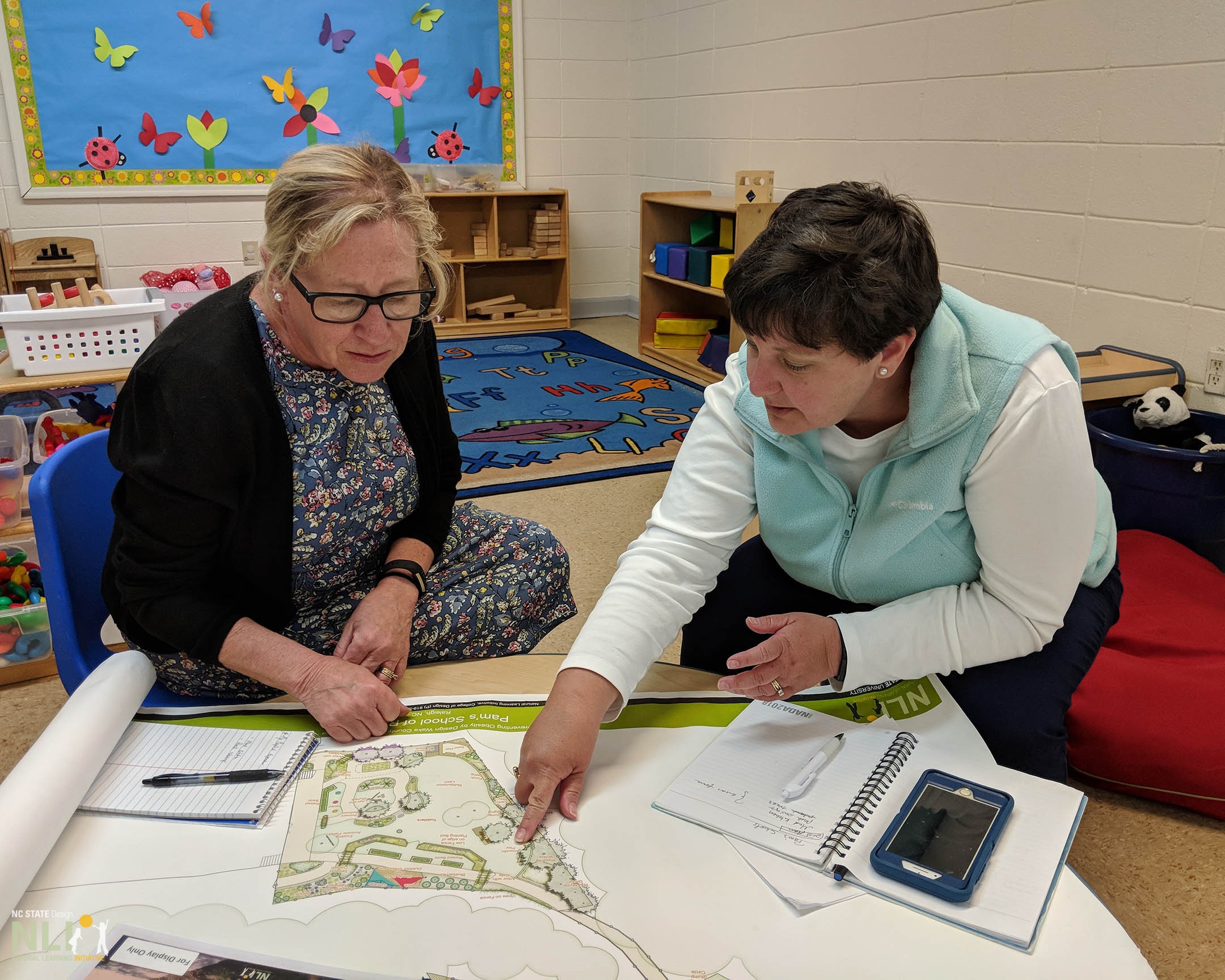
Pam’s School of Raleigh has taken the leap into gardening, installing a new fenced-off designated fruit and vegetable garden with raised beds. Fresh produce from the garden is used for the children’s snacks and extra produce is sent home with parents. Now that the garden is completed, their future plans include installation of an outdoor classroom in the garden, a multi-purpose deck in the preschool space, and plantings to help naturalize the space.
Address: 2705 New Bern Ave, Raleigh, NC 27610
Phone: (919) 832-0766
NC Star Rating: 4
Capacity: 99
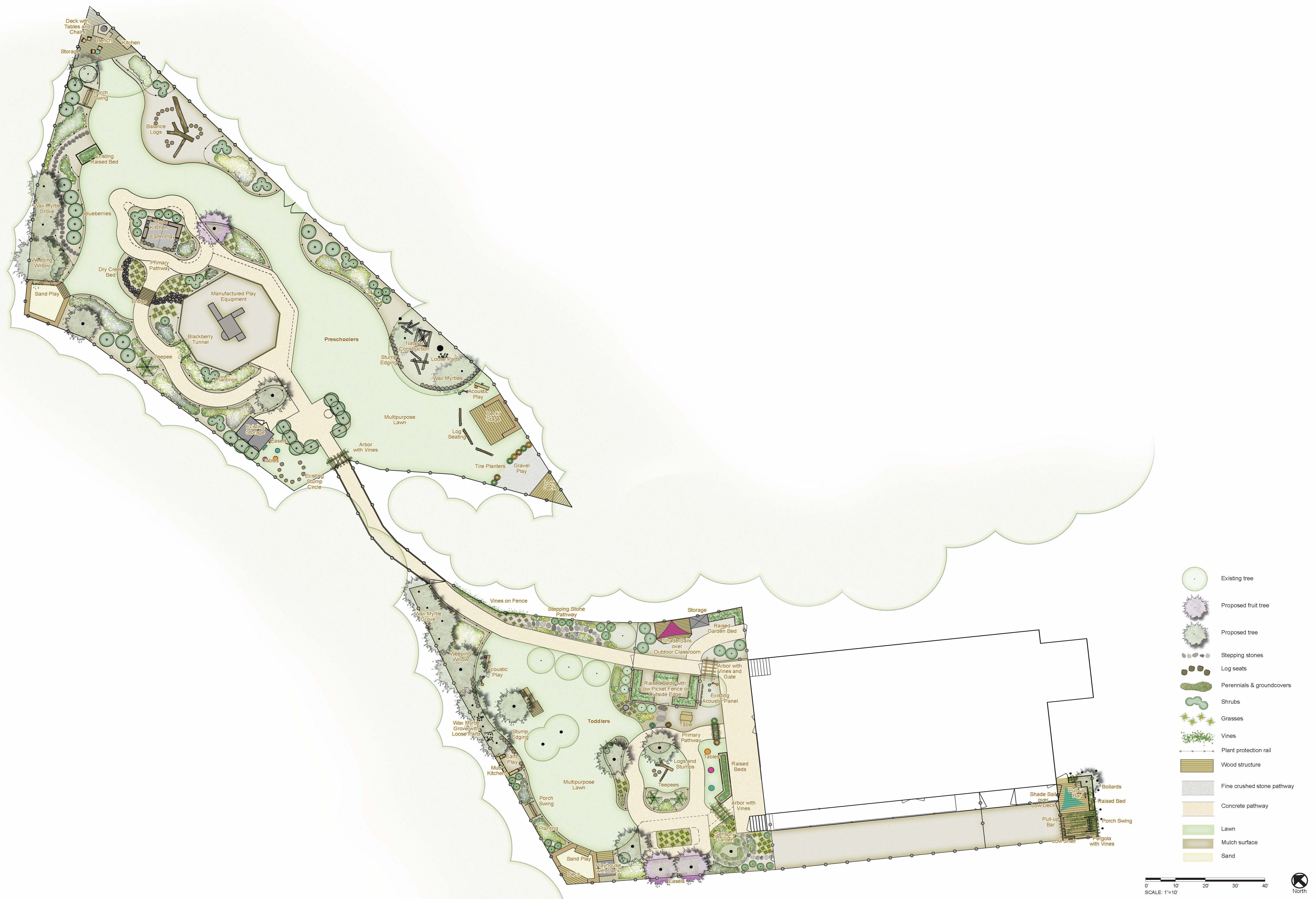
Schematic Master Plan (2017)
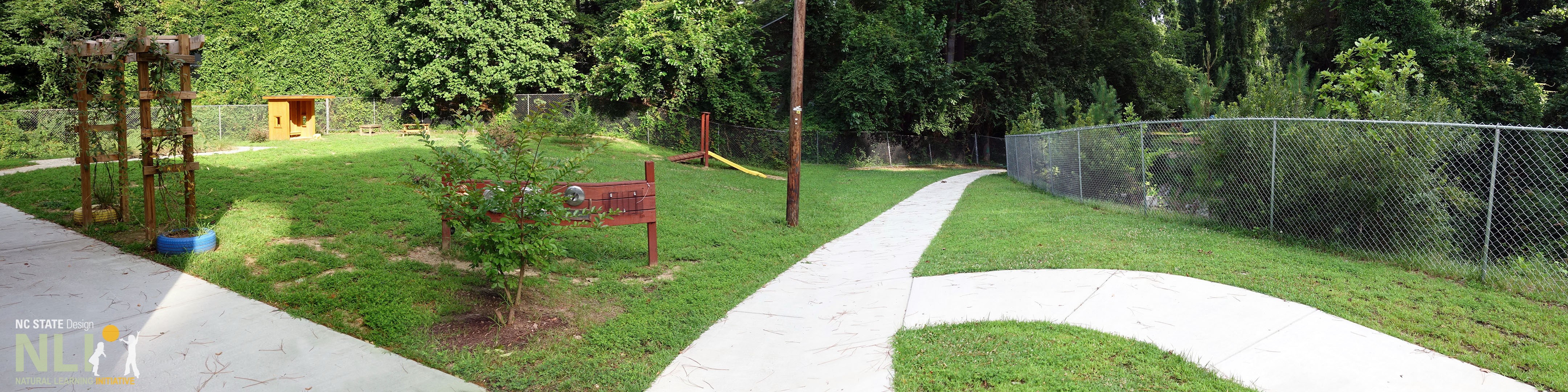
Before Renovation (2017)
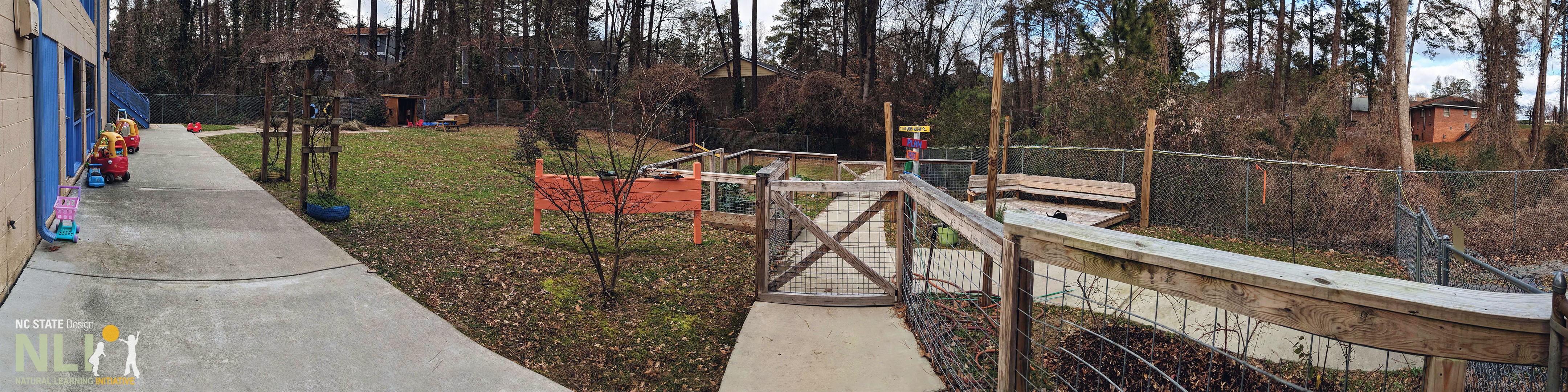
After Renovation (2019)
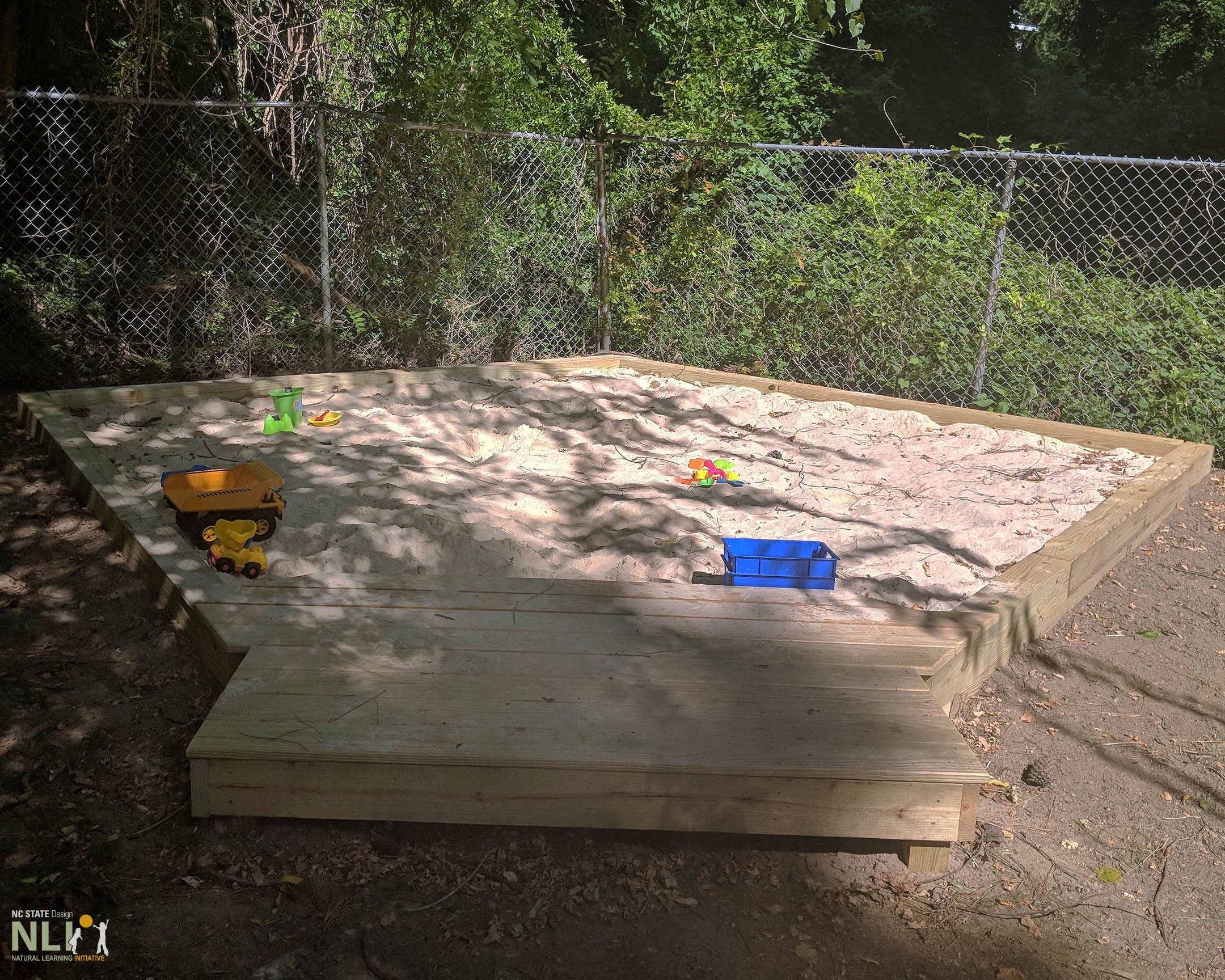
Sand play
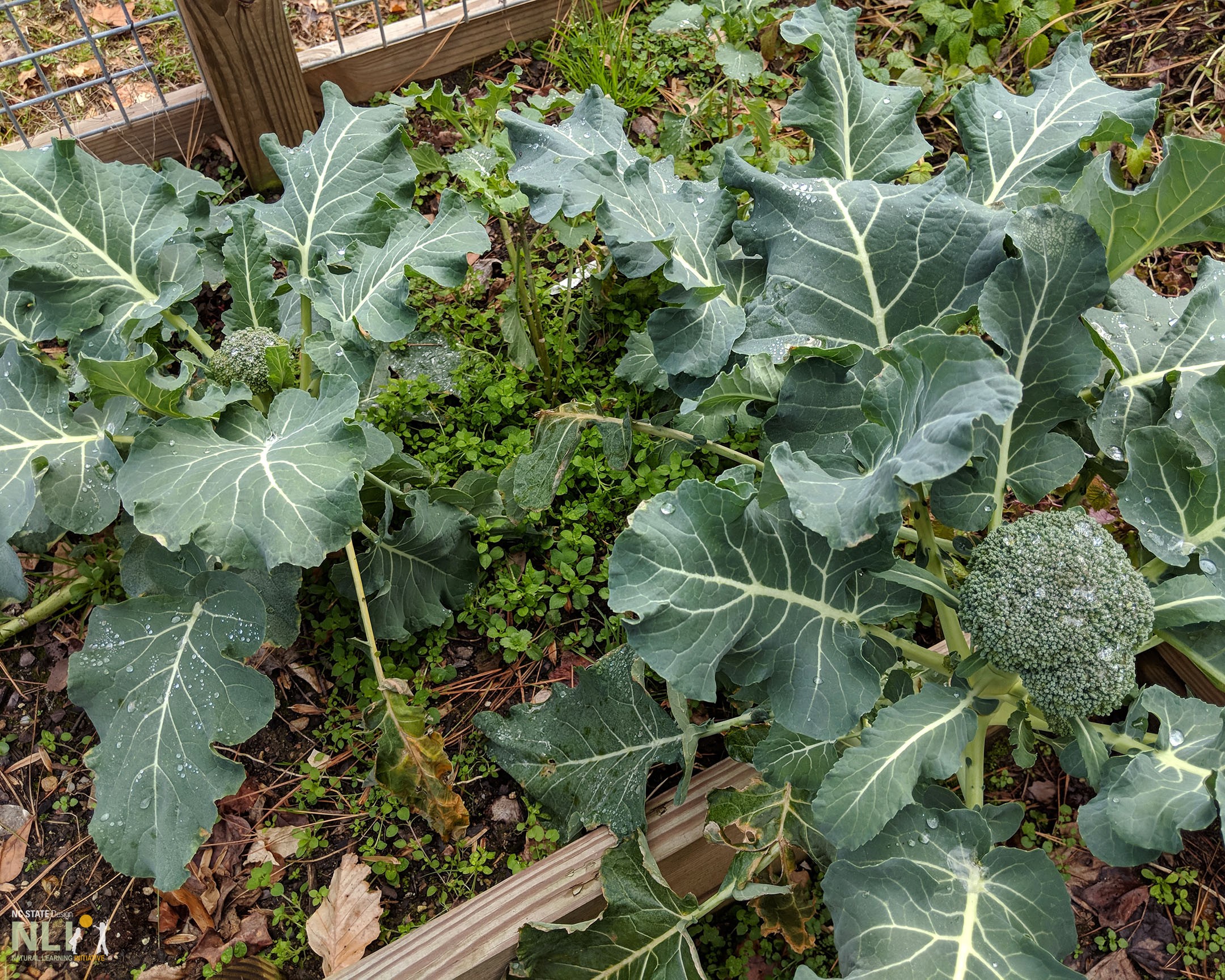
Broccoli plants almost ready for harvest
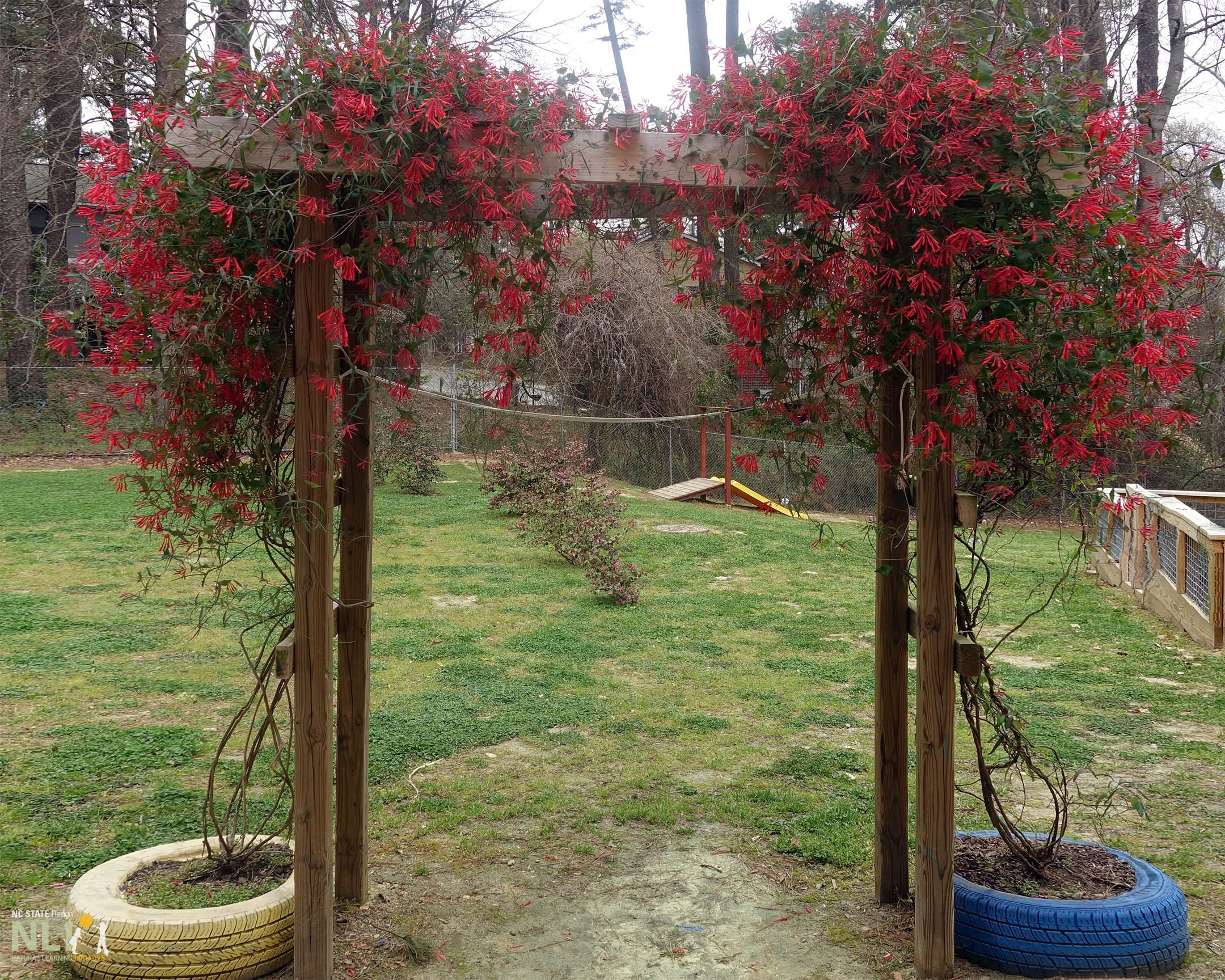
Arbor with native coral honeysuckle
Volunteers from The Timmons Group helping to create a sensory garden
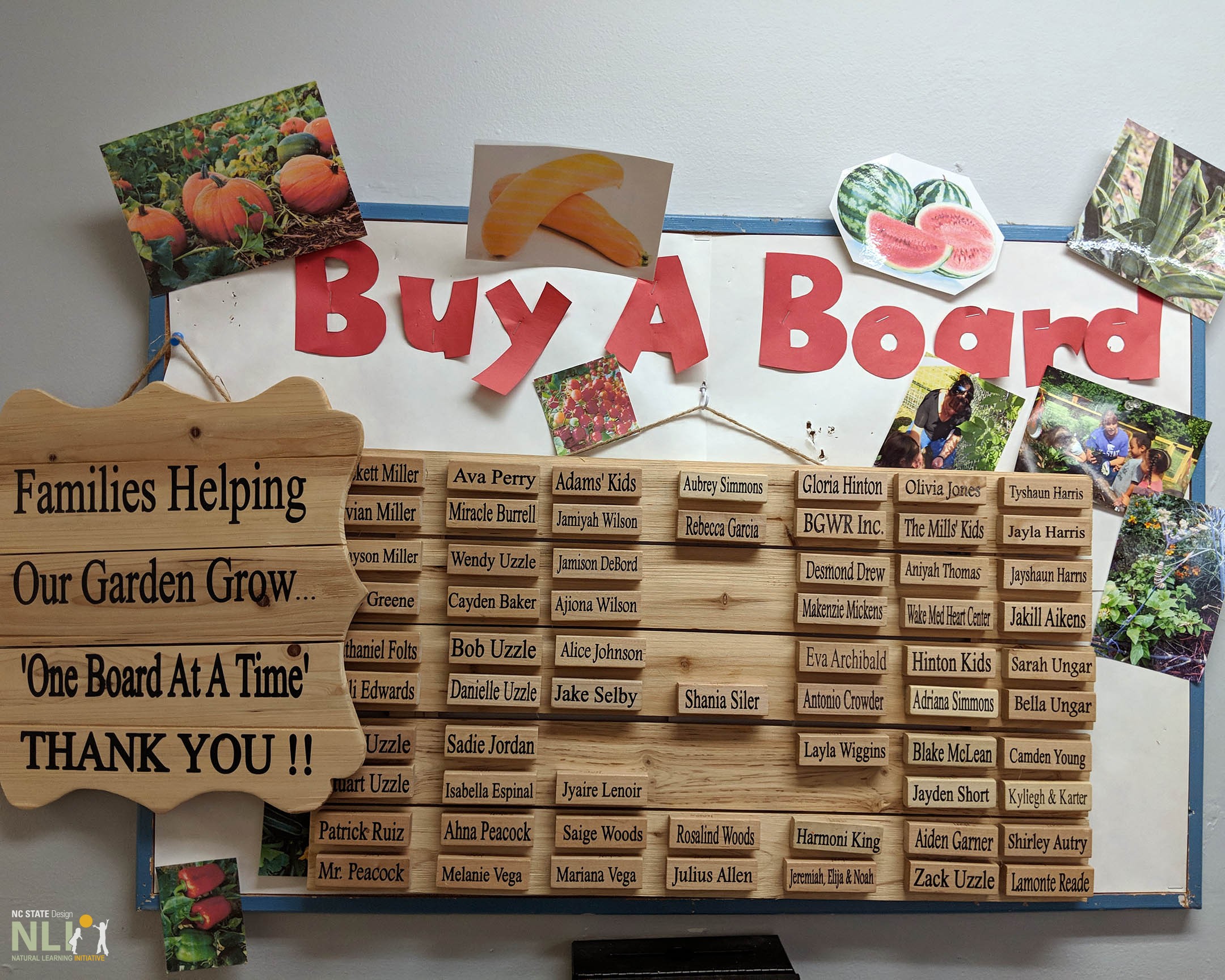
“Buy A Board” fundraiser
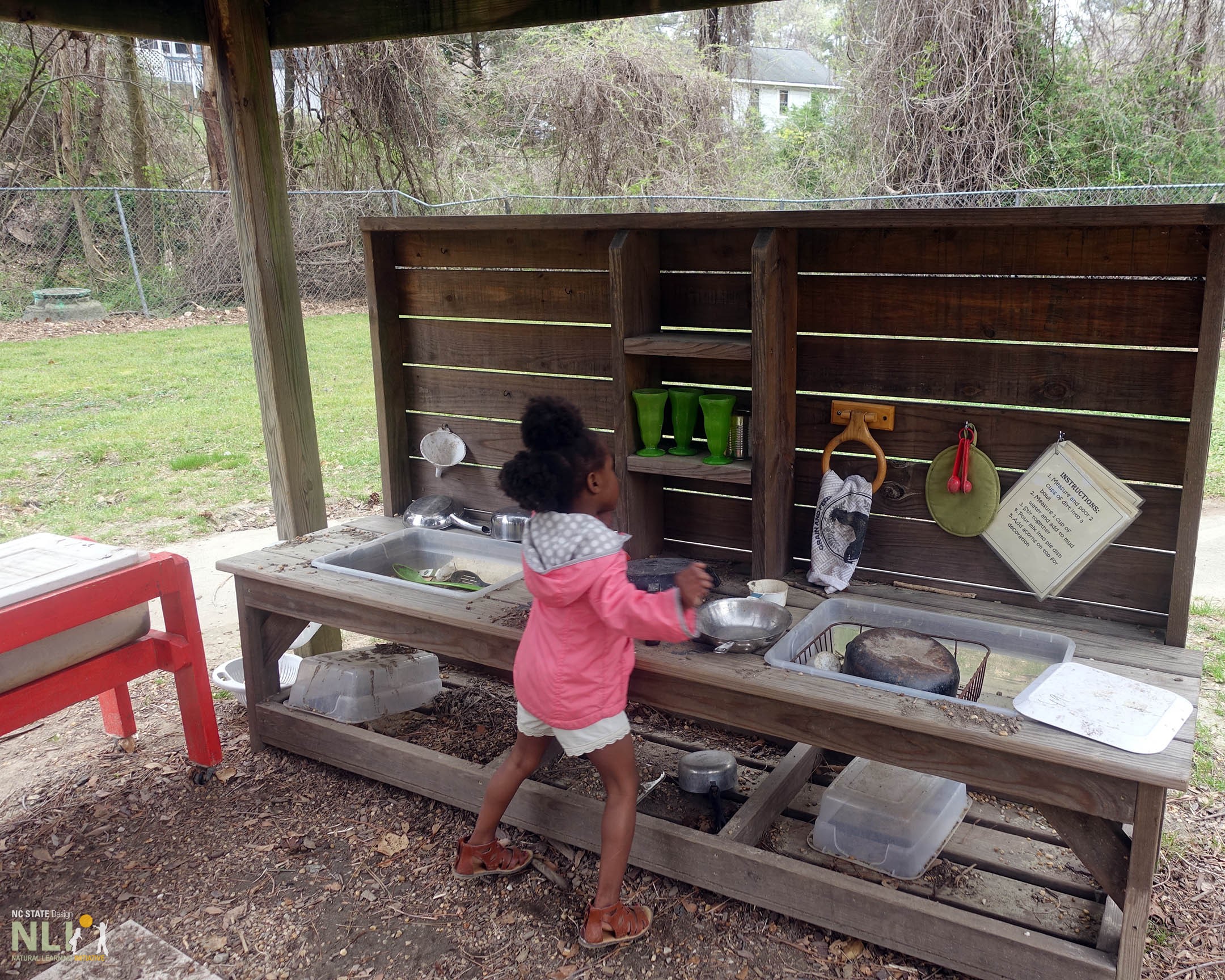
Mud kitchen
Action planning for OLE improvements
Colorful flowering perennials in the sensory garden
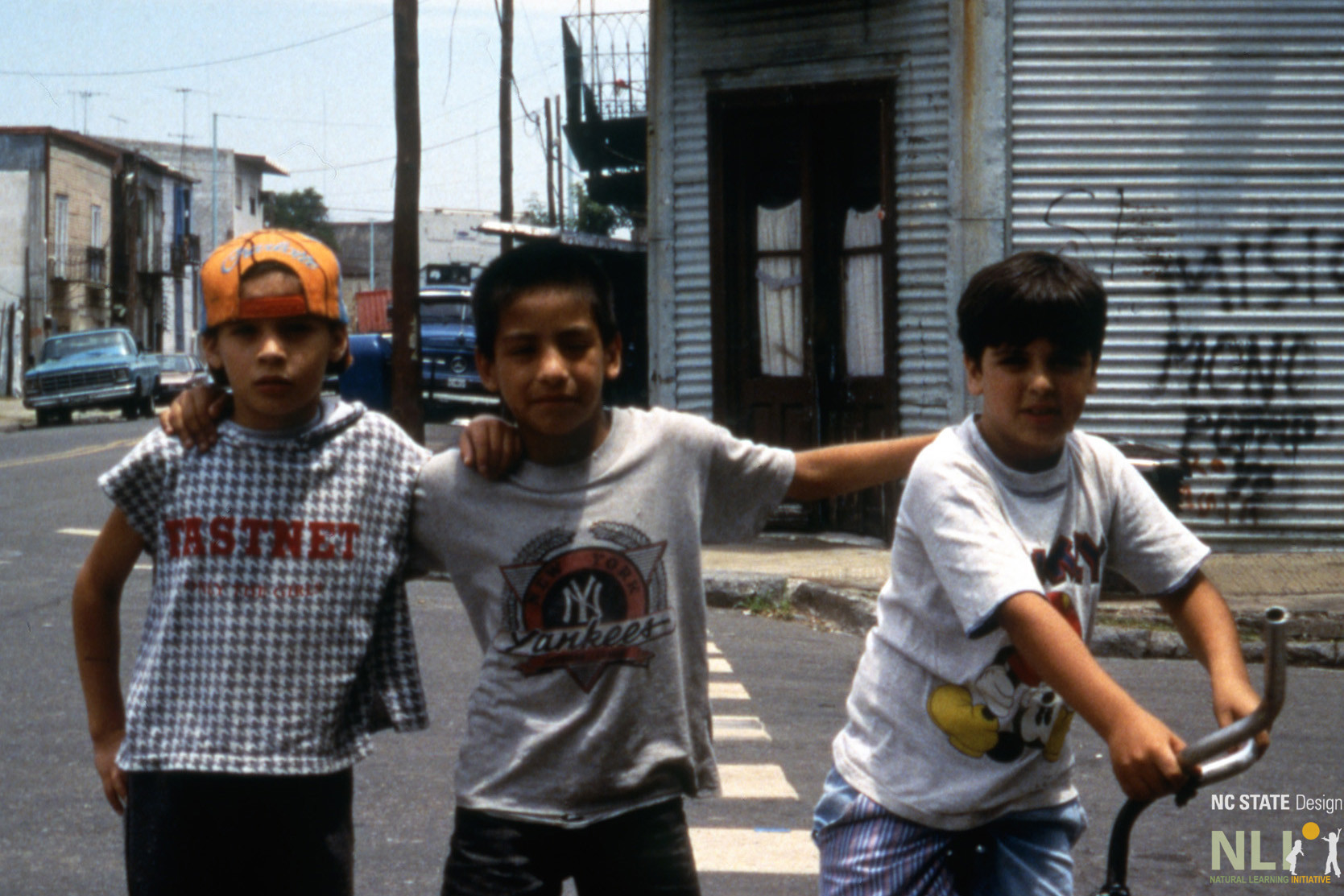
By helping children to explore, get acquainted, and interact with the neighborhood (physical environment, natural elements, and people), adults can facilitate the process of turning the neighborhood into a childhood habitat. Discovering the embedded history of an old neighborhood with children means recovering the old culture and projecting it into the future. The “Growing Up In Cities” 1997 project took place in Buenos Aires, Argentina.
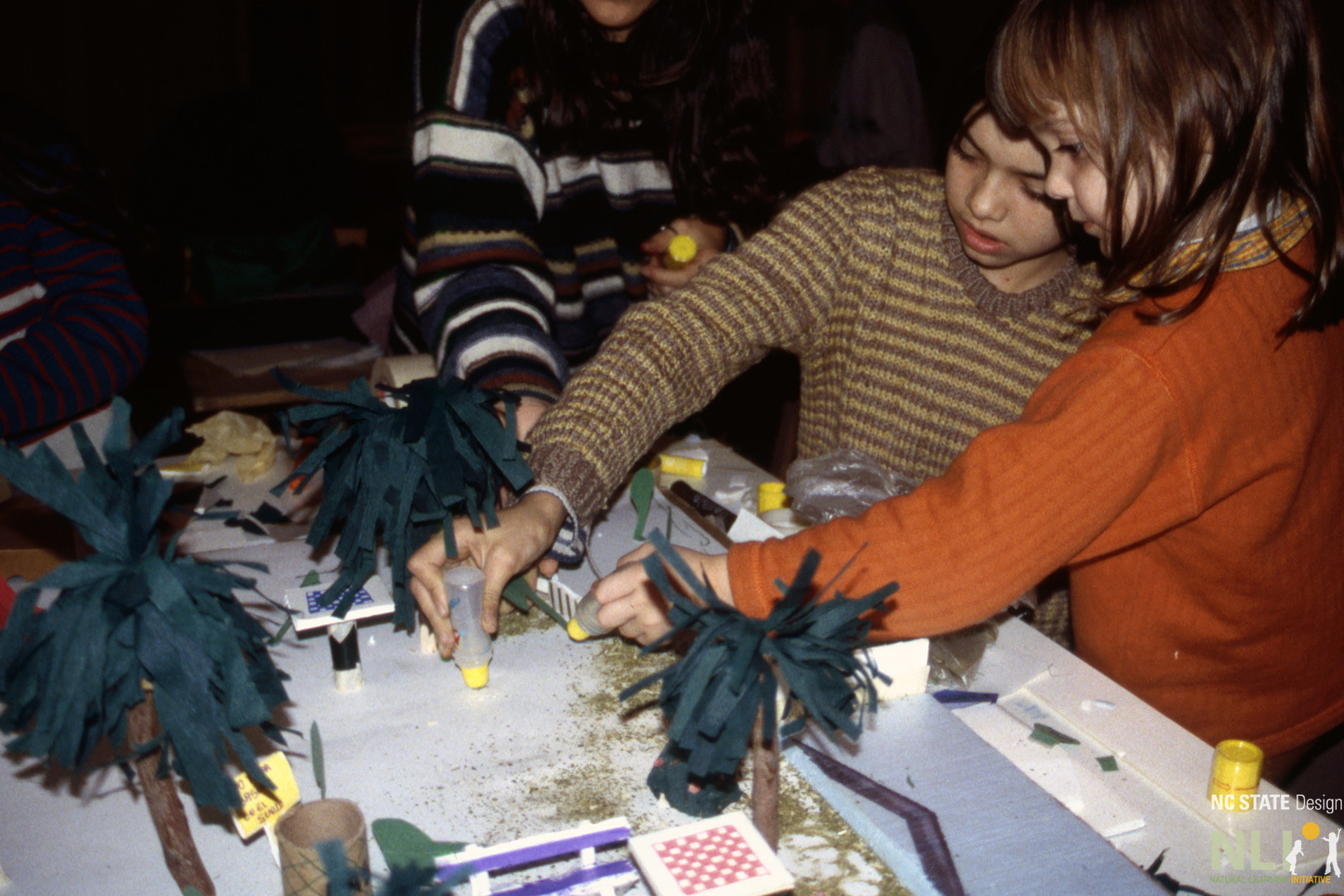
New neighborhood developments are an opportunity in modern society to establish the culture of neighborhood as childhood habitats from the very beginning. The challenge is to gain political acceptance of the fact that children have a right to participate and to recognize their ability to contribute to local culture. An exploration of these ideas was implemented in 1997 through a series of workshops as part of the Growing Up In Cities (GUIC) Project, Buenos Aires, Argentina, in collaboration with Movíl Verde. Robin Moore & Nilda Cosco, co-directors.
Research supported by UNESCO, Management of Social Transformations MOST Programme, France; Fundación Octubre, Argentina; North Carolina University, USA The Children’s Hour, Norway
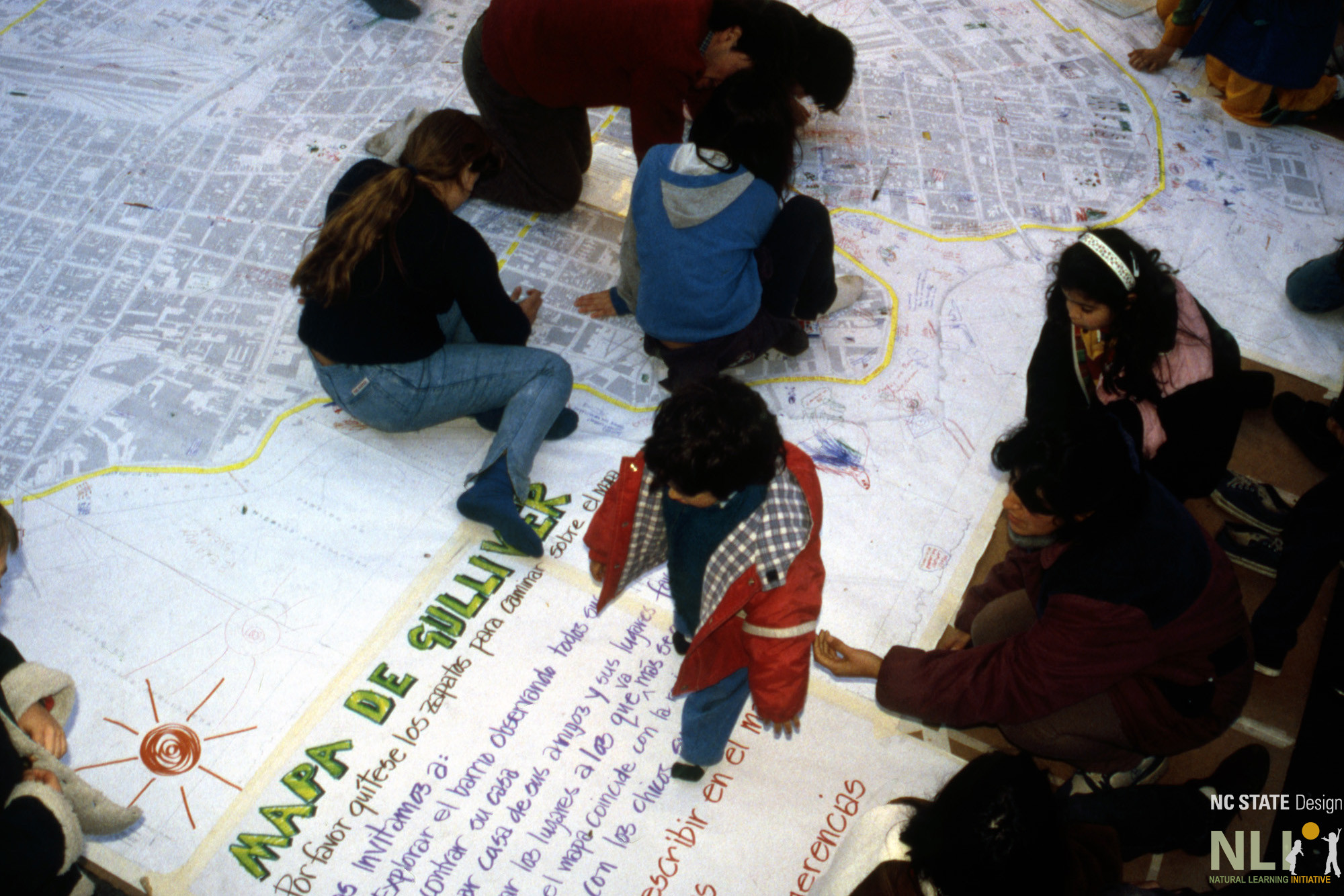
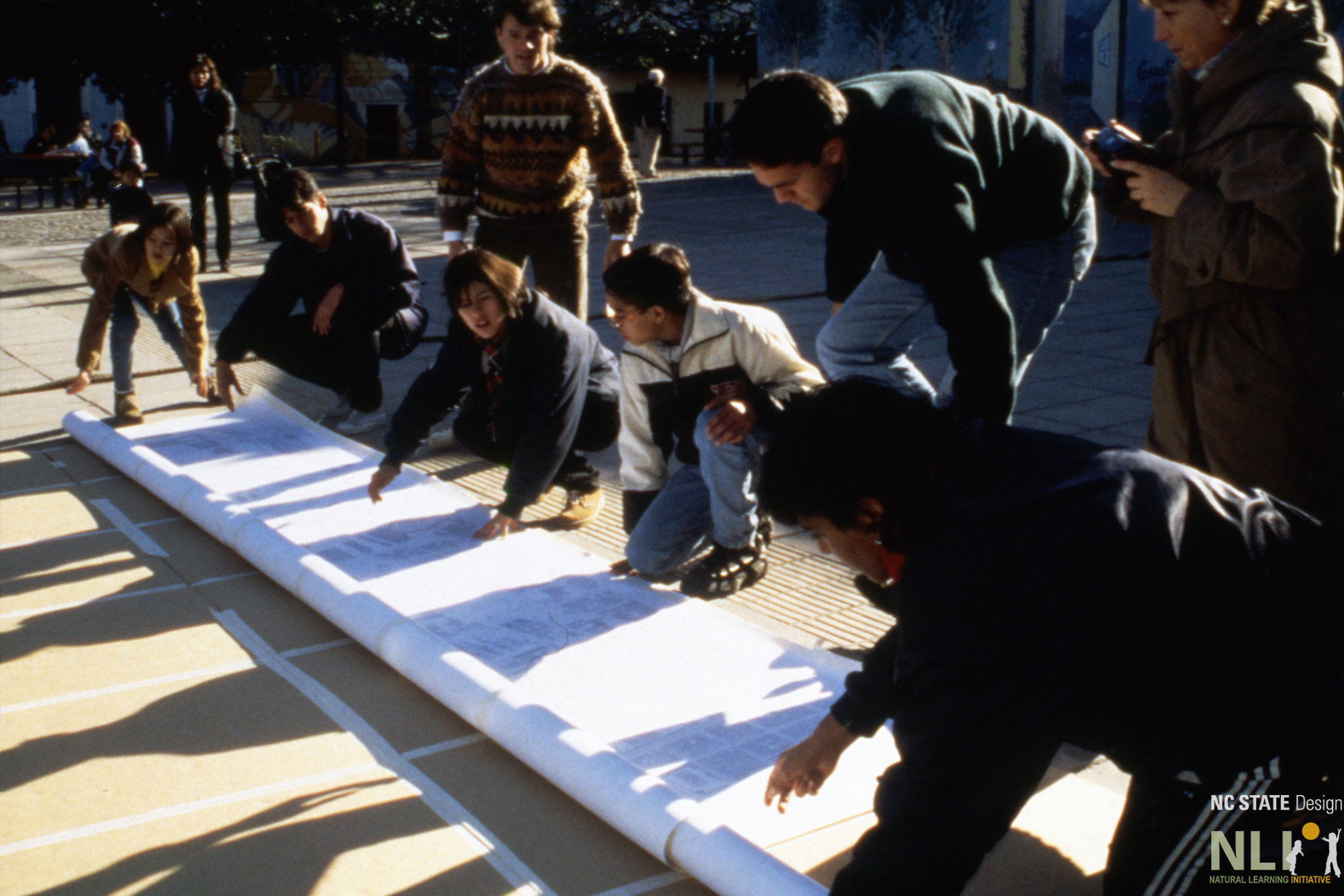
Gulliver’s Map
Neighborhood residents record and share their observations on a giant map of their neighborhood. Children use the map to identify the locations of their homes and other important places in the neighborhood. They add notes about their concerns.
Measuring Children “calibrate” the measure of their stride by pacing out the proposed site before measuring it in meters with a tape measure. They also measure the direction and speed of the wind, using the “wet finger” technique.
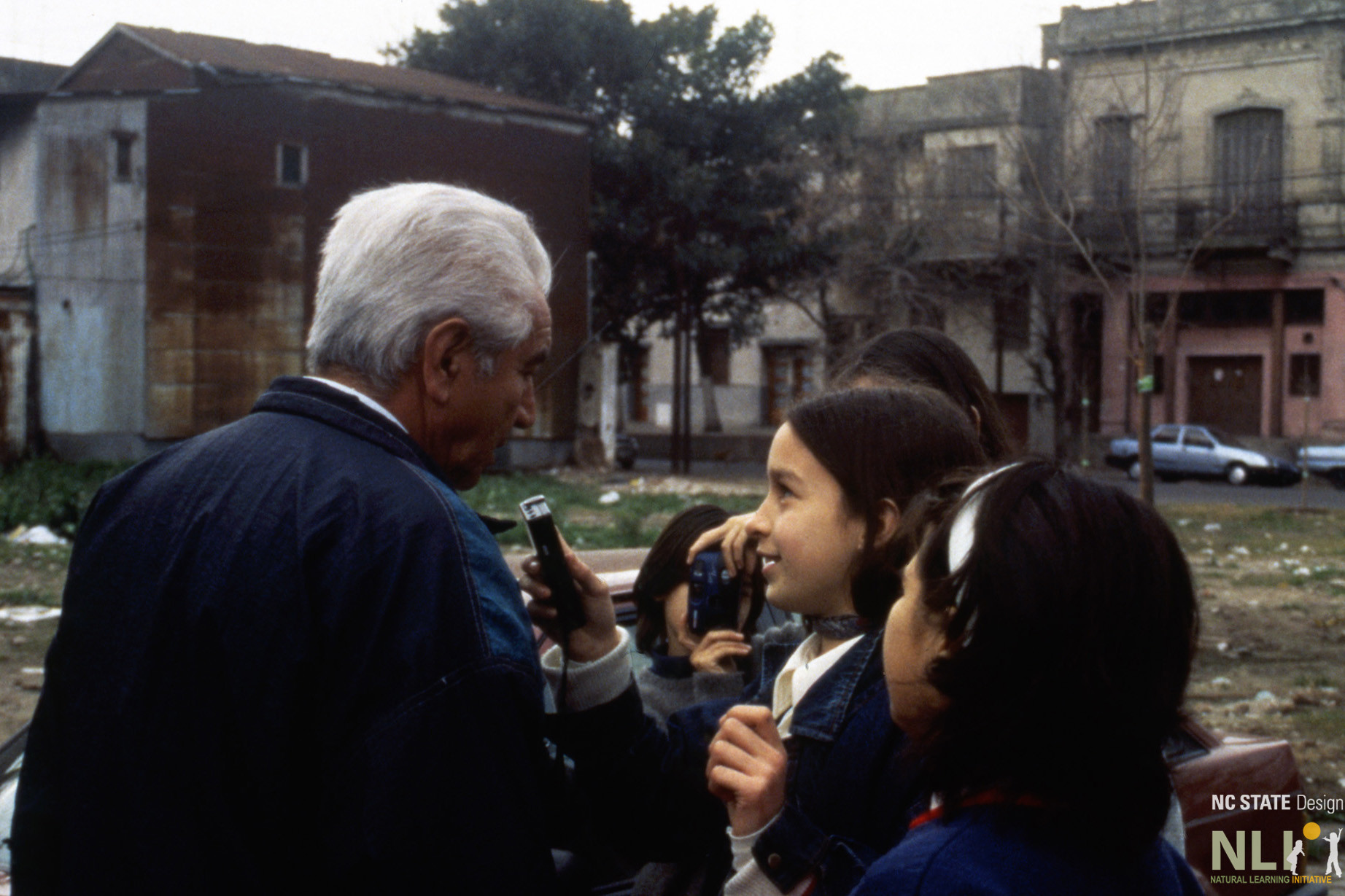
Interviewing Children use tape recorders to gather the impressions and observations of the other neighborhood residents, including elders.
Creating a Childhood Habitat: Workshop Series
Objectives
To demonstrate how the Convention on the Rights of the Child can be implemented in urban settings.
To show how children’s participation can influence urban policies to create a child-friendly city.
How?
Understanding the neighborhood as a giant interpretation center, a learning resource.
Organizing hands-on activities that encourage exploration and site analysis.
Discovering with children what a habitat is what their own habitat feels like, brainstorming the changes that should be done in the neighborhood to improve their habitat.
Looking for proposals and solutions from children.
Activities
Neighborhood photo safaris
The “Person-scape” workshop
Role-playing
Debates
Neighborhood sensory exploration
Research, observations, interviews, and surveys by children
Documenting the site with the senses
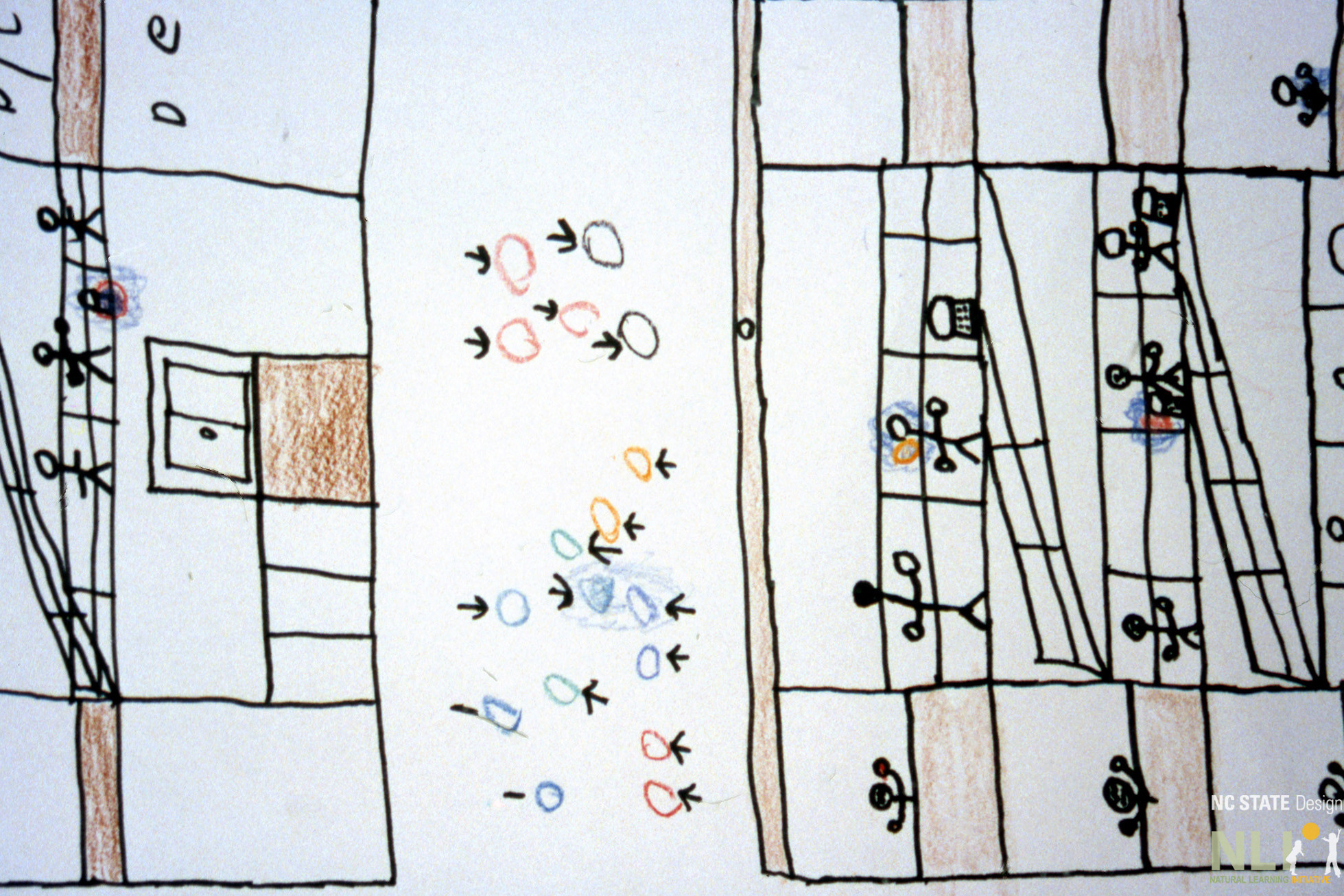
Creating “sensory maps”
“Gulliver Map”
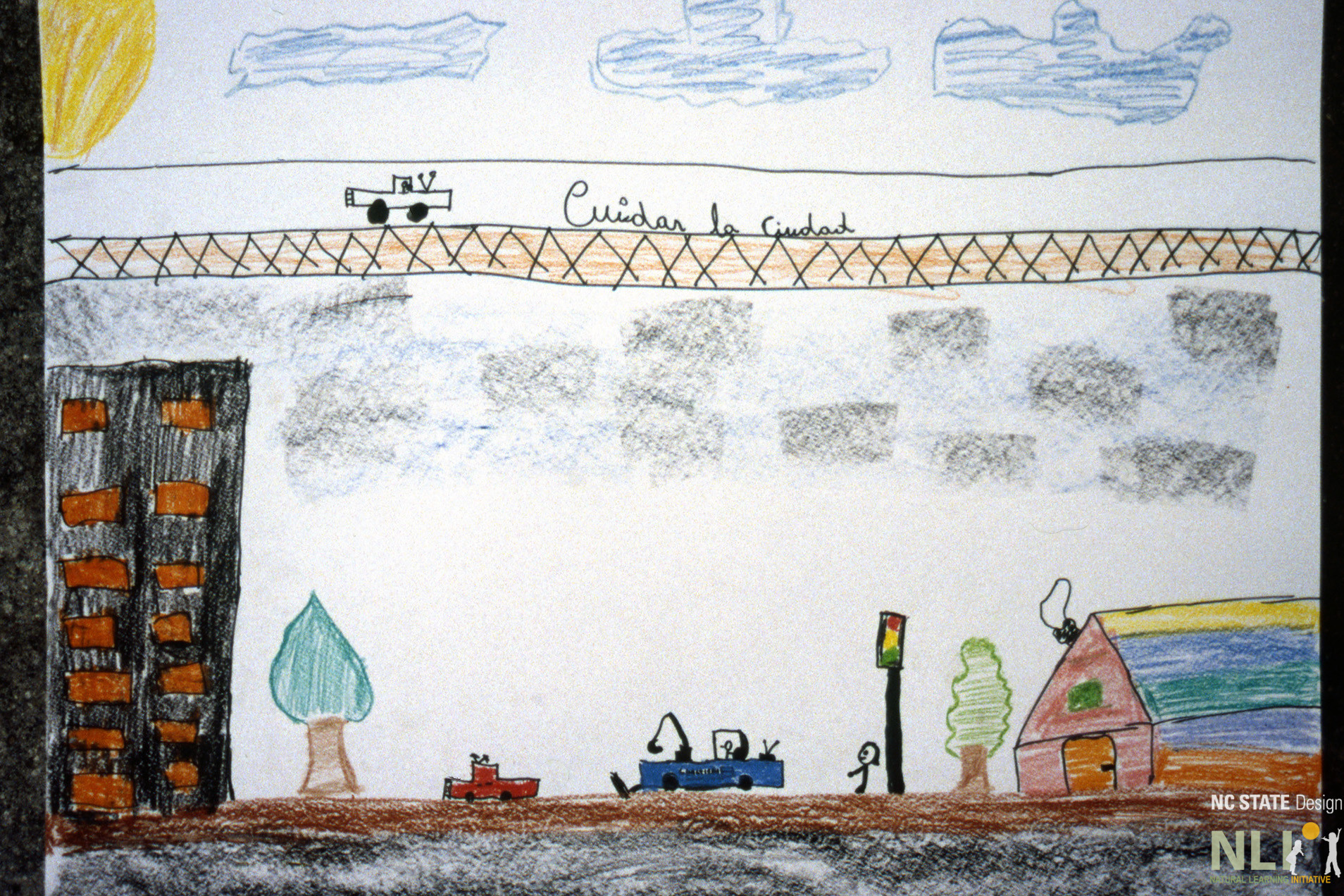
Posters, cartoons created by children
Model
Proposal presentations to neighborhood organizations, officers, and council
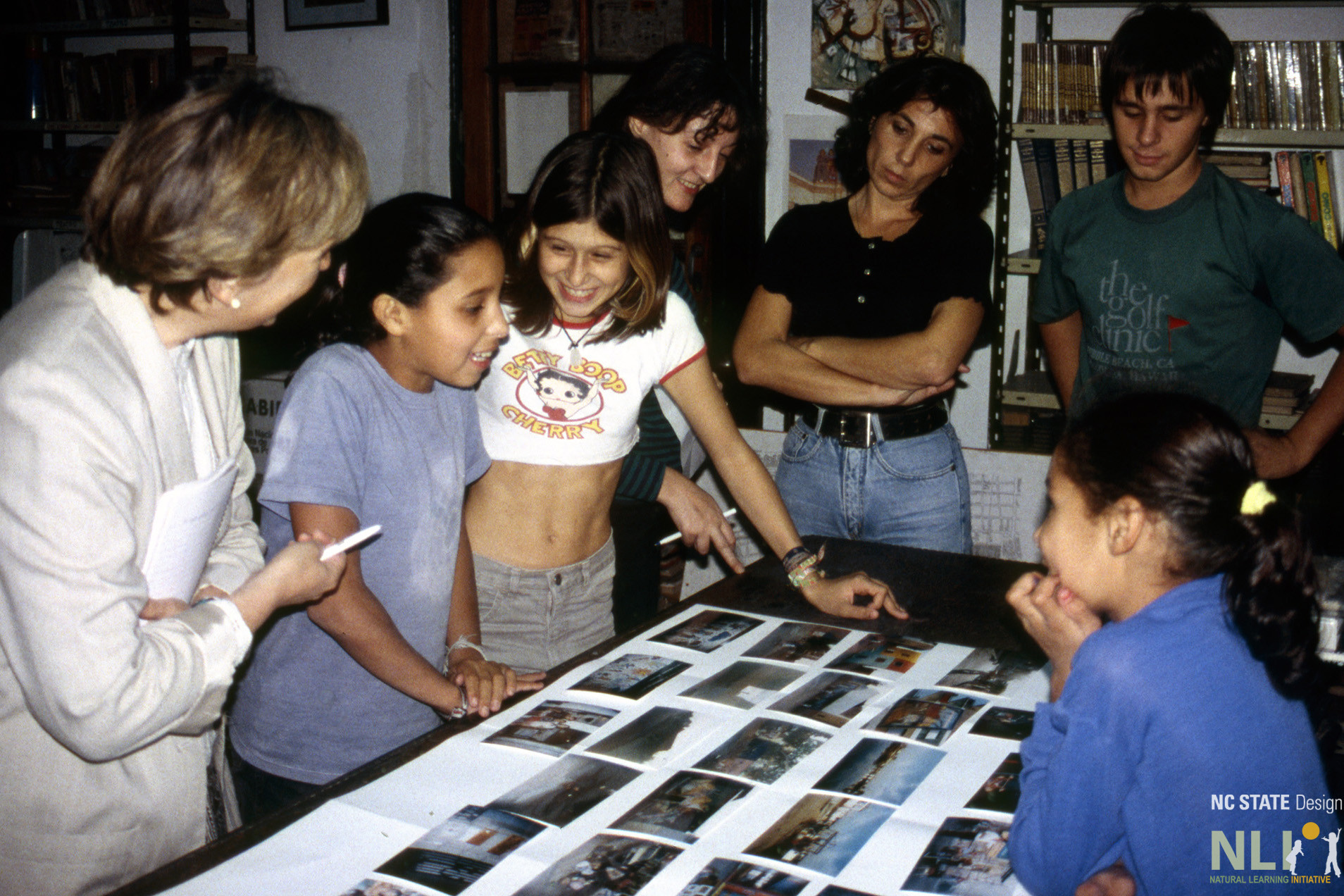
Photo Safari: Using inexpensive cameras, the children record neighborhood locations that are important to them. Photographs are reviewed by the group. Captions are proposed.
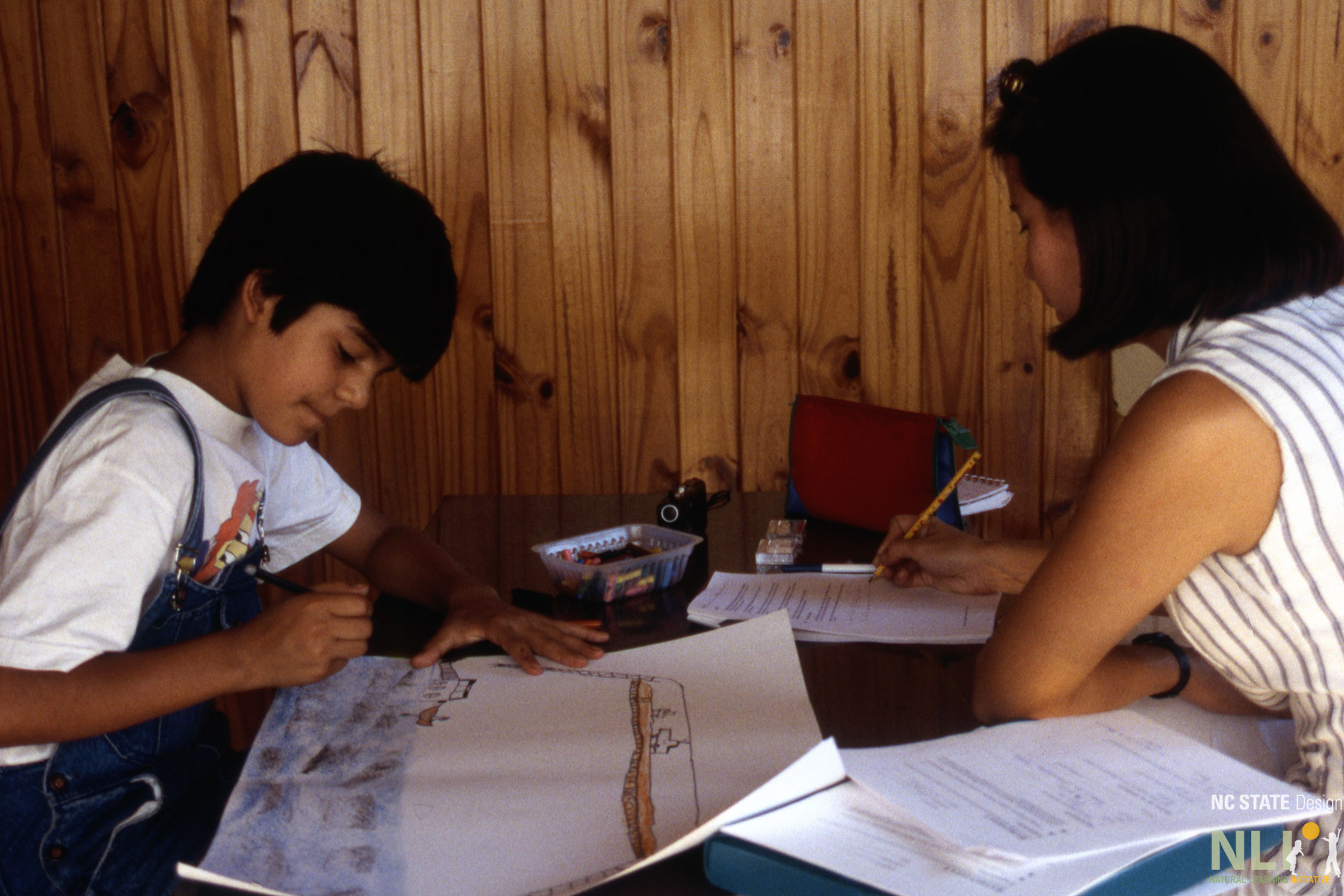
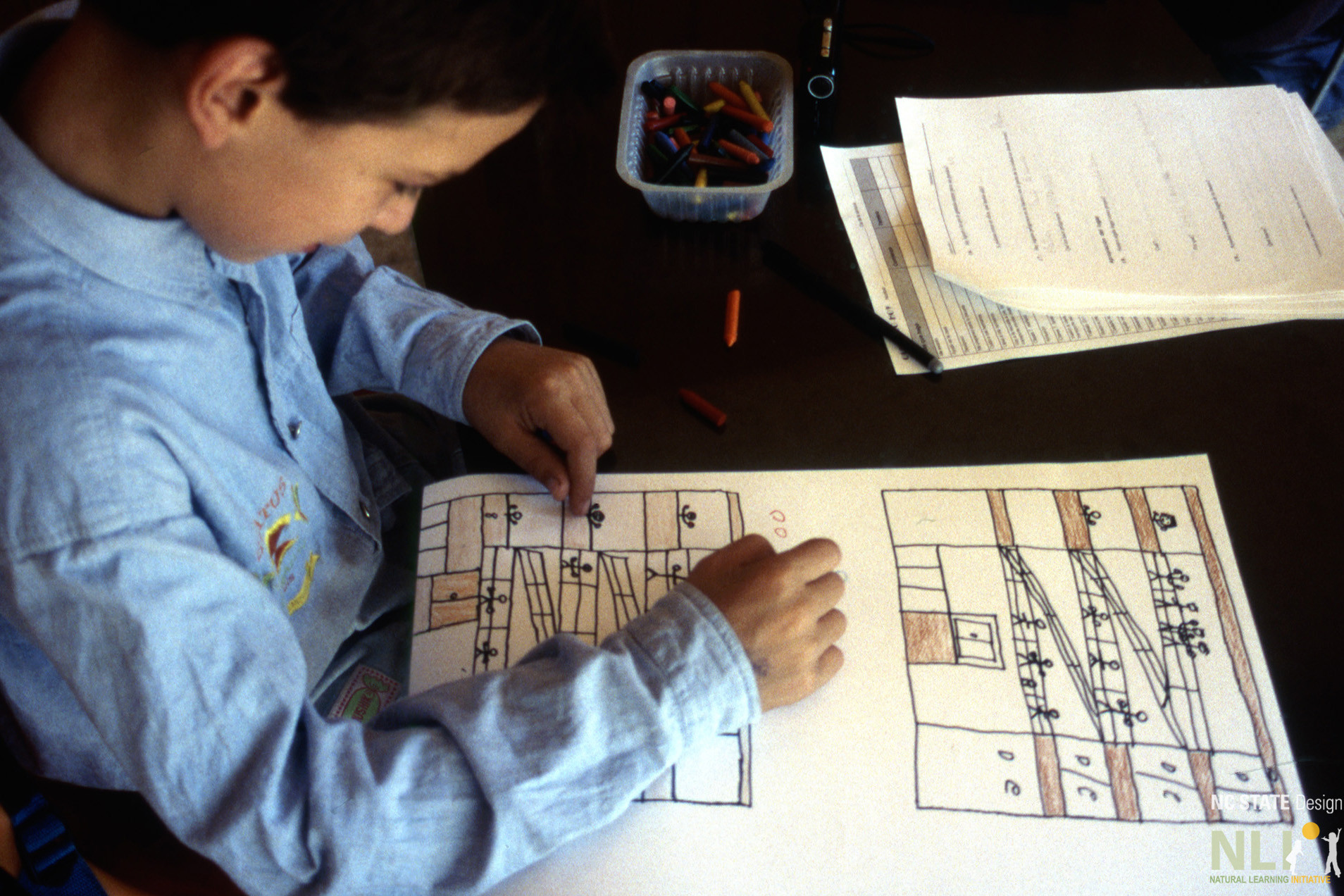
Surveying and Analyzing: Using observation sheets, the children document characteristics of proposed park sites. They create a sensory map of their neighborhood, making note of interesting smells, sounds and sights.
Creating an Exhibition Catalog: The children create a catalog for a public exhibition of the photographs of their favorite places. The pamphlet, “Our Neighborhood is Like That!”, includes a list of the young photographers and the titles of their works. Above, they explore a “clasping hands” logo for the catalog.
Presenting: After analysis is complete, children build a model, make drawings, and present their findings to the community.
This publication was written by NLI as an education resource and training tool for play environment design that integrates manufactured play equipment with the living landscape. These guidelines provide the evidence of the health and environmental benefits or “play value” of naturalization and a detailed focus on design principals, planting strategies, and both new construction and retrofit implementation considerations. NatureGrounds is part of the global movement to improve children’s play opportunities by “designing nature back into children’s lives” and engaging communities to support and create natural play environments.
Head Start Growth and Readiness in the Outdoor World (HS-GROW)
The quality of Headstart and Early Headstart center outdoor environments is particularly relevant because this is where children can learn to be physically active, can be motivated to play in nature, and feel comfortable outdoors – lifestyle habits that may persist in later life. The overall goal of HS-GROW is to recapture and reframe the outdoor environment of Head Start and Early Head Start Centers as a major contributor to the health and learning of young children. This will be accomplished by training Head Start teachers and staff to redesign and upgrade their outdoor spaces and curricula to reap the potential for healthy growth. Regional demonstration training sites will be established to show Head Start programs how to optimize outdoor environments. Because of the growing number of Spanish speaking families served by Head Start, training and assessment materials will be bi-lingual.
Research supported by U.S. Department of Health and Human Services, Head Start Bureau. Planning grant.
Partner: Western Kentucky University, Training and Technical Assistance Services