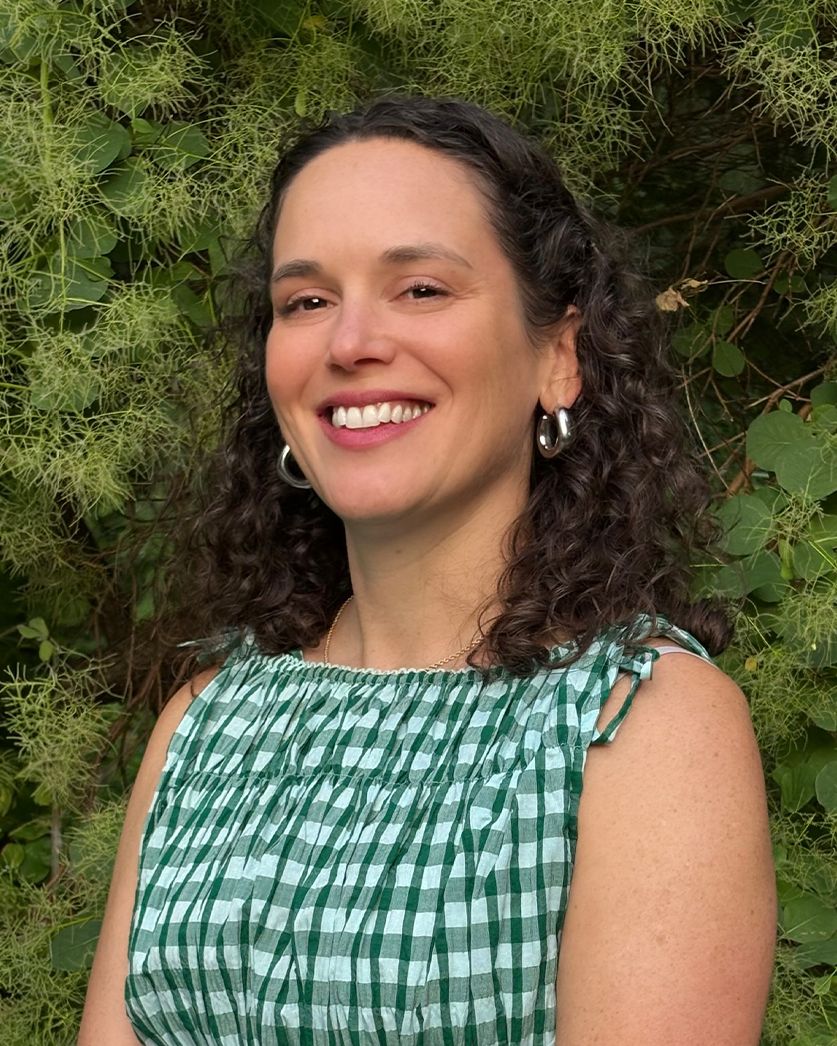
Katie Pollok, MLA, is a Landscape Designer at the Natural Learning Initiative (NLI), where she supports the design and development of nature-based environments for children, families, and communities. Her work focuses on creating landscapes that support play, learning, ecological connection, and community well-being, with experience in site analysis, planting design, landscape planning, community engagement, and visual communication.
Katie holds a Master of Landscape Architecture and Environmental Planning from NC State University, where she also earned a Public Interest Design Certificate. She holds a B.A. in Anthropology from the University of North Carolina at Chapel Hill, with a minor in Environmental Studies. She has also worked as a research assistant at NC State, supporting research on NC State Parks and community engagement for the City of Durham’s Paper Streets initiative.
Her interdisciplinary background informs an approach to landscape architecture that considers the relationships between people, culture, ecology, and place. Katie’s work with children and communities extends beyond landscape architecture. Before pursuing her graduate degree, she worked as a teacher at a Reggio-Emilia Community School in Durham, where she developed curriculum around children’s interests, encouraged exploratory learning through indoor and outdoor play, engaged families through child portfolios, and supported children’s social and emotional development. She also interned with the Edible Schoolyard in Greensboro, connecting her interests in children, community health, and ecology.
Katie has been recognized with the 2026 SERC Recognition Award for Urban Design and was a 2025 Southeast Regional Garden Club Scholarship Recipient. She has also served in leadership roles with SASLA, including Professional Development Coordinator and Secretary, and brings experience in participatory design, community engagement, project management, public speaking, and interdisciplinary collaboration. Her design interests include nature-based play, native and resilient planting, ecological systems, accessible landscapes, and revealing histories of place that foster connection between people and the living landscape.
UX/Communication Designer (Communication Team Lead)
Matthew (Matt) Babb, MGD, is a UX/Communication Designer at the Natural Learning Initiative (NLI) at NC State University. As the communication team lead, he directs NLI’s communications and creative production efforts, overseeing branding, visual design, digital content, website development, photography, videography, social media, publications, and educational resources. His work spans the full communication process—from developing concepts and visual systems to producing, editing, publishing, and evaluating content across print and digital platforms. Matt works closely with NLI researchers, designers, educators, partners, and stakeholders to translate complex research and ideas into accessible, engaging, and useful resources for diverse audiences.
Matt brings a user-centered approach to NLI’s communications, using UX design, analytics, accessibility, community engagement, and iterative development to improve how people discover, understand, and interact with NLI’s work. He maintains and evolves the organization’s visual identity and helps ensure consistency, quality, accessibility, and ease of use across NLI’s many communication channels. He also contributes to the development of online courses, professional development resources, technical assistance materials, websites, and multimedia projects supporting NLI’s mission of creating nature-rich environments for children.
Matt has been designing professionally since 2009. He holds bachelor’s degrees in Studio Art and Graphic Design from Campbell University and a Master of Graphic Design from NC State University. His graduate research focused on the design of adaptive smart pen interfaces for Learning Management Systems (LMS). Throughout his career, he has worked across a diverse range of industries and organizations, including Roast of the Town Coffee, Weeks Dye Works, McGahey Architectural Design, and NC State Agroecology, contributing to projects involving branding, packaging, advertising, publications, user interfaces, websites, photography, and product design. He has also worked extensively as a freelance designer, collaborating with businesses, organizations, and startups on a wide range of creative projects.
Matt’s connection to nature began long before his work at NLI. With family across North Carolina, he grew up exploring the state’s diverse landscapes, from the mountains to the coast. Some of his favorite childhood memories include navigating wooded areas, building trails from fallen trees, fishing, and exploring coastal communities with his siblings. Growing up in a rural environment gave him an early appreciation for the ways nature can encourage curiosity, creativity, independence, and learning. That personal connection continues to inform his work today, in which he combines design and communication with NLI’s mission to create meaningful opportunities for children to learn, play, and connect with nature.
Michigan Department of Natural Resources (MDNR) Parks and Recreation Division (PRD)
NATURAL PLAY AND LEARNING SPACES (NPALS) DEVELOPMENT PROGRAM
The Michigan Department of Natural Resources Parks and Recreation Division, through this project seeks to fulfill Objective 2.4.1 of the Strategic Plan requirement, with the implementation of a minimum of two natural play and learning spaces in the state park facilities. The DNR State Park system is partnering with the Natural Learning Initiative (NLI), North Carolina State University (NCSU), to develop a program of nature-based solutions that express the unique biological and human context of each site, as a departure from the present-day focus on commercially available, standardized playground structures.
NLI’s scope of work is focused on three principal deliverables:
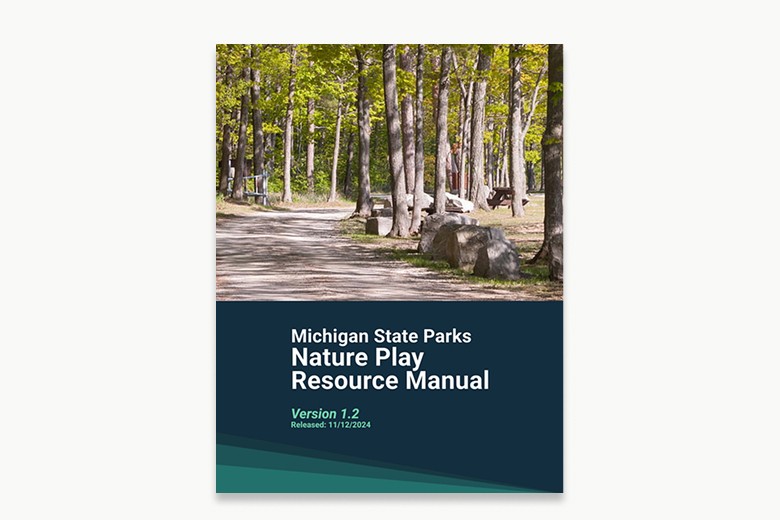
Developing a PRD resource manual for implementing natural play and learning spaces in Michigan state parks, addressing both short and long-term strategic design thinking, organized in four stages to include the following:
Design Programming
Universal Design Prototypes
Procurement & Implementation
Environmental & Risk Management
Maintenance Standard Practices.
Providing a staff professional development series (learning sessions, one conducted on site) to aid in the implementation, management, and maintenance of natural play and learning spaces within the organization.
Creating a model design program and schematic design, with PRD staff participation, for a natural play and learning space to be installed at Hartwick Pines State Park as an objective of the separate professional service consultant (PSC) phase.
The above tasks are essential for implementing effective nature play and learning areas and more specifically including the following:
Comprehensive health and other developmental benefits of nature play and learning areas – especially to users from disadvantaged communities;
Equity, accessibility, and inclusion – ensuring that all users have fair availability to natural play and learning spaces;
Design programming – an effective community engagement process for developing shared ideas for project content and implementation strategies;
Management and maintenance – developing standard practices framed by standards of care to ensure the health, safety, welfare, and accessibility for guests as well as conservation, regeneration, and care for natural resources that young guests may access and interact with (part of #5 below).
Construction materials sustainability – employing best practices for demolition and new construction, including locally sourced materials from lands managed by MDNR-PRD.
Installation options – exploring and evaluating best practice requirements for longevity.
Risk management processes, protocols, and policies – “balancing risks with benefits” defendable policy, understanding and adopting risk management procedures, including inspection routines.
Assessment and evaluation – cost effective approaches in partnership with local universities.
The Gardening with Young Children Course is a 5-week self-paced distance learning course hosted on the NCSU online platform, Moodle. This course is worth 1.0 Continuing Education Units (CEUs). CEU is awarded by the McKimmon Center of Continuing & Lifelong Education, NC State University.
This Course Aims To:
Provide knowledge, tools, and resources for providers and associated professionals to develop and program fruit and vegetable gardens for young children.
Support healthy, active lifestyles of young children and motivate learning in, about, and through nature.
This Course Contains 8 Modules:
Gardening Activity Guide Overview
Phase 1: Preparing
Phase 2: Caring
Phase 3: Harvesting and Eating
Time to Harvest: Cool Season and Warm Season
Choosing child-friendly fruits and vegetables to grow in childcare centers
Keeping track of gardening activities
Final Knowledge Assessment/Capstone Project
Learning Outcomes
After completing the course, participants will be able to:
Recognize gardening in outdoor learning environments (OLEs) as an activity that supports physical activity, healthy eating, and outdoor learning
Describe gardening phases and activities tied to the curriculum.
Explain the annual sequence of gardening from preparing to harvesting and eating fresh fruit and vegetables.
Apply methods for creating and managing high-quality gardening settings to support experiential learning.
Early Childhood Outdoor Learning Environments Certificate
EARLY CHILDHOOD OUTDOOR LEARNING ENVIRONMENTS CERTIFICATE COURSE is targeted towards early childhood professionals and others interested in improving early childhood outdoor play and learning environments. Learners will gain the skills and knowledge required to plan, manage, promote, organize, and administer high-quality outdoor play and learning environments. The course will also introduce the participatory design process used by the Natural Learning Initiative in childcare settings. Although the primary audience of this program is early childhood professionals, educators working in other settings may be interested as well as technical assistants, extension agents, landscape design professionals, cooperative extension agents, and volunteers working in childcare settings. The overall course objective is to help participants understand how landscape design can support active lifestyles, promote mental health and well-being, encourage healthy eating, and motivate learning in, about, and through nature. Participants in this course are NOT expected to have prior experience drafting plans.
This certificate program consists of 8 modules to be completed online, with optional online video conference sessions.
This course is worth 2.4 Continuing Education Units (CEUs) from North Carolina State University.
The NLI Early Childhood Outdoor Learning Environment Certificate course has been approved by SC Endeavors for 24 hours in the curriculum. The course also satisfies the ABC Quality Structural training indicators for nutrition and physical activity.
PROGRAM MODULES
Program Modules are intended to immerse the learner in thinking about the meaning of environmental quality for young children and how to improve it in the outdoor settings of daily life.
Introduction to environment-behavior approaches to design
Overview of the Preventing Obesity by Design (POD) model
Implementation of best practice indicators in child care centers as shown in the NLI Outdoor Learning Environment Toolkit
LEARNING OUTCOMES
Describe how outdoor environments can be designed to encourage children 0-7 years old to be active, practice motor development skills, participate in outdoor play, learn fruit and vegetable gardening, engage in healthy eating, and use natural materials, objects, and settings to support play and learning processes.
Explain how improving outdoor learning environment (OLE) quality can positively impact physical activity and healthy eating in young children.
Apply methods for creating and managing high-quality environments to support outdoor experiential learning.
Recognize outdoor learning environments as spaces where children’s developmental capacity can be extended and enhanced.
Demonstrate OLE quality improvement as a health intervention and system-change strategy.
WHO IS THE CERTIFICATE FOR?
Early Childhood Technical Assistance providers
Early childhood educators
Nonformal educators working in park systems, botanical gardens, zoos, aquariums, nature centers, etc.
Cooperative Extension agents/Master Gardeners
Parks and Recreation professionals
Volunteers with an interest in advancing outdoor quality for young children
The next session will run from January 21 – April 14, 2025
Approach to childhood learning was new and interesting.
Thoroughly enjoyed this course! … In the process of trying to apply these principles to my own little back yard. Thank you!
Join NLI’s DECOE Certificate Course. Learn about participatory design programming, post-occupancy evaluation (POE) and “environment-and-behavior (E&B) biophilic design principles for creating play & learning spaces for kids and families in regenerated, naturalized built environments. The course is tailored for landscape design professionals and allied professionals in education, parks and recreation, and public health, and students. How can physical design encourage equitable, inclusive, wellbeing in health-promoting outdoor urban spaces?
Designing Childhood Outdoor Environments is a distance education certificate course for landscape architects/design/design-build professionals, cooperative extension agents, and advanced landscape design students enrolled in academic institutions. Twenty-four hours of asynchronous, self-paced coursework is delivered during twelve weeks in eight modules, including a capstone project.
Licensed landscape architects earn 24 LA CES™ (Landscape Architecture Continuing Education System™) professional development hours. Content is delivered with related exercises and quizzes, periodic online forums, and interactive sessions (live discussions, chats, and video calls). Course grading is “Satisfactory/Unsatisfactory” (S/U).
Participants should have a qualification in landscape architecture, landscape design, or horticultural science and preferably some years of landscape design practice. Currently, enrolled students should have at least two years of coursework in landscape design.
To be successful in this course, participants need proficient drafting skills that may include digital skills (using AutoCAD, VectorWorks, photoshop, etc.) and/or hand drawing skills (using tracing paper, engineering scales, drafting table, T-square, tri-square, templates, colored crayons/markers, etc.), sufficient to deliver a credible capstone landscape design.
The course goal is to transfer landscape design thinking, principles, and expertise related to the design of outdoor play and learning environments of daily life where users include children from the first year of life through middle childhood including siblings, peers, caregivers, and other accompanying adults.
Content includes participatory design processes and tools that support active lifestyles, physical and mental health, social-emotional wellbeing, and healthy eating by immersing users in nature in childcare/development centers, schoolgrounds, multi-family residential neighborhoods, streets, parks, greenways, mixed-use development, children’s gardens, museums, nature centers, zoos, botanical gardens, and similar institutions.
Participants completing this course will be able to:
Apply design methods to outdoor spaces to encourage children to explore, be active, practice motor development skills, engage in outdoor play and learning, and engage with nature.
Identify strategies for creating high-quality outdoor environments to support play and childhood experiential learning.
Describe how design can positively influence physical activity and healthy eating in young children.
Recognize landscape design as a human/environment health intervention and system-change strategy.
Knowledge of the following areas will be acquired:
Environment and behavior concepts applied to site design.
Biophilic design infusing the spaces of everyday life with nature.
Site level design thinking for childcare/ development centers.
Site-level design thinking for elementary schoolgrounds/yards (including pre-K spaces).
Site-level design thinking for multi-family residential neighborhoods, including community commons, streets, parks, greenways, and mixed-use development.
Site-level design thinking for nonformal education institutions, including museums, public gardens, nature centers, nature preserves, arboreta, and zoos. (Project site management.)
Site-level design thinking for nonformal education institutions, including museums, public gardens, nature centers, nature preserves, arboreta, and zoos.
Landscape management strategies and methods, including risk management.
Content Includes:
Childhood developmental stages and age-appropriate landscape design responses.
Evidence-based best practice indicators for designing outdoor spaces in child development/childcare centers and similar facilities.
Case examples of nature play and learning place-making.
Regulatory implications for nature-based design of outdoor play and learning environments.
Access to multiple resources created by NLI during the last two decades.
Other relevant landscape design topics serving children and their families.
Participants will:
Acquire design methods and skills for creating landscapes that encourage young children’s playfulness, imagination, creativity, and social-emotional development, while engaged in outdoor play and learning that supports an enduring love of nature.
Understand how landscape design can increase physical activity and healthy eating in childhood.
Discover how to create high-quality environments that support outdoor experiential learning while acknowledging risk and applying risk management strategies and protocols to ensure hazard-free conditions.
Recognize incremental development as a viable, appropriate, design-driven implementation process.
Promote landscape design as a human and environmental health intervention.
Price includes NC State University administrative and e-learning technology charges, NLI course management, and instructional time.
*Discounts are available for students and groups. Contact information for all discount codes is available when you click “Register Here”.
Student: $300 (with proof of enrollment in full-time study)
Group rates available
Design Certificate Prerequisite
Participants must be capable of producing scaled drawings, plans, and layouts either computer-generated or by using proficient hand-drawing skills. During the registration process, proof of course eligibility may be requested. If determined to be ineligible, registration will be canceled and refunded or used to enroll in the Early Childhood Outdoor Learning Environments Certificate Course.
*This course is LA CES approved for 24 hours of credit.
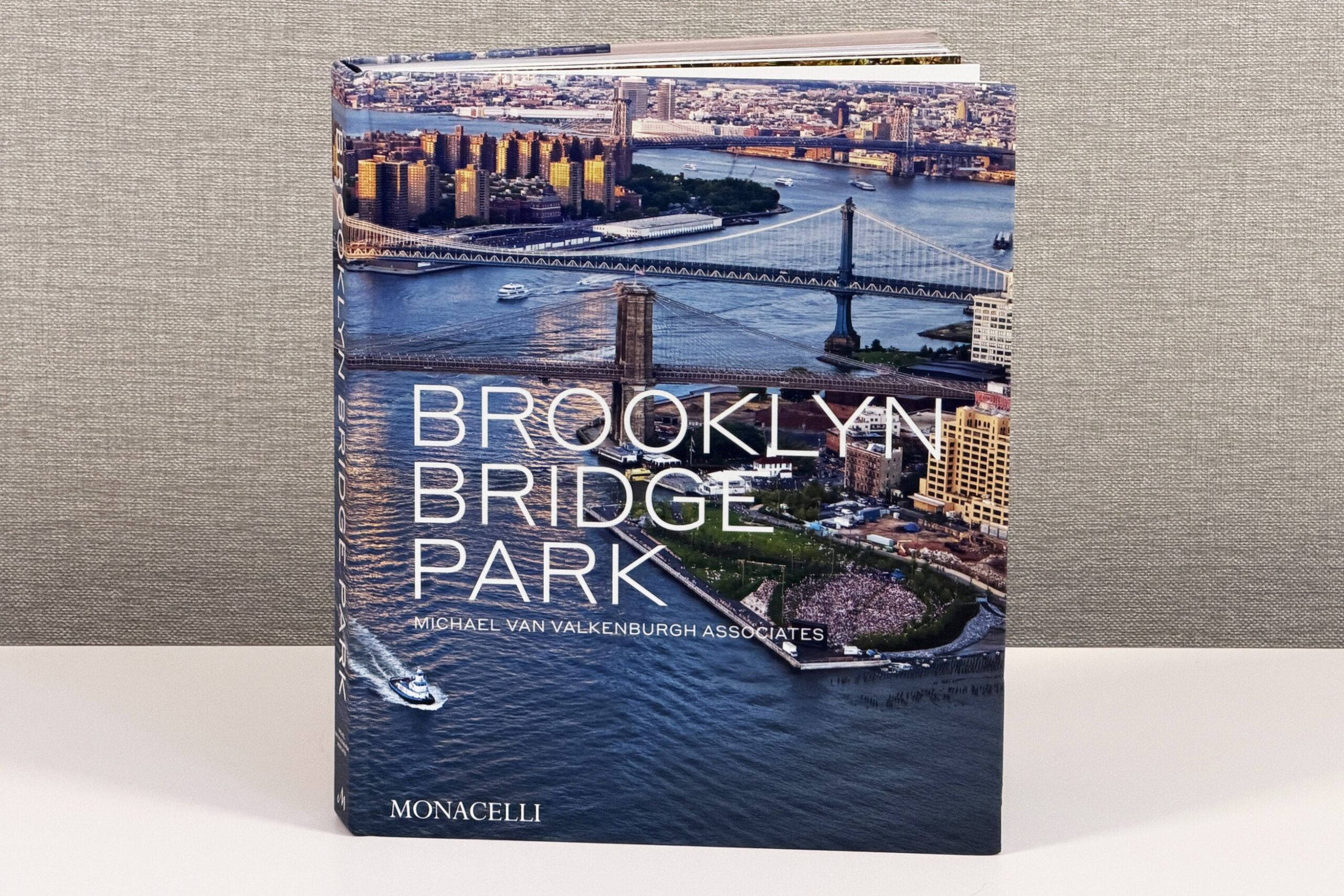
Brooklyn Bridge Park: Michael Van Valkenburgh Associates
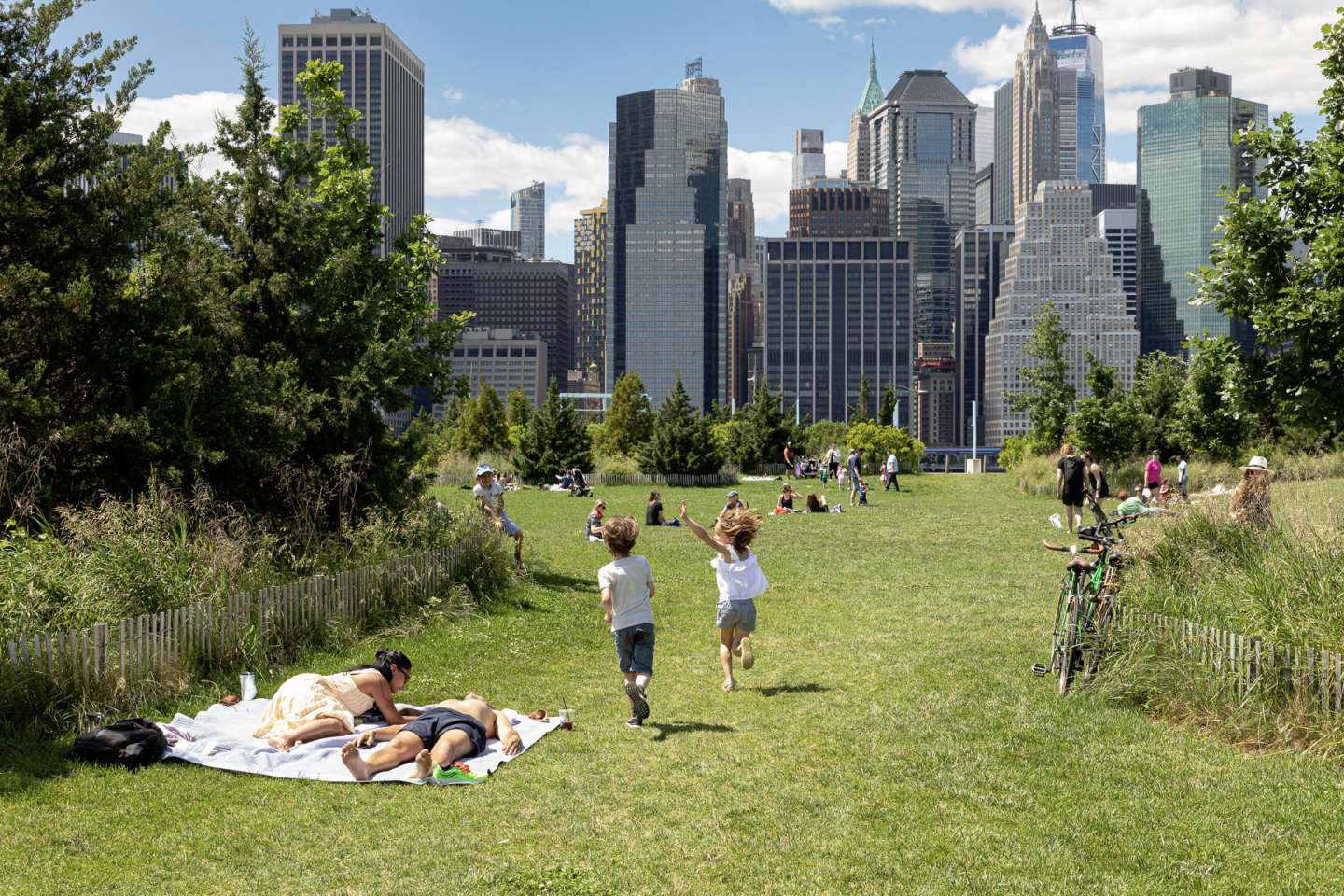
Brooklyn Bridge Park, just published, frames an amazing 40-year story of community persistence in regenerating the East River waterfront and the 23-year design and phased construction process led by Michael Van Valkenburg Associates (MVVA), with NLI on the team, to become a celebrated urban park and a model of community-driven landscape architecture’s regenerative power to create public places integrating people and nature––otherwise known as biophilic design.
Once a vital shipping hub and warehouse district, the site served NYC from the early 1800s until its closure in 1984. That same year, a citizen movement began contesting plans to sell off the waterfront for development and gradually gained momentum and influence. The Downtown Brooklyn Waterfront Local Development Corporation was established and, via extensive community engagement, produced a park master plan (2000). Once adopted, implementation began, including the appointment of MVVA as lead consultant (2004).
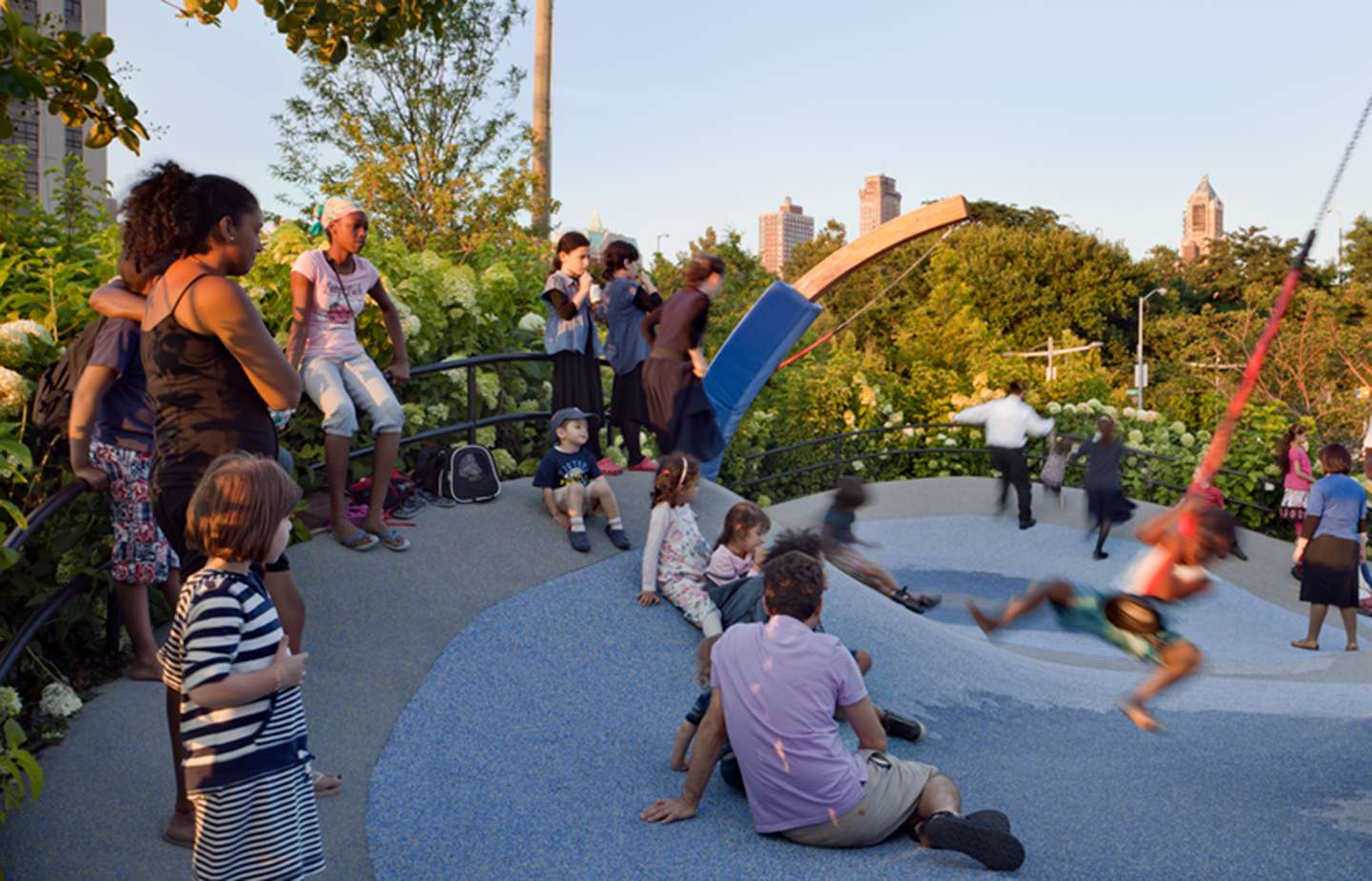
The Brooklyn Bridge Park book emphasises the park as a place for play, describing how landscape design can support and expand play repertoires that impact child development and how NLI’s Robin Moore & Nilda Cosco contributed scientific evidence to practice (p. 88):
“In 2004, while our work was underway at Brooklyn Bridge Park, we completed Lower Manhattan’s Teardrop Park, a place shaped entirely for kids and inspired by nature. [It was] the first time MVVA worked with play experts Robin Moore and Nilda Cosco of the Natural Learning Initiative at North Carolina State University’s College of Design. Both inspired a revolution in the way we thought about nature play.
“With Brooklyn Bridge Park’s eighty-five acres, we had the chance to build on Robin and Nilda’s ideas under more varied conditions and on a bigger scale. Our philosophy was that great play spaces need a strong connection to nature, and that inclusive design for children can draw on the complexity of natural environments.
“Integrating play into a landscape provides a sense of belonging for children with all kinds of needs, which a playground defined by freestanding, standardized equipment cannot offer. Together, our team began identifying a spectrum of spaces to serve different personalities and play styles—from central, highly visible areas for children who want to direct their energy outward to sheltered nooks at the edges for those seeking calm or interaction with smaller groups.
“Robin and Nilda told us that a successful play environment requires caregivers’ cooperation too. To create somewhere that adults would want to return to, we provided a range of sitting options that allow them to be as involved or as hands-off as they please. When these spaces are part of a holistic landscape, they can overlap and diverge seamlessly so that participants can find the comfort level and move in and out of each zone with ease.”
Brookland Bridge Park, the book, contains many insights regarding how park landscape design can liberate human behavior and build community, including children, in ways impossible to replicate in other contexts, richly illustrated with a multitude of photographs. Brookland Bridge Park, the place in real life, is a “must” for NYC visitors!
NLI Brings Outdoor Learning Expertise to Rhode Island Farm & Sea to School Institute
On June 26, 2026, the Natural Learning Initiative (NLI) at North Carolina State University virtually joined the Rhode Island Department of Health for the Rhode Island Farm and Sea to School Institute in Narragansett, Rhode Island. The full-day institute brought together early childhood and school-age professionals to explore how outdoor learning environments, gardening, and nature connection can support children’s health, learning, and development.
NLI Research Professor and Director of Programs Nilda Cosco, PhD, UX/Communication Designer and Communication Team Lead Matt Babb, MGXD, and Research Professor Robin Moore, MCP, led presentations and interactive sessions throughout the day. The program also highlighted research conducted through the Childcare Outdoor Learning Environments as Active Food Systems (COLEAFS) project.
Cosco’s morning session explored the importance of outdoor learning environments for children’s health and development, including the concept of One Health, the interconnected health of people, animals, and the environment. NLI also shared research demonstrating how outdoor environments can support physical activity, healthy eating, attention, and overall well-being.
A central focus was the COLEAFS research project, which examined the effects of the Preventing Obesity by Design (POD) gardening component on young children’s physical activity and fruit and vegetable consumption. The intervention included garden installation, a Gardening Activity Guide and calendar, and weekly garden visits. Children in the intervention group achieved six additional minutes of moderate-to-vigorous physical activity per day, 14 fewer minutes of sedentary time, and increased fruit and vegetable consumption during snack time.
Participants then explored NLI’s Gardening Activity Guide. They took part in a Smart Budgeting exercise, considering how a $500 seed grant could be expanded through volunteer labor, in-kind donations, Extension support, and parent and teacher workdays.
Building Community Support
Babb’s presentation, “Communication and Community Engagement for Sustainable Early Childhood Programs,” focused on the people and relationships needed to sustain this work. The presentation emphasized family engagement, teacher leadership, community partnerships, and shared ownership as foundations for long-term success.
Participants explored how effective communication can help communities understand why outdoor learning matters, how children benefit, and how they can participate. Babb also emphasized the value of sharing children’s learning stories, photographs, testimonials, and examples of progress to build visibility and community support.
Natural Learning Curriculum
The online afternoon session, led by Cosco and Moore, brought these ideas together through Natural Learning Curriculum Integration, including a special look at Moore’s seminal work at the Washington Environmental Yard, which is the basis of his book “Natural Learning”. Participants explored nature connectedness, curriculum connections, interactive examples, and practical ways to incorporate outdoor learning into everyday early childhood experiences.
The day concluded with a “Planting a Wish” exercise, allowing participants to reflect on the day’s discussions and share their hopes for bringing outdoor learning, gardening, and nature connection into their own programs and communities.
The institute provided an opportunity for NLI to share decades of research and practice while connecting with Rhode Island educators and public health professionals working to create healthier, more engaging, and nature-rich experiences for young children.
Rhode Island Farm and Sea to School Network Social Media:
Rooting Childhood in Nature was the 18th Design Institute & Exhibition theme, celebrating NLI’s 25th Anniversary, now reprocessed, with support from our sponsors, as a bi-monthly, free webinar series showcasing the five top expert presenters. Each one-hour session opens with a post-produced recording of the original, in-person presentation, leaving almost half the time for facilitated Q&A / discussion. Details below.
The 2026 Rooting Childhood in Nature Webinar Series is supported by PNC Bank
October 7, 2026, 12:00-1:00 PM (Eastern Time US)
Creating Biophilic Cities in Favor of Children and Families.
Case studies from the Biophilic Cities Network will explore strategic approaches across climate, culture, partnerships, policy, and politics. The session will highlight keys to success, methods of measuring impact, and lessons that may inform Raleigh’s role as a Biophilic Cities Network member.
Presented By:Tim Beatley, PhD
February 4, 2026, 12:00-1:00 PM (Eastern Time US)
What the Evidence Tells Us.
What do we know about children’s engagement with nature—why it matters, when it’s most critical, where it should occur, and in what dosage? Who ensures that these opportunities for interaction exist? What links are missing in the “nature supply chain”?
Presented By:Cathy Jordan, PhD
See recorded presentation here:
April 1, 2026, 12:00-1:00 PM (Eastern Time US)
Global Action.
The child’s right to nature—now gaining international recognition—nurtures GenN, the next generation of nature advocates. The IUCN’s Nature-Based Solutions (NbS) framework advances this vision as an equitable people–environment design tool.
Presented By:Cheryl Charles, PhD
June 3, 2026, 12:00-1:00 PM (EST US)
The Forces That Have Brought Kids Indoors, and How We Can Get Them Out Again.
Over the past 75 years, multiple societal forces have combined to limit children’s free play, independence, and outdoor freedom. What are these forces—and what movements are countering them? If we want children outdoors more, we must give them the freedom to play outside with peers, without adult interference. That is the challenge.
Presented By:Peter Gray, PhD
August 5, 2026, 12:00-1:00 PM (Eastern Time US)
Achieving Nature Play and Learning On and In the Ground.
For over 25 years, MVVA partners Matt Urbanski and Michael Van Valkenburgh have invited NLI to collaborate on projects supporting children and families. MVVA’s portfolio shows expertise in the field of landscape architecture as a health-promoting intervention. In this presentation, Matt will share MVVA’s evolving approach to designing for free play, including Gipson Play Plaza.
Presented By:Matt Urbanski, FASLA
Also see “Gipson Play Plaza” Short Film with Matt Urbanski:
Rooting Childhood in Nature Webinar Series
Rooting Childhood in Nature– Supporting Children’s Health, Caring for Our Home in the Universe
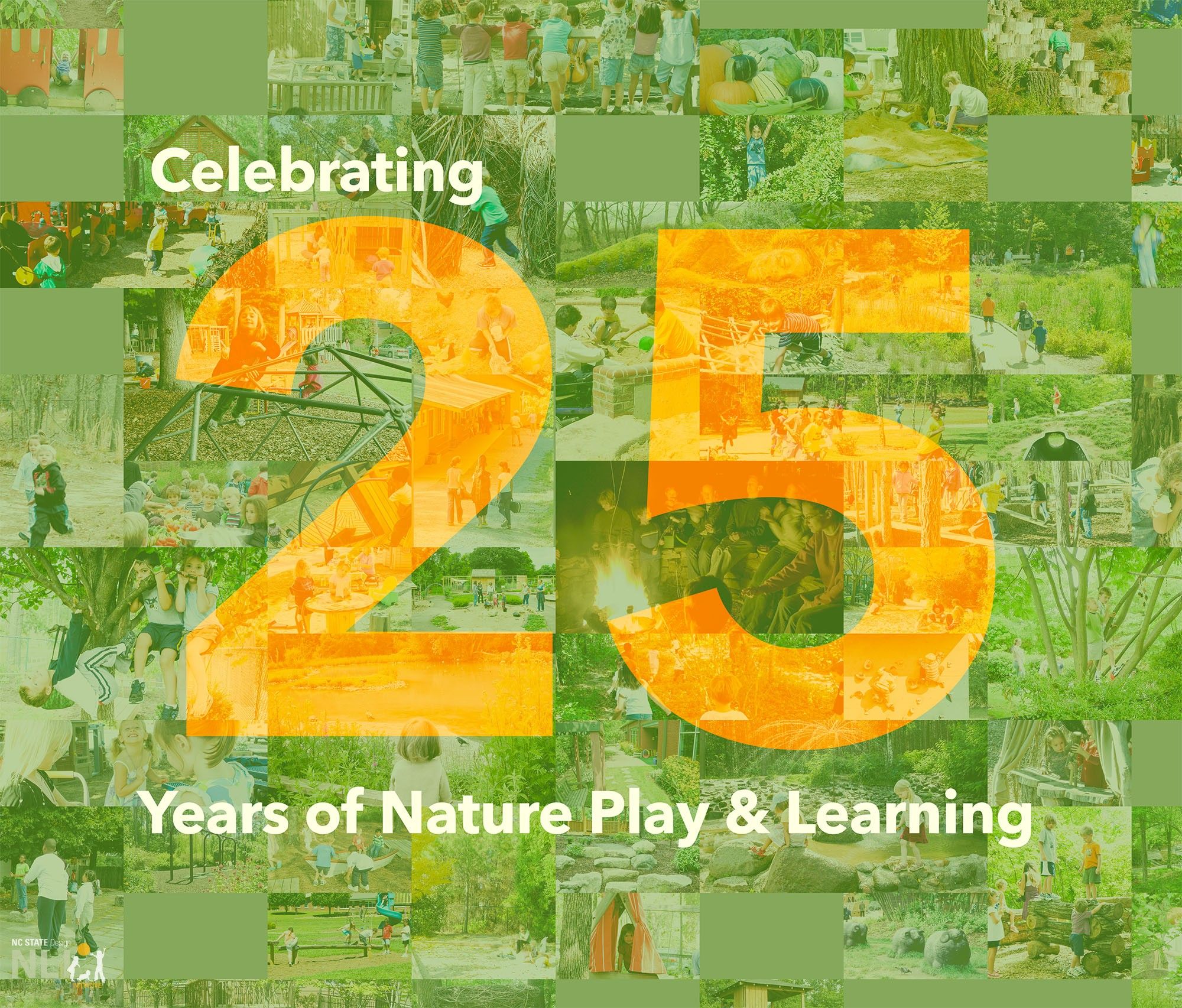
On October 22, 2025 NLI hosted its 18th Design Institute, a milestone event celebrating the global children and nature movement and 25 years of NLI’s work in advancing healthy childhoods through biophilic free play and learning, driven by design research, education, resource dissemination, and multimedia communication. The day brought together designers, educators, researchers, and advocates to reflect on progress, share insights, and look ahead to the next generation of child-friendly, nature-rich environments.
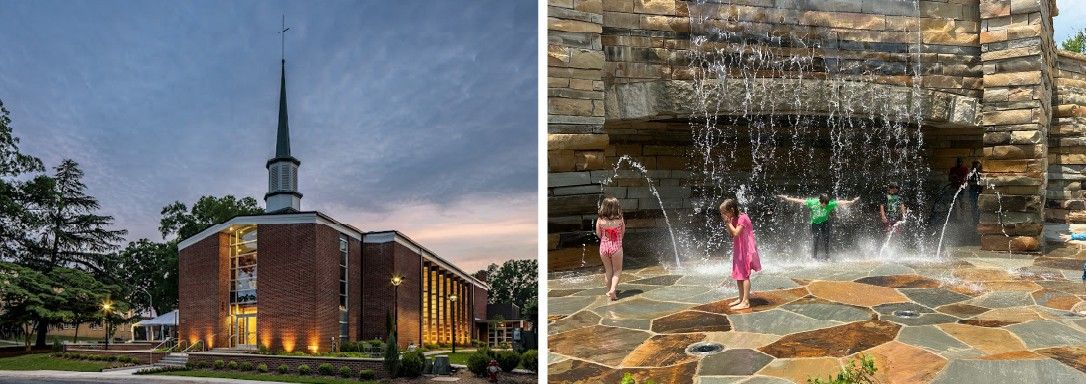
The main event was held at the Greg Poole Jr. All-Faiths Chapel at Dix Park, Raleigh, NC with a trip to Gipson Play Plaza for lunch!
25th Anniversary NLI Exhibition– Discover 25 years of impact through community co-design, research, education, professional development, resource creation, & communication!
Brooks Hall Gallery, College of Design, NC State University
The exhibition was on view October 21–31. Stay tuned for a digital showcase!
Event Highlights
Mark Hoversten, PhD, Dean, College of Design, NC State University, welcomes participants.
“Love it or Lose it” created by Bailey Lawson in a freshman GXD studio taught by Victoria Chi, assisted by Matt Babb.
Richard “Rich” Louv, author of Last Child in the Woods, shares thoughts about NLI and the future direction of the children & nature movement.
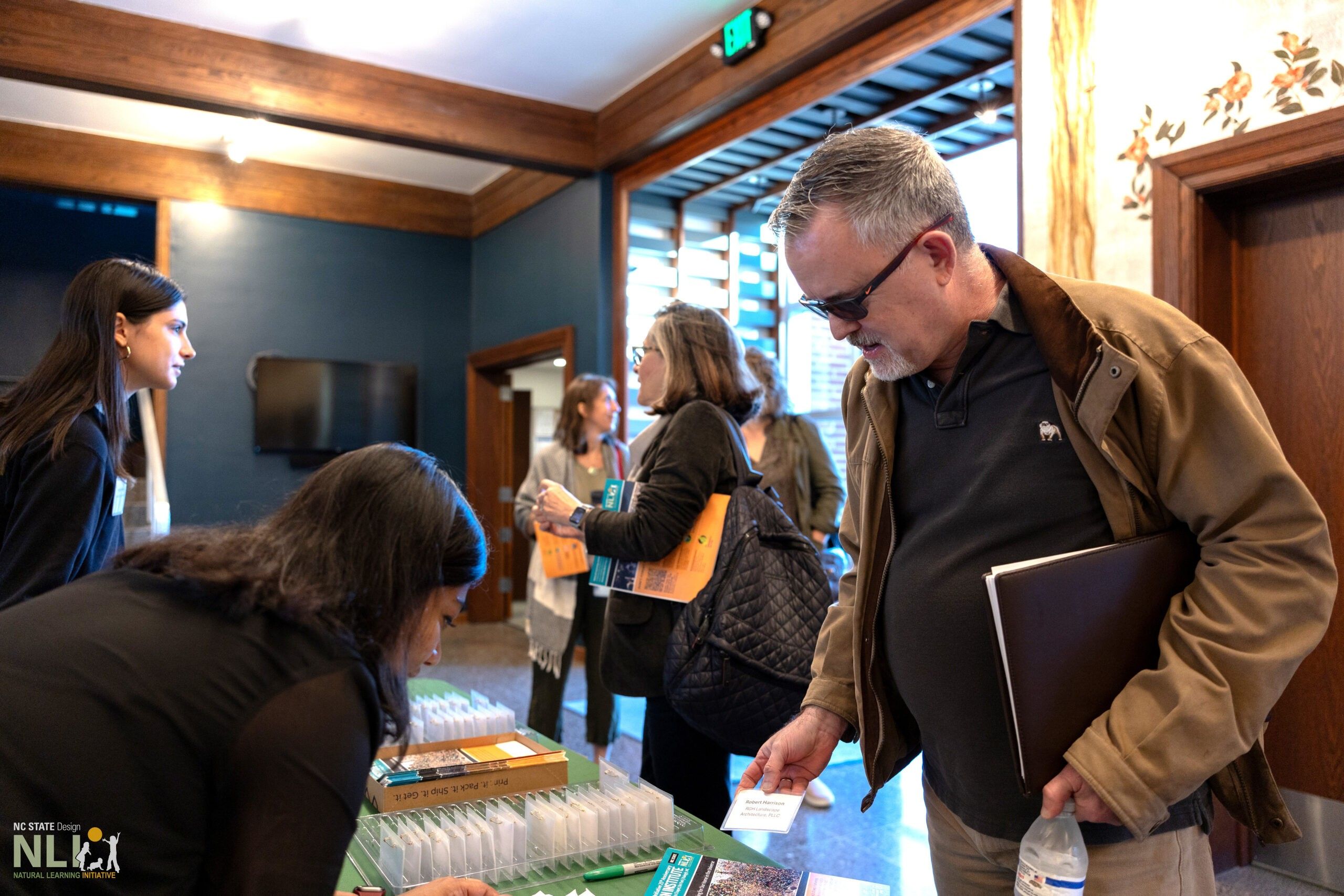
Landscape Architect Rob Harrison eagerly checks in.
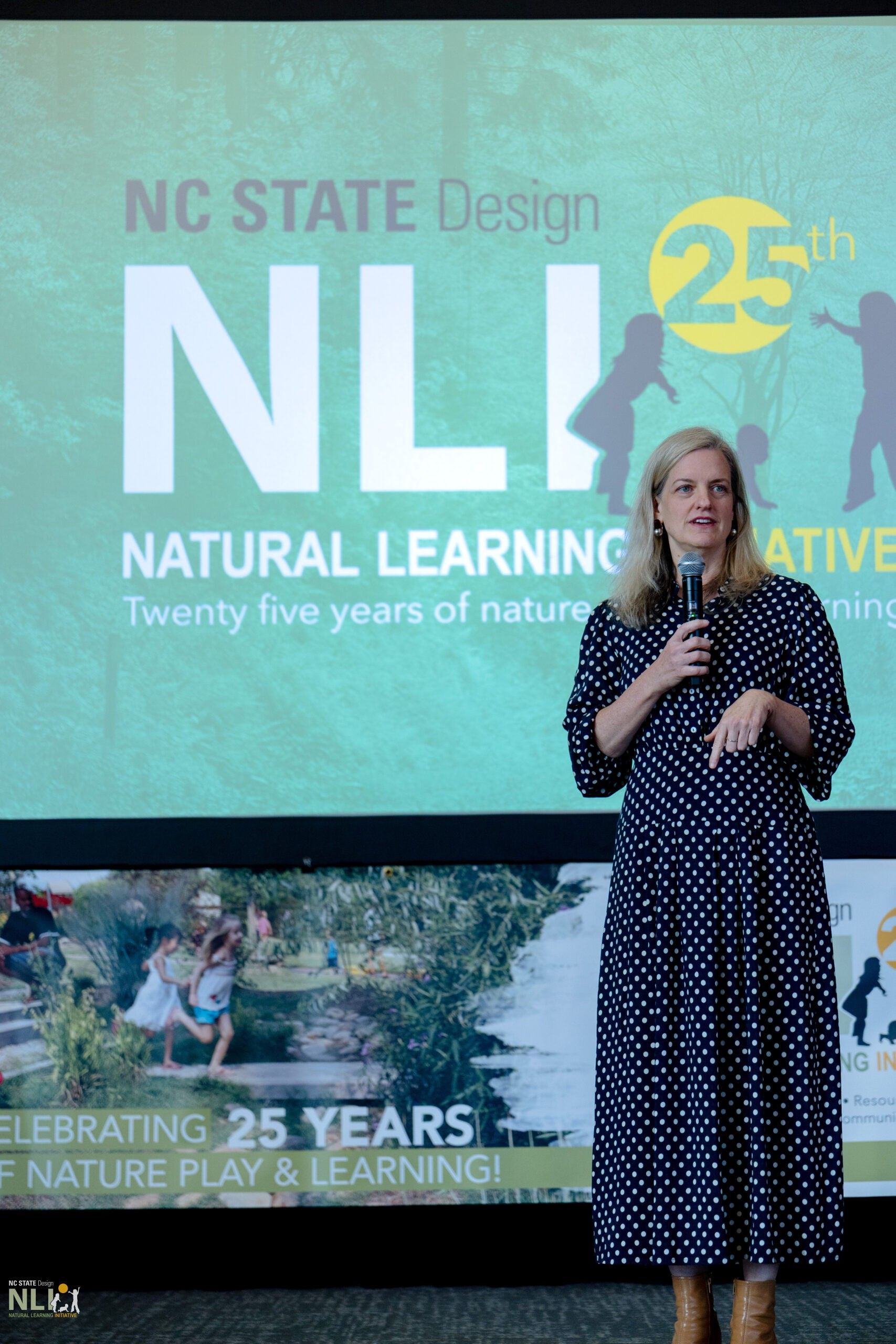
On behalf of the City of Raleigh, Mayor Janet Cowell welcomes the audience to Dix Park.
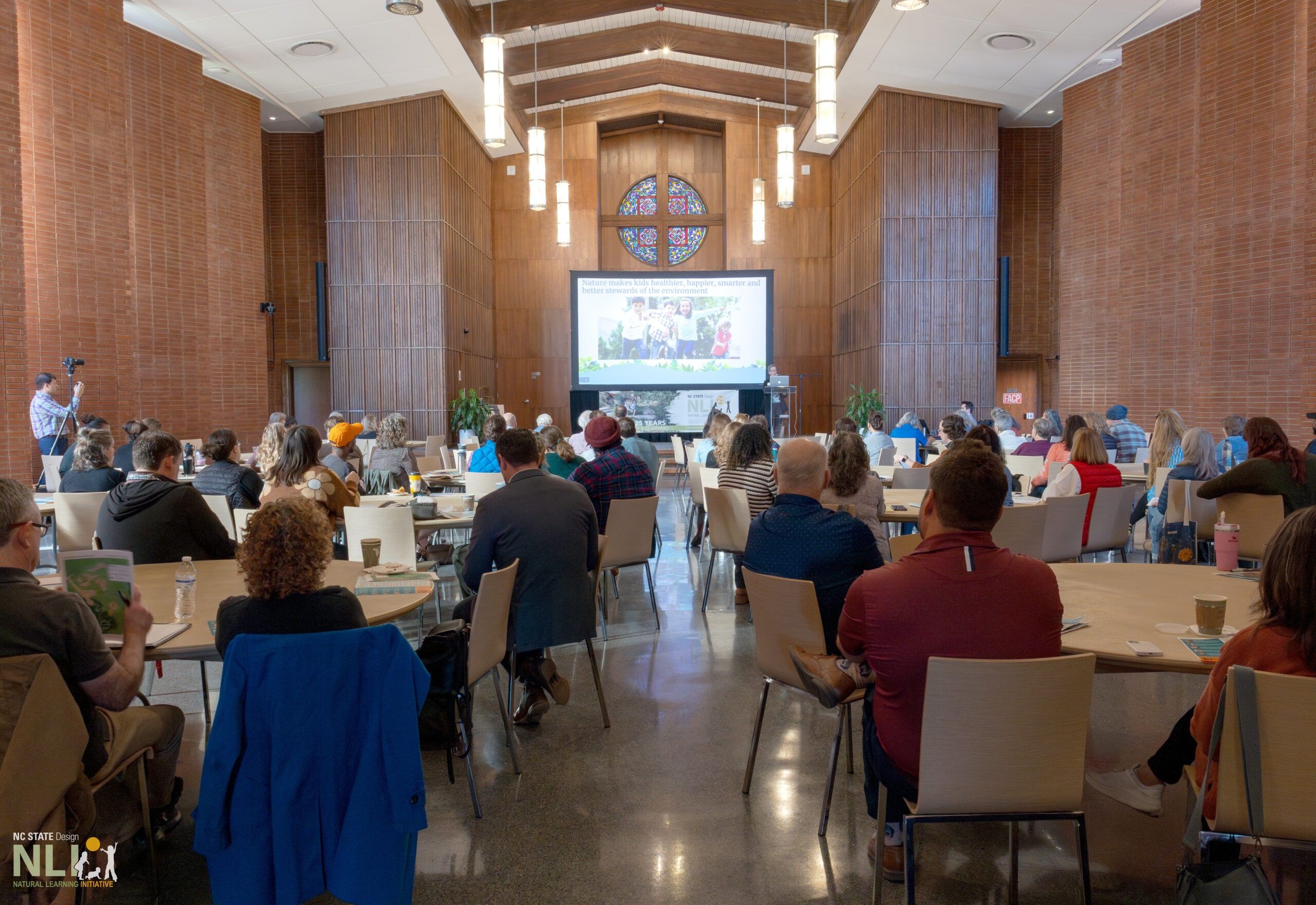
The Greg Poole Jr. Chapels’ outstanding, contemporary nave arches over the 130+ participants.
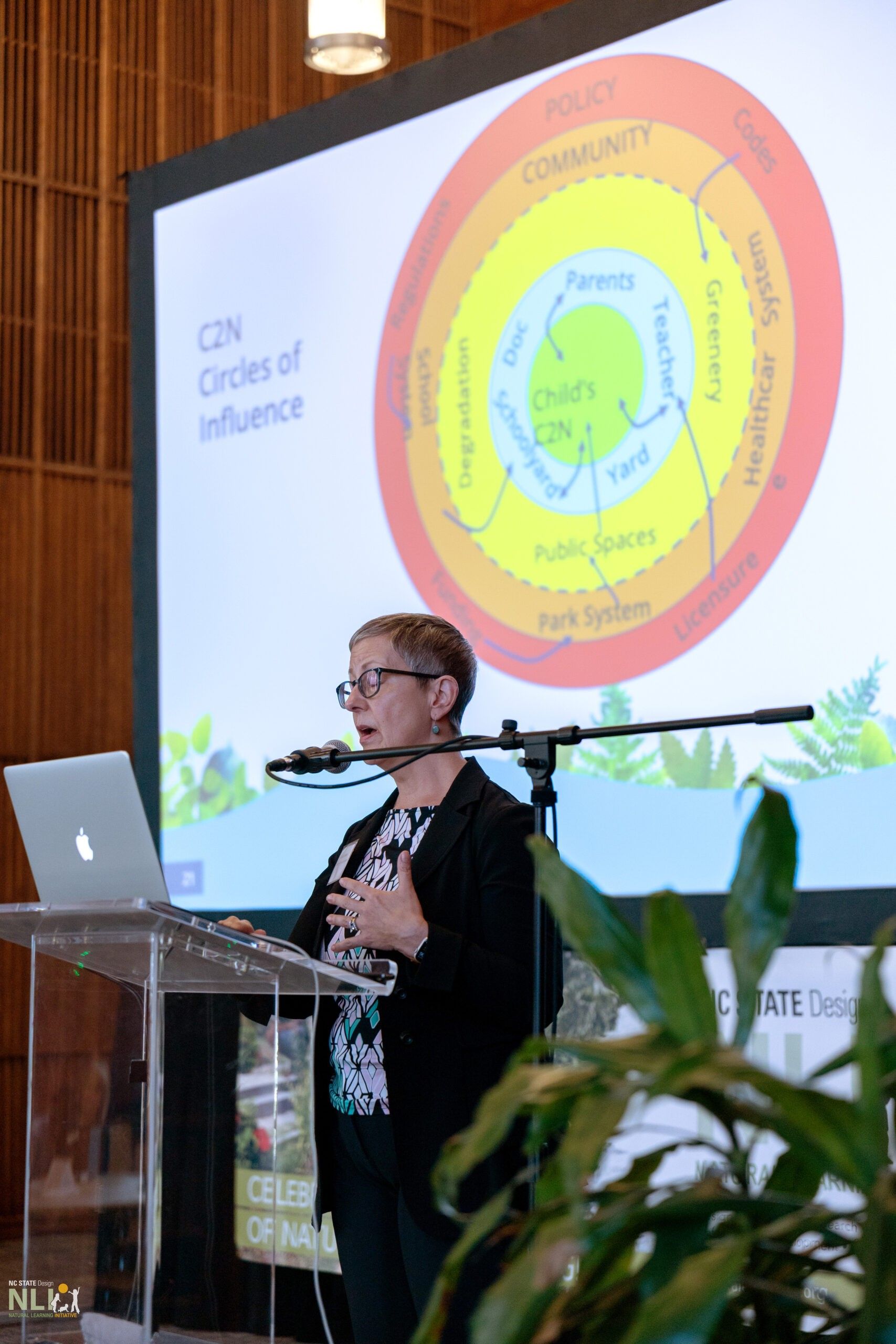
Opening speaker Cathy Jordan presents “What the Evidence Tells Us” about Children & Nature.
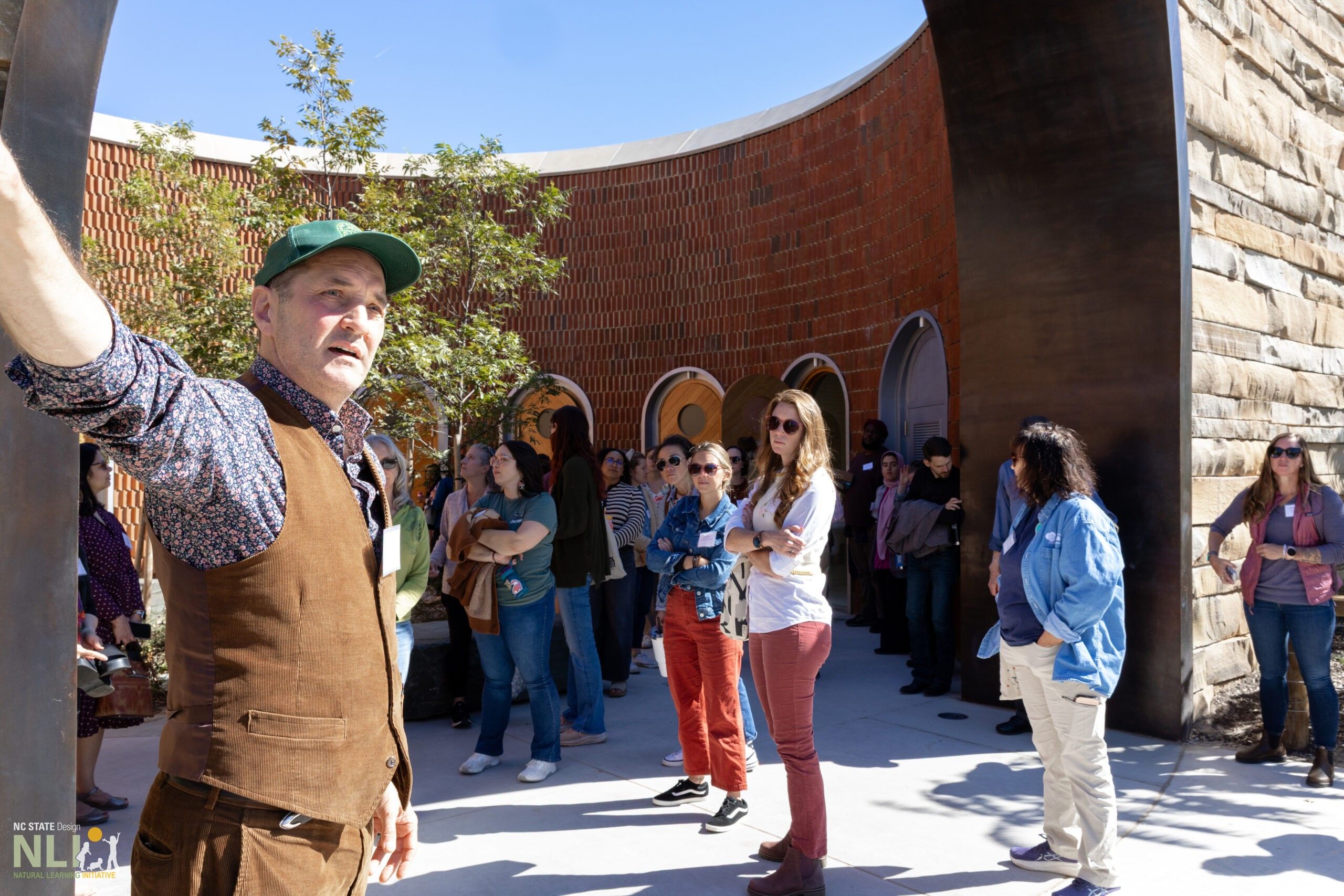
Speaker Matt Urbanski, Lead Designer of Gipson Play Plaza, describes the unique restroom courtyard.
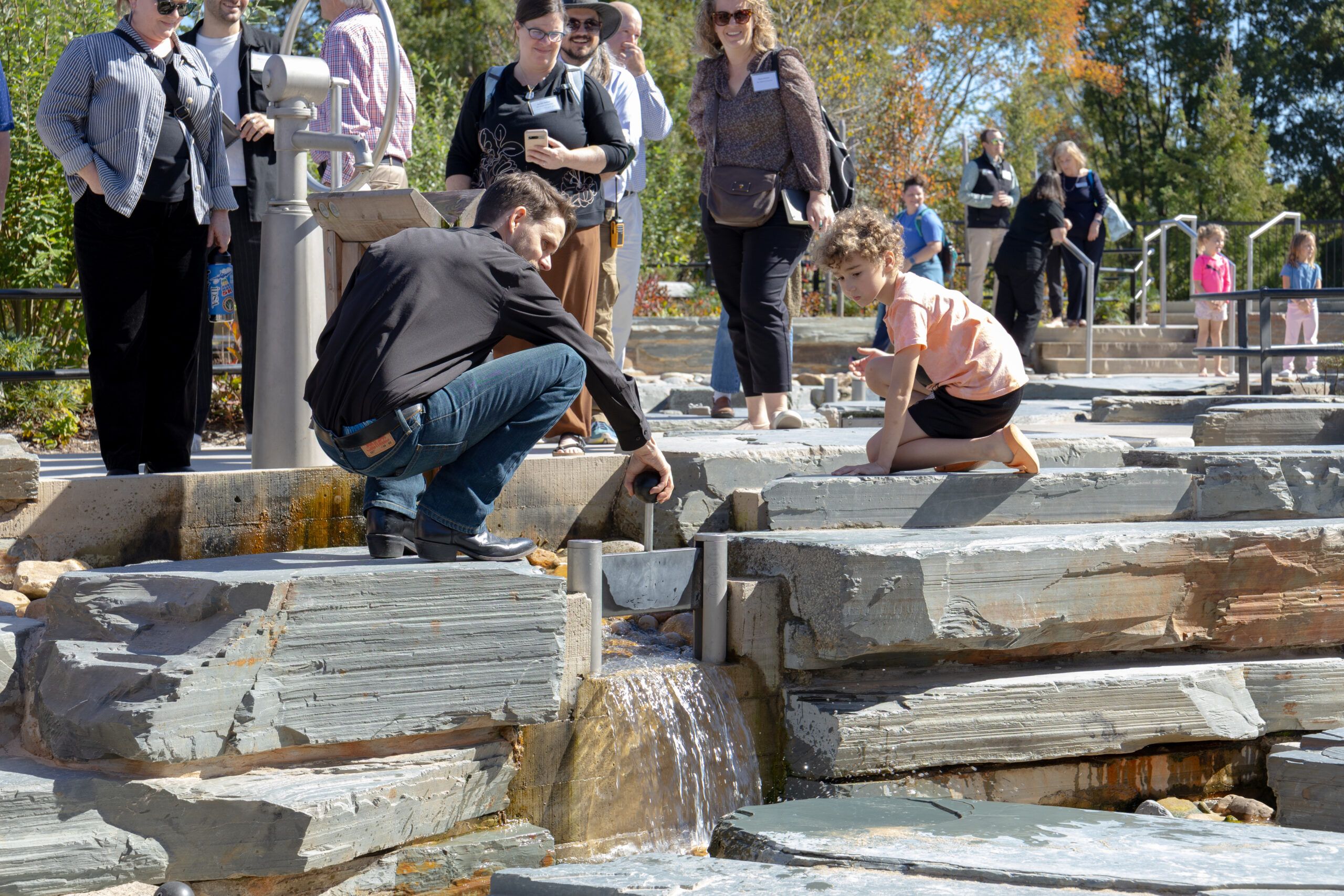
Watermill Mountain, predictably the most popular play and learning setting.
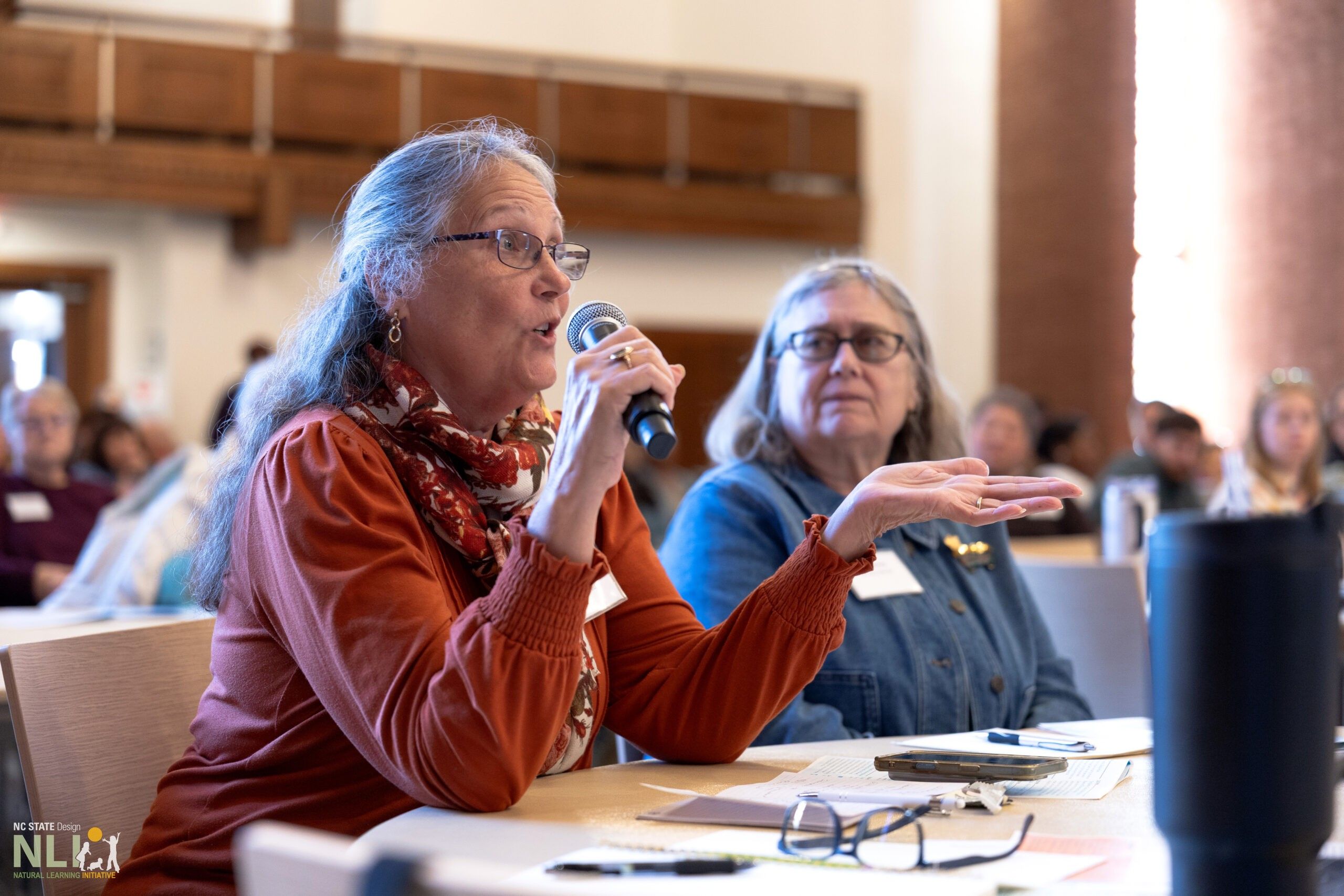
Rhonda Hawkins responds to the “way ahead” question posed to the panel and participants.
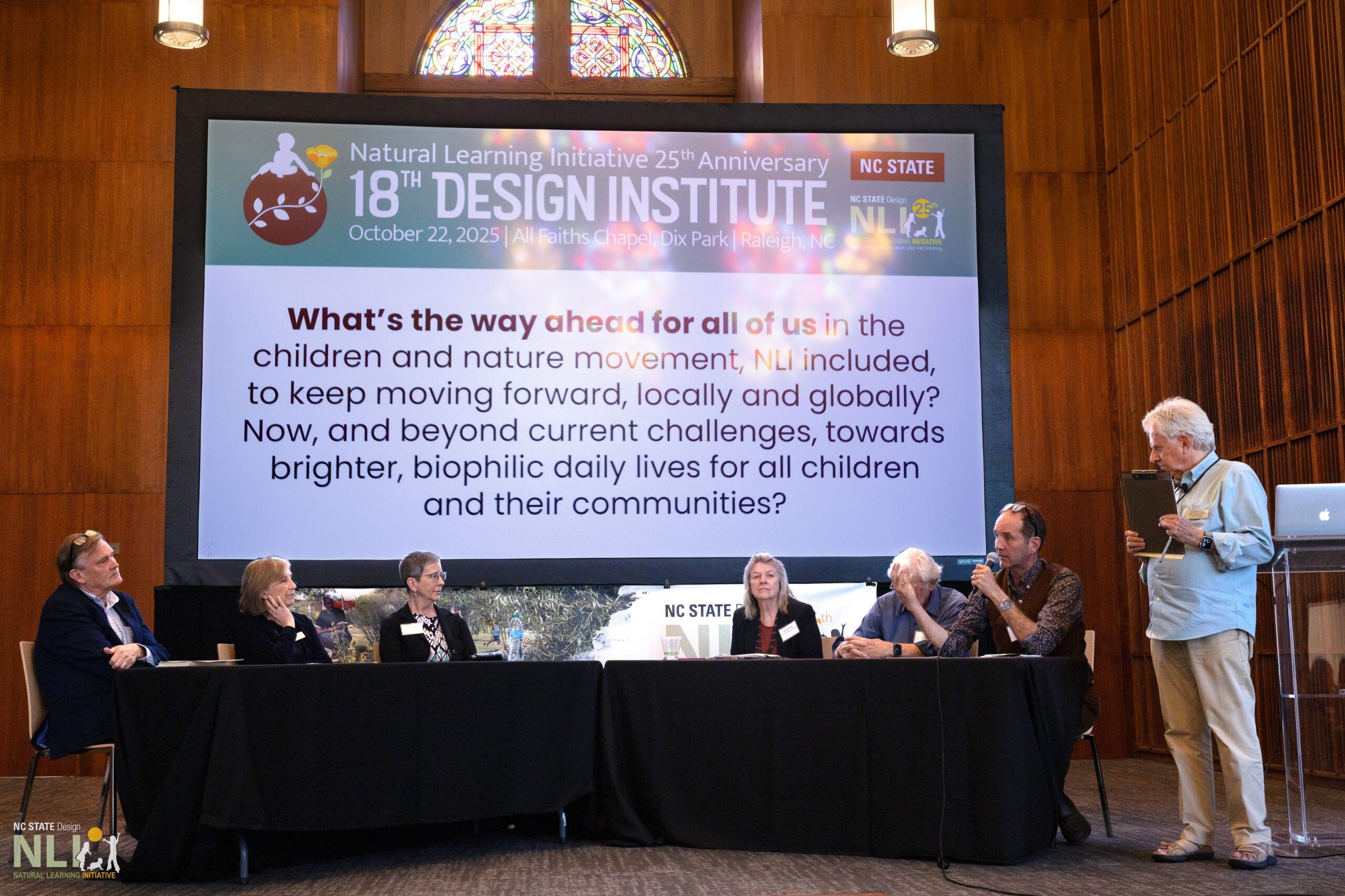
The panel, facilitated by Robin Moore (right), responds to the “way ahead” question with a plethora of ideas.
I’m from Transylvania County and I brought my daddy with me. I brought the rocks I tiptoed across the creek on, half rotten logs I sat alone in the woods on, water spiders, lightning lizards, summer rain, messy hair, and chaos – a child from wild places.
You sat with me, and I was a long-shot. I needed a place where my memories hold value in foreign geographies, and you said yes.
We dreamt of saving earth, together in a basement under the stairs. I was wild as hell, and wanted to break from my skin every morning but by noon I was a little softer. You were the admiral, and she was the mother. We had dreadlocks, attitudes, dissertations, and a coffee pot. This was our safe place where we gathered over layers of yellow and creamy white trace paper.
It was a vibe.
There were old light tables, micron pens, mechanical pencils, crumpled papers, binder clips, easels, flip charts, xerox copies, filing cabinets, drafting dots, little Argentine sayings, moot points, doohickies, thingamabobs, and books made for grown ups to find what they don’t want to lose. We talked about risky things like the liability of a stone and growing tomatoes.
We counted the affordances of low hanging fruits, the behaviors of souls huddled in shade, little feet stomping down pathways, and we captured them with dots on pages with our clip boards and uniball pens.
We counted the places where babies grow up under the supervision of licensed professionals, like farmers preparing to plow fields in the spring, waiting for the frost to break so our seeds could begin to grow.
We were rebels in a dance we created together.
In this little shelter for freedom where a bare light bulb glows in the darkness our friends came to join us like moths looking for the full moon and you taught them the steps.
In this little room with walls made from shelves, we discussed life on earth and what learning to walk means. Territorial ranges expanded as we grew, we chose our paths and picked blueberries from the ceiling of our special hut.
We started to fly.
Living systems connect us from oceans to mountains, between landscapes and cities we grow up in. With wings spread and facing horizons, we tossed intention in the sky and listened for an echo. Each sketch a hopeful whisper, a shared dream, a reverberation of a paperback book and a voice tumbling through time bouncing off canyons to land between the fat toes of babies lying on soft grass watching the flowers wave in a breeze that carries images like blown seeds back to us. The evidence we wait for in those echoes we hope for returns with each first step taken, with each first word spoken. Generations emerge from this chrysalis where we draw circular paths, touch gentle memories, and make wild again what had fallen into ordinary.
This is what it feels like to spread joy.
Did you bring the rocks you tiptoed across the creek on, those moss covered logs you sat on, or the stick you found for your friend? Bring them here to this altar and let them breathe among the rest of us, to this place we made for each other in this field built by grandchildren.
What do we want?
We want earth filled with warmth and comfort, the eyes of loving friends upon us, and sweet mischief at the prospect of life beginning over and over again. We want that for humanity. We want peace, love sweet and tender, and we want a belly full of it.
The last child in the woods won’t be born to us.
We are alive and this is our blessing.
Listen along (with intro)
Audio recording opens with Jesse’s “wild child” memories of Transylvania County nature that informed his undergraduate work at NLI 25 years ago!
Program
9:00 am
OPENING REMARKS Robin Moore, DipArch, MCP, Hon.ASLA, Co-founder & Director Emeritus, NLI; Research Professor & Professor Emeritus, Department of Landscape Architecture and Environmental Planning, NC State University.
Nilda Cosco, PhD, ASLA, Co-founder & Director of Programs, NLI; Research Professor, Department of Landscape Architecture and Environmental Planning, NC State University.
9:05 am
WELCOME! 25 years ago, a few grown-up kids with an ambitious dream took a chance—and Dean Marvin Malecha said “yes.”
We’re pleased to introduce several individuals with special connections to the 25th Anniversary Celebration: Rooting Childhood in Nature.
Rebecca Quinn-Wolf, SVP & Director of Client & Community Relations, PNC (Primary sponsor).
Janet Cowell, Mayor, City of Raleigh.
Kate Pearce, Executive Director, Dix Park, City of Raleigh.
Rob Maddrey, Vice President of Development, Dix Park Conservancy.
Mark Hoversten, PhD, Dean, College of Design, NC State University.
Maria Bellalta, Head, Department of Landscape Architecture and Environmental Planning, NC State University.
Soolyeon Cho, PhD, Assoc. Dean for Research, College of Design, Interim Director, NLI.
9:30 am
Rooting Childhood in Nature(NLI YouTube Short)
9:45 am
What the Evidence Tells Us. What do we know about children’s engagement with nature—why it matters, when it’s most critical, where it should occur, and in what dosage? Who ensures that these opportunities for interaction exist? What links are missing in the “nature supply chain”?
Cathy Jordan, PhD, is Director of Research, Children & Nature Network; Professor of Pediatrics, University of Minnesota; and Cofounder and Co-leader, Teacher Field School. She specializes in the impact of the physical environment on children’s health, wellness, academic success, and care for the Earth.
10:30 am
Global Action. The child’s right to nature—now gaining international recognition—nurtures GenN, the next generation of nature advocates. The IUCN’s Nature-Based Solutions (NbS) framework advances this vision as an equitable people–environment design tool.
The Forces That Have Brought Kids Indoors, and How We Can Get Them Out Again. Over the past 75 years, multiple societal forces have combined to limit children’s free play, independence, and outdoor freedom. What are these forces—and what movements are countering them? If we want children outdoors more, we must give them the freedom to play outside with peers, without adult interference. That is the challenge.
Peter Gray, PhD,is Research Professor of Psychology and Neuroscience, Boston College. He is an expert in children’s play and informal learning and author of Free to Learn and other provocative books addressing contemporary childhood.
12:00 pm
LUNCH & EXPLORING GIPSON PLAY PLAZA (GPP) Robin Moore and Kate Pearce brief and introduce Matthew “Matt” Urbanski, MVVA, Gipson Play Plaza lead designer and Chelsea Hoffman, APE Studio, NYC/Richter Spielgeräte, Frasdorf, Germany. Kate Pearce highlights key “don’t miss” points of interest around Gipson Play Plaza.
2:00 pm
Achieving Nature Play and Learning On and In the Ground. For over 25 years, MVVA partners Matt Urbanski and Michael Van Valkenburgh have invited NLI to collaborate on projects supporting children and families. MVVA’s portfolio shows expertise in the field of landscape architecture as a health-promoting intervention. In this presentation, Matt will share MVVA’s evolving approach to designing for free play, including Gipson Play Plaza.
Creating Biophilic Cities in Favor of Children and Families. Case studies from the Biophilic Cities Network will explore strategic approaches across climate, culture, partnerships, policy, and politics. The session will highlight keys to success, methods of measuring impact, and lessons that may inform Raleigh’s role as a Biophilic Cities Network member.
Timothy “Tim” Beatley, PhD, is the Teresa Heinz Professor of Sustainable Communities, Department of Urban and Environmental Planning, School of Architecture, University of Virginia. He is an author and the founder of the Biophilic Cities Network (Including Raleigh).
3:35 pm
Q&A – Mayor Janet Cowell participates.
4:00 pm
CLOSING PANEL Rich Louv shares prerecorded remarks framed by the panel question.
“What’s the way ahead for all of us in the children and nature movement, NLI included, to keep moving forward, locally and globally? Now, and beyond current challenges, towards brighter, biophilic daily lives for all children and their communities?”
Robin Moore (facilitator) is joined on-stage by Tim Beatley, Cheryl Charles, Nilda Cosco, Peter Gray, Cathy Jordan, Matt Urbanski for a discussion.
Participants are invited to share written responses to the question—please leave them on the table. Thank you!
By the closing of the Institute, participants will:
Be conversant with actionable evidence supporting design thinking, urban planning, and policy related to biophilic design of children and family outdoor environments.
Adopt biophilic thinking related to built environment design, children’s free-range play and family outdoor places, learning and education, community action and democracy, in daily life.
Consider how design thinking, community action, and policy development can be created to loosen, modify or remove constraints on children’s outdoor time in biophilic spaces that support developmental needs across ages and stages.
Understand how the international non-government sector creates and implements policies and models that frame and facilitate local biophilic action.