Blog

  • Early Spring in the Garden

    The Green Desk

    Early Spring in the Garden

    What things need to be done in the garden in early spring? What are some early spring gardening activity ideas for kids

    Early spring is a time bursting with possibilities in the garden, even while the air is still cold and the days are just beginning to lengthen. Here are ways to jump start spring in the garden with kids, taking advantage of everything the season has to offer.

    Garden Projects

    Planning

    Planting
    • Plant shade trees, shrubs, and vines.
    • Plant fruit trees and shrubs. (Download NLI’s Edible Plants list for NC for recommendations on what to plant in North Carolina)
    • Plant potatoes.
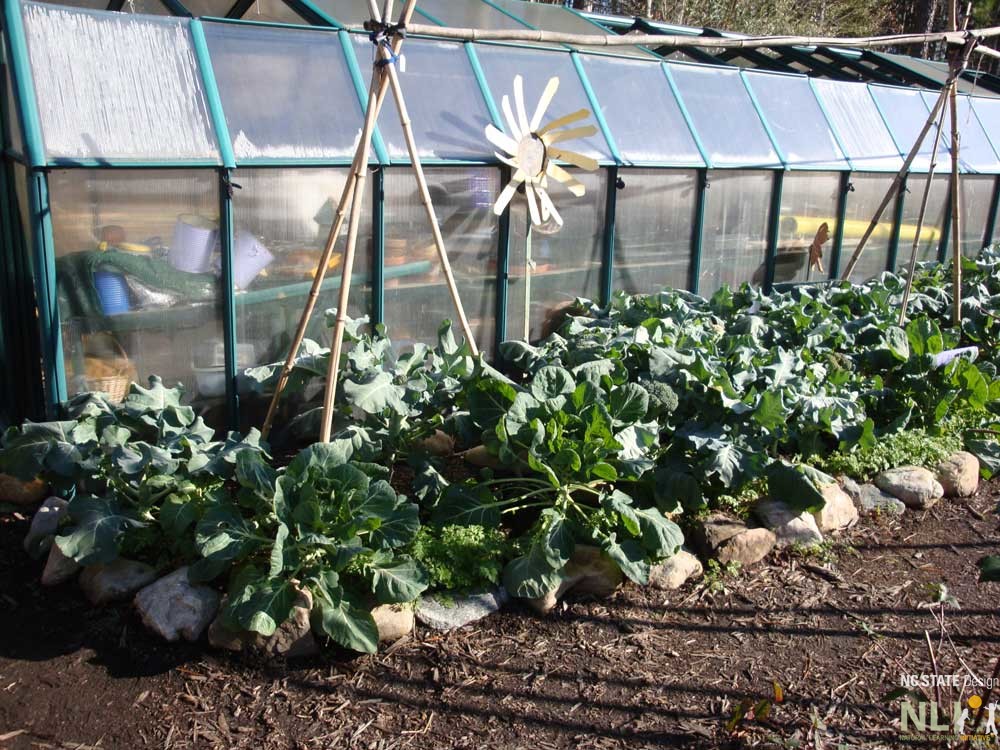
    • From seedlings started inside or bought from a local nursery, transplant cold hardy plants such as broccoli, cabbage, cauliflower, and leeks into the garden.
    • Sow seeds of radish, carrots, beets, greens, lettuce and peas.
    Management
    • Turn compost pile.
    • Prune flowering trees and shrubs: Crepe myrtle, beautyberry, butterfly bush.
    • Cut back ornamental grasses.
    • Take inventory of garden tools to plan for spring and summer gardening.
    Newspaper Pots

    Materials

    • Newspaper (black and white, printed with soy-based ink)
    • Mason Jar/Can
    • Pair of scissors
    • Potting Soil
    • Seeds (larger seeds are easier for little fingers to handle)
    • Masking tape
    • Popsicle sticks for labeling

    Instructions

    1. Cut the newspaper into five to six inch wide strips.
    2. Roll the strip of newspaper around the bottom half of the jar and fold any excess paper towards the bottom of the jar.
    3. Remove the jar from the newspaper pot, flatten out the bottom of the pot, and seal it with masking tape.
    4. Fill the pot with soil.
    5. Plant seeds in pot, water, (a spray bottle works well) and label with a popsicle stick.
    6. Keep soil moist, and wait for seeds to sprout. Plant in the garden when the weather is warm enough.

    Jump-start Spring

    1. By forcing branches of spring flowering shrubs and trees to bloom indoors. Place cut stems of Forsythia, Flowering Pear and Cherry, Quince, or Crabapple in a vase inside, and change the water every four days. Children will love bringing springtime indoors!
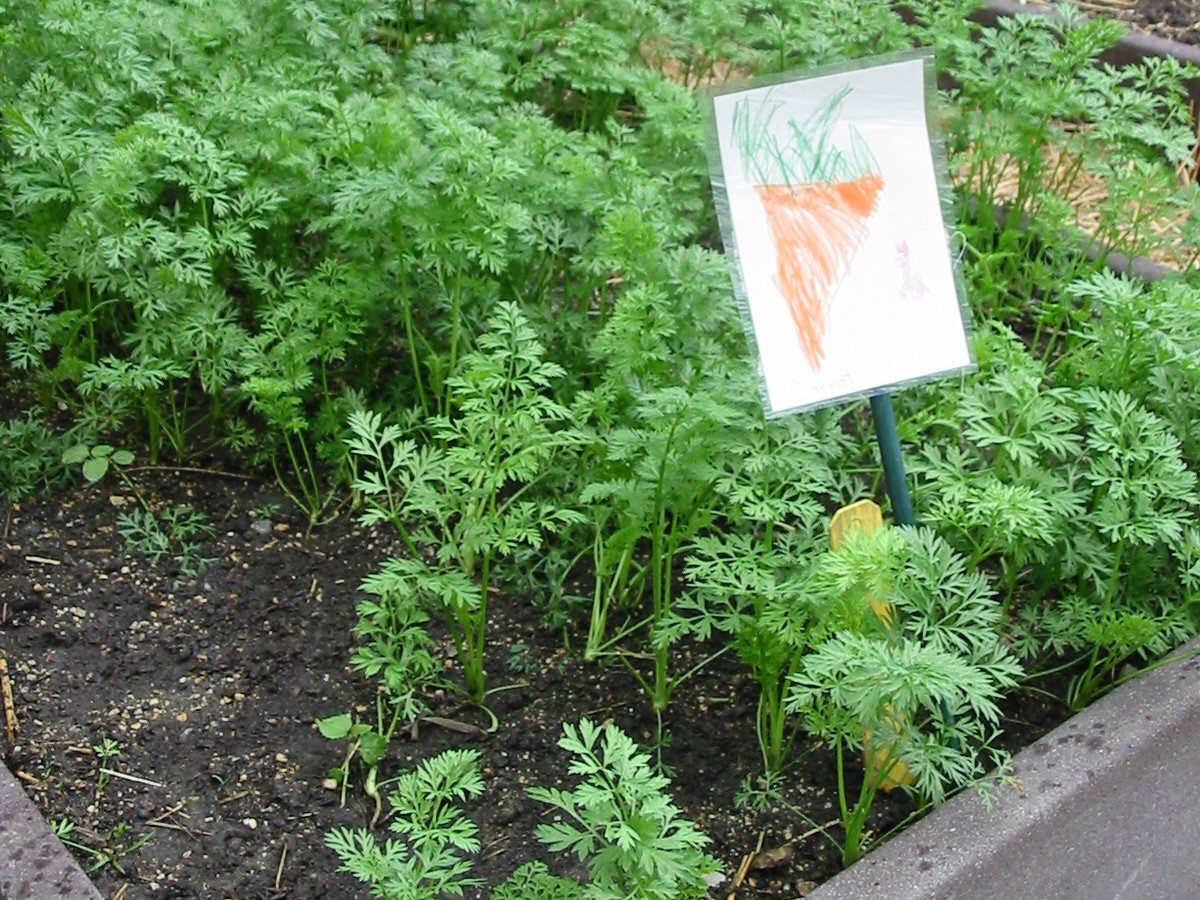
    carrot patch
    garden lined with stone border
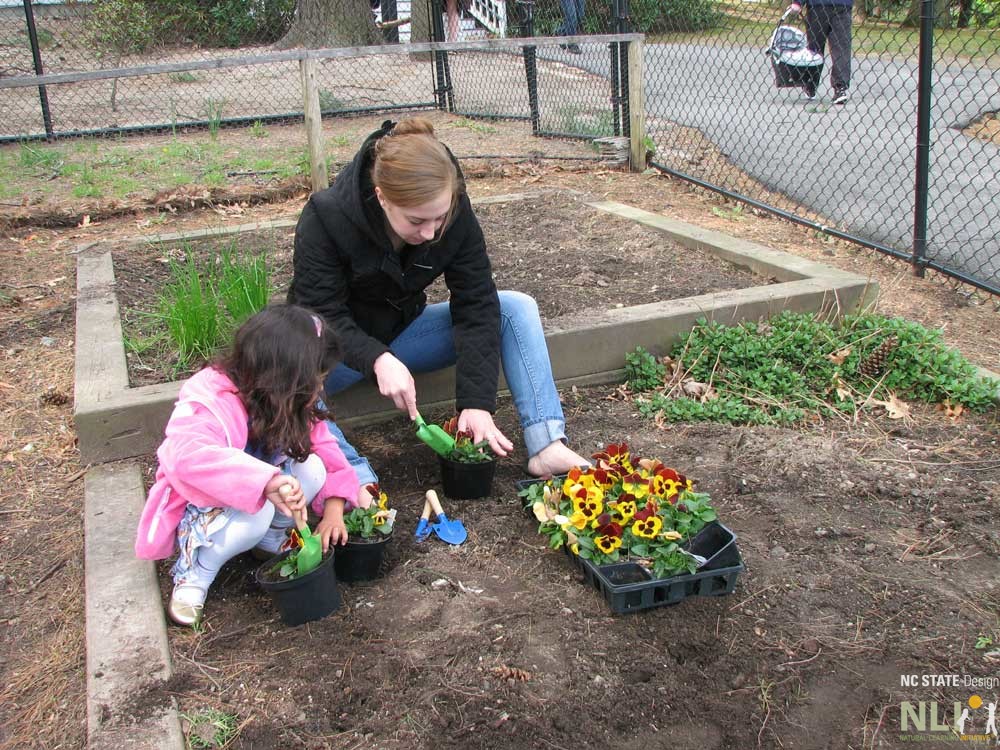
    child and adult planting flowers
    sectioned off vegitable garden
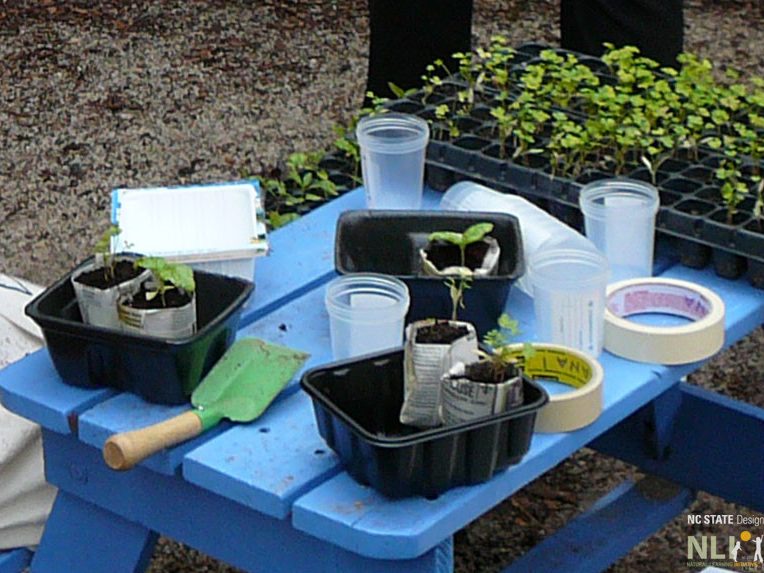
    close up of plants in paper pots
    plants in paper pots being prepared for planting

    Resources

  • Inclusion of Natural Elements in the Play Yard

    The Green Desk

    Inclusion of Natural Elements in the Play Yard

    Are large stones and/or rocks considered tripping hazards inside the fenced area?

    “We are thinking of using them as borders to create a garden space or perhaps as part of our outdoor learning environment activities and décor.”

    From the North Carolina Rated License Assessment Project:
    If the stones are used as a border and are not in a traffic path this would not be considered as a tripping hazard for the ERS.

    From the North Carolina Division of Child Development and Early Education:
    For borders, if the stones or rocks are easily visible then they are not considered tripping hazards. Providers need to think about where they are being placed versus placing in pathways. Tripping hazards are reduced or eliminated by ensuring that the rocks are visible color wise – not having dark rocks that blend in with the surroundings so children might be less likely to see them.

    From the North Carolina Children’s Environmental Health Branch:
    This would not be an environmental health issue.

    What are some important considerations related to using small stumps to create a stepping activity?

    How can this provide resilient surfacing? We have concerns about splintering?

    From the North Carolina Rated License Assessment Project:
    Any gross motor equipment (either natural or man-made) that is over 18 inches high must have protective surfacing and adequate fall-zones. If children are encouraged to climb or step onto stumps, the stumps should be steady and well secured to reduce the risk of falls. When children play on stumps or rocks of any size, supervision is key in reducing crowding, pushing, or other unsafe behaviors. If the stumps are obviously splintering and intended to be used for play activities, this could be considered as a safety concern for the ERS, depending on severity.

    From the North Carolina Division of Child Development and Early Education:
    The requirement for surfacing is for any equipment that is over 18”. However, you also need to consider if the stumps are secured by size or placement so that children aren’t going to jump on to one that is tippy and then dumps them over on to another stump or child. Splintering would be a violation for DCDEE if serious. Maintenance is key.

    Can we have stumps on our playground with lichens or small mushrooms growing on them?

    Our playground has children between the age of 2.5 years and six years that play on it.

    From the North Carolina Rated License Assessment Project:
    We would defer to Environmental Health on this topic.

    From the North Carolina Division of Child Development and Early Education:
    We would defer to Environmental Health on this topic.

    From the North Carolina Children’s Environmental Health Branch:
    This would not normally be recommended since some mushrooms are poisonous and could be hazardous if ingested. If the mushrooms have been identified and are not poisonous, it would be fine.

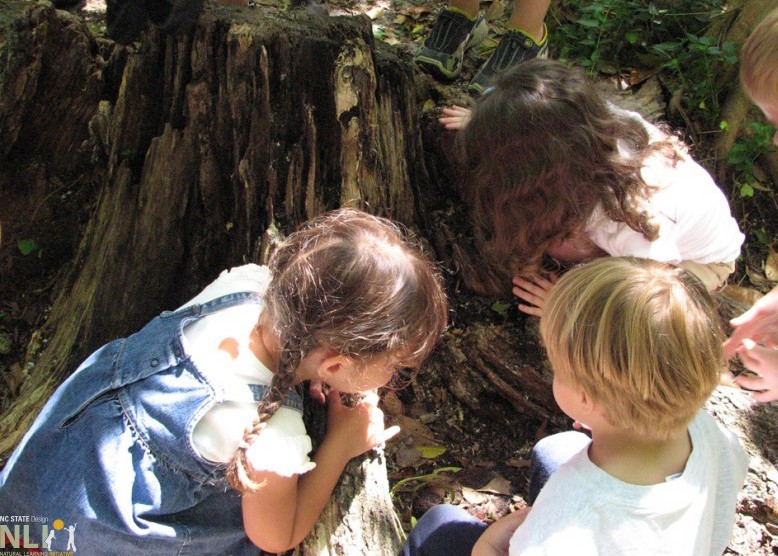
    children searching for mushrooms
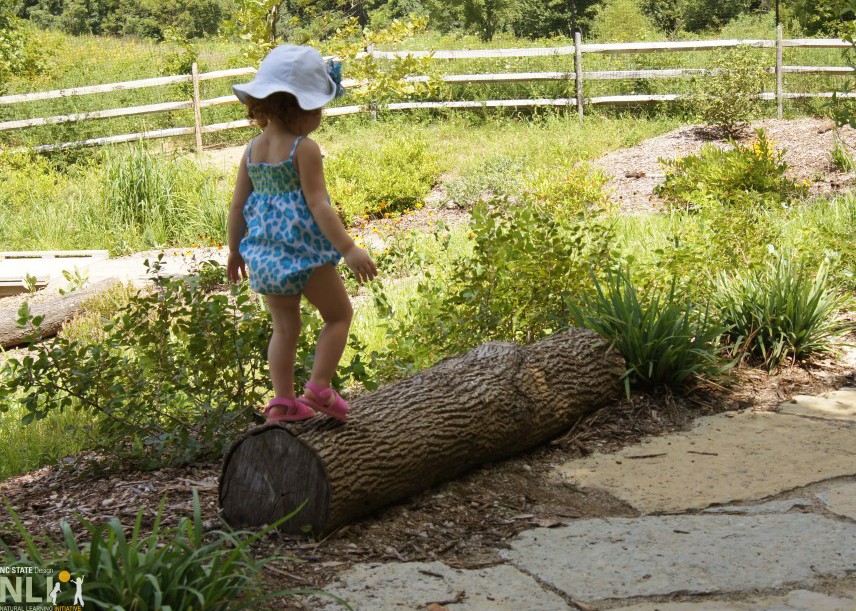
    child balancing on a log
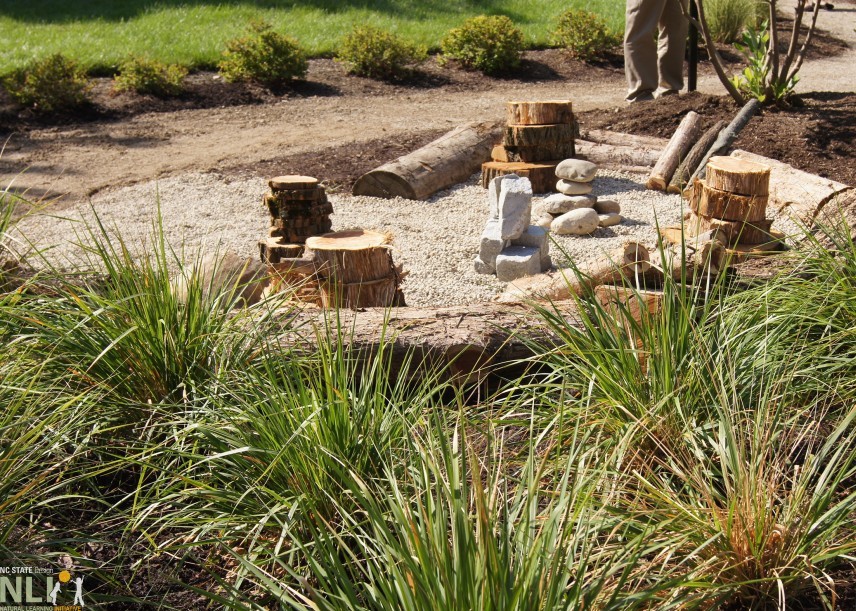
    natural elements such as stones and cut logs in a play space

    Overview from the North Carolina Outdoor Learning Environments Alliance:

    We are hearing more and more frequently that children today are not spending time outdoors. A strong concern is that children are not learning first hand about nature and are not connected with the natural world. They may see nature in books or on television, but they often do not experience it themselves. This is one of many reasons to include natural elements in the play yard. Children learn from their play and they play with all that is in their environment. Adding natural elements to the outdoor space can bring learning to real life opportunities – science, math, and literacy skills emerge as children observe, notice, count, and become exposed to new vocabulary as they are immersed in the natural world around them.

    Natural elements also provide the loose parts for the outdoor classroom – leaves to gather, rocks to turn over, even rain to measure! Using natural shade provisions such as trees or arbors with vine coverage ensures that children will notice the change of seasons as leaves grow, drop, vines flower, leaf out, and change over time. If your outdoor space is lacking in natural elements, it is easy to bring in transportable items such as rocks, hay bales, stumps, other items that children can see, touch, smell, manipulate and learn about.

    *This post is from a series of FAQ about child care outdoor learning environment regulations in North Carolina. Please see the intro post, here, for more information.

  • Questions About Digging in the Dirt

    The Green Desk

    Questions About Digging in the Dirt

    Is it really ok to have a dirt pile for the children to dig in on your playground? If so is a cover needed?

    From the North Carolina Rated License Assessment Project:
    Yes, dirt is fine as an alternative to sand play. To be considered “dirt play” there must be evidence that providing dirt play is intentional; meaning that there is enough to dig in, scoop, and pour and that the dirt is not too firmly packed to allow for these activities. Additionally, there should be materials or tools provided for children to use such as shovels, etc. Rely on guidance from CEHP regarding the necessity of a cover for contained dirt play areas.

    From the North Carolina Division of Child Development and Early Education:
    A dirt area would be acceptable but would need to be maintained.

    From the North Carolina Children’s Environmental Health Branch:
    Hand washing is required after outdoor activity. Sandboxes are required to allow for proper drainage, covered when not in use and kept clean. Similar recommendations would be made for a contained “dirt area”. In addition, the history and source of the soil would be important information. Where was the dirt obtained? The concern is potential contaminants such as lead or pesticides.

    If we do have dirt for children to dig in, what type of dirt should it be….dirt from the earth or should we buy topsoil/dirt from a nursery?

    From the North Carolina Rated License Assessment Project:
    There is not a specific type of dirt/soil required for the rating scales. If purchasing soil, child care providers should read the label carefully to make sure there are no hazardous chemicals or fertilizers included in the mixture.

    From the North Carolina Division of Child Development and Early Education:
    We would defer to Environmental Health on this topic.

    From the North Carolina Children’s Environmental Health Branch:
    Dirt should come from a source that is free of contaminants such as lead and pesticides.

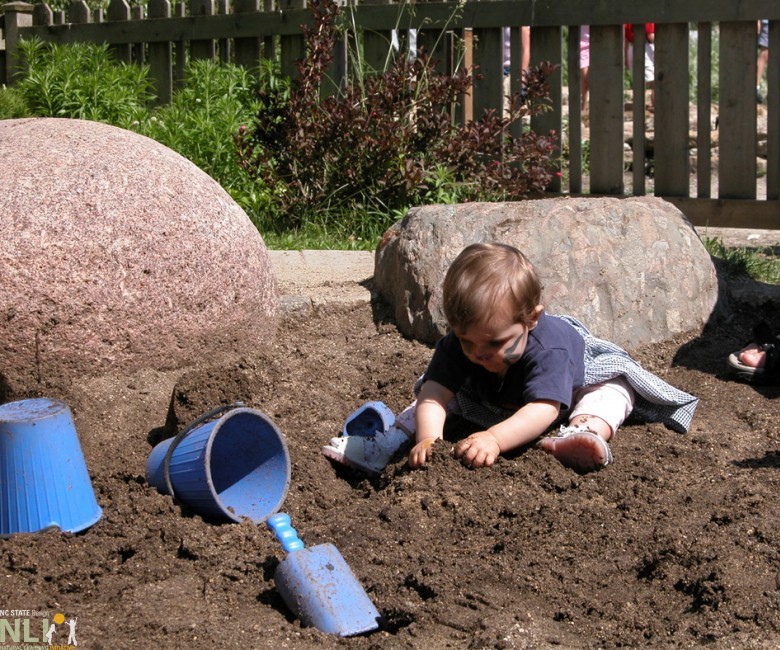
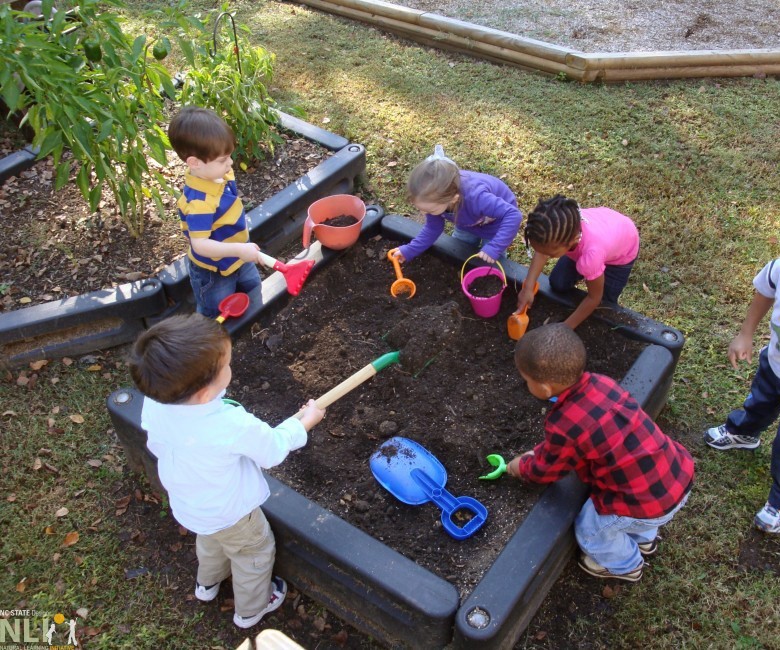
    child digging in the dirt
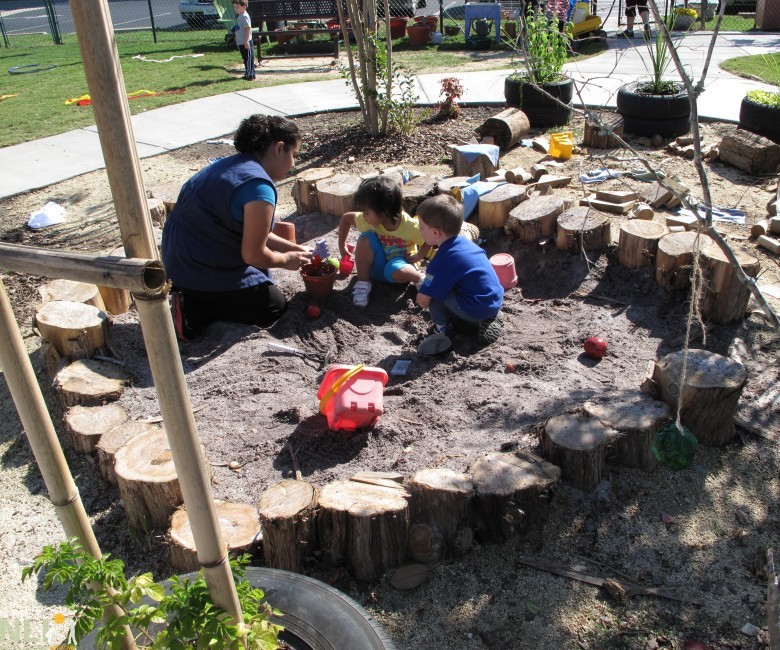
    children and adult engaging in dirt play
    children digging in the dirt with different implements

    Overview from the North Carolina Outdoor Learning Environments Alliance:

    There is tremendous value in having youngsters experience, work and play with dirt. In stating this, we are not suggesting activities using the dirt that you find at the edge of your parking lot that may contain car oil run-off or animal feces. Rather we are alluding to the rich soil that exists in your school or home garden or in your woods. The friable feeling of dirt, the fragrance of it and the different types of soil youngsters can discover and learn about all contribute to a rich sensory experience for children.

    Our state has such a broad variety of soils. We have the clays of the Piedmont, the stony soils of the Mountains, the sandy and peaty soils of the Coastal Plain. Each type of soil allows children to experience an array of textures and encourages them to explore and to make discoveries. Here are some suggested activities to get you started:

    • Investigate what kind of soil you have in your play yard – under the trees, by the garden – in the different places that make up your outdoor learning environment.
    • Have children bring in a baggie of soil from their own backyard and encourage them to compare them.
    • Bring in different types of soil for children to explore; rich mulches, topsoils, silts, sands and clay.
    • Make your own soil using leaves, sand and soil from the ground and explore a range of soil recipes.
    • Investigate the creatures who live in the soil; earthworms, insects and rolly pollies. Look for pebbles and other natural matter in the soil.
    • When it rains allow children to discover how the soil turns into mud and malleable clay.
    • Provide opportunities for children to turn that rain soaked soil into mud pies and pots and to sculpt soil when it’s wet.
    • Use your existing flower beds and raised beds for digging and discovery.
    • Shake soil form the school yard in a jar and discover what floats, what remains suspended and what settles to the bottom of the jar.

    The possibilities that explorations with soil/dirt provide for learning and sensory experiences for children are endless! So, start digging!

    *This post is from a series of FAQ about child care outdoor learning environment regulations in North Carolina. Please see the intro post, Child Care OLE Regulation FAQ in North Carolina.

  • Climbing Stones and Boulders

    The Green Desk

    Climbing Stones and Boulders

    Do stones and boulders used for climbing need a use zone?

    Larger stones and boulders can be used as a kind of climbing equipment.   Climbing stones more than 18 inches above the ground surface should meet standard use zone and safety surface requirements. The depth of the use zone material should correspond to the maximum fall height of the boulder, as with traditional manufactured equipment. When used in a grouping, the climbing stones should be six feet from one another, any other piece of equipment or solid object.

    Climbing stones and boulders should be:

    • Rounded and not sharp-edged.
    • Set into the ground to ensure its stability and to prevent entrapment hazards between the stone and the ground.
    • Heavy enough that a single preschool child cannot pick them up.
    • Placed intentionally in settings, not simply scattered randomly throughout the site.
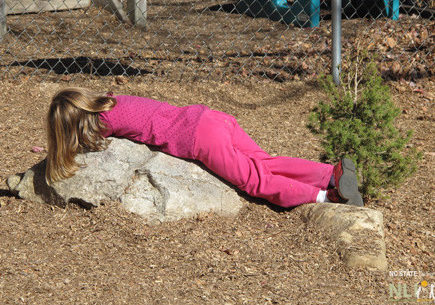
    child laying on rock
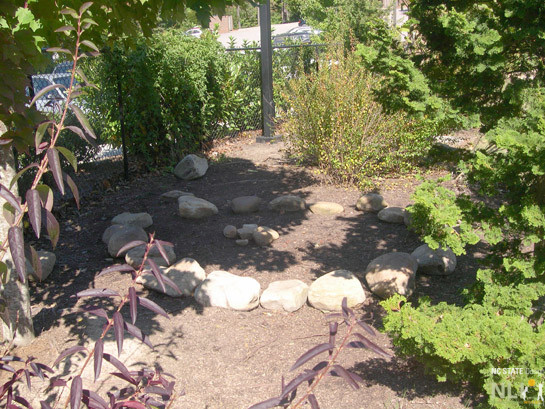
    circle of rocks

    Download the PDF

  • Tree Cookies for Play and Learning

    The Green Desk

    Tree Cookies for Play and Learning

    What are some ways to improve an outdoor learning environment without breaking the bank?

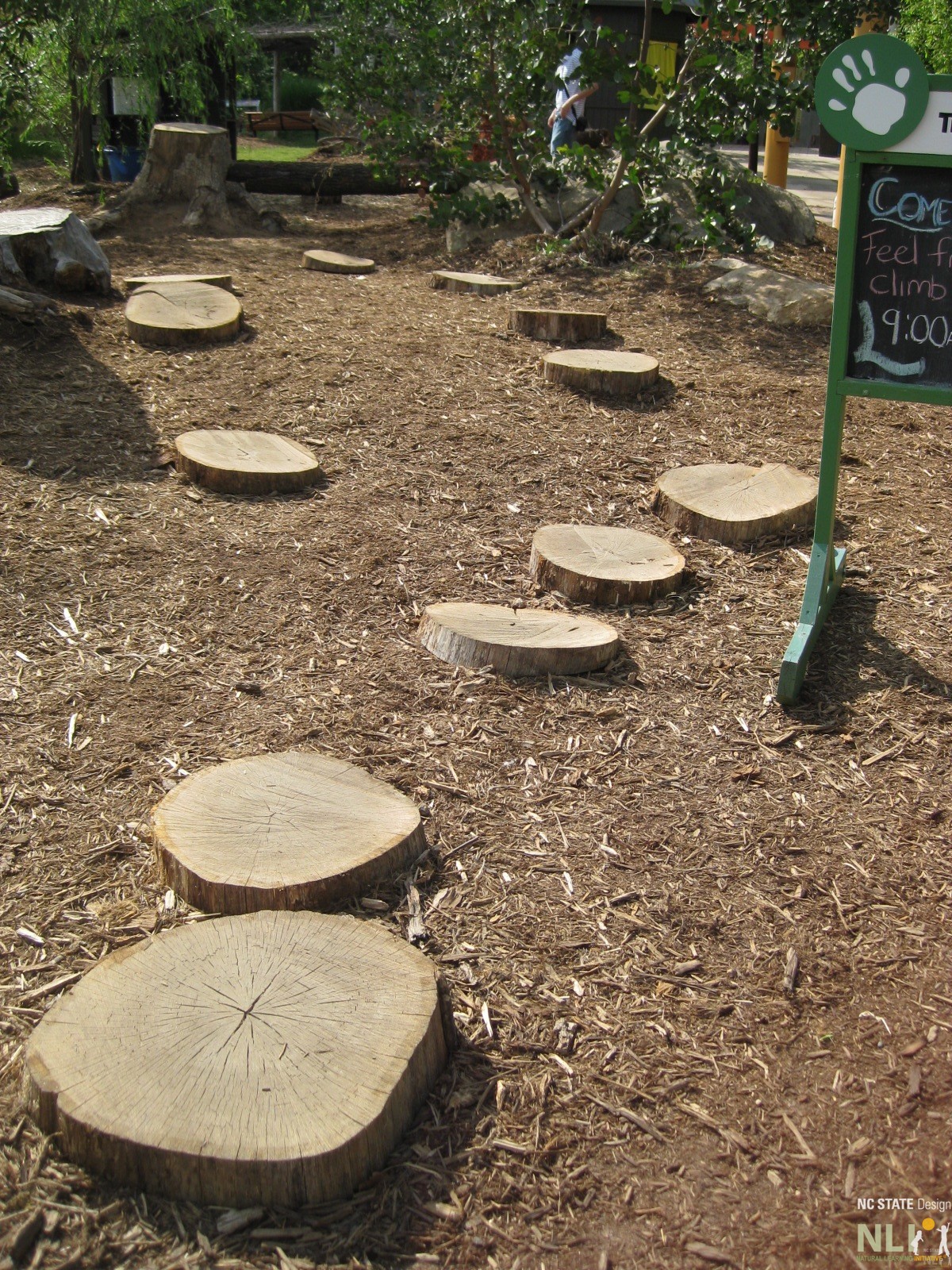
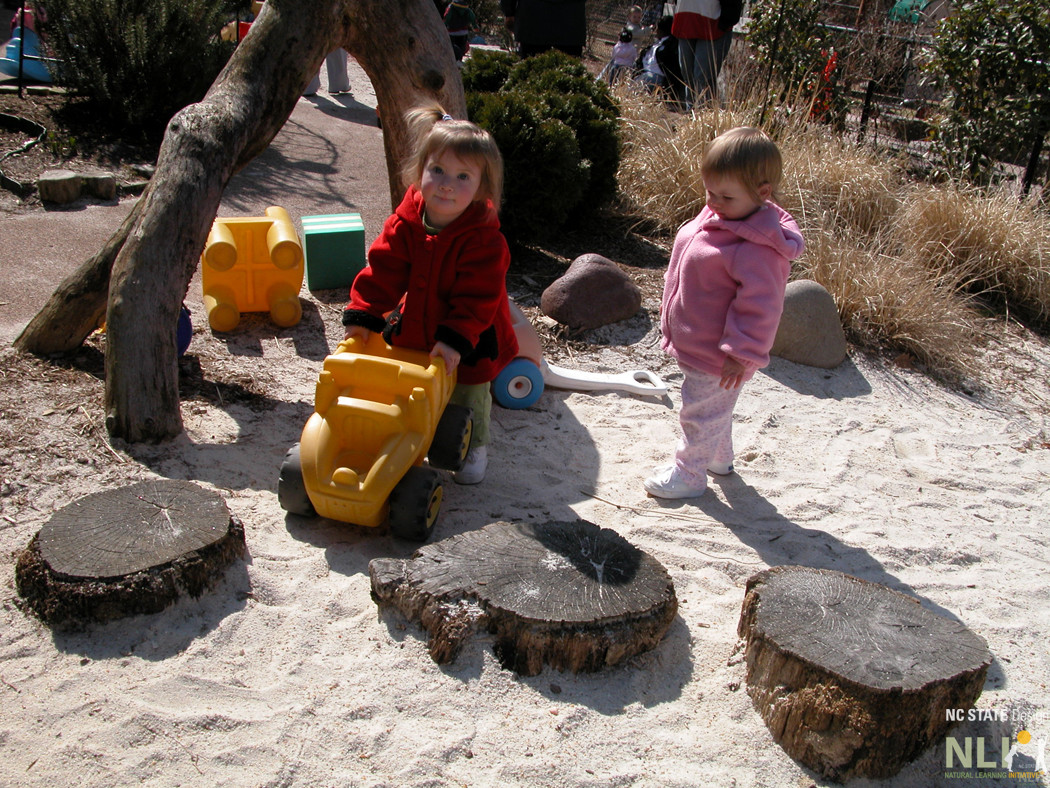
    Tree cookies are a simple, affordable, and effective way to improve an outdoor learning environment. They afford a variety of play activities and either fixed in place to serve as “stepping stones” or other types of play surfaces or as “loose parts.”

    Sliced segments of logs (3″-6″ thick) = instant stepping “stones”, informal paths, bug habitats (look underneath!), and natural building materials.

    Preparation

    Look around the community for free logs to slice up into tree cookies. Hardwoods are preferred to soft woods and recently cut wood is preferred dead wood. Red cedar is ideal because it is resistant to decay and the cross-section of the trunks provides cookies with fun shapes.

    Fixed Tree Cookies

    Fixed tree cookies generally have a larger diameter and can afford sitting, jumping, and balancing. Tree cookies that are fixed in the ground linearly create a path. Tree cookies are great stop-gaps if stepping stones are not initially affordable. They will need replacing within two to five years and are not suitable for a permanent path solution. If creating a path, the tree cookies should be a minimum of 4 inches thick. Any rough edges on the top side of the tree cookies should be sanded. To make them last longer, the bottom side of fixed tree cookies could be slathered with polyurethane or oil-based paint to create a barrier against water being absorbed from the soil. Larger logs will require a chain saw with a sharp blade for a clean cut.

    Loose Tree Cookies

    Loose tree cookies have a variety of potential affordances, including dramatic play, stacking, sorting and hauling. Loose tree cookies can be 1″ – 6″ thick and have a diameter of 3″ – 12″. A radial arm saw or band saw can be used to cut smaller diameter tree cookies. Both cut sides of loose tree cookies should be sanded smooth.

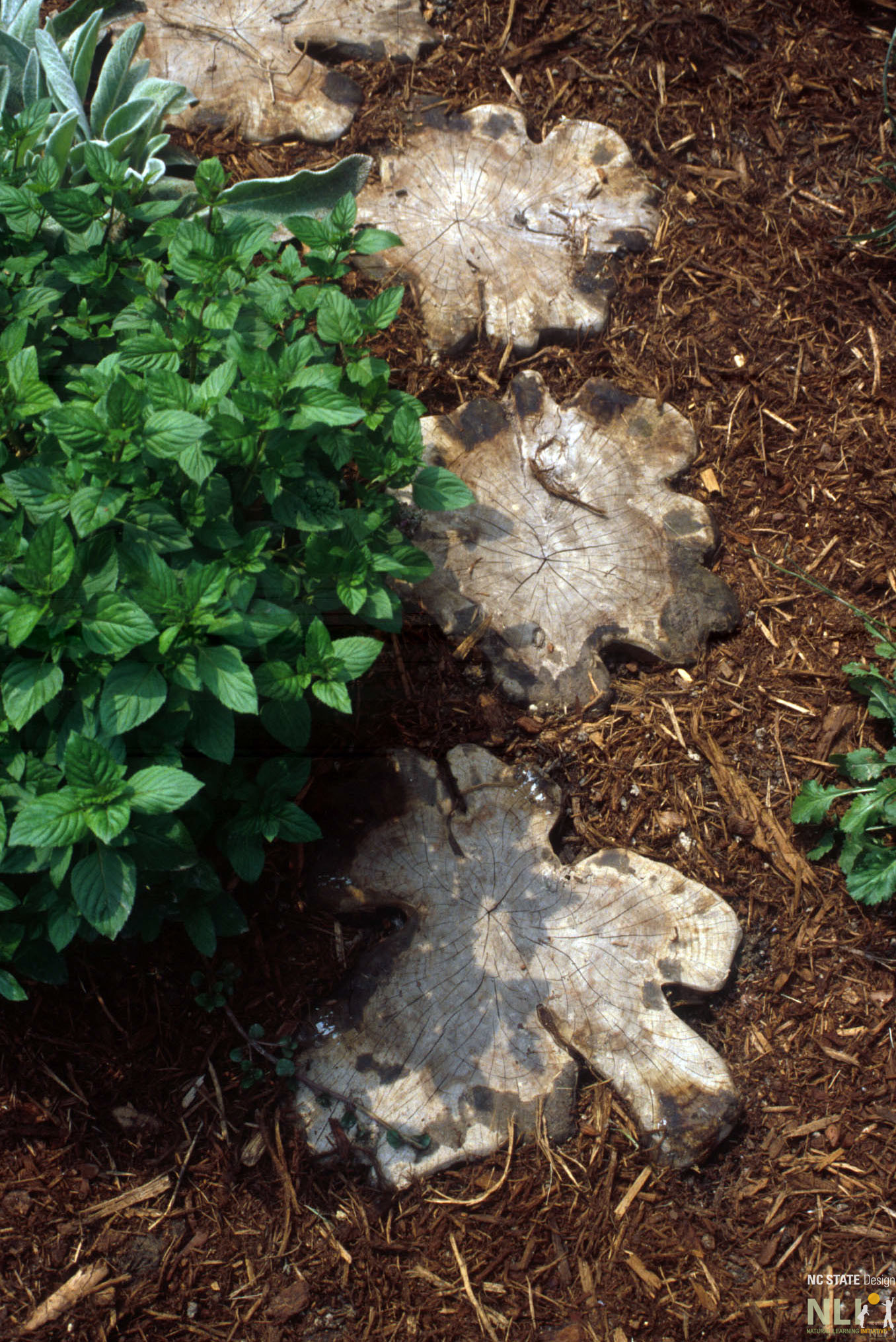
    tree cookie pathway
    tree cookies integrated into the play area
    children in sand play with implemented tree cookies

    Download the PDF

  • Conestee Natural Playscape Honored with ASLA Southeast Regional Merit Award

    Conestee Natural Playscape Honored with ASLA Southeast Regional Merit Award

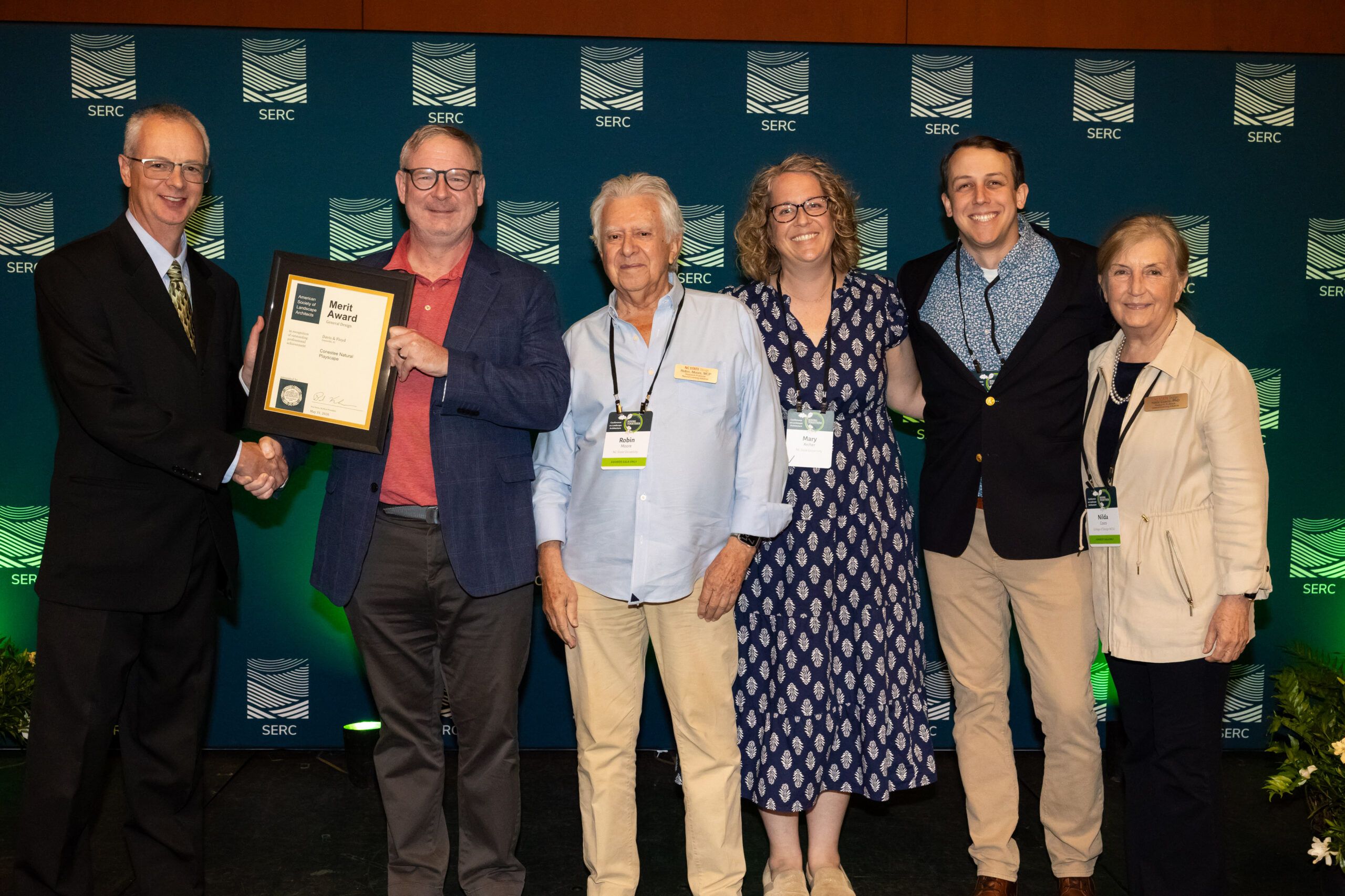
    The Nature Playscapeat Conestee Nature Preserve (CNP), with NLI as the lead designer, received a Merit Award in the General Design Category from the American Society of Landscape Architects (ASLA) Southeast Regional Conference (SERC), presented at the 2026 Conference Awards Gala in Raleigh, North Carolina. The award recognizes excellence in landscape architectural design throughout the southeast. The recognition highlights NLI’s leadership in creating innovative outdoor environments that connect children and families with nature through play, exploration, and learning.

    Group celebrates award at SERC event, highlighting outdoor play and nature-based learning.

    From left-to-right: Paul Kuhn, NCASLA President, Michael Ethridge, ASLA, Robin Moore, Hon. ASLA, Mary Archer, MLA, Brandon Dupree, MLA, Dr. Nilda Cosco, NLI Co-Founder

    NLI worked closely with project partners; notably, the CNP leadership and landscape architect Michael Etheridge, with Davis & Floyd, Greenville, SC. The team transformed a small portion of the 500-acre Conestee Nature Preserve into a nature-rich destination for children and families that encourages active outdoor experiences and environmental discovery. The playscape incorporates natural materials, diverse play opportunities, and ecological features that support child development while building meaningful connections with nature.

    The award reflects NLI’s ongoing commitment to designing outdoor playful learning environments that promote health, well-being, and nature connectedness. It also celebrates the collaboration and shared vision of the many partners, supporters, and community members who helped bring the project to life.

    We are honored to share this regional recognition and grateful for the opportunity to contribute to a space that inspires children and families to engage with the natural world for generations to come.

    Davis & Floyd Engineering Firm

    Conestee Nature Preserve: Nature Playscape

  • Matthew Maharaj

    Matthew Maharaj photo

    Matthew Maharaj

    Instructional Support Specialist

    Matthew (Matt) Maharaj is an Instructional Support Specialist​ at the Natural Learning Initiative, where he works on online, print, 3D modeling, and other digital resources to support various projects. Matt holds a bachelor’s degree in Graphic Design from the University of Tampa, Florida, and a Master of Graphic Design from NC State University. Matt has been designing since 2014 and has worked on a diverse palette of projects that include startups, publications, and radio stations. He has previously interned at McCann Erickson, a global advertising agency network.

    Matt grew up in Trinidad and Tobago, located in the Caribbean. Trinidad is a beautiful place for a child to explore, filled with mountains, nature trails, waterfalls, rivers, and beaches. Matt would enjoy these lush landscapes on school trips and with family, marveling at the diverse natural resources his country has to offer.

  • Tamiko McCullough

    photo of Tamiko McCullough

    Tamiko McCullough

    Instructional Support Specialist

    Tamiko McCullough is an Instructional Support Specialist at the Natural Learning Initiative, where she supports course development, applies her expertise to course content, and manages participant forum discussions. She also serves as the Healthy Initiative Coordinator at Wake County Smart Start (North Carolina) assisting child care centers and family child care homes with implementing and evaluating the Preventing Obesity by Design (POD) program. In this role, she supports the naturalization of outdoor learning environments by promoting awareness of fruits and vegetables and providing guidance on garden management and outdoor educational programming. Tamiko holds a Bachelor of Science in Child Development and Family Relations from North Carolina Central University. With over 20 years of experience working with young children and families, she is committed to creating nurturing spaces that promote children’s growth and development.

  • Soolyeon Cho, PhD

    Man in suit smiles near BETlab sign, model building with solar panel, promoting outdoor play and nature-based learning.

    Soolyeon Cho, PhD

    Interim Director, Natural Learning Initiative; Associate Dean of Research, Doctoral Programs and Global Engagement; Professor of Architecture; Director of Building Energy Technology Lab (BETlab)

    Dr. Cho joined the architecture faculty at NC State University in 2011. He began his academic career at The Catholic University of America in Washington DC where he taught building energy and technology courses in the Master of Science in Sustainable Design (MSSD) program for three years.

    Dr. Cho’s expertise is in energy modeling and performance simulation for the design and development of sustainable buildings. His teaching includes Energy Modeling & Simulation, Energy Efficiency & Renewable Energy, and Building Energy Optimization. His research and work experience includes energy savings calculation, high-performance building design, energy-efficient systems design, renewable energy systems integration, and performance Measurement and Verification (M&V).

    Dr. Cho’s research is interdisciplinary, dealing with architectural, environmental, and engineering subjects for the design and development of a sustainable built environment. He extensively utilizes energy modeling and simulation technologies, especially using one of the most advanced programs such as EnergyPlus developed by the US DOE. The use of the technology is to predict potential energy benefits from the early design phases through the life of a building, which can help make optimal design/development decisions in terms of energy efficiency while maintaining the same or better occupant comfort conditions at the same time. Also, Dr. Cho utilizes Artificial Intelligence (AI), Machine Learning (ML), and Deep Learning (DL) technologies to develop algorithms for optimal control of HVAC and energy systems.

    Currently, Dr. Cho is the Director of the Building Energy Technology Lab (BETlab). BETlab is a research group concerned with Building Energy Technologies and Design Issues related to Energy Efficiency & Renewable Energy in buildings for the development of a Sustainable Built Environment.

  • Nilda Cosco, PhD

    Woman in blue shirt smiles outdoors, trees and people in background, promoting natural learning and child-friendly environments.

    Nilda Cosco, PhD

    Director of Programs, Natural Learning Initiative

    Nilda Cosco, PhD, is Director of Programs at NLI, Research Professor in the Department of Landscape Architecture and Environmental Planning, and former Director of the Center for Universal Design. She is responsible for the conceptualization and management of NLI comprehensive projects, design programming, research of outdoor environments for children with and without disabilities, and evaluation programs applied to outdoor play and learning environments for children, including those with special needs.  She is also responsible for establishing professional development certificates and activities for designers, educators, and community members interested in creating high quality outdoor environments for children and families, development of printed and online dissemination materials, and coordination of state-wide comprehensive projects (design, environmental intervention, training, and evaluation) including Preventing Obesity by Design (POD).

    Dr. Cosco holds a degree in Educational Psychology from Universidad del Salvador, Buenos Aires, Argentina and a Ph.D. in Landscape Architecture from Heriot Watt University/Edinburgh College of Art, Scotland. Her primary research interest is the impact of outdoor environments on child and family health outcomes such as healthy nutrition, active lifestyles, attention functioning, and overall wellbeing, particularly as they relate to natural components of the built environment. She is principal investigator (PI) for the USDA-NIFA randomized controlled trial Childcare Outdoor Learning Environments as Active Food Systems: Effectiveness of the Preventing Obesity by Design (POD) Gardening Component.

    Prior to NLI, Nilda was director of the National Lekotek Center, Buenos Aries, serving children with special needs, and consultant to a similar facility in Säo Paulo, Brazil. She was a member of the eight-country Growing Up in Cities (GUIC) action research project sponsored by UNESCO, and co-director of the Buenos Aires project with Professor Moore. She was former Vice President for the Latin American International Association for the Child’s Right to Play (now International Play Association, IPA). Prior to launching NLI, Dr. Cosco and Professor Moore collaborated with Michael Van Valkenburgh Associates, contributing their knowledge of outdoor play environments to innovative design projects such as Teardrop Park, Battery Park City, NYC; Union Square, NYC; Brooklyn Bridge Park, Brooklyn, NYC; A Gathering Place for Tulsa, OK; and the Smith Family Waterfront, Boston Children’s Museum, and the adjacent Martin’s Park in Boston.

    Nilda spent her early childhood living with her grandparents in Mercedes, a typical provincial city in the “big sky” Pampa region of Argentina, where she learned to fish with her Italian heritage grandfather in a boat created in her name. At age seven, she moved with her parents to the big city of Buenos Aires, where contact with nature was provided by the vegetated patios and balconies of high-rise apartments and the great parks and urban plazas of the city.