Blog

  • Plant of the Month: November – Indian Grass

    The Green Desk

    Plant of the Month: November – Indian Grass

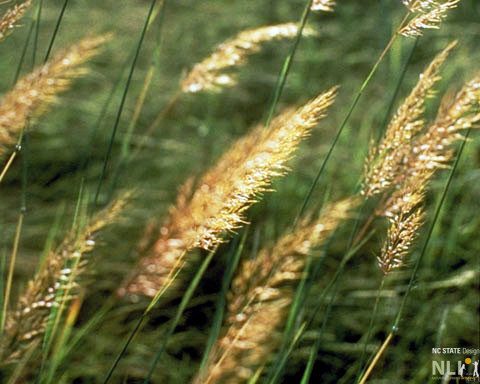
    Indian Grass(Sorghastrum nutans)

    • Native range: Eastern U.S.
    • Hardiness Zone: US 3-9
    • Sun: Full Sun
    • Plant Habit: Grass
    • Water requirement: Low

    As you think of where to install this grass, consider that it prefers to be in full sun with well-drained soils. If you have areas prone to erosion, Indian Grass could be a good solution as the roots can reach a depth of 12 ft. forming a network of binding strands. The potted plant may appear small, but don’t be fooled, it grows quickly and can reach a height of 6 ft. and a spread of 3 ft. Plant Indian grass in the spring or fall in groups of at least three; it has more of an aesthetic appeal when planted in groupings. As with other plantings, be sure it gets enough water while becoming established. Once the plant is established, it is drought tolerant, needing as little as 11 inches of water a year. Do not cut the grass at all for the first few years, after which cutting the leaves down to a few inches above the ground while dormant (when the leaves are dry and brown) may actually stimulate higher root productivity. This plant is found naturally in North American prairies where fire is a part of its life cycle, so cutting the grass infrequently with a weed-whacker or pruning shears simulates the effects of fire.
    grass close up
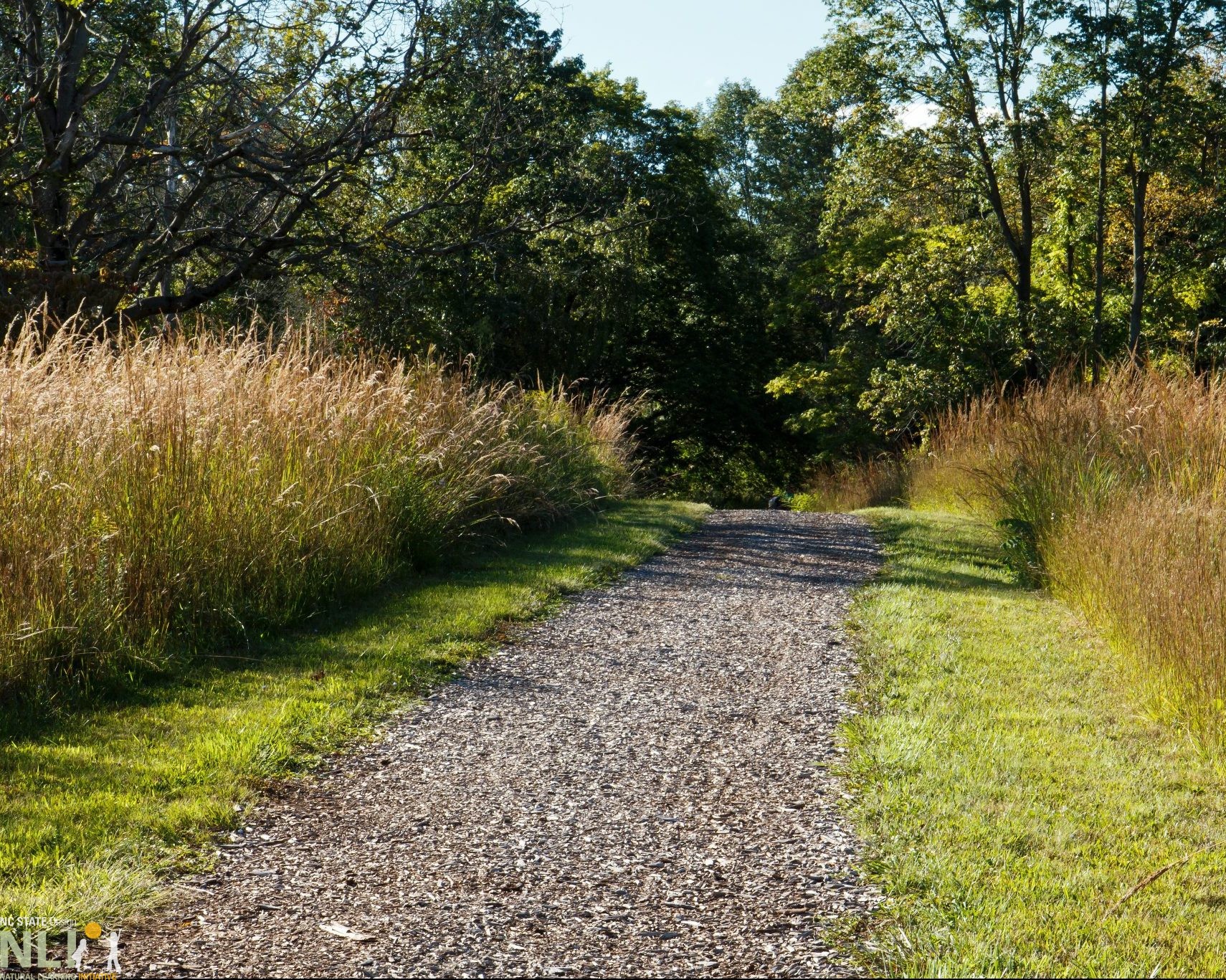
    grass lining a pathway
    2013 Discovering Meadows event, Duke Farms
    indian grass close up
    inflorescence detail

    Resources

    Other plants that look great in the month of November:

    • Shagbark Hickory (Carya)
    • Blanket Flower (Gallardia)
    • Pink Muhly Grass (Muhlenbergia)

    A Grassy Rhyme:

    Where the Grass Grows Greenby Gary Zimmerman

    There’s a place I’ve been told
    Where the wildflowers grow,
    And the grass is a sight to see.
    There’s apples and pears
    And green gummy bears,
    Growing from every tree.
    Polka dot bushes and marvelous things,
    Like orange caterpillars
    And groundhogs with wings.
    Its such a place that no one’s seen,
    All where the grass grows green.
  • Winter Play and Learning Outdoors

    The Green Desk

    Winter Play and Learning Outdoors

    As winter temperatures drop, time off from usual childcare/school and work routines can increase opportunities to enjoy outdoor play and learning activities, with different clothing requirements. The end-of-year holiday is a special time for being outside together as family and friends.

    Winter Activities to Enjoy

    • Freeze water with food coloring, sand, or other textures in clear plastic containers so that children can see what is inside and use them as blocks. If it is cold enough, let the containers freeze outside.
    • Bubble Freeze – blow bubbles & catch one on the bubble wand. If it is cold enough, it will freeze like a crystal ball and then shatter!
    • Freeze some items (leaves, acorns, small toys) in an empty paper container, then rip off the paper and see how the children can get the items out.
    • Freeze blocks of ice and build small igloos – freeze ice in bread pans, ice cube trays, etc.
    • Go on a nest hunt. With all the leaves off the trees, nests are much easier for children to spot. Look high and low for bird and squirrel nests. Keep count. How many can you spot in your neighborhood, at the local park, or on your center grounds? Encourage children to flap their arms like a bird or scamper like a squirrel each time they spot a nest.
    • Search for and collect the colors of winter. Although more challenging than in other seasons, there are still plenty of colors in winter. For an added challenge, search the crayon box for the closest matches to the colors found outdoors.
    • Build forts!
    • Decorate bare trees with paper snowflakes, colored lights, and bells.
    • Dance to your favorite music.
    • Plant bulbs indoors – paperwhites & amaryllis.
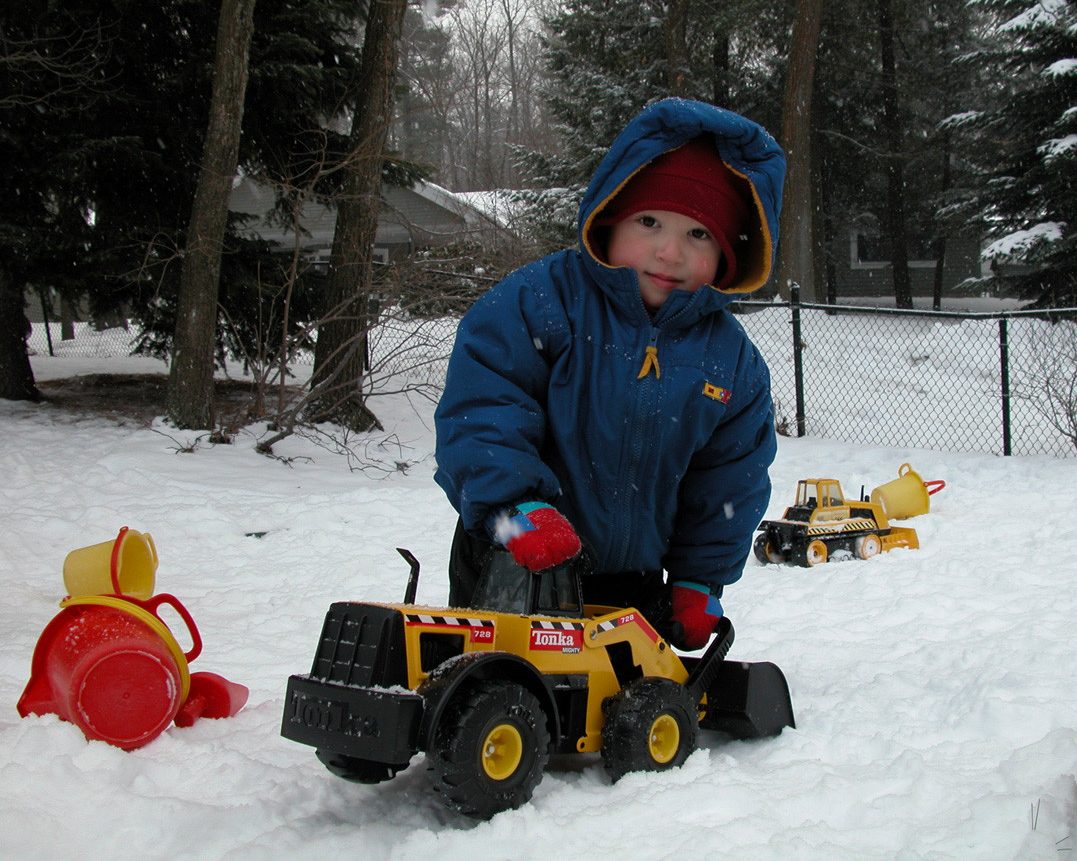
    child with wheeled toys in the snow

    Bundle up! Snow is here! No better medium for playing with hefty surface-molding ‘dozers and loadable trucks. Endless fun with appropriate clothing.

    child showing viewer berries

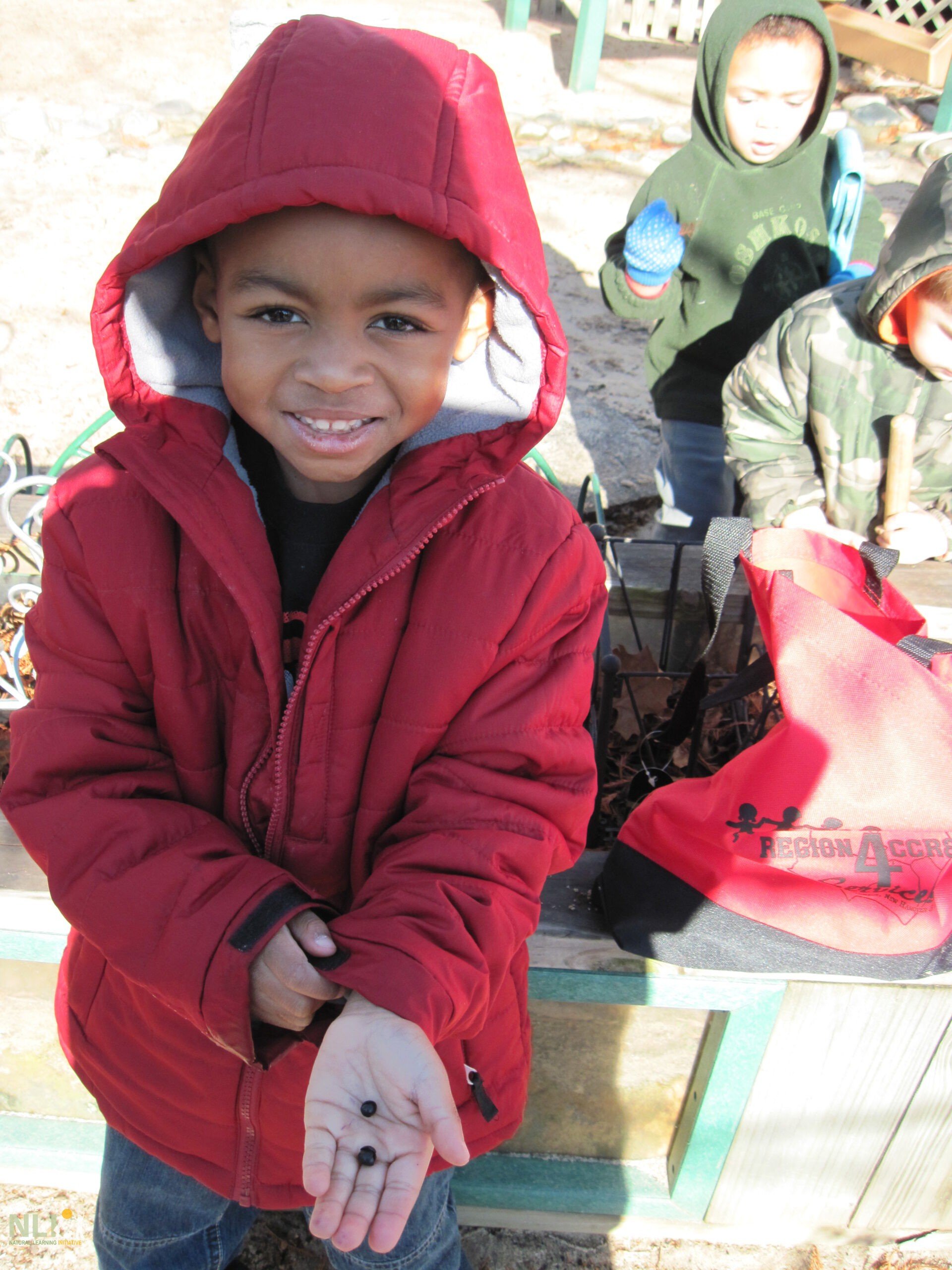
    Winter, after leaves have fallen (Northern Hemisphere), is a time to discover seeds and berries that wildlife depend on for survival. Also think about the Spring to come with seeds launching another cycle of life, proliferating into the future.

    Additional Resources

    Natural Learning at Home December

  • Robin C. Moore

    Robin Moore, advocate for nature-based playgrounds, stands outdoors with greenery, promoting inclusive play spaces.

    View CV

    Robin C. Moore

    Research Professor, Co-founder/Director Emeritus Natural Learning Initiative, College of Design

    ​Robin Moore, MCP, DipArch., Honorary ASLA, is a Research Professor in the College of Design and Professor Emeritus of Landscape Architecture and Environmental Planning, NC State University, USA. His area of research and teaching is environment & behavior design thinking applied to practice in built environment biophilic design, especially in relation to urban childhood and family spaces. Growing up in the South of England, Moore graduated from University College London (UCL) in architecture and practiced architecture in London with Llewelyn-Davies & Weeks.

    He studied city planning with Kevin Lynch and Donald Appleyard at the Massachusetts Institute of Technology (MIT), where he first became interested in urban childhood environments. His thesis included the co-creation of a first in situ living legacy lab in a Boston public housing community.

    Returning to London, Moore practiced with Land Use Consultants (LUC), working on large-scale urban landscape regeneration projects, including in Stoke-on-Trent. In 1970 he joined the faculty of landscape architecture at the University of California, Berkeley (UCB), where he cofounded an innovative transdisciplinary undergraduate program (IDS 120), integrating design, education, and nature conservation. Expanding on his MIT graduate work, he co-created a second in situ living legacy lab, the Environmental Yard, at Washington Elementary School, downtown Berkeley. Results of the 10-year design-build-research project were published as Natural Learning (1997), co-authored with Dr. Herb Wong, science educator and school principal. While in the Bay Area, Moore co-founded the People-Environment Group (PEG), San Francisco, and Moore Iacofano Goltsman (MIG), Berkeley. He taught also at Stanford University in Urban Studies.

    In 1982, Moore joined the faculty of landscape architecture at NC State University, Raleigh. There he co-founded the Center for Universal Design and the PhD in Design program. In 1998 he co-created Kids Together Playground, Cary, NC, as a third in situ living legacy lab, which continues serving as a research/educational site.

    In 2000, with Dr. Nilda Cosco, Moore launched the Natural Learning Initiative (NLI), serving as the founding Director. To date, the NLI team has co-created around 500 demonstration and training sites. Several qualify as in situ living legacy labs.

    Moore’s publications include Childhood’s Domain: Play and Place in Child Development (1986), republished by Routledge (2018) as an edition in child development; Plants for Play (1993); Play for All Guidelines (1987, 1992); The Complete Playground Book (1993); and Natural Learning: Nature’s Way of Teaching (1997). 

    In 1967, Moore joined the International Association for the Child’s Right to Play (IPA, now the International Play Association), was founding editor of the IPA magazine, PlayRights, and was elected international president 1990-1999 (until now the only design professional). Moore served as board member and chair of the Environmental Design Research Association (EDRA), from 1983-1986. He received the 2023 EDRA Career Award. In 2021, Moore received the Alexander Quarles Holladay Medal for Excellence from the NC State Board of Trustees – the highest honor they bestow.

  • Children’s Vegetable Gardens: Introduction

    The Green Desk

    Children’s Vegetable Gardens: Introduction

    How can we create a vegetable garden at our childcare center?

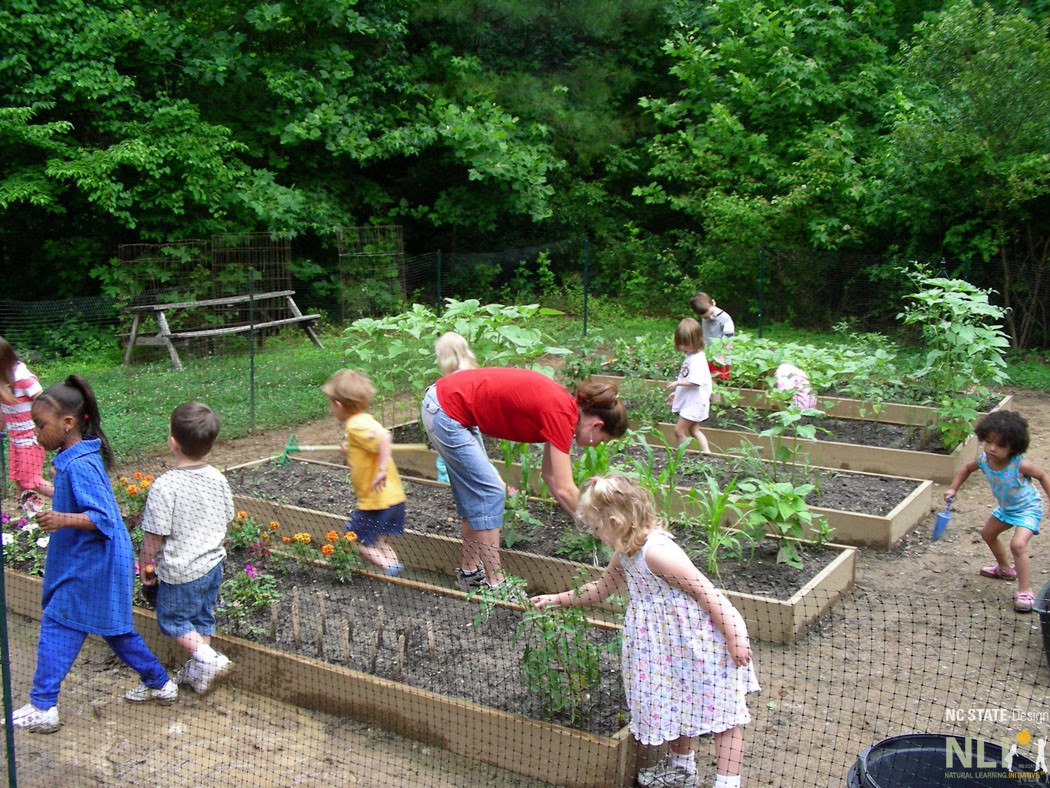
    Gardening with children provides numerous opportunities for hands-on learning, inquiry, observation, and experimentation. Gardening also helps children build an understanding of and respect for nature and our environment. When children participate in growing edible plants, they are more motivated to taste, eat, and enjoy fruits and vegetables.

    With some planning, you can design and install a garden that will suit the needs of the children and adults that will be using it. Dream big, start small, and have fun!

    Location

    Other things to consider:

    • Proximity to a water source – the closer the better.
    • Storage for garden tools, such as shovels, watering cans, etc. Locating your garden next to existing storage, or in a spot where you can accommodate new storage, is ideal.

    Layout

    Design tips:

    • Keep beds narrow so that children can reach the middle of the bed from both sides (no more than 3-4 feet wide)
    • Space garden beds far enough apart to allow room for children to walk between them (minimum of 2 feet)

    To test the layout of your garden beds, you can lay a garden hose on the ground to mark the outline of the beds. Or, sprinkle flour on the ground in the shape of the bed you are imagining to see what will work in your space.

    Construction

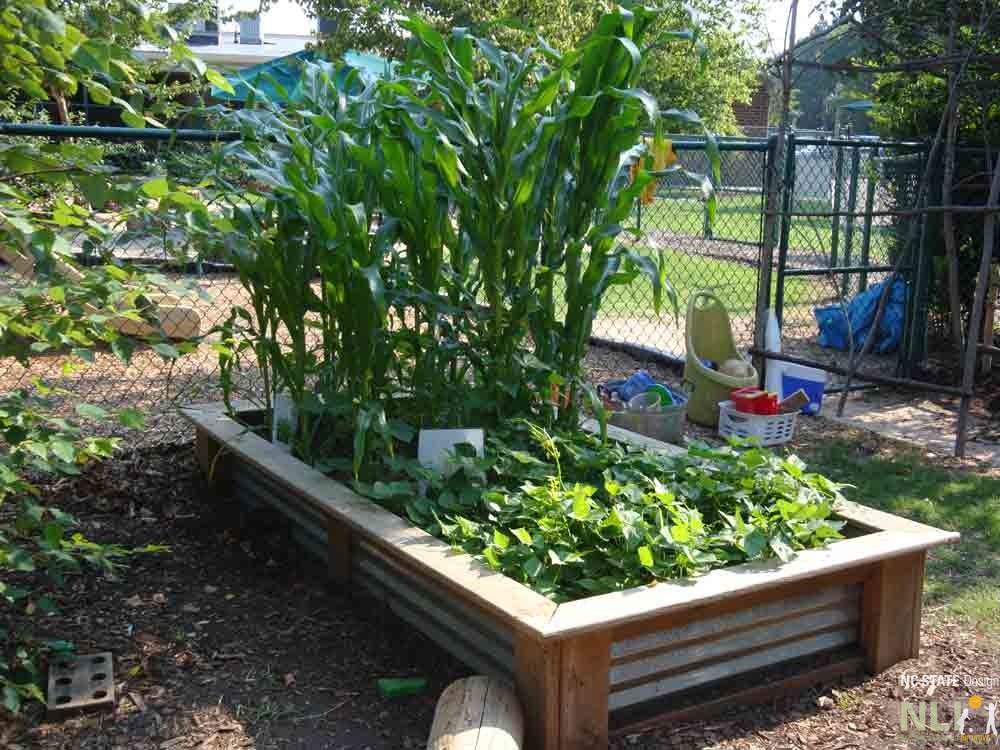
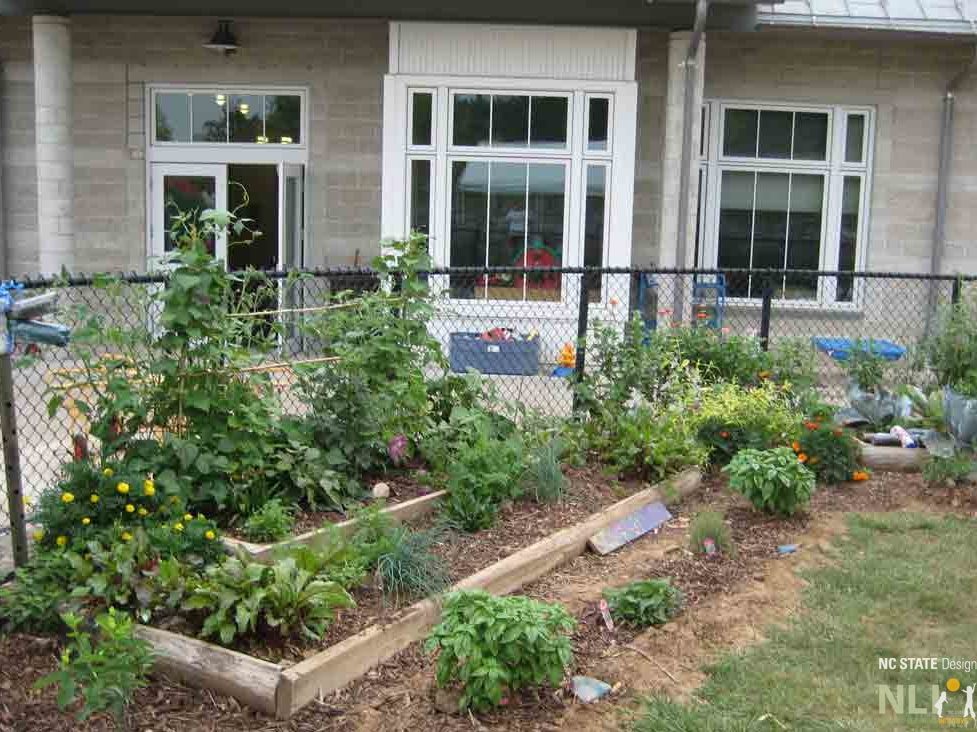
    Another common option is to use raised beds. These are framed structures, typically 9 inches to 2 feet tall. Raised garden beds are fairly simple to construct and make it easy to get started gardening, regardless of the soil in your area. Use long-lasting materials such as cedar, redwood, or composite lumber, or choose brick or stone. Fill beds with good quality garden soil and compost (available at most garden centers or home improvement centers). Check out the Green Desk post on timber raised beds for additional information.

    Benefits of raised beds:

    • Better soil quality, since you aren’t relying on native soil, which may not be ideal for growing vegetables.
    • Keep plants protected – less likely to be trampled by little feet.
    • Longer growing season, since the soil in raised beds tends to warm up sooner in the spring. This allows you to plant your summer crops a few weeks sooner than if you were planting them in a traditional in-ground garden bed.
    • Reduce weeds and lawn grass invasion.

    Planting

    To maximize your garden space, and to provide year-round learning opportunities, consider growing a spring, summer, and fall garden. For North Carolina residents, refer to the resources below for lists of warm and cool season vegetables, growing recommendations, and planting calendars. For those who live elsewhere, contact local cooperative extension agents or nurseries for planting time guides for your region.

    Planting guidelines for North Carolina:

    Central North Carolina Planting Calendar for Annual Vegetables, Fruits, and Herbs

    Resources

    Kids Garden!Hart, Avery, and Mantell, Paul. Williamson Publishing Company, 1996.

    Be Healthy – Grow What You Eat. Albertson, A., Neill, K., Revels, E. North Carolina Cooperative Extension, February 2004.

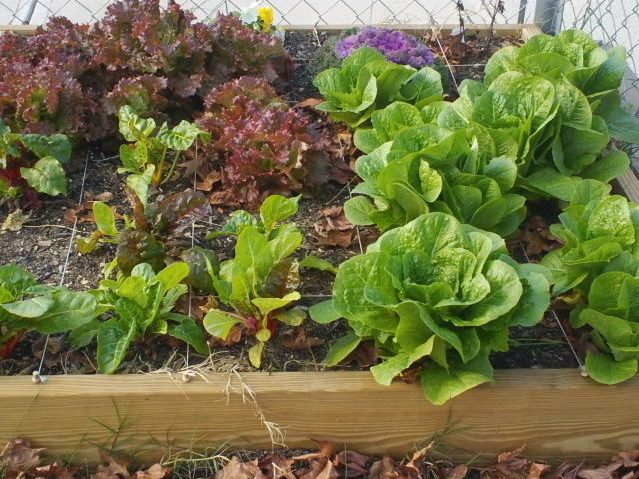
    winter vegetable garden
    winter garden
    raised planting vegetable garden
    children in a mixed garden
    vegetable garden
    multi tiered garden
    person planting plants
    Parents & 2 Year Olds Gardening
  • Growing Tomatoes in Preschool Gardens

    The Green Desk

    Growing Tomatoes in Preschool Gardens

    Are tomatoes allowed?

    We would defer to CEHP and DCDEE on this topic.  Additionally, for the ERS involving children in the process of gardening through planning, discussion, provision of tools, specific jobs/tasks such as weeding or harvesting, observation and reflection, etc. is considered in the science item. Hand washing is required when children return indoors after gardening.

    From the North Carolina Division of Child Development and Early Education:

    Yes, growing tomatoes inside your licensed child care outdoor learning environment is fine for children 3 years of age or older. Gardens are acceptable but would need to be maintained. Growing tomato plants in infant and toddler play areas (children 2 years of age or younger) is not allowed.

    From the North Carolina Children’s Environmental Health Branch:

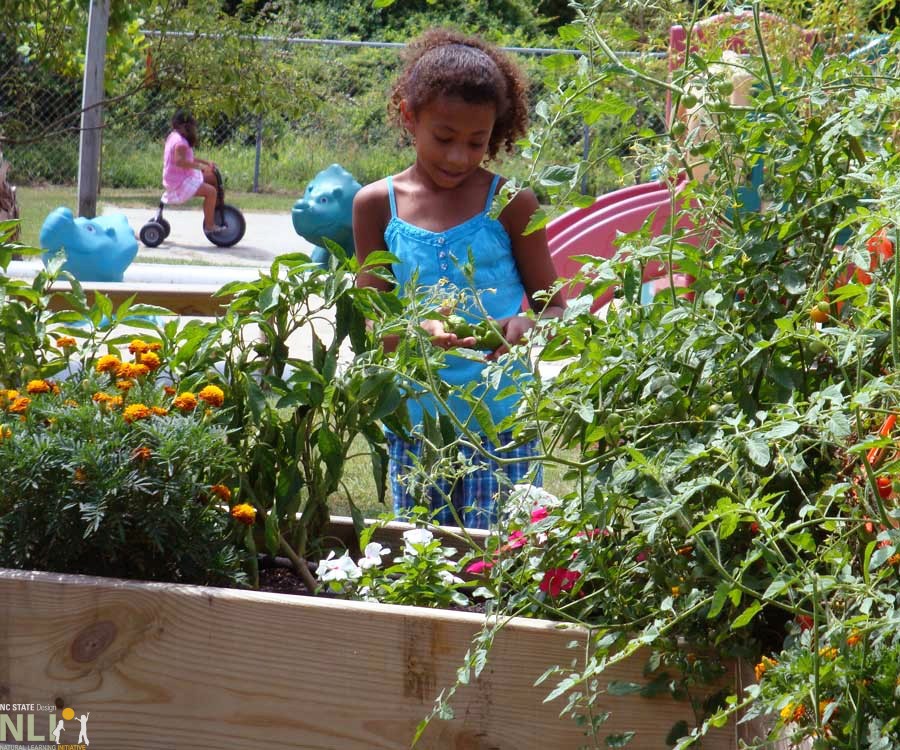
    Hand washing is required after outdoor activity including gardening. It is important to harvest the ripened fruit to prevent it from falling to the ground and attracting vermin. The use of pesticides is not recommended for gardens in licensed child care programs.

    child inspecting sweet peppers
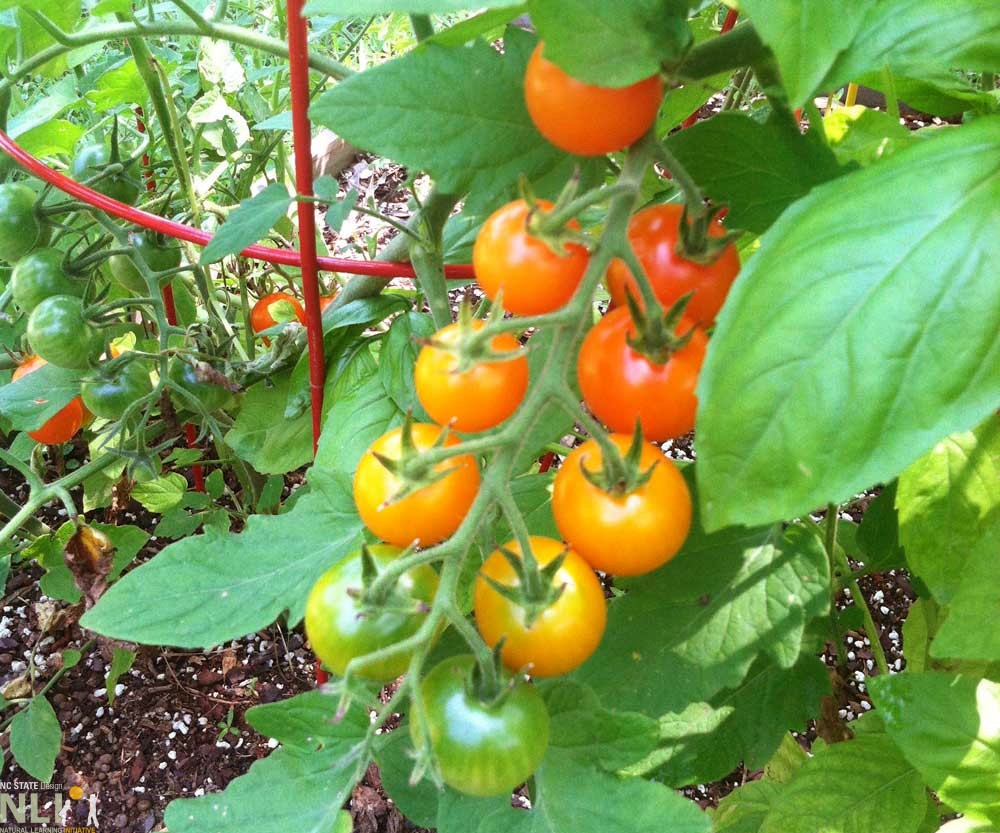
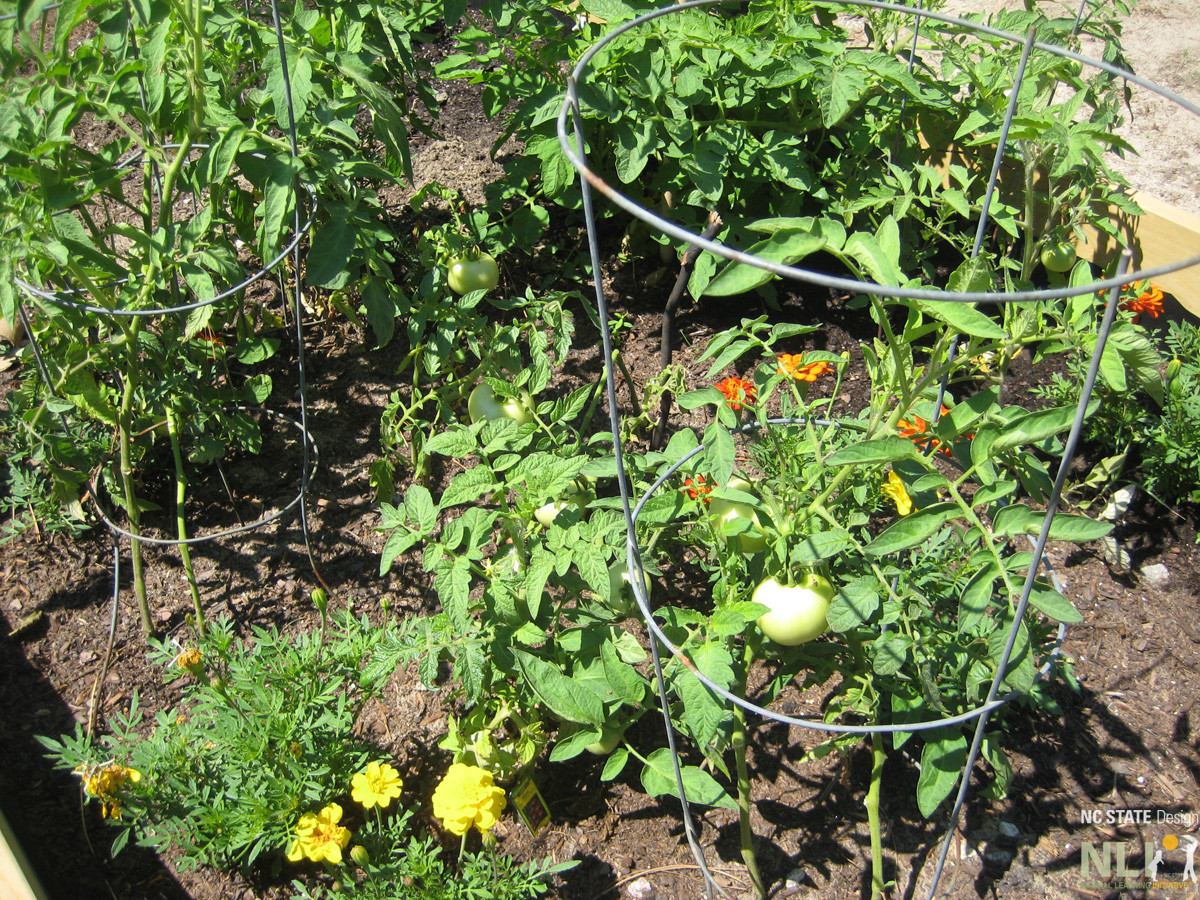
    tomato plants
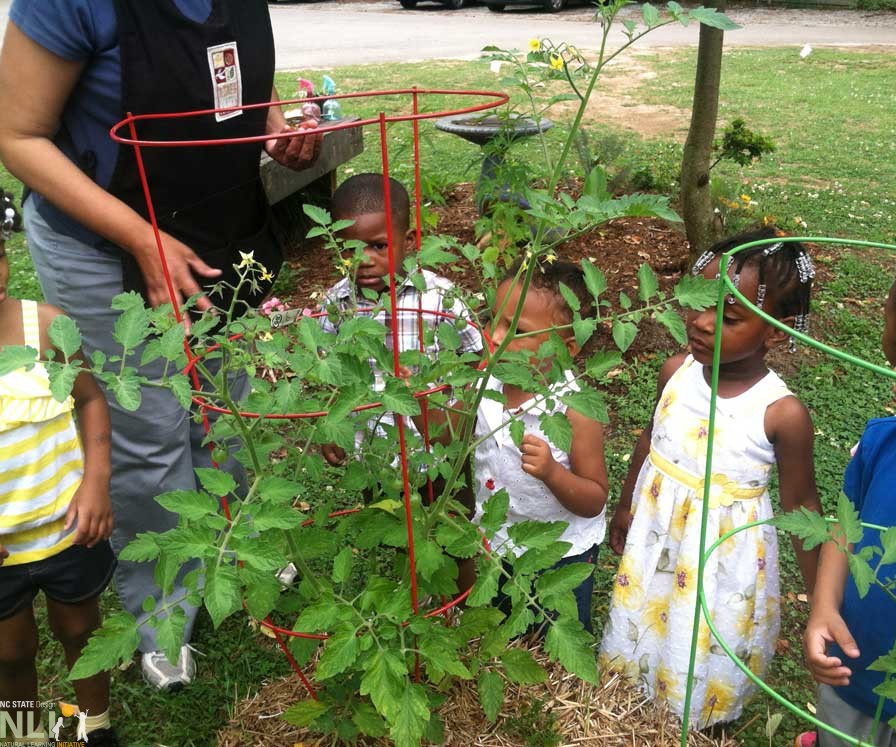
    teacher showing children tomato plants

    *This information is from a series of FAQ about child care outdoor learning environment regulations in North Carolina. Please see the intro post, here, for more information.

    **The NC Pre-K program is now part of the Division of Child Development and Early Education. Previously the downloadable document was available at the Office of Early Learning website. NLI is making this document available here for convenience, but updates and revisions may appear and future inquiries should be directed to this website.

    Overview from the North Carolina Outdoor Learning Environments Alliance:

    Download the PDF

  • 2017 Early Childhood Design Institute, Architecture and Landscape Architecture for Early Childhood

    2017 Early Childhood Design Institute, Architecture and Landscape Architecture for Early Childhood

    Program: Through field expert presentations, case studies, site visits, environment-behavior design theory, and hands-on design charrette in a small-group setting participants will acquire skills to execute early childhood designs that fit organizational culture, institutional context, and budget. 

    Program

    Through field expert presentations, case studies, site visits, environment-behavior design theory, and hands-on design charrette in a small-group setting participants will acquire skills to execute early childhood designs that fit organizational culture, institutional context, and budget. 

    Lead Faculty

    • Michael Lindstrom, AIA, (co-founder, Harvard Childcare Design Institute), studioMLA Architects, Brookline, MA.
    • Robin Moore, Dipl.Arch, MCP, Hon. ASLA, Natural Learning Initiative, College of Design, NC State University, Raleigh, NC.
    • Nilda Cosco, PhD, ASLA, Natural Learning Initiative, College of Design, NC State University, Raleigh, NC.

    Participants

    Architects, landscape architects and designers, childcare providers, early childhood program developers, facility managers, and all professionals interested in creating developmentally appropriate indoor/outdoor environments for young children.

    Schedule

    Welcome and evening reception.

    Thursday, August 3rd

    8:00      Registration. Continental breakfast.

    8:30      Introductions. Schedule review.

    9:00      Child development and design. Overview.

    10:30    Field visits / traveling seminar to model sites, including LEED-Certified facility, in the

    Research Triangle Area. Introducing and using Outdoor Learning Environment

    evaluation tools.

    6:30      Back at Campus.

    7:00      Dinner/networking/discussion

    9:00      Adjourn.

    Friday, August 4th

    7:30      Continental breakfast.

    8:00      Early childhood design concepts applied to indoor and outdoor spaces. Case Examples. Presentation and discussion.

    9:30      Networking break.

    10:00    Full design process:

    Ÿ Visioning, design programming, community/ stakeholder/client engagement. Concept design. Ÿ Design development, including budget (and reality check!). Ÿ From the vision to construction documents. Ÿ Case studies: designing and building facilities (indoors and outdoors) for young children.

    12:00    Lunch

    1:00      Current research informing evidence-based design. Working with best practice indicators and evidence- based evaluation tools.

    2:00      Connecting indoors and outdoors. Transitional space: a critical design feature.

    3:00      Networking break.

    3:30      Design lessons: what the books do not teach.

    4:30      Design charrette introduction.

    5:00      Design charrette. Working in groups.

    7:30      Working dinner.

    Saturday, August 5th

    8:30      Design session #1 with roving critiques.

    10:00    Group presentations and discussion.

    11:00    Design session #2 with roving critiques.

    12:00    Group presentations and discussion over lunch.

    1:00      Final discussion, conclusion, and wrap up.

    2:00      Closing.

    Schedule subject to change

    Register Now

    August 2nd – August 5th, 2017

    College of Design, NC State University

    Cost

    $490

    (includes networking reception, site visits, meals, handouts, and other materials.)

    CEUs

    AIA, LACES, NC State University CEUs.

    Sponsors

  • Farm to Preschool

    The Green Desk

    Farm to Preschool

    What is the Farm to Preschool program?

    Farm to Preschool is an expansion of the national farm to school model that started with school gardening and connecting farms and schools. Farm to Preschool encompasses any prekindergarten program that serves young children and highlights local food education and/or purchasing, and supports the full spectrum of childcare delivery: preschools, Head Start, center-based, programs in K-12 school districts, nurseries and family home care facilities.

    Although still evolving, Farm to Preschool aims to influence the eating habits of young children while their preferences are forming by improving healthy food access at home and within the community. Major goals presented on the Farm to Preschool website include: “Introducing healthier snack and meals at preschools with locally-grown fruits and vegetables from farmers, farmers markets, and school gardens;” and “Providing age-appropriate and culturally appropriate nutrition curricula for preschoolers and their parents.” The ultimate goal is “influencing policies to address the childhood obesity epidemic through a local food lens.” Farm to Preschool emphasizes “an environmental and systems change approach by serving preschoolers, teachers and child care providers, parents and family members, as well as communities.”

    In North Carolina, Growing Minds, a program of the Appalachian Sustainable Agriculture Program (ASAP), started in a Head Start classroom in Henderson, NC, and is now part of the national Farm to Preschool movement. Growing Minds offers many resources for educators to connect children and families to local farms including lesson plans and activities, children’s literature, and food recipes for the classroom and home.

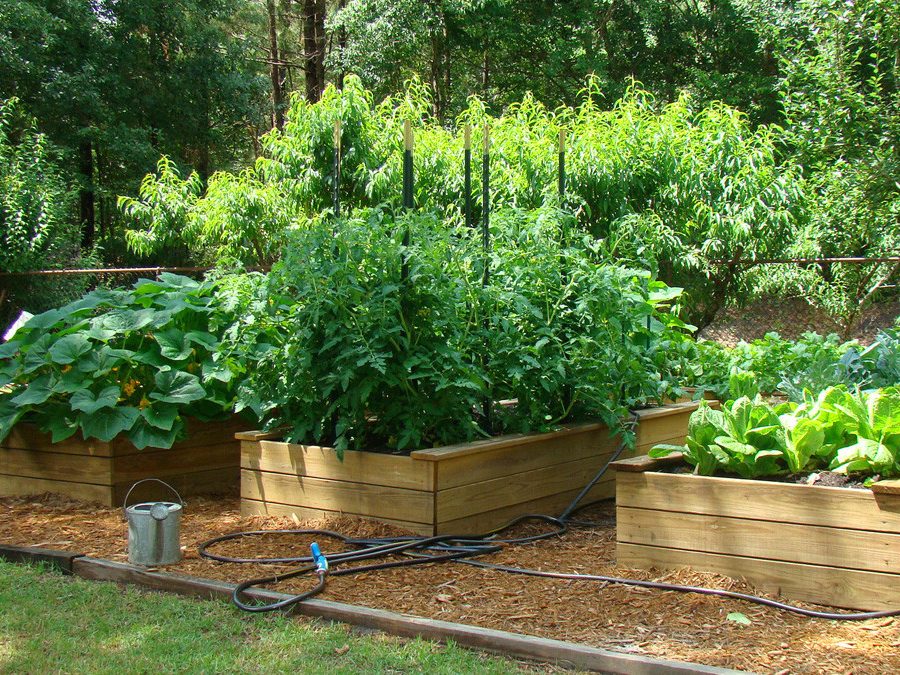
    vegetable garden in raised planters
    edible garden
    freshly picked peas from the garden

    Resources

  • Thompson Child Development Center

    POD 3

    Thompson Child Development Center

    Thompson Child Development Center has upgraded their outdoor learning environment to meet best practice standards as a result of participating in Preventing Obesity by Design (POD3).

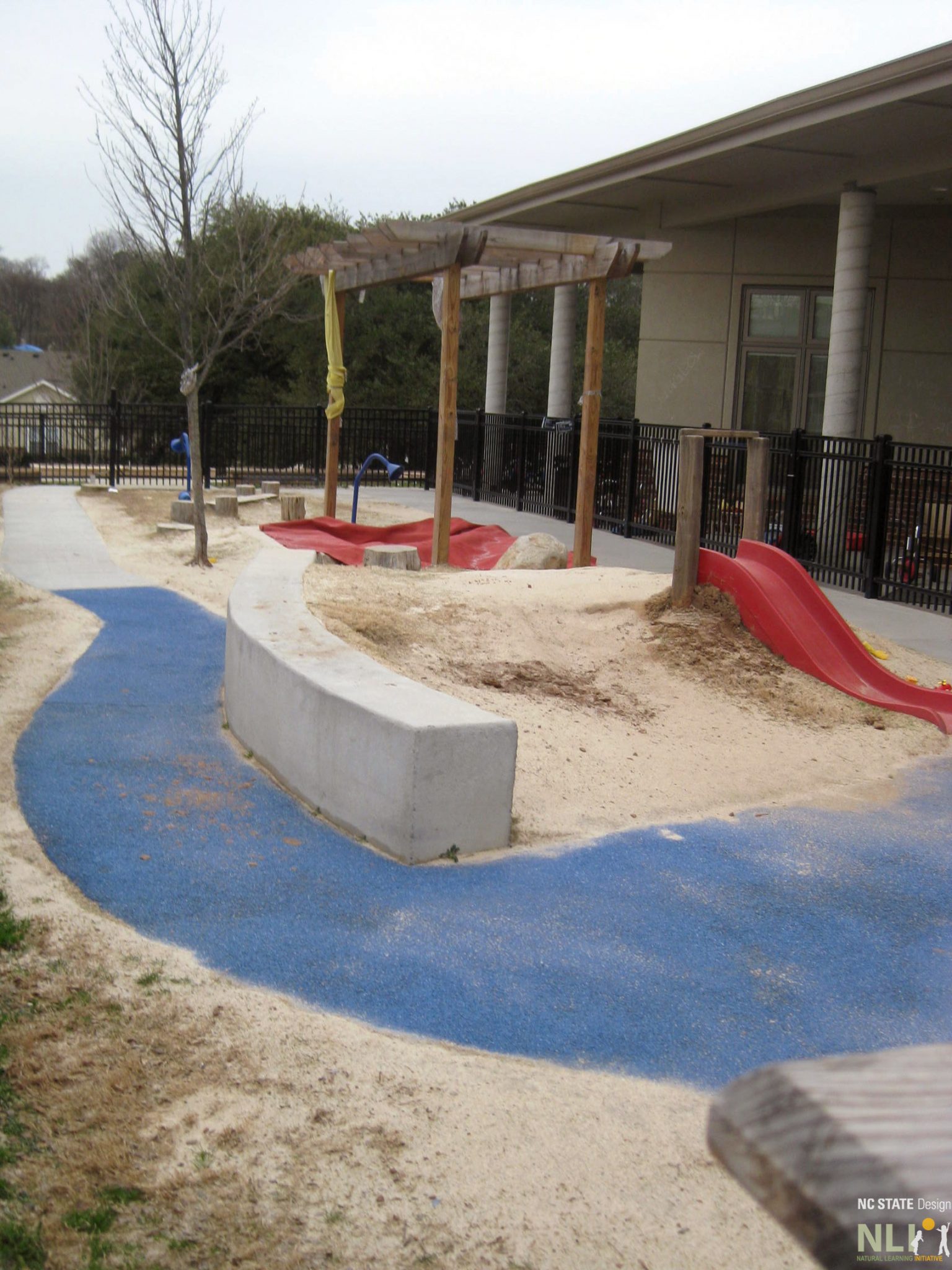
    Prior to being identified as a POD3 Lab Site, the existing spaces for all ages included play hills, concrete pathways, and several kinds of play structures.

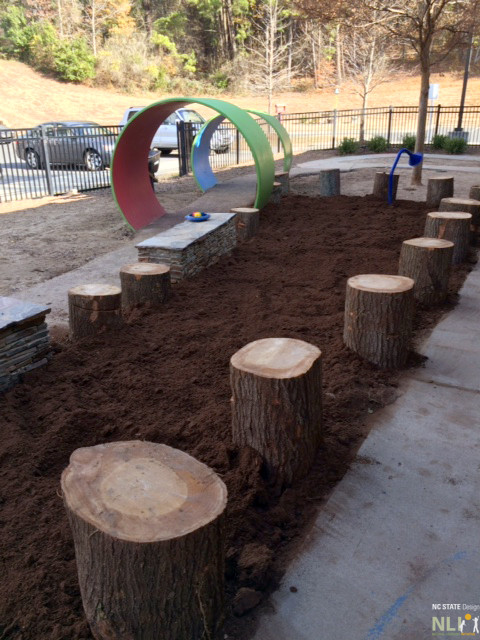
    The first steps towards lab site best practices were to upfit all the play hills with poured-in-place surfacing to address erosion concerns. Ornamental grasses, shrubs, and new play settings were added to play areas, including: storage, playhouses, stages, earth play, art easels, and a climbing wall.

    In addition, they will install plumbing in the preschool area for water play and water for their vegetable garden, install stepping stones in their infant space, and increase new plantings in all of the outdoor spaces.

    Capacity

    Center Address:1645 Clanton Road Charlotte, NC 28208

    Center Phone Number:(704) 817-1600

    County: Mecklenburg

    Permit Type:Five Star Center License

    Year Center Established:1996

    Website: Visit Website

    Before Renovation

    before renovation showing existing play space

    After Renovation

    after renovation showing new OLE elements like stepping logs

    Outdoor Learning Environment

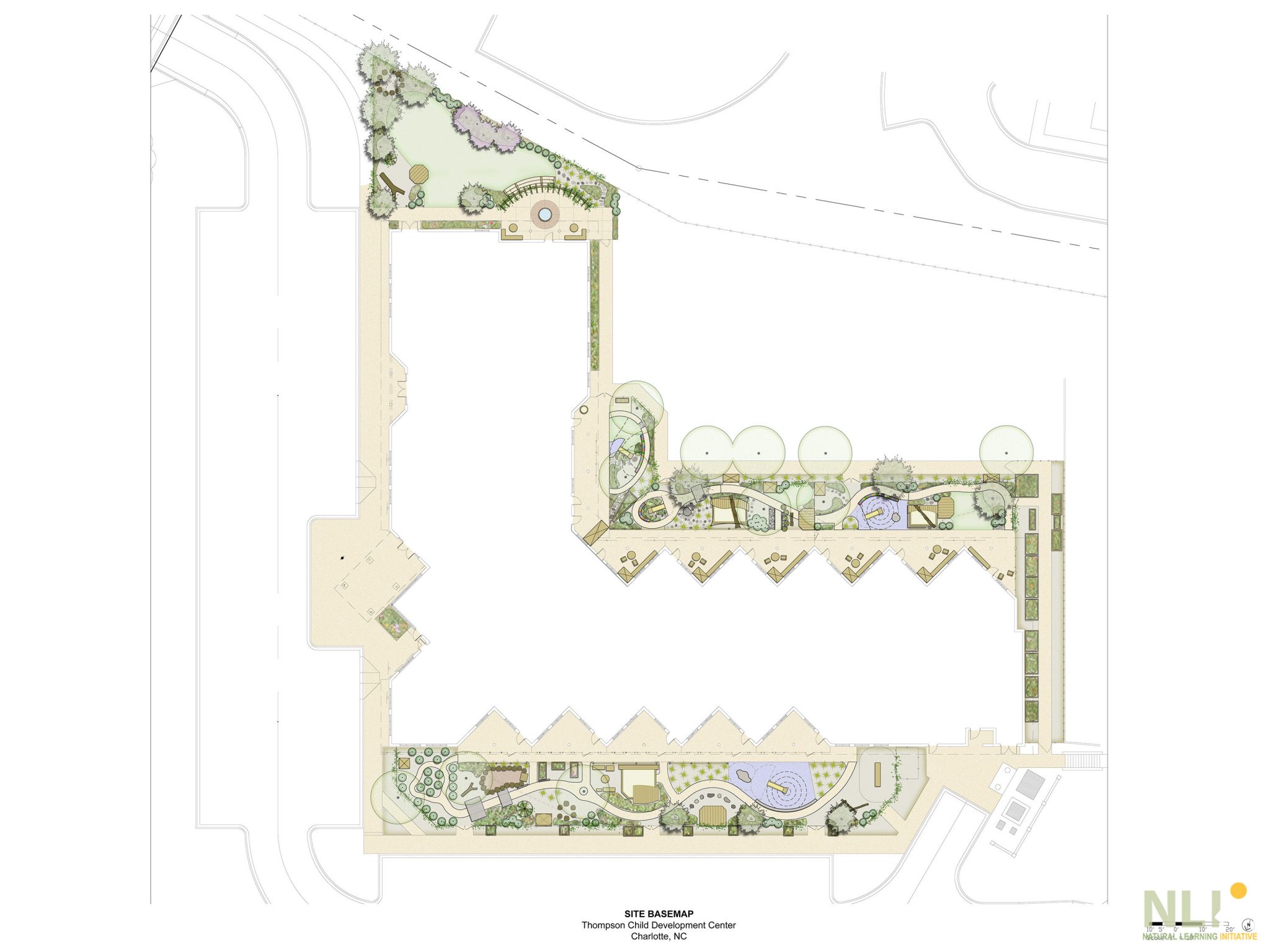
    Thompson Child Development Center design plan

    Local Partnership for Children

    Partnership Name:Smart Start of Mecklenburg County

    Partnership Address:601 E. Fifth Street, Suite 500 Charlotte, NC 28202

    Partnership Phone:(704) 377-6588

    Partnership Website:  Visit Website

    smart start of mecklenburg county logo
  • Beyond the Jack O’ Lanterns: Using Pumpkins to Support Learning

    The Green Desk

    Beyond the Jack O’ Lanterns: Using Pumpkins to Support Learning

    Pumpkins fascinate even infants as large, round, orange objects appear in Autumn, ready to be creatively carved into jack o’ lanterns. BUT… even more intriguing is watching pumpkins grow from tiny seeds, extending vines across the ground, sending forth huge yellow flowers that become small green balls before slowly transforming into “big orange things.”

    Maybe some science learning (STEM) fun can happen along the way! Let’s use the tactile sense to playfully measure, float, scoop, count, look, roll, compare, talk, read, play, and learn all about this wonderful natural object. Are pumpkins fruit or veggies? What doesAgrilife(Texas A&M University), have to say?

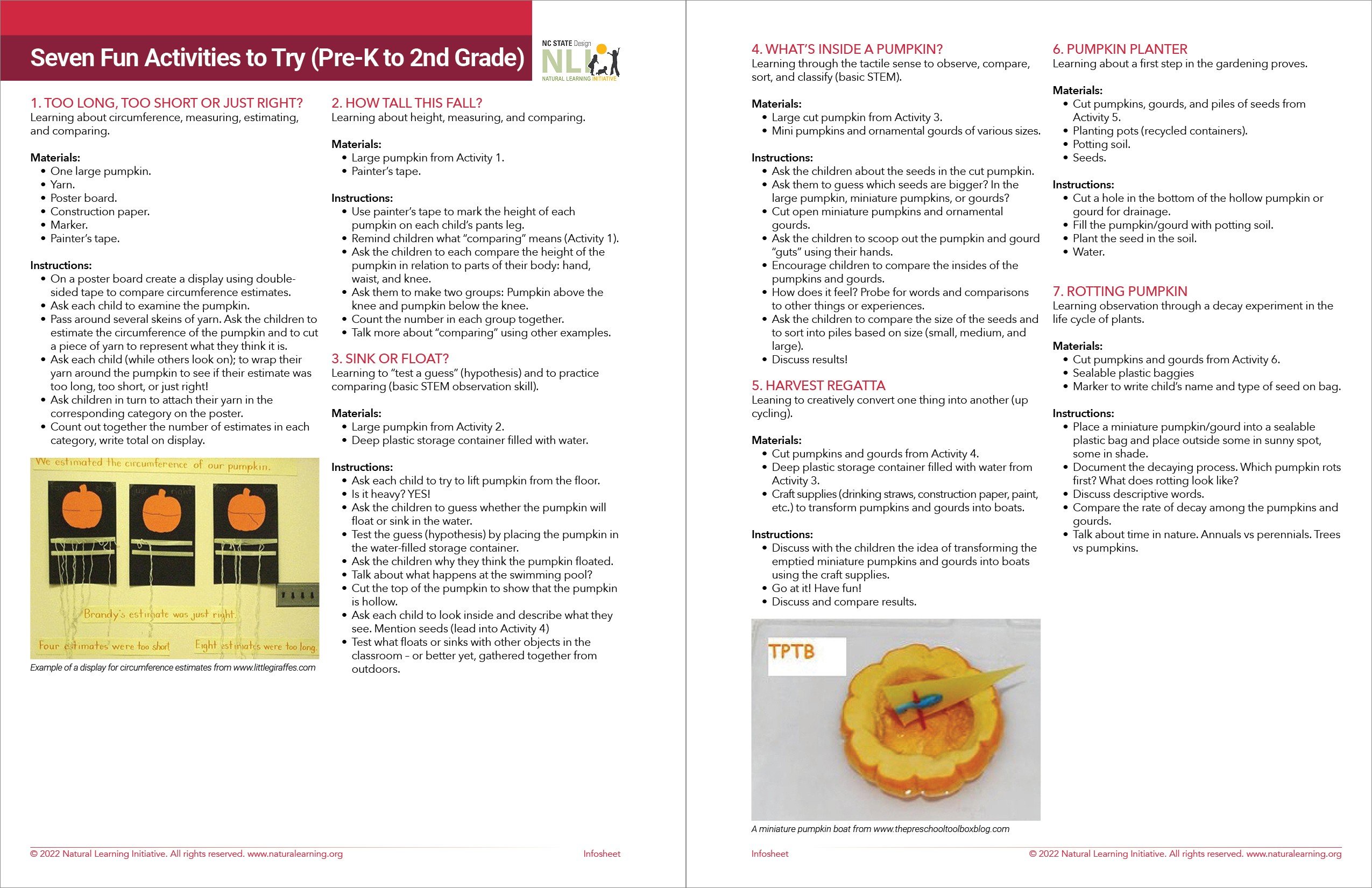
    Seven Fun Pumpkin Activities to Try (Pre-K to 2nd Grade)

    pumpkin activities instructions

    Activity Handout PDF

    Go together to the garden to harvest a giant pumpkin!

    infants interacting with a pumpkin

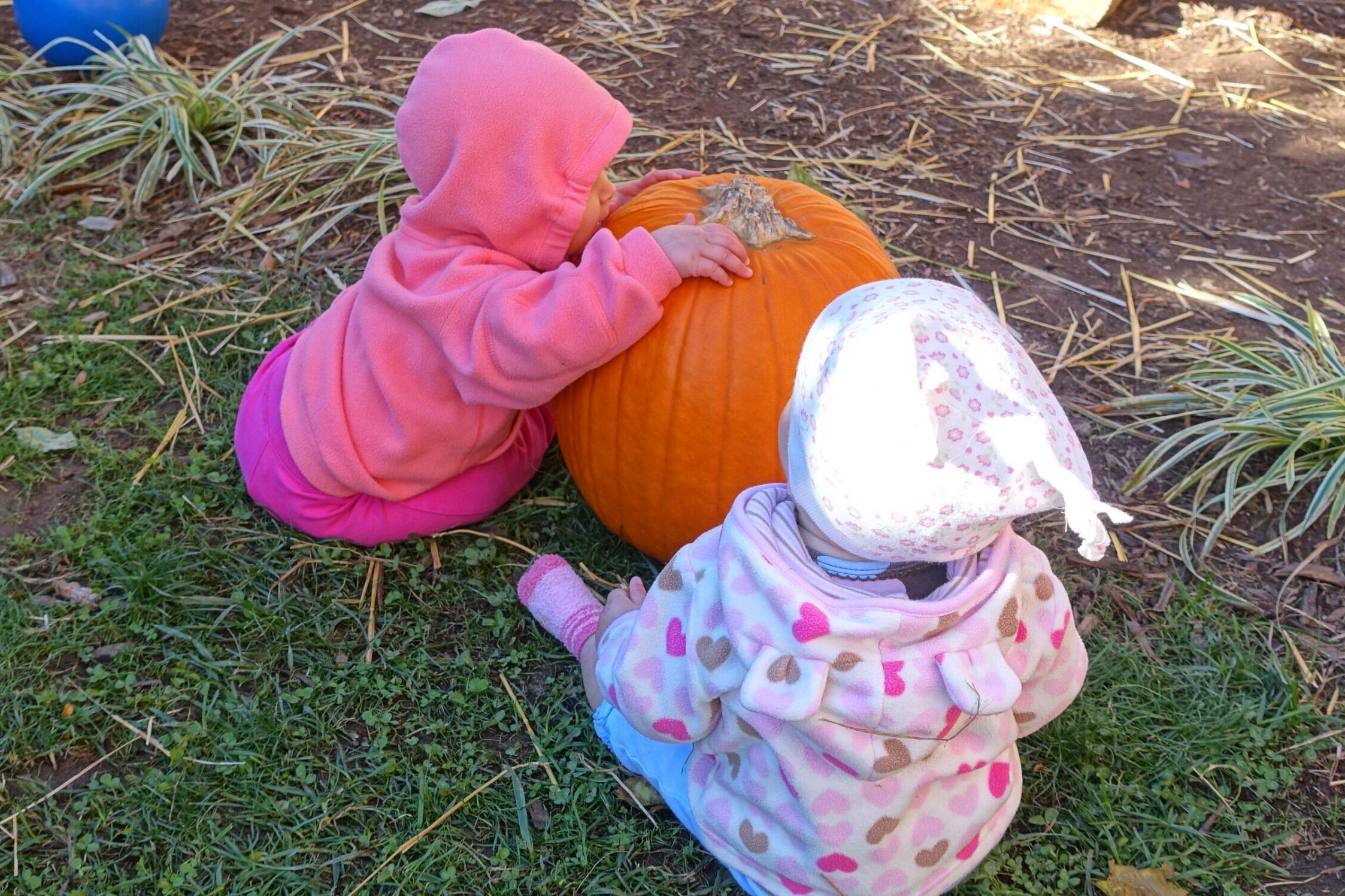
    Both girls are fascinated by the large, orange object matching their size. Curiosity is prompted by its shape, texture, bright color, and rough green stem on top. Both girls are learning sensory navigation, which stimulates healthy brain development.

    Assorted Pumpkins & Gourds

    Add all kinds of pumpkin and gourd shapes, sizes, colors, and textures to expand the level of sensory curiosity, exploration, discovery – and fun!

    2013 Design Institute thumbnail

    The SEVEN FUN ACTIVITIES come from a workshop created and conducted by landscape architect Sarah Little (who grew up on a pumpkin farm), while at NLI, for the 11th Annual Natural Learning Design Institute.

  • Imprinting Concrete with Natural Objects

    The Green Desk

    Imprinting Concrete with Natural Objects

    How can I create impressions in concrete using leaves or other natural objects?

    Here are some simple steps

    • Collect leaves that are heavily textured with strong vein patterns. The more flexible/pliable the better. Until leaves are used, keep them in a baggie with water to keep them moist and pliable.
    • Place the flattened leaves onto the surface of the wet/uncured concrete.
    • Use a trowel to gently press the leaves into the concrete.
    • Remove leaves after approximately 45 min. or leave them in place until they deteriorate.

    Tips

    • Select leaves from trees or plants growing in or that will be planted in the outdoor learning environment.
    • Go for a walk in the neighborhood, nearby park or other natural space with the children to collect leaves.
    • Evergreen leaves (i.e. cedar) make an interesting, but deeper, imprint.
    • Other natural objects, such as berries, small cones, feathers and shells, could also be used to make imprints.
    • Rubber stamps are available, but natural materials are more meaningful, authentic, and less expensive.
    • Make stepping stones to practice mixing concrete (follow the instructions on the bag) and making imprints with a half bag of concrete.
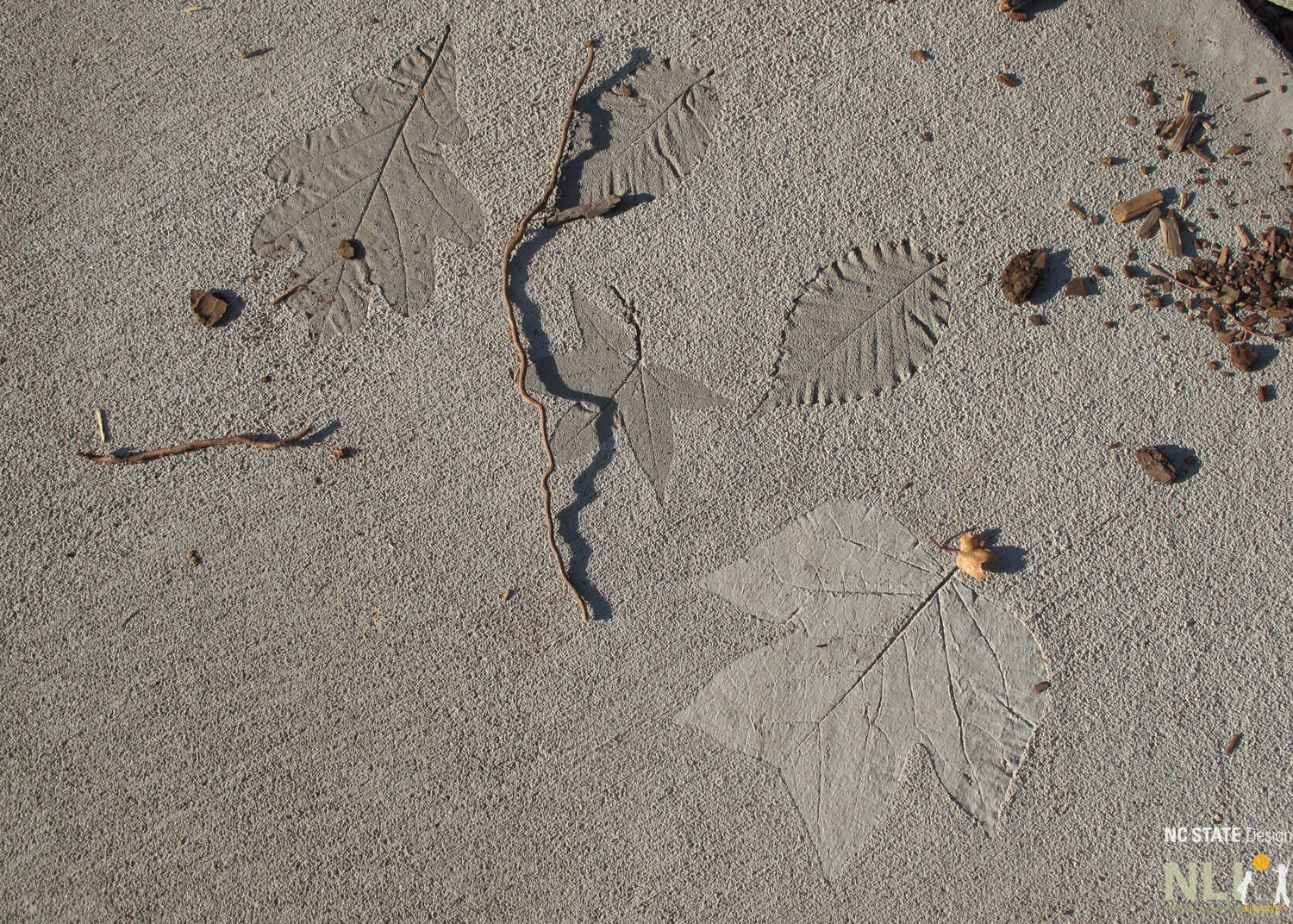
    close up example of imprinted leaves in concrete
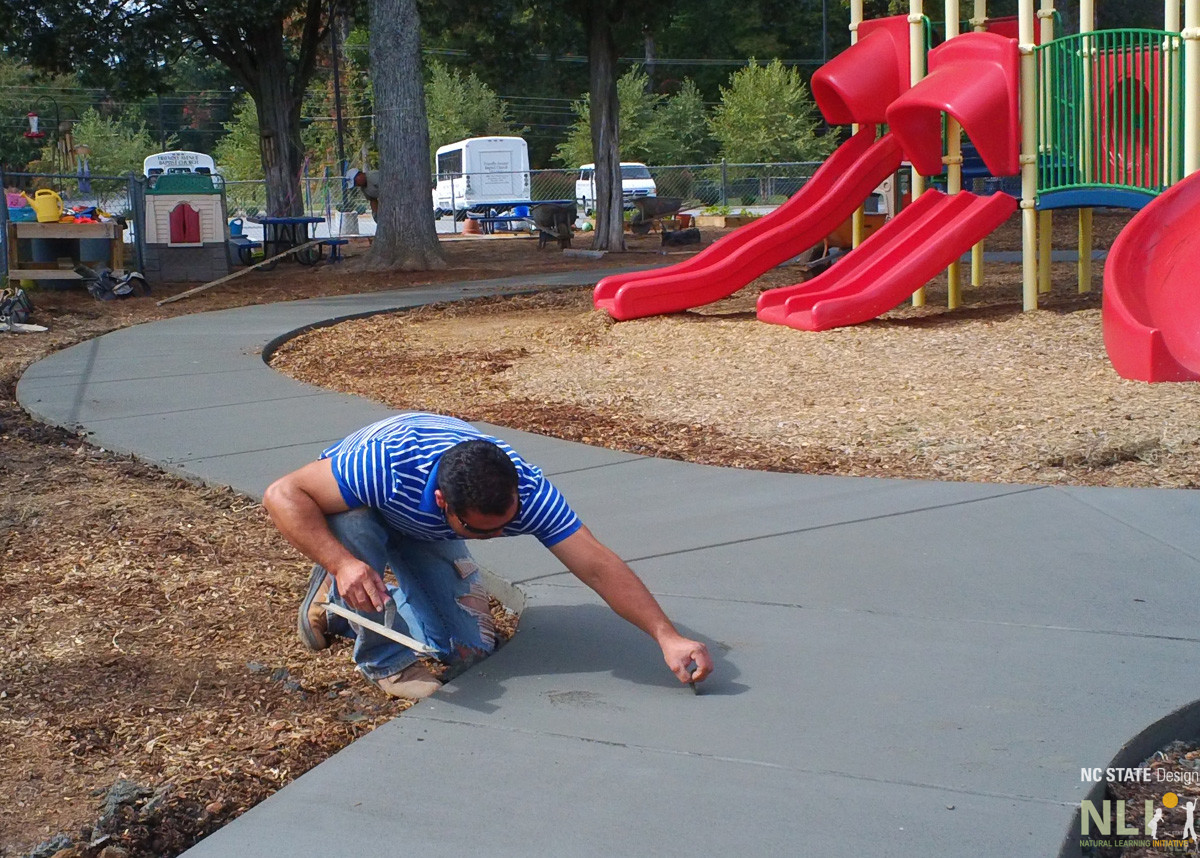
    person imprinting concrete with leaves

    Sandy Johnson at Friendly Avenue Christian Preschool imprinted natural leaves into recently installed concrete paths. The contents of this post are derived from an interview with Sandy. Thanks Sandy!