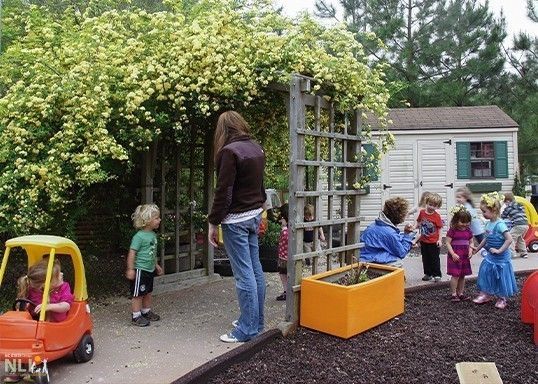
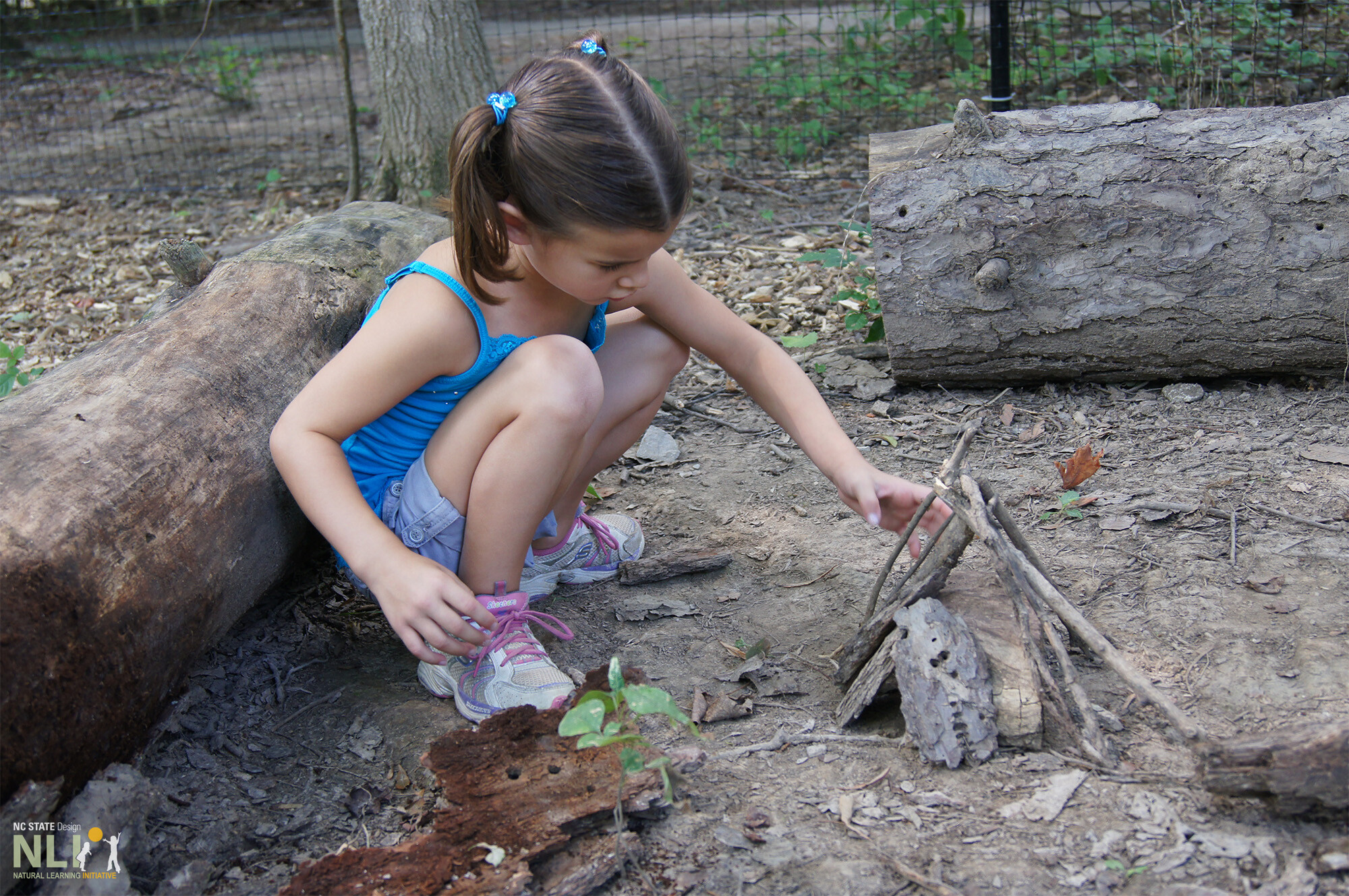
Fairy gardens are homes for elves, fairies, and other beings of children’s imagination. They provide enchanted places that stimulate creative, dramatic play in make believe settings. Creating a fairy village represents a unique form of natural building. They can be any scale, created inside a hollow log, on top of a tree stump, in a planter, on a patio or in a miniature woodland in a quiet corner of the outdoor area.
Terrariums are a fun and attractive way to bring nature indoors. Using easily found and inexpensive materials, you can create a small world of wonder for children and adults alike. With figurines, plants, and found objects, children can construct a magical scene that activates their imagination and connects them to natural materials. After careful assembly, children can help care for the terrarium, and as plants grow, watch their design come to life!
Risk of spreading COVID-19 may be reduced if children and teachers spend more time outside. The American Academy of Pediatrics (AAP) says that spending more time outdoors is one of the highest priority strategies for reducing transmission of the virus among preschoolers and elementary school children. Studies suggest that exposure to sunlight rapidly deactivates the virus in the air and on surfaces. Open-air spaces are less likely to concentrate the virus than confined indoor spaces and outdoor moving air disperses the virus, lowering the risk of transmission.
While the immediate and long-term benefits of time outside in child care settings are clear, the large majority of child care facilities are not designed and managed to support long durations of outside time to engage young children and their providers. This resource offers suggestions to immediately enhance child care outdoor spaces, through low-cost improvements and programming, to make them healthy, comfortable, and engaging.
Create groupings or “cohorts.” Given the challenges of individual physical distancing and mask-wearing for young children, both the AAP and CDC suggest establishing stable groups of children and adult(s), called cohorts. This approach aims to prevent mixing between groups while allowing for social interaction within groups. It can be combined with time outdoors adhering to local or state guidelines for personal protective equipment and sanitation (1).
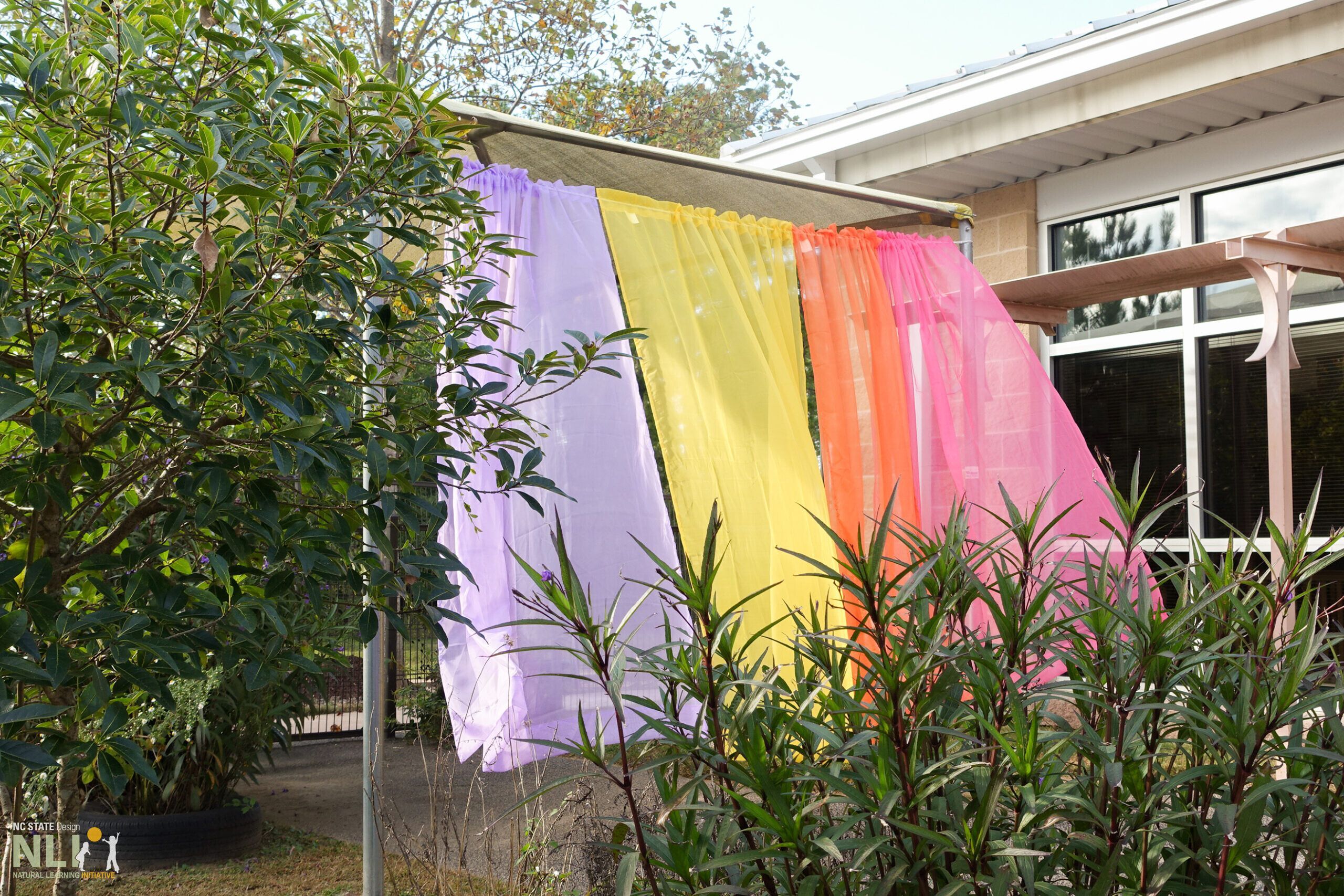
An assortment of activity settings is key to successful cohorts by providing diverse activities. To facilitate group separation, rotate outdoor use for each cohort or, with sufficient space, create subdivisions serving individual cohorts, using low fences, plantings, snow fencing, hanging textiles, or light shower curtains (3). Cohorts could wear matching clothing to increase a sense of belonging and help providers prevent mixing.
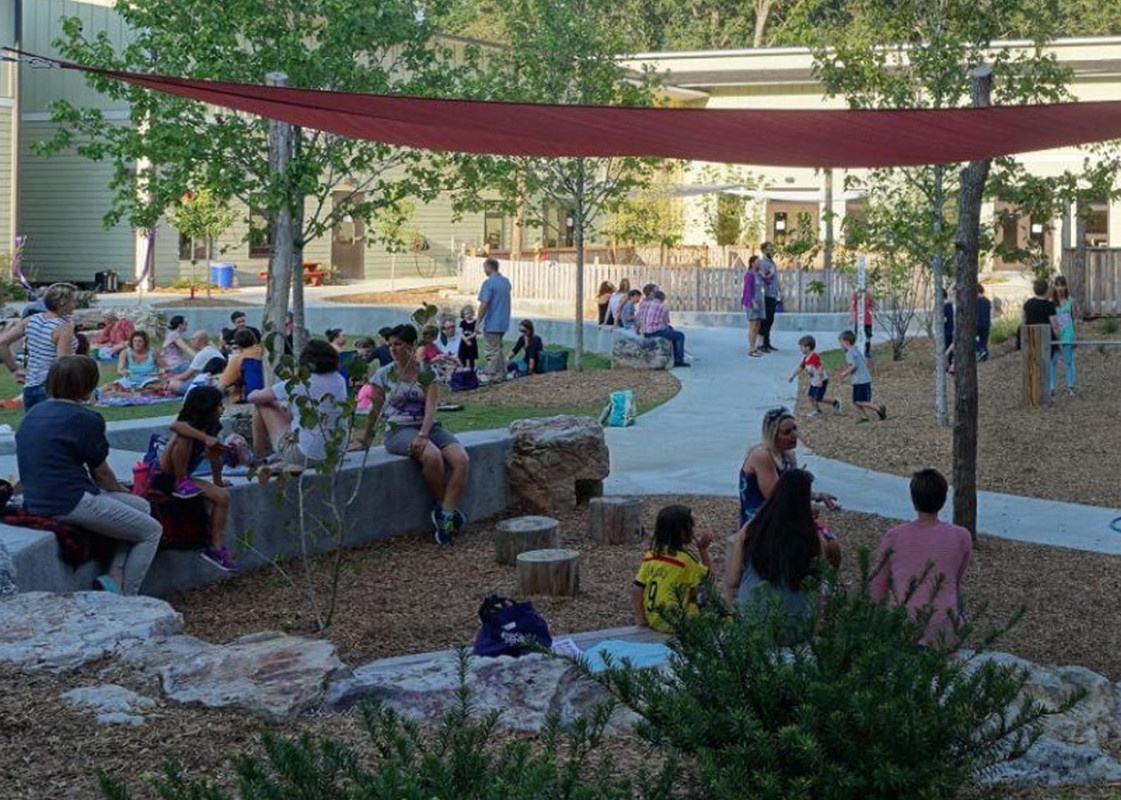
Shade/rain cover. While sunlight can play an important role in deactivating the virus that causes COVID-19, over-exposure to UV rays is itself a health risk. Sun must be balanced with shade, which is crucial for summer comfort. Balance can be created with scattered patches of shade that protect children while allowing the sun to penetrate. Although tree planting is a long-term shade solution with added educational value, during the pandemic, a mix of shade sails, tents, umbrellas, pergolas, arbors, and roof structures can provide protection from sun, rain, and wind (4, 7).
COMFORTABLE
Aim to make time outside more comfortable—physically, socially, and psychologically—for both children and providers.
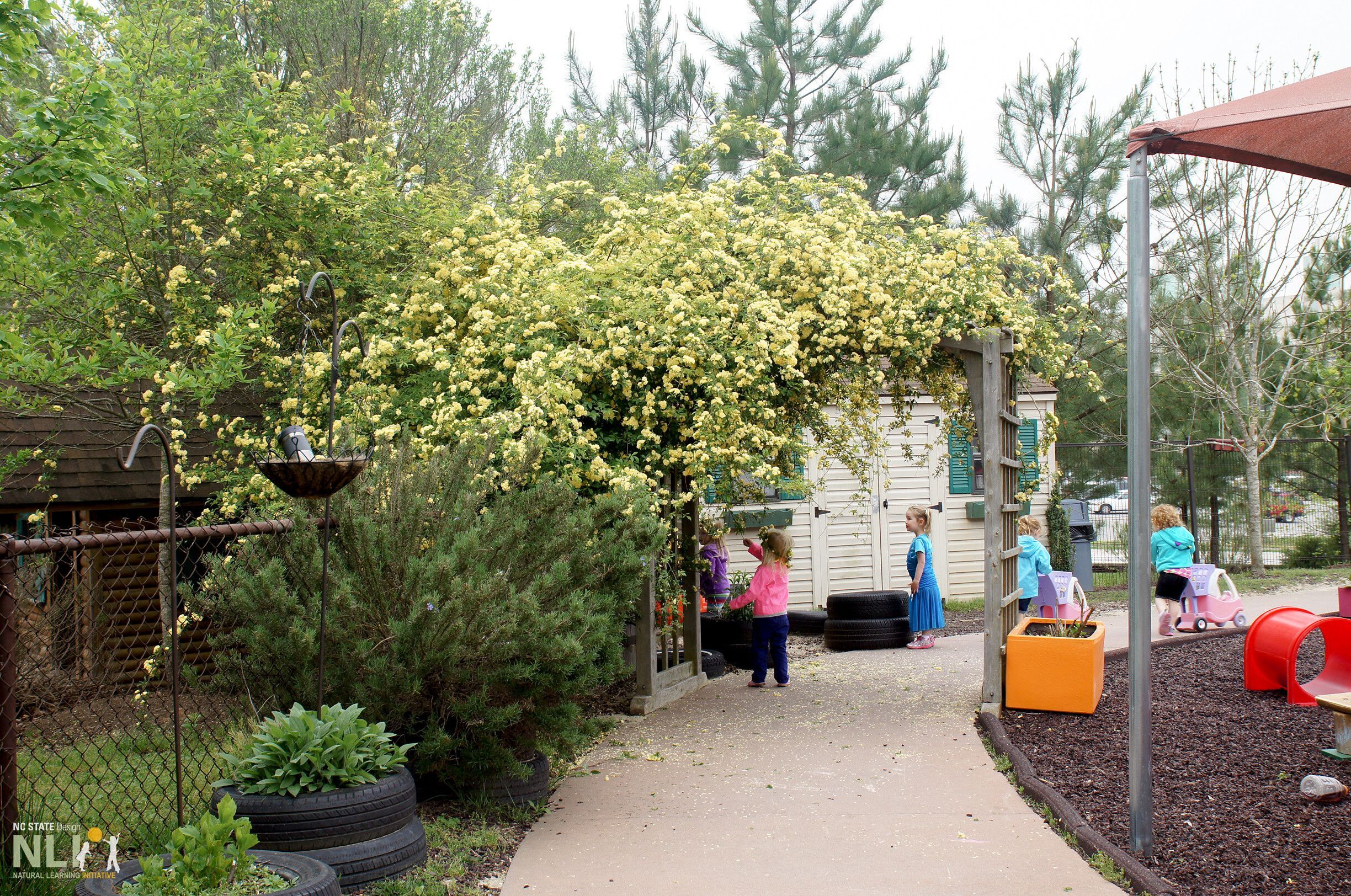
Facilitate circulation between activity settings. Provide easy-to-follow routes that can facilitate the cohort approach for both providers and children. Designated pathways need to be wide enough for groups to move quickly, following “one-way” rules (5).
Seating for providers supports positive social relations between children as well as providing comfort. Traditional benches (1) can be mixed with stones (6), hammocks, and other creative installations for providers and children to sit, lounge, or lean on.
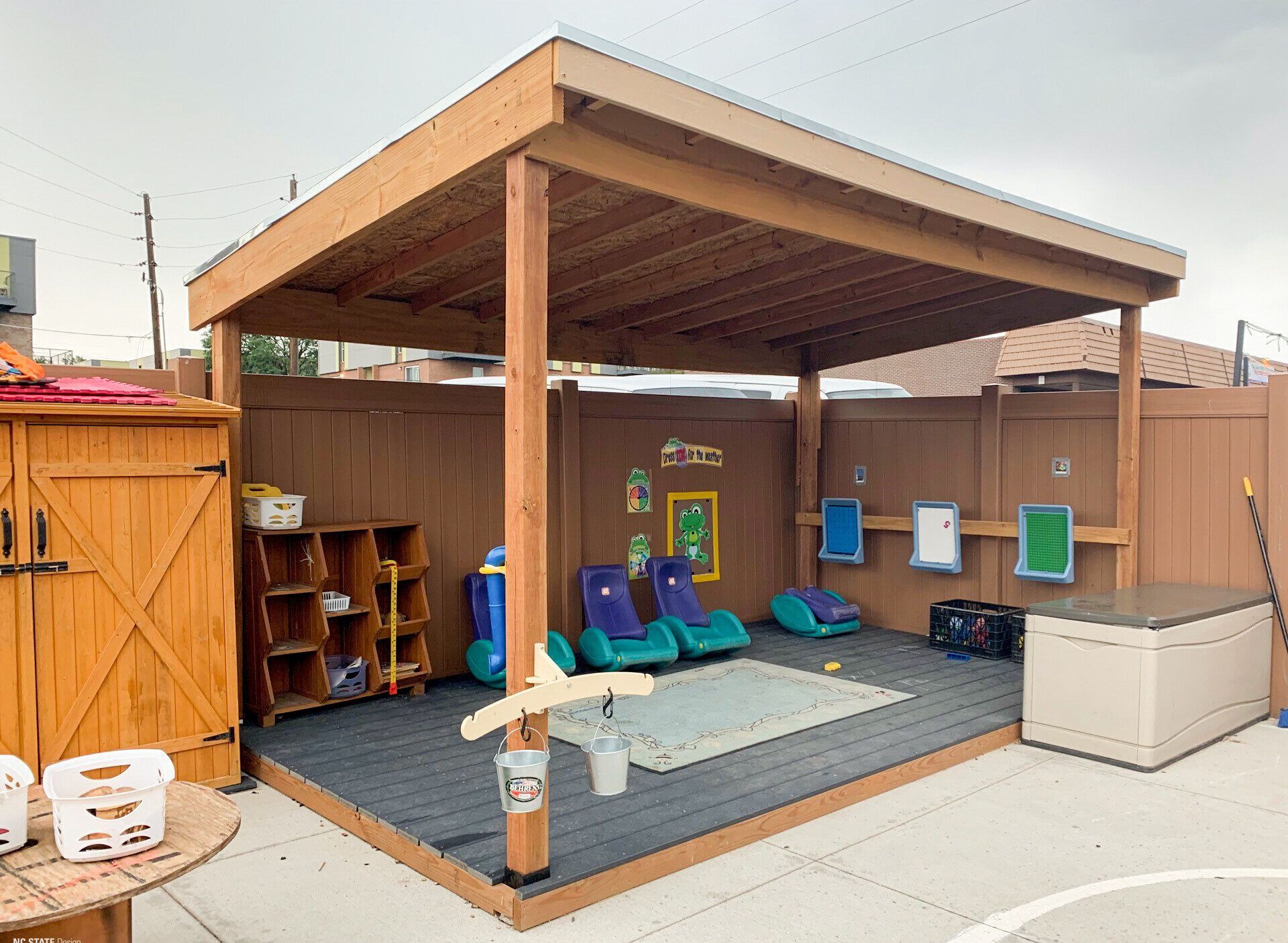
Nearby storage is essential for outdoor play and learning. Items need to be close at hand to enrich activities associated with particular settings and can also house disinfecting or cleaning materials securely away from children. Moveable deck boxes and similar inexpensive off-the-shelf units serve these purposes well (7).
ENGAGING
As time outside is increased, child care providers can find ways to both improve outdoor space and activate it with intentional programming to engage children and providers.
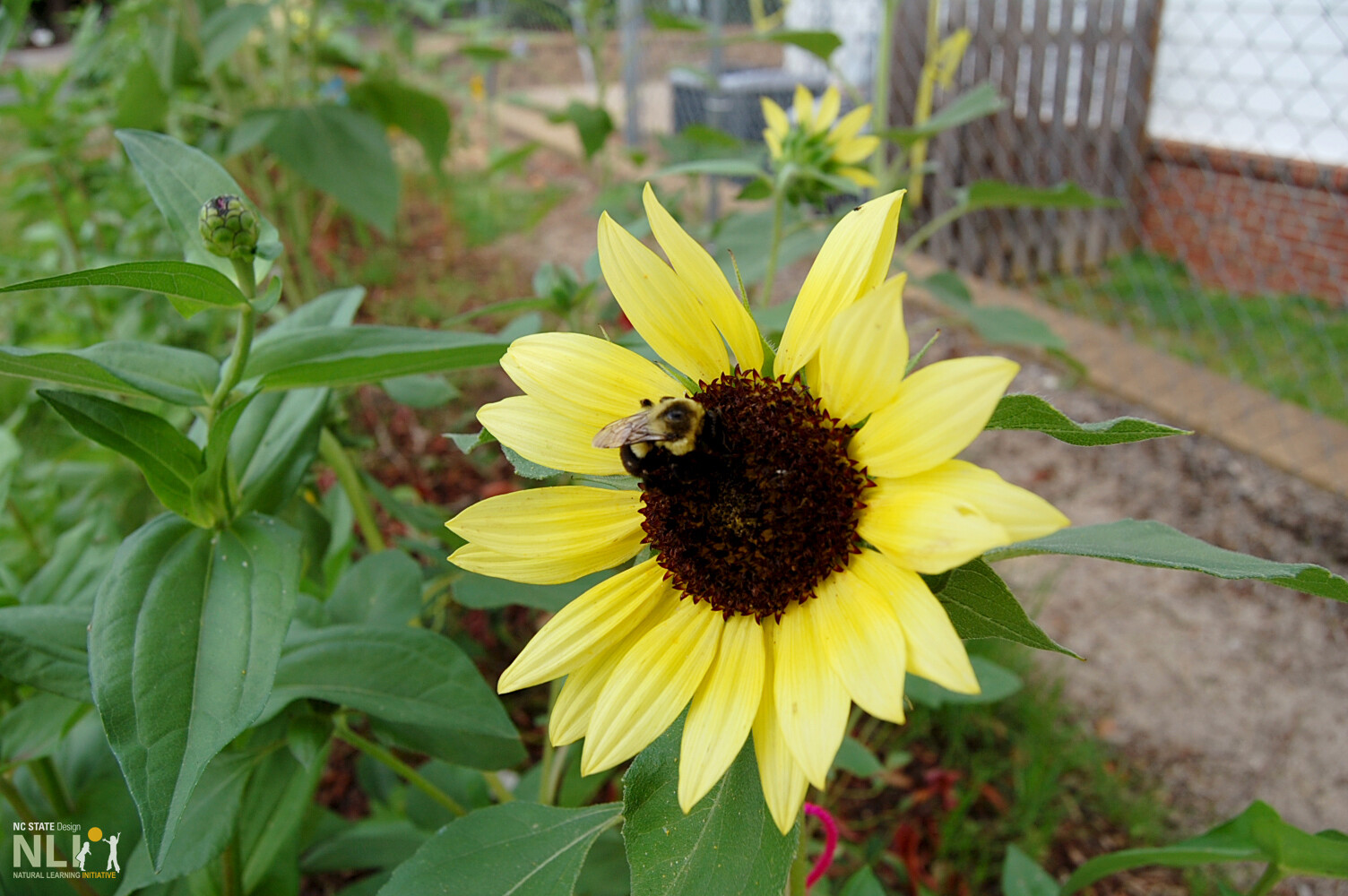
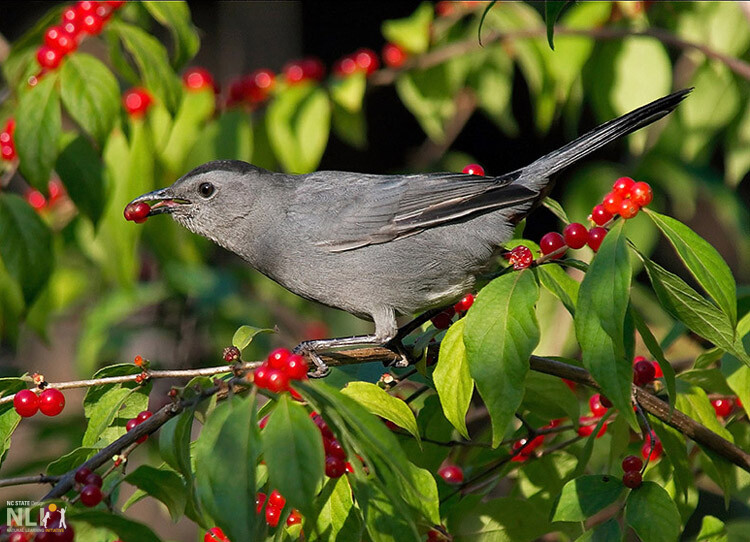
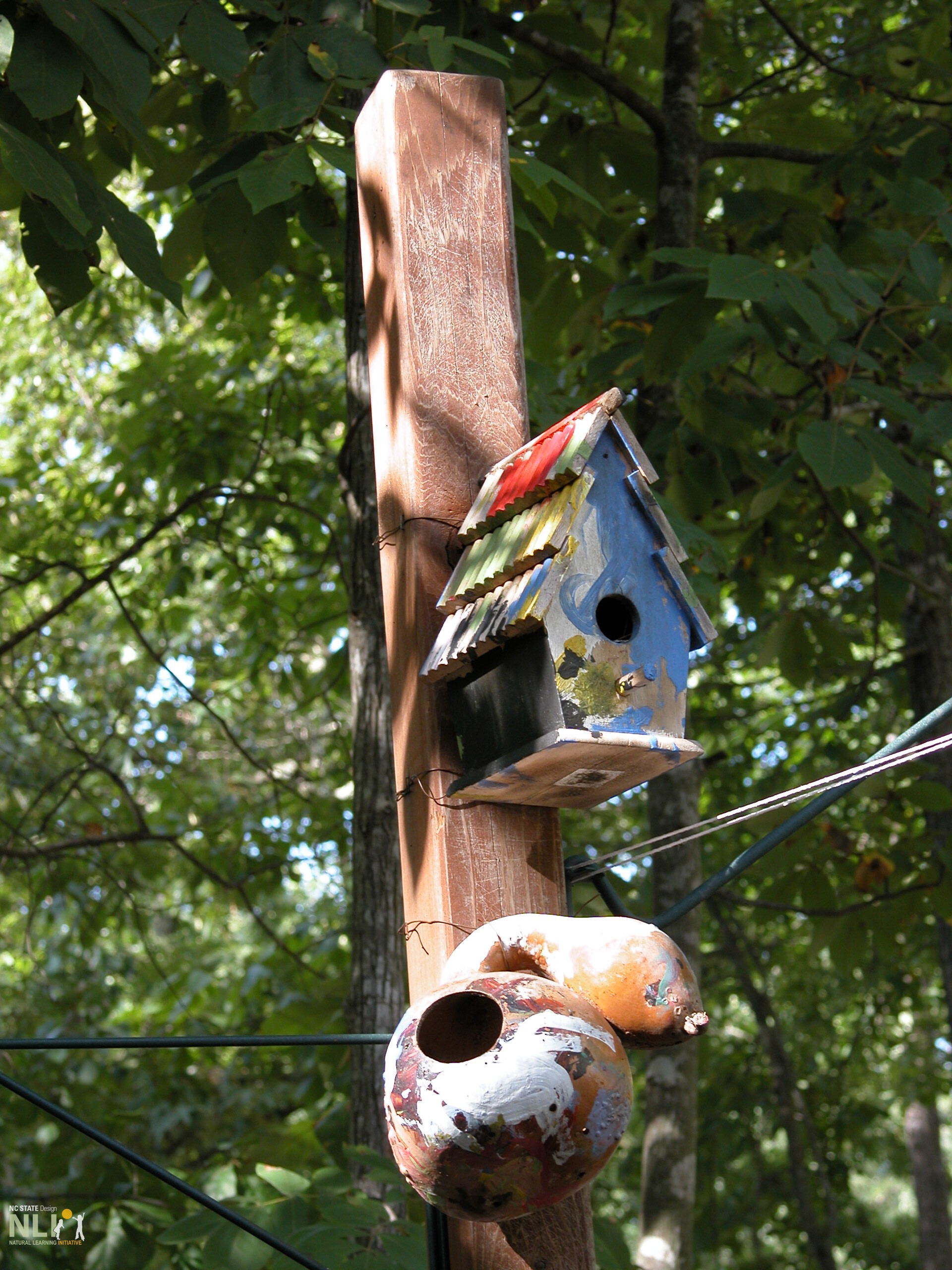
Nature in its many forms offers more choices for creative, active play, and expands the range of options for activity settings. Planting insect-attracting, flowering perennials or ornamental grasses is a low-cost way to begin naturalizing child care outdoor spaces and to entice nature observations. Choose plants with persistent seeds and fruits that are interesting year-round (9). Add birdhouses to attract friendly wildlife.
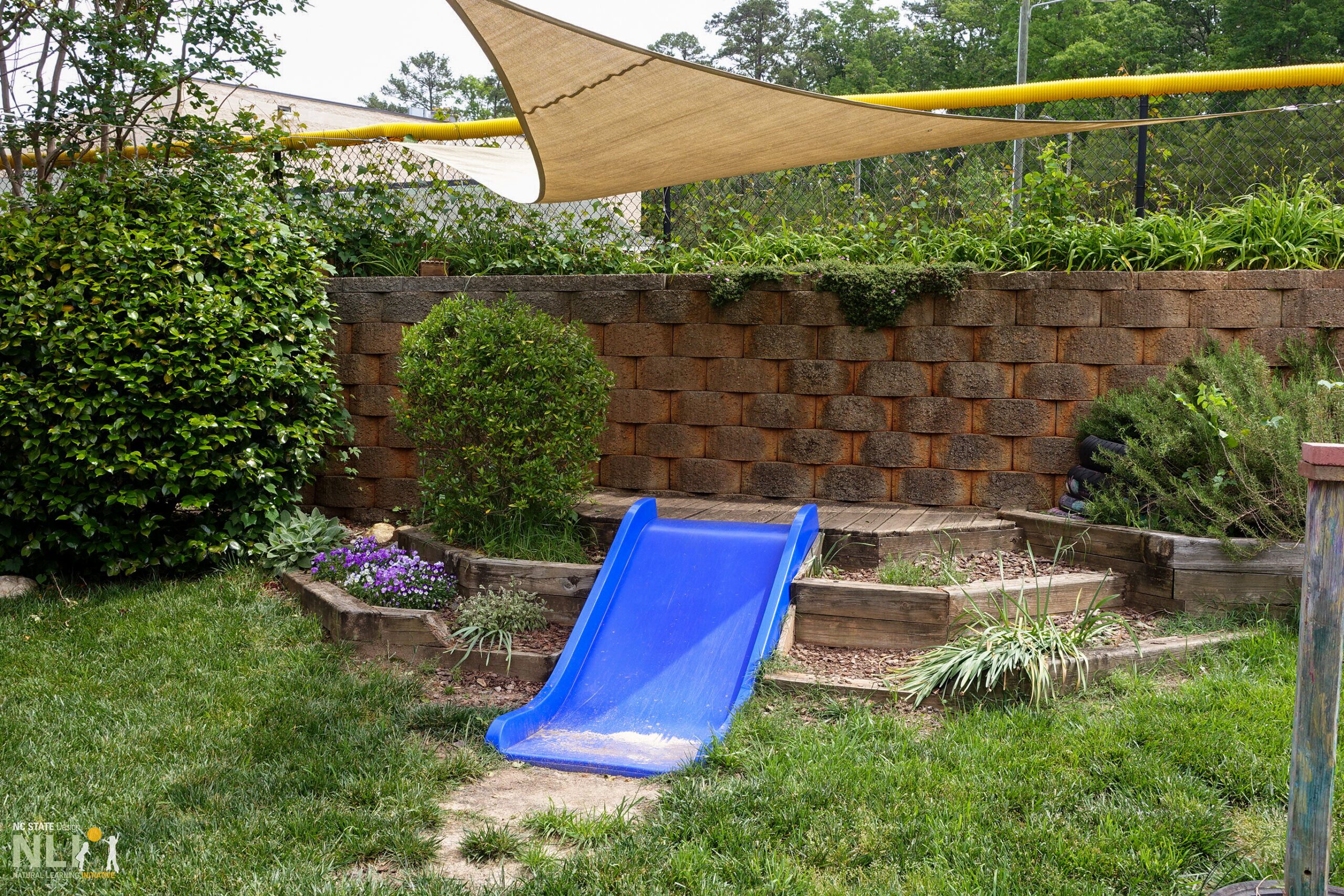
Repurposing closed areas. If playground equipment use is not allowed during COVID-19, parts of the setting may be used while still following the rules. Settings with movable features and large use-zones, like swings, may be repurposed for other activities once swing seats have been tied up out of children’s reach. Climbing structures can be draped with textiles and converted into ground-level playhouses with a lower density of use and reduced high-touch surfaces. If sand play is restricted, a safe, stable platform can be placed above the sand to create a surface for play with natural objects.
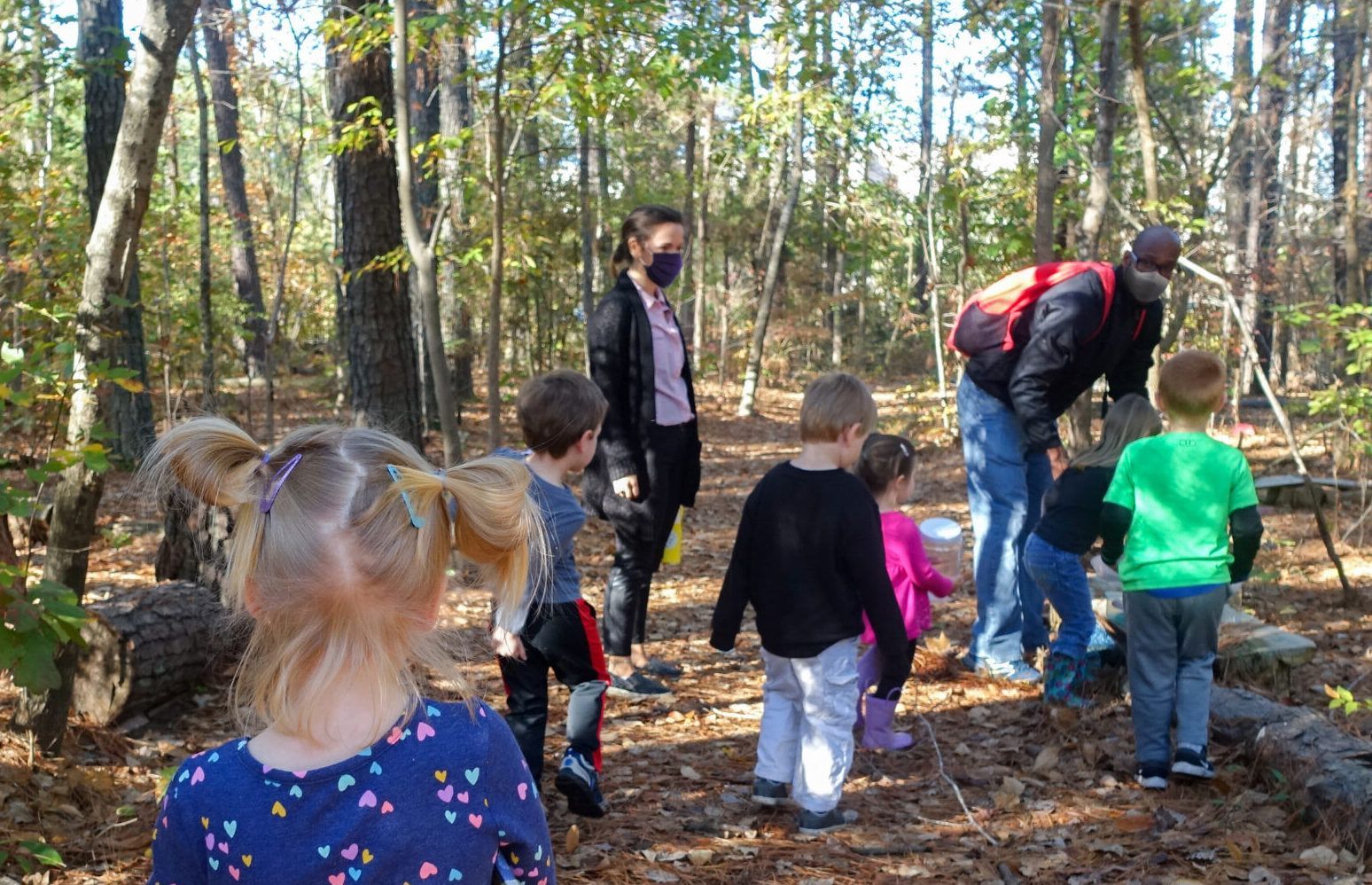
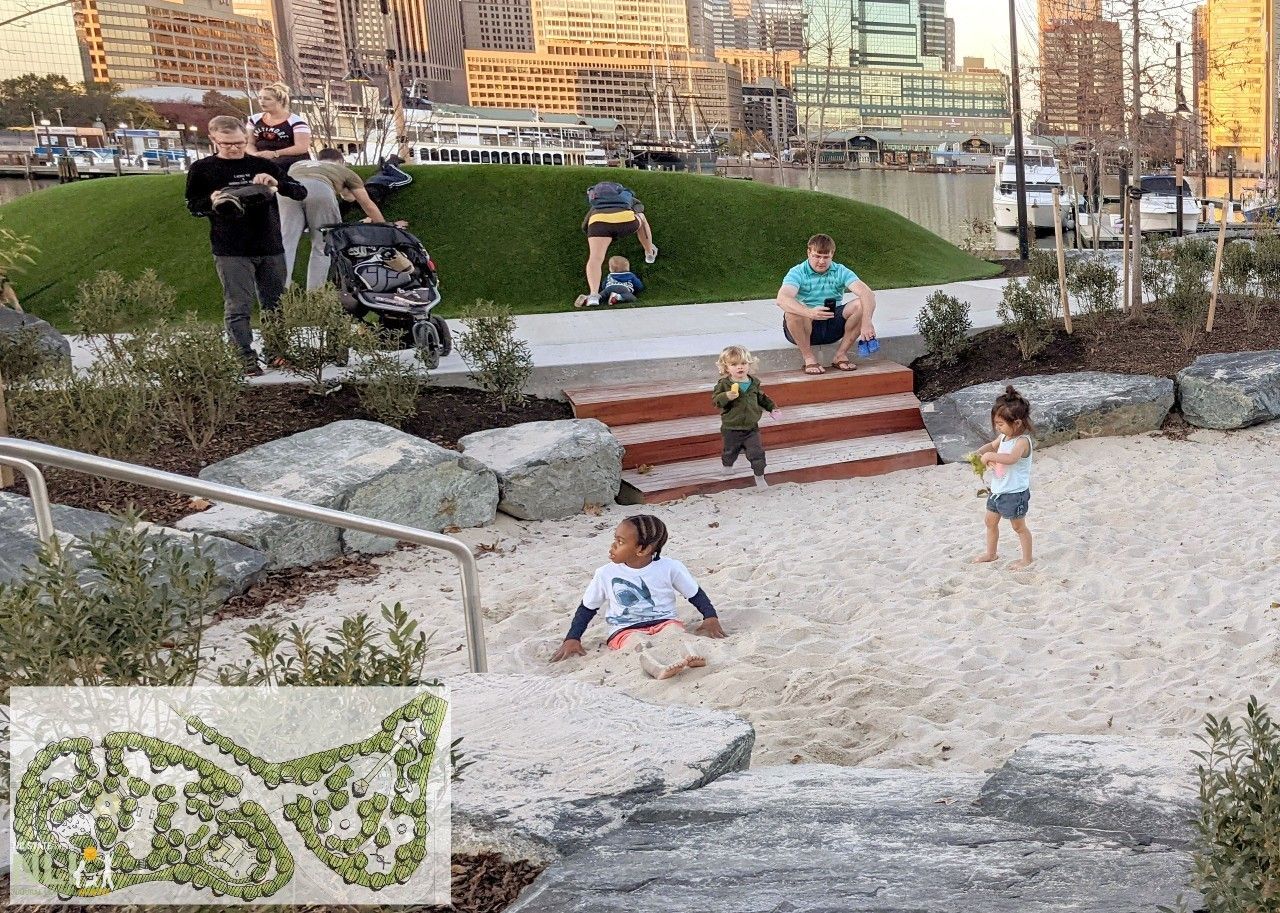
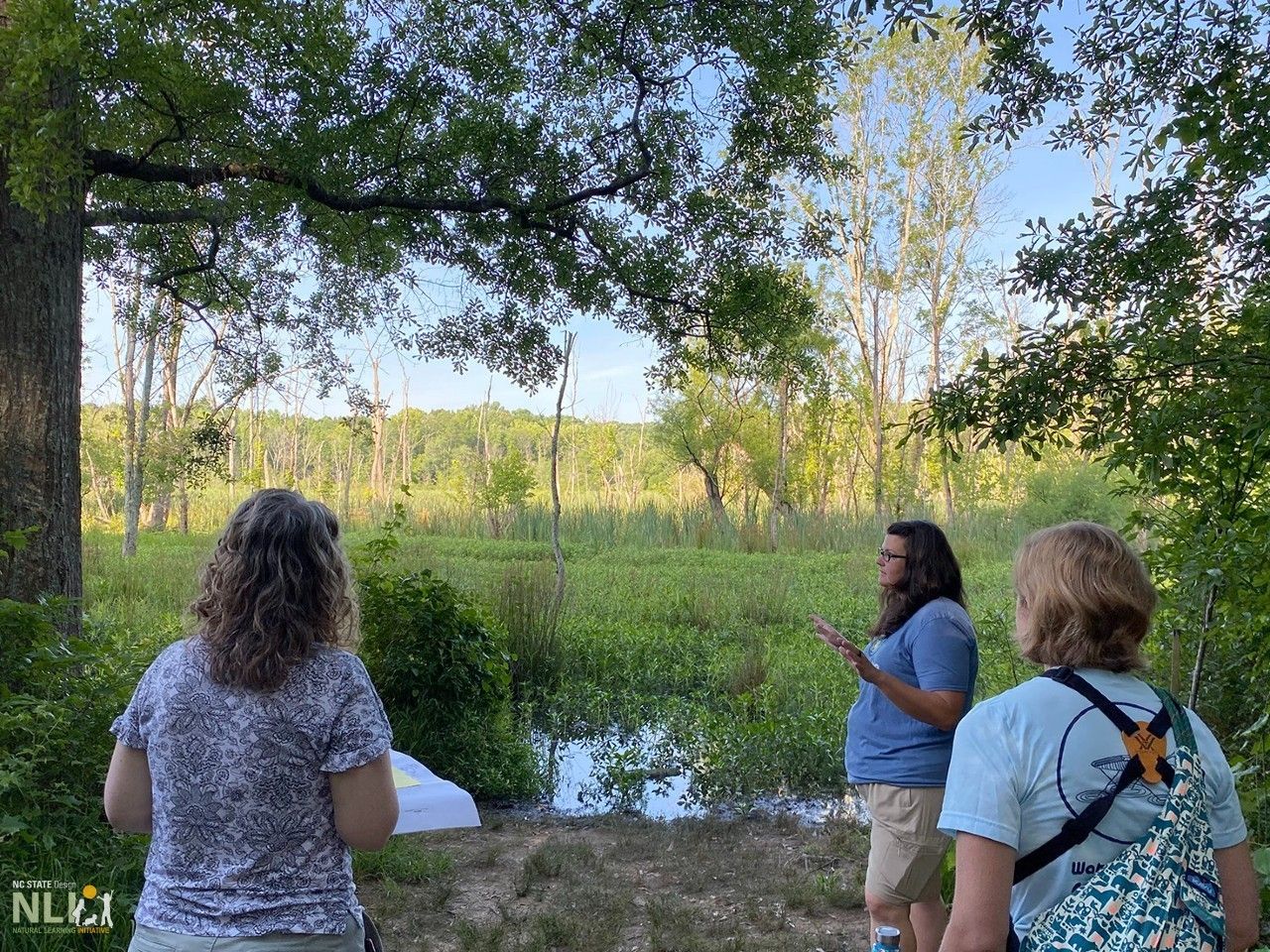
For centers where licensed space is tight, consider contiguous spaces beyond the licensed area that could be enclosed and repurposed temporarily, including woodlands (11), adjacent fields, or as a last resort, a section of the parking lot. Taking walking field trips to nearby parks with parental consent could become an engaging weekly activity.
Disclaimer: The Natural Learning Initiative (NLI), NC State University, the National Wildlife Federation, their partners, and supporting entities assume no responsibility for consequences arising from physical interventions using information contained in this document. Under no circumstances will liability be assumed for any loss or damage, including without limitation, indirect or consequential, incurred during installation, management, and use of such interventions. Highly recommended is adherence to relevant local, state, and national regulatory requirements concerning but not limited to health and safety, accessibility, licensing, and program regulation.
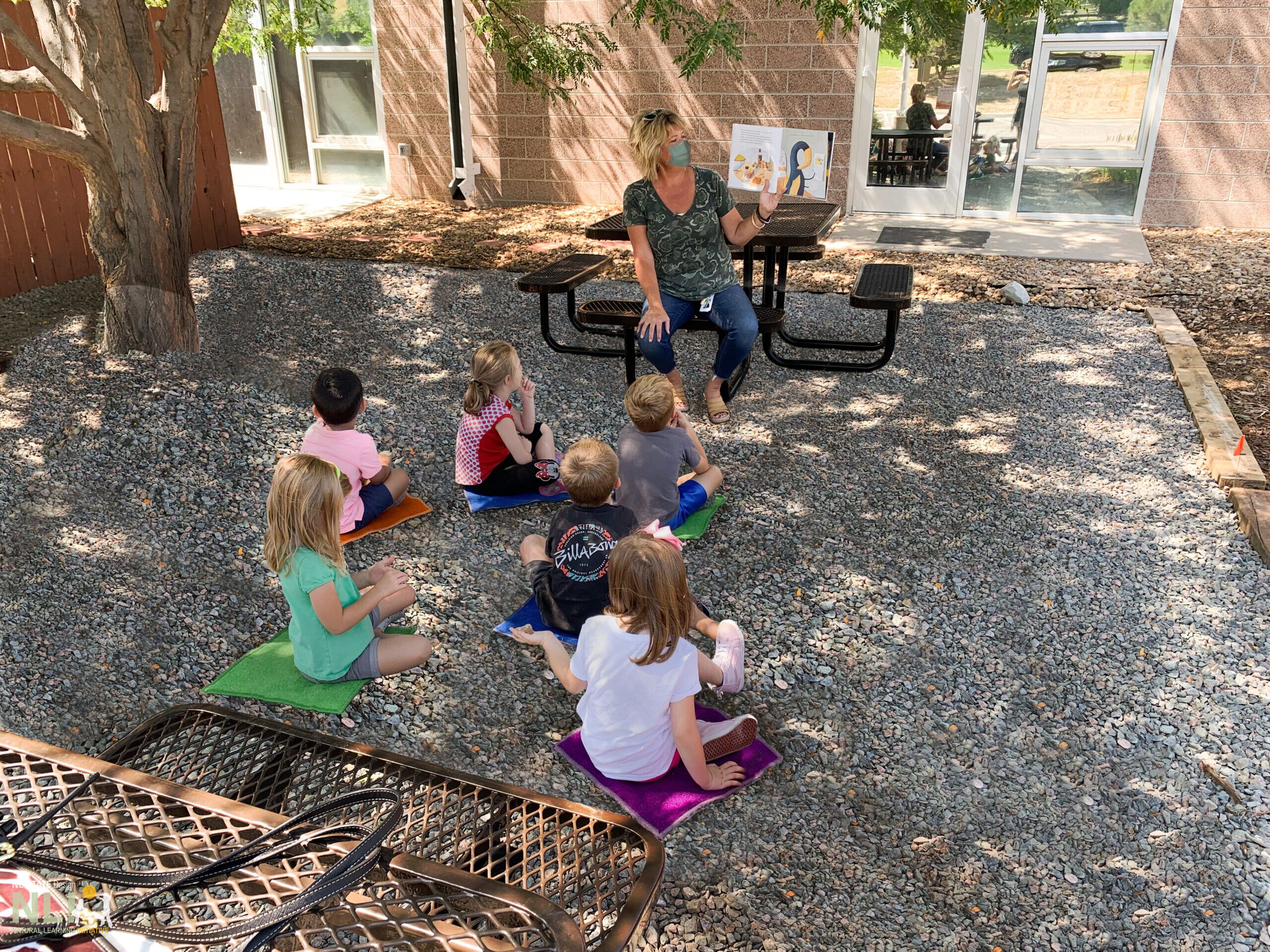
1. Class cohort on personal mats under shade tree, gathered for story time with teacher sitting on table bench.—ECHO
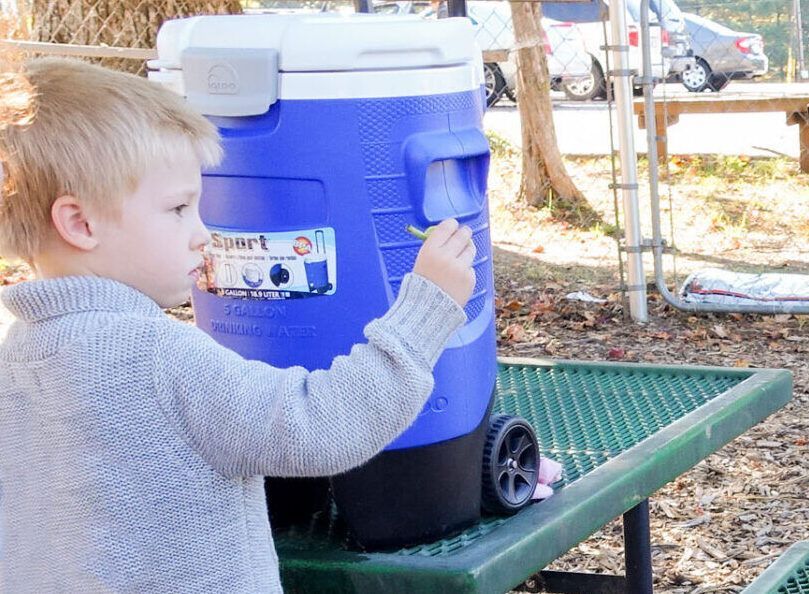
2. Five-gallon, rolling beverage cooler serves as a convenient, mobile, handwashing station.—NLI
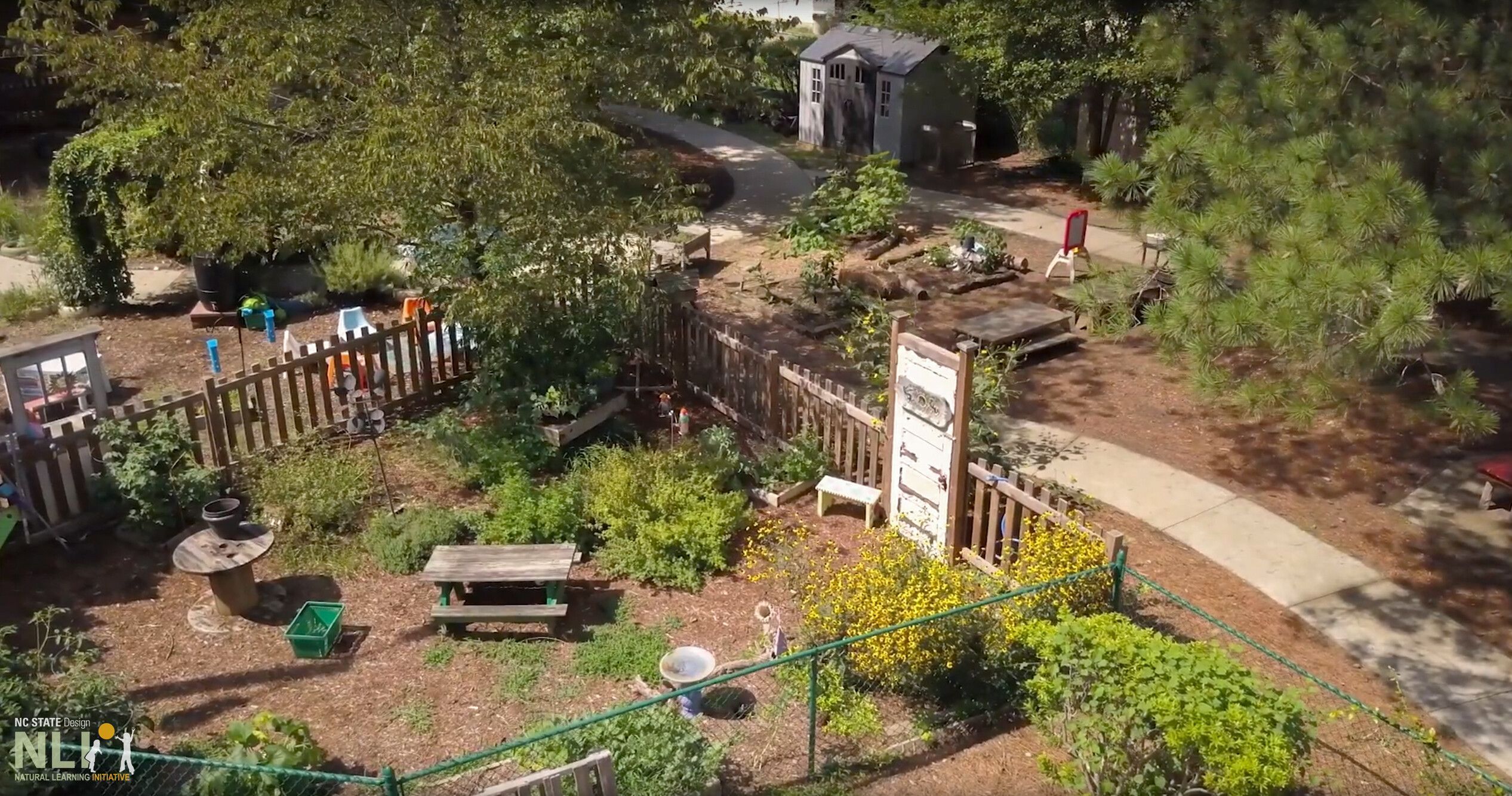
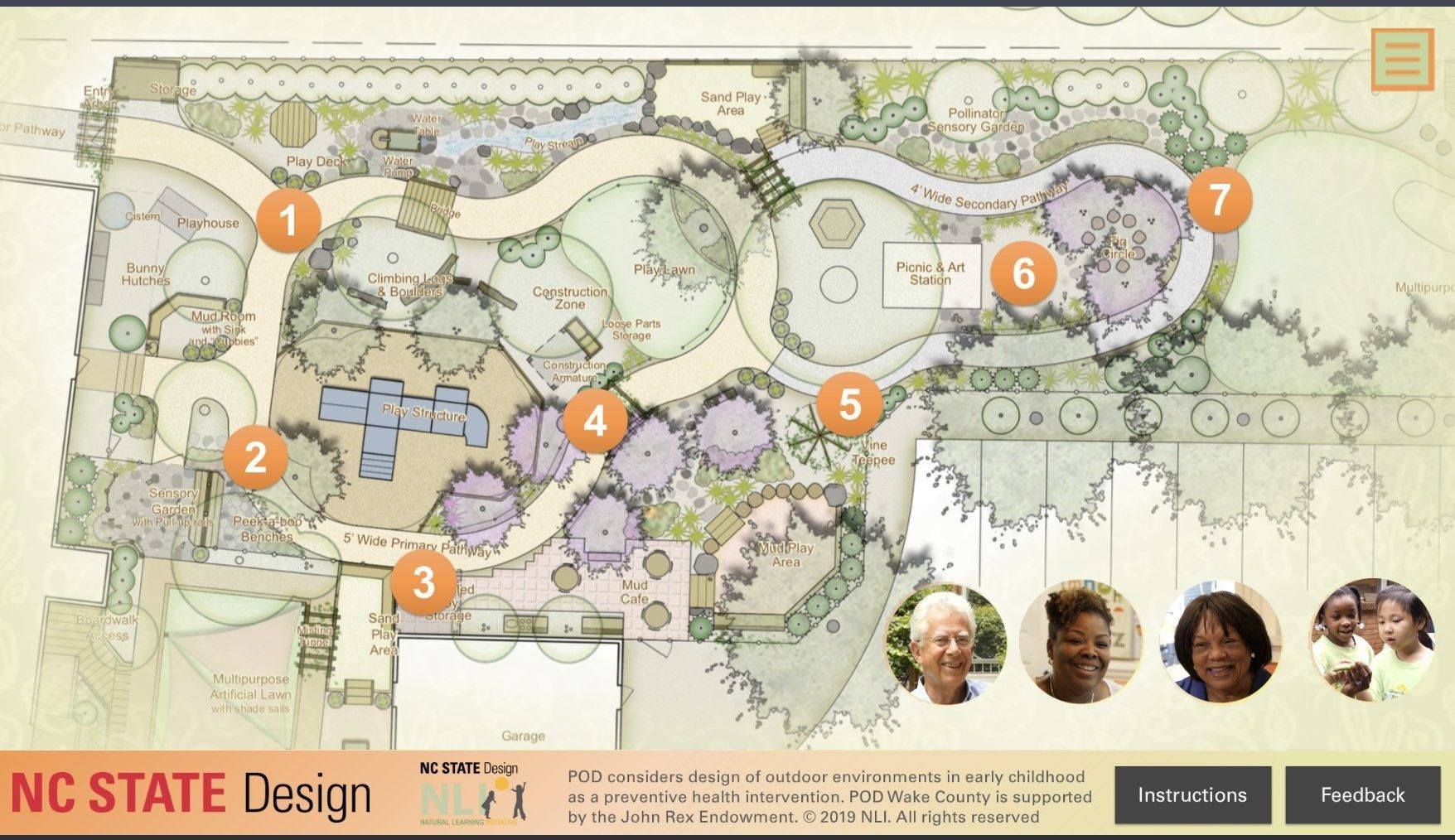
3. Preschool space subdivided into diverse play and learning settings using fences, planting, arbors, portals, signage, and primary pathways.—NLI
4. Shade sail moderates sun exposure in a sheltered corner used by toddlers.—NLI
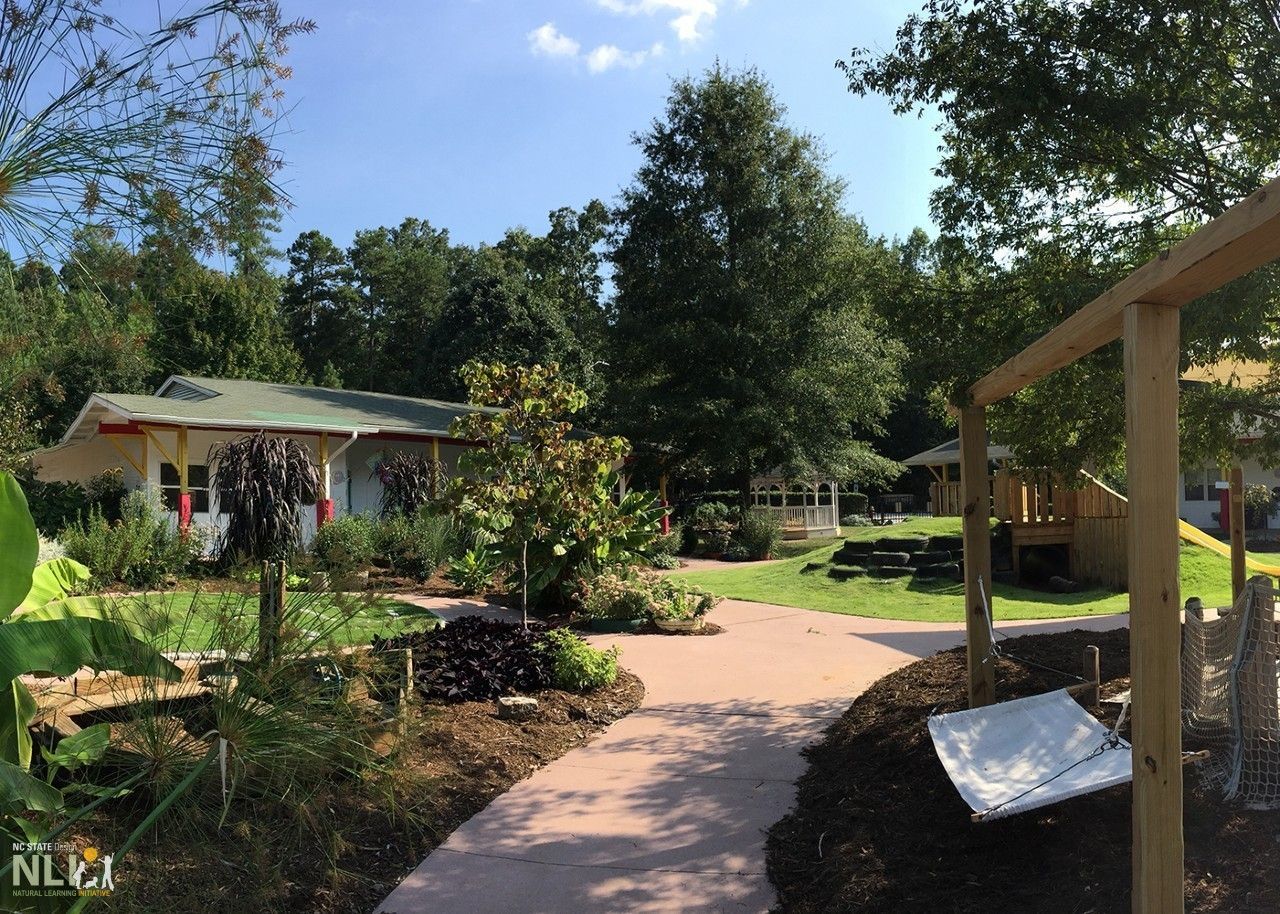
5. Broad, primary pathways connect adjacent settings and offer easily read circulation routes for children. Adjacent planting adds sensory interest.—NLI
6. Large stones, locally available, can provide an instant, sit-able, multipurpose setting, comfortable for children and adults to gather. Here set in wood chips adjacent to a low deck with close-by storage. —ECHO
7. Roofed over, sheltered multipurpose setting is served by adjacent chest storage (right) and shed storage for large items (left).—ECHO
8. Colorful, light, transparent, suspended textile provides a playful division between settings.—NLI
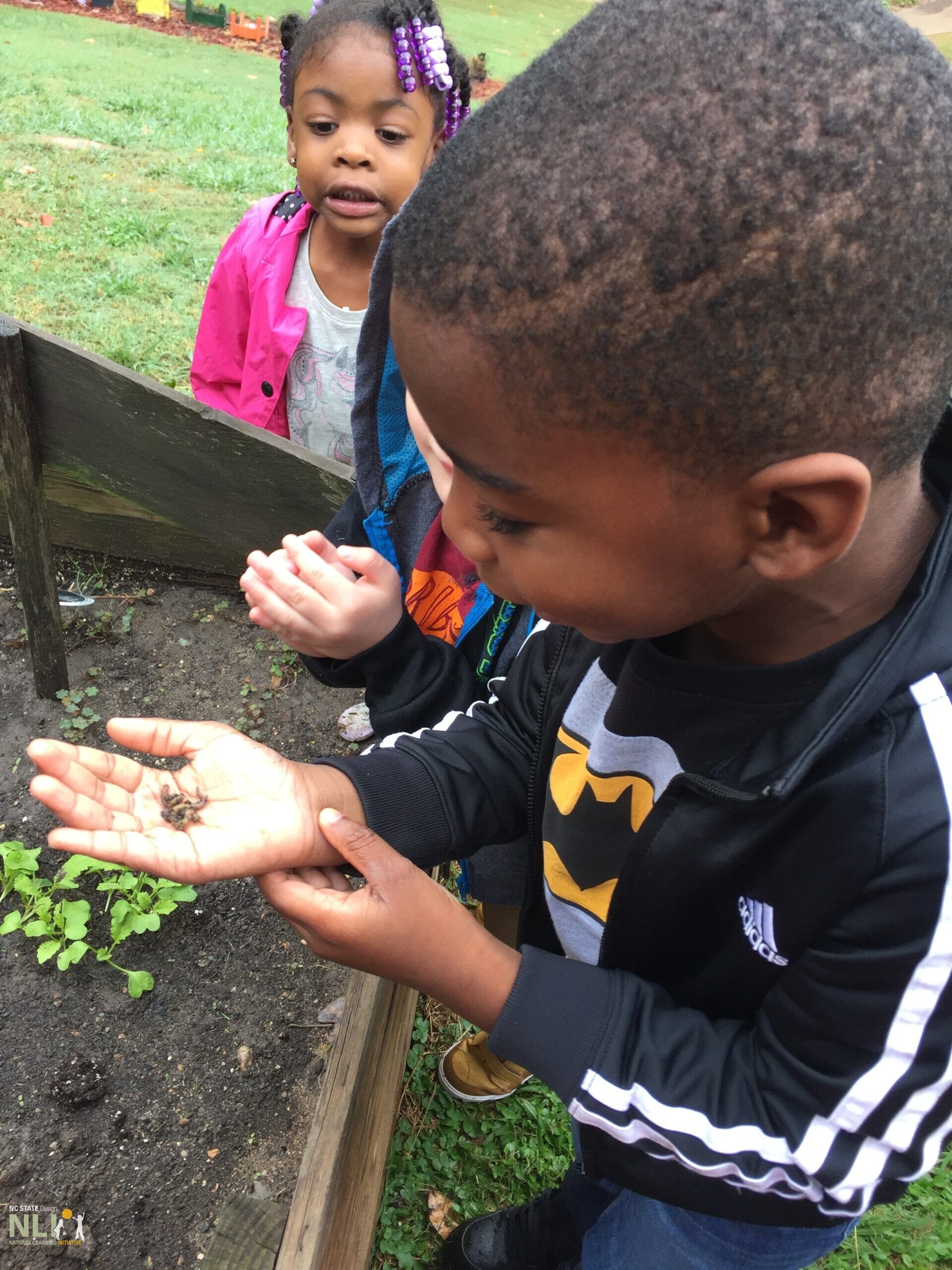
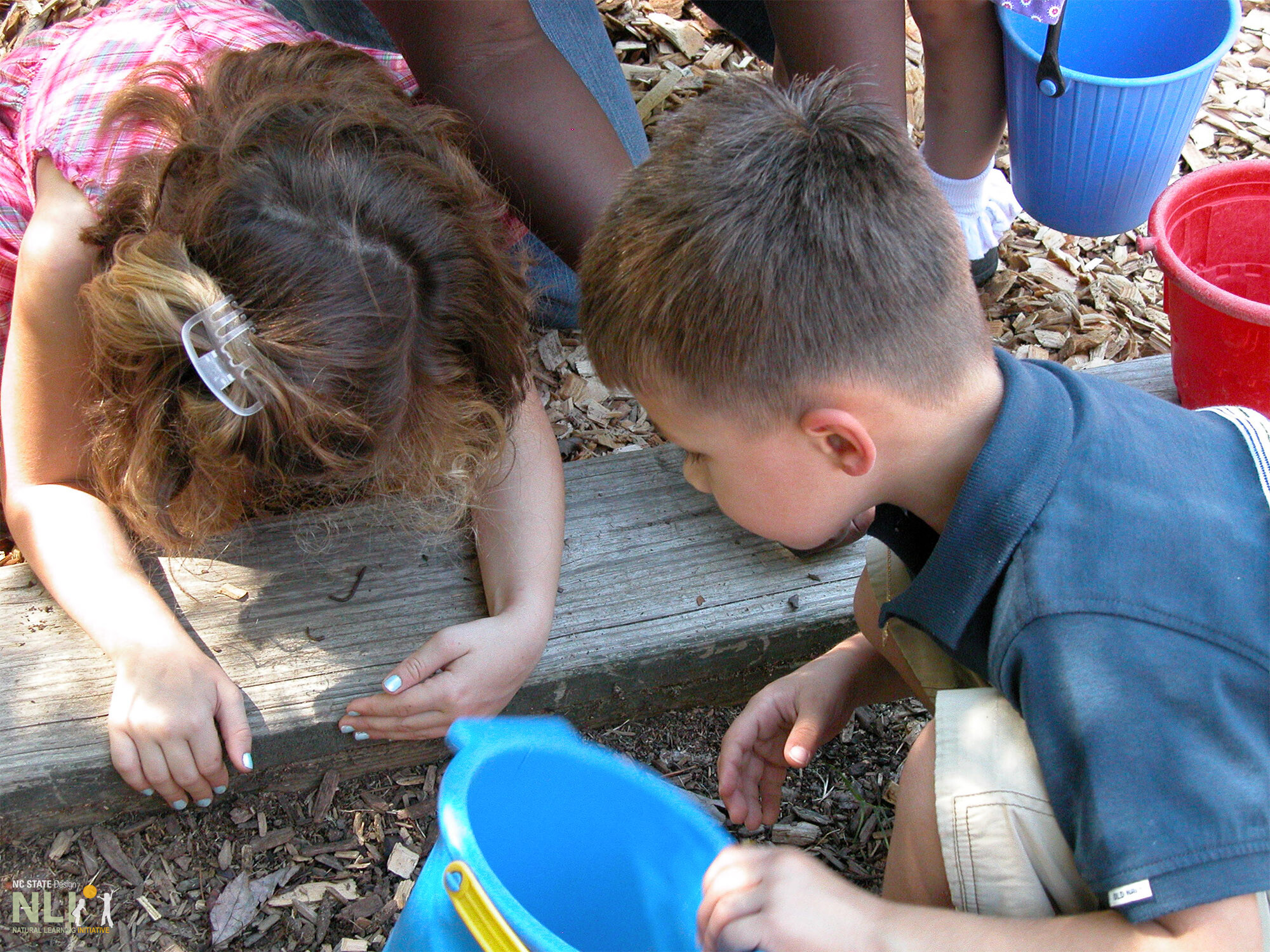
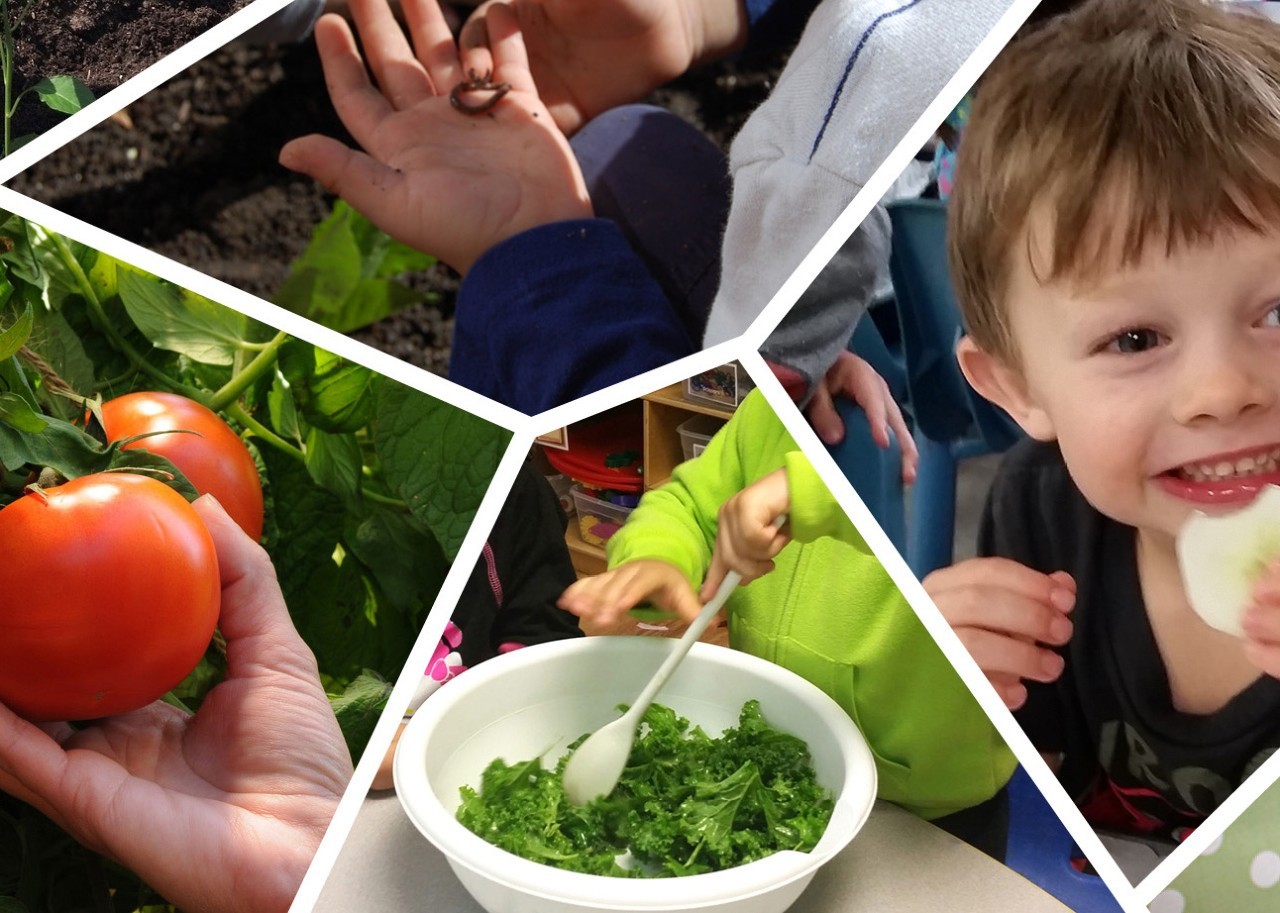
9. Children are intrigued by earthworms, a sign of healthy soil, during first steps in the hands-on gardening process.—NLI
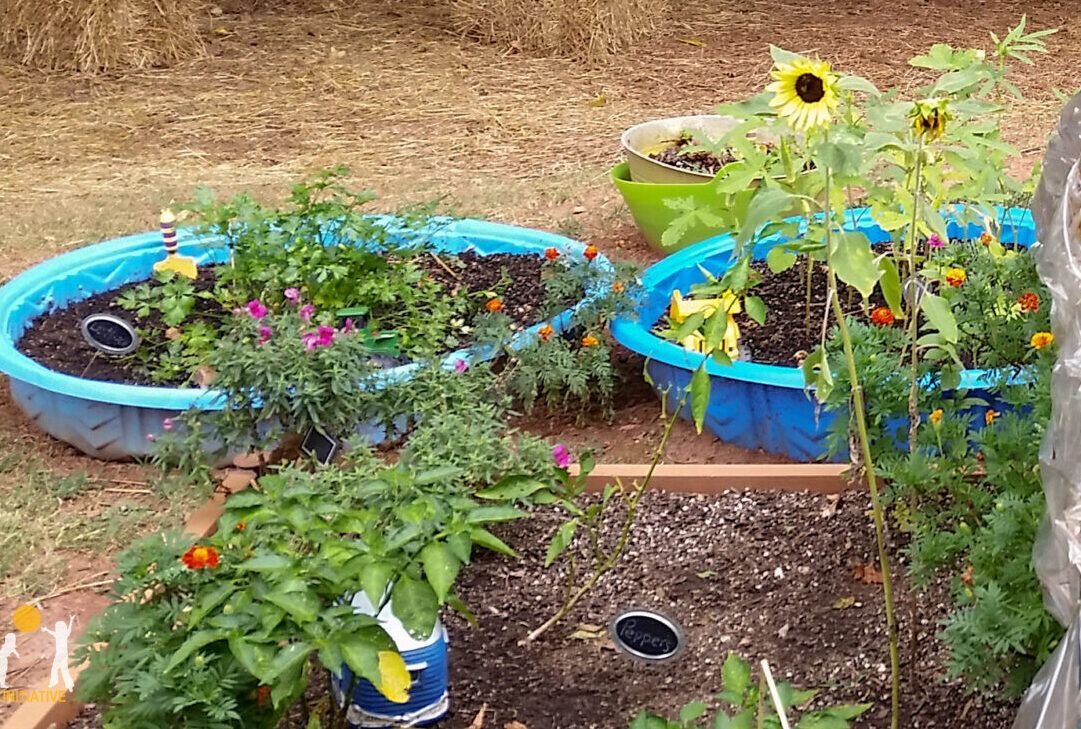
10. Repurposed splash pools (with drainage holes in bottom) and planting mix provide instant gardening opportunities.—NLI
11. Patch of remnant woodland on the other side of the childcare center licensed area, serves as a wonderfully diverse nature play and learning “field trip” (with parental permission).—NLI
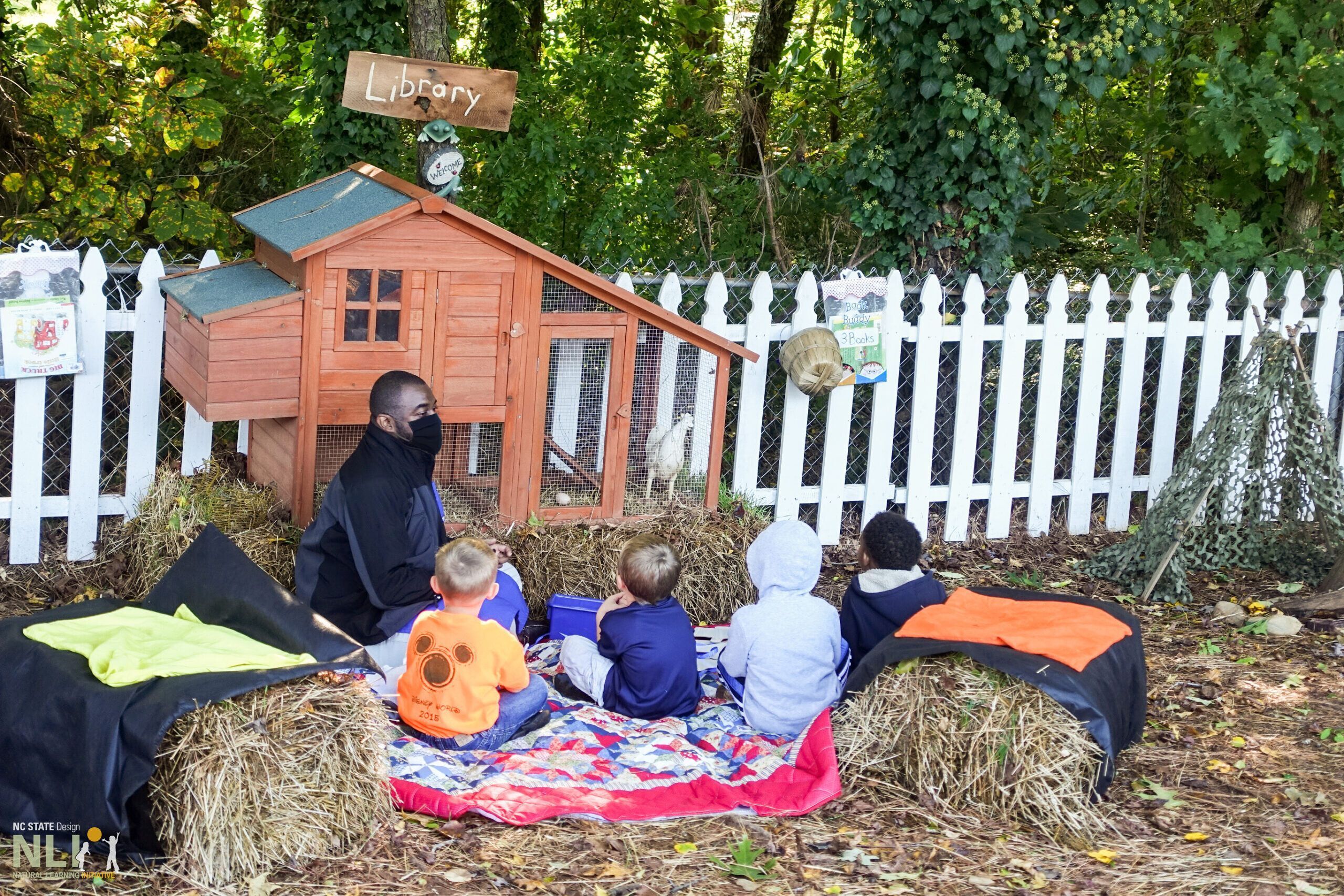
12. Farmyard library with pretend chicken coop and strawbale reading circle assembled by creative teacher and enthusiastic children!—NLI
13. A Virtual Field Trip has for now replaced tours of NLI nature- based outdoor play and learning demonstration sites.
Save the date and plan to attend the first Growing in Place hosted since 2018. The topic for this year’s virtual conference is “Urban outdoor play and learning: Post-pandemic lessons for policy and practice.” Stay tuned to future NLI social media posts and newsletters for updates!
Earlier this year, the US Play Coalition hosted the 2022 IN PERSON Conference on the Value of Play: THE NATURE OF PLAY. The online reboot features headliner recordings from the in-person conference plus new content… read more
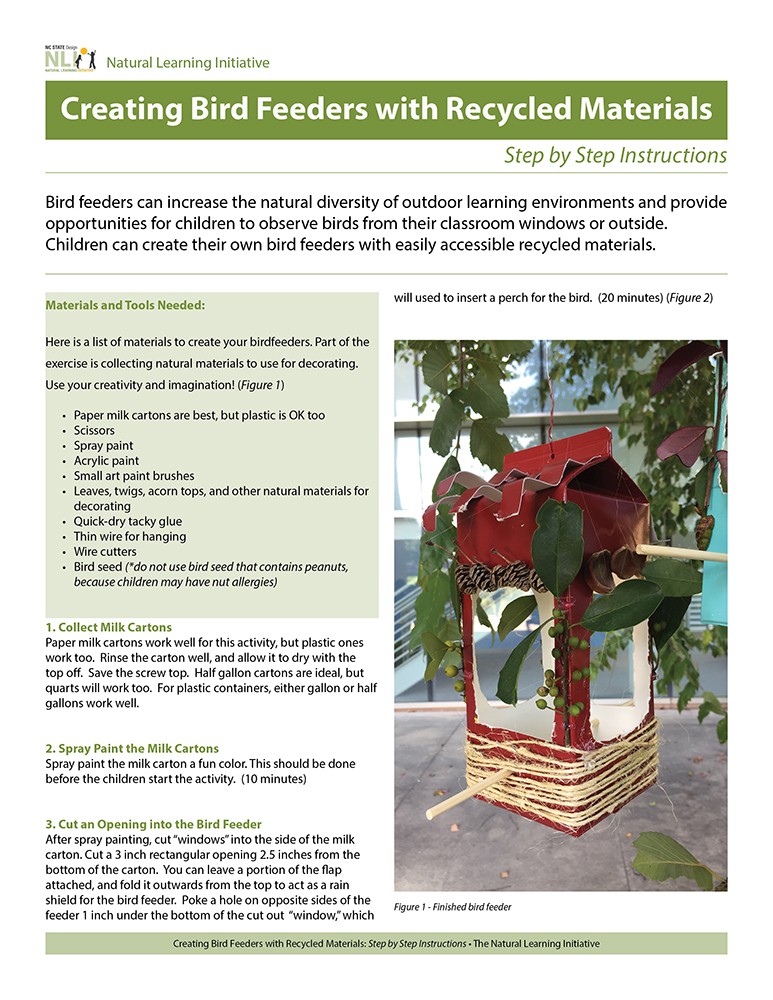
Bird feeders can increase the natural diversity of outdoor learning environments and provide opportunities for children to observe birds from their classroom windows or outside. Children can create their own bird feeders with easily accessible recycled materials.
Designing Early Childhood Outdoor Environments was developed for design professionals and design students who are interested in learning about participatory design processes and tools to create outdoor play and learning environments for young children and adults accompanying them. The overall objective is to teach designers how to create environments that stimulate children to learn in, through, and about nature, while supporting healthy, active lifestyles. Participants may include landscape architects, landscape designers, architects, public garden professionals, exhibit designers, as well as academics and students in landscape architecture, architecture, and horticulture programs. The capstone project requires technical drafting skills. Students must have previous experience preparing scale plans and access to the tools or software needed to do this (either hand drafted or computer drawn plans are acceptable). Landscape architects may receive 24 professional development hours from the Landscape Architecture Continuing Education System upon passing this course.
2. What can I expect to get from the program?
Early Childhood Outdoor Learning Environments: After completing the Early Childhood Outdoor Learning Environments Certificate Program, participants will be able to:
Recognize outdoor learning environments (OLEs) as place where children’s physical, social, and emotional development can be encouraged.
Describe how outdoor environments, particularly those in childcare/child development facilities, can be designed with a diverse mix of manufactured and natural materials, objects, and settings to support creative play, learning, and development in children 0-7 years old.
Explain how improving OLE quality can positively impact physical activity, encourage healthy eating, and motivate learning in young children.
Apply methods for creating and managing high-quality outdoor environments to support experiential learning. Demonstrate OLE quality improvement as a health intervention and system-change strategy.
Earn 2.4 Continuing Education Units (CEUs) from North Carolina State University.
Earn a certificate of completion awarded by North Carolina State University.
Designing Early Childhood Outdoor Environments: After completing the Designing Early Childhood Outdoor Environments Certificate Program, participants will be able to:
Identify design methods that encourage young children in outdoor settings to be active, practice motor development skills, engage in outdoor learning, and be connected with nature.
Discover how to create high-quality outdoor environments to support early childhood experiential learning.
Understand the influence of design on physical activity and healthy eating in young children.
Recognize landscape design as a human/environment health intervention and system-change
Licensed landscape architects can also earn 24 professional development hours from the Landscape Architecture Continuing Education System (LA CES).
Earn a certificate of completion awarded by North Carolina State University.
3. Will I receive credit hours I can use toward a university degree program?
No, you will not receive credit hours you can use toward a degree program for completing either course. The courses are continuing education courses offered to professionals.
4. What software or equipment is required to take the courses?
Software/Equipment:
For Early Childhood Outdoor Learning Environments, students need to have access to basic word processing software and a means to take and upload photos.
For Designing Early Childhood Outdoor Environments only, students will also need to have access to tools or software needed to draft and render scale plans or details (any mix of hand and computer aided drafting is acceptable).
5. What are the requirements for completing the courses?
Participation in Modules: Both courses are broken into eight modules. These modules include required lectures, videos, and readings. Students must engage with all required materials to complete the course. Instructors are able to review whether students engage with materials.
Exercises: Each of the first seven modules in each course have a short exercise that must be completed to pass the course. Students must earn at least 80% on each of these exercises by the end date of the course (announced the beginning of the course on the course website) to earn the certificate. Students are allowed to retake quizzes twice and only the highest grade on each quiz will count.
Final Knowledge Assessment : To pass the course, participants in Early Childhood Outdoor Learning Environments must earn at least an 80% on a final knowledge assessment by the end date of the course to earn the certificate. Students are allowed to retake the assessment twice and only the highest grade will count
Capstone Project: Students in Designing Early Childhood Outdoor Environments must either design a schematic plan for a landscape for young children (no more than 1.5 acres), plan and (if possible) implement a planting design for young children, critically examine and redesign an outdoor learning environment at a childcare facility using a standard tool, or create a detailed design for a complex play and learning setting.
6. What is the timeframe for completion of the course?
Students are expected to put in approximately 24 hours of effort over the course of 12 weeks. However, students often choose to dedicate additional time to their capstone project. Students have up to 12 weeks (from the start date of the course) to complete all course requirements. The class is self-paced. However, students are strongly encouraged to complete at least one module per week, so they will have time to submit a draft of their capstone project and receive feedback on that draft.
7. What is the cost for participation?
Early Childhood Outdoor Learning Environments: The registration cost for the certificate course is $560.
Designing Early Childhood Outdoor Environments: The registration cost for the certificate course is $650.
Discounts may be available for residents of North Carolina, students, and groups of 5 or more.
8. How do I register for the course?
Go to the links to the right for more information on each course and the instructions to register. Links to register will be added when the next section of the course opens.
9. Will I be able to access the course website after the course end date?
Unfortunately, participants do not have access to the course website after the course end date.
10. Can course participants download handouts/videos/lectures from the course website?
You are welcome to download materials of the course reading materials and handouts for your own future use. If you plan to distribute materials from the course to others that are copyrighted and not freely available online, you will need to receive permission. You won’t be able to download videos/lectures from the course website. A small number of the videos are publicly available on YouTube, and can be shared as desired.
11. Is it possible to withdraw from the course after registering?
To drop the course and receive a refund, send a notification by email to NLI support ([email protected]) no later than 5 p.m. (Eastern Time) 10 business days prior to the start of the course. A $50.00 fee will be charged for cancellations after the start of the course. No reimbursement will be made after the start of the course, but you may designate a substitute at any time to attend in your place.
12. If I am unable to complete the course, am I eligible to take the course in a later session/semester?
Participants who are unable to complete all requirements by the course end date and wish to get the Certificate award must reach out to the Natural Learning Initiative at least one week before the course end date by sending a message with a transfer request. ([email protected]).
If a transfer is requested within the first 6 weeks of the course, participants who paid the full general registration fee can be transferred once to an upcoming section at no additional cost. If requested in weeks 6-11 of the course, participants can be transferred once to an upcoming section for a transfer fee of $50. Those who have received reduced or complimentary registration or the North Carolina discounted registration rate can be transferred once to an upcoming section but will be charged a transfer fee of $50.
Registration in the next upcoming section with a waived registration fee is for one time only. Subsequent registrations must be paid at the advertised rate.
Participants cannot be transferred to the upcoming section if a transfer is requested in week 12 of the course or after the course end date. Participants will be required to register again and pay the advertised registration rate.
If transferred to an upcoming section, participants will be required to meet all of the requirements in the new section to receive the course completion certificate and 2.4 CEUs.
13. Whom should I contact if I am having issues accessing the course?
Please send an email to [email protected] including the course name if you are having course access issues so that they can help you with the process.
Creating habitat for wildlife in an outdoor learning environment (OLE) provides countless opportunities to teach children about environmental stewardship. Watching and observing wildlife encourages STEAM skillsets as children learn about life cycles, animal behavior, and local ecosystems. This Infosheet outlines different strategies for creating healthy wildlife habitat in your OLE, an investment that will benefit children and the planet for years to come!
Plant in Layers
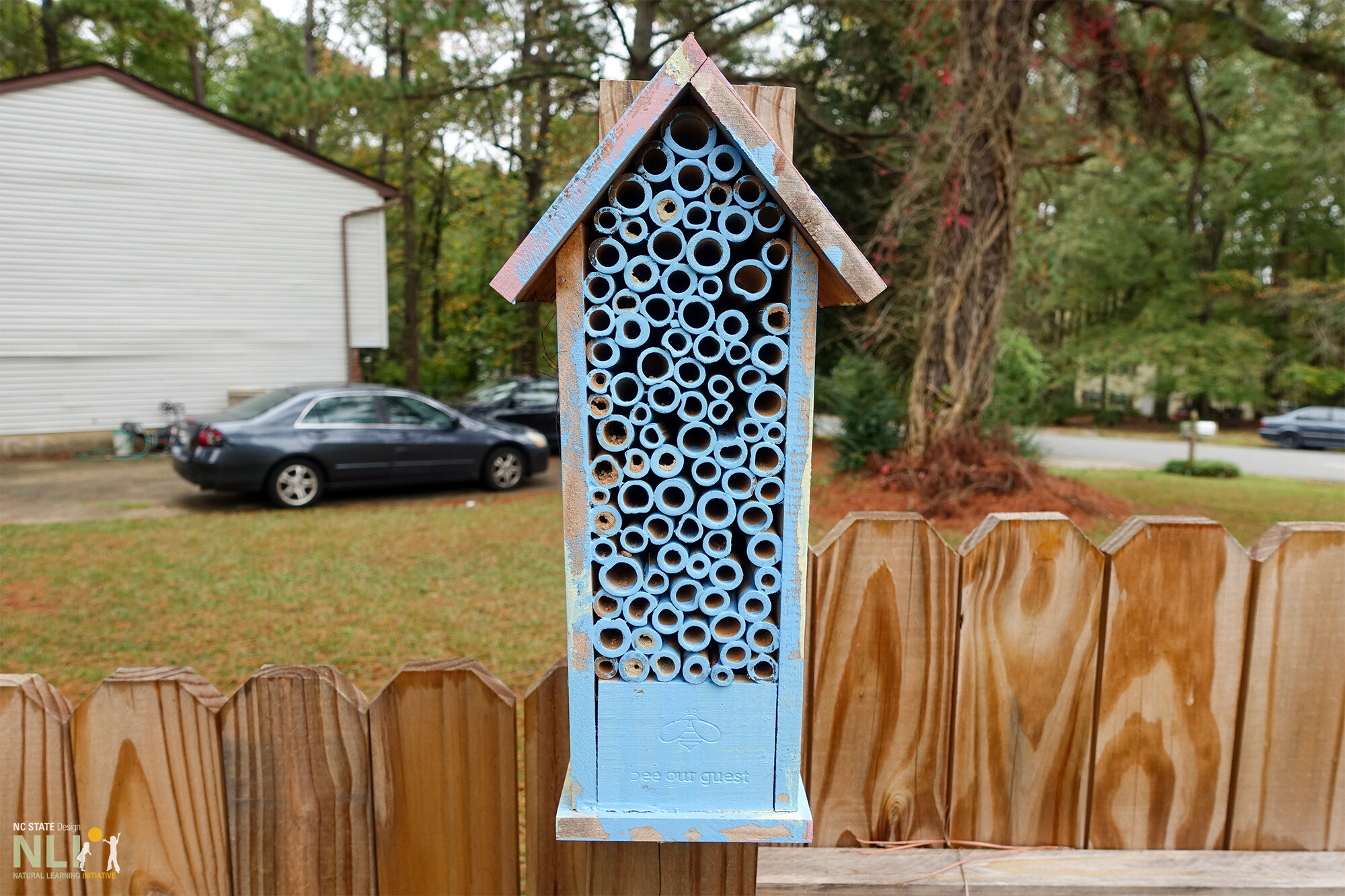
To create high-quality wildlife habitat, plant a variety of vegetation with different heights, flowering times, and growth forms. Vertical diversity ensures that different species of have food sources and shelter throughout the year. A mix of ground covers, flowers, grasses, shrubs, and trees will draw many different species of wildlife that require environments for nesting, shelter, and food. Native solitary bees, for example, nest holes in the ground or burrow in twigs and dead tree limbs; birds may nest in dense woody shrubs, in the bough of a tree, or in a hollow log. A diverse planting strategy will encourage a variety of different species to call your OLE home.
YEAR-ROUND WILD FOOD
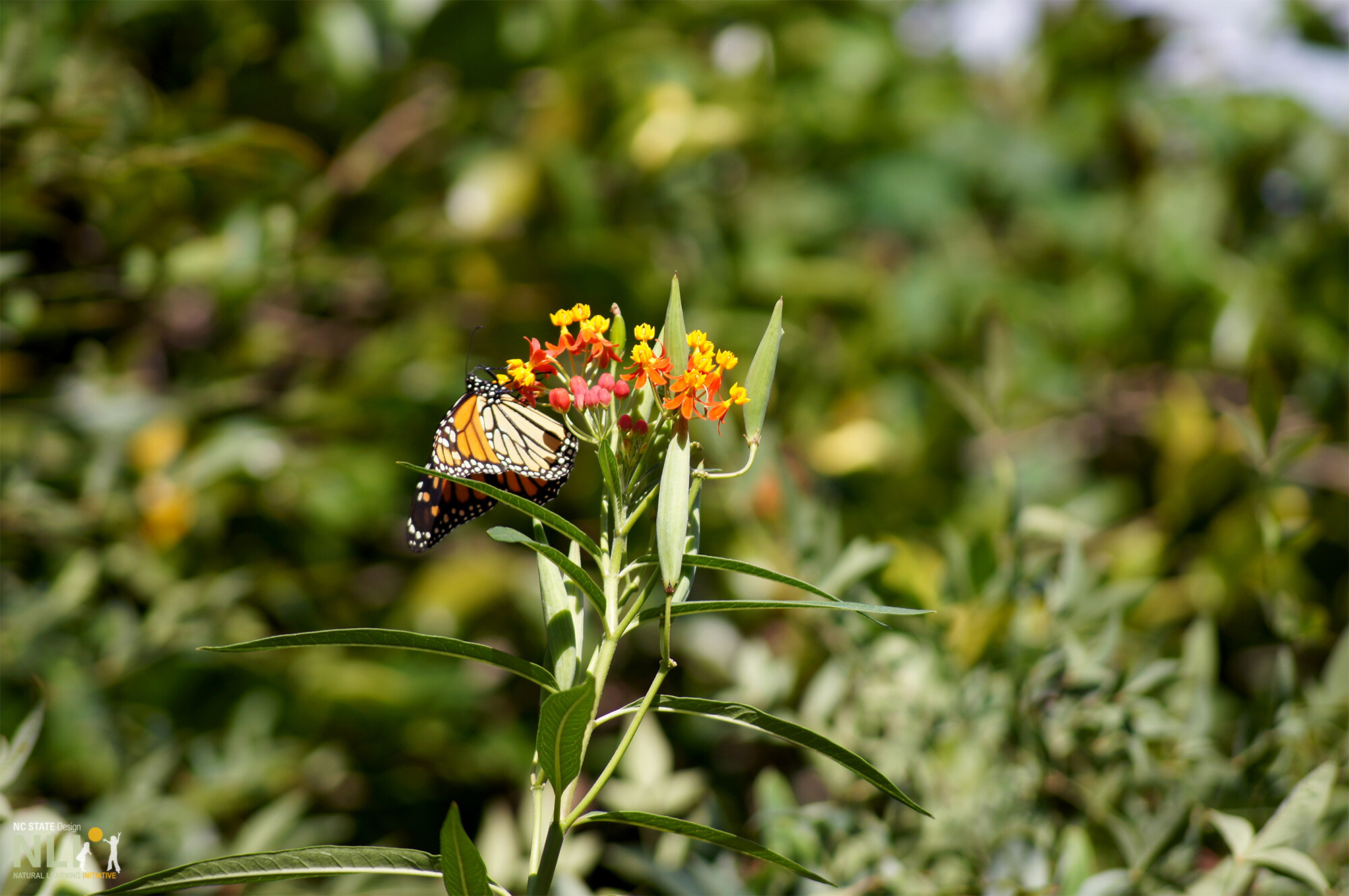
A diverse palette of plants will provide local wildlife with the food sources they need throughout the year. When choosing flowering plants for your OLE, select plants with different blooming periods. This will ensure that visiting pollinators, like bees and butterflies, have a continuous food source. In the cooler months, leave seed heads at the end of the growing season to provide an additional source of winter food for birds.
NATIVE PLANTS
Whenever possible, choose native plants to improve wildlife habitat in your OLE. Native plants are better adapted to their region, often requiring less water and little maintenance. Additionally, many pollinators, such as the iconic monarch butterfly, depend on very specific native plants for food. By selecting native species of plants for your OLE, you are supporting a broader range of wildlife with the nuts, berries, seeds, pollen, and nectar that those plants provide. Check your local Cooperative Extension for native plant lists and additional resources.
maintenance strategies for wildlife
Many wildlife species are negatively effected by commonly applied insecticides and pesticides, so use organic, integrated pest management practices whenever possible. If an insecticide is necessary, apply them at night, when many pollinators are no longer active. Organic pest management will keep both wildlife and children healthy in your OLE!
ADDITIONAL SHELTERS AND FEEDERS
Bird and butterfly feeders can provide wonderful opportunities for children to observe wildlife. Keep in mind that bird feeders should be located far from classroom windows and located within 10—15 feet of shrubby vegetation to provide shelter from predators. Make a bird house, bird feeder, bee “hotel,” or toad house with children in your care to excite them about wildlife in the OLE.
RECOMMENDED PLANT LIST FOR pollinators and wildlife:
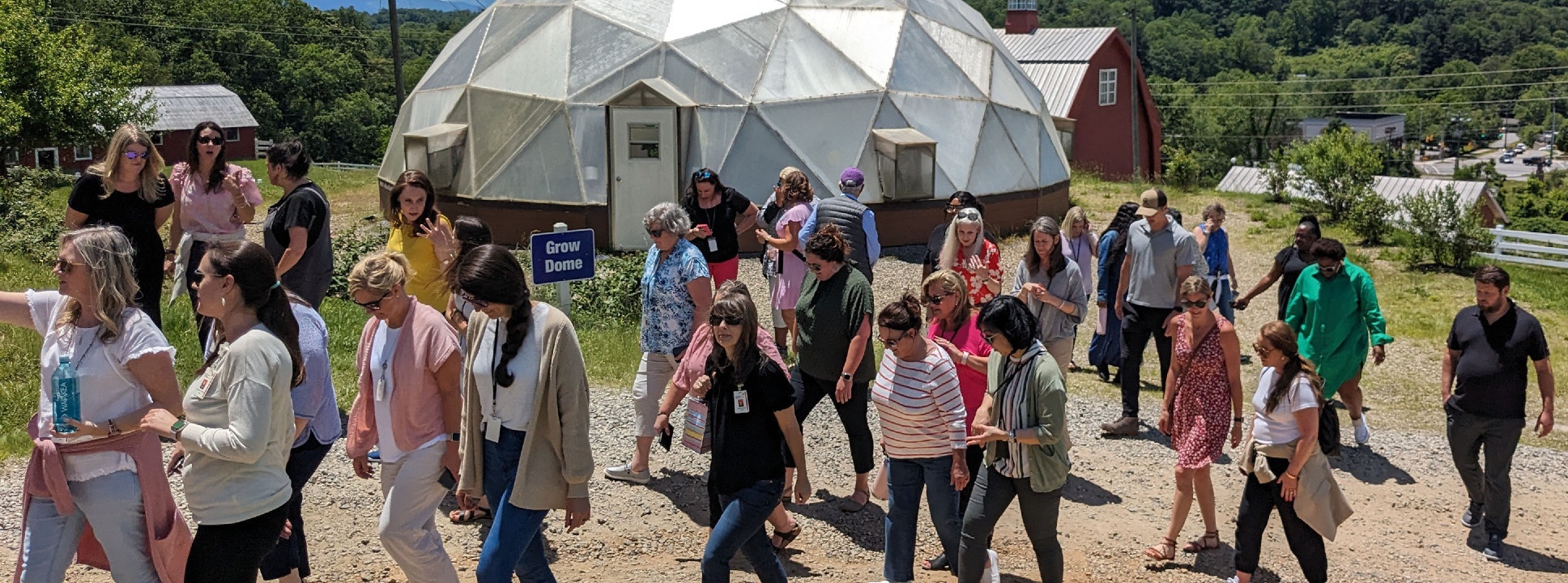
From April through May, NLI partnered with the Department of Child Development and Early Education (DCDEE) to host four regional meetings across North Carolina: the South Central regional meeting in Pinehurst, East in Greenville, North Central in Raleigh, and West in Asheville. These meetings brought together child development leaders and consultants across the state to increase awareness of the health and social-emotional benefits of nature-based learning...read more