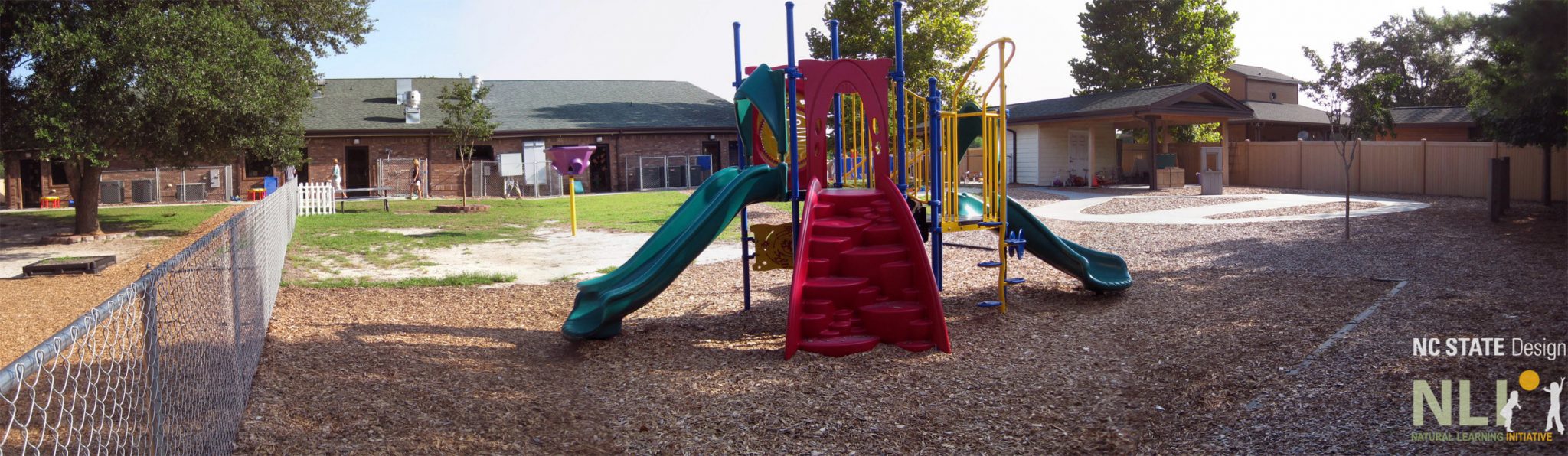
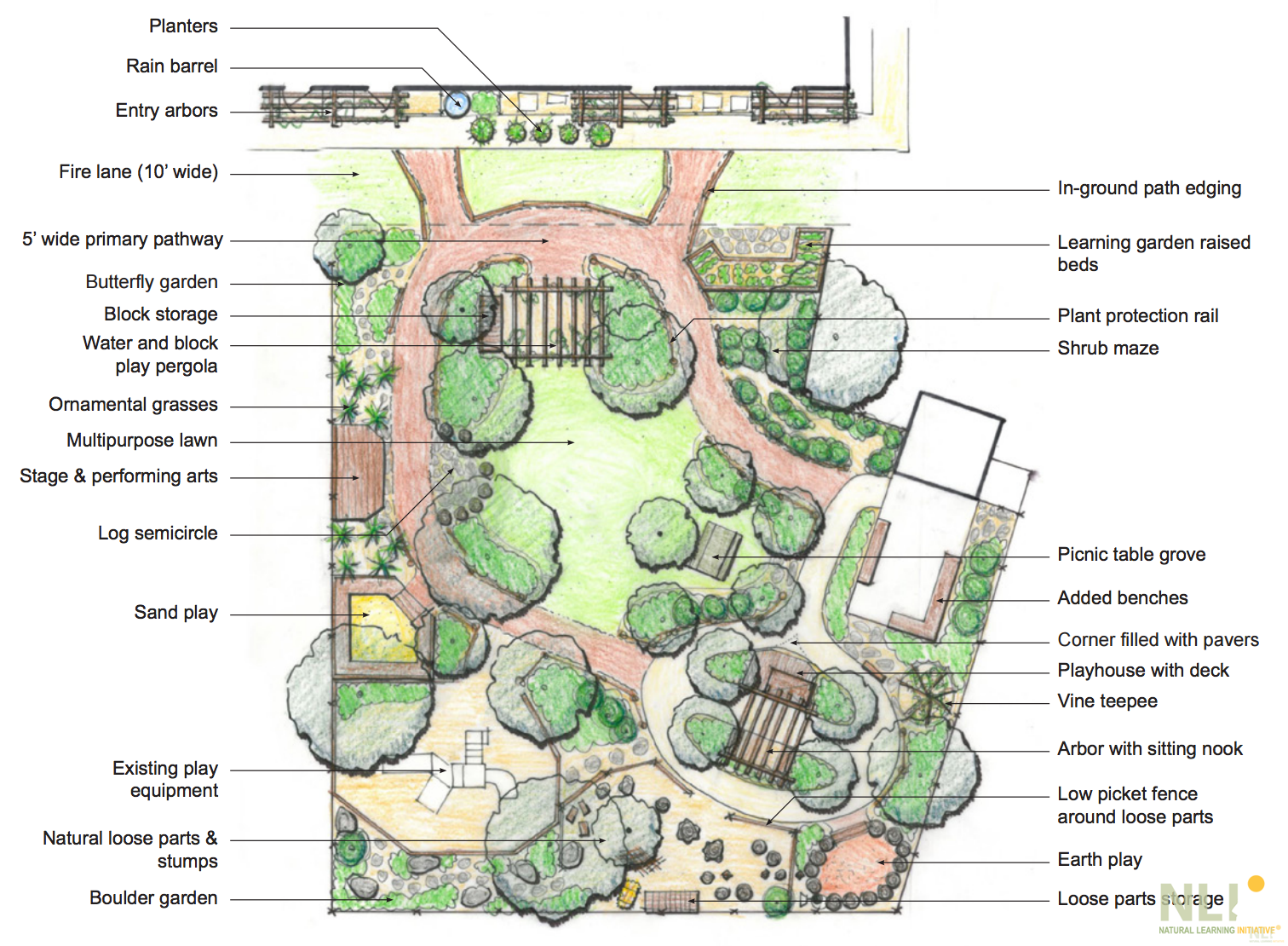
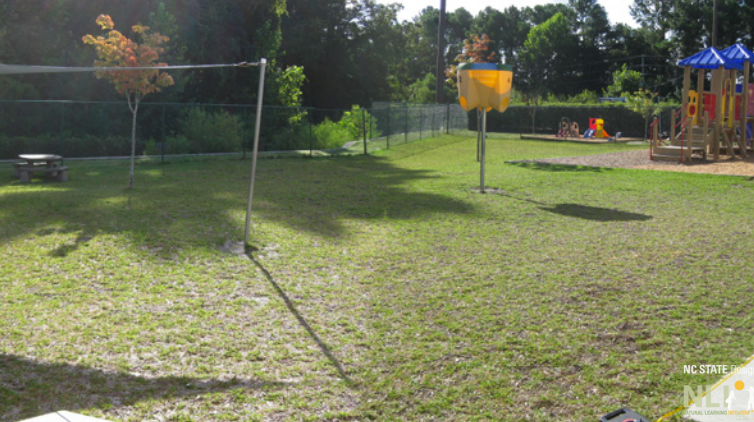
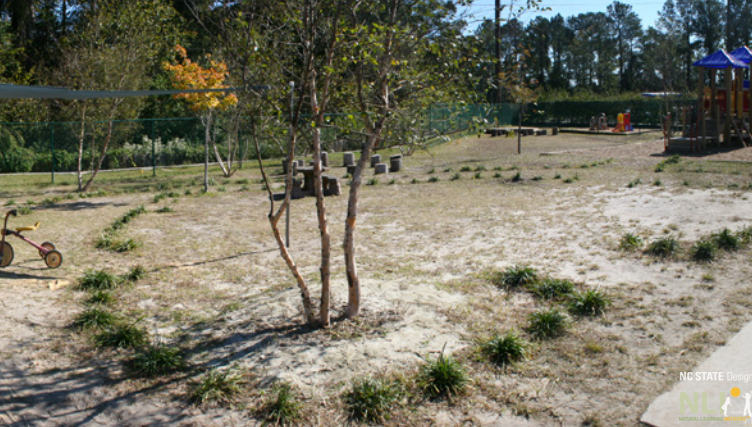
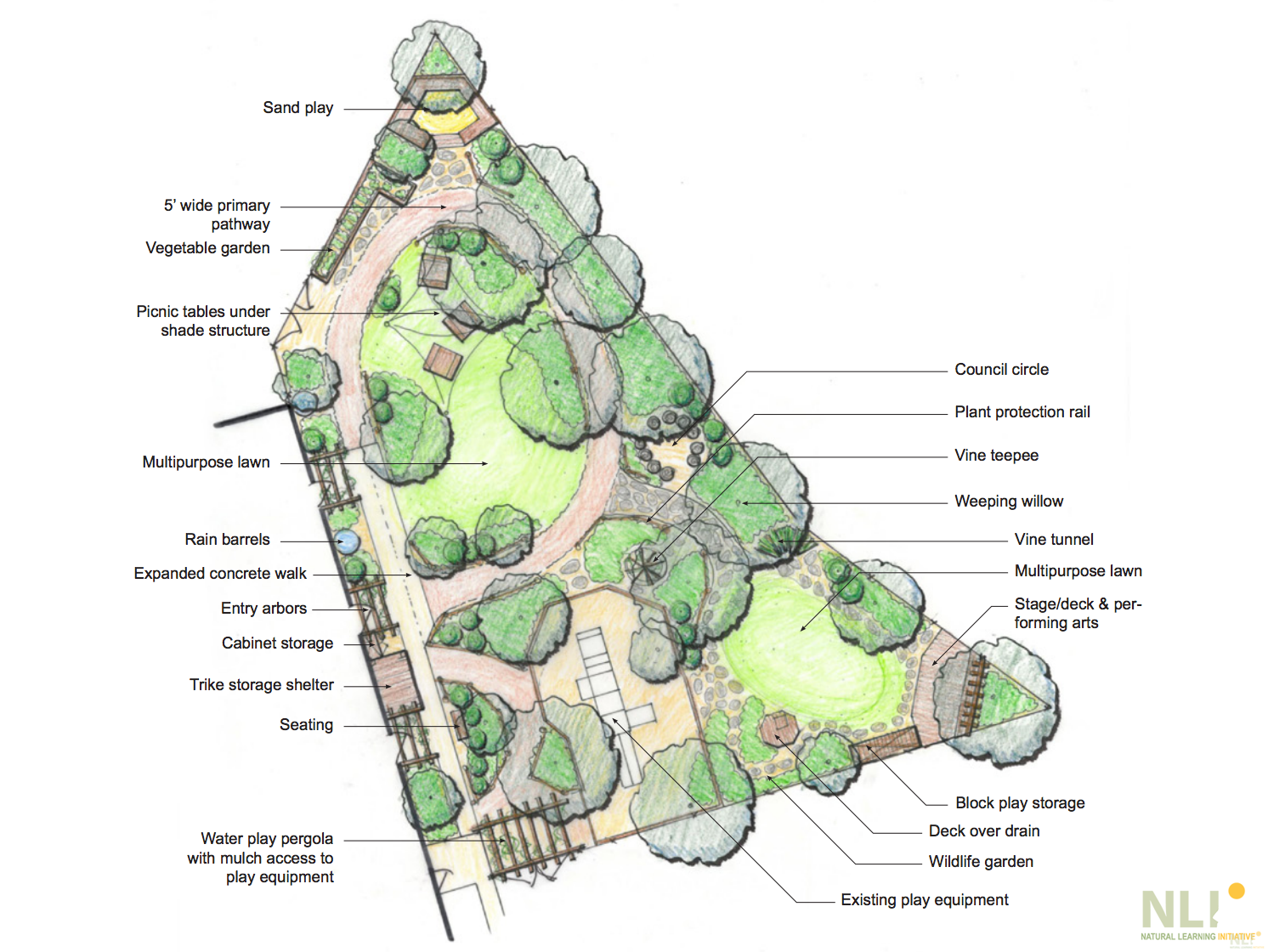
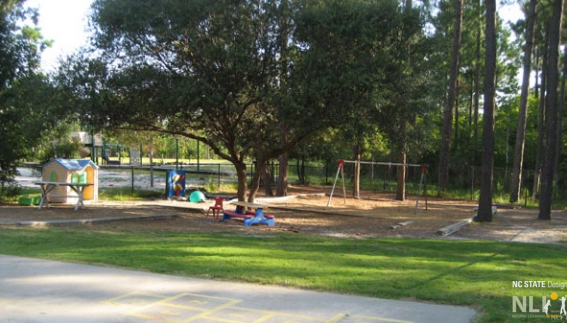
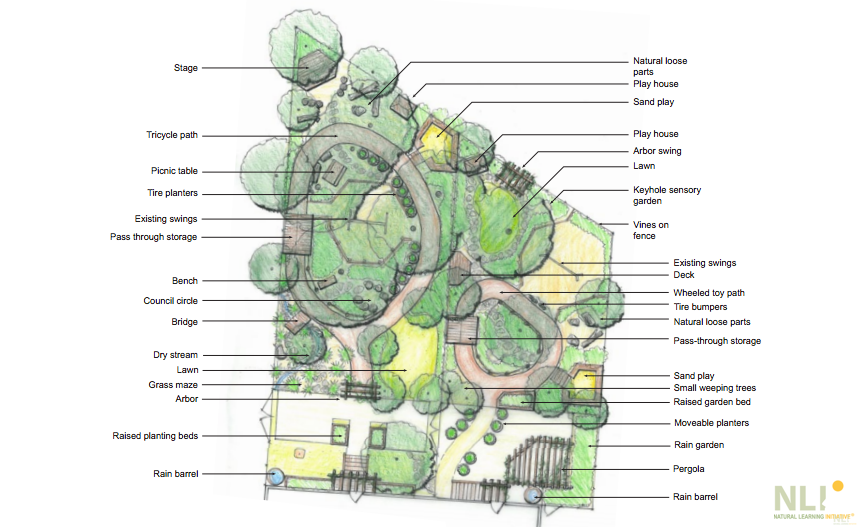
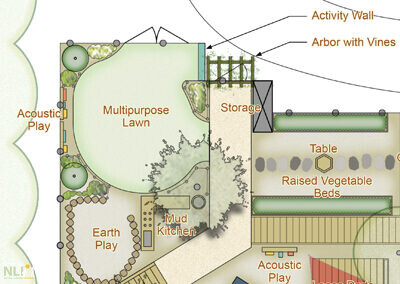
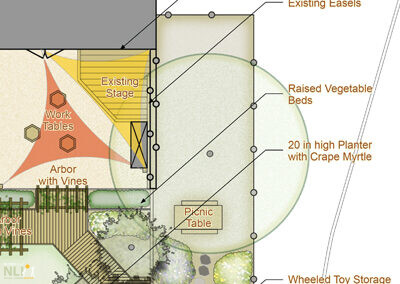
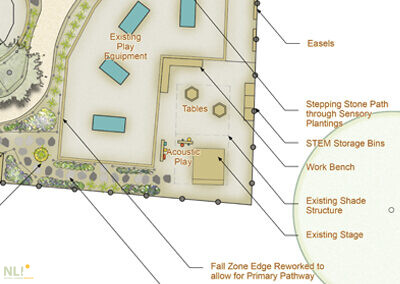
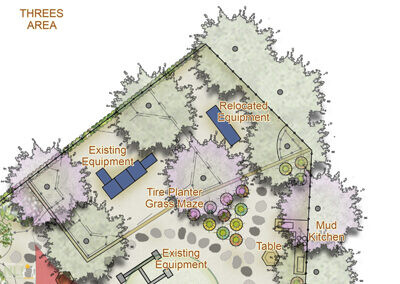
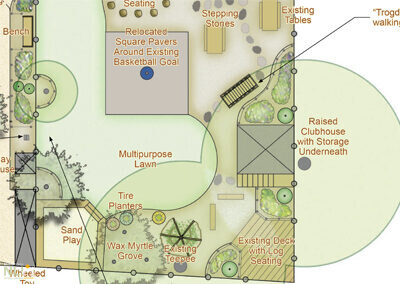
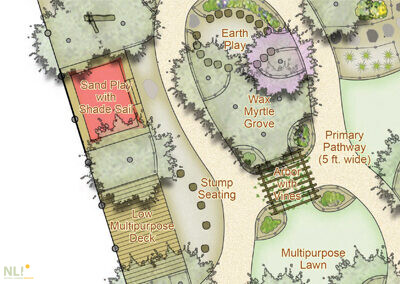
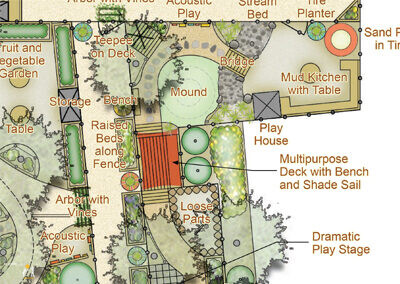
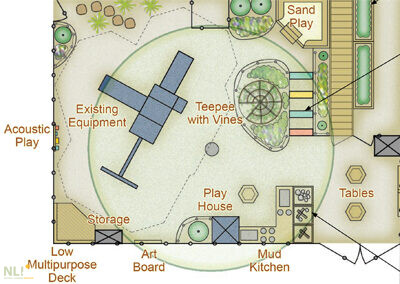
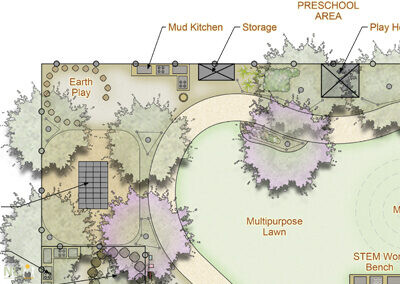
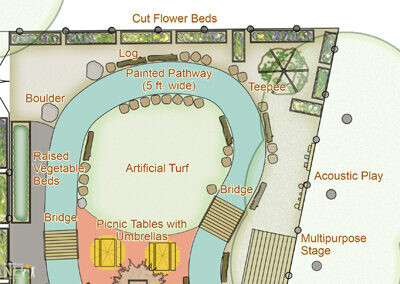
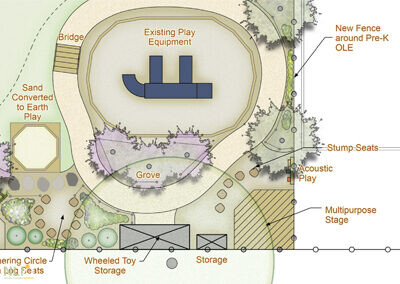
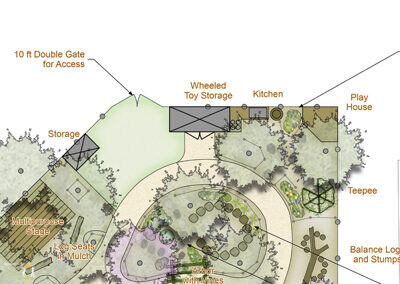
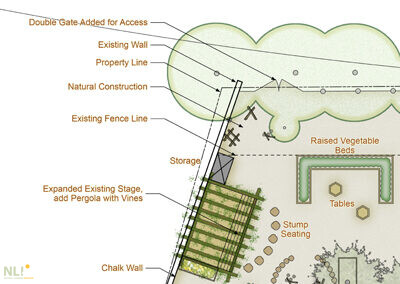
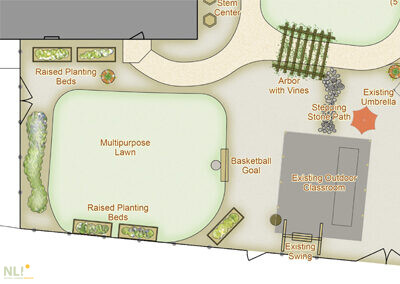
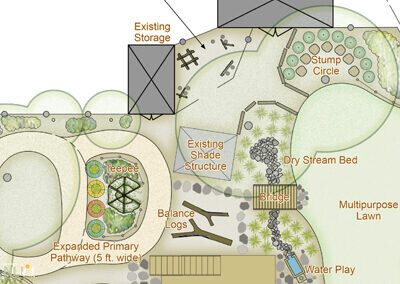
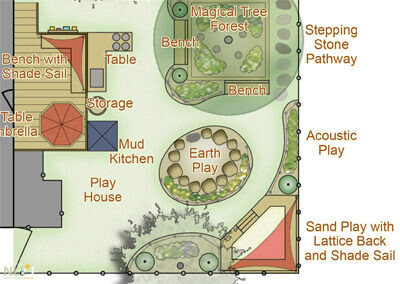
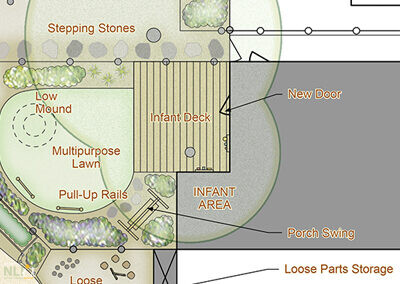
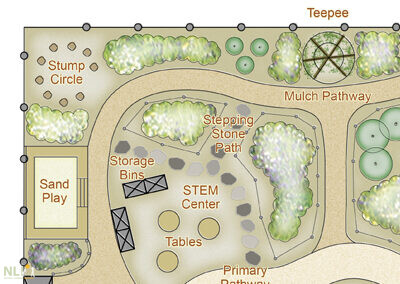
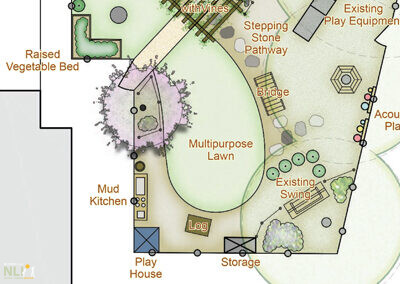
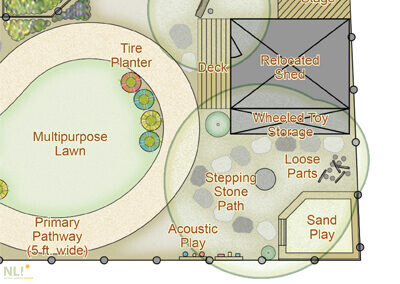
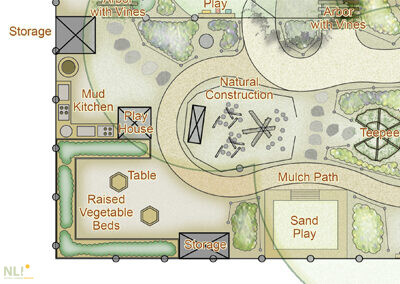
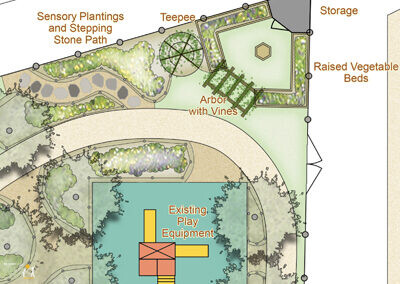
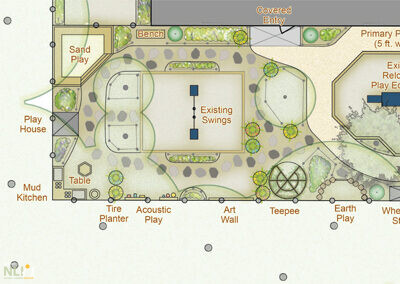
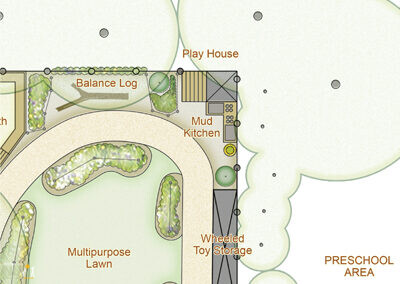
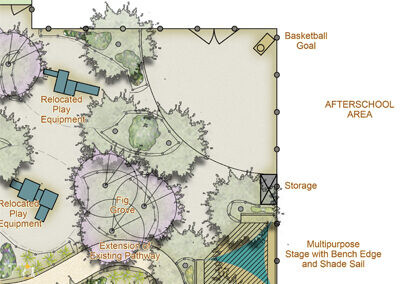
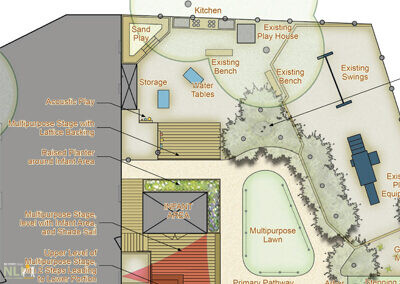
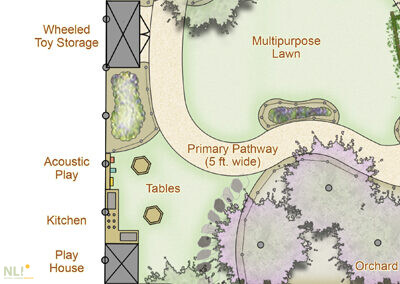
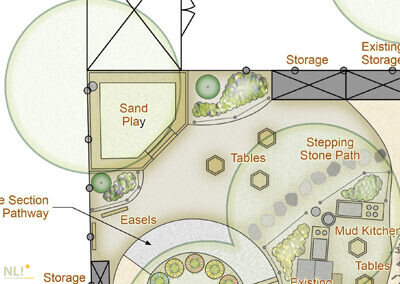
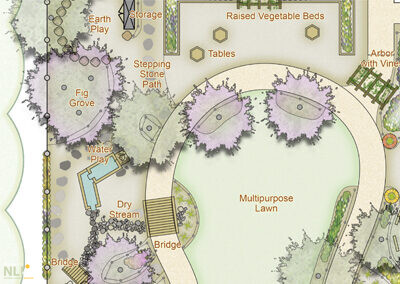
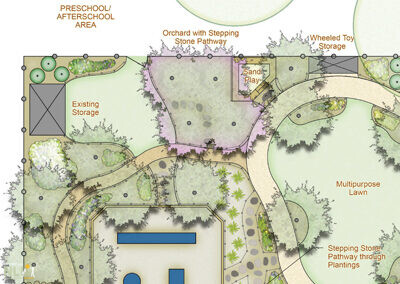
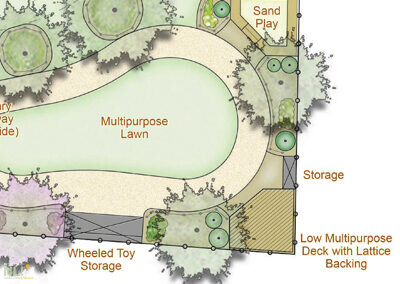
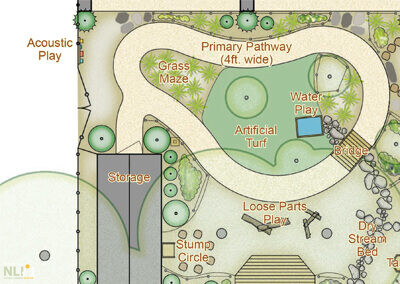
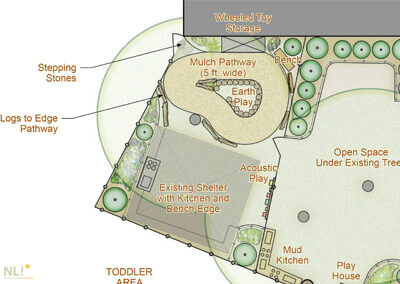
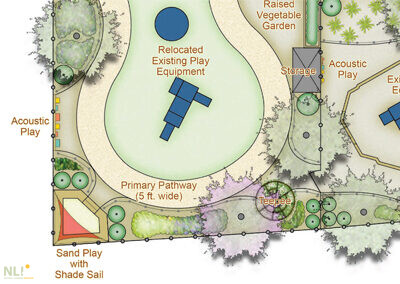
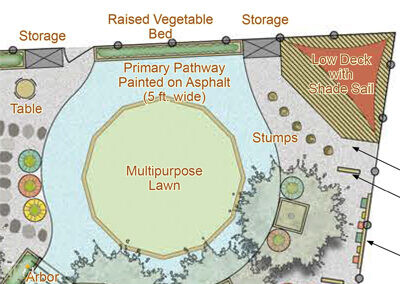
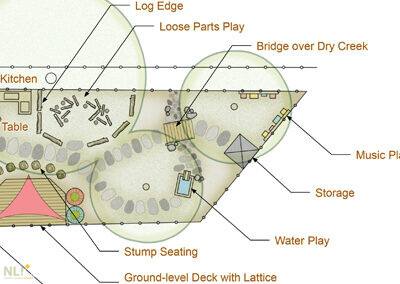
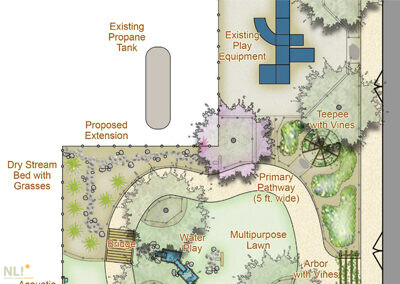
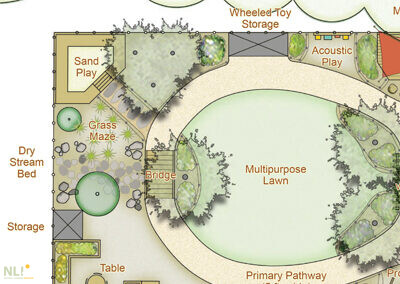
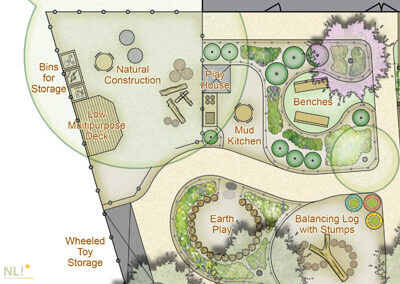
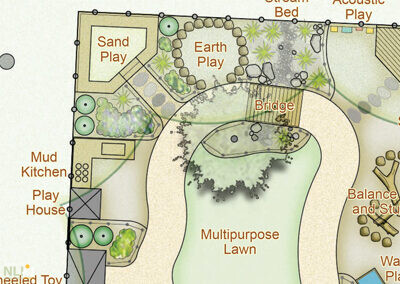
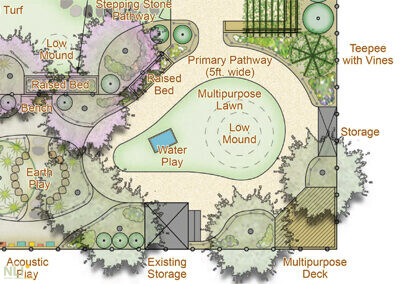
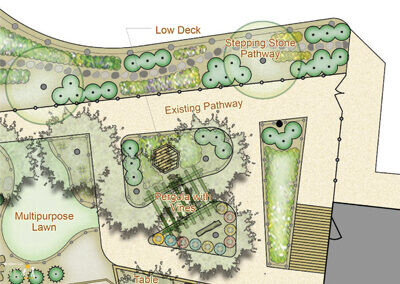
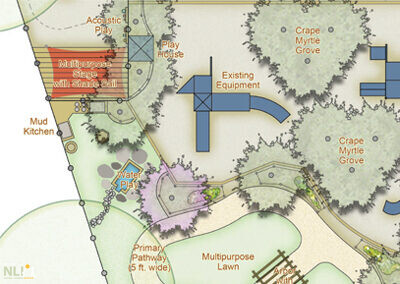
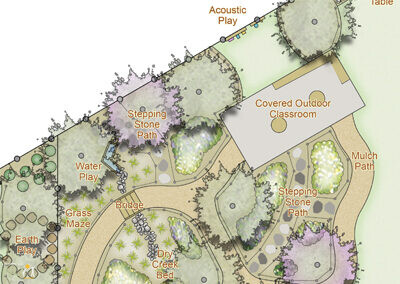
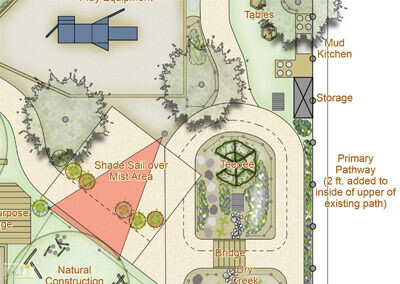
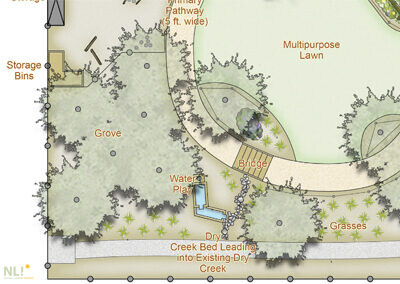
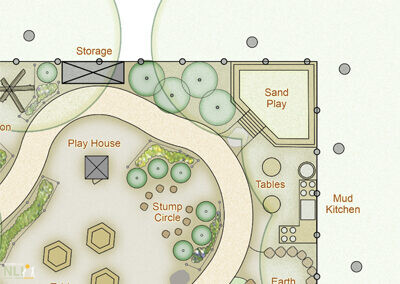
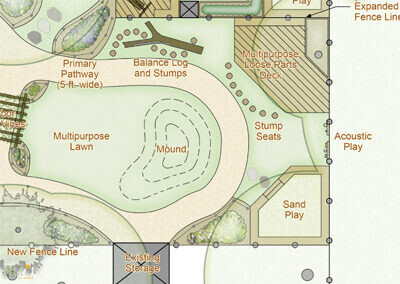
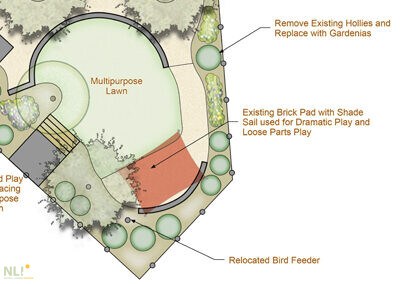
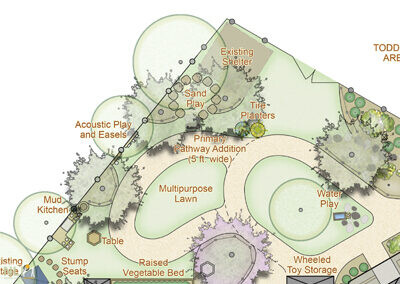
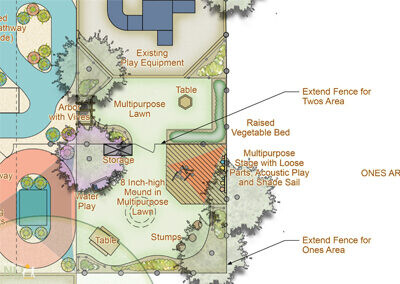
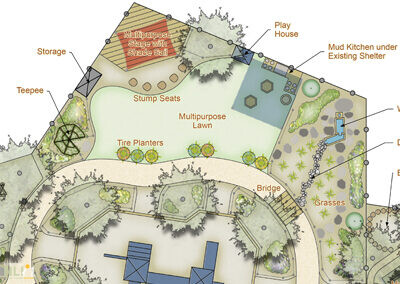
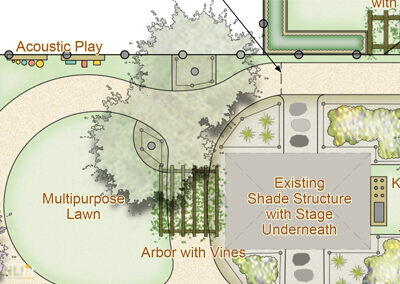
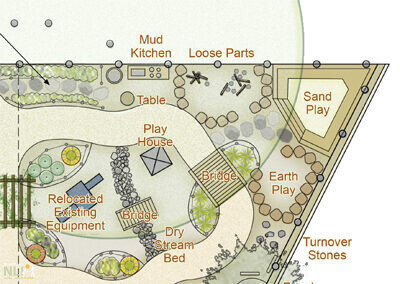
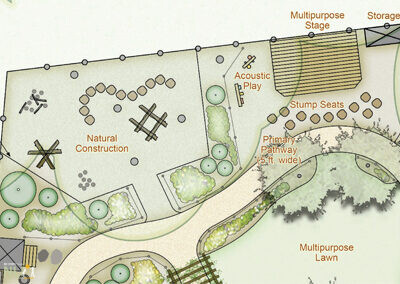
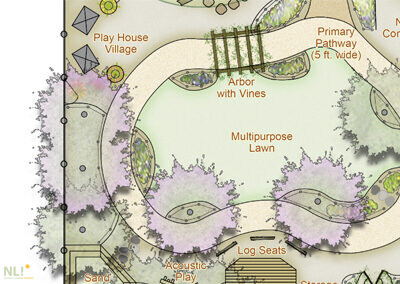
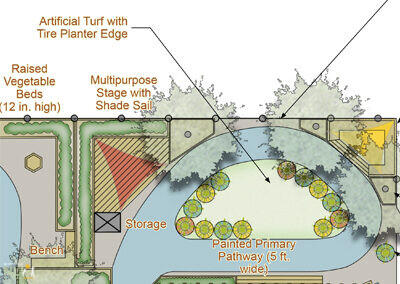
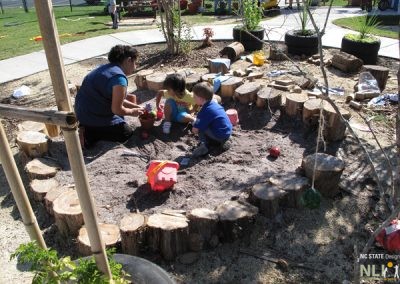
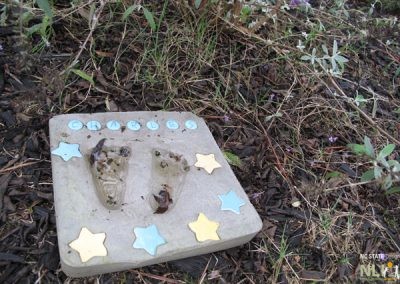
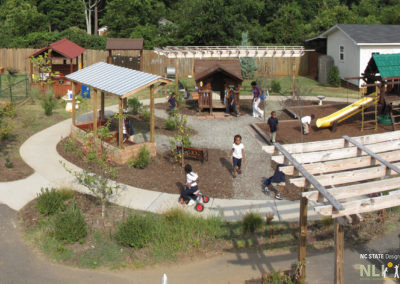
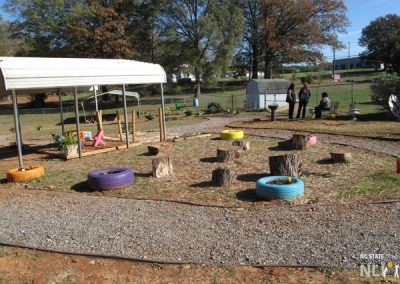
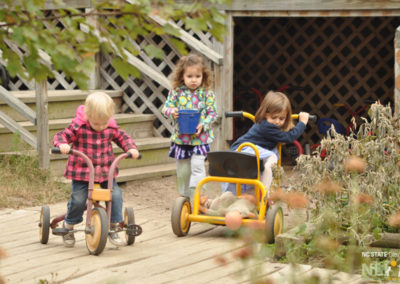
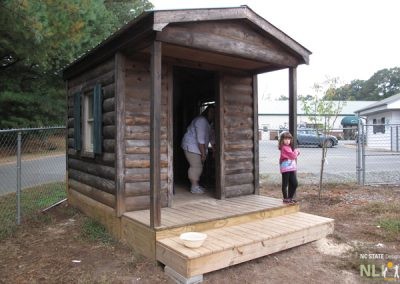
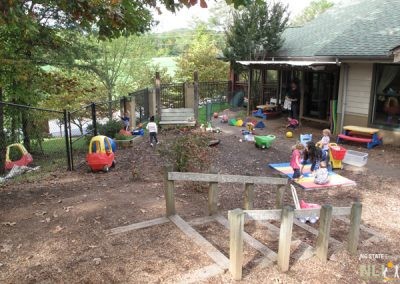
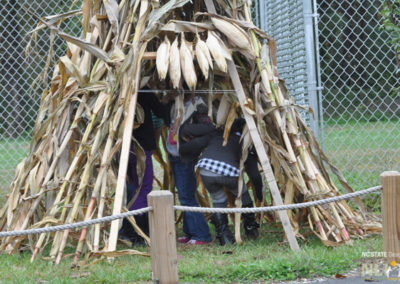
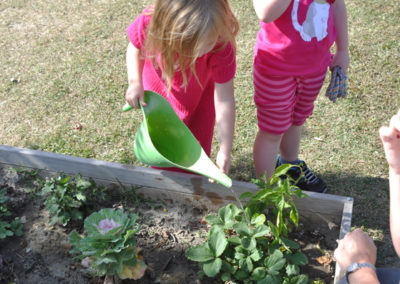
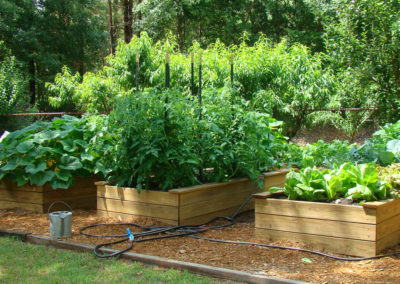
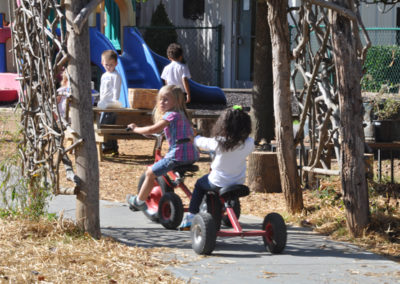
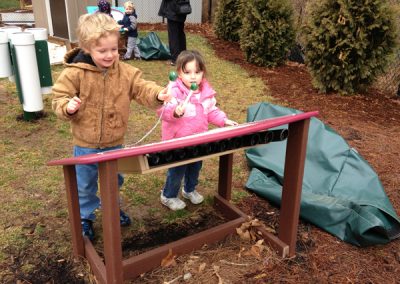
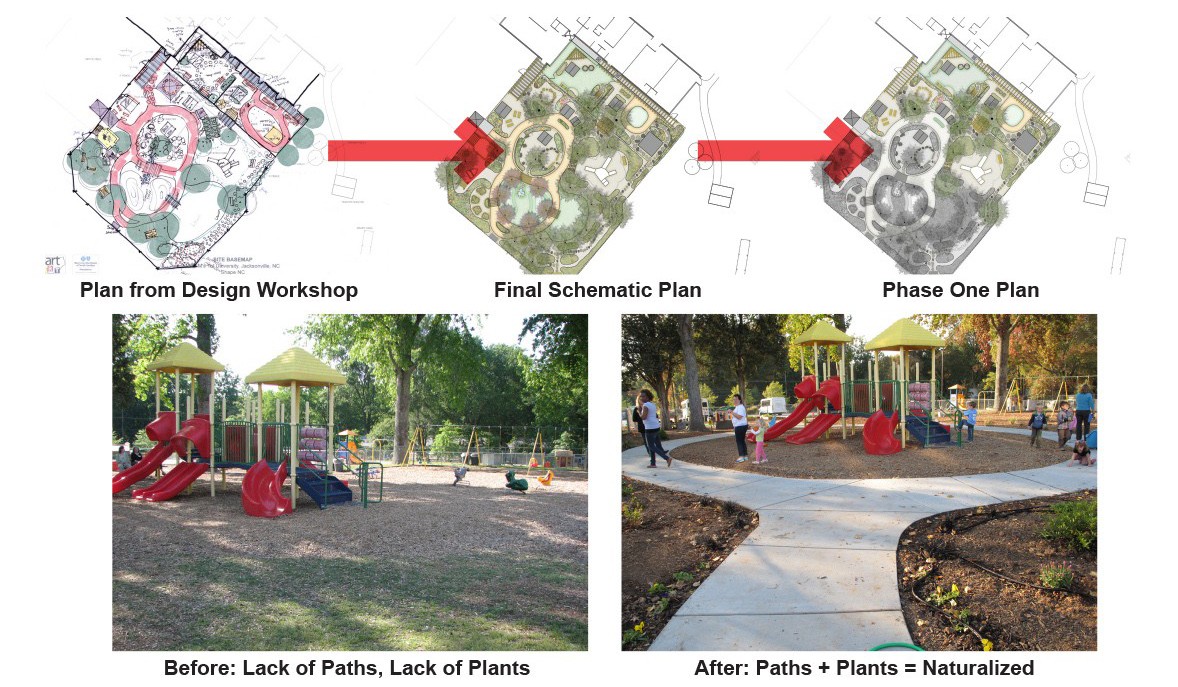
Since 2010, the Natural Learning Initiative (NLI) has worked with the NC Partnership for Children (NCPC) as a core implementation partner of Shape NC. The role of NLI is to engage communities and assist centers with renovating and naturalizing playgrounds to transform each into a stimulating outdoor learning environment (OLE), offering diverse opportunities for increased physical activity, healthy nutrition, and outdoor learning.
Shape NC: Healthy Starts for Young Children was created in 2010 as an initiative of (NCPC) through the support of the Blue Cross and Blue Shield of NC Foundation. With its partners and associates, Shape NC assists communities across the state to promote healthy development among North Carolina’s youngest children and offers a program that integrates healthy eating, active living, and high-quality outdoor learning environments in child care centers. The goal is to instill healthy behaviors early on, creating a solid foundation for a healthy life. In August 2016, along with the continued support of the Blue Cross and Blue Shield Foundation, NCPC was awarded a Corporation for National and Community Service (CNCS) Social Innovation Fund (SIF) grant to increase the number of children starting kindergarten at a healthy weight and ready to learn.
Why is Shape NC Important?
At a time when the nation is facing rising health care costs and high obesity rates, Shape NC is taking a preventative approach to proactively address the issue, focusing on the state’s youngest children.
According to the Centers for Disease Control and Prevention, about 1 in 8 preschoolers is obese in the US.
In North Carolina, roughly three out of every 10 young low-income children ages 2 to 4 years are either overweight or obese.
Children who are obese by age 6 or overweight by age 12 have a greater than a 50 percent likelihood of becoming obese adults. According to a report by the Trust for America’s Health, almost a third of adult North Carolinians are obese.
Approximately 38 percent of North Carolina’s children are enrolled in almost 5000 regulated childcare centers, where they receive most meals and spend the majority of their waking hours.
Shape NC focuses on childcare centers to increase knowledge and awareness of healthy nutrition and physical activity practices for young children and their families and teachers. The aim is to increase the number of young children at a healthy weight. Measures of success include improved nutrition and physical activity practices alongside healthier play and learning environments through a state-level policy blueprint.
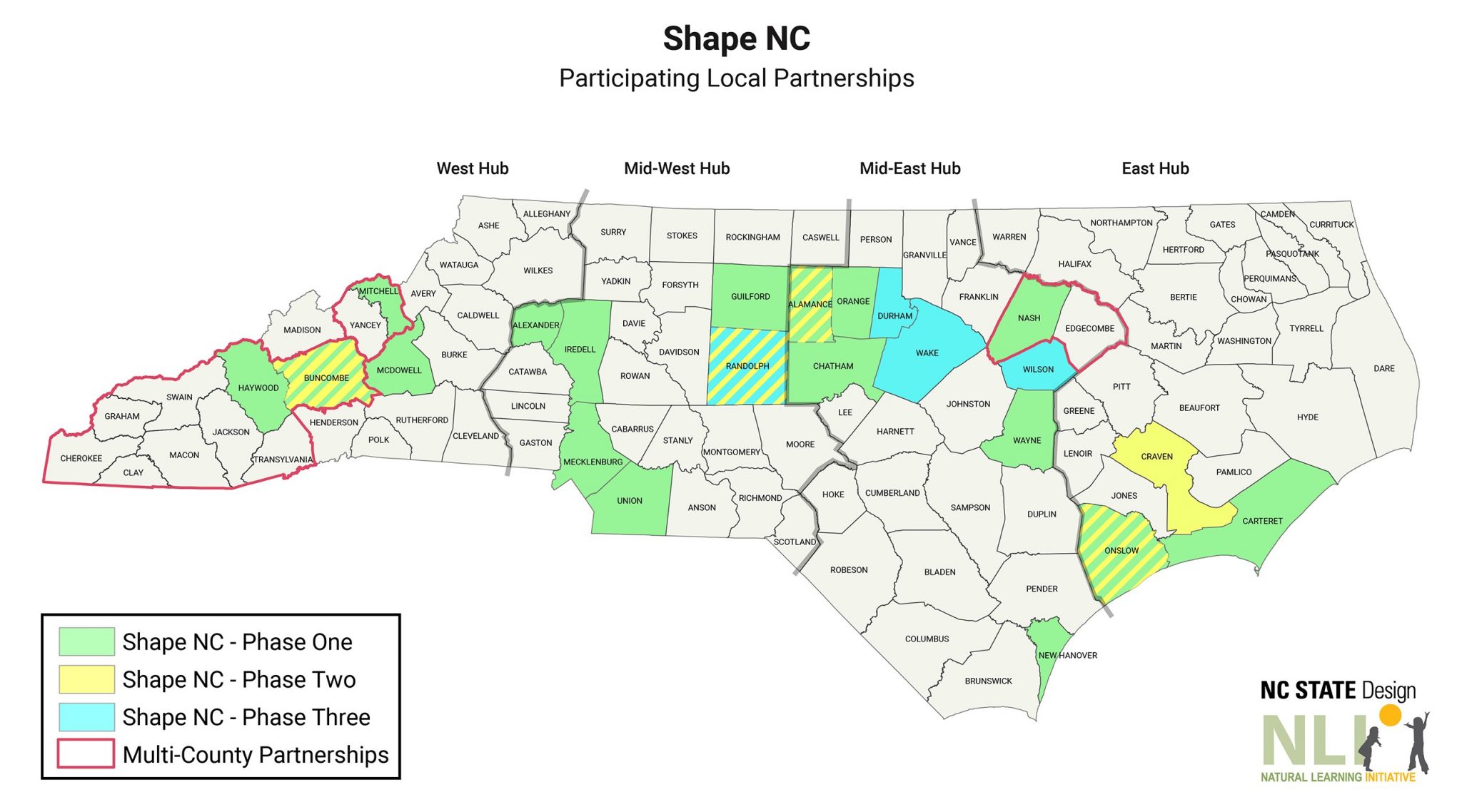
Below, details of each center involved are posted (or soon will be), beginning with Randolph Partnership for Children, the only county in North Carolina to have participated in Shape NC from the beginning (32 centers in total).
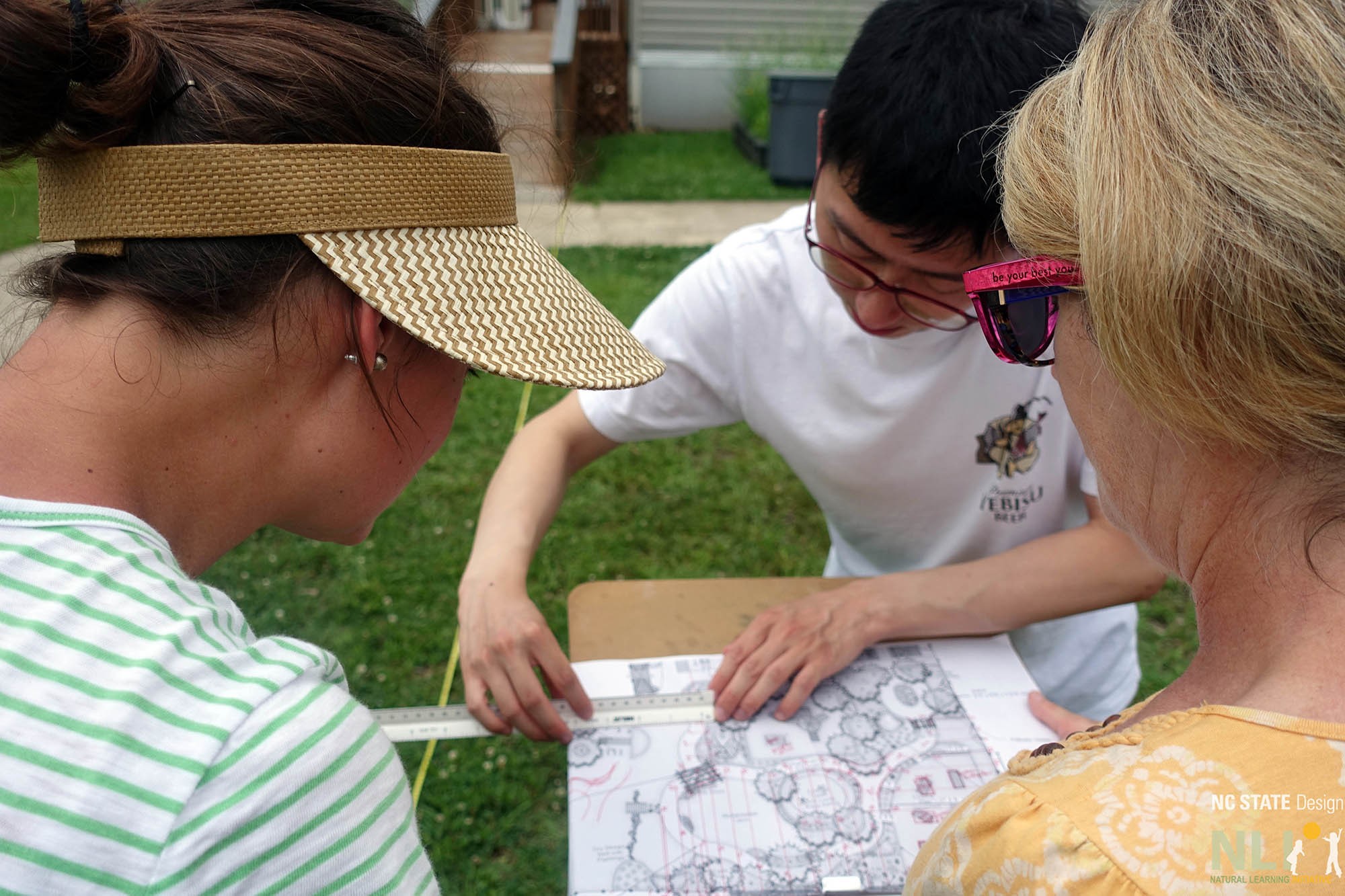
Prior to the workshop, the NLI team visited each MELC to participate in a Community Meeting, to evaluate the site, and to take measurements for the base drawing required for the site design process. Each day, MELC teams shared homework assignments presenting cultural, geographic or natural history stories that could provide special meaning to their site. Presentations of the final OLE designs were the Day Two grand finale.
Shape NC Phase II
In Phase II, Shape NC engaged technical assistants in ten regional train-the-trainer workshops and expanded the program to 147 additional centers, of which 7 received full design assistance.
Shape NC Phase III
Currently, Phase III of Shape NC includes one day-long design workshop and ongoing assistance to 20 centers/year for three years (60 total) in four counties:
Durham County: Child Care Services Association
Wilson County, Wilson County Partnership for Children
Randolph County, Randolph County Partnership for Children
Wake County, Wake County Smart Start
The Natural Learning Initiative (NLI) at the College of Design, NC State University, is working with several state-level partners to develop policies, programs, and healthy outdoor environments to address early childhood obesity in North Carolina with the support of the Blue Cross and Blue Shield of North Carolina Foundation.
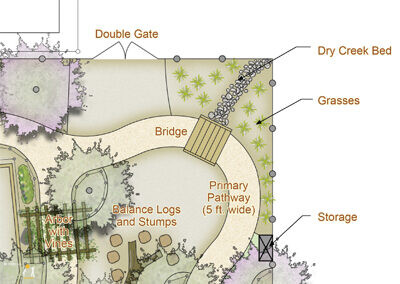
Through Shape NC, NLI is working collaboratively with Local Partnerships for Children and Model Early Learning Centers (MELCs) to design natural outdoor learning environments (OLEs) in selected sites. In addition, NLI provides training, technical assistance and resources to support Shape NC participants and communities throughout North Carolina to assist them in creating healthy environments for young children in childcare.
Smart Start and the North Carolina Partnership for Children, Inc.
The North Carolina Partnership for Children (NCPC) or Smart Start, is North Carolina’s nationally recognized early childhood education initiative whose vision is to ensure that all children have all they need for healthy growth and development. Smart Start is organized at the community level through Local Partnerships for Children which have established community networks that bridge education, health services, and family supports to best meet the needs of young children and their families. For more information, visit www.smartstart.org.
The Blue Cross and Blue Shield of North Carolina Foundation
The Corporation for National and Community Service
The Corporation for National and Community Service (CNCS) is a U.S. federal government agency that engages more than five million Americans in service through AmeriCorps, Learn and Serve America, Senior Corps, and other national service initiatives. CNCS awarded NCPC with a Social Innovation Fund grant for $4 million for Shape NC from 2016-2020.
Design to Construction Timetable
This simplified time table provides an outline of the design to construction process. The blue line indicates activities that “Model Early Learning Centers” can be attending to while the Natural Learning Initiative is preparing design documentation. The green line indicates benchmarks in the design construction process.
Design Phases vs Construction Phases
Participants in the design program are using this page to find resources that are relevant to current issues that they face while implementing their designs. NLI provides these resources as suggestions in order to assist participating centers in determining appropriateness for childrens outdoor environments.
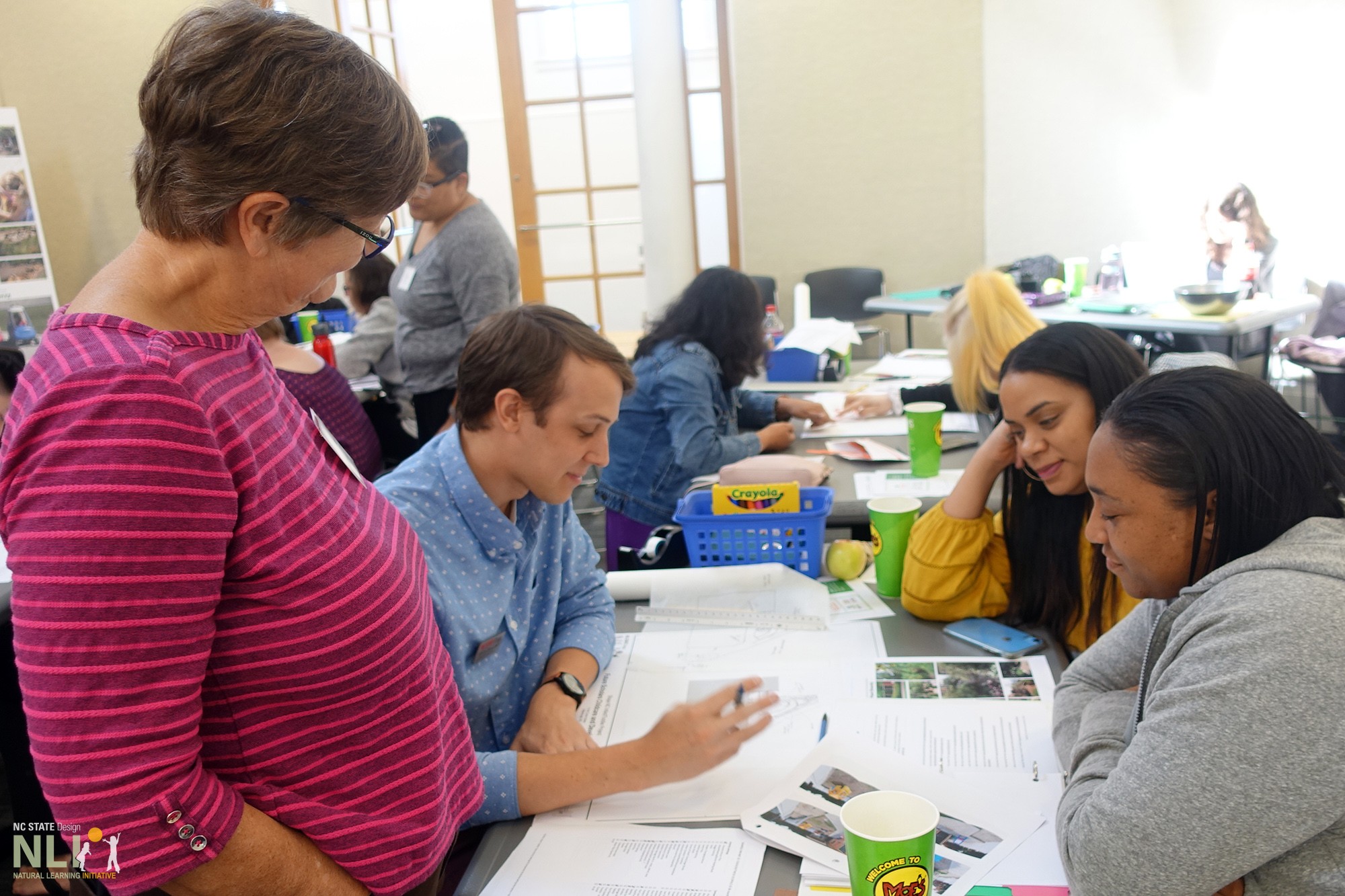
Each of the three Shape NC, two-day design workshops aimed at engaging representatives from the annual cohort of participating Model Early Learning Centers (MELCs) in creating a design program and schematic design for each site. Workshops are held at the College of Design, NC State University. Led by NLI’s team of landscape designers, design workshop participation is part of the Design to Construction Process for all 19 MELCs (over the 3-year project period). The phase one workshop for Year Two centers is featured in this video.
Two staff members from each MELC (owner or director and lead teacher) and a Technical Assistant (TA) from the North Carolina Partnership for Children (NCPC—Smart Start) local affiliate travel to Raleigh as the center team. In addition, four regional Hub Specialists provide support to the MELCs in each of four regions. Prior to the workshop, the NLI team visits each MELC to participate in a Community Meeting, to evaluate the site, and to take measurements for the base drawing required for the site design process. Day One of a phase one workshop kicks off with an introduction to naturalizing and assessing the Outdoor Learning Environment (OLE), giving each center team foundation knowledge they need to develop a design program for their site. Day Two is devoted to applying the design program content to create a conceptual site design. Each day, MELC teams share homework assignments presenting cultural, geographic or natural history stories that could provide special meaning to their site. Presentations of the final OLE designs are the DAY Two grand finale.
In year one, eight centers participated in this workshop to develop a design program and conceptual design for their centers, focusing on the first phase of implementation.
In year two, ten centers participated in this workshop to develop a design program and conceptual design for their centers, focusing on the first phase of implementation.
This year the centers from the first and second year, eighteen in total, participated in this workshop. They focused on showcasing their design implementation efforts, exchanging resources, and developing a phase two action plan.
The Growing Place Child Care Center, First Baptist Church, Asheboro, NC, is one of the Shape NC Model Early Learning Centers. In this video, Katherine Davis, the Center Director, shares how the recently renovated outdoor learning environment has transformed their outdoor learning environment and the lives of children and parents at the center.
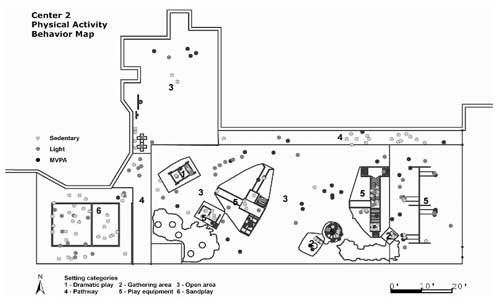
Researchers speculate that variations in preschool physical activity may be attributed to variations in preschool policies and practices, including the form and content of outdoor physical environments. However, assessment methods linking them to physical activity are limited. Improved understanding of links between environment and activity could be used to influence childcare policy, which is highly regulated, usually at state level, to create outdoor environments more conducive to children’s informal play and physical activity. The purpose of this article was to introduce behavior mapping as a direct observation method on the basis of the theories of behavior setting and affordance and to demonstrate its sensitivity to gathering physical activity and associated environmental data at a sufficiently detailed level to affect built environment design policy.
In Medicine & Science in Sports & Exercise, Americal College of Sports Medicine, 2010
This chapter examines how current playground design reflects changing recreational philosophies and institutional commitments over the last 150 years. A definition of what makes an effective playground, a look at playground risk factors, and how collaboratively designed landscape settings provide a viable strategy for safe, health-promoting playgrounds are also explored.
Webster’s defines a playground as “a piece of ground for and usually having special features for recreation, especially by children” (Gove 1961, p. 1737). This definition is helpful. Special recreational features, designed and constructed according to a plan, distinguish a children’s playground from a vacant lot or a forest. The character and extent of those features and the type of recreation the area supports have taken many forms in the last 150 years, reflecting changing philosophies of children’s recreation and varying institutional commitments to supporting children’s recreational needs.
This chapter begins by tracing the history of playgrounds and exploring the philosophies behind the changes. Two major themes emerge. First, playgrounds should be places where children can play without incurring serious Injury. Second, playgrounds should be spaces that support healthy child development through the process of active play, learning, and exploration. With regard to playground safety, this chapter reviews trends in injuries and fatalities and presents prevention strategies. Finally, case studies of community-based efforts to create playgrounds· and school parks that meet both sets of goals are discussed. With a focus on elementary schools serving children 4-12 years of age (prekindergarten to sixth grade), the chapter offers suggestions on how to optimize playgrounds as educational and developmental settings that are safe for all children.
The following discussion and design guidelines are based on the assumption that regardless of children’s abilities or disabilities, nature has a positive impact on well being and helps children acquire harmonious, healthy lifestyles (Wells, 2000; Wells and White, 2002). We consider well being to be a delicate balance between healthy human processes (psychological, physical, spiritual) and healthy environments (landscapes, weather, built environments, and the social circumstances of daily life). Carefully designed garden environments can help maintain the balance necessary for the healthy growth of children (Grahn et al., 1997; Kuo and Faber, 2004).
All children need to experience the healthy, harmonizing effects of gardens in their everyday lives—in childcare centers, schools, children’s museums, doctors’/dentists’ offices, hospitals, shopping centers, airports, parks, etc. These opportunities for landscape design can help counteract the rapidity with which children are losing daily contact with nature. Powerful experiences of nature are necessary antidotes to the artificial environments of the new century. Without these experiences, children will see themselves apart from nature because it has never been incorporated into their innermost being. If so, as adults they will lack the passion for nature necessary to protect our planet.