What are some ways to improve an outdoor learning environment without breaking the bank?
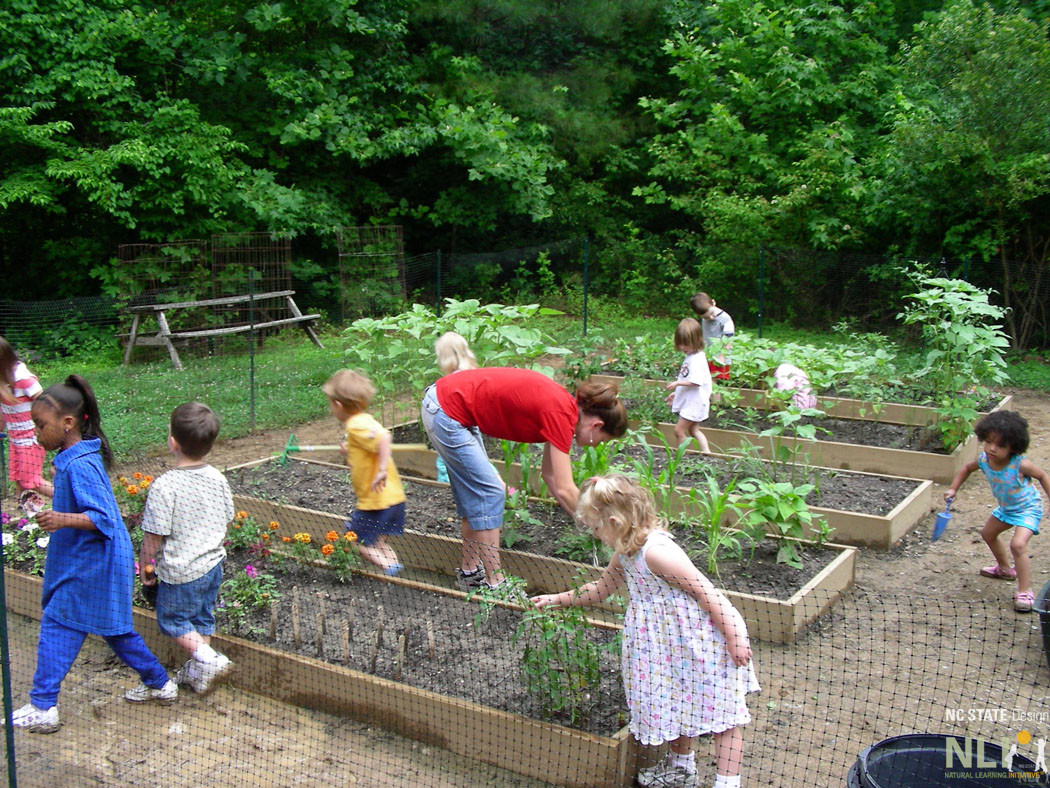
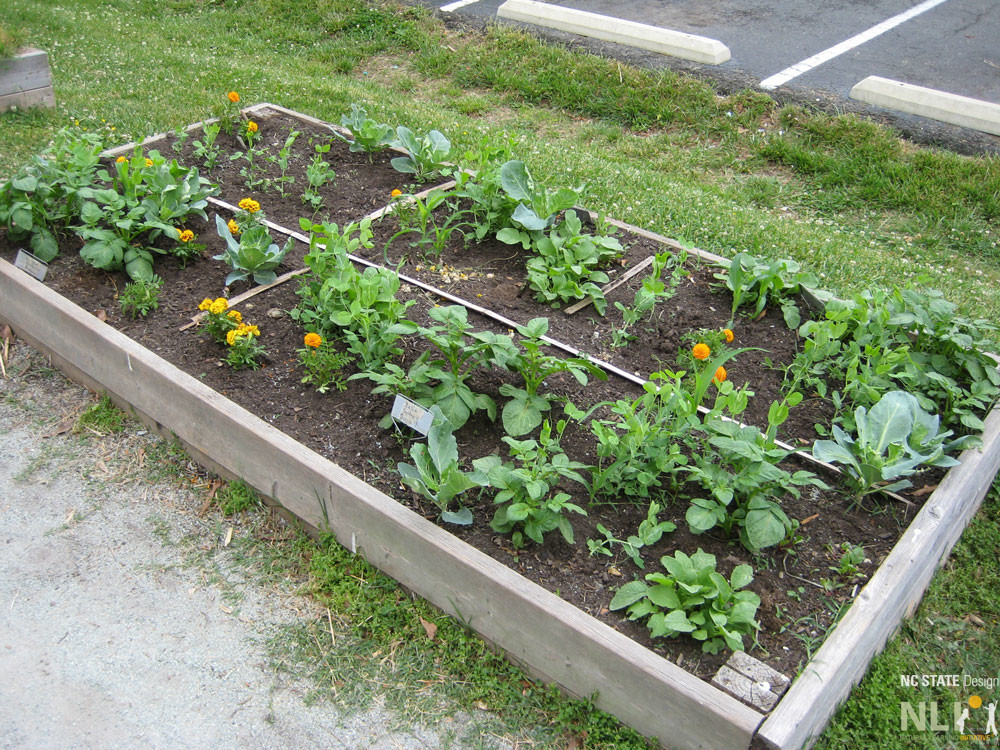
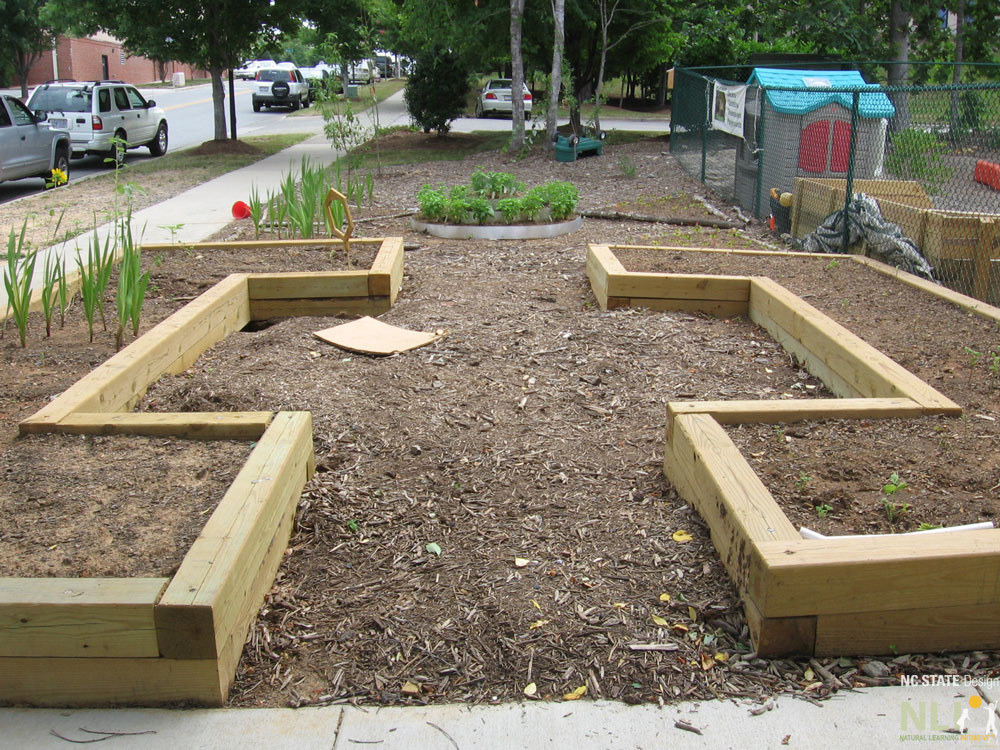
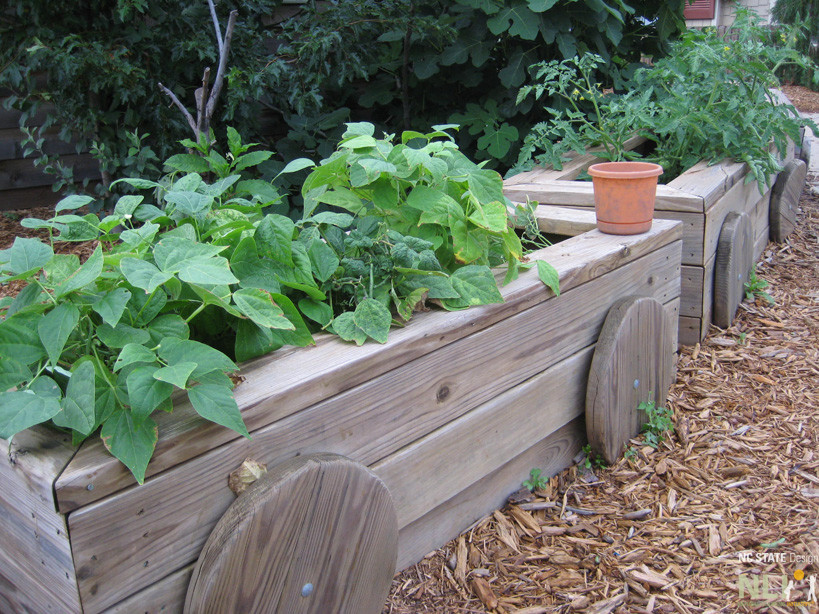
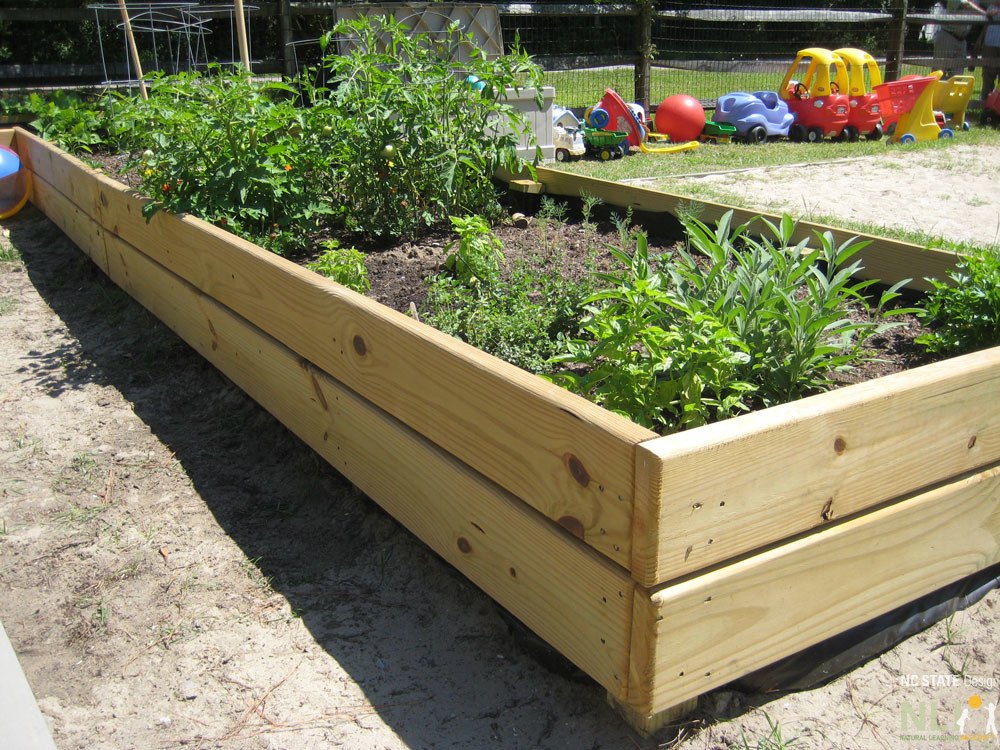
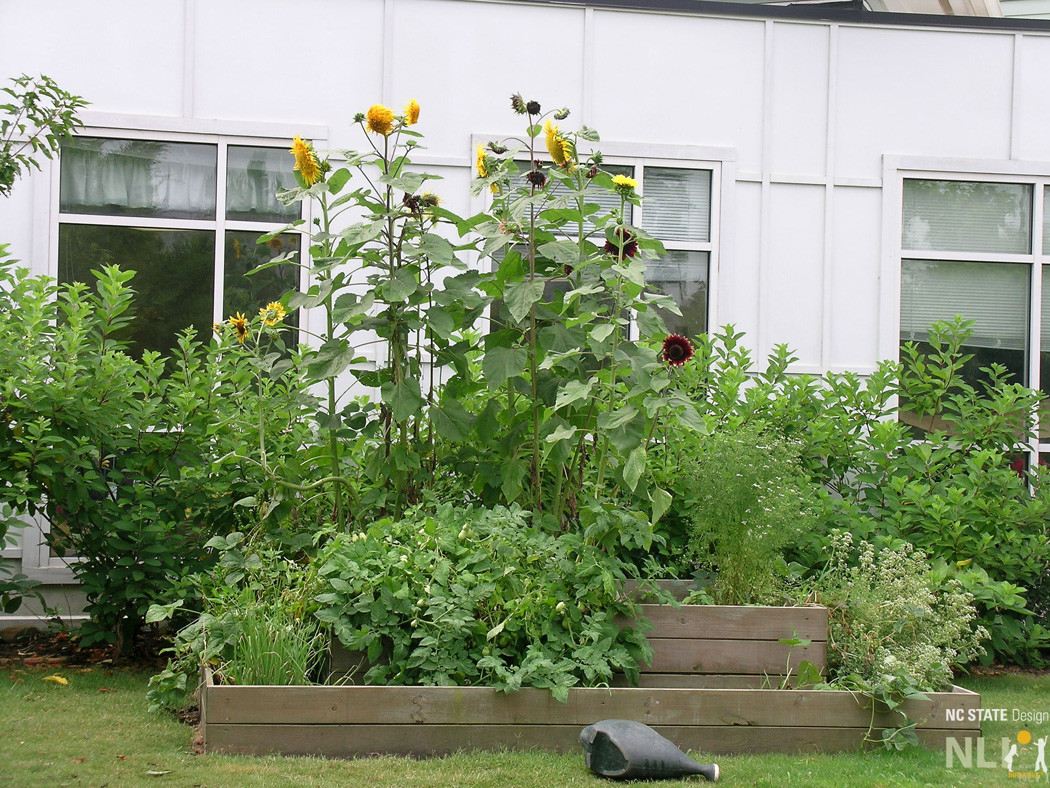
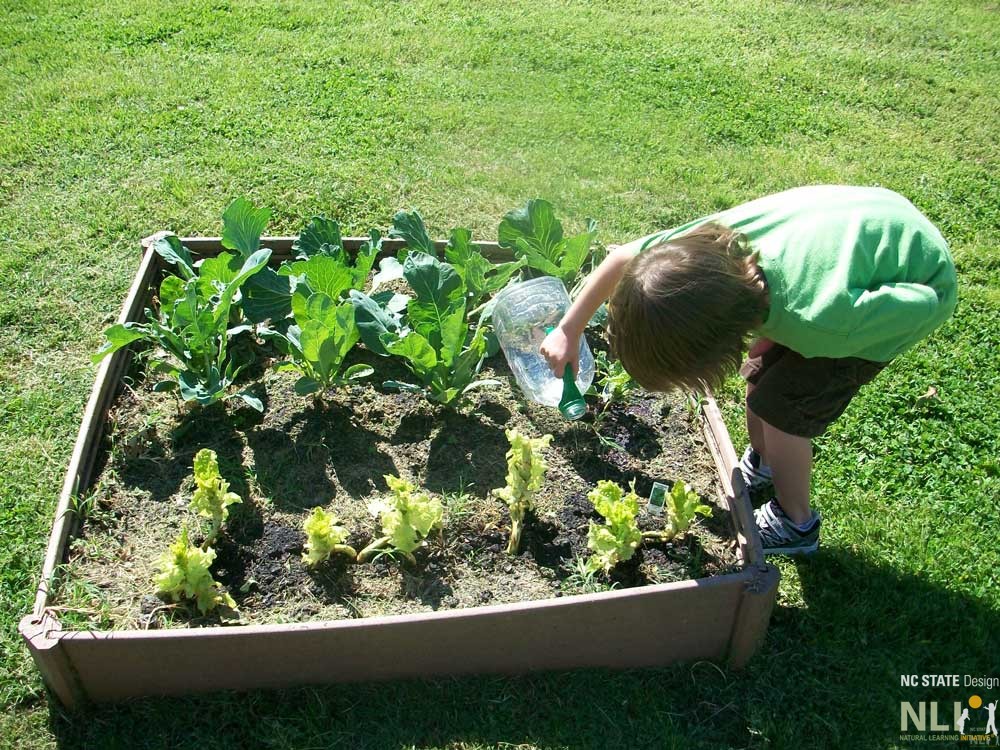
Raised planters, and the gardens that grow within them, are one of the many affordable ways to improve an outdoor learning environment. Raised planters can be constructed from a variety of materials. Here we will discuss those constructed of timber.
Boards + good soil + effort = instant garden planters
Raised garden planters are one of the foundational elements in naturalized outdoor learning environments. They are more easily accessible, easier to control soil quality, and easier to maintain than in-ground beds. Requiring only lumber and soil, they are fairly affordable, as well.
Raised planters can be anywhere from 6″ to 30″ tall. Due to the length of children’s arms, the maximum width of a planter accessible from both sides is four feet. The maximum width of a planter accessible from one side, maybe because it is along a fence, is two feet. Much information and instructions are available online; ready-made kits can also be purchased. Railroad ties are not recommended for edible beds, as they may leach chemicals. If using pressure treated lumber, add an impervious liner between the boards and the soil to prevent leaching. If you want to improve the soil, check your municipal yard waste center, usually they will give away or sell leaf mulch compost from street collection. Compost is better than top soil, if you’re going to enhance the quality of your soil, make sure you use compost!
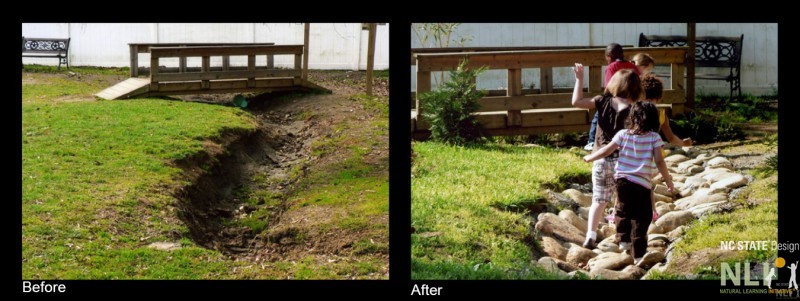
Improper drainage can be a major barrier to using the childcare center outdoor learning environment (OLE). For areas that are frequently wet and muddy, here are some ideas to improve drainage:
Plant wet areas with native wetland or bog plants.
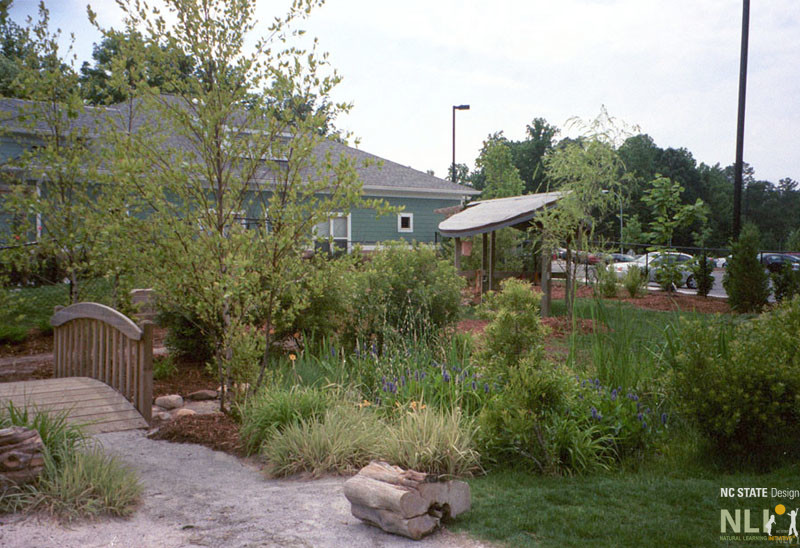
Problem wet areas can be converted into mini-wetlands or bog gardens by using native wetland plants. Bog gardens or rain gardens are effective ways to create a landscape that tolerates excessive moisture. A proper bog has very specific soil media and depth requirements, but an area that is simply a wet spot in the landscape can still support a diversity of plant species. Connect the bog garden with a vegetated swale to create a “green” drainage system.
Create meandering paths with materials that rise above the wet, muddy areas.
If the wet muddy area is relatively unused, then use flagstones, tree cookies or decking to create a path to allow children to move through the area without getting wet. To avoid creating obstacles for lawn mowers, remove the grass around the path and use steppable plants around the stepping elements (flagstones, etc.).
MYTH: Water hungry plants such as willow dry out wet areas.
Not true! Plants do absorb water, but not enough to dry out soil quickly enough to make it usable.
Spring Outdoor Play: Making the Most of the Season
What outdoor play activities would you recommend in the springtime?
Springtime is ideal for outdoor play. After a cold, gray winter, the blue skies, new leaves, and warm breezes beckon everyone to come out and play for a while. In the excitement of a new season of growth, here are some activities to make the most of all that spring has to offer.
Rainy days
April showers bring May flowers, but what kinds of play do April showers bring? Wet days are a challenge, but they are also an opportunity for special kinds of creative outdoor play. When it’s not thundering and unsafe, try some of these outdoor activities:
Puddle play – splashing, floating, seeking for creatures, comparing reflections.
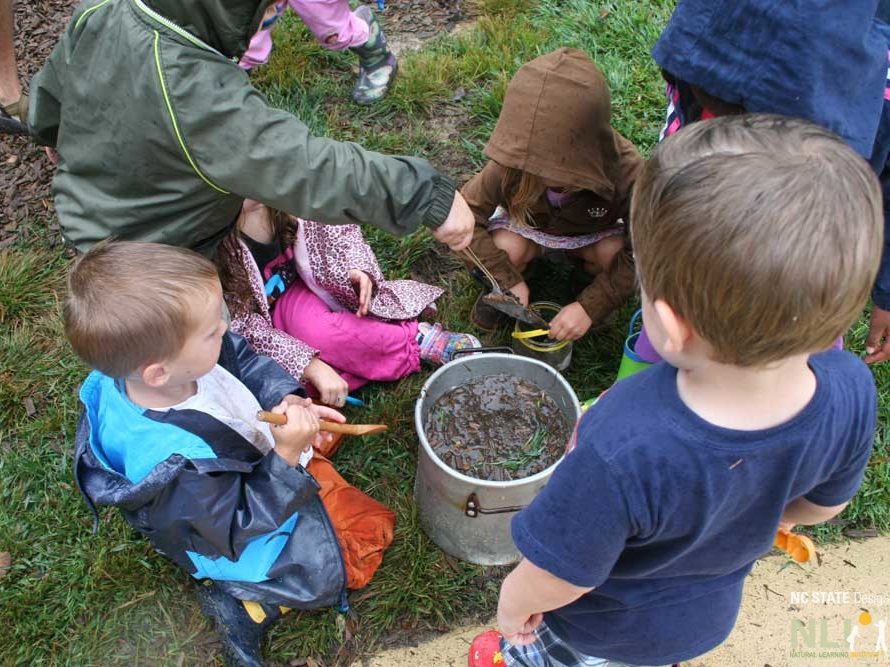
Mud play – make the most of the wet mud while it’s there! It helps to have a backup set of clothes to get muddy in, and then just hose off at the end.
Rain walks – waterproof gear and boots, or some umbrellas keep everyone (mostly) dry while exploring.
When it’s too cold or too thundery to be outside, try these rain-related indoor activities:
Learn about and pretend to be wildlife who benefit from the rain, such as ducks, turtles, frogs, and salamanders
Create watercolor paintings with the rain – experiment with putting papers out in the rain for a minute and then painting on them, or put them out after painting and see what textures the rain adds.
Create garden collage artwork of pictures of plants that will grow in the spring and summer (with cutouts from plant catalogs and gardening magazines).
Warm, sunny spring days
The best days of spring come with blue skies, warm breezes, and bright flowers and leaves. Try out some of these activities to maximize the pretty days of spring:
Measure leaf growth, record when the buds open and compare different plants’ growth.
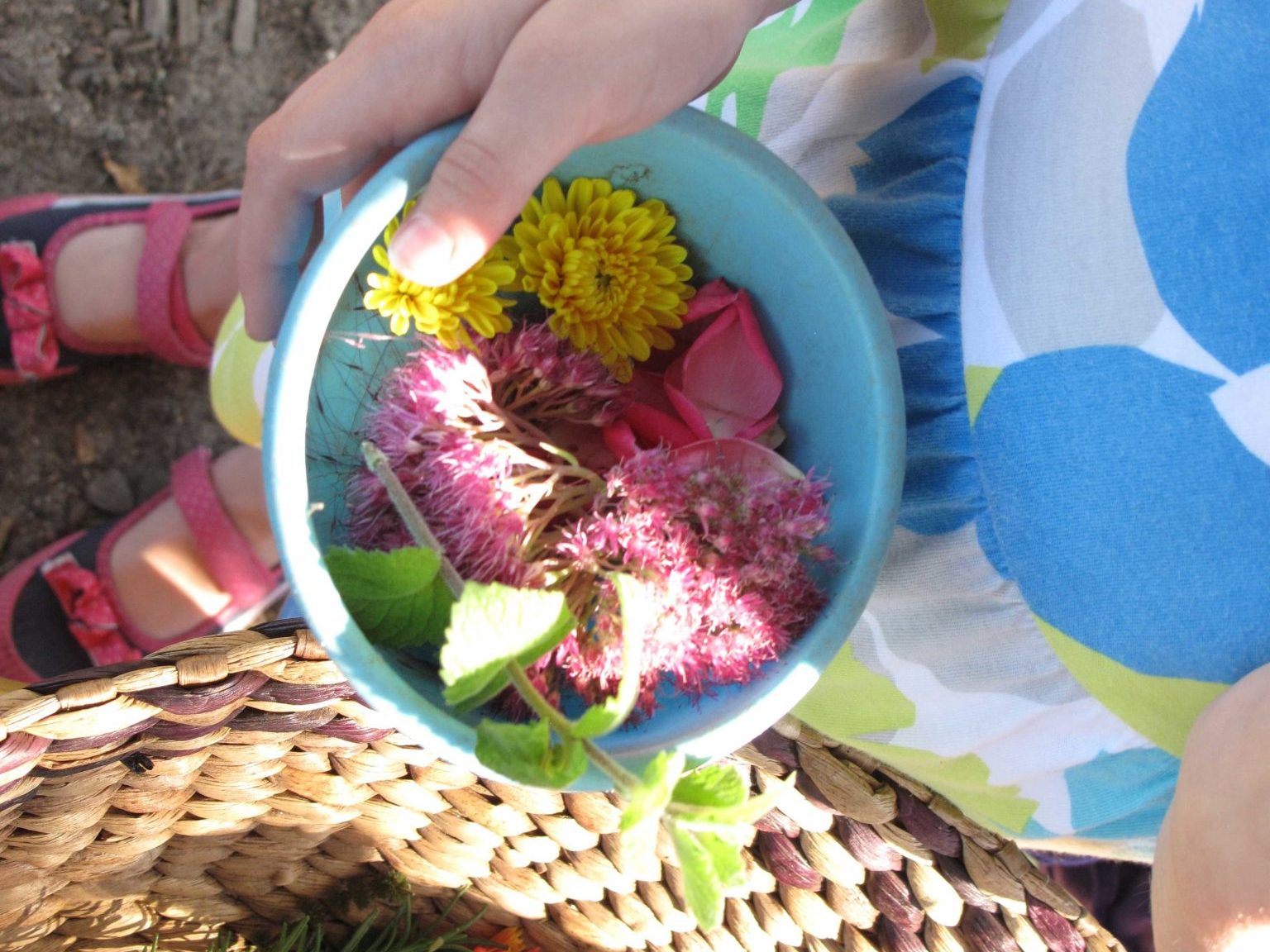
Create art with flowers.
Pick flowers to bring inside the classroom.
Observe bugs and other creepy-crawlies.
Watch for birds and learn about what kinds migrate through your region in the spring.
Learn about baby animals (who are frequently born in the spring), with visiting bunnies, baby chicks, or ducklings.
Take photographs – let the children take photos of their observations of spring with disposable cameras or kid-friendly digital cameras.
Have a picnic day where all the day’s normal indoor activities happen outdoors.
Cool and windy spring days
The changing seasons bring changing weather patterns and often, breezy spring days. Weather forecasts usually include a prediction for winds, which can be helpful when planning some of these activities:
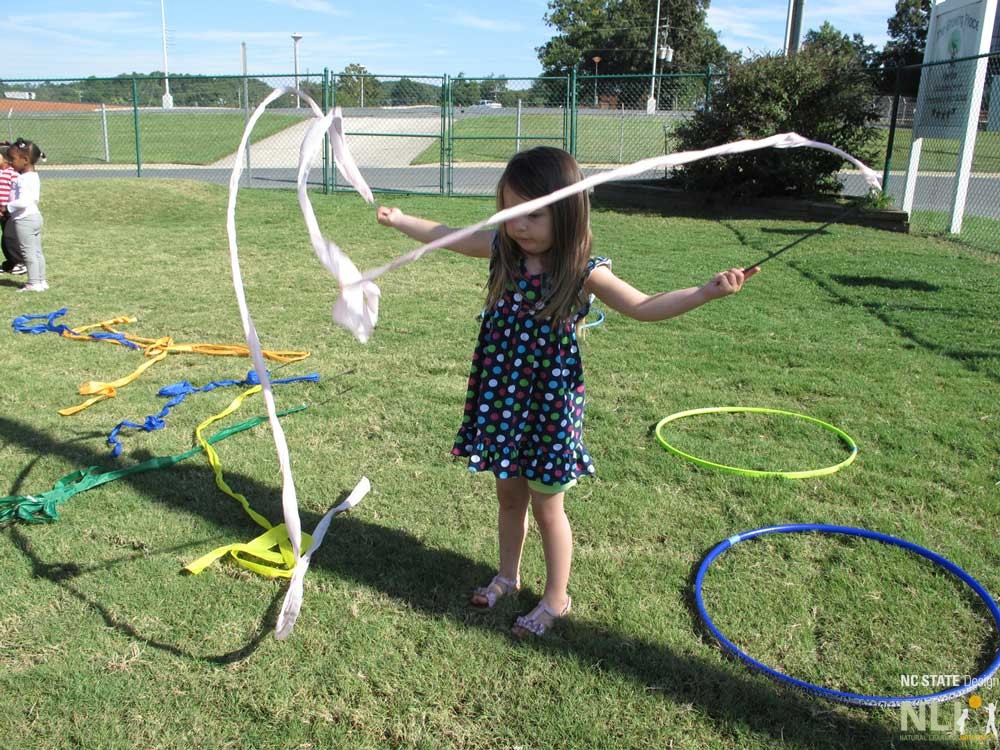
Play with the wind – bring fabric, ribbons, and wind catchers to play with outdoors.
Make and fly kites – kites fly best with wind speeds between 5 and 15 mph.
Measure wind direction and speed with the “wet” finger technique.
With distant roots in work conducted when the author was an urban planning student, scientific research and design assistance in children’s environments continues through the Natural Learning Initiative, N.C. State University, in specific contexts, many of them educational. They include schools, children’s museums, zoos, botanical gardens, childcare centers, and neighborhood parks, playgrounds and pathways. Results are aimed at creating cost-effective demonstration sites that people can see and believe possible. The overall aim is to assemble the research evidence to influence built environment policy in favor of healthy child development – and thus the long-term health of all city inhabitants. An evidence-based, participatory community design approach utilizes the socio-ecological model and the concepts of territoriality, behavior setting, and affordance to create design programs that drive physical design. When successful, the process constitutes a dialectic that balances community change and continuity in a way that both builds culture and adapts to it. A number of past and current projects are profiled to illustrate the community design processes involved.
The Kids Dig Dirt! Green Paper serves as both a resource and a tool for ACM museum members. The paper provides a collection of facts, guidelines and for ward-thinking language that museums can draw on while developing their own outdoor spaces, proposals for funding or other materials. A detailed source list is included so that museums can cite original ideas and copyrighted information. This is a publication of the Association of Children’s Museums, authored by MIG, Inc. with Robin Moore as the lead author. The correct citation for the Green Paper is: Kid’s Dig Dirt! Green Paper. (Monograph). (2008). Washington, DC. Association of Children’s Museums.
Early childhood environmental interventions are needed to counteract the health crisis caused by sedentary lifestyles. In the UK, 16% of children aged 2 to 15 are obese (Health Survey for England, 2002). In the US more than 10% 2-5 year olds are overweight (Ogden, et al., 2002). The widespread perception that young children are innately active and interventions are not needed is a barrier for creating appropriate modifications to children’s routines and environments. The fact is that young children are only active for short periods each day (Reilly, 2004). Provision of recreational facilities that allow children and families to enjoy prolonged and engaging stays outdoors are critical because the outdoors is a strong correlate of physical activity (Baranowski, et al., 2000; Sallis, et al., 1993). Also, diverse natural environments support attention functioning, gross motor development, health, and richer play behaviors (Faber Taylor, et al., 2001; Grahn, et al., 1997). In addition, the childcare centre, an institution that millions of children attend everyday, is the highest predictor of activity (Finn, et al., 2002) and may become a critical environment for more systematic preventive measures. For this to happen, in-depth studies are needed to discover the characteristics and dynamics of early childhood outdoor play environments that afford physical activity.
Presented at theOpen Space Conference, Scotland, 2005
Increasing Physical Activity in Childcare Outdoor Learning Environments: The Effect of Setting Adjacency Relative to Other Built Environment and Social Factors
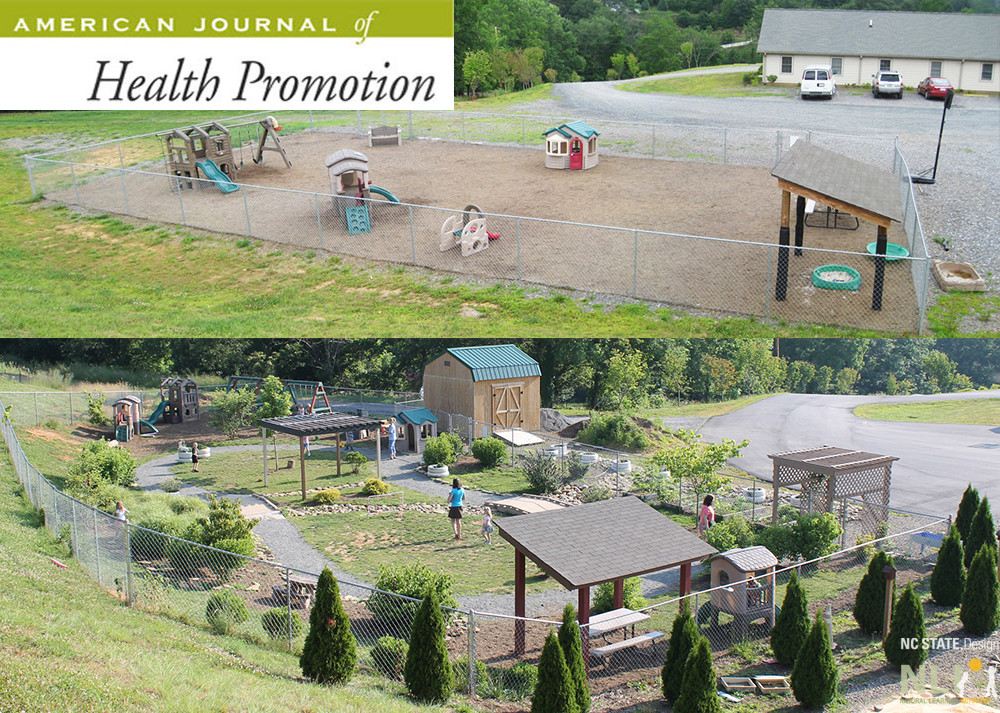
The problem of childhood obesity can be addressed through study of how built environment characteristics can foster physical activity (PA) among preschool children. A sample of 355 behavior settings in 30 childcare center outdoor learning environments (OLEs) was studied using behavioral mapping techniques. Observers coded activity levels of preschool children across behavior settings. The level of PA observed in 6,083 behavioral displays of children aged 3 to 5 was modeled using multi-level statistical techniques. Both adjacency and centrality of play settings were found to be important factors in increasing the degree of PA, net the effect of numerous other variables. In addition, child-to-child interaction was found to foster PA (more for boys than girls) whereas a teacher’s custodial actions limit PA. Results demonstrate that design of OLE form (particularly adjacency of behavior settings) and content (use of manipulable items such as wheeled toys and balls) facilitates higher levels of PA.
This article demonstrates that site layout attributes are associated with higher levels of physical activity in childcare settings, while teacher interaction is associated with a decreased level of physical activity in children.
InAmerican Journal of Health Promotion(Vol. 28, No. 3), 2014
Of 630,000 North Carolina children aged 2 to 5 years, more than 30% are overweight or obese. Approximately 38% of North Carolina children are enrolled in almost 5000 regulated childcare centers, where they receive most meals and spend most of their waking hours. A 2002 statewide survey suggested that most childcare center outdoor areas did not meet best practice criteria for physical activity (PA), such as high levels of environmental diversity measured by the number and types of play settings present (e.g., gardens, outdoor group gathering spaces, lawns, wheeled toy pathways, and natural elements such as trees, shrubs, logs and rocks. In 2007, the North Carolina Division of Child Development and Early Education (NC-DCDEE) replaced ‘‘playground’’with the term outdoor learning environment (OLE) in childcare center licensing rules, there-by expanding the function of outdoors beyond informal recreation to include all areas of child development such as health promotion. As reported here, Preventing Obesity by Design (POD), a childcare center outdoor renovation intervention, was evaluated to measure impacts on health-promoting PA and garden installation (with potential stimulation of vegetable and fruit consumption).