This chapter in Robin Moore and Herb Wong’s 1997 book Natural Learning, examines children’s decline in physical activity being seen in the industrialized world and how that decline negatively impacts their healthy development. Examples from the Environmental Schoolyard help illustrate how a well designed outdoor environment will support children’s engagement in the natural world, giving them reason to go outside and be active.
In Natural Learning, The Life History of an Environmental Schoolyard, MIG Communications, December 1997
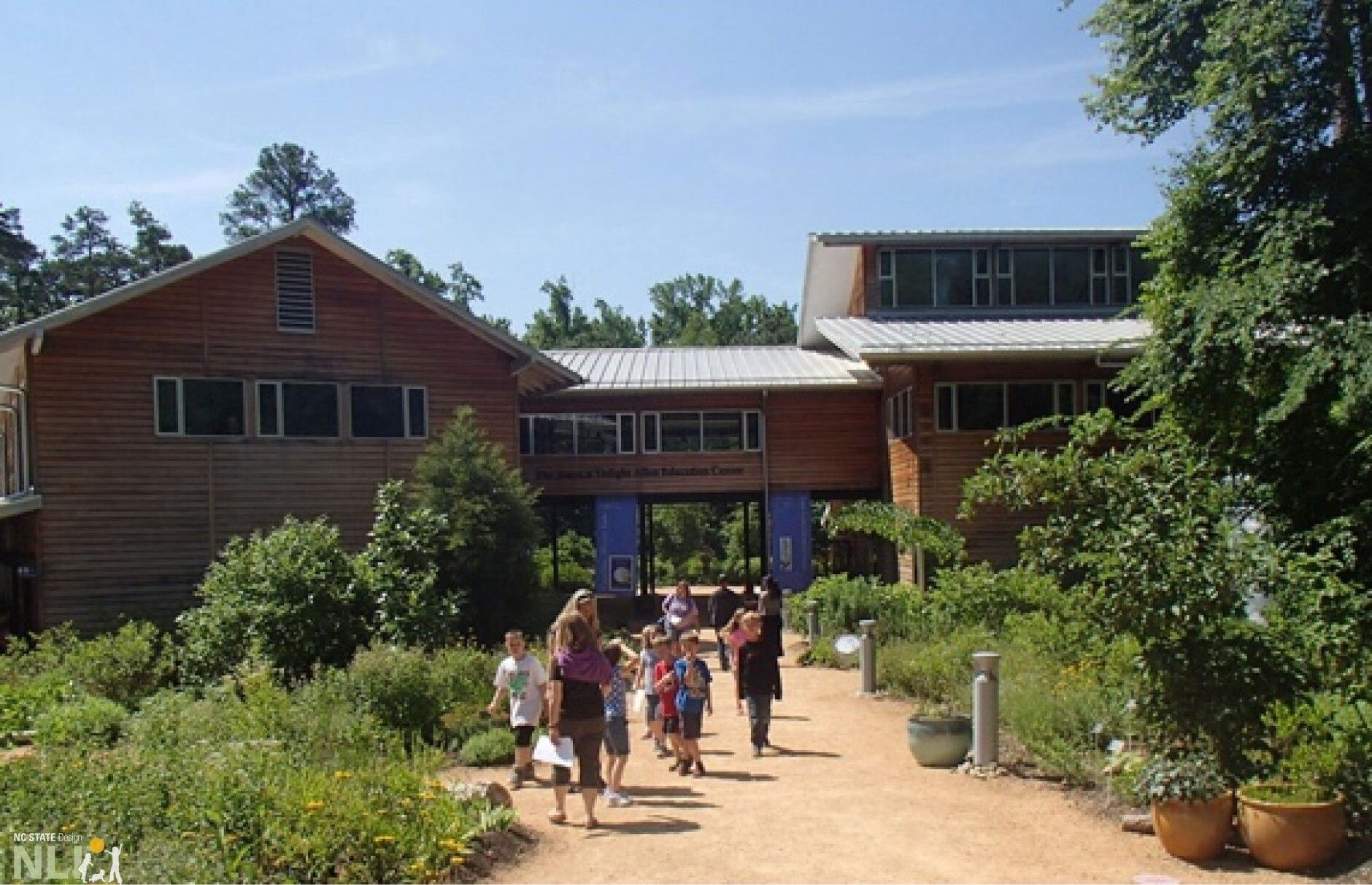
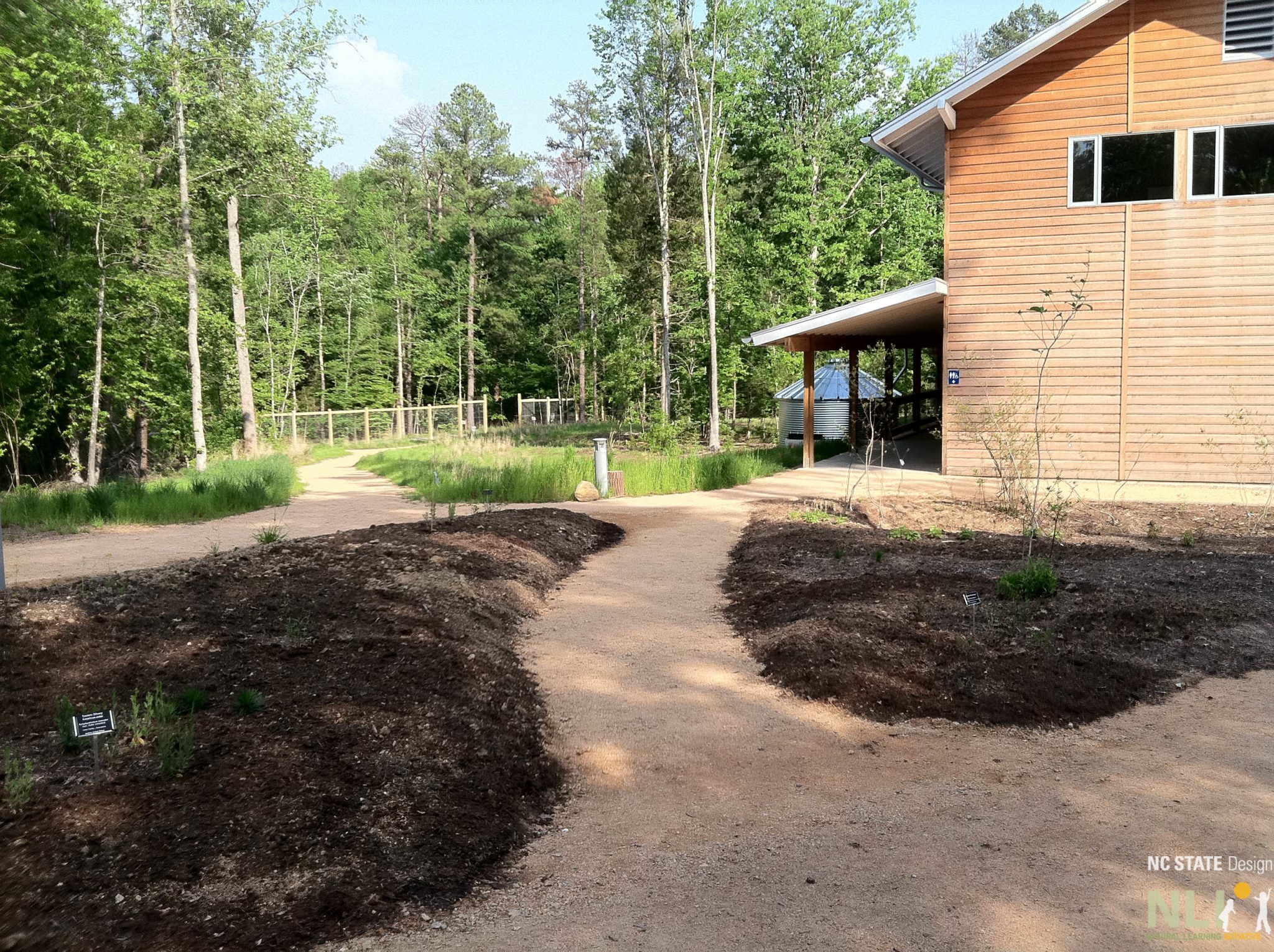
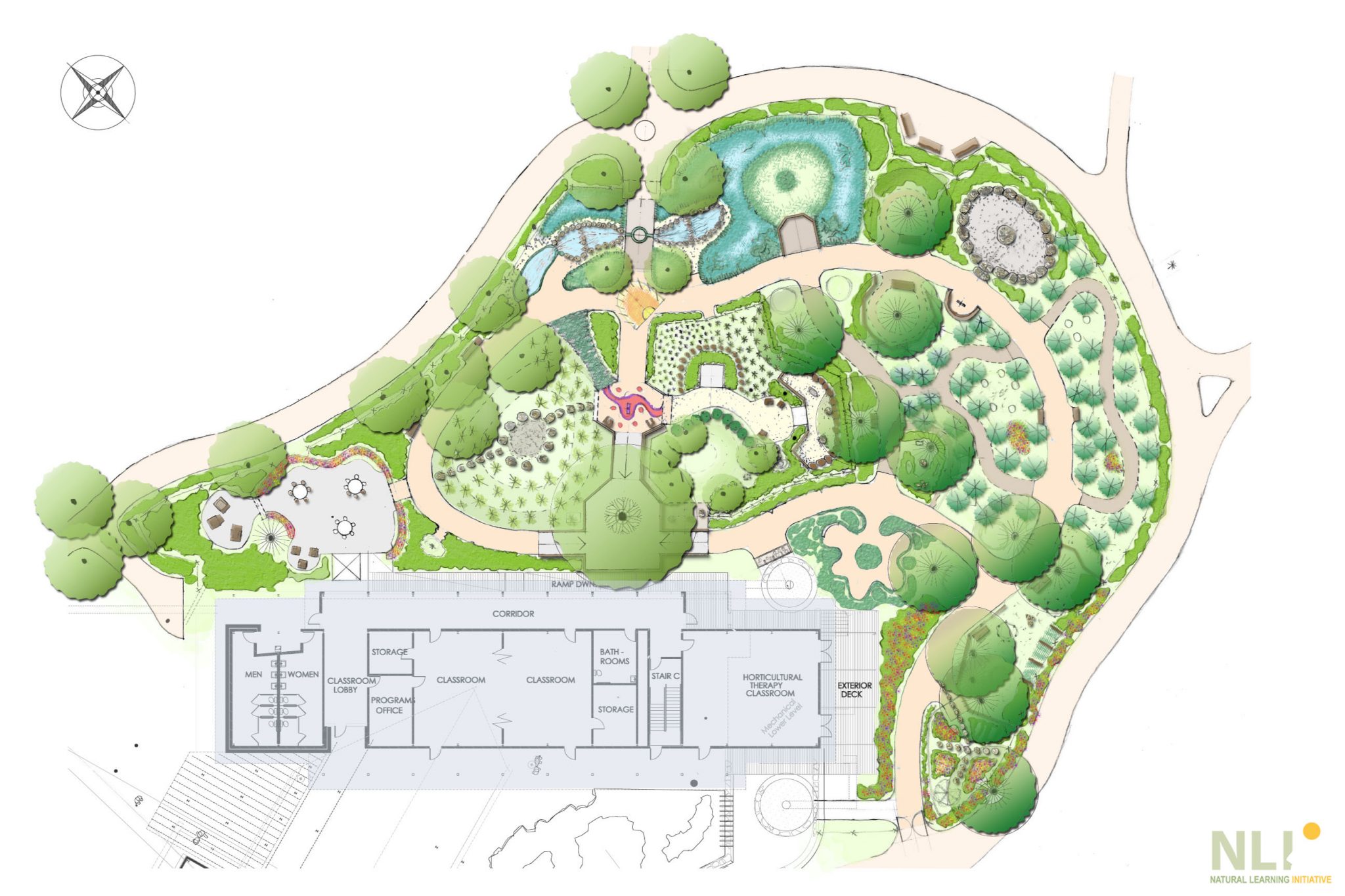
The Walnut Creek Wetlands Center (WCWC) is the cornerstone of Walnut Creek 2000, an action program developed by Partners for Environmental Justice (PEJ), focused on the conservation and restoration of the 60 acre Walnut Creek wetlands and floodplain in Southeast Raleigh, near downtown. NLI collaborated with Frank Harmon Architect on the design of WCWC, which provides an educational/recreational resource located on the City of Raleigh’s Greenway system and managed by the Raleigh Department of Recreation and Parks.
Walnut Creek 2000 was initiated in the late 1990s by a broad base of Wake County citizens, led by PEJ’s Dr. Norman Camp. Initial landscape analysis, planning, and design for the project originated in a 1998 Department of Landscape Architecture interdisciplinary design studio, conducted by Robin Moore. Subsequently, NLI worked with PEJ to develop a design program and conceptual master plan for the wetlands park as part of Walnut Creek 2000. Interracial partnerships were essential to the success of this project to generate awareness of the multiple benefits of wetlands.
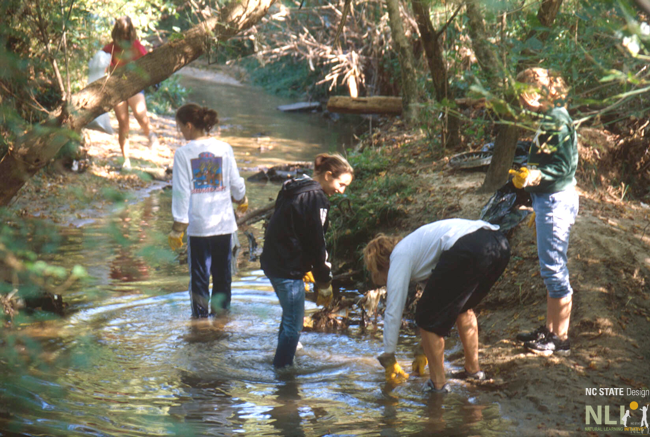
In addition to wetlands restoration, the WCWC provides education, recreation, and economic benefits to Southeast Raleigh and the greater metropolitan area. Opportunities for children and families to connect with nature are abundantat the WCWC, whether they are participating in planned wetland and environmental activities or exploring the trails, creek, and wetland wildlife.
With headwaters originating in Cary, NC, Walnut Creek meanders into Lake Johnson and Lake Raleigh on NC State’s Centennial Campus, flows through the most urbanized region of the Neuse River basin, continues eastward through the Southeast Raleigh floodplain, merges with Big Branch flowing directly into the Neuse River, eventually reaching Pamlico Sound and the Atlantic ocean.
Investigating the Effect of Curricular and Environmental Change on Physical Activity
The goal of this research project is to examine the impact of the physical activity Curriculum and Outdoor Environmental Changes of school play areas on the amount of physical activity performed by children in grades 2-4 measured objectively in selected schools and to develop recommendations for school site design and curricular support to increase daily physical activity of 2-4 grade children.
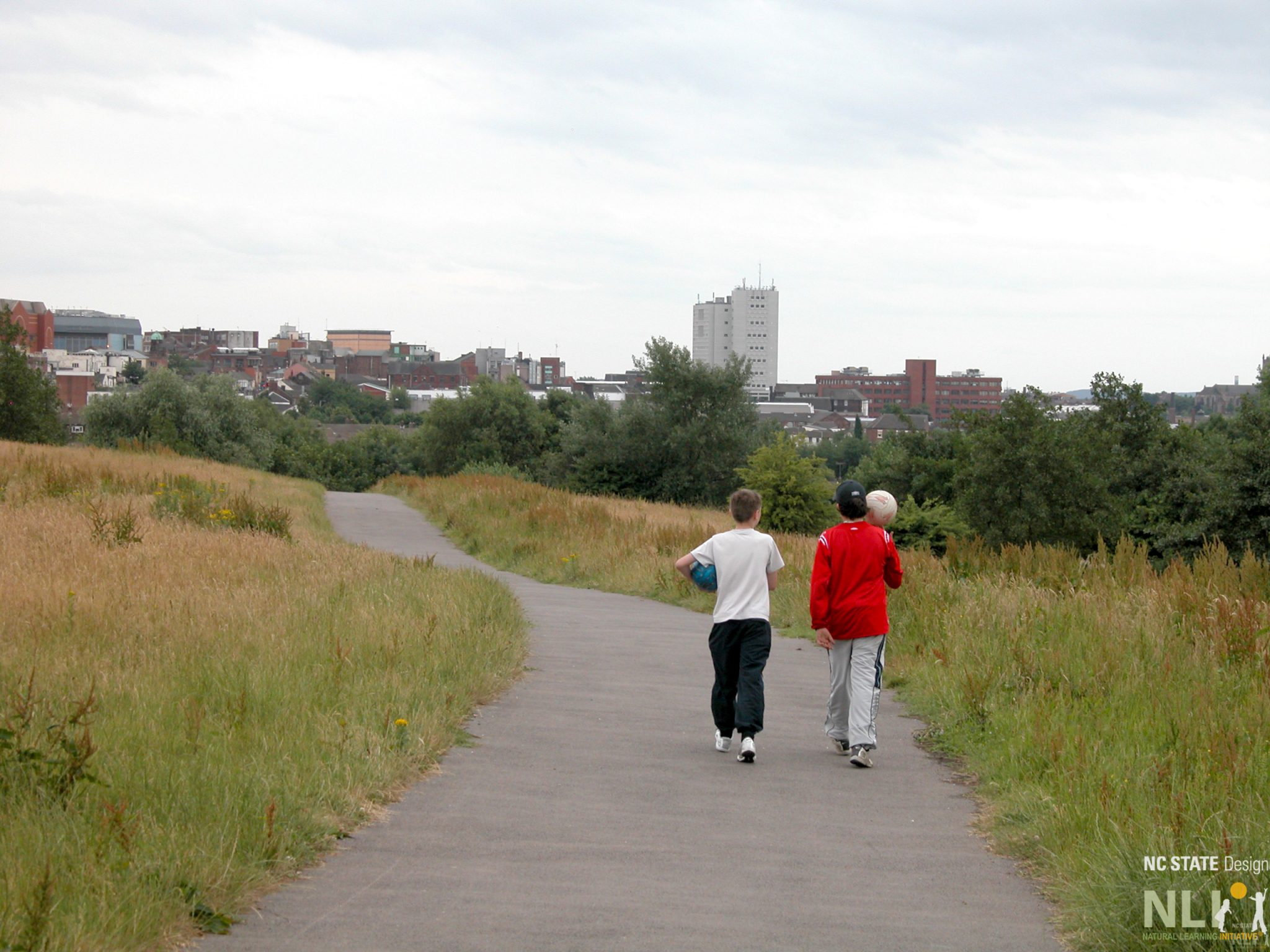
Thirty years ago, children spent the bulk of their recreational time outdoors, engaged in rich physical play activity on sidewalks, in streets, playgrounds, parks, greenways, industrial facilities, and all manner of “left over spaces” (Moore, 1986 and 1987). The environment of today’s children is radically different.
Unrestricted use of neighborhood space has been severely curtailed, Children have been “pushed” indoors by increased traffic danger, parental concerns about safety (Moore, 1997), and the lack of child-friendly neighborhood planning (both “old” and “new urbanism” literature hardly mention children). In addition, children have been “pulled” indoors by air conditioning, television, video watching, computer games, and similar devices (Moore, 1997).
As the locus of activity has shifted from outdoors to indoors, severe negative health consequences have developed. They include restricted total body movement, reduced activity opportunities, and increased sedentary behavior. In 30 years, the level of obesity in children ages 6-11 has increased from 4% to 12%, a 3-fold change (Dietz and Gortmaker, 2001; Strauss and Pollack, 2001). An accelerating rate of obesity has affected this country and the world at large (Dietz and Gortmaker, 2001). Obesity, even in the youngest children, has reached epidemic proportions.
Project Team:
Robin C. Moore, PI, Professor of Landscape Architecture; MCP, Hon. ASLA; NLI Director, the Natural Learning Initiative, College of Design, NC State University
Dr. Nilda Cosco, PhD., Investigator. Education Specialist, the Natural Learning Initiative, NC State University
Sponsor:
Buffalo Hospital Foundation/Allina Health System (2005-2007)
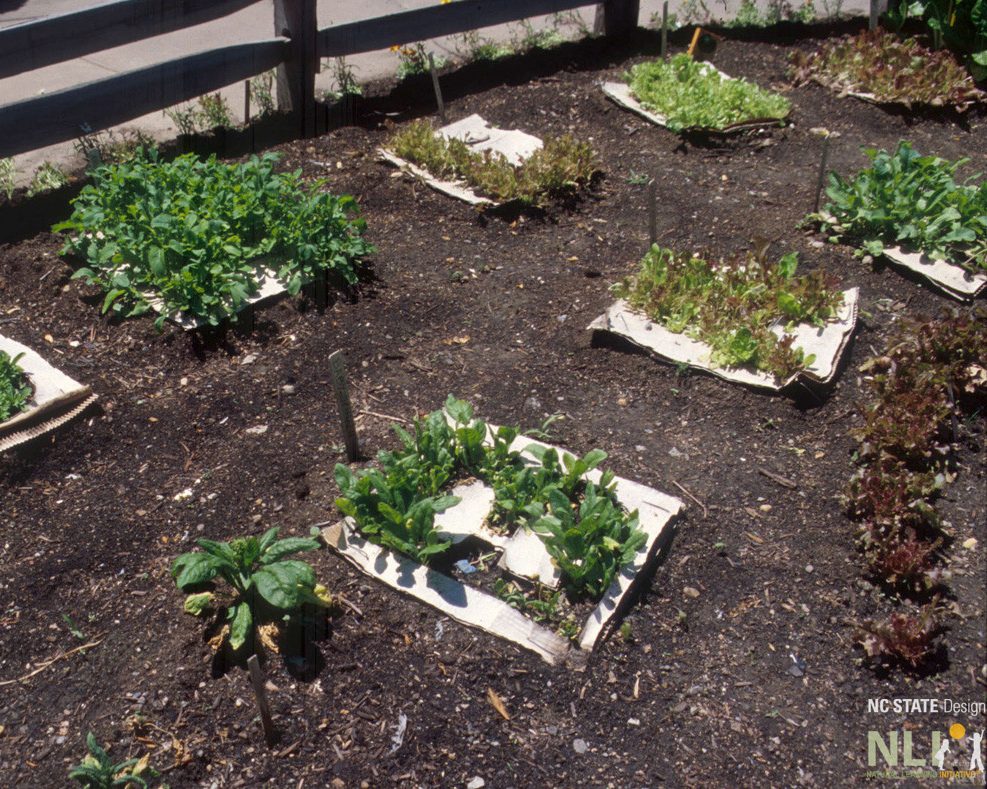
Theme gardens are typically based on child-related topics. Young children are experiential, hands-on learners and can be motivated to learn through a garden theme, especially if it is one they helped create. Theme gardens can promote outdoor learning, exploration, and discovery by using plants and design elements to focus on a particular topic. Plants may include vegetables, fruits, and herbs for eating as well as non-edible ornamental plants.
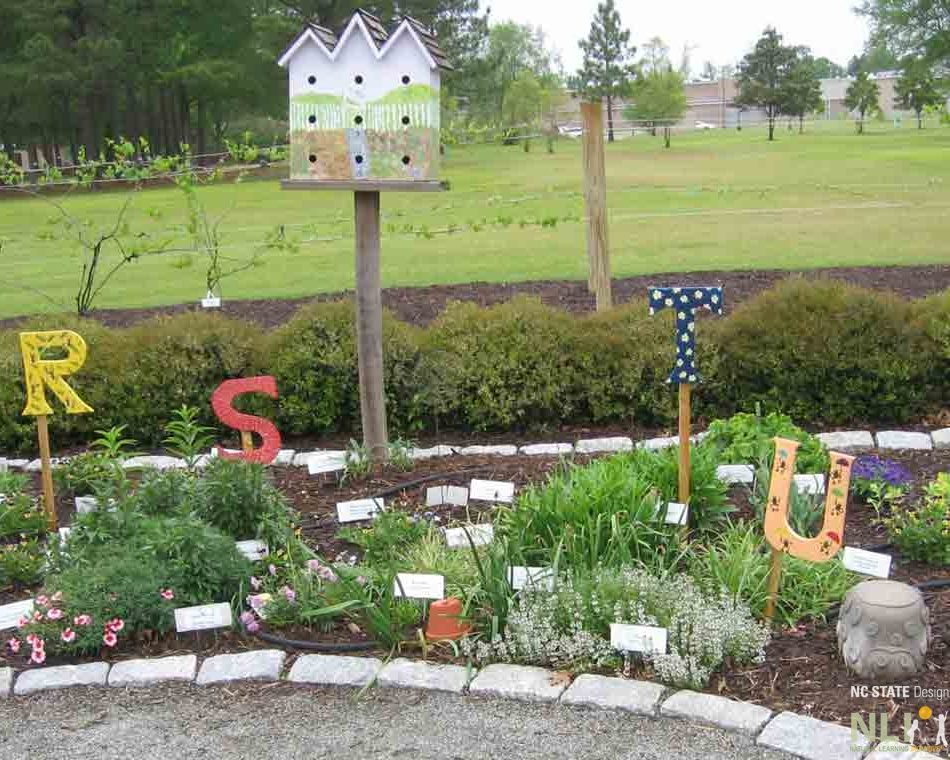
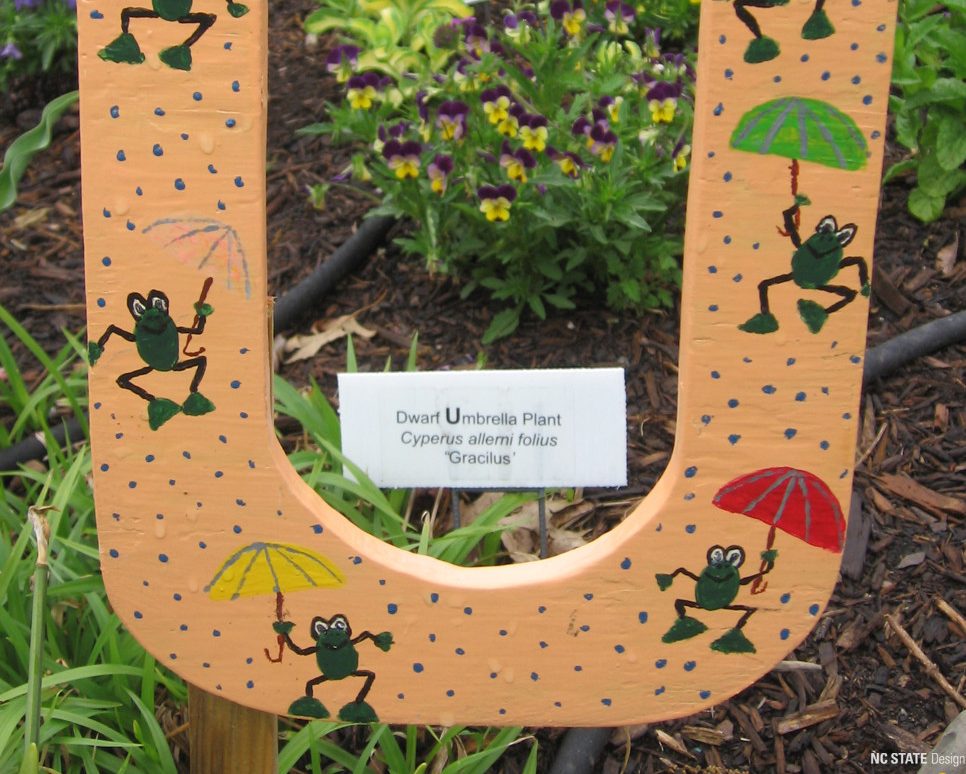
Alphabet Gardens can support language development and early literacy as every plant starts with a letter of the alphabet. This commonplace idea needs to be carefully thought through to make it relevant to different age/skill levels.
Bird and Butterfly Gardens encourage the study of insects and wildlife and the plants that provide food and shelter and attract creatures to the garden. Easy, failsafe option.
Rainbow Gardens made with colorful plants, such as red tomatoes, orange carrots, yellow corn, blueberries, and purple plums help children learn to discriminate using their senses. Easy to implement.
Three Sister’s Gardens reflects the cultural heritage and history by showing how Native Americans traditionally grew corn, beans, and squash together. Provides opportunities for deeper studies of gardening and cultural history—good support for curricular strands on nutrition.
Recipe Gardens offer endless possibilities such as a Salsa Garden with tomatoes, peppers, onions, and cilantro or Fruit Salad Garden with strawberries, blueberries, melons, and other fruits. Easy to implement. Seasonally dependent. Useful links to nutrition topics.
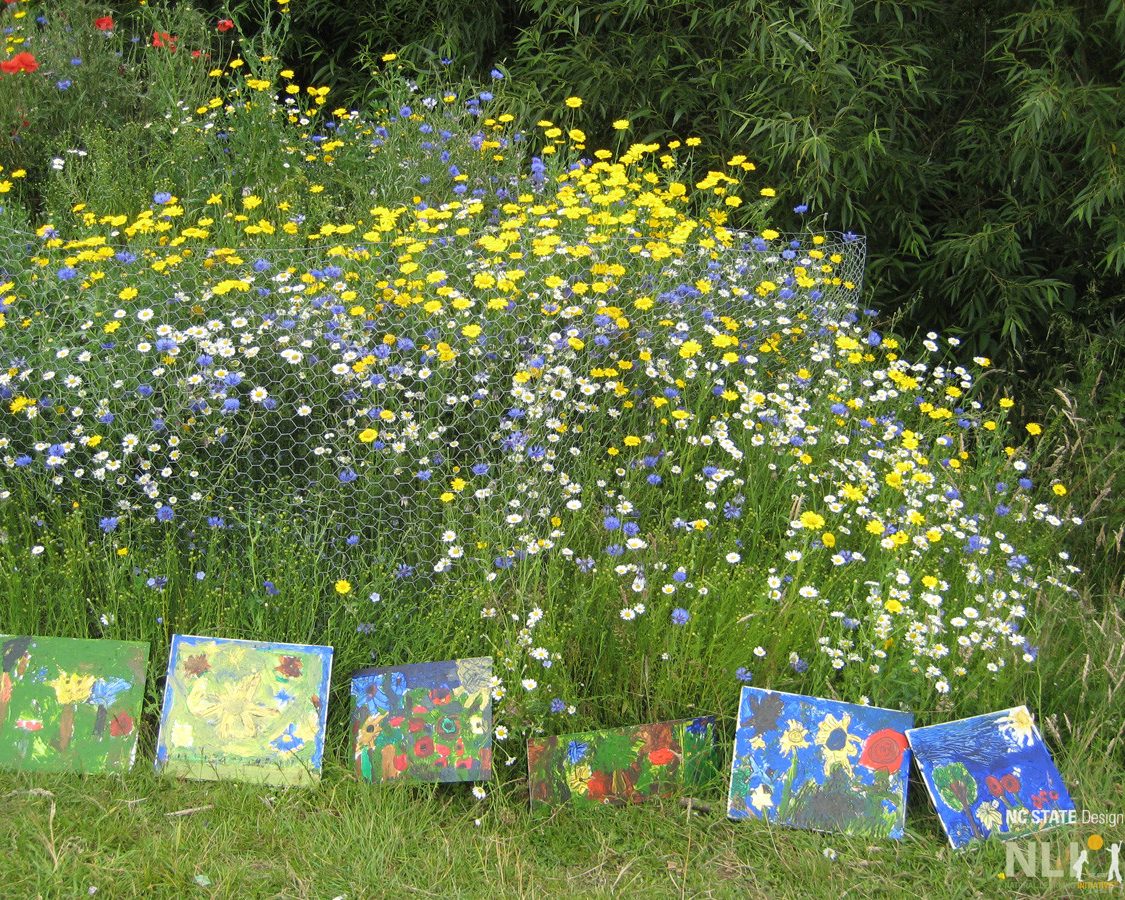
Art Gardens can be beautiful vehicles for free-form creativity by children. Can include plants painted by famous artists such as Monet or van Gogh (easy with sunflowers). Provide an opportunity for a live artist to visit and work with the children on “flower paintings” while they pretend to be the artist.
Sundial Gardens can focus on activities such as telling the time with plants that bloom at various times of day (morning glory, daylily, sunflower, 4 o’clock, moonflowers). Children can stand in the center of the garden and cast their shadows to tell time.
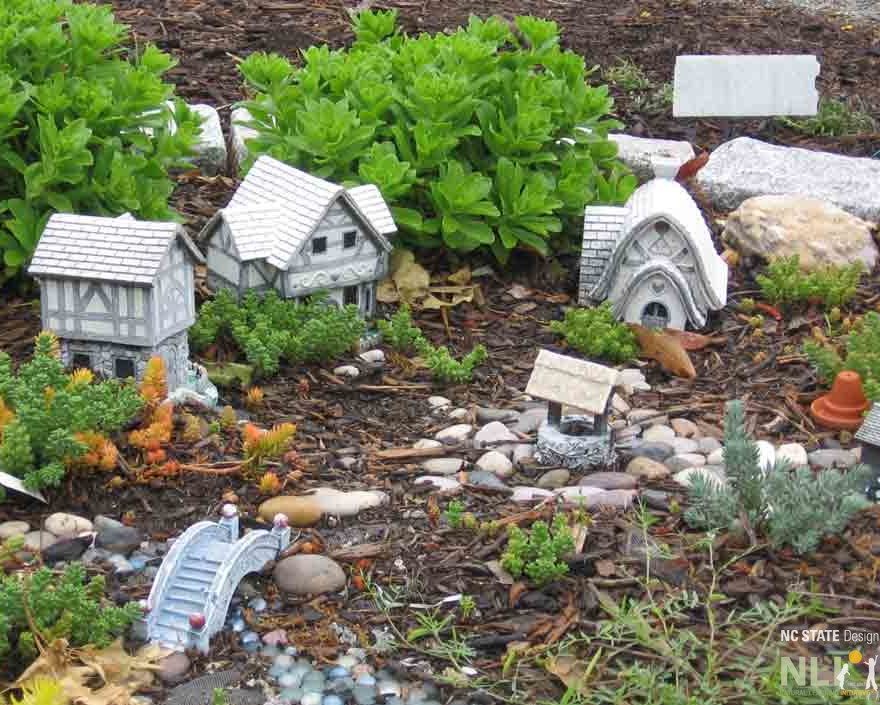
Fairy Gardens provide opportunities for children to create magical worlds that support dramatic play using miniature plants and natural loose parts for building homes for fairies and elves. Include plants with magical names, such as Heuchera’s ‘Magic Wand’.
Sensory gardens provide intimate spaces where young children can be immersed in the scents, textures and colors of plants and related elements. Along with specially selected plants, sensory gardens may also include elements such as wind chimes, wind socks, flags, and children’s art. Two popular forms of sensory gardens are sensory pathways and keyhole gardens.
Sensory pathways
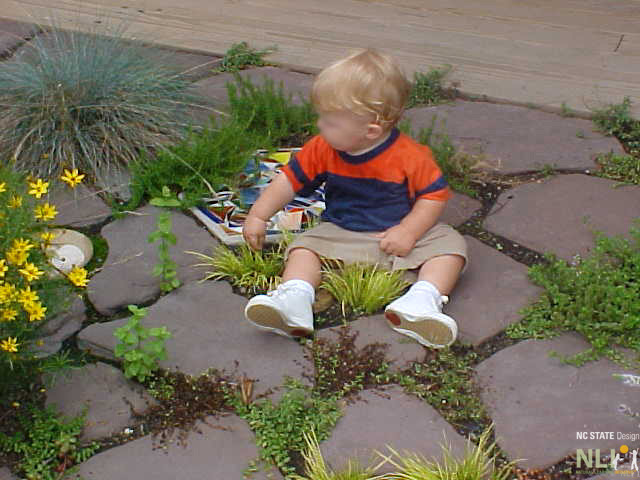
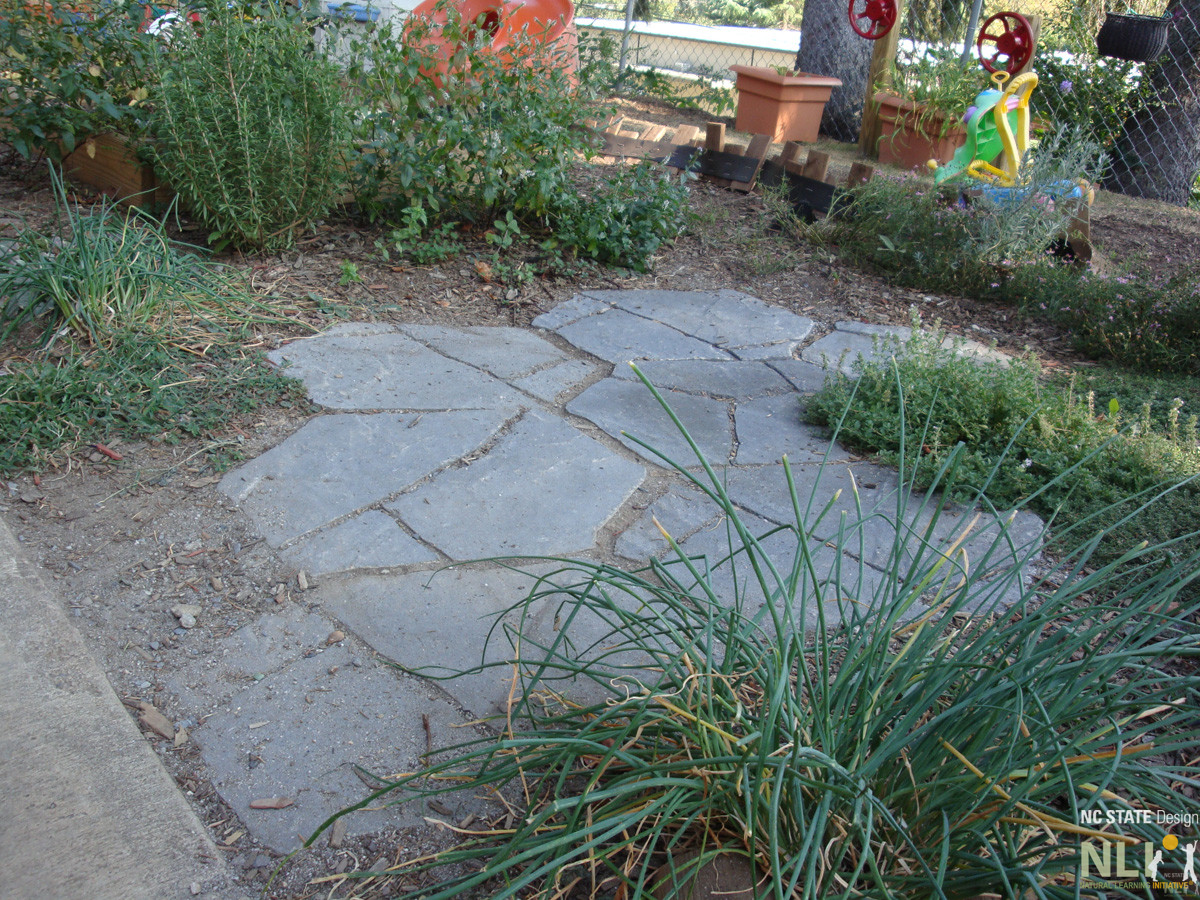
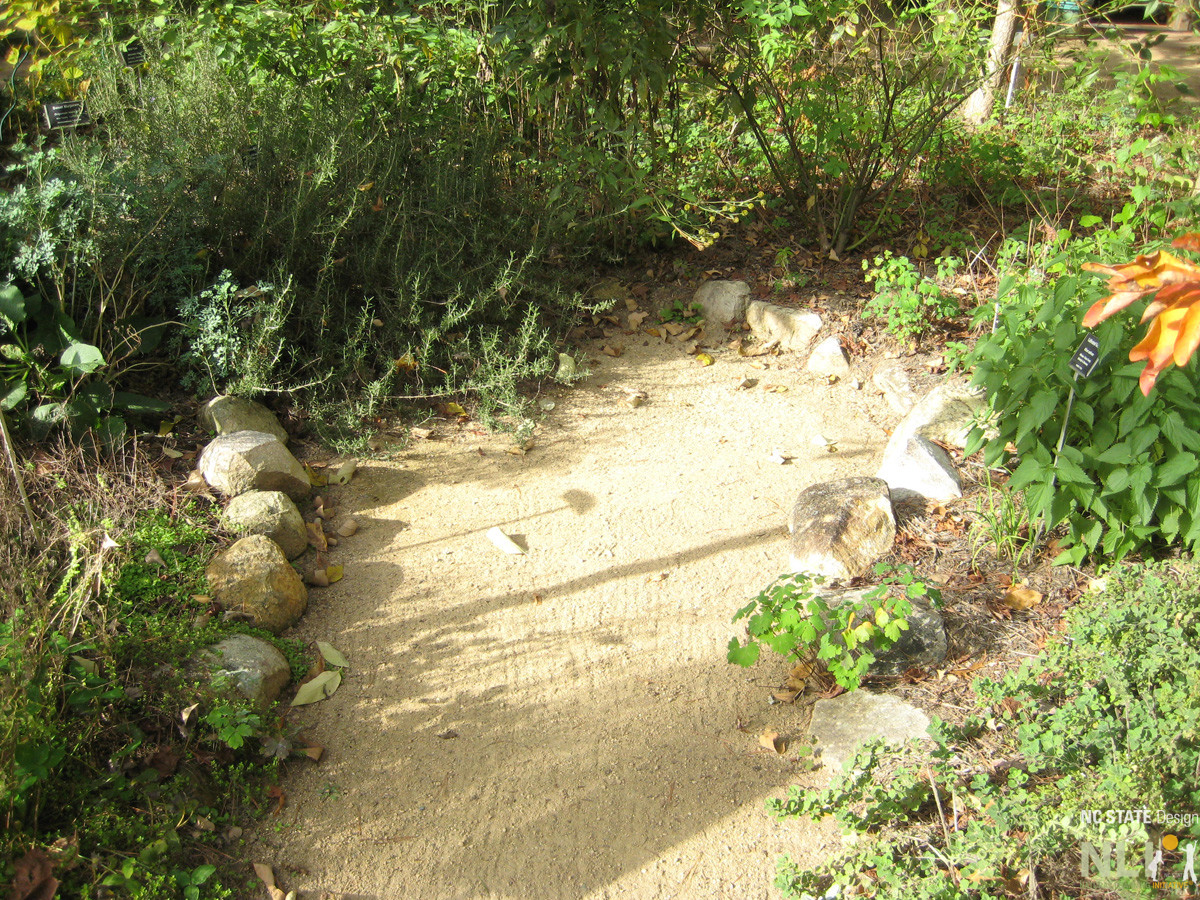
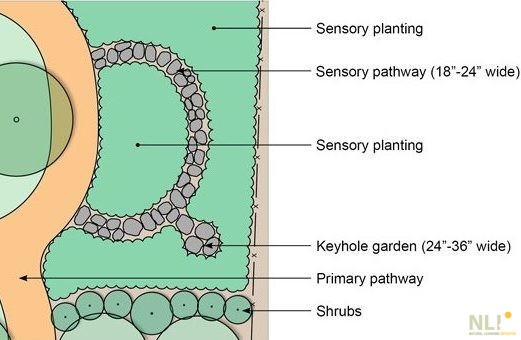
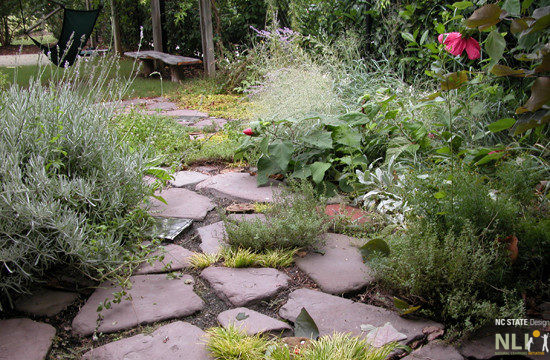
Sensory pathways can be constructed of smooth, flat, stepping stones or tree cookies with gaps wide enough for in-between planting. Stepping stones can be natural stone or concrete or made by children to include hand prints, leaf prints, shells, marbles, colored tile mosaics, or smooth glass. Glass blocks or clay bricks can be laid in the sensory pathway to add additional sensory richness and variety. Sensory pathways should be considered part of the larger pathway system and should not dead end. They can be installed as a narrow (18″-24″), short loop off the primary pathway (Figure 1) or a broad (36″-72″) connection between settings (Figure 2).
Keyhole gardens
Keyhole gardens provide an intimate space to rest while immersed in sensory plants. Keyhole gardens are shaped like a skeleton keyhole with a narrow entry and bulbous, interior space wide enough for a young child or two to sit and reach the plantings on either side (approximately 24” – 36” wide). Keyhole gardens can be installed as a subspace along a sensory path or be designed as a stand-alone setting.
Figure 1: Sensory pathway as a short loop off primary pathway. Keyhole garden added along sensory pathway.
Figure 2. This wide, sensory pathway connects the classroom porch to a vine-covered pergola.
Sensory plantings
Sensory plantings should be hardy, vary in height, color, texture and scent, provide year-round sensory interest, and be planted within easy reach. Perennials, ground covers, ornamental grasses, small shrubs and edible plants can be incorporated, including the following:
What are some seasonal activities to do with children in the garden?
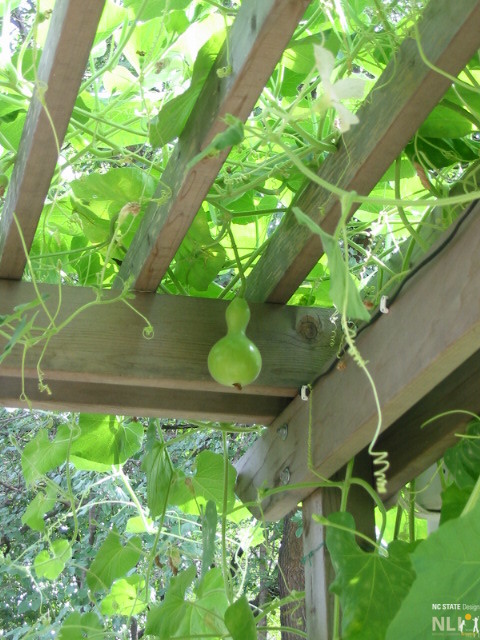
Just one gourd seed (Lagenaria siceraria) planted in early spring will become a lush, 25-foot vine covered with dozens of gourds by fall. After a full summer of growth, the gourds can be harvested and dried, then turned into natural birdhouses that invite birds into your outdoor space. Growing the gourds is engaging and educational for children as they water the plant and watch it grow from seed. Children can also help with preparing the birdhouses to be hung outside, and the experience truly comes full circle when they observe birds nesting in the houses that they helped to create.
Purple martins, Swallows, Wrens and Chickadees will all take to your new creations. Children will enjoy watching the birds gather nesting material, and bringing food to their young as they make your birdhouses their homes.
Here’s how to do it:
Growing
Plant three or four seeds in a slightly raised mound near a fence or trellis so the vines can climb up the structure, off the ground.
Fertilize once a week or so for the first month, then all you have to do is water the plants until they are full-size.
After the first frost in the fall, cut the gourds from the vines, leaving about an inch of the stem on.
Drying
After you cut the gourds from the vine, hang the gourds in a sunny spot outdoors. You can punch a hole in the stem with wire and string them up.
If any of the gourds get soft and rot, throw them away. A little bit of mold on the outside of the gourd is normal as they drying process takes place.
It may take 6 months to dry the gourds. They will be ready when they are very light in weight, and you can hear the seeds inside rattle when you shake the birdhouse gourd.
Making Birdhouses
Soak the gourd for 15 minutes in hot soapy water.
Scrub in the water with fine steel wool. Rinse it well and allow it to dry thoroughly.
To locate the bird’s entrance hole, hold it by its stem between your index finger and thumb and let it hang. Mark a center point along the outermost part of the curve so the hole faces straight out, not toward the sky or the ground.
Drill a circular hole between 1 ½” and 2 ½ inches in diameter and sand the edges of the hole smooth.
Drill several smaller ¼” holes in the bottom of the gourd so that water can drain.
Punch a hole in the neck of the gourd and loop wire through it to create a hook for hanging it outdoors.
Let children decorate and paint the gourds before hanging them in your outdoor space.
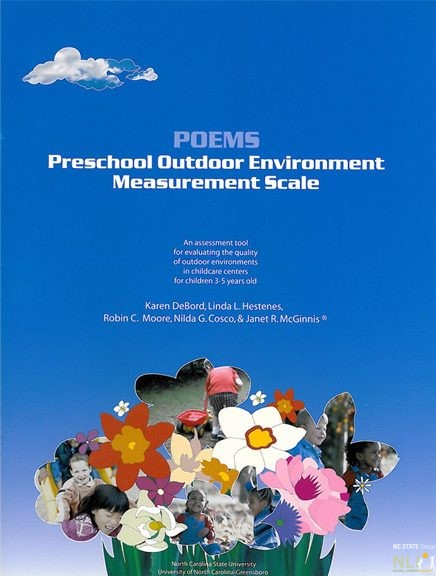
The objective of the instrument is to provide a valid, reliable tool for assessing the quality of outdoor environments and their use and at the same time provide guidance to childcare professionals and site administrators to assist them in making improvements. The instument is structured with five domains, which contain 54 assessment items scored dichotomously(present/not present). Guidance is provided for possible actions to improve environments based on the domain/item scores.
POEMS was developed to serve as:
A checklist for childcare teachers/caregivers and administrators interested in learning more about creating higher quality environments for children’s outdoor play and learning
A checklist for directors and program administrators planning quality outdoor environments for young children or who are working to improve their existing space
A reference tool for landscape architects and garden designers working with childcare programs to design quality outdoor play and learning spaces
A guideline for new construction of childcare facilities
A reference tool for funding agencies supporting healthy, high-quality outdoor play and learning environments for children
A source of guidance for policy initiatives in early childhood development
A research instrument to study the implications of outdoor environmental quality for children’s development and learning.
Research supported by the University of North Carolina Cooperative Extension.
Development team: Dr. Karen DeBord, Family and Consumer Sciences, NC cooperative Extension, NC State University, Dr. Linda Hestenes, University of North Carolina at Greensboro, Prof. Robin Moore, College of Design, NC State University, Nilda Cosco, College of Design, NC State University, Janet McGinnis, NC Department of Public Instruction
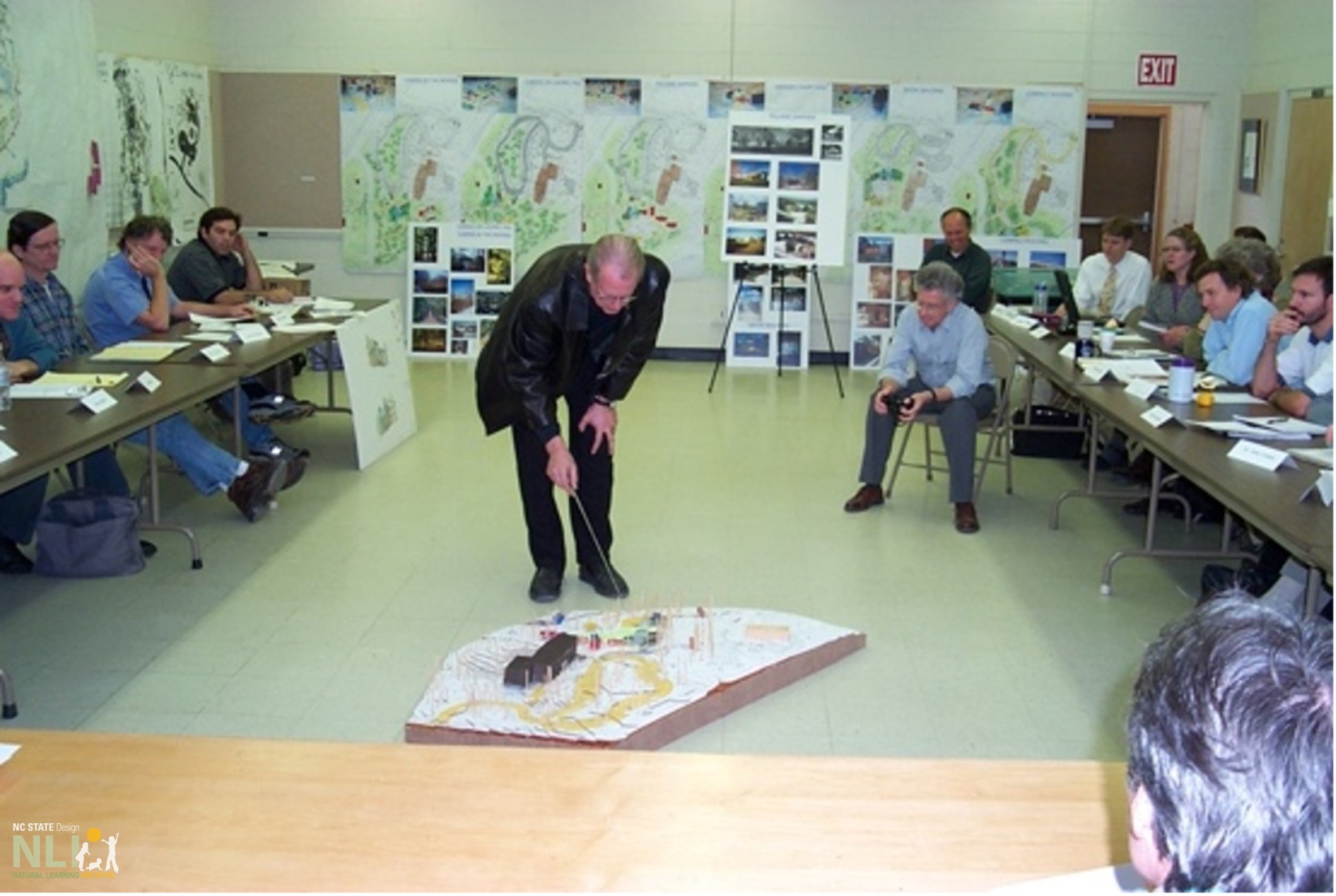
NLI facilitated design programming for the Allen Education Center, including an emphasis on children and families.
Children’s ideas were generated via a design workshop at the local elementary school and a garden walkabout with families that helped curators understand the existing garden’s value as a place to explore and discover nature.
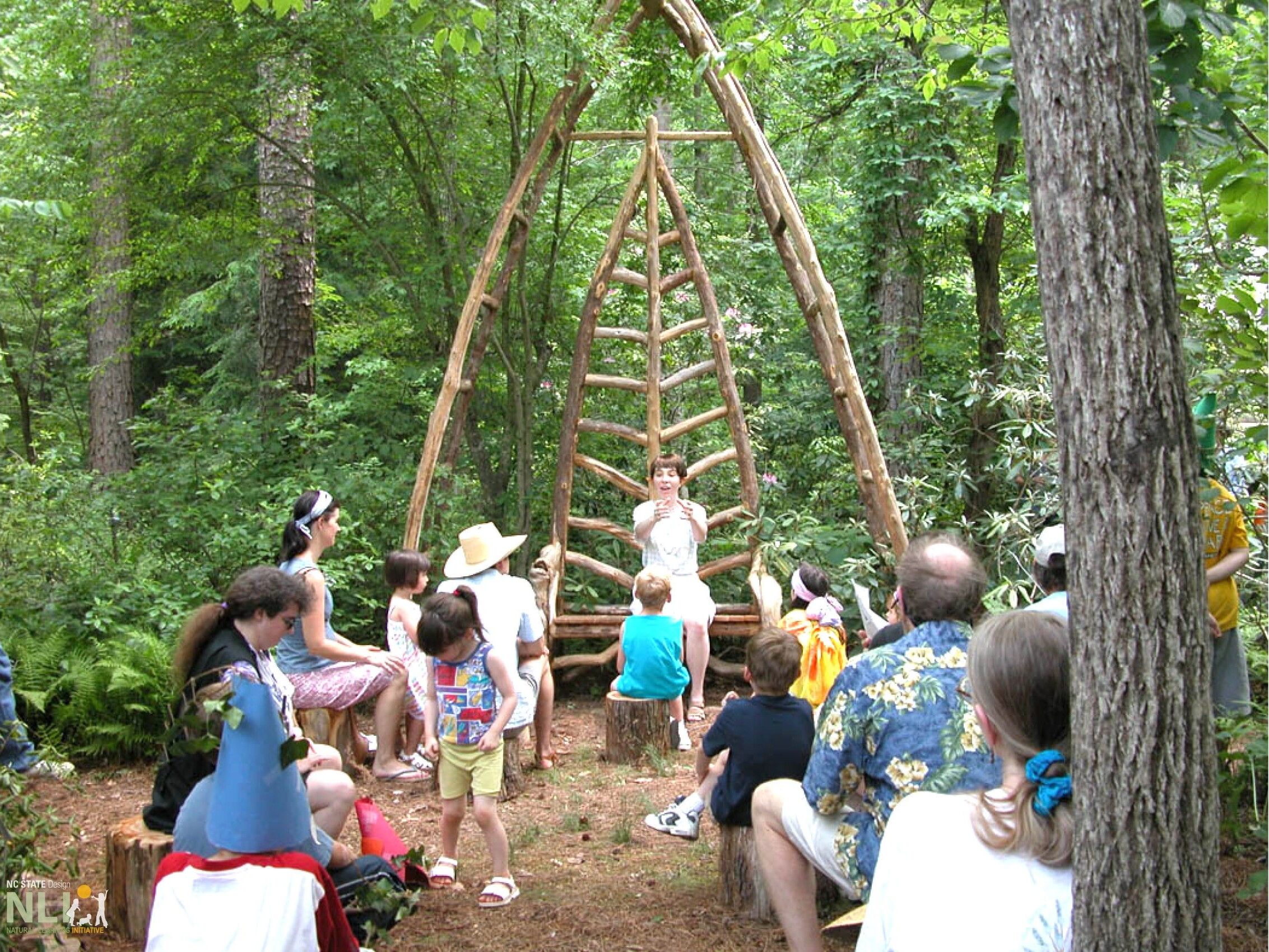
The iconic Storytellers’s Chair was one of several child-friendly additions.
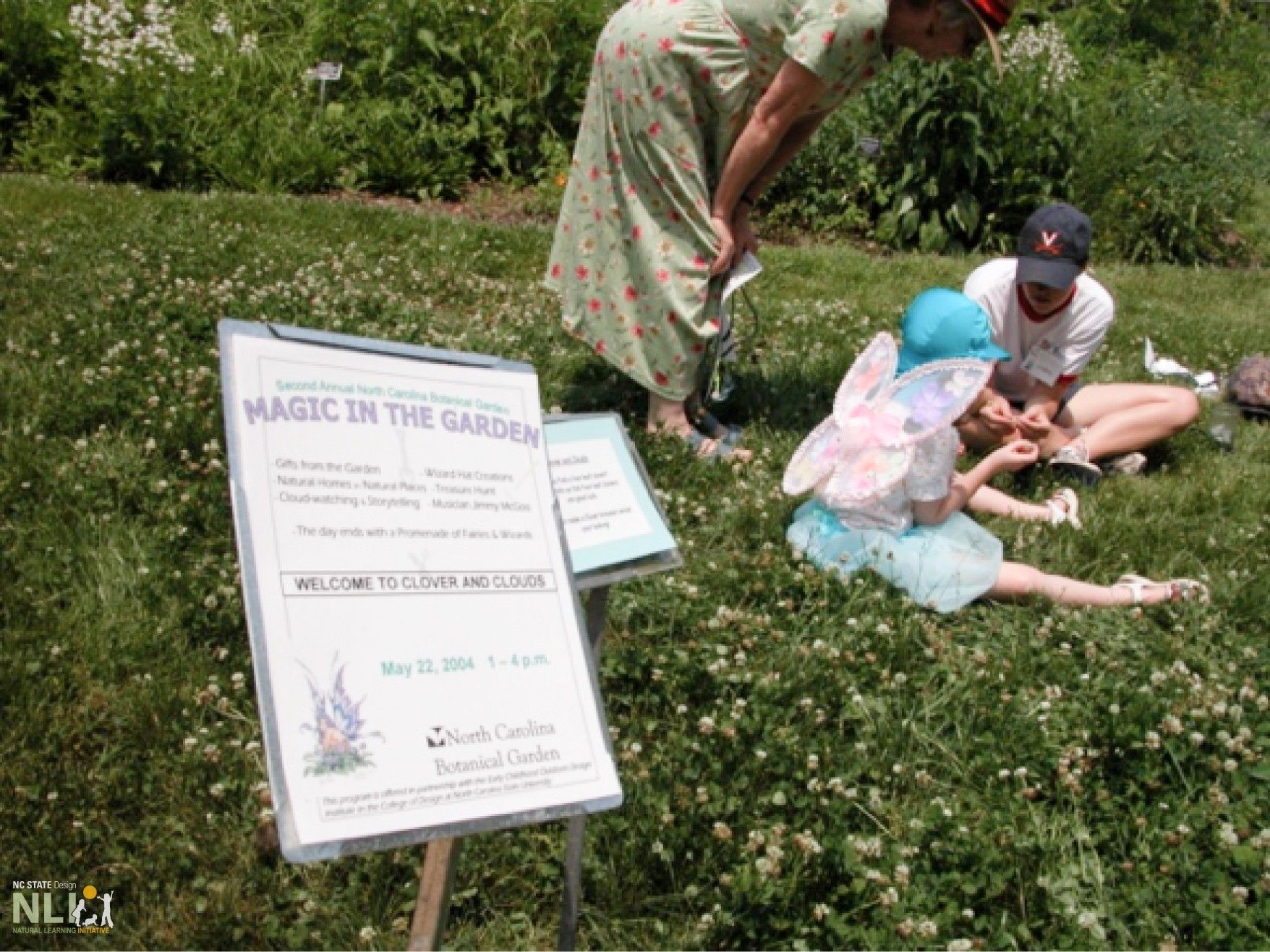
Magic in the Garden became an annual family event – attracting new garden members.
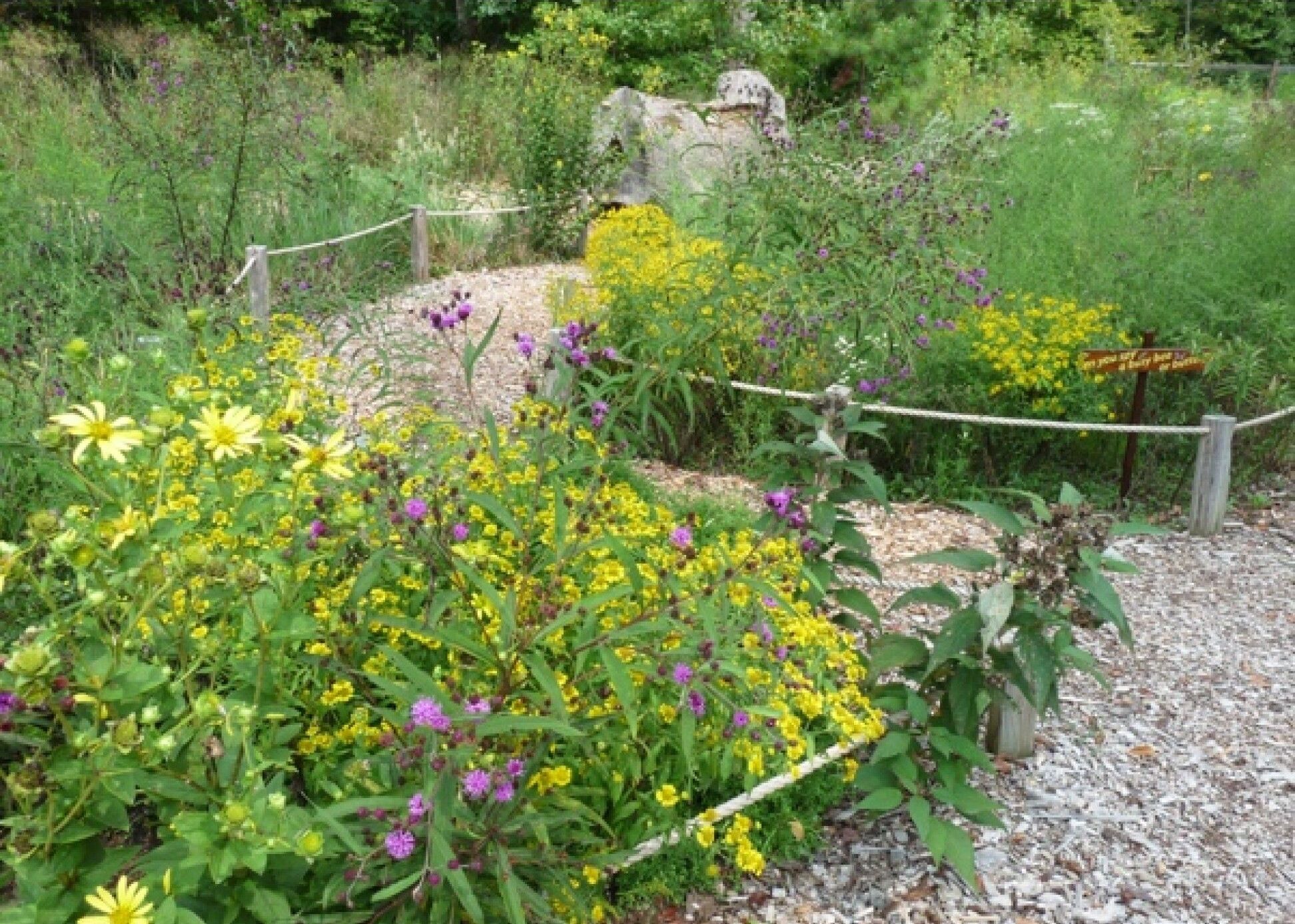
The Children’s Wonder Garden was installed.
NLI’s Annual Design Institute benefited from social breaks on the building-length porch, and hands-on sessions in the gardens, adjacent woods and stream.
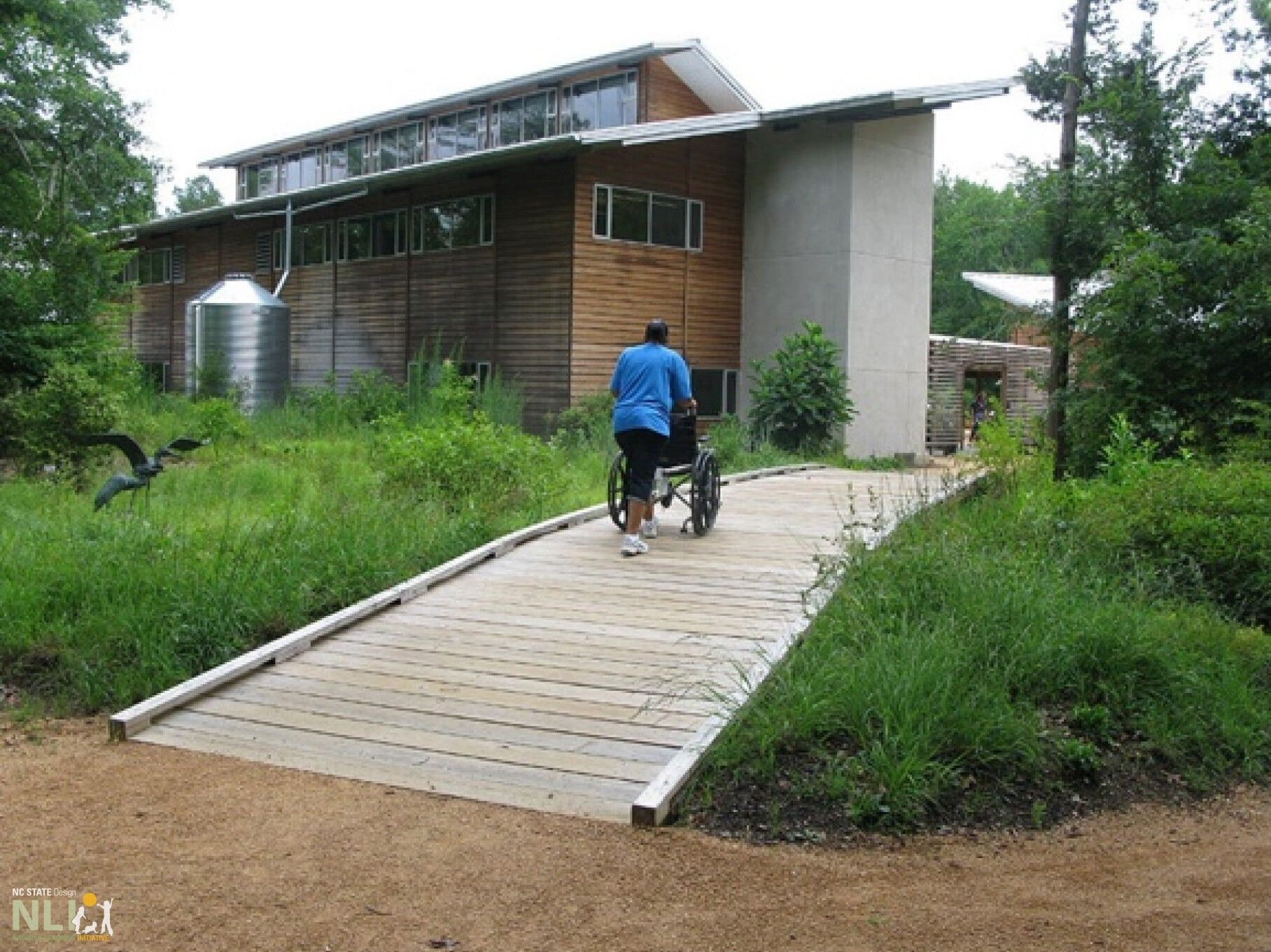
The Design Program described indoor and outdoor spaces, including what became a LEED Platinum building (opened 2006) adjacent to new gardens.
To help garden staff adjust to the needs of children and families, during the several years of fund raising and construction of the Education Center, a series of child-and family-friendly spots were created throughout the existing, mature garden, including the famous Storyteller’s Chair. As part of the 2002 Natural Learning Initiative Annual Design Institute, a special children’s event was jointly organized by NLI and the garden educational staff. Called “Discovering Magic in the Garden,” the event was so successful, it has been offered every year since on a Spring Saturday afternoon.
An evolving Children’s Garden Design
Several years have elapsed since the idea of creating a Children’s Garden was first considered; however, many creative steps forward have been made in the botanical garden as a whole, where the presence of children and families enthusiastically enjoying the plants has become commonplace. The open land around the Education Center has become a nature training site for the annual NLI Design Institute. The Children’s Garden Schematic Design, focused on settings for preschool children and their families is being revised to fit a site adjacent to the education wing of the Education Center.
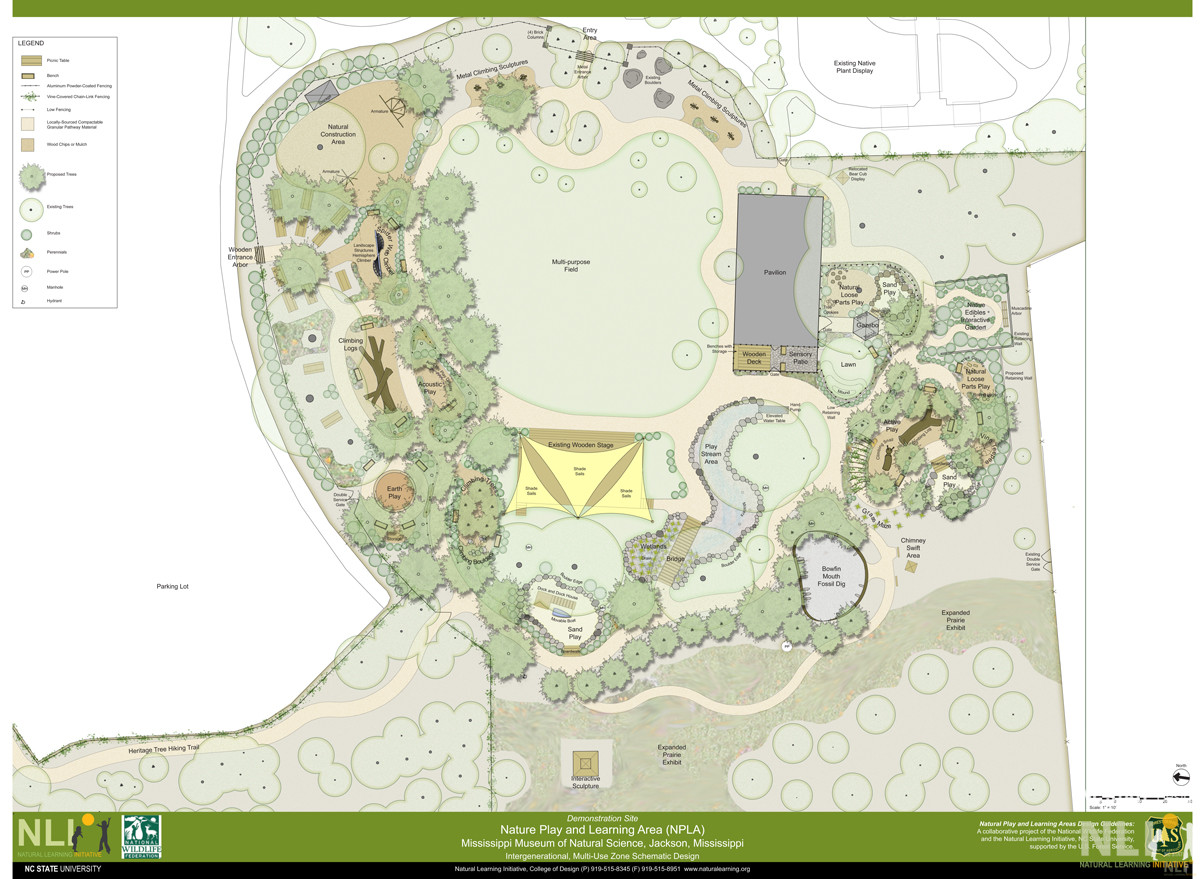
The resulting publication will offer policy and practice guidelines for natural play areas in childhood and family institutions: childcare centers, municipal parks, public schools, and federal lands. Research based design concepts that bring children and families together with their natural environments, in a variety of settings. The project will promote guideline adoption by stakeholder professional associations, governments, and regulatory bodies.
The Nature Play and Learning Area Registry is currently soliciting and compiling a registry of Nature Play and Learning Areas to support and potentially illustrate the best practice criteria specified in the Guidelines.
With the NWF/NLI partnership taking the lead and administering the project, fourteen leading national organizations were called to serve on the project steering committee, by aiding in the development and promotion of the guidelines and providing review going forward. Organizations include the American Society of Landscape Architects, the Centers for Disease Control, the Chicago Park District, the Children & Nature Network, the City Park Alliance, Head Start Body Start National Center for Physical Development and Outdoor Play, the Houston Parks and Recreation Department, Keep America Beautiful, the National Arbor Day Foundation/Dimensions Educational Research Foundation, the National Association of State Park Directors, the National Recreation and Parks Association, the North American Association for Environmental Education, the U.S. Fish and Wildlife Service, and the U.S. Forest Service.
Natural Play & Learning AreasDesign Guidelines Project Steering Committee
Bill BecknerSenior Research Manager, National Recreation and Park Association SL
Cecile CarsonSenior Director of Affiliate Development, Keep America Beautiful
Todd CatchpolePark Manager, Five Rivers MetroParks E
Cheryl CharlesCo-Founder, President, and CEO Emerita, Children & Nature Network CHD
Allen CooperDirector State Education Policy, National Wildlife Federation SL
Luci CorreaCouncil Liaison, Houston Parks and Recreation Department
Nilda CoscoDirector of Programs, Natural Learning Initiative, College of Design, North Carolina Sate University
Rich DoleshVice President for Conservation and Parks, National Recreation and Park Association GS
Cindy DunlapChief, Planning Projects Section, Pennsylvania Department of Conservation and Natural, Resources, Bureau of Recreation and Conservation GS
Blain EckbergTraining Specialist, US Fish and Wildlife Service CHD
Mary EysenbachDirector of Conservatories, Chicago Park District
Ken FinchPresident, Green Hearts Institute for Nature in Childhood E
Teri HendyPresident, Sitemasters, Inc. SL
Bill Hopple Executive Director, Cincinnati Nature Center
Fran Mainella Visiting Scholar Clemson University, Chair of Children & Nature Network, Co-chair of US Play Coalition, 16th Director of National Park Service, US Play Coalition
Michelle MathisPrincipal Designer, Learning Landscapes Design and Oregon Natural Play Initiative GS
Dee MerriamCommunity Planner, Centers for Disease Control and Prevention GS
Robin MooreProfessor of Landscape Architecture, Director Natural Learning Initiative, College of Design, North Carolina State University
Sandi OlekRepresentative, Maryland Department of Nature Resources GS
Stephanie OlmoreDirector of Program Assessment National Association for the Education of Young Children
Carrie ScarffDeputy Director Five Rivers MetroParks
Bora SimmonsDirector, National Project for Excellence in Environmental Education North American Association for Environmental Education E
Nancy StrempleNatural Resource Specialist, Executive Staff, National Urban and Community Forestry Advisory Council US Forest Service
Joe TurnerDirector Houston Parks and Recreation Department
Susie WirthOutreach Director Arbor Day Foundation and Dimensions Educational Research Foundation CHD
Additional Thanks to
Anita AsperdtPrincipal Landscape Architect, Adjunct Faculty, LandCurrent, University of Oregon, University of British Columbia SL
Dennis CaseyDirector of Education and Public Programs, Virginia Museum of Natural History GS
Kim CatchpoleExtension Educator, Program Director, Adventure Central (A partnership of Five Rivers MetroParks and Ohio State University) GS
Erik DahlstromOutdoor Recreation Coordinator, Five Rivers MetroParks SL
Victor EldertonPrincipal co-Administrator, North Vancouver Outdoor School, SD 44 E
Heather FoxEducation Specialist, Nature Explore Program MM
Elaine GibsonNature Education Specialist, Santa Barbara Museum of Natural History SL
Nancy HerronOutreach & Education Director, Texas Parks and Wildlife Department E
Heather JohnsonProject Director, Initiatives, Association of Children’s Museums CHD
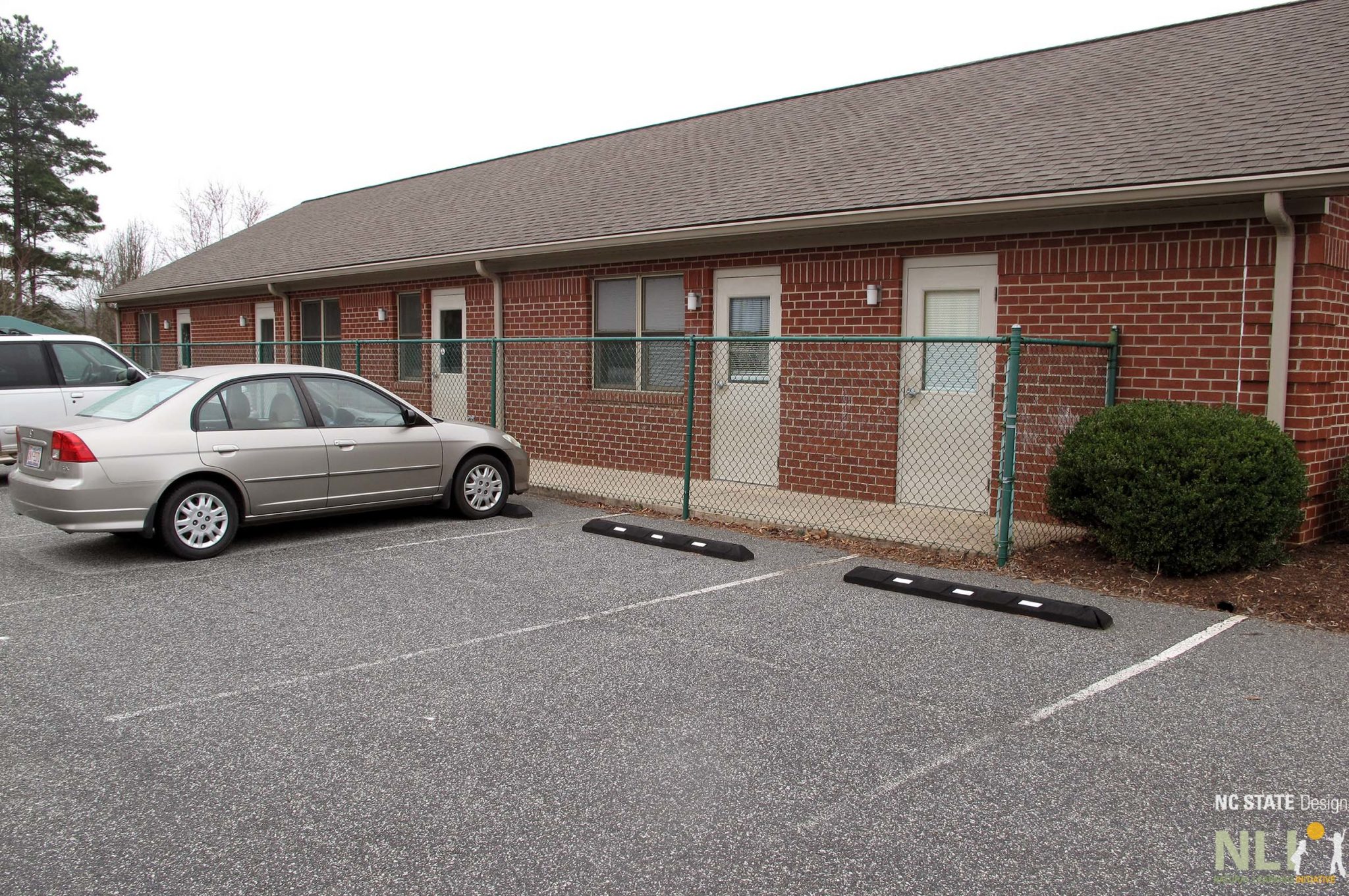
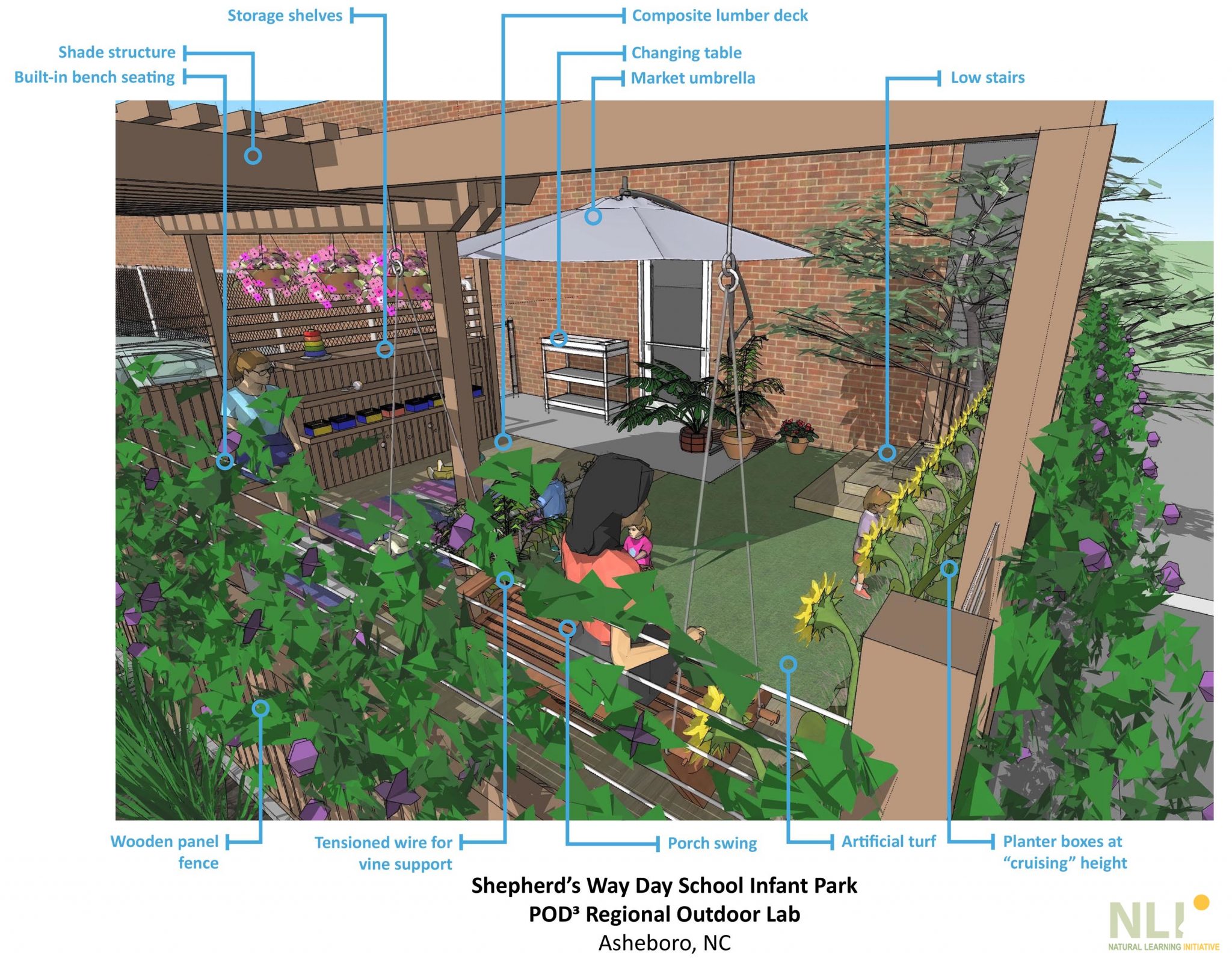
Shepherd’s Way Day School participated in POD II, as a demonstration center. The NLI design team worked with the Shepherd’s Way and Randolph County Partnership for Children staff in 2010 to develop a concept plan for their outdoor learning environment.