Blog

  • NLI Online Short Courses

    NLI Online Short Courses

    1. Which course should I take?

    Childcare Outdoor Learning Environments Quality Tool (COLEQT) is a portable tool aimed at assessing outdoor learning environments (OLE) quality across four levels of 13 built environment activity settings considered to be strongly supportive of healthy child development. This training is an introduction to the Childcare Outdoor Learning Environments Quality Tool (COLEQT). The objective of the instrument is to provide a valid, reliable tool for assessing the quality of outdoor environments and their use and at the same time provide guidance to childcare professionals and site administrators to assist them in making improvements.

    2. What can I expect to get from the program?

    • Understand what makes higher quality environments for children’s outdoor play and learning.
    • Describe the settings and components found in a high quality outdoor learning environment using the proper terminology.
    • Demonstrate ability to assess outdoor learning environments using POEMS as a research instrument to study the implications of outdoor environmental quality on children’s development and learning.
    • Demonstrate ability to use POEMS as an improvement tool by interpreting results and creating action plans for enhancement.
    • Apply methods for creating and managing high quality environments to support outdoor experiential learning over time.
    • Earn 0.2 Continuing Education Units (CEUs) from North Carolina State University.

    Childcare Outdoor Learning Environments Quality Tool (COLEQT): After completing the Childcare Outdoor Learning Environments Quality Tool (COLEQT) training, participants will be able to:

    • Learn how to identify high quality settings and components for children’s outdoor play and learning.
    • Describe activity settings and components using an environment-behavior approach.
    • Assess outdoor learning environments using COLEQT’s four level rating system.
    • Use COLEQT as a tool to increase outdoor quality for children’s healthy development.
    • Discover how to use the rating items to guide improvement plans.
    • Earn 0.2 Continuing Education Units (CEUs) from North Carolina State University.
    3. Will I receive credit hours I can use toward a university degree program?

    No, you will not receive credit hours you can use toward a degree program for completing either course. The courses are continuing education courses offered to professionals.

    4. What software or equipment is required to take the courses?

    Online access: An internet connection is needed to access course materials, take quizzes, submit assignments, and participate in forums and discussions for both courses.

    5. What are the requirements for completing the courses?

    Exercises: Each of the first modules in each course have a short exercise that must be completed to pass the course. Students must earn at least 80% on each of these exercises by the end date of the course (announced the beginning of the course on the course website) to earn the certificate. Students are allowed to retake quizzes twice and only the highest grade on each quiz will count.

    Final Knowledge Assessment: To pass the course, participants must earn at least an 80% on a final knowledge assessment by the end date of the course to earn the certificate. Students are allowed to retake the assessment twice and only the highest grade will count

    6. What is the timeframe for completion of the course?

    Students are expected to put in approximately 2 hours of effort over the course. The class is self-paced. Students have to complete all course requirements before the course end date.

    7. What is the cost for participation?

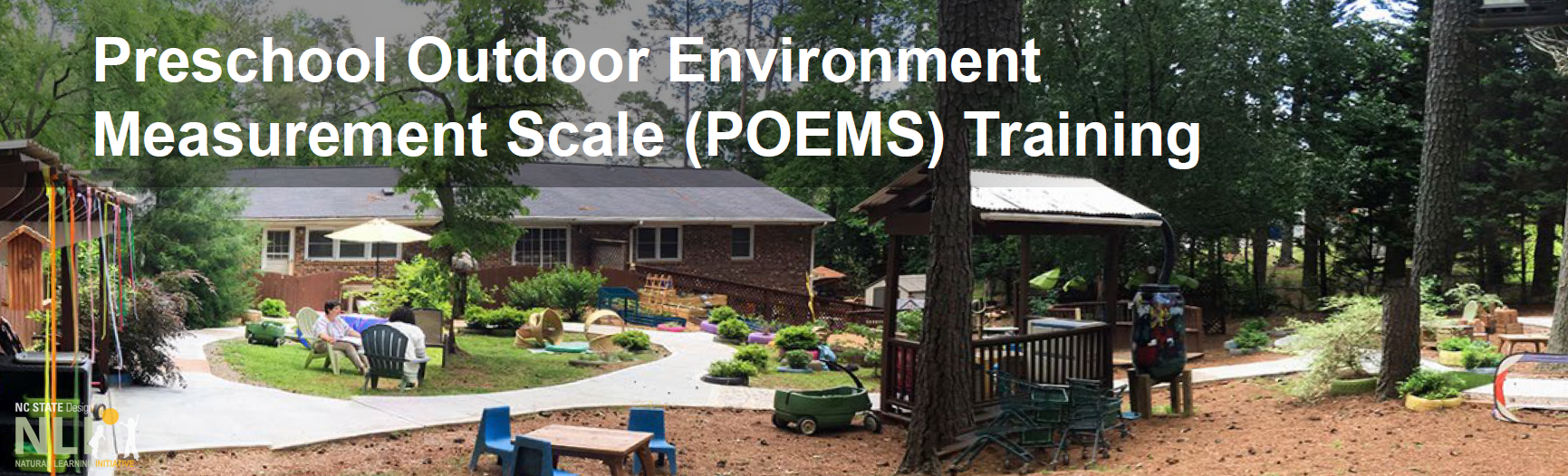
    Preschool Outdoor Environment Measurement Scale (POEMS): The registration cost for the training course is $50.
    Childcare Outdoor Learning Environments Quality Tool (COLEQT): The registration cost for the training course is $50.

    8. How do I register for the course?

    Go to the links to the right for more information on each course and the instructions to register. Links to register will be added when the next section of the course opens.

    9. Will I be able to access the course website after the course end date?

    Unfortunately, participants do not have access to the course website after the course end date.

    10. Can course participants download handouts/videos/lectures from the course website?

    The Program materials and contents are owned by NC State University and subject to the university’s copyright. They cannot be used or reproduced without NC State’s permission. At this time, NC State is not looking to license these materials or allow others to use them for training purposes. The university would prefer that interested individuals and organizations take the course to learn how to promote and engage in such efforts related to the Program.

    You won’t be able to download videos/lectures from the course website. A small number of the videos are publicly available on YouTube, and can be shared as desired.

    11. Is it possible to withdraw from the course after registering?

    To drop the course and receive a refund, send a notification by email to Felicia Atkinson ([email protected]) no later than 5 p.m. (Eastern Time) 10 business days prior to the start of the course. A $25.00 fee will be charged for cancellations less than 10 business days prior to the start of the course. No reimbursement will be made after the start of the course, but you may designate a substitute at any time to attend in your place.

    12. If I am unable to complete the course, am I eligible to take the course in a later session/semester?

    Participants who are unable to complete all requirements by the course end date and wish to receive a certificate must reach out to the Natural Learning Initiative at least 3 business days before the course end date by sending a message with a transfer request. ([email protected]).

    If a transfer is requested within the first 5 days of the course, participants can be transferred once to an upcoming section at no additional cost. If requested after the first 5 days of the course and at least 3 business days before the course end date, participants can be transferred once to an upcoming section for a transfer fee of $25.

    Registration in the next upcoming section with a waived registration fee is for one time only. Subsequent registrations must be paid at the advertised rate.

    Participants cannot be transferred to the upcoming section if a transfer is requested 2 business days or less before or after the course end date. Participants will be required to register again and pay the advertised registration rate.

    If transferred to an upcoming section, participants will be required to meet all of the requirements in the new section to receive the course completion certificate and 0.2 CEUs.

    13. Whom should I contact if I am having issues accessing the course?

    Please send an email to [email protected] including the course name if you are having course access issues so that they can help you with the process.

    Select a Course
    POEMS Header
    COLEQT Banner
  • Free Wood Chips!

    Free Wood Chips!

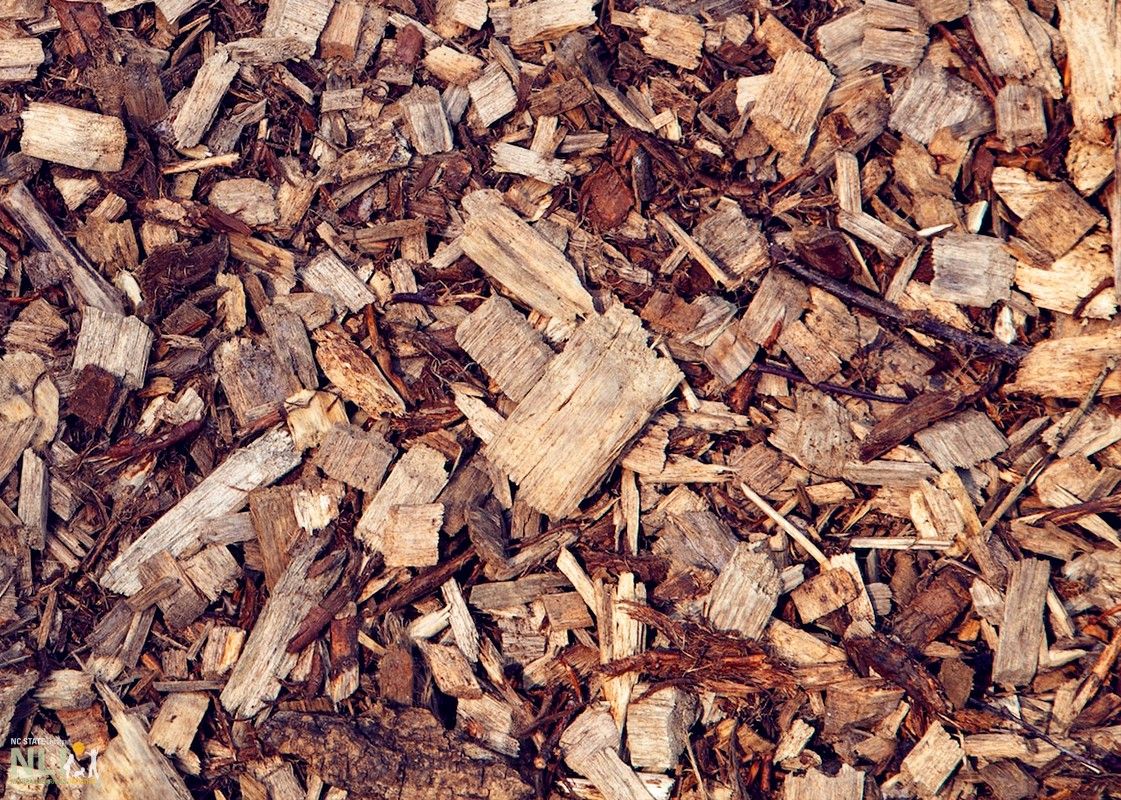
    Local arborist companies often provide free wood chips from trees they trim to anyone in the area who requests them.

    Chips may include tiny sticks, leaves, etc., but they work well as mulch on pathways and as a ground cover in heavily used/shady/muddy areas where grass won’t grow. Chips can also be used around perennials and in vegetable beds to deter weed growth, keep the soil moist, and conserve water. Some experts note the risk of fresh chips depleting nitrogen in vegetable beds. On the other hand, NLI’s childcare hands-on gardening collaborator says, “Maybe, but chips are free and in my experience work just fine. They decompose and can be dug in at the end of the season.” The size of a load of chips is usually close to 20 yards – a large pile! Good to plan ahead of time where to dump so circulation is not blocked. Also, line up volunteers with barrows to spread it. Logs can also be requested that may be “sittable” or could be used to define settings, etc. Chips are an organic, renewable resource. By giving them away, tree-trimming companies avoid landfill costs. It’s a win-win. Where NLI is located at NC State, Wake County, two companies are Chip Drop and Leaf & Limb. Check where you are for similar offers.

    Options in Wake County:

    Chip Drop

    Leaf & Limb

    woodchips
  • Earth Day 2023

    Earth Day 2023

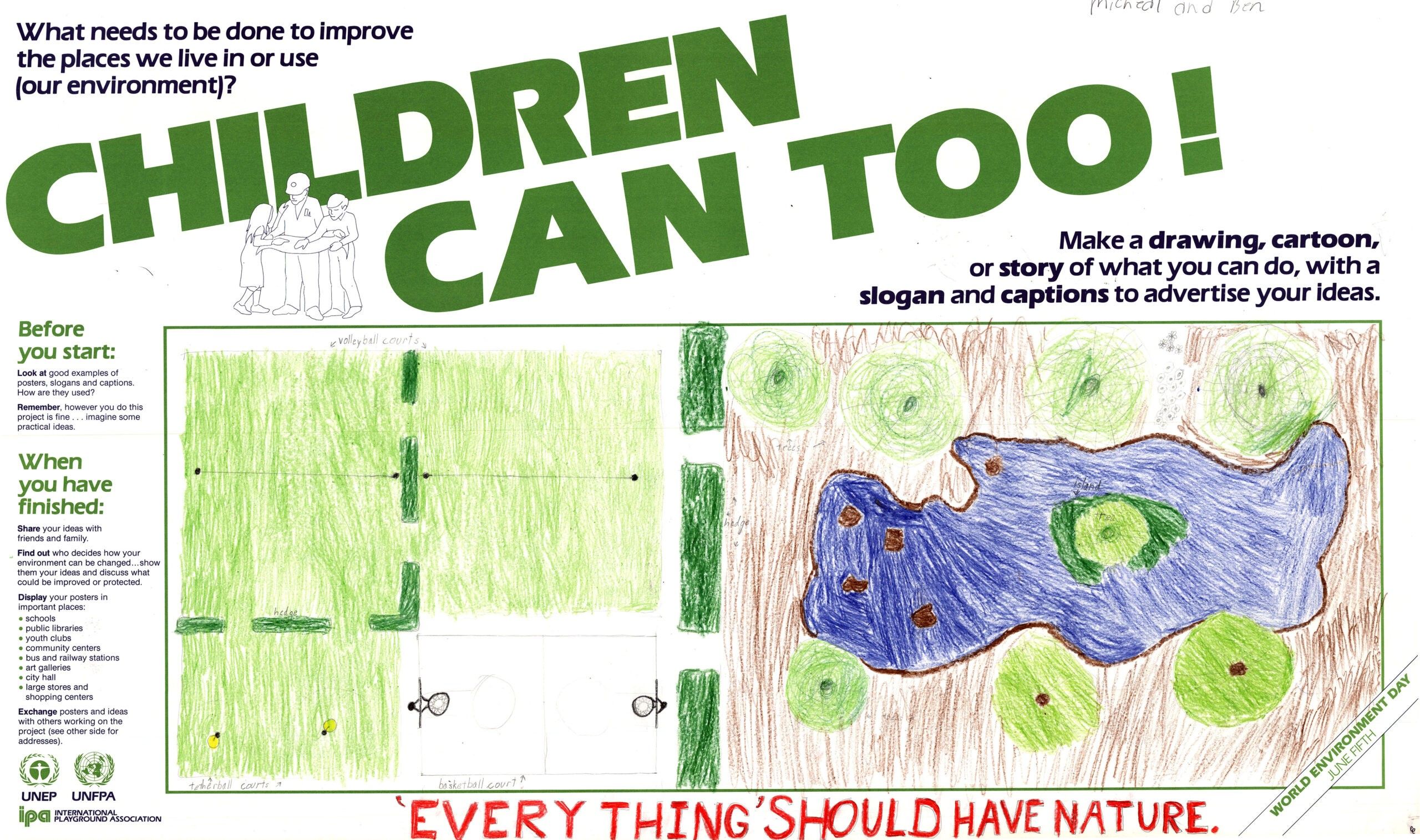
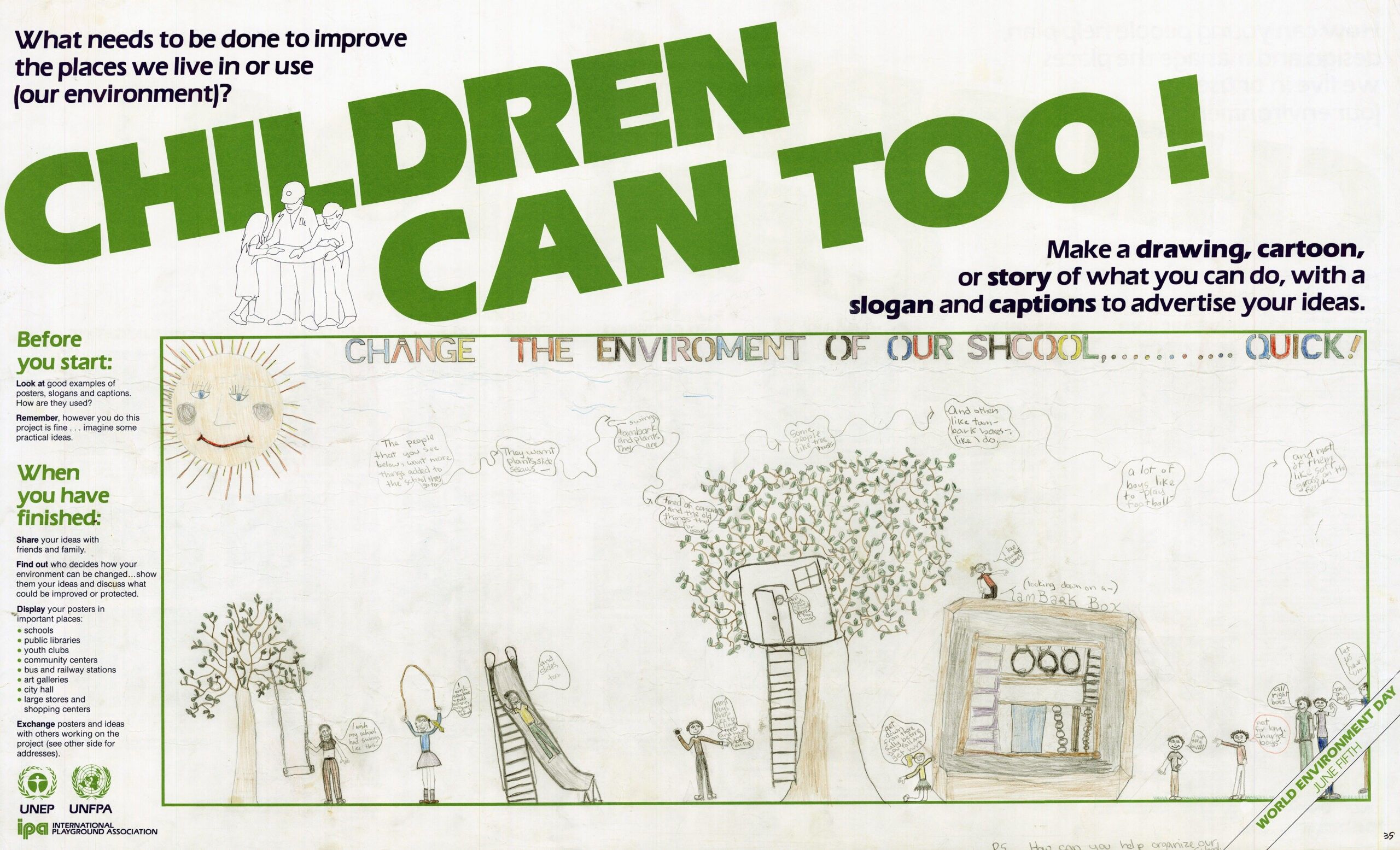
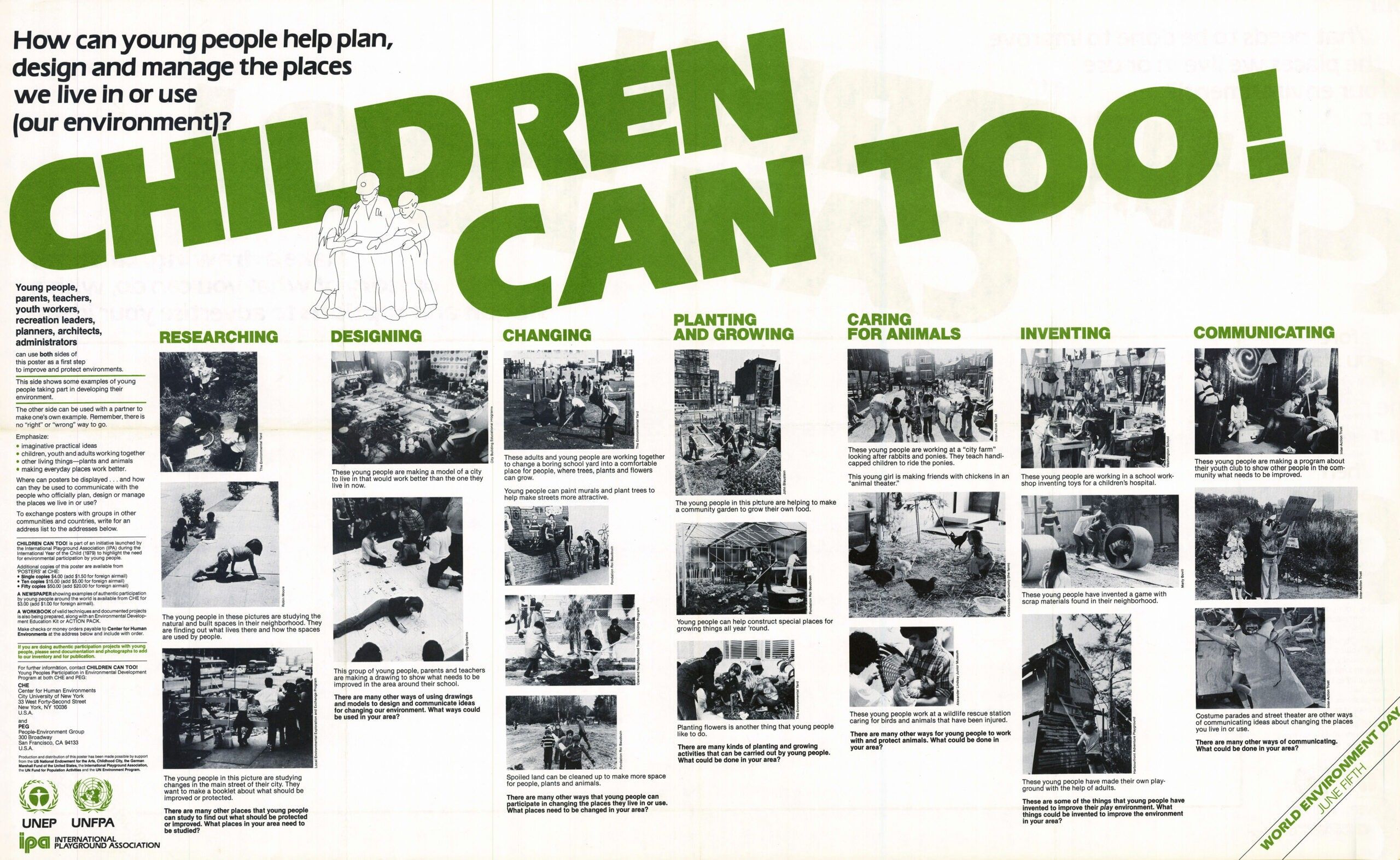
    “EVERYTHING SHOULD HAVE NATURE” was a World Environment Day message from an 11-year-old for the International Year of the Child (1979), participating in CHILDREN CAN TOO! – a project of the U.S. branch of IPA (International Play Association)* – an organization advocating for the right to play of children and youth, and their right to participate in decisions affecting their daily environment. The interactive poster invited children and youth to “Make a drawing, cartoon, or story of what you can do, with a slogan and captions to advertise your ideas.”

    The other side poses a question to adults working with children and youth: “How can young people help plan, design, and manage the places we live in or use (our environment)? The sequence of seven action steps, informed by field experience (researching, designing, changing, planting and growing, caring for animals, inventing, and communicating), offers empowering guidance, now strengthened by digital tools.

    *IPA was founded in 1961 as the International Playground Association, a voluntary, international NGO. In the 1980s-1990s, IPA became the International Association for the Child’s Right to Play, to promote that right, as Article 31 of the Convention on the Rights of the Child (CRC), ratified by the United Nations in 1989. Robin Moore was the International President of IPA, from 1990-1999. In 1979, with IPA-USA, he led the CHILDREN CAN TOO! project with Roger Hart, then Director of the Children’s Environments Research Group (CERG), City University of New York. IPA is now the International Play Association, with members in approximately 40 countries in both Global Hemispheres. Note: The United States is the only UN member nation yet to ratify the CRC.

    child's drawing of a nature playscape
    childs drawing of a nature playscape
    children engaging in the process of redesigning their outdoor learning environments
  • Texas Tech Colleague Wins Poster Competition

    Texas Tech Colleague Wins Poster Competition

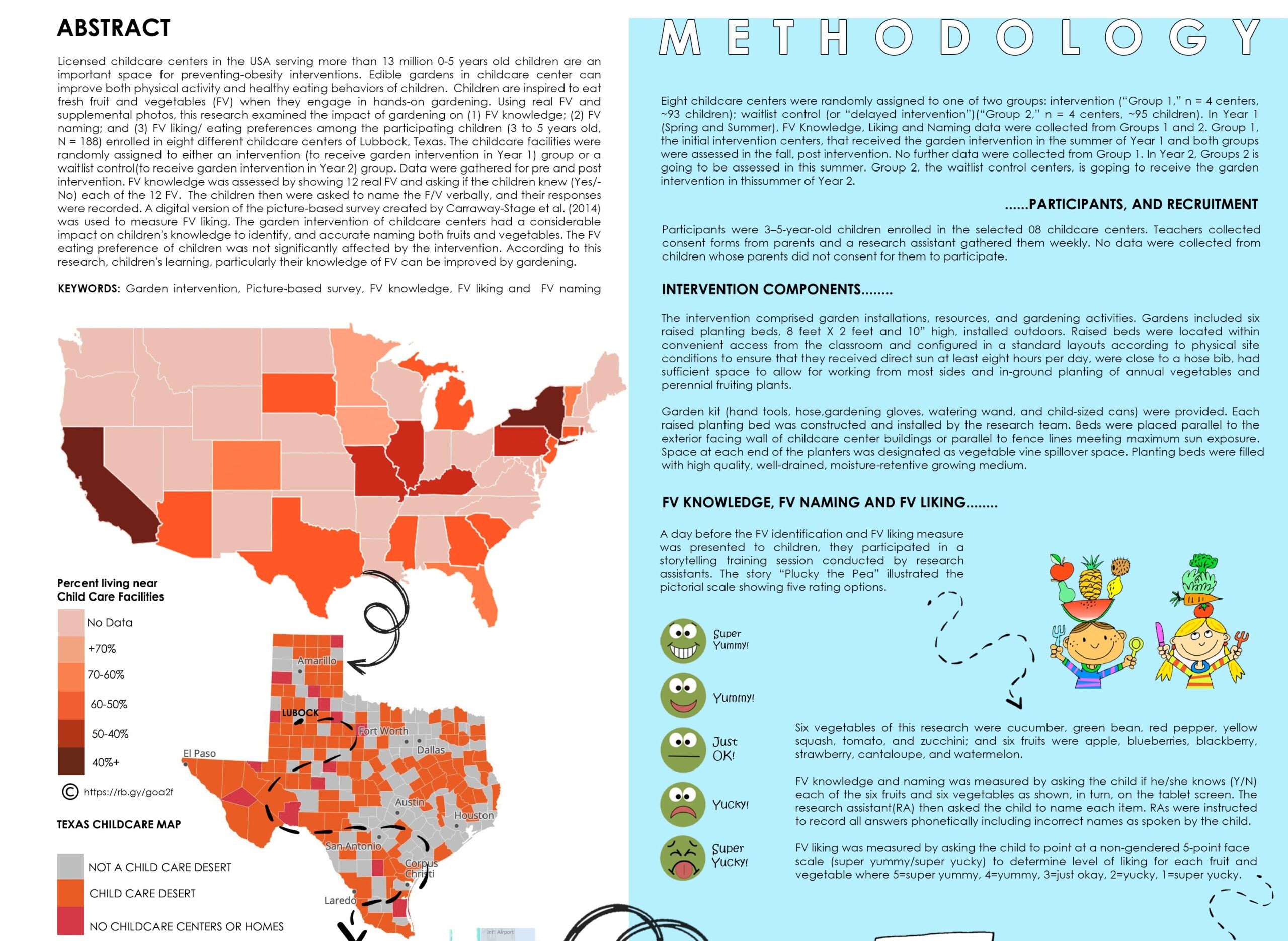
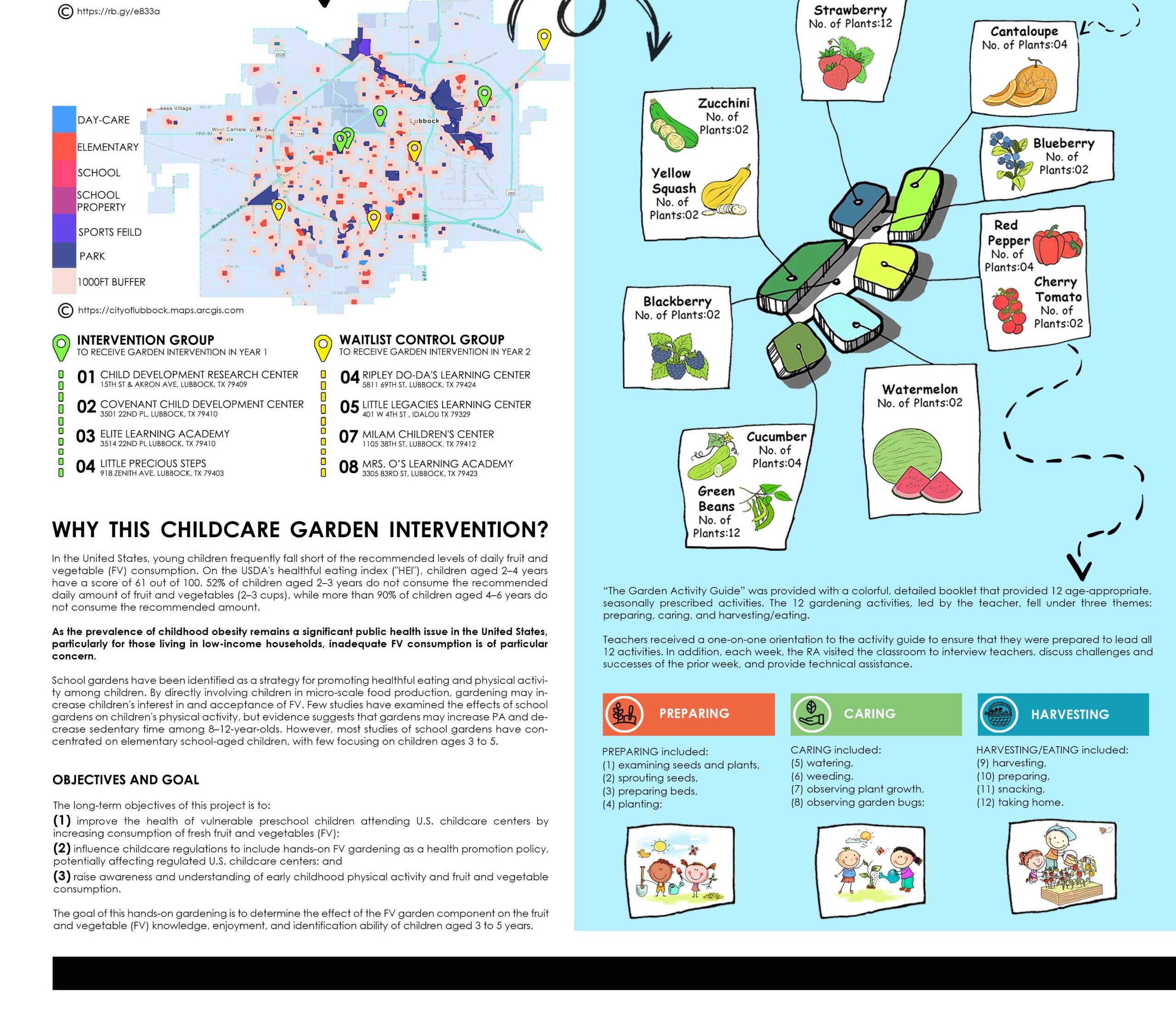
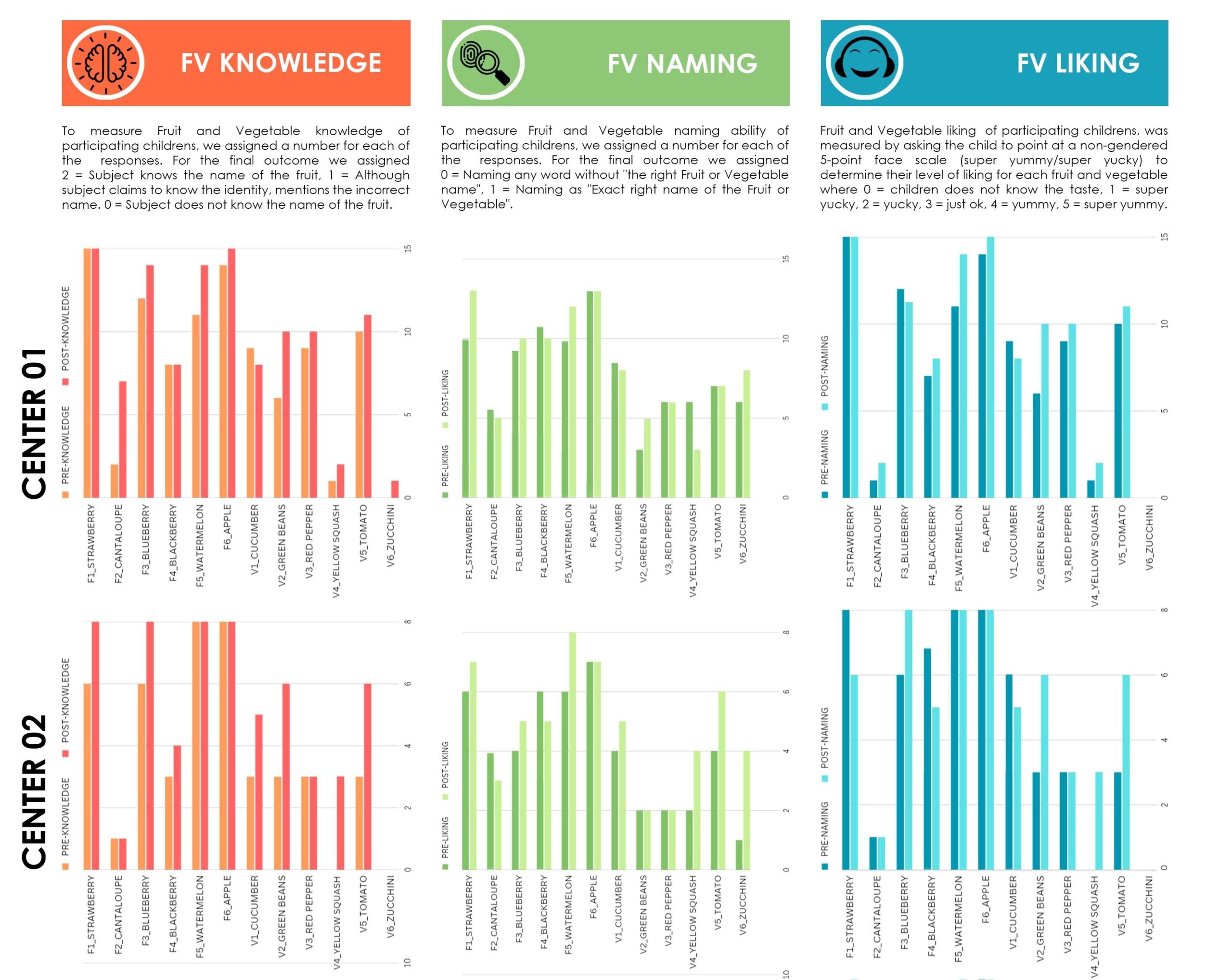
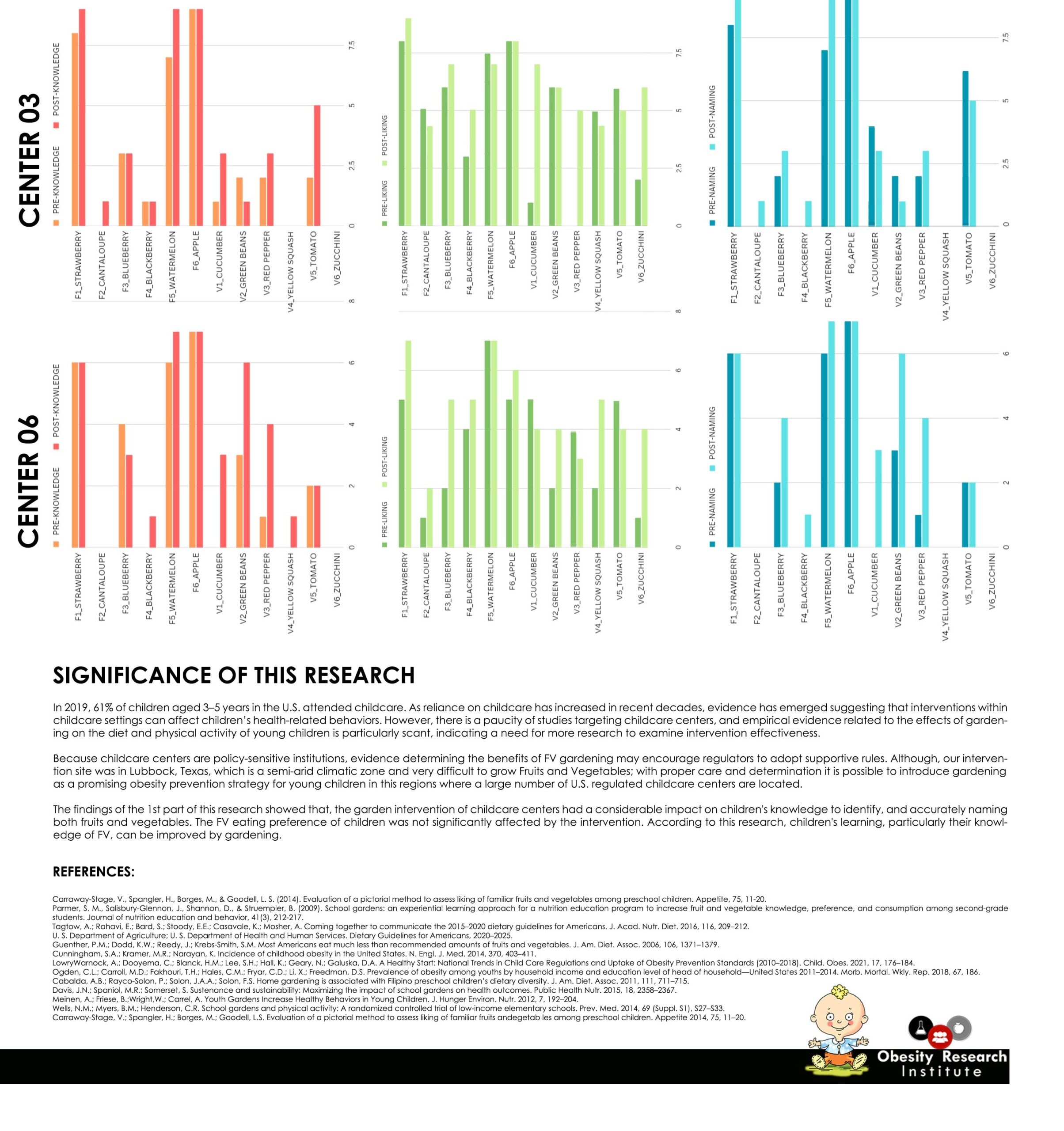
    Nazia Afrin Trina wins first place in the Graduate Student Poster Competition organized by the Texas Tech University Obesity Research Institute.

    Nazia Afrin Trina, an international student at Texas Tech University’s Department of Landscape Architecture has placed first in the Texas Tech University Obesity Research Institute’s Graduate Student Poster Competition. Her presentation’s title was, “Using real fruit and vegetables (FV) and supplemental photos to understand the impact of garden intervention on preschool children’s FV eating preferences.”

    Her winning poster is presented below. The poster has been modified from its original size for better viewing on this website.

    View News Post:

    Texas Tech ORI Graduate Student Competition 2023

    Using real fruit and vegetables poster header
    Using real fruit and vegetables poster section 1
    Using real fruit and vegetables poster section 2
    Using real fruit and vegetables poster section 3
    Using real fruit and vegetables poster section 4
  • Acknowledging Ancestral Lands

    Acknowledging Ancestral Lands

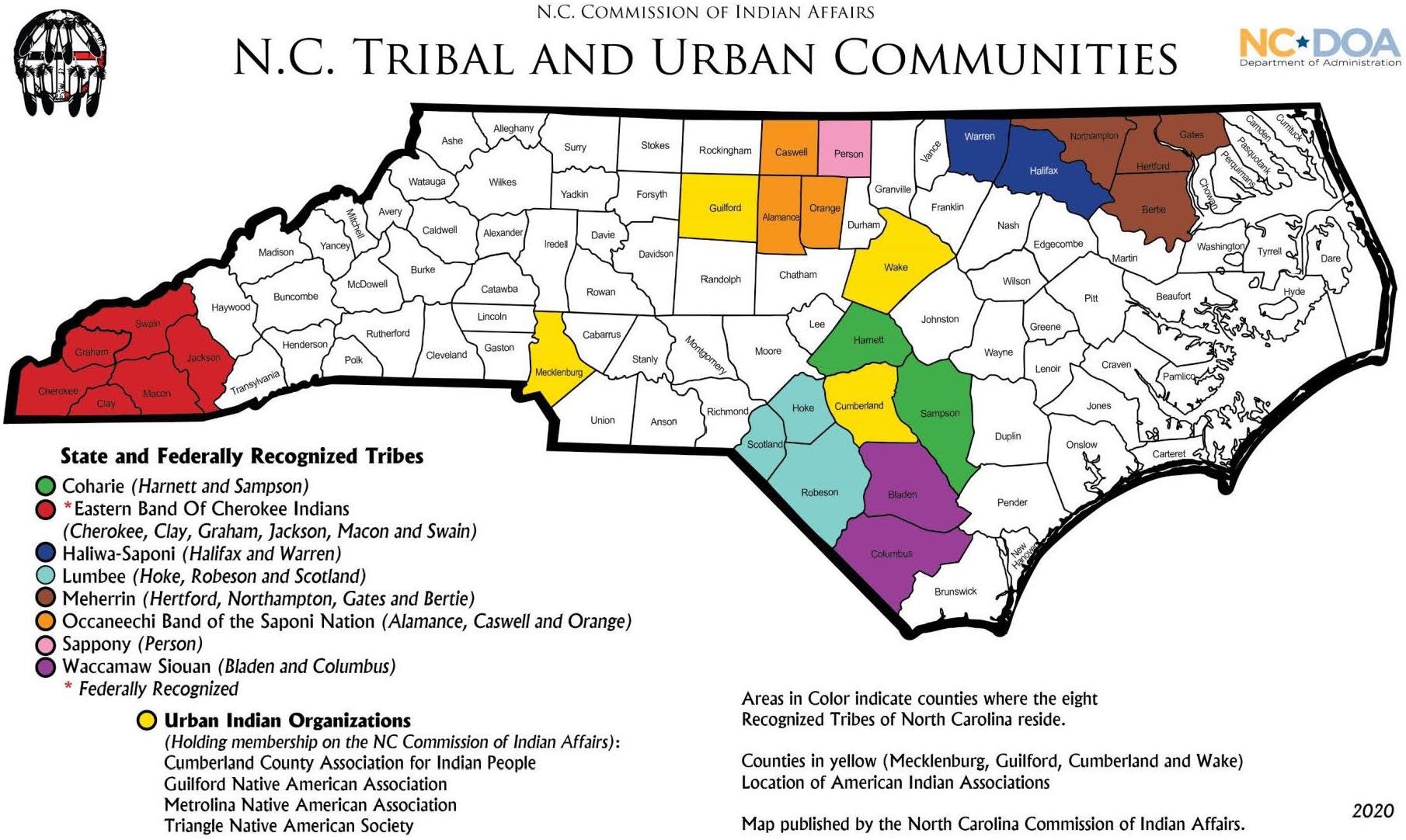
    The Natural Learning Initiative (NLI) recognizes tribal sovereignty and acknowledges with deep gratitude First Nations as ancestral stewards of the land upon which North Carolina State University sits. Also acknowledged are state-wide ancestral land locations, where NLI engages with local communities in activities that may impact ancestral lands. Descendants of indigenous peoples in North Carolina, who continue to live on these lands, include those of the Catawba, Coharie, Cherokee, Eno, Haliwa-Saponi, Lumbee, Meherrin, Occaneechi, Sappony, Shakori, Sissipahaw, Tuscarora, and Waccamaw Siouan peoples. NLI aspires to learn from indigenous ​peoples’ sense of oneness with nature and their sustainable lifestyles, thus engaging future generations in taking responsibility for caring for, conserving, and regenerating the biodiversity of the land and water, upon which all life depends.

    tribal and urban communities in north carolina map by county

    SOURCES

    Amerigo Vespucci (1451-1512)
    Italian merchant, explorer, and navigator from the Republic of Florence, from whose name the term “America” is derived.
    https://en.wikipedia.org/wiki/Amerigo_Vespucci

    Indigenous peoples of the Americas
    https://en.wikipedia.org/wiki/Indigenous_peoples_of_the_Americas

    ​Fredericks, J. 1999. America’s First Nations: The Origins, History and Future of American Indian Sovereignty. Jnl Law and Policy, 7(2): 347-410.

    Nature and Culture International
    https://www.natureandculture.org/

    First Nations
    https://www.firstnations.org/

    NC Division of Indian Affairs
    https://ncadmin.nc.gov/about-doa/doa-division-indian-affairs

    NC Tribal Communities
    https://ncadmin.nc.gov/public/american-indians/nc-tribal-communities

    American Indian Tribes in North Carolina
    https://www.ncpedia.org/tribes

    Catawba people
    https://en.wikipedia.org/wiki/Catawba_people

    Catawba Indians
    https://www.ncpedia.org/catawba-indians

    Eno Indians
    https://www.ncpedia.org/eno-indians

    Shakori Indians
    https://www.ncpedia.org/shakori-indians

    Carolina – The Native Americans: The Shakori Indians
    https://www.carolana.com/Carolina/Native_Americans/native_americans_shakori.html

    Sissipahaw Indians
    https://www.ncpedia.org/sissipahaw-indians

    Tuscarora Indians
    https://www.ncpedia.org/american-indians/tuscarora

  • Start Small–With A Vision

    Start Small–With A Vision

    Kim Shaw will be giving a Keynote at Antioch University during theIn BloomConference

    Educators observe children’s affinity to be outside. Once you learn the importance of that relationship, you want to commit to what it takes to make that a priority. When you take the steps to create that environment, you inspire people and establish relationships. This is a story to serve as a reminder to “start small, with a vision.” Next, it’s a small garden space on an undeveloped plot of land in the community. Dozens of cherished partnerships, accolades, and thousands of work hours later, if you’re asked how it got done, the answer is: “we started small, with a vision.”

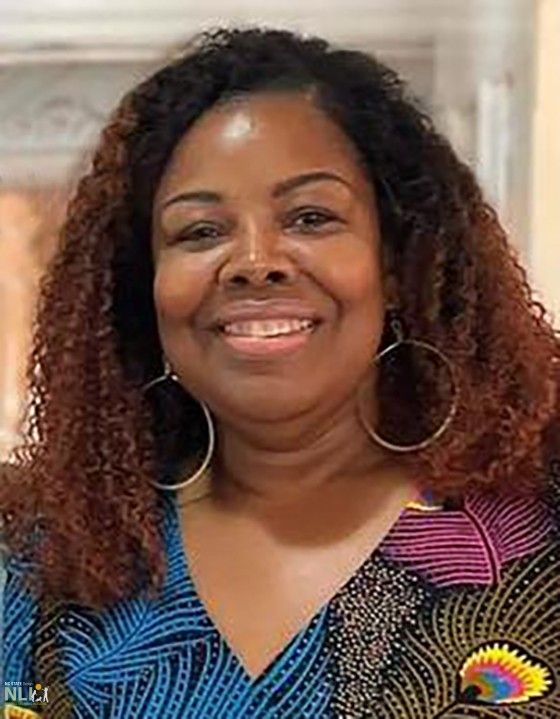
    Kimberly Shaw is the Founder and President of A Safe Place Child Enrichment Center and Elizabeth’s Garden. Starting as a family child care home in August 1997, it has grown to two five-star, NAEYC-accredited centers sitting on 3.5 acres in East and Southeast Raleigh NC. She has served thousands of families by exploring nature-based curriculum through natural connection, while providing a safe natural space for learning, playing, and celebrating community. Ms. Shaw continues to partner with local organizations including the Natural Learning Initiative at North Carolina State University to develop the outdoors as demonstration sites in both centers.

    photo of Kim ShawKimberly Shaw, Founder and President, A Safe Place Child Enrichment Center and Elizabeth’s Garden, Raleigh, NC
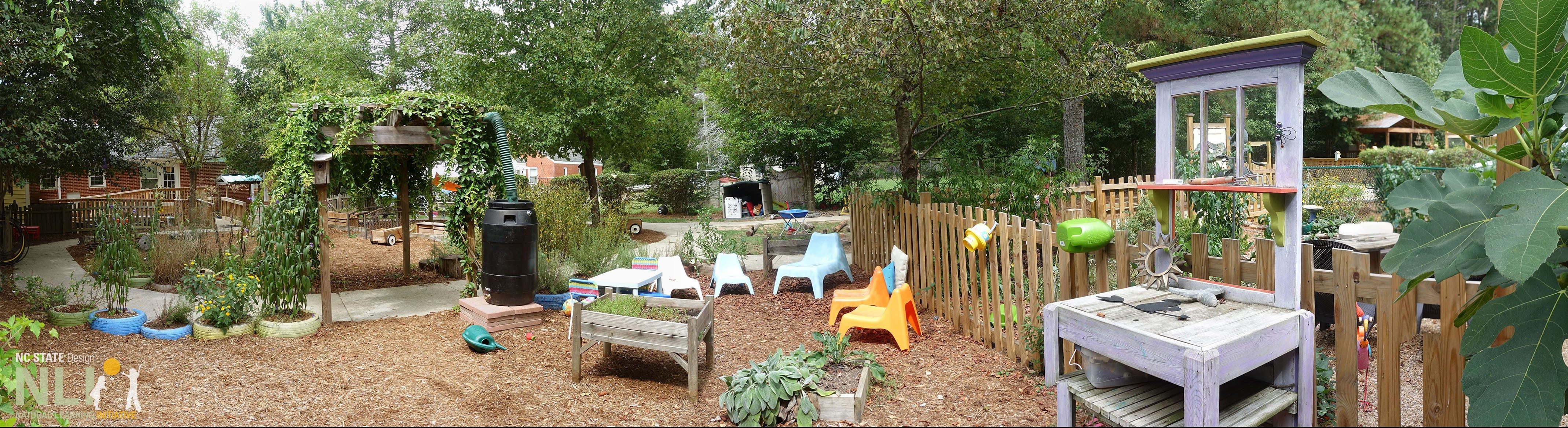
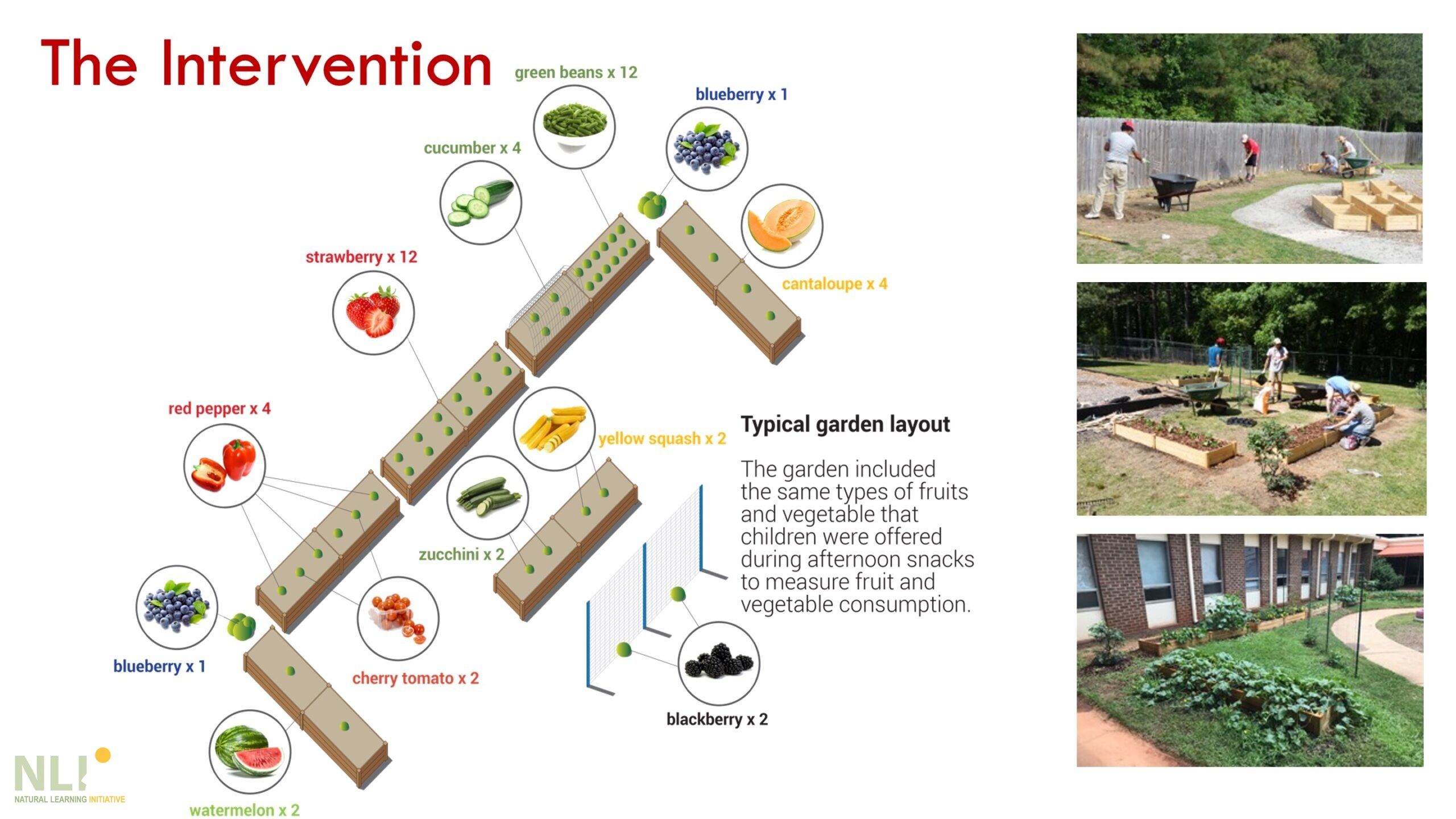
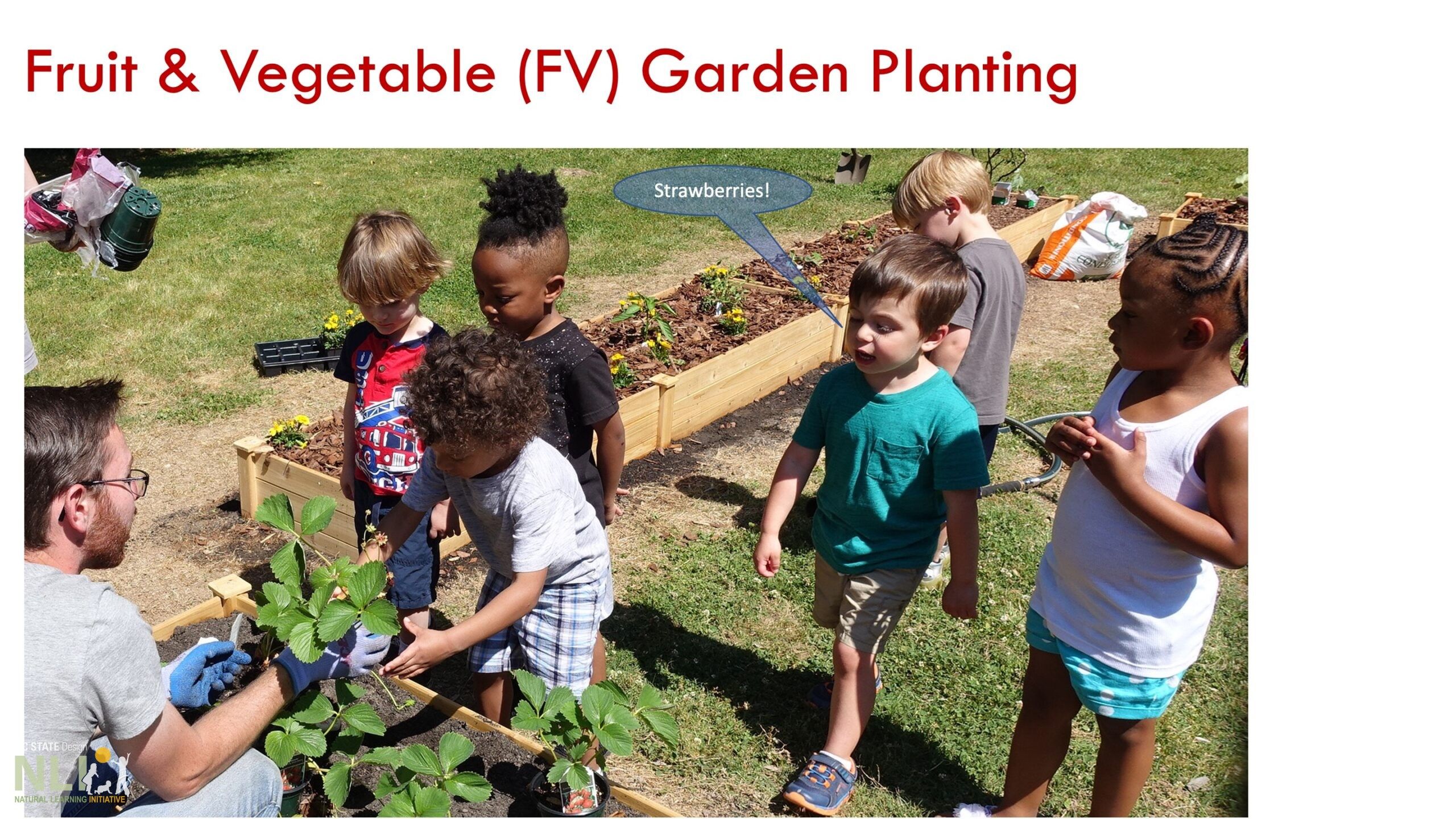
    photo of Kim Shaw

    .

    A Safe Place Child Enrichment Center

    Attend the In Bloom Conference

    after renovation showing multiple new ole additions like rain barrel, tire planters and more
    Outdoor learning environment overview
  • Nemours Children’s Health Healthy Kids, Healthy Future Technical Assistance Program Convening 2023

    Nemours Children’s Health Healthy Kids, Healthy Future Technical Assistance Program Convening 2023

    NLI attended a virtual convening hosted from June 6-7 by the Nemours Children’s Health National Office of Policy and Prevention. This event brought together more than 100 health and early childhood professionals from across 36 states where they listened to presentations including those by NLI’s Nilda Cosco and Robin Moore and a panel with colleagues from South Carolina and Wisconsin.

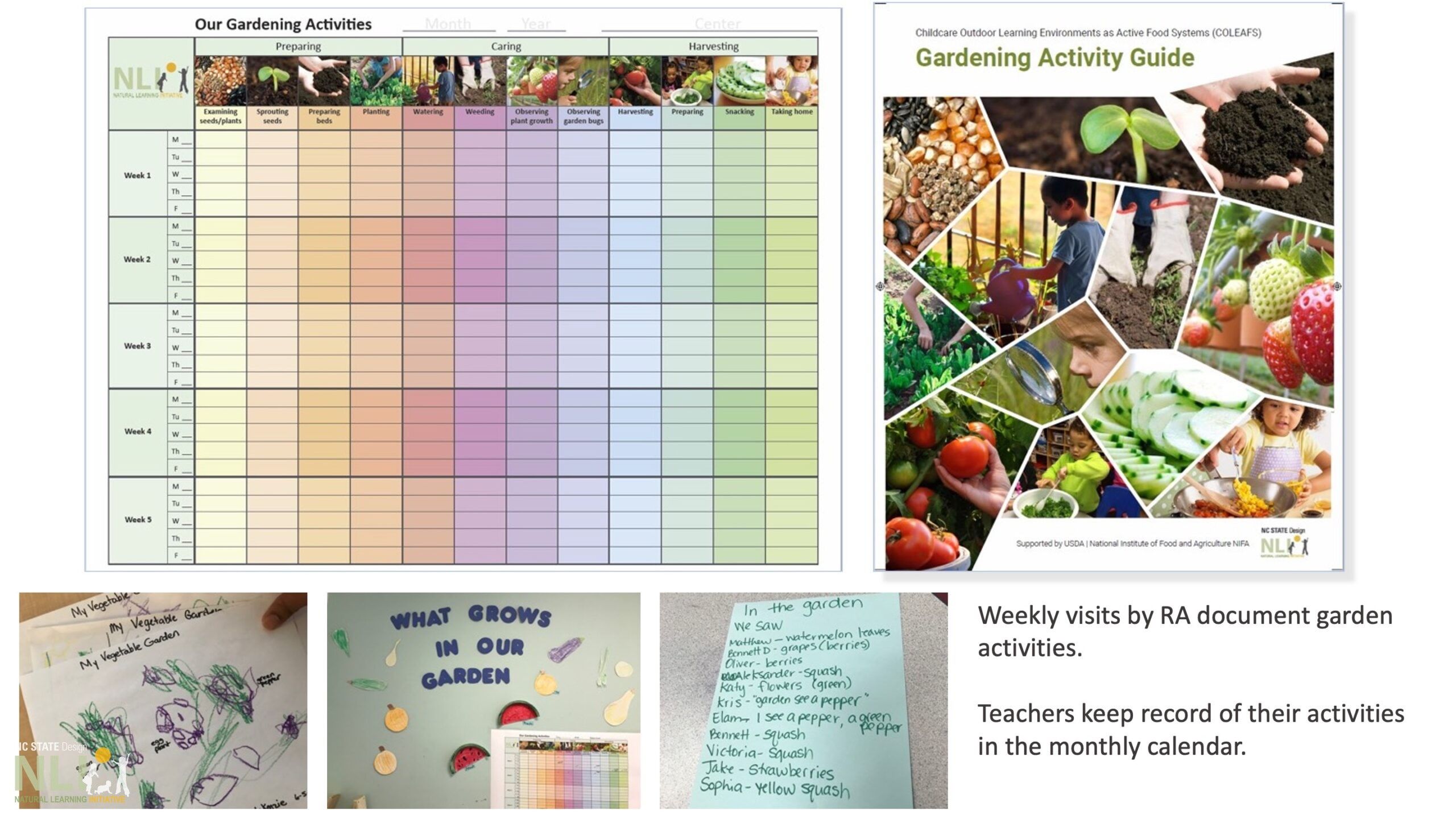
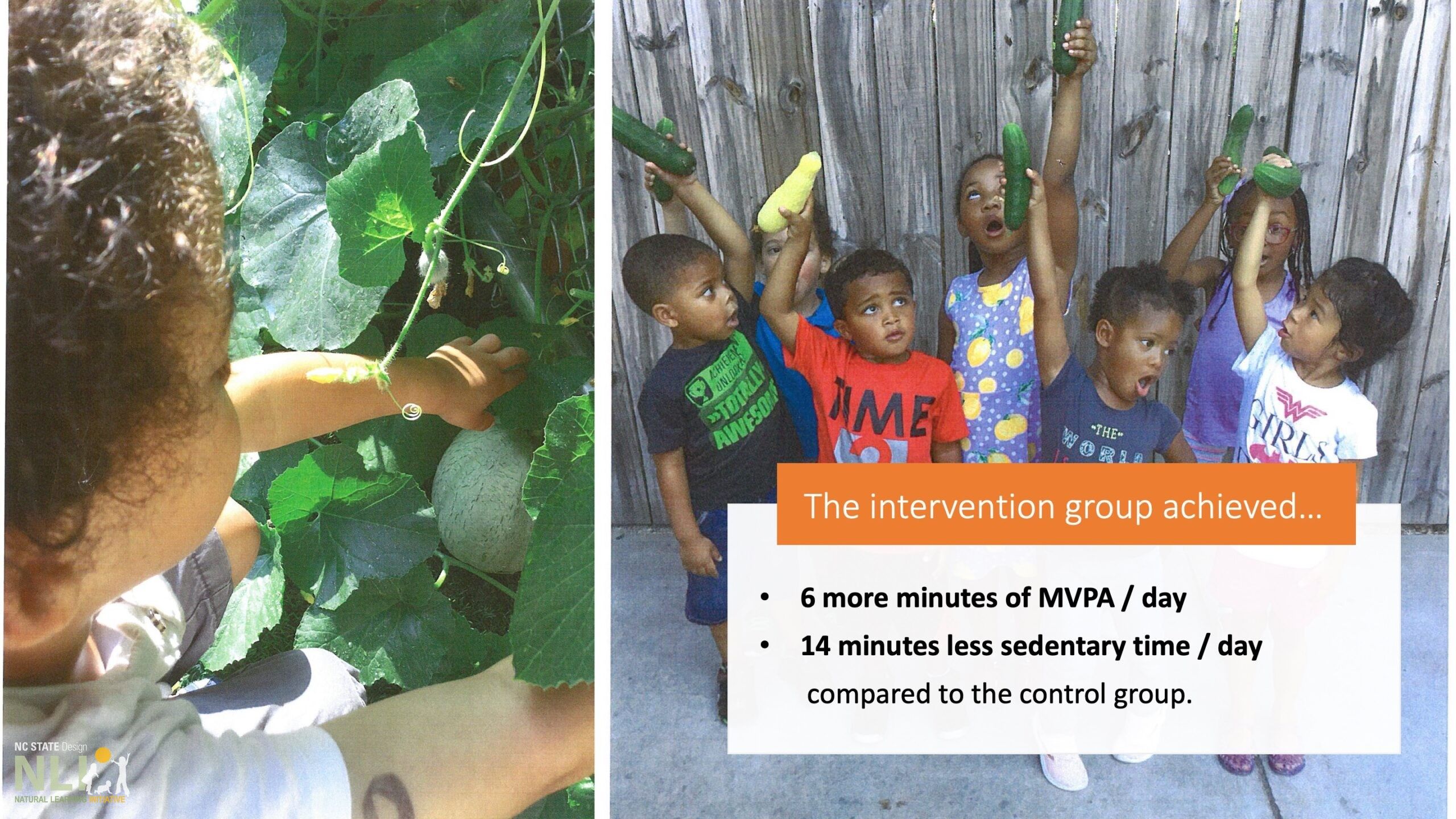
    Nilda’s presentation, Healthy Eating and Physical Activity by Gardening, based on the COLEAFS project, argued for research on gardening with young children because daily requirements for fruit and vegetable (FV) consumption and physical activity (PA) are often not met. On the other hand, gardening early in life may affect FV consumption and PA more strongly; gardening in childcare centers is under-studied; and positive results may impact practice and policy.

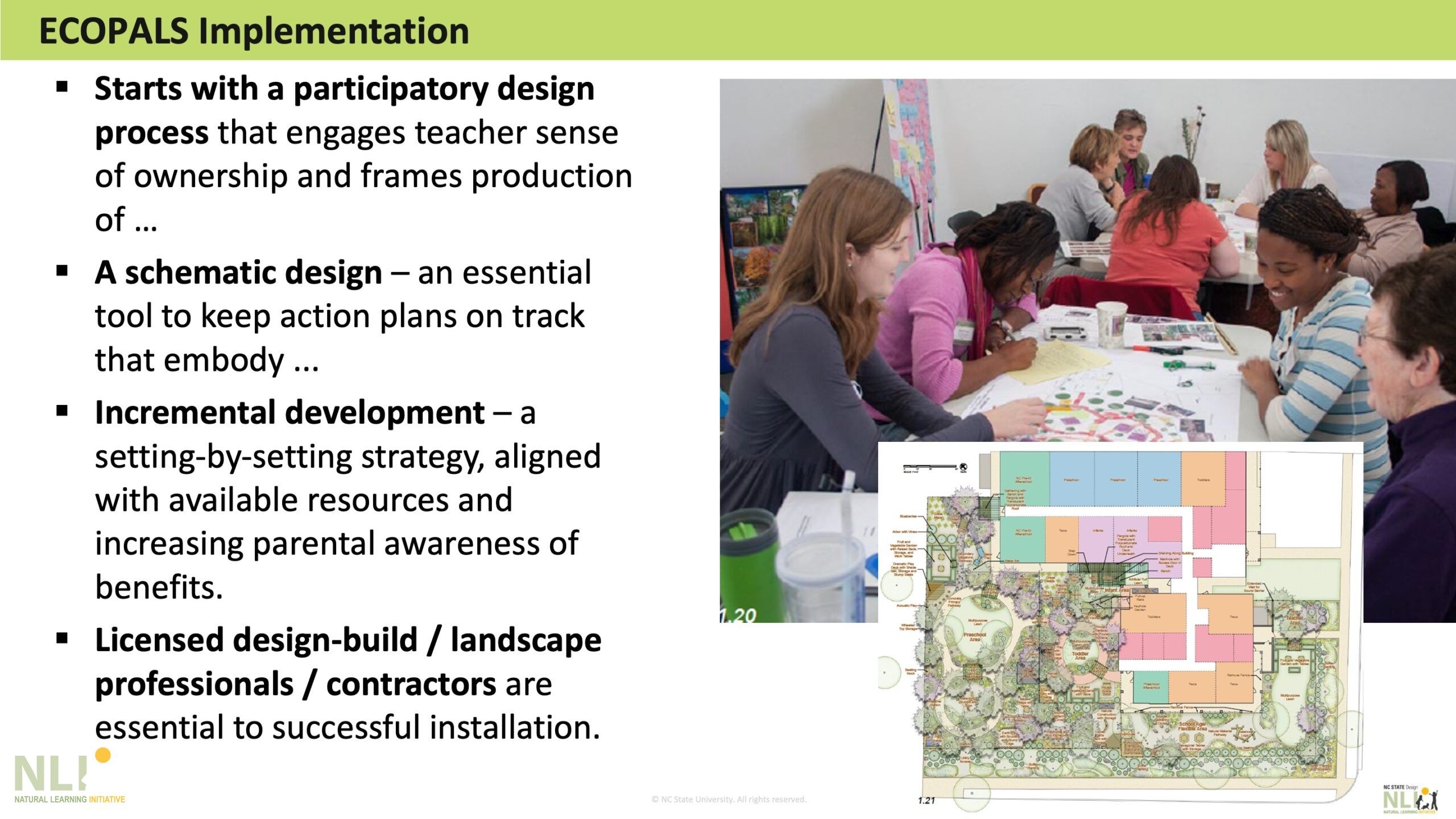
    Robin’s presentation, Motivating Early Childhood Time Outdoors, demonstrated how physically diverse childcare outdoor play and learning spaces, including garden settings, “pull” children to Increase time outdoors each day, which supports healthy diets, promotes social-emotional development and mental health, increases inclusion and equity of opportunity, regenerates local biodiversity, and encourages caring for nature and each other. Robin described the design principles of affordance, activity setting, spatial range, and incremental development; and how diverse, naturalized spaces can be measured, using COLEQT.

    State policy recommendations:

    • Adopt promotional gardening language adaptable to varied US geographic regions
    • Require space for gardening based on licensed enrollment
    • Start modestly
    • Conduct teacher training on gardening with young children
    • Promote gardening as standard practice
    • Consider childcare centers as “micro-farms”
    • Partner with Local Cooperative Extension Agencies

    Resources:

    What is COLEAFS?

    What is COLEQT?

    More Information:

    Nemours Healthy Kids, Healthy Future Website

    Nemours Convening Website

    Healthy Eating and Physical Activity by Gardening

    diagram of a garden layout with different fruits and vegetables
    children being shown fruit and vegetable planting
    gardening activity guide showcase
    children outside and study statistics

    Motivating Early Childhood Time Outdoors

    explanation of design process for building a site
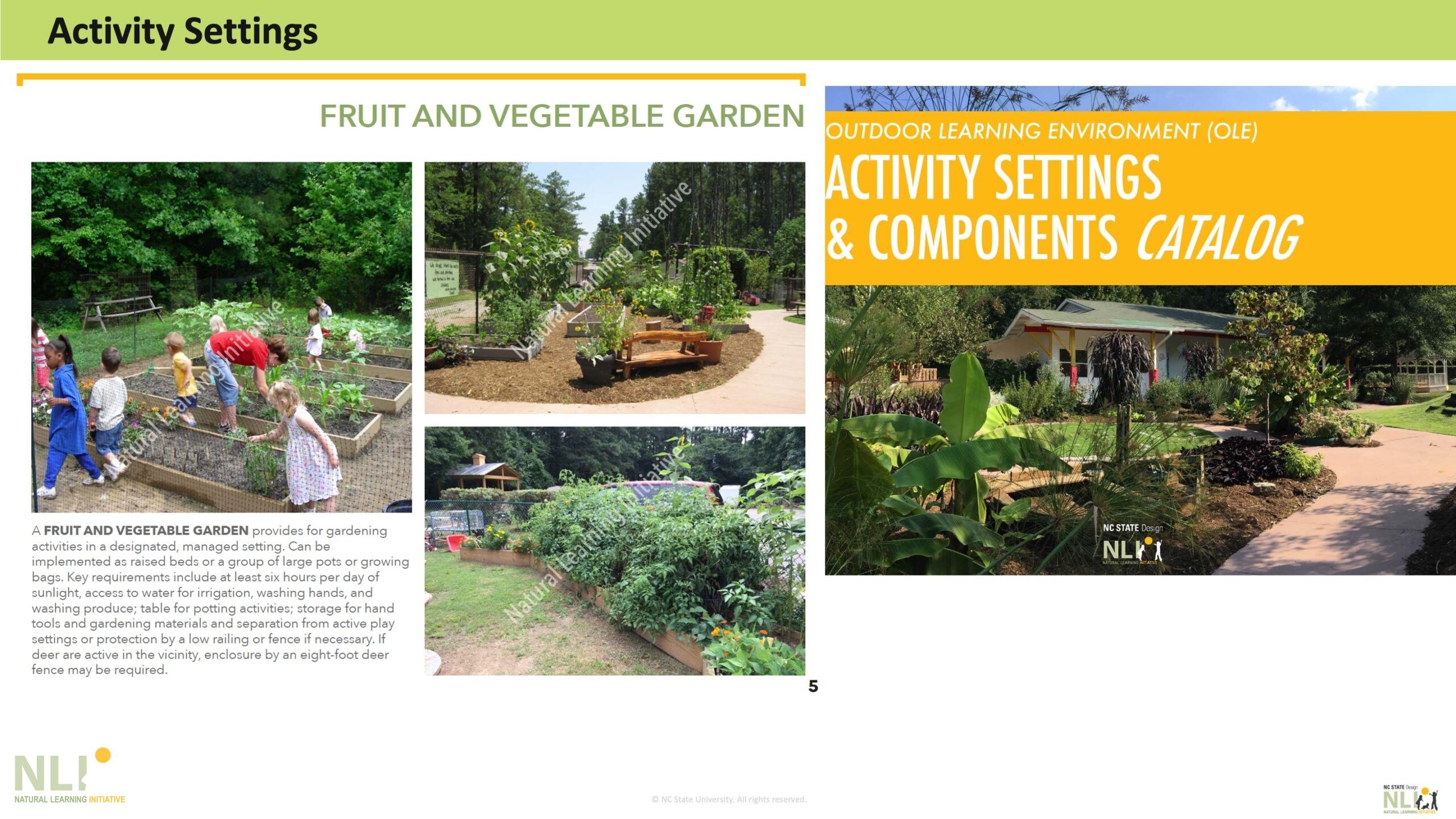
    various activity settings and components
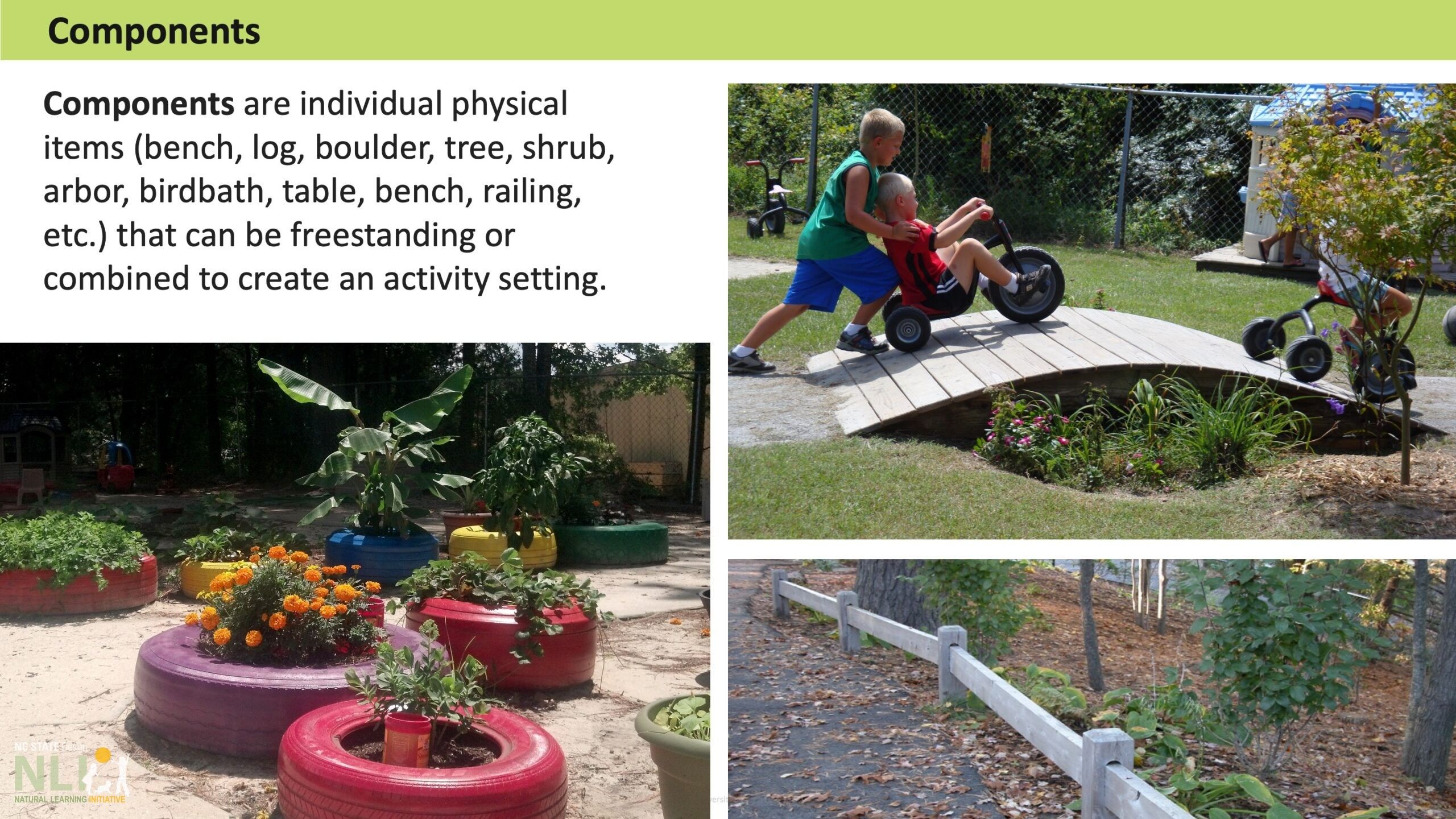
    various OLE components
    Childcare Outdoor Learning Environments Quality Tool demo image

    Nemours is currently funded by the Centers for Disease Control and Prevention (CDC) under a five-year Cooperative Agreement (6NU38OT000304-03-01) to support statewide early care and education (ECE) organizations to integrate best practices and standards for healthy eating, physical activity, breastfeeding support, and reducing screen time in ECE systems and settings.

    The views expressed in written materials or publications, or by speakers and moderators do not necessarily reflect the official policies of the Department of Health and Human Services, nor does the mention of trade names, commercial practices, or organizations imply endorsement by the U.S. Government.

  • Design interventions at Washington Terrace (WT)

    Design interventions at Washington Terrace (WT)

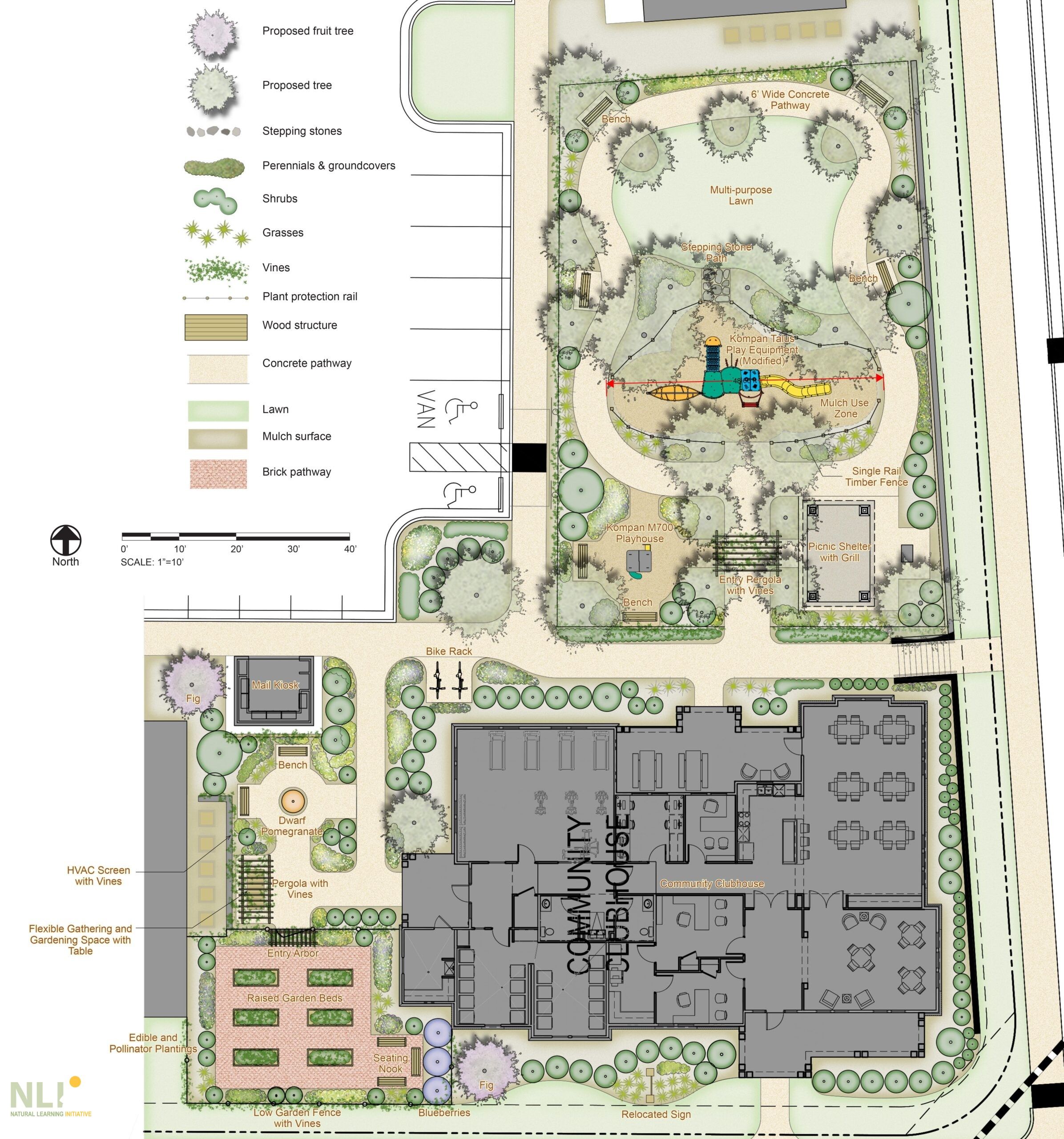
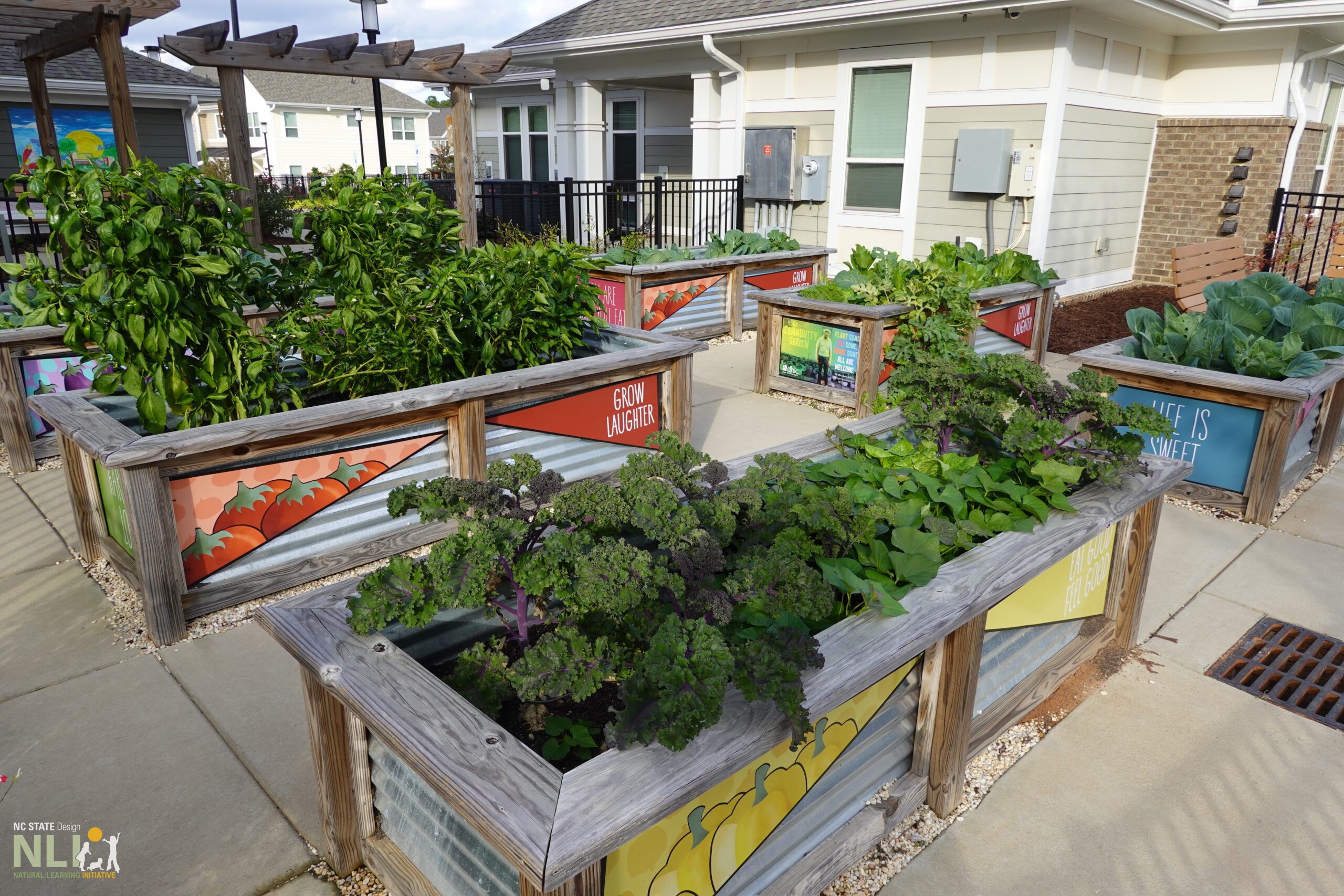
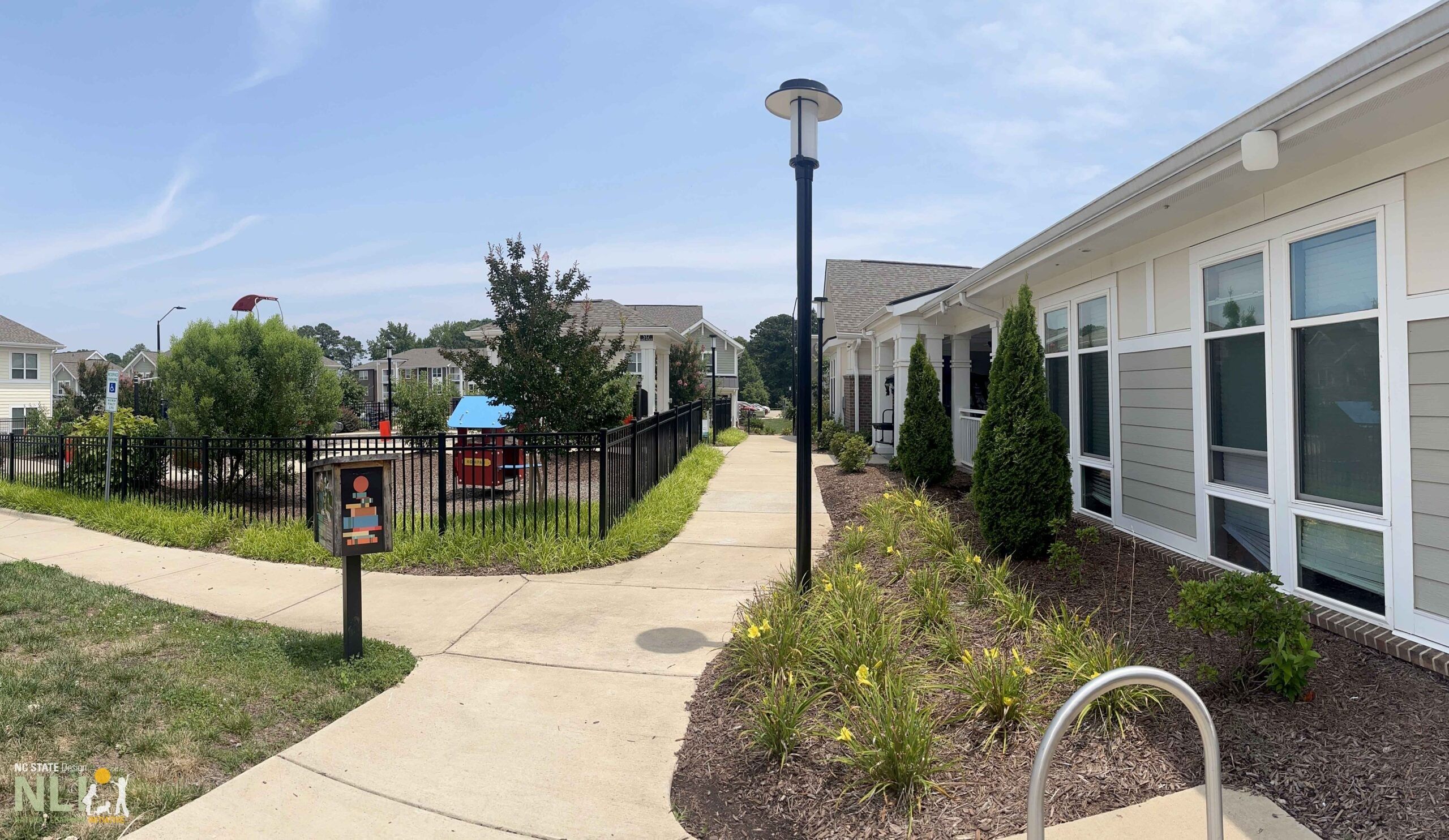
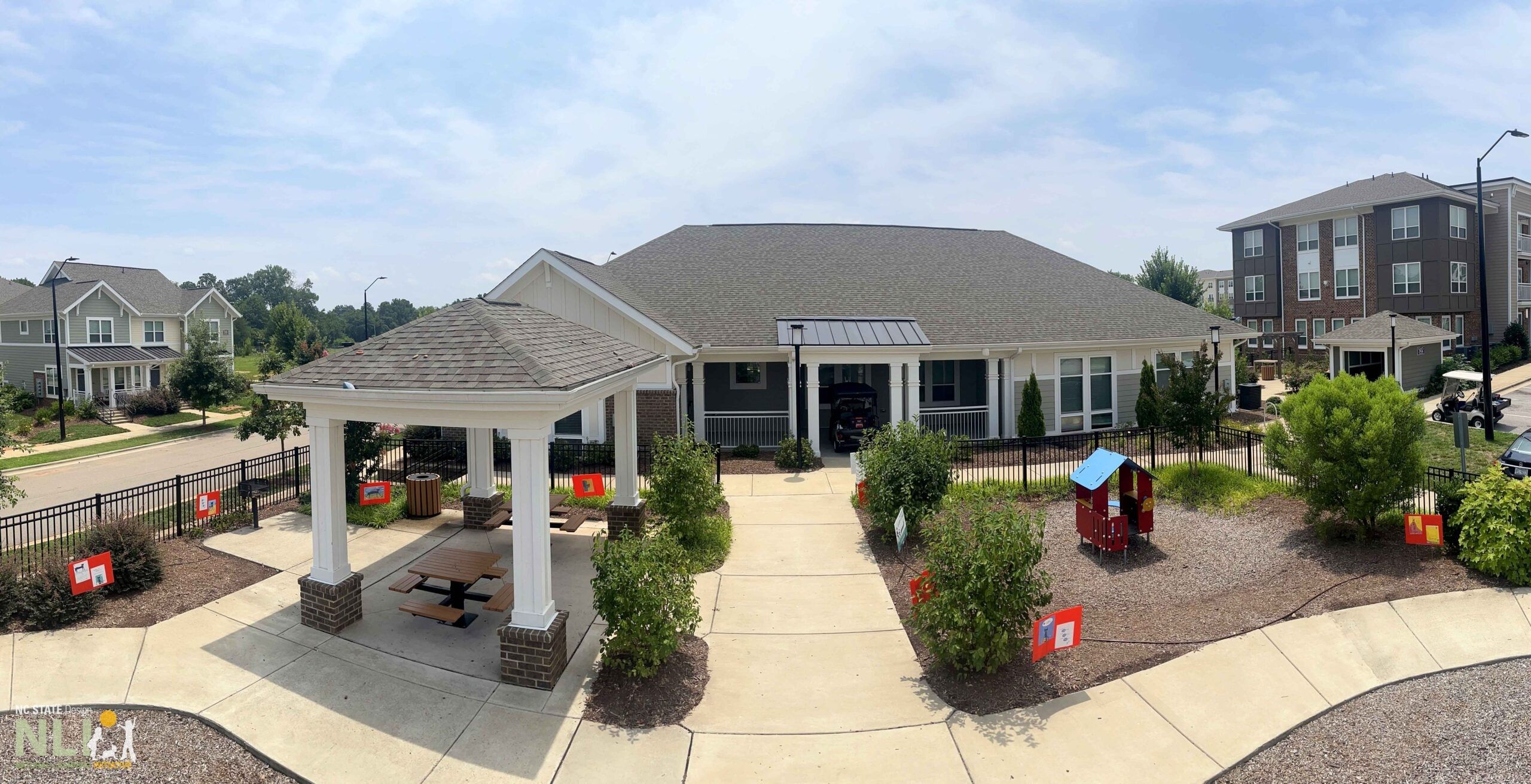
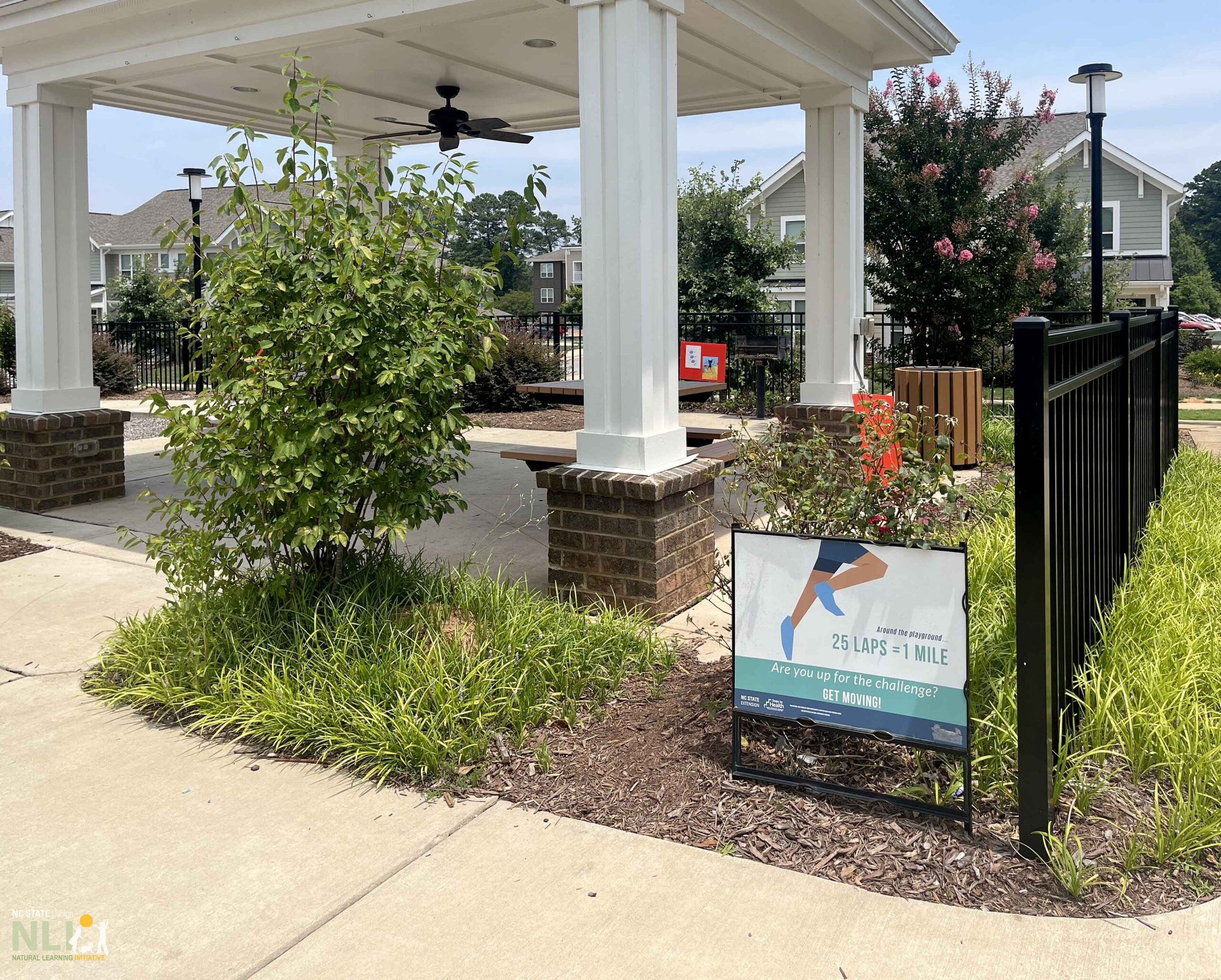
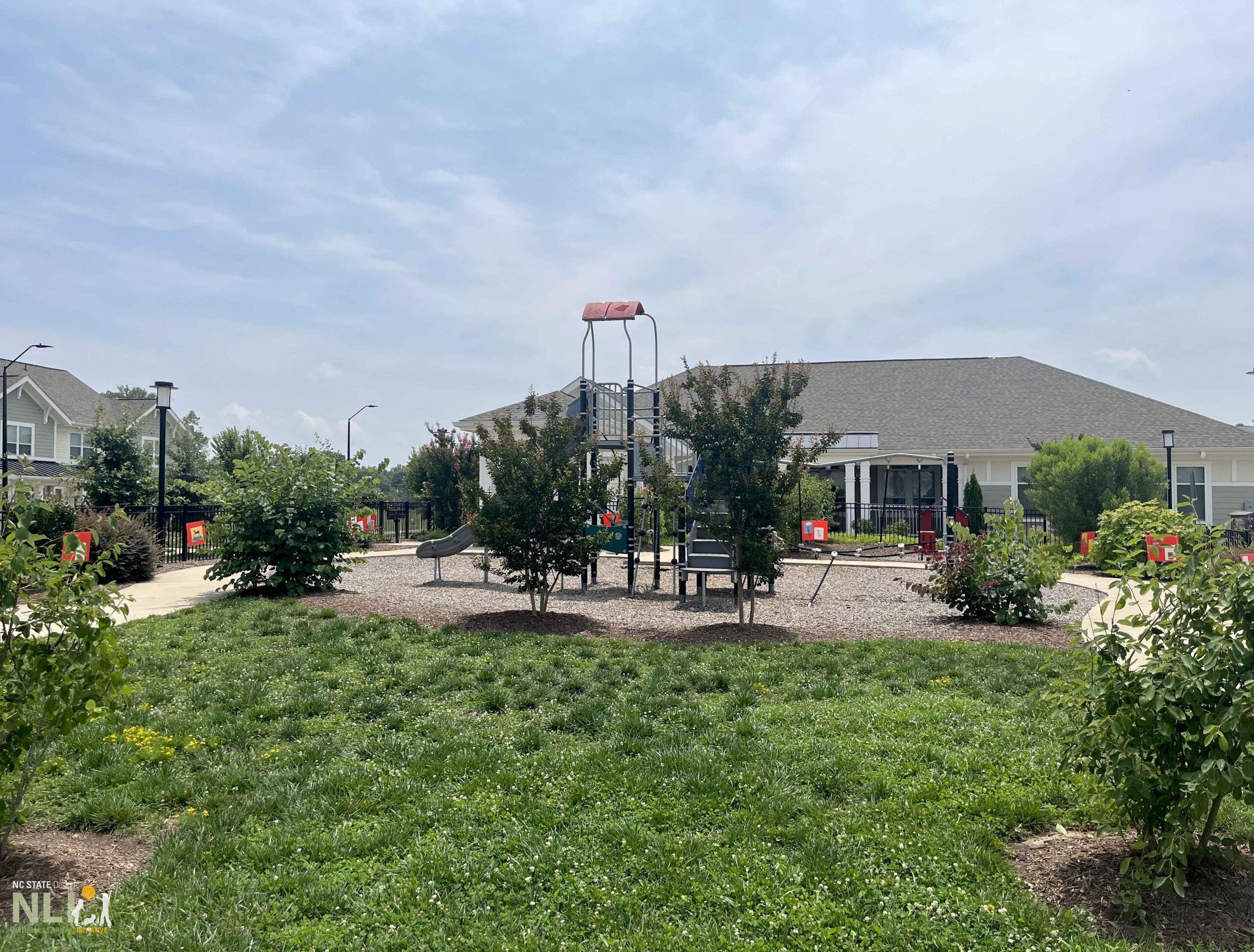
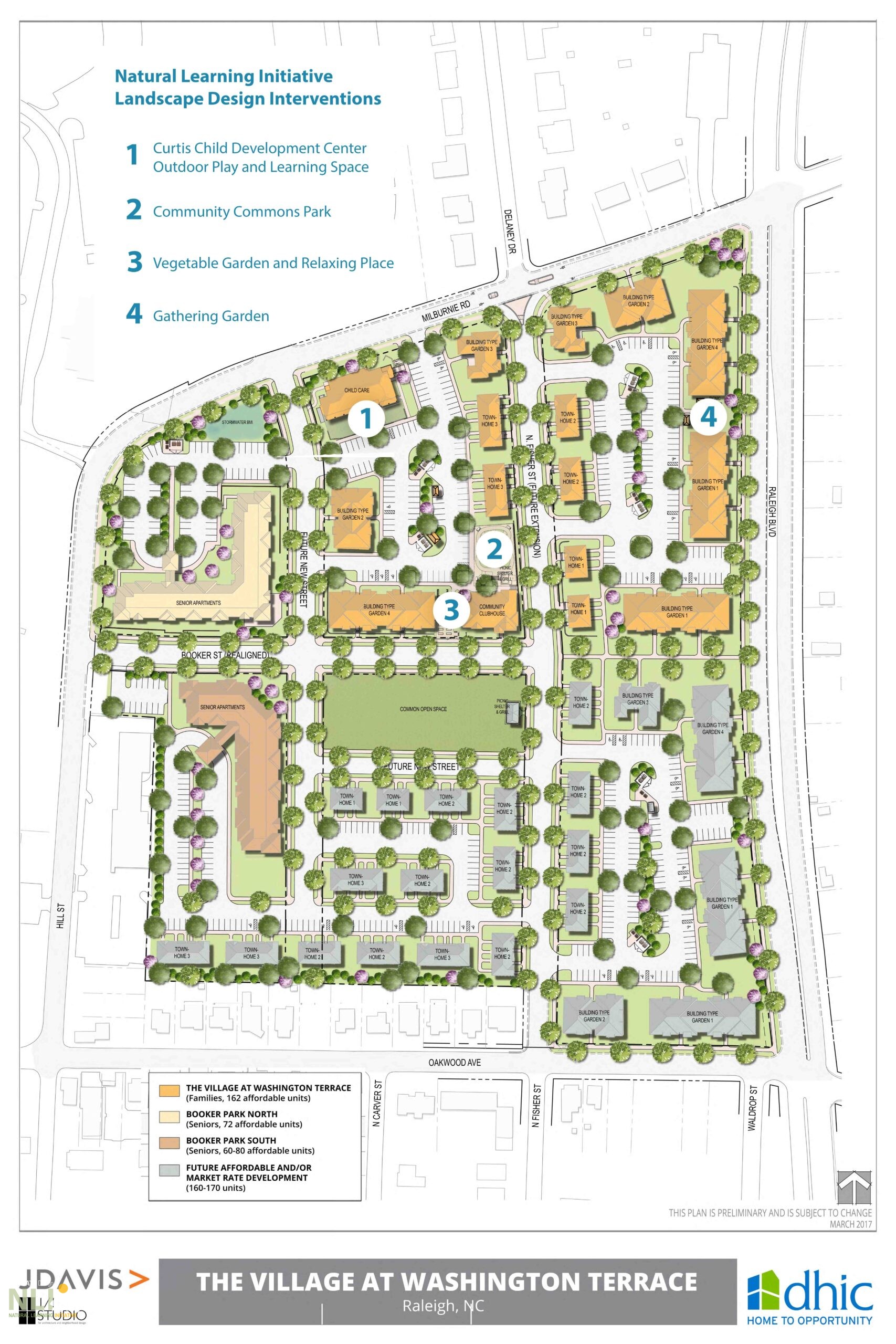
    Design interventions at Washington Terrace (WT), a 23-acre, rebuilt neighborhood in East Raleigh’s historic African American community, aimed at creating an active, healthy neighborhood, began in 2016 when NLI collaborated with DHIC, Inc., a non-profit developer of high-quality, affordable housing, and WT architects, JDavis. NLI contributed outdoor design expertise to creating a “community commons” of park land and a raised bed vegetable garden located around the Community Clubhouse. Additional interventions included an outdoor play and learning space for the on-site Curtis Child Development Center, and a Community Gathering Garden sponsored by Kaleidoscope (community development initiative).

    Community Commons design plan
    Garden Veggies

    Garden Veggies

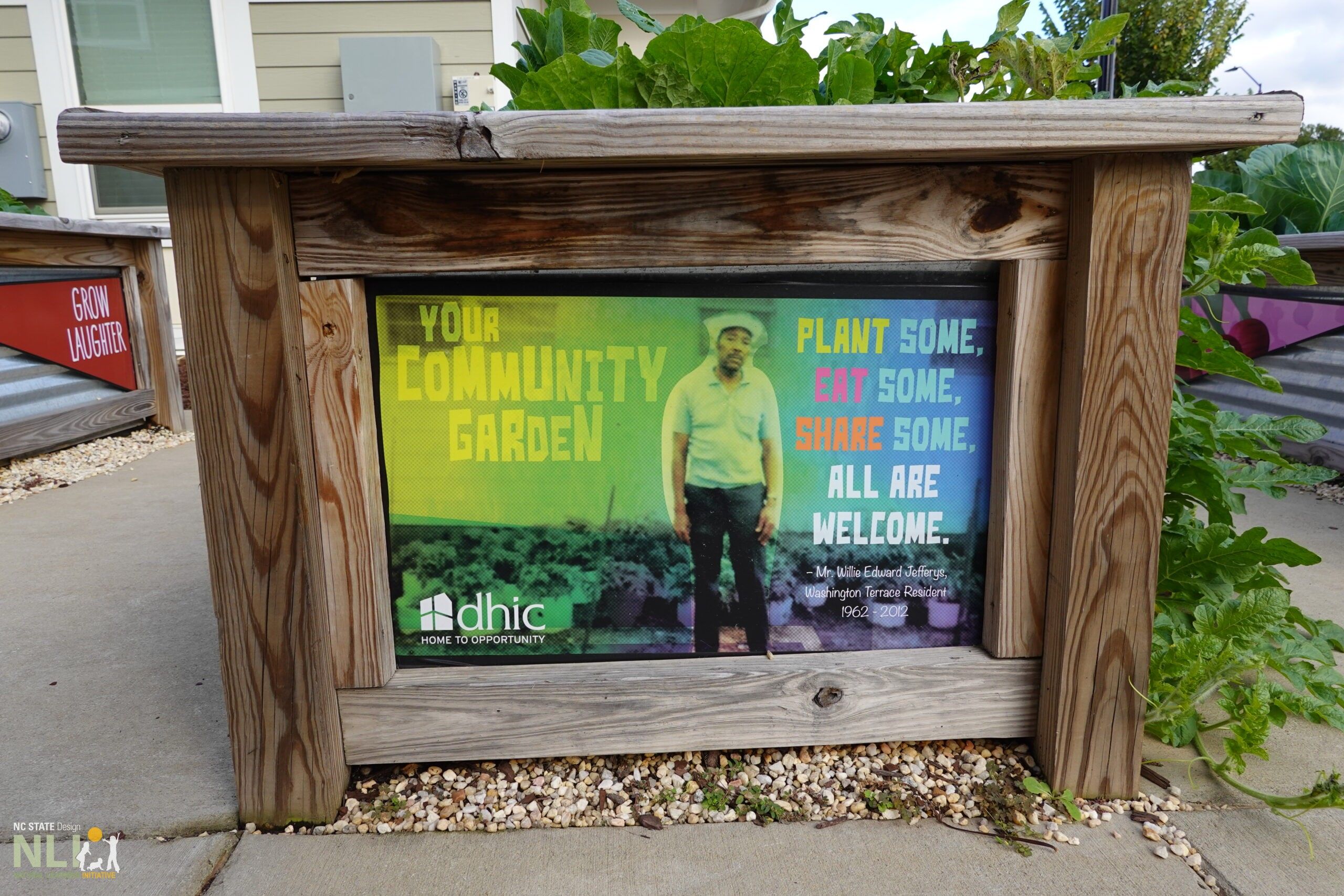
    Garden Sign

    Garden Sign

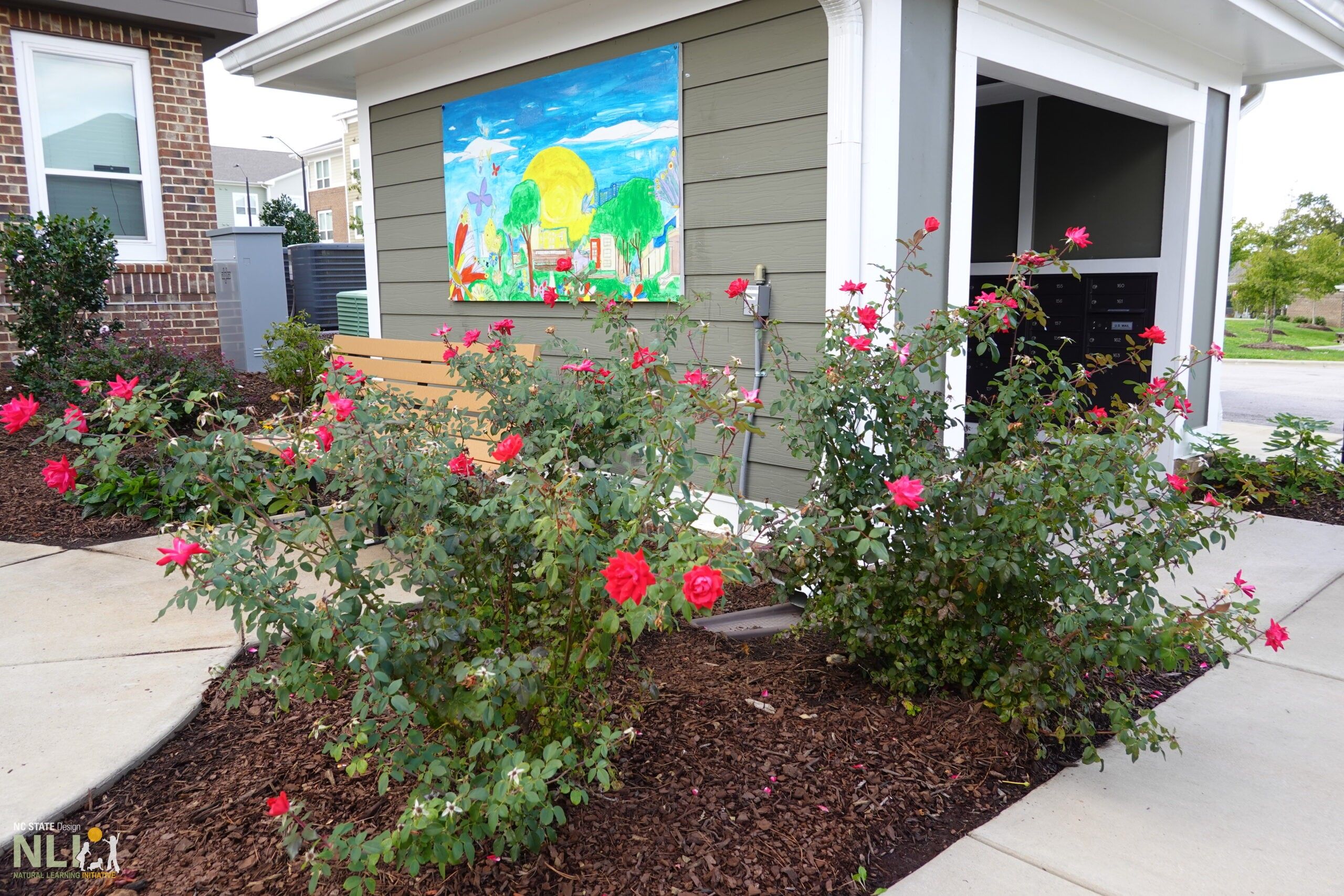
    Garden Rest Area

    Garden Rest Area

    butterfly garden

    Garden Butterfly

    Park Entrance adjacent to the Clubhouse

    Park Entrance adjacent to the Clubhouse

    park Main Entrance Connecting to the Looping Pathway

    Park Main Entrance Connecting to the Looping Pathway

    Park Picnic Shelter and Grill

    Park Picnic Shelter and Grill

    Park Play Equipment

    Park Play Equipment

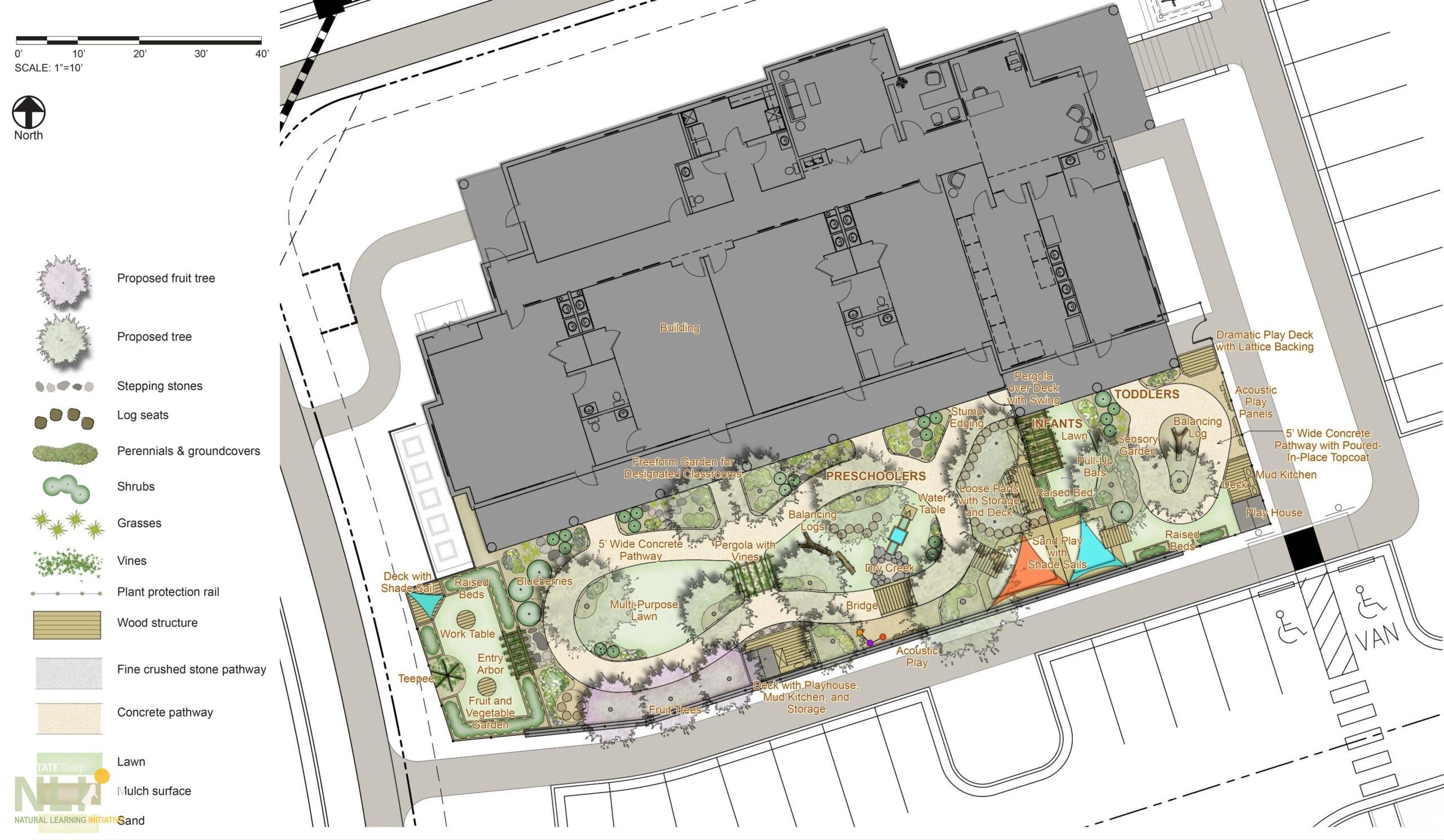
    Curtis Child Development Center Outdoor Play and Learning Space design plan
    panorama of preschool area

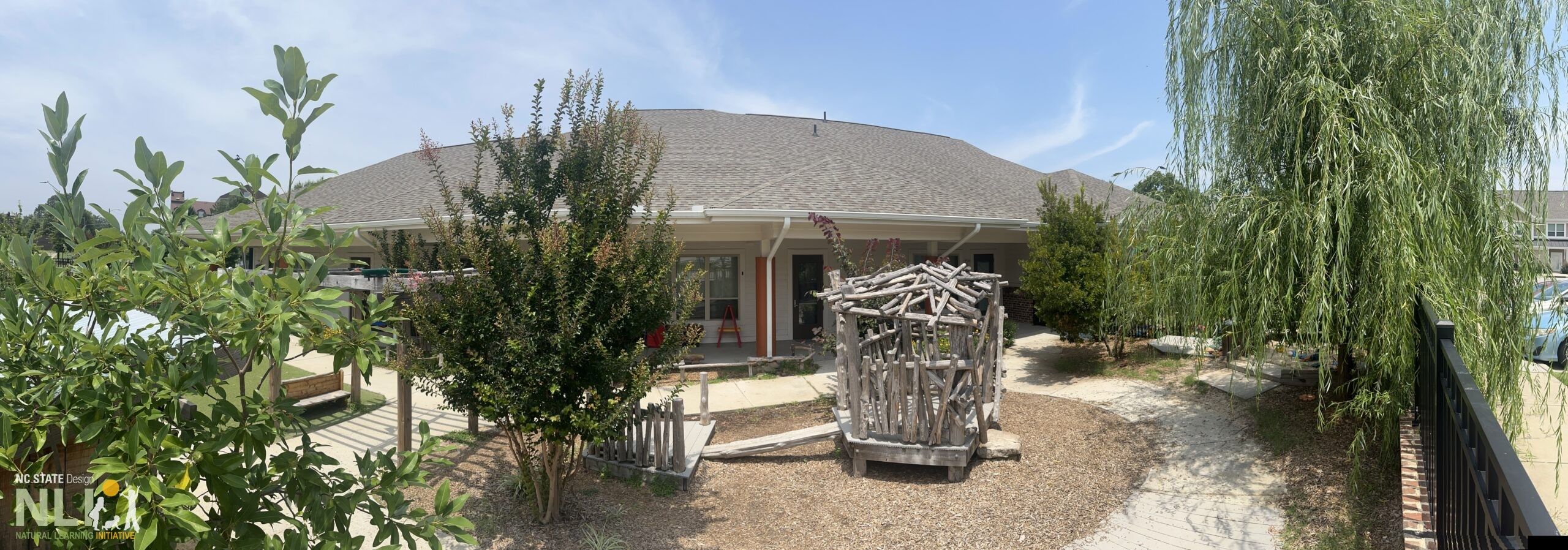
    Preschool Area Panorama

    preschool playhouse inside looping pathway

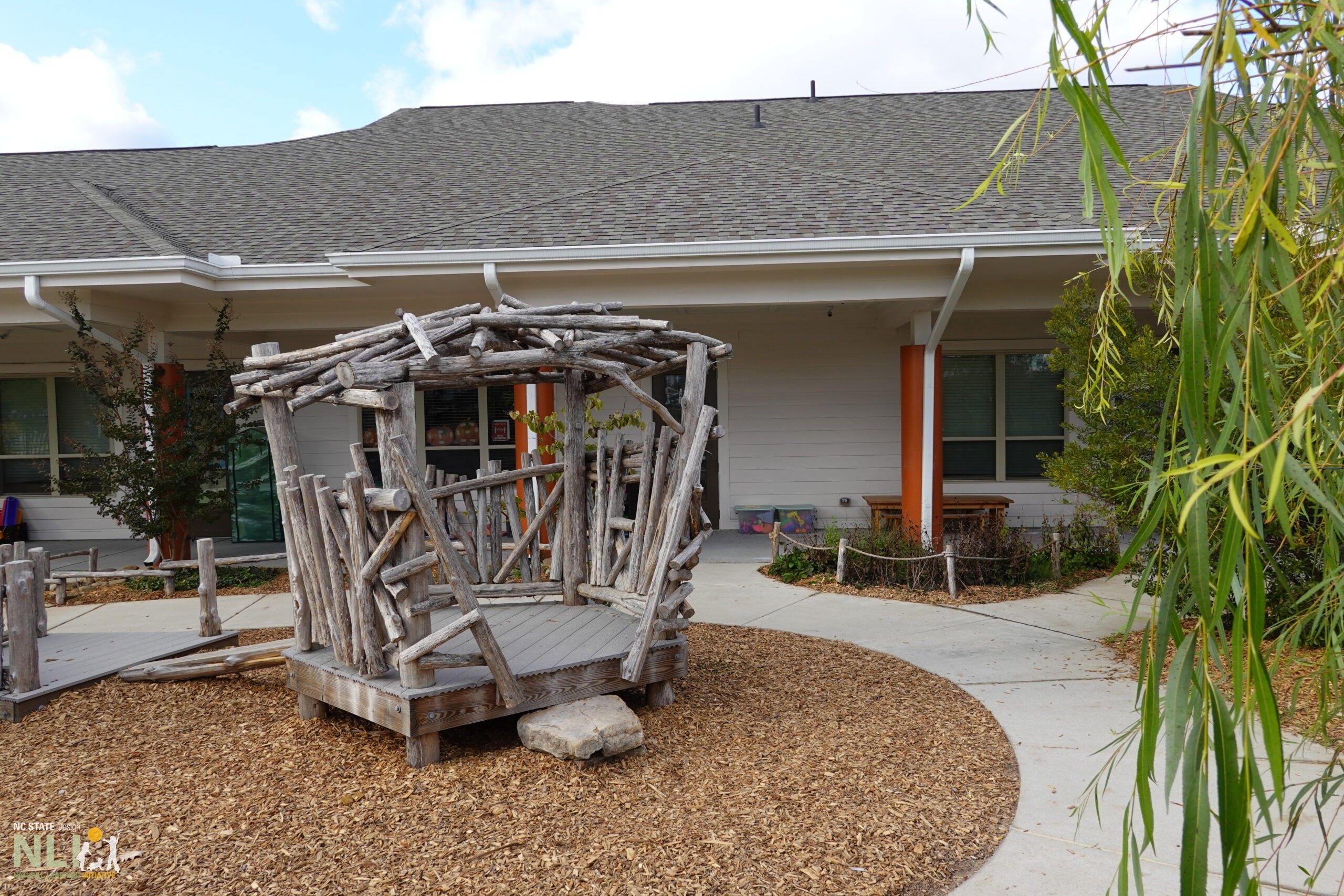
    Preschool Playhouse

    looping pathway

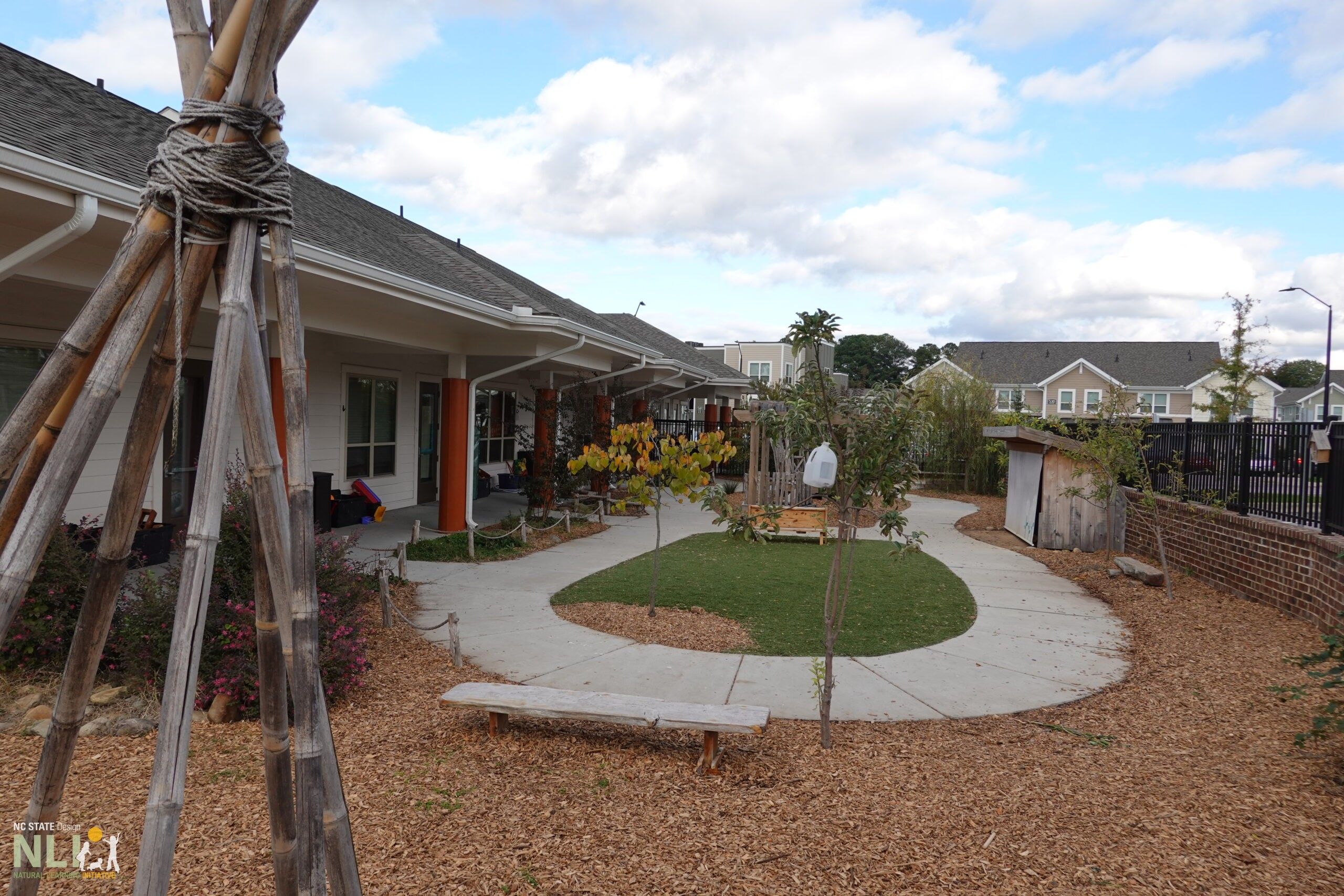
    Preschool Open Space with Looping Pathway

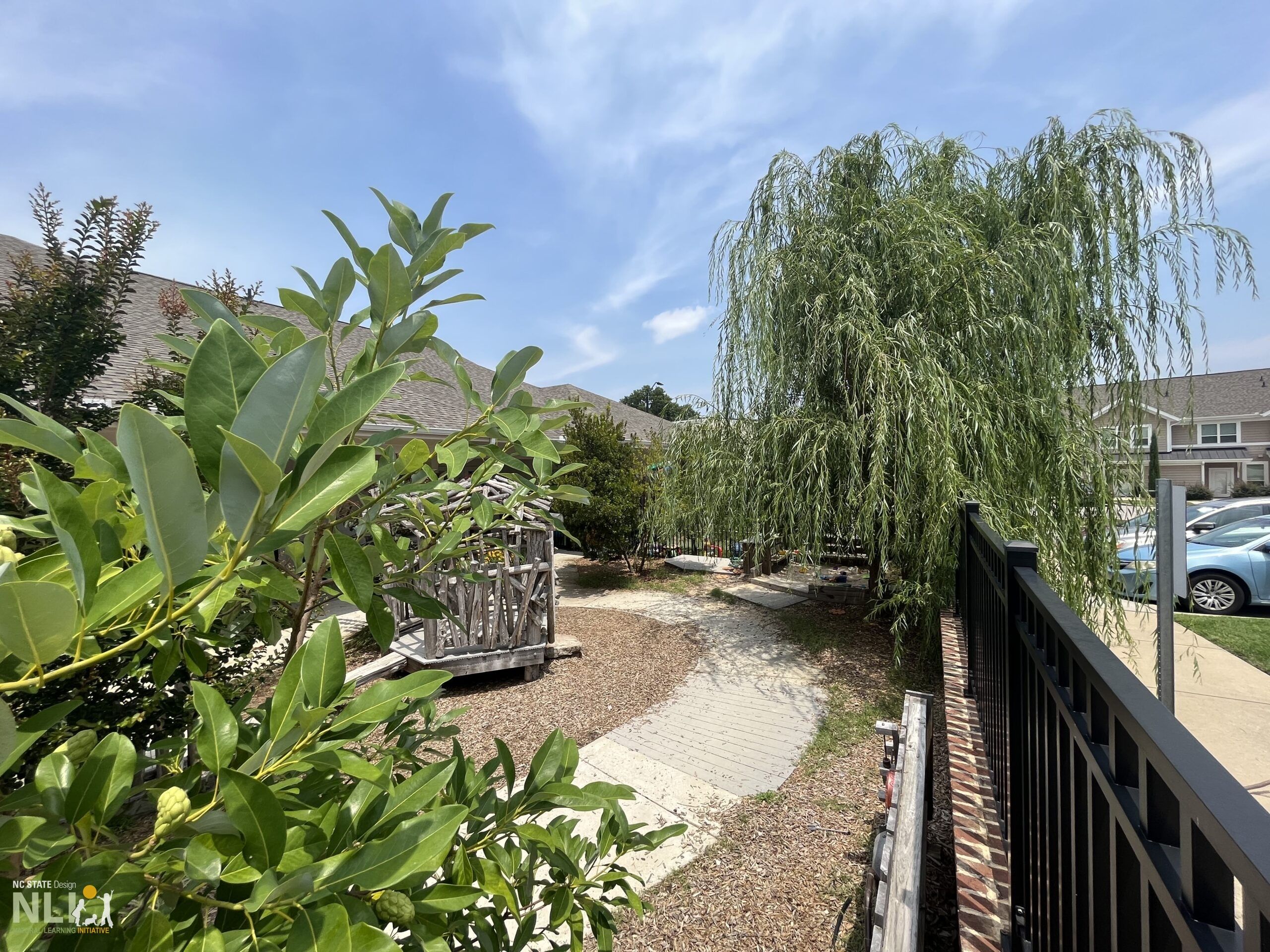
    Shady Looping Pathway

    Shady Looping Pathway

    sand play area

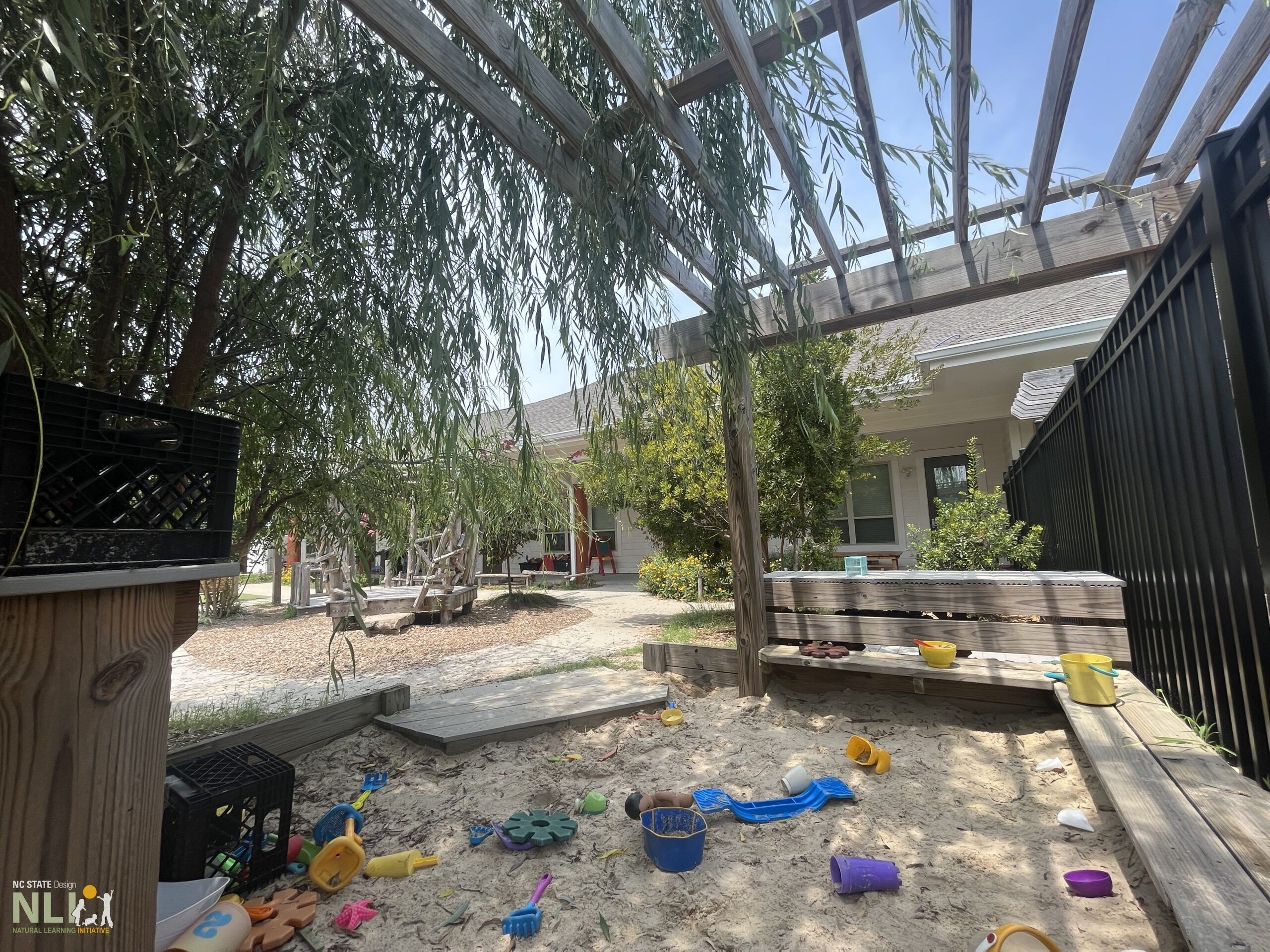
    Preschool Sand Play Area

    toddler playhouse

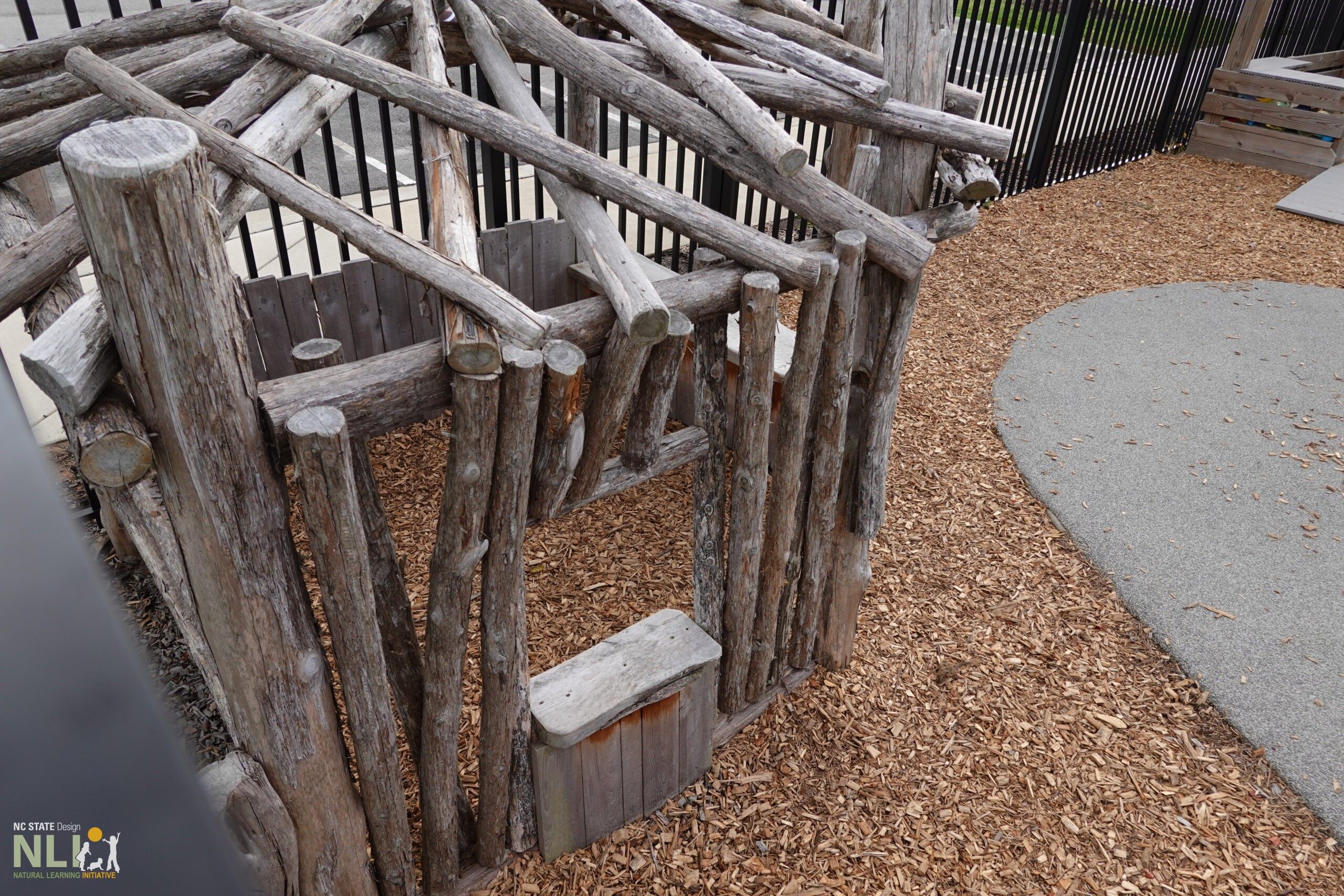
    Toddler Playhouse

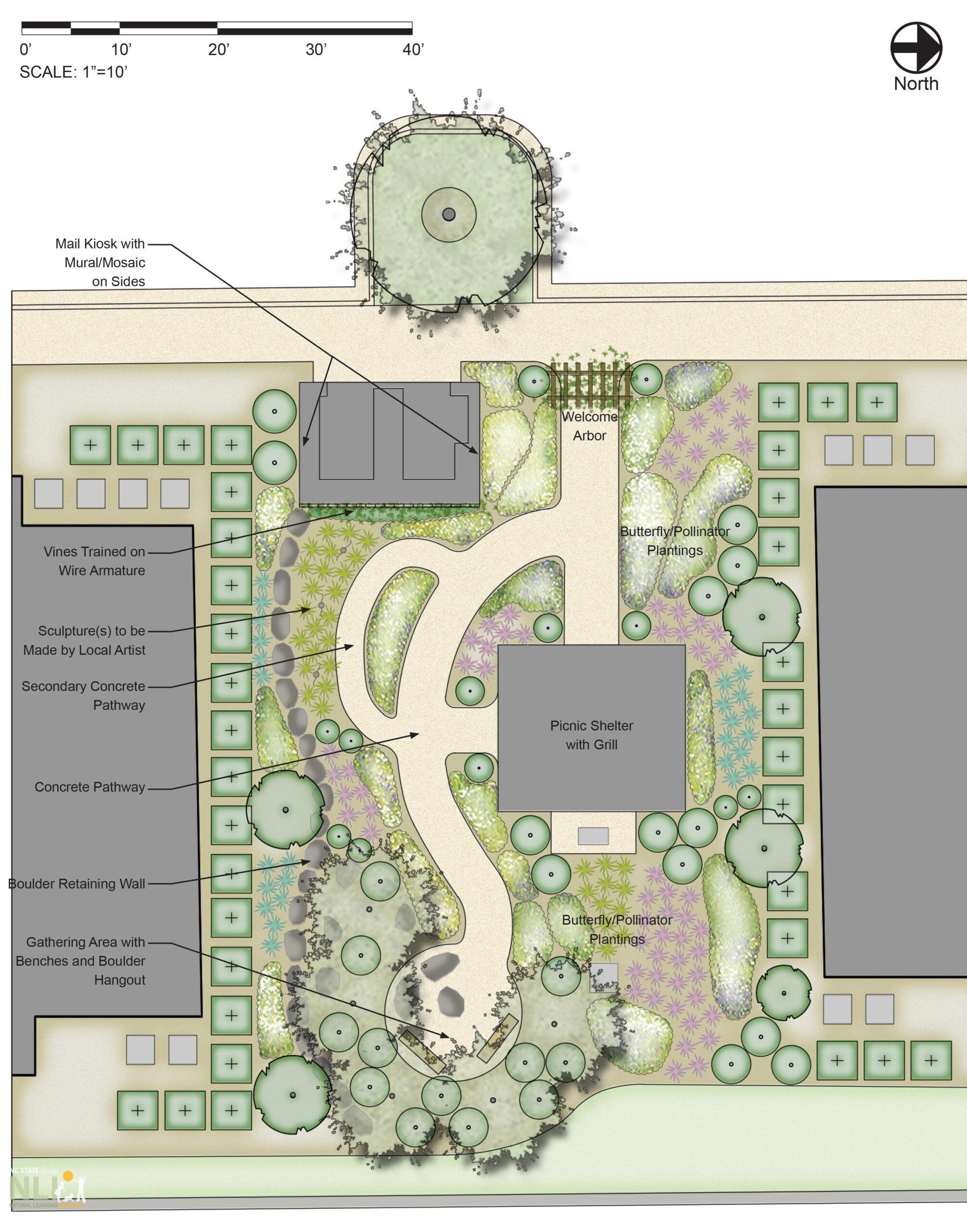
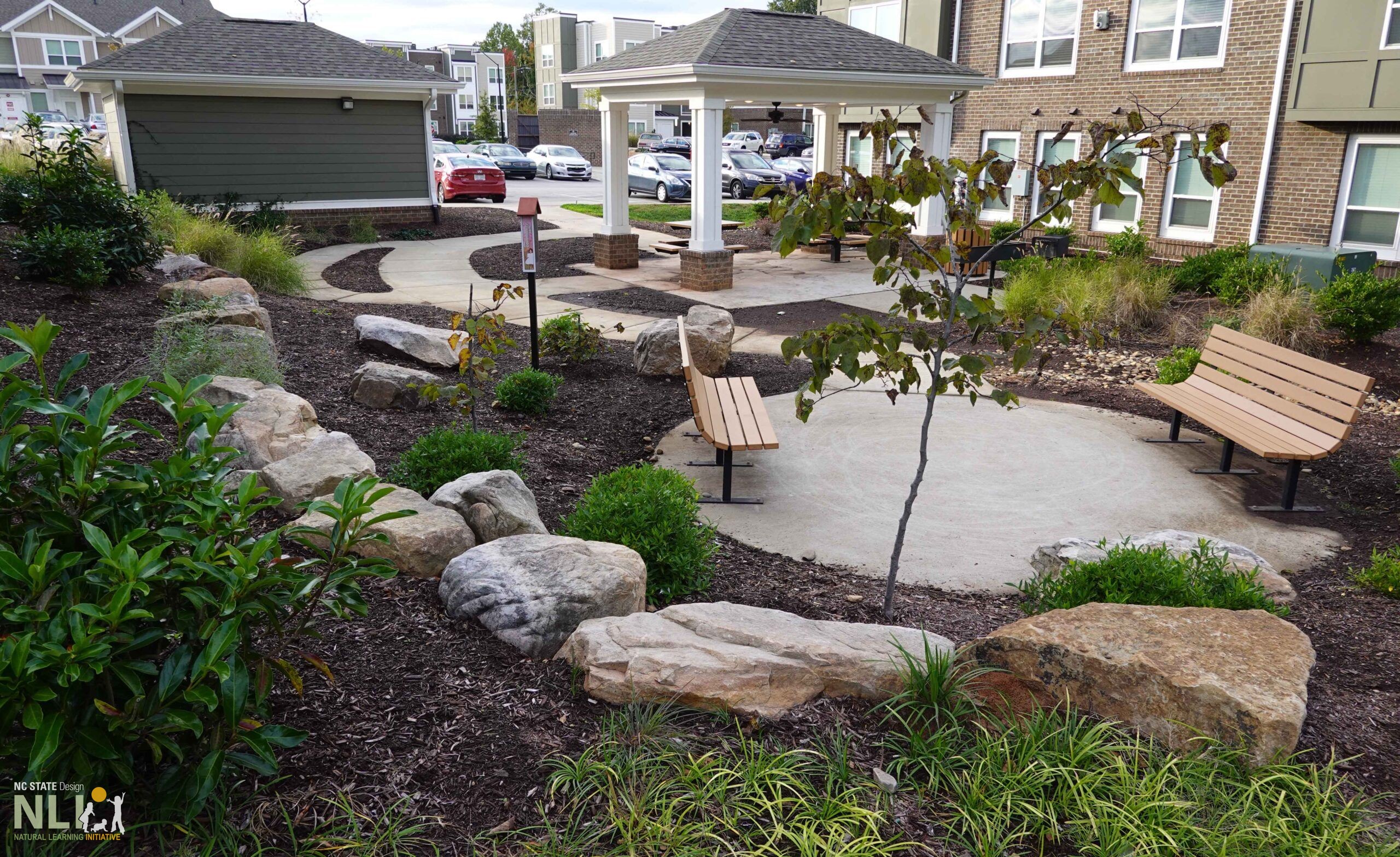
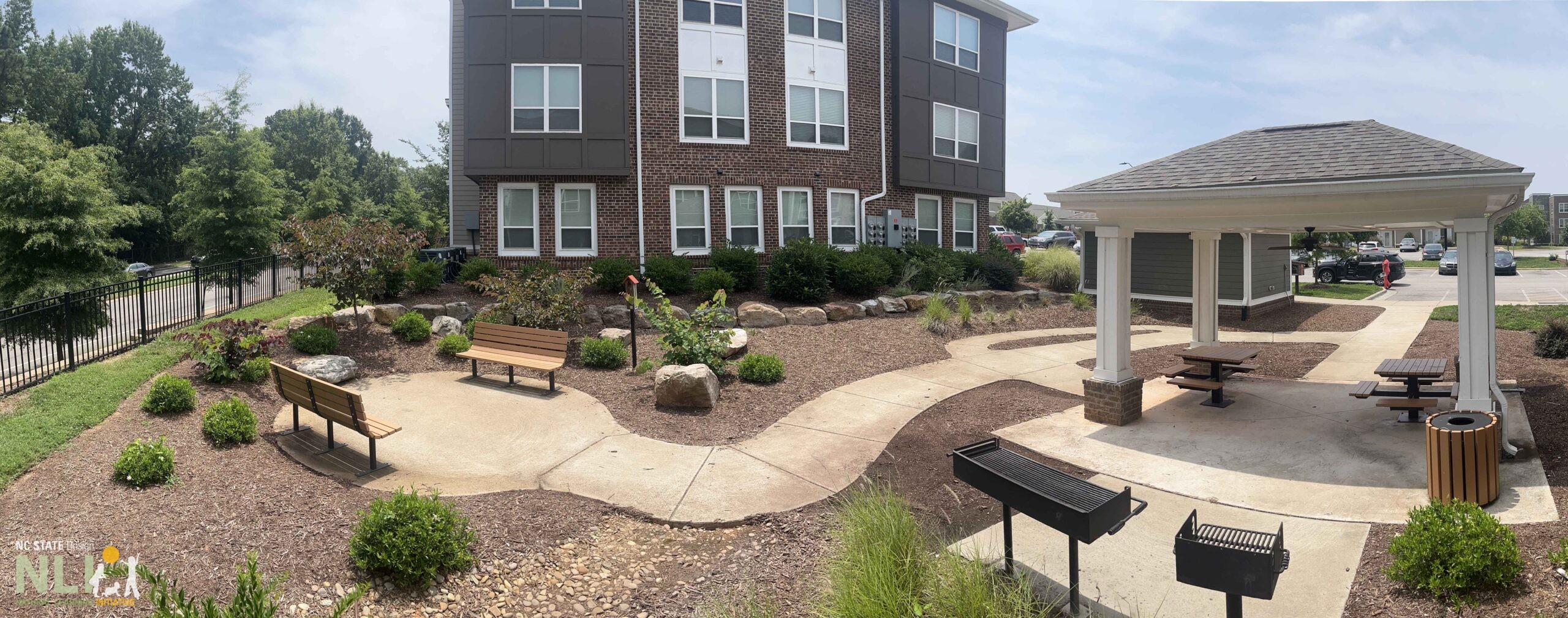
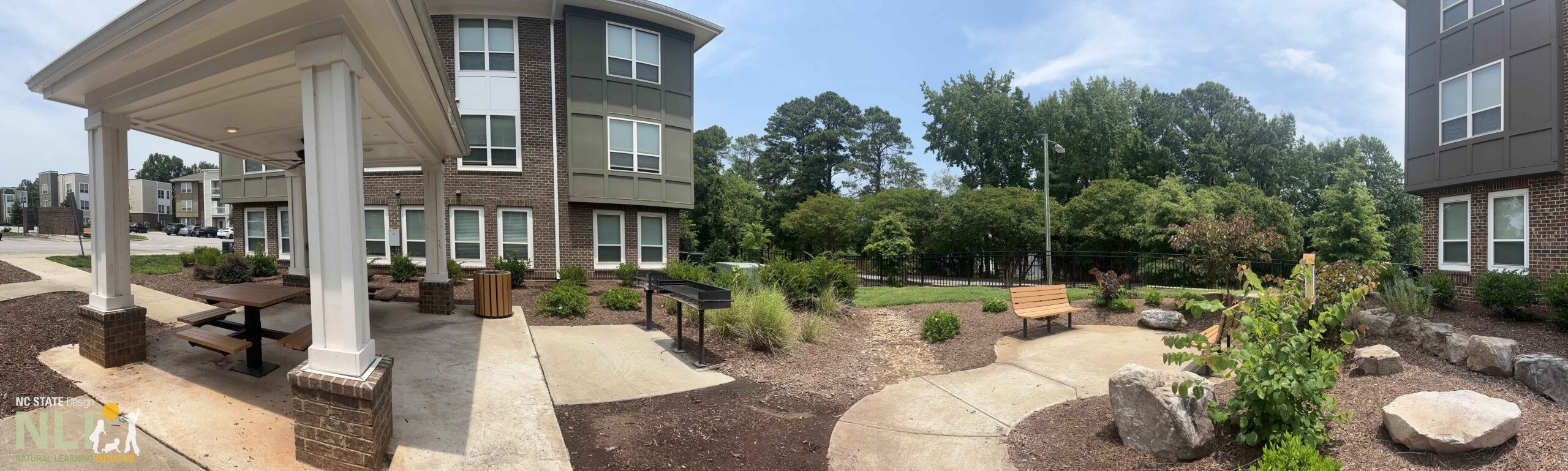
    Community Gathering Garden offers a destination for neighbors and friends to meet up and spend time together in a garden setting with picnic shelter and grill.

    Community Gathering Garden design plan
    boulder wall

    Boulder Wall around Gathering Area

    panorama of constructed pathway

    View across Gathering Area with Grilling Facilities

    opposite view of panorama of constructed pathway

    Multi-Purpose Shelter

    the village at Washington terrace design plan
  • The future is a playground – Washington Post Article

    The future is a playground – Washington Post Article

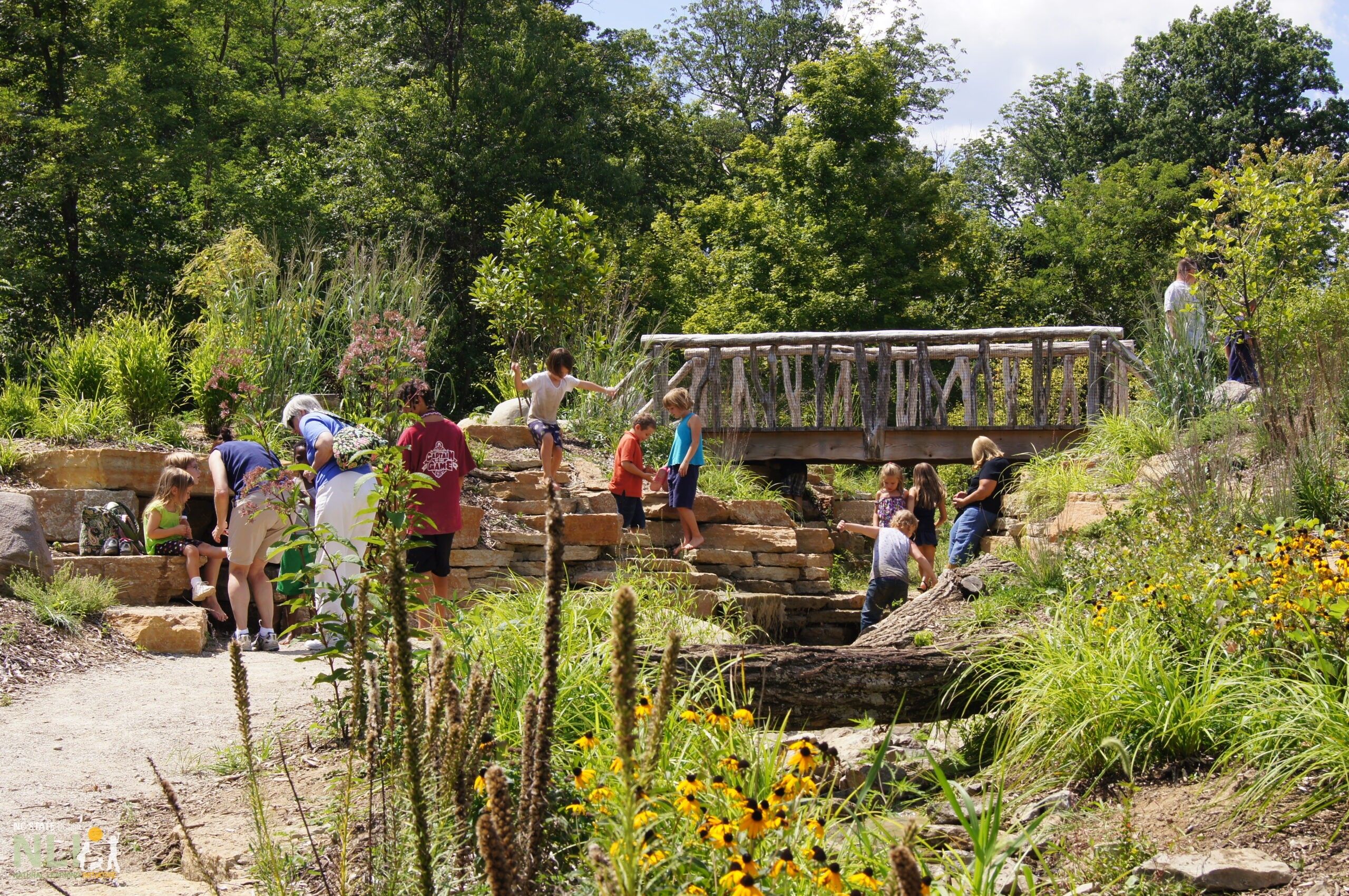
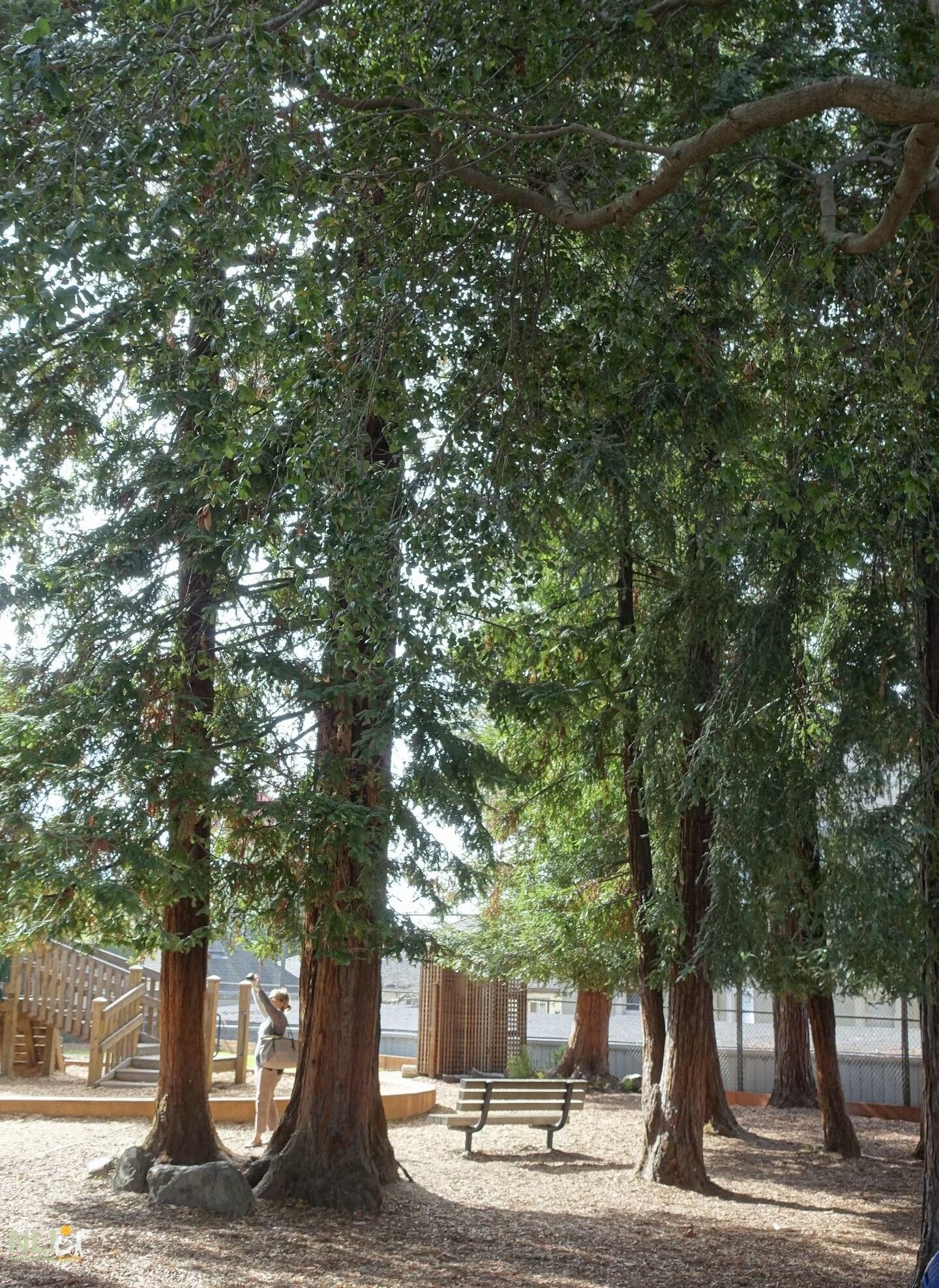
    NLI’s Robin Moore was recently cited in a Washington Post article on the future of playgrounds. The article highlights several play spaces Moore was involved with including The Nature Playscape at the Cincinnati Nature Center in Ohio and the Washington Environmental Yard. in Berkeley, CA.

    Moore describes his philosophy behind play space design which creates a sense of freedom while incorporating natural elements. The use of nature in playground design gives children opportunities for imagination and exploration in an increasingly artificial city environment.

    As a preeminent urban landscape design researcher at North Carolina State University, Moore continues to design playscapes that foster new generations of children, promoting adventure and care for the planet.

    Cincinnati Nature Center:

    Schott Nature PlayScape

    View Washington Post Article:

    The future is a playground – PDF Download

    The future is a playground – WP Website

    children and adults engaging in play on a rock wall
    Redwoods at Washington Elementary
  • LET’S GET OUTSIDE!

    Promote outdoor strategies … for kids and providers

    LET’S GET OUTSIDE!

    Child care agencies that issue COVID-19 guidance for providers may play a critical role in promoting more time outside as a strategy to reduce the risk of COVID-19 while supporting healthy child development. We invite you to share your progress with us here!

    This feedback forum is closed, but check out the “LET’S GET OUTSIDE! documents below:

    LET’S GET OUTSIDE!