Blog
-
Texas Tech Colleague Wins 2023 ASLA Student Award of Excellence in Research
Texas Tech Colleague Wins 2023 ASLA Student Award of Excellence in Research
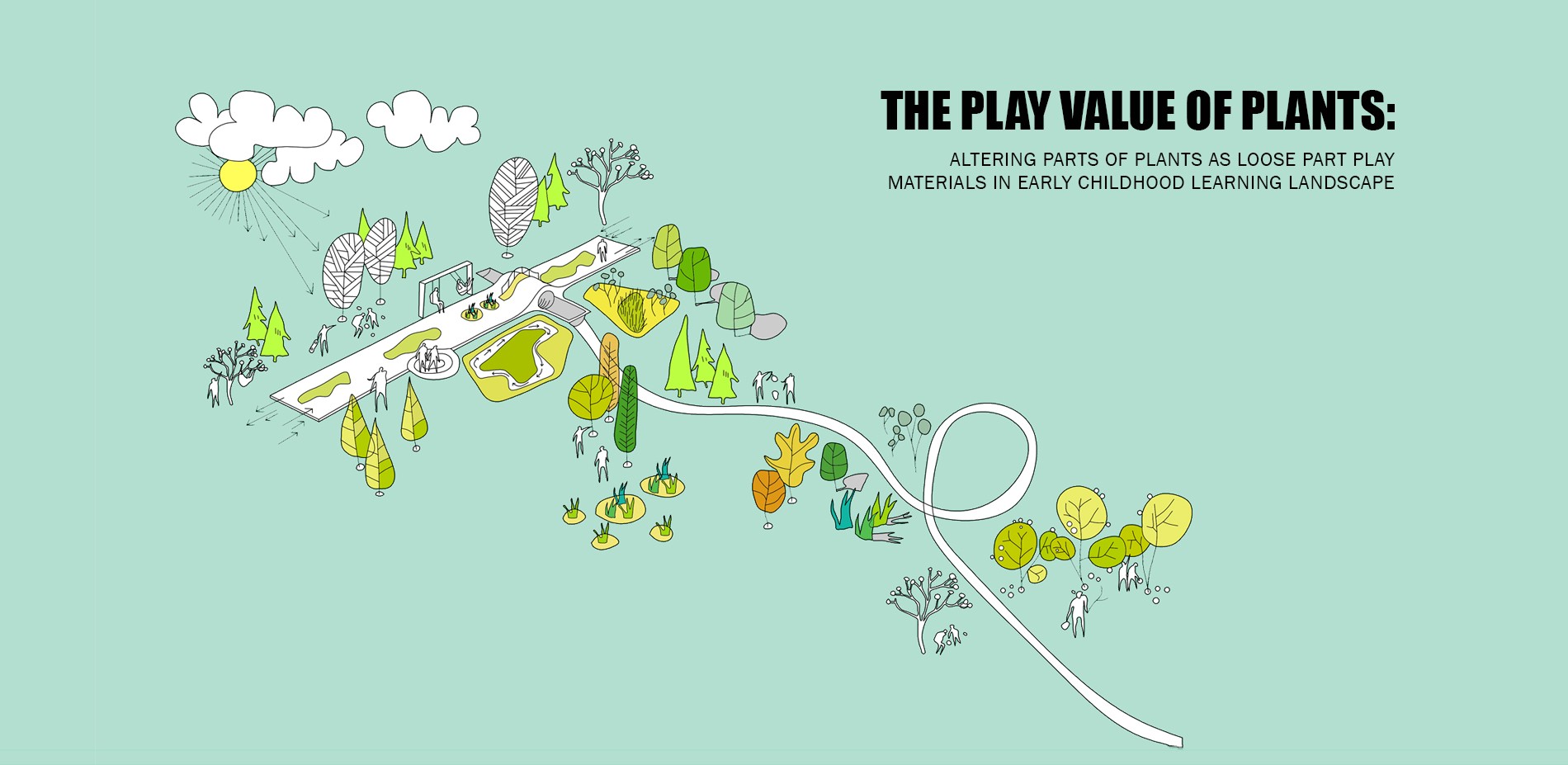
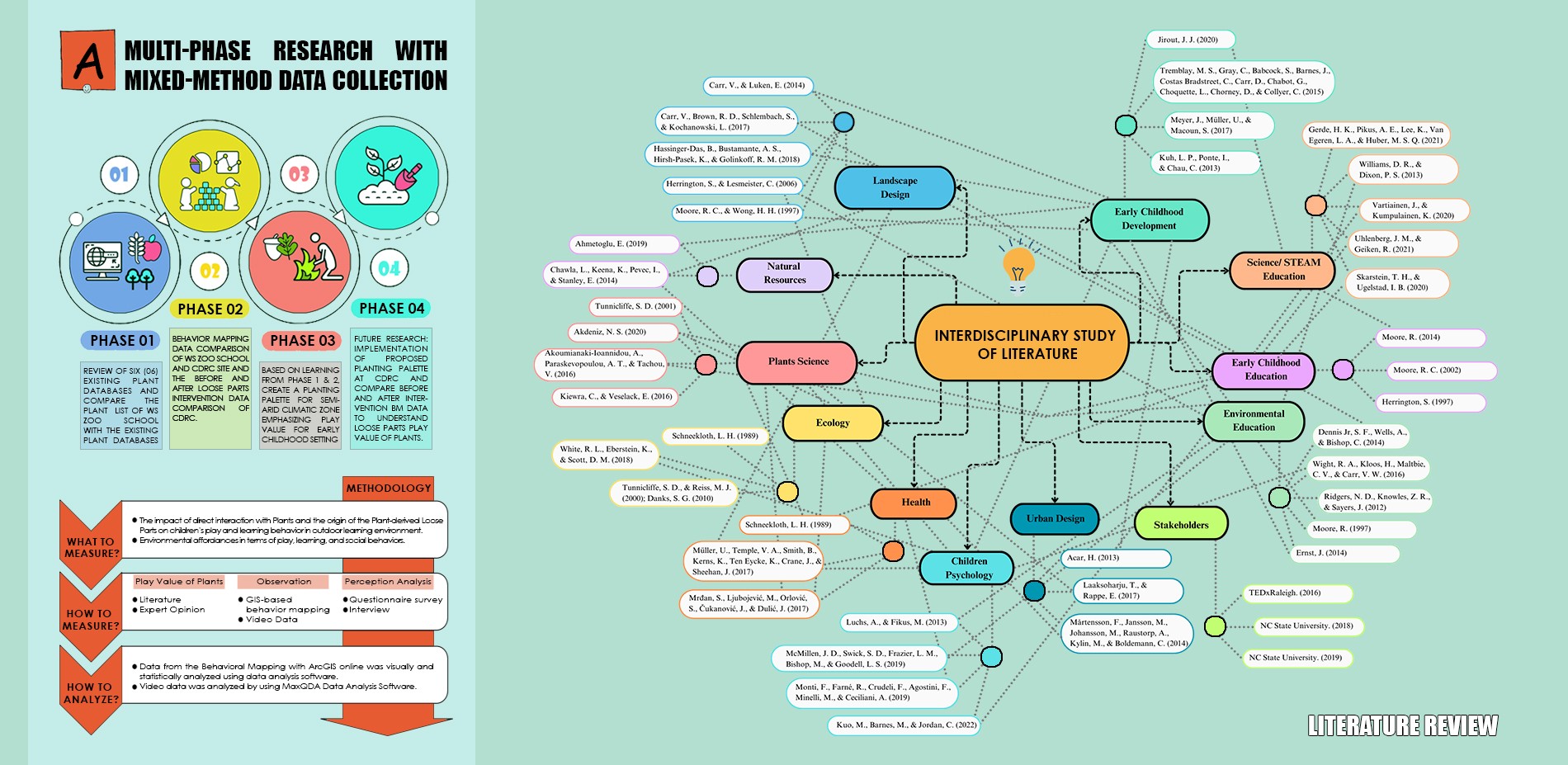
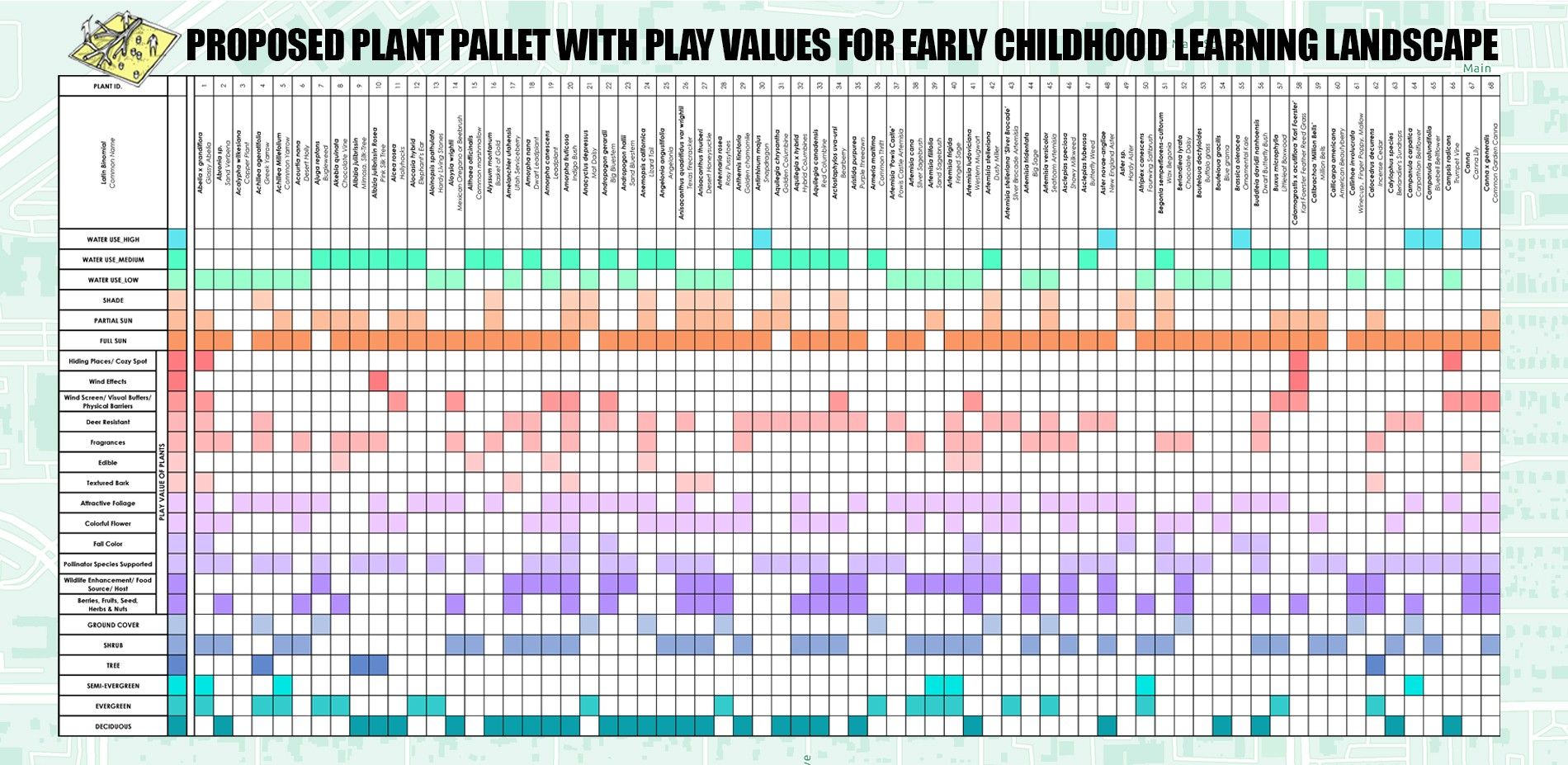
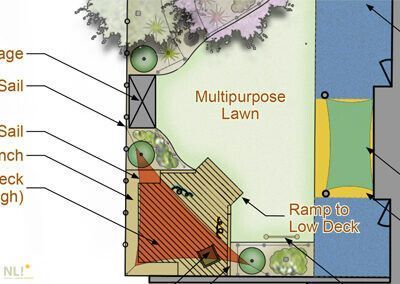
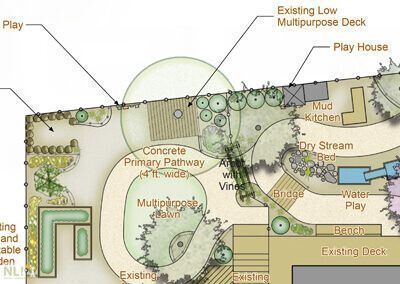
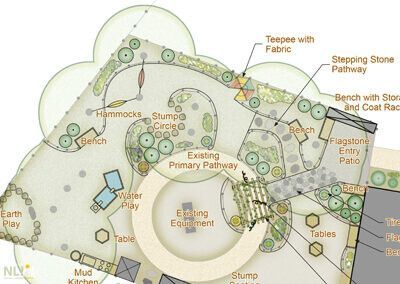
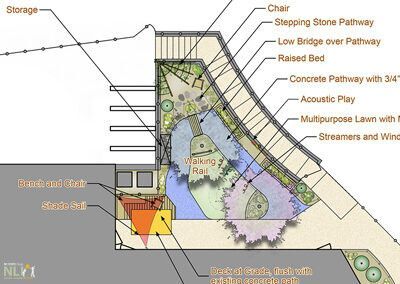
NLI Colleague Nazia Afrin Trina, MLA Student at Texas Tech University, was the recipient of the Award of Excellence in the Research Category for her work on “The Play Value of Plants.” The project combined database collection, experiment, and case study observation to create a planting palette for future implementation at Child Development Research Center (CDRC) in Lubbock, Texas.
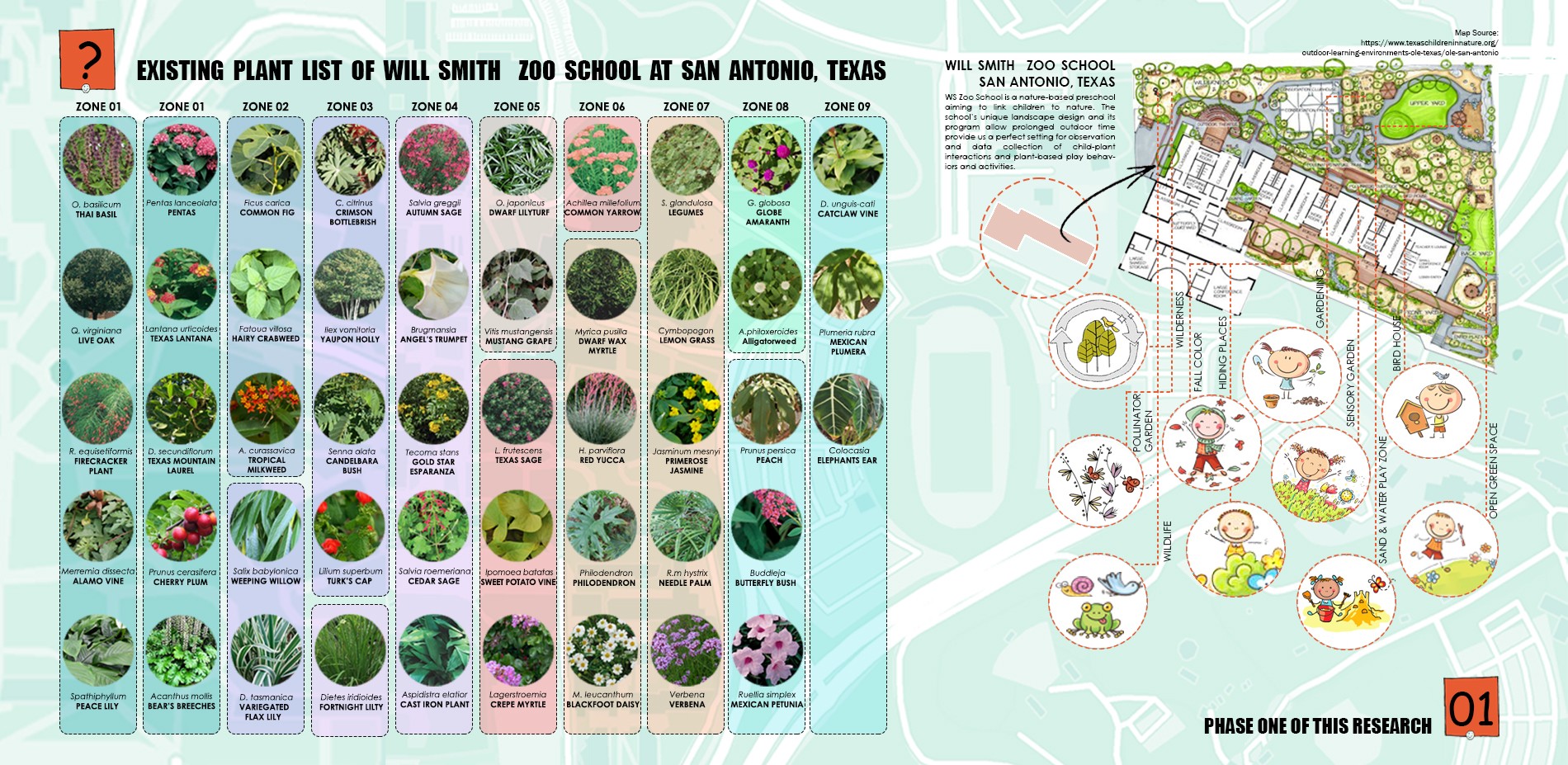
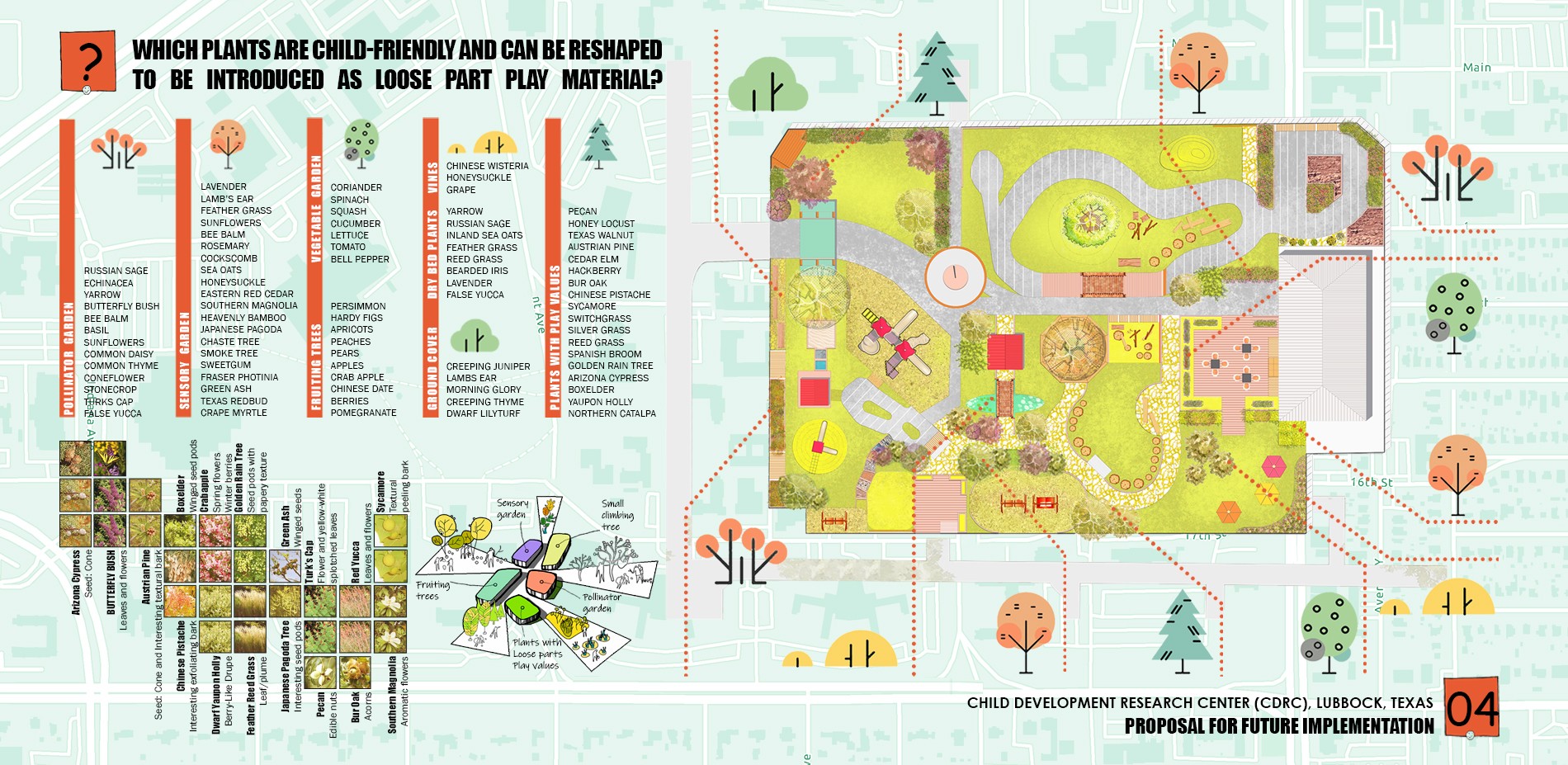
Trina’s project begins by reviewing six existing plant databases which were then compared to the plant list of the Will Smith Zoo School in San Antonio, Texas. The CDRC as well as the Will Smith school were then used as case studies for loose parts children’s play interventions. The combined research results were then used to inform the planting palette.
Along with the Award of Excellence, Trina’s beautiful illustrations from her project were also featured on the cover of the September 2023 issue of the Landscape Architecture Magazine, ASLA’s magazine publication. Of the 372 student projects that were submitted to the 2023 ASLA Student Awards, 30 projects were chosen as award winners, and 4 of those projects received Awards of Excellence in their respective categories. The magazine has high praise for this year’s cohort, and congratulates the student’s on their taking-on of complex issues, their professionalism, and willingness to engage in difficult conversations with real-life community members.
View on ASLA’s website:
External Links:
Child Development Research Center
NLI Resources:
National Play Value Plant Database
Select Slides from Trina’s Award Winning Presentation:
-
NLI’s Community of Interest
NLI’s Community of Interest
Thank you for taking part in NLI’s “community of interest” (COI) by subscribing to the Natural Learning Initiative Newsletter and using NLI resources! Subscribers like you are a diverse group based in 173 countries (see Google Analytics map).
Media views, resource downloads, and website explorations help us analyze which resources are most helpful and consider how to better serve our COI (be assured that no personal identifiers are tracked). Please help spread the word so we can continue to grow, provide more resources, add to the NLI professional development program, and support the healthy, nature-based development of many more children.
Please feel free to contact us at[email protected]to share comments and observations, suggest additional resources, and express any other needs that could extend your professional effectiveness. Thank you for your continuing support and solidarity!
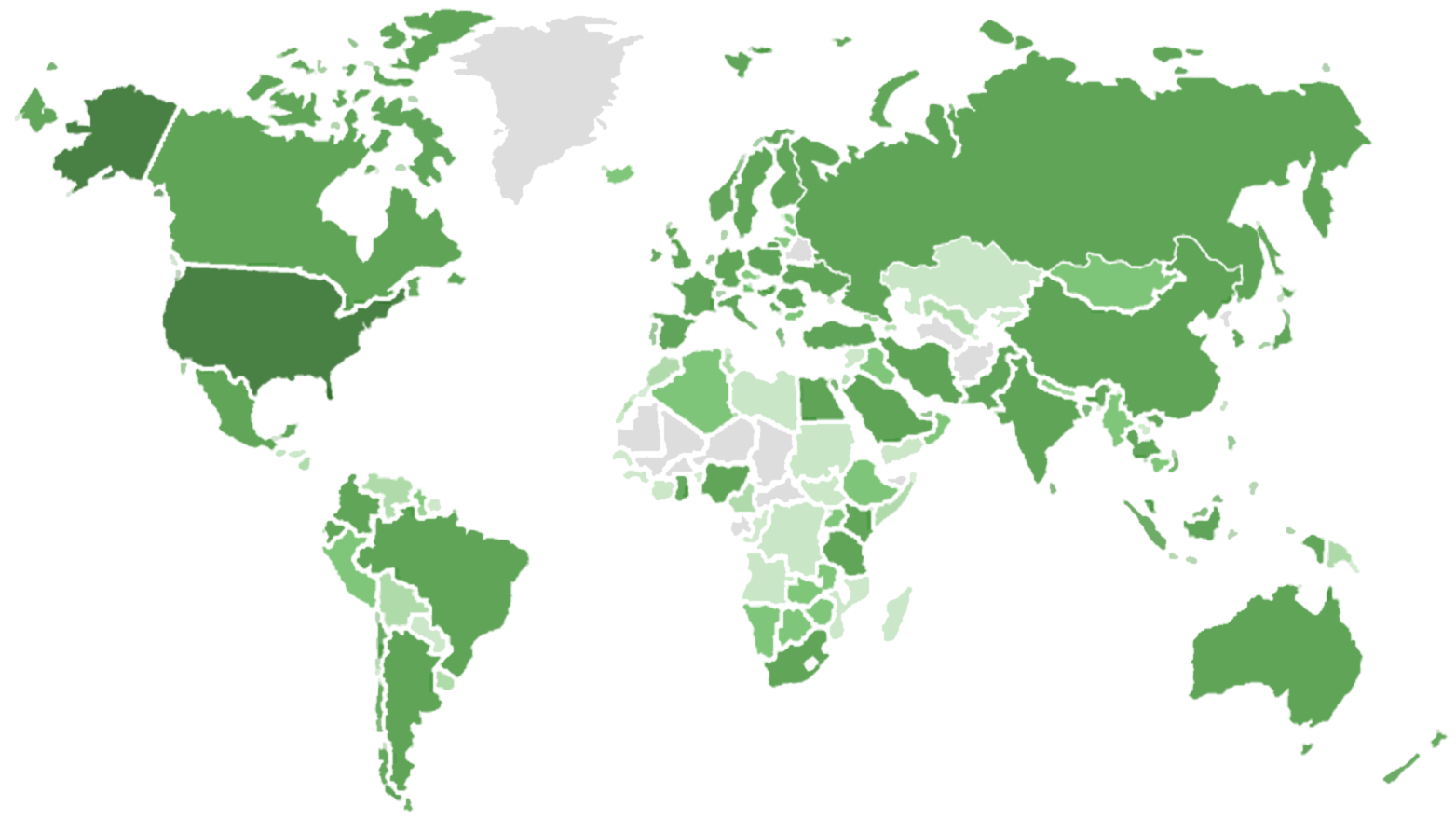
*Darker green indicates a higher subscription count.

3.5Klikes3.8Kfollowers

119posts749followers

30videos339subscribers

789posts853followers
-
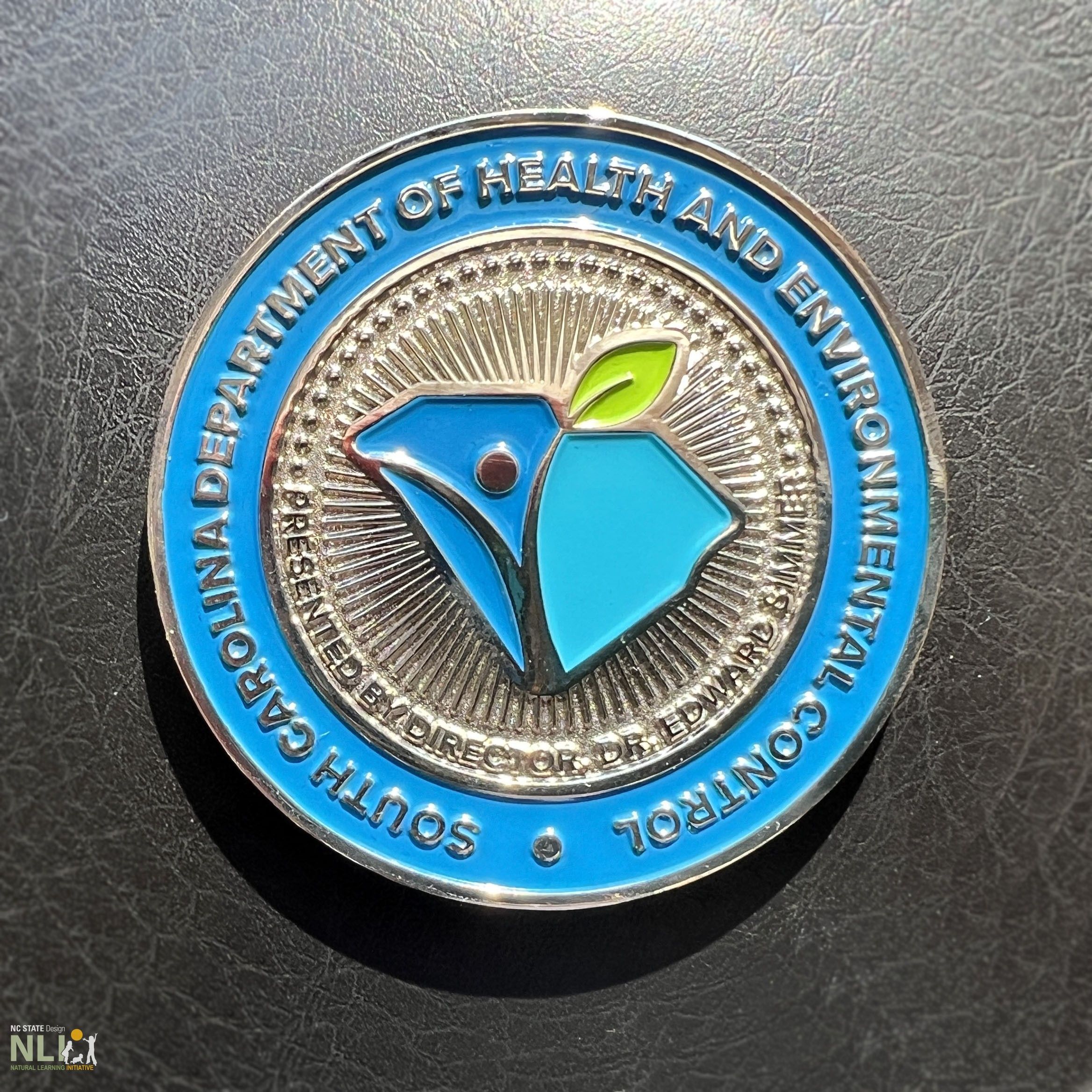
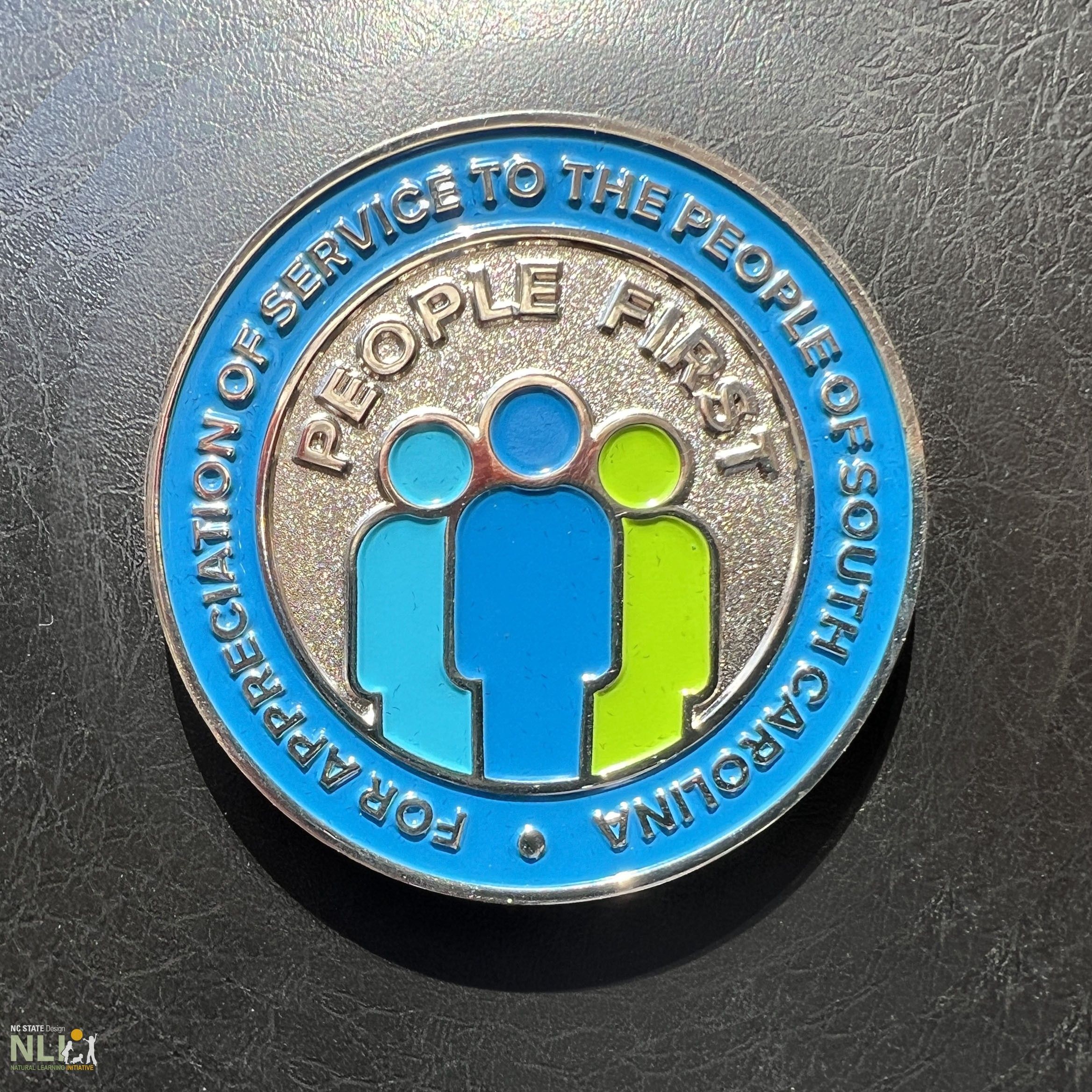
NLI Receives DHEC Appreciation Coin
NLI Receives DHEC Appreciation Coin
Presented to NLI by Agency Director, Dr. Simmer
Recognizes partners addressing the health and safety of South Carolina residents, improving the environment in which we live, and working for the betterment of DHEC.
See NLI Grow Outdoors Launch news story:
Grow Outdoors South Carolina Launch
Front of coin
Back of coin
-
Healthy Starts for Infants & Toddlers
Promoting a lifetime of healthy behaviors
Healthy Starts for Infants & Toddlers
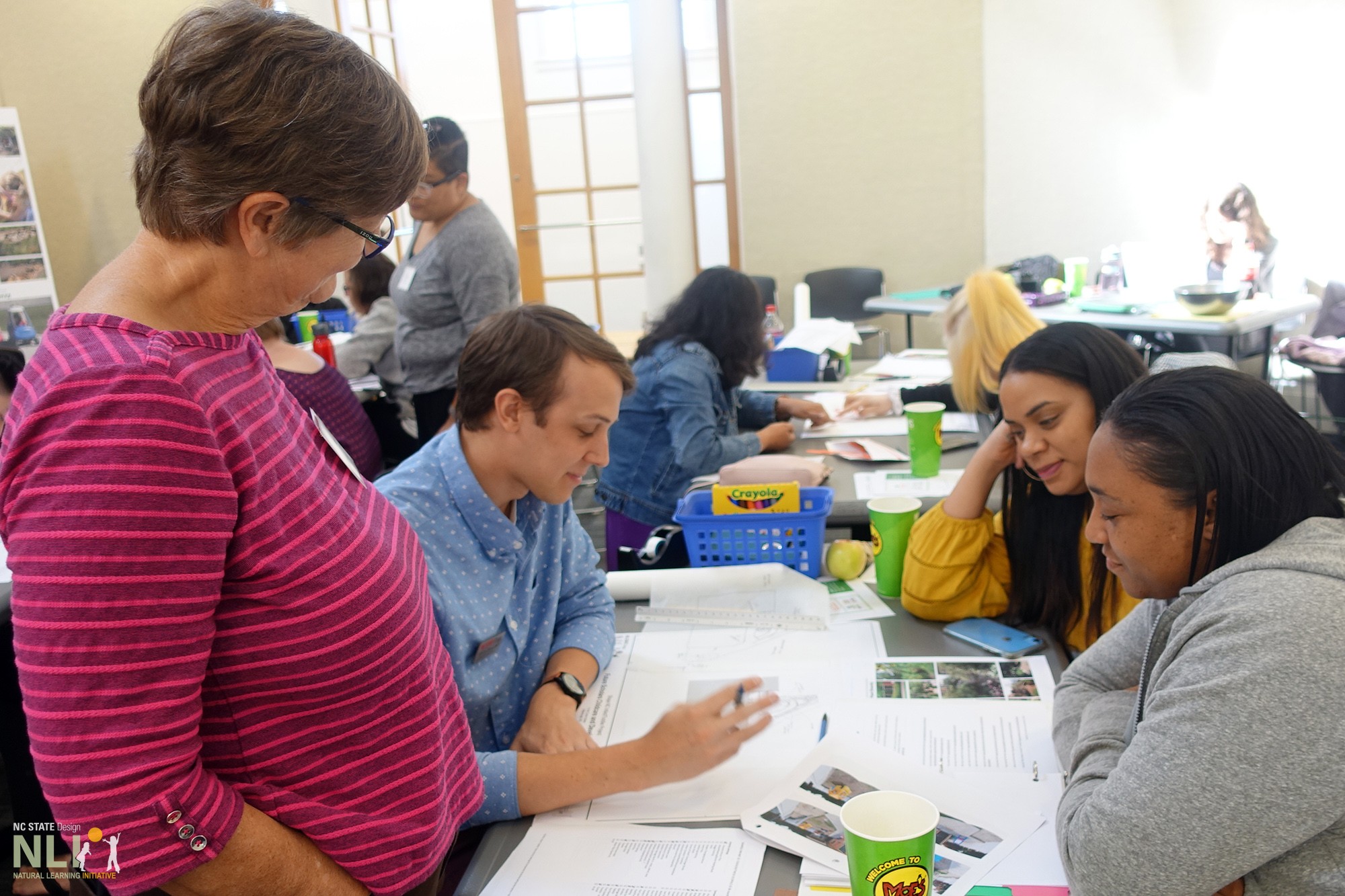
Healthy Starts for Infants and Toddlers is an innovative project to improve outdoor spaces for infants and toddlers, birth to 35 months, in 12 childcare centers in Wake and Orange counties, North Carolina.
Using the Preventing Obesity by Design (POD) strategy, NLI applies evidence-based design assistance and professional development to deliver high-quality, developmentally appropriate, outdoor learning environments. Best practices encourage infants and toddlers’ active living, healthy eating, and outdoor learning.
The initiative is supported by NC DHHS: Division of Child Development and Early Education, delivered through Shape NC, a long-term program hosted by the NC Partnership for Children (Smart Start).
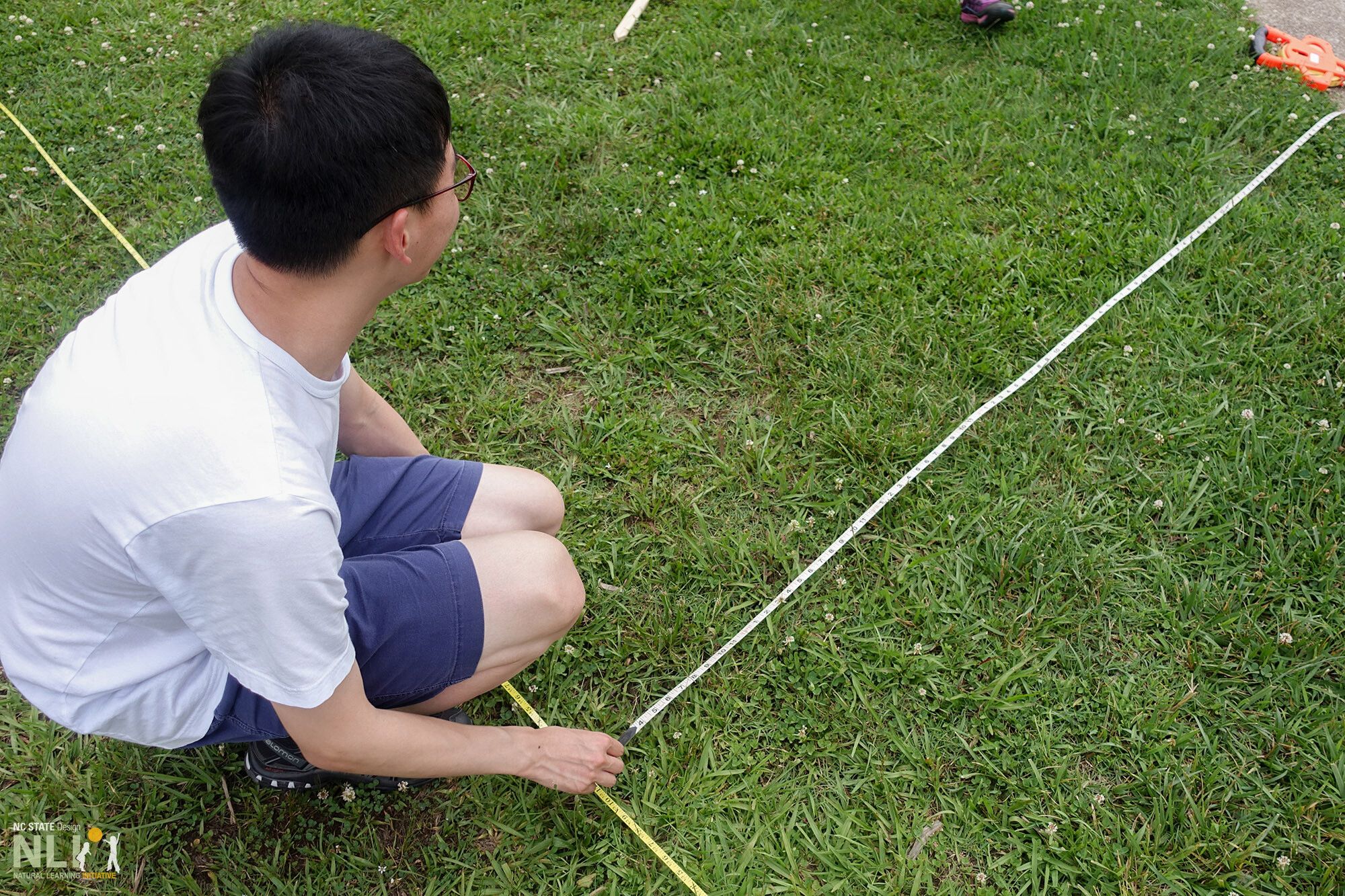
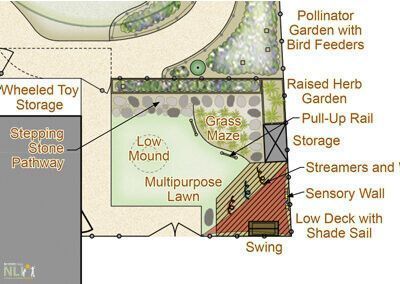
(Wake Co.) Kreepers-N-Krawlers
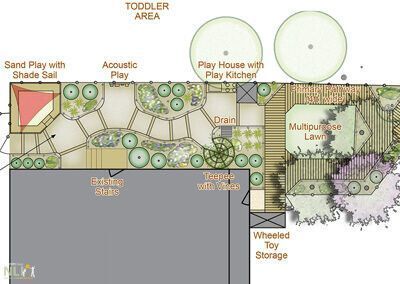
(Orange Co.) Spanish for Fun
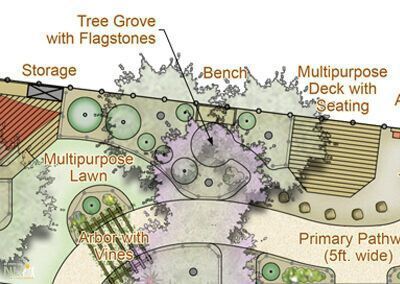
(Orange Co.) Goddard School of Chapel Hill
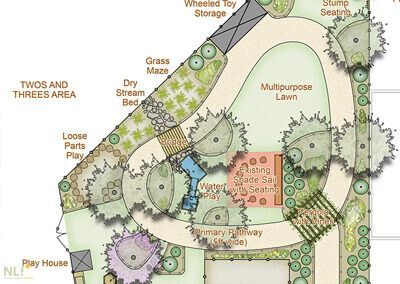
(Wake Co.) Morrisville Square Creative School
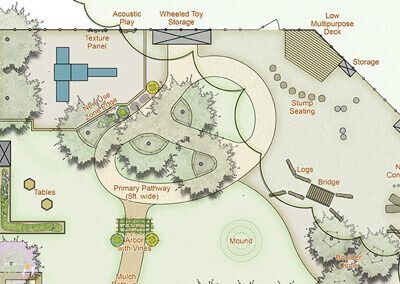
(Wake Co.) Little Believers Academy II
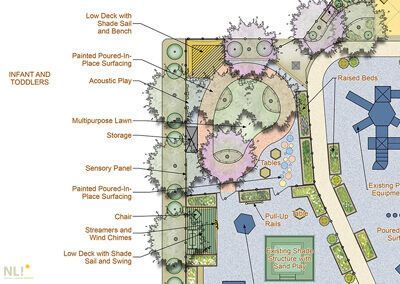
(Wake Co.) Kiddie Academy Brier Creek
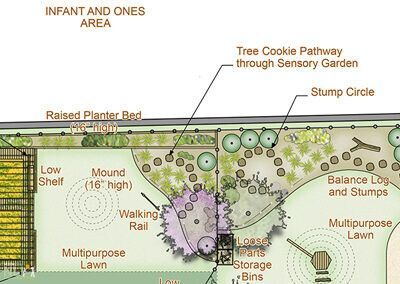
(Wake Co.) Discovery Point Heritage
(Orange Co.) The University Child Care Center
(Orange Co.) Lil Treasures Day Care, Inc.
(Orange Co.) Kehillah Jewish Preschool
(Orange Co.) Future Scholars Childcare and Development Center
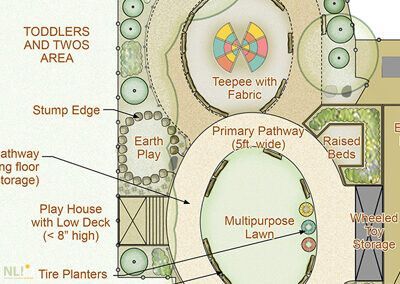
(Orange Co.) Community School for People Under 6
-
Institutes & Symposia
Institutes & Symposia
At the forefront of interdisciplinary dialogue and innovation lie two pivotal gatherings—The NLI Design Institutes and the Growing IN Place Symposium series. These forums converge at the crossroads of urban planning, community development, and the well-being of families and children. Spanning over a decade, they’ve championed transformative change, shaping urban landscapes with inclusivity, resilience, and foresight.
The NLI Design Institutes stand as pivotal forums for advancing nature-centric design principles, particularly concerning children’s environments. Professionals from diverse fields, including landscape architecture, education, public health, and recreation, convene to explore the transformative potential of integrating nature into the built environment. From fostering outdoor play to promoting healthy lifestyles and environmental stewardship, these institutes offer practical insights and innovative solutions that enrich the lives of children and families.
The Growing IN Place Symposium series advocates for environments that nurture health, sustainability, and community connectivity in cities. Each annual gathering brings together professionals, policymakers, educators, and advocates to explore innovative approaches to urban landscape planning. Emphasizing accessible green spaces, pedestrian-friendly pathways, and culturally vibrant neighborhoods, these symposiums envision cities as dynamic ecosystems where every resident thrives. Through collaborative discussions and shared insights, they pave the way for transformative change in urban landscapes.
12th Annual Growing IN Place
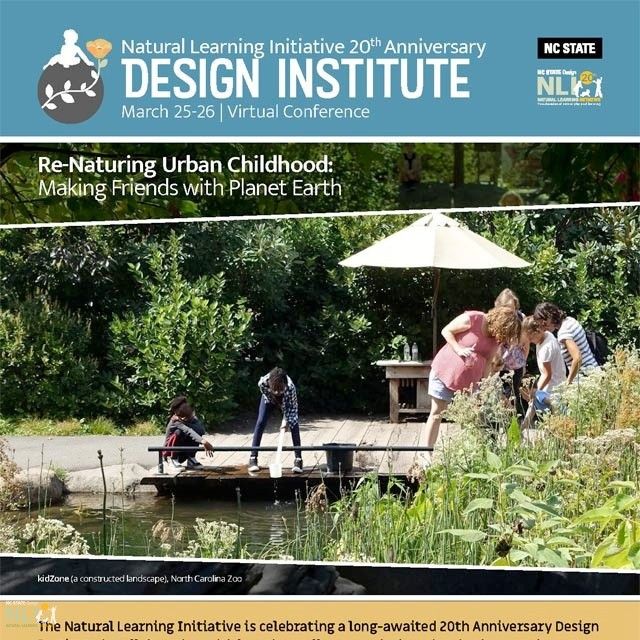
20th Anniversary NLI Design Institute
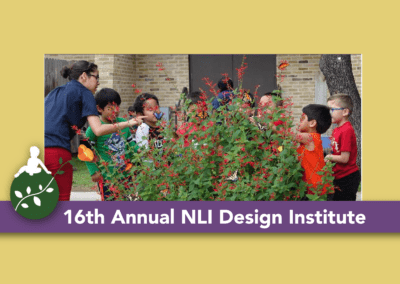
16th Annual NLI Design Institute
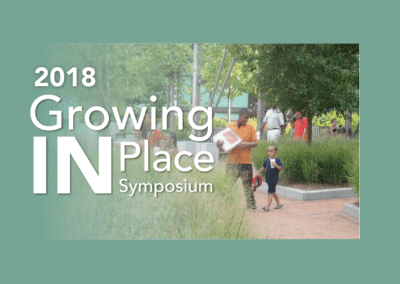
Growing IN Place Symposium 2018
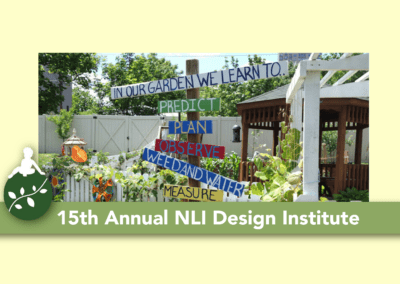
15th Annual NLI Design Institute
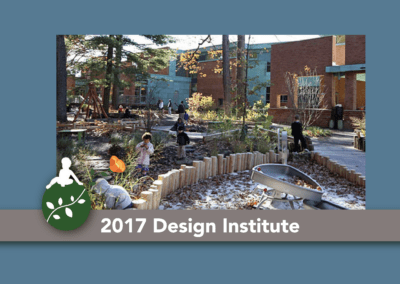
Early Childhood Design Institute 2017
Growing IN Place Symposium 2017
14th Annual NLI Design Institute
Growing IN Place Symposium 2016
13th Annual NLI Design Institute
Growing IN Place Symposium 2015
12th Annual NLI Design Institute
Growing IN Place Symposium 2014
11th Annual NLI Design Institute

Growing IN Place Symposium 2013
10th Annual NLI Design Institute
Growing IN Place Symposium 2012
9th Annual NLI Design Institute
Growing IN Place Symposium 2011
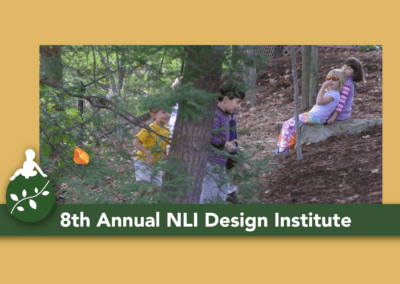
8th Annual NLI Design Institute
Growing IN Place Symposium 2010
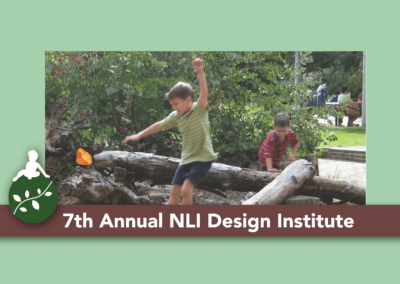
7th Annual NLI Design Institute
Growing IN Place Symposium 2009
6th Annual NLI Design Institute
Growing IN Place Symposium 2008
5th Annual NLI Design Institute
4th Annual NLI Design Institute
3rd Annual NLI Design Institute
2nd Annual NLI Design Institute
1st Annual NLI Design Institute
-
Deepti Adlakha Research Published in Lancet Global Health Series
Deepti Adlakha Research Published in Lancet Global Health Series
The team of more than 80 researchers in 25 cities across 19 countries used standardized methods to assess the policy settings and lived experiences of city-dwellers. They identified thresholds for urban design and transport features that would increase active transport and promote health and used spatial indicators to assess the health-supporting nature and sustainability of each city and identify inequities in access.
The new research used indicators such as proximity to public transport and food, walkability, city density, and policy settings to determine how healthy and sustainable are the cities of Maiduguri, Mexico City, Sao Paulo, Baltimore, Phoenix, Seattle, Hong Kong, Chennai, Bangkok, Hanoi, Graz, Ghent, Bern, Olomouc, Cologne, Odense, Barcelona, Valencia, Vic, Belfast, Lisbon, Adelaide, Melbourne, Sydney, and Auckland. The research published in TLGH is supported by reports and scorecards that present assessments for each city, available at www.healthysustainablecities.org. This series presents a first step toward the development of a global system of policy and spatial indicators for healthy and sustainable cities using tools the group has created.
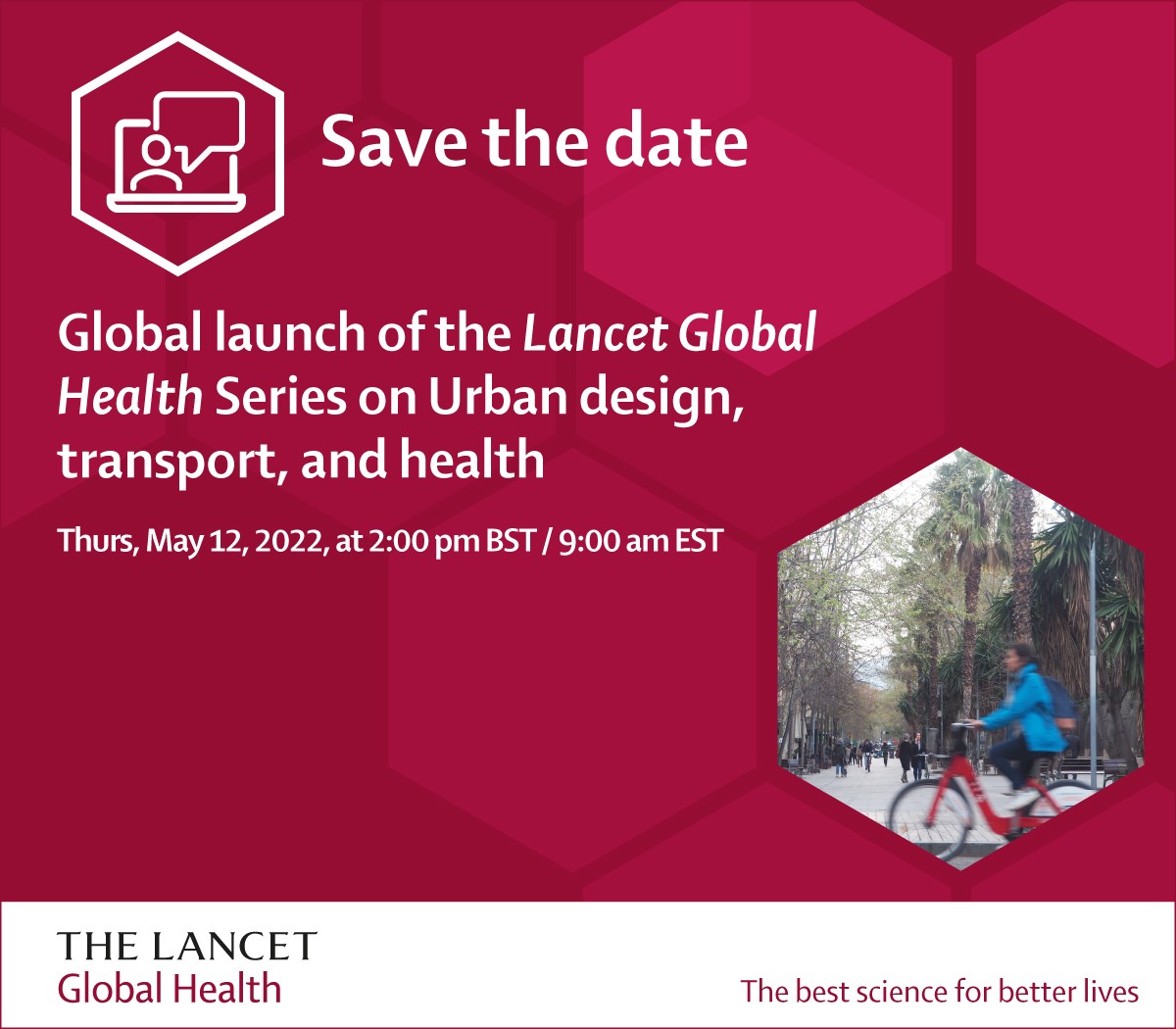
A public launch webinar will be hosted on May 12th (register at the link below). In this Webinar, the Series authors, led by Prof. Billie Giles-Corti, will present their work which follows on from the 2016 Lancet Series, and will be joined by an external panel of stakeholders to discuss what the recommendations mean for them. There will be an opportunity at the end to ask questions.
How did you first get involved with this project?
In 2018, at the 7th International Society for Physical Activity and Health held in London, the World Health Organization launched its global physical activity strategy for ‘More Active People for a Healthier World’, and the multidisciplinary Global Healthy and Sustainable City-Indicators Collaboration was established. I have been an Executive Member of the Collaboration since 2018. At meetings of the International Physical Environment Network (IPEN) and the Council of the Environment and Physical Activity (ISPAH CEPA), we recruited collaborators in 25 cities in 19 countries and six continents to participate in this study.
What was your role during this project?
I am an Executive Member of the Global Healthy and Sustainable City-Indicators Collaboration and the co-author of The Lancet Global Health Series on Urban Design, Transport, and Health.
What was the most interesting artifact you discovered during this project?
Urban design and planning decisions affect human and planetary health and amplify urban vulnerabilities. Our team developed a scalable framework with standardized methods and open-source tools that can be used by other cities to benchmark and monitor progress towards being healthy and sustainable. This framework can create upstream policy and spatial indicators to benchmark and track progress, unmask spatial inequities, inform investments, and accelerate transitions to net-zero, healthy, and sustainable cities worldwide. It offers a roadmap for city leaders to act quickly, plan for future urban growth, and provide equitable infrastructure, services, and amenities.
Are there plans to expand this project further in the future (describe)?
We calling for a 1000-cities challenge to activate a global citizen science program and incentivize the collection of open data and create city planning indicators to improve the knowledge base and inform decision-making, with a focus on the most data-scarce areas. These indicators could be used by global agencies to assess progress toward achieving the UN Sustainable Development Goals.
How do you feel that this project will influence future personal and NLI research?
This project advances my research agenda in pursuing cross-cutting solutions to urban health problems by generating, translating, and scaling up evidence for reducing health inequities in underserved populations. It is also aligned with NLI’s focus on the design of places and landscapes, specifically parks, and green spaces, and their role in the promotion of human and planetary health.
About The Lancet Global Health
The Lancet Global Health is an internationally trusted source of global health knowledge. The open-access journal publishes robustly designed original research on all aspects of global health, with a focus on disadvantaged populations, be they whole economic regions or marginalized groups within otherwise prosperous nations. Topics include but are not limited to reproductive, maternal, neonatal, child, and adolescent health; infectious diseases, including neglected tropical diseases; non-communicable diseases; mental health; the global health workforce; health systems; surgery; and health policy.
-
The NLI Website’s New Look
The NLI Website’s New Look
You may have noticed some changes to the NLI website… We are proud to unveil a new, modern style designed to provide clear and legible content on all screen sizes, including phones!
The new style has been developed with universal web design principles pioneered by tech innovators like Google and Apple as well as complying with WCAG AA color contrast rating for accessibility.
Some of the redesigned components include…
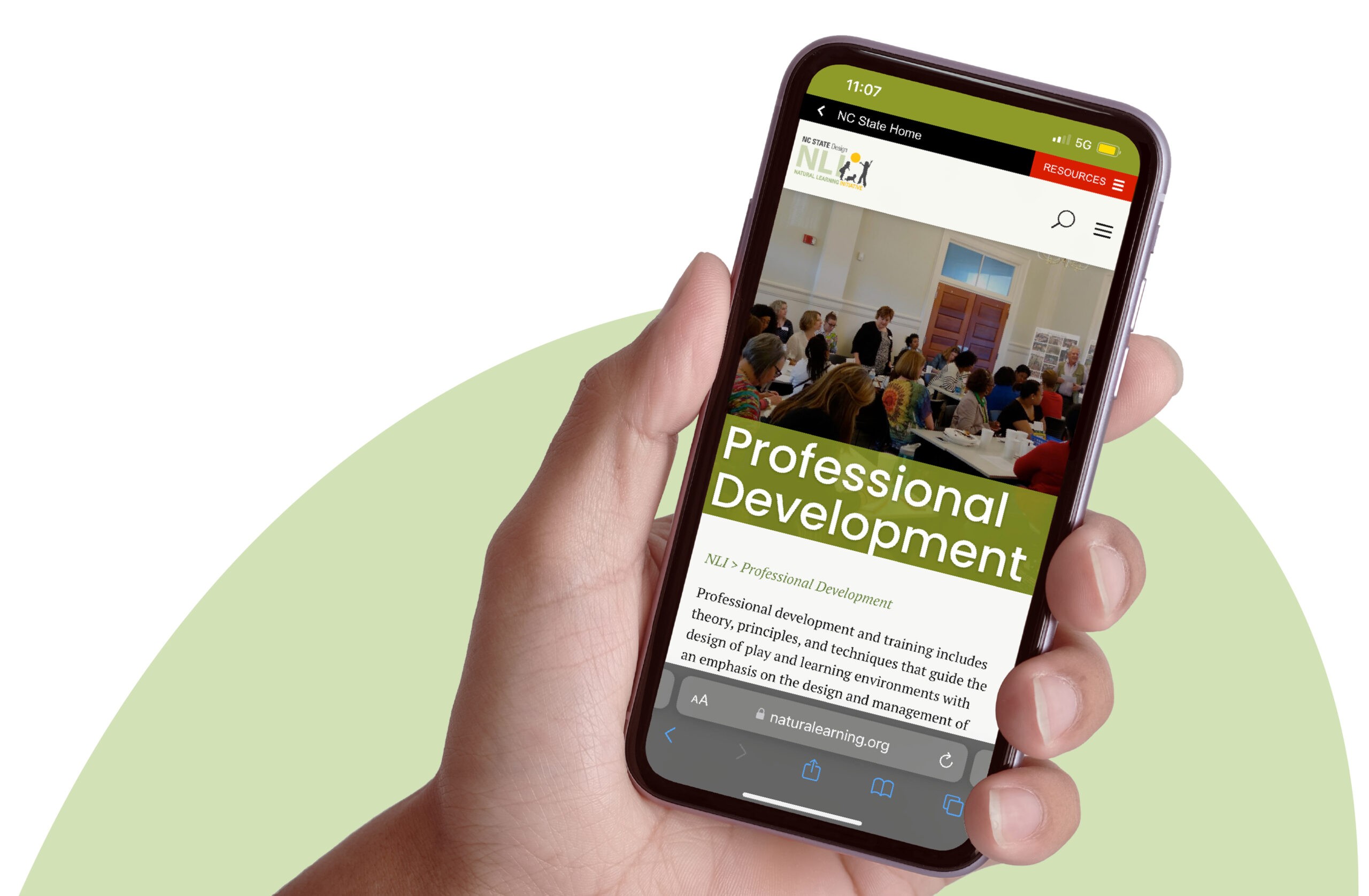
Think & Do
We have added a new page under the HOME category of our navigation bar titled “Think & Do.” The new page illustrates the scope and impact of NLI since our founding in 2000, highlighting programs and success stories.
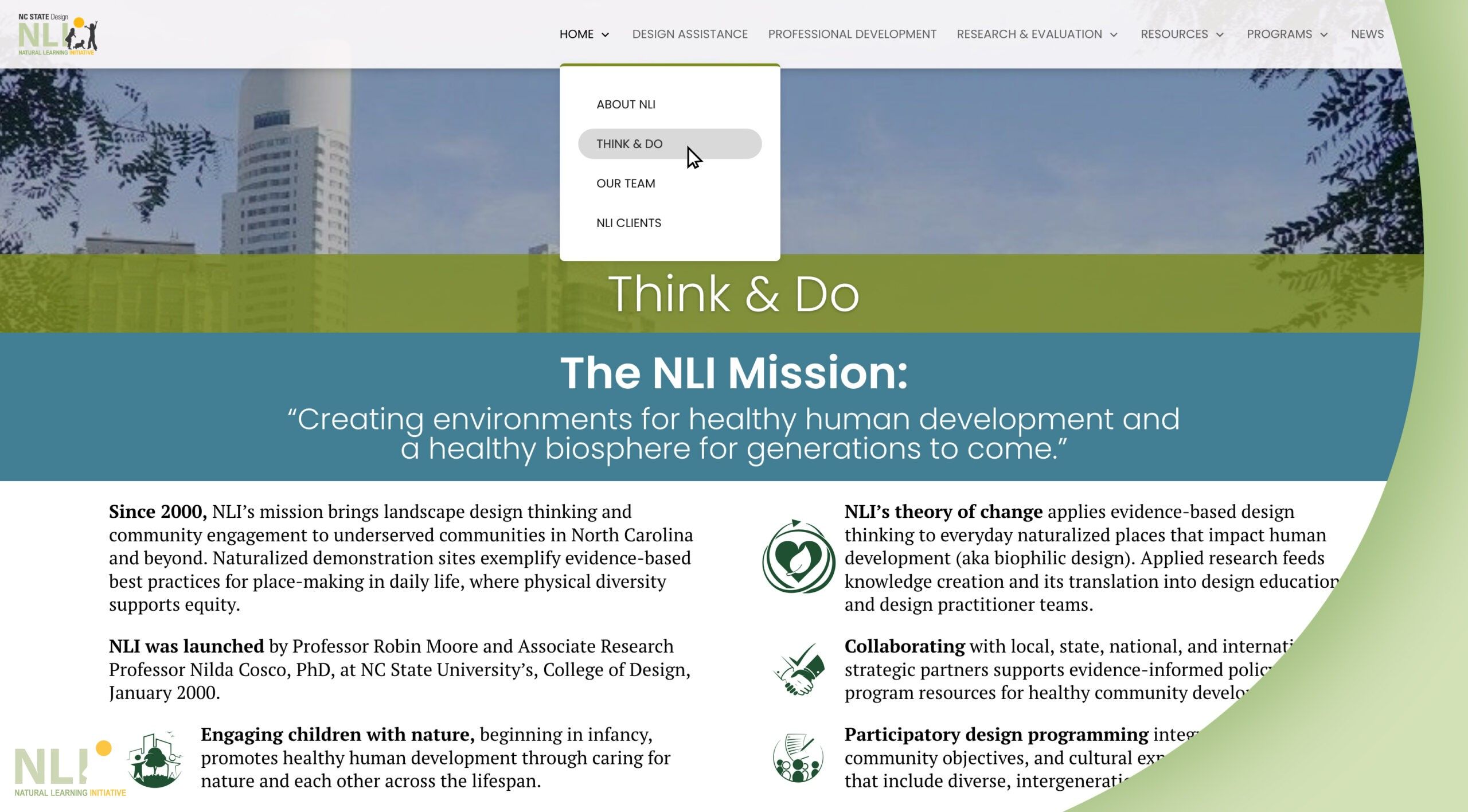
Margins and Page Width
Full-width pages are now site-wide! Providing a modern and immersive experience. The iconic leafy background has been strategically preserved in select places to maintain the playful and time-honored NLI brand.
The website no longer renders decorative margins on screen sizes below desktop, saving valuable real estate on small screens like phones and tablets.
Visit Design Assistance Example Page
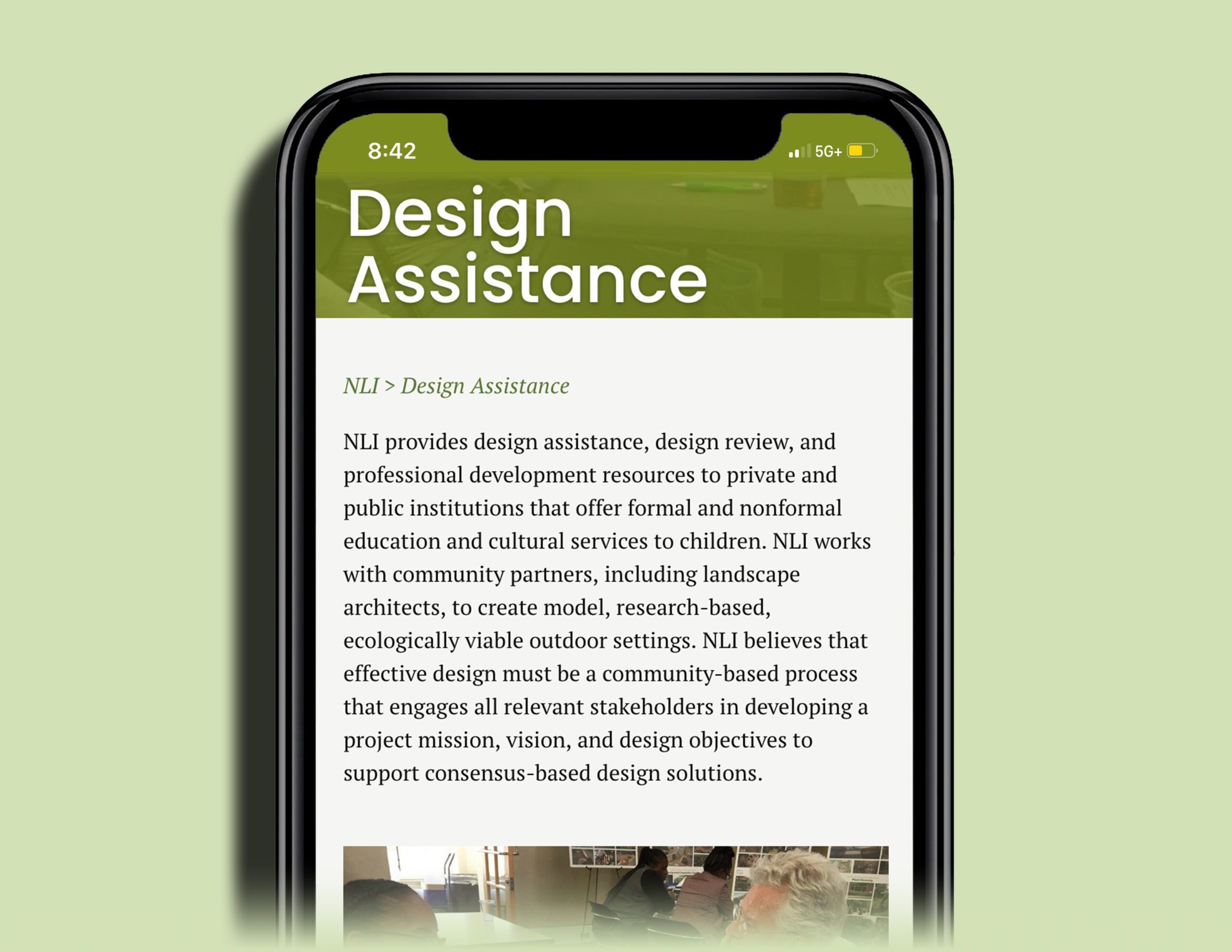
Navigation
Menus and navigation have been restyled to better convey hierarchy and usage. Improvements have also been made to how these menus render on mobile screens.
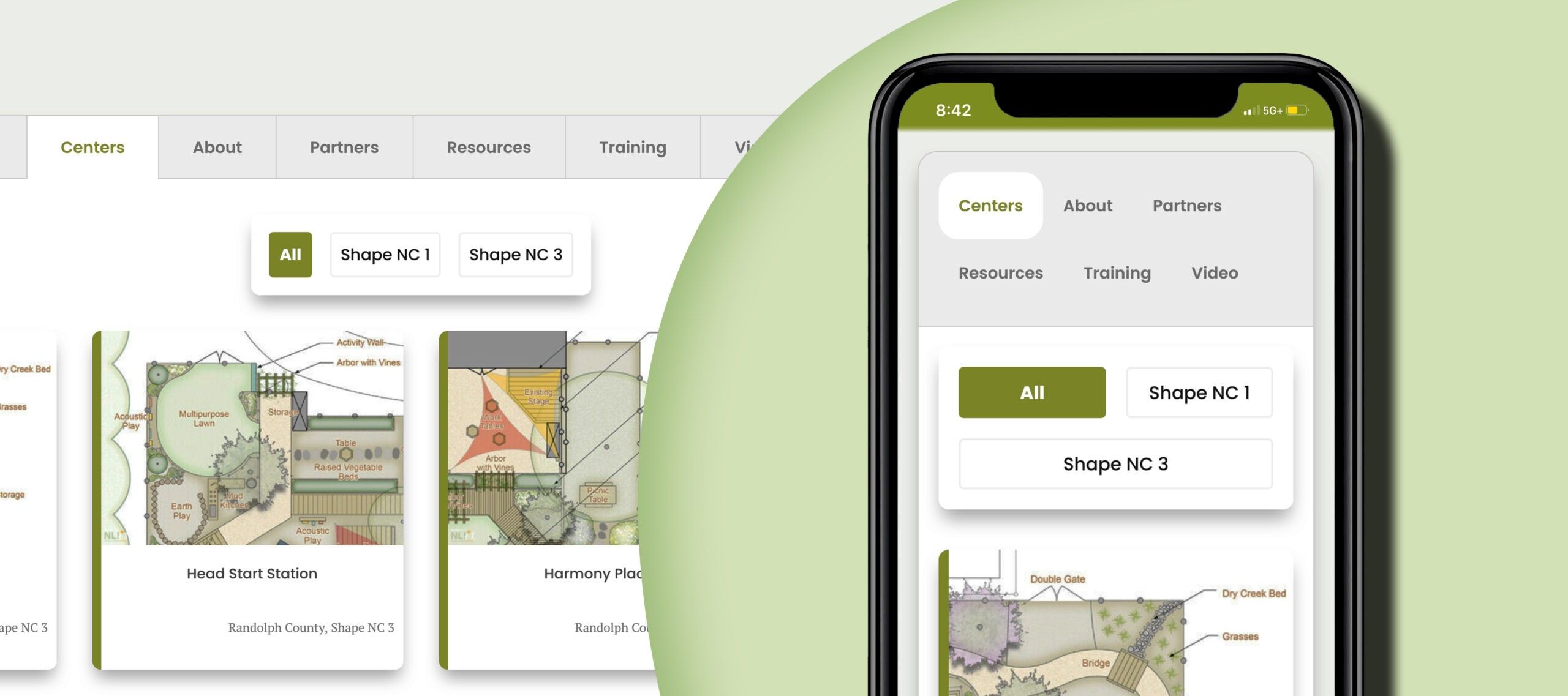
Search and Post Galleries
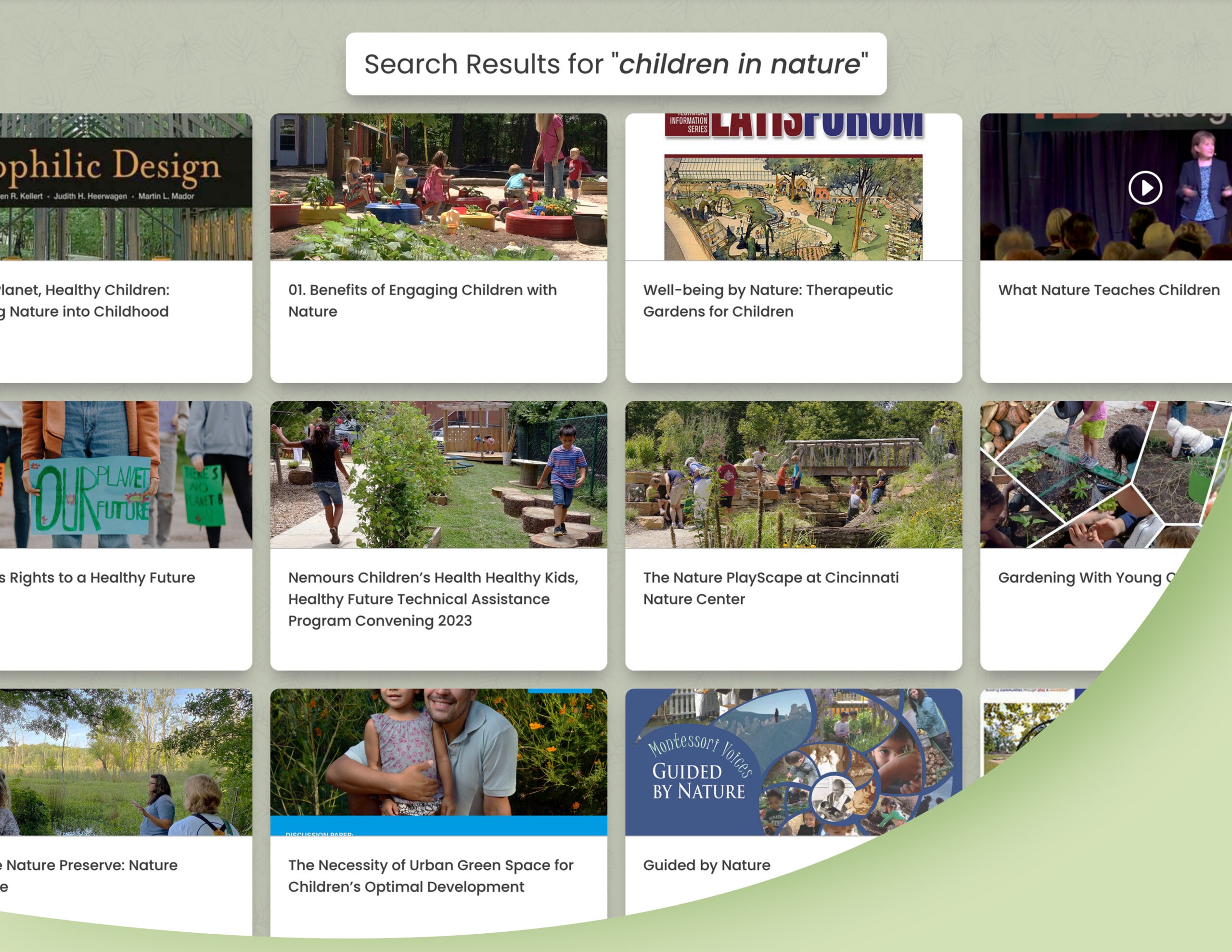
Pages with grid galleries of posts are now stacked evenly allowing for quicker scanning.
-
USDA COLEAFS
Childcare Outdoor Learning Environments as Active Food Systems (COLEAFS)
USDA COLEAFS
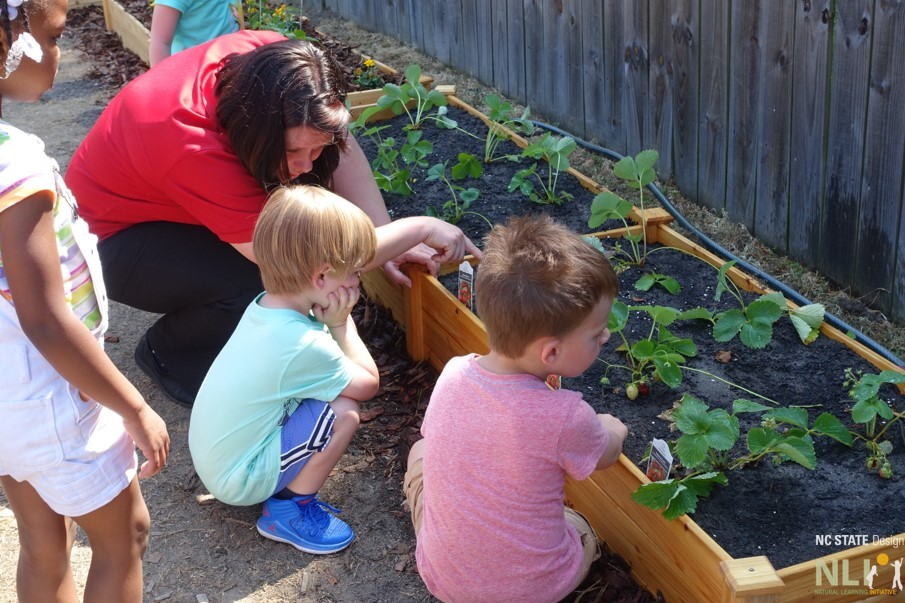
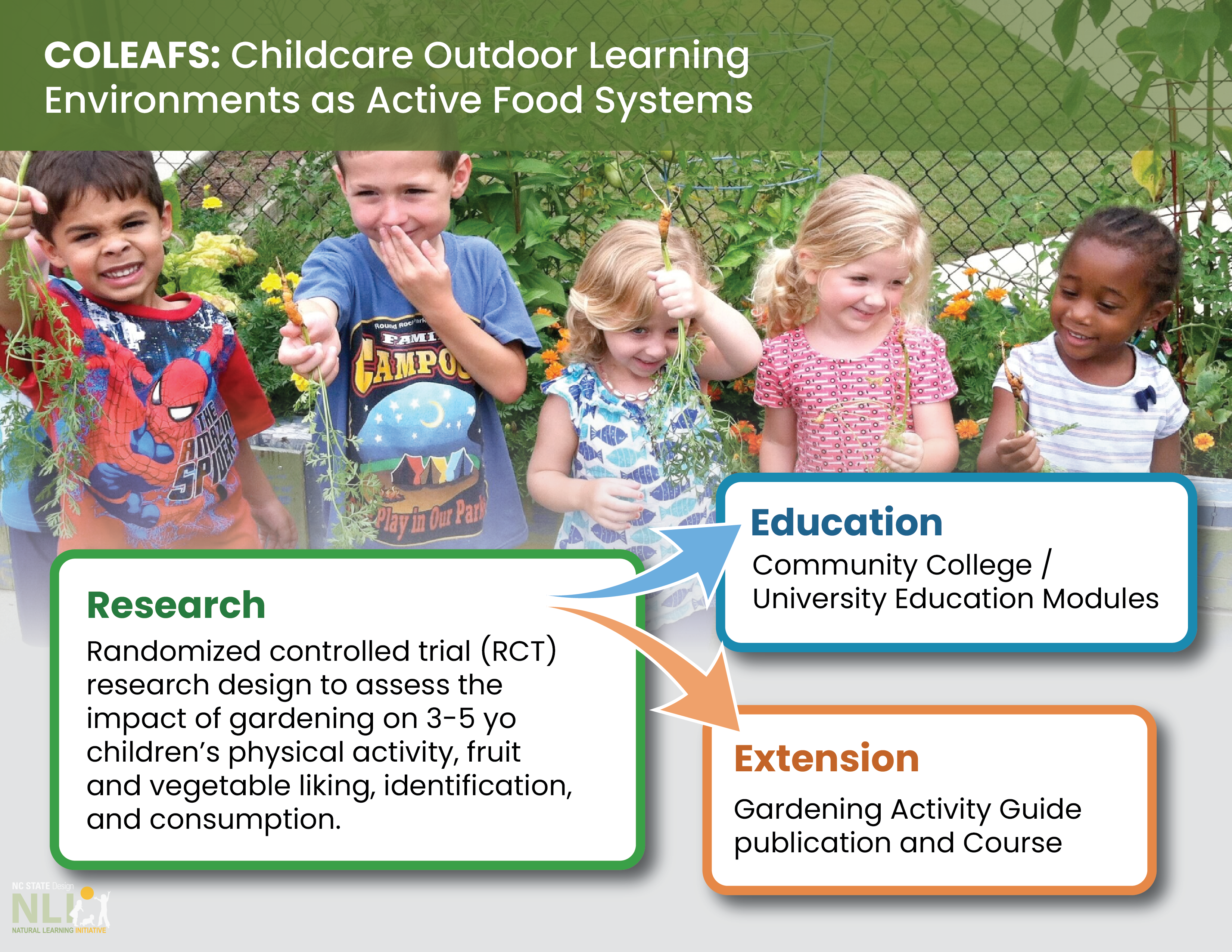
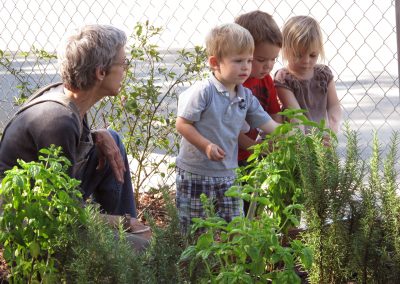
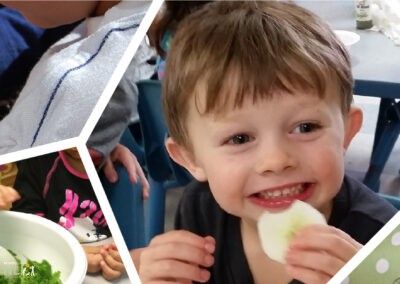
The aim of the Childcare Outdoor Learning Environments as Active Food Systems (COLEAFS) project is to measure the effectiveness of gardening to support fruit and vegetable identification, liking, and consumption and to increase physical activity in preschool children attending childcare. Funded by USDA NIFA, the project integrates research, education, and extension components. Details of the research design were recently published in the International Journal of Environmental Research and Public Health.
LONG-TERM PROJECT GOALS:
- Influence childcare regulations to include hands-on fruit and vegetable (FV) gardening as a health promotion strategy (policy and QRIS systems).
- Increase awareness and understanding of early childhood physical activity and healthy eating through hands-on FV gardening.
- Increase the consumption of fresh FV by preschoolers.
INTEGRATED PROPOSAL OBJECTIVES:
Research Function
- Assess the impact of a Gardening Component on 4-5-year-olds, enrolled in 15 childcare centers in Wake Co, NC.
- Using a waitlist/control group, a randomized controlled trial (RCT) research design, assess the impact of gardening on children’s physical activity, FV liking, FV knowledge, and consumption.
Education and Extension Functions
- Research findings translation
Gardening With Young Children short course:
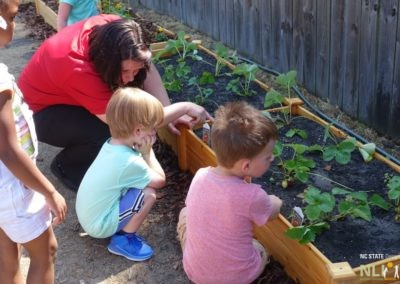
Watching the garden grow
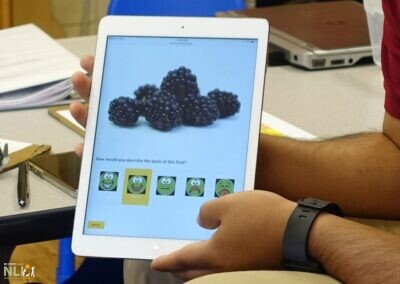
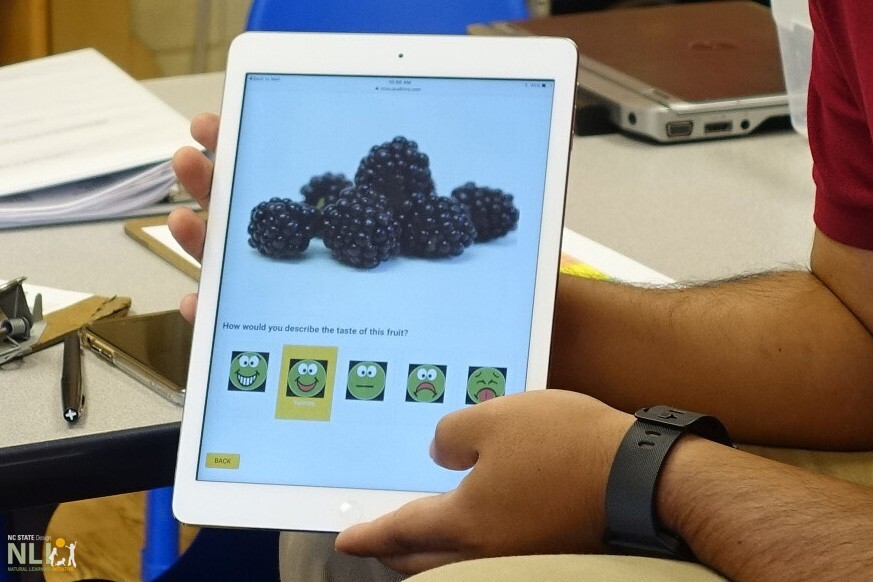
Liking and knowledge survey
The importance of preschool hands-on gardening is boosted by the publication of a third USDA-supported Childcare Outdoor Learning Environments as Active Food Systems (COLEAFS) research article. Results presented in this article link preschool gardening to increased physical activity and reduced sedentary time among children 3–5 years old living in disadvantaged communities in North Carolina. The first article describes the COLEAFS randomized controlled trial design, protocol, outcome measures, and participant baseline characteristics. The second article describes research results linking hands-on fruit and vegetable gardening to significant positive impacts on children learning to identify fruit and vegetables, and on the consumption of both during a tasting session. Consistent with prior research, the intervention impact on fruit consumption was greater than for vegetables. Liking of fruit and vegetables was not significantly impacted by the gardening intervention, which may be due to measurement and/or developmental stage limitations. Replication using alternative methods may help clarify the impact of gardening on liking.
Funded by USDA NIFA, the five-year COLEAFS project integrates research, education, and extension components. The research aim is to measure the impact of hands-on preschool gardening on fruit and vegetable identification, liking, and consumption and on physical activity in preschool children attending childcare in disadvantaged communities. The three open-source research articles published in the International Journal of Environmental Research and Public Health and Frontiers in Psychology can be downloaded on the right.
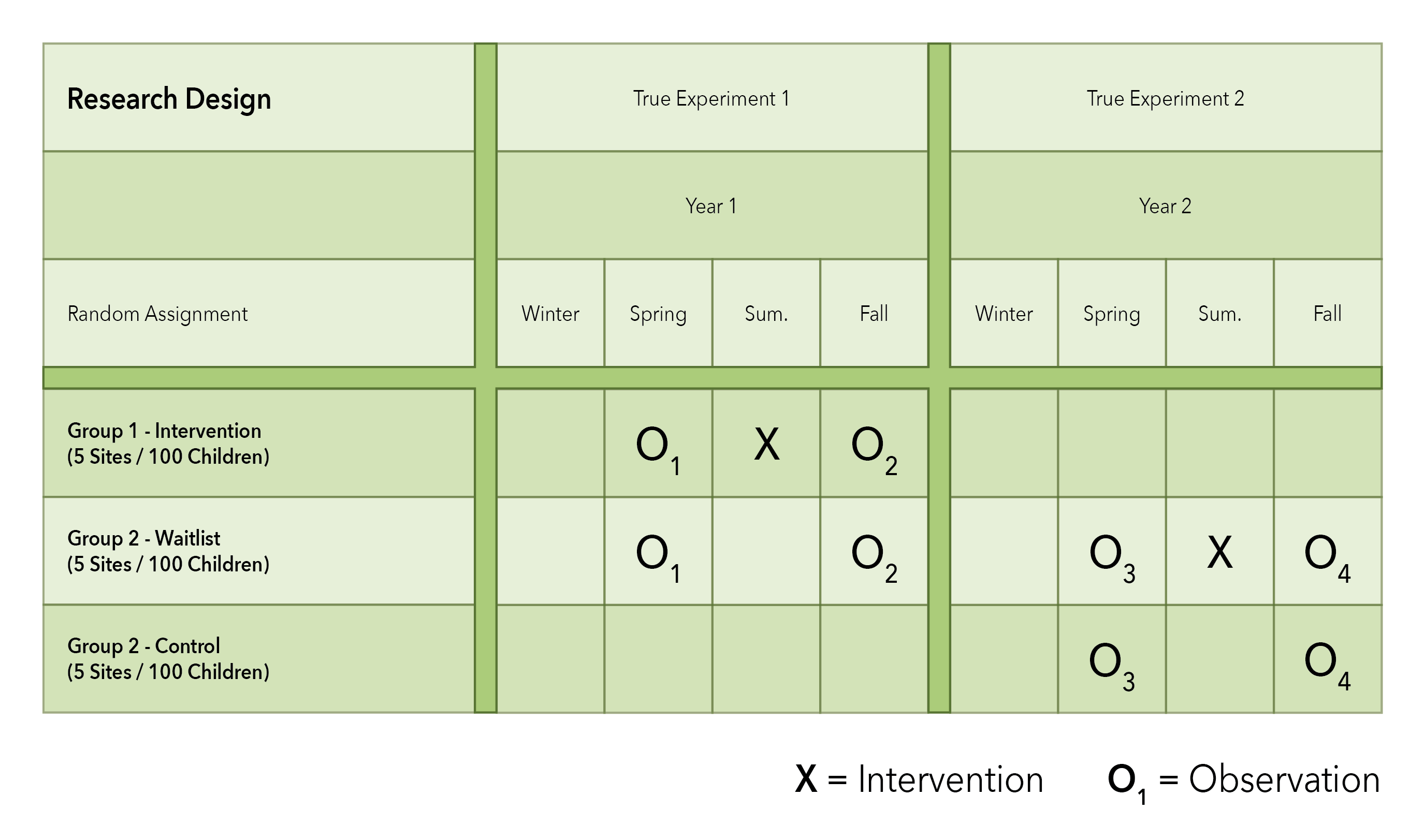
Research Design
Randomized Controlled Trial, N=15 childcare centers
Childcare Centers randomly assigned to one of three groups:
- Group 1: Intervention (Year 1 Intervention) (5 childcare centers, 100 children)
- Group 2: Wait list Control (Year 2 Intervention) (5 childcare centers, 100 children)
- Group 3: Control (No Intervention) (5 childcare centers, 100 children)
Articles
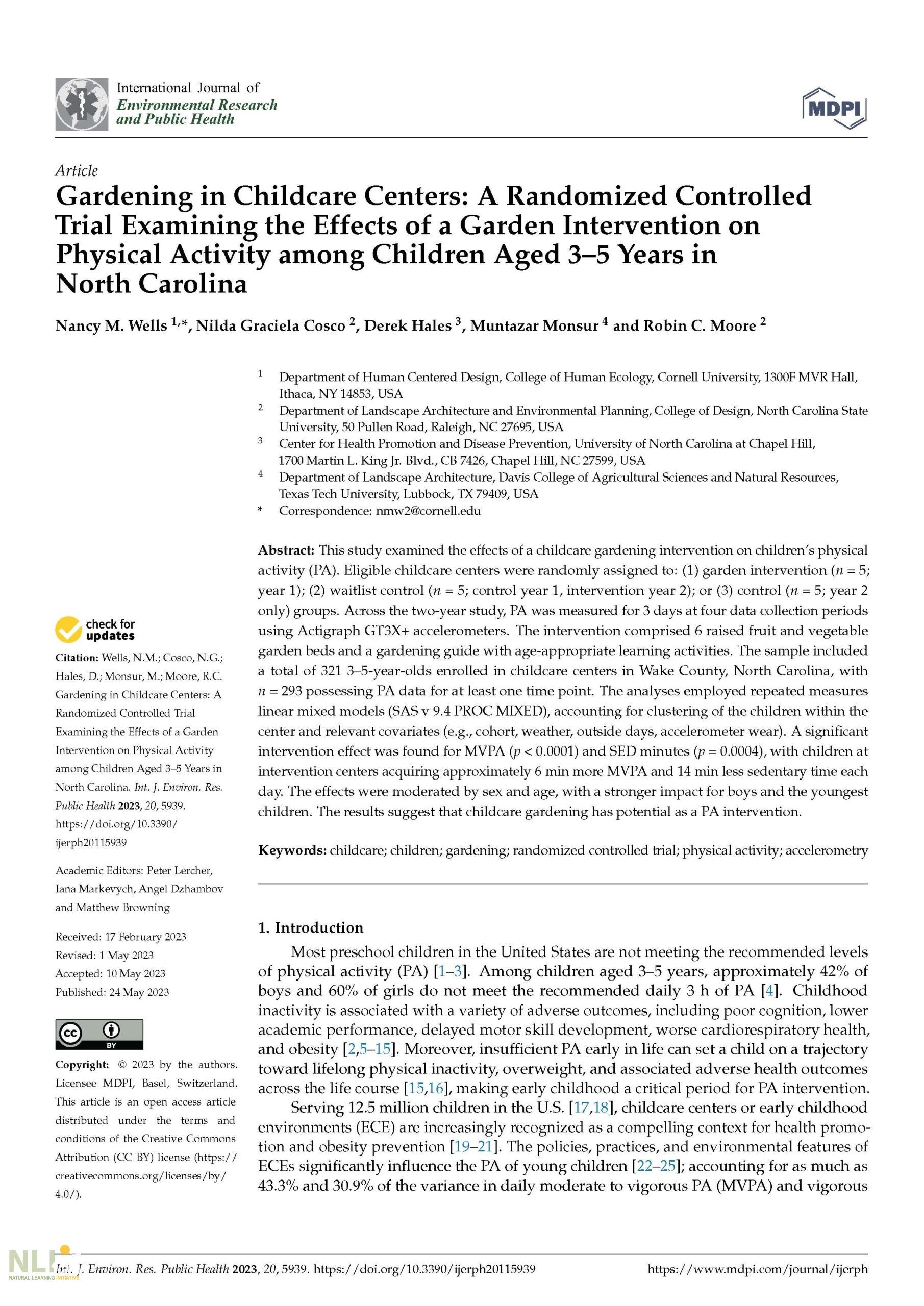
Effects of a Childcare Gardening Intervention on Physical Activity
A Randomized Controlled Trial Examining the Effects of a Garden Intervention on Physical Activity among Children Aged 3–5 Years in North Carolina
Citation: Wells, N. M., Cosco, N. G., Hales, D., Monsur, M., & Moore, R. C. Gardening in Childcare Centers: A Randomized Controlled Trial Examining the Effects of a Garden Intervention on Physical Activity among Children Aged 3–5 Years in North Carolina. International Journal of Environmental Research and Public Health, 20(11), 5939. https://doi.org/10.3390/ijerph20115939
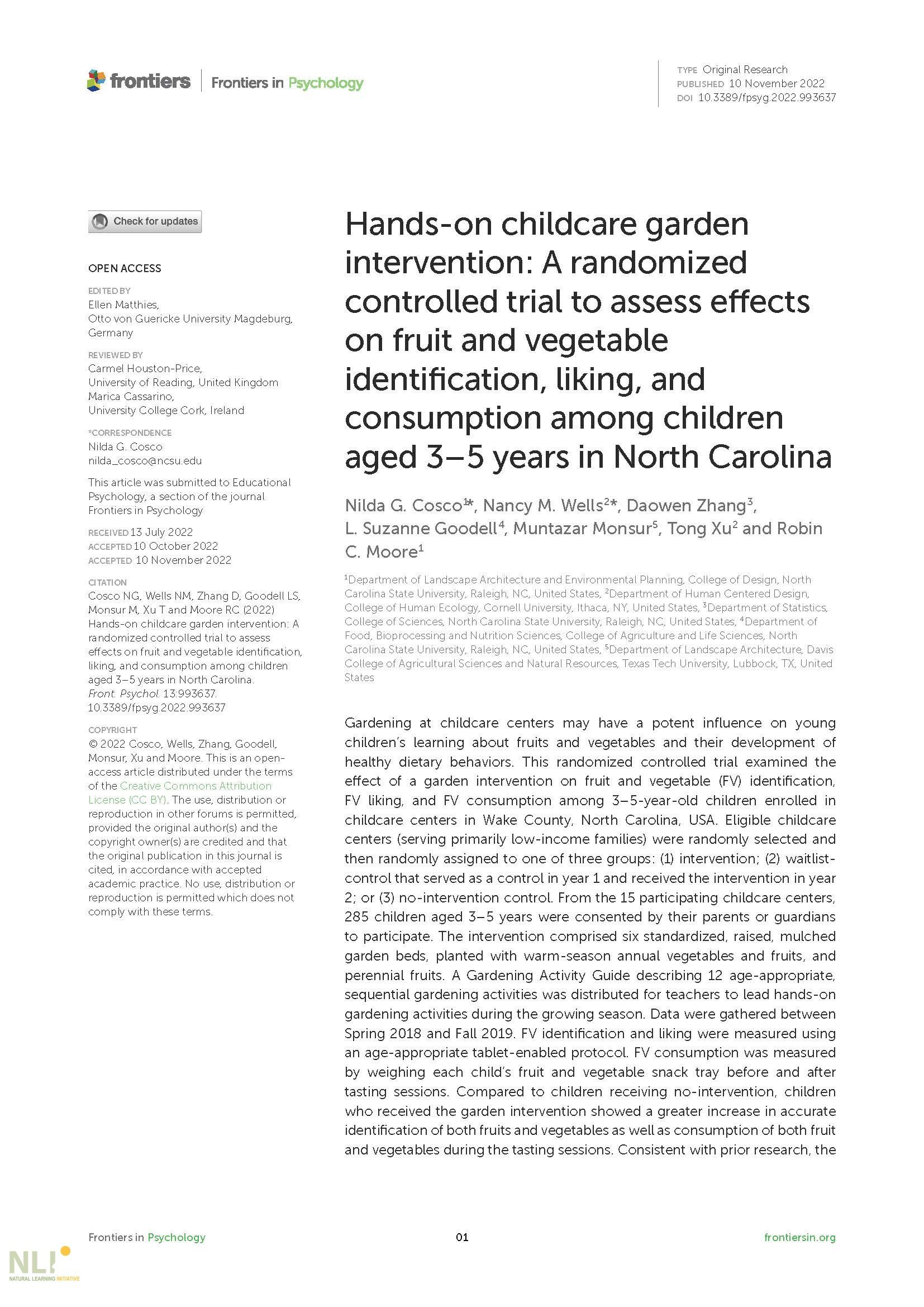
Childcare Gardening Effects on Fruit and Vegetable Identification, Liking, and Consumption
A randomized controlled trial to assess effects on fruit and vegetable identification, liking, and consumption among children aged 3–5 years in North Carolina
Citation: Cosco, N. G., Wells, N. M., Zhang, D., Goodell, L. S., Monsur, M., Xu, T., & Moore, R. C. (2022). Hands-on childcare garden intervention: A randomized controlled trial to assess effects on fruit and vegetable identification, liking, and consumption among children aged 3–5 years in North Carolina. Frontiers in Psychology, 13, 993637. https://doi.org/10.3389/fpsyg.2022.993637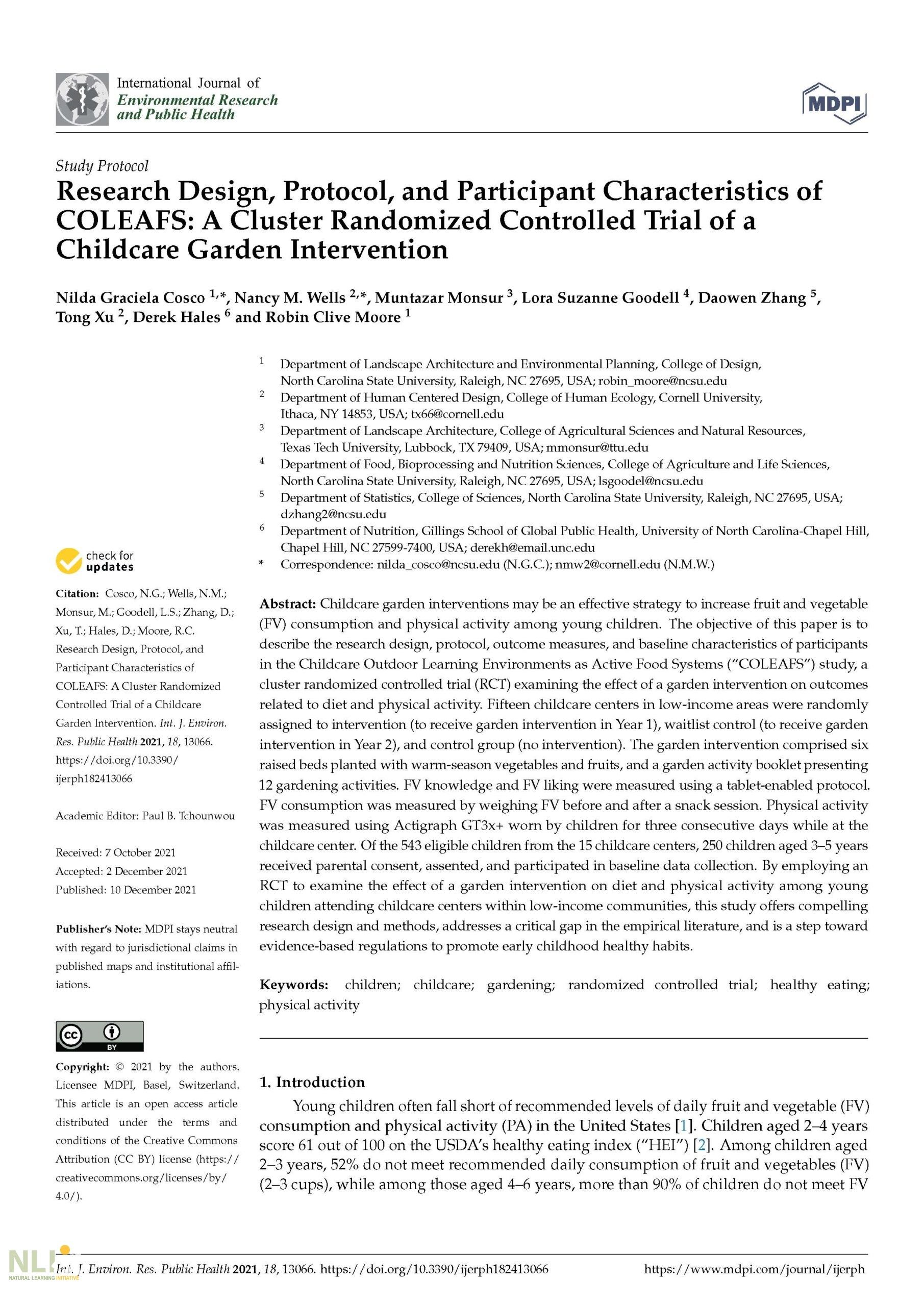
Research Design, Protocol, and Participant Characteristics of COLEAFS
A Cluster Randomized Controlled Trial of a Childcare Garden Intervention
Citation: Cosco, N. G., Wells, N. M., Monsur, M., Goodell, L. S., Zhang, D., Xu, T., Hales, D., & Moore, R. C. Research Design, Protocol, and Participant Characteristics of COLEAFS: A Cluster Randomized Controlled Trial of a Childcare Garden Intervention. International Journal of Environmental Research and Public Health, 18(24), 13066. https://doi.org/10.3390/ijerph182413066
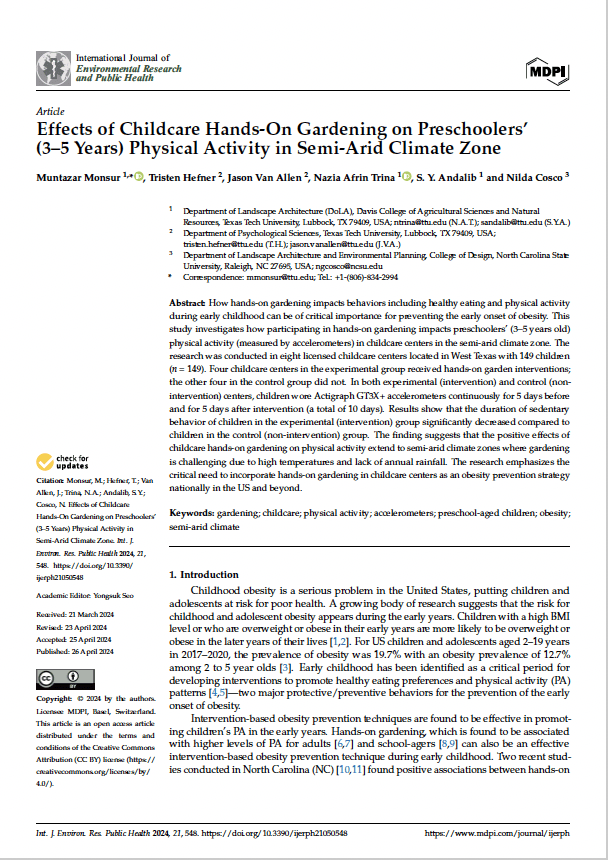
Effects of Childcare Hands-On Gardening on Preschoolers’ (3–5 Years) Physical Activity in Semi-Arid Climate Zone
How hands-on gardening impacts behaviors including healthy eating and physical activity during early childhood can be of critical importance for preventing the early onset of obesity
Citation: Monsur M, Hefner T, Van Allen J, Trina NA, Andalib SY, Cosco N. Effects of Childcare Hands-On Gardening on Preschoolers’ (3–5 Years) Physical Activity in Semi-Arid Climate Zone. International Journal of Environmental Research and Public Health. 2024; 21(5):548. https://doi.org/10.3390/ijerph21050548
How Do Nature-Based Outdoor Learning Environments Affect Preschoolers’ STEAM Concept Formation?
A Scoping Review
Citation: Trina, N.A.; Monsur, M.; Cosco, N.; Shine, S.; Loon, L.; Mastergeorge, A. How Do Nature-Based Outdoor Learning Environments Affect Preschoolers’ STEAM Concept Formation? A Scoping Review. Educ. Sci. 2024, 14, 627. https://doi.org/10.3390/educsci14060627
Education Function
Develop and deliver academic education modules.
Objectives
To inform community college instructors, and influence standardized educational modules concerning the impact of FV gardening on preschool physical activity and consumption of fresh FVs as a health promotion strategy. Active learning, hands-on participatory activities, and a content-specific Gardening Component will be developed and added to current POD Education Modules for Community Colleges and Higher Education Systems. The POD Modules were created based on experience gathered through prior POD initiatives to address the needs of students in early childhood, culinary arts, movement education, horticulture, landscape design and construction (supported by Blue Cross and Blue Shield of NC Foundation). The Pilot Phase of the Beginner POD Professional Development Module was completed in June 2014. Practice and Mastery Modules have been completed (Spring-2016). South Carolina and Texas are currently adopting the POD model.
Gardening Component adoption will assist in creating a network of aspiring professionals committed to supporting healthy human development across the lifespan through the design of outdoor environments that promote physical activity and healthy eating. Special attention will be given to adaptation to specific geographic characteristics and cultural differences.
Education – Activities
- Modify existing POD Modules to include expanded Gardening Component.
- Identify education networks and potential adopters of Gardening Component.
- Develop-Train-the-Trainer to transfer Gardening Component.
- Organize annual webinar to embed into existing community college courses in early childhood, nutrition, culinary arts, physical education, horticulture, landscape design and construction.
- Identify early adopters and provide technical assistance for implementation.
Create a dissemination plan to include the following tasks: a) Deliver Train-the-Trainer instructor sessions in-person and online twice a year; b) Transfer modules to organizations replicating POD in South Carolina, Texas, and other states as appropriate; c) Meet with faculty at the annual National Association for the Education of Young Children (NAEYC) Professional Development Institute to gain feedback from those using the modules as well as to promote the project to other community colleges; c) Attend National Council for Accreditation of Teacher Education (NCATE) and connect with 2- and 4-year programs.
The POD Education Modules created to support the Gardening Component are aligned with NAEYC Standards for Early Childhood Associate Degree Accreditation. The six standards define learning outcomes in professional preparation programs and present a shared vision of excellence for early childhood educators. The POD Education Modules align with early learning standards and offer a uniform set of materials for potential adopters (e.g. NC Foundations for Early Learning, South Carolina Early Learning Standards, Texas Prekindergarten Guidelines). These standards stress the need for firsthand experiences and opportunities for exploration by young children, such as those offered by FV gardening. Examples applicable to outdoor activities include:
NC Foundations: “Curiosity, Information-Seeking, and Eagerness. Goal APL-1: Children show curiosity and express interest in the world around them. Risk-Taking, Problem-Solving, and Flexibility. Goal APL-5: Children are willing to try new and challenging experiences. Goal APL-6: Children use a variety of strategies to solve problems. Attentiveness, Effort, and Persistence. Goal APL-9: Children persist at challenging activities.”
SC Early Learning Standards: Physical Development and Health: “While mastering these large muscle skills, they are also learning to use the finer muscles of arms, hands, and fingers to build hand-eye coordination, strength, control and object manipulation.”
Texas Prekindergarten Guidelines: “A. Gross Motor Development Skills: Children explore physical space and understand how their bodies function in space through active movement experiences. B. Fine-Motor Development Skills: Fine motor manipulative movements involve object handling activities that emphasize motor control, precision, and accuracy of movement.”
Two certificate programs containing FV gardening material: 1) for early childhood educators, and 2) for designers, installers, and physical plant managers, will also support professional development.
POD Module Guiding Principles
Focused on connecting children with meaningful experiences with the natural world, POD Education Module guiding principles are to transfer knowledge, build capacity on processes and best practices for outdoor learning environments, including those related to FV gardening. Modules are organized in three-tiers: Introductory, Practice and Mastery.
PODEducation Modules Overall Goals:
- Illustrate the importance of outdoor learning to support health, wellness and stewardship.
- Provide technical assistance to create healthy childcare outdoor environments.
- Highlight the role of professionals in childhood development.
- Enhance professional development processes.
Gardening Component Goals:
- Provide information on the importance of FV gardening for healthy development.
- Offer TA for installation of childcare FV gardens.
- Specify instructions on FV garden materials, plants, management, seasonal activities, and safety procedures.
- Establish FV gardening and curricula links.
Community College Systems in NC and other States willing to replicate POD
North Carolina. Fifty-eight comprehensive community colleges serve all 100 counties. Service areas of individual colleges may include one or several counties. Instructors representing 21 of them have been involved in the creation and/or piloting of the modules. Ninety five percent of centers in NC are 20 miles or less from a community college.
South Carolina. Sixteen technical colleges located strategically across the state and statewide affiliate programs serve the state, including the Center for Accelerated Technology Training ReadySC™ program and Apprenticeship Carolina™. https://www.sctechsystem.com/aboutus.html. Supported by the South Carolina Department of Health and Environmental Control, Division of Nutrition, Physical Activity and Obesity, two phases of POD transfer were implemented in April 2015 (Florence) and May 2016 (Spartanburg). Universities and community colleges are associated with the initiative.
Texas. Fifty public community college districts are included in the Texas Association of Community Colleges (TACC), a non-profit association serving the whole state. http://www.tacc.org/pages/texas-colleges. A Leadership Academy organized by the Texas Department of State Health Services was conducted in March 2015 where university and community college representatives showed enthusiastic support for replicating POD and requested guidelines and resources for implementation. Model replication was launched in May 2016.
Education – Potential Impact and Expected Outcomes
(S=short term, L=long term)
All outcomes will be measured using annual surveys (instructors and students). Performance will be considered satisfactory if 50% of respondents meet the following in Year 4 and Year 5:
- Increased learning opportunities (lectures, seminars, etc.) in community college early childhood courses related to FV gardening, and the OLE. S
- Increased student/faculty confidence in FV gardening knowledge (e.g. composting, worm bins) and trying new fruits and vegetables. S
- Increased number of students and faculty implement FV gardening projects at childcare centers, family childcare, school-age programs, and community college campuses. L
Education – Potential Pitfalls and Limitations
Educational system variations. Understanding the differing complexities of state educational systems is critical (e.g. no Combined Course Library for Community Colleges in SC or TX). To remediate the situation, input from existing POD network of community college managers and instructors will be solicited (Johnson & Wales University (Culinary Arts), Central Piedmont Community (College Culinary Arts, Early Childhood Education) and Sandhills Community College (Early Childhood Education).
Recognition of a new, multidisciplinary, professional field. All professional education activities are multidisciplinary with instructors representing all fields of interest, which is challenging to achieve. Search for committed instructors continues using a snowball approach to recruit additional adopters.
Rigid standards and regulations regarding outdoor play and learning. Critical working relationships will continue to be developed with state and local regulators, sanitation agents, and multidisciplinary professionals to encourage acceptance of the need for outdoor activities for healthy living including children spending a “significant portion of the day” outside (Harms et al, 1998).
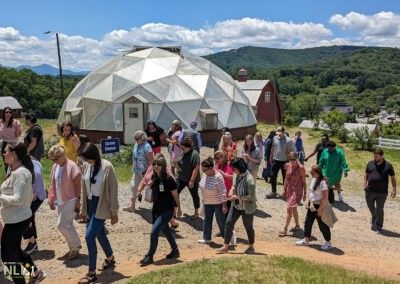
NLI Hosts DCDEE Regional Meetings
Protected: POD Implementation Manual
Protected: POD Community College Modules at a Glance (HE)
Protected: POD Community College Modules at a Glance (LDCM)
Gardening With Young Children Course
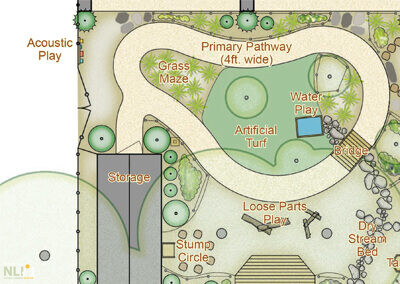
CADA Head Start @ Halifax Community College
Design Sites, Halifax-Warren, Head Start Gallery, Hub, Program
Johnston Community College Child Development Center
Design Sites, Hub, Shape NC 3, Wilson County
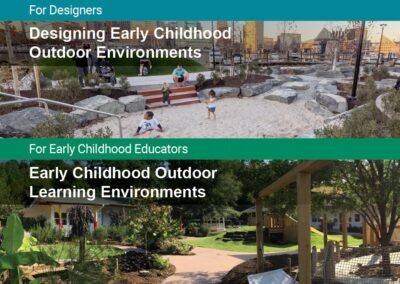
NLI Online Certificate Programs
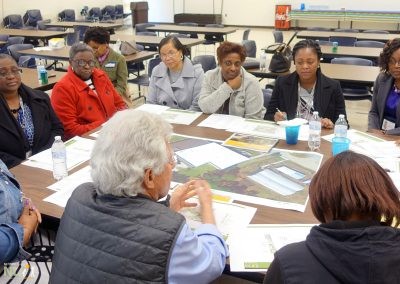
Halifax Community College: CADA Head Start
Design Sites, Head Start Gallery, Hub, POD4
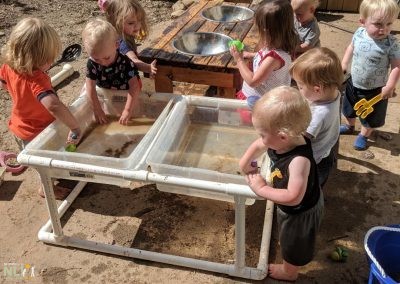
Blue Ridge Community College: Nessa’s Young’uns Natural Play Center
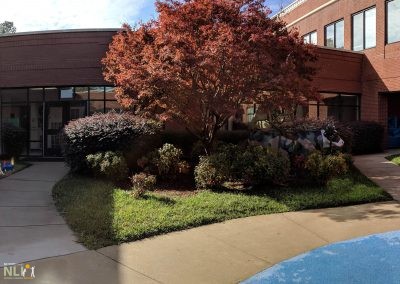
Fayetteville Technical Community College: Children’s Center
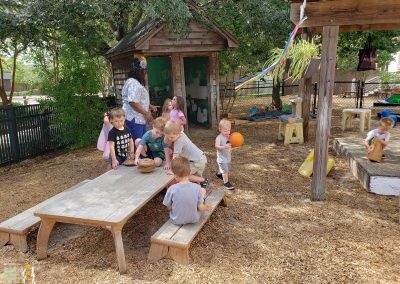
Cape Fear Community College: Bonnie Sanders Burney CDC
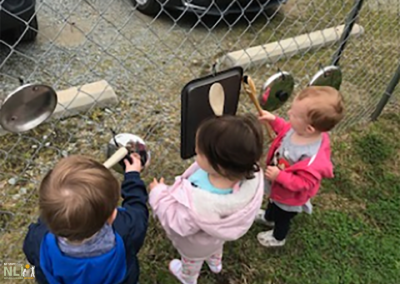
Johnston Community College: Child Development Center
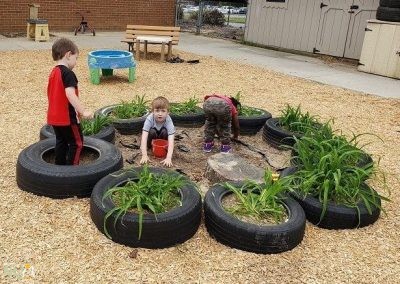
Davidson Community College: Kirk Child Development Center
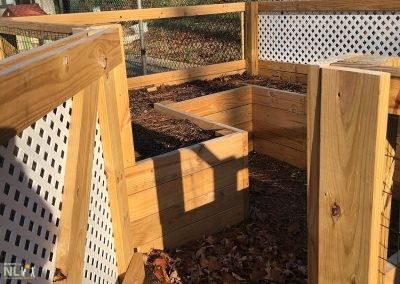
Alamance Community College: Demonstration Development Daycare
Approve Community College
Protected: POD Community College Modules at a Glance (ECE)
Preventing Obesity by Design (POD3)
Preventing Obesity by Design (POD4)
USDA COLEAFS
Wayne Community College Child Care Center
Haywood Center for the Advancement of Children
Excel Christian Academy
Betsy B. Currin Child Development Center of Nash Community College
13th Annual NLI Design Institute
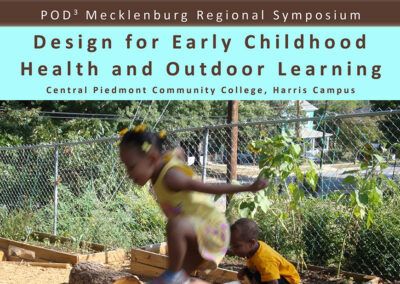
POD3 Mecklenburg Regional Symposium 2015
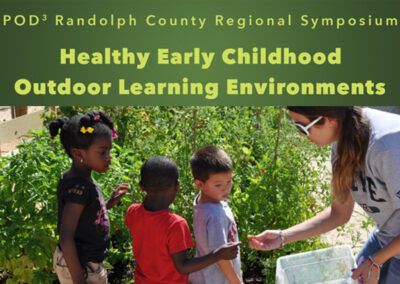
POD3 Randolph Regional Symposium 2013
Extension Function
Disseminate end-user information, tools, and resources.
To translate and disseminate research findings via eXtension webinars/digital resources, to inform extension agents, parents and educators about the potential for increasing FV consumption in vulnerable preschoolers through FV gardening interventions at childcare centers.
The project team includes key NC State University Cooperative Extension partners: Local Foods Extension Specialist leading the development of the newly created Extension Master Food Volunteer Program, Director of the Extension Master Gardeners Program, and Extension Local Foods Flagship Program Manager (www.localfoodnc.org), with the objective of creating both train the trainer resources and materials for end-users based on research findings, and ensuring their effective dissemination through NC Cooperative Extension and eXtension to support system change. Information flows from an established partnership of universities and college units, including the Natural Learning Initiative, that apply the principles of translational research to influence quality of life in the general population. “Cooking from the Garden” series will be offered through the Expanded Food and Nutrition Education Program (EFNEP) for teachers and parents.
Extension – Activities
- Develop peer-reviewed digital and print resources related to FV gardening.
- Disseminate online FV gardening tools and resources via eXtension, Local Foods Flagship Program, Master Gardeners Network, EFNEP, and other distance and higher education systems to professional and collaborators’ networks, Farm-to-Childcare, and related organizations.
- Identify and engage Extension agents, master gardeners, and community stakeholders in professional education programs.
- Offer FV gardening training to extension agents, master gardeners, community stakeholders, technical assistance providers, and early childhood educators.
- Complement children’s gardening experiences with nutrition education classes for parents and teachers in order to reinforce healthy eating behaviors at home and in childcare meals: “Cooking from the Garden” series via EFNEP.
- Disseminate information, tools, and resources to support parents, community leaders, technical assistance providers, extension agents, instructors, and public health professionals to implement evidence-based, health-promoting activities, including FV gardening, to support system change in early childhood FV gardening policy and practice.
- Consolidate existing link to Farm-to-Childcare, including a project awarded (2016) to the Center for Environmental Farming Systems (CEFS) by the Kellogg Foundation to create a model for farm-to-childcare programs in NC.
- Partner with eXtension Community of Practice, Local and Regional Food systems (CLRFS) Community of Practice and Local Foods Flagship Program, to create information sheets for submission and approval by USDA to be integrated into the Provider Handbook for the Child and Adult Care Food Program – “Nutrition and Wellness Tips for Young Children.”
- Create capacity building for the “greening industry” by adding a section to the NLI Annual Design Institute devoted to early childhood “green design” for master gardeners, extension agents, and green industry students (horticulture and landscape design).
- Create and disseminate childcare naturalization guides for green industry (e.g. plant nurseries, landscaping companies), including FV gardening guides.
- Offer training sessions for green industry representatives.
- Post information at the Green Desk (naturalearning.org/greendesk).
- Help create national strategy for system change/diffusion of innovation plan.
Extension – Dissemination
An Instructional Designer/Webmaster will join the team in Y4 & Y5 after research findings have been generated, and education and extension materials written, to create attractive, targeted online and print publications. A dedicated website will contain digital resources, info-sheets, “edublogs” (Ray, 2006), and distance education opportunities. How-to webinars will be conducted to guide educators to use FV gardening materials, including a train-the-trainer (TTT) model to train childcare providers. Webinars will be marketed through national Cooperative Extension networks including Master Gardeners, the Expanded Food and Nutrition Education Program EFNEP network, and the Southern Region Local Food and Extension listserv. Webinar recordings will be housed on the Moodle platform, eXtension website, consistent with eXtension administration new guidance to serve Extension educators with materials and training. Links to all materials and resources developed by the project will be posted at NLI’s Green Desk – naturalearning.org/greendesk. Key networks to increase reach to multidisciplinary professionals, parents and regulators, include: 1) eXtension Community, Local and Regional Food Systems (CLRFS) Community of Practice; 2) North Carolina Cooperative Extension (NCCE) Local Foods portal (http://localfood.ces.ncsu.edu); 3) Center for Environmental Farming System (CEFS) academic/governmental/community networks, including NC State University, NC A&T (Historic Black Land Grant University), NC Department of Agriculture and Consumer Services, farmers and citizens.
Extension – Potential Impact and Expected Outcomes
S=short term, L=long term)
- Practical materials developed for policy innovators, decision makers, community health promoters, families, and consumers – will support system change in early childhood FV gardening policy and practice. S
- Dedicated FV gardening website hosting all resources developed by the project – will help frontline professionals to achieve FV gardening success on the ground. S
- Online Gardening Modules developed by professional instructional designer – will increase educator effectiveness. S
- Policy strategy recommendations for change in center, local, and state policy regarding health benefits of gardening and outdoor activities of children 4-5 years old – will enhance Local and Regional Food Systems (CLRFS) Community of Practice. L
- Defined benchmarks and skills established for multidisciplinary pre-professional education in early childhood development, nutrition, culinary arts, and landscape construction/horticulture – will support development of new niche market.
Extension – Potential Pitfalls and Limitations
Competing for recognition among the many childhood obesity prevention programs and initiatives. PDs are active members of NC Statewide networks to enable effective coordination with other ongoing projects, including: Integrating Healthy Opportunities for Play and Eating (I-HOPE) NC Advisory Committee for ECE Settings (NC-DHHS/NC-Smart Start); NC Play Alliance, NC Children and Nature Coalition, American Society of Landscape Architects – Professional Practice Network). PDs work closely with the NC community college system including Johnson & Wales University (Culinary Arts), Central Piedmont Community (College Culinary Arts, Early Childhood Education) and Sandhills Community College (Early Childhood Education program).
Competing for attention from Extension agents, parents, and educators. Partnership with Extension will provide effective channels of communication targeting specific areas of interest and need and fostering awareness on the potential of early education environments as health interventions.
Recognizing POD as a significant innovation. New eXtension messaging strategies will reach related professionals (e.g. environmental and culinary fields) to help them understand the new niche market opened by considering childcare as a micro-farming opportunity. Distance education resources will be disseminated through professional associations (e.g. Nursery and Landscape Association (www.ncnla.net, www.nlae.org), and Child and Adult Care Food Program (http://www.cacfp.org).
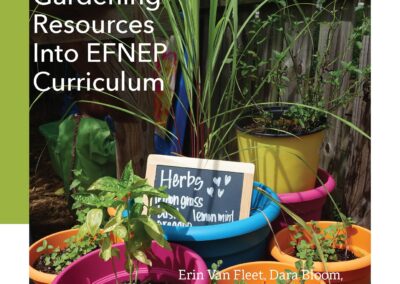
Integrating Gardening Resources Into EFNEP Curriculum
COLEAFS, Hub, Programs, Publications, Publications
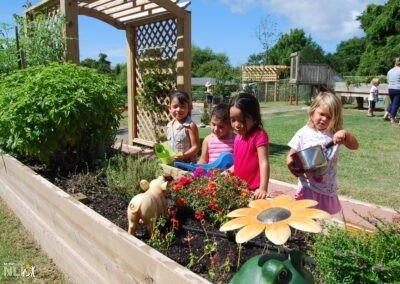
24. Early Childhood Fruit and Vegetable Gardens
COLEAFS, Hub, Infosheets, Infosheets, Programs
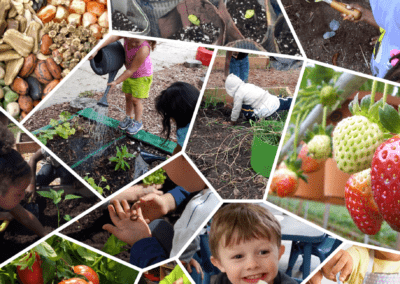
Preschool Gardening Activity Guide
COLEAFS, Hub, Programs, Publications, Publications
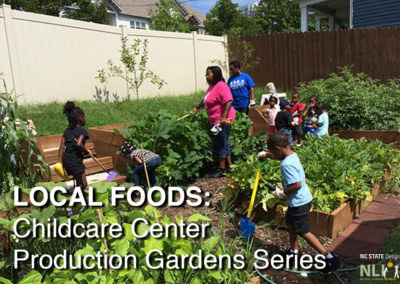
Gardening with Young Children Resources
COLEAFS, ECC, Hub, Publications, Publications, Resources
External Resources
-
NLI Joins 20th Anniversary Celebration of Grow Up Great
NLI Joins 20th Anniversary Celebration of Grow Up Great
NLI celebrated the 20th Anniversary of the PNC Foundation’s signature Grow Up Great program with a grant announcement ceremony at Brentwood Head Start, Wilson, North Carolina. The award of $125,000 will be administered through Nash Edgecombe Wilson Community Action, Inc. (NEW CA, Inc.). NLI is providing design and technical assistance to implement a high-quality, diverse, naturalized, outdoor environment demonstrating best practices, informed by the latest research, that support healthy development of Brentwood’s children.
NLI first worked with Brentwood Head Start as part of the Shape NC project, and will be building on the initial design to create naturalized play and learning spaces, including a future Early Head Start Program. Working collaboratively, the aim is to implement Head Start and Early Head Start model sites in Wilson County and across North Carolina.
All photographs are credited to: Brittani Halbert Photography

PNC Regional President, Jim Hansen (tallest, center), with the Brentwood Head Start nature-based outdoor play and learning environment implementation team (NLI, NEW CA, Inc., PNC Foundation, Brentwood leadership, teachers, and parents), including most important of all – children! PNC Regional President, Jim Hansen (tallest, center), with the Brentwood Head Start nature-based outdoor play and learning environment implementation team (NLI, NEW CA, Inc., PNC Foundation, Brentwood leadership, teachers, and parents), including most important of all – children!
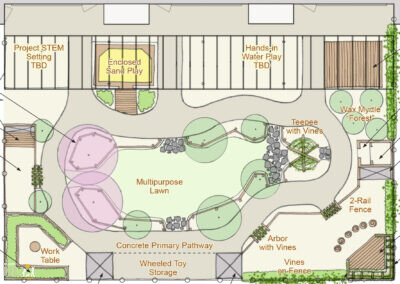
Schematic Design (Currently in progress)

Event Photographs
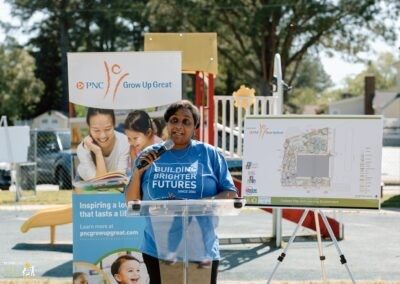
Nichelle Cole, NEW CA Executive Director, welcomes the implementation team to the PNC Foundation’s 20th Anniversary donation celebrating Grow Up Great (banner left of Nichelle). Nichelle Cole, NEW CA Executive Director, welcomes the implementation team to the PNC Foundation’s 20th Anniversary donation celebrating Grow Up Great (banner left of Nichelle).
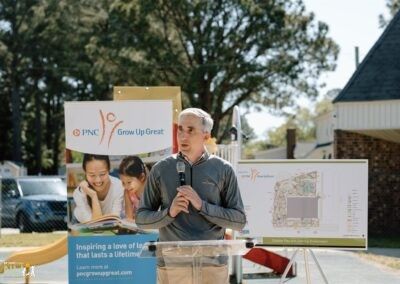
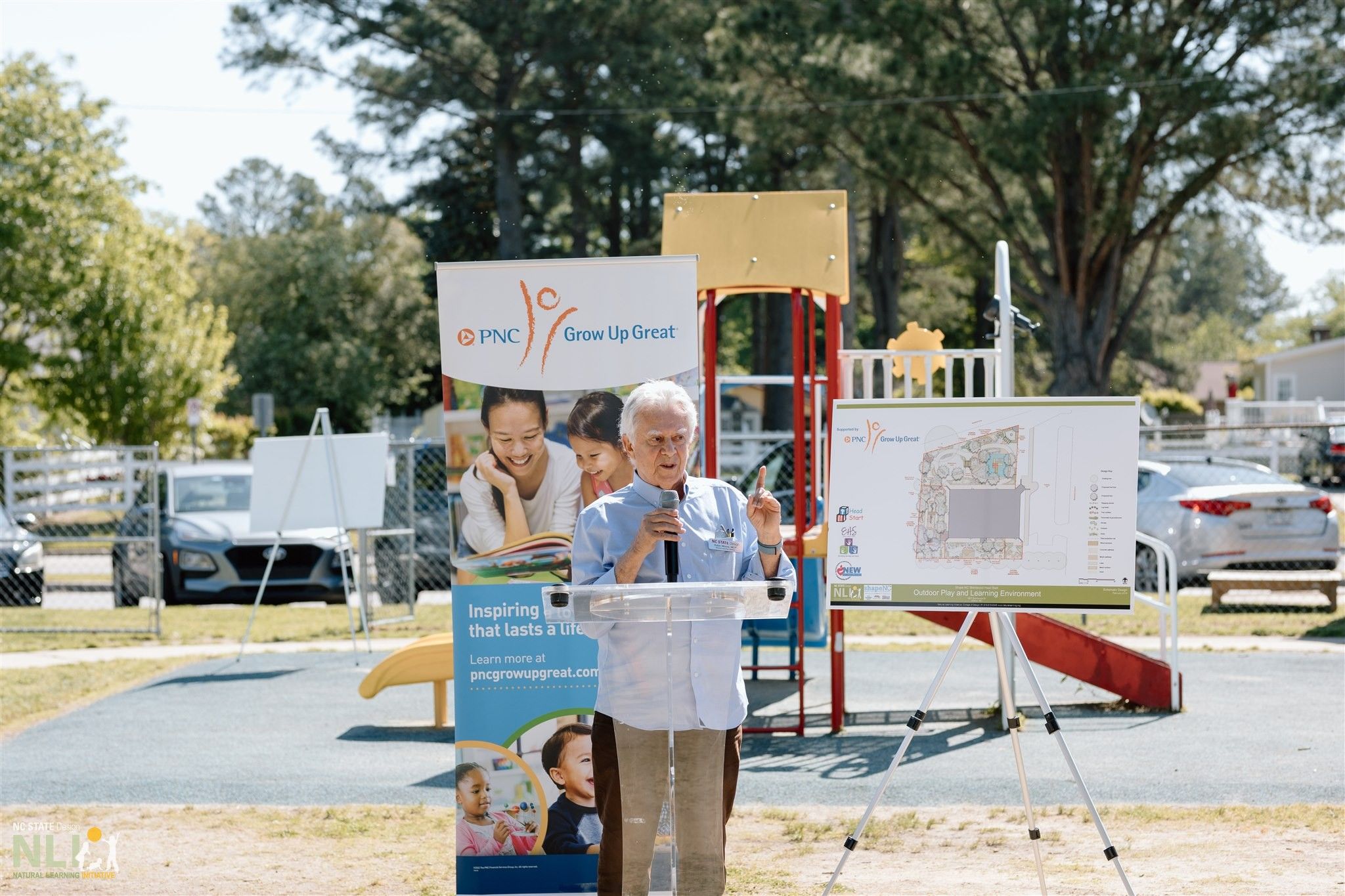
PNC Regional President, Jim Hansen, explains “PNC Foundation’s major investment inhigh-quality nature-based outdoor play and learning environments.” PNC Regional President, Jim Hansen, explains “PNC Foundation’s major investment in high-quality nature-based outdoor play and learning environments.”
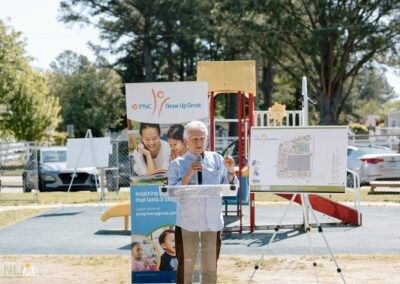
NC State professor, Robin Moore, NLI, explains how outdoor design can more stronglysupport healthy childhood development by diversifying play and learning opportunitiesand extending time outdoors – also demonstrating the intersection of landscapearchitecture and public health. NC State professor, Robin Moore, NLI, explains how outdoor design can more strongly support healthy childhood development by diversifying play and learning opportunities and extending time outdoors – also demonstrating the intersection of landscape architecture and public health.

James Bullock, Education Manager, NEW CA, talks about the project impact on childrenby motivating more time outdoors, learning by engaging with nature. He welcomed theBrentwood children to explore the design and plant veggie seeds. James Bullock, Education Manager, NEW CA, talks about the project impact on children by motivating more time outdoors, learning by engaging with nature. He welcomed the Brentwood children to explore the design and plant veggie seeds.
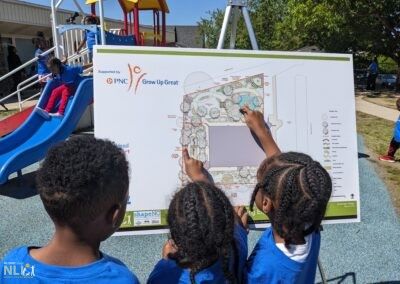
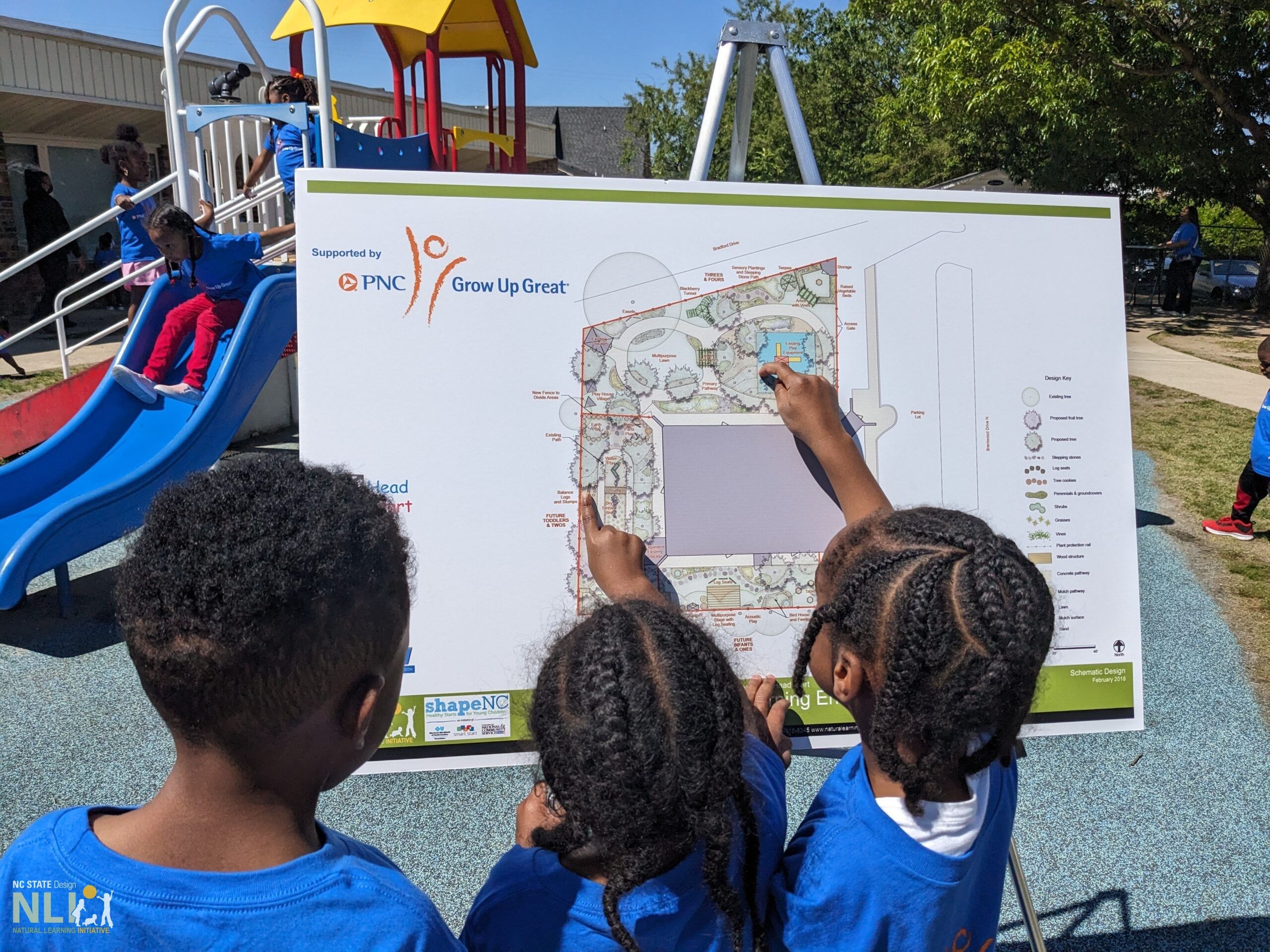
Brentwood Head Start children explore the design of their nature-based outdoor playand learning environment – at the same time extending spatial learning skills. Brentwood Head Start children explore the design of their nature-based outdoor play and learning environment – at the same time extending spatial learning skills.
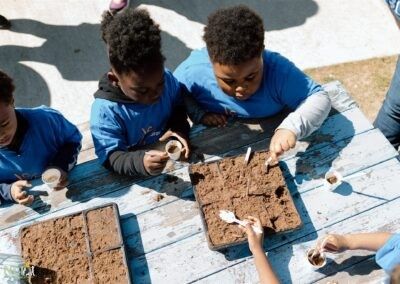
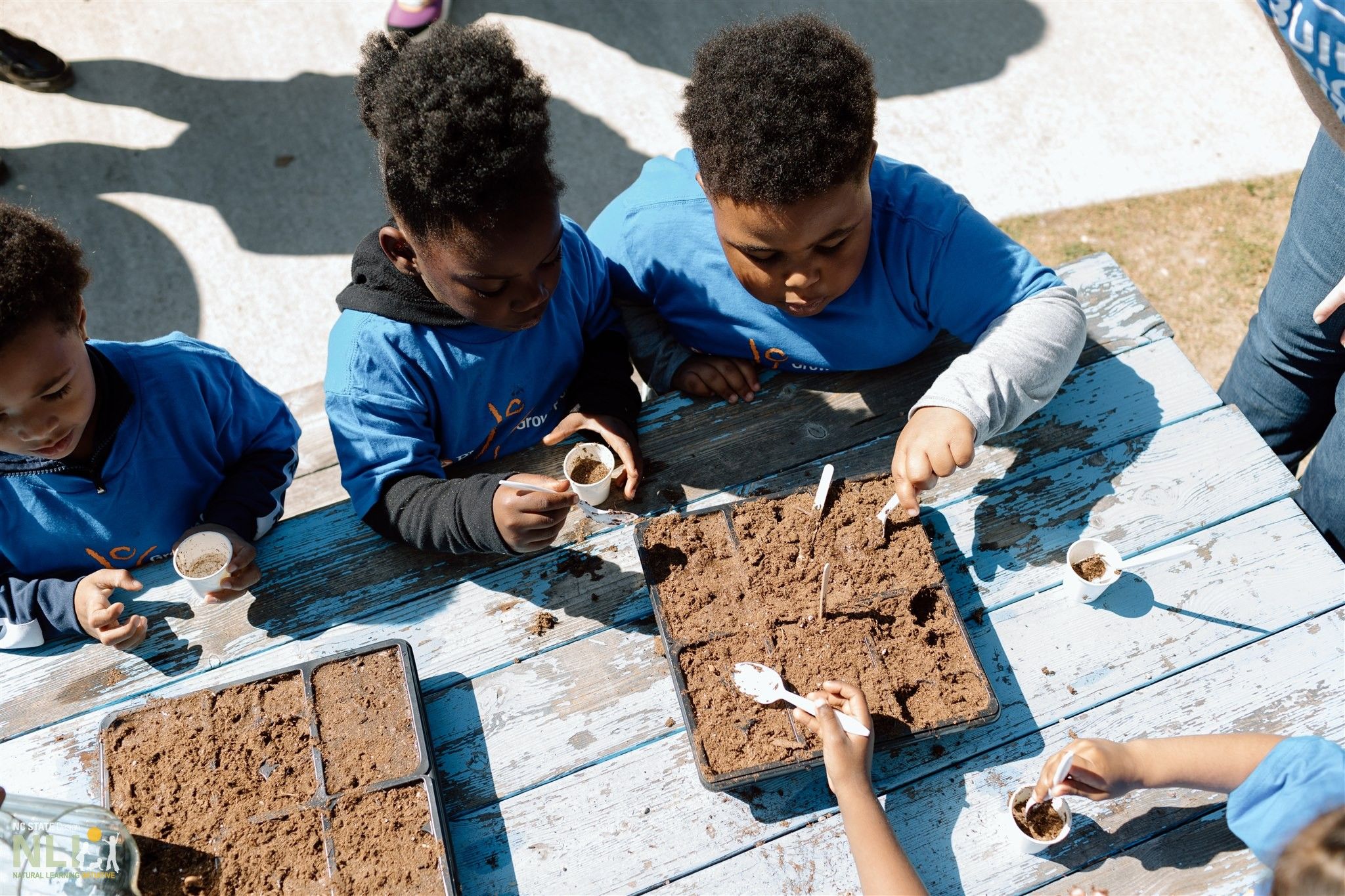
Children plant veggie seeds in small pots ready to observe sprouting in the classroom,to be transplanted later into the outdoor garden, and eventually harvested for kitchenpreparation of healthy snacks and/or meals. Children plant veggie seeds in small pots ready to observe sprouting in the classroom, to be transplanted later into the outdoor garden, and eventually harvested for kitchen preparation of healthy snacks and/or meals.