Intergenerational Urban Design for Children and Families
The majority of people live in cities. To encourage new families to embrace urban domestic life, and not move to low-density suburbs, cities need to be designed to support the healthy development of children and the adults that care for them.
Program
New policies are needed to support the healthy development of children, to motivate their independent mobility outdoors where they can engage with the natural world.
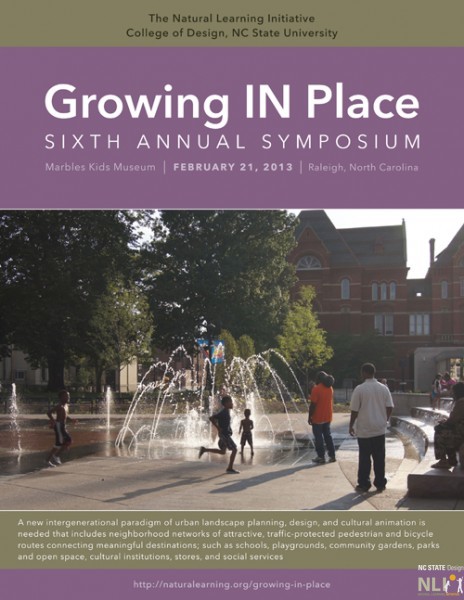
A new intergenerational paradigm of urban landscape planning, design, and cultural animation is needed that includes neighborhood networks of attractive, traffic-protected pedestrian and bicycle routes connecting meaningful destinations; such as schools, playgrounds, community gardens, parks and open space, cultural institutions, stores, and social services.
Speakers
Vikas Mehta, PhD, School of Architecture & Community Design, University of South Florida, author of The Street: A Quintessential Social Public Space, Creating Lively Community Streets.
Families with children not wanting to move to low-density suburbs need urban neighborhoods and an urban public realm designed to support culturally diverse, socially stimulating, healthy lifestyles.
Program
Growing IN Place addressed the need for planning and design policies that support these needs, especially for children. Young people need networks of attractive, walkable/bikeable routes connecting homes to schools, parks, community gardens, and cultural institutions – where they can engage with nature.
We addressed a regional audience (NC and adjacent states) consisting of the multiprofessional, interdisciplinary, public/private sector, professional landscape architects, architects, and planners (receiving CEUs); parks and recreation professionals; nonformal educators, and elected officials. The symposium offered an annual focus on urban community/neighborhood design for health, sustainability, and wellbeing of children and families in the 21st century.
Speakers
Urban Neighborhoods/Housing
Molly Simpson, B.A., Urban Land Institute (ULI), Terwilliger Center for Housing, development, and implementation of educational and research programs on housing policy and practice. Family-friendly, moderate-density housing. Responding to the market.
Food
Lucy Bradley, PhD. Department of Horticultural Sciences; Extension Specialist, NC State University; Director Urban Horticulture Program – consumer horticulture, community gardening, therapeutic horticulture, and Master Gardener Volunteer program. Gardening for fun: Engaging children, youth, and families year-round.* (lecture video not given for online use)
Schools
Noreen McDonald, PhD. Department of City and Regional Planning, UNC. An expert on active transportation between home and school. School location and non-motorized, independent mobility. Is there a way out of this conundrum?
Lois Brink, MLA. Department of Landscape Architecture, University of Colorado, Denver; Director, Learning Through Landscapes; community design of urban school grounds; post-renovation health impacts. School-ground renovation as a multi-benefit school/community enterprise – an international movement.
Parks
Mary Eysenbach, MS. Director of Conservatories, Chicago Park District; Founding Board Member, City Parks Alliance; Director, City Parks Forum, American Planning Association. City parks and families with children.
Nature
Robin Moore, Dipl.Arch, MCP. Department of Landscape Architecture, NC State University; Director, Natural Learning Initiative. Nature play and learning spaces –National design and management guidelines.
Allen Cooper, MPP, JD. Director, State, and Local Education Advocacy, National Wildlife Federation. Risk management of nature play and learning spaces.
Green Neighborhood Assets: Streets, Houses, Schools, Parks, Food.
Families with children not wanting to move to low-density suburbs need neighborhoods and an urban public realm designed to support culturally diverse, socially stimulating, healthy lifestyles.
Program
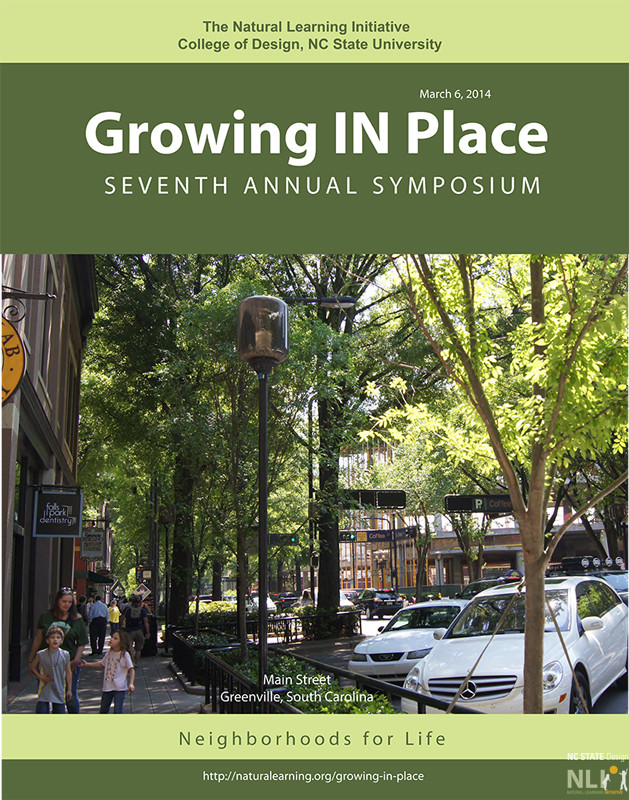
Growing IN Place addresses planning and design policies that support these needs for children and other family members. Young people need networks of attractive, walkable/bikable routes connecting homes to schools, parks, community gardens, and cultural institutions – where they can engage with nature.
Growing IN Place is framed for an audience in North Carolina and adjacent states of public/private sector practitioners, including landscape architects, architects, and planners (receiving CEUs); parks and recreation professionals; nonformal educators, and elected officials.
Growing IN Place offers an annual focus on urban community/neighborhood design for health, sustainability, and wellbeing of children and families in the 21st century.
NC BOLA Course#: 10546; 6 credit hours.
Speakers
Presentations
Jay Walljasper, Writer on urban planning, community development, and sustainability. Neighborhoods for All: The Design Imperative.
How can safe, sociable, walkable, bikeable, verdant urban neighborhoods be created that support the healthy development of children, families, and all people? Jay Walljasper will review examples of action around the world, where local community engagement demonstrates the imaginative possibilities of improving neighborhood livability through physical changes in the public domain.
David Driskell, MCP. Executive Director of Community Planning, Housing, and Sustainability, City of Boulder, CO. Growing Up Boulder: Creating a Sustainable Partnership to Engage Young People in Community Design and Planning.
Boulder is a community with a strong culture of civic engagement, a proud history of vision-driven participatory planning, and an urban form that is compact, well connected, and surrounded by public open space. However, young people’s voices have often been absent in community decision making. Growing Up Boulder was formed as a partnership between the city, university, and school district, to engage young people — from preschoolers up to university undergraduates — in a wide array of planning and design initiatives, creating outcomes that better reflect young people’s needs and priorities and catalyzing a fundamental shift in perception for everyone involved.
Robin Moore, Dipl.Arch, MCP, Hon. ASLA. Department of Landscape Architecture, NC State University; Director, Natural Learning Initiative. Designing Nature into City Childhood.
Publication of the National Guidelines, Nature Play and Learning Places (Moore, 2014), provides a practical, action framework for creating opportunities for children to engage with nature in the spaces of daily life (housing, street, park, school, childcare, community center, neighborhood, city). Such action requires pro-nature play and learning policies, inter-agency collaboration, and community support. Robin Moore will share case studies from North Carolina and beyond demonstrating a range of contexts, design opportunities, and organizational synergies to bring nature to the daily lives of children and families.
Erin White, Founder, and Principal, Community Food Lab, Raleigh, NC. Urban Agriculture and Community Food Systems: The Role of Design.
Using Community Food Lab projects and additional case studies, Erin White will explain the role of design in creating diverse, healthy food systems. Effective design approaches are rare in food system development, despite the fact that designers are trained to solve complex problems such as those facing food systems today. From community gardens and urban farms to farmers markets and healthy food policy, well-designed food projects have the capacity to add value to local economies, support community health, and evolve into well-loved places. Healthy communities need healthy food. Design can help support both.
Nancy Wells, PhD, Department of Design and Environmental Analysis, College of Human Ecology, Cornell University. School-grounds as Vehicles to Promote Health, Education, and Sustainability* (lecture video not given for online use)
A recent four-state study examines the effects of school gardens on children’s knowledge of nutrition/plant science and STEM self-efficacy. Nancy Wells will also describe a model urban school that integrates rooftop garden activities throughout their sustainability-based curriculum.
Louise Chawla, PhD, Professor Emerita, Environmental Design Program, University of Colorado, Boulder, CO. Schoolgrounds as Places of Freedom, Engagement, and Tranquility.
Students can use naturalized school grounds for play, learning, and community service. Louise Chawla will share the results of three studies that examine how students value school grounds for these purposes, with a special focus on how they find release and restoration from stresses in other areas of their lives. Implications and principles for creating and managing successful, school-related outdoor spaces will be discussed.
Jason Bocarro, PhD, Department of Parks, Recreation and Tourism Management, NC State University. School-grounds as Community Places.
Across the U.S., tens of thousands of acres comprise school grounds, purchased and managed through local taxes to serve educational purposes. Lack of open space in many communities, especially in underserved neighborhoods, has motivated a movement to expand the role of school grounds as a community asset serving a broader set of needs beyond school. A growing number of successful examples of joint use exist on the ground. Jason Bocarro will share results of research conducted in Wake County Schools, NC, and discuss policy implications for designating school grounds as neighborhood and community parks, including issues of physical quality and joint management.
Discussion PanelThe Future of School-grounds as Local Community Assets
Anna Stein, JD, MPH. Legal Specialist, Chronic Disease and Injury Section – Division of Public Health, NC Department of Health and Human Services.
Betty Parker, Senior Director, Real Estate Services, WCPSS.
As financial resources diminish and the cost of land acquisition and development increase, community facility shared use partnerships have received growing attention. Opening public schools for joint use – by municipal agencies, community-based organizations, and the general public – can maximize public access to school buildings and grounds, improve the allocation of scarce public resources (especially recreational space), increase physical activity among community residents, and if well-managed, generate revenue for school districts (at least to cover management costs).
Despite significant potential benefits, establishing joint/shared use partnerships has been difficult to achieve in many communities. School districts may lack stable or transparent guidelines for use and access while community-based organizations and other government agencies may not understand the full costs of such arrangements. Overcoming these barriers requires leadership and education to facilitate better understanding on both sides of the partnership, as well as significant thought, effort, and cooperation to reach agreement on a range of logistical issues, including liability insurance, additional maintenance/security costs, and hours of access.
Against this background, the panel will share successful models and discuss strategic arguments for implementing programs and physical improvements to capture the asset value of school grounds.
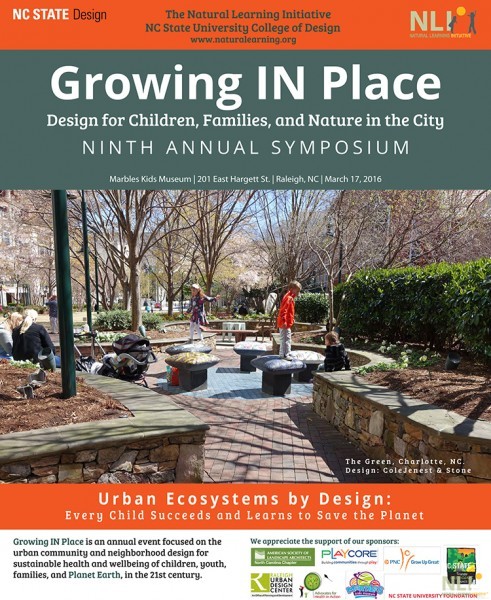
Design for Children, Families, and Nature in the City
Urban Ecosystems by Design: Every Child Succeeds and Learns to Save the Planet
Program
Children are born curious and they need to engage with diverse living surroundings to keep inquiring minds alive, to grow up passionate about nature, to benefit from nature’s positive health offerings.
Passage of the Every Student Succeeds Act with an emphasis on STEM and inclusion of environmental education and environmental literacy, opens the door to rethinking the design of the urban public realm as an educational resource — as a learning system close at hand, to inspire young people towards an environmental ethic.
Growing IN Place 2016 addresses planning and design policies that support the environmental education needs of young citizens and family members. Young people need networks of attractive, walkable/bikeable routes connecting homes to the places where learning through nature can happen: schools, parks, community gardens, and cultural institutions — places that can be designed to help young people see themselves as part of urban ecosystems.
Growing IN Place 2016 is framed for an audience including public/private sector practitioners, landscape architects, architects, planners, parks and recreation professionals, nonformal educators, and elected officials. We need to work together to create urban ecosystems that support children’s natural curiosity and learning.
Growing IN Place is an annual convening focused on the urban community and neighborhood design for sustainable health and wellbeing of children, youth, and families, and Planet Earth, in the 21st century.
Speakers
Robin Moore, Dipl. Arch, MCP, Hon. ASLA, Director, Natural Learning Initiative, Raleigh, NC, Designing Cities for Families, Natural Learning, and Ecosystem Health.
In an urbanizing world, cities and suburbs are the sources of experiential life of the majority of communities — including the young. Designers, planners, and elected officials have an unavoidable responsibility to ensure children and families experience the wonders of nature and its processes every day, year round. To implement this trans-disciplinary intention, public policy requires collaboration across multiple sectors of government, urban development, and nonprofit enterprise.
Peter Gray, PhD, Research Professor, Department of Psychology, Boston College and author, Free to Learn, Chestnut Hill, MA, Play deficit disorder: A national problem, and the role of cities in remedying the problem.
Research has revealed a dramatic decline in children’s free play — especially their free, outdoor play — over the past several decades. This decline has been accompanied by dramatic increases in childhood depression and anxiety and declines in creativity and social skills. I will present evidence that the loss of free play is a, if not the major cause of these deleterious effects on children’s wellbeing. Urban design should be aimed at restoring children’s opportunities for outdoor play.
Steve Frank, PhD, Associate Professor & Extension Specialist, Department of Entomology, College of Agriculture and Life Sciences, NC State University, Raleigh, NC, Urban Trees: Managing the Urban Forest as an Experiential Ecosystem.
Urban warming and other stresses are increasing pest infestations in urban trees, which reduce tree health and the services they provide. A key to tree survival and health is planting the right tree in the right place. How can planners, designers, and planters evaluate locations and improve tree selection in the places of maximum learning, education, and enjoyment of children and families?
Judy Braus, MA, Executive Director, North American Association for Environmental Education (NAAEE), Washington, DC, Advancing Environmental Literacy in an Increasingly Urban World.* (lecture video not given for online use)
With more than 80 percent of people in the United States living in urban and suburban areas, how is environmental education adapting and working to connect more people to nature and create a more sustainable future? The North American Association for Environmental Education (NAAEE) supports educators working in urban communities, through policy, professional development, technology, research, and more. Find out about exciting new initiatives and stories as we dig into the future of urban EE.
DeAnna Beasley, PhD, Postdoctoral Scholar, the Rob Dunn Lab, Department of Biological Sciences, College of Sciences, NC State University, Raleigh, NC, What Ants, Stomachs, and Classrooms Teach Us About How to Design Healthy Environments.* (lecture video not given for online use)
Ecology helps us understand how organisms interact with each other and the host environment’s role in organismal response to change. Insights from insect-microbial interactions have broadened our understanding of how hosts manage their microbes and how microbes in turn influence host health and function. How can ant fungus farming, human stomachs and diet, and classroom design help children and families understand the urban ecosystem’s influence on human health?
Matthew Urbanski, PLA, Principal, Michael Van Valkenburgh and Associates (MVVA), Cambridge, MA, Landscape as the Engine of the Livable, Healthy City.
An active public realm, experienced as inclusive urban parks, strong landscape connections, and robust natural environments, is increasingly recognized as an essential part of a city’s livability and health. For many years, MVVA has been helping cities reclaim marginal places and transform underperforming spaces into thriving, healthy urban environments that support relaxation, socializing, and play for people of all ages and backgrounds.
Emlyn Koster, PhD, Director, and Charles Yelton, MEM – Regional Network Chief, N.C. Museum of Natural Sciences, Raleigh, NC, Citizen Science: Connecting with Nature for a Better World.
A child’s instinctual fascination with the natural world is ideally nourished by outdoor experiences in family life, at school, and through community resources. A rising conscience in the Anthropocene to manage human and environmental affairs in a sustainable manner has led to a need to empower the public to take action. Citizen science, the growing movement to engage the public in scientific research, offers a unique way for individuals of all ages and backgrounds to be involved in the myriad of science and science-related questions prompted by our urbanizing environment. Research and education institutions, such as the NC Museum of Natural Sciences (NCMNS), can engage citizen scientists using onsite, offsite, outdoor, and online programs. NCMNS and NC State University are co-hosting the Citizen Science Association, February 23-25, 2017.
What policy actions are required to create viable urban eco-learning systems? Speaker panel-audience discussion. Facilitated by Robin Moore
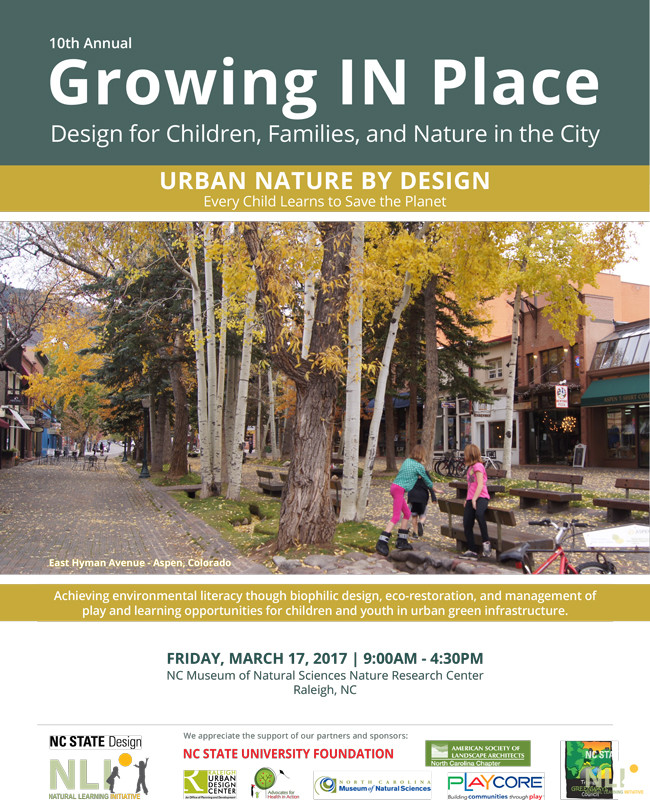
Achieving environmental literacy though biophilic design, eco-restoration, and management of play and learning opportunities for children and youth in urban green infrastructure.
Program
Children and youth (0-17) in the USA number 74 million (the highest ever) but account for only a quarter of the U.S. population (the lowest ever). Approximately 85% live in urban areas. Metro areas accommodate a highly variable proportion of the total population (18% – San Francisco, lowest; 55% – Laredo, highest).
How can urban design expose and restore urban nature so children and youth engage with compelling, equitable places for creative play and learning? How can nonformal education in nature enrich playful learning in the arts and sciences in the city? If learning no longer happens solely in school classrooms, can urban design and programming become an educational resource? How can cities be designed and managed to offer natural learning environments close at hand, to inspire young people to acquire a nature ethic?
Growing IN Place 2017addresses these questions by considering urban planning and design policies that support contact and learning from nature of urban children and youth. Green networks of attractive, walkable/bikeable pathways are needed, connecting homes to places where natural learning happens: schools, parks, community gardens, and cultural institutions — places designed to help young people identify with urban ecosystems. Itis framed for public/private sector practitioners, landscape architects, architects, planners, parks and recreation professionals, teachers and environmental educators, citizen activists, and elected officials. Professions that need to work together to create urban environments that support children’s natural curiosity and learning.
Speakers
Caren B. Cooper, PhD, Research Associate Professor, Forestry and Environmental Resources, Chancellor’s Faculty Excellence in Leadership in Public Science. Jointly appointed Assistant Head, Biodiversity Research Lab, NC Museum of Natural Sciences, Raleigh, NC. Integrating social and natural ecologies in cities.
Christine (Chris) Goforth, MS, Head of Citizen Science, NC Museum of Natural Sciences, Raleigh, NC. Engaging kids and families in urban eco-learning.
Viniece Jennings, PhD, Biological Scientist, Southern Research Station, U.S. Forest Service, Athens, GA. Urban Nature at the Intersections of Public Health and the Sustainable City.
Andrew Moore, MGA, Director, Youth and Young Adult Connections, National League of Cities, Washington, DC. Engaging youth in creating eco-literate cities.
Robin Moore, Dipl.Arch, MCP, Hon ASLA, Director, Natural Learning Initiative; Professor of Landscape Architecture, College of Design, NC State University, NC. Designing the eco-literate city.
Laura Solano, RLA, Principal, Michael Van Valkenburgh and Associates (MVVA), landscape architects, Cambridge, MA. Restoring green infrastructure: Readable, interactive ecoengineering in the public realm.
Kathryn Stevenson, PhD, Assistant Professor, Department of Parks, Recreation, and Tourism Management, College of Natural Resources, NC State University, Raleigh, NC. How kids learn about nature in the city.
Juan Torres, PhD, CIP, Associate Professor, School of Urbanism and Landscape Architecture, University of Montreal, Montreal, Canada. Evidence-informed planning policies for urban childhood.
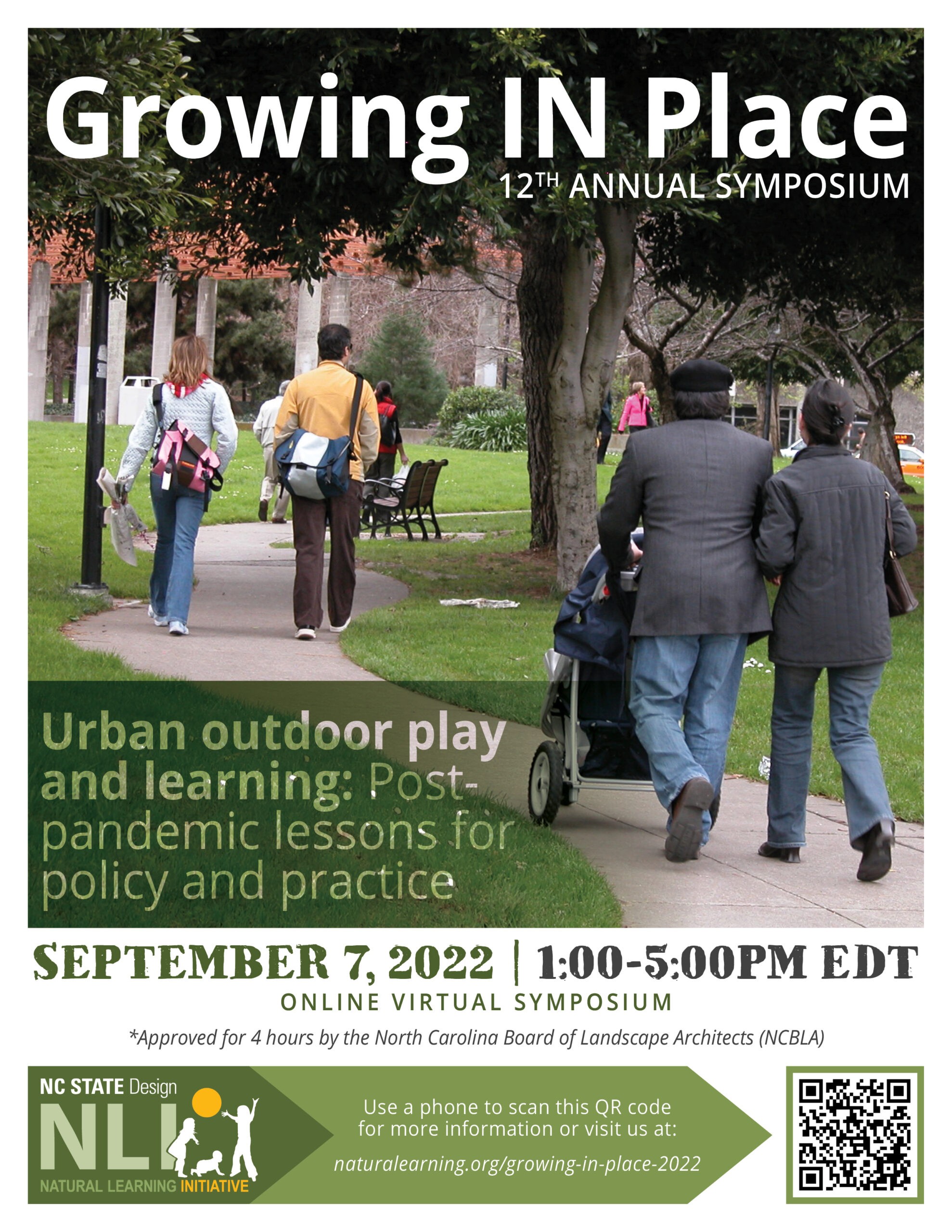
Urban Outdoor Play and Learning:Post-pandemic lessons for policy and practice
The 12th Annual Growing In Place will focus on Urban Outdoor Play and Learning: Post-pandemic Lessons for Policy and Practice. Alongside its devastating health effects, the COVID-19 pandemic has led to significant changes in daily life for children, youth, and their families. Research suggests that during lockdown most children spent less time outdoors, became less physically active, and spent more time in front of screens. As the pandemic-related mental health crisis grows, access to the natural world will be more important than ever.
Speakers
Independent scholar, consultant, and writer; Author, Urban Playground: How child-friendly planning and design can save cities.
Tim Gill
Independent scholar, consultant, and writer; Author, Urban Playground: How child-friendly planning and design can save cities.
Professor, College of Behavioral, Social and Health Sciences, Clemson; Director, REYSE Collaboratory.
Corliss Outley, PhD
Professor, College of Behavioral, Social and Health Sciences, Clemson; Director, REYSE Collaboratory.
Professor, Department of Landscape Architecture and Environmental Planning, NC State University; Co-founder, Natural Learning Initiative.
Robin Moore, Dipl.Arch, MCP, Hon.ASLA
Professor, Department of Landscape Architecture and Environmental Planning, NC State University; Co-founder, Natural Learning Initiative.
Professor (Research), Australian Catholic University, Melbourne; Professor Emeritus, Herbert Wertheim School of Public Health and Human Longevity Science, University of California, San Diego.
James Sallis, PhD
Professor (Research), Australian Catholic University, Melbourne; Professor Emeritus, Herbert Wertheim School of Public Health and Human Longevity Science, University of California, San Diego.
The goal of the Early Childhood Outdoors DESIGN INSTITUTE is to help designers, recreation professionals, and educators bring back the richness of the outdoors as a resource for education and health.
Program
Think back to when you were four, five, or six years old. It is likely some of your fondest memories are of the outdoors. Do you still remember when you used to pick summer blackberries, spy on a hidden bird’s nest, build a secret fort in the woods, climb a favorite tree, or play with water? Research (and personal experience) tell us that nature has a strong impact on the lives of children. But do today’s children have those same opportunities?
Speakers
Robin Moore, Dipl.Arch, MCP, Professor of Landscape Architecture and Director of the Natural Learning Initiative, NC State University. Presenter
Nilda Cosco, Psp, Education Specialist at the Natural Learning Initiative, NC State University. Presenter
Jane Taylor, Curator of the Michigan 4-H Children’s Garden, an adjunct faculty member in the Department of Horticulture at Michigan State University. Creating Magical Spaces: Design Implications.
Jim Greenman, Senior Vice President for Education at Bright Horizons Family Solutions. What are Educators Looking for from Designers?
Mike Lindstrom, AIA, an architect and Head of Horizons Design®. Designing a Childcare Center with the Outdoors in Mind.
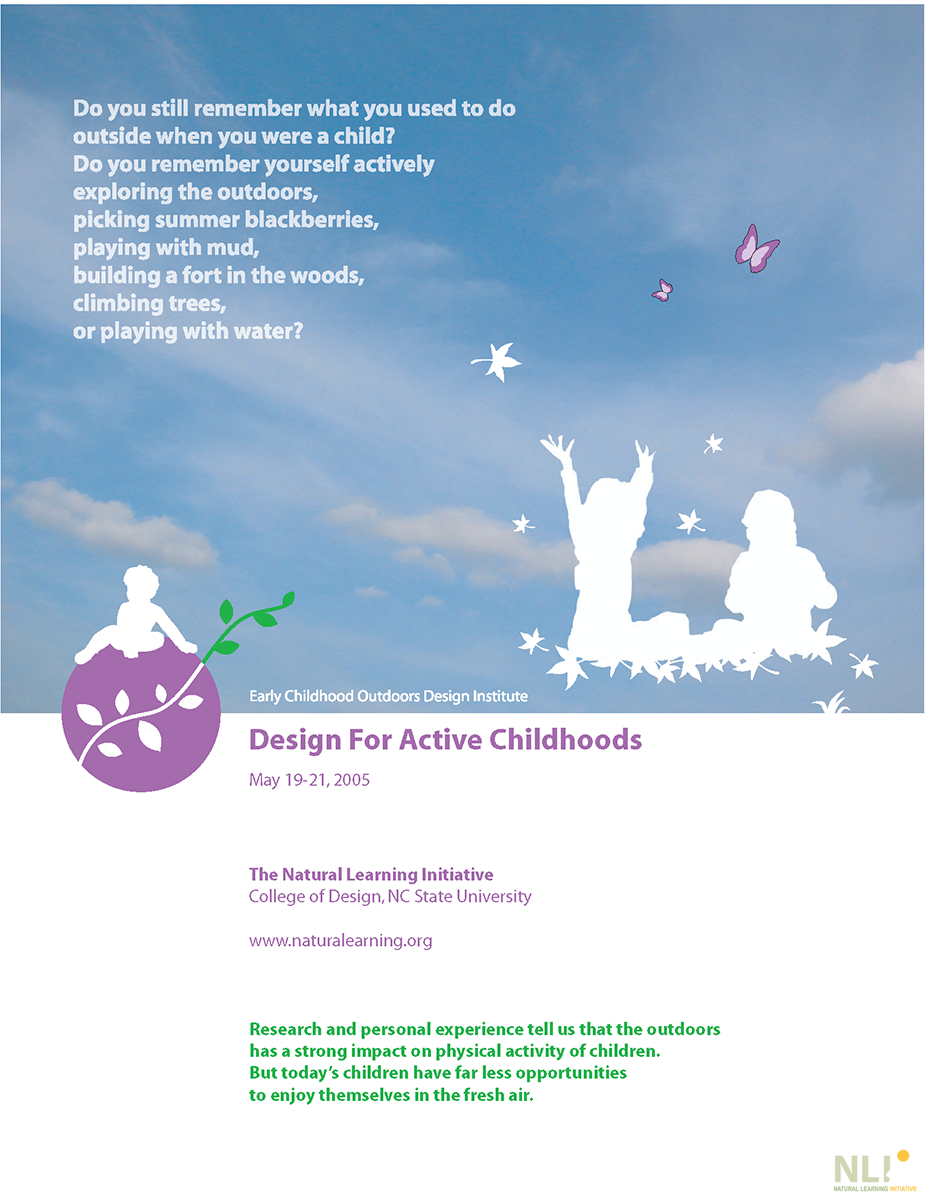
The goal of Design for Active Childhoods is to raise awareness about the role of the physical environment for healthy development and children’s active living.
Program
Think back to when you were four, five, or six years old. It is likely some of your fondest memories are of the outdoors. Do you still remember what you used to do outside? Do you remember yourself actively exploring the outdoors, picking summer blackberries, playing with mud, building a fort in the woods, climbing trees, or playing with water? Research (and personal experience) tell us that the outdoors has a strong impact on the physical activity of children. But today’s children have far fewer opportunities to enjoy themselves in the fresh air.
Speakers
Robin Moore, Dipl.Arch, MCP, Professor of Landscape Architecture, Director of the Natural Learning Initiative, NC State University. Presenter, Measuring Quality: Preschool Outdoor Environment Measurement Scale (POEMS) development team.
Nilda Cosco, Psp, Education Specialist at the Natural Learning Initiative, NC State University. Presenter, Measuring Quality: Preschool Outdoor Environment Measurement Scale (POEMS) development team.
Thomas Barrie, AIA, Director of the School of Architecture, College of Design, NC State University. The Role of Design.
Mike Lindstrom, AIA, an architect and Head of Horizons Design®. Designing a Childcare Center with the Outdoors in Mind.
Lori Little, Director of Bright Horizons Family Solutions Child Development Center at GlaxoSmithKline, Research Triangle Park, NC. How Children’s Behavior Changed after the Renovation of the Play Areas.
Karen DeBord, PhD, Associate Professor, Department of Family and Consumer Sciences, NC State University. Measuring Quality: Preschool Outdoor Environment Measurement Scale (POEMS) development team.
Linda Hestenes, PhD, Associate Professor, Department of Human Development and Family Studies, UNC-Greensboro. Measuring Quality: Preschool Outdoor Environment Measurement Scale (POEMS) development team.
Janet McGinnis, Program Consultant, More at Four Pre-Kindergarten Program. Measuring Quality: Preschool Outdoor Environment Measurement Scale (POEMS) development team.
Rodney L. Swink, FASLA, past president of the American Society of Landscape Architects. Welcome Session.
Betsy Thigpen, MSc, visiting scholar at the NC State University, College of Design. Head Start Growth and Readiness in the Outdoor World HS-GROW.
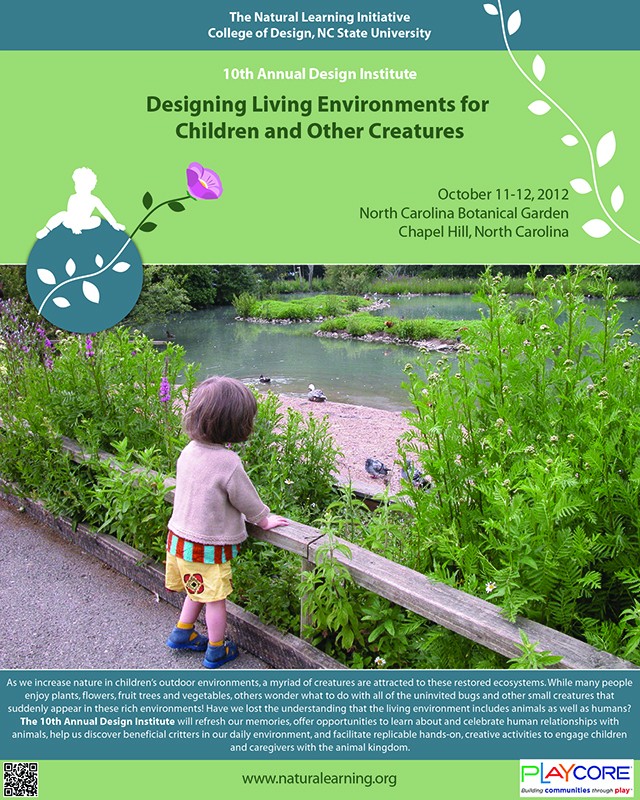
Designing Living Environments for Children and Other Creatures
As we increase nature in children’s outdoor environments, a myriad of creatures are attracted to these restored ecosystems. While many people enjoy plants, flowers, fruit trees, and vegetables, others wonder what to do with all of the uninvited bugs and other small creatures that suddenly appear in these rich environments! Have we lost the understanding that the living environment includes animals as well as humans?
The 10th Annual Design Institute will refresh our memories, offer opportunities to learn about and celebrate human relationships with animals, help us discover beneficial critters in our daily environment, and facilitate replicable hands-on, creative activities to engage children and caregivers with the animal kingdom.
Speakers
David Becker, Senior Manager of Learning Experiences, Chicago Zoological Society, Lessons for Childcare Settings from the Zoo
John Connors, Naturalist Center Coordinator, NC Museum of Natural Sciences, Finding Inspiration Among Feathers
Nilda Cosco,Education Specialist, Natural Learning Initiative, Learning with Critters
Rob Dunn,Department of Biology, NC State University, The Wilderness of Children’s Play
Inger Lerstrup, Forest Schools Research, University of Copenhagen, Denmark, Wildlife in the Forest Kindergarten
Bryce Lane, Alumni Distinguished Professor, Department of Horticultural Science, NC State, University and Host of In the Garden, UNC-TV, Creating Wildlife Gardens
Margaret Lowman, Director, Nature Research Center, NC Museum of Natural Sciences, The Hidden Life of Tree Canopies
Robin Moore, Director, The Natural Learning Initiative, College of Design, Design It Right and They Will Come
Philip Waters,Play Program Coordinator, Eden Project, Cornwall, UK, The Worm that Turned
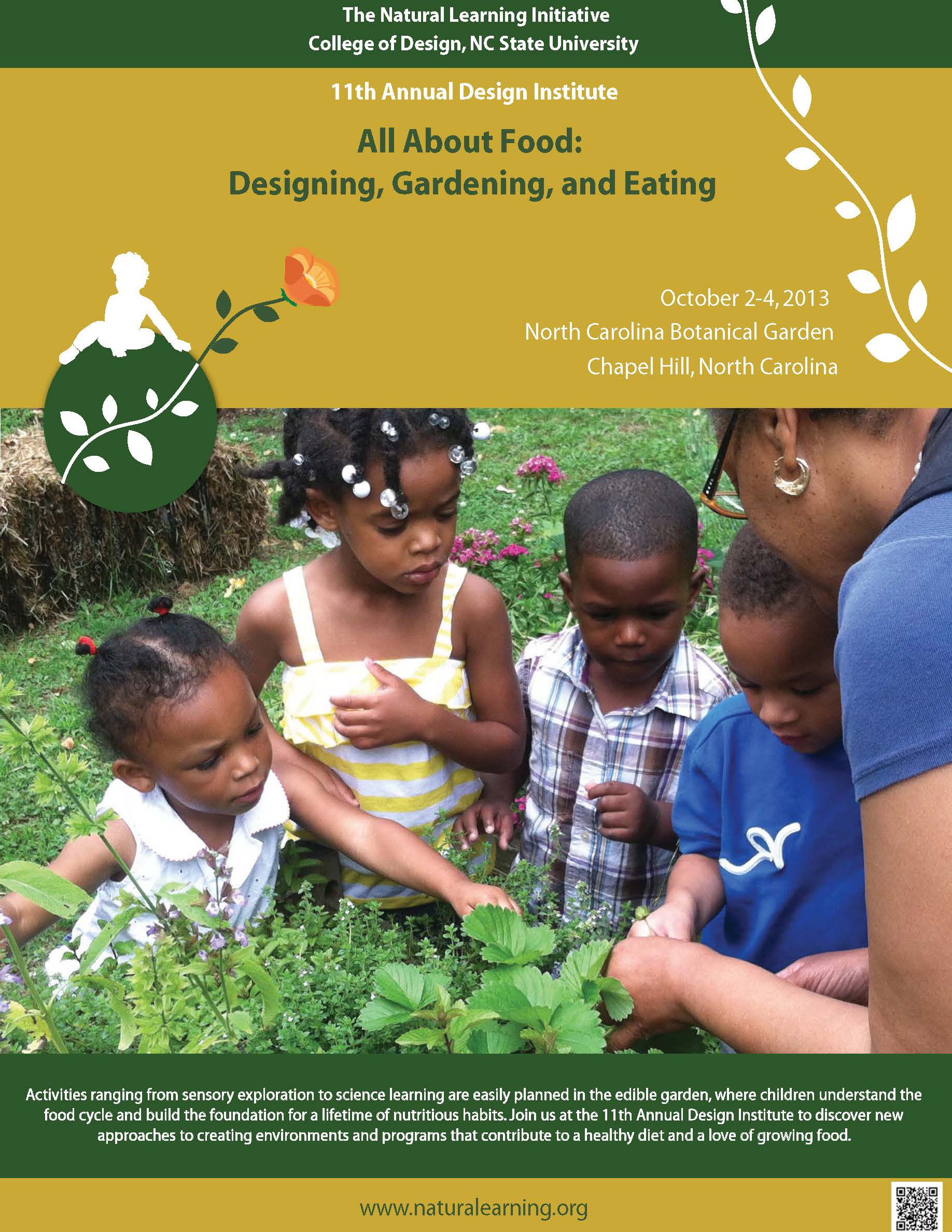
Activities ranging from sensory exploration to science learning are easily planned in the edible garden, where children understand the food cycle and build the foundation for a lifetime of nutritious habits. Join us at the 11th Annual Design Institute to discover new approaches to creating environments and programs that contribute to a healthy diet and a love of growing food.
Speakers
Jill Colella Bloomfield, MA, Cooking Educator and Author, Grow It, Cook It and The Jewish Festivals Cookbook for Kids (DK Publishing) and publisher of Ingredient: A Magazine for Kids Curious About Food
Myles Faith,PhD, Associate Professor, UNC Gillings School of Global Public Health
Linda Hestenes, PhD, Associate Professor and Co-Director Birth through Kindergarten Programs, Department of Human Development and Family Studies, UNC-Greensboro
Emily Jackson, Program Director, Growing Minds Farm to School, Appalachian Sustainable Agriculture Project
Mary Etta Moorachian, PhD, Professor, College of Culinary Arts, Johnson and Wales University, Charlotte, NC
Jeana Myers, PhD, Horticulture Extension Agent, North Carolina Cooperative Extension, Wake County Center
Rhonda Sherman, MA, Extension Solid Waste Specialist, Biological & Agricultural Engineering, NC State University
 David Driskell, MCP. Executive Director of Community Planning, Housing, and Sustainability, City of Boulder, CO. Growing Up Boulder: Creating a Sustainable Partnership to Engage Young People in Community Design and Planning.
 Erin White, Founder, and Principal, Community Food Lab, Raleigh, NC. Urban Agriculture and Community Food Systems: The Role of Design.
 Nancy Wells
 Jason Bocarro, PhD, Department of Parks, Recreation and Tourism Management, NC State University.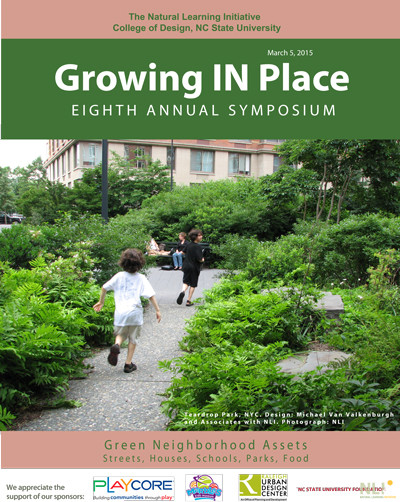
 DeAnna Beasley, PhD, Postdoctoral Scholar, the Rob Dunn Lab, Department of Biological Sciences, College of Sciences, NC State University, Raleigh, NC, What Ants, Stomachs, and Classrooms Teach Us About How to Design Healthy Environments.* (lecture video not given for online use)
 Emlyn Koster, PhD, Director, and Charles Yelton, MEM – Regional Network Chief, N.C. Museum of Natural Sciences, Raleigh, NC, Citizen Science: Connecting with Nature for a Better World.