Blog

  • PlayDaze for Engaging Outdoor Activity

    The Green Desk

    PlayDaze for Engaging Outdoor Activity

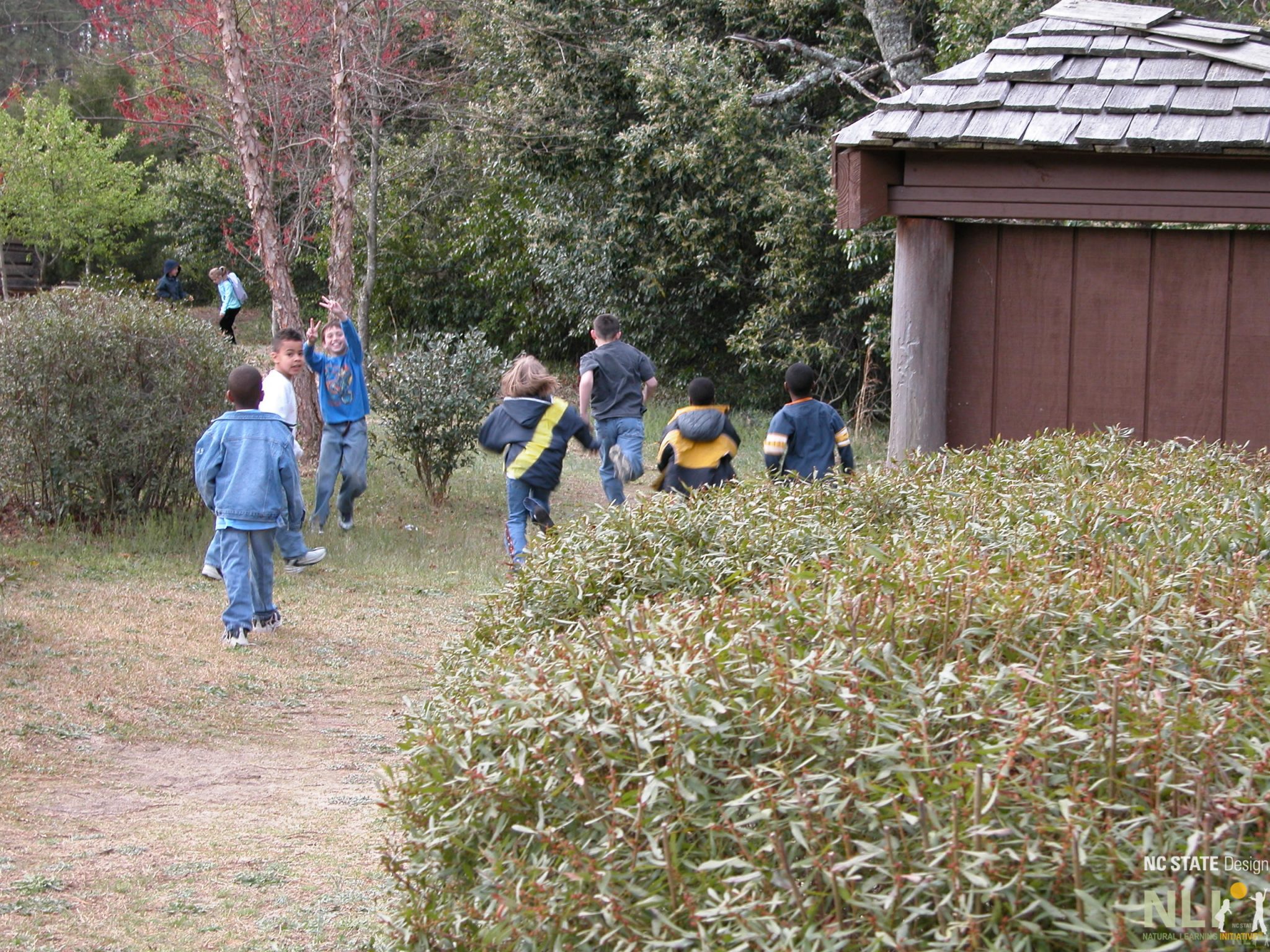
    PlayDaze began in 2011, as an initiative of the Early Childhood Active Play Alliance. This Alliance focuses on practical efforts for improving the health of young children in North Carolina through playful experiences, particularly opportunities for unstructured, free play.

    By celebrating the value of play and providing diverse play activities for all North Carolinians, from toddlers to grandparents, PlayDaze helps to increase awareness of the need for play in children’s lives, while at the same time getting children moving! Schools, child care centers, churches, neighborhoods, Parks and Recreation departments, YMCA’s and other organizations are urged to participate in PlayDaze by creating an event in their community where people can come out and play. Events can be small neighborhood gatherings for an hour or large, all-day park events. The objective is to play for the sake of playing, to be physically active, to challenge each individual to be creative in mind and body, and to share the joy of discovery and interaction without the need for competition. Events from the mountains to the sea get more children and families physically active and engaged in all forms of play.

    Though the statewide recognized days for PlayDaze are the third weekend in September, PlayDaze can and do happen any day!  If you are interested in hosting a PlayDaze, please visit The Be Active Kids websitewhere you will find materials that will help you plan and implement a play event in your community!  For additional information please contact them at [email protected].
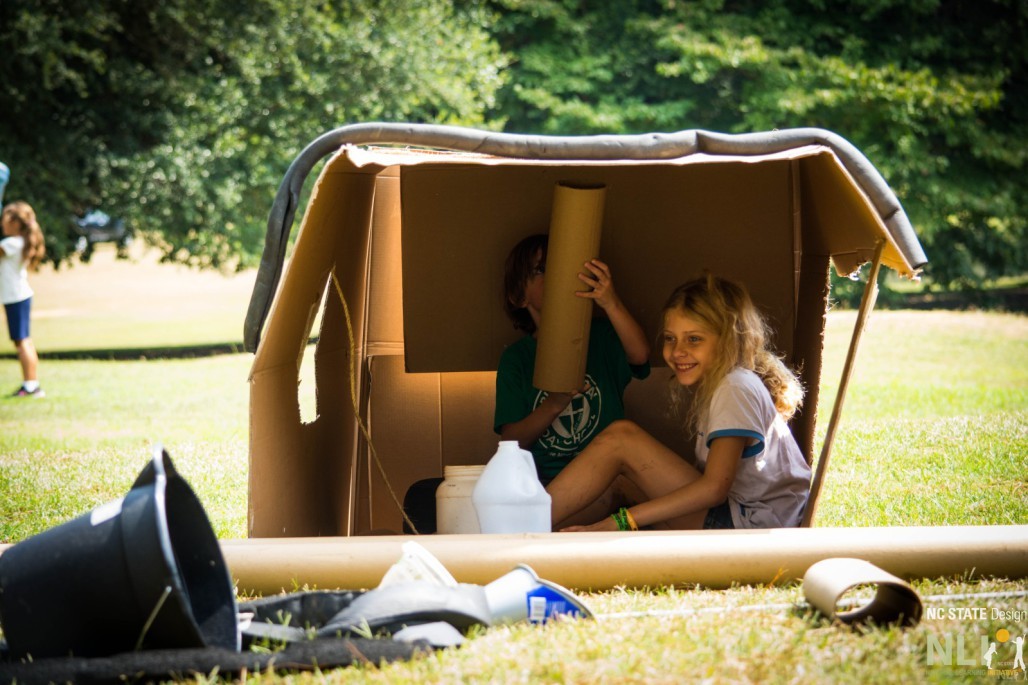
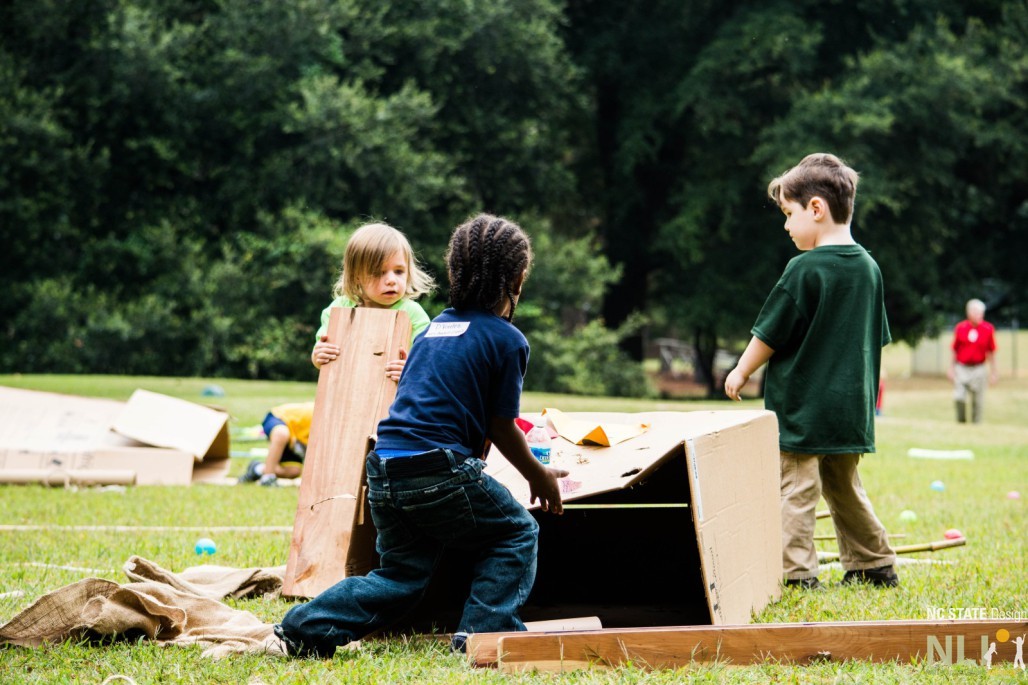
    children in a cardboard fort
    children constructing a fort
    children posing for a photo
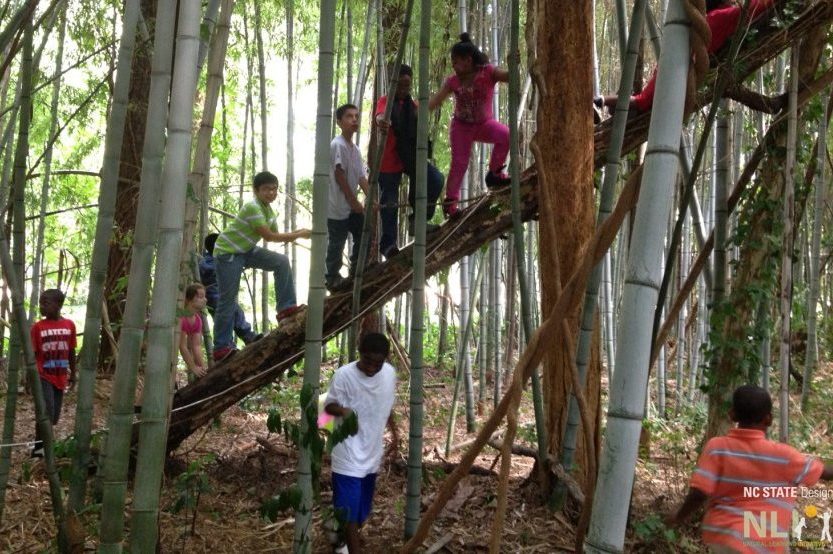
    children climbing on a log
  • Child Care OLE Regulation FAQ in North Carolina

    The Green Desk

    Child Care OLE Regulation FAQ in North Carolina

    What do the experts say about safety, risk, and regulation in North Carolina child care environments?

    The Natural Learning Initiative has worked together with several different regulating agencies and organizations in North Carolina to get answers to some of the most frequently asked questions about safety, risk, and regulations in child care outdoor environments. The following text and the associated question and answers were written and compiled by the North Carolina Outdoor Learning Environments Alliance. The answers to the questions were written by representatives of the respective agencies and organizations named at the beginning of each answer. While only directly applicable to child care centers in North Carolina, the NLI recognizes the value of these positions on certain hot topics, and hopes their insight can provide some helpful guidance even for centers who do not happen to be subject to the North Carolina regulations.
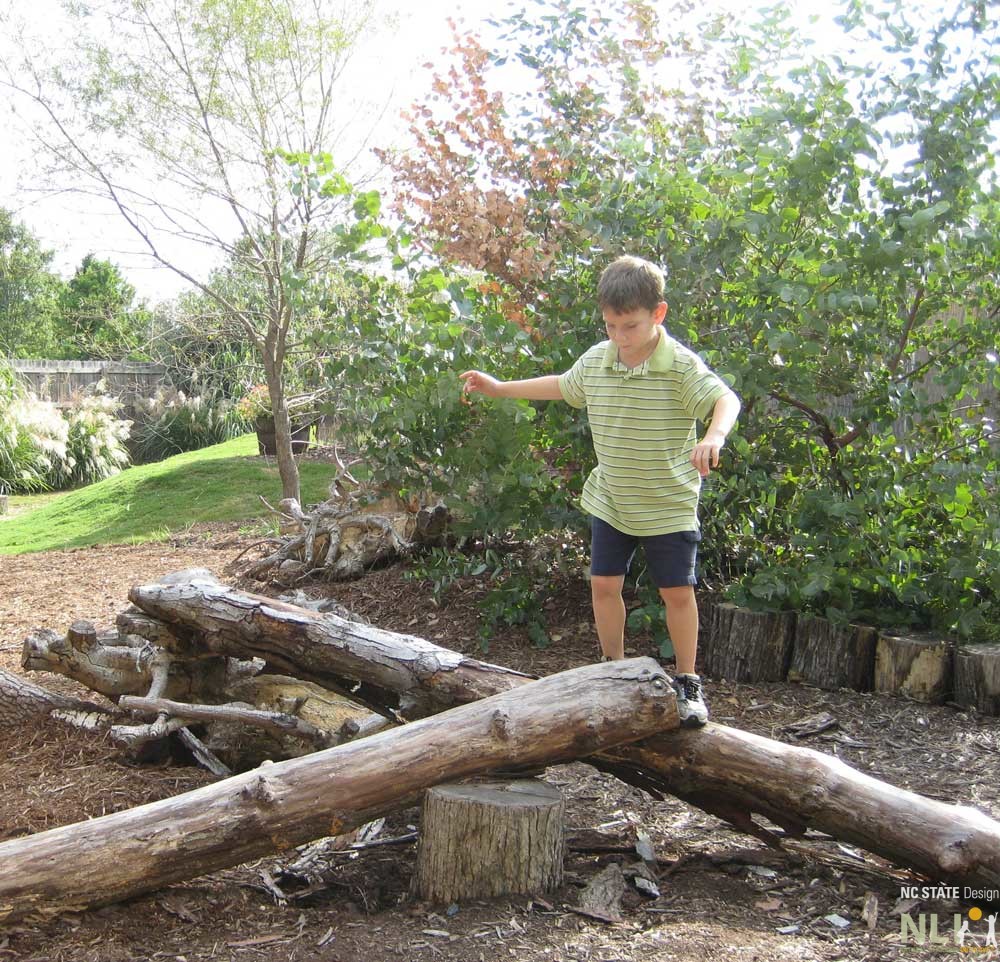
    child on balancing logs

    Play Outside!  by the North Carolina Outdoor Learning Environments Alliance

    Child care providers have many questions about what they can, and can’t do, on and in their outdoor area. They have concerns that there may be violations or demerits from the licensing consultant, the environmental health specialist or from an environment rating scale assessor if they are having an assessment done for a rated license. In an attempt to dispel some of the concerns that are floating around, listed below are some of the most frequently asked questions about outdoor learning environments. We are all committed to removing barriers to staff taking children outdoors, while still ensuring that the experiences that the children have are healthy, safe and enriching.

    As new questions are received they will be added to this list. We hope that you find them helpful as you work to enhance your outdoor area for the children in your care. This resource is in development and is not yet complete, but it does hold valuable information that can be used as it is completed. The questions and issues included in this handout have been given attention from the North Carolina Rated License Assessment Project, the Division of Child Development, and Children’s Environmental Health Branch with position statements (in development) from the NC Outdoor Learning Environments Alliance.

    Further Resources

    Inclusion of Natural Elements in the Play Yard

    • Are large stones and/or rocks considered tripping hazards inside the fenced area? We are thinking of using them as borders to create a garden space or perhaps as part of our outdoor learning environment activities and décor.
    • Do you have to have mulch around 12-18 inch high stumps for ECERS? If it is ok with licensing, is it ok with the ECERS assessment folks? If yes, then how much mulch or what depth is needed?
    • Would stumps in general on the playground be considered a health and safety issue due to splinters? What will the ECERS folks say?
    • Can we have stumps on our playground with lichens or small mushrooms growing on them? Our playground has children between the age of 2.5 years and six years that play on it?

    Learning about Birds, Bugs, and other Critters

    • If we put up bird feeders, what type is acceptable? Humming bird feeders are probably not the issue; however, we are wondering about other bird feeders as the seeds may drop on the ground and/or droppings from the birds.
    • If we have a bird bath, how often does the water need to be changed or the bath cleaned?
    • Is it ok to dig for bugs or use a “carpet lift up” or plastic bath mat to attract and watch bugs?
    • Rule .2831 was amended effective August 2, 2007 and includes a prohibition against keeping amphibians as pets. Does this preclude keeping tadpoles at child care as an educational project for children to observe the development of tadpoles into frogs?

    Learn more…

    Learn more…

    Digging in the Dirt

    • Is it really ok to have a dirt pile for the children to dig in on your playground? If so is a cover needed? (One suggestion is to have a large round “swimming pool tub” to put the dirt in, or a type of sand table that can be covered. However, can a dirt area be created that has borders with a cover similar to a sand pit play area?)
    • If we do have dirt for children to dig in, what type of dirt should it be….dirt from the earth or should we buy topsoil/dirt from a nursery?

    Seating & Spaces Outdoors to Observe and Just Be

    • What type of bench swing would be acceptable for children and adults?
    • Is there a glider type that can be used/purchased, or can we hang a traditional one under our covered porch area? We really like the idea that adults and children could use it together, read stories or rock etc.
    • Could you provide a picture of one that is acceptable?

    Learn more…

    Learn more…

    Having a Picnic

    • We would like to have snack time outside and/or our lunch time with our children. Having a picnic can be a lot of fun. Can you tell us how this can be done and still meet licensing and/or ECERS requirements as to hand washing, family style dining, etc.?

    Growing Tomatoes in Preschool Gardens

    • I’ve heard tomato leaves and stems are mildly toxic. Is it okay to grow tomatoes in our outdoor learning environment?

    Learn more…

    Learn more…

  • Greensboro Children’s Museum Edible Schoolyard

    Project

    Greensboro Children’s Museum Edible Schoolyard

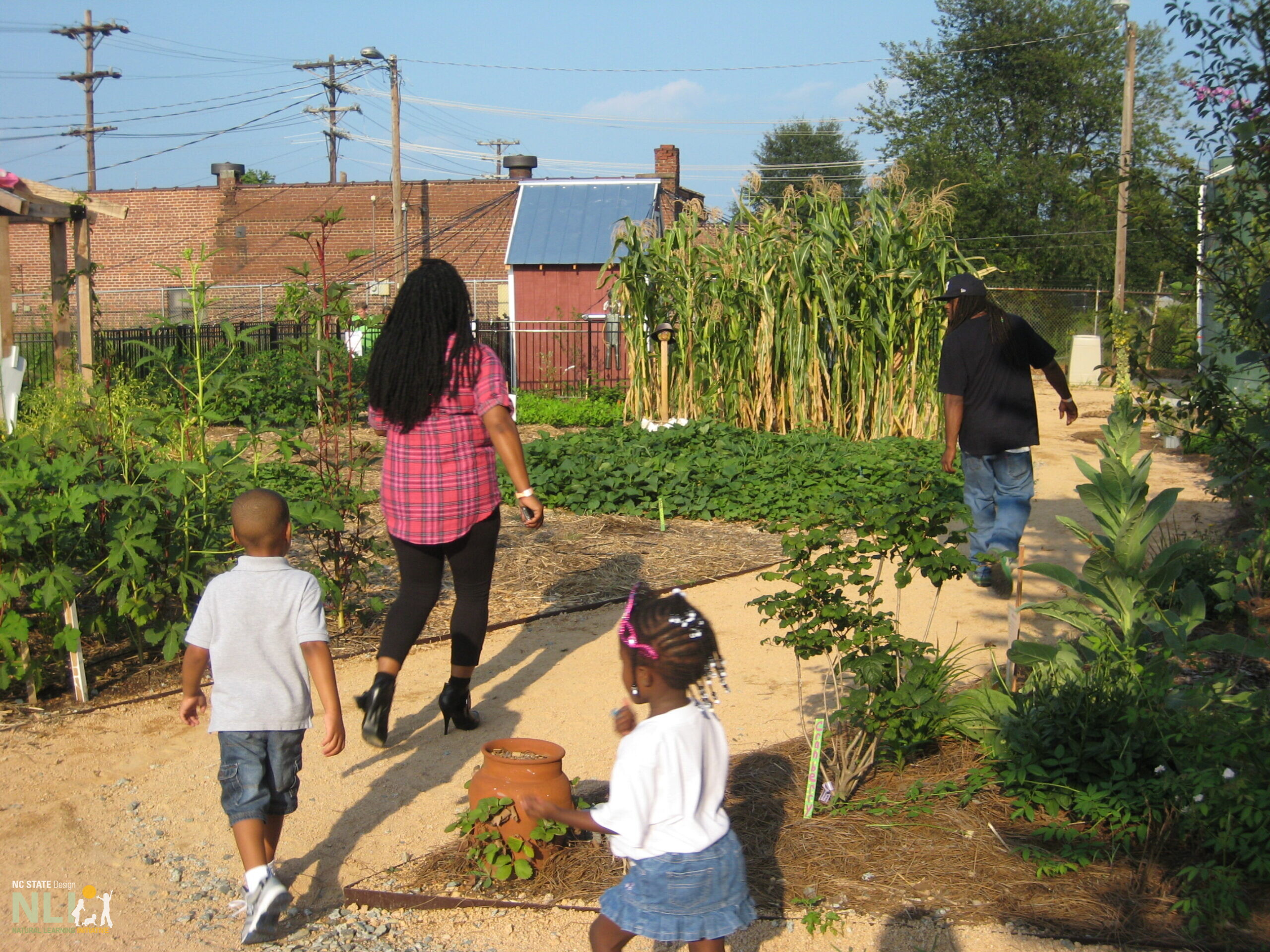
    The Edible Schoolyard at Greensboro Children’s Museum (GCM), designed by NLI, engages children and families in hands-on permaculture gardening and cooking, “from seed to table.” Betsy Grant, then museum CEO, led conversion of an underused space into a strolling/learning garden dedicated to healthy eating, with fruits, vegetables, and culinary traditions from around the world, now serving local, disadvantaged communities.

    The 2010 dedication honored Alice Waters, leader of the farm-to-table movement, who as owner of famous Chez Panisse restaurant in Berkeley, CA, instigated the original Edible Schoolyard at Martin Luther King Middle School. The Greensboro version became a licensed satellite of the original. 

    A renovated café-restaurant commercial kitchen (existing prior to the museum), serves after-school and summer gardening/cooking programs, with outreach to families, local schools, Head Start, and early childhood centers. In the adjacent “mud café” cooking experiences are playfully dramatized!

    The Edible Schoolyard has become a unique community crossroads, cheered on by local restaurateurs who share the same dedication to local foods and healthy, joyful eating.

    The NLI team collaborated with landscape architects Carla Delcambre and David Swanson, and local permaculture expert, Charlie Headington, to implement the Edible Schoolyard.

    adults leading children

    Active garden exploration

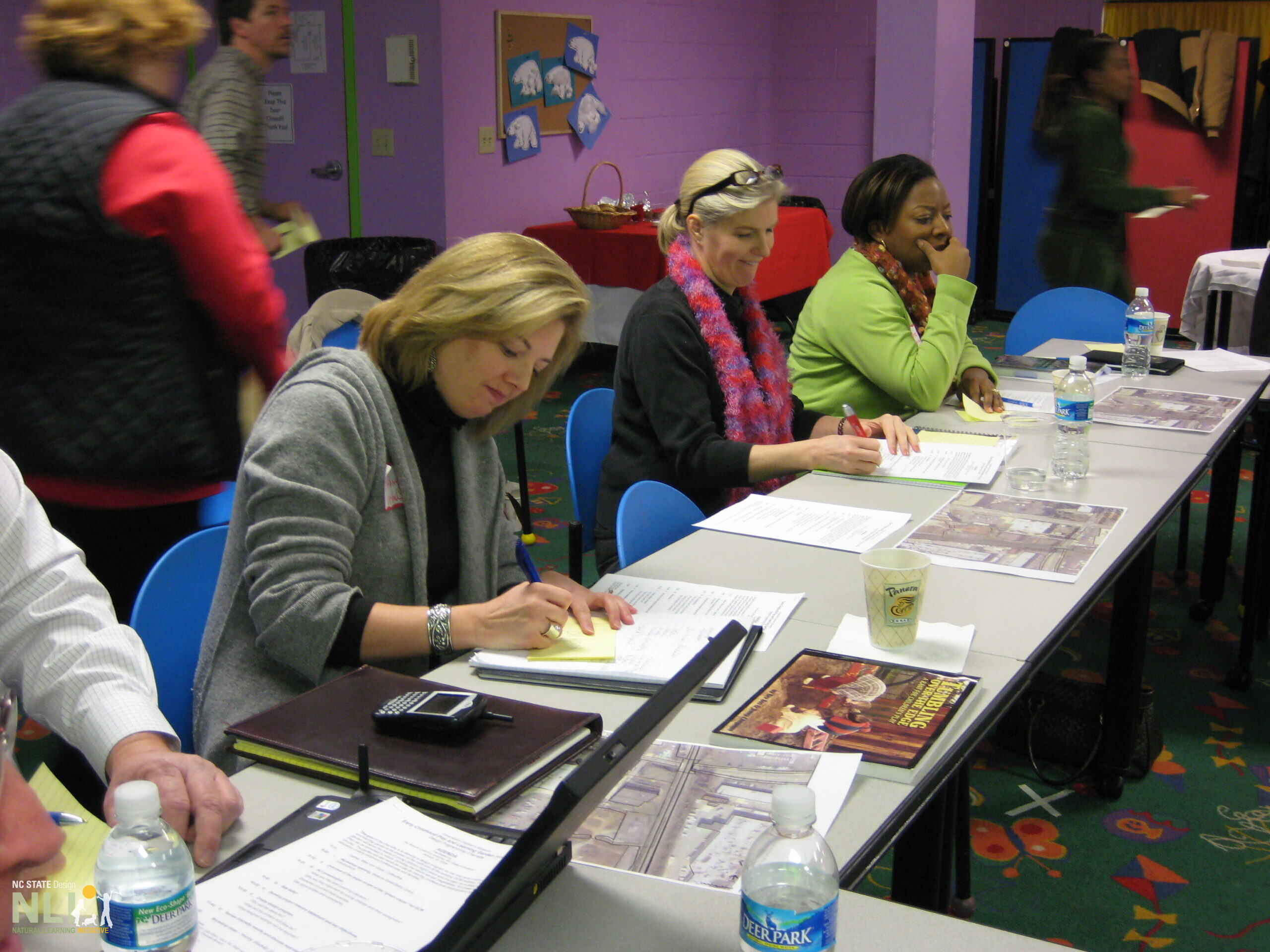
    workshop participants

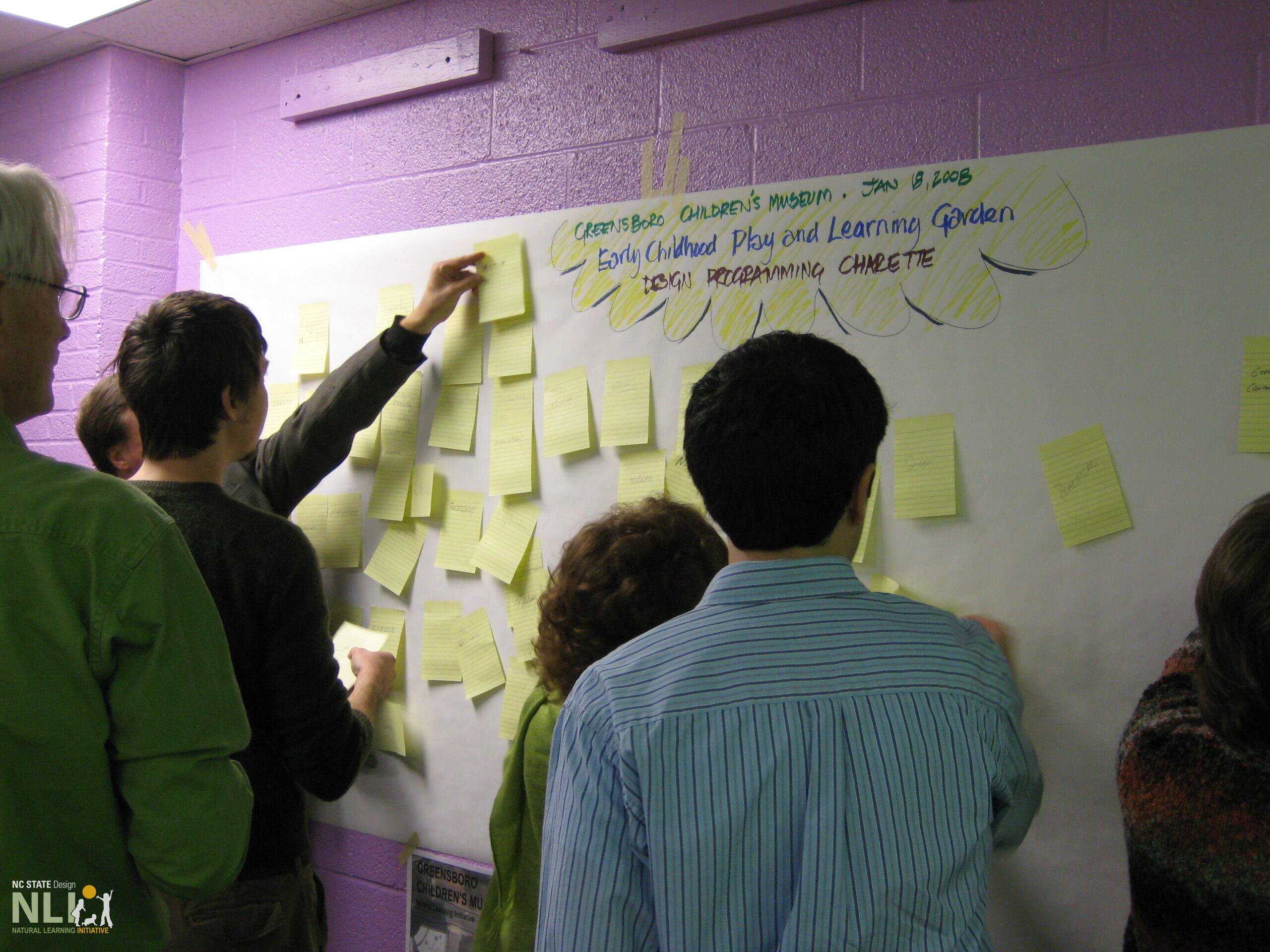
    Stakeholder workshop participants add design programming ideas on sticky notes

    idea board

    Stakeholder workshop participants sort design program ideas

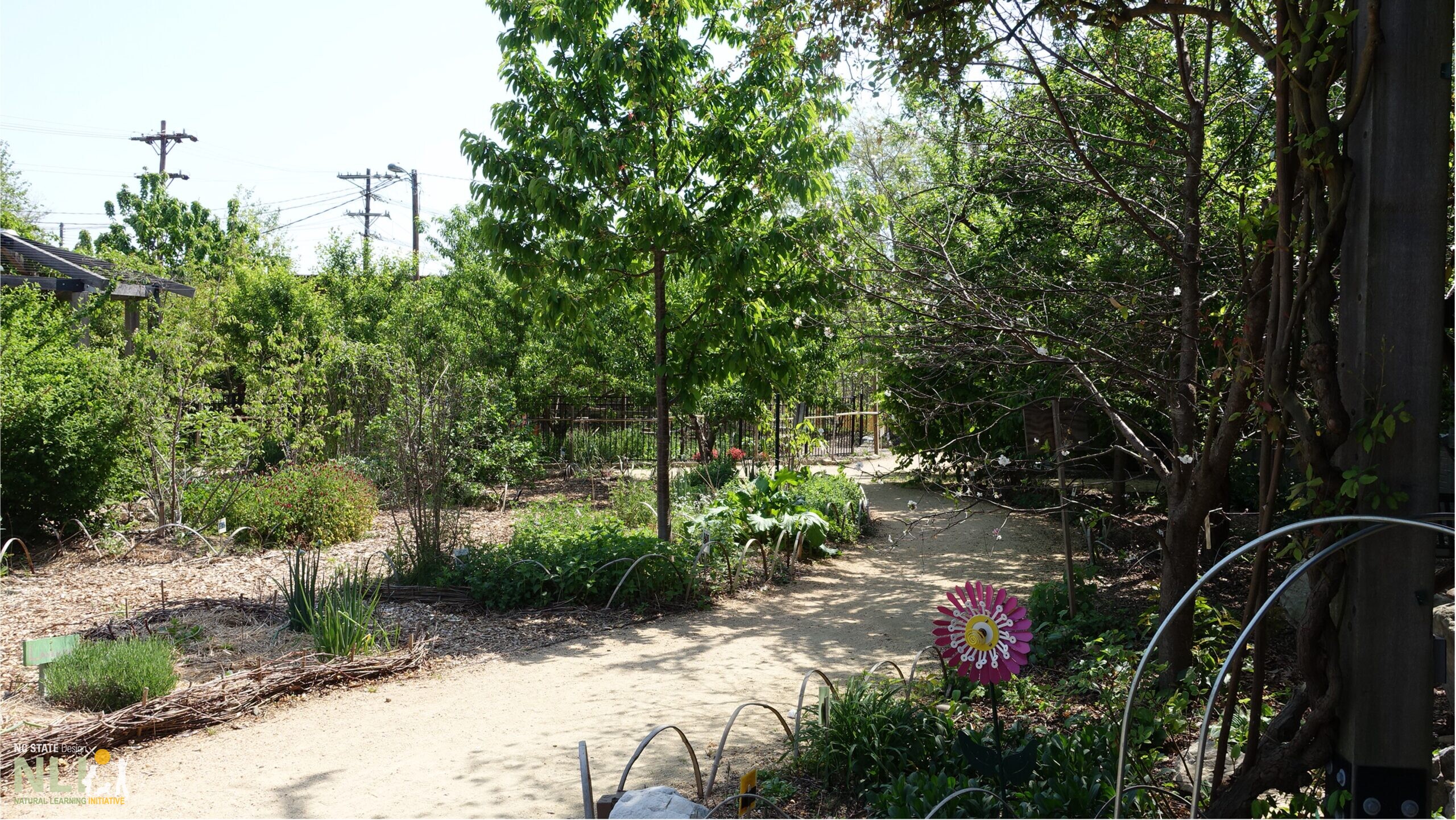
    tree maturation

    Maturing fruit tree forest after six years

    solar panels by pond

    Solar-activated pond aeration system

    children walking through garden

    Central city location across the street from the public library

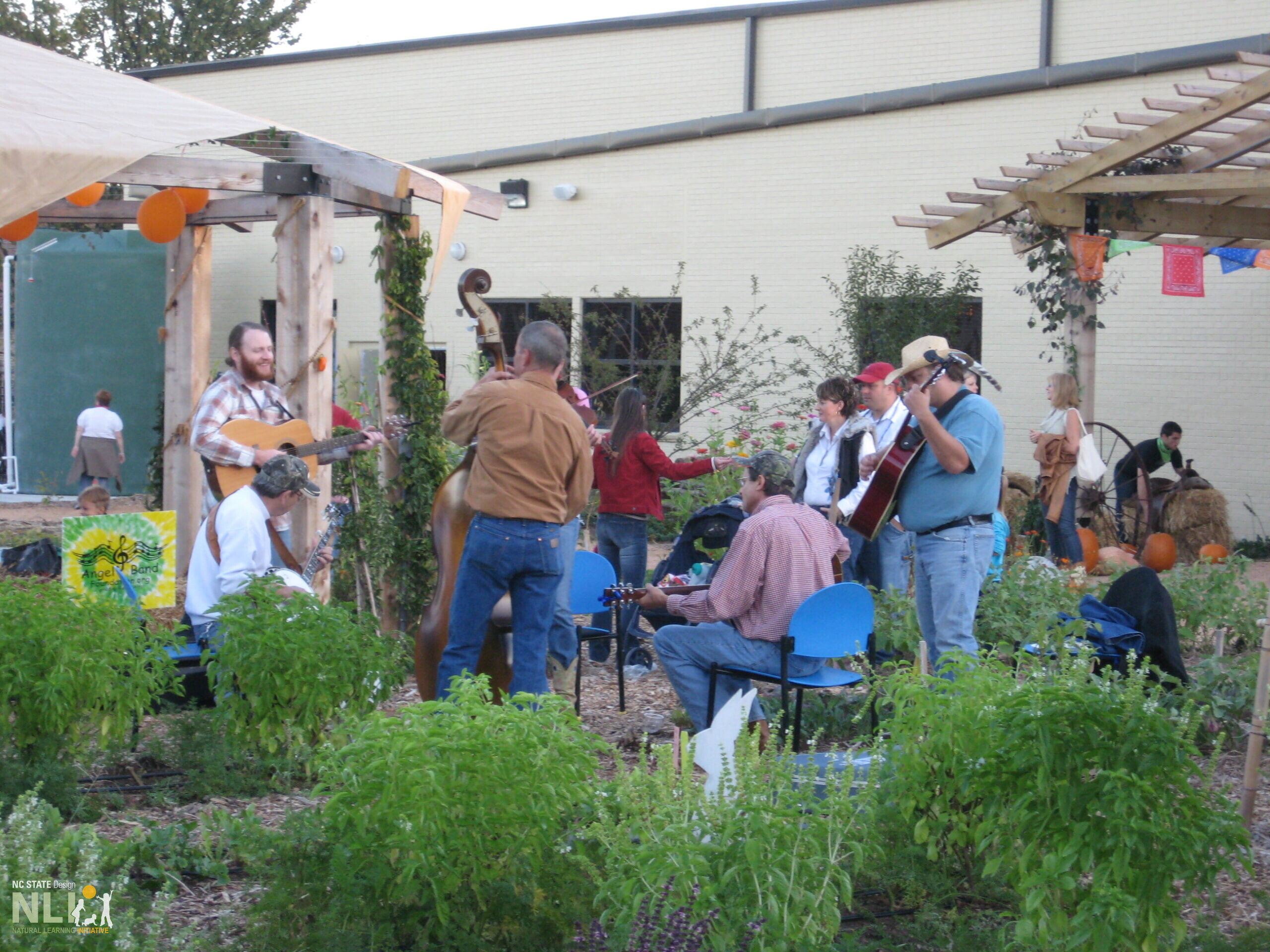
    musicians playing at the celebration

    Hoedown brings the community together in a joyful garden celebration

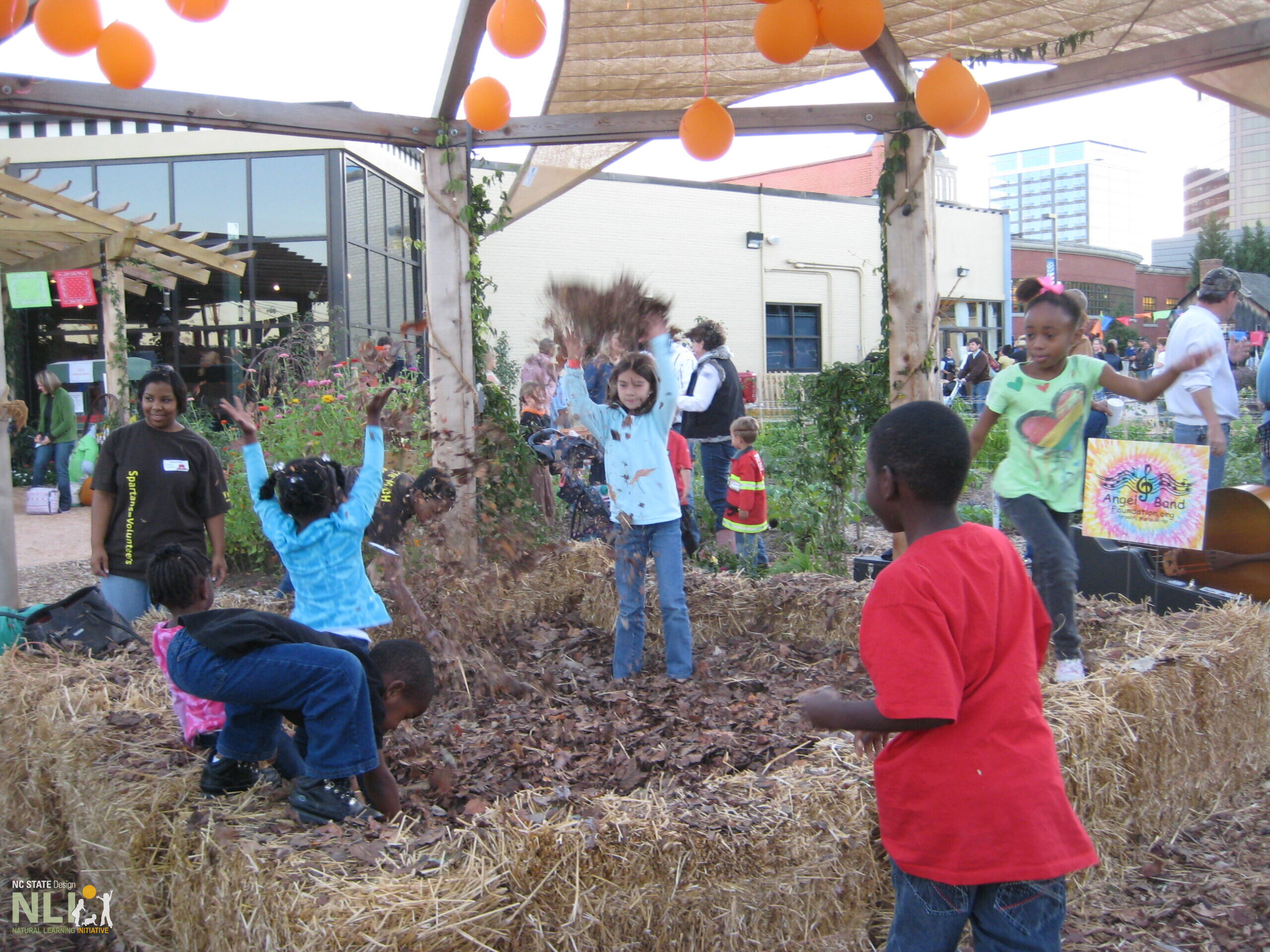
    children playing in leaf pile

    Hoedown play in the leaf pile!

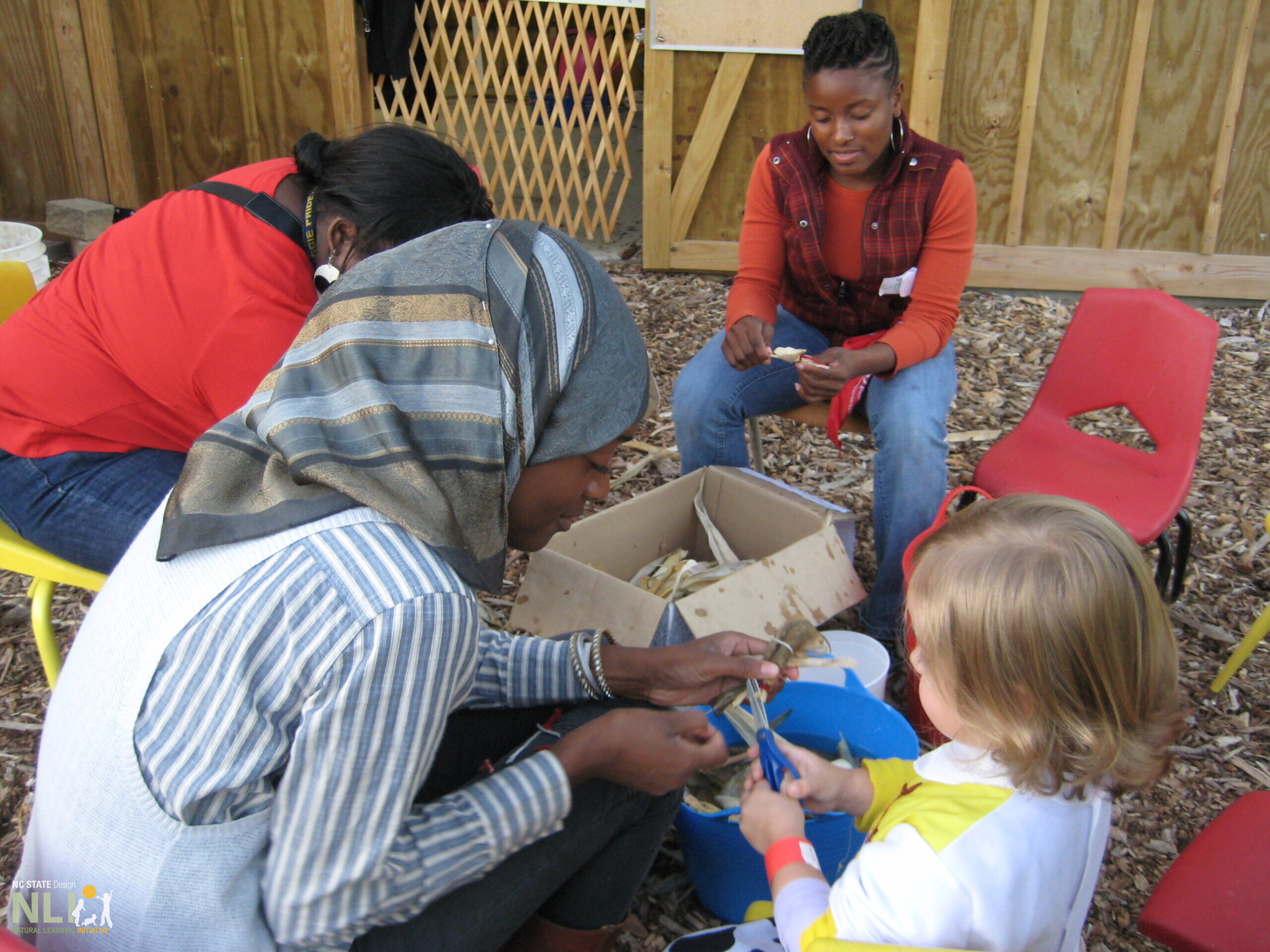
    adults showing child gardening

    Gardening and food preparation can be a powerful cultural connector

    parent with stroller walking through garden

    Strolling garden enjoyment – with twins

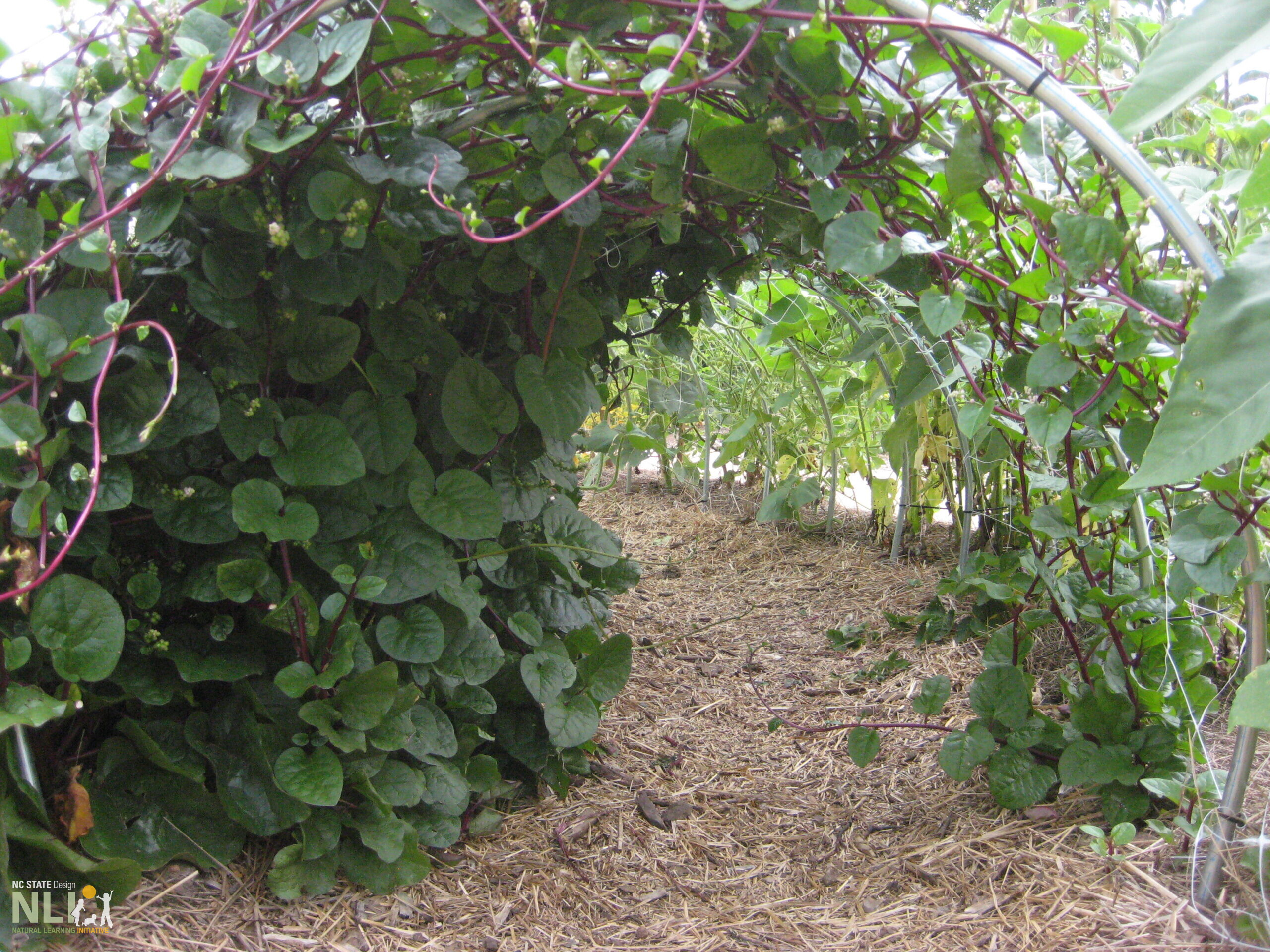
    spinach vine tunnel

    Red stem malabar spinach vine tunnel

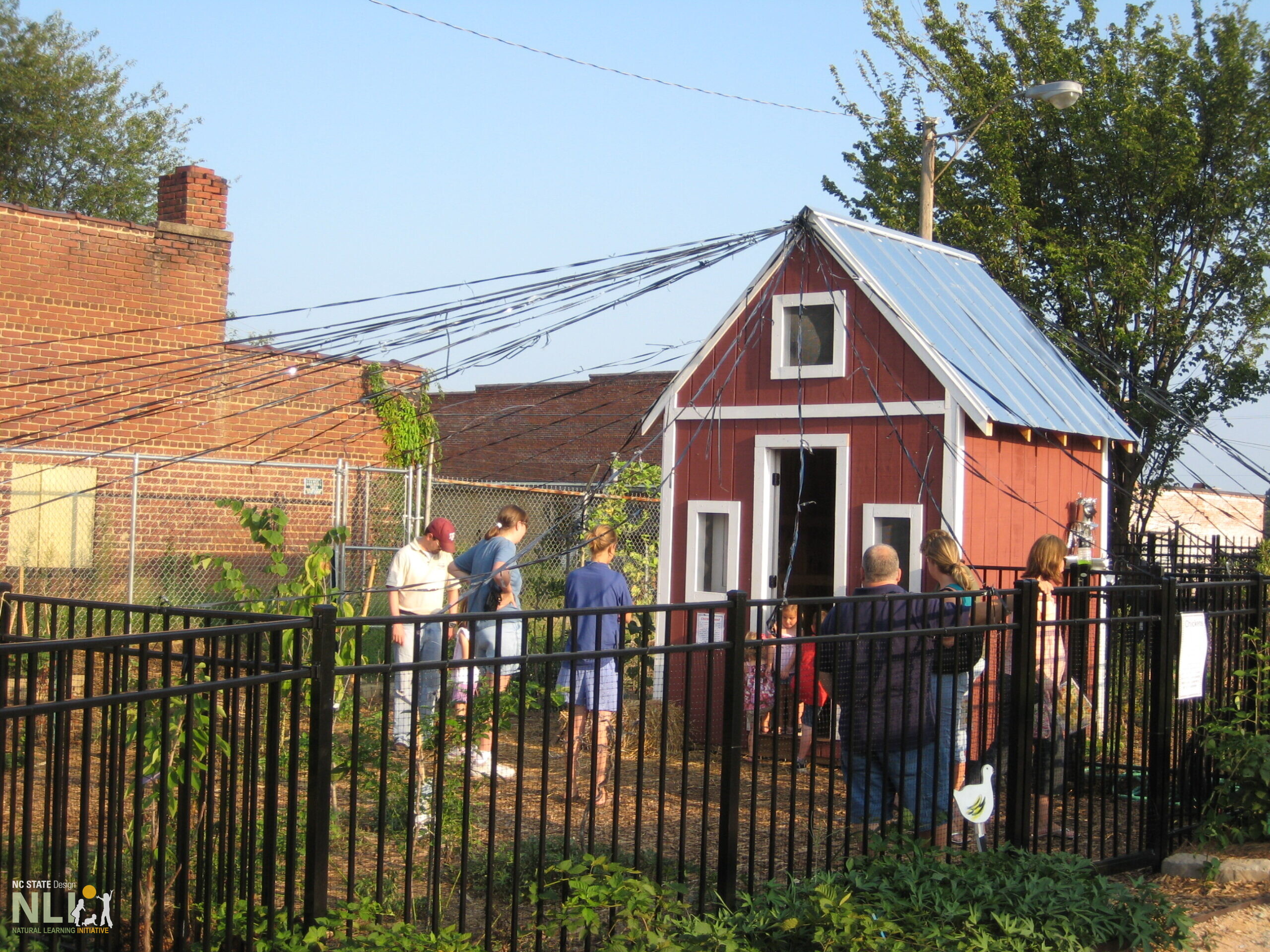
    Chicken House

    Architect-designed chicken house with walk-in chicken run

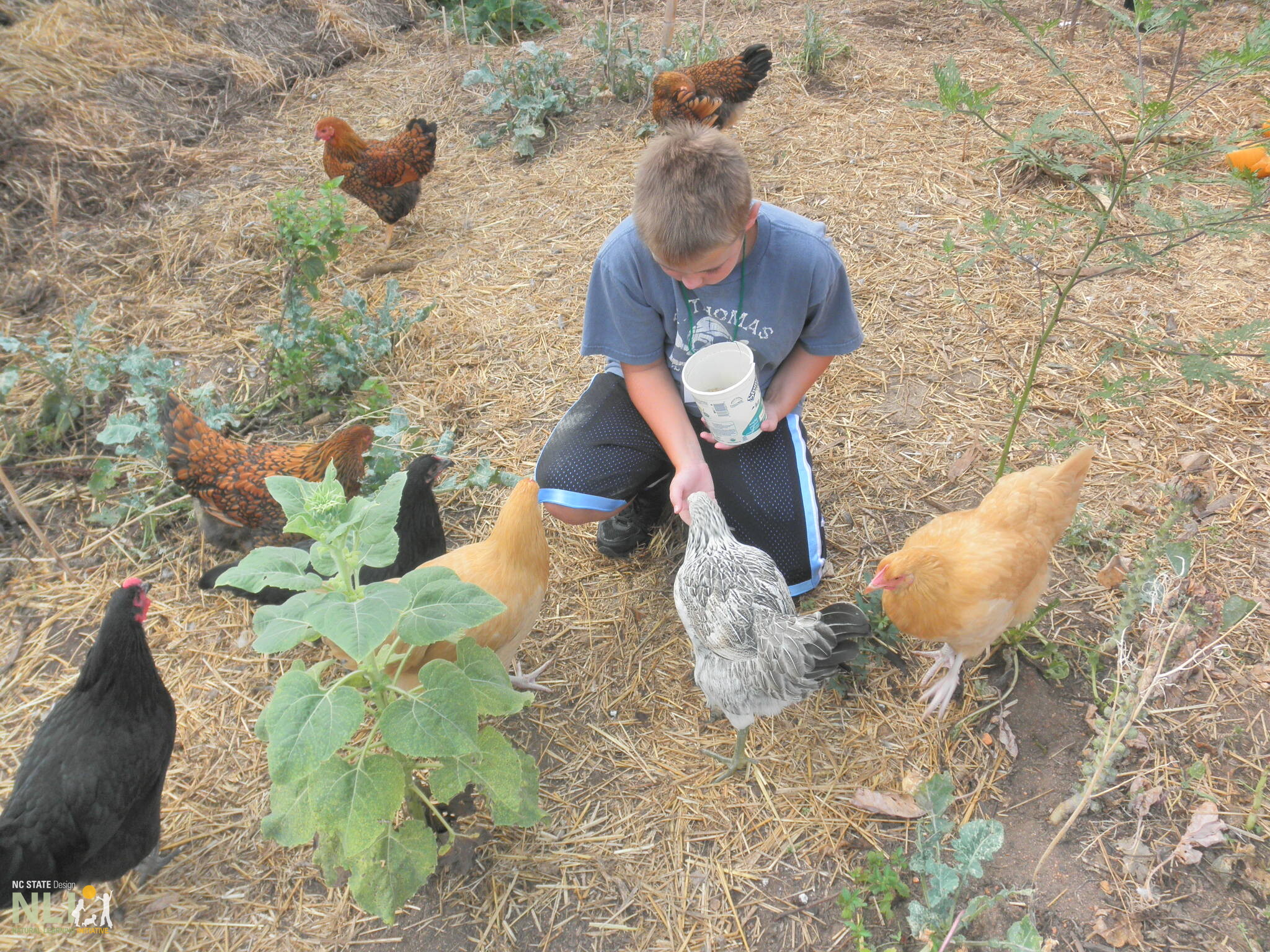
    child feeding chickens

    Popular walk-in chicken run

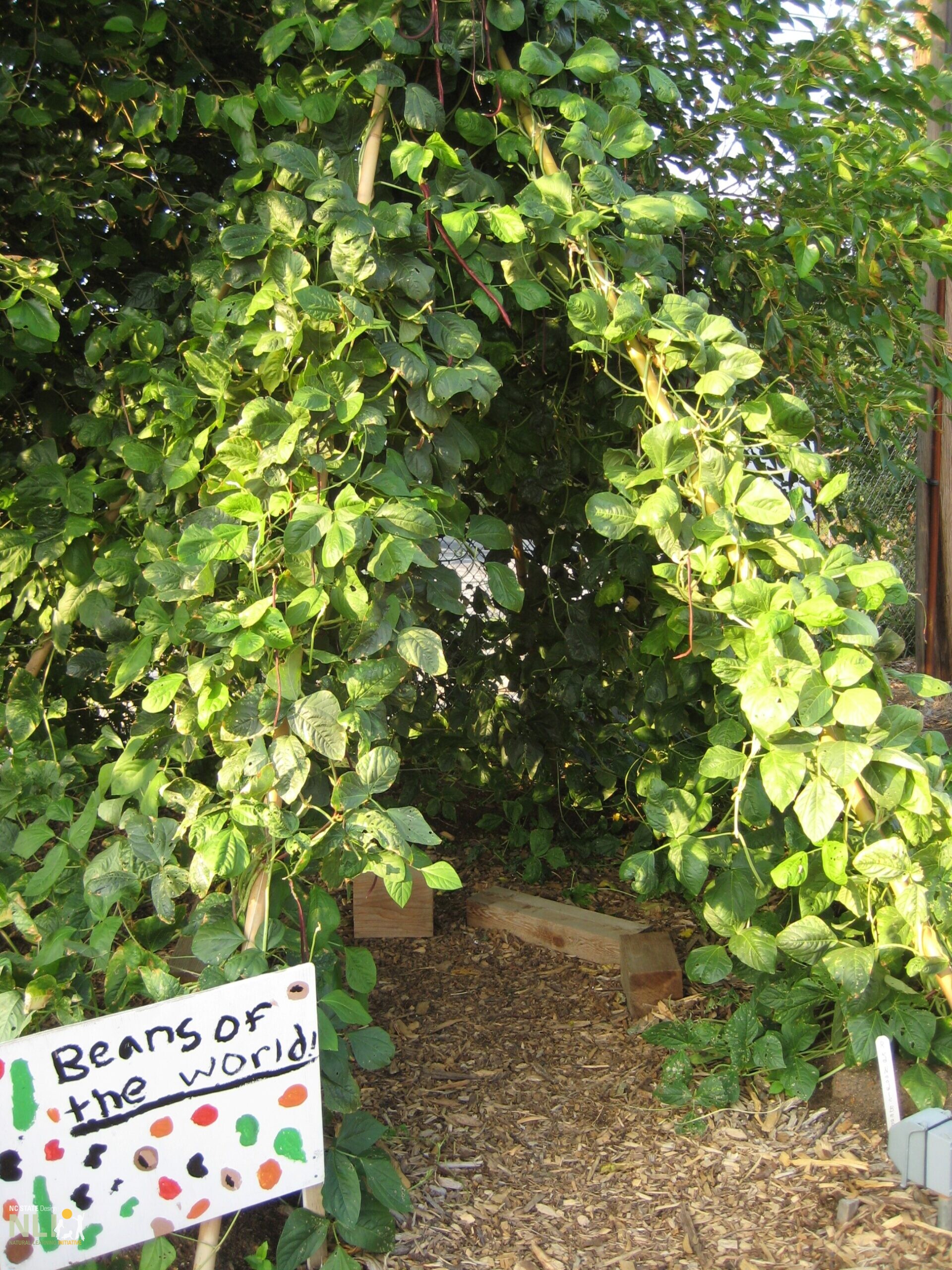
    conical structure with vines

    Hideaway under the Beans of the World

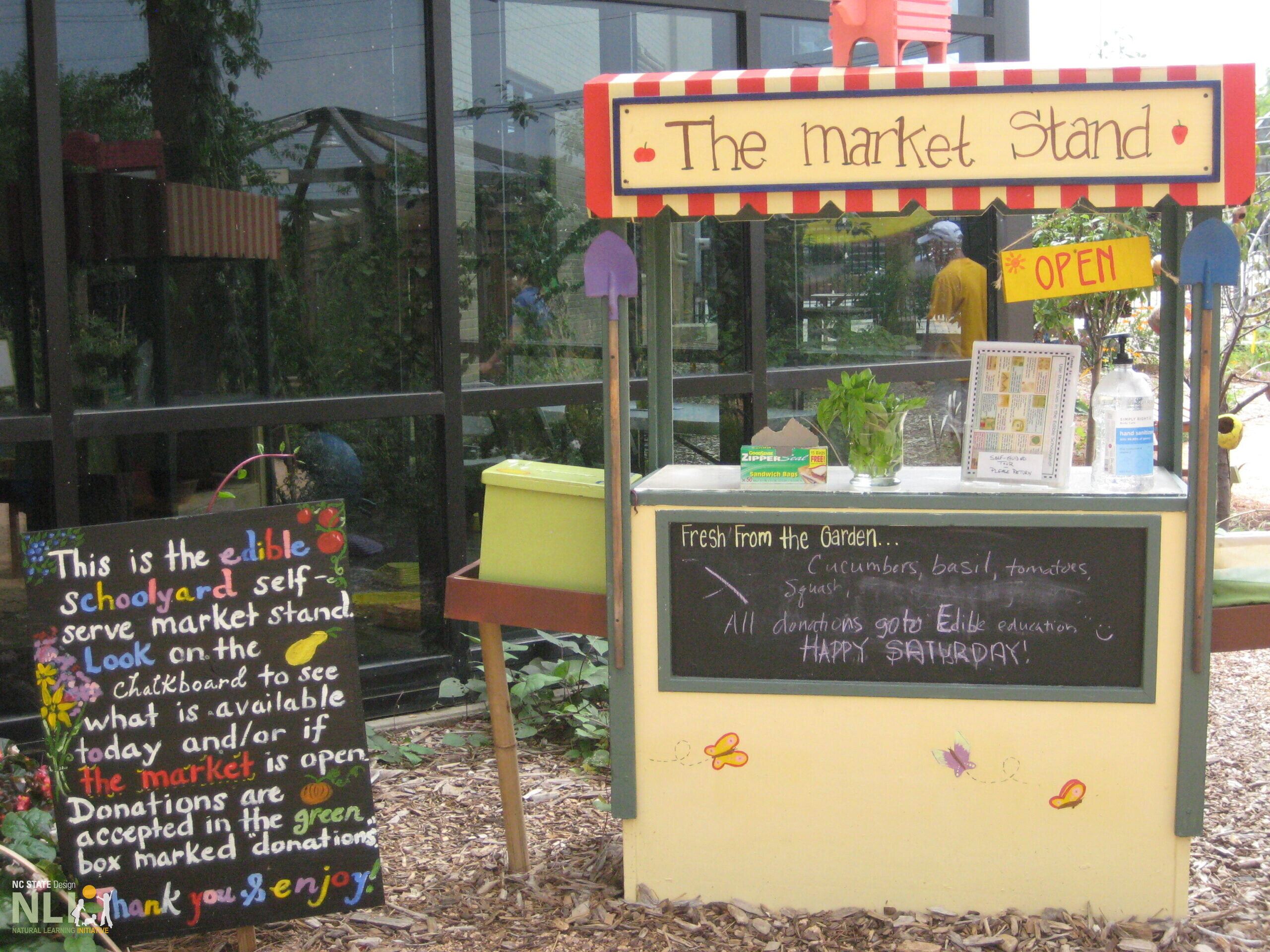
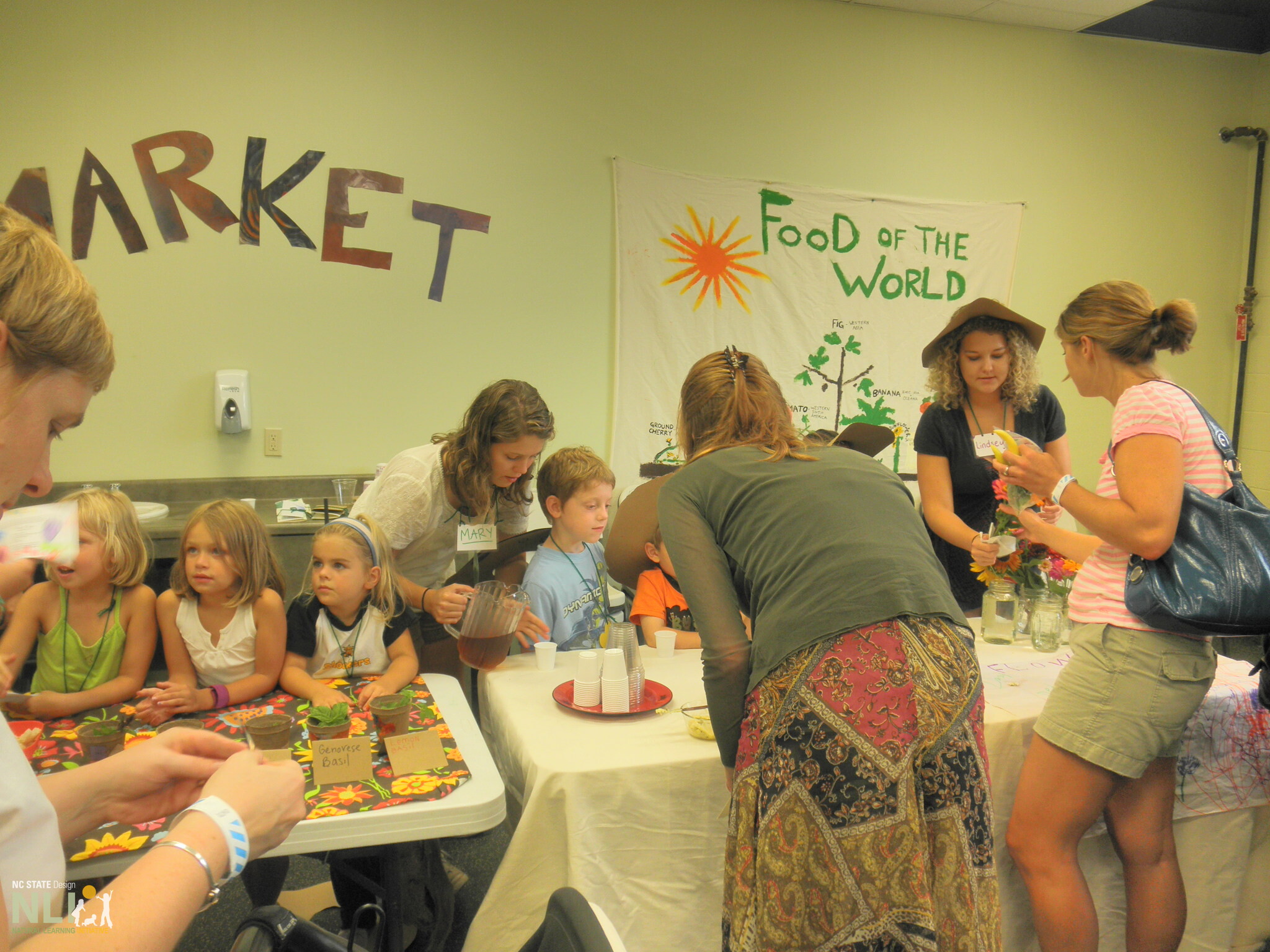
    self-serve market stand at summer camp

    Imaginative play extends the playful learning process

    children at summer camp farmers market

    Summer camp farmers market

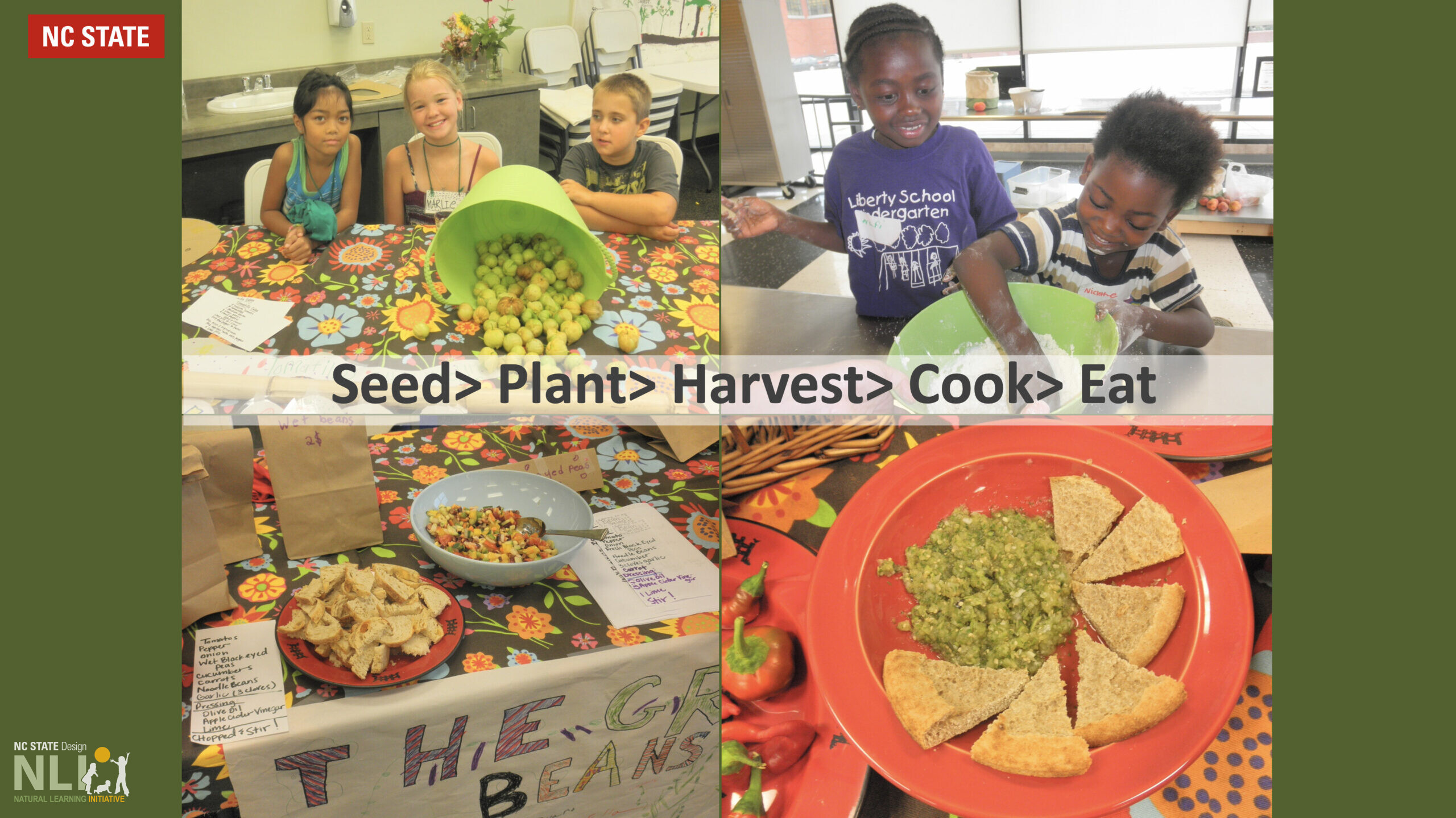
    collage of children at summer camp cooking class

    Summer camp cooking class

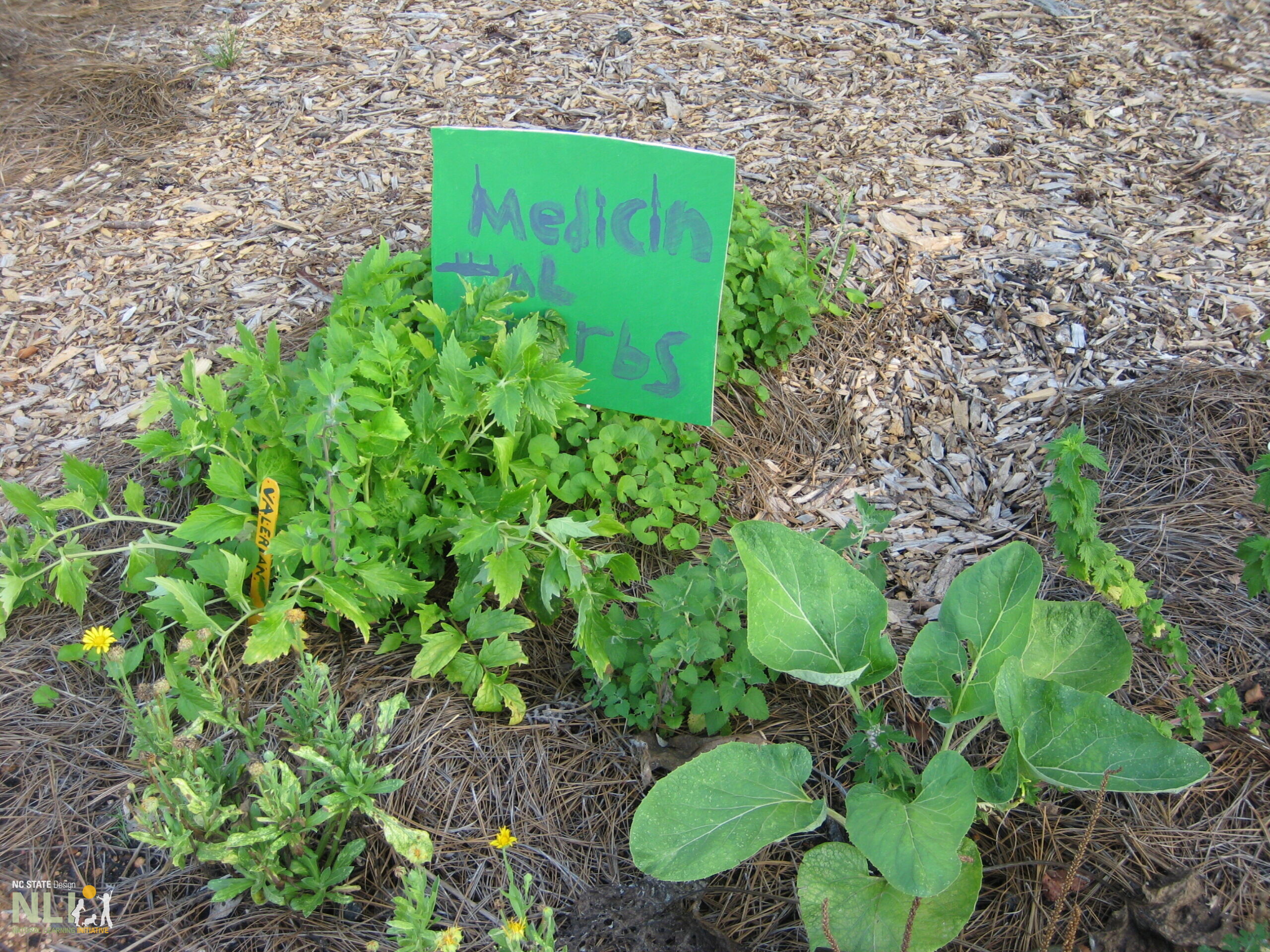
    Medicinal herbs

    Medicinal herbs

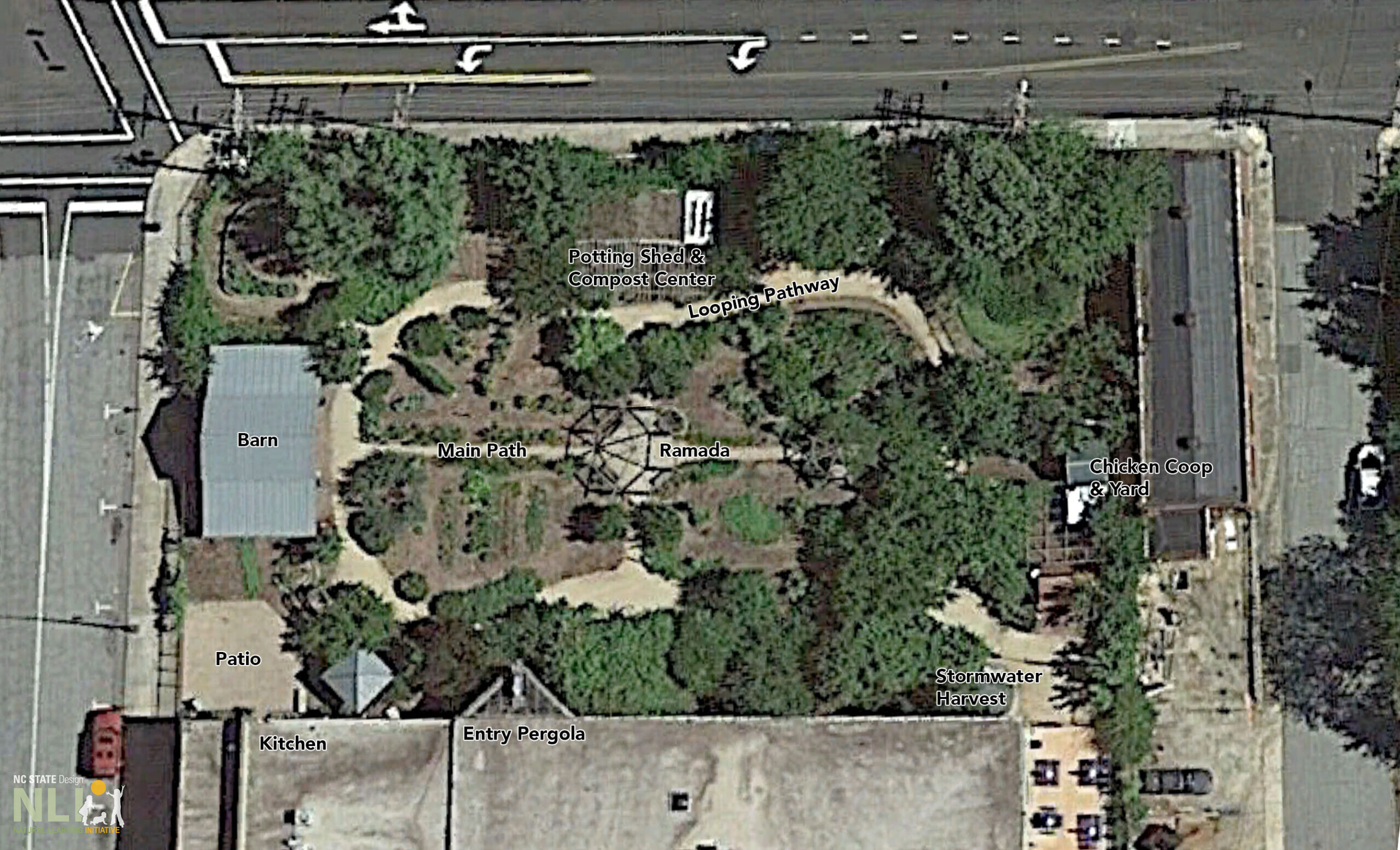
    aerial view of Greensboro Children's Museum Edible Schoolyard
  • Plant of the Month: August – Passionflower

    The Green Desk

    Plant of the Month: August – Passionflower

    Passionflower/ Maypop (Passiflora incarnata)

    • Native range: Southeastern U.S.
    • Hardiness Zone: US 5-9
    • Sun: Full sun to partial shade
    • Plant habit: Vine
    • Water requirement: Medium

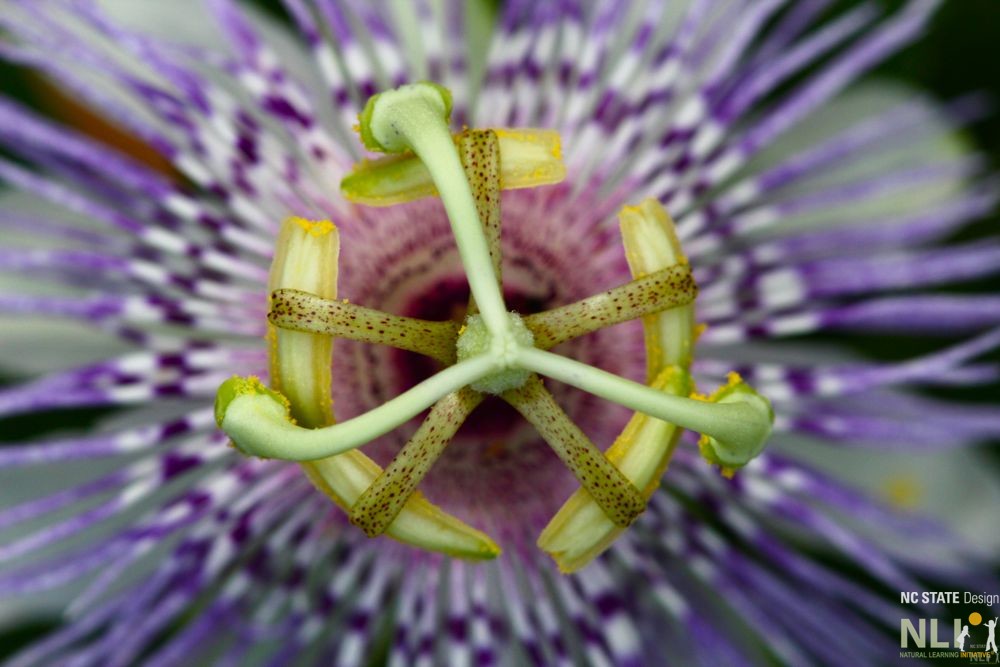
    It’s not every day you come across a plant with such wildly extraordinary flowers as this native, flowering vine. Flowering from late spring to late summer, passionflower is an exciting addition to any garden, children’s gardens in particular. This fast growing vine attracts a variety of butterflies and will quickly cover an arbor, creating shade in the hot summer months. We suggest planting this vine near a play kitchen, sand box, stage, or use it to naturalize a chain link fence.

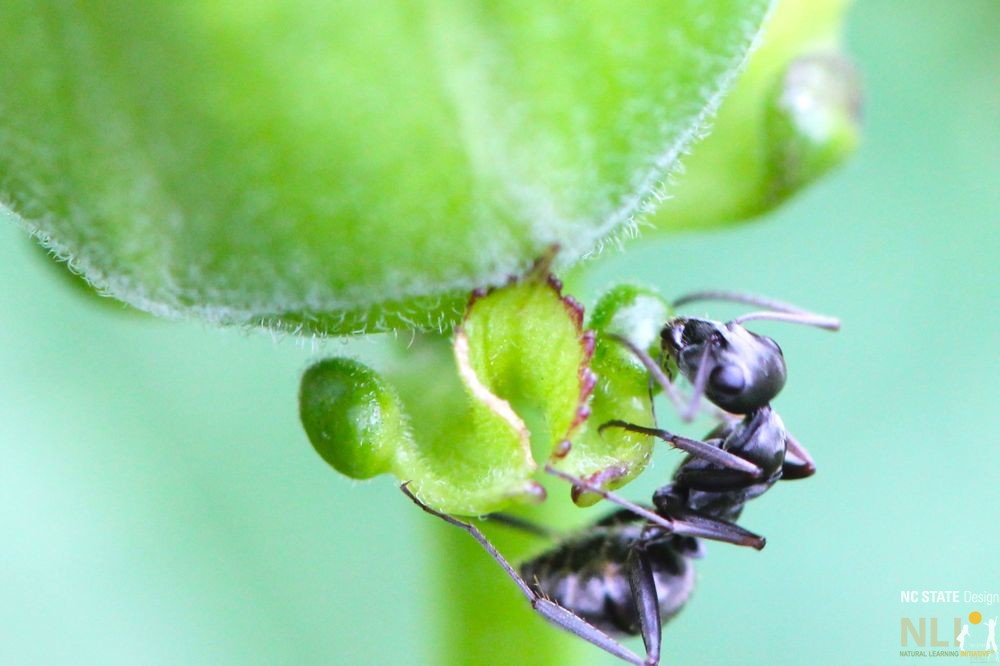
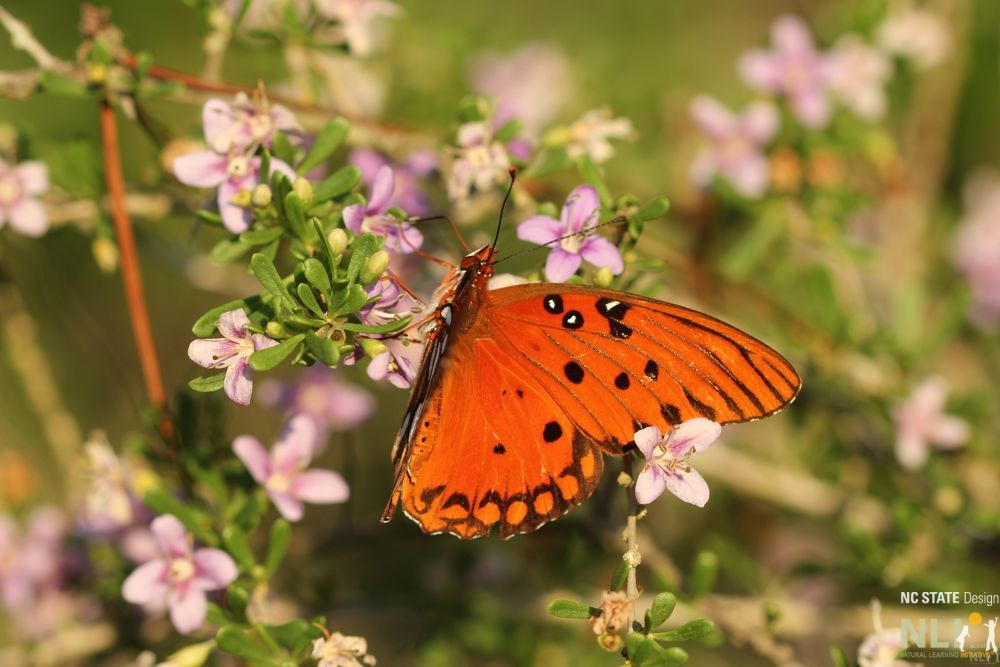
    Passionflower is a perennial vine (meaning it comes back every year) that dies back in the fall; it needs rich well-drained soil and partial shade to full sun. With winding tendrils, this vine can climb vertical structures like trellises and armatures created from chicken wire or similar materials. The flower buds open daily, revealing the incredible blooms, a fun observation for adults, children… and butterflies. Like most native plants, passionflower has a distinct relationship with particular insects making it an excellent addition to a butterfly garden. It is a host plant to the gulf fritillary, a migratory butterfly that uses the leaves for food in its larval (caterpillar) stage and the nectar of the flower in its adult (butterfly) stage. Ants also live on this plant and are fed by nectaries (a part of the plant that produces nectar) that are just below the flower bud. The ants act as guards, protecting the vine from smaller insects such as aphids that might otherwise infest and kill the plant. What a great way for kids to learn about plant and animal relationships!

    Passionflower, also known as maypop, was thought to have been named for the sound the edible fruit makes when stepped on. However, the name is actually derived from the Powhatan word for the plant, Mahcawk. American Indians all over the southeast have used this plant for food, medicine and drink. Today, herbalists use the leaves, stems, root and flowers to treat a variety of ailments.

    edible passion fruit
    close up of passionflower
    close up of passion flower
    ant on plant
    butterfly on flowering plant

    Resources

    Other plants that look great in the month of August:

    • Cup plant (Silphium)
    • Little blue stem (Schyzacherium)
    • Yarrow (Achillea)

    Additional information:

  • Installing a Rain Barrel

    The Green Desk

    Installing a Rain Barrel

    How can I harvest rainwater to use for watering plants?

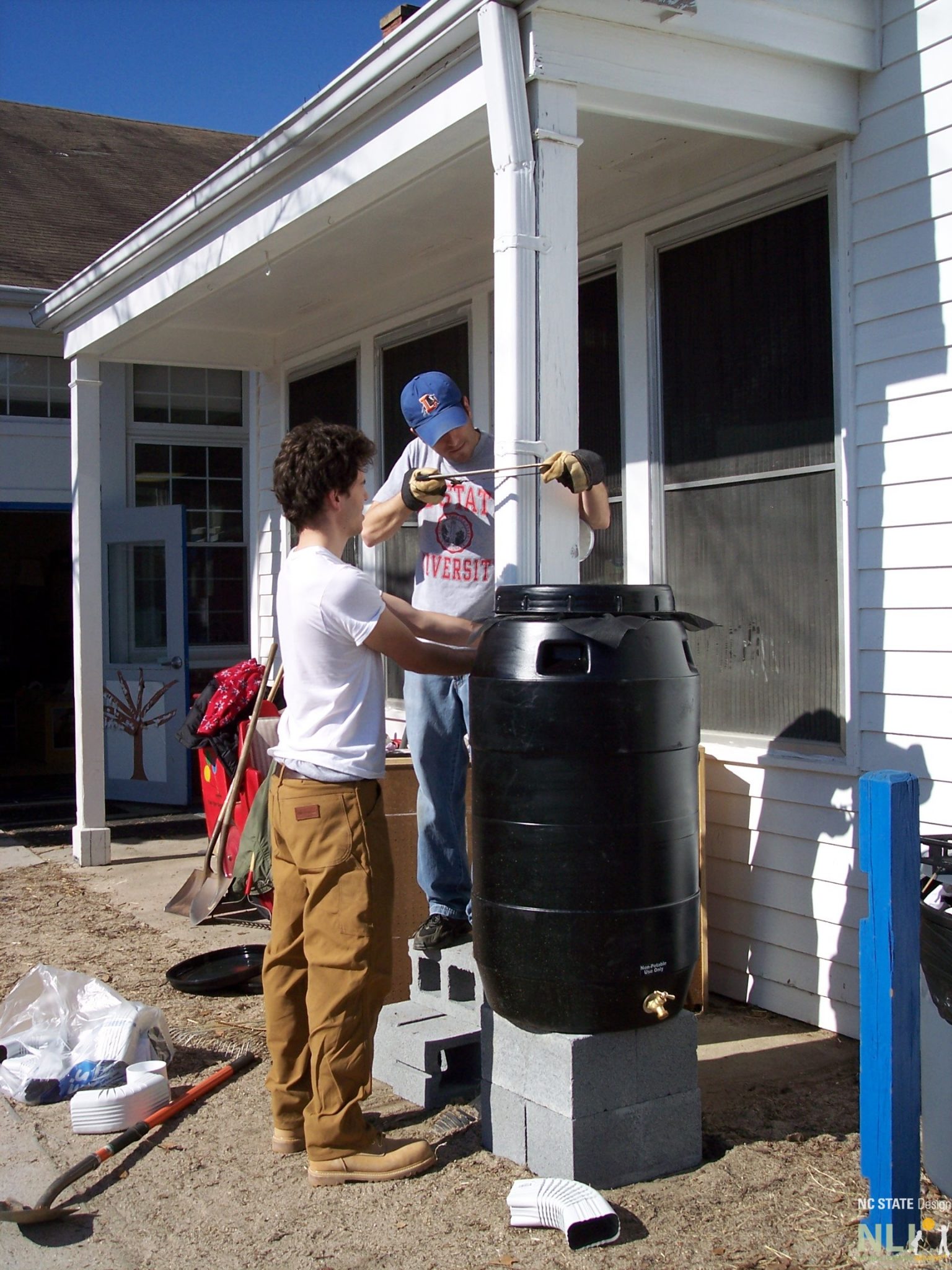
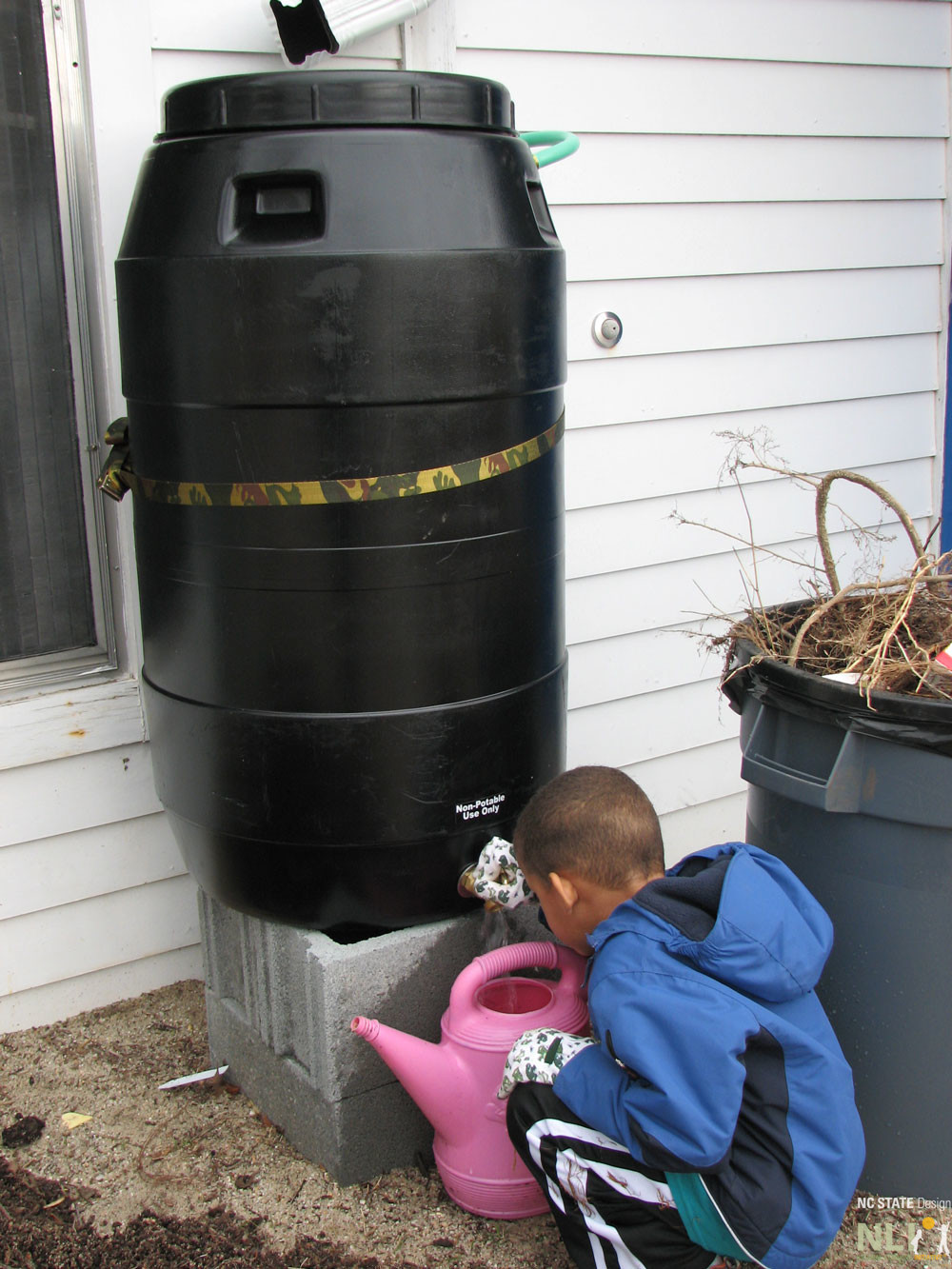
    Children enjoy watering plants with rainwater collected in rain barrels using child-sized watering cans and buckets. Watering plants with harvested rainwater saves resources and is a learning opportunity. Rain barrels are inexpensive and the tools and skills required for installation are fairly basic.

    Click here for an information sheet with step-by-step instructions for installing a rain barrel.

    installing rain barrel
    rain barrel pottery
    child collecting water from rain barrel
  • First Environments Early Learning Center

    POD 3

    First Environments Early Learning Center

    Capacity

    Address:  109 T.W. Alexander Drive, EPA Campus MD-105 Durham, NC 27711

    Phone Number:  (919) 541-1361

    County:  Durham

    Permit Type:Five Star Center License

    Website:  Visit Website

    Before Renovation

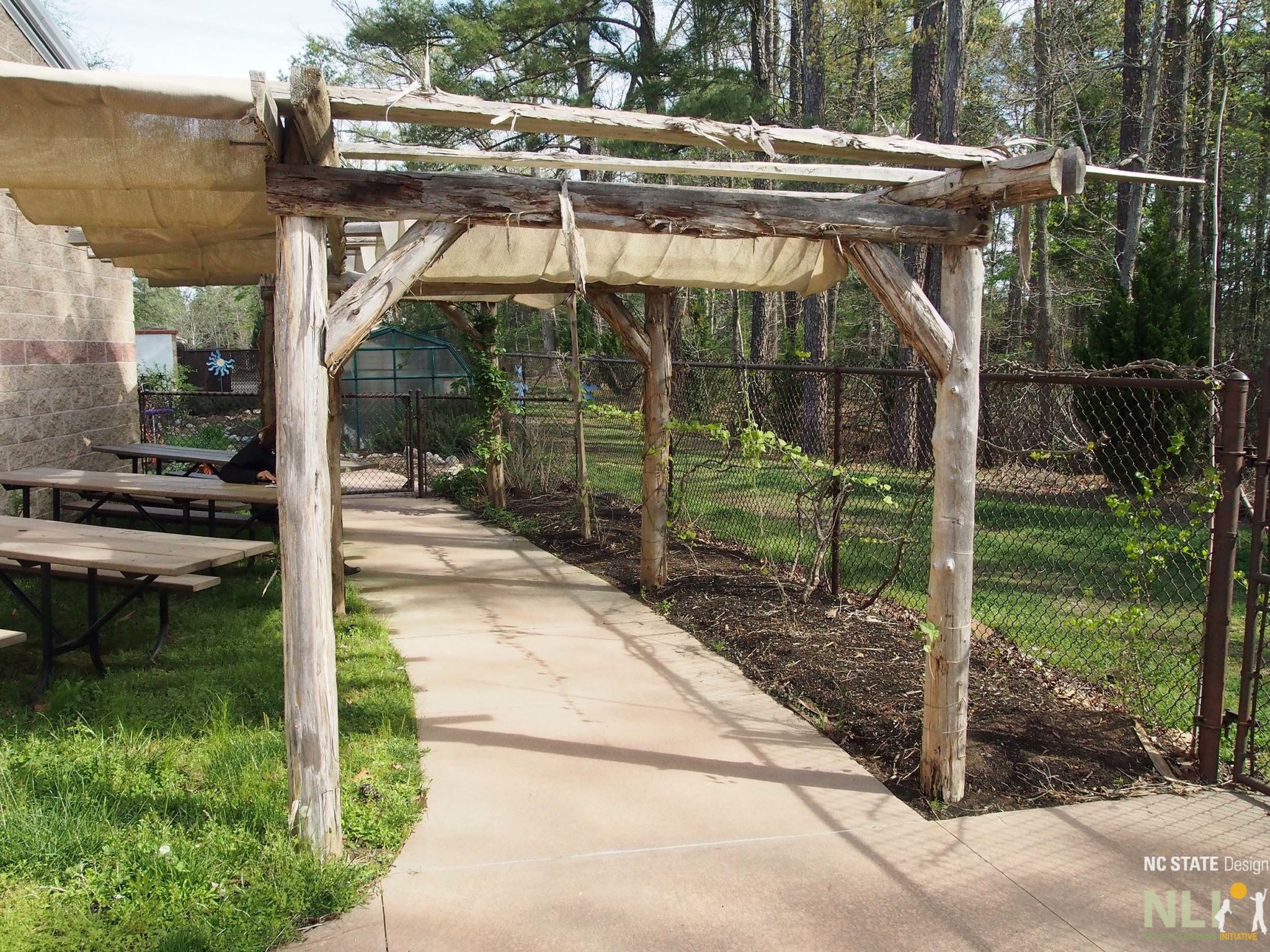
    before renovation showing existing ole elements like raised garden beds and primary pathway
    OLYMPUS DIGITAL CAMERA
    before renovation showing existing arbor
    OLYMPUS DIGITAL CAMERA

    After Renovation

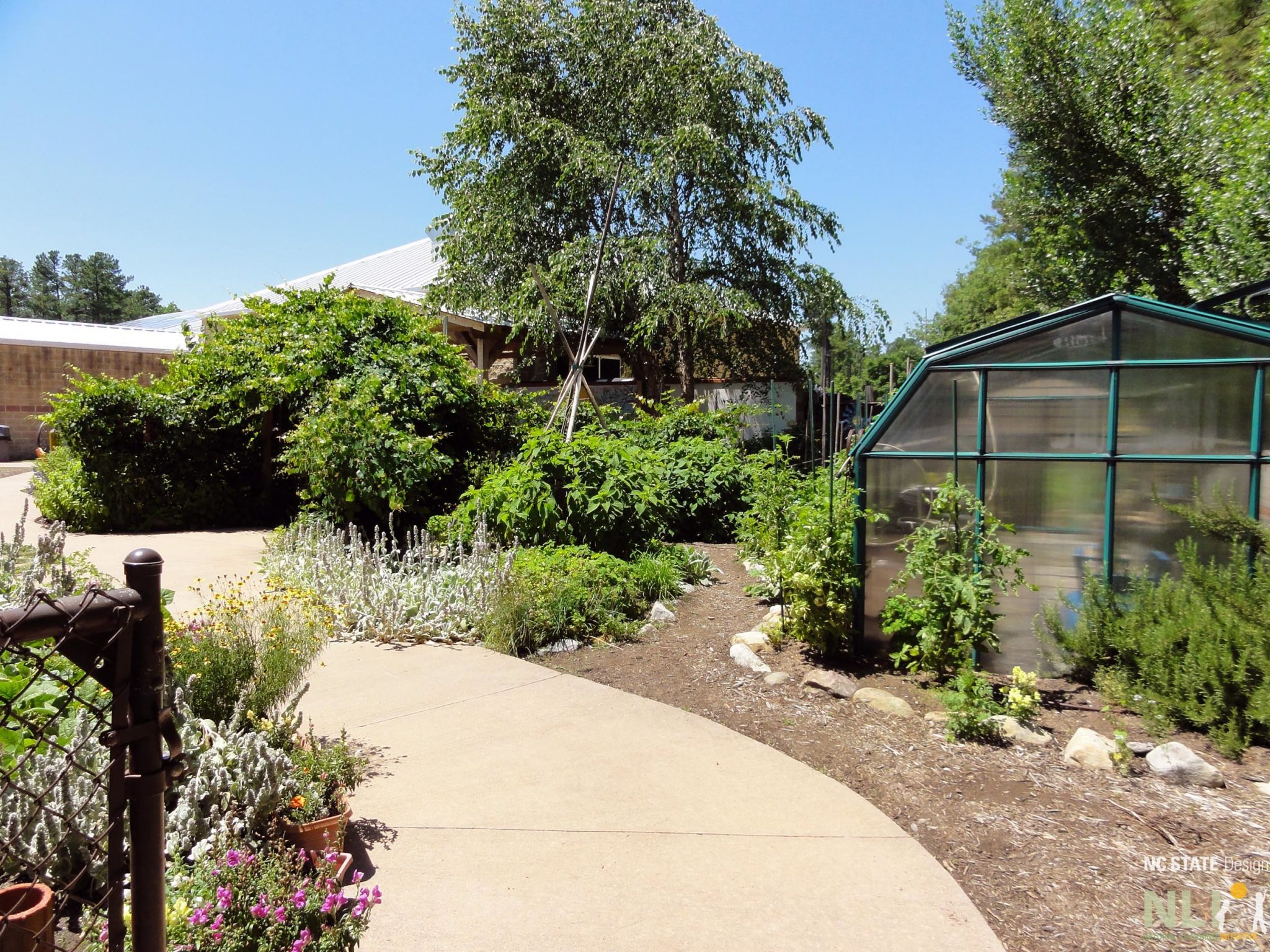
    after renovation showing plant growth of the added OLE elements
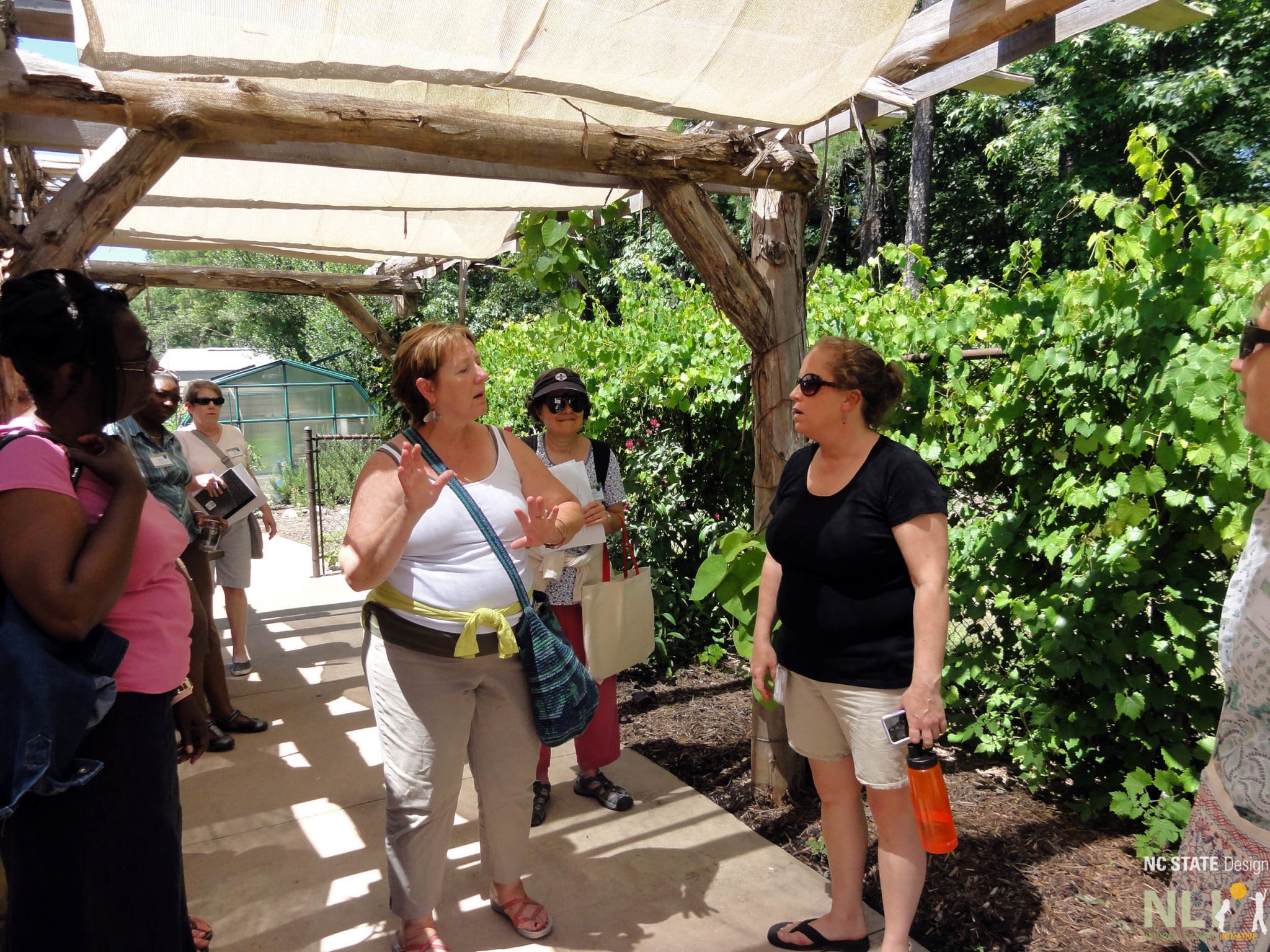
    after renovation people taking a tour of the site

    Outdoor Learning Environment

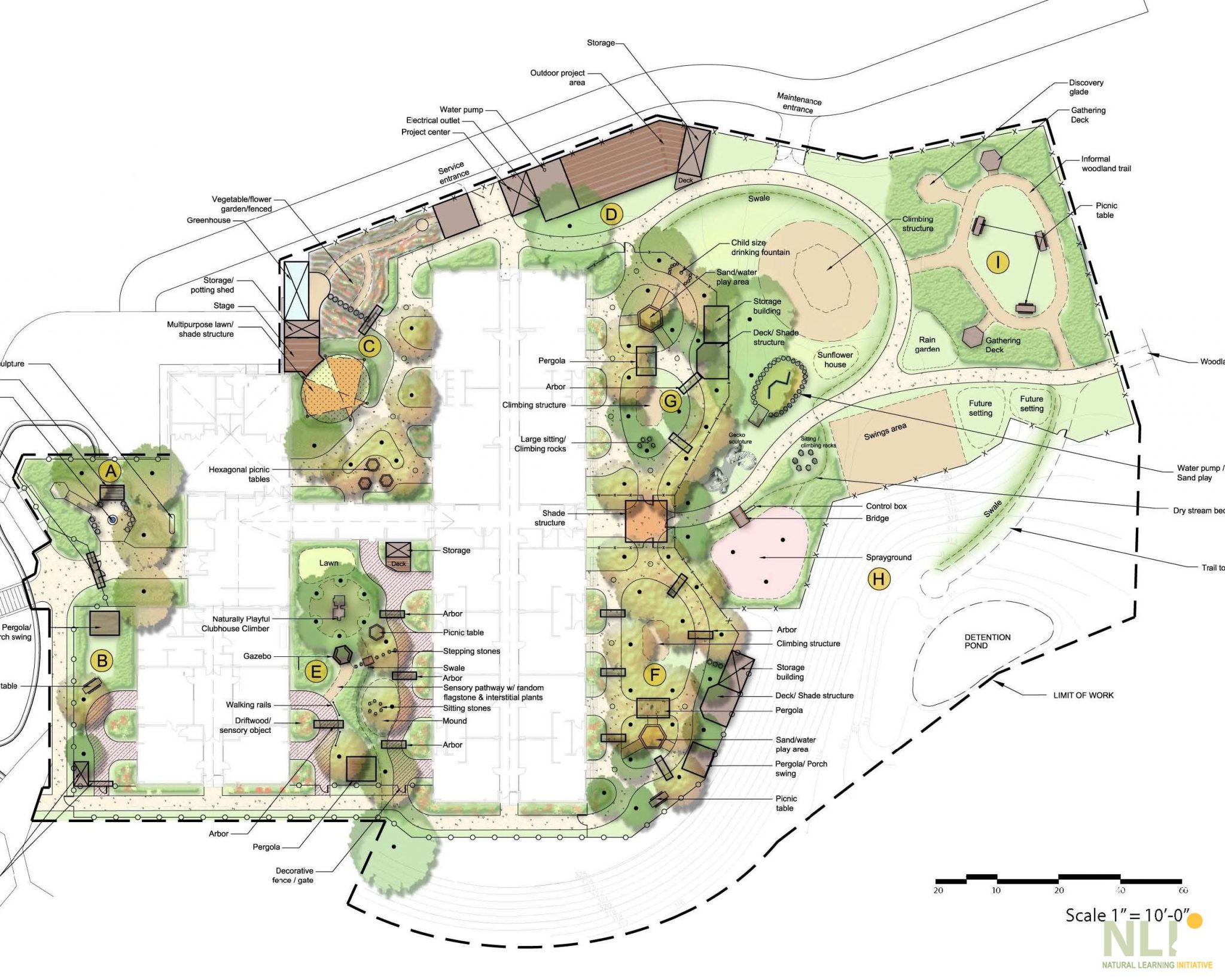
    First Environments Early Learning Center design plan

    Local Partnership for Children

    Partnership Name:Durham’s Partnership for Children

    Partnership Address:  Jim & Carolyn Hunt Child Care Resource Center 1201 S. Briggs Ave., Suite 210 Durham, NC 27703

    Partnership Phone:(919) 403-6960

    Partnership Website:  Visit Website

    durham's partnership for children logo
  • North Carolina Department of Public Instruction (DPI) OLE Initiative

    Project

    North Carolina Department of Public Instruction (DPI) OLE Initiative

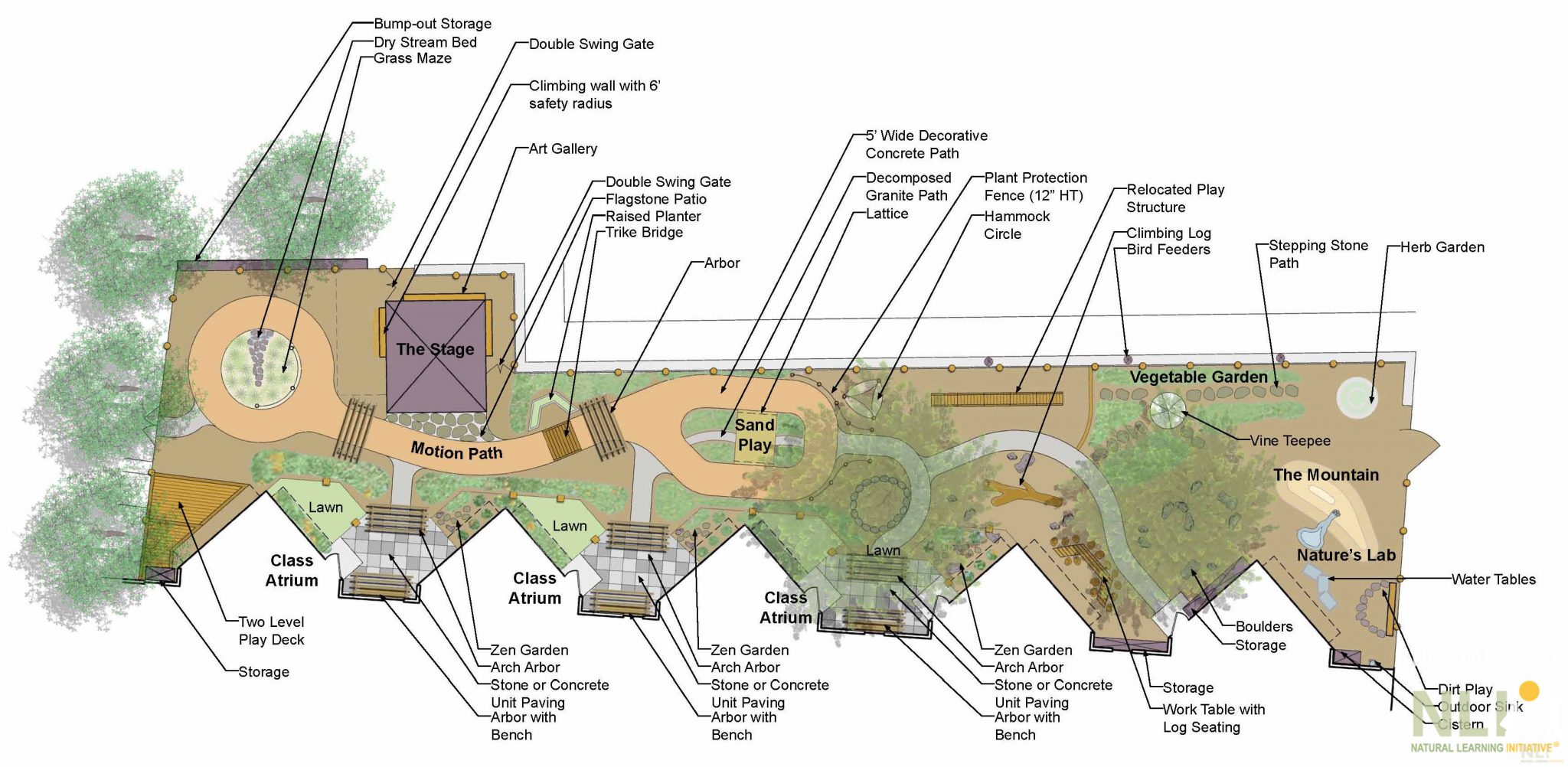
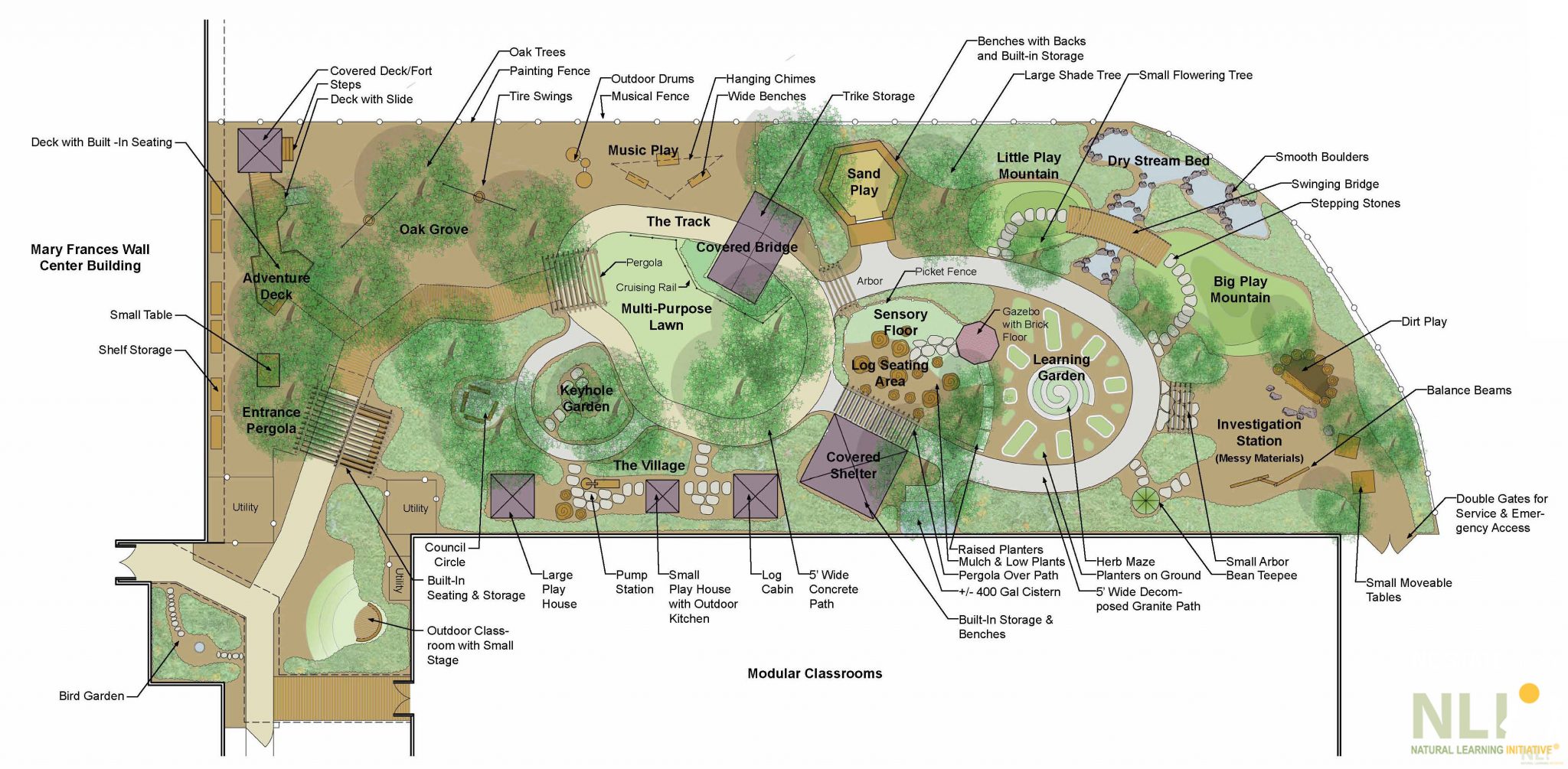
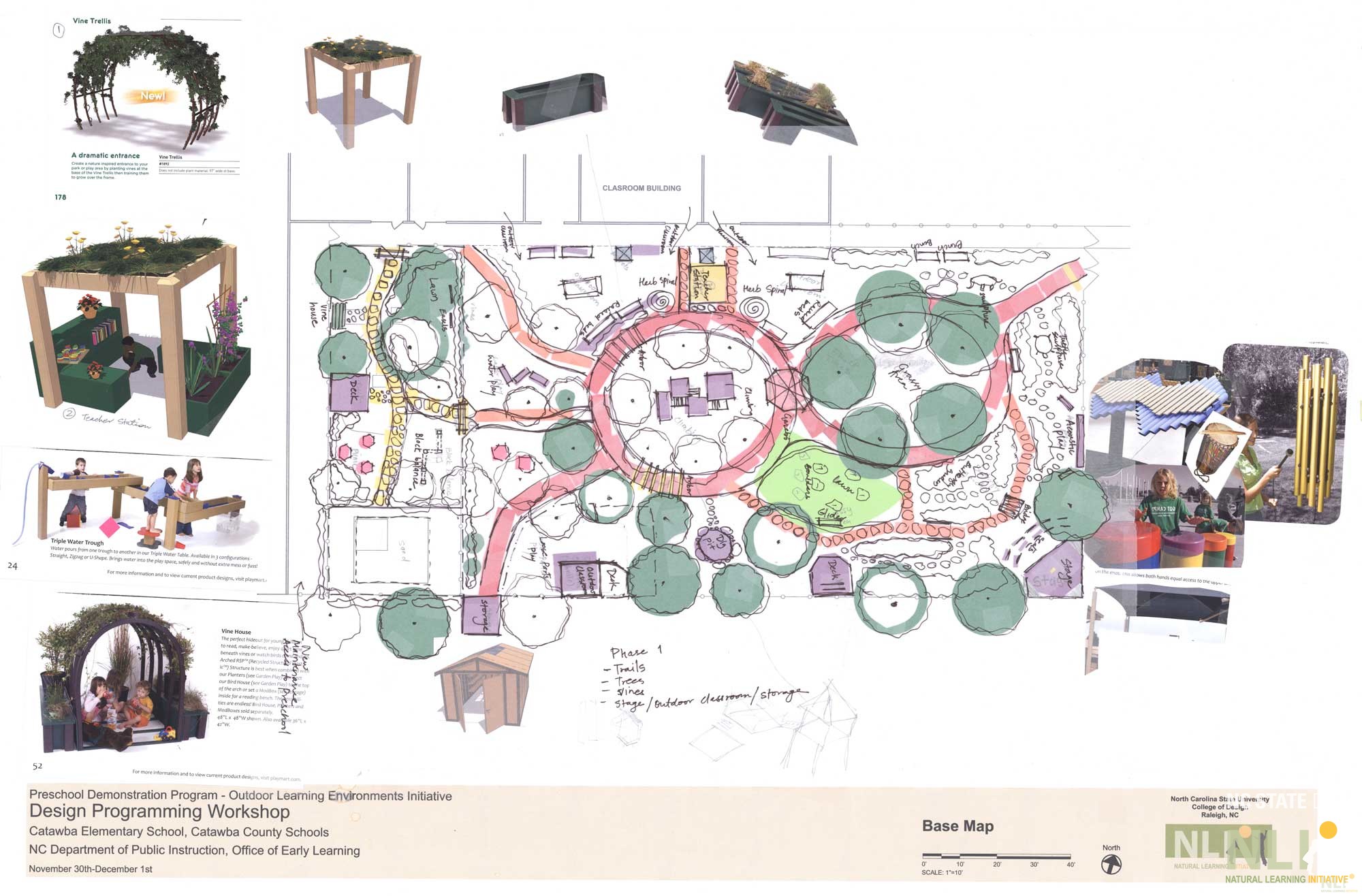
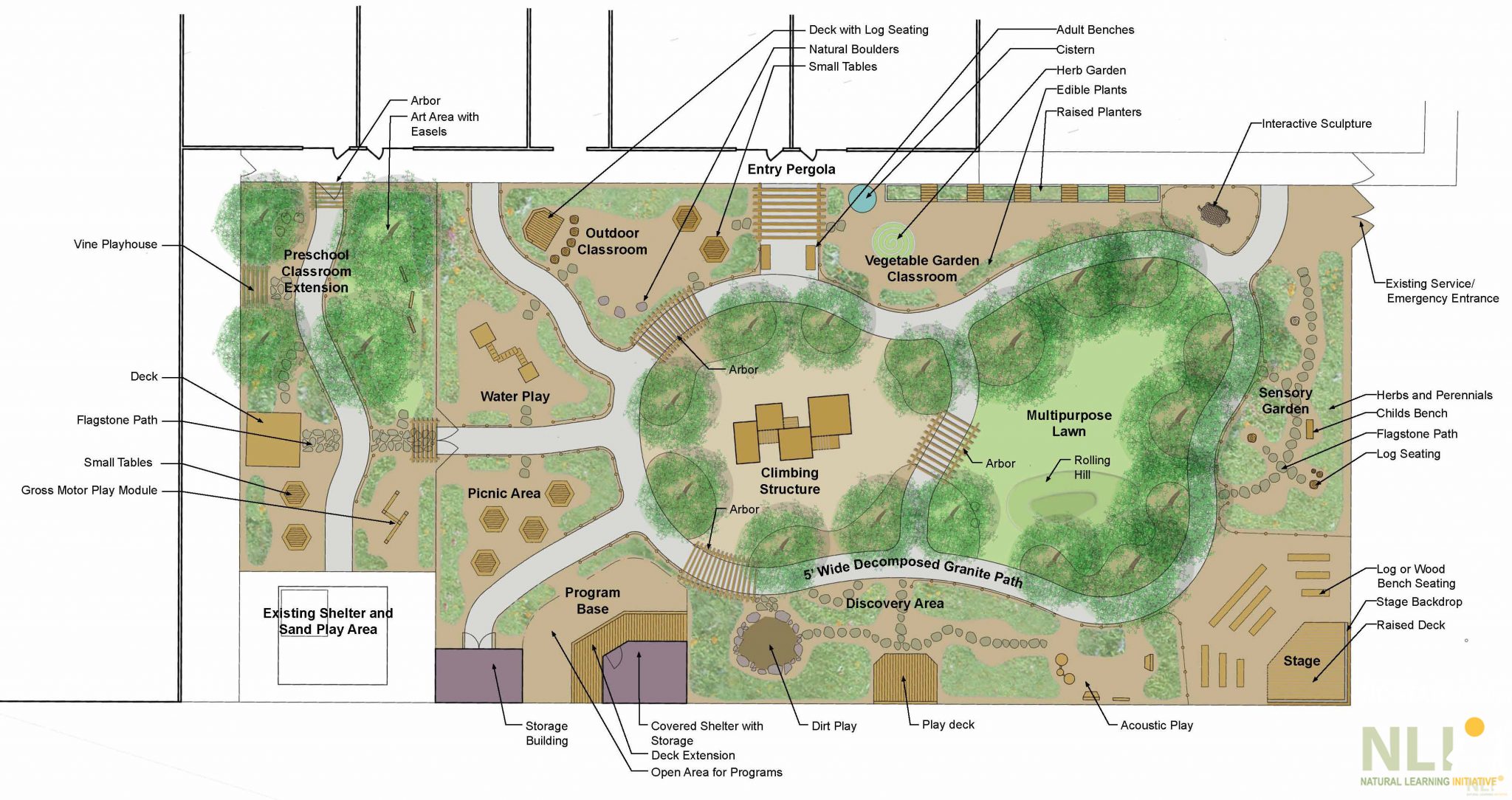
    The Natural Learning Initiative (NLI) is partnering with the North Carolina Department of Public Instruction (DPI), Office of Early Learning and the Exceptional Children Division in the Outdoor Learning Environments Initiative for Preschool Demonstration Site Program. The purpose of this initiative is to provide accessible and high quality outdoor learning environments in demonstration preschool classrooms and to prepare teachers to model appropriate use and best teaching practices in the outdoor environment.

    Additional health related benefits from the initiative:

    • Increase children’s physical activity and healthy eating.
    • Protect children from excessive sun exposure. Outdoor behavior settings that are isolated and lacking vegetation can potentially expose children to potentially harmful sun radiation that over time may cause skin cancer.
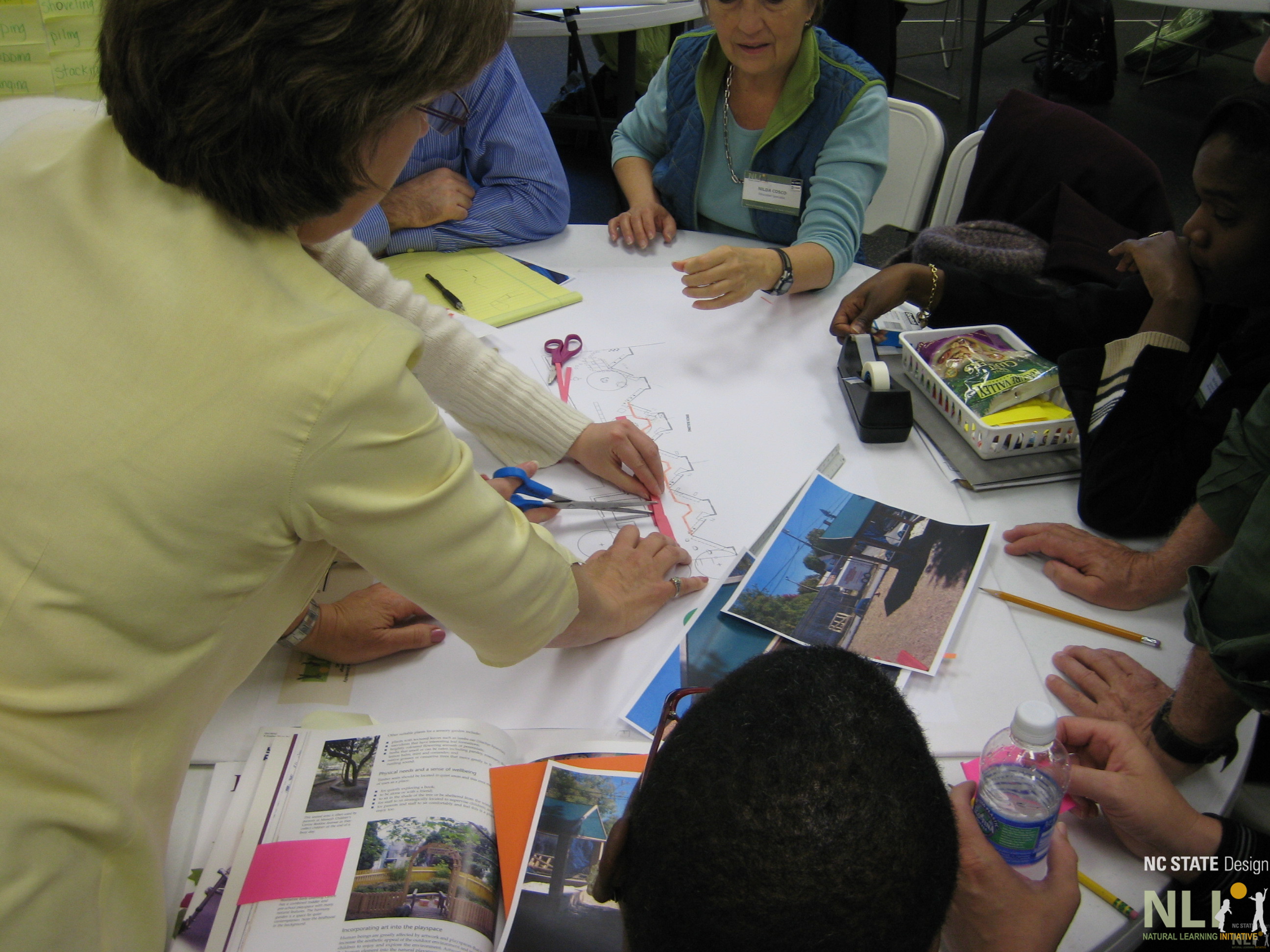
    team creating drawn plans
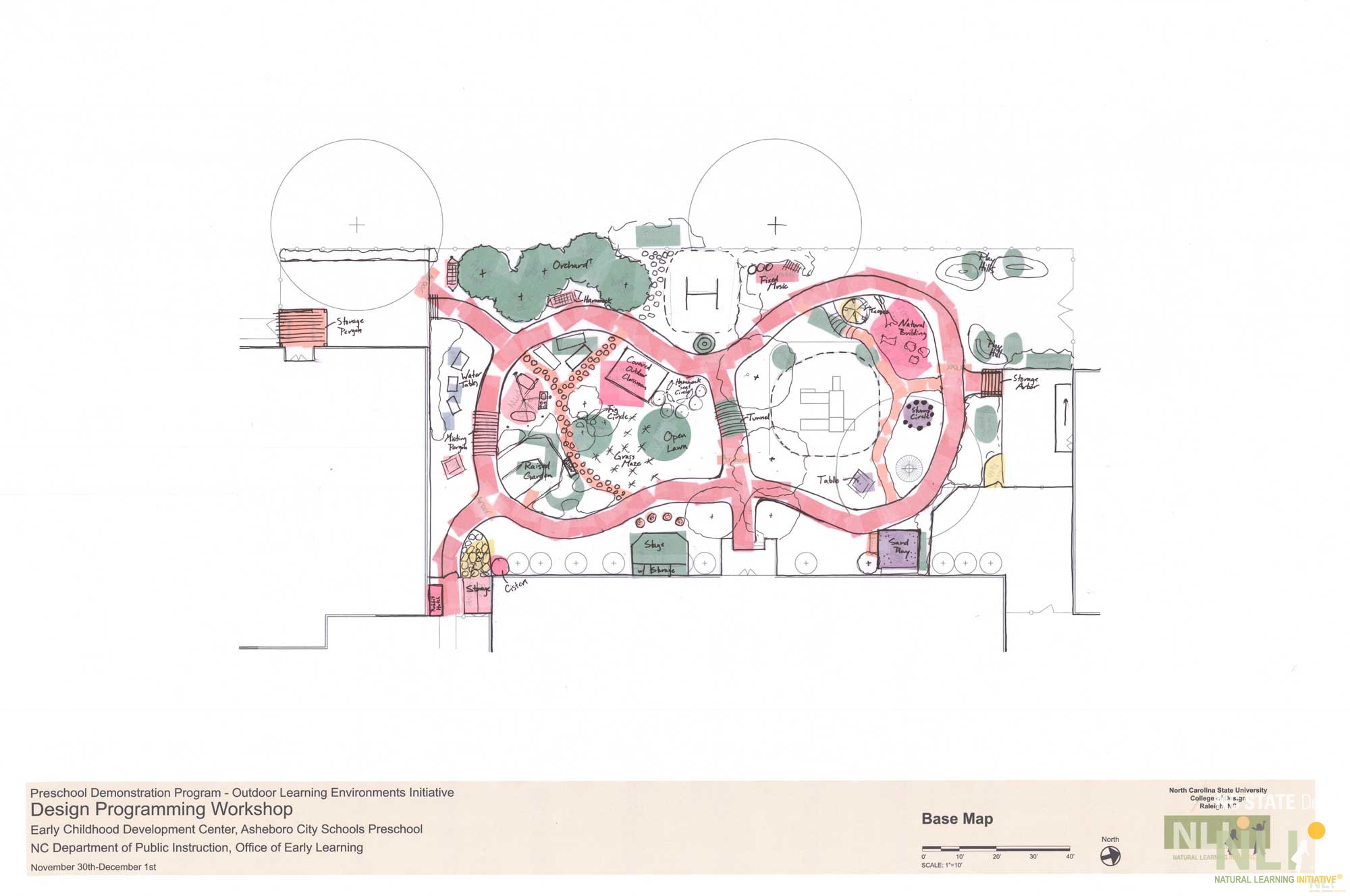
    concept drawing
    Early Childhood Development Center, Asheboro City Schools: Concept
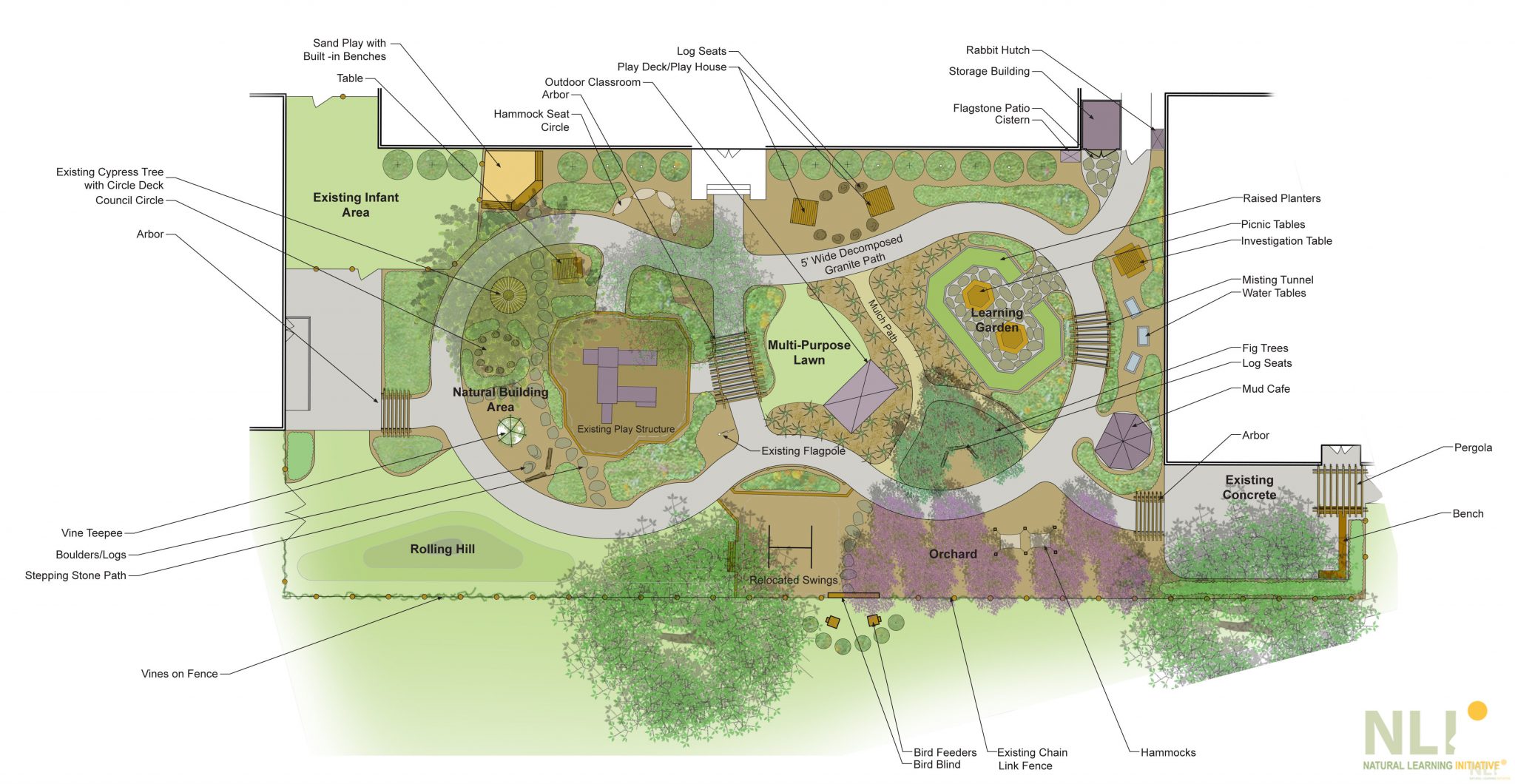
    schematic drawing
    Early Childhood Development Center, Asheboro City Schools: Schematic
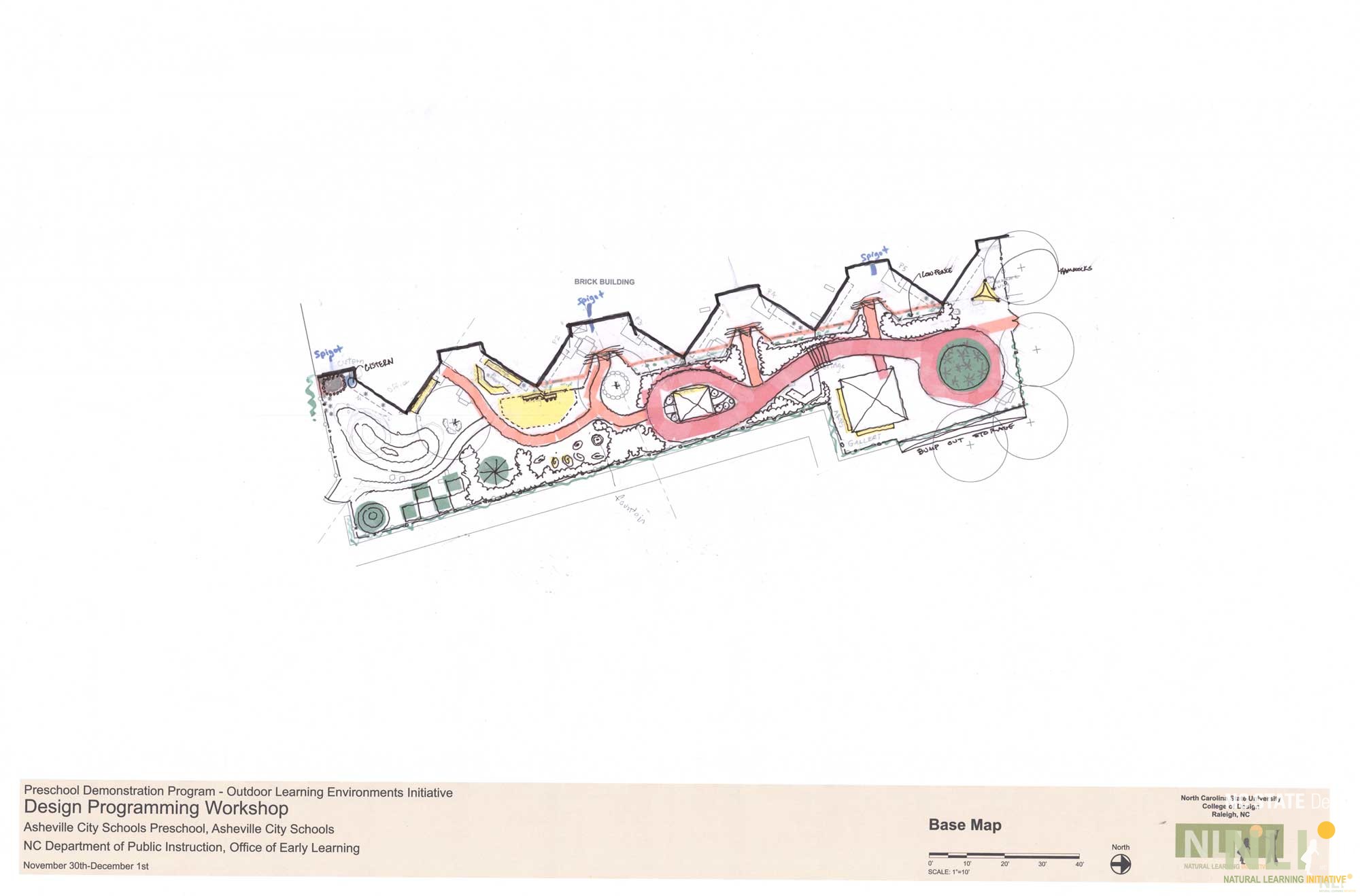
    concept drawing
    Asheville City Schools Preschool, Buncombe County Schools: Concept
    schematic drawing
    Asheville City Schools Preschool, Buncombe County Schools: Schematic
    concept drawing
    Mary Frances Wall Center, Cabarrus County Schools: Concept
    schematic drawing
    Mary Frances Wall Center, Cabarrus County Schools: Schematic
    concept drawing with 3d renders
    Catawba Elementary School, Catawba County Schools: Concept
    schematic drawing
    Catawba Elementary School, Catawba County Schools: Schematic
  • First Baptist Kindergarten Outdoor Environment

    Project

    First Baptist Kindergarten Outdoor Environment

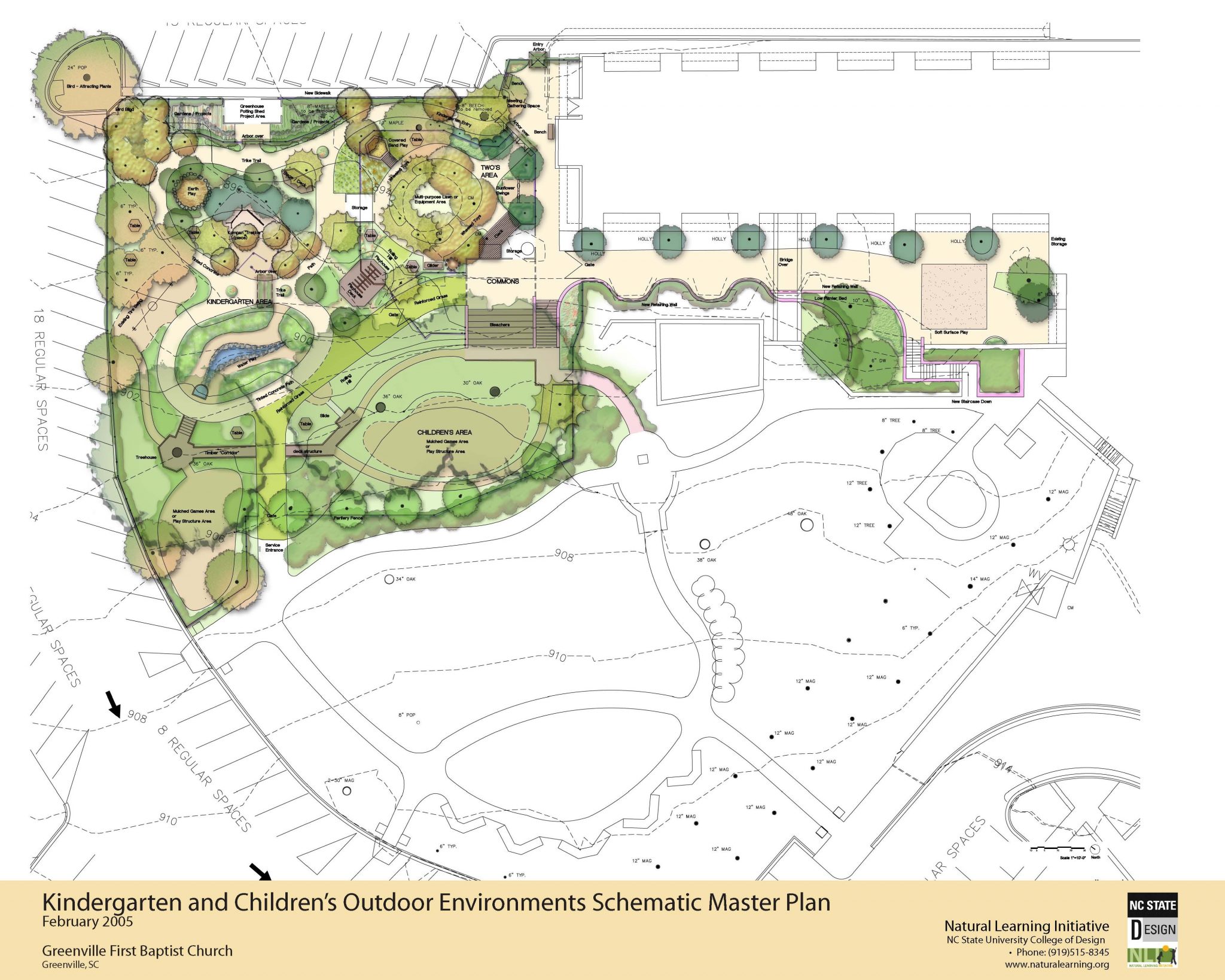
    The First Baptist Kindergarten is accredited by the National Association for the Education of Young Children (NAEYC) and licensed by the State of South Carolina. In 1989 the teaching staff began to study the Reggio Emilia Approach, an educational philosophy which originated in Reggio Emilia, Italy. Integration of our interpretation of this philosophy guides the learning process. Children are perceived as competent thinkers who may investigate possibilities with expertise. The classroom environment is established as a laboratory setting created to encourage each child’s creative exploration.

    NLI worked with the church building committee to develop a schematic design for the Kindergarten and Infant/Toddler outdoor play and learning environments.

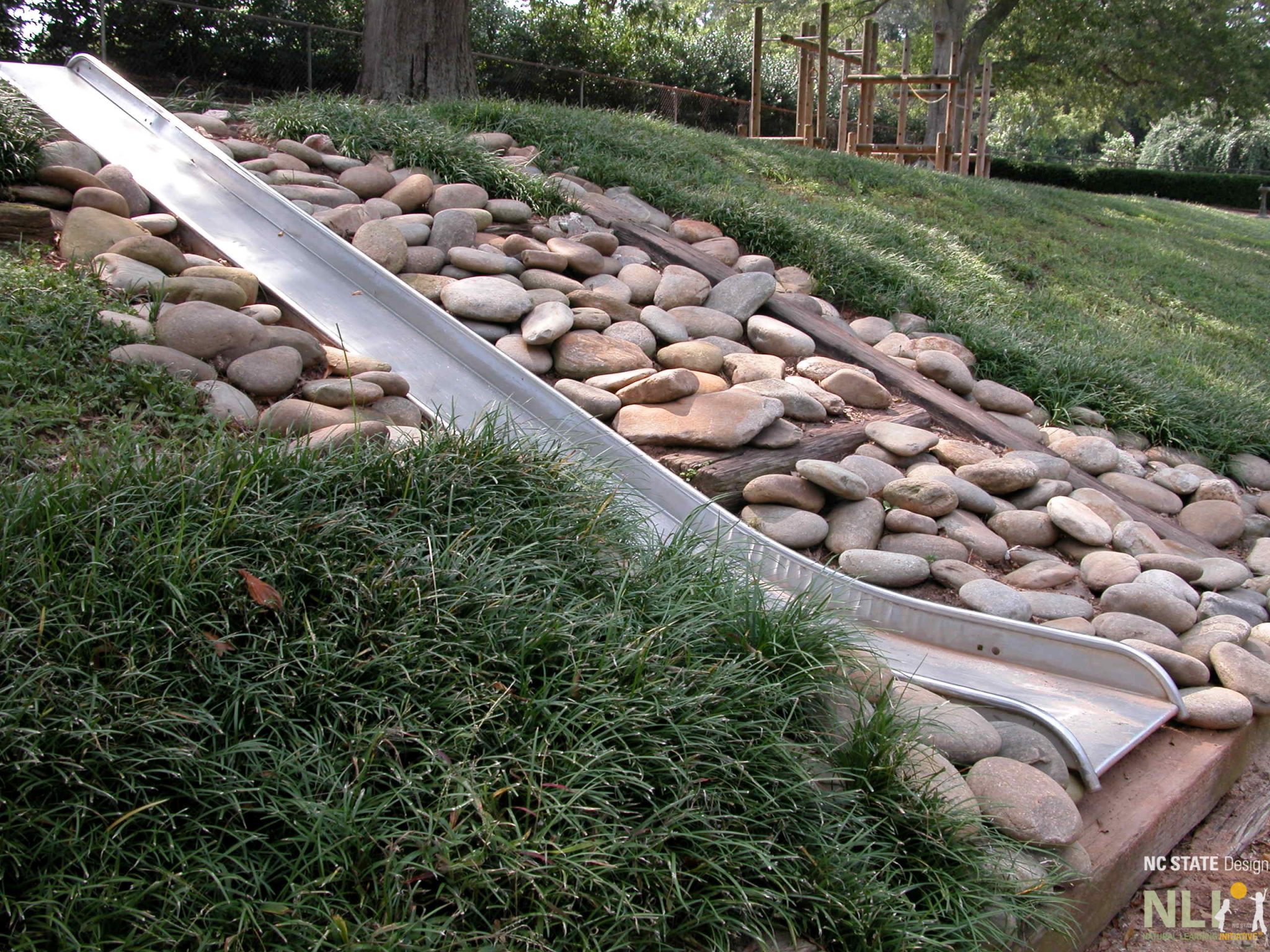
    in ground slide
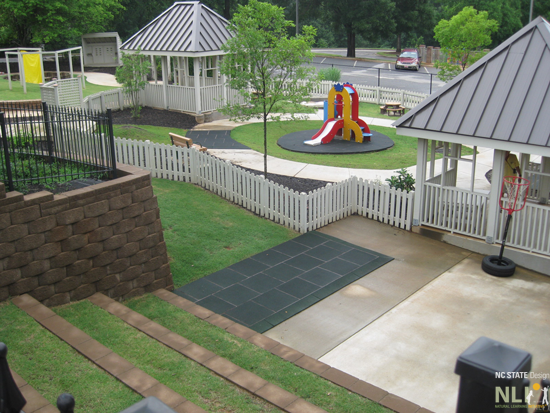
    fenced off play area
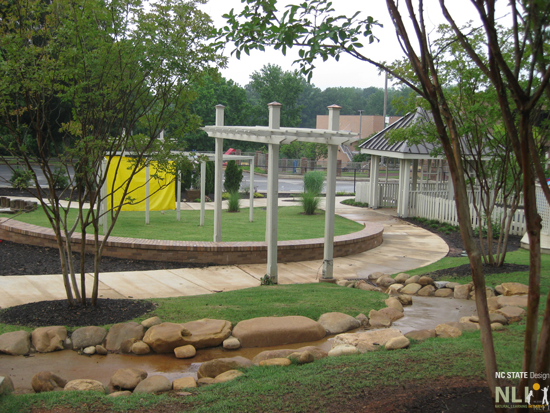
    primary pathway with creek bed
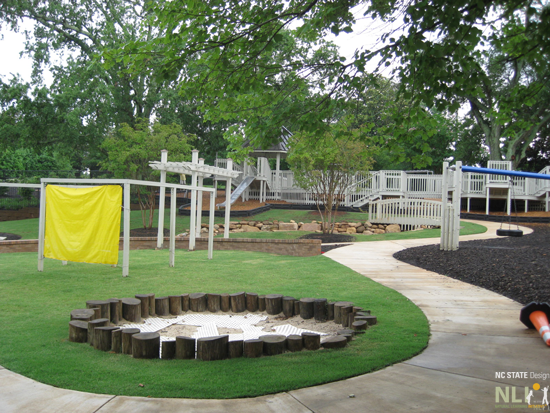
    primary pathway with sand play area
    looping pathway with manufactured play equipment
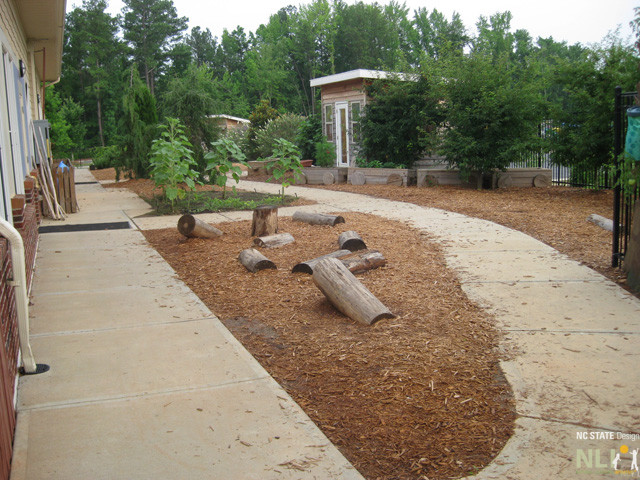
    primary pathway
    pathway with wooden border
    shrub border
    First Baptist Kindergarten Outdoor Environment design plan
  • Field of Dreams

    Project

    Field of Dreams

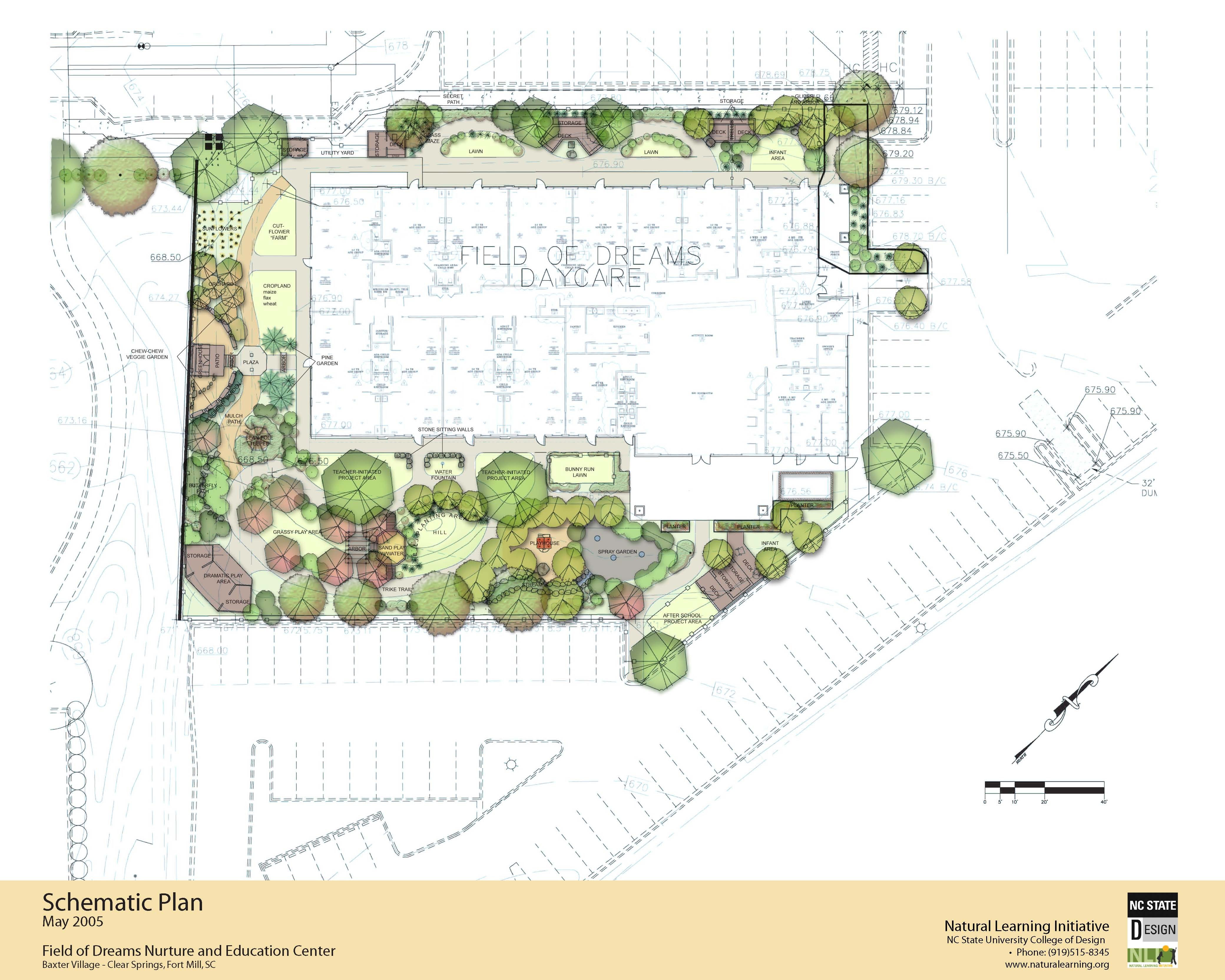
    The Field of Dreams Nurture and Education Center is located in the center of Baxter Village, a “new urbanism” mixed use development near Fort Mill, South Carolina. The Field of Dreams mission is: “To nurture children in an innovative learning environment while making life easier for busy families.” The local owners appointed NLI to design a natural playground that supported the owners’ understanding that “each child is unique. Each child learns differently from the next, has different interests, and will learn at a different pace. Children learn best when they feel secure, are well-nourished, and are having fun.”

    To support these aims, NLI developed a master plan with diverse design elements, including a variety of natural settings, flower and vegetable gardens, a greenhouse, decks and gathering places, sand and water play feature, multipurpose lawns, a enclosed program base/outdoor classroom, and curvy wheeled toy pathways with arbors connecting all settings.

    The narrow area on the north side of the site presented a particular design challenge to create diverse infant and toddler garden settings. The design response emphasized flowering vines on the boundary fence, patches of lawn interspersed with raised beds of perennial flowering plants, arbors, trellises, and shady gathering decks.

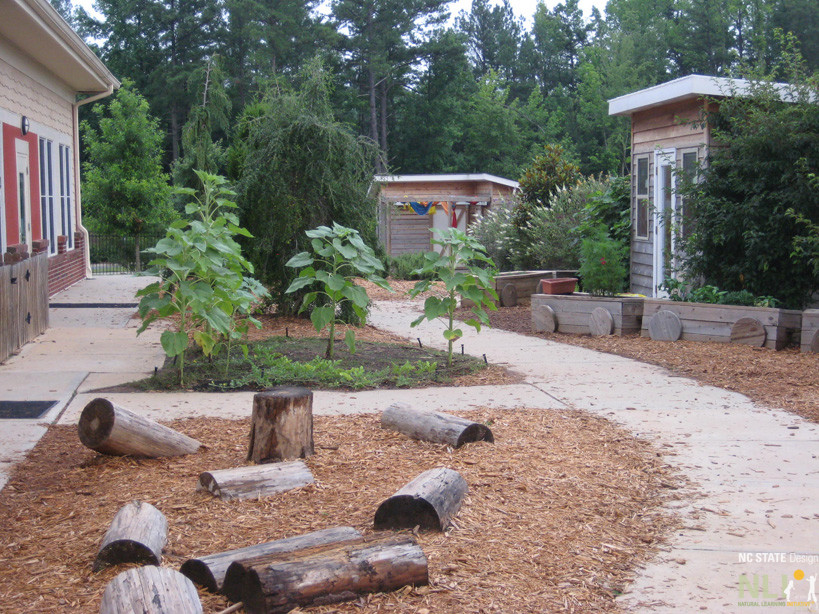
    pathway with stepping logs
    log seating
    dirt play area with stone border
    multi purpose lawn
    wheeled toy storage
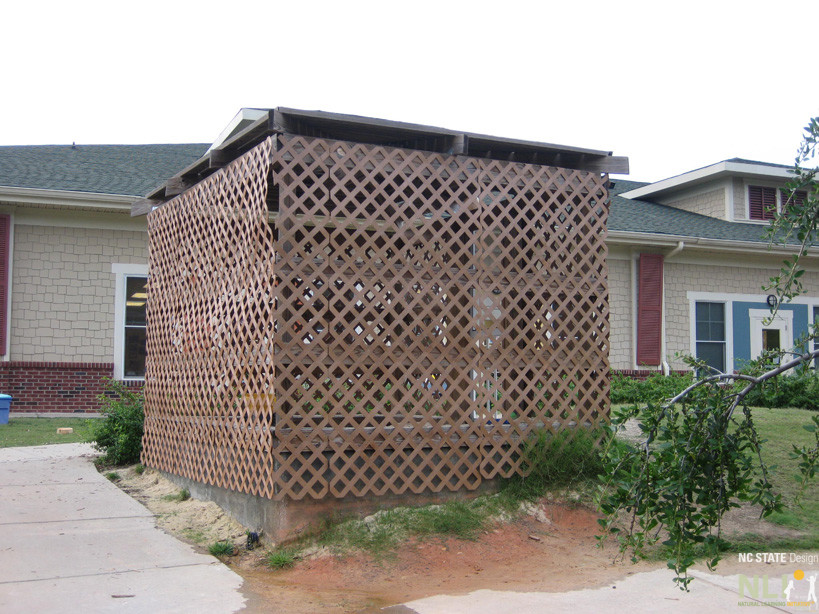
    lattice enclosure
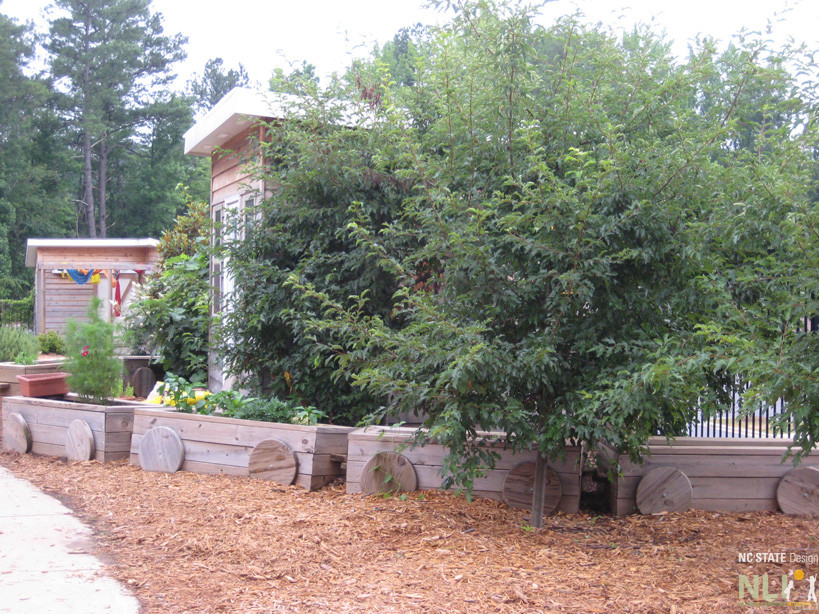
    raised planting beds 2
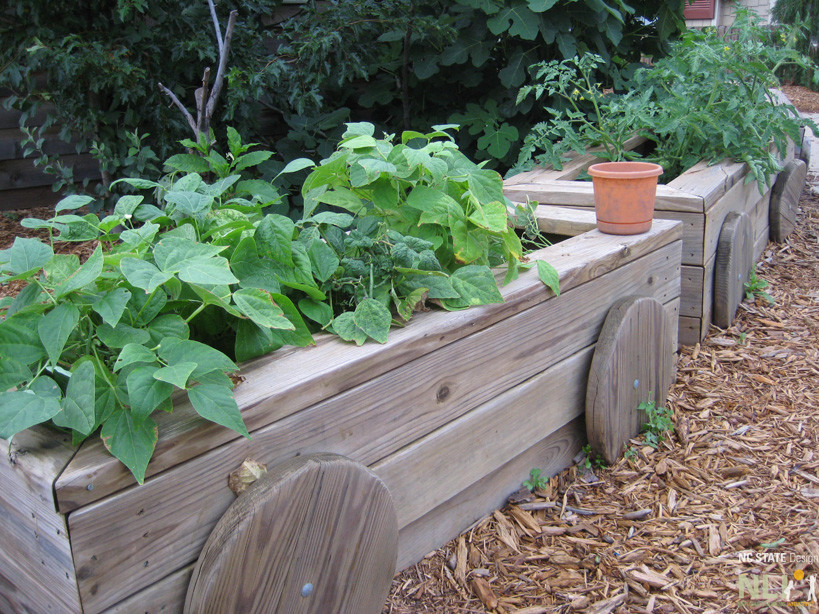
    raised planting beds
    pathway with stepping logs
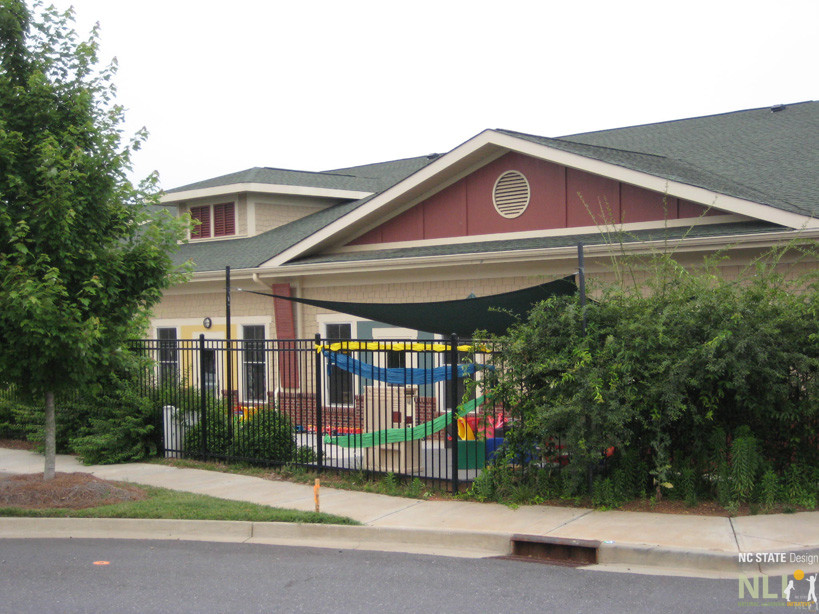
    field of dreams entrance
    Natural Learning Initiative outdoor play area with diverse nature-based settings, inclusive playgrounds, and educational spaces for children.