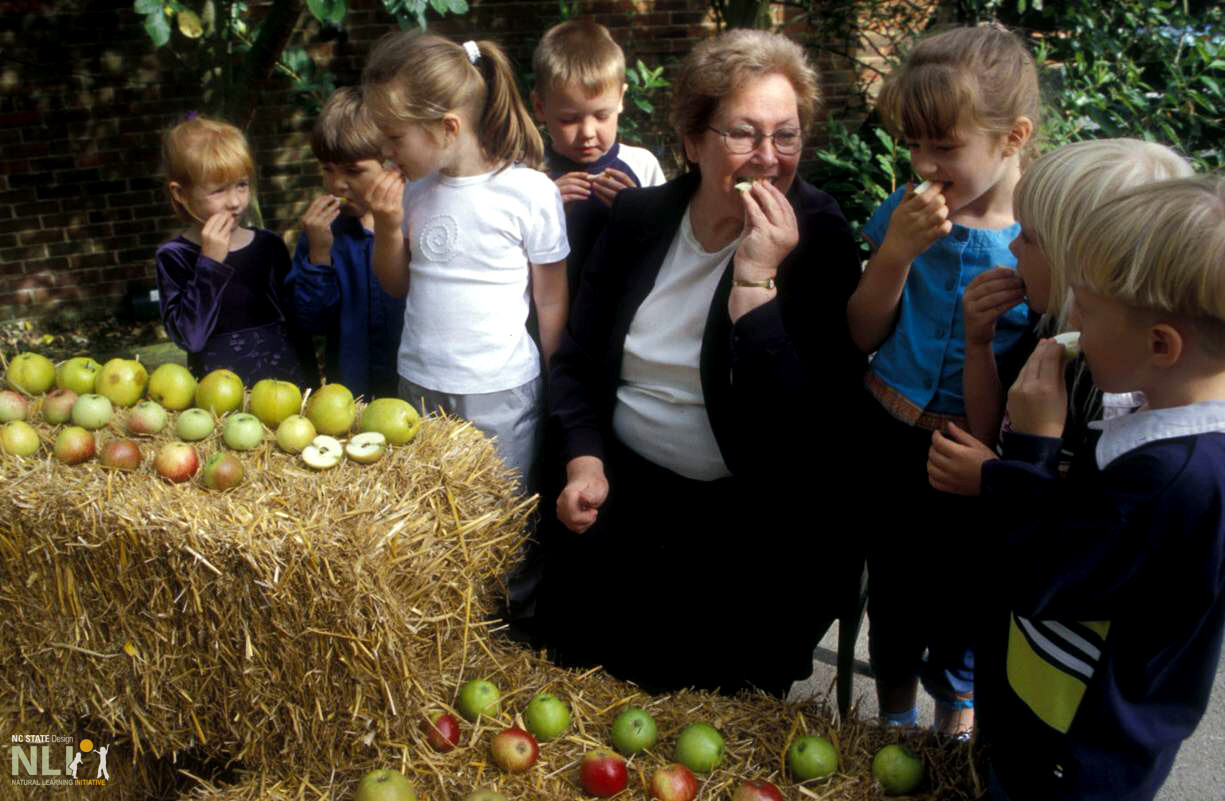
As children explore and taste different types of fruits and vegetables, they learn about different types of healthy foods. They also become more familiar with vocabulary relating to different types of food (fruit, vegetable, core, peeling, seeds, juicy, sweet, sour, etc.).
Setting:
Snack Shop
Focus:
Healthy Eating
Curricular Areas:
Health and Physical Development
Language Development and Communication
Suggestions:
Label one serving plate the “fruit plate;” label the other plate “vegetable plate.”
Invite children to share ideas about how to tell the difference between a fruit and vegetable.
With the children, cut a piece of fruit and discover the seed or seeds. Cut a vegetable, and note how there are no seeds.
Help the children examine and prepare the other food items. Make a “fruit plate” and a “vegetable plate.”
Encourage children to eat at least one piece of fruit and one type of vegetable for their snack.
Engaging Parents:
Give each child a notecard or “worksheet” for them to record (with their parent’s help) one type of fruit and one type of vegetable they ate before returning to school.
Materials & Tools
Several different kinds of fruits and vegetables (some grown on site, if possible)
Two serving plates
Napkins or paper towels
Utensils for cutting and/or peeling the fruits and vegetables (as needed)
One sign labeled “fruit” and one sign labeled “vegetable”
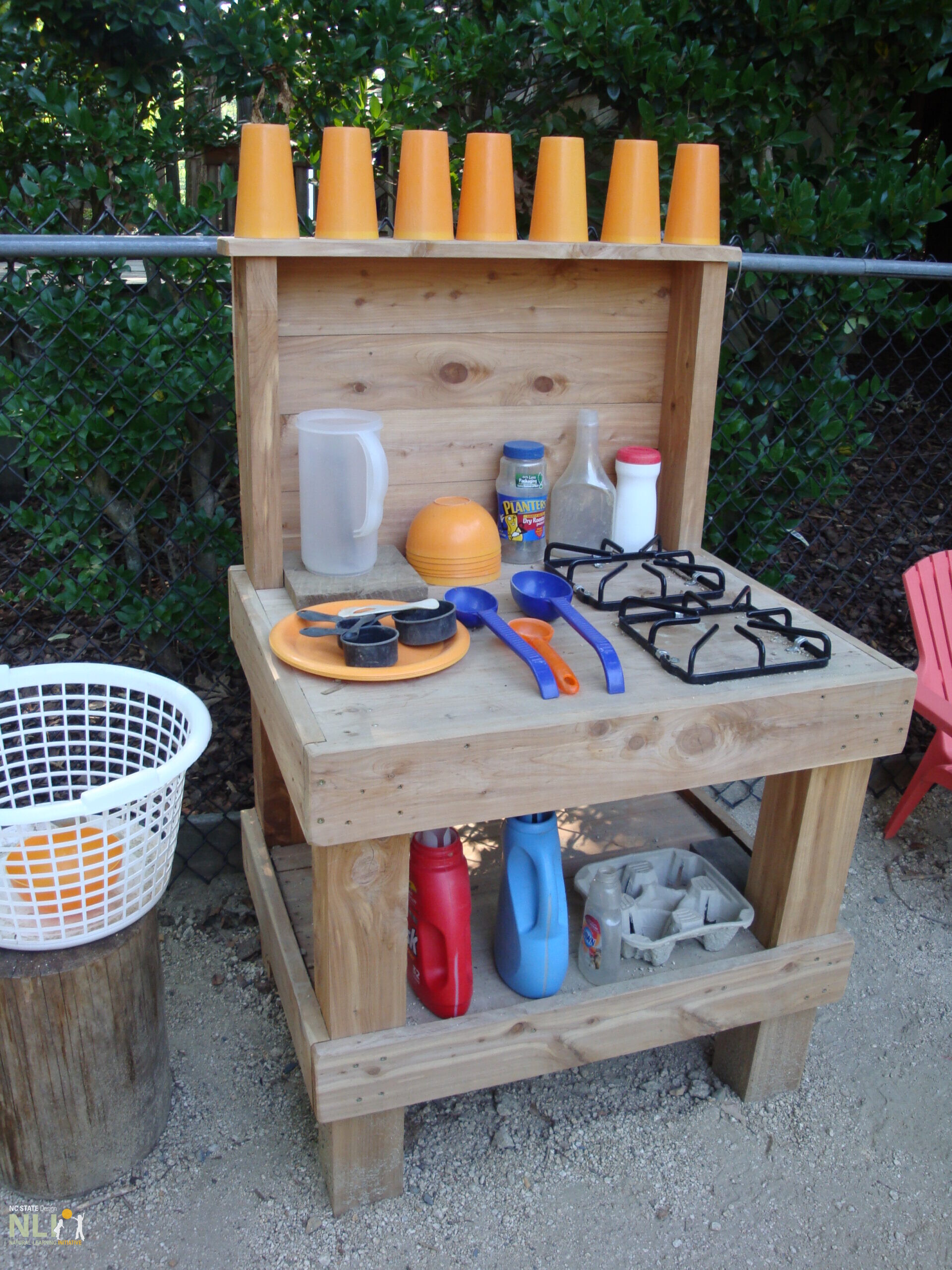
Fairy soup kitchens encourage outdoor dramatic play, aimed at increasing children’s creative expression and imagination. Creating a fairy soup kitchen represents a unique form of helping expand children’s mathematics and sciences knowledge and skills through measurement, counting, and experimentation. In addition, this activity provides an area to stimulate their cognitive development, sensory knowledge, and the natural world around them.
Setting:
Outdoor Learning Environment
Focus:
Activity focused on stimulating senses and learning more about the natural and physical world around them.
Curricular Areas:
Problem-Solving
Decision-Making
Cognitive Development
Sensory Stimulation
Mathematics Knowledge and Skills: counting, sorting, matching, patterns, comparing
Physical Development: Fine Motor Skills
Scientific Learning
Approaches to Learning: Imagination, Creativity, Invention, Aesthetic Sensibility
Suggestions:
Introduce children to the new activity setting in the OLE and read Penelope Jane: A Fairy’s Tale by Rosanne Cash and G. Brian
In the outdoor learning environment, designate an area to create a fairy soup kitchen for children to play in.
On a table add materials, encouraging children to create fairy soup. Encourage children to be creative by utilizing materials placed on the table. This is beneficial in promoting unstructured science learning and many learning components such as hand-eye coordination, physical development (gross and fine motor skills).
Invite them to collect flowers from the garden and surrounding OLE. In addition, allow them to collect elements of the OLE to include in the fairy soup.
Use prompt questions to magnify their creativity and critical thinking skills (being careful not to persuade or influence independent learning opportunities). What will you include in your fairy soup? What natural item could we substitute for real food?
Expand to include additional activities and/or curriculum that enhances learning opportunities for children.
Engaging Parents:
Encourage children to draw a picture and share stories of the fairy soup kitchen with their family.
Encourage parents to create this inexpensive activity at home with their children.
Materials & Tools
Outdoor table
Large pots
Plastic soup bowls or containers
Spoons and ladles
Polished stones, flowers from the garden, seashells, and other natural materials
Pitchers
Water
Glitter (optional)
Book Recommendations:
“Alice the Fairy” by Dave Shannon
“Olivia and the Fairy Princesses” by Ian Falconer
“Pinch and Dash Make Soup” by Michael J. Daley and Thomas F. Yezerski
“Soup Day” by Melissa Iwai
*Appropriate clothing is necessary for this activity as children’s will potentially get dirty or wet.
A focus on healthy eating can include the idea that all living creatures need food to survive. Healthy foods, such as fruits and vegetables, are eaten–not just by humans– but by many other living creatures, as well. Sharing peels and cores from fresh fruit with other animals fosters a conservation attitude and a sense of empathy.
Setting:
Outdoor snack area
Focus:
Healthy Eating, Conservation and Empathy
Curricular Areas:
Health and physical development (healthy eating)
Emotional and social development (developing empathy for living things)
Language development (foundations for reading)
Suggestions:
Help children prepare a plate of fruit for snack.
Place peelings and cores on a separate tray or another shallow container. Explain that this will be the snack tray for other creatures living nearby. Invite ideas about which creatures might eat from this tray (birds, rabbits, squirrels, insects, etc.).
Place the tray on the ground or flat rock so that it will be accessible to the animals and away from the busy area where children play. If possible, place the tray in a spot where it can be viewed from the classroom window. Check periodically to see if animals are eating the food.
As children enjoy their own snack, talk about the many things we eat that are also enjoyed by animals (seeds, grains, berries, etc.).
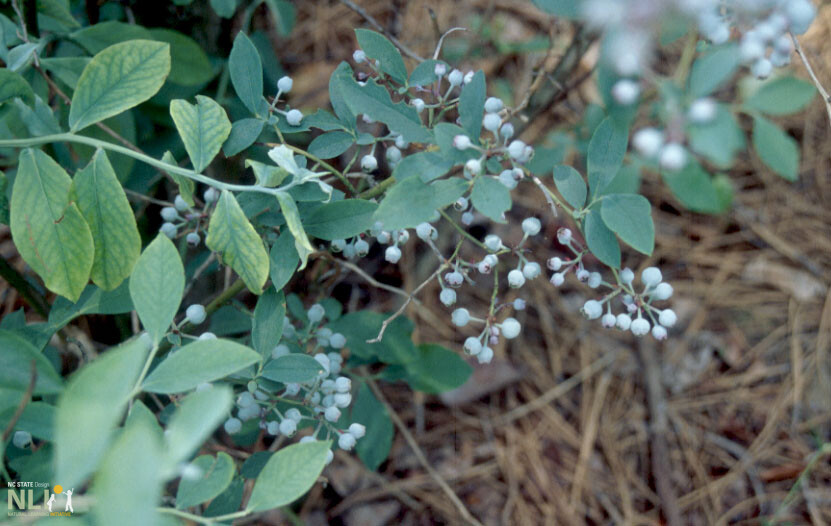
Share the book, Blueberries for Sal by Robert McCloskey, with the children. Invite children to role-play this story or make up their own story about people and animals eating the same kind of food.
Engaging Parents:
Have children draw a picture about the story, Blueberries for Sal, or a story they created. Have them share their picture and story with their parents.
Materials & Tools
One or more varieties of fruit (preferably with some fruit grown on site)
Outdoors with nature is the healthiest place to be, where exuberant play, motivated learning, and gardening fun awaits! In solidarity, NLI offers resources to support families schooling at home, teachers and children in childcare centers, and early childhood college educators.
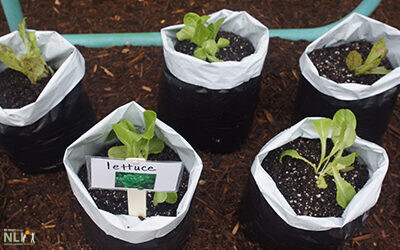
Infosheets Container gardening is a practical, low-cost, space-efficient, and child-friendly approach to growing fresh produce at home, schools, and in childcare centers. Children delight in growing and eating their own food. Research shows that repeated experience…
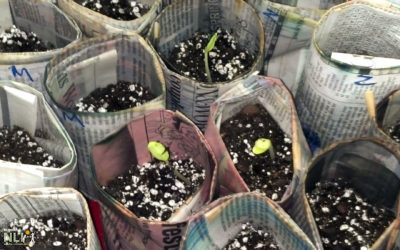
Infosheets Newspaper pots are great containers for starting seeds, allowing you to transplant seedlings straight into your garden at the start of the growing season. With a few easily found items, you can get a head-start on growing vegetables and bring nature-play…
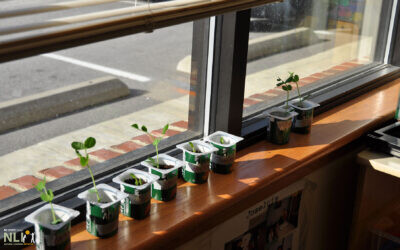
Infosheets Spring is coming! It’s time to start seeds indoors to prep for the growing season– and bring gardening fun to school, home, or a childcare center! If you live in a cooler climate, starting veggie seeds indoors will protect delicate seedlings from early…
Science Knowledge & Skills refers to the emerging ability to gather information about the natural and physical world and organize that information into knowledge and theories. Young children are often called natural scientists. Their inclination to be curious, explore, ask questions, and develop their own theories about how the world works make science an important domain for enhancing learning and school readiness. It provides opportunities for rich vocabulary learning. It fosters a sense of curiosity and motivation to learn.
Approaches to Learning refers to observable behaviors that indicate ways children become engaged in learning. Children’s ability to stay focused, interested, and engaged in experiences supports a range of positive outcomes, including cognitive and language development important to later learning. Many early learning experts view approaches to learning as one of the most important domains of early childhood development.
Setting:
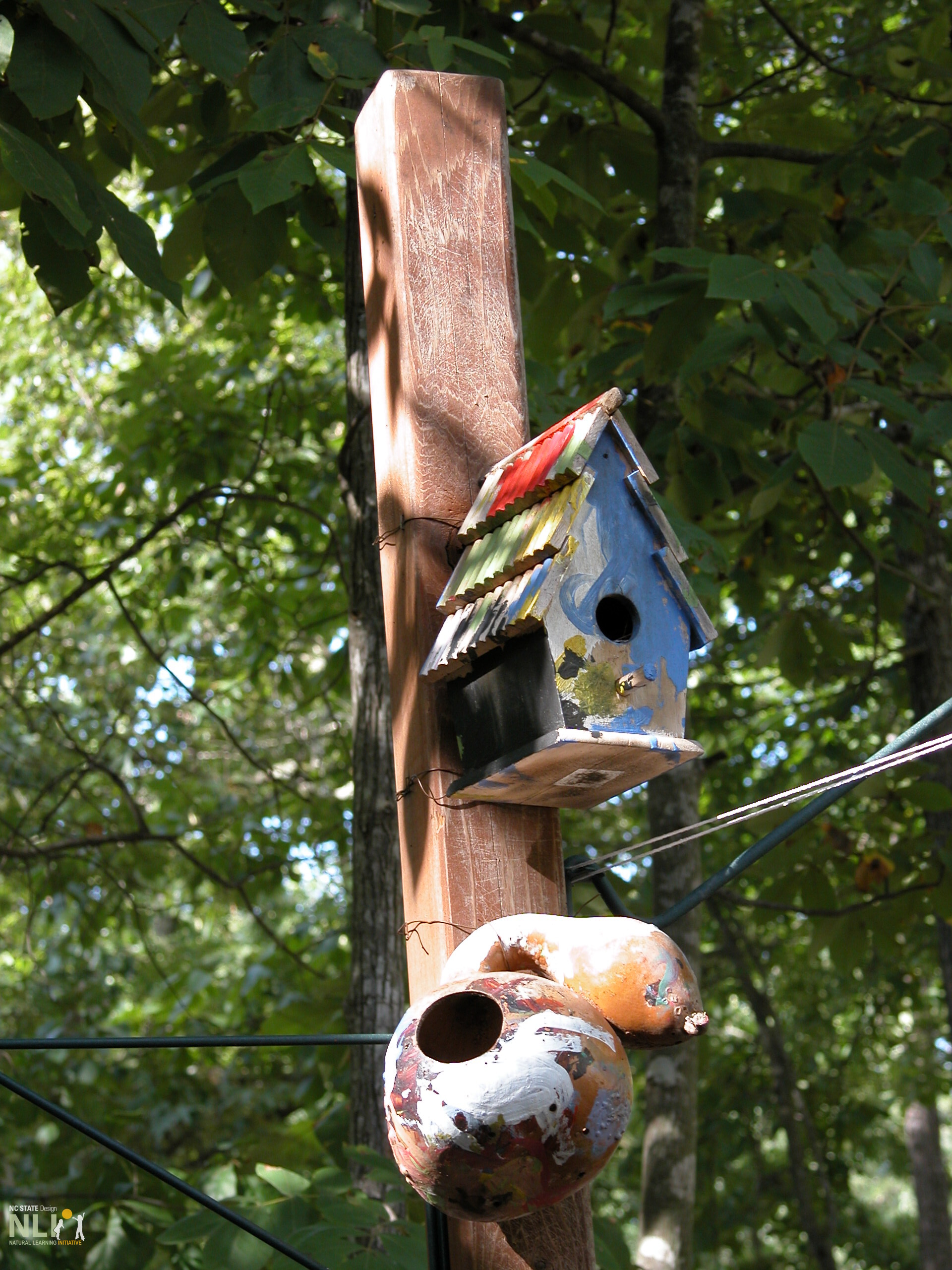
Bird House Station
Focus:
Learning about Bird Life and Habitats
Curricular Areas:
Science Knowledge and Skills: observation, organizing observations into knowledge and theories
Conceptual Knowledge of Natural and Physical World
Physical Development: climbing, balance, motor control, muscle development
Language Development: Receptive and Expressive
Approaches to Learning: initiative and curiosity, focus and engagement
Suggestions:
Post pictures o different colored birds in the indoor classroom at children’s eye level.
Place bird books in the indoor book center.
Use the name of the bird when calling attention to the pictures (e.g. the yellow bird is called a canary; the blue bird is called a blue jay, etc.)
Encourage children to climb fence ladders to observe the inside of the birdhouse under teacher supervision.
Model for children curiosity, observation, inquiry, investigation, wondering, and reflecting in the outdoor environment.
Demonstrate for children how to use binoculars.
Allow children to place small amounts of birdseed on the balcony just outside the birdhouse.
Ask what children are seeing and observing.
Respond to children’s questions about their observations.
Encourage children’s natural inclination to wonder and ask questions.
Take photos of children observing birds and post at their eye level in the indoor classroom.
Encourage children to draw or represent what they see by drawing or painting on the fence easel.
Note: For infants and non-mobile children, place mats or quilts near the fence and birdhouses so that they can observe bird activity.
Engaging Parents:
Invite parents to come and participate in the observation experience with the children.
Send home an information sheet with bird pictures and names.
Materials & Tools
Several bird houses attached to 4’ poles just outside the chain link fence
Bird seed
Perpendicular ladders attached to the chain link fence that allows children to climb and observe inside of bird house
Physical development using balls includes physical well-being, use of the body, muscle control, and motor development. These physical tasks and skills are foundational to young children’s learning. Motor skills permit children to fully explore and function in their environment, and support development in all other domains.
Setting:
Designated Play Area (near the fence)
Focus:
Retrieving Balls
Curricular Areas:
Physical Development: Large and Fine Motor Development (retrieving, throwing, and rolling loose parts)
Problem-Solving
Language Development: Receptive and Expressive Language
Model for children how to open the latch and door allowing a ball to roll out onto the ground and closing door after each ball rolls out.
Increase children’s language and cognitive development by sharing attributes of the ball that rolls out (color and size), and using action words (such as roll, catch, throw, toss, fast, slow, etc.)
Enhance children’s problem-solving skills by modeling how to retrieve ball from the cylinder (opening the latch and door, catching the ball as it rolls out, and closing the door and latch to prevent other balls from rolling out.
Increase children’s math skills by modeling counting, matching, sorting, serializing, and one-to-one correspondence.
Introduce cooperative play by modeling for children how throw or roll a ball to each other.
Return ball to cylinder once child has completed his play so that children can continue to experience retrieving the ball through the latched door.
Take photos of children’s ball experiences and post indoors.
Provide opportunities for children to recall their ball experience (color, size, number, etc.) once they return to indoor classroom.
Engaging Parents:
Allow children to “borrow” photos to take home overnight and share their experiences with parents.
Encourage parents to purchase inexpensive balls for home use, sharing with them the how children’s growth and learning in the curricular and developmental areas above.
Encourage parent to take photos of children experiencing ball play at home and send to classroom for children to share their experiences with teacher and other children.
Materials & Tools
2 ft. diameter wire cylinder for ball storage. Attach to adjacent fence about 5′ high. At the bottom of the cylinder, create an open and close latched door at ground level large enough for largest ball to roll through.
At least a dozen balls of different sizes and colors
Fairy villages are homes for elves, fairies, and other beings of children’s imagination. They provide enchanted places that stimulate creative, dramatic play in make believe settings. Creating a fairy village represents a unique form of natural building. They can be any scale, created inside a hollow log, on top of a tree stump, in a planter, on a patio or in a miniature woodland in a quiet corner of the outdoor area.
Setting:
Construction Area
Focus:
Creative Expression
Curricular Areas:
Cognitive Development (Creative expression)
Approaches to Learning (imagination, creativity, invention, aesthetic sensibility)
Suggestions:
Place a basket of miniature figurines, etc. near an inviting place for a fairy village (e.g., tree stump, planter, hollow log, rock with a concave bowl, etc.).
Invite children to create a special place for tiny fairies or other imaginary creatures.
Listen and respond to children’s descriptions and stories about their fairy villages.
As children share their “stories,” record some of their ideas in the form of an “experience story” (i.e., a form of documentation – usually written by the teacher — representing children’s ideas and actions).
Engaging Parents:
Call attention to the fairy villages created by the children by way of photos or experience stories.
Encourage children to show their fairy villages to their parents and talk about their “stories.”
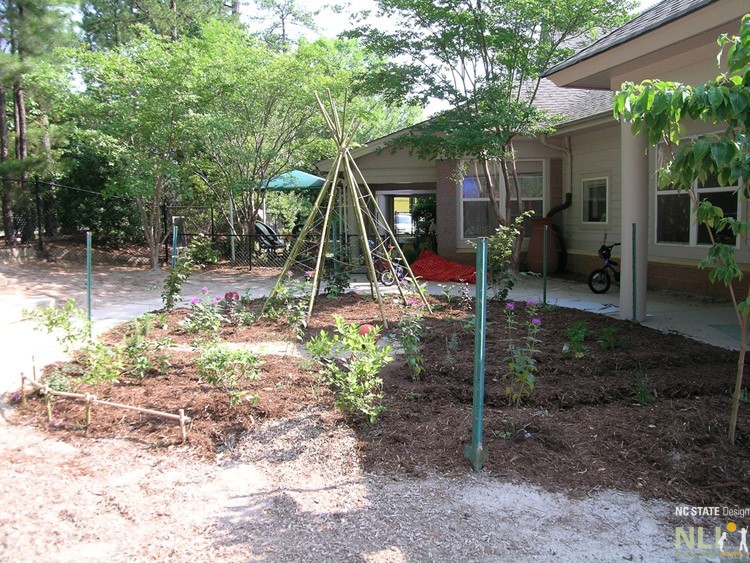
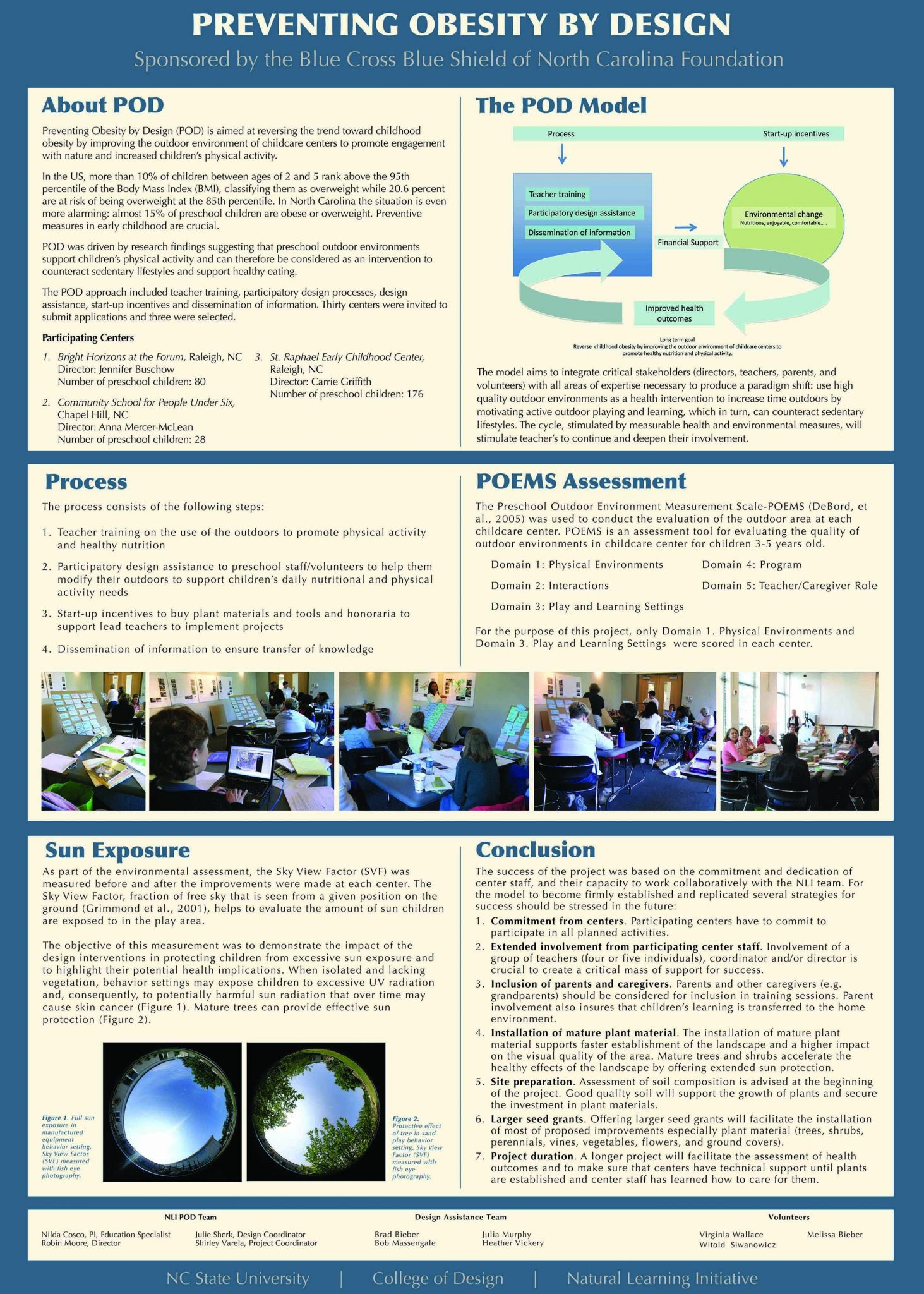
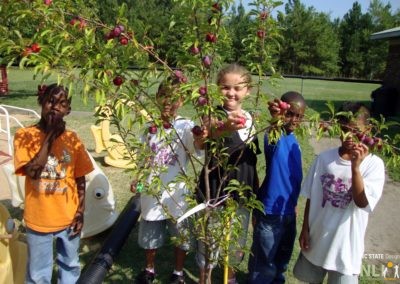
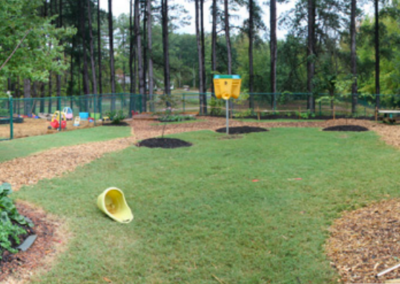
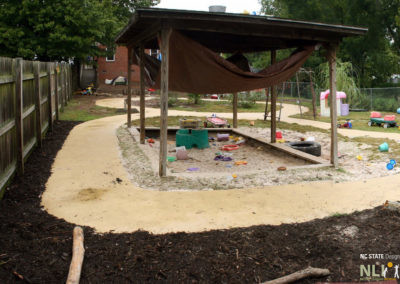
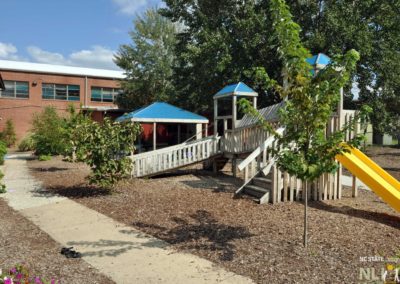
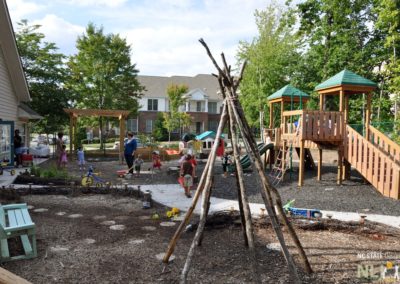
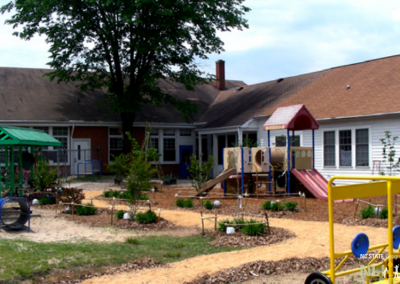
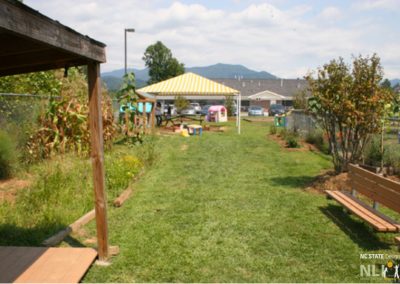
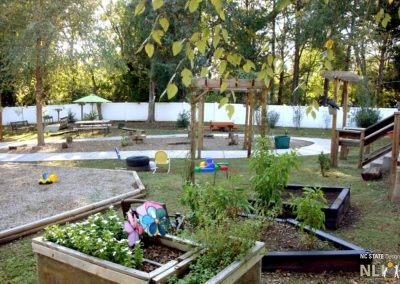
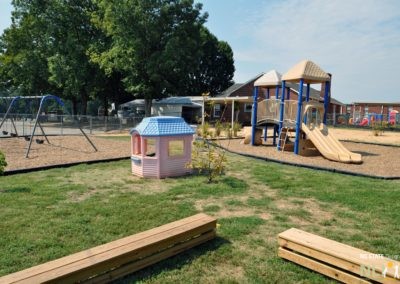
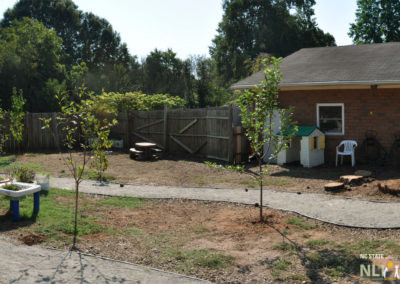
Preventing Obesity by Design (POD) Pilot was aimed at reversing the trend toward childhood obesity by improving outdoor environmental diversity of childcare centers, which research suggests can increase children’s level of physical activity, increase time spent outdoors by children and teachers, and increase children’s awareness of vegetables, fruit, and nuts as healthy foods. POD considers design of outdoor environments in early childhood as a preventive health intervention.
POD was driven by evidence that young children learn most effectively (good nutritional habits for example) through hands-on experience, and evidence that being outdoors is critical to children’s physical development (outdoor environments are predictors of physical activity; green environments in particular support attention functioning).
The project is driven by a) evidence that young children learn most effectively (good nutritional habits for example) through hands-on experience, and b) evidence that being outdoors is critical to children’s physical development (outdoor environments are correlates of physical activity; green environments in particular support attention functioning). In addition, understanding food selection and preparation may support the development of lesson plans related to language, math, science, the arts, and other subjects.
Thirty-one centers are participating in the current program, including three pilot project sites where the community design strategy was tested and refined.
The LONG TERM GOAL is to generate and transfer knowledge to create a cultural re-alignment of care for young children emphasizing the importance of the outdoors as a preventive health strategy.
Supported by:
Teacher Training
We show teachers how to use the outdoors to promote physical activity and healthy nutrition.
Participatory Design Assistance
We encourage projects to include preschool staff/volunteers and help them modify their outdoor play and learning environments to support children’s daily nutritional and physical activity needs.
Start-up Incentives
Ask about how we can help you to buy plant materials and tools and provide honoraria to support lead teachers to implement projects.
Dissemination of Information
We ensure transfer of knowledge. The 31 demonstration projects act as catalysts for change by other NC childcare providers.
Each center committed to participate for a year in all project activities and meetings, including the following POD project steps:
Site Discovery: The POD team visits each center to review the base map of the site. Adjustments are made to the base map if needed and a walkthrough is conducted to become familiar with the outdoor space.
Preschool Outdoor Evaluation Measurement Scale (POEMS): POEMS is an assessment tool for evaluating the quality of outdoor environments in childcare centers for children 3-5 years old. A member of the POD team and a staff member from each center conducts the POEMS evaluation.
Input from Teachers, Parents, and Children: Teachers and parents are asked to fill out a short survey stating what they like and dislike about the outdoor space and what changes they would like to see happen. Children’s input is essential and key to the improvement of their outdoor space. Teachers are asked to guide children into a brainstorming session where they can draw and write what they want their outdoor space to be.
Training Workshop: Centers attend a full-day workshop on the impact of the built environment and child development. The session includes an introduction to the Preschool Outdoor Environment Measurement Scale (POEMS), a review of each site, and a presentation on the step-by-step participatory design process.
Design Workshop: All centers attend a full-day design workshop and program development. Using the input from teachers, parents, and children, each center designs their ideal outdoor space with the guidance of the design team.
Design Charrette: The design team meets for an in-house design charrette to discuss the designs from each of the centers. Childcare and safety regulations are considered in the process.
Conceptual Design: Each center individually meets with the design team to review and comment on the conceptual design and finalize their design. Centers are guided to organize their community to support the environmental changes of the play area.
Teacher Training: NLI trains teachers to use their new outdoor learning environment. Settings and their purposes were discussed. Support for implementing new ideas for informal learning in the outdoor curriculum.
Installation: Each center, with the help of the NLI staff, prepares its outdoor environment for the installation of plants and trees. Volunteers are a crucial part of the planting process.
Evaluation: The NLI team visits each center and evaluates the progress made by each center. POEMS evaluation will also take place at the end of the project.
Show & Tell: The three centers act as catalysts for change by other NC childcare providers. They present their experience at a public event organized by NLI.
Evaluations from the 27 participating POD centers provided insights into the benefits of enhancing child care centers with outdoor learning environments through the participatory design process. As these testimonials show, children, families, and entire communities have a lot to gain from a better connection with the natural world.
The Biggest Successes
“We are proud of the garden – kids planting and picking: green beans, red onion, sunflowers, lettuce, carrots, mustard greens, turnip greens, spinach, squash, green peppers, tomatoes, and blueberries.”
“For a community with little to be proud of, this playground is a proud achievement, a blessing, and a gift for everyone.”
“People in town walk around the fences to see what’s going on. We were the talk of the town!”
Interaction with the Environment:
“Our proudest moment has to be watching the children with the natural elements – flowers, butterflies, branches, overcoming fear of bees, worms and crickets. They have learned how to be gentle with butterflies and insects.”
“The kids run out everyday to check to see what’s growing.
Effect on Children’s Behavior:
“Our proudest achievement would have to be the discipline improvement. The kids are not all doing the same things as each other, instead they are using their imaginations more.”
“They are learning control and ethics in how they interact with nature: what to pick, what not to pick.”
Value of the Design Process:
“Our biggest success was the design – having a direction to go and a vision to implement.”
“The way you listened to us and put the plan together was exceptional. The plan was exactly what the teachers had envisioned.”
Children with Special Needs:
“The garden is a kind of therapy to the children from difficult situations and with special needs.”
“There are more ways for disabled children to play and interact with other children, not just watching.”
Effect on Physical Activity:
“For most of the kids, their time here is the only opportunity they have to play outside.”
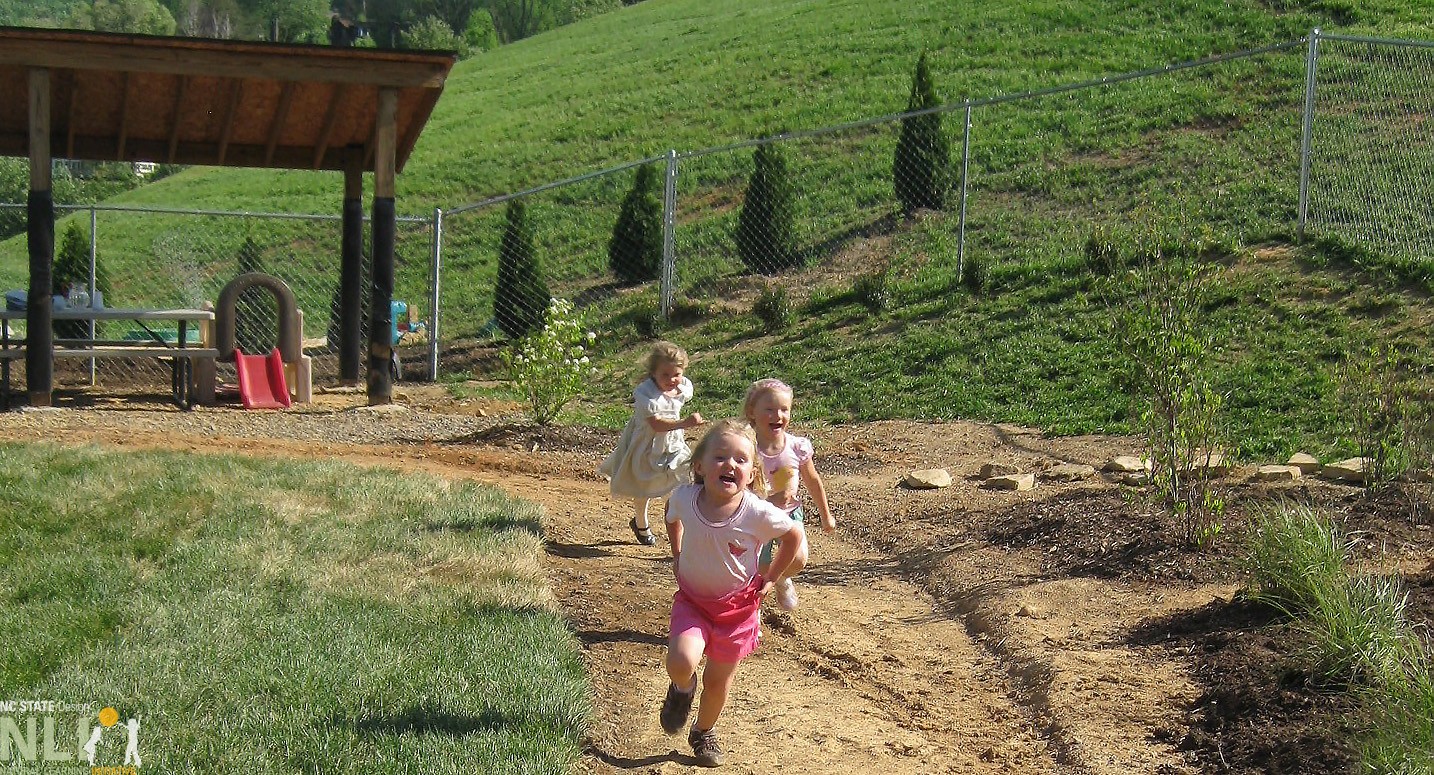
“The whole playground is so much more engaging; the kids are neither overwhelmed nor bored. They didn’t run before because it was too overwhelming; now they run.”
“The children love the trike path and log seating, and building clubhouses with the logs and tree cookies: building, stacking, carrying.”
“The playground has totally changed. The children have adapted, they smell the flowers and dig in the dirt; not just playing on the equipment.”
“The kids sleep way more.”
Parents and the Community:
“We are proud of the whole thing – seeing all the components come together. We take parents out on the playground at orientation and are proud of the space.”
“I hope that the children getting this experience here will be pulling their parents outside.”
“At the planting day every family was represented, and donors stopped by to help – over 70 volunteers.”
Transferring knowledge, building capacity, extending reach
Preventing Obesity by Design (POD3)
POD3 is based on findings from four years of the Preventing Obesity by Design (POD, 2007-2011) indicating increased OLE-supported physical activity after renovation, the current Shape NC project (2010-present), the DCDEE initiative “Creating a Supportive Network” (2011), and findings by others showing a) young children learn most through hands-on experience, and b) being outdoors is critical to children’s physical development, activity, and healthy nutrition. Thus, the outdoor environment in childcare centers is related to learning in all developmental areas and supports holistic childhood experience centered on healthy living practices.
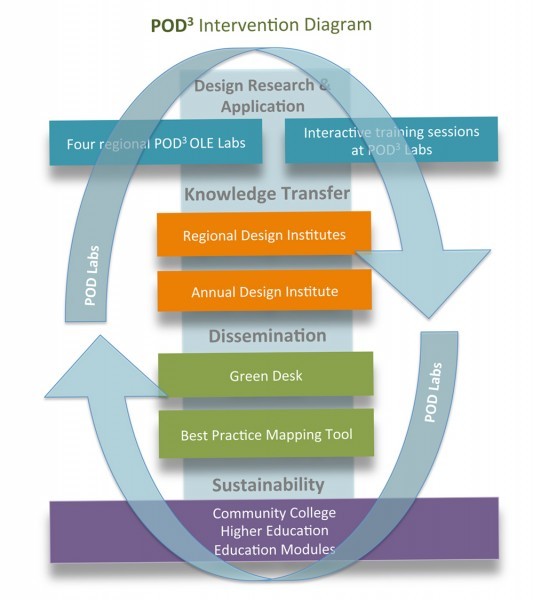
The goal of POD3 is to convert outdoor design and programming “best practices” into “common practices” for adoption by early childhood educators, providers, regulators, and landscape designers and managers. Experts in policy and childcare regulations work with the NLI team to provide guidance. POD3 focuses on transferring knowledge, building capacity, and extending reach by:
Developing education modules for adoption by community colleges and higher education institutions to infuse new awareness and understanding about the role of the outdoors in health promotion.
Organizing regional OLE training institutes and interactive OLE design workshops.
Creating POD3 “Regional Outdoor Labs” and related regional action networks of trained childcare providers, technical assistance professionals, regulators and assessors, landscape designers/contractors, and parents.
Disseminating technical assistance and information resources through expansion of the Natural Learning Initiative’s (NLI) Green Desk.
Offering seed grants to POD3 Lab sites and incentives for Technical Assistant providers and community college instructors.
From 2013-2015 through a series of 10 Interactive Design Sessions and 10 Regional Symposia, POD3 worked to make “best-practices” = “common practices” among early childhood, landscape design, and culinary arts students and professionals.
I know that the playground should be a natural fun experience for children, this workshop gave the how and the what to making this happen.
Interactive Design Sessions
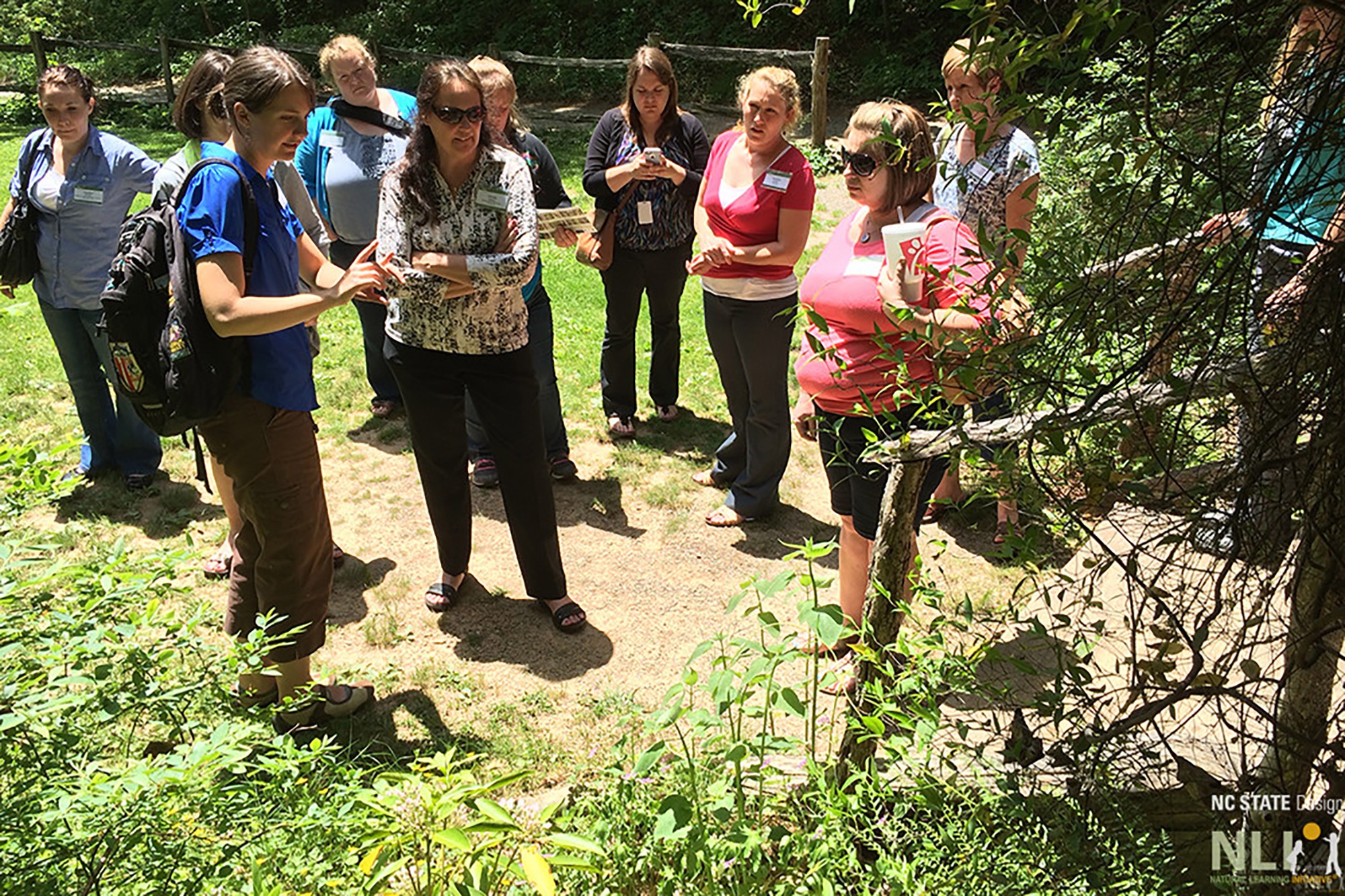
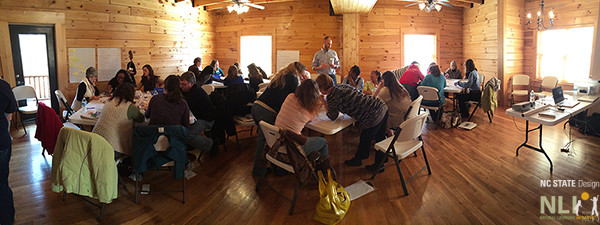
Through POD3, NLI hosted 10 Interactive Design Sessions. Each of these 1 day training sessions hosted to up to 10 childcare centers, with each center bringing at least 2 staff members. Additional regional support staff attended these sessions as well.
The NLI design team is comprised of College of Design faculty, licensed landscape architects, and recent Collge of Design graduates and students experienced in designing outdoor environments conducive to health, learning, and well-being for young children. The collaborative approach to design practiced at the Interactive Design Sessions helps engage the early childhood professionals who will be responsible for these renovated OLEs.
POD3’s Interactive Design Sessions provide an opportunity for more childcare centers to take advantage of the NLI design team’s expertise in the childcare outdoor environment. These research-based and hands-on design trainings provide site specific suggestions and details for each participating center, as well as a sketch of the recommendations for their OLE. At the end of the day, each center leaves with a well-formed idea and visual suggestions for how to renovate their OLEs.
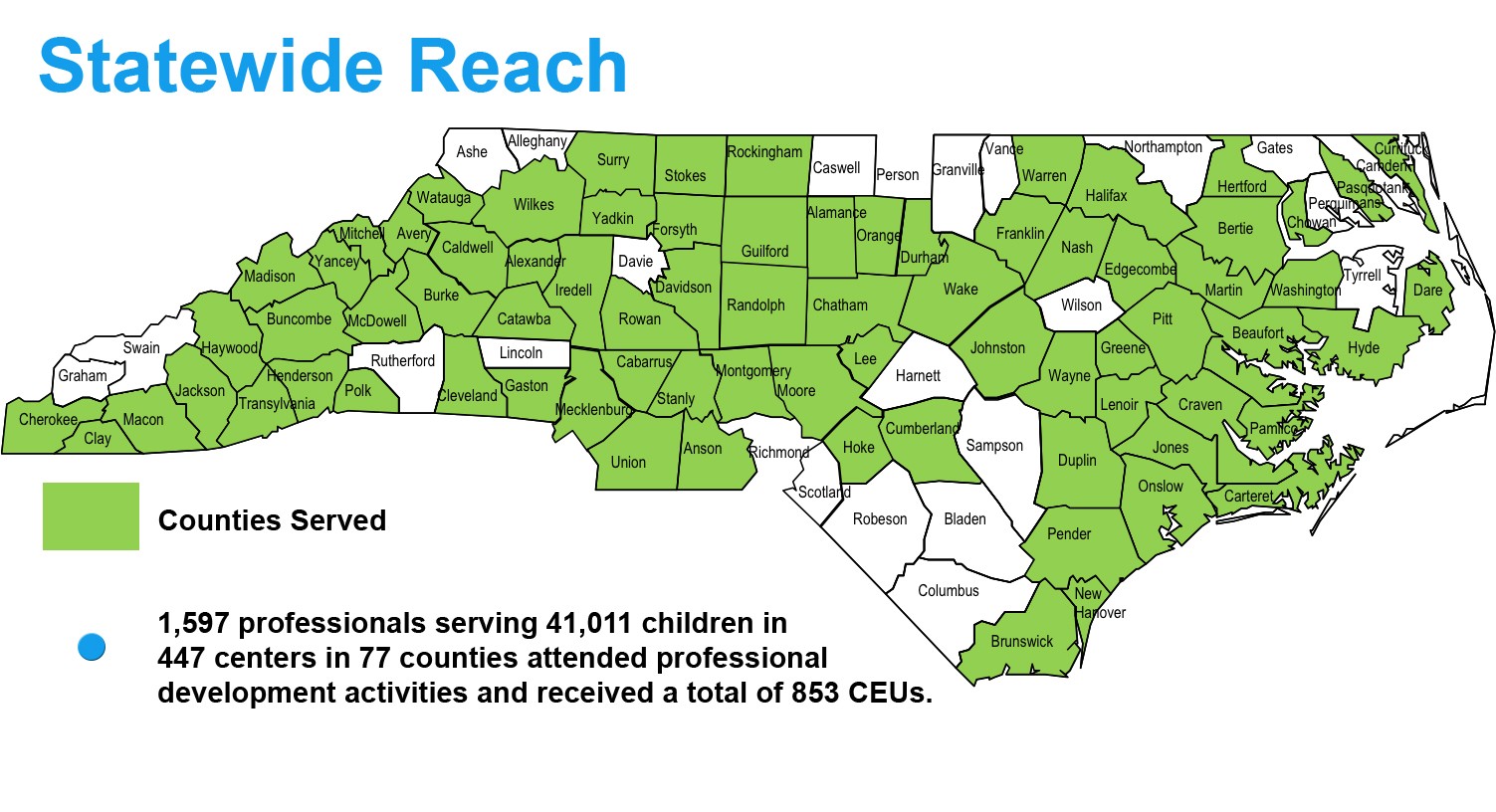
Childcare professionals (214) serving 7,326 children in 86 centers located in 29 counties received intensive, interactive training, including a baseline outdoor learning environment (OLE) assessment for their center and a design layout created by NLI design staff.
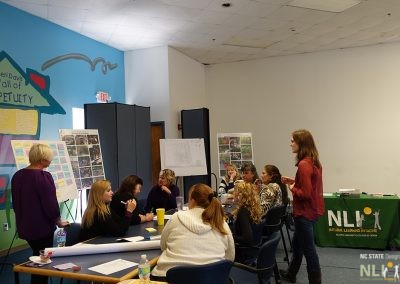
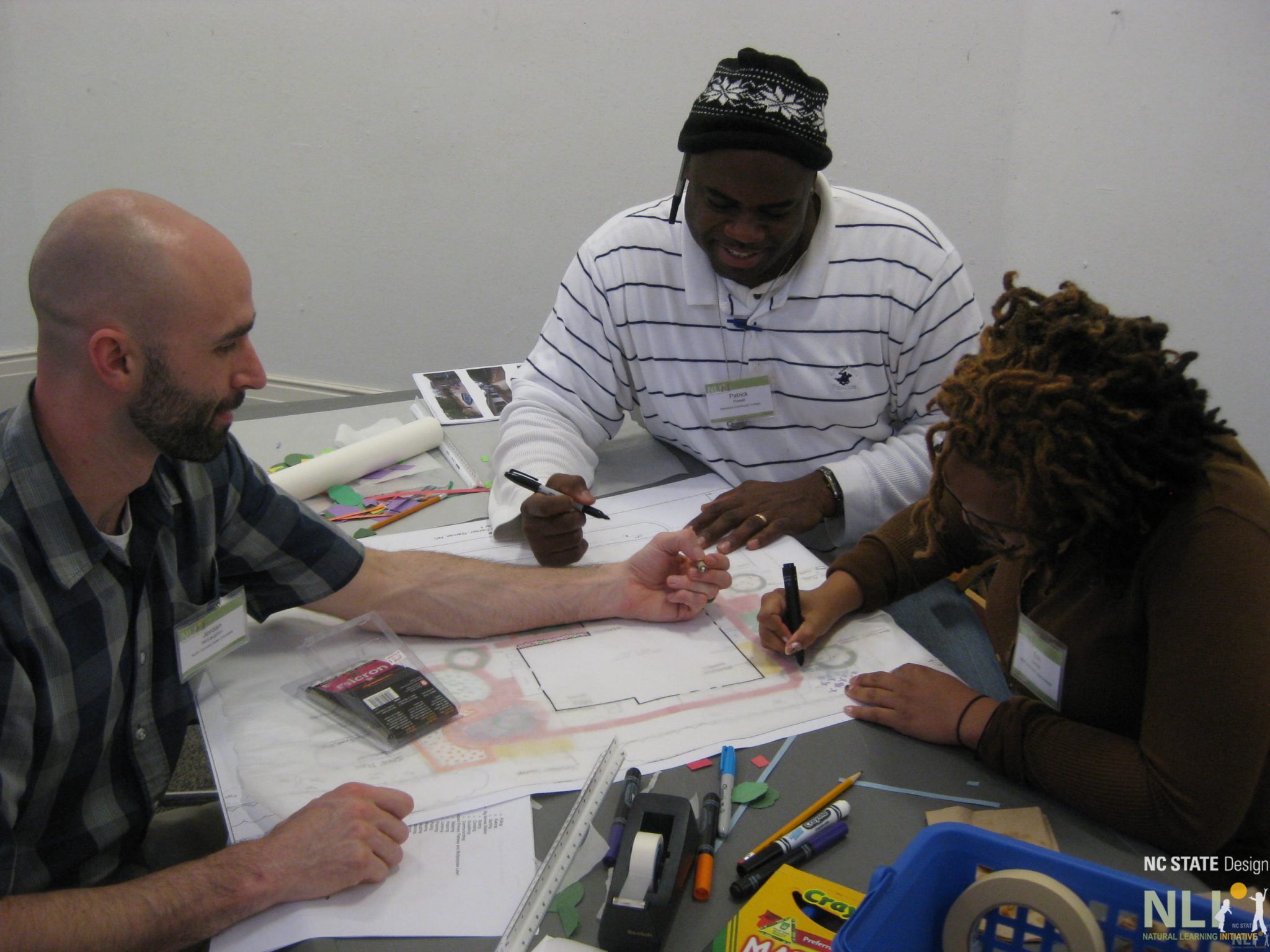
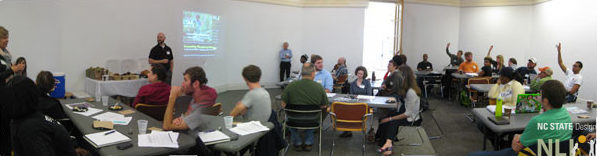
Breakout groups work with NLI designers at Randolph Regional Interactive Design Session
Regional Symposia
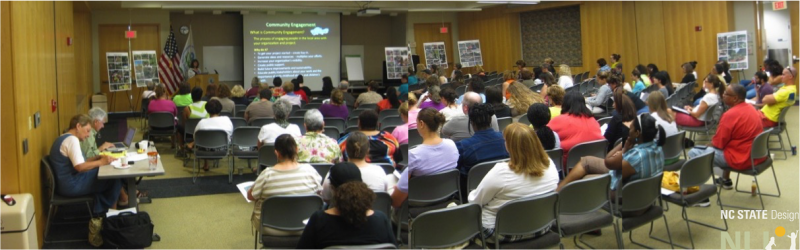
Over 3 years, 10 POD3 Regional Symposia offered an introduction to the benefits of enhancing and naturalizing the outdoor environment for young children to participants from across North Carolina. Plenary presentations combined with hands-on activities and tours of model childcare centers in a one day format gave these trainings a similar format to the statewide, 2-day, Annual Design Institute. Through the Regional Symposia POD3reached early childhood, landscape, community college, and other professionals close to where they work and live.
By traveling to different regions the NLI staff was able to reach more individuals at a lower cost. Also the opportunity to visit demonstration childcare centers close to home connects professionals to each other, providing inspiration and know-how for outdoor learning environment improvements.
814 childcare and landscape professionals serving more than 15,414 children from 60 counties enhanced their skills and networked at the POD3 regional Symposia.
POD3 Symposium Triangle Region, EPA Headquarters, Research Triangle Park, June 21, 2013
Childcare Outdoor Renovation as a Built Environment Health Promotion Strategy
Published in the American Journal of Health Promotion (Vol. 28, No. 3) this article By Nilda Cosco, Robin Moore, and William R. Smith, shows that site layout attributes are associated with higher levels of physical activity in the childcare setting, while teacher interaction is associated with a decreased level of physical activity in children.
Measures: Behavior mapping, Preschool Outdoor Environment Measurement Scale (POEMS), center director interview. Descriptive statistics, ordinary least squares and logistic regressions calculated to assess levels of association between environmental change, children’s physical activity (PA), social behaviors, and environmental quality. Qualitative interview data analyzed to help understand intervention impact.
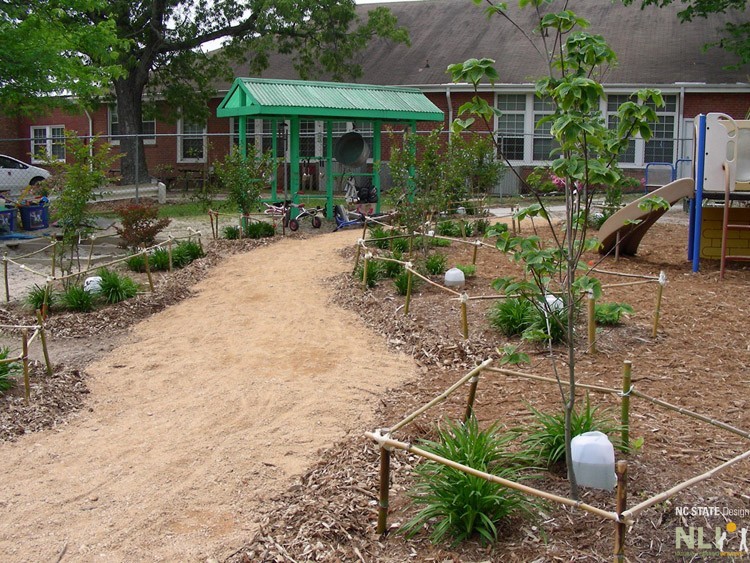
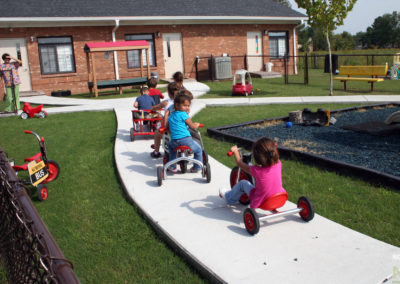
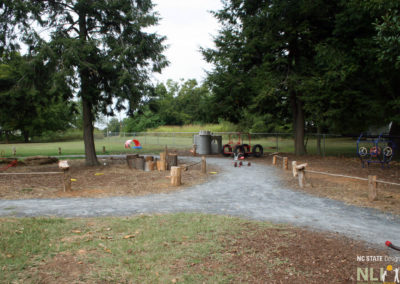
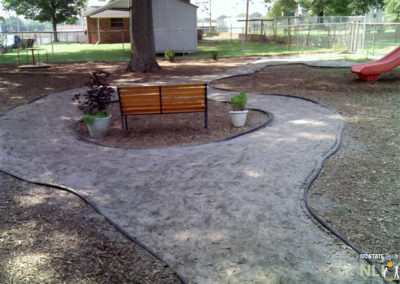
Results: Behavior mapping showed that site layout attributes, such as the form (i.e., “single loop” and “double loop”) of pathways (functioning as circulation routes and wheeled toy settings), are associated with higher levels of PA. Teacher interaction was associated with decreased children’s PA. Absence of teacher or lack of child/child interaction was associated with increased PA. POEMS assessment of environmental quality was higher after renovation. POEMS domains (Physical Space and Teacher/Caregiver Roles) were positively associated with PA. After renovation, 68% of center directors reported positive changes in children’s behavior and 40% mentioned edible plant installations as greatest success.
Conclusion: Built environment renovation of childcare center outdoors, including looped pathways installation, coupled with teacher training, may support increased PA. Renovation, including food gardens, may be a key to success for preschool health promotion and support change in childcare policy.
The POD3Higher Education Modules have been created to assist in developing a network of aspiring professionals who will satisfy the demands of emerging and evolving interdisciplinary approaches committed to supporting healthy human development across the entire lifespan through the design of outdoor environments that promote physical activity and wellness. The focus for the POD3 modules is connecting children with meaningful experiences in the natural world through outdoor learning environment best practices.
Designing, implementing, and managing the OLE requires a multi faceted approach in order to design, create, and use spaces that are the foundation of healthy and happy living, so the POD3modules are targeted at the following Community College courses of study:
Landscape Design, Construction, and Management
Early Childhood Education
Healthy Eating
Collective Goals
Illustrate the importance of nature play to support health, wellness and stewardship;
Support relationship building and foster community connections;
Highlight the role of professionals to child development;
Enhance professional development processes; and
Demonstrate advocacy skills related to outdoor learning in the development of children.
Objectives
Create transdisciplinary educational opportunities for preventing obesity and counteracting sedentary lifestyles;
Promote awareness regarding childhood obesity
Promote outdoor physical activity, play, and gardening in community college and university curriculum; and
Highlight the importance of designing, managing, and maintaining outdoor learning environments (OLEs) that support intergenerational health, safety, and welfare.
The Natural Learning Initiative hosted the first ever Inter-Institutional Outdoor Learning Environment (OLE) Design Charrette on January 30, 2013. This historic event included a professor from each program and a total of 29 landscape architecture and horticulture students spanning the three institutions of higher education.
NC State University (8 students and instructor Andy Fox)
NC A&T (10 students and instructor Anna Reaves)
Alamance Community College (11 students and instructor Carol Kawula)
NLI staff gave presentations, facilitated the charrette activities, and actively mentored each of the eight student design teams. NLI instructional staff included Robin Moore, Nilda Cosco, Jesse Turner, Julie Murphy, Brad Beiber, and Sarah Konradi.
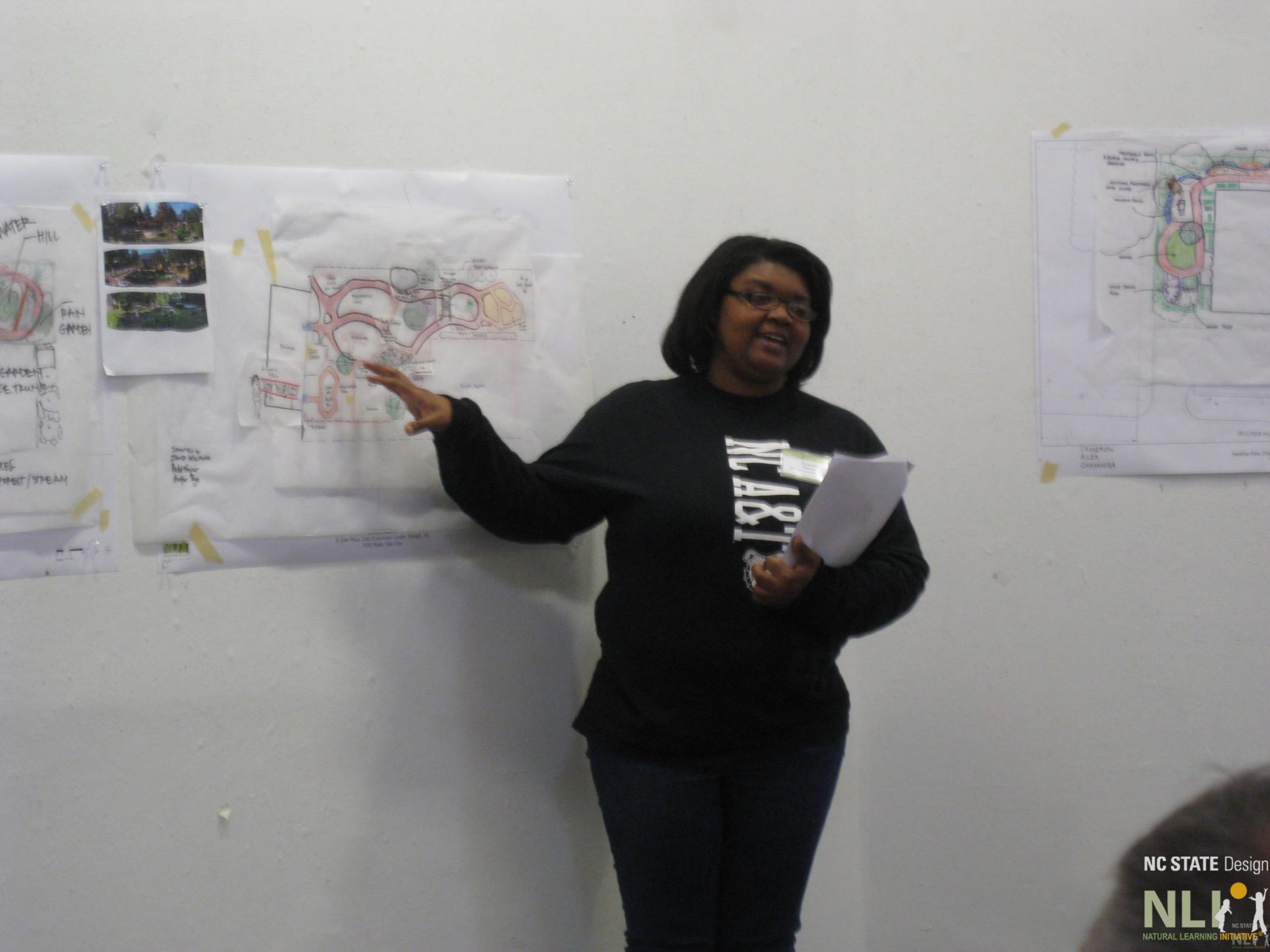
Design Presentation by NC A&T Student
Work group from NSCU, NC A&T, and Alamance Community College
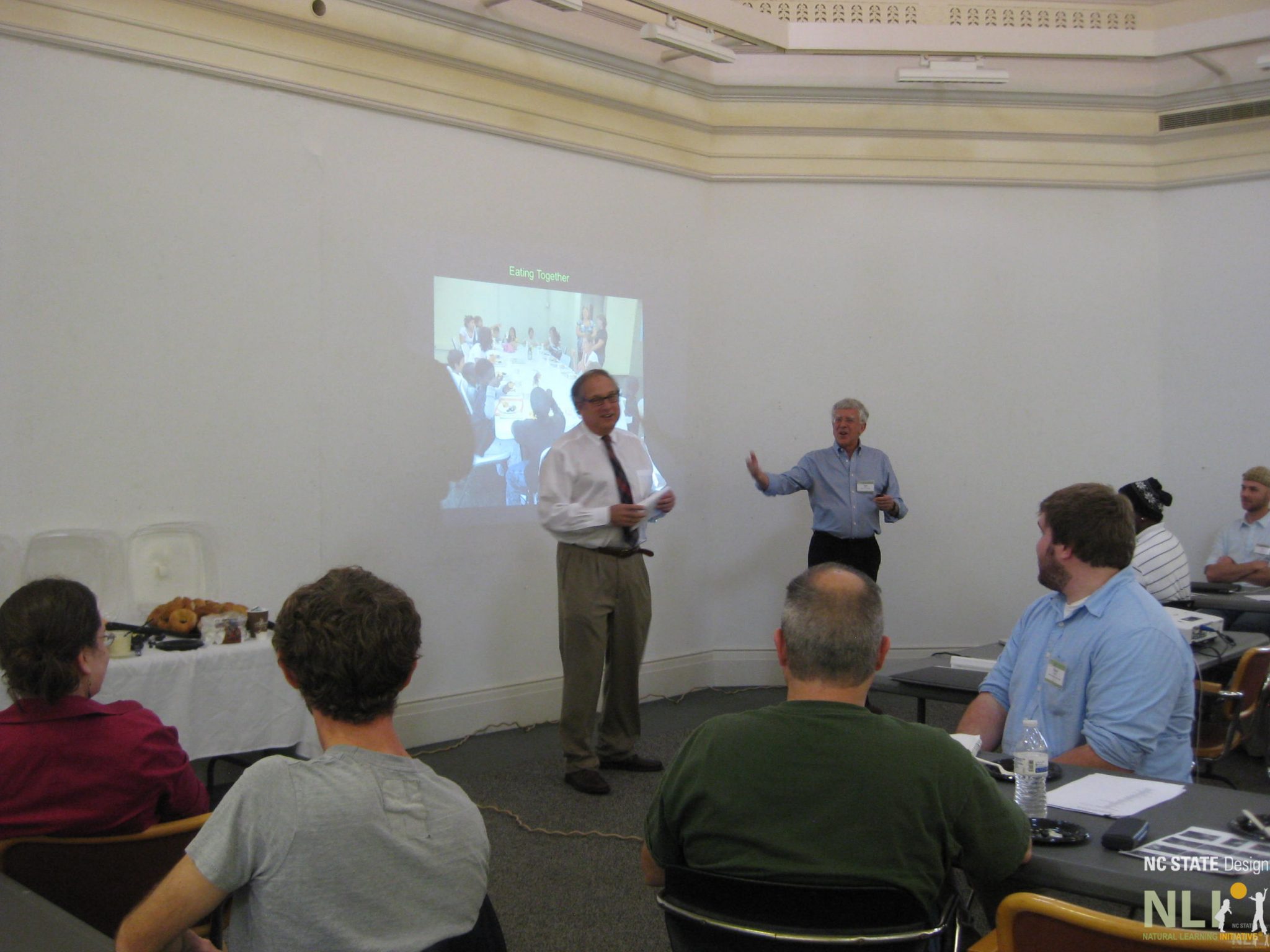
Gene Bressler greets students with Robin Moore.
The purpose of the charrette was twofold, 1) to expose prospective landscape design professionals to early childhood OLE design best practices; and 2) to foster greater connections between these three departments and institutions.
The event marked the beginning of NLI’s effort to develop various OLE education modules for use in landscape architecture, landscape design and horticultural technologies programs across the North Carolina community college and university systems. This component of NLI’s current POD3 Project, which is funded through the generous support of the Blue Cross and Blue Shield of North Carolina Foundation.
The charrette was a huge success. Working in small teams, students eagerly worked to develop solutions for four childcare facilities. After stopping by to observe a portion of the day’s activities, Professor and Department of Landscape Architecture Head Gene Bressler, FASLA noted, “Having students and faculty representing three levels of higher education from three separate institutions all in one room generating and sharing knowledge and ideas on a mutually common set of issues was in and of itself a tremendous achievement. The amount of energy and passion emanating from the participants caused the top of the rotunda to spin.”
Testimonials from the students
The most valuable aspect of the POD3 charrette was networking between colleges and working with different designers on different levels, and hopefully meeting future colleagues and professors!!!!!!!
I found the charrette session to be a good teamwork exercise as well as a wonderful exercise to make people come out of their comfort zone & work with people they have never met before.
We were able to put all perspectives into the designs instead of just what we have learned at the Community College Level.
Designing with children in mind is rewarding as well as challenging….it is tough to try to think like a child, but enhances one’s creativity and awareness. Also, working with small spaces with many demands for usable space forces one to design for multi-purpose functional spaces that are intriguing to a variety of age groups.
Collaborating with other students from different schools offers a new way of designing. Children and obesity is becoming a major concern in our society more than people believe it is. Approaching a design problem with various concepts may help the engagement and encouragement of new concepts for designs.