“Re-Naturing Urban Childhood: A Sustainable Development Strategy” looks back briefly to the European beginnings of nature conservation 450 years ago and the ever-changing construct of childhood and status of children to the present day, supported by the Convention on the Rights of the Child (CRC). In parallel, the evolution of international efforts focused on human dependency on the biological health of planet Earth are documented, beginning in the early 1970’s, including the Sustainable Development Goals (SDG), the Social Determinants of Health (SDOH), Nature-Based Solutions (NPS), the Millenium Ecosystem Assessment (MEA), and other policy advances. The critical question addressed is, how do these impressive, international advances frame the role of children, the young of Homo Sapiens, as actors with rights, as stated in the CRC, acting on their own behalf and the future health of planetary society? The chapter attempts to respond, with evidence-based support for engaging children with living nature, including an emerging recognition of the critical importance of early childhood (birth through 7 years) in the fight for sustainability. Children need to engage and learn with nature from toddlerhood through adulthood if they are going to become supporters of planetary health and beneficiaries of personal health. The growth of academic interest in children’s environments and the Natural Learning Initiative role in re-naturing children’s everyday spaces, with photographic examples, are noted. The chapter concludes with recognizing substantial advances in recent years in recognizing the need for high dosage children’s natural settings in everyday life, implementing them on the ground to facilitate childhood freedom and motivate nature play, learning, and education.
Re-Naturing Urban Childhood: A Sustainable Development Strategy. In Forests for Public Health, edited by Christos Gallis and Won Sop Shin. 2020. Cambridge Scholars Publishing.
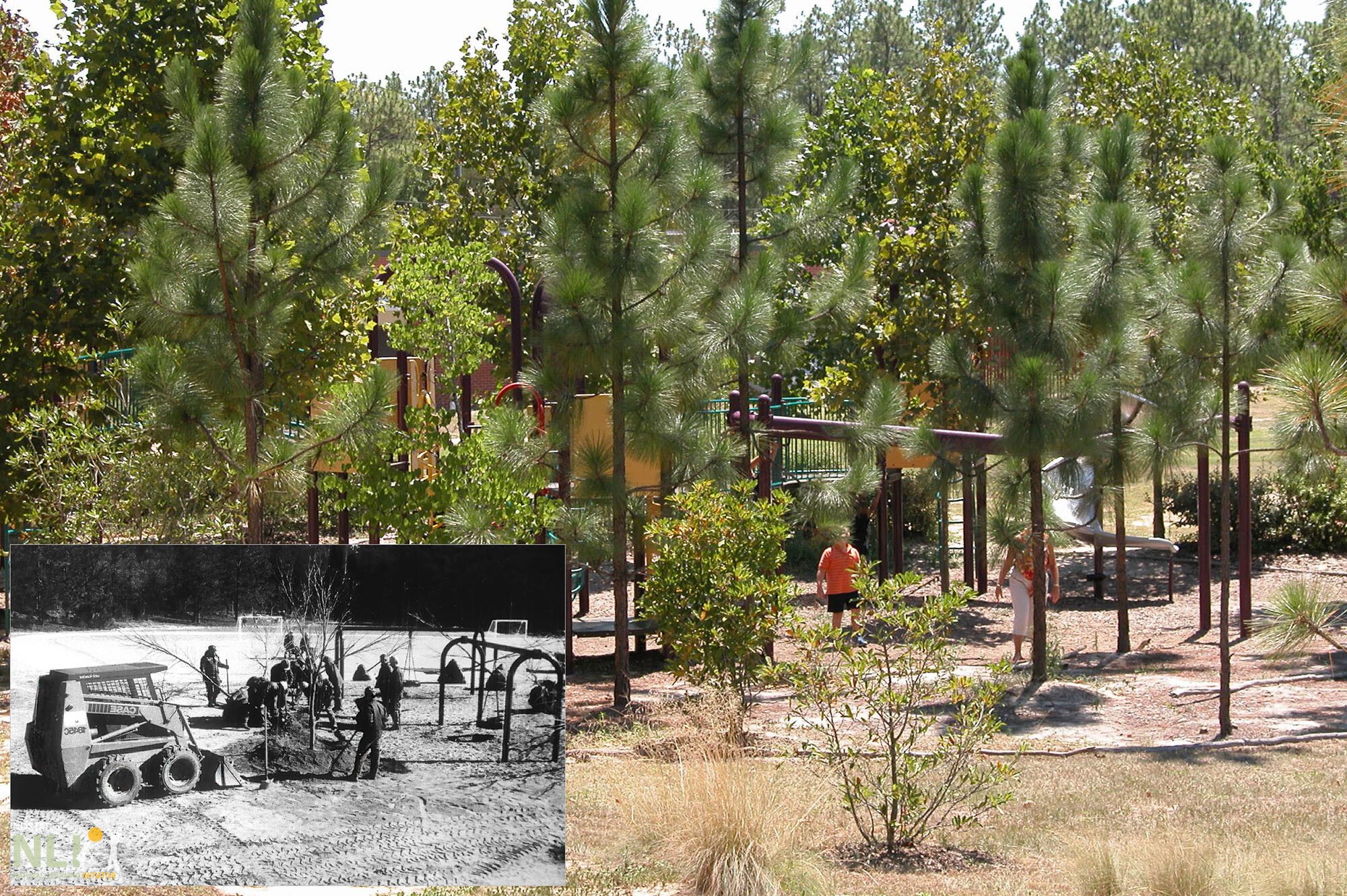
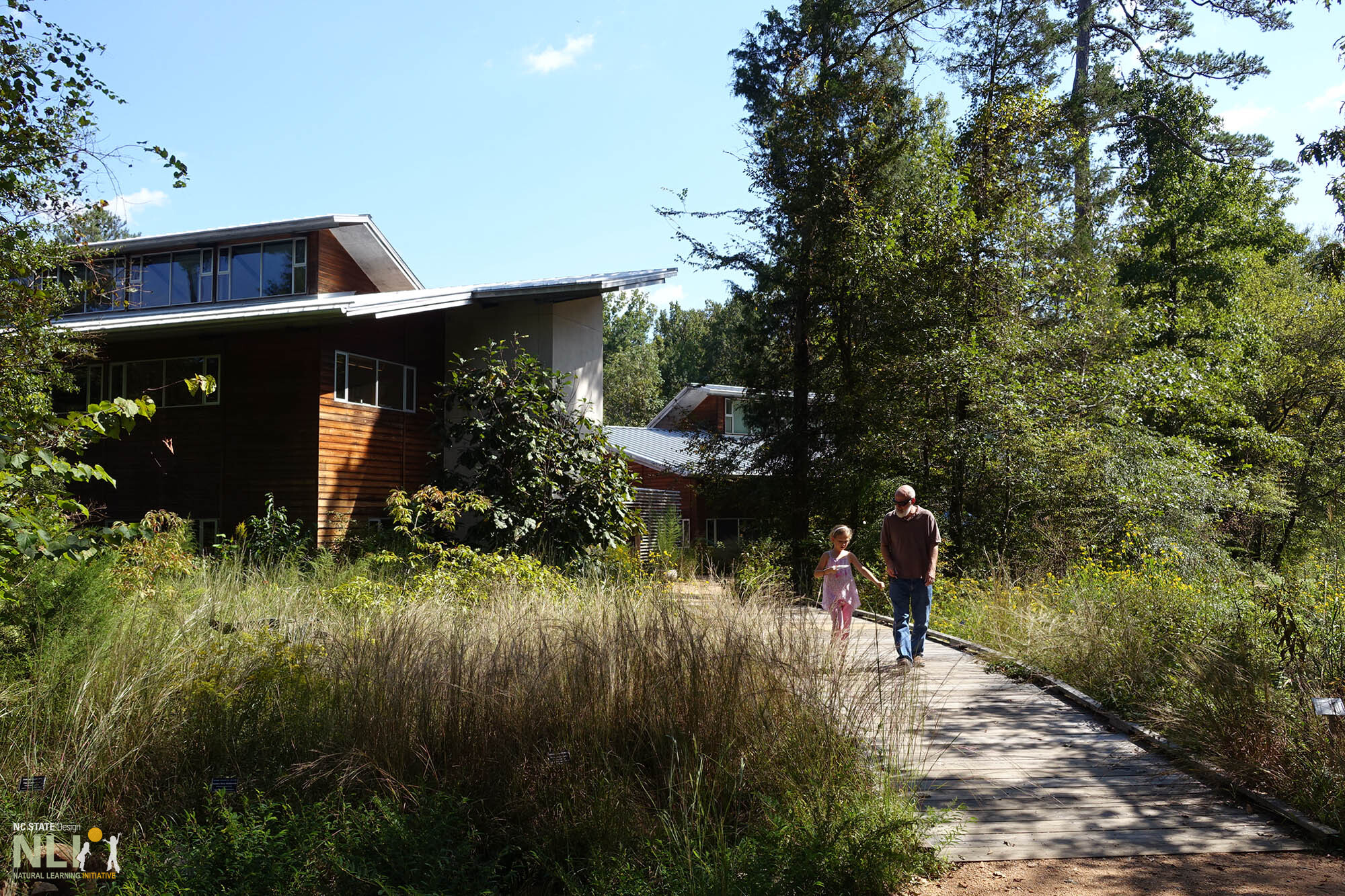
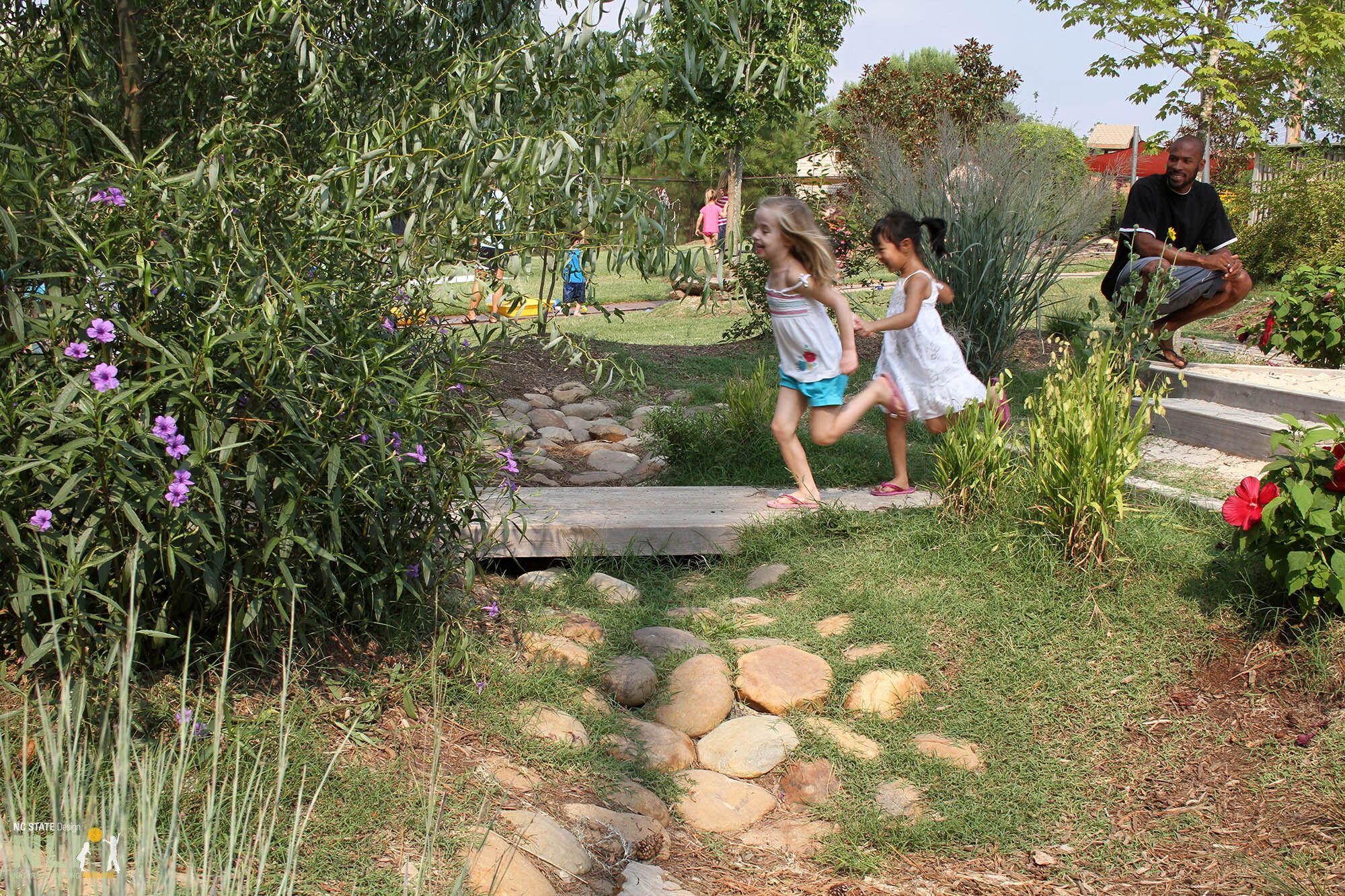
Re-naturing barren school sites makes them places for creative play and learning.
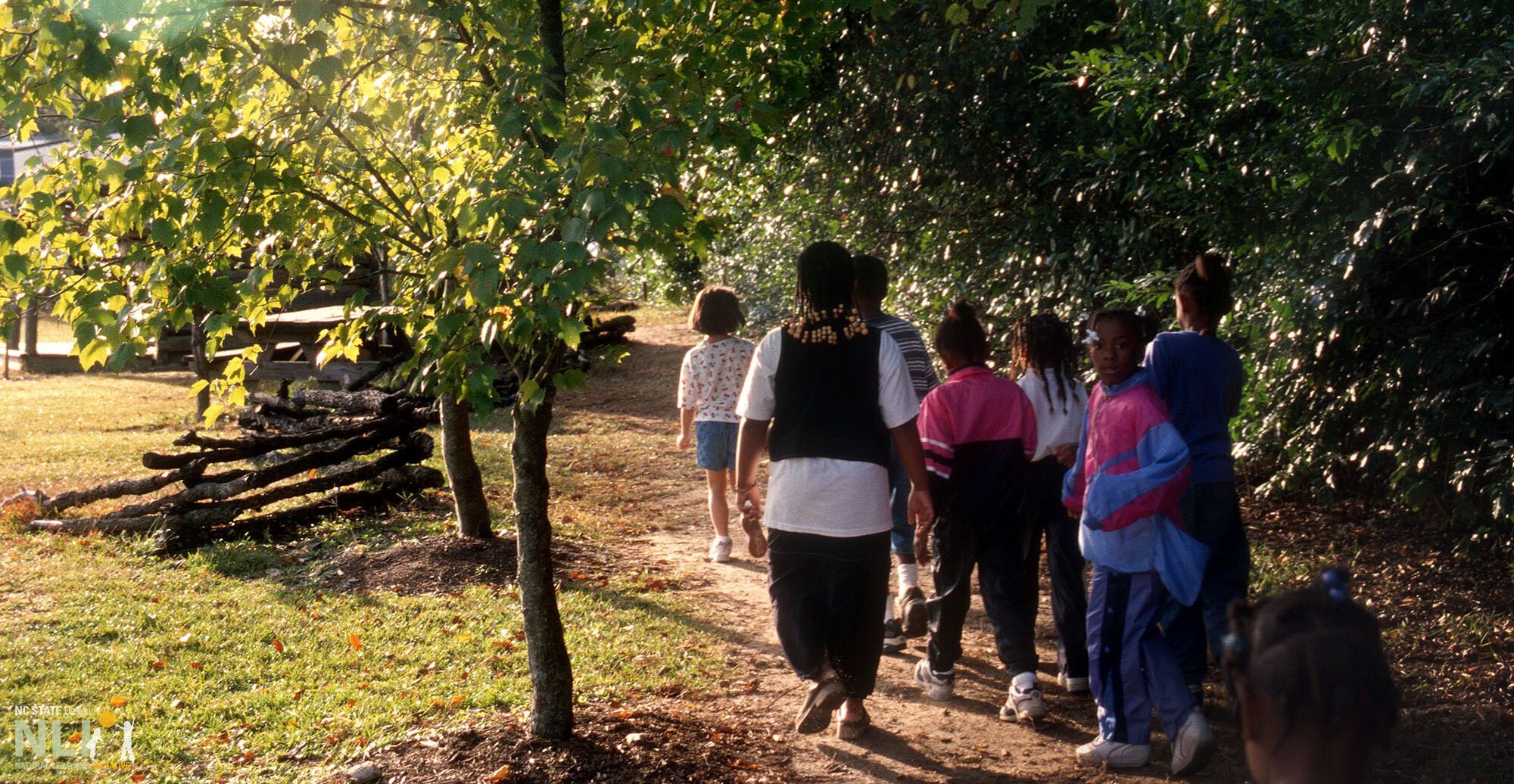
Peripheral trail around school park offers a positive social time for children, healthy exercise, and learning opportunities before, during, and after school hours—and at weekends for local families.
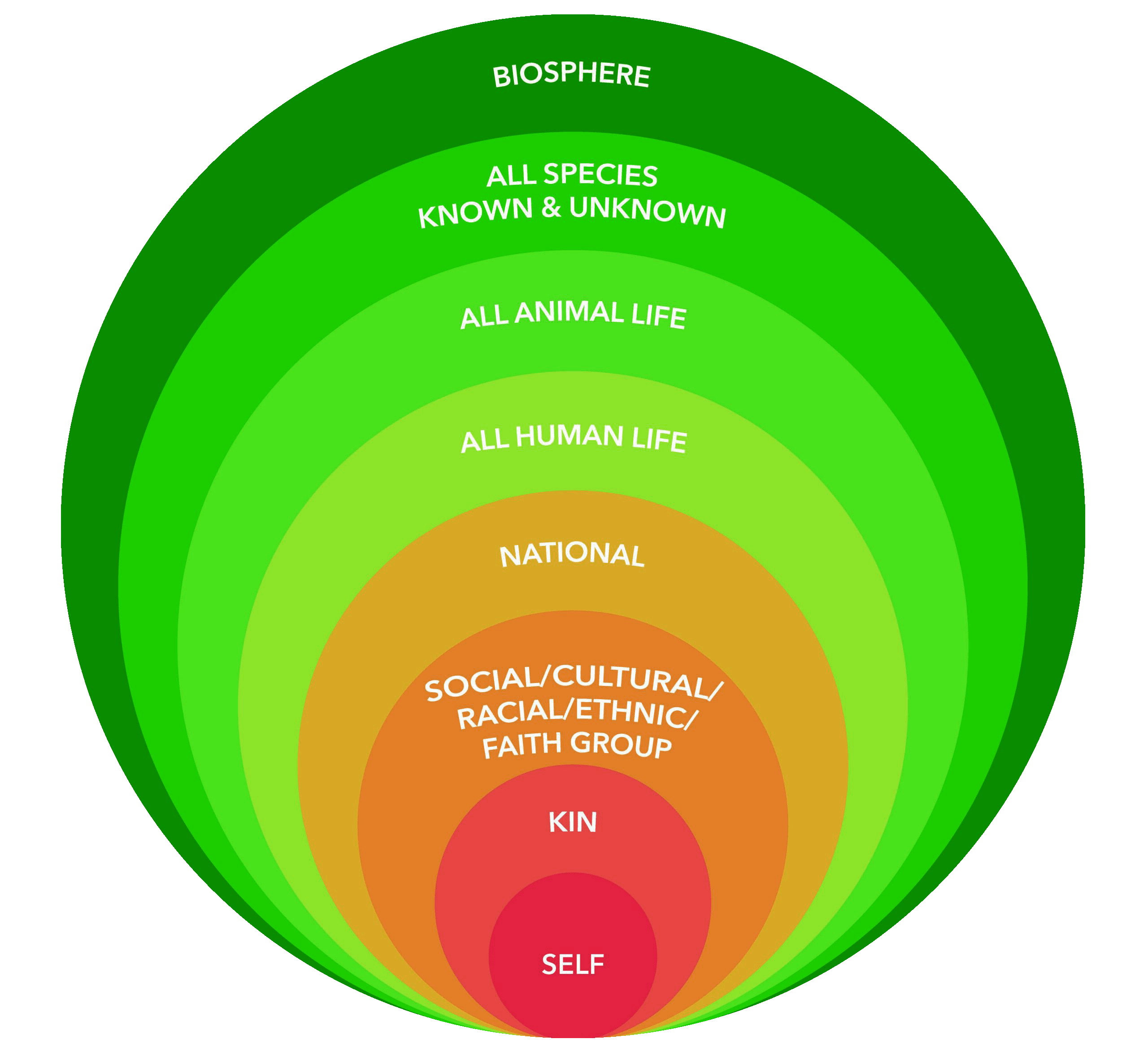
“Me and the Biosphere” Children and youth need to grow and develop in naturalized urban surroundings of everyday life, where they can identify with nature and see themselves as part of their community and culture, sharing our planet together.
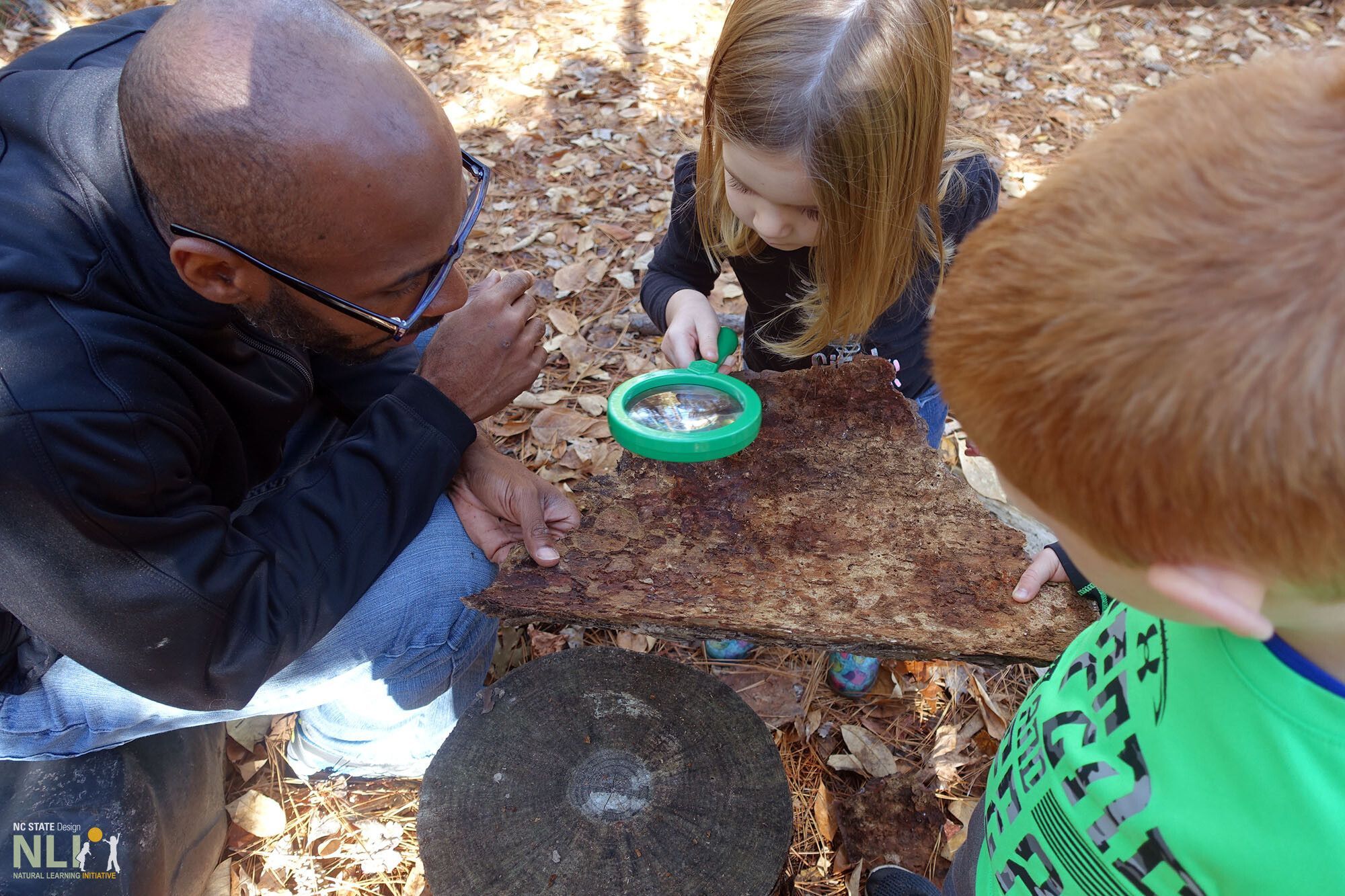
In a small, remnant, urban woodland, young children explore life on a piece of dead bark on the ever changing forest floor.
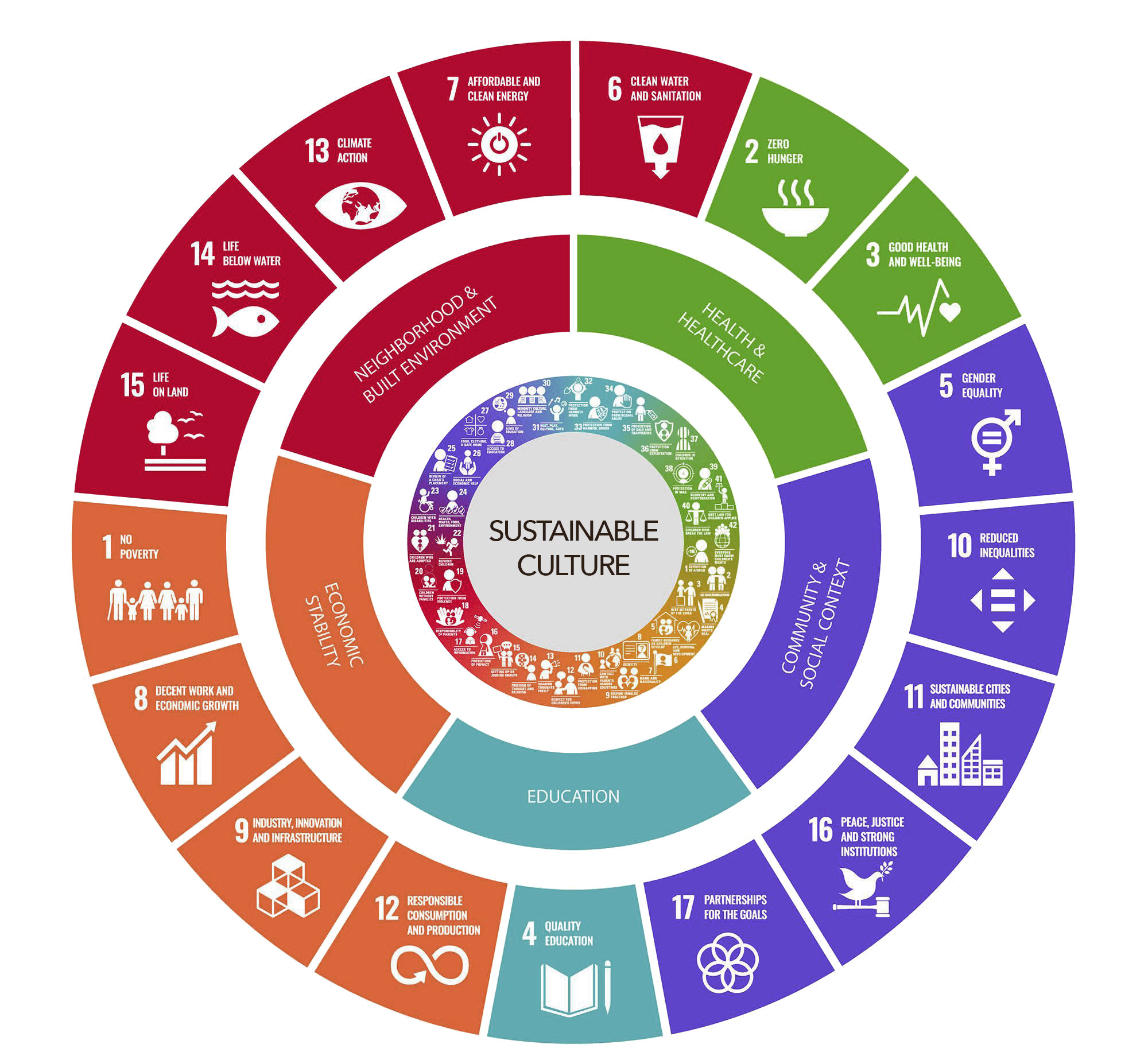
Sustainable, equitable, global culture is supported by three realms of international policy. Foremost is the Convention on the Rights of the Child (inner ring), an international treaty with 42 Articles mandating basic child rights; Social Determinants of Health, defining 5 key areas influencing human health and equity; and 17 Sustainable Development Goals, 10 of which UNICEF is custodial for, including early childhood development.
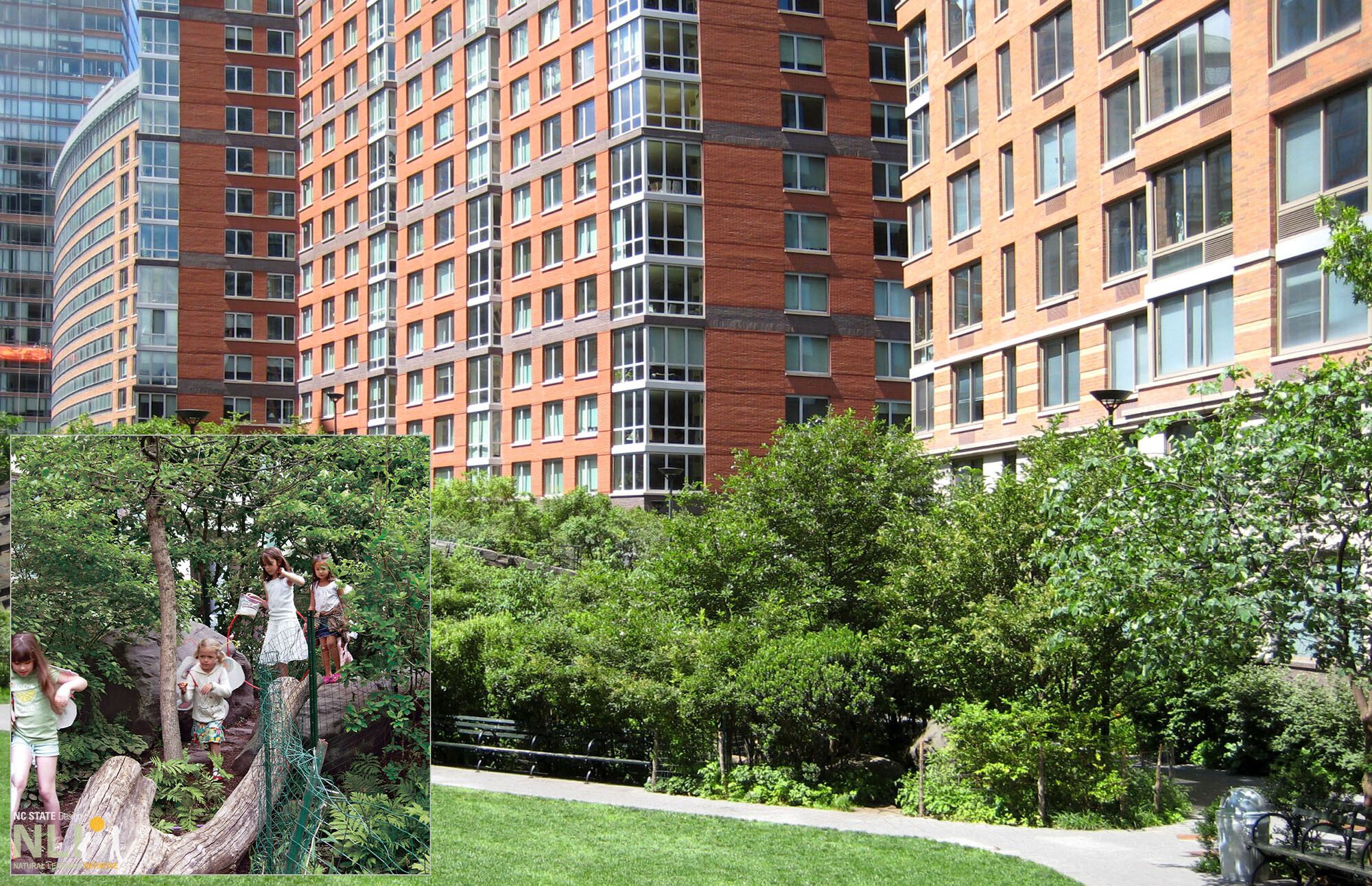
Teardrop Park in high density Manhattan, NYC, offers a nature playground to children of all ages, including a miniature woodland that also gathers and purifies storm water.
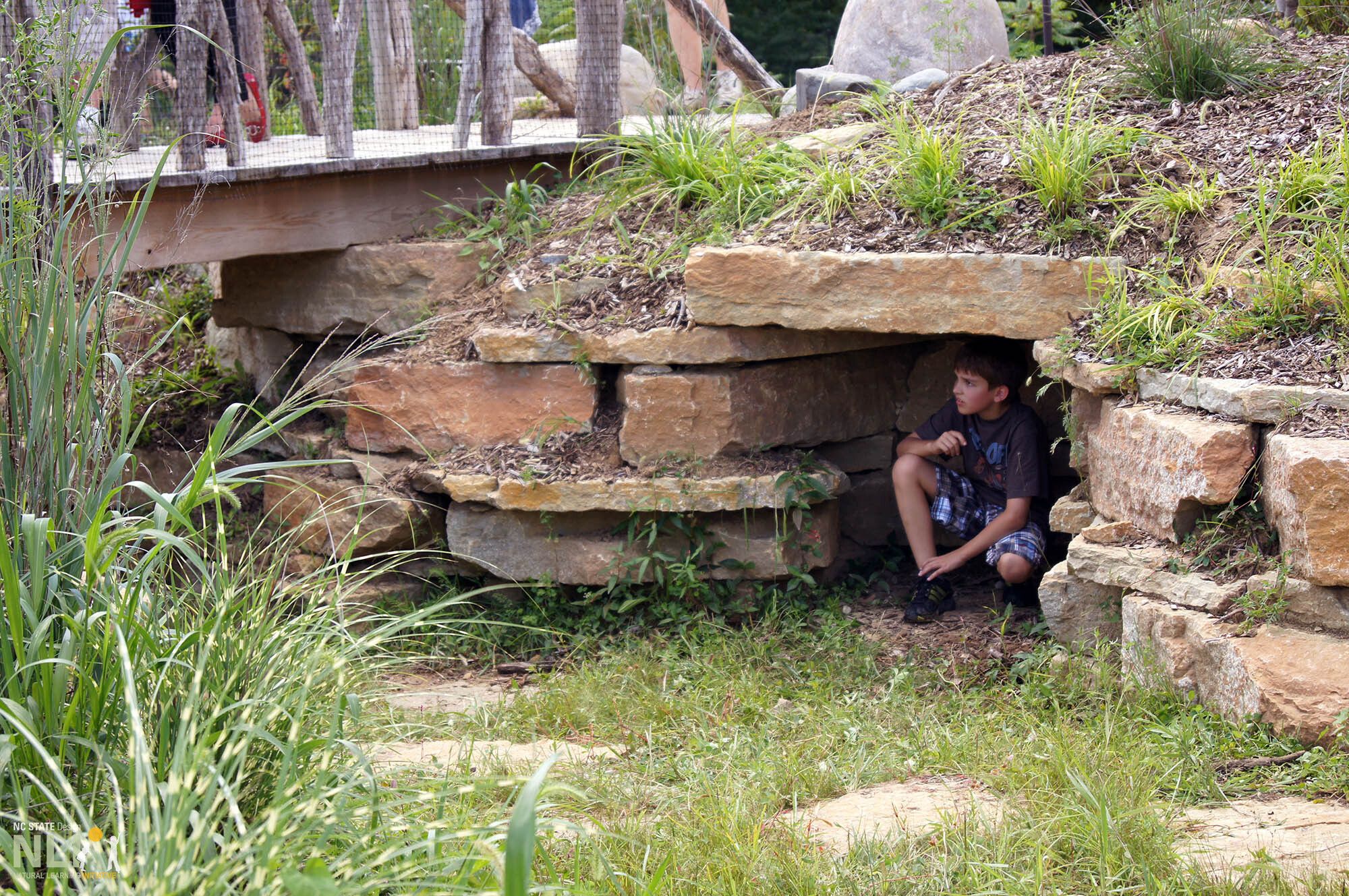
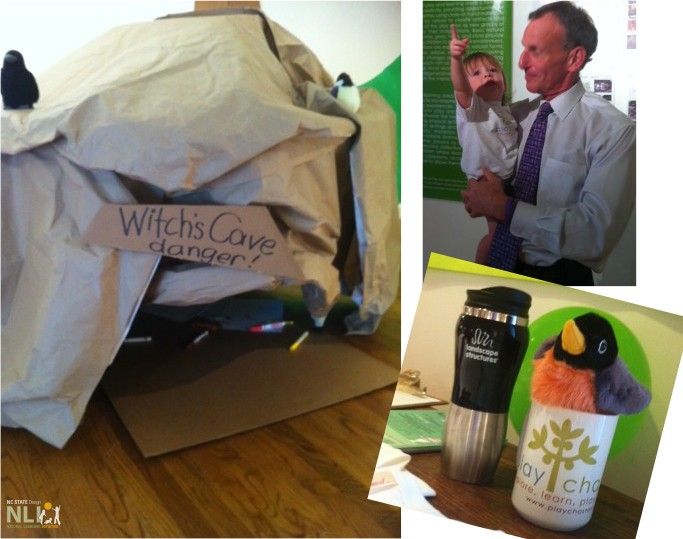
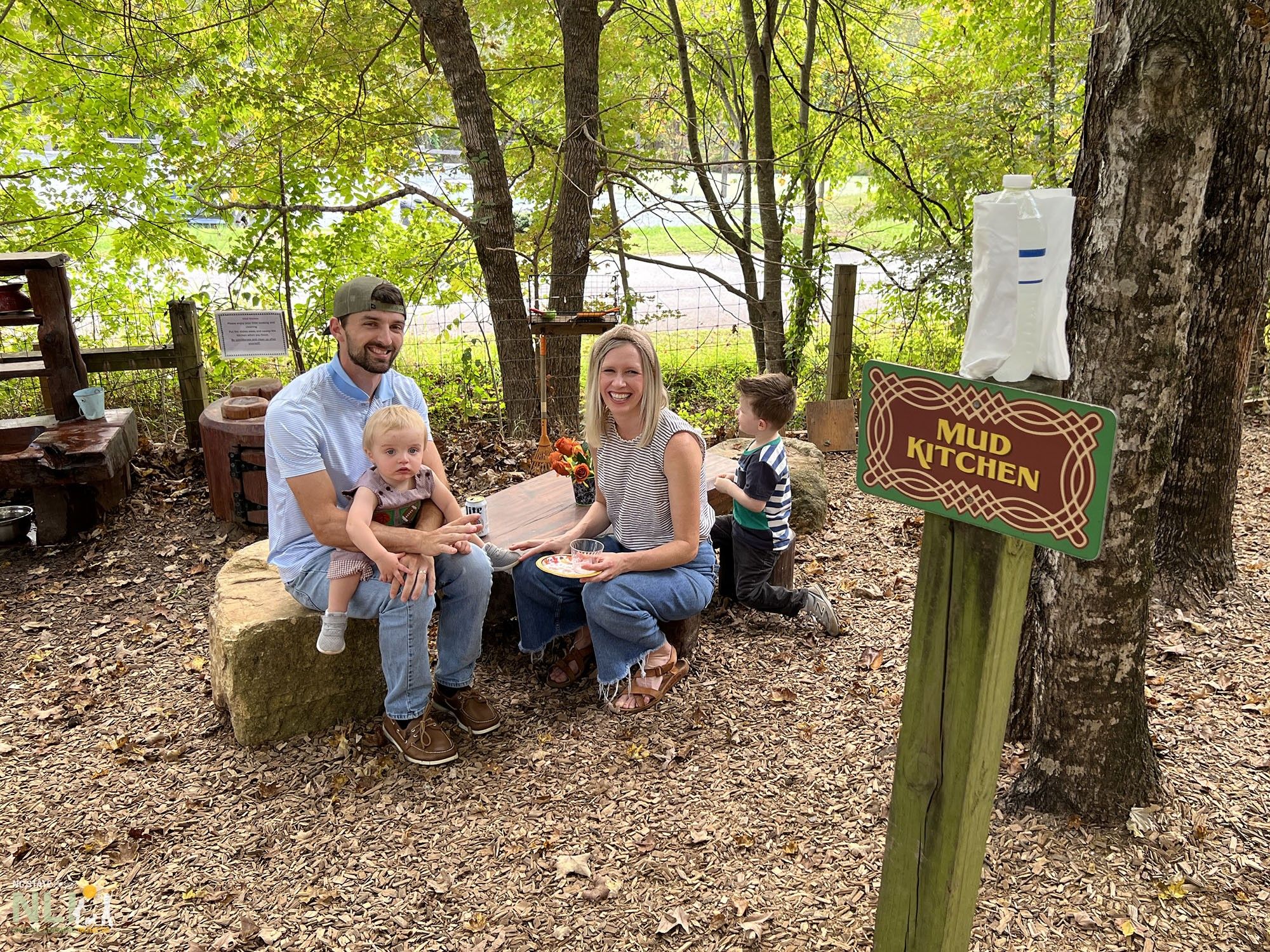
Cave-like places embedded within the surface of the Earth fascinate and shelter children and stimulate hide-and-seek games.
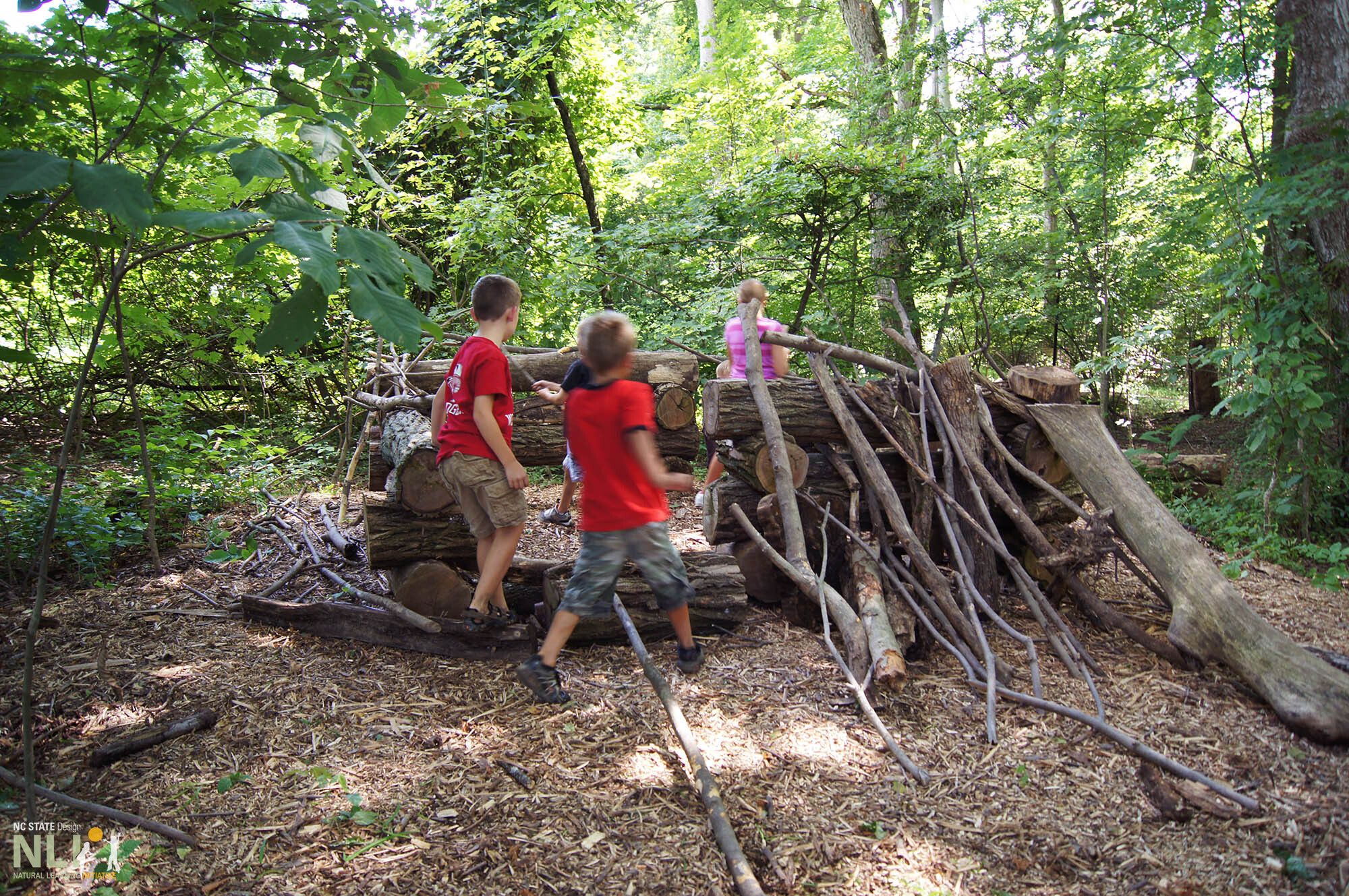
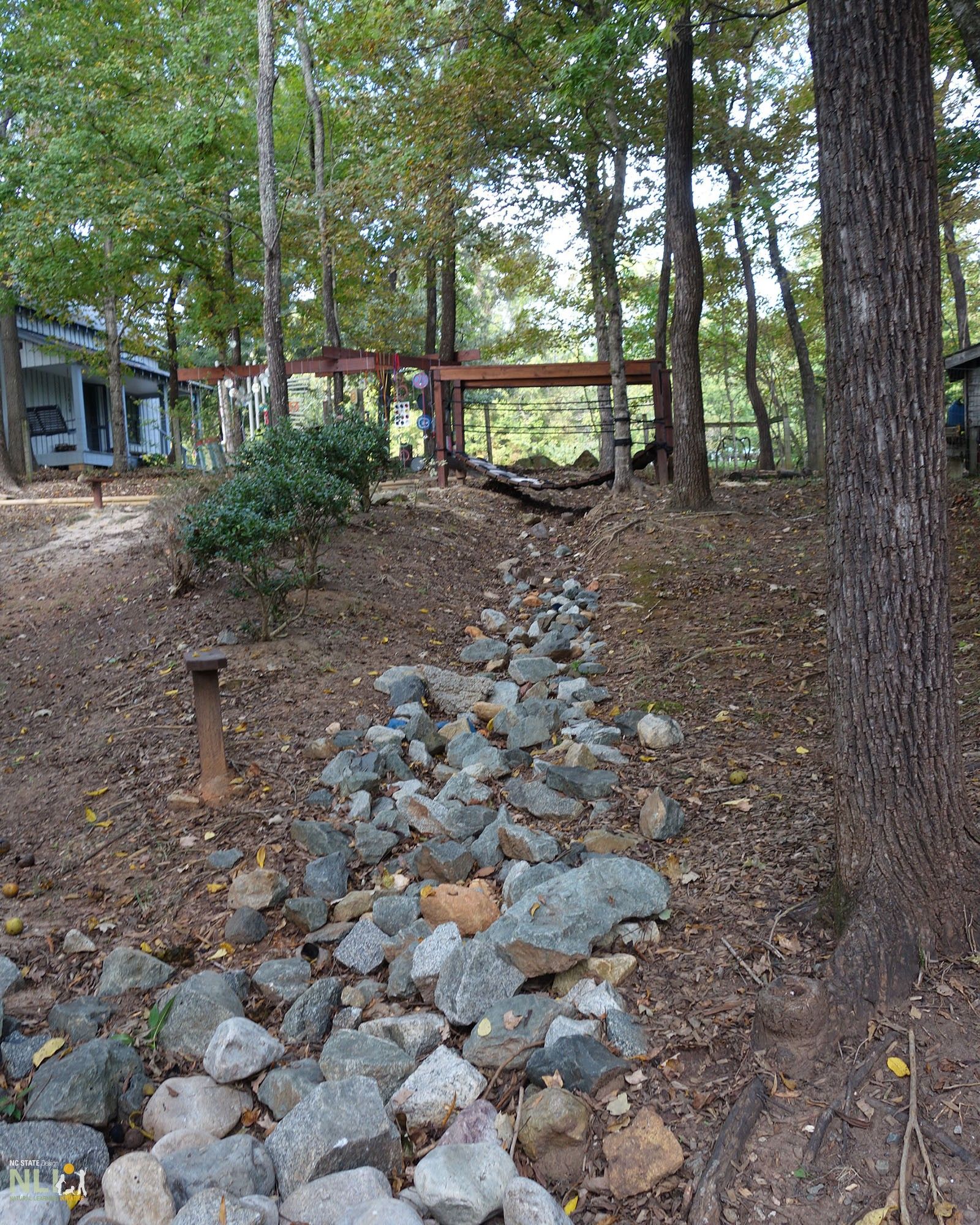
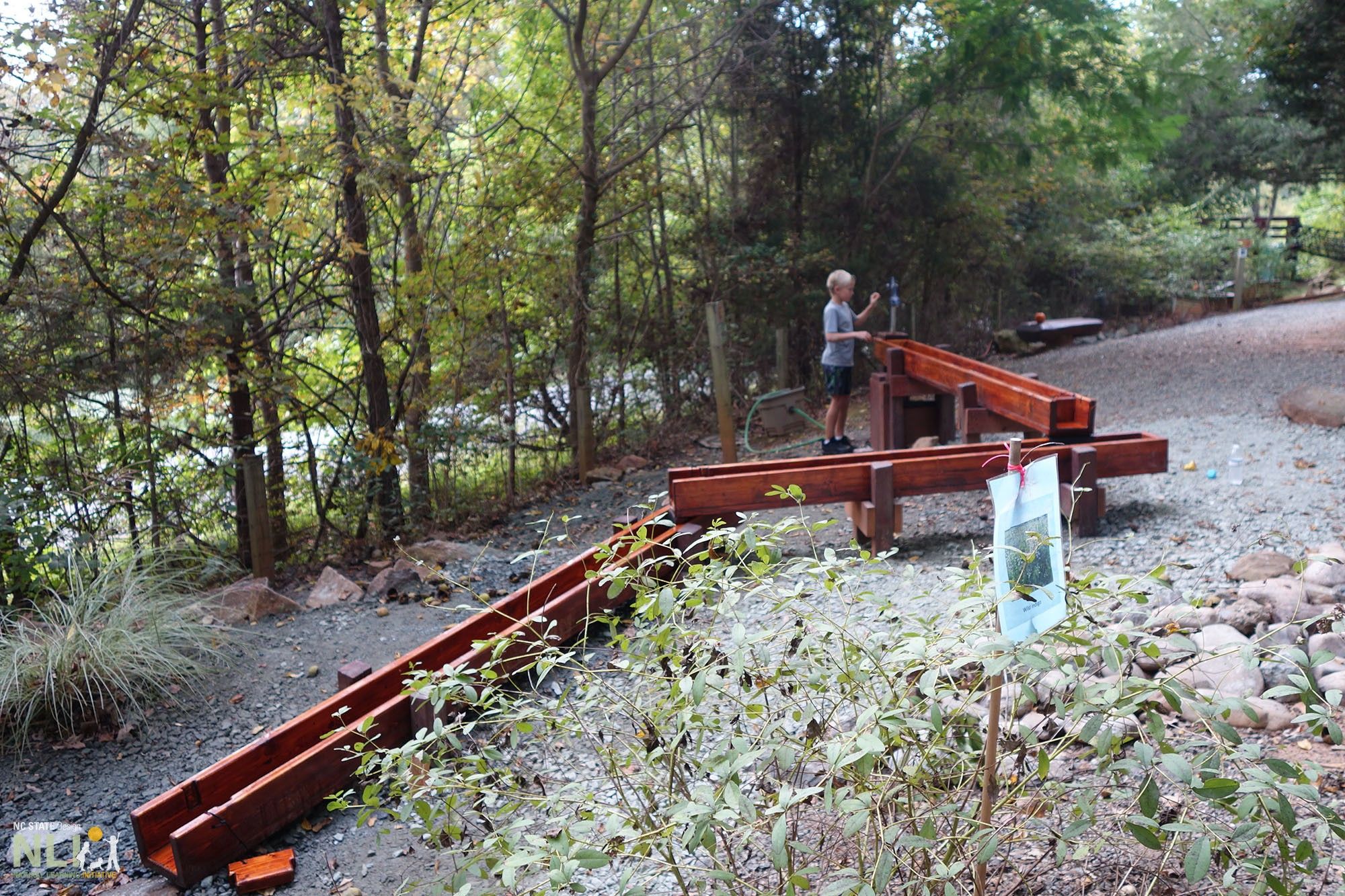
Small, urban woodlands with designated play settings and natural loose parts can be managed as creative play and learning spaces, attracting children to collaborate and create together.
Nonformal education centers such as botanical gardens can be designed to be integrated with nature as “green infrastructure,” attractive to people of all ages to explore and enjoy together.
Nature integrated into diverse, shady, play and learning places motivates young children to move!
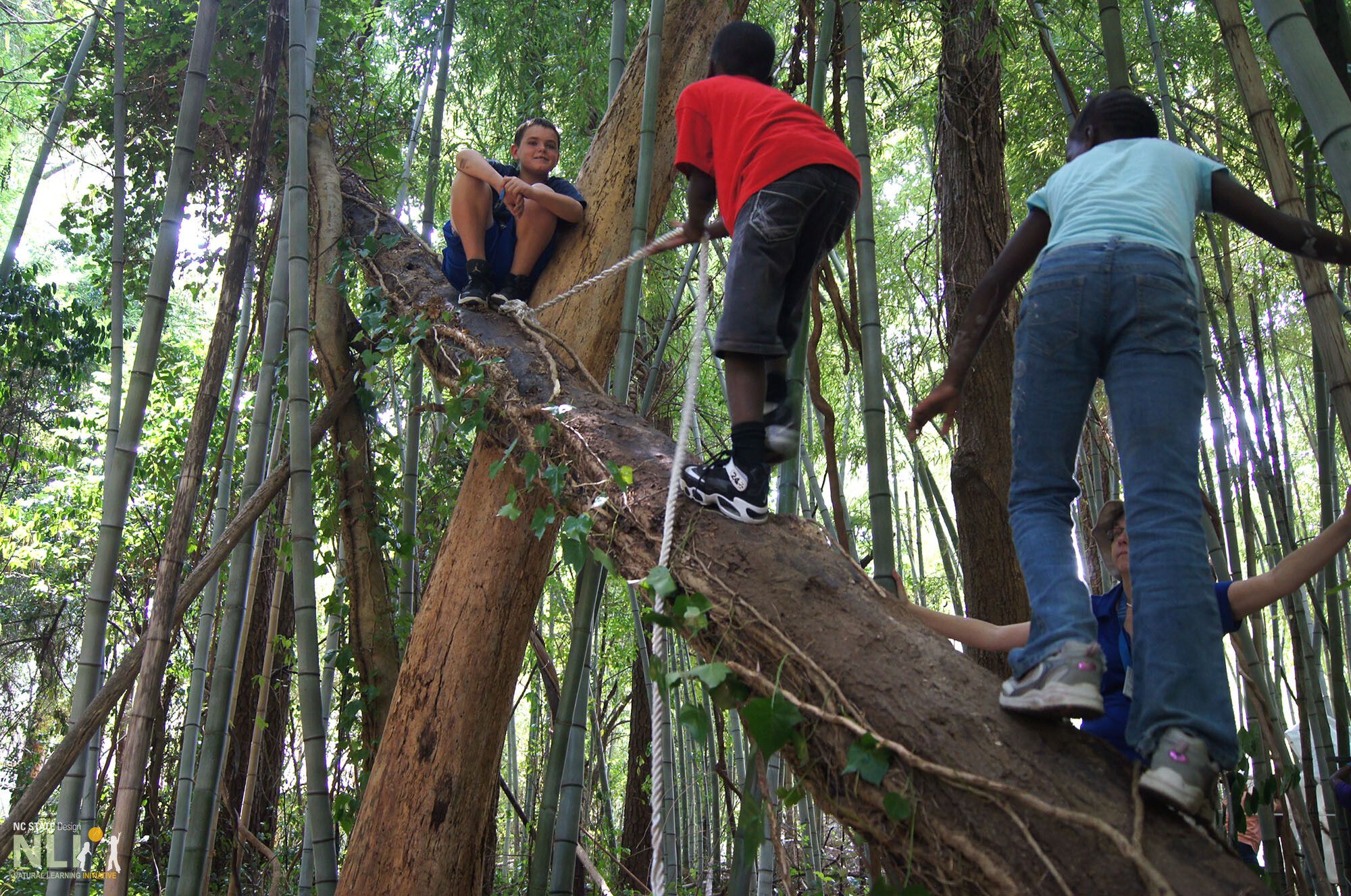
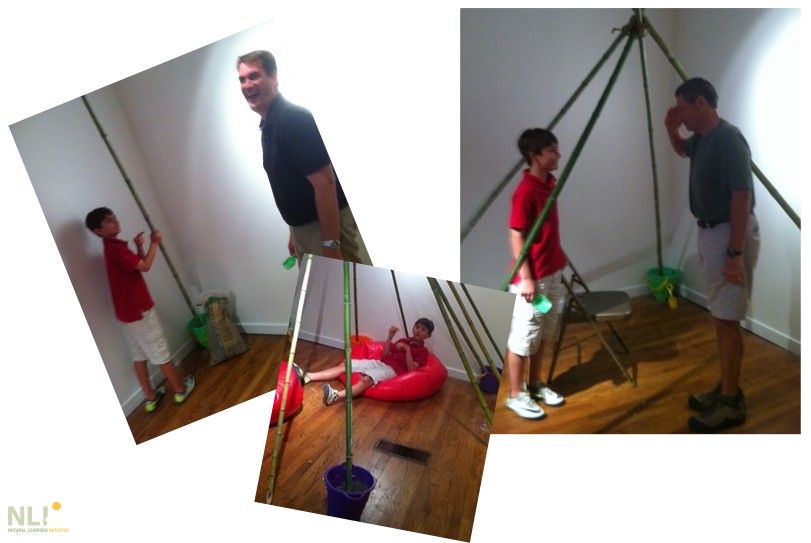
Giant bamboo forest offers wild adventure play to older children, facilitated by playworkers.
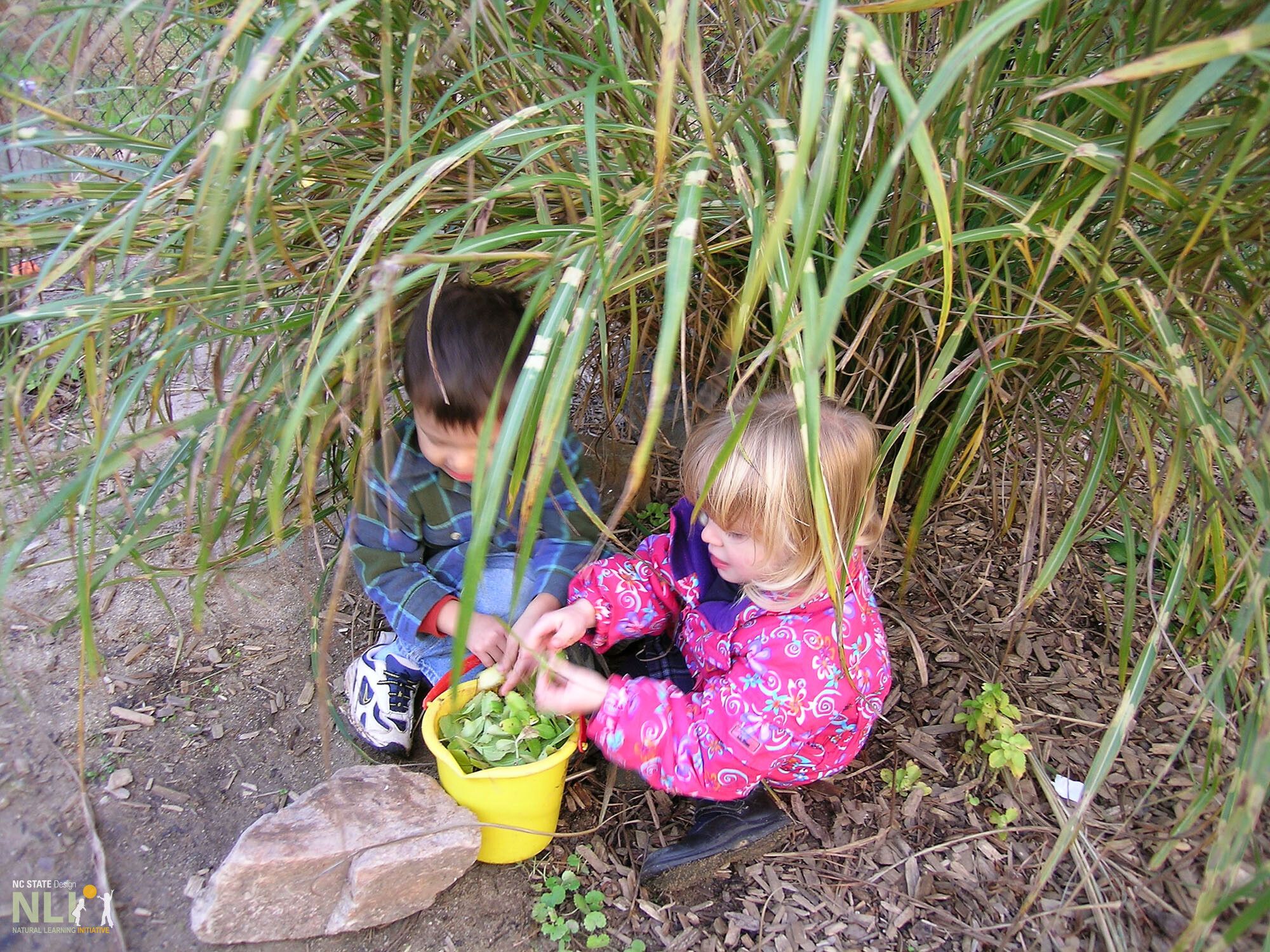
Small, everyday places, where young children can engage with nature together in harmony, are crucial and easy to provide.
“To improve the quality of care, we stumbled across grants,” she says. After applying and receiving the money, this support helped her make positive nutritional changes to the food she was serving the children, as she vowed not to open any more cans and to only buy produce at the farmer’s market.
Over time, Shaw’s husband Maurice helped build most of the outdoor structures, and their blended family including her children Abram, Tyler, and Kaleb, and his, Brittney, Breyah and Brian, all benefited alongside their community.
Understanding What Every Human Needs
POD provides landscape design seed money and teaches childcare center owners how to create learning environments that pull teachers and students outdoors. The effort also engages the people who license and inspect the centers. This way, rules and regulations don’t stand in the way of creating these crucial spaces and opportunities.
Robin Moore and Nilda Cosco, founders of the Natural Learning Initiative (NLI), launched POD in 2007. Part of the College of Design at NC State University in Raleigh, NLI uses research and professional development to further healthy human development and a healthy biosphere. Like all NLI’s work, POD is supported by a large body of research stressing the importance of connecting kids with nature as early as possible; being physically active outdoors; enjoying unstructured play; and eating fresh, healthy, unprocessed foods.
“We want to start working with children at year zero,” says Moore. “We want them to have positive affiliations with the natural world and carry that with them in their daily life.”
“The needs of young children are more on the radar, but they still are not well attended to,” says Cosco. “We both have a background in human rights, which is an important part of this work.”
This story features four of NLI’s longtime partners and childcare center outdoor learning environments designed to nurture healthy, holistic child development from year zero onwards. The story is one of aninspiring series curated by Rethink Outside.
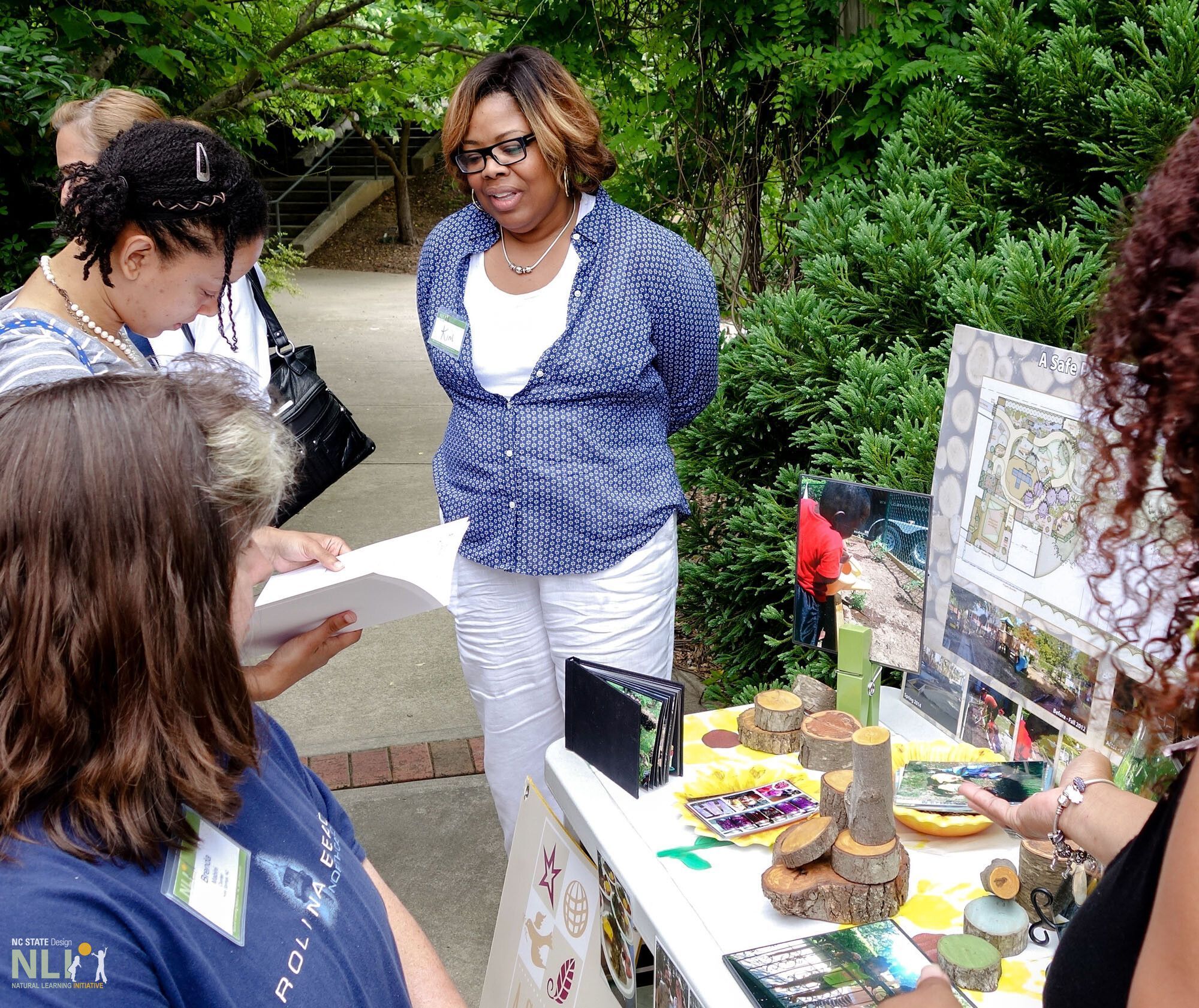
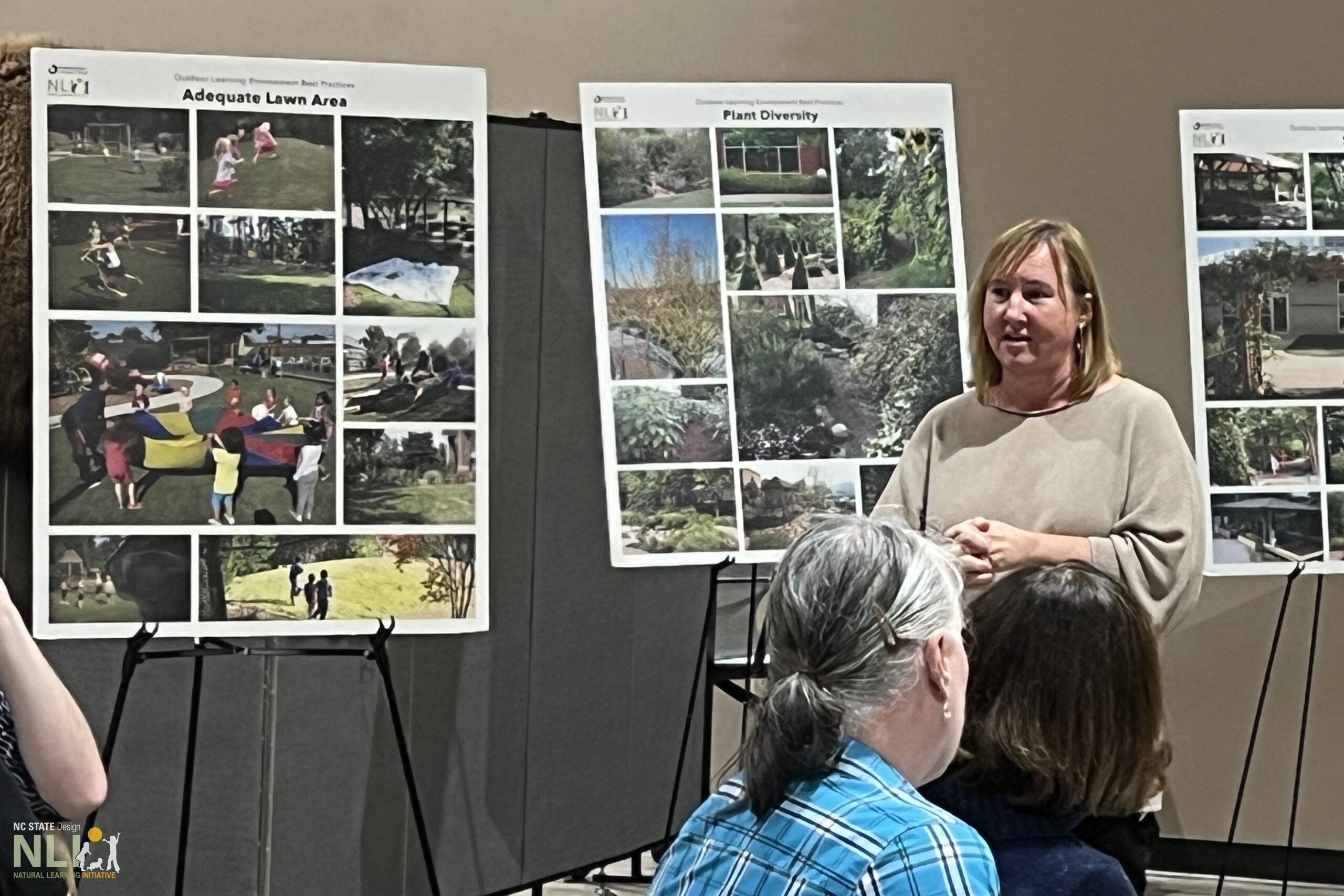
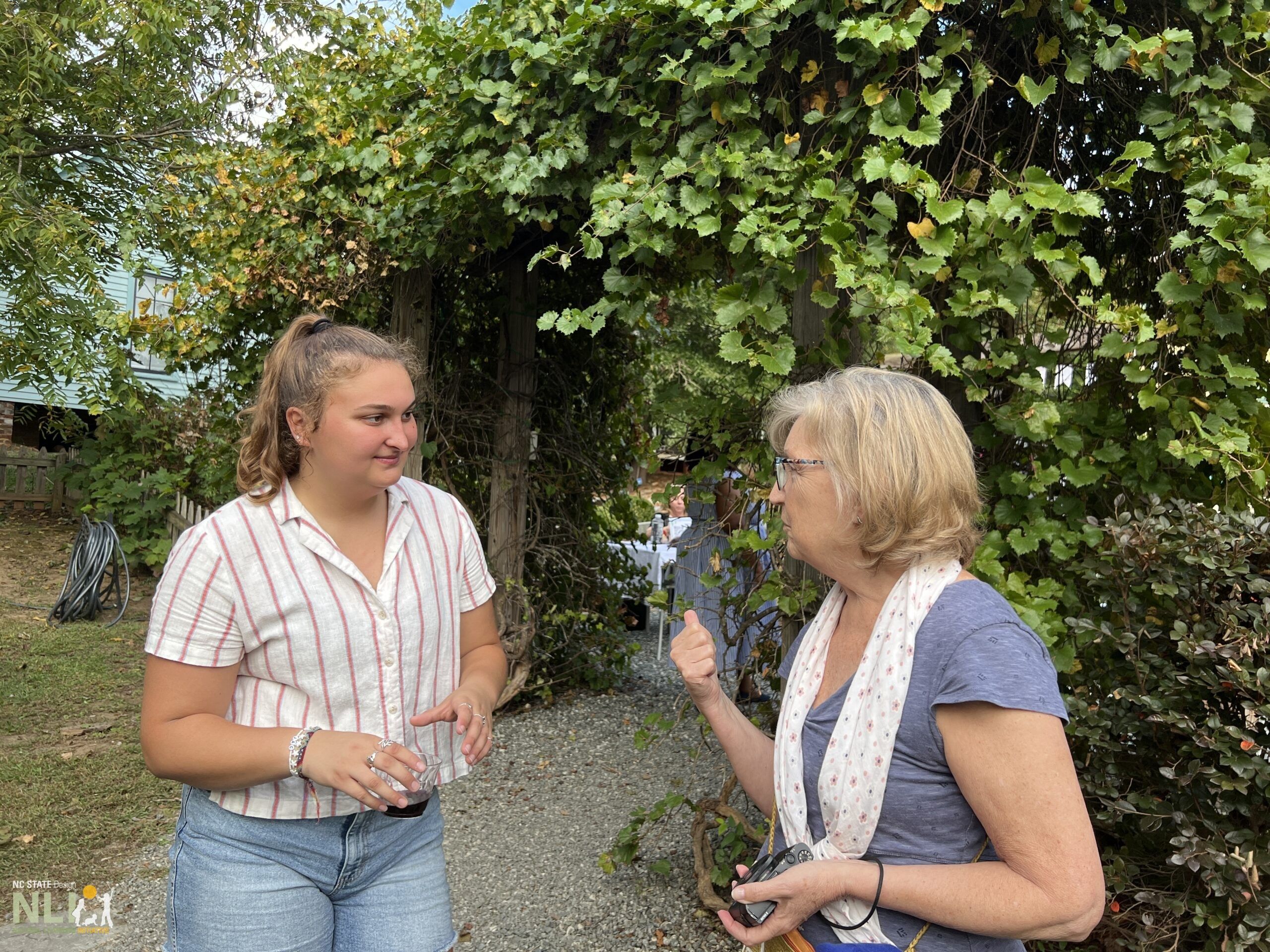
Kim Shaw, owner of A Safe Place Child Enrichment Center, discussing programmatic aspects at the NLI Annual Gathering of demonstration sites. Photo credit: NLI.
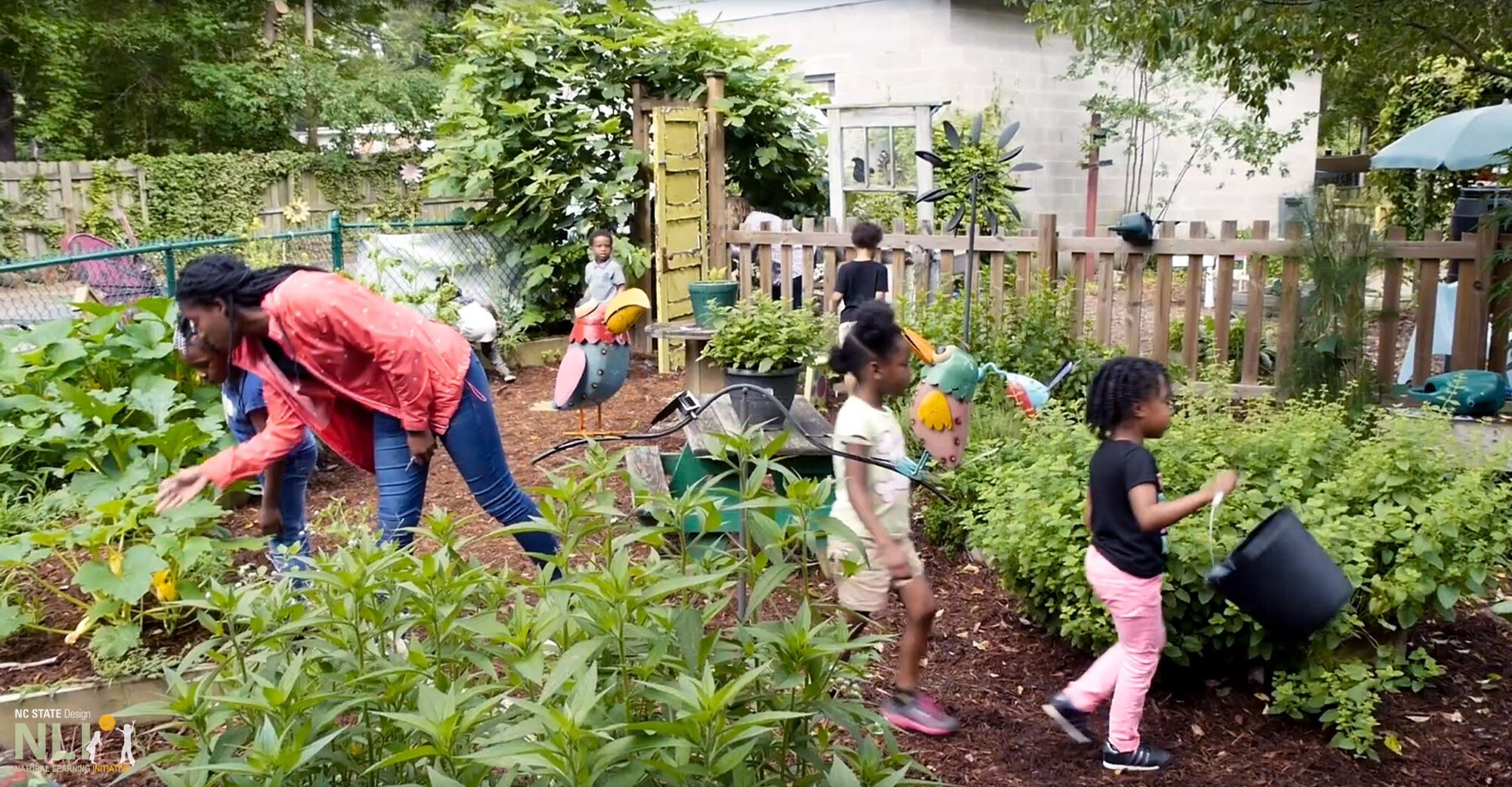
Kids working and learning in the garden at A Safe Place. Photo credit: NLI.
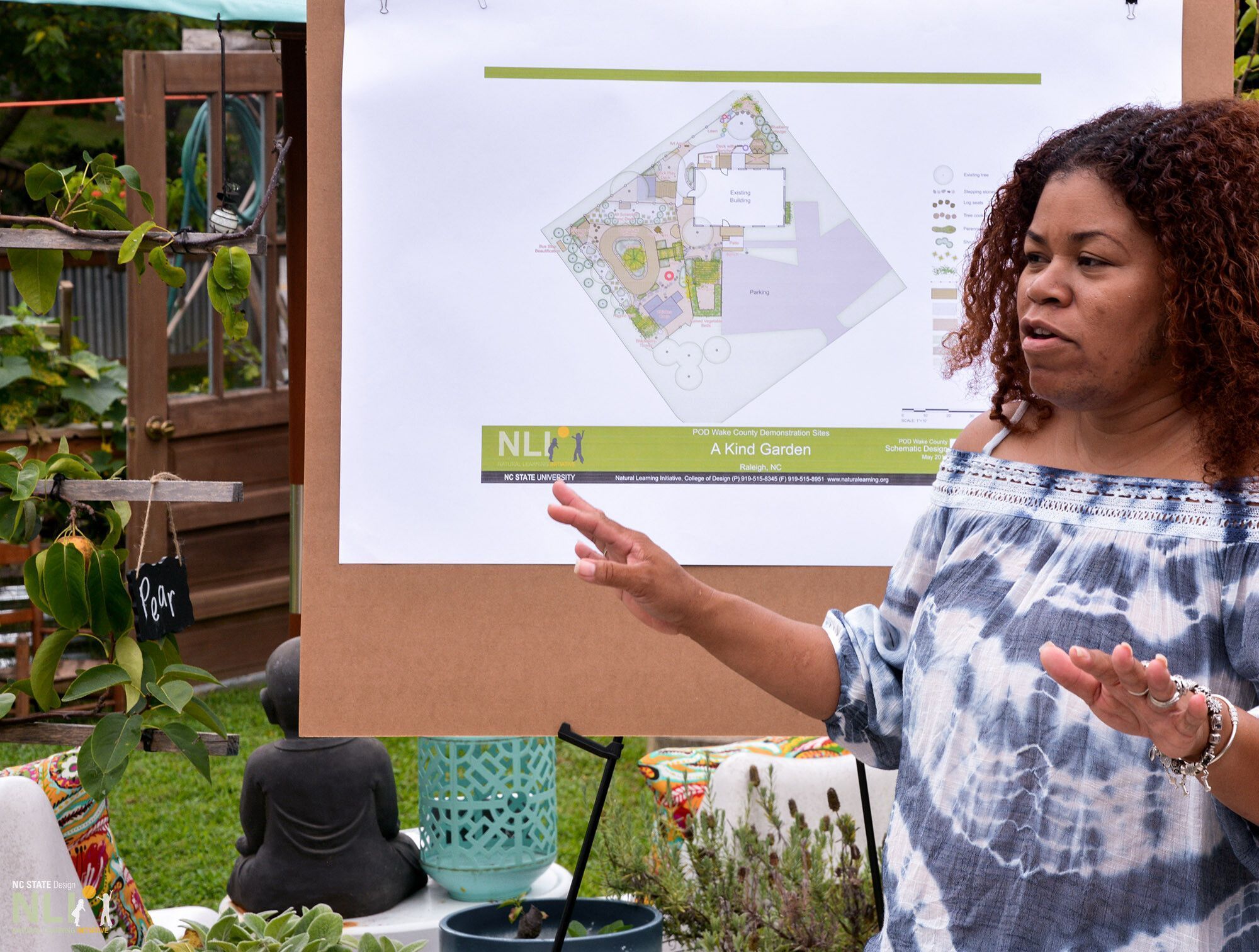
Alberta Forney, owner of A Kind Garden, explaining strategies used to implement the NLI outdoor learning environment design. Photo credit: Daniel Jost.
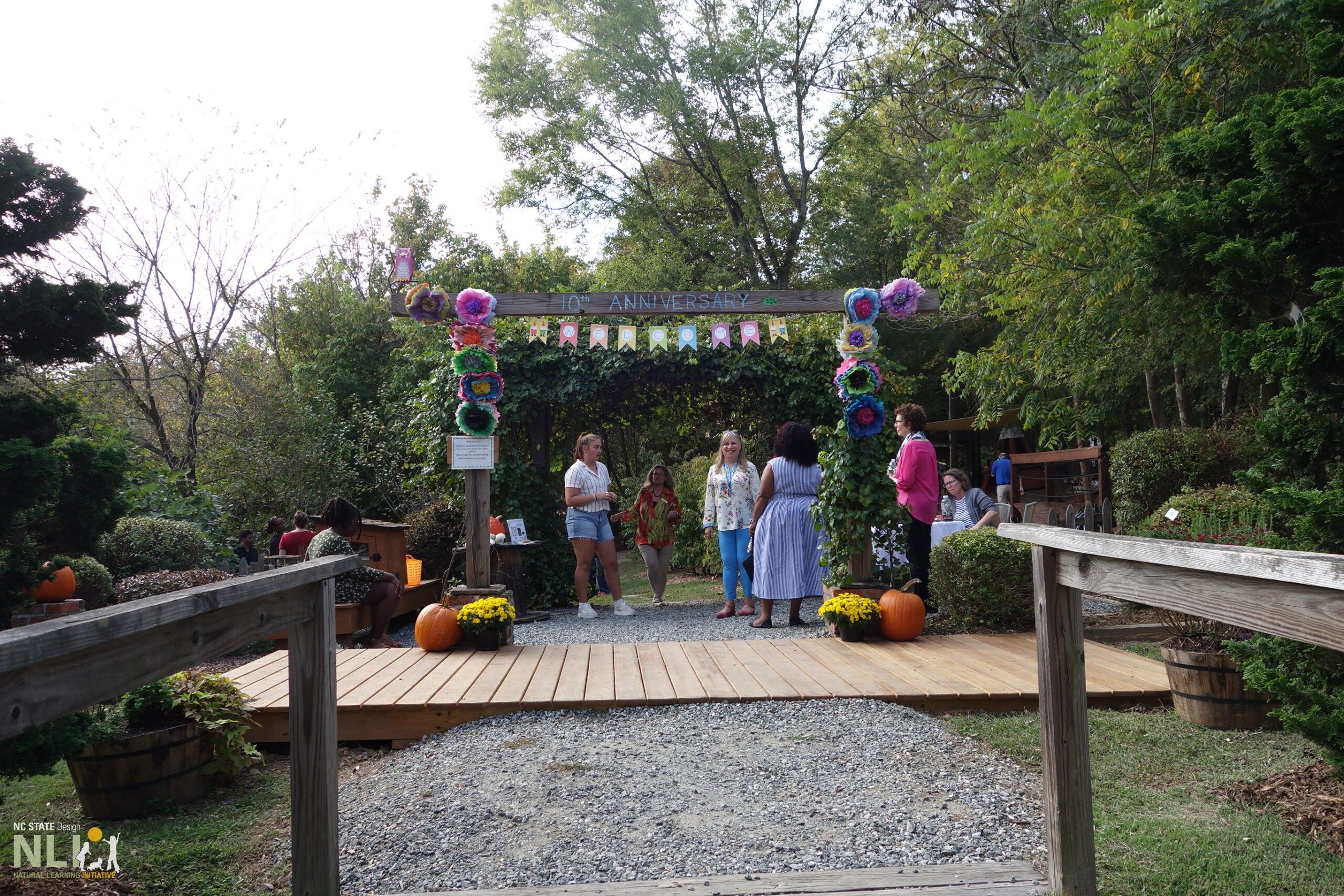
Rosalind Blair, owner of Beginning and Beyond Child Development Center, welcoming participants to the NLI Annual Tour of demonstration sites. Photo credit: NLI.
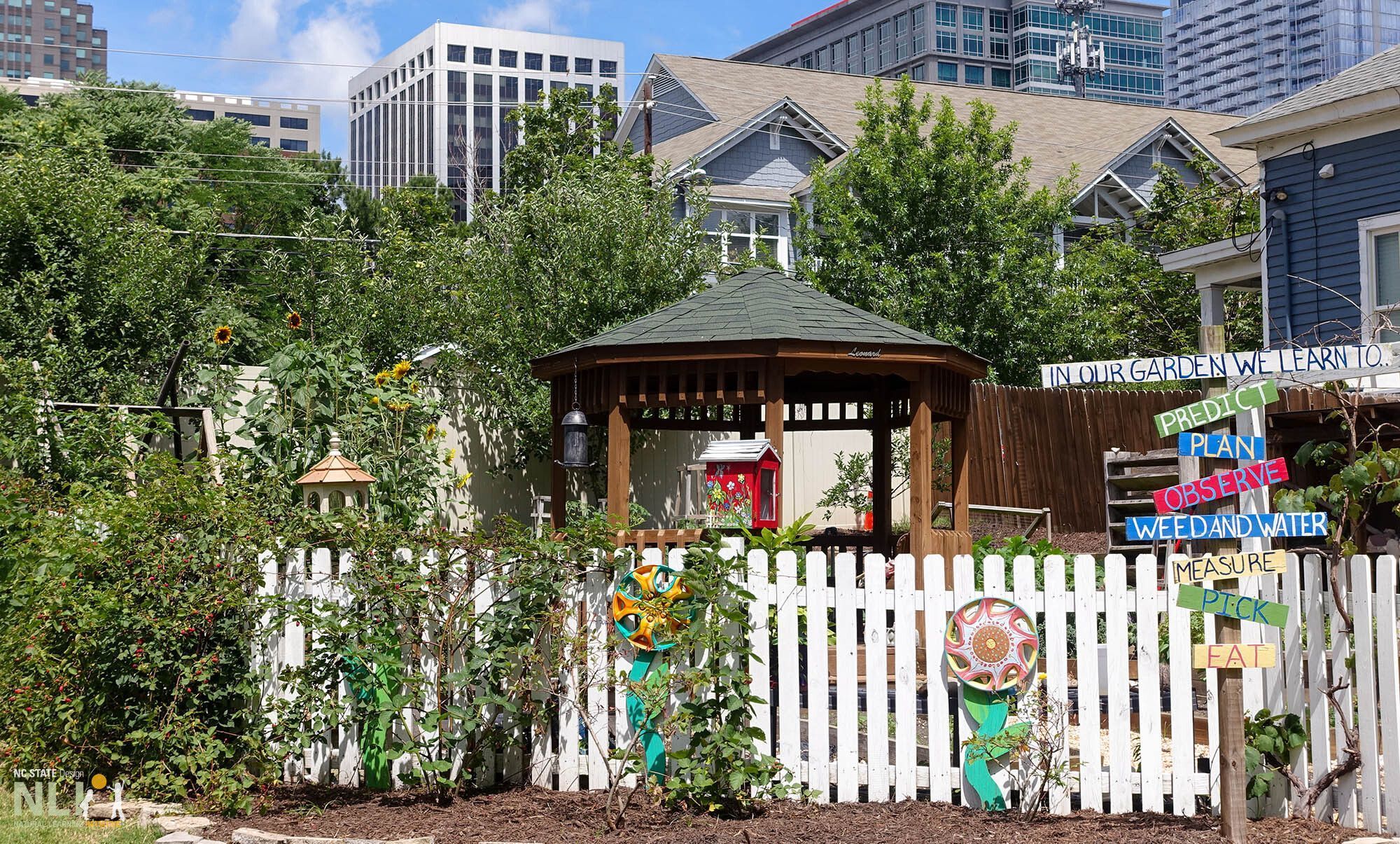
View across the “microfarm” at Beginning and Beyond, to the high-rise buildings in downtown Raleigh. Photo credit: NLI.
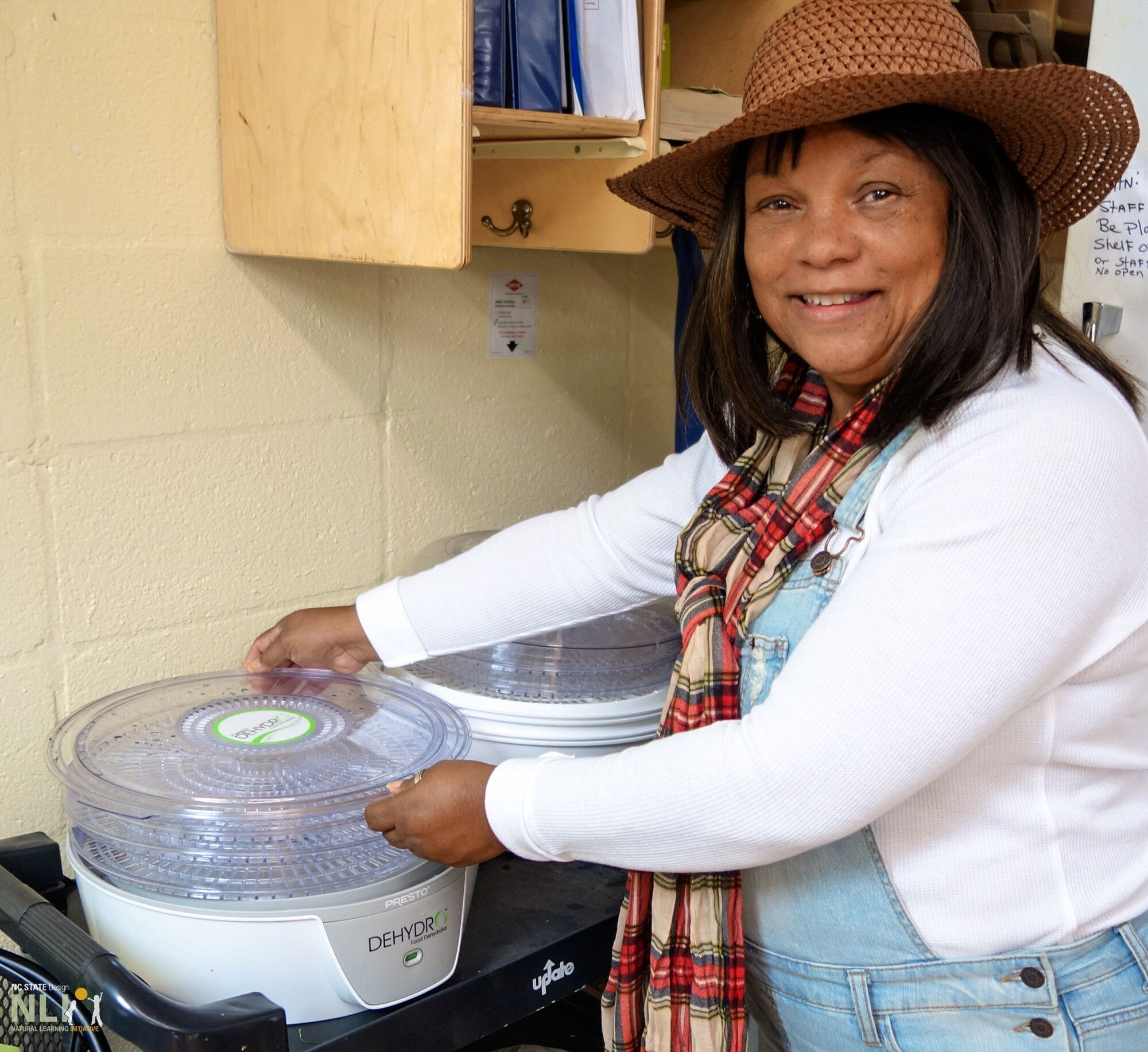
Wanda Davis, Director (retired), Childcare Network 61, on Farmers’ Night, demonstrating how garden produce can be dehydrated for future consumption. Photo credit: NLI.
Coming Together
“People ought to have access to quality childcare and environments wherever they are,” says Alberta “Alle” Forney. She sees her childcare center in a residence in Raleigh as a smaller version of Shaw’s center. When Kim Shaw invited Forney along to seminars and conferences, she went. Soon she was implementing what she learned at her center.
While the high-quality childcare she provides to the neighborhood is critical to Forney’s mission, she also understands the power of inspiring others to dream big. “I have a lot of people, when they come and see that this is a center that only has 12 children during the day and see the success that I have, they think maybe they can do this too,” she says.
For Rosalind Blair, an act of God connected her with POD and the work of NLI. In 2011, she was hosting a Flapjack fundraiser for her Beginning and Beyond playground at the Applebee’s that morning and that afternoon a tornado devastated her playground. After that, she searched out grants and discovered the work of NLI at NC State. Rosalind received seed funds from the program and maximized it with donations from the community. Now she has an award-winning center. Children harvest and take home produce that they grow. “Our outdoor learning environment is in the heart of downtown. We call it our hidden oasis. What we have now is what we always needed,” says Blair.
“We were already headed that way, but NLI enlightened us and showed us through training what it could be for our children,” she says. Still, she’s not done and looks forward to further enhancements for her families in the years to come.
Students have been included in the center’s decision-making process since the beginning. “We give suggestions at circle time and watch what the kids gravitate toward. You have to ignite their imagination,” she says. “We purchased a time-lapse camera so the kids could see the growth of plants, and to use during our embryonic project. Then, before a thunderstorm, I asked the teacher to point it to the sky, and it captured a storm and lightning. We use every outdoor opportunity to teach the children and open the teacher’s mind to a whole new way of learning–a way of life.”
Says Davis, “A lot of schools offer foreign language, we were trying to teach a lifestyle skill at a very early age. Parents could grow items in a flowerpot to make dinner complete.”
Each of these centers build on existing efforts and continue to do more. At one point, Blair took a trip to Italy with Moore and Cosco to see other examples. “Looking at playgrounds and what they were offering, I knew we had a gem right here in Raleigh,” she says. “We are making a difference, and we are cutting edge.”
Their efforts also laid the groundwork for outstanding support during the challenges with COVID-19. Even at lower capacity, each center offers a safe and engaging outdoor environment and support for families with the fresh food they grow.
“The children love it here, it’s their park,” says Blair.
Shaw’s son Abram, now grown, can speak to the impact of this work. He recently told his mother, “I can name five people in our community that did the most for our zip code, and you’re one of them.”
“We all believe in it and make it happen,” says Forney. “Through one person lighting a fire, all of us have caught a fire.”
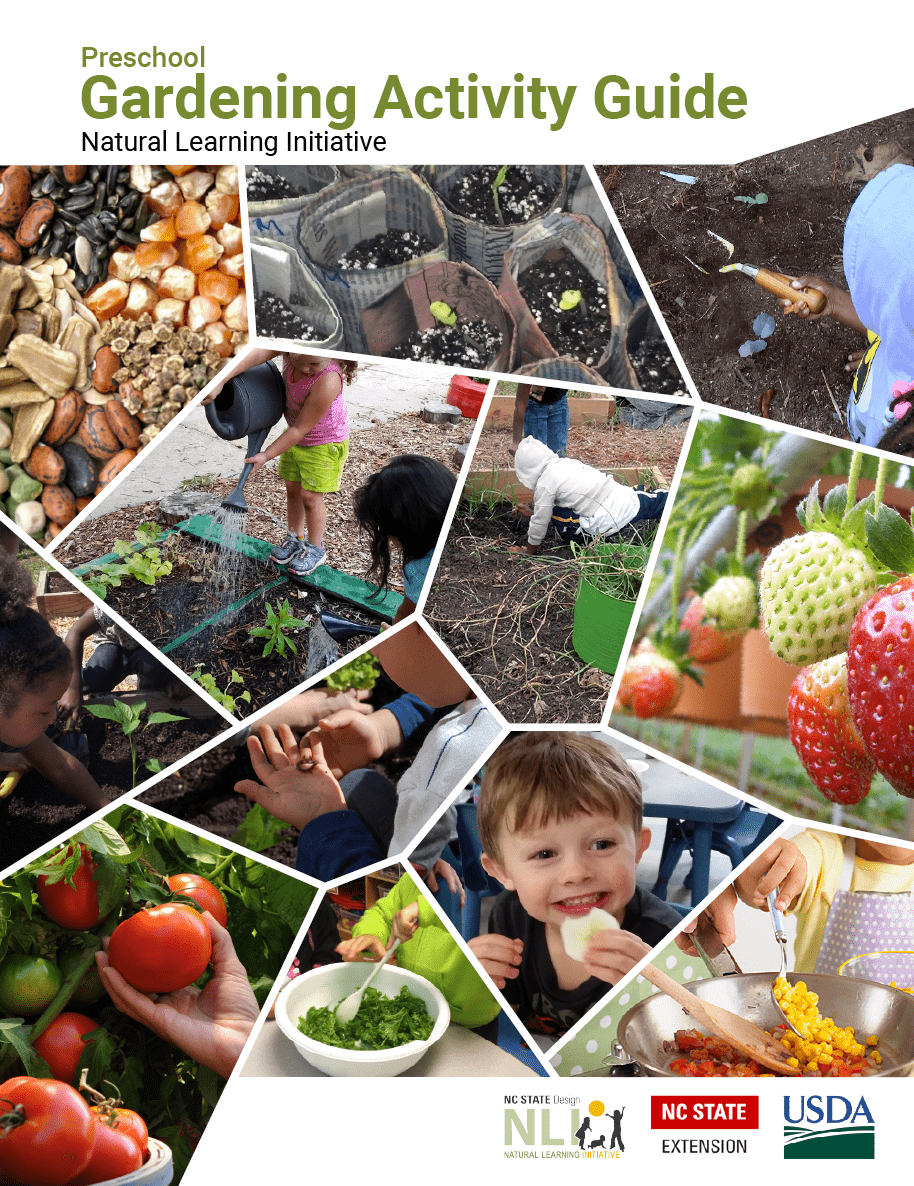
The Preschool Gardening Activity Guide, companion to the Childcare Center Production Garden Series, is based on the NLI Preventing Obesity by Design (POD) program. The aim is to elevate children’s knowledge and enthusiasm for eating fresh fruit and vegetables.
The guide introduces garden educators and volunteers to a 12-step, hands-on learning process with young children to engage them in seasonal fruit and vegetable gardening. Each step includes suggestions for related children’s literature. Prior gardening experience is not assumed. The underlying goal is to counteract the early onset of health challenges associated with sedentary lifestyles, poor eating habits, and lack of contact with nature. To download the guide, please use the form below.
The Gardening Activity Guide assumes that centers have already installed a designated, raised-bed fruit and vegetable garden and seek ideas about how to use it as a vehicle for learning. The Gardening Activity Guide provides a structured approach consisting of two main sections: Skill-building gardening activities and when to harvest varied produce. The Gardening Activity Guide provides a structured approach consisting of two main sections:
Gardening Activities
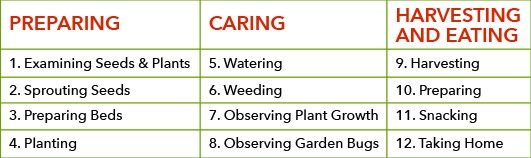
The Gardening Activities section contains three phases covering 12 garden-related learning processes seen in the table. Each gardening process includes supporting activities to stimulate experiential learning inspired by the North Carolina Foundations for Early Learning and Development (2013). Appendix A contains Our Gardening Activities Calendar, provided for teachers and children to record daily and weekly interactions related to each gardening process. Guided by the teacher, children are encouraged to see themselves as active participants in weekly documentation by checking off garden processes and recording activities.
Time to Harvest
The Time to Harvest section provides helpful tips for harvesting selected warm-season fruits and vegetables and cool season vegetables in designated childcare center gardens. Time to Harvest covers how to evaluate the maturity of specific fruits and vegetables, judge their readiness for harvest, and ways to incorporate them in recipes or activities.
Childcare centers are encouraged to grow additional fruits and vegetables not covered here and continue inventing fun, engaging learning activities focused on gardening processes. Contact your local Cooperative Extension agent to learn which fruits and vegetables grow well in your area.
The Gardening Activity Guide is a product of the COLEAFS project (Childcare Outdoor Learning Environments as Active Food Systems), supported by the Agriculture and Food Research Initiative Competitive Grant, 2017-68001-26354, from the United States Department of Agriculture (USDA) National Institute of Food and Agriculture (NIFA).
Backstory. The Nature-Based Learning Network (NBLN) gathering at the Children & Nature Network International Leadership Summit, Oakland, California, May 2018, provided an opportunity to capture the advocacy power of this unique gathering of diverse disciplines and professions, to create an international declaration on nature-based learning. A draft was adopted by NBLN Summit participants. Many weeks of fine-tuning by the drafting team followed. The Natural Learning Initiative (NLI) produced the graphic rendition.
We, participants at the Children and Nature Network International Leadership Summit that met in Oakland California, and other signatories, proclaim the vital role of nature-based learning in creating a more sustainable future for all. We represent policymakers, public servants, grassroots leaders, education and health care professionals, scientists, researchers, conservationists, urban planners, environmental designers, facility managers, funders of educational and environmental initiatives, and others who came together with the aim of connecting all children, families, and communities with nature.
With the belief that helping people understand, value, protect, and care for nature will simultaneously serve human wellbeing, and protect and restore the natural world, we issue this Declaration to:
Identify the characteristics of nature-based learning;
Affirm its relevance to basic human needs and the health of the planet; and
Call for action to weave access to nature into the lives of all people.
What is Nature-Based Learning?
Nature-based learning occurs in natural settings and where elements of nature have been integrated into built environments. It often involves learning about nature but also extends to engagement in any interest or skill in natural surroundings. It includes experiences at home, in the community, and at school, from free play and exploration to programmed activities. Nature-based learning applies to all ages across the many environments of people’s lives.
Why is Nature-Based Learning Important?
Human well-being depends on our collective care for planet Earth, our shared home in the universe.
People thrive in environments where they can pursue healthy, happy lives with opportunities to fully realize their capabilities.
A robust, growing body of evidence indicates that experience of nature, and opportunities to learn in and about nature, support multiple dimensions of human health and wellbeing as well as active care for the Earth. These relationships, long understood by indigenous cultures, are now the subject of active research.
In Promoting Nature-Based Learning, We Recognize:
Birth through adolescence is a phase of human development when time in natural environments offers lifelong benefits to rapidly developing bodies, brains, and personalities;
The demonstrated value of interaction with nature during the first years of life suggests the need for special attention in early childhood together with environmental education for teachers and parents;
The quantity and quality of access to nature – during routines of everyday life, free play, and programmed activities in and out of school – significantly affect children’s development;
All people have a right to opportunities to learn in, through, with, about, and for nature; therefore, initiatives to promote nature-based learning need to be equitable and inclusive;
Disparities in access to nature and high-quality nature-based programs must be addressed;
Societies are urbanizing and the majority of humanity, including children, now live in cities and towns.
With this Declaration, We Affirm
Agenda 2030 for Sustainable Development (2015), a plan of action to shift the world onto a sustainable path for people, planet, and prosperity, with 17 goals balancing economic, social, and environmental dimensions.
The Earth Charter (2000), an ethical framework for building a just, sustainable, and peaceful global society, which seeks to inspire a new sense of global interdependence and shared responsibility for the well-being of the whole human family, the greater community of life, and future generations.
The Rio Declaration on Environment and Development (1992), stating that human beings are entitled to a healthy and productive life in harmony with nature.
The Convention on the Rights of the Child (1989), stating in Article 29 that education should contribute to the development of a child’s personality, talents, and mental and physical abilities to their fullest potential, including the development of respect for the natural environment, and preparation for responsible life in a free society;
The Ottawa Charter for Health Promotion (1986), advocating for the creation of a supportive environment that ensures equal opportunities for all people to achieve their fullest health potential, and observing that this requires people’s reciprocal care for each other, their communities, and their natural environment;
The Tbilisi Declaration (1977), stating that environmental education serves all age groups both inside and outside formal school systems, with the aim of helping people acquire knowledge, values, attitudes, and practical skills to protect and improve the world’s environment, as well as to support the sound and balanced development of the world’s communities;
Call for Action:
We now, therefore, invite children, youth, adults, communities, governments, and institutions of education, culture, science, health, and civic life, and others, to come together to cultivate a world where all people have equitable opportunities to experience nature as a foundation for learning and wellbeing, and as an inspiration for the protection and regeneration of the biosphere on which all life depends. To achieve this future, we encourage creative collaborations and recognize that multiple potential pathways exist to support progress to this end.
Greetings from the drafting team:
Judy Braus,North American Association for Environmental Education
Louise Chawla,Program in Environmental Design, University of Colorado Boulder
John Falk,Institute for Learning Innovation
Robin Moore,Natural Learning Initiative, North Carolina State University
Dilafruz Williams, Leadership for Sustainability Education, Portland State University
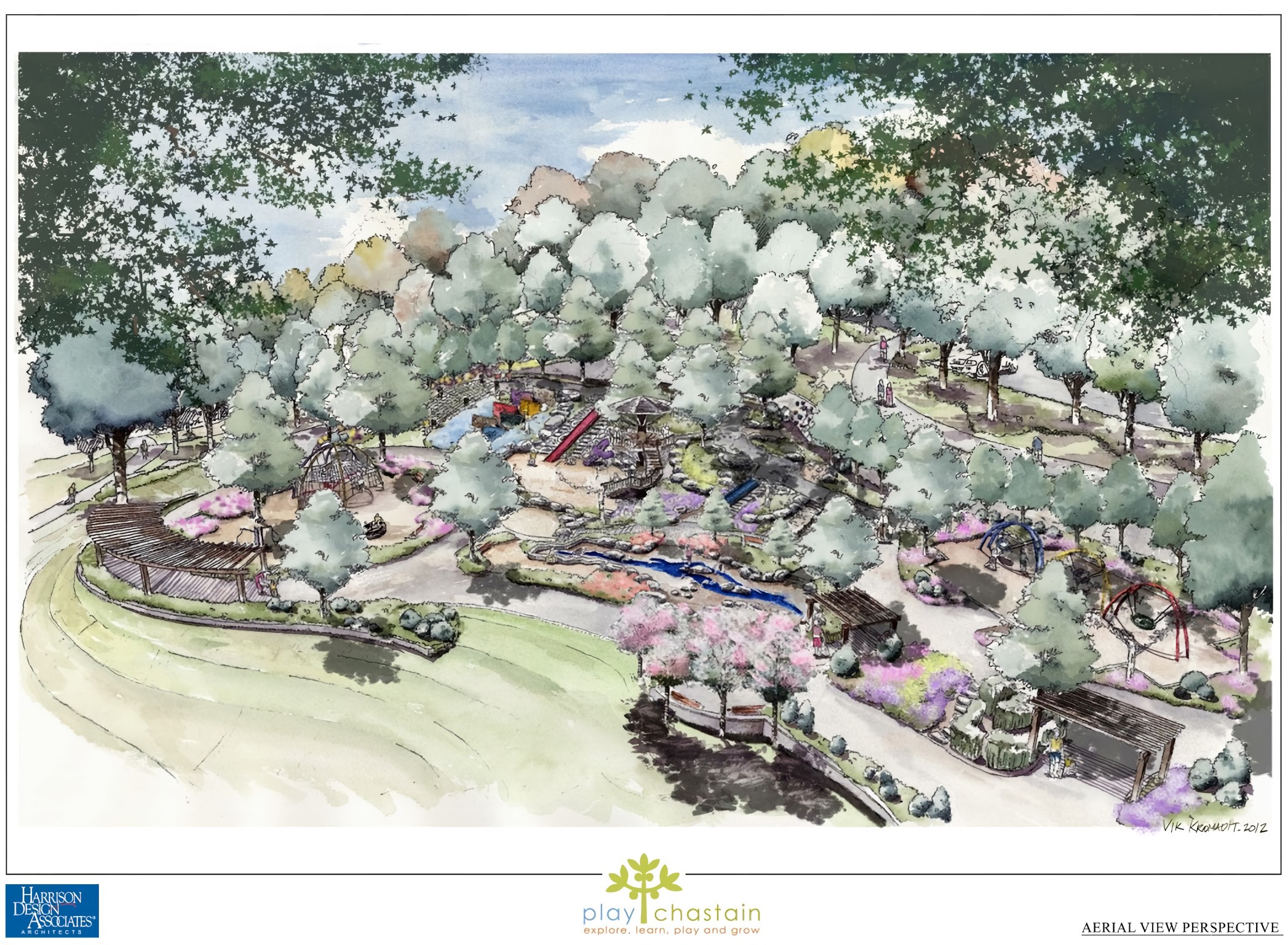
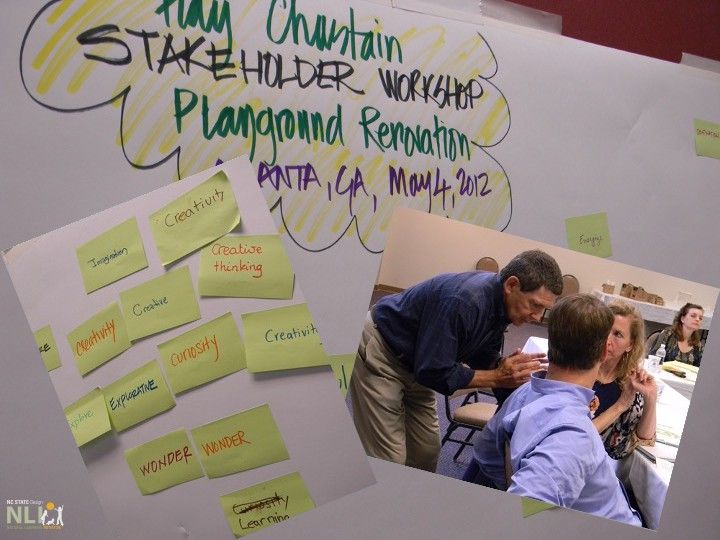
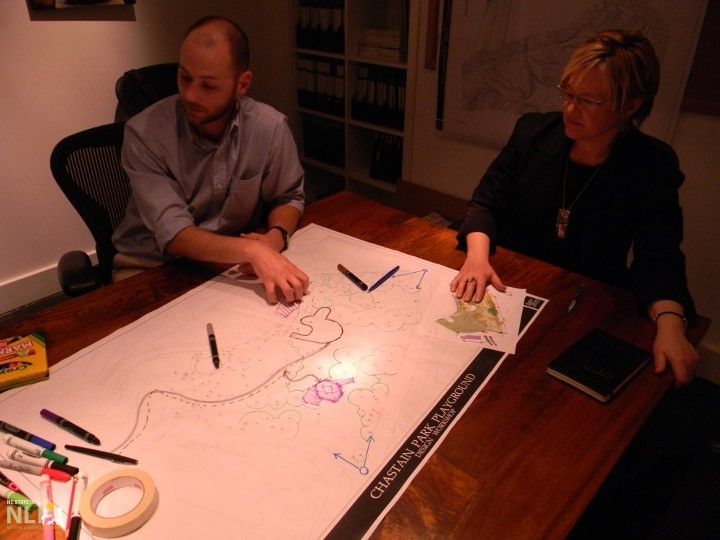
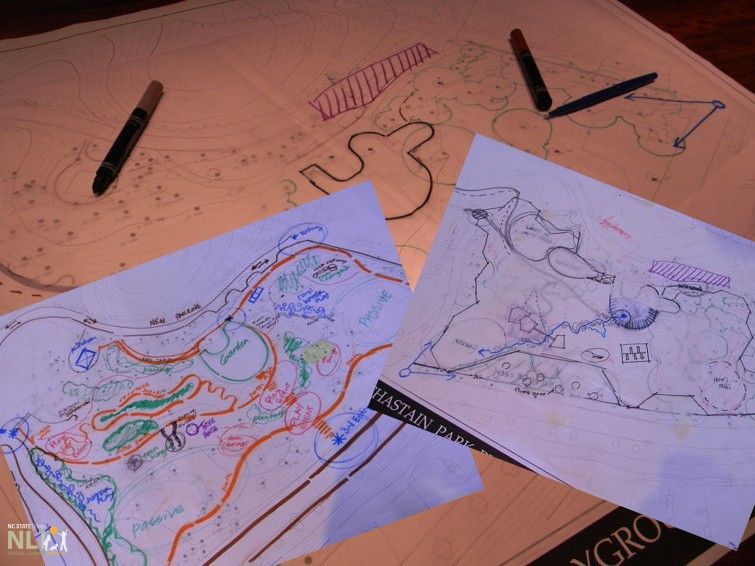
Play Chastain was part of the 20-year Master Plan for Atlanta’s Chastain Park. As a member of the design team, with Harrison Design Associates and the Atlanta Taskforce on Play (now Play Atlanta), NLI led the design programming effort to re-vision an existing, worn-out playground.
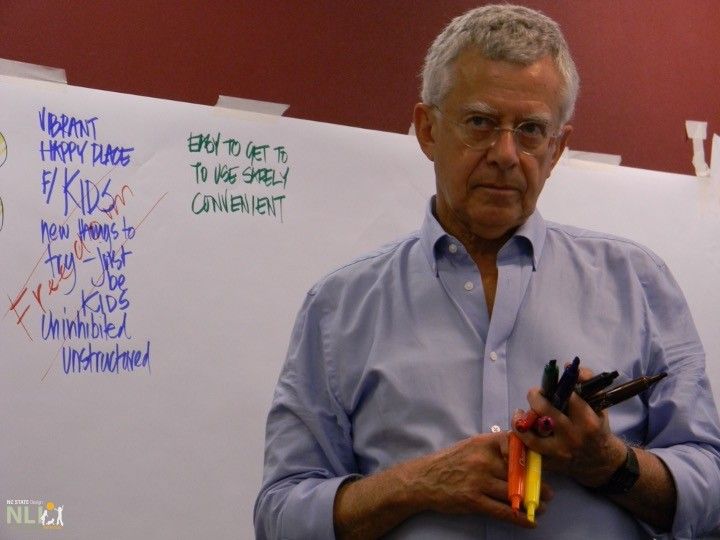
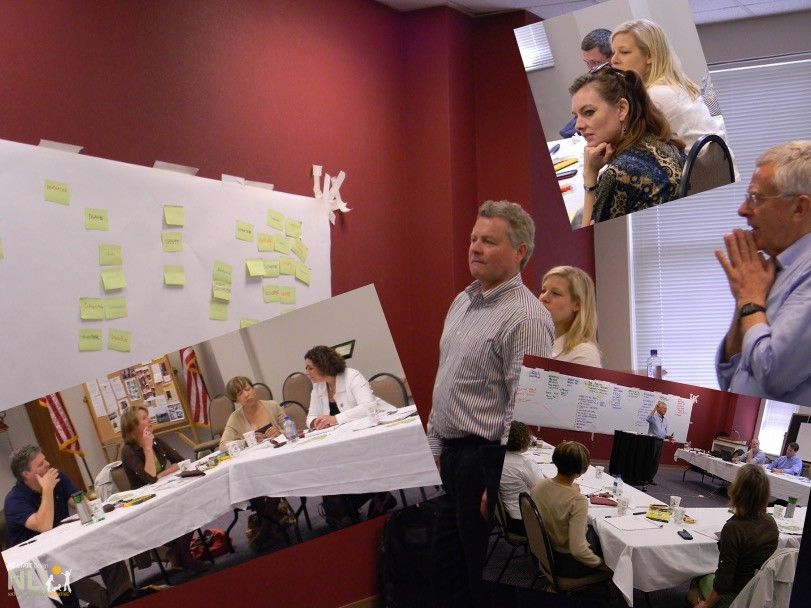
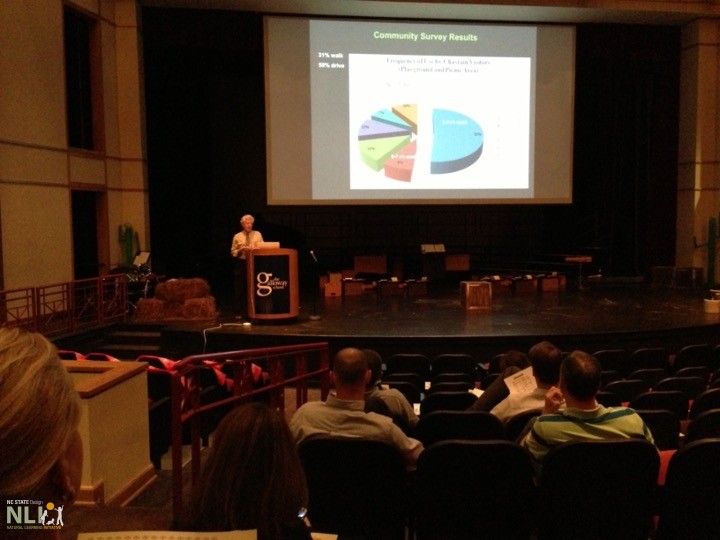
NLI conducted a community survey, facilitated a stakeholder workshop, made community presentations, and contributed evidence-based design thinking for children and families to inform program development and landscape design.
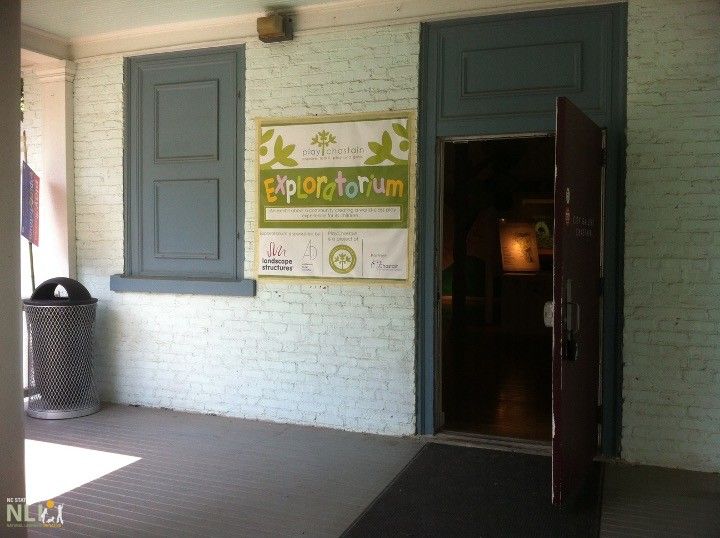
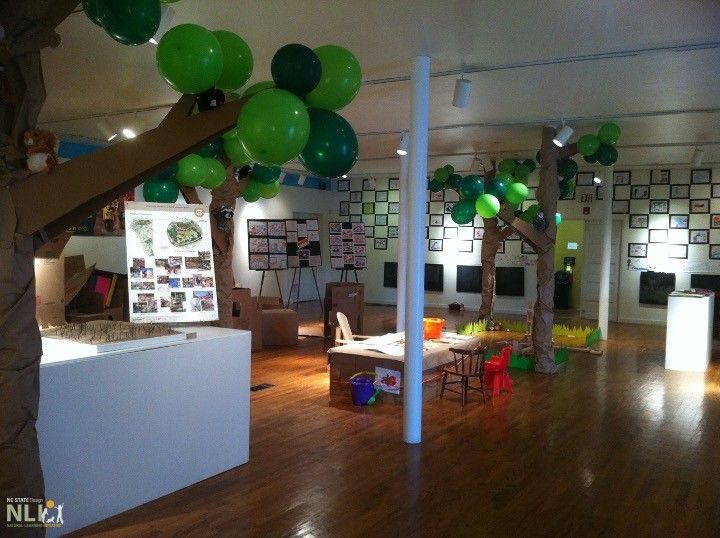
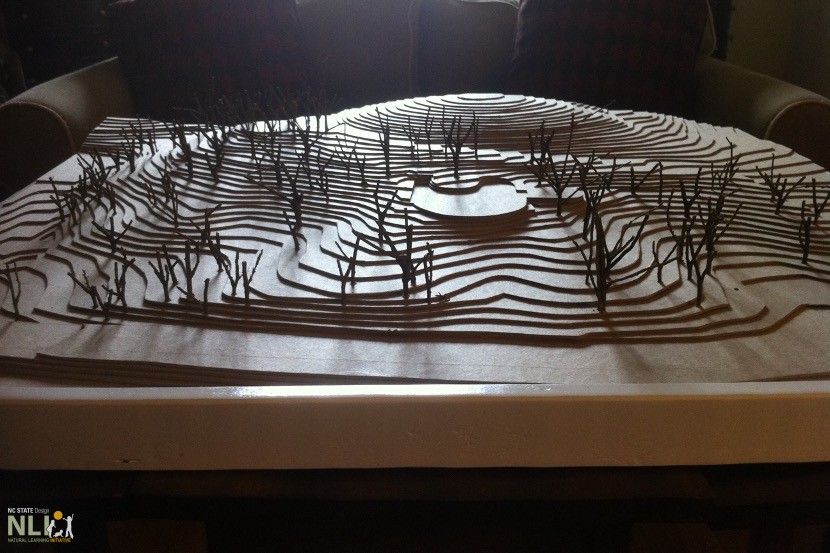
ATOP, led by Cynthia Gentry, greatly expanded participation by children, families, and the Atlanta community in the design process through a series of “play days” at the site, a hands-on exhibit at the Arts Center, and presentations at local schools. Scores of ideas were gathered from kids and others – like the “giant hill slide” – adding richness to the design program and the eventual built work.
Opened in 2017, the 40,000 square foot playground, linked to Chastain Park trails, is fully accessible, and features a series of age-appropriate play spaces and activity settings for toddlers through teenagers. The renovated, expanded site also includes a performance pavilion, restroom facilities, and parking.
Chastain Park is the largest park in Atlanta. It borders the city’s northern boundary, encompassing 268 acres of rolling terrain, majestic hardwood trees, and almost 8 miles of trails. Founded in the 1930s, the historic park is surrounded by forested neighborhoods and draws over a million visitors each year to its scenic beauty and diverse activities.
Download the Play Chastain Summary Design Program:
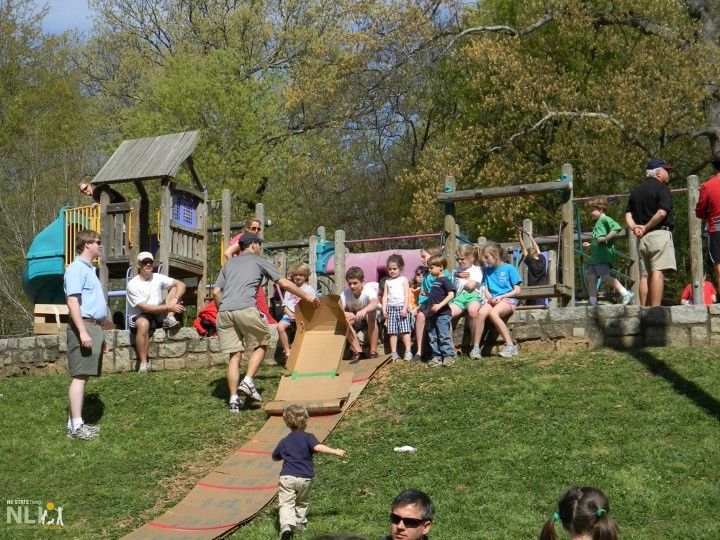
“Chastain Park has perhaps, the most unique and fun playground in all of Atlanta. It was recently renovated and reopened and has equipment that you won’t find in any other playground in the area! From (wheelchair accessible) treehouses to hillside roller slides, to flying saucer swings, my kids are constantly asking to go back and play at Chastain.”
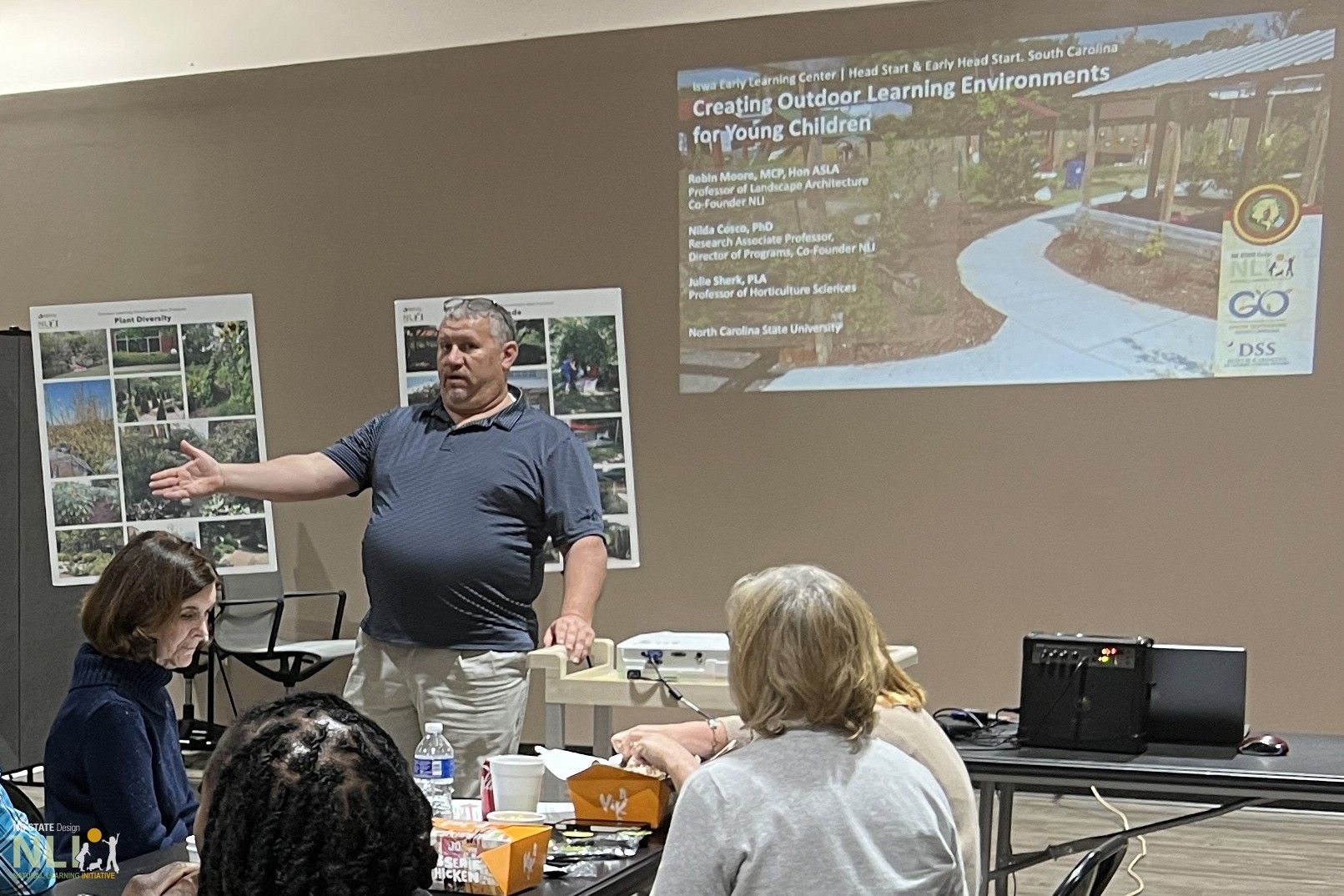
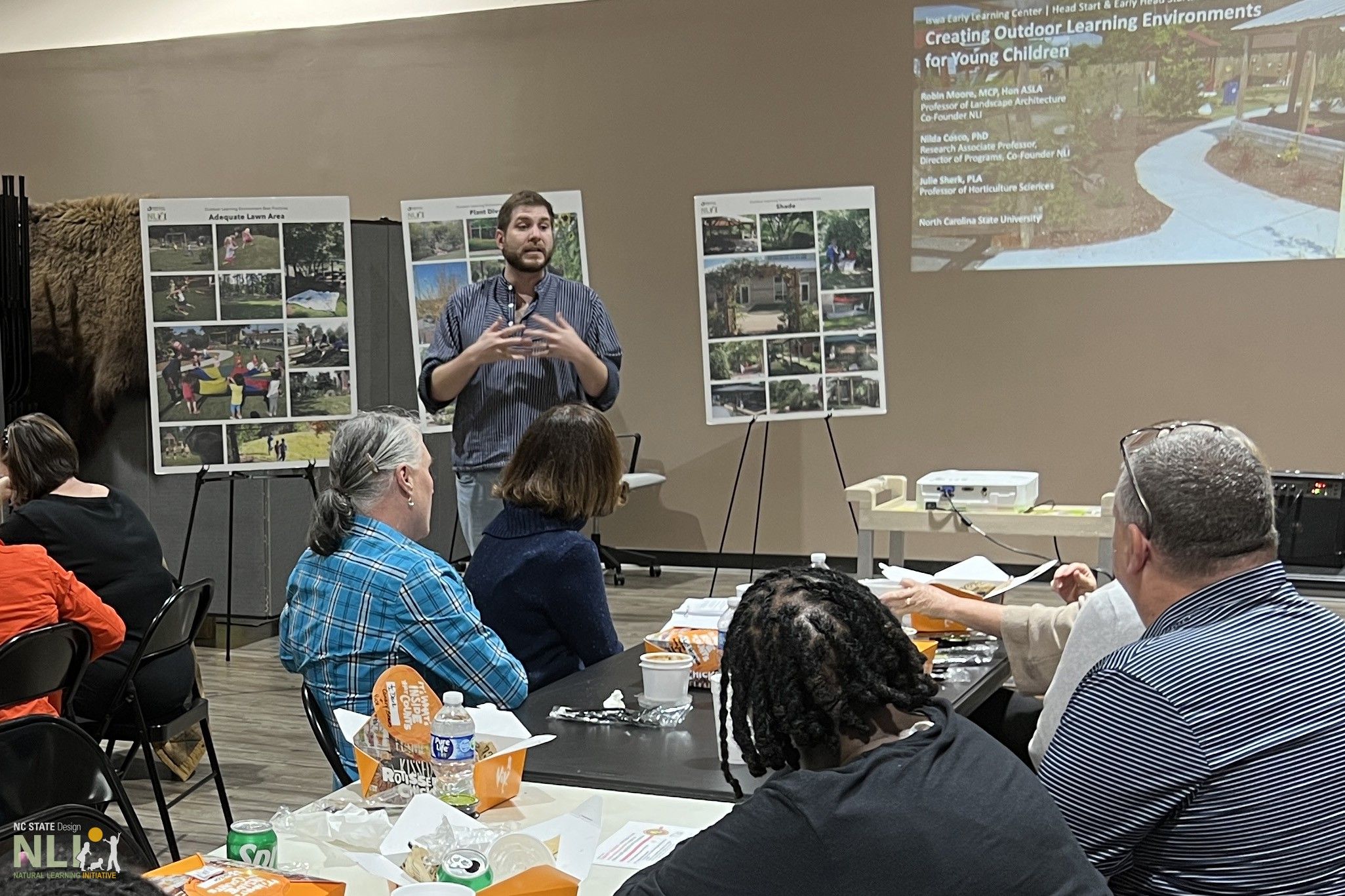
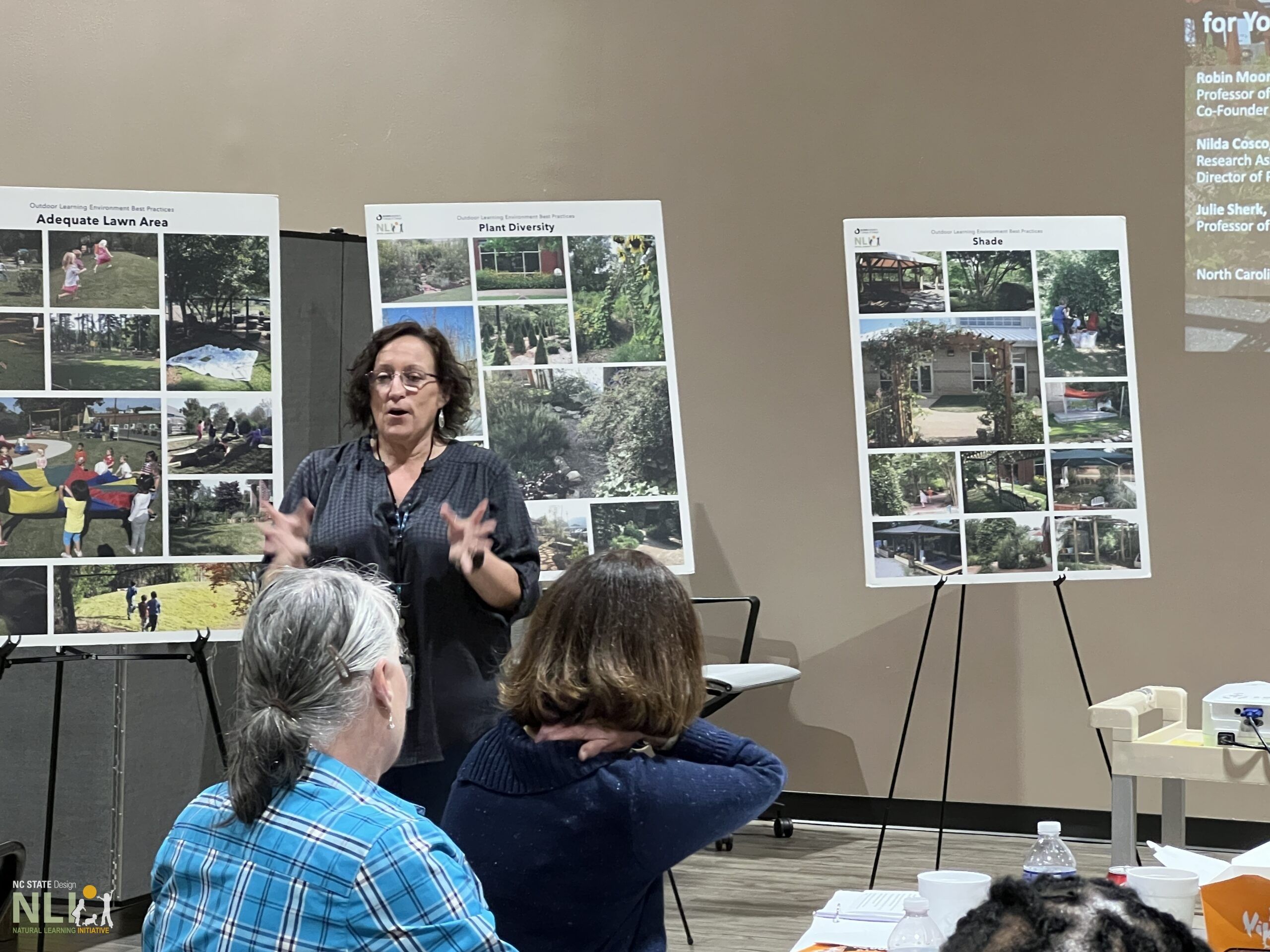
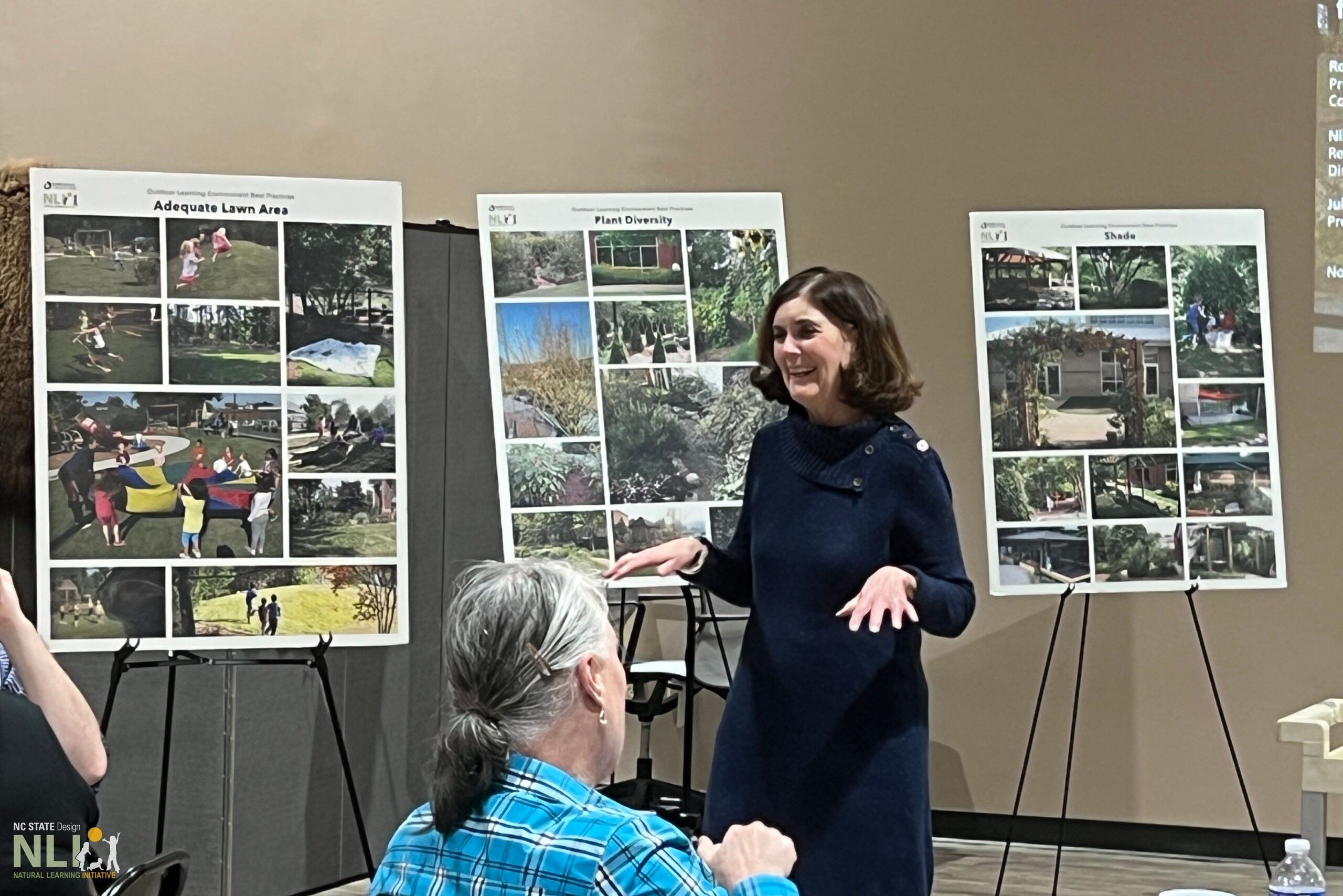
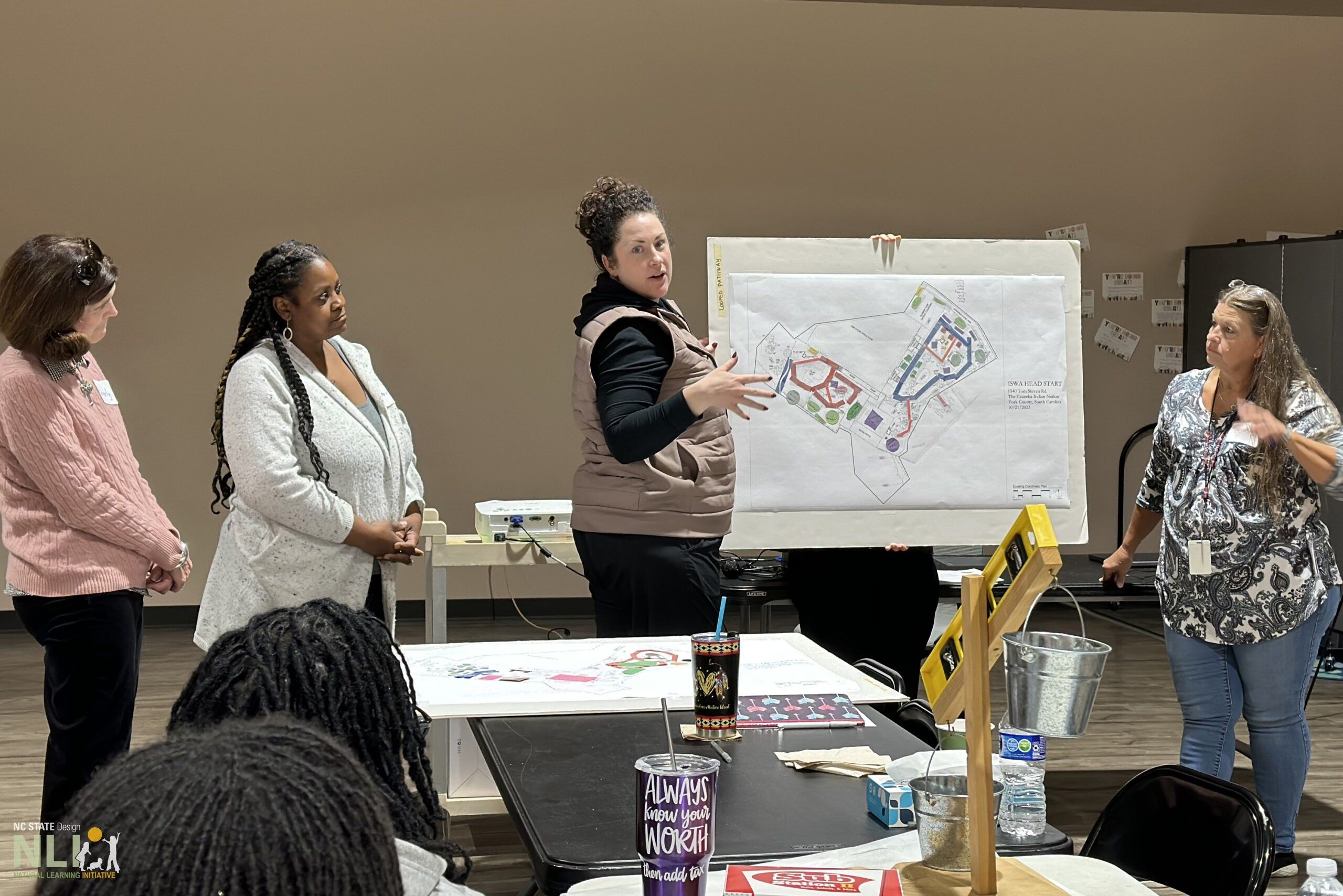
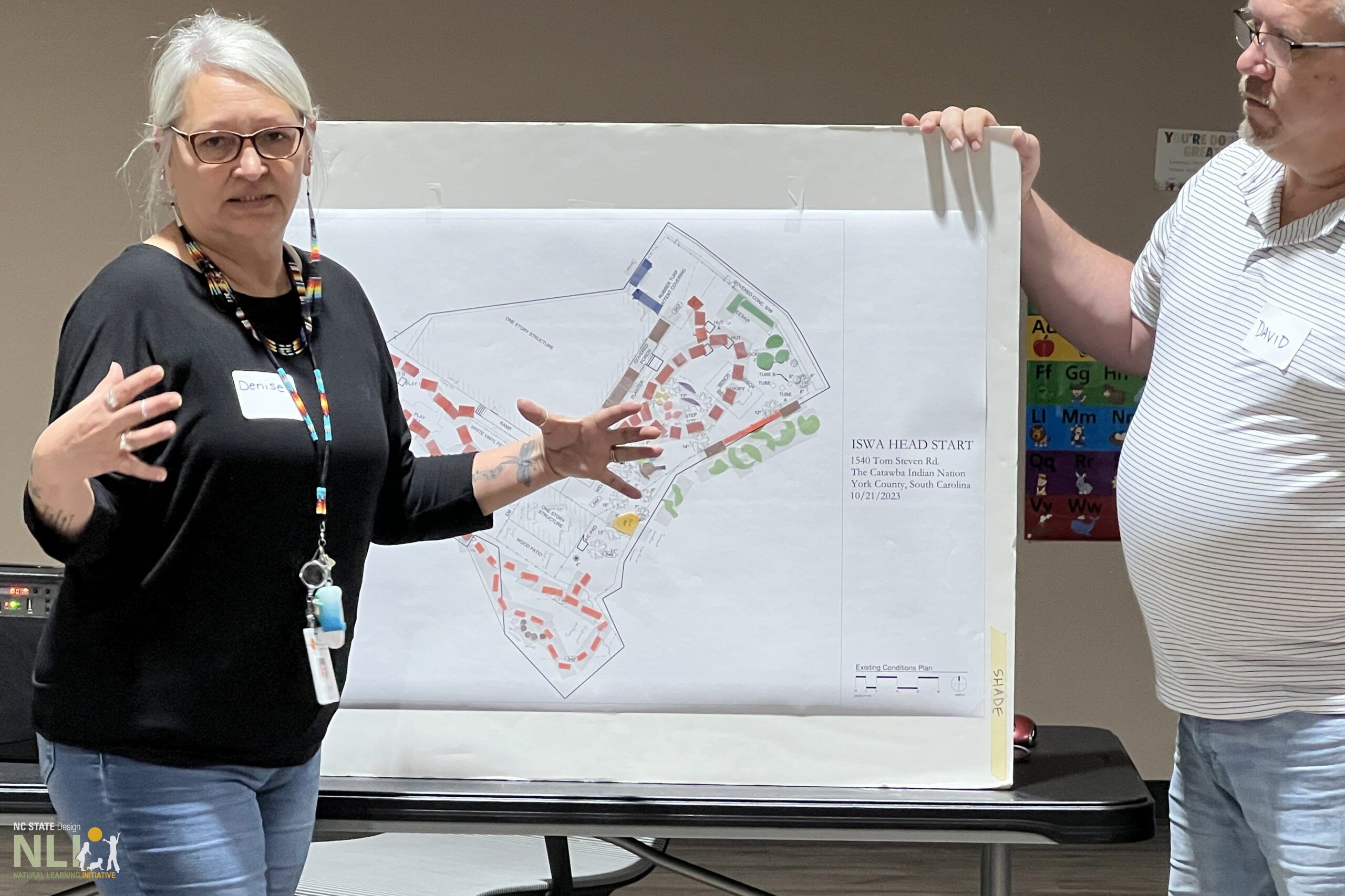
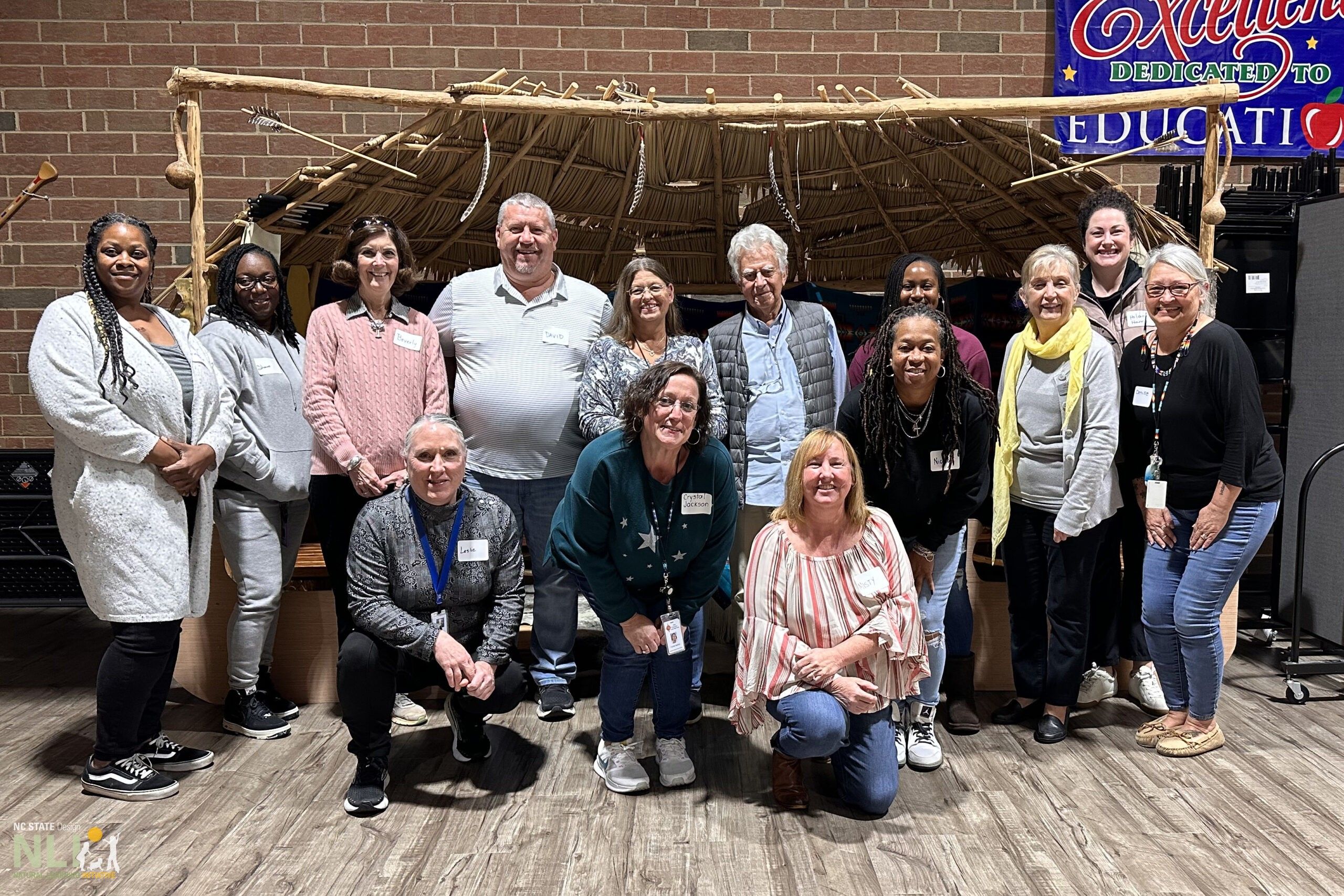
The Catawba Nation, iswa Early Learning Center is working with NLI to naturalize their outdoor play and learning environment and make it more expressive of the iswa culture (iswa means “river people”– of the Catawba River). A combined NLI and State of South Carolina project team recently visited the Catawba Nation Reservation in Rock Hill, SC, to work with Center staff and tribal representatives to collaborate on the design process. An evening Community Gathering discussed iswa cultural traditions that could be supported by design of the physical environment. The following day, a Design Workshop brought together the project team, Center Staff, and tribal members to work on three alternative site layouts (for later assessment and combination into a single scheme for review and design progression). Following the Workshop, cultural immersion continued with a visit to the Catawba Cultural Center and a hike along the interpretive forest trail to the Catawba River.
People of the River
Friday Evening Community Gathering
David Simpson, Operations Manager, iswa Head Start, welcomes everyone to the Community Gathering.
David Simpson, Operations Manager, iswa Head Start, welcomes everyone to the Community Gathering.
Roo George-Warren, Catawba Nation Executive Committee/Tribal Leadership describes a nature-based vision and ideas for the iswa Early Learning Center future outdoor play and learning spaces.
Roo George-Warren, Catawba Nation Executive Committee/Tribal Leadership describes a nature-based vision and ideas for the iswa Early Learning Center future outdoor play and learning spaces.
Crystal Jackson, Director, iswa Early Learning Center, shares her enthusiasm for enriching nature play and learning experiences for iswa children.
Crystal Jackson, Director, iswa Early Learning Center, shares her enthusiasm for enriching nature play and learning experiences for iswa children.
Beverly Hunter, South Carolina Department of Social Services (SC DSS), explains DSS’s commitment to supporting development of the iswa Early Learning Center as a nature-based demonstration site.
Beverly Hunter, South Carolina Department of Social Services (SC DSS), explains DSS’s commitment to supporting development of the iswa Early Learning Center as a nature-based demonstration site.
Misty Pearson, South Carolina Department of Health and EnvironmentalControl (DHEC), explains that creation of an outdoor play and learning demonstration site at the iswa Early Learning Center is part of Grow Outdoors South Carolina (GO SC).
Misty Pearson, South Carolina Department of Health and Environmental
Control (DHEC), explains that creation of an outdoor play and learning demonstration site at the iswa Early Learning Center is part of Grow Outdoors South Carolina (GO SC).
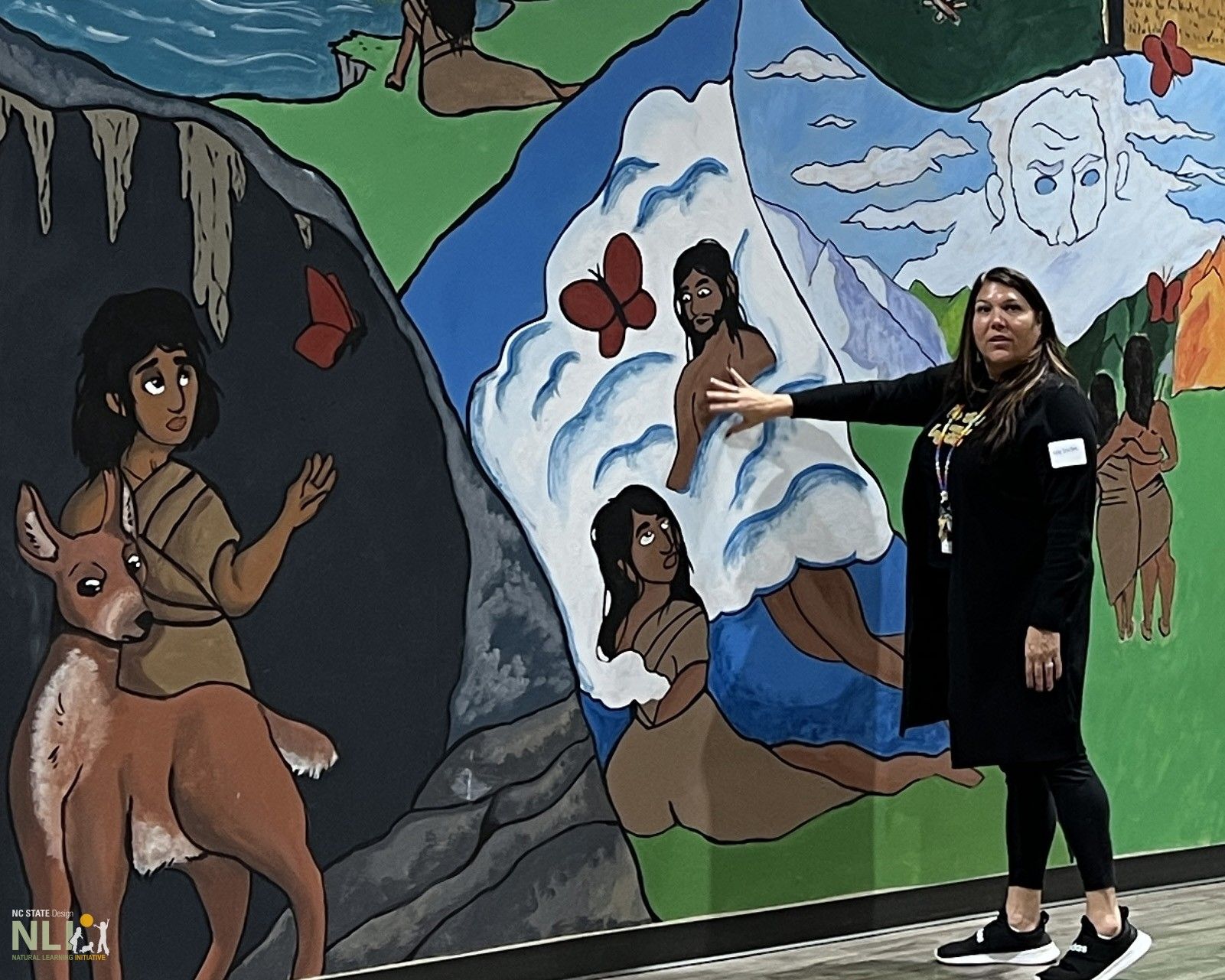
Melissa Harris, Executive Program Director, iswa Head Start, interprets the iswa origin story depicted in the mural in the Center mutli-purpose space hosting the Design Workshop.
Melissa Harris, Executive Program Director, iswa Head Start, interprets the iswa origin story depicted in the mural in the Center mutli-purpose space hosting the Design Workshop.
Saturday Design Workshop
Existing iswa Early Learning Sites.Robin Moore, NLI, introduces the colloborative Design Workshop process.
Robin Moore, NLI, introduces the colloborative Design Workshop process.
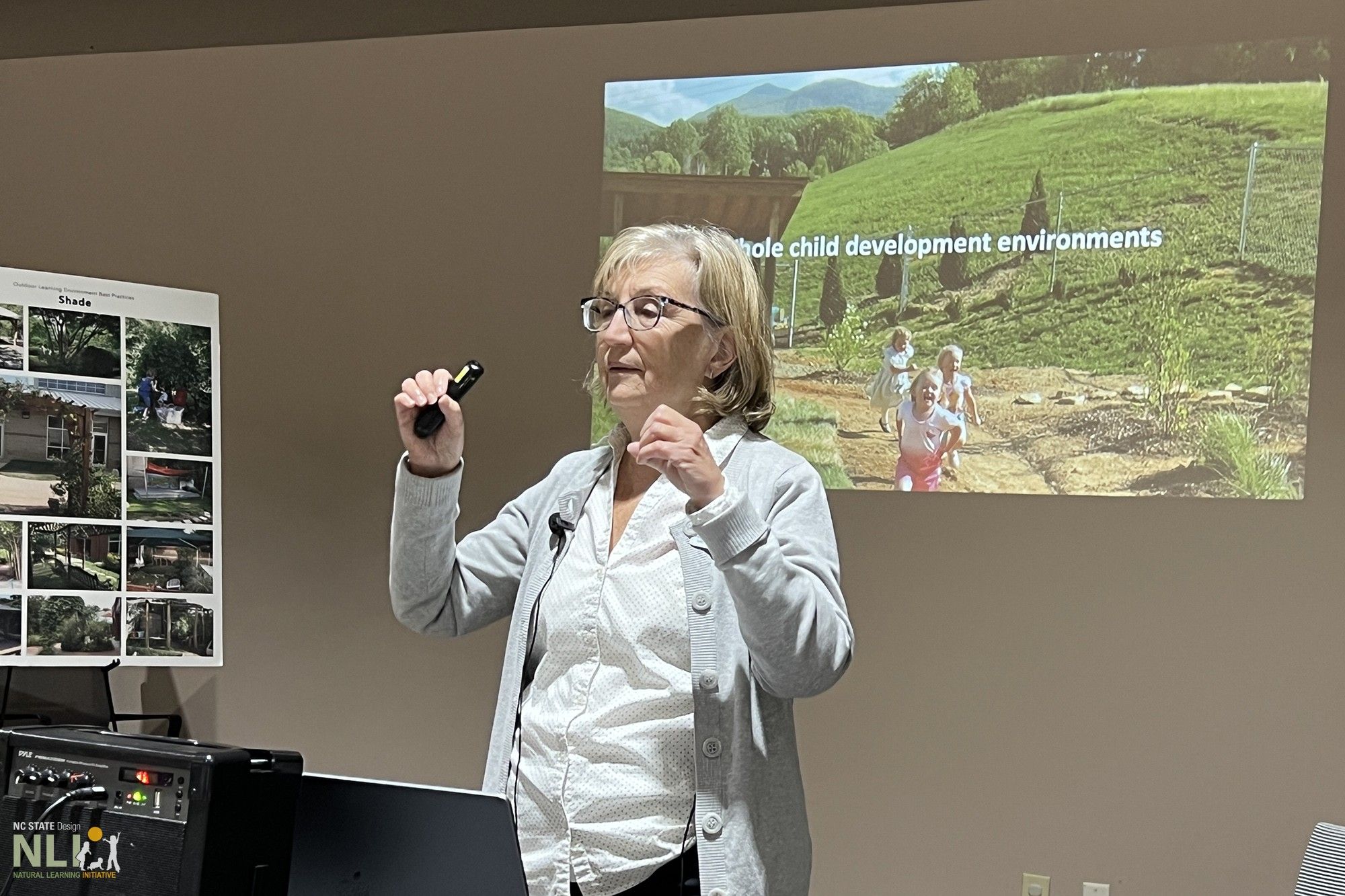
Nilda Cosco, NLI, talks about the physical and mental health benefits of nature-based play and learning spaces and explains how experience of nature is a bond-in-common of all peoples and Mother Earth.
Nilda Cosco, NLI, talks about the physical and mental health benefits of nature-based play and learning spaces and explains how experience of nature is a bond-in-common of all peoples and Mother Earth.
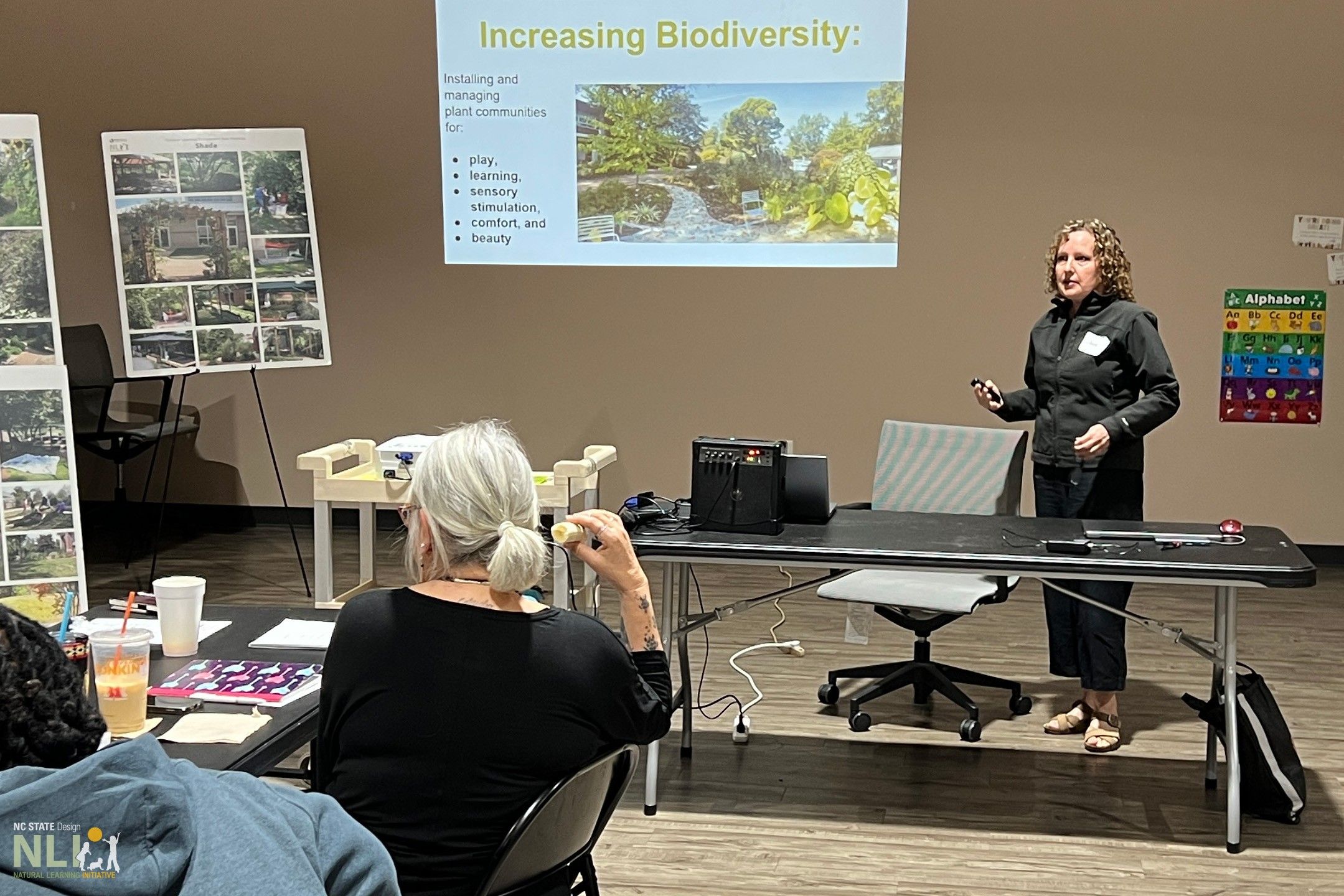
Julieta Sherk, NLI, underscore the importance of biodiversity and the practical requirements for increasing it on the ground.
Julieta Sherk, NLI, underscore the importance of biodiversity and the practical requirements for increasing it on the ground.
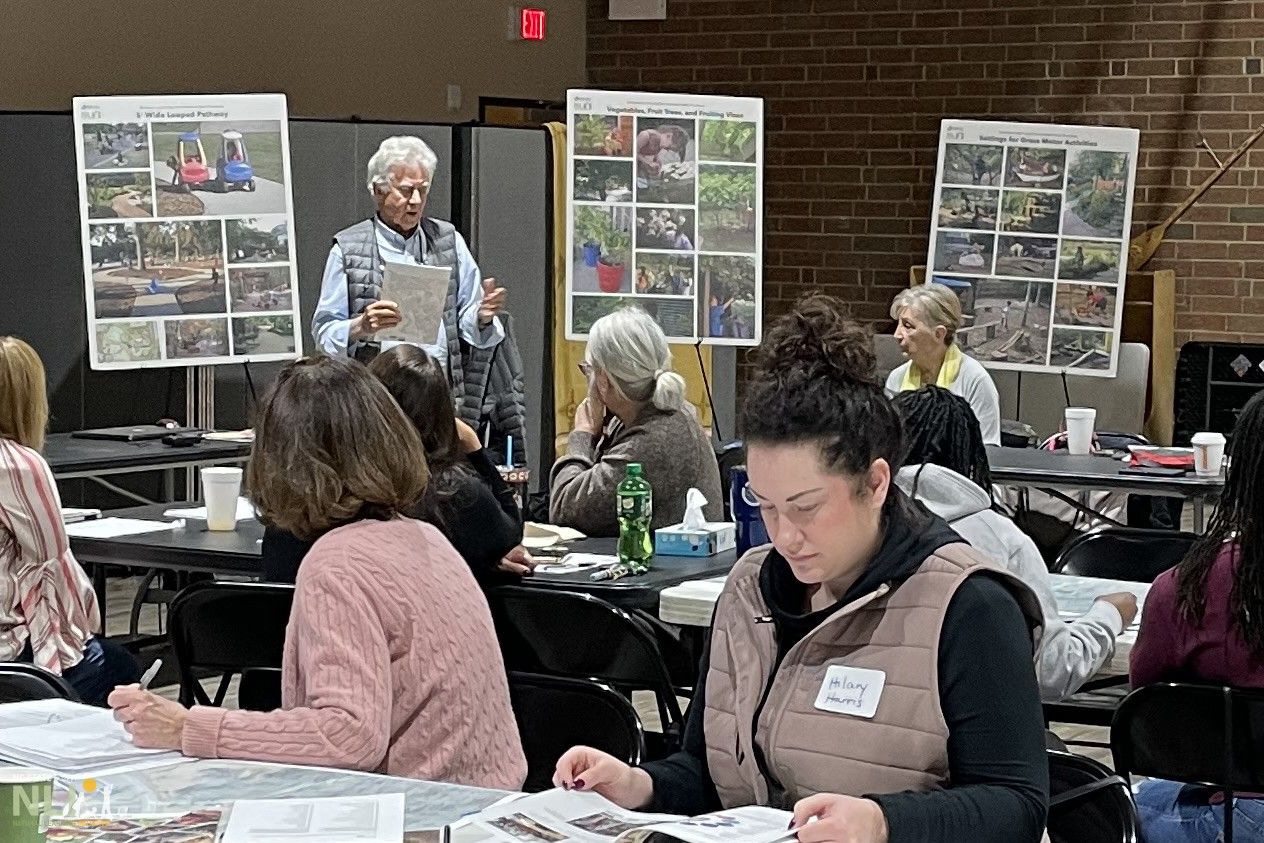
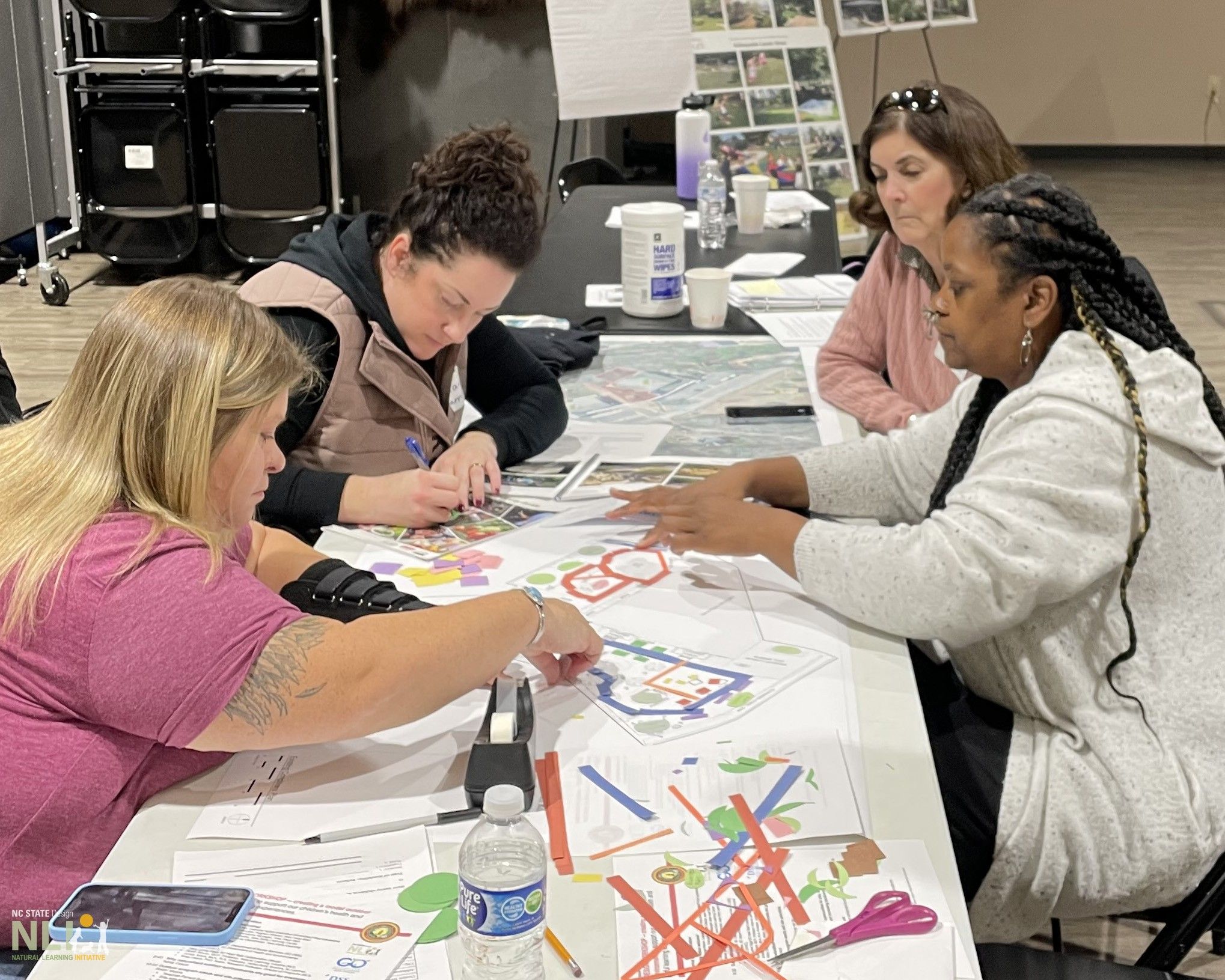
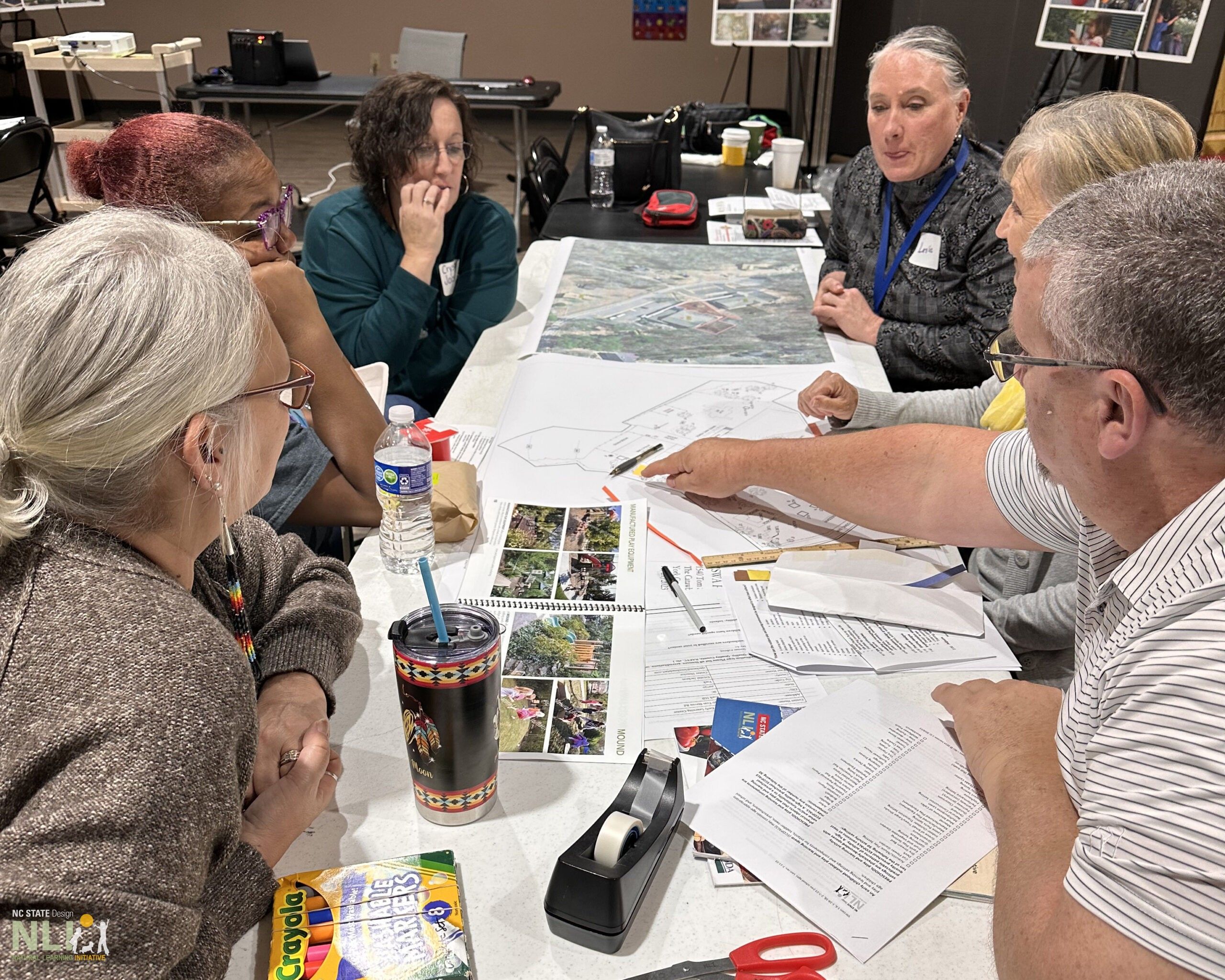
Collaborative Design Teams at work.
Collaborative Design Teams at work.
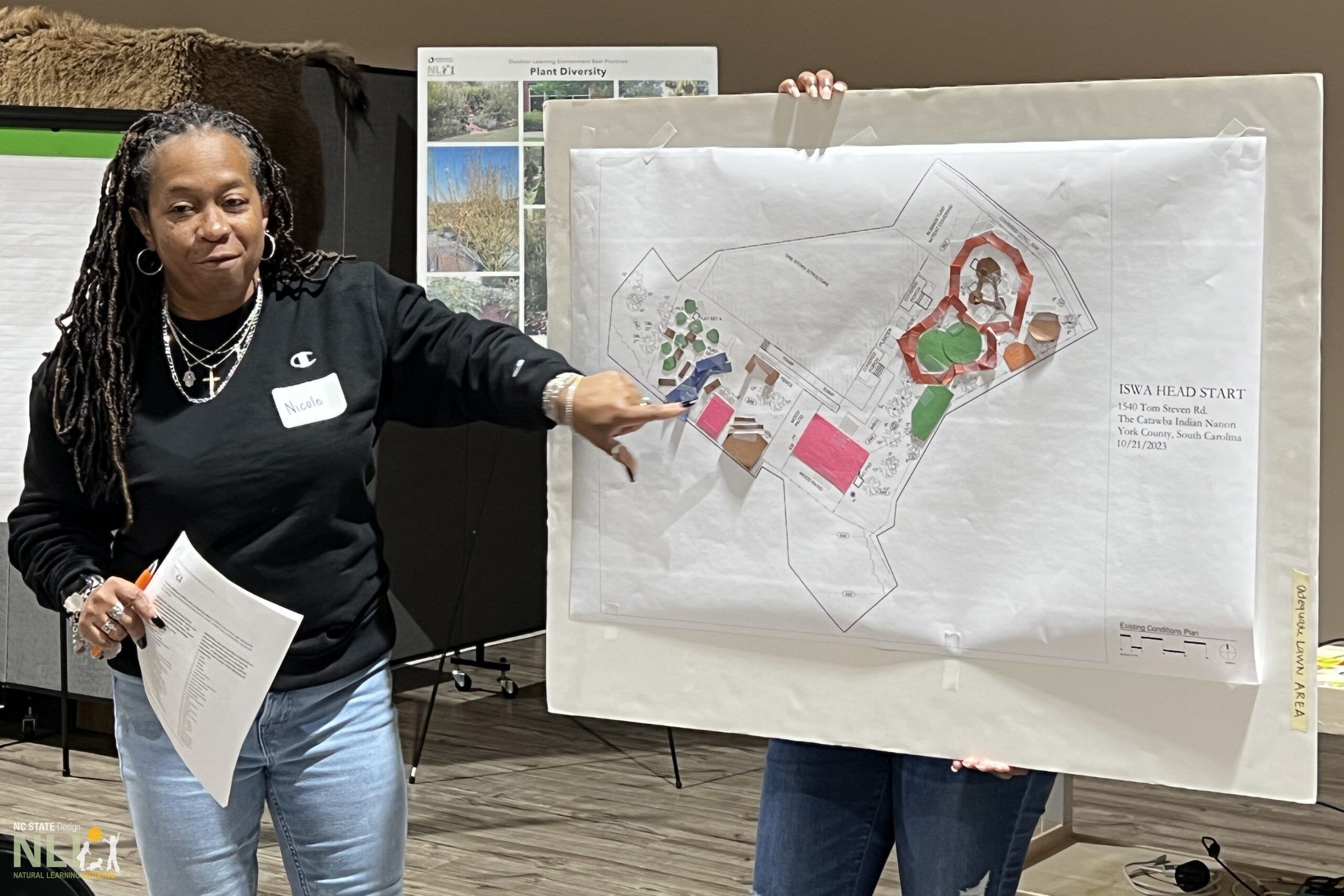
Collaborative Design Teams at work.Design Teams present design thinking diagrams using construction paper to locate activity settings at the same scale as the site survey base plan.
Design Teams present design thinking diagrams using construction paper to locate activity settings at the same scale as the site survey base plan.
Design Teams present design thinking diagrams using construction paper to locate activity settings at the same scale as the site survey base plan.Design Teams present design thinking diagrams using construction paper to locate activity settings at the same scale as the site survey base plan.Design Workshop participants.
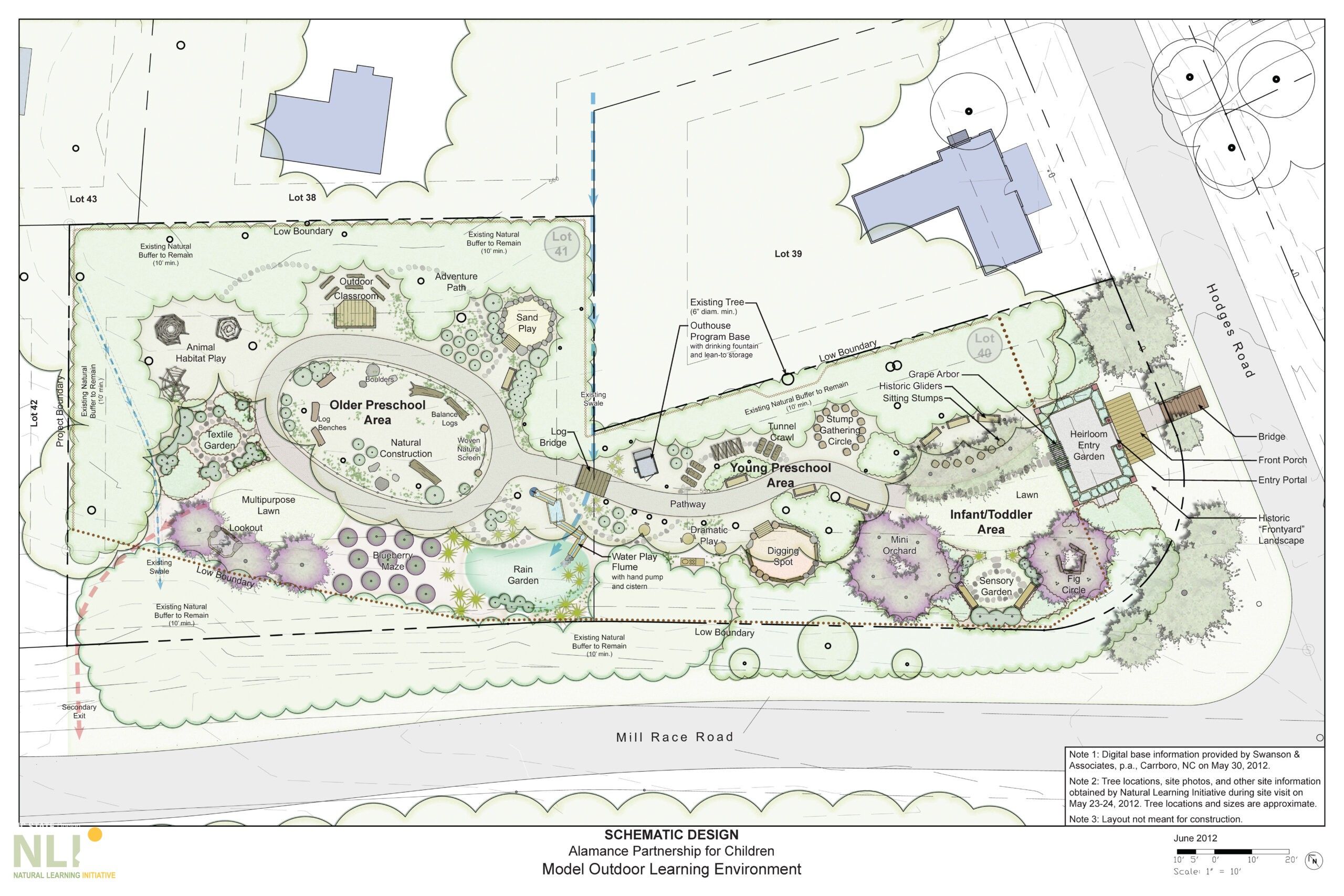
Collaborators included NLI and Hedgehog Holdings, at the time rehabilitating buildings of the historic mill (the reason why the Village existed). The proposed site was an elongated, undeveloped corner lot down the street from the Partnership. The Haw River, once powering the mill, is across the street, which is also on the North Carolina Mountains-to-the-Sea long distance trail traversing the state. Quite a location!
A “community of interest” survey administered by NLI kicked off the project, which netted responses from early childhood educators, local organizations, residents, and Partnership board members. The response was universally positive, underscoring the importance of outdoor play and children’s engagement with nature as a health promoting learning environment. The dual-use concept of open access to the neighborhood, while serving as a place for professional development was fully supported by respondents.
The next step was a Design Workshop that included a site safari, discussion of survey results, and collaborative work on the main lines of the design based on program content prioritized in the survey, completed later by NLI after further cycles of review and feedback.
Tremendous community engagement and contributions from local leaders enabled rapid site clearance, minimal grading, and installation of diverse natural activity settings supporting the needs of all ages. A recent wave of upgrades by skilled volunteers coordinated by the Partnership have increased the OLE’s value as a village play and learning “community commons,” now entering its second decade of evolution.
Outdoor Learning Environments at Glencoe Mill Village Design: Natural Learning Initiative, 2012
Front end survey to test viability of the concept and to gather design program priorities.
Design Workshop with the community of interest to achieve a sense of ownership and motivate implementation.
Evidence-based/informed expertise of community-based early childhood nature play and learning designers.
Collaboration with experienced historic real estate developers able to articulate the added value of such a project.
Long-term institutional role of the Partnership for Children as initiator, promotor, and manager of the space as a neighborhood commons and training site.
Given added value of an historic, long-distance trail, river corridor location.
Anne Springs Close Greenway, Fort Mill, SC, Announces $125k Pledge to Support Children’s Nature Playscape
Drive into the Anne Springs Close Greenway’s busiest entrance on any warm spring day and you are immediately met with a variety of ages and activities being enjoyed near the Greenway Gateway and surrounding areas. The Lake Haigler entrance has quickly become the Greenway’s most visited entrance since the construction of the new welcome center in 2019 and with that, an influx in new members and visitors.
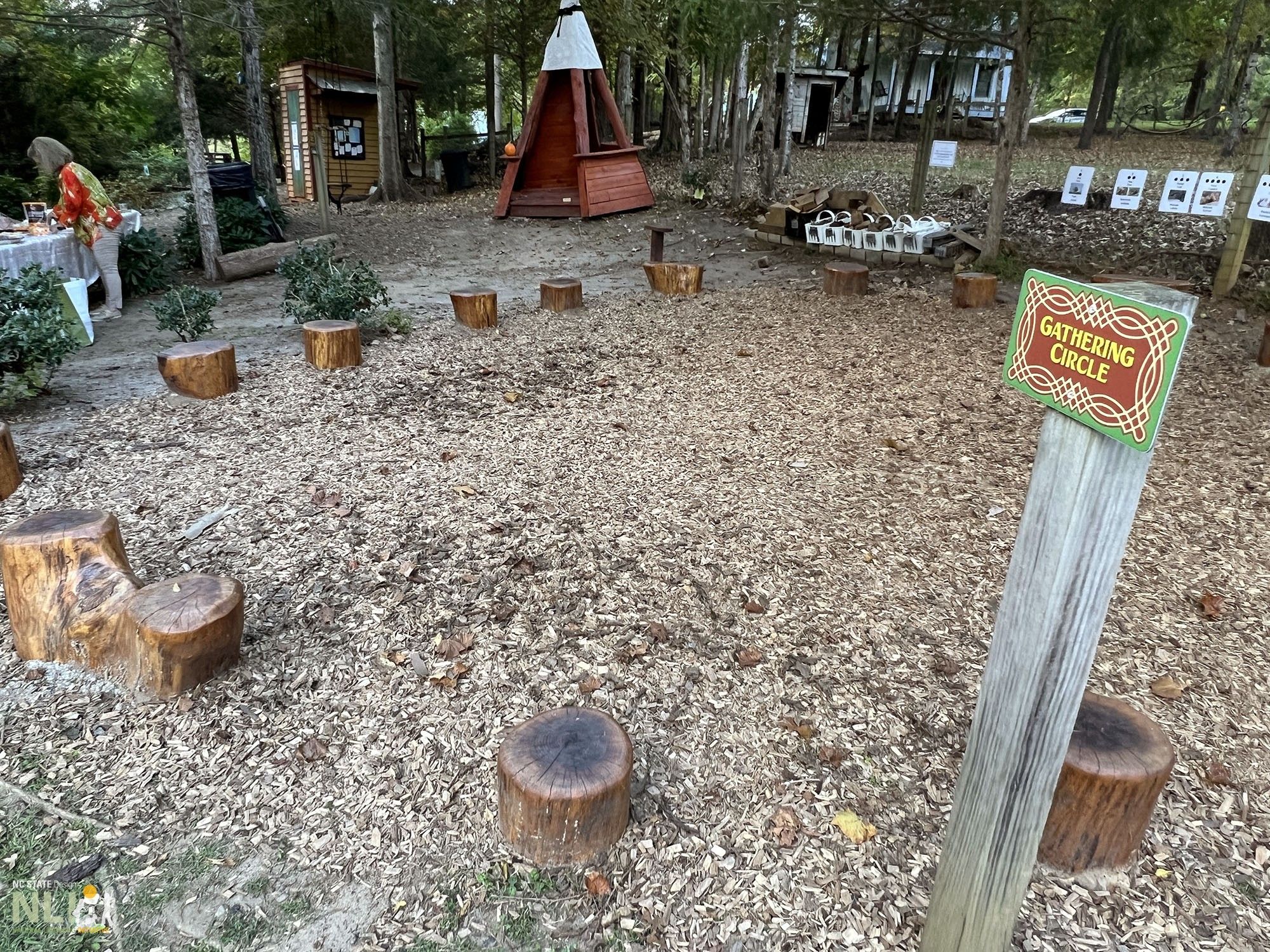
Over the last two years, staff has worked with private donors, Marty and Vesime Schroering, to craft a vision for a new natural playscape, dubbed the Schroering Forest Playground. The latest in several new amenities announced by the organization in recent years, the Forest Playground is planned for an existing mature-growth tree stand adjacent to the Domtar Forest Porch. Staff has collaborated alongside the Natural Learning Initiative (NLI), a research and professional development unit at the NC State University College of Design to create a natural environment for children and their families to enjoy when visiting.
Anne Springs Close Greenway has always been a special place for our family. After being inspired by playgrounds we saw while visiting abroad, we wanted to bring the same fun and inspiration to Fort Mill to further nurture children’s imagination and creativity. We are excited to partner with the Greenway to bring this dream alive and share with the community we love.
Donor and Fort Mill Resident
NLI was founded in 2000 with the purpose of promoting the importance of the natural environment in the daily experience of all children. A primary goal is to partner with like-minded organizations such as Anne Springs Close Greenway to create on-the-ground, research-driven demonstrations of nature-based solutions that get kids off the couch and outdoors. Most children today are too sedentary, glued to electronic devices indoors, becoming overweight or worse – a poor prognosis for future health. Outdoors in nature is the best antidote for individuals and the planet. Insufficient contact with the natural world limits our understanding of human dependence on nature, which we all need to care for.
NLI offers evidence-based design assistance to help create a stimulating place for play, outdoor learning, and environmental education. Regionally as open land and green space continue to diminish at a rapid rate, the Anne Springs Close Greenway serves to be a bridge for more children to experience and appreciate the outdoors.
The construction of the Schroering Forest Playground is an effort to enhance outdoor learning and natural play environments at the Anne Springs Close Greenway. This new amenity will bring more children to nature through the experiences of forest play, activating key sensory skills while developing creativity and confidence in the outdoors.
President and CEO of Leroy Springs & Co. (Operates ASCG)
Research suggests there are a variety of ways nature enhances children’s physical, social, emotional, and cognitive development, and the construction of a new natural playscape aims to bridge the gap for the three out of four children who do not get the recommended hour of active play per day. The Schroering Forest Playground will include a central feature and climbing structure for older children, a complementary structure for younger guests, and a primary pathway that is ADA-accessible to ensure visitors of all ages and abilities can enjoy the playscape.
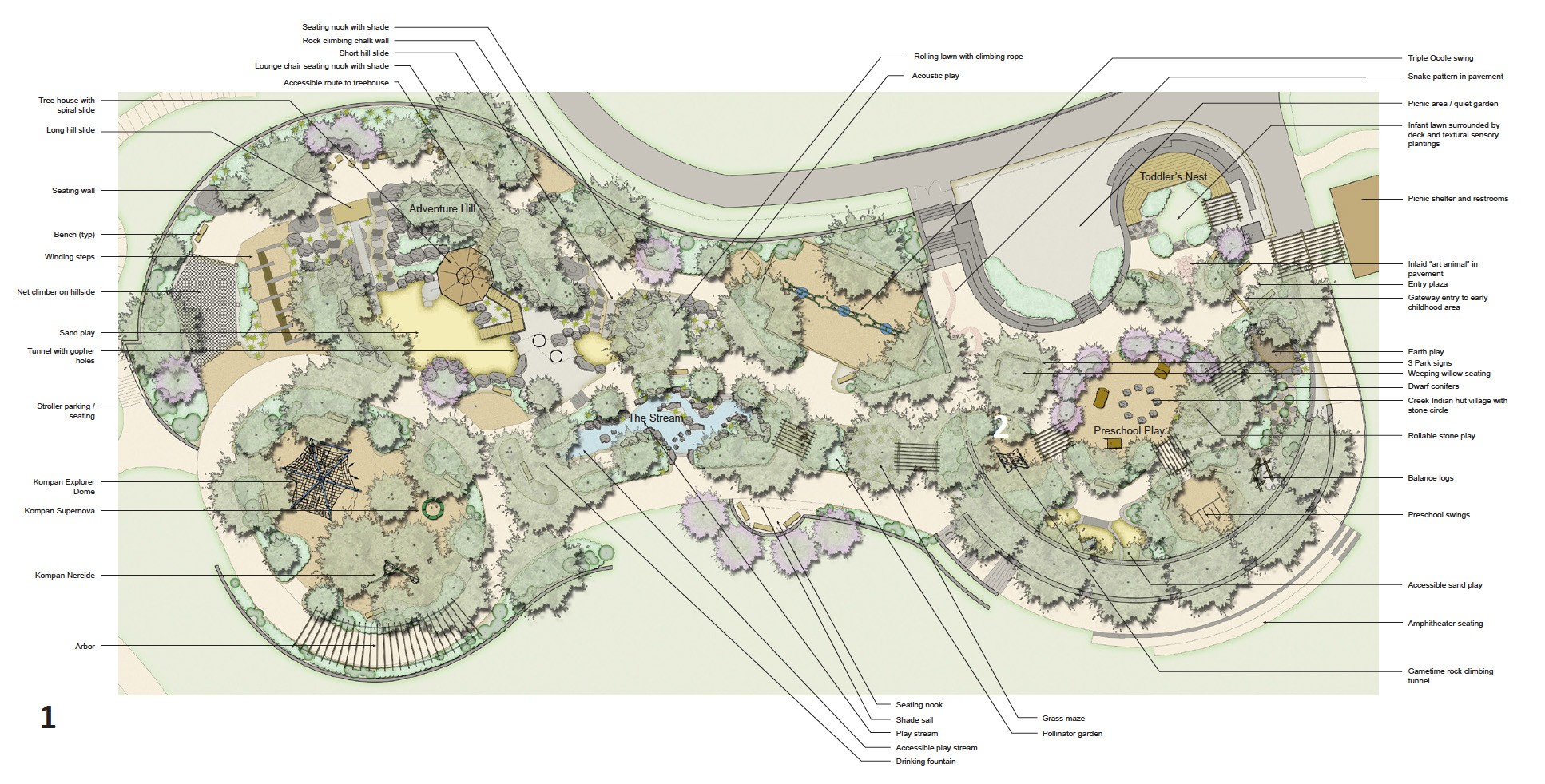
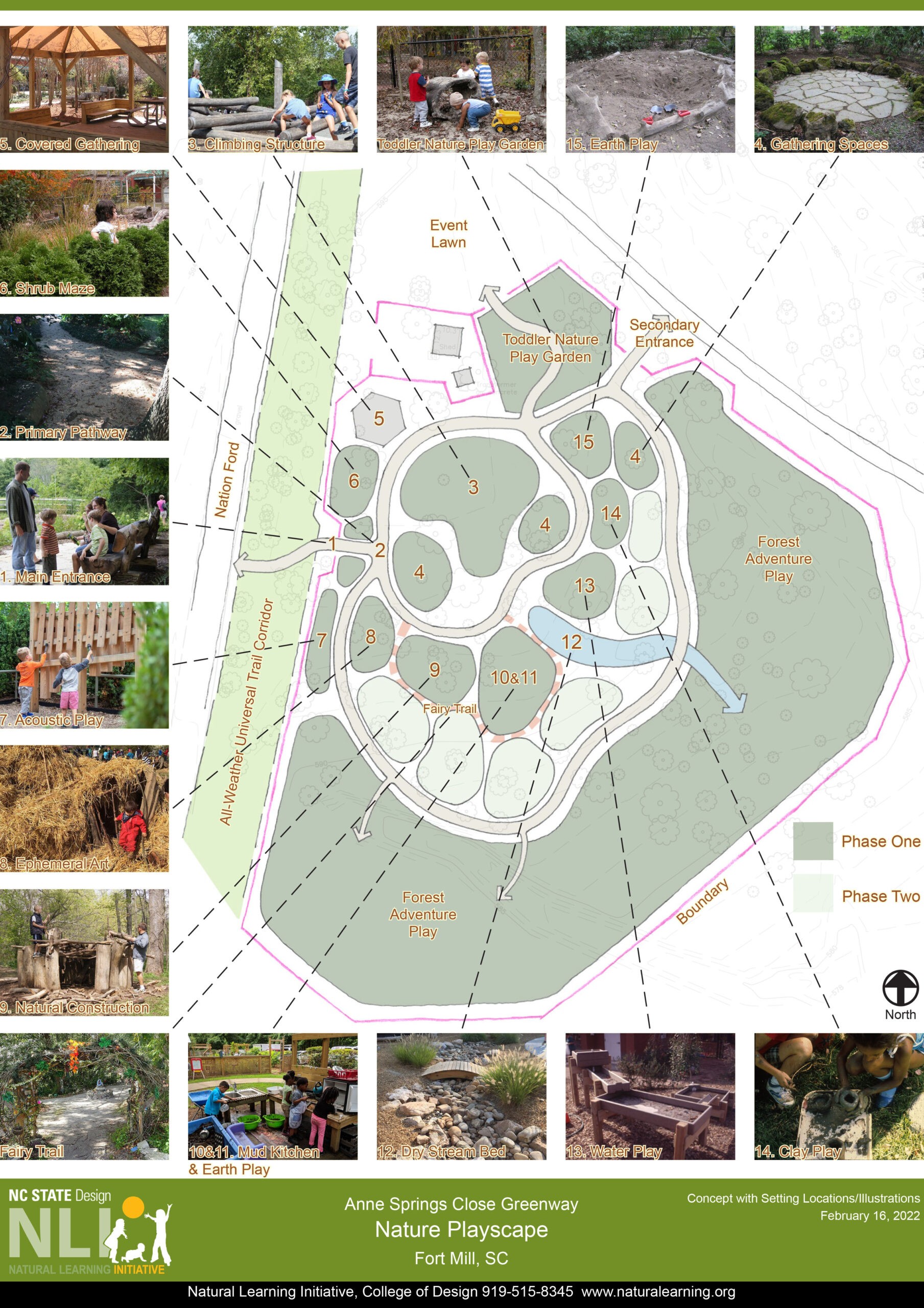
Nature Playscape concept site layout shows accessible, forest pathways and interconnected activity settings, including #3, the Climbing Structure. Acoustic Play #7, is also a Richter product (among others to be located). Additional setting illustrations are taken from other NLI projects.
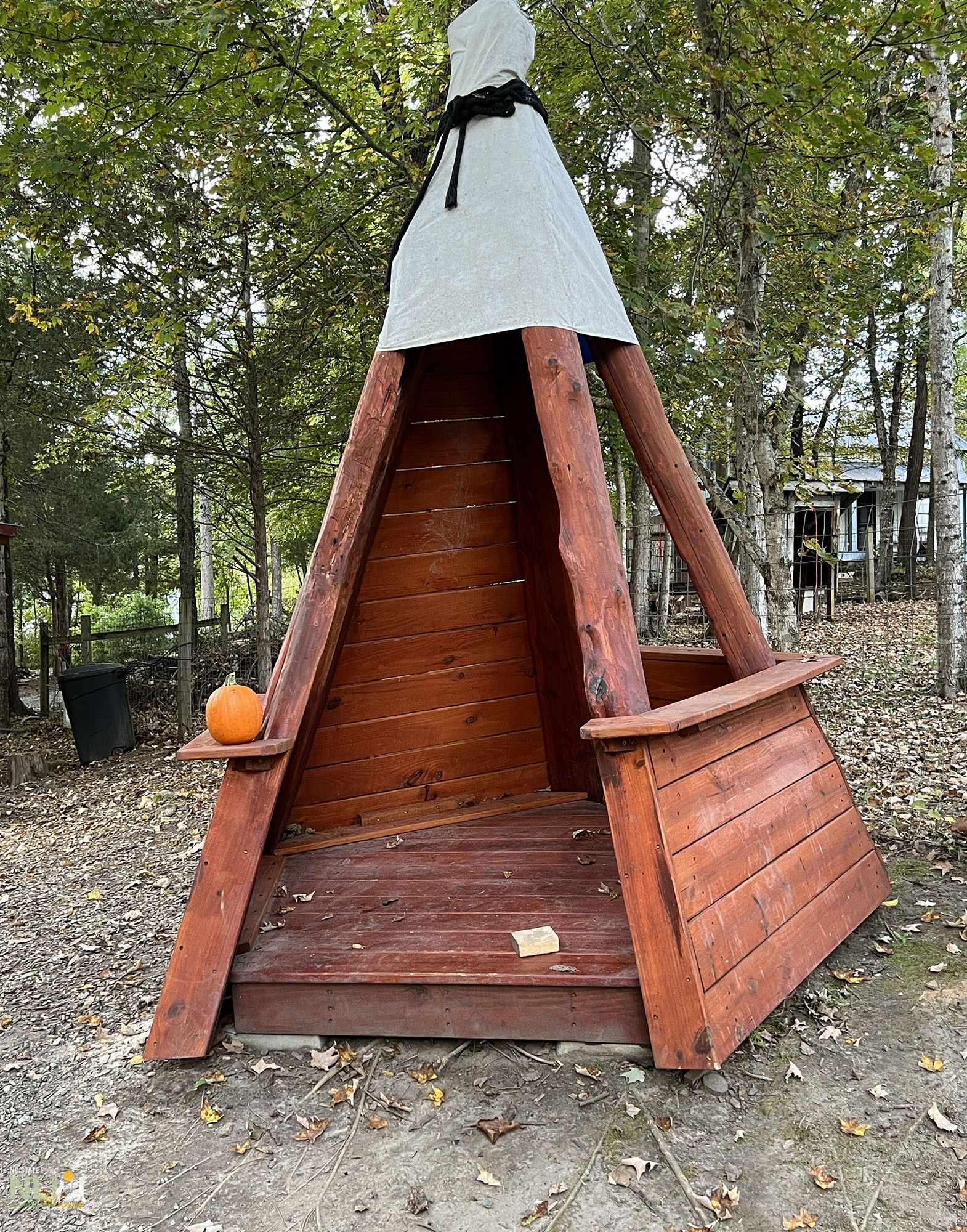
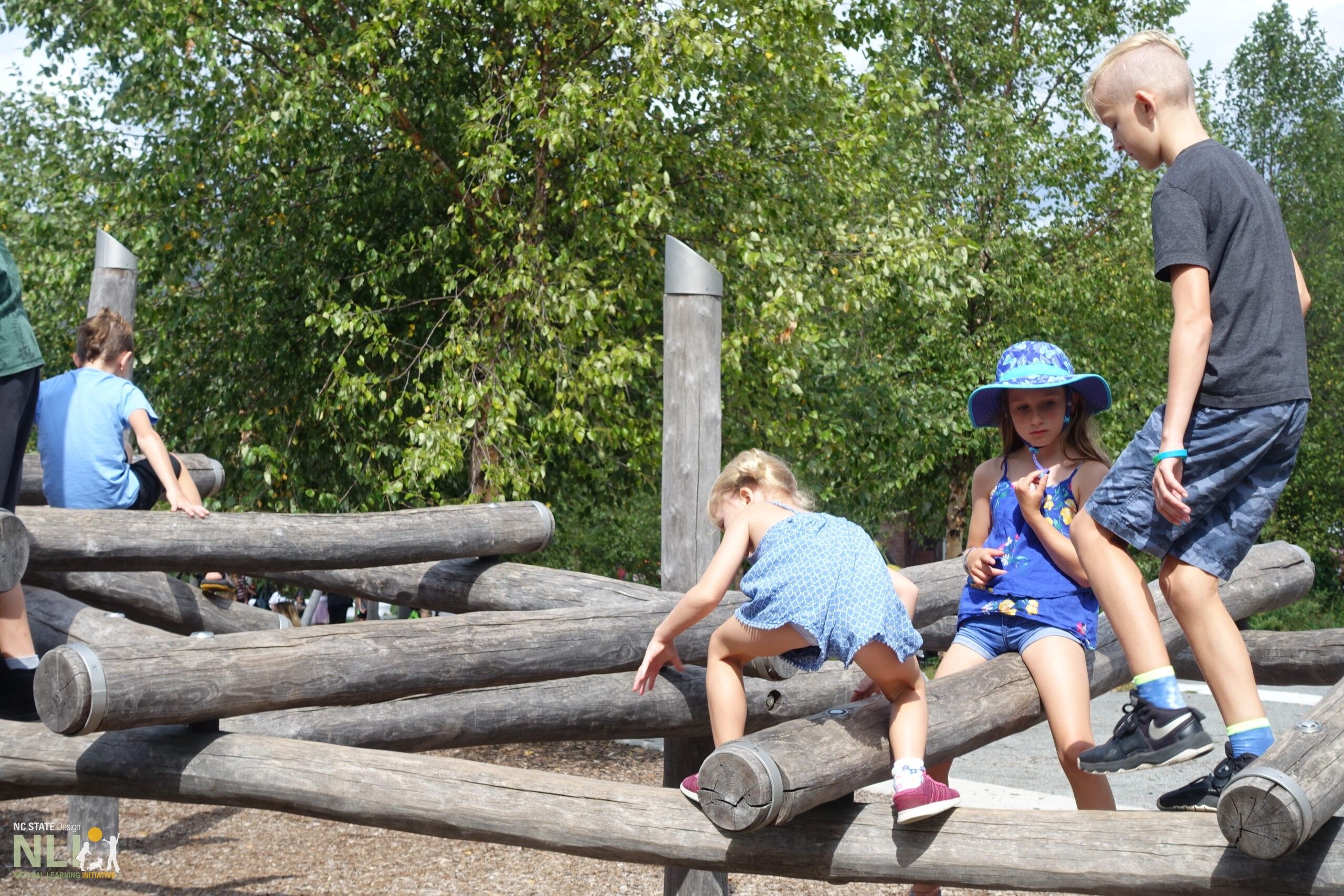
Climbing structure located in a forest clearing, to be entered from the Nation Ford Greenway. Made by a leading German playground company, Richter Spielgeräte, the structure was selected because of its inclusive play value across a wide age range (graduated challenge), its proprioceptive complexity (body in space) that motivates physical fitness, its use of resilient timber components harvested from sustainable forests, and how the naturalistic structure blends into its forested surroundings.
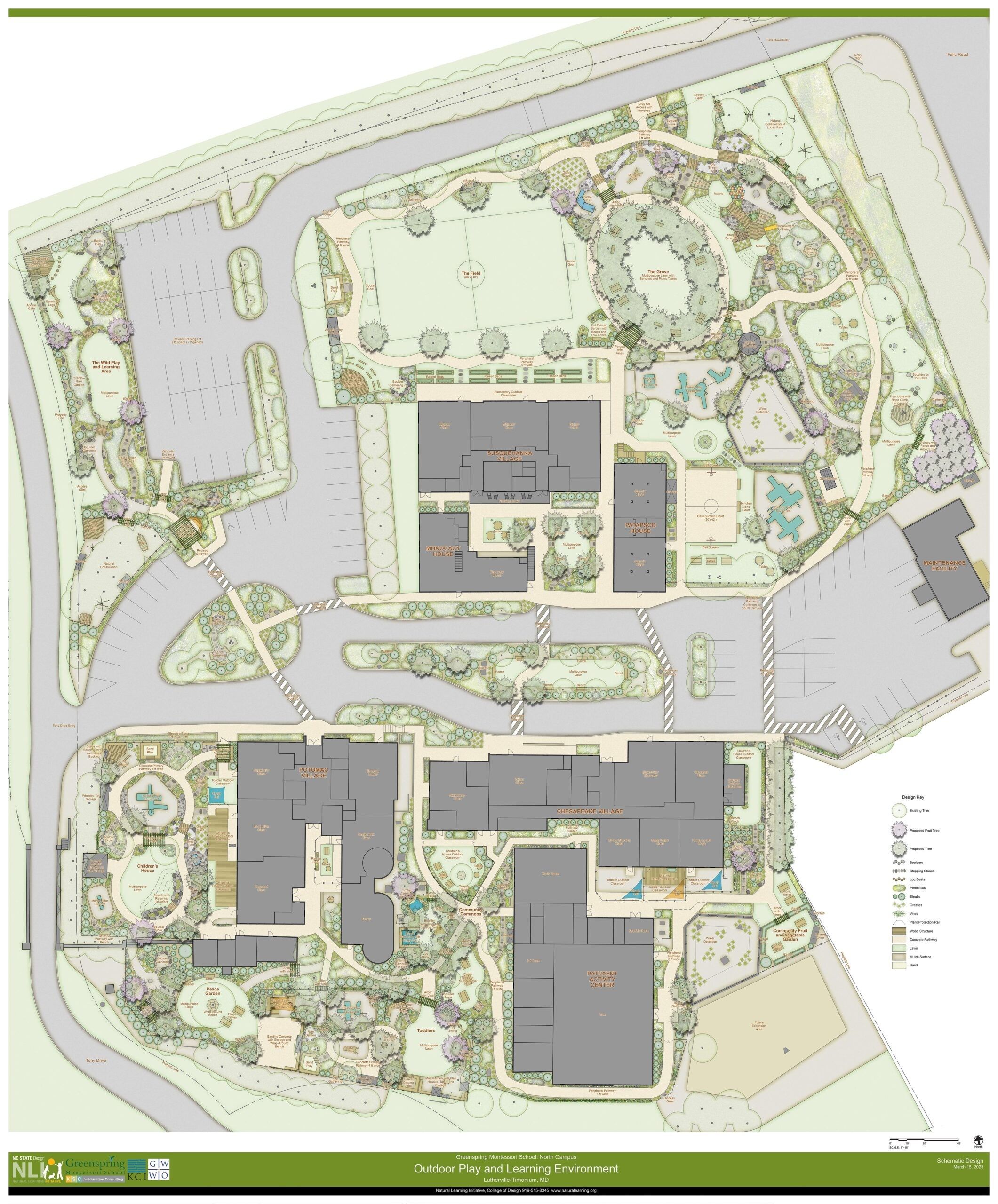
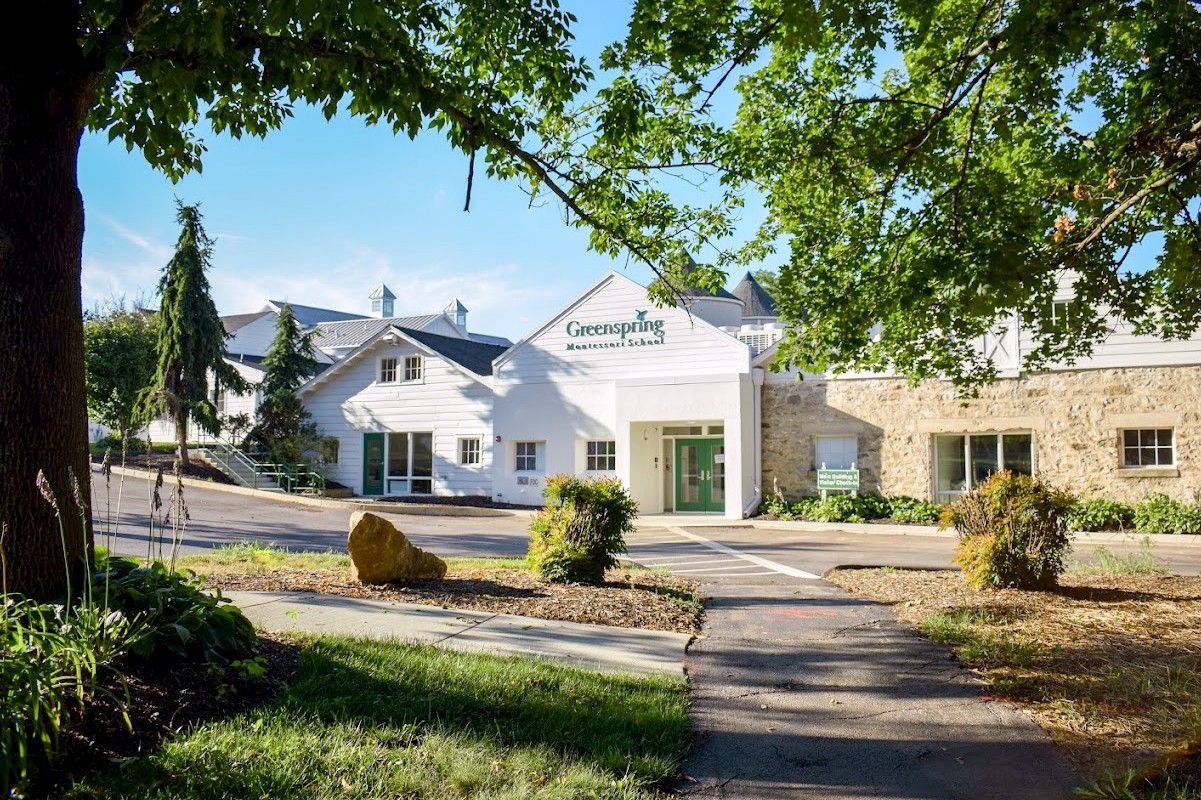
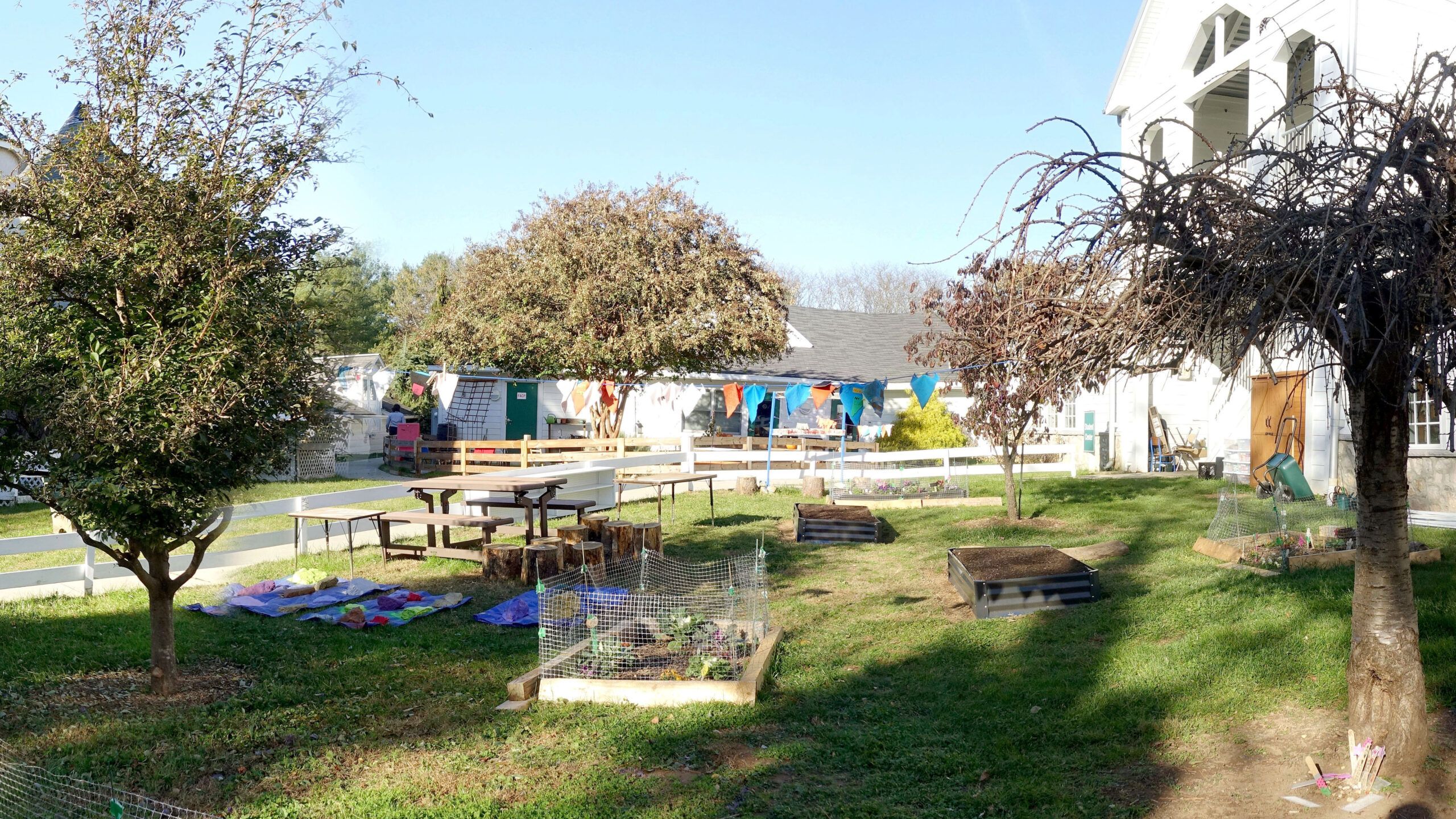
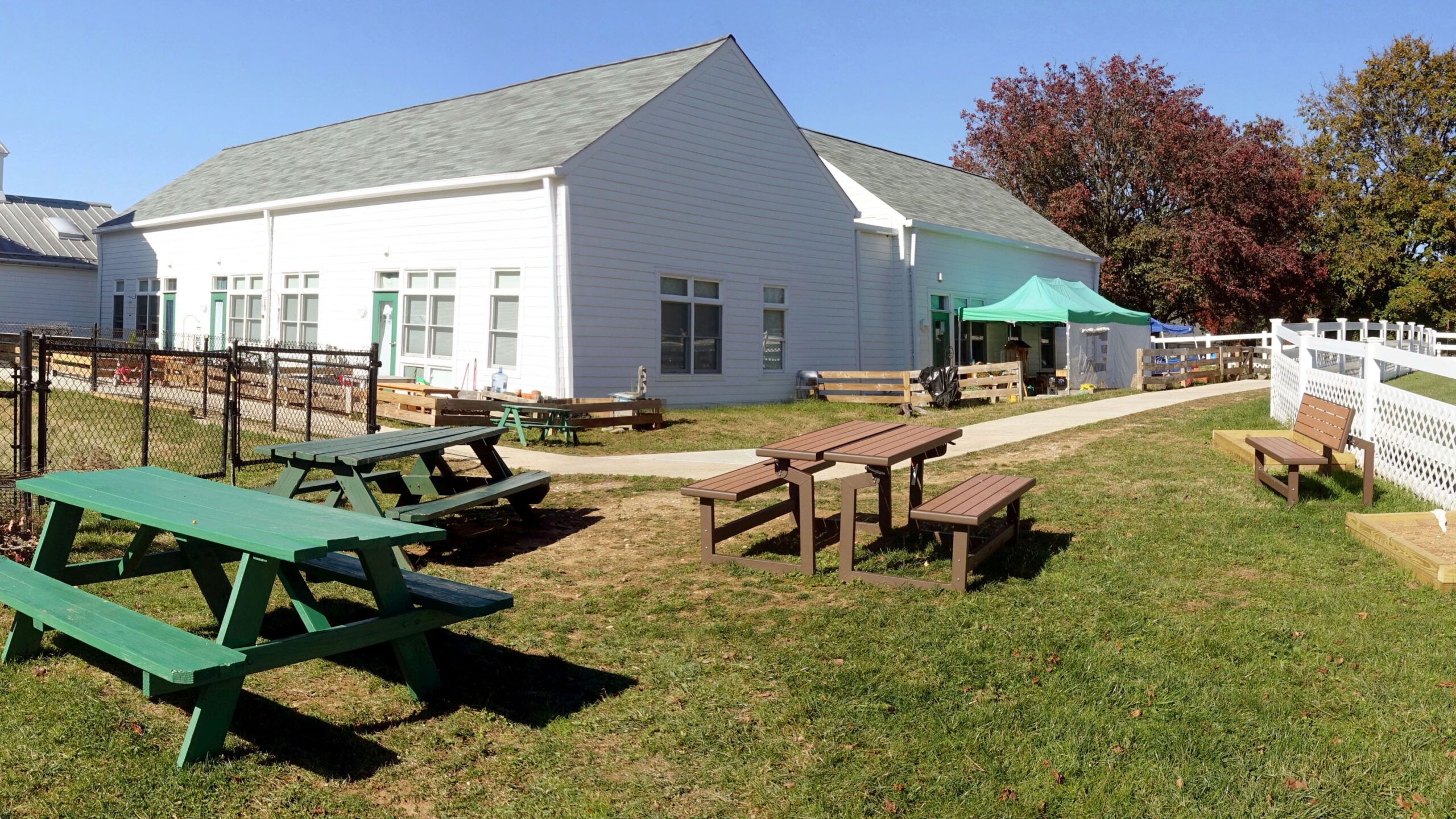
Greenspring Montessori School (GMS), with five decades of growth serving the greater Baltimore region, decided it was time to assess the value of their outdoor environment and create a schematic design to guide future development. NLI was appointed to execute this task in collaboration with other consultants. Steps included assessing site potential, resolving functional site issues, working with classroom teachers on outdoor educational programming and design implications, engaging with school leadership, and producing a schematic design to enhance outdoor play and learning throughout the campus. Greenspring Montessori School (GMS) is located in Lutherville-Timonium outside of Baltimore, Maryland. The site, originally a dairy farm in the early 1900s, was renovated and converted into an educational facility in the 1970s and unified as Greenspring Montessori in 2013. GMS serves toddlers through adolescents.
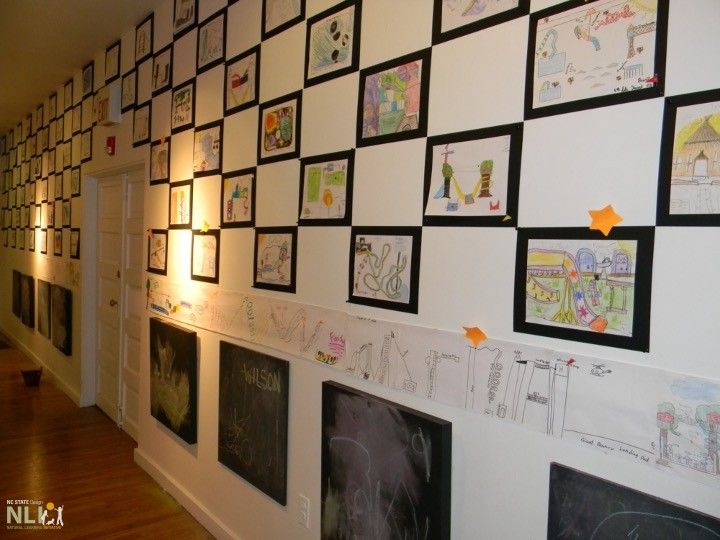
The NLI team engaged with stakeholders and consultants on-site to create a master plan concept including a peripheral trail, restructured parking, and designated areas with high play and learning potential. Online NLI surveys of students, teachers, and the GMS community, plus student designs, provided input to the design program. Online interactive sessions with teachers added rich detail for settings for each age group as well as ideas for communal spaces throughout the campus. CAD drawings were transmitted to project consultants for documentation and eventual phased construction.
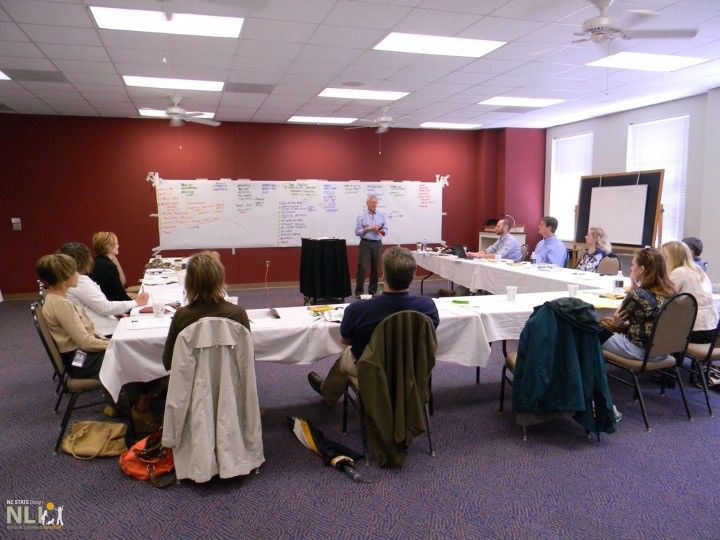
Design Programming Stakeholder Workshop
The Children’s House sensory garden reflects Greenspring Montessori’s commitment to outdoor learning.
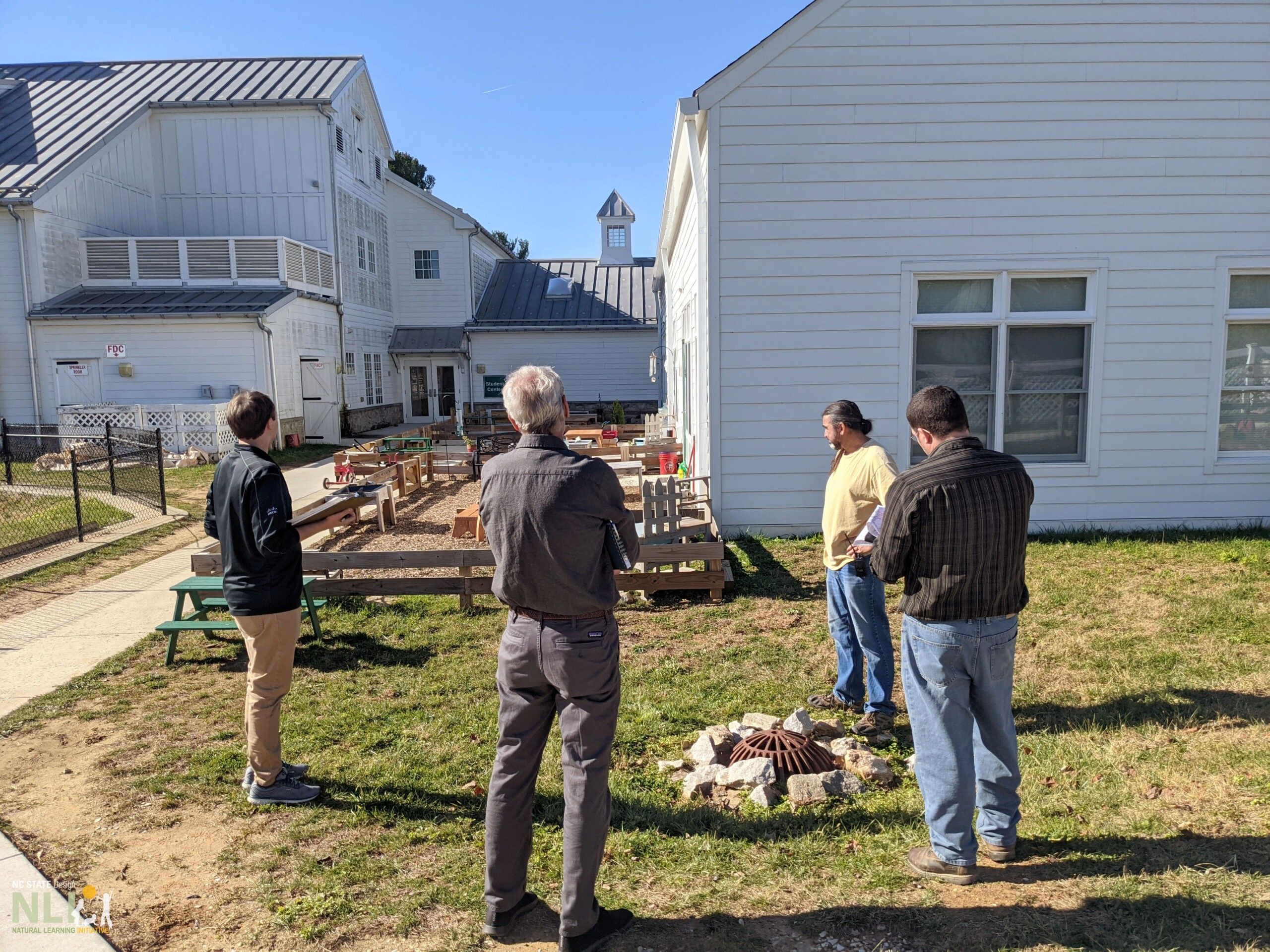
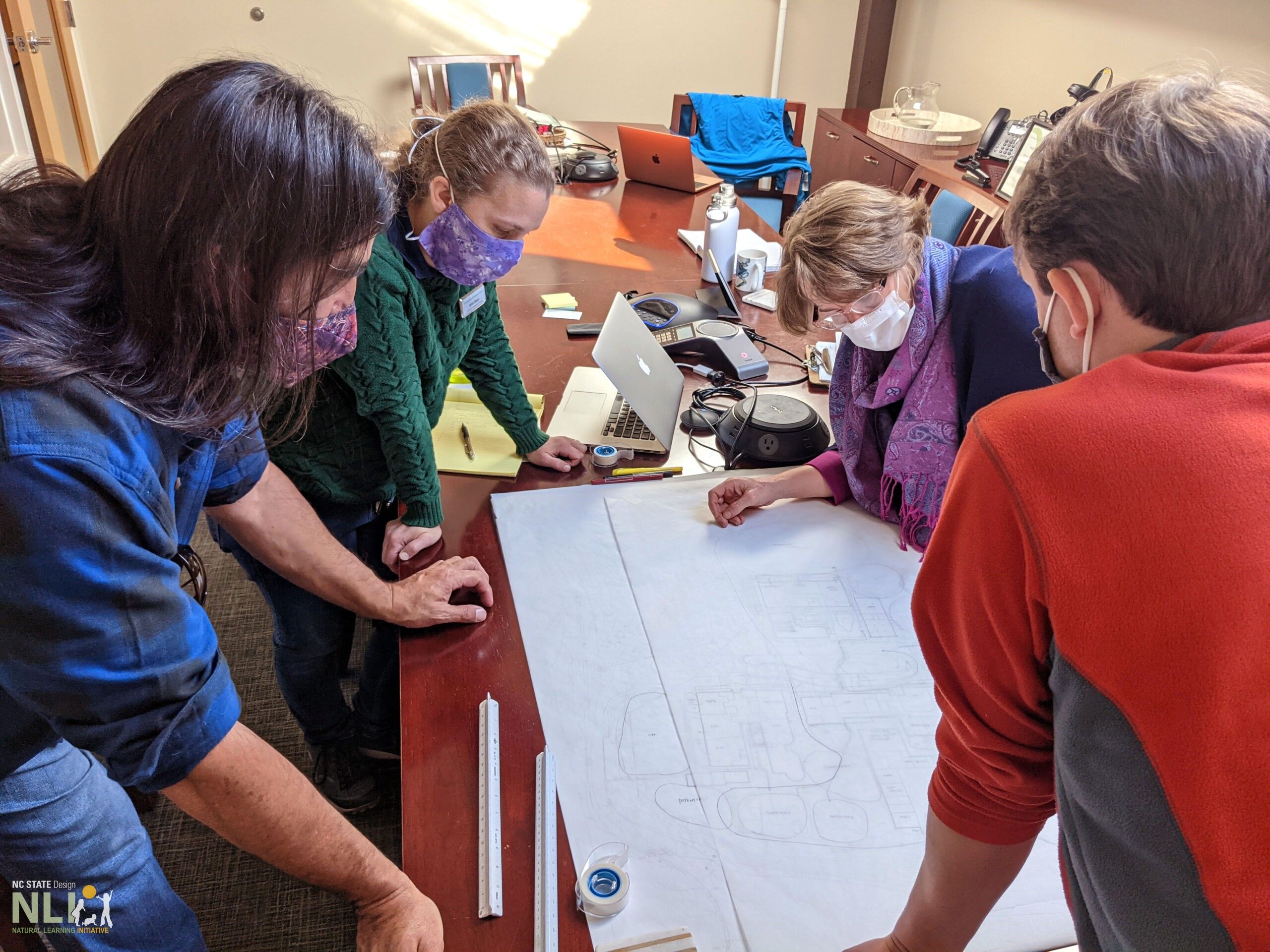
NLI and Greenspring Montessori staff meet on-site to discuss the sighting of proposed improvements.
NLI staff meet with Greenspring Montessori teachers to share design ideas.
Site Visit
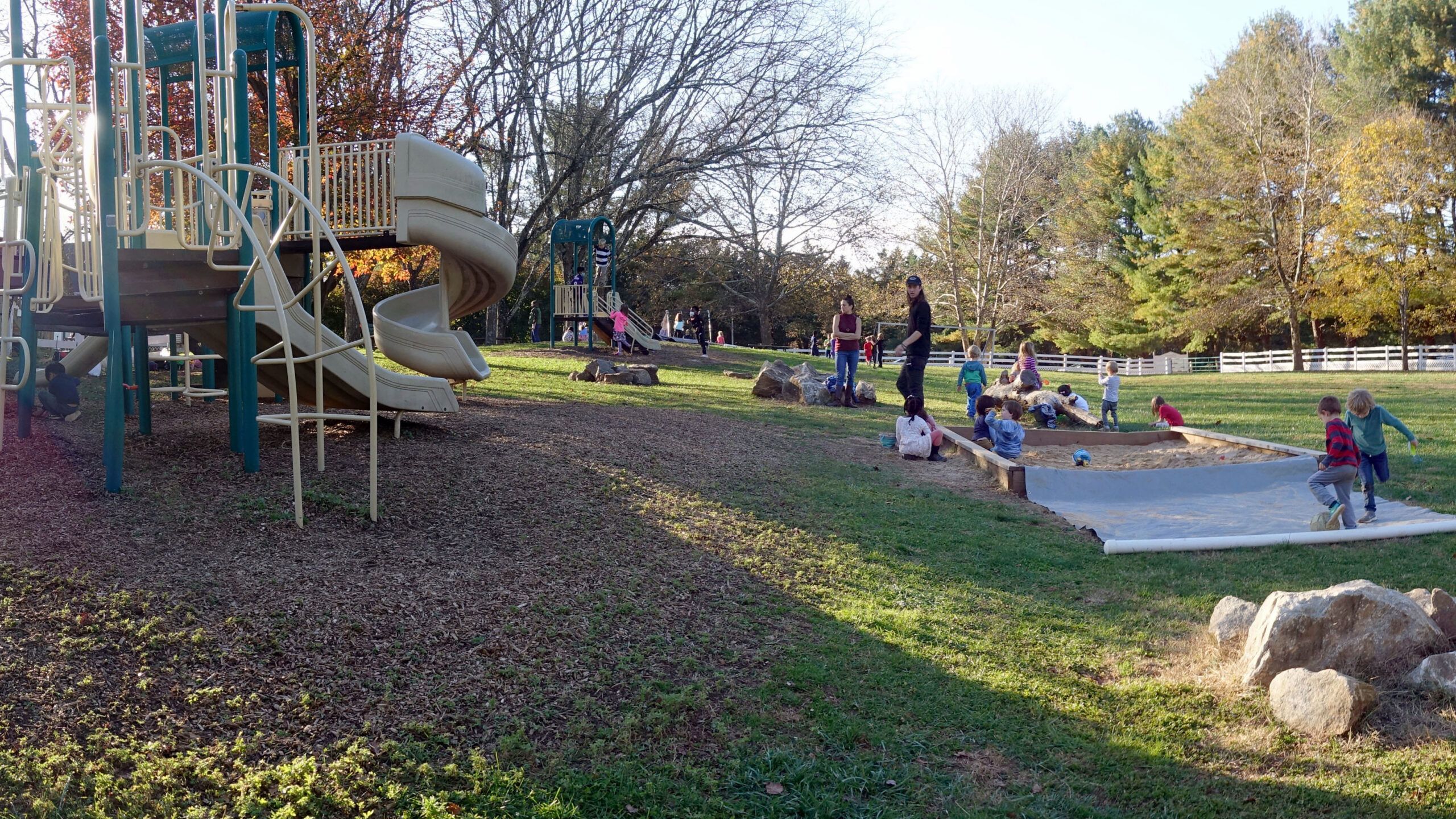
The existing Greenspring Montessori School site already benefits from mature trees and diverse vegetation.
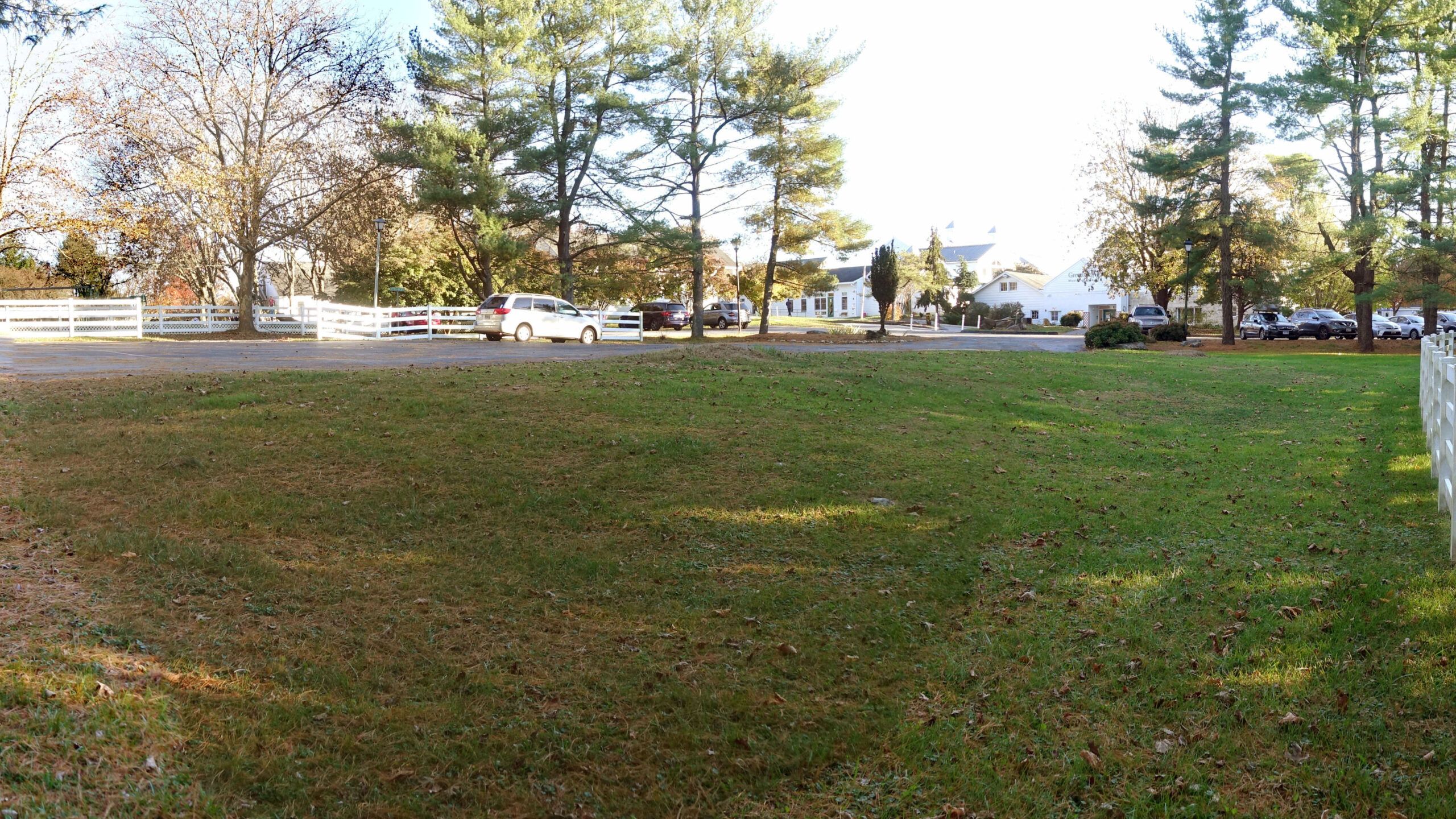
The Wild Play and Learning Area: An unused space to be developed into a natural play area with an integrated rain garden capturing sheet flow off the parking lot.
The Field: An open space to be maintained for multipurpose activities adjacent to the new Susquehanna building.
The Grove: The future heart of campus to be surrounded by a grove of trees with picnic tables and benches. A place for the community of Greenspring Montessori School to gather as one.
Community Commons: An existing crossroads to be emphasized with more communal gathering spaces for classes to be outside on a daily basis.
Community Fruit and Vegetable Garden: The location of a pizza oven to be embellished with surrounding raised garden beds to be managed by the school community and harvested by the students.
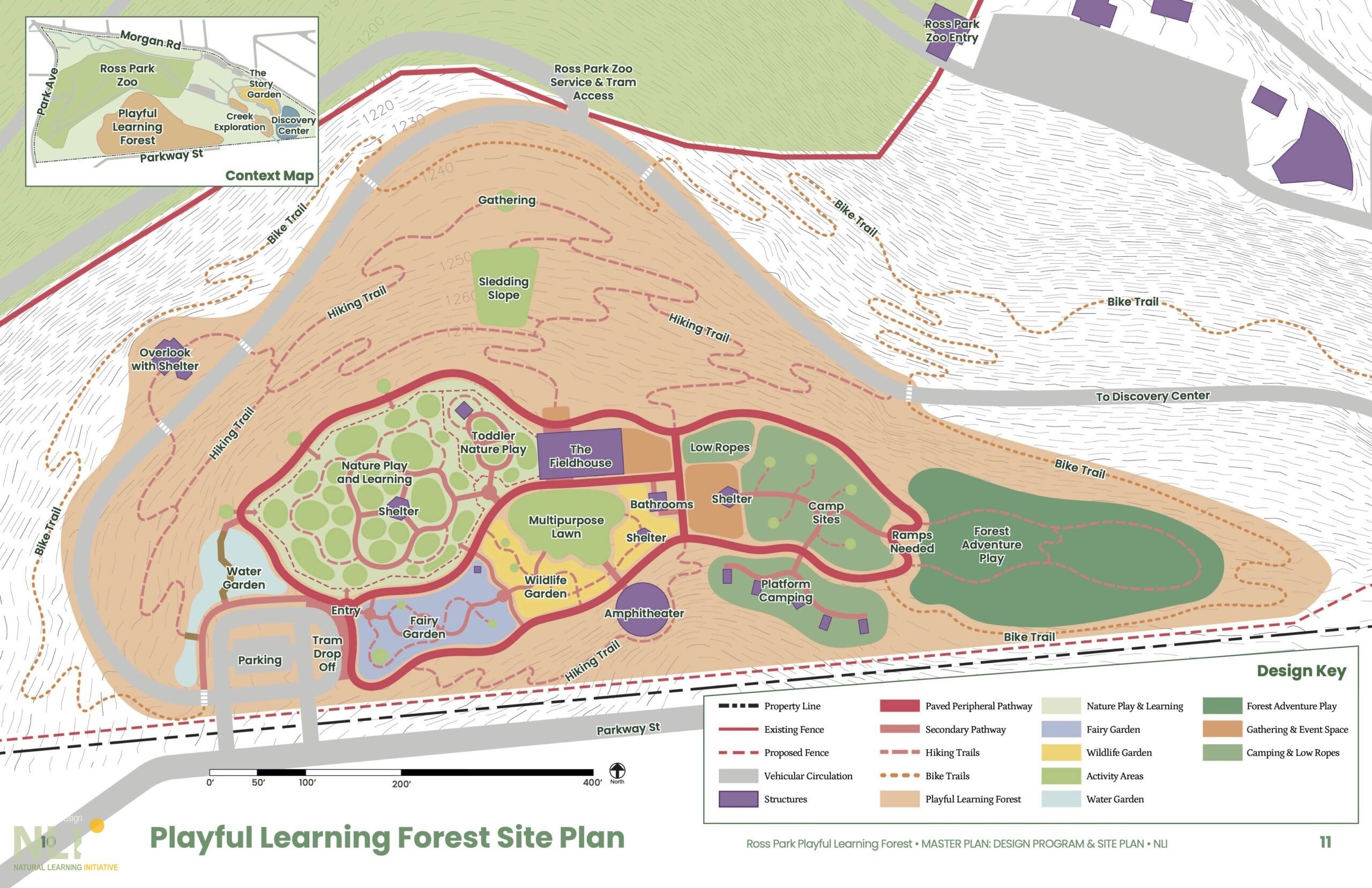
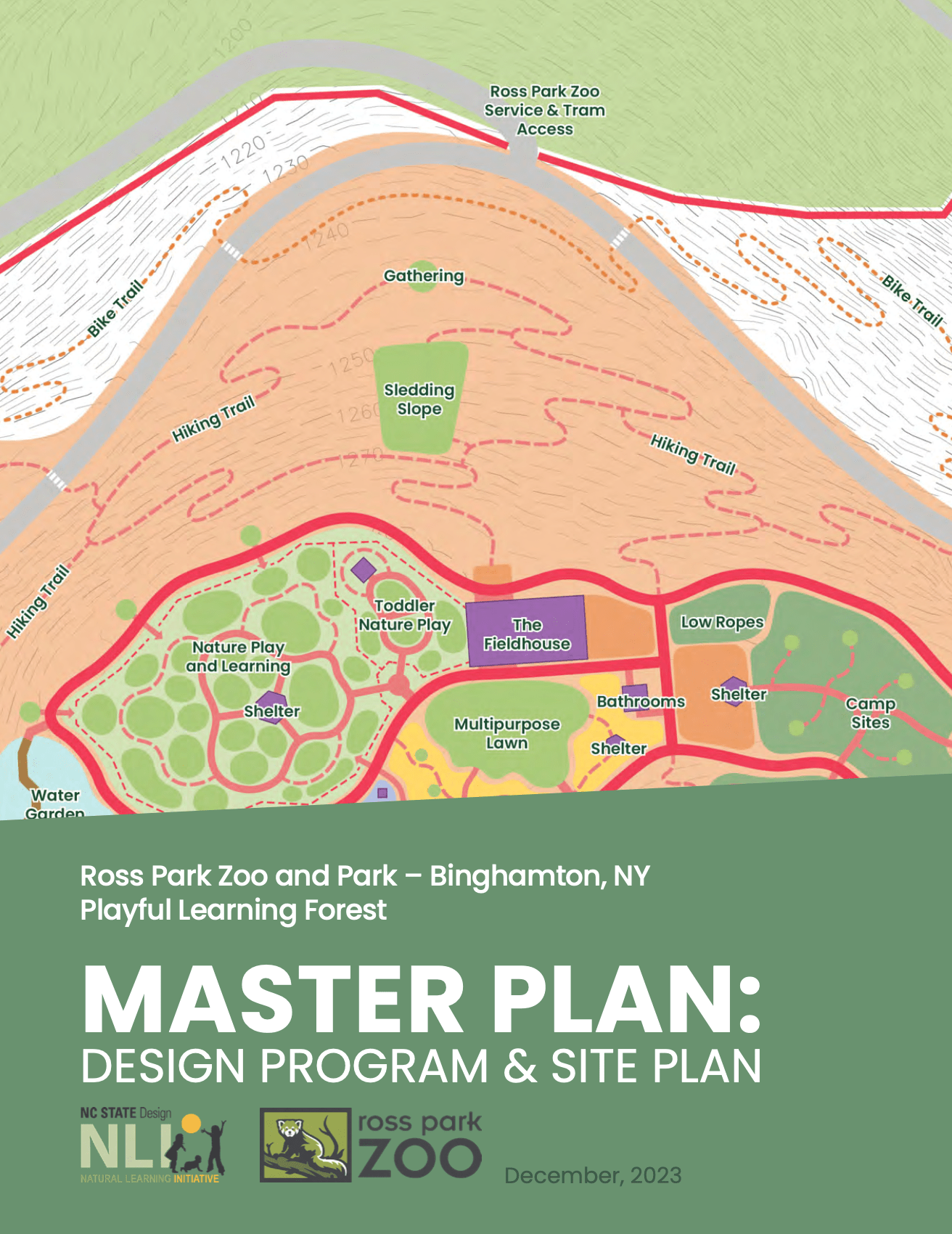
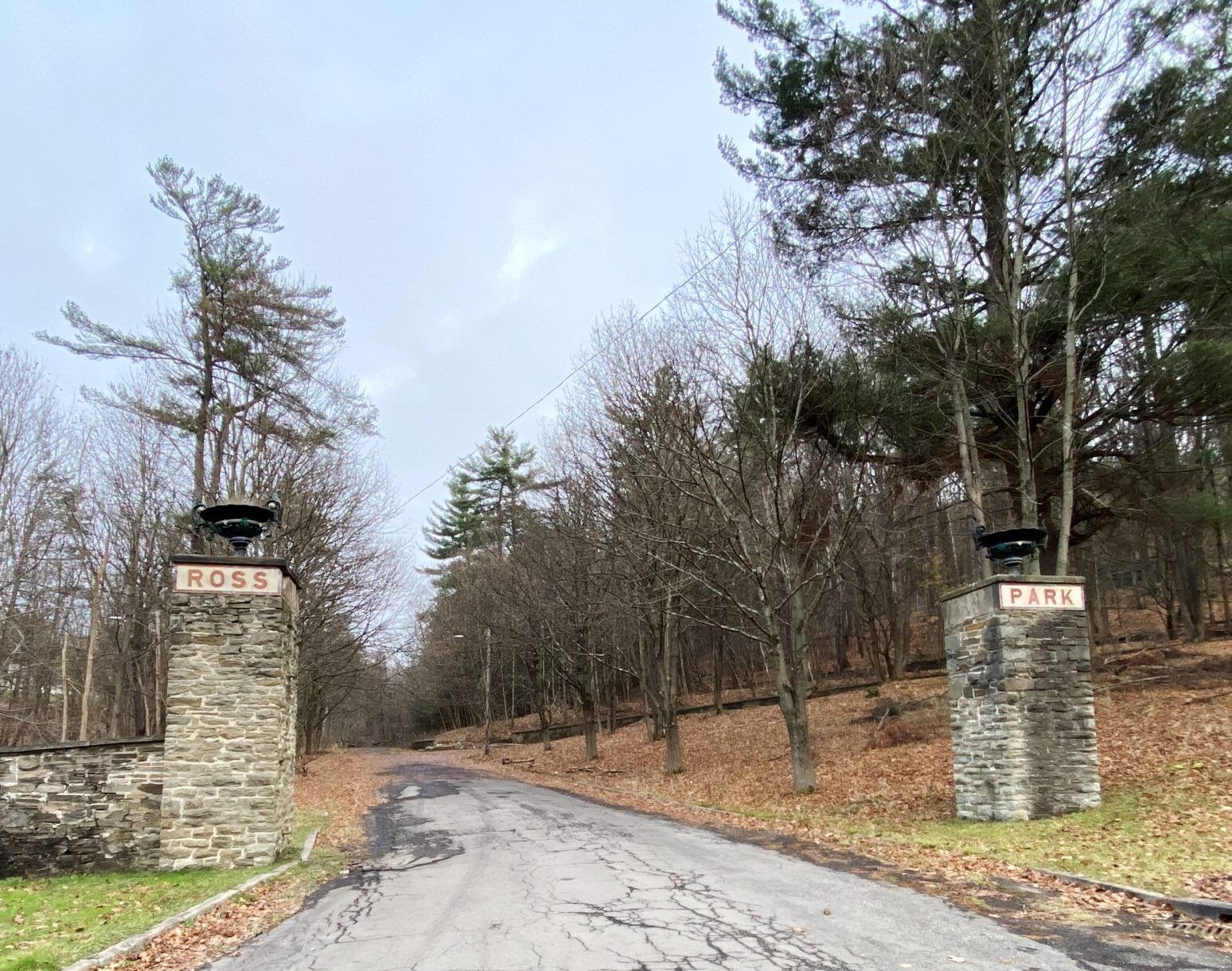
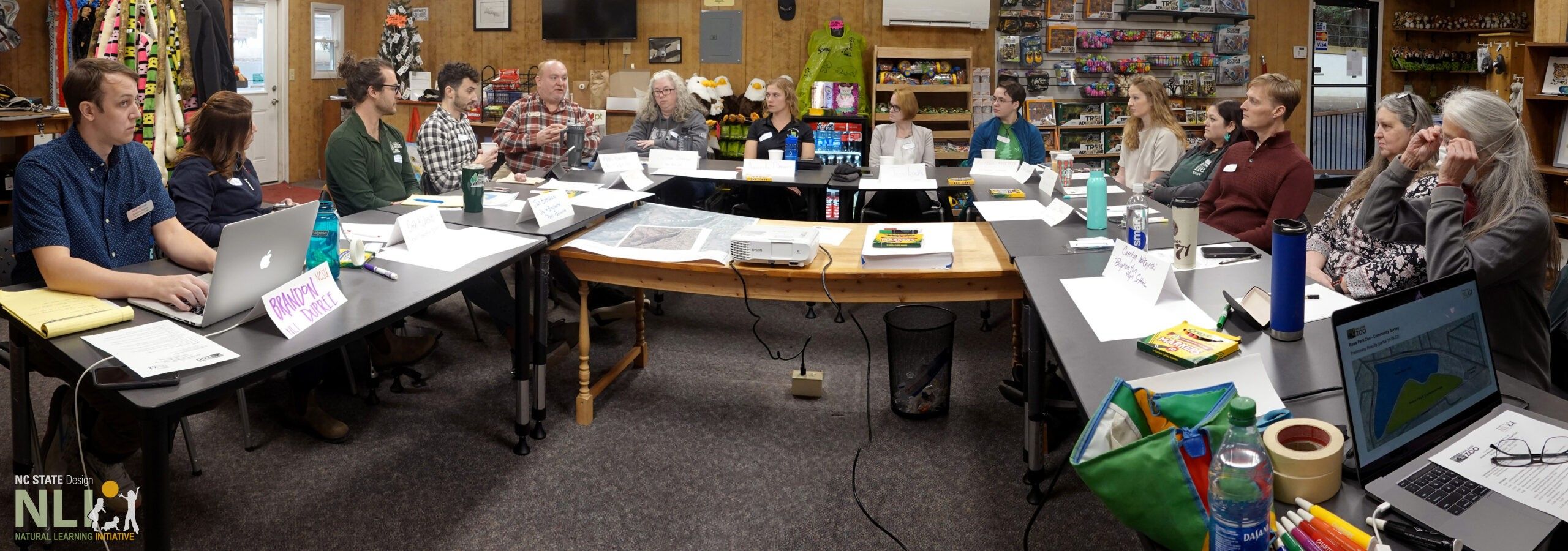
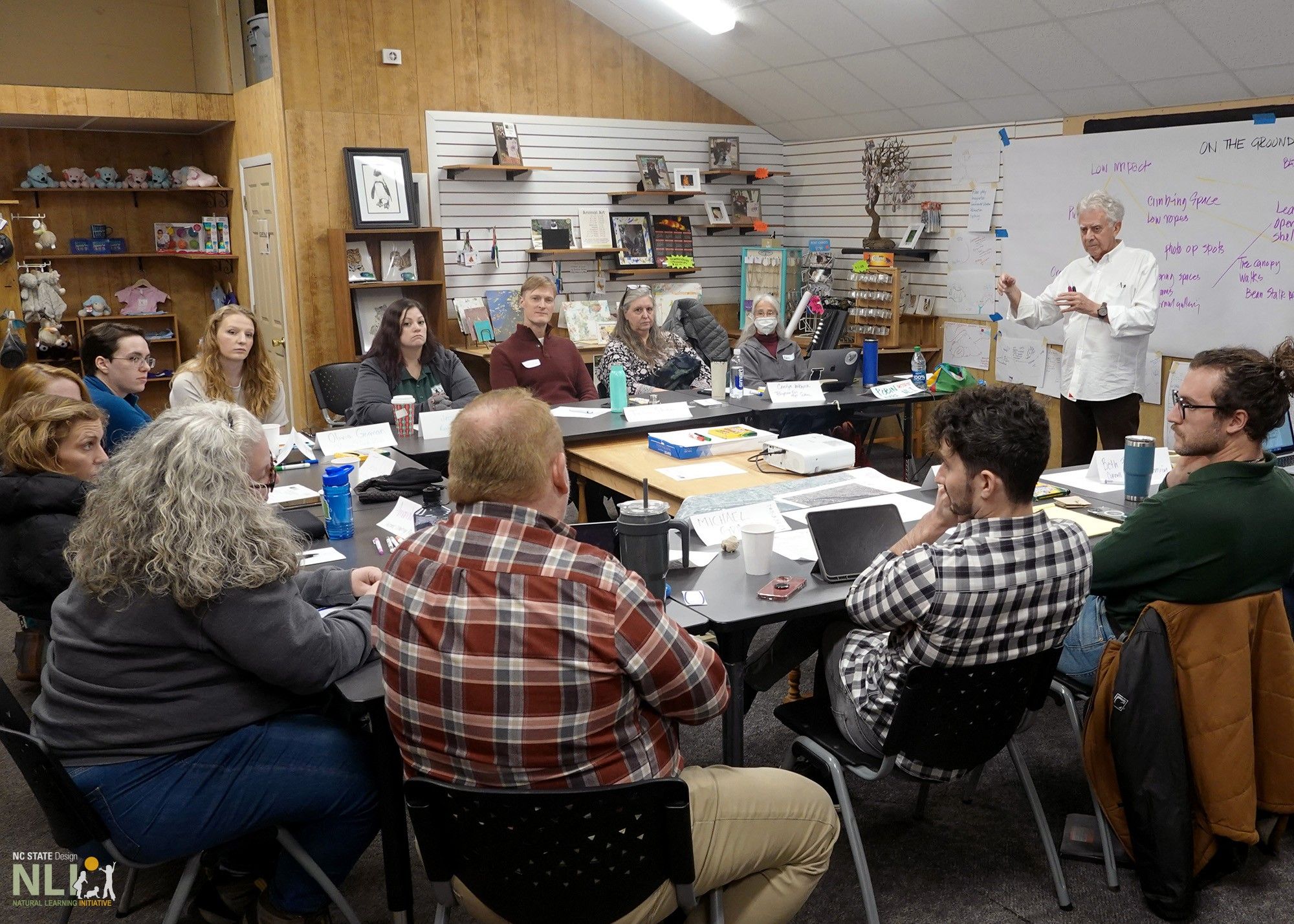
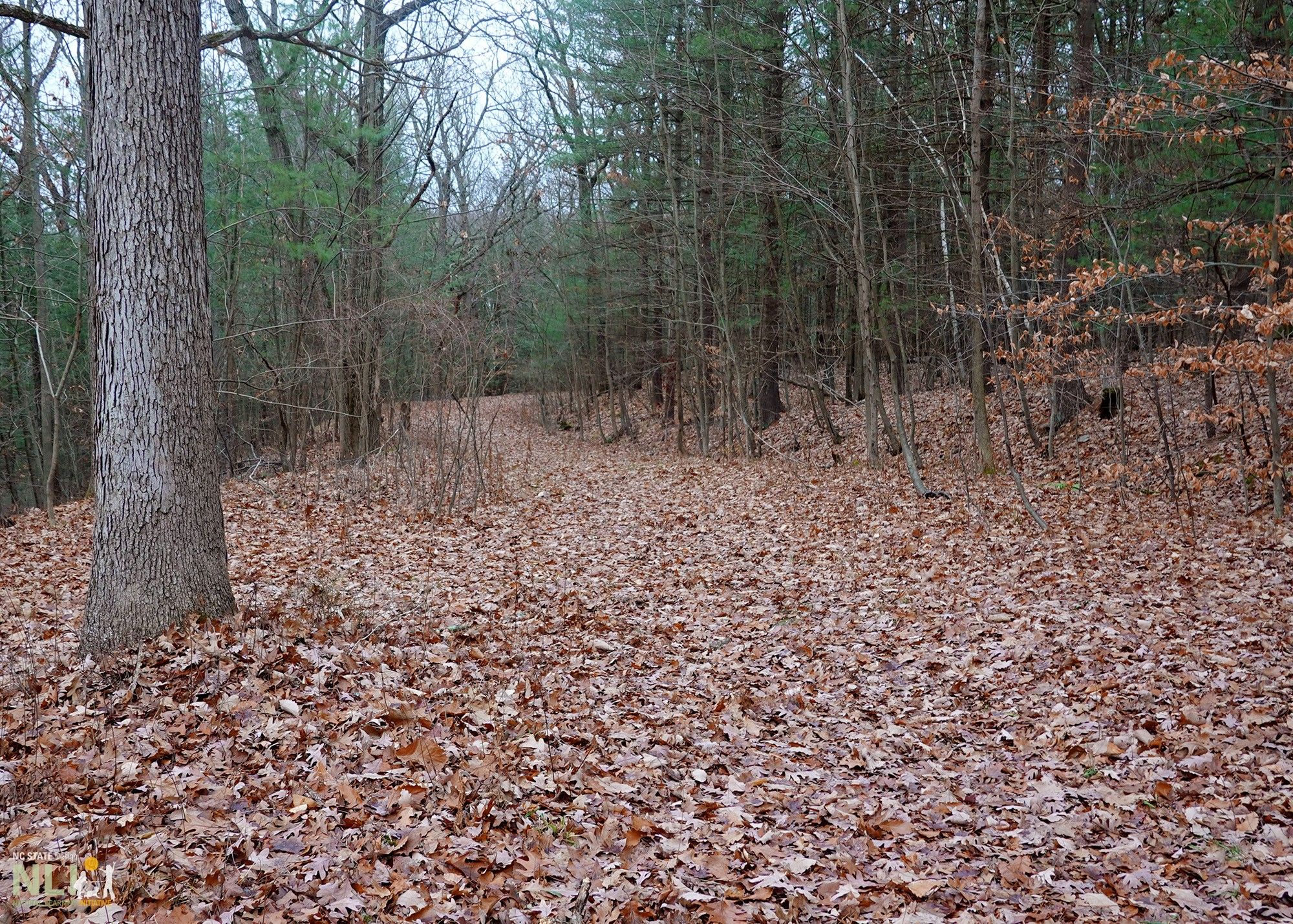
The Ross Park Playful Learning Forest Master Plan (Design Program + Site Plan) was initiated with a community survey and a two- day site visit, including a stakeholder workshop facilitated by NLI.
The vision projected by responses to the Community Survey was clearly broader in scope than the original project title (Nature Play and Exploration Trail), reinforced by the Stakeholder Workshop participants who emphasized educational potential. The site itself suggested a more ambitious approach. Eventually, these shared perceptions resulted in the expanded, renamed,“Playful Learning Forest.”
The purpose of the Master Plan is to provide the Ross Park Play and Learning Forest implementation team with a decision-making guide, framed by the project mission and goals described below. The Design Program narrative is based on the results of the segmented Community Survey, which describes the user needs and physical infrastructure improvements proposed by survey respondents, incorporated into the Site Plan. The Community Survey results will continue to inform the future Schematic Design, Activity Programming, and related site management process.
Download the Ross Park Play & Learning Forest Master Plan: