Blog

  • Kids in the Woods at Hoffler Creek Wildlife Preserve

    Project

    Kids in the Woods at Hoffler Creek Wildlife Preserve

    The mission of Kids in the Woods is to foster the physical, mental, and spiritual health of children through interaction with nature in a safe and stimulating outdoor environment.

    To help create a fun “Kids in the Woods” experience in the 142-acre Hoffler Creek Wildlife Preserve (HCWP), NLI developed a design program and “Kids Trail” design using a participatory process with staff, board members, and Portsmouth community. The goal was to create free play opportunities for children, families, school groups, and youth organizations to explore and discover the forest ecosystem and to “foster the physical, mental, and spiritual health of children through interaction with nature in a safe and stimulating outdoor environment.”

    As a sanctuary for urban wildlife, HCWP contains four distinct ecosystems: a riparian forest of pines and hardwoods, a tidal creek and expansive salt marsh, a meadow of native wildflowers and grasses, and a manmade brackish “lake.” The preserve provides food and cover for diverse population of wildlife, including deer, foxes, river otters, crabs, oysters, and over 200 species of birds.

    The Kids Trail adds to the existing interpretive trails winding through each of the ecosystems to help introduce visitors to the ecological, economic, and social value of the plants and animals living at the mouth of the historic James River and Chesapeake Bay.
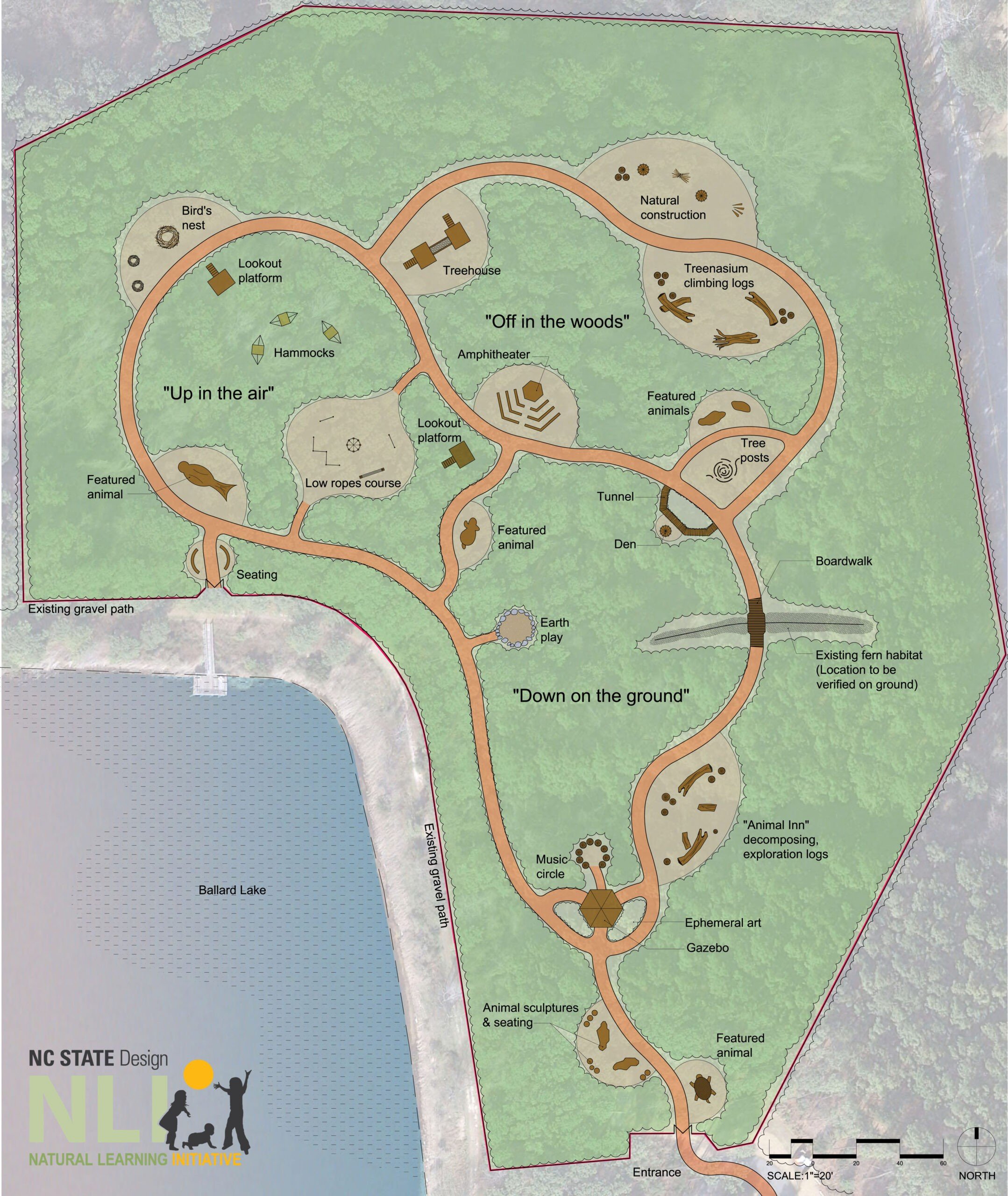
    "kids in the woods" map

    Design Program PDF

    Design Programming Stakeholder Workshop
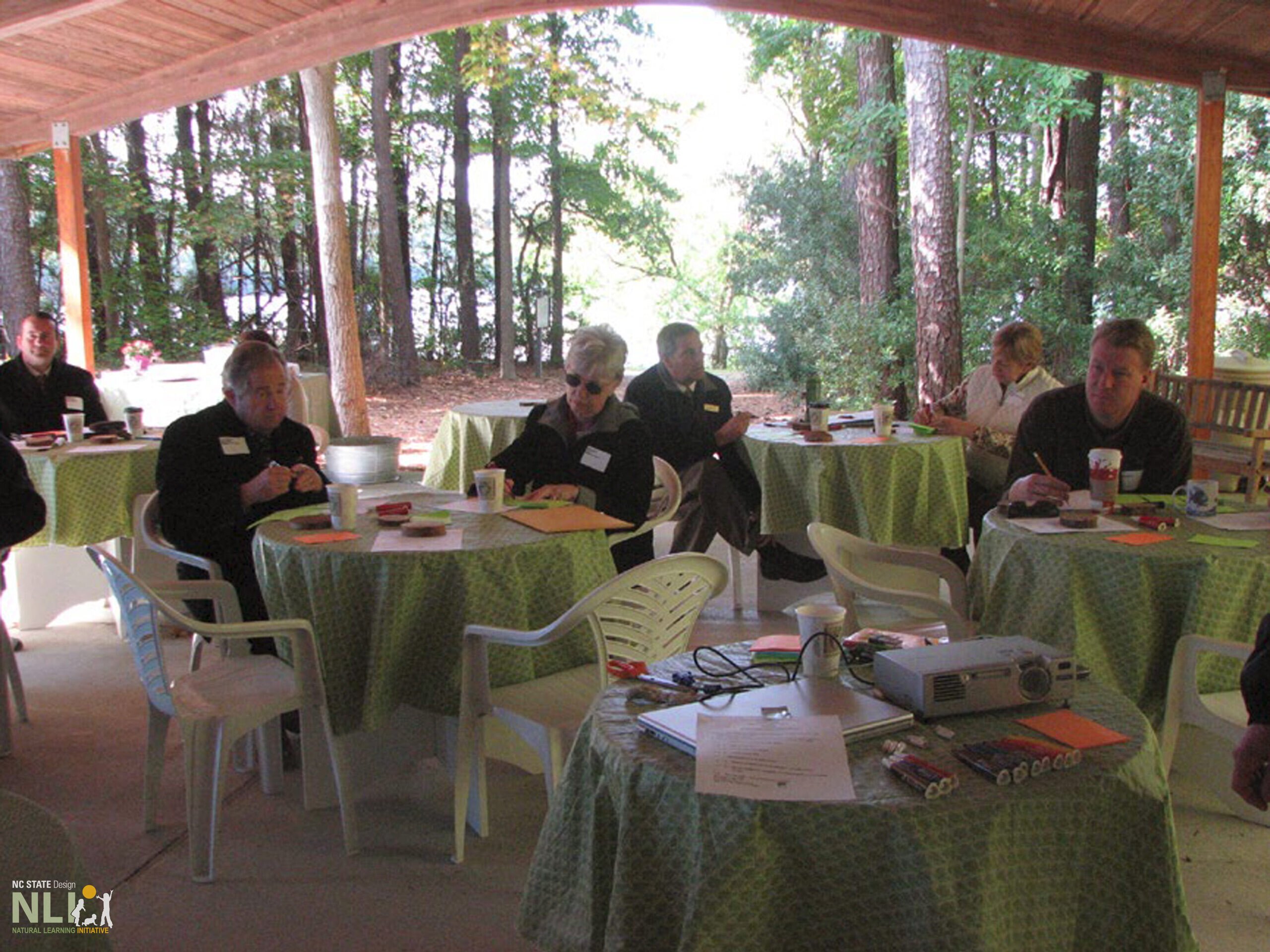
    collaborative workshop

    Kids in the Woods Design Program, based on community input, provides a detailed implementation guide for staff, contractors, and volunteers.
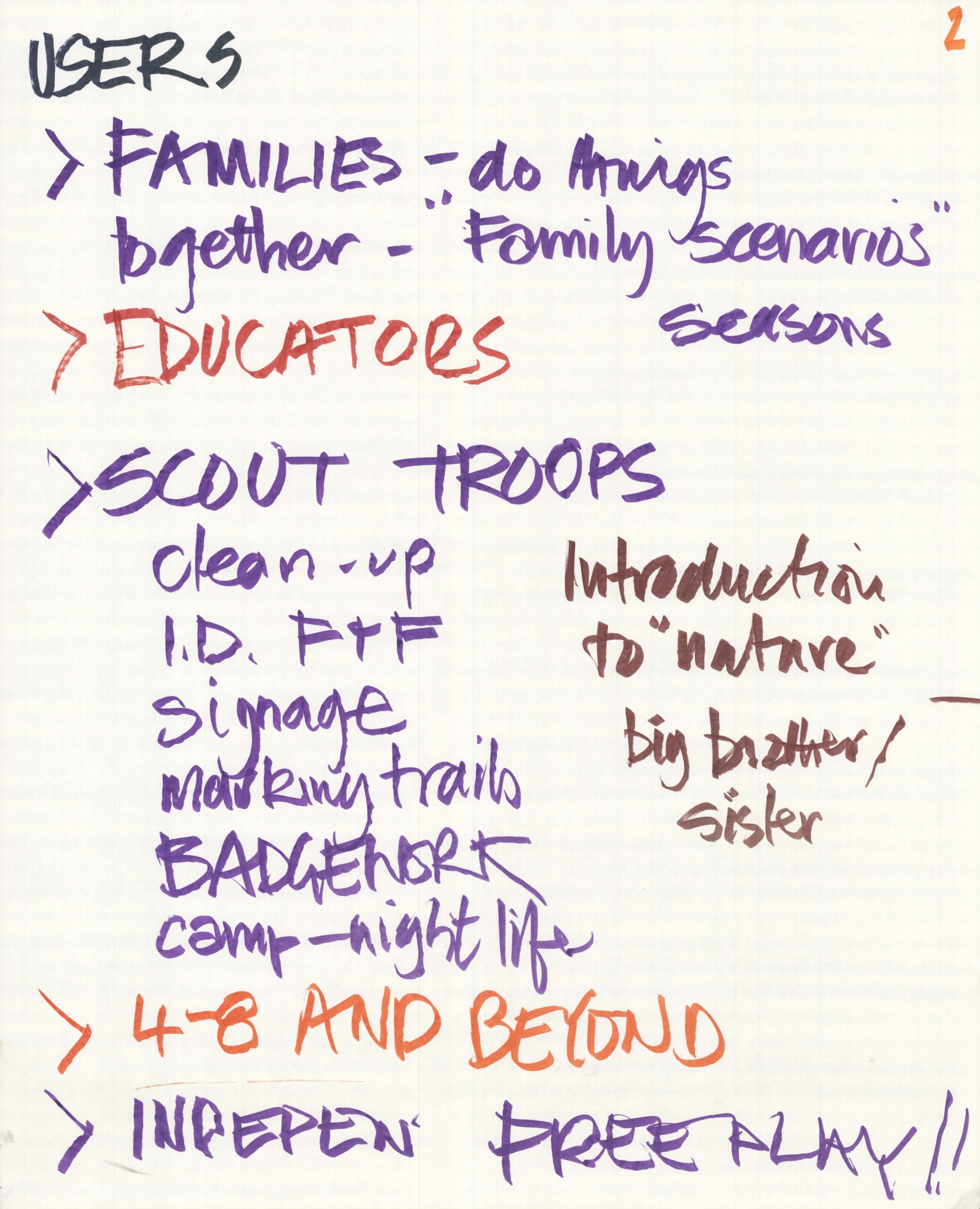
    workshop ideas

    The outdoor community programming workshop provided input on user groups and ideas for related nature play settings.
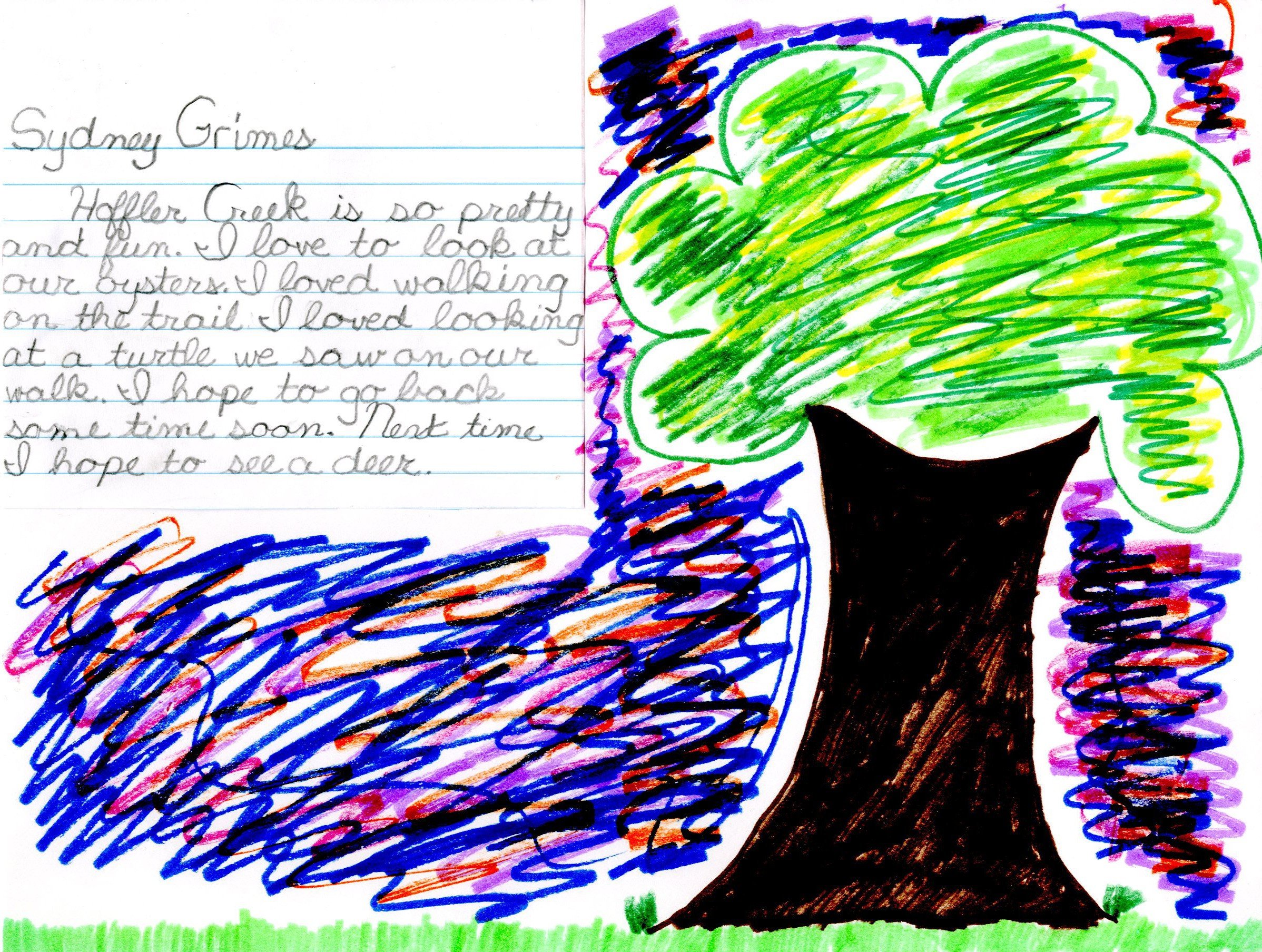
    student illustration

    Post-visit illustrated essay created by school student provides a powerful expression of HCWP’s eco-essence of trees and water.

    Site Visit
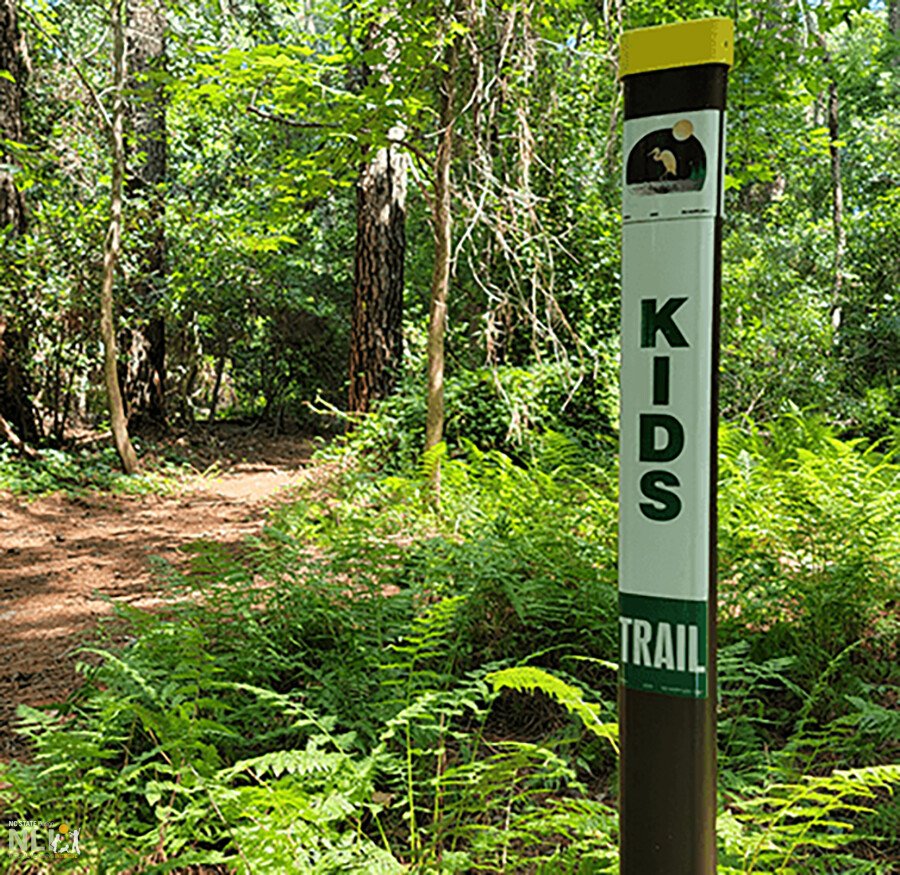
    kids trail

    The Kids Trail, looping around trees and site features, informed by the Design Program, provides a playful “exploratory armature” of the site design.
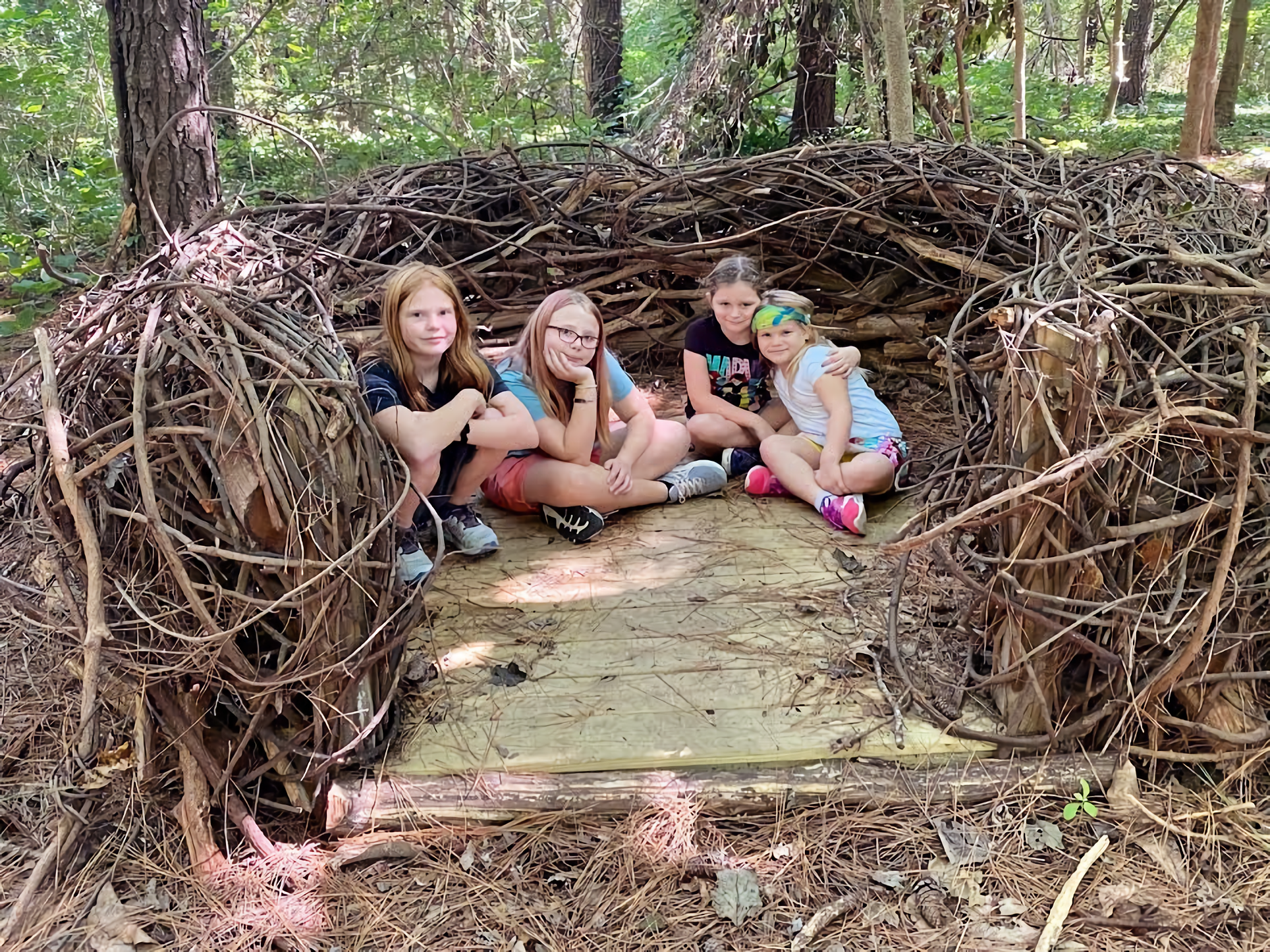
    children in a created natural wooden structure

    A group of friends exploring Kids Trail encounter an oversized, “bird’s nest.” This play and learning setting prompts a free-play game, with children enacting imagined bird behavior. The game extends along the trail, further into the woods.

  • North Carolina Transportation Museum

    Project

    North Carolina Transportation Museum

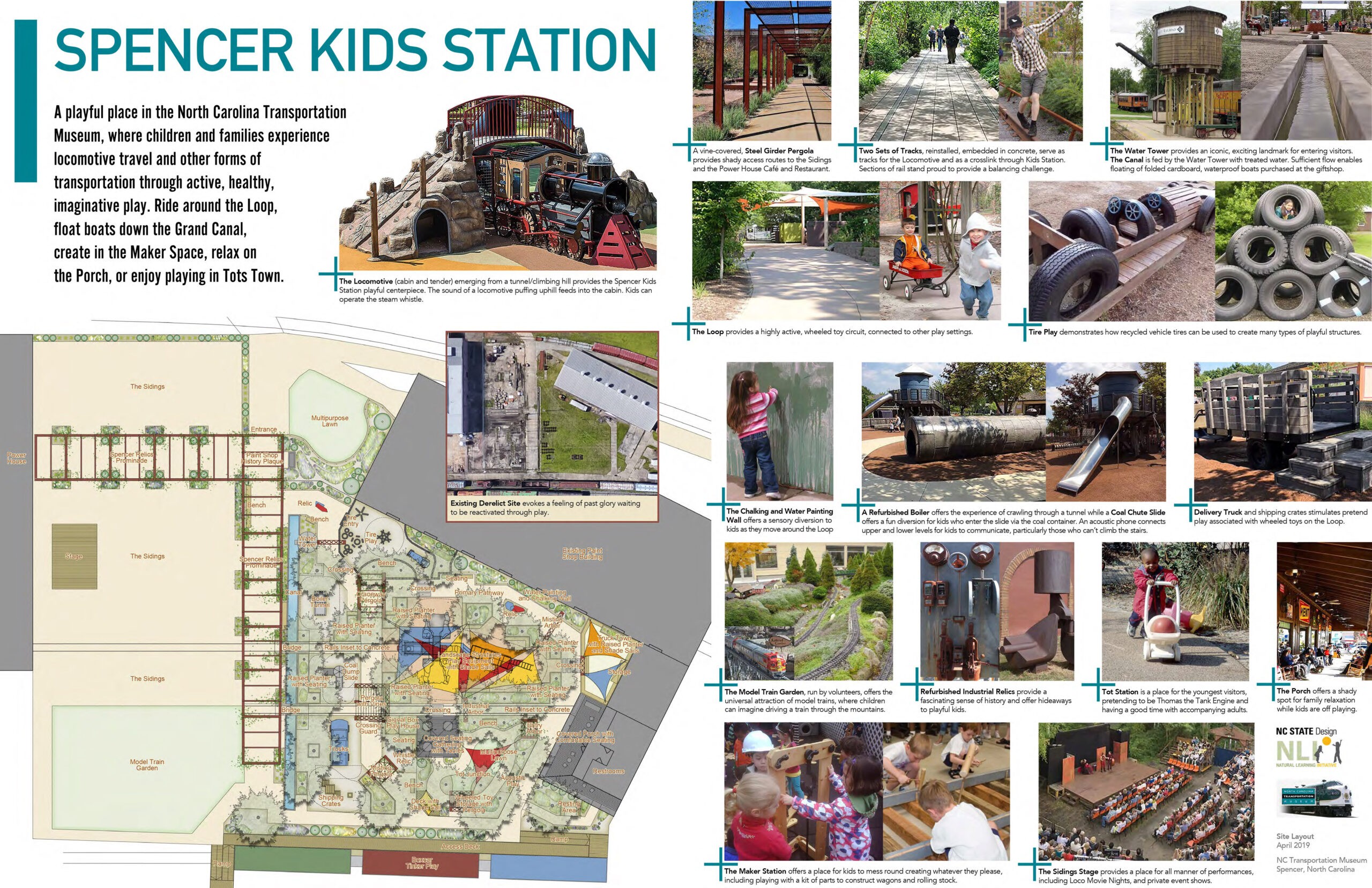
    SPENCER KID’S STATION will create a transport-themed play space at the North Carolina Transportation Museum, Spencer, NC – once Southern Railway’s largest steam locomotive repair facility. Children of all ages and abilities and accompanying, playful adults, will experience locomotive and other forms of travel through active, healthy, imaginative play, riding around the Loop, floating boats down the Grand Canal, creating who-knows-what in the Maker Space, relaxing on the Porch, playing in Tots Town, and much more. All this has yet to be as the Transportation Museum navigates the many challenges of budget, operations, management—& pandemic disruption. The role of NLI in working with agencies with commonplace constraints, while juggling competing potential projects, is to bring stakeholders together in consensus-building workshops to establish the project mission, goals, objectives, and programmatic design elements.

    Front-end inputs may include surveys of current and prospective users, community interest groups, and their participation in the design process. Observations of human use and technical studies of the site may also be conducted, along with documentation of “precedent projects” in use elsewhere. All help guide the form and content of the master plan and schematic design, accompanied by public presentations and the creation of compelling resources (drawings, models, posters, web pages, etc.) to inspire eventual project implementation.

    Spencer kids station showing different outdoor activities and areas

    Project poster created concluding the first phase of the design process, intended to communicate the overall vision – illustrated with “design precedents” (examples from elsewhere similar to the proposed design).

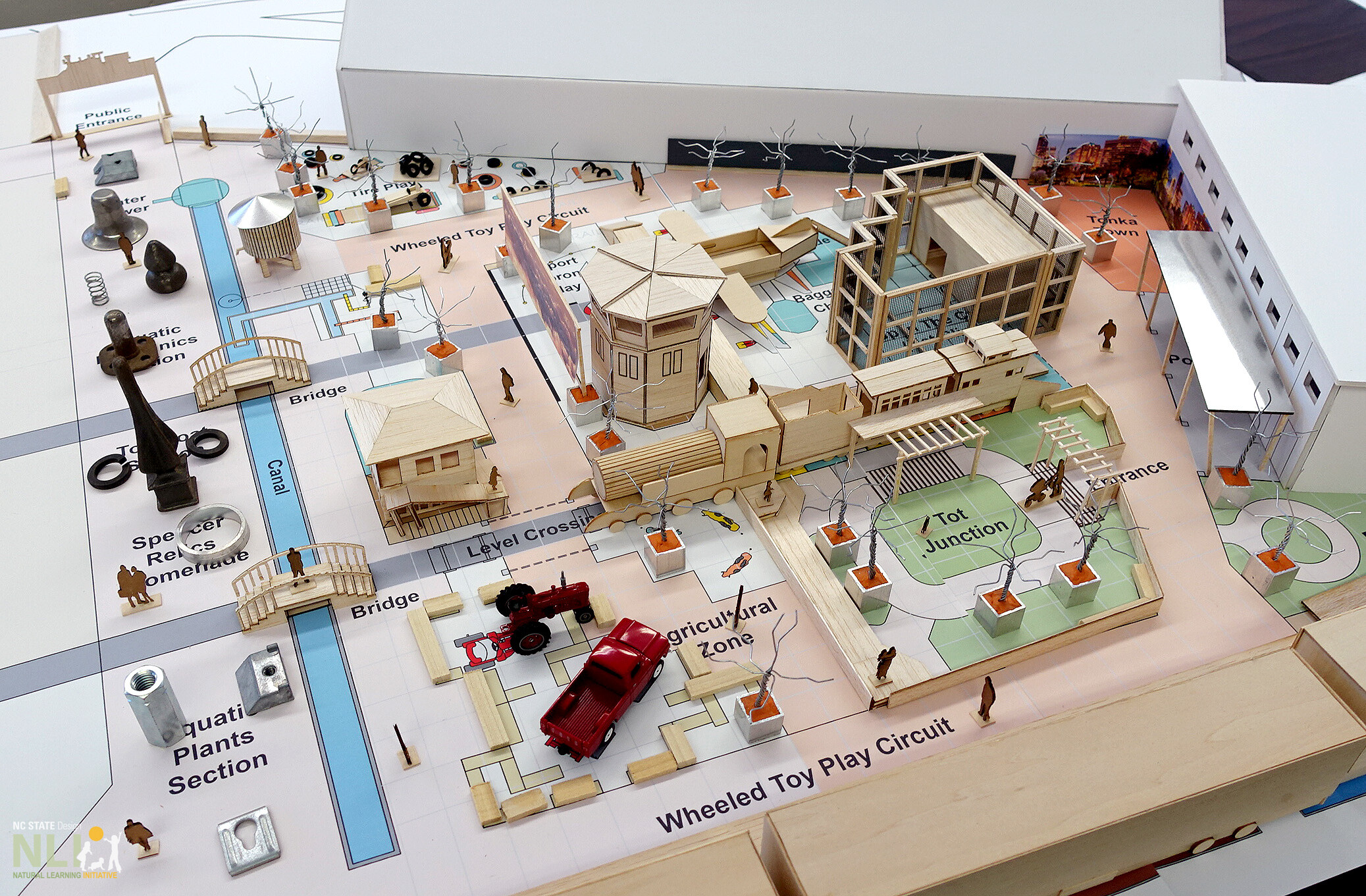
    scale model of the proposed site

    Model created early on to communicate detailed design ideas in three dimensions – great tool for engaging non-design audiences.

    existing undeveloped site

    Existing site to be renovated and rebuilt as the new SPENCER KID’S STATION.

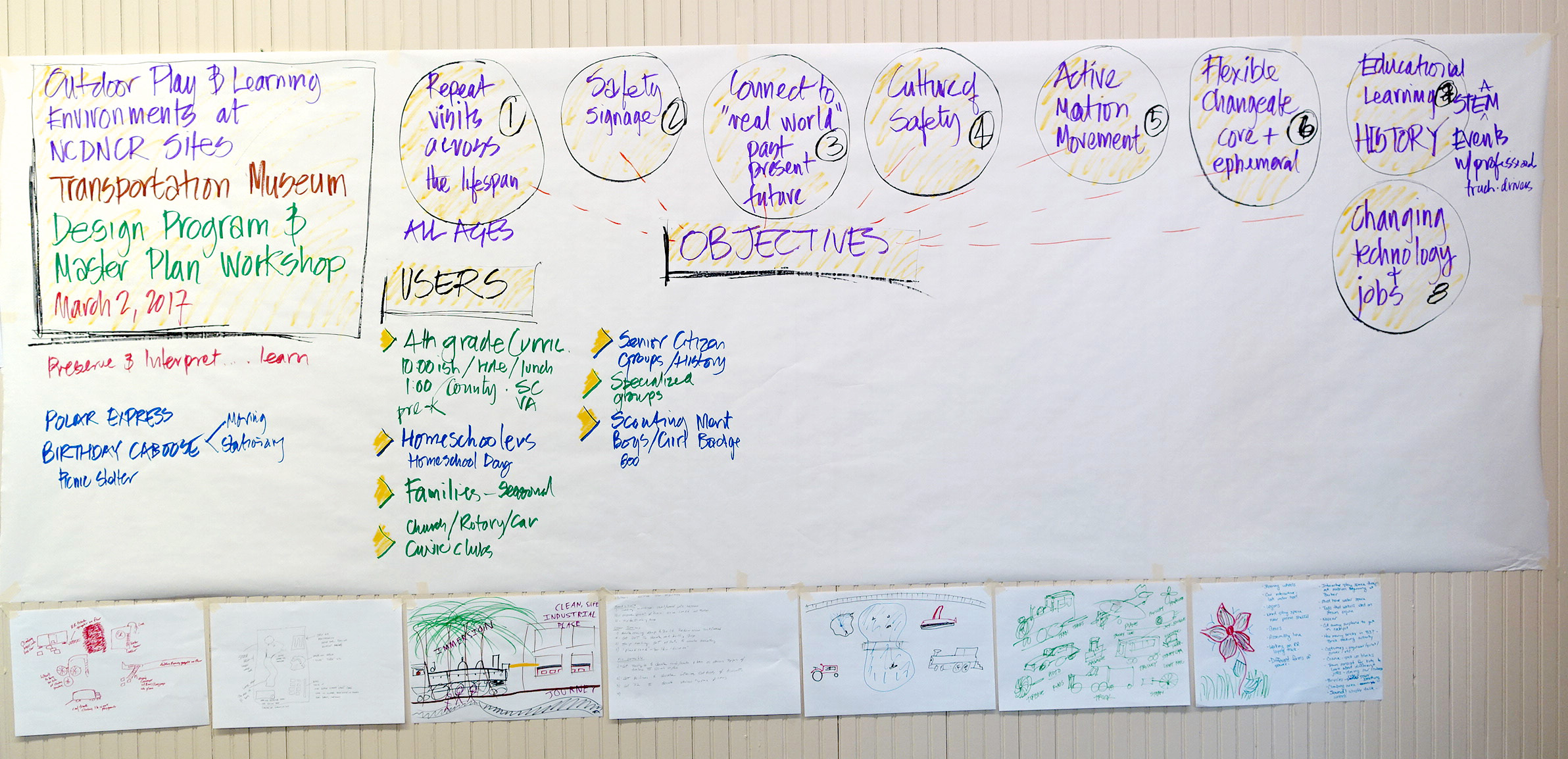
    workshop idea wall

    “Facilitation graphic” meeting record, including goals and user group identifiers.

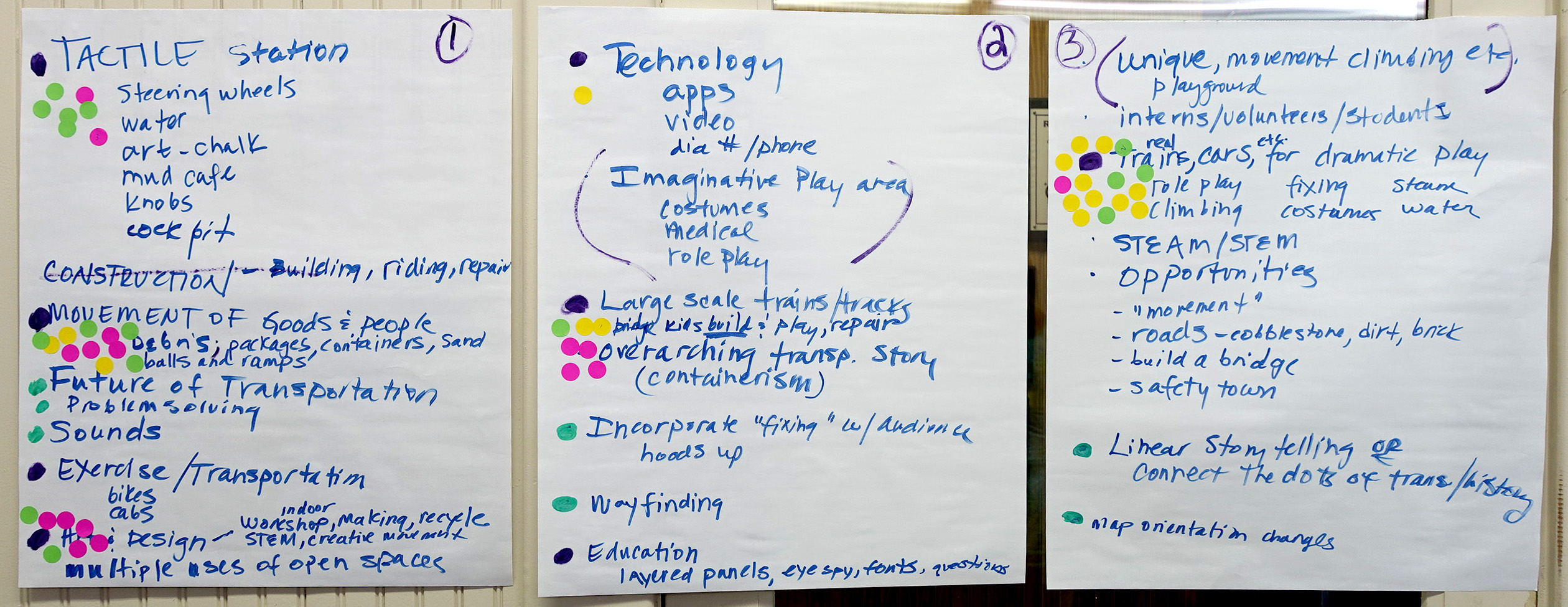
    workshop ideas with voting

    Attributes and activities proposed for SPENCER KID’S STATION with stakeholder “votes” for importance.

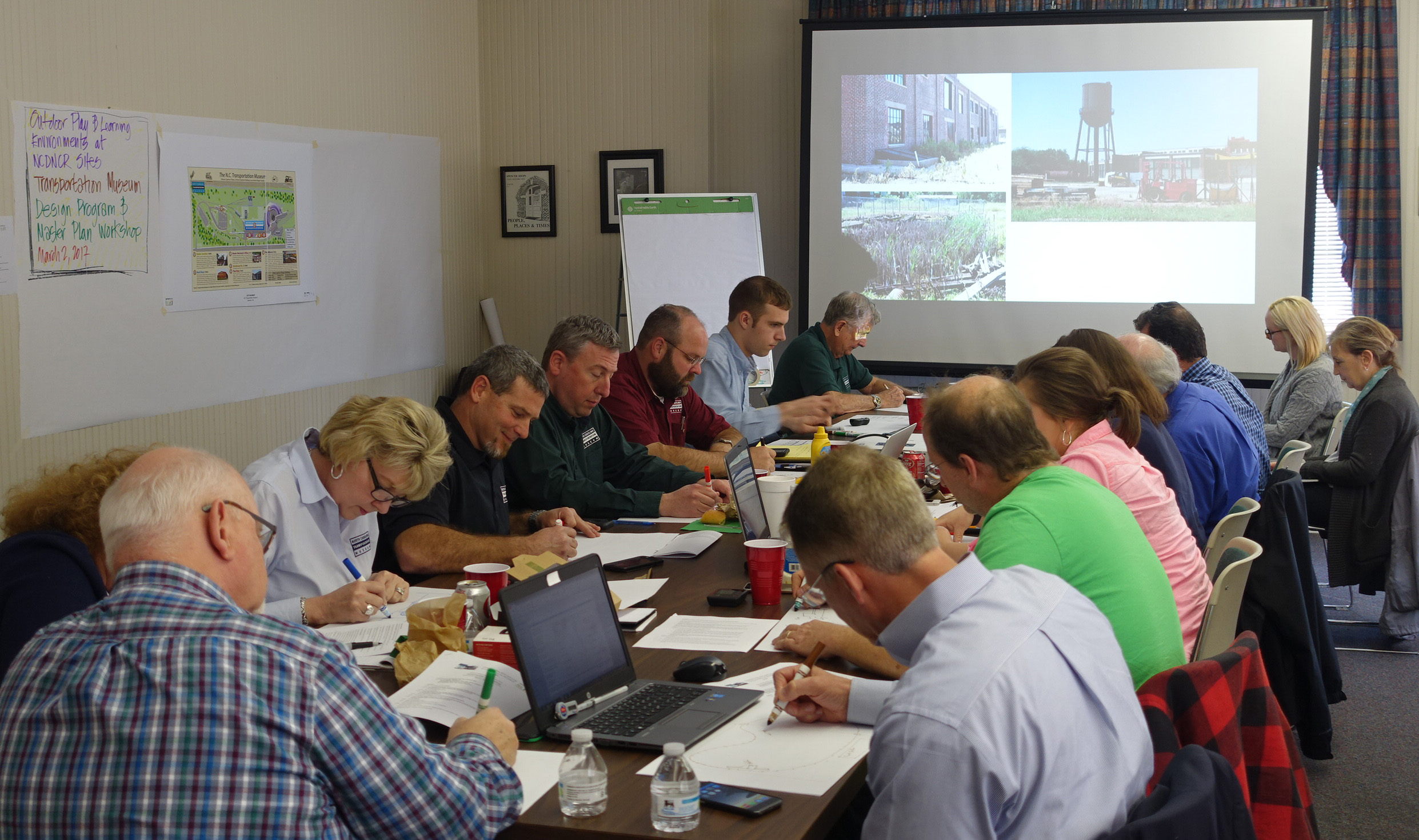
    participants working

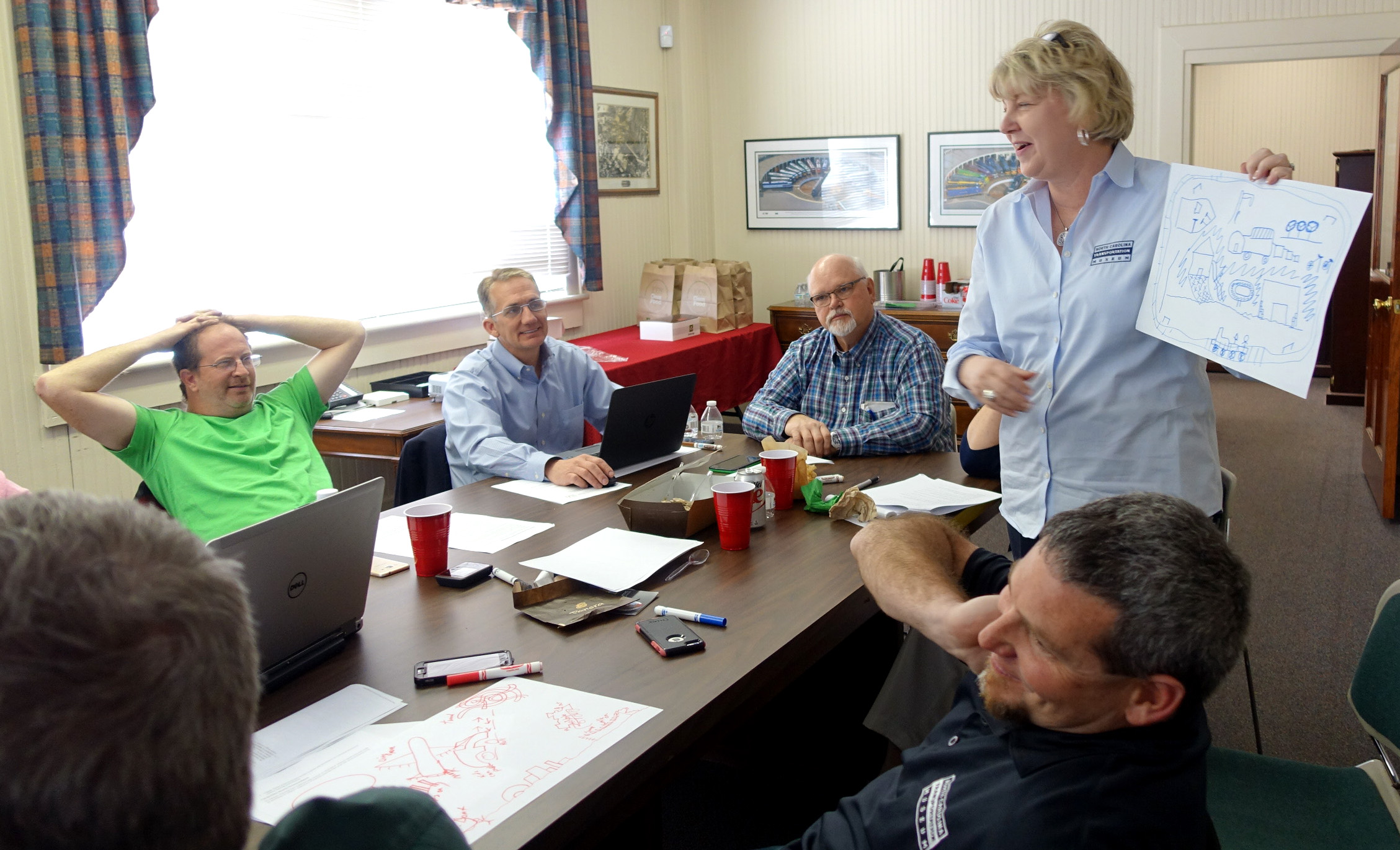
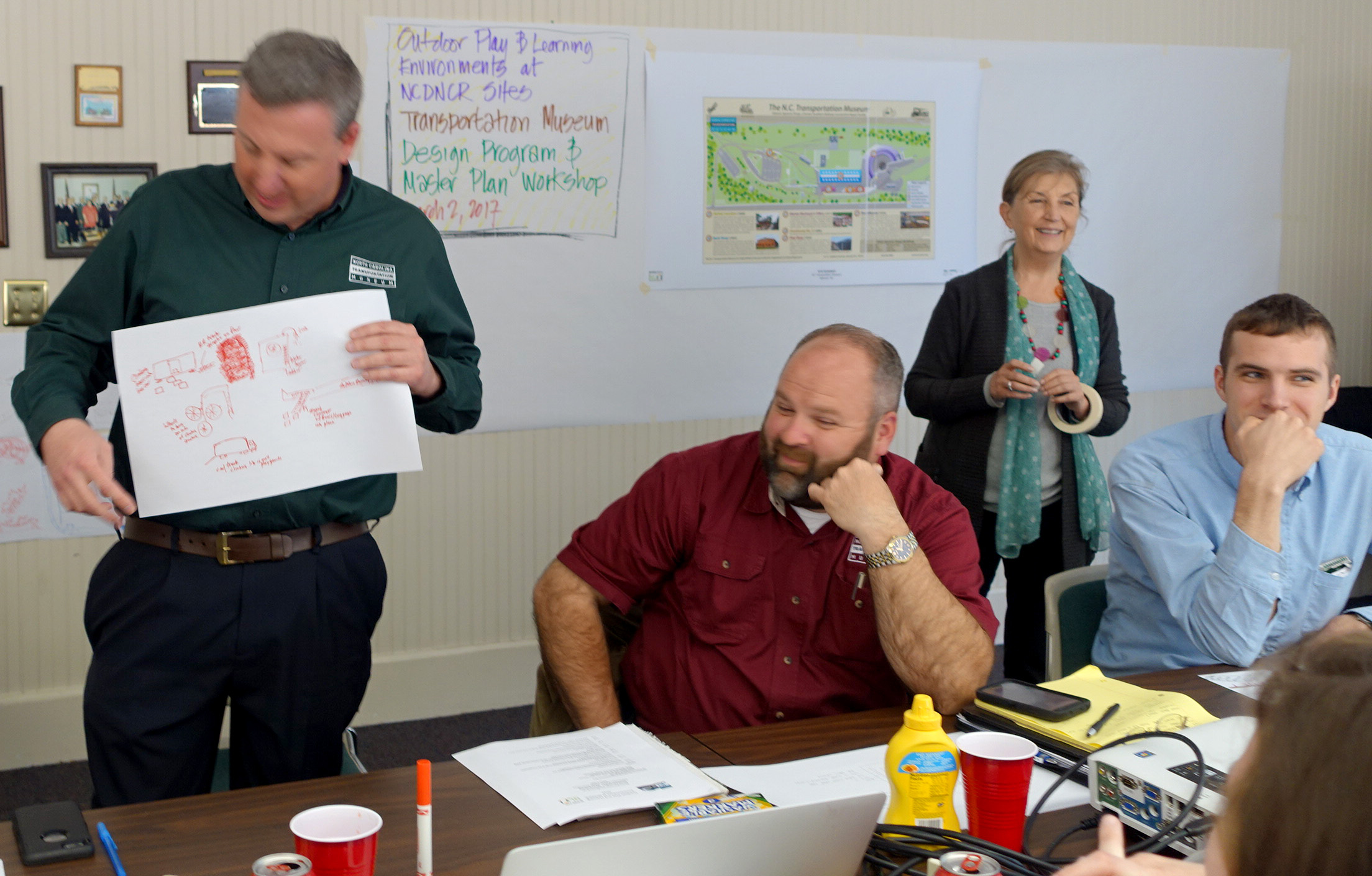
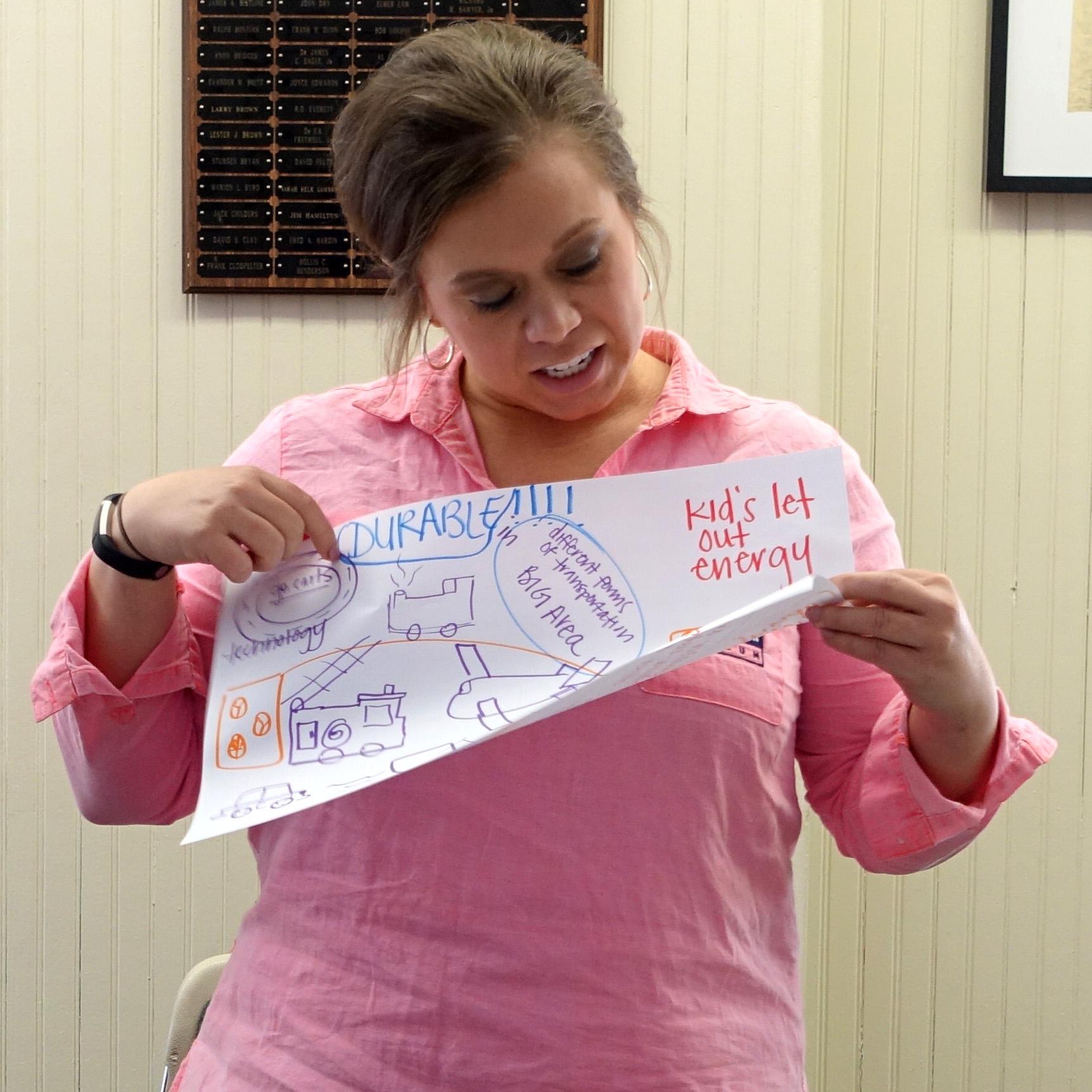
    Stakeholder workshop participants sketching their ideas for SPENCER KID’S STATION after visiting the site.

    participant presenting ideas

    Workshop participants share ideas about what SPENCER KID’S STATION could be.

    sharing workshop ideas
    workshop participant presenting ideas
  • Moore Montessori Community School (MMCS) teacher workshop

    Project

    Moore Montessori Community School (MMCS) teacher workshop

    Workshop segments included:

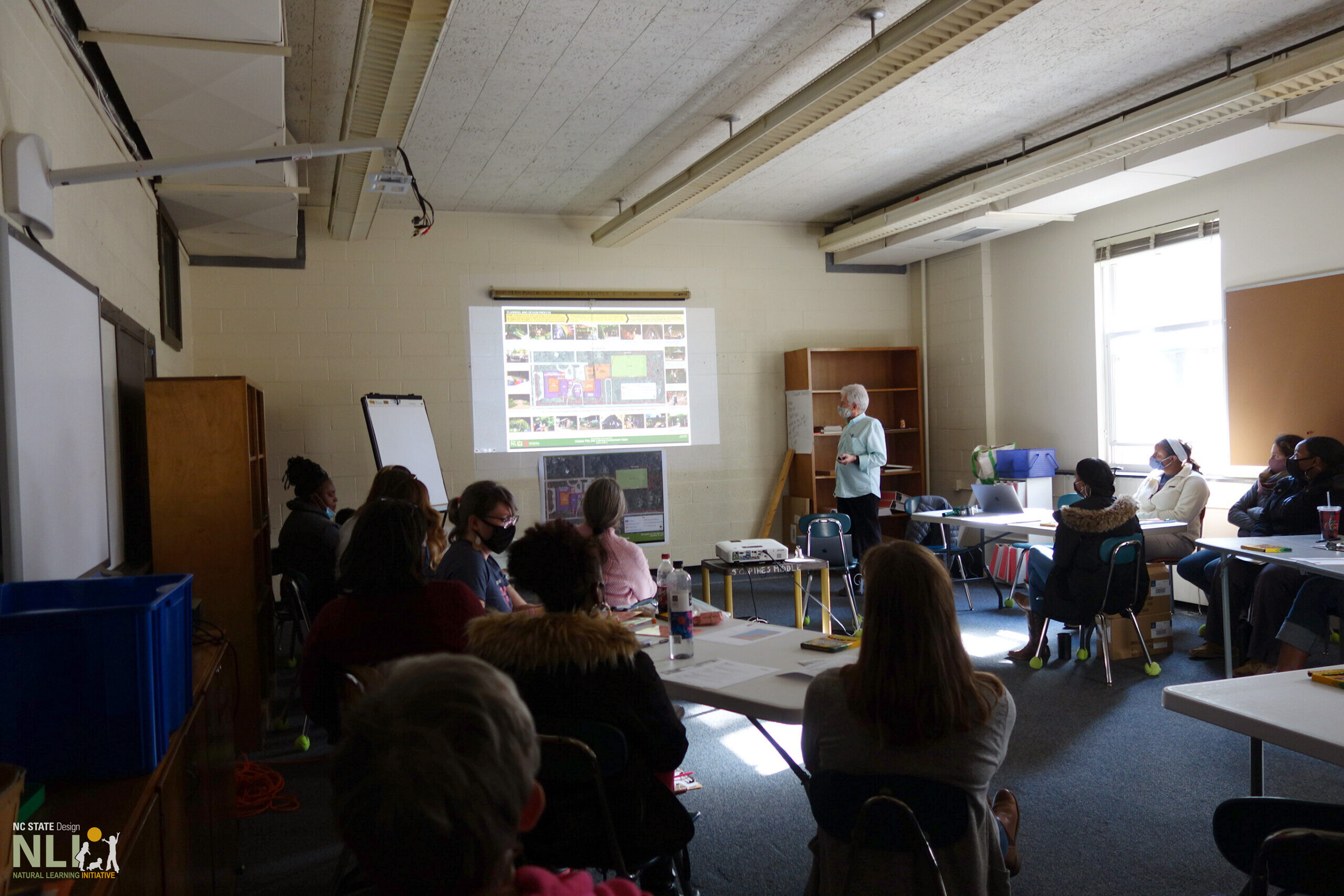
    1. Orientation. Robin Moore reviewing the site diagram (poster created by NLI for a kick-off, fund-raising event earlier in the Fall, 2021) to help teaching staff and school leadership understand existing site conditions and to provide a vehicle for expressing ideas about developing outdoor play and learning spaces. Photos around poster edge illustrate potential site developments based on prior work at other Montessori schools.
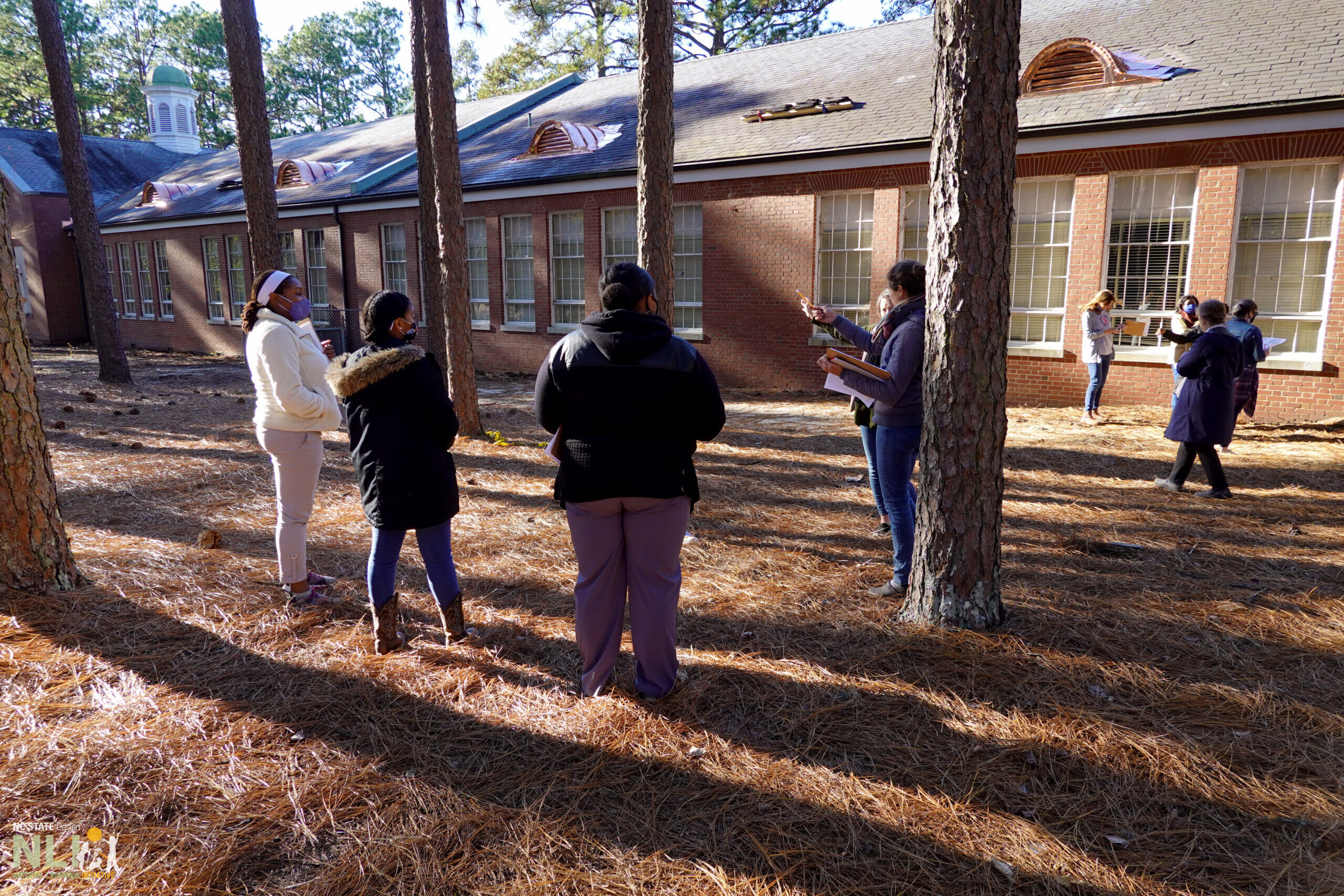
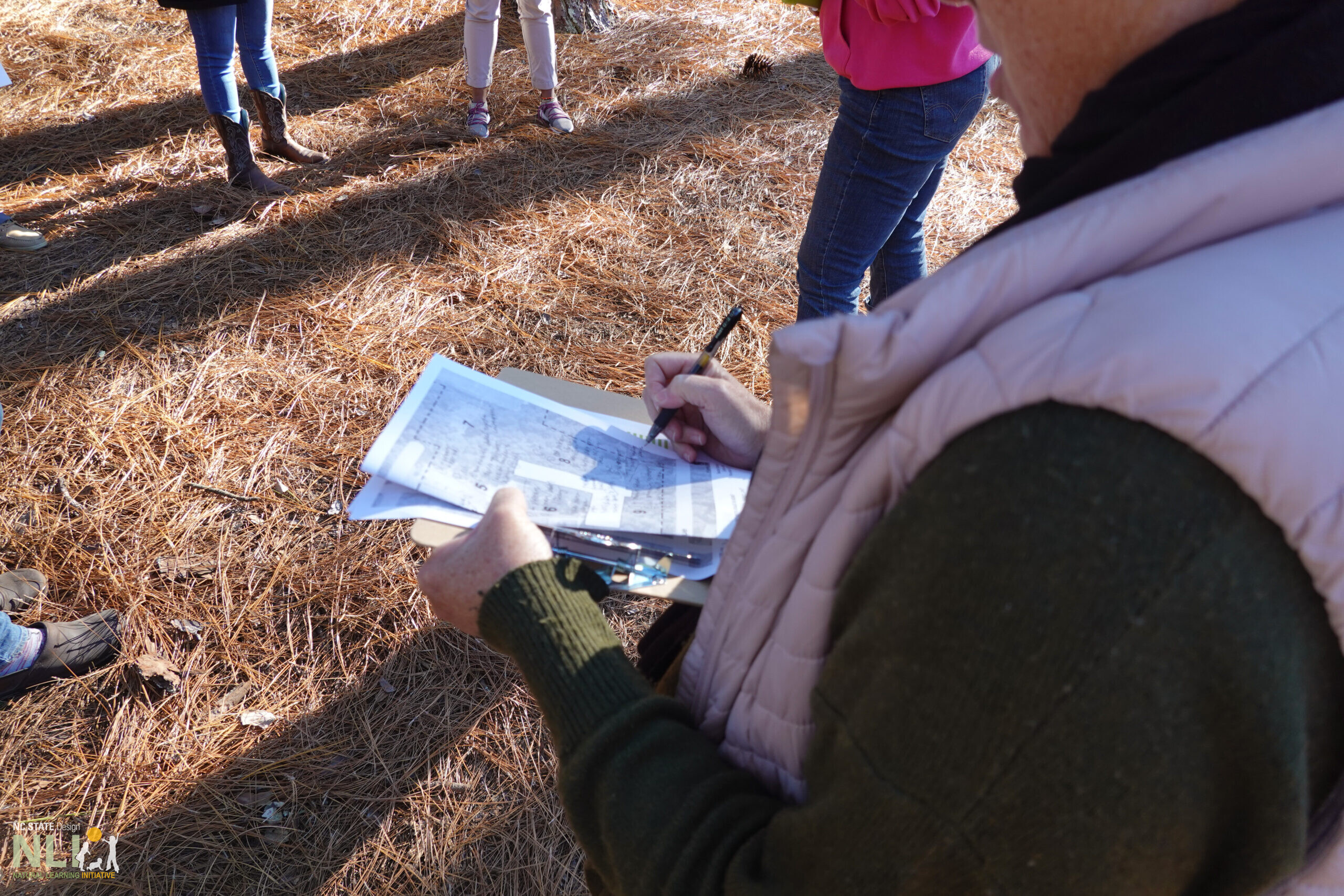
    2. Site Safari. Teachers divided into small groups (a & b), with clipboards and site base plans (c) to make notes while exploring, observing, and discussing different areas of the 10-acre site and needed improvements to support MMCS outdoor learning programs (primary, lower elementary, and upper elementary levels).
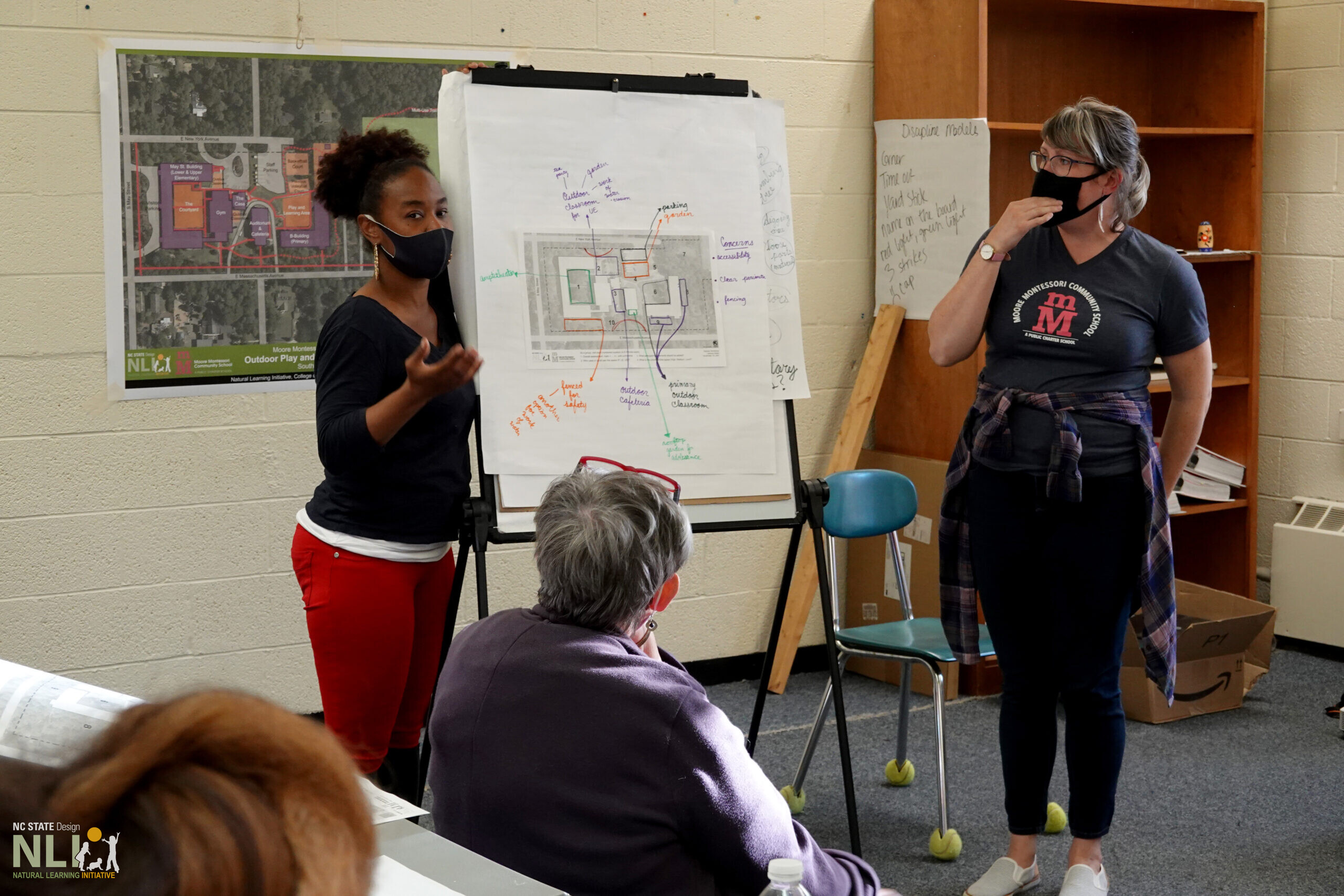
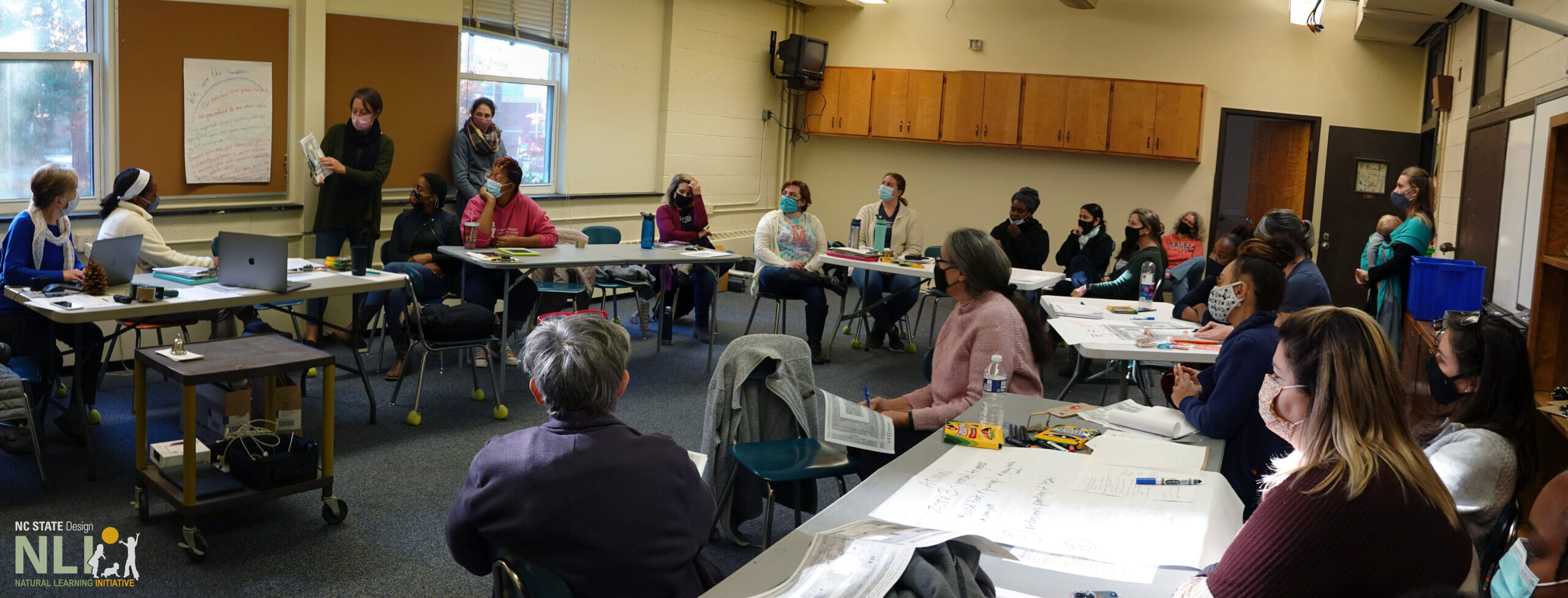
    3. Sharing Ideas. Back indoors site safari groups worked by level on posters to represent their ideas, presented to the whole group, and discussed next steps to implement them.
    presenting

    1. Robin Moore presenting.

    group discussing outside while kids play on hillside

    2a. Hillside with kids.

    group discussing the site

    2b. Group among pine trees.

    taking notes on the base plan

    2c. Base plan notes.

    teachers presenting

    3a. Group presenting.

    teachers presenting

    3b. Group presentation panorama.

  • St. Johns Lutheran Church Child Development Center

    Project

    St. Johns Lutheran Church Child Development Center

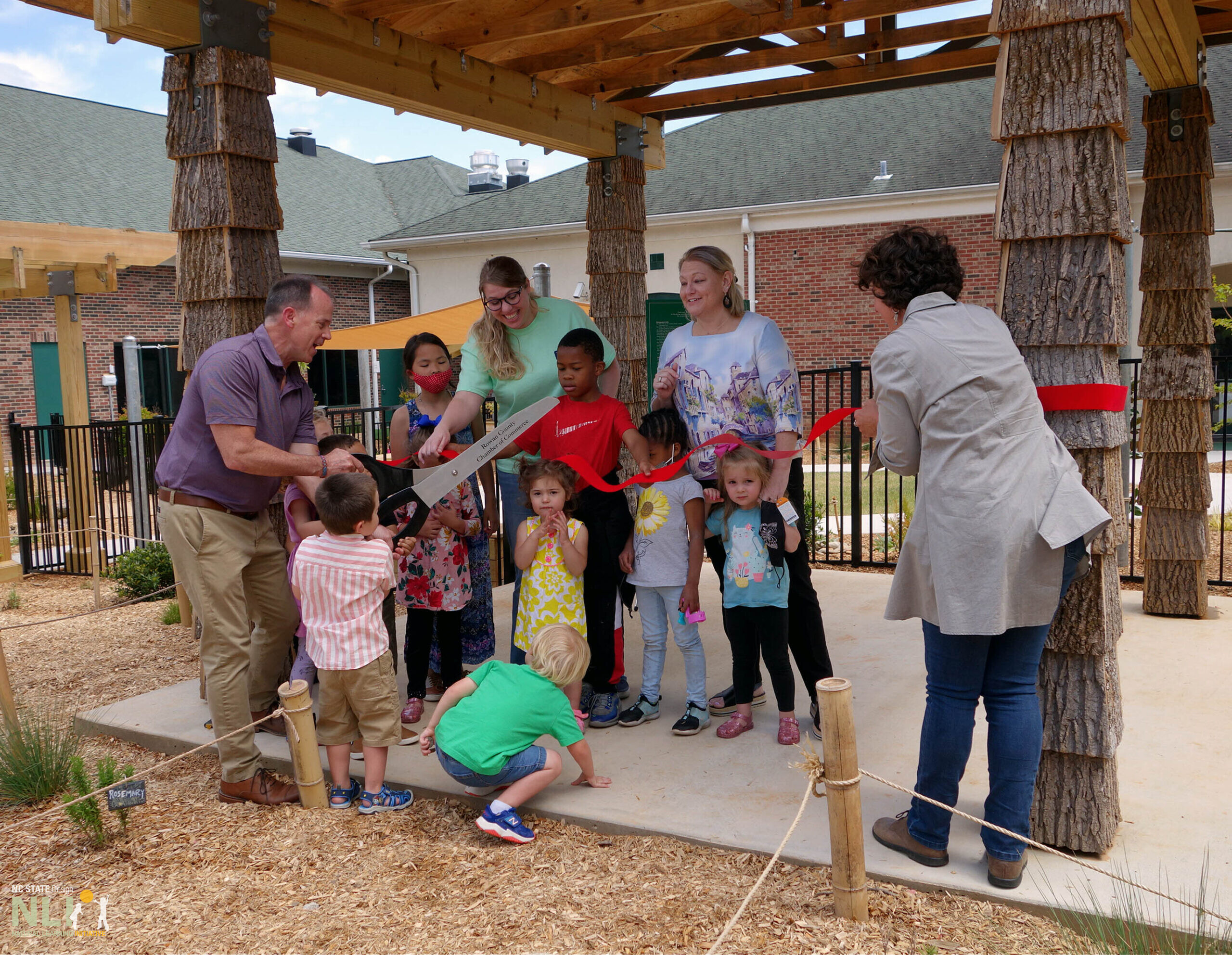
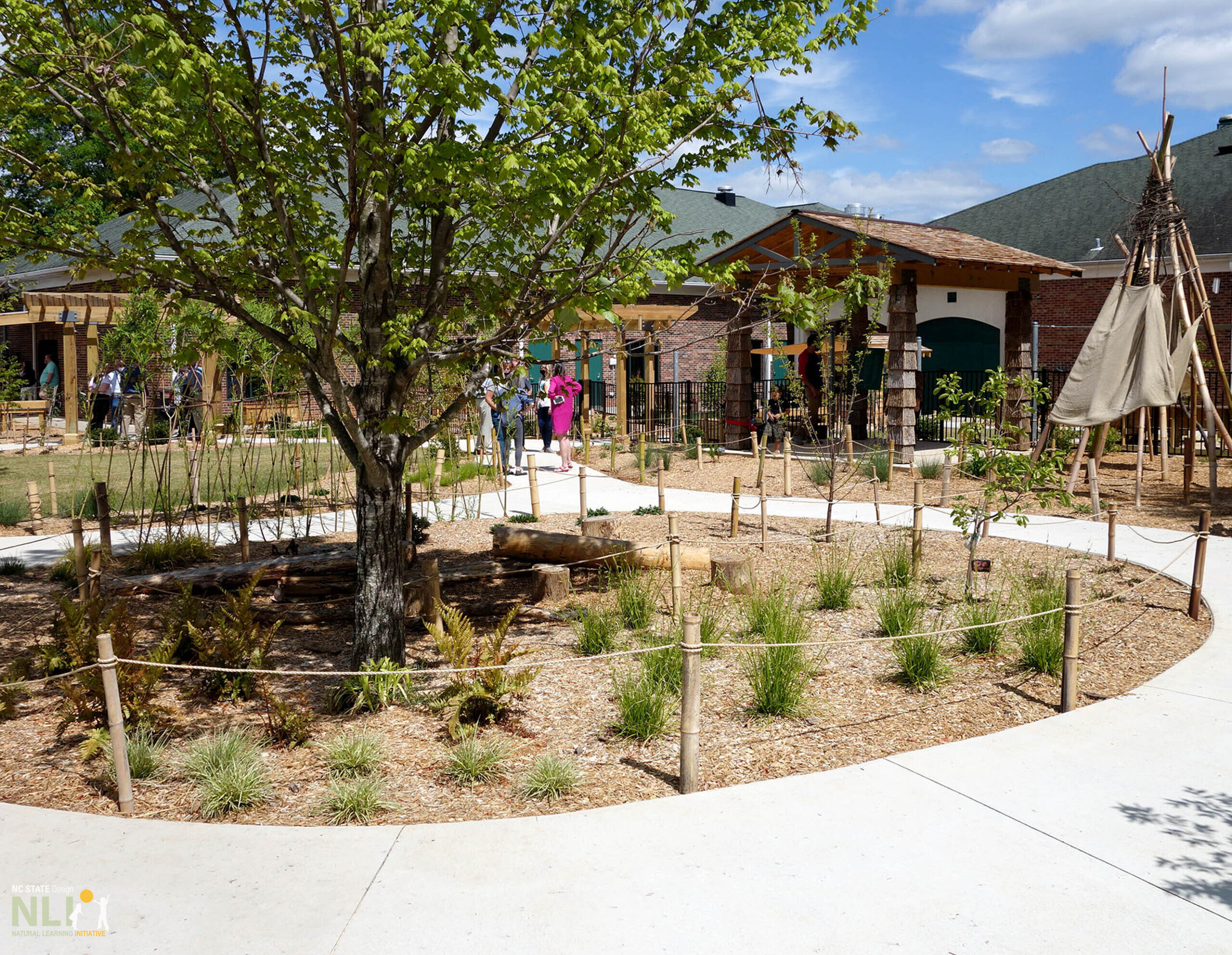
    In April 2021, the Child Development Center, St. Johns Lutheran Church, Salisbury, North Carolina, opened its new outdoor play and learning environment designed by NLI, with spaces serving infants through school-aged. Visionary leadership, dedicated volunteers, strong community support, and a superb contractor team largely explain the conversion of a parking lot into wonderfully diverse spaces for children.

    Local Story

    St. Johns Lutheran Church Child Development Center Design plan
    children cutting ceremonial ribbon
    balancing stumps and logs
  • kidZone Post Occupancy Evaluation

    Research

    kidZone Post Occupancy Evaluation

    The Natural Learning Initiative (NLI) conducted a post-occupancy evaluation (POE) in collaboration with NC Zoo staff of kidZone. KidZone is a prototyping area for children and families. (CNDC). The kidZone mission is: Fostering a love of nature through play.

    NC Zoo Team:
    Randy Fulk, PhD, Curator of Education
    Linda Kinney, Public Programs Coordinator
    Jessica Hoffmire, Visitor Educator

    Natural Learning Initiative Team:
    Robin Moore, MCP, Director
    Nilda Cosco, PhD, Education Specialist
    Brad Bieber, MLA, Design Associate

    Research Assistants:Eric FiloNataliya GurinaShirley VarelaHeather Vickery

    GIS Specialists:Tom DanningerAdina Goodwin

    Purpose

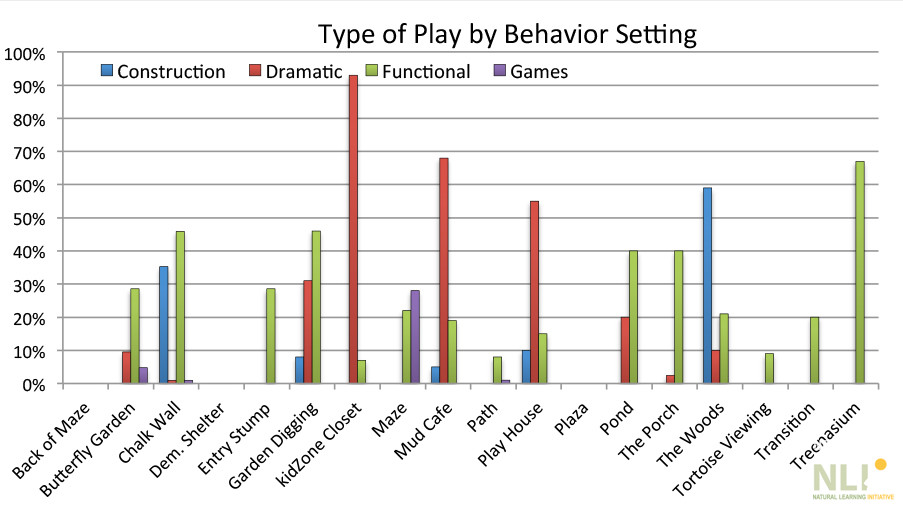
    • Evaluate how kidZone environmental characteristics (setting type, size, and location) influence children’s play, early science learning, physical activity, and social interactions.
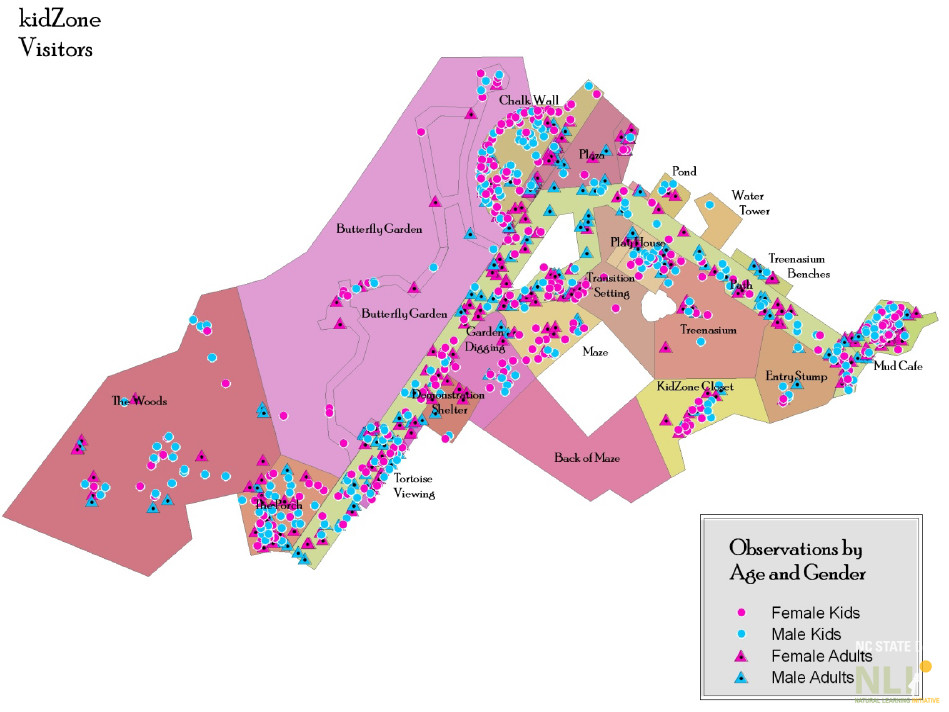
    • Investigate the pattern of use of kidZone by young children (0-5), elementary school age (6-12), and visitors older than 13 years of age including adults.
    • Provide design recommendations to improve kidZone and, potentially, feed new information into the design of the future Children’s Nature Discovery Center outdoor areas.
    map showing child and adult placement throughout the park
    table showing types of play by behavior setting
    adult walking up suspension bridge leading to lookout
    refreshments stand
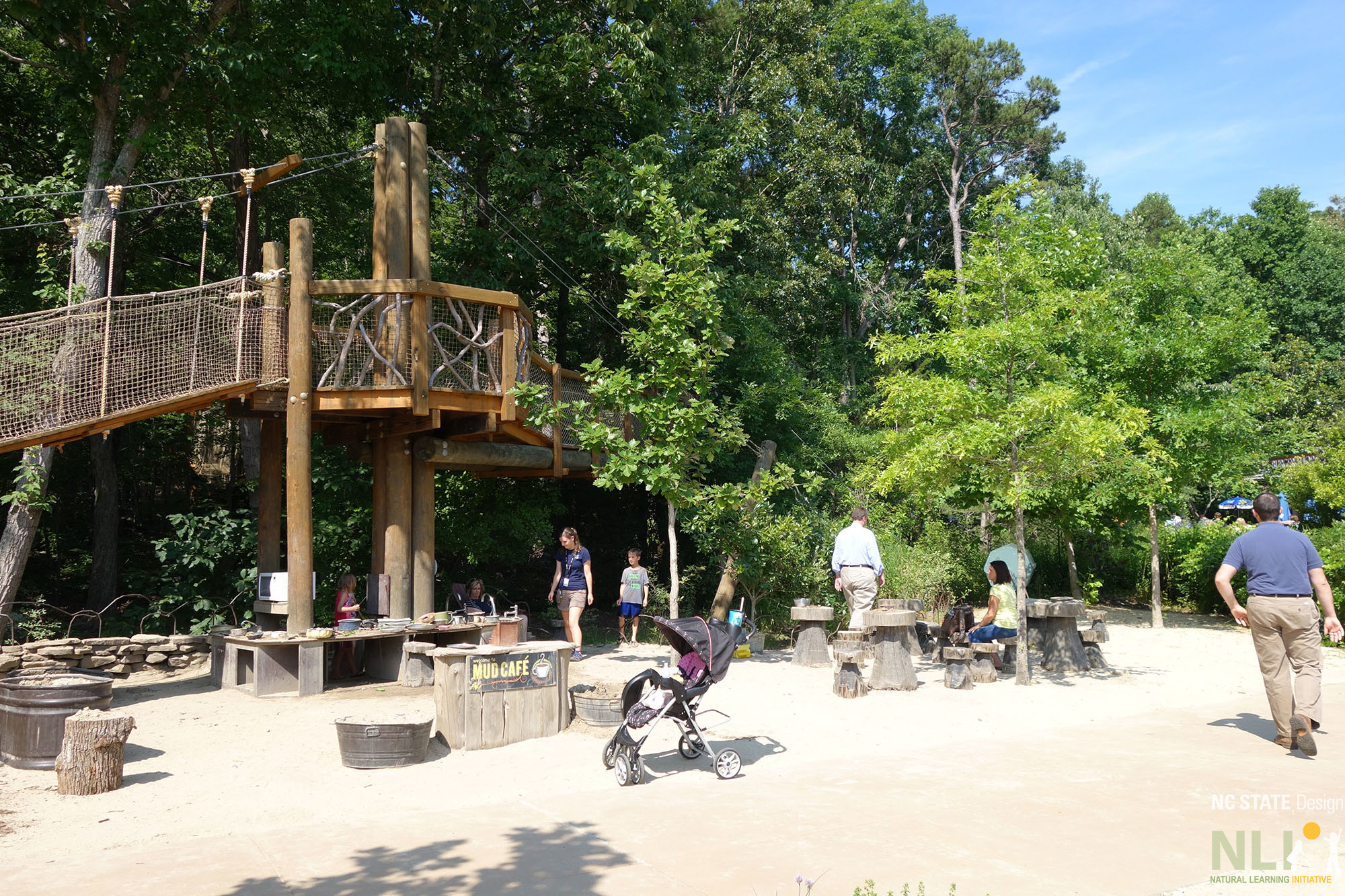
    children and adults around a "mud cafe" with a wooden lookout
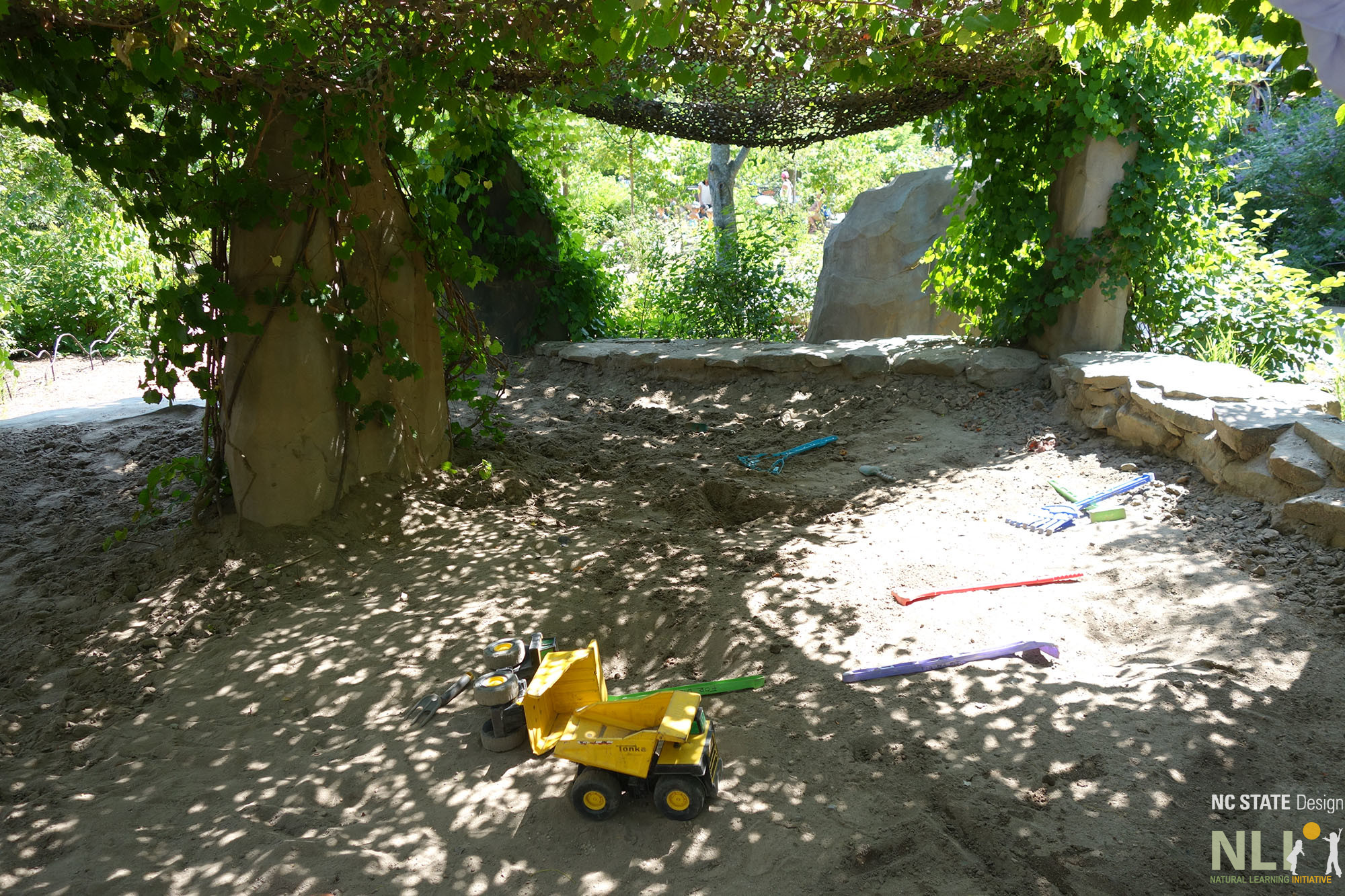
    sand and earth play area with manufactured toys
    kids zone welcome sign
  • NLH January

    Natural Learning at Home®

    January

    Parent Engagement- January Header

    To view other newsletters in the Natural Learning at Home series, click here

    Download the PDF

    Descarga El PDF – ESPAÑOL

    ACTIVITY:Painting with Nature’s Paintbrush

    Help children create their own paintbrush using natural materials found outdoors. These natural materials may include pine cones, acorns, leaves, and pine needles. With the help of your child(ren), take a trip outdoors to find these materials. After you collect them, attach findings to a stick or dip directly into paint for children to enjoy the unique strokes and look these natural “brushes” will bring to their painting.

    PLANT OF THE MONTH:Paperwhites (Narcissus)

    Known for its flowers, Paperwhites are special bulb flowers for the winter season. Blooming in December and January, this fragrant flower comes in shades of white and yellow. They add color and perfume indoors in the early winter months. For best results, grow Paperwhite’s bulbs in October or November. You could even grow this plant indoors in containers.

    RECIPE:Fresh Greens & Pasta

    Ingredients

      • 1-2 bunches fresh kale or your favorite greens, chopped
      • 1 medium onion, chopped
      • 2-3 garlic cloves, diced or pressed
      • ½ cup olive oil
      • 1 cup shredded Parmesan cheese
      • 16-ounces linguine or your favorite pasta
      • ¼ cup salt 

    Instructions

    1. Boil water for the pasta, adding the ¼ cup salt to the water.
    2. Drain the pasta and return it to the pot.
    3. Heat ½ cup olive oil over medium heat in a large frying pan and cook the onion until it is translucent.
    4. Add the garlic and cook for two minutes.
    5. Toss in the kale and sauté to desired tenderness, approximately 5-10 minutes.
    6. Toss in the kale mixture in with the pasta.
    7. Finally, add the Parmesan cheese and toss until cheese is melted.

    Fresh Greens and Pasta. (n.d.). Retrieved from http://chathammillsfarmersmarket.com

    Narcissus (Paperwhites) – Tender III. (n.d.). Retrieved from https://plants.ces.ncsu.edu/plants/narcissus/

  • NLH March

    Natural Learning at Home®

    March

    Parent Engagement- March header

    To view other newsletters in the Natural Learning at Home series, click here

    Download the PDF

    DESCARGA EL PDF – ESPAÑOL

    ACTIVITY:Sink or Float

    To appeal to the natural curiosity in your child, conduct an experiment that looks at what items will sink or float. Fill a water table (or large plastic container) with water. Have them collect items from the natural environment they wish to see float or sink. Allow your child to make predictions on whether items will float or sink. Encourage them to test their predictions. Have fun exploring the properties of nature by expanding this activity to incorporate other learning components.

    PLANT OF THE MONTH:Spinach (Spinacia oleracea)

    Spinach, a cool-season crop, has become increasingly popular over the years. This is evident in the high consumption of both fresh and processed spinach. Packed with high sources of vitamin A, vitamin C, iron, calcium, and fiber, spinach is a nutritious introduction to your child’s diet. In addition, incorporating spinach into gardens and diet is a great way of promoting healthy eating and learning for young children.

    RECIPE:Spinach Quiche

    Ingredients

      • 1 tablespoon olive oil
      • 2 garlic cloves, minced
      • 1 onion, chopped
      • 5 eggs, beaten
      • 10 ounces fresh or frozen spinach
      • 3 cups shredded cheese
      • 1 tablespoon fresh parsley, chopped
      • Pinch of pepper/nutmeg (optional)
      • 1/8 teaspoon salt

    Instructions

    1. Spray a 10-inch pie plate with non-stick spray. Set aside.
    2. Preheat oven to 350F
    3. Over medium-high heat, heat olive oil in a large skillet.
    4. Add garlic, stir-fry for 1 minute.
    5. Add onions and cook for about 5 minutes or until softened.
    6. Add spinach and cook, stirring occasionally until mixture has lost its moisture.
    7. Meanwhile, combine eggs, cheese, herbs, and spices.
    8. Remove spinach mixture from heat, and set aside to cool slightly for a few minutes.
    9. Combine cheese and spinach mixture.
    10. Pour mixture in prepared pie plate.
    11. Bake in oven for approximately 30-40 minutes or until mixture has set.

    Spinach (n.d.). Retrieved from https://content.ces.ncsu.edu/spinach

  • NLH February

    Natural Learning at Home®

    February

    Parent Engagement- February Header

    To view other newsletters in the Natural Learning at Home series, click here

    Download the PDF

    DESCARGA EL PDF – ESPAÑOL

    ACTIVITY:Make a Nature Mandala

    To make a mandala all you need is a little creativity and natural materials. Invite your child to create a circle with items they have found outdoors. First, have them choose a natural object that will become the centerpiece of their Mandala. Then, form a ring around the centerpiece. Continue to make new expanding circles until they either run out of items or feel that the structure is completed. *What is a mandala? The word mandala is a Sanskrit term which means “circle”.

    PLANT OF THE MONTH:Pansy (Viola x wittrockiana)

    This annual plant is a great addition to your home décor. An excellent plant for bedding and containers, pansies are available in a variety of colors, patterns, and sizes. To ensure a successful season, plant this flower in the fall for early spring bloom. Selecting an optimal location is recommended, to provide the flower the opportunity to receive sun to partial shade. In addition, pansies are a wonderful plant because they are edible! Harvest the flowers for a colorful addition to a salad. *An annual plant is a plant that completes its life cycle within one year and then dies.

    RECIPE:Collard Greens Stew with Black-eyed Peas

    Ingredients

      • 1 ½ cup canned black-eyed peas
      • 2 tablespoons vegetable oil
      • ½ teaspoon cumin seeds (optional)
      • ¼ red onion into long strips
      • 2 cloves garlic cut into long strips
      • 1 tablespoon red flakes (optional)
      • 2 cups of collard greens, chopped
      • 2 teaspoons sea salt
      • 1 cup tomato pulp
      • 1 cup water
      • ½ teaspoon lime juice

    Instructions

    1. Add 2 tablespoon of vegetable oil to a medium pot. Heat on medium heat for 30 seconds and add 1/2 tsp cumin seeds (optional)
    2. Add 1/4 of a red onion cut into long strips. Sauté it until it browns
    3. Add 2 cloves of garlic cut into long strips and 1 tablespoon of red pepper flakes (optional, adjust to your taste)
    4. Add 2 cups of collard greens (roughly chopped)
    5. Add 2 tsp of sea salt to the collard greens and 1 cup of tomato pulp
    6. Add 1/2 cup of water and let it cook for about 4 minutes.
    7. Add the black-eyed peas and bring it to a boil.
    8. Cover and keep the heat to low. Stew for 40 minutes and cook for two minutes.
    9. Serve and Enjoy!

    Collard Greens Stew with Black-eyed Peas. (n.d.). Retrieved from http://www.healingtomato.com/collard-greens-stew/

  • NLH July

    Natural Learning at Home®

    July

    Parent Engagement- July Header

    To view other newsletters in the Natural Learning at Home series, click here

    Download the PDF

    DESCARGA EL PDF – ESPAÑOL

    ACTIVITY:Color Hunt in Nature

    A fun way to spend a hot summer day is to go on a color hunt. Simply invite your child to collect items in the outdoor environment. Challenge them to find items for every color of the rainbow. Arrange items on a piece of fabric or paper. Photograph! Encourage them to identify, sort, and categorize each found idea to enhance their learning and skill development.

    PLANT OF THE MONTH:Watermelon (Citrullus lanatus)

    As the most consumed melon in the United States, watermelon is known as the favorite summertime fruit. Eaten by many, watermelon is a refreshing and healthy option during the summer months. When planting seeds, place them directly into the soil one and a half inches deep with 48 to 60 inches of separation between each seed or transplant. Make sure to plant between mid-April to June to avoid the dangers of frost. Harvest between July to early October.

    RECIPE:Fruit Salsa

    Ingredients

      • 3 pint containers of raspberries
      • 2 pint containers of blackberries
      • 1 pint container of strawberries, stems removed and diced

    Instructions

    1. Gently toss all ingredients together in a bowl until well combined.
    2. Chill in refrigerator for 30 to 60 minutes.
    3. Serve with cinnamon chips or graham crackers.
    4. Serve and Enjoy!

    Archer, M., Konradi, S., Lelekacs, J., Driscoll, E. (2015). Growing Warm-Season Fruits and Vegetables in Childcare Production Gardens. LF-007-03. Raleigh: North Carolina Cooperative Extension Service.

  • NLH June

    Natural Learning at Home®

    June

    family sitting in the grass laughing

    To view other newsletters in the Natural Learning at Home series, click here

    Download the PDF

    DESCARGA EL PDF – ESPAÑOL

    ACTIVITY:Obstacle Course

    Using available materials, create an attractive obstacle course for your child to enjoy time and time again. Use tunnels to crawl through, ropes to step over, cones to jump over, colorful ribbon to twirl with, or even household items. Incorporate learning experiences by using items for them to sort, read, identify, etc. The obstacle course can be dynamic, ever-changing settings with the addition of natural materials, bells, large pieces of fabric and other items to promote cognitive and sensory development.

    PLANT OF THE MONTH:Crape Myrtle (Lagerstroemia indica)

    Known as the “Flower of the South”, Crape Myrtles grow beautifully in most areas of North Carolina. Crape Myrtle is a favorite tree to grow for many gardeners due to their durability, colorful flowers and hardiness. In addition, this tree is also ideal in childcare centers with children, due to its child-size scale, climbing potential, foliage, and shading in the outdoor learning environment.

    RECIPE:Cucumber, Tomato, and Basil Salad

    Ingredients

      • 2 cucumbers, sliced into rounds or chopped
      • 2 large tomatoes, cut into bite-sized pieces
      • 1 cup basil leaves, chopped
      • 2 tablespoons of olive oil
      • 1 tablespoons of balsamic vinegar
      • Salt and pepper (to taste)

    Instructions

    1. Gently toss all ingredients together in a bowl.
    2. Add salt and pepper to taste.
    3. Serve and Enjoy!

    Lagerstroemia indica. (n.d.). Retrieved from https://plants.ces.ncsu.edu/plants/all/lagerstroemia-indica/