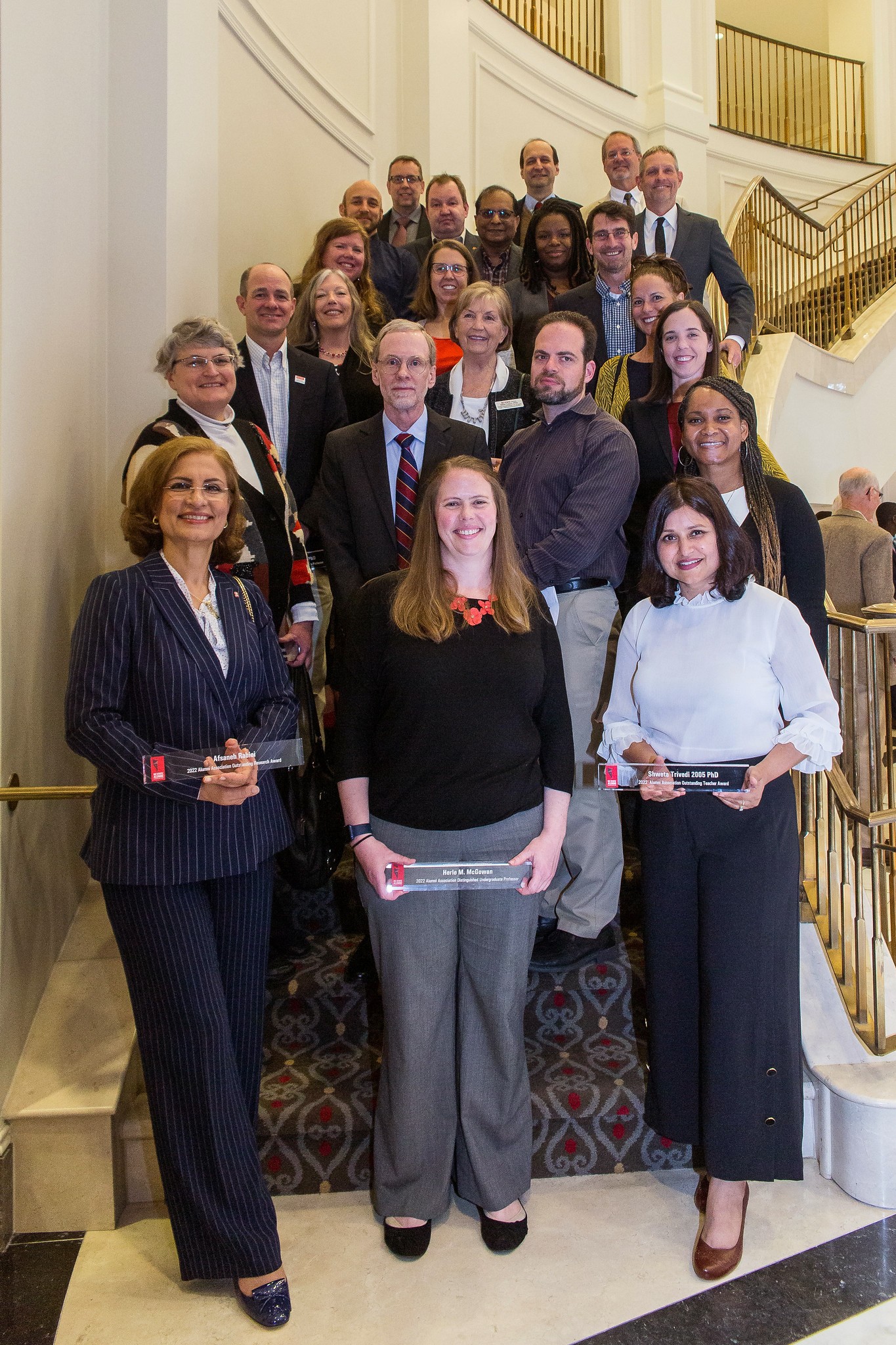
Dr. Nilda Cosco, Research Associate Professor, Landscape Architecture and Environmental Planning, Director of Programs, Natural Learning Initiative, College of Design, receives multiple honors as an Extension and Engagement Scholar, NC State University.
College of Design, Outstanding Extension Award
Alumni Association Outstanding Extension and Outreach Award ($4,000 prize)
Inducted into the Academy of Outstanding Faculty in Extension and Engagement
Appointed to the Executive Council of the Academy of Outstanding Faculty in Extension and Engagement (three-year term, beginning Fall 2022)
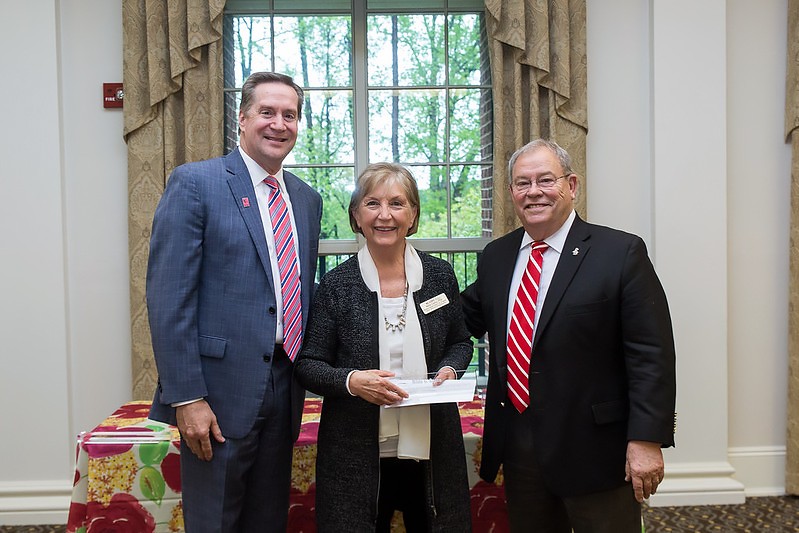
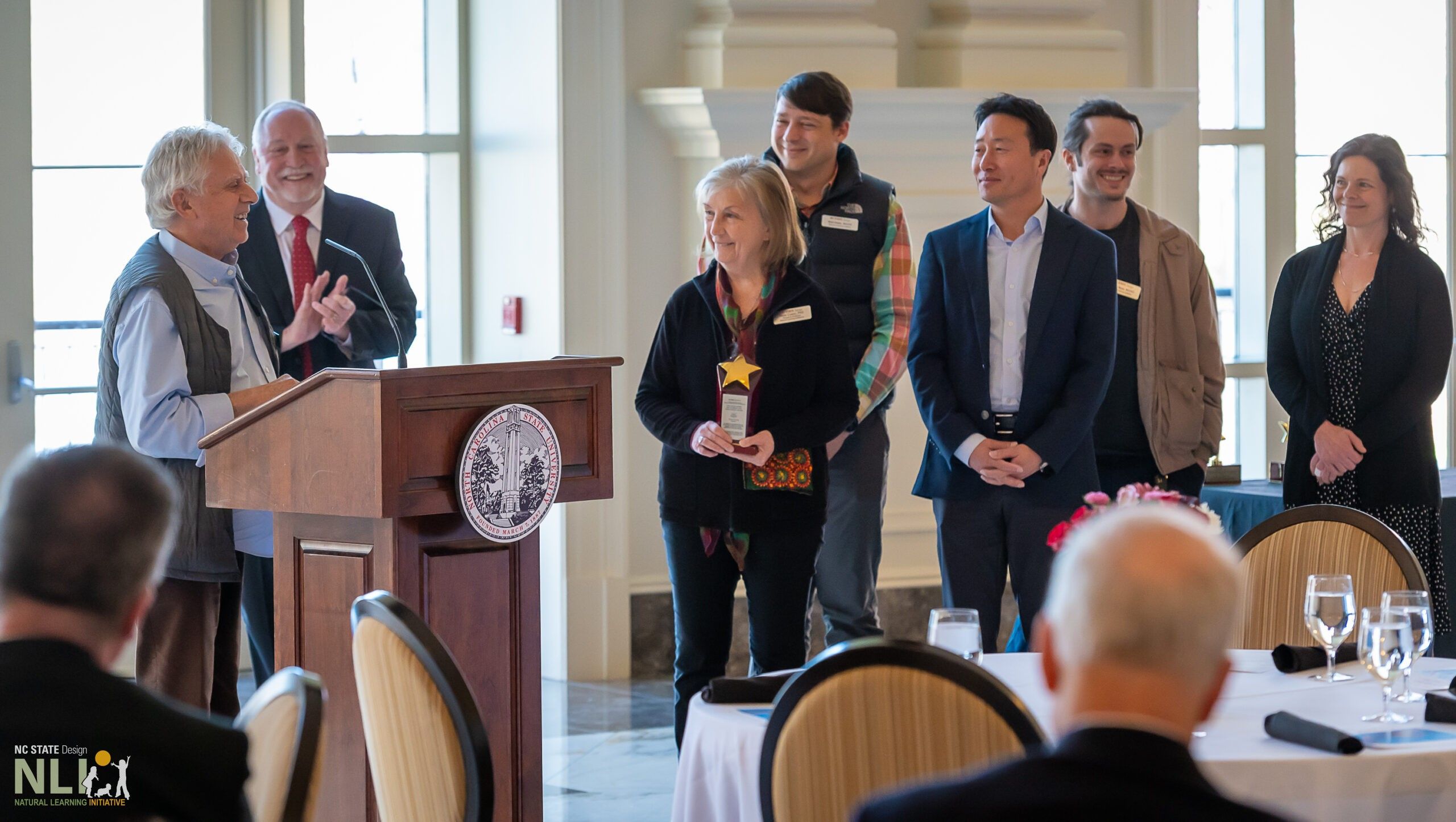
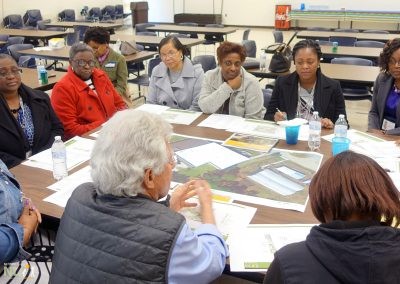
Dr. Nilda Cosco (above, center) receives Alumni Outstanding Extension and Outreach Award from Charles “Chuck” Flink (1982, above, left), President, Board of Directors, NC State Alumni Association, and Benny Suggs (1969, above, right), Executive Director, Associate Vice Chancellor for Alumni Relations (April 18, 2022).
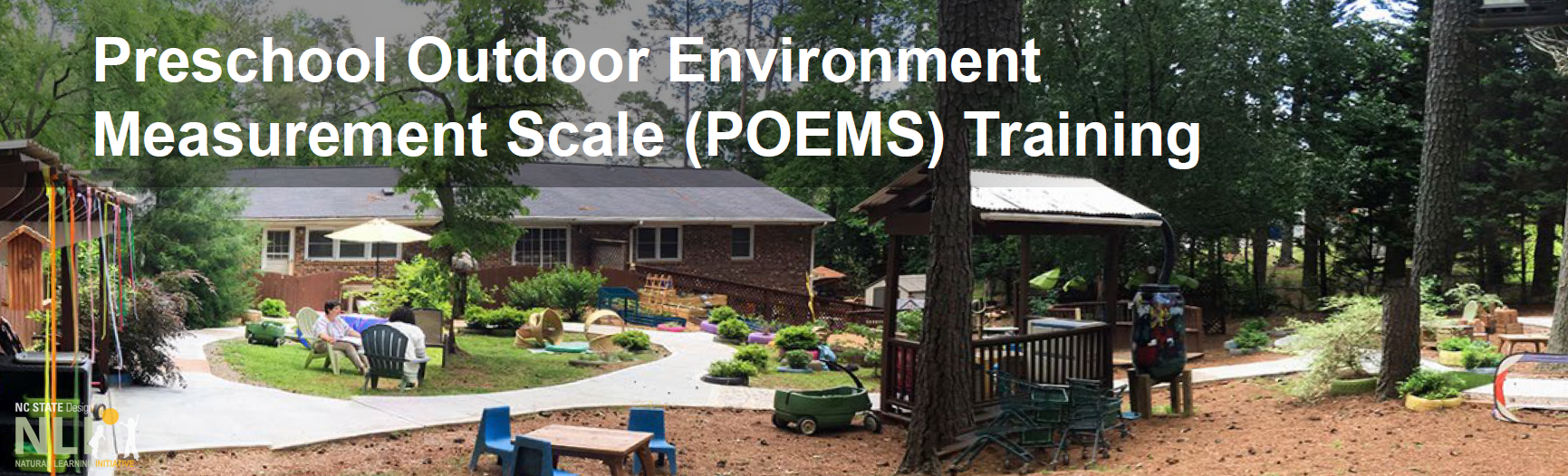
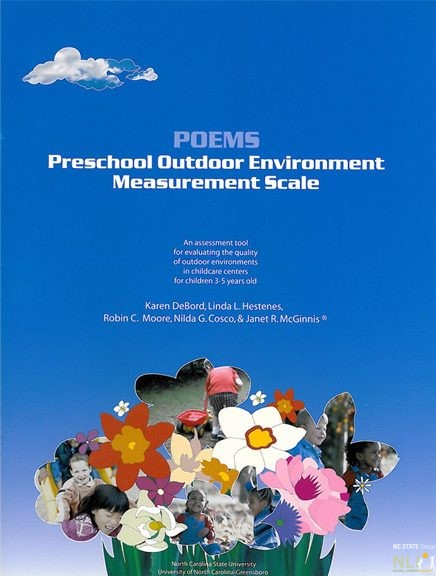
Preschool Outdoor Environment Measurement Scale (POEMS) was designed to provide direction to teachers and administrators who want to offer high-quality outdoor programs and provide hands-on opportunities for children in preschool outdoor learning environments. The scale is intended to guide quality improvements of outdoor children’s environments and promote child development and learning. By using the instrument as a self-study, the items can serve as a menu of strategies to work toward higher-quality outdoor activities. The goal is to encourage childcare centers not only to measure up to an average level of outdoor quality, but to also discover how to excel.
Learning Outcomes
Learn about creating higher-quality environments for children’s outdoor play and learning.
Describe the settings and components found in a high-quality outdoor learning environment using the proper terminology.
Demonstrate ability to assess outdoor learning environments using POEMS as a research instrument to study the implications of outdoor environmental quality on children’s development and learning.
Demonstrate ability to use POEMS as an improvement tool by interpreting results and creating action plans for enhancement.
Apply methods for creating and managing high-quality environments to support outdoor experiential learning over time.
Program Modules
Program Modules are intended to immerse participants in what characterizes outdoor learning environments, how to assess them, and how to use the POEMS as a tool for improvement. Content includes:
The importance of outdoor learning environments for healthy child development.
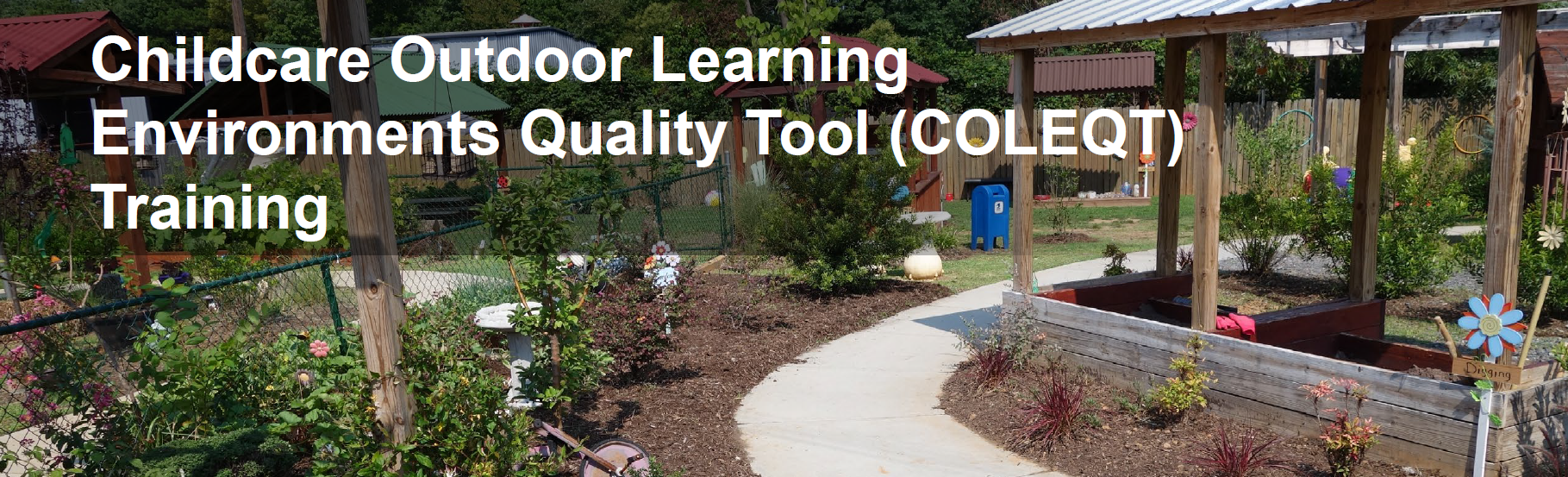
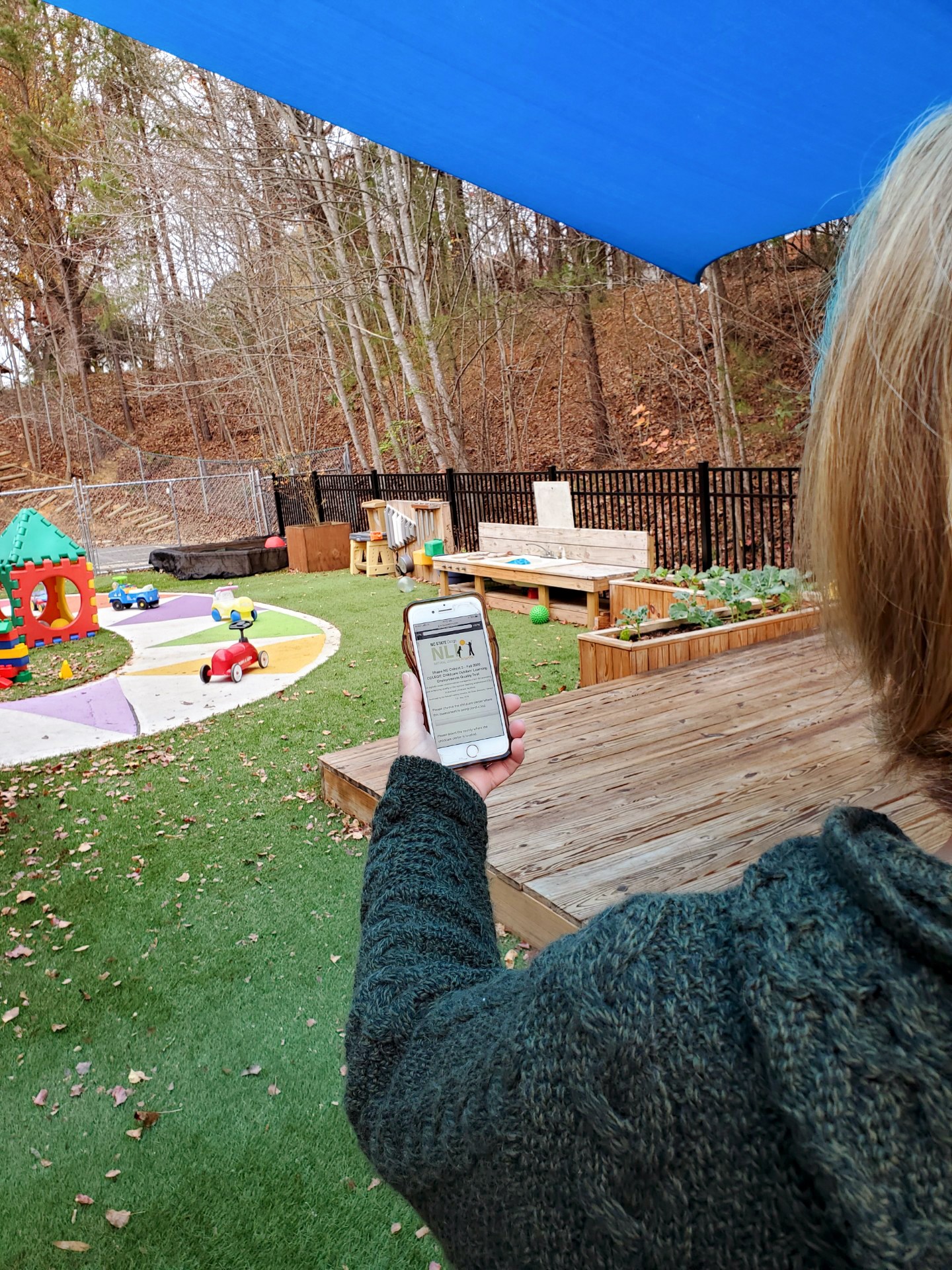
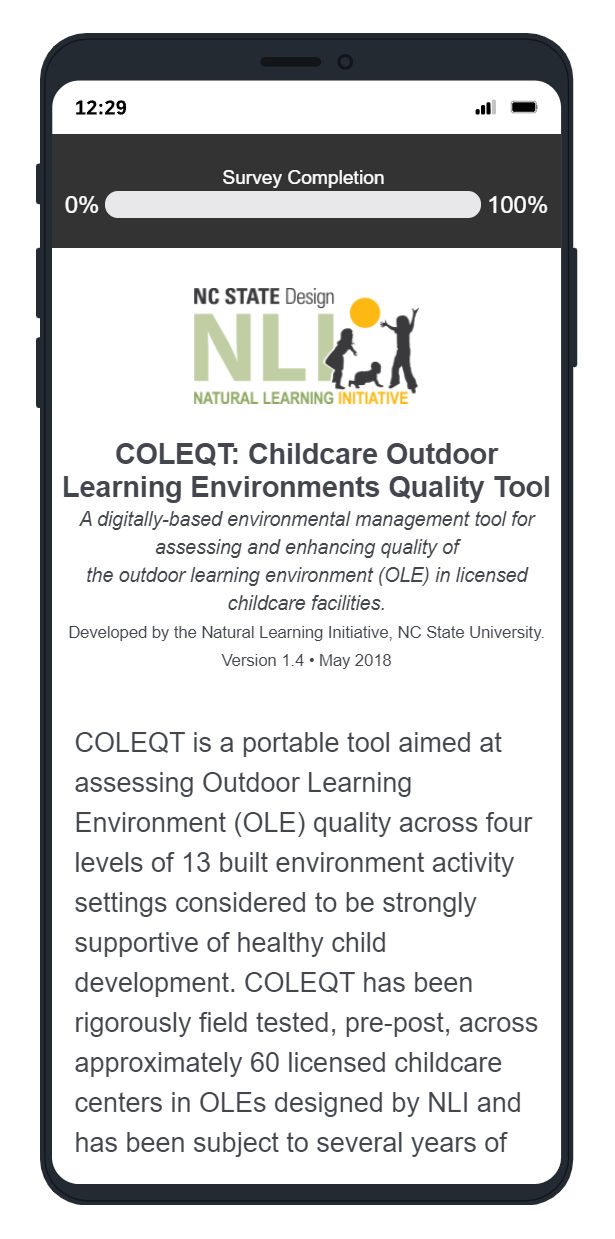
Childcare Outdoor Learning Environments Quality Tool (COLEQT) is a portable tool aimed at assessing outdoor learning environments (OLE) quality across four levels of 13 built environment activity settings considered to be strongly supportive of healthy child development. This training is an introduction to the Childcare Outdoor Learning Environments Quality Tool (COLEQT). The objective of the instrument is to provide a valid, reliable tool for assessing the quality of outdoor environments and their use and at the same time provide guidance to childcare professionals and site administrators to assist them in making improvements.
Learning Outcomes
Learn how to identify high-quality settings and components for children’s outdoor play and learning.
Describe activity settings and components using an environment behavior approach.
Assess outdoor learning environments using COLEQT’s four-level rating system.
Use COLEQT as a tool to increase outdoor quality for children’s healthy development.
Discover how to use the rating items to guide improvement plans.
Professional Development Modules
The Modules will help participants to identify high-quality settings and features in childcare outdoor environments and rate them. Results are used to guide improvement plans.
Content includes:
Identifying outdoor learning environment settings and components.
The path to increasing outdoor environmental quality in childcare.
NLI receives the NC State 2025 Opal Mann Green Engagement and Scholarship Award!
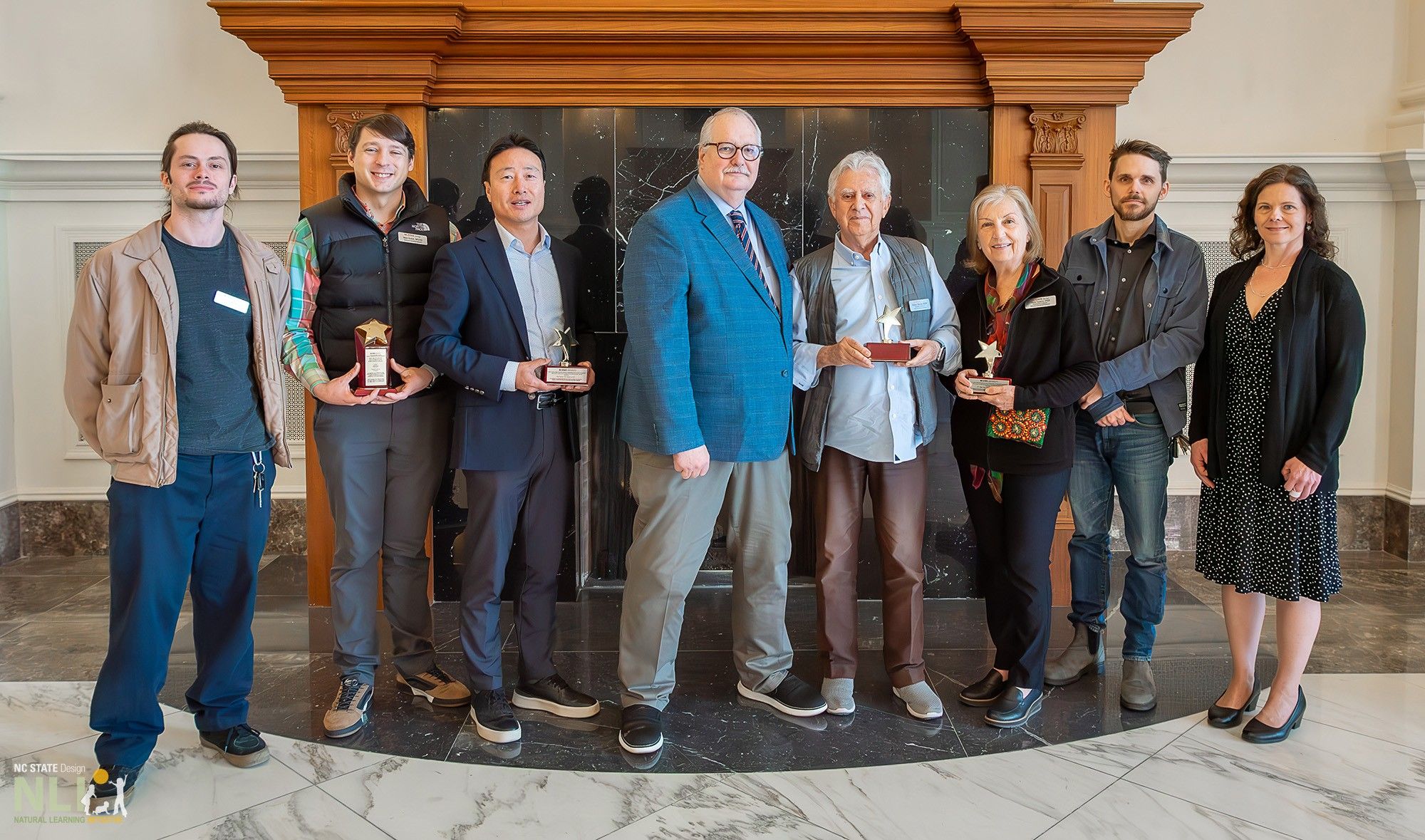
Pictured from left to right are: Robin Moore; David Monks, PhD, Vice Provost for Extension and Engagement; Nilda Cosco, PhD; Matt Babb; Soolyeon Cho, PhD; Adam Noel; Adrienne Murrell.
The recognition rewards authentic collaboration across university and community structures, highlighting programs that are both community-valued and mutually beneficial to partners.
The Natural Learning Initiative was honored at the Outreach and Engagement Awards Ceremony held on March 27.
In his remarks, Dr. David Monks, Vice Provost for Outreach and Engagement & Interim Associate Dean and Director of NC State Extension, noted:
“NLI’s mission, ‘Creating environments for healthy human development and a healthy biosphere for generations to come,’ integrates community engagement and interdisciplinary collaboration. NLI has spent 25 years transforming communities and fostering design thinking to create healthy outdoor play and learning environments. These spaces empower children, families, and communities to thrive, motivating daily outdoor activities, pro-nature lifestyles, and stewardship for the planet. With over 500 outdoor spaces transformed, $11M raised, and $1.8M allocated to partner organizations, the Natural Learning Initiative demonstrates a steadfast commitment to sustainability and community impact.”
Established in 2010, the award recognizes and memorializes Dr. Opal Mann Green’s distinguished leadership at the county, state, and national levels within Cooperative Extension and her dedication to using democratic community processes to create inclusionary teams, community-based learning, and mutually beneficial action around local issues.
Pictured from left to right are: Adam Noel; Matt Babb; Soolyeon Cho, PhD; Warwick Arden, PhD, Executive Vice Chancellor and Provost; Robin Moore; Nilda Cosco, PhD; James Barnes, PhD; Adrienne Murrell.
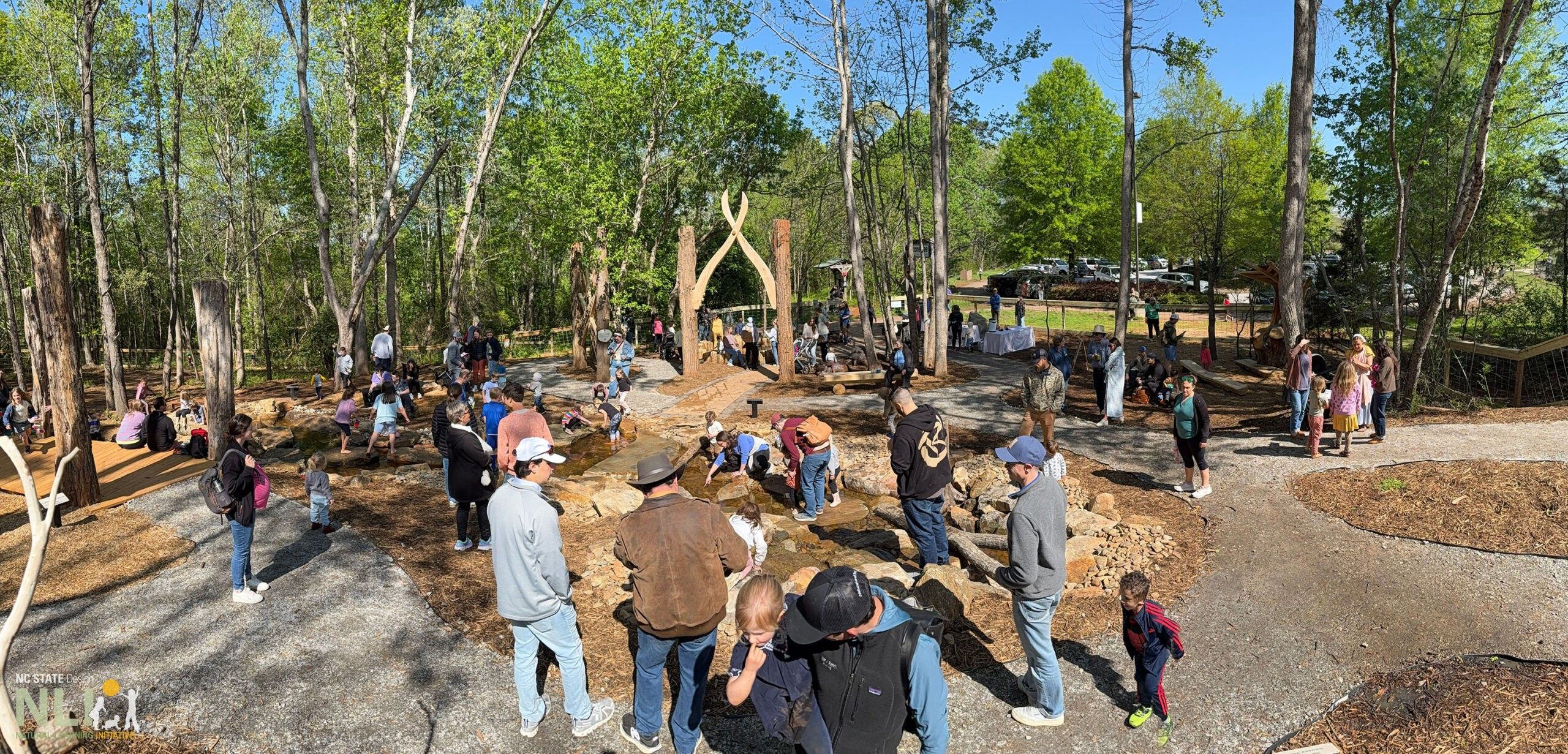
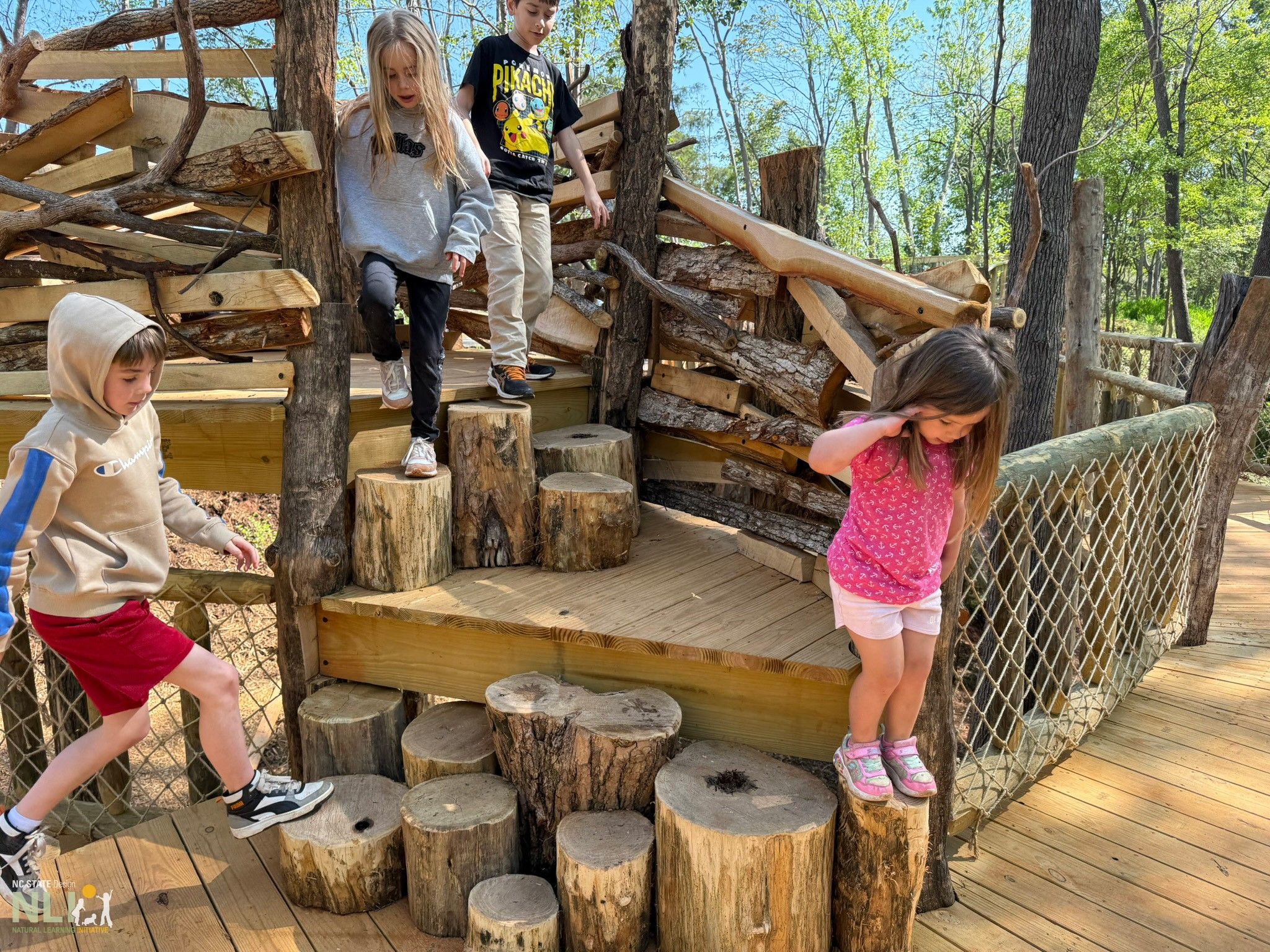
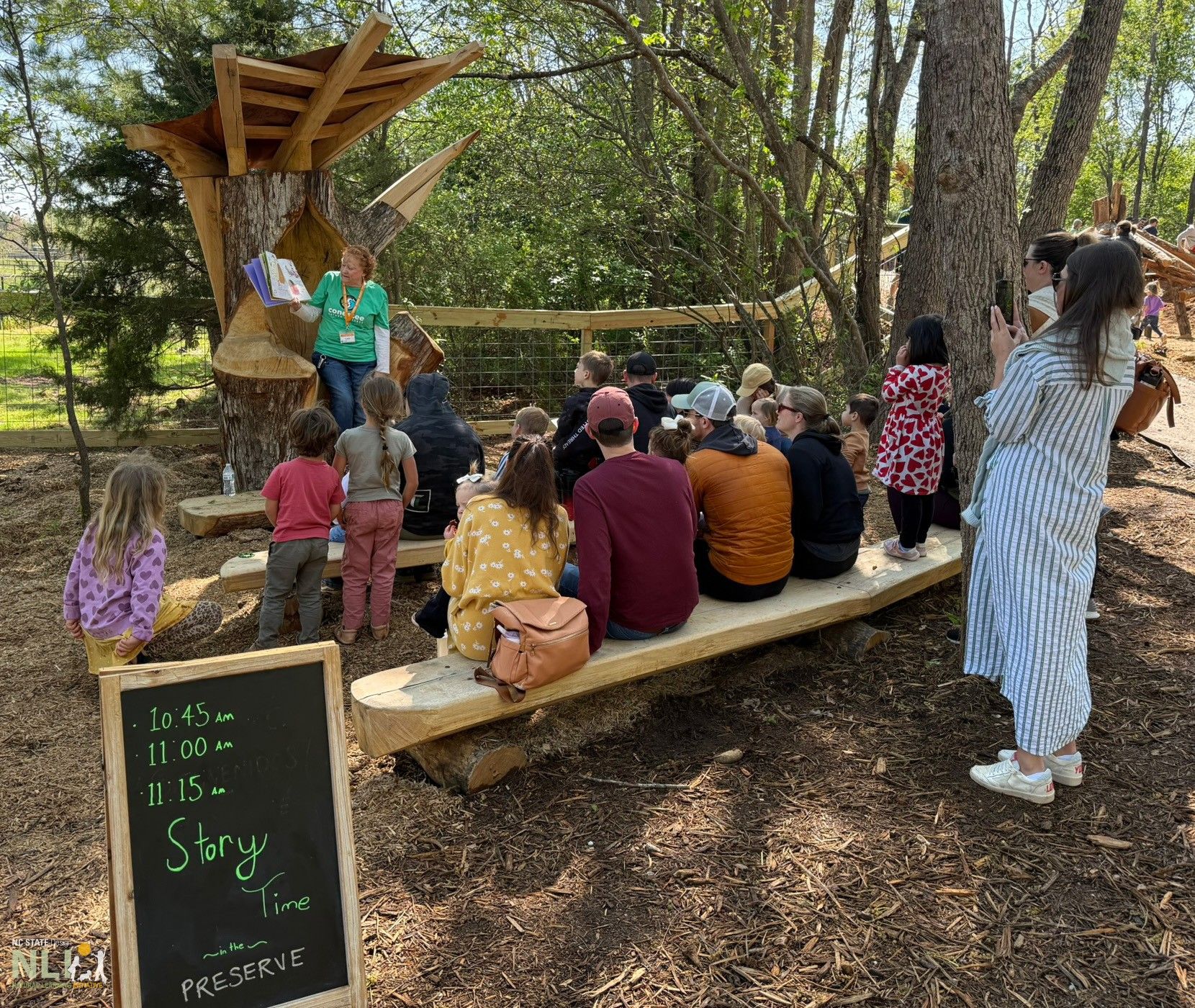
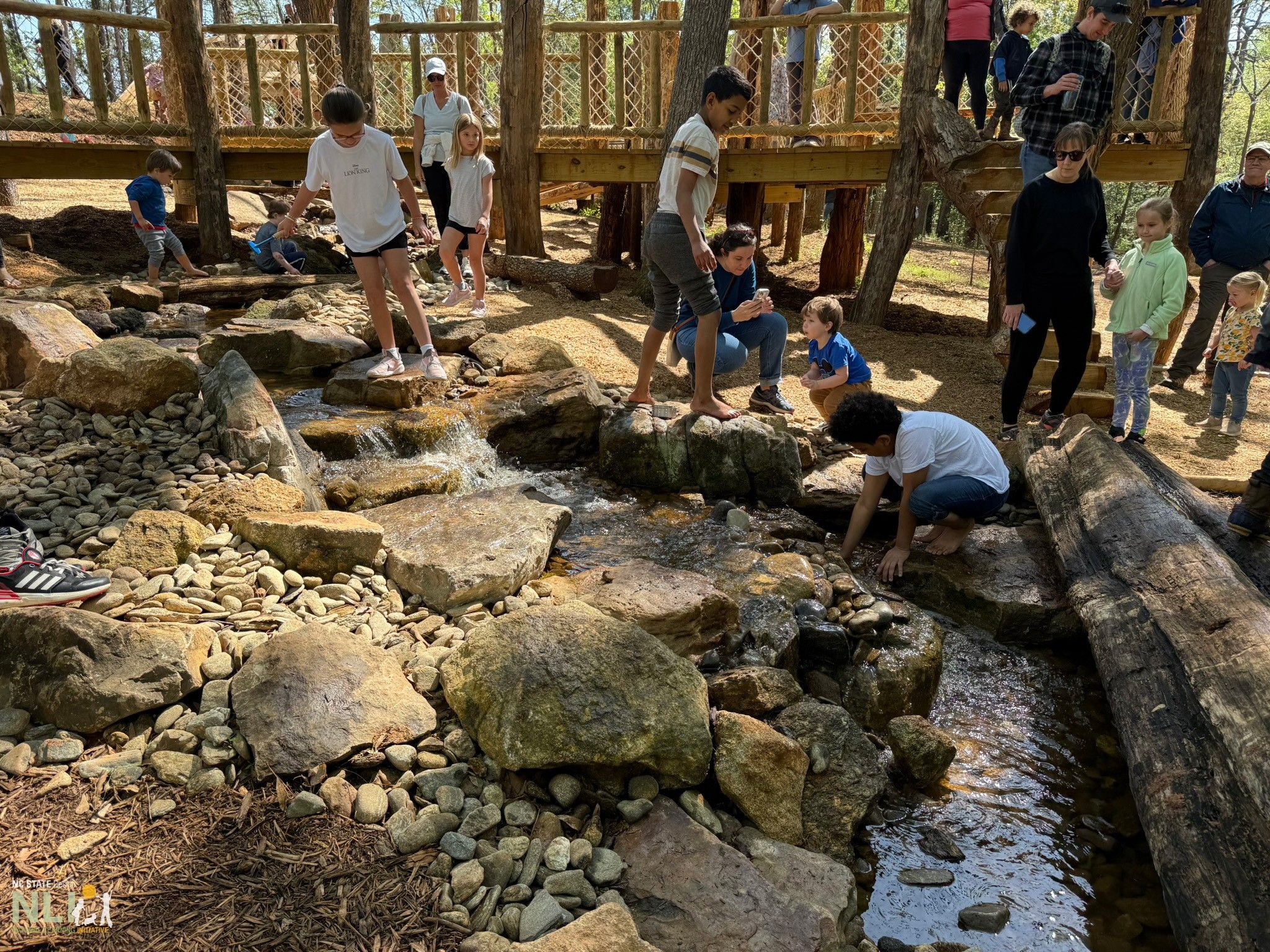
The new Nature Playscape at Conestee Nature Preserve, Greenville, SC, opened to swarms of excited kids and accompanying family members, April 12, 2025! After overcoming severe setbacks from Hurricane Helene, the resolute Conestee staff, unwavering support community, and tireless consultants came together to deliver an unforgettable opening day.
PROJECT TEAM
Conestee Leadership
Erin Knight – Executive Director
Sarah Whitmire – Education Director
Amanda Foster – Trails Director
The Natural Learning Initiative
NC State University
Design program & schematic site design
General Contractor
Matt McClain – Treehugger Customs (Treehuggercustoms.com)
Planting
Conestee Staff & Volunteers
Water Feature
Brandon Williamson – Green Hill Landscaping (greenhilllandscapingsc.com)
Chainsaw Artist
James Brinley – JB Craftworks (Jbcraftworks.com)
Opening Day
Opening Day Photos by: Brandon Dupree
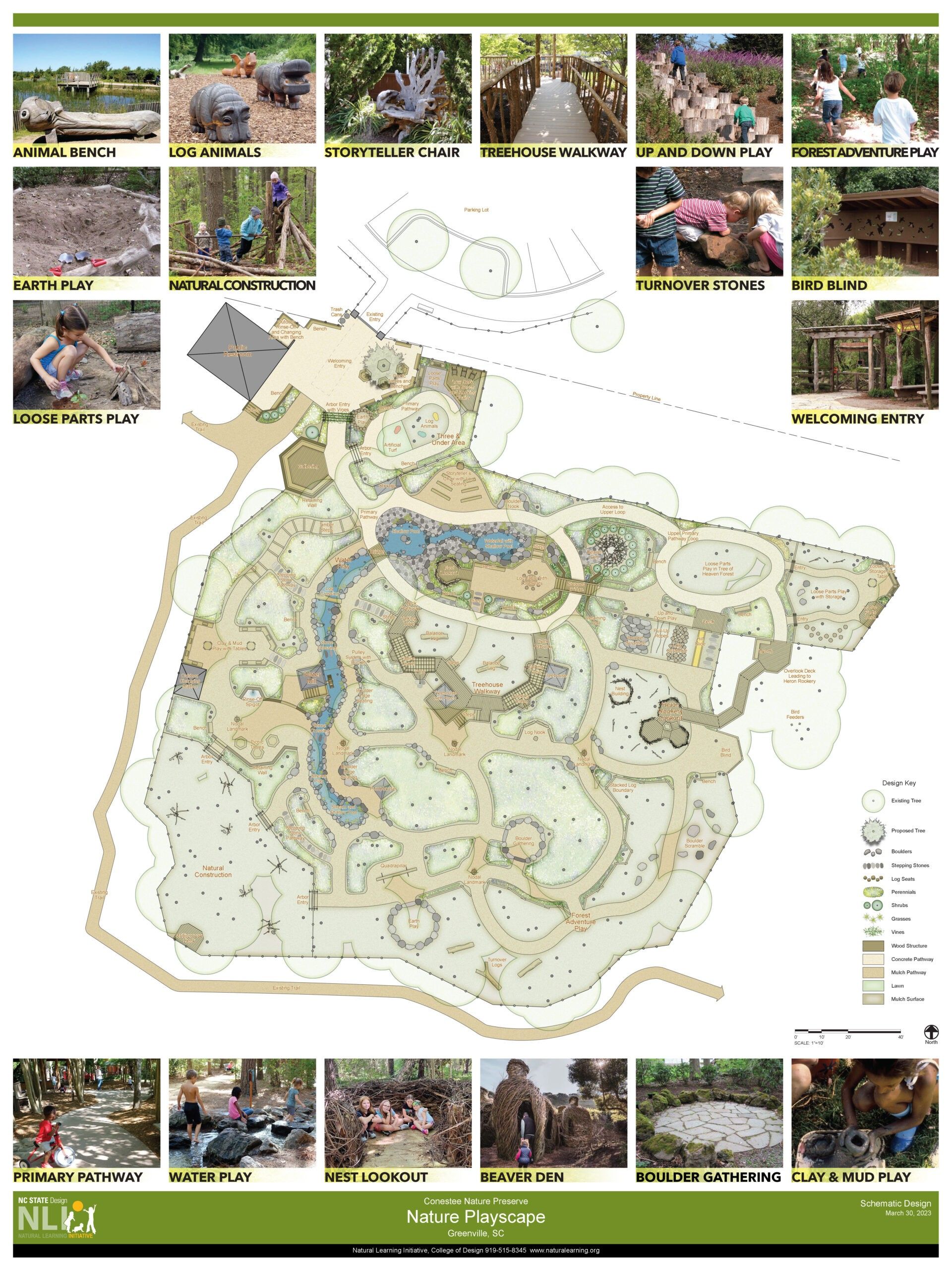
The Nature Playscape at Conestee Nature Preserve (CNP), Greenville, SC, offers a bounded space dedicated to childhood freedom to explore, discover, play in, and learn about nature – and above all, have fun with family and friends. Designed through a collaborative process, the 0.8-acre space reflects CNP goals of conservation and the strengthening of human connections to nature.
NLI facilitated a participatory design process resulting in the design of an innovative space exemplifying best practices, informed by the latest research to support healthy outdoor play and learning in the 500-acre Reedy River corridor preserve.
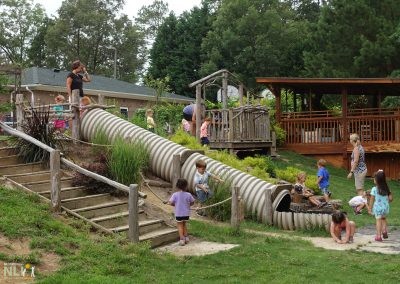
The Nature Playscape is designed to accommodate intergenerational, active users from toddlers to elders, in comfortable, shady surroundings. Eighteen primary activity settings (highly active to quietly contemplative), interwoven among the trees, are illustrated in the poster photos from other NLI projects and research sites.
Community enthusiasm, voiced in an online survey, staff engagement, and site opportunities drove the design programming of activity settings that mimic native wildlife habitats like beaver dens and heron rookeries. Looping pathways, elevated decks, and nature’s loose parts will motivate freeform nature play, immersing children in the woods to explore and discover the wonders of native flora and fauna.
Project implementation is underway, with NLI continuing to collaborate with design professionals and other experts to playfully engage children and families with diverse plant and animal life.
In summer of 2022, Conestee Nature Preserve (CNP) celebrates a $100,000 grant from Greenville Women Giving (GWG) for the upcoming Nature Playscape, set to open in Fall 2024. This innovative outdoor space aims to connect the Upstate community with nature through interactive play and education, fostering a deeper appreciation for Greenville County’s natural environment.
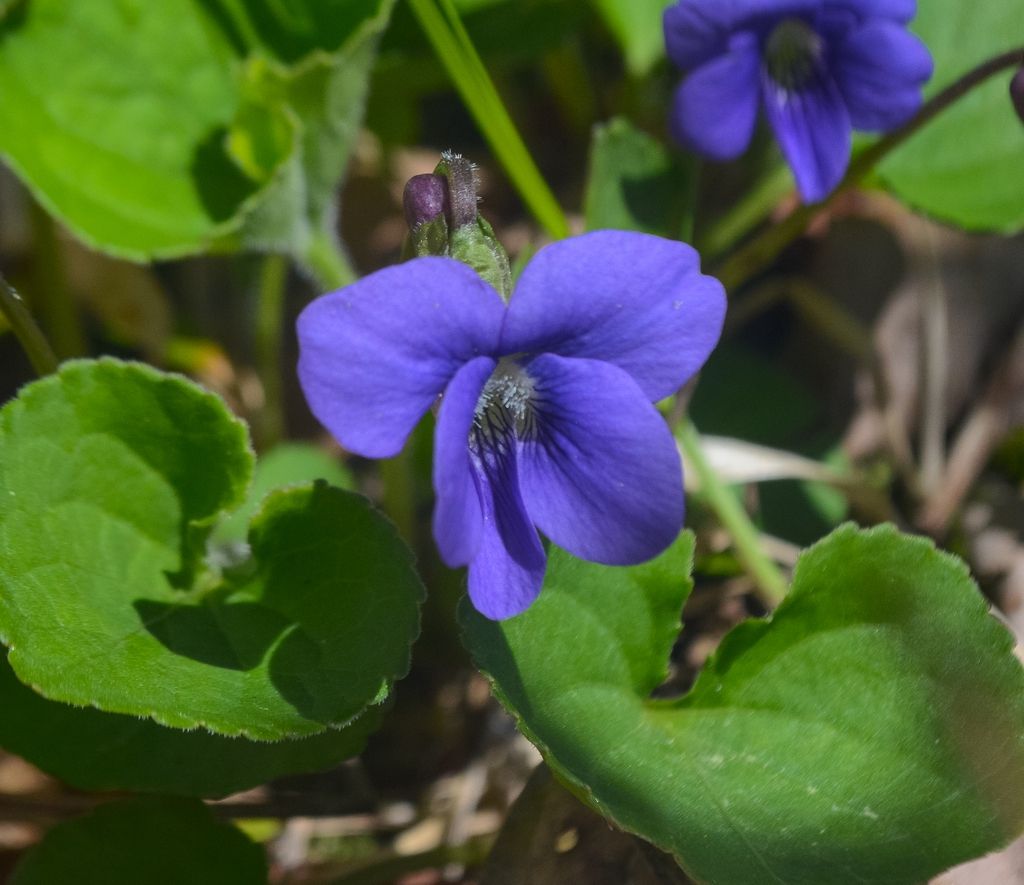
On NLI’s 25th Earth Day, we invite you to celebrate nature’s lowly childhood friends: buttercups, daisies, dandelions, and – violets!
Children explore and discover the wonders of nature within an intimate sensory envelope as they move around, playfully interacting, absorbing the indelible sights, sounds, and smells of ecosystems. Poets cradle those memories, transforming them later into the essence enveloping the microcosm of childhood within the macrocosm beyond.
Poems about the common violet symbolize life’s quiet, fleeting beauty connected to the larger pulse of life on Earth.
“The Violet in the Garden”By an Unknown Author
In the garden, deep and green, A tiny flower can be seen. Purple petals, bright and fair, Dancing gently in the air.
Violet, violet, small and sweet, You are a flower I love to greet. With a smile, you nod your head, And tell the stories of the bed.
Adam Noel, MGXD, is a Multimedia Specialist at the Natural Learning Initiative (NLI). He specializes in UI/UX design, multimedia design, and web development, creating impactful user experiences through innovative design solutions that merge digital trends with practical applications. At NLI, Adam has contributed to the design and development of web pages, print and digital publications, videos, multimedia presentations, logos, and branding materials. His work is driven by a keen interest in leveraging cutting-edge technology to deliver creative and user-centered experiences quickly and effectively.
In addition to his role at NLI, Adam has worked on various community-focused design projects, including developing branding for local businesses and designing mobile experiences such as tractor trailers. His design approach prioritizes accessibility and expanding market reach, highlighting his commitment to using design for social impact.
Adam’s academic achievements include a Master’s of Graphic and Experience Design from NC State University, where his year-long thesis project explored the intersection of video media, music, and social media. This research bridged historical concepts of orality with contemporary media trends, showcasing his ability to integrate theory and practice in multimedia design.
With a strong foundation in UX, brand design, and project management, Adam brings both a creative and strategic mindset to every project, consistently focusing on community-driven, user-centered design solutions.
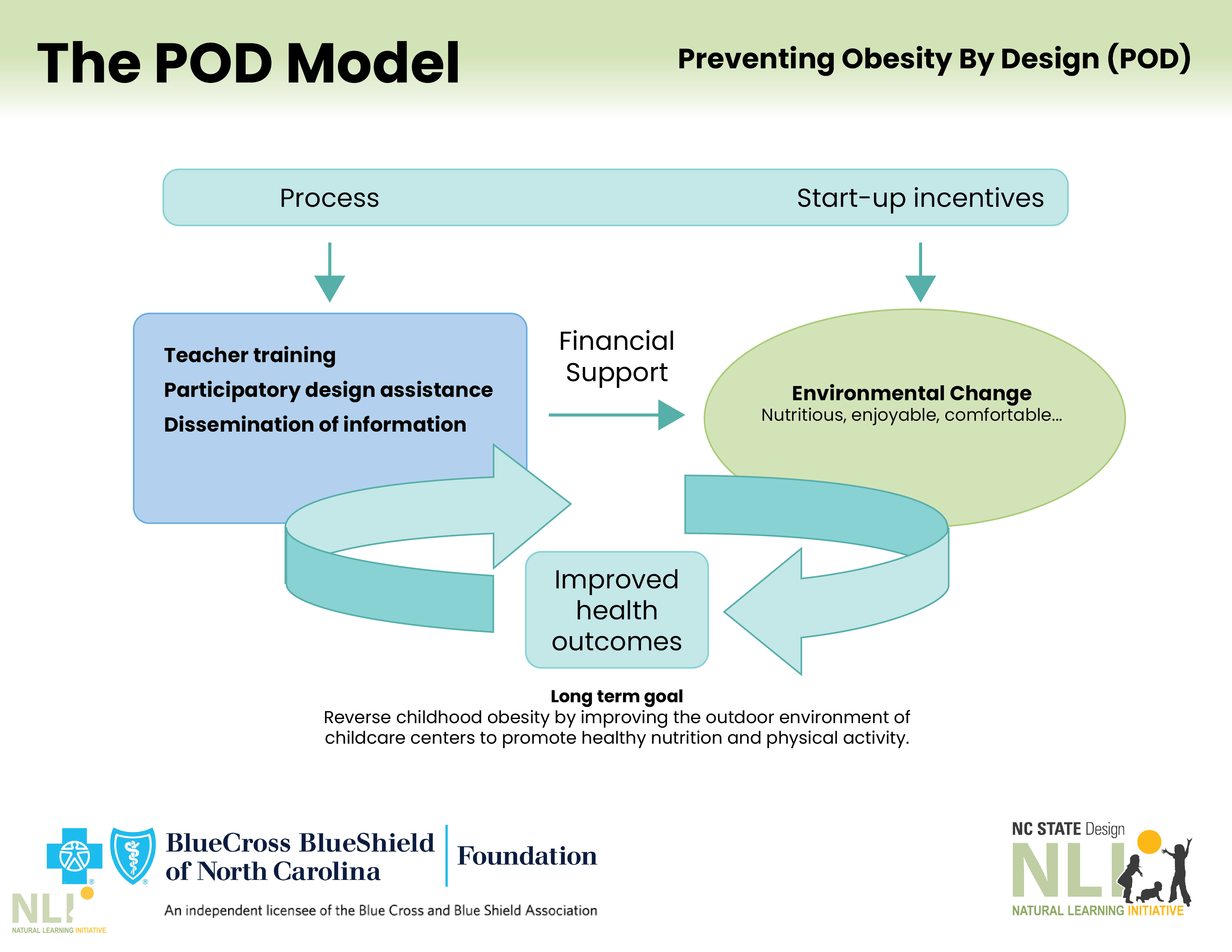
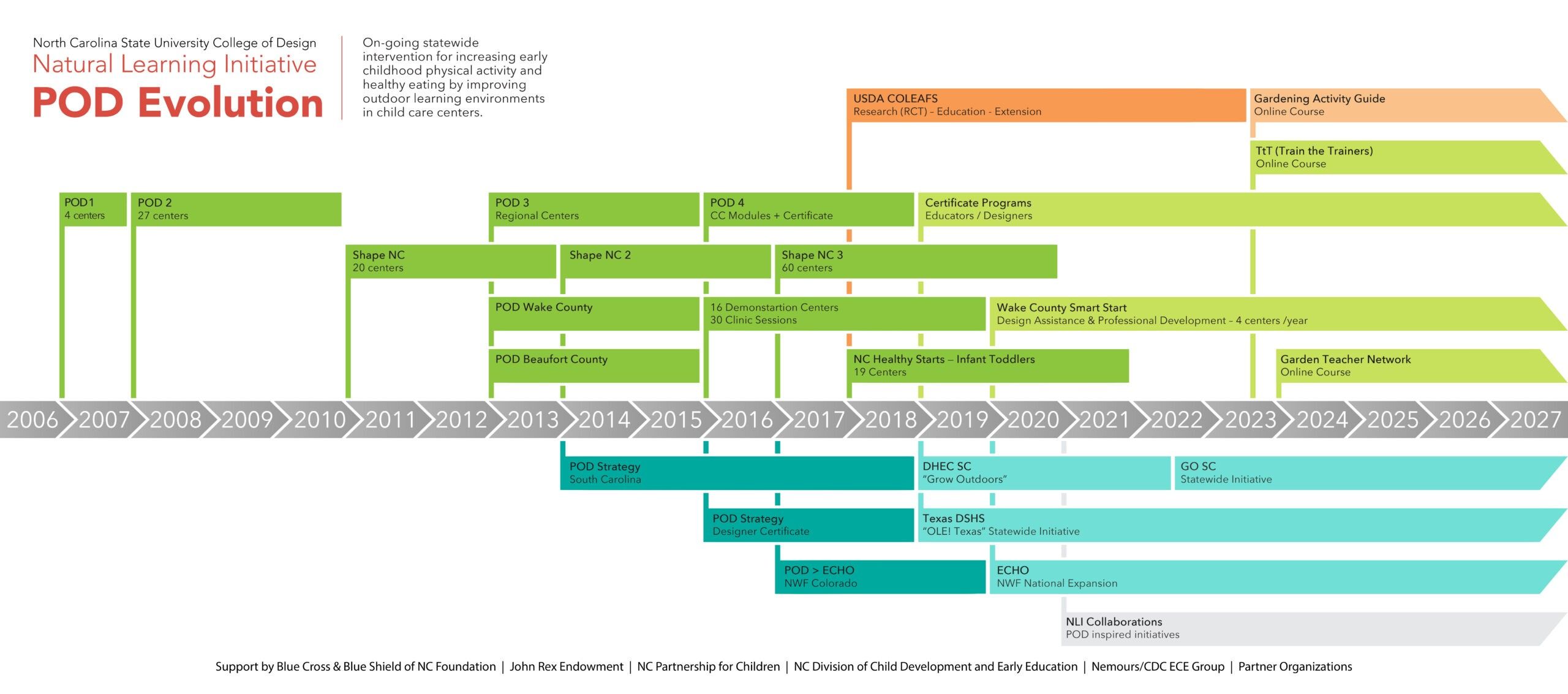
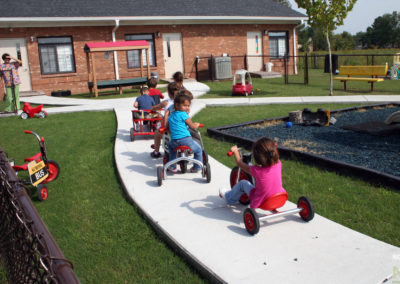
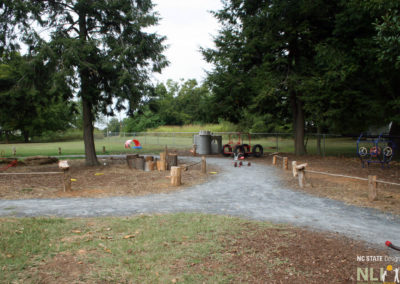
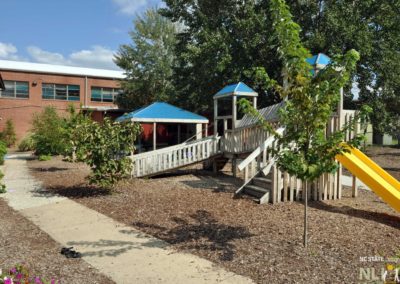
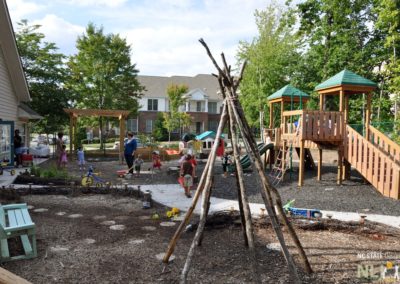
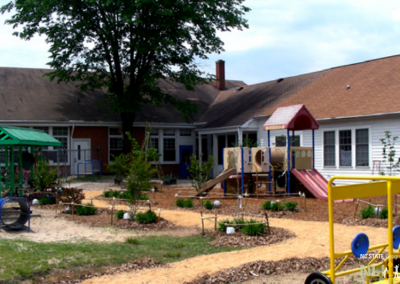
Preventing Obesity by Design was launched in 2007 with support from the Blue Cross and Blue Shield of North Carolina Foundation, to revolutionize the way we think about the design and management of early childhood outdoor learning environments (OLEs) – the term that replaced “playground” in North Carolina licensing rules in 2007. POD is an action-research health promotion strategy, activated through built environment/naturalization interventions. Grounded in North Carolina childcare/development centers, after several iterations POD has been adopted at the state level by Texas, South Carolina, and Colorado. Nebraska is also making progress.
The aim of POD is to create comfortable OLEs with diverse activity settings that irresistibly “pull” children and teachers outside to enjoy higher levels of physical activity, hands-on gardening, outdoor learning, and a boost to social-emotional development. POD is a “one health” model focused simultaneously on human health promotion and ecological regeneration. The POD strategy contributes to system change through the improvement of OLE quality, professional development, with measured outcomes in changed behavior related to increased built environment quality, including biodiversity so teachers and children learn together how life can be restored to the earth.
Preventing Obesity by Design (POD), was launched in 2007 with support from the Blue Cross and Blue Shield of North Carolina Foundation (BCBSNC), to revolutionize the way we think about the design and management of early childhood outdoor learning environments (OLEs) – the term that replaced “playground” in North Carolina licensing rules in 2007. POD is an action-research health promotion strategy, activated through built environment/naturalization interventions. Grounded in North Carolina childcare/development centers, POD has gone through several iterations and has been adopted at the state level by Texas, South Carolina, and Colorado. Nebraska is also making progress.
The aim of POD is to create comfortable OLEs with diverse activity settings that irresistibly “pull” children and teachers outside to enjoy higher levels of physical play activity, hands-on gardening, and outdoor learning. POD is a “one health” model focused simultaneously on human health promotion and ecological restoration. The approach contributes to strategic system change through the improvement of OLE quality as a professional training vehicle, with primary intended outcomes of change in behavior combined with bio-restoration, so teachers and children learn together how life can be restored to the earth.
The POD applied-research orientation addresses the need for applied research conducted on the installed environment to observe the behavioral response. The aim is to create an evidence base related to the local context so that future developments can be informed, as elegantly illustrated by Zeisel (2006, 25-32, 95-97). Action research also recognizes the difficulty of matching timelines of project implementation and research support, which ideally would include an expanded sample and control sites, with research conducted by a third party. Bricks-and-mortar (or landscape) funding rarely supports research at this level and vice-versa: research funding usually does not support implementation. However, carefully managed project evaluation can yield sufficient data to compare the impact of pre-post site renovations (Cosco, Moore and Smith 2014). Results provide evidence-based/informed tools for decision-makers to use to embark on built environment interventions to improve OLE quality to support child health.
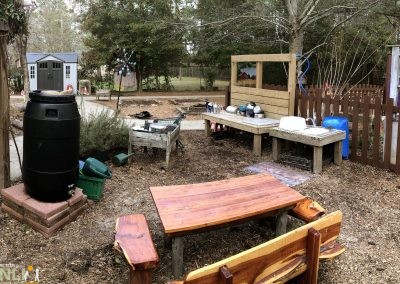
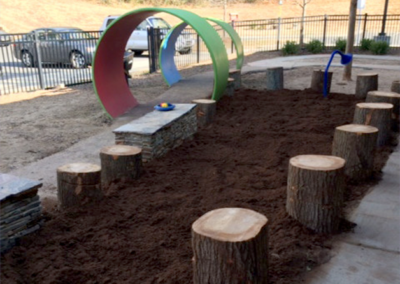
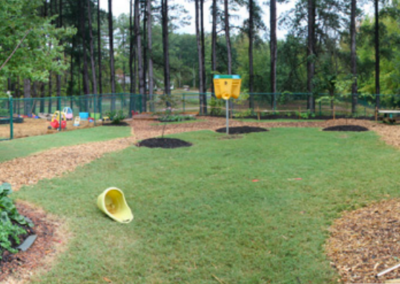
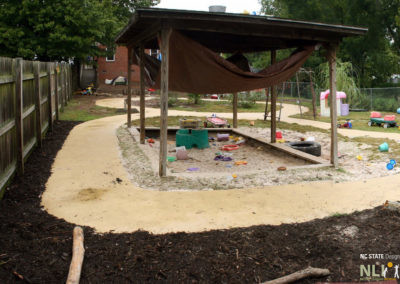
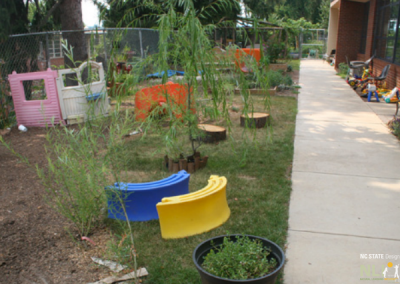
Naturalization is an important goal because the vast majority of childcare/development centers (approximately 114,000 in the U.S) are “micro-sites” where natural ecosystems must be restored, designed, and managed in such a way that allows use by dozens of children and as well as bio-recovery. Naturalization offers children opportunities to engage with the natural world of plants and animals through self-motivated free play and learning experiences (informal and teacher-directed).
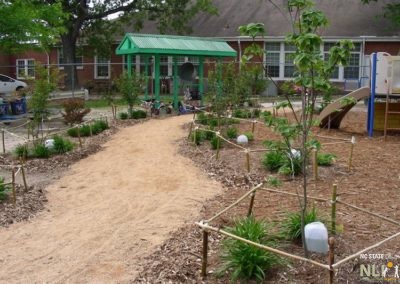
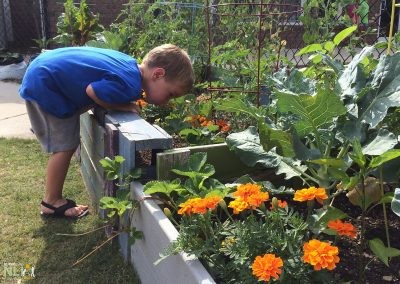
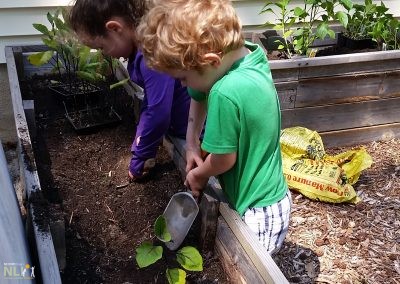
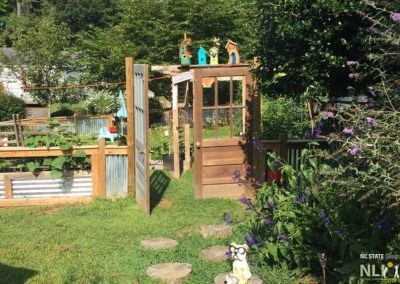
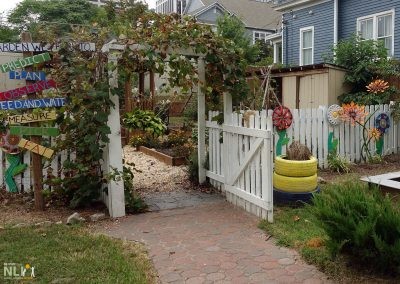
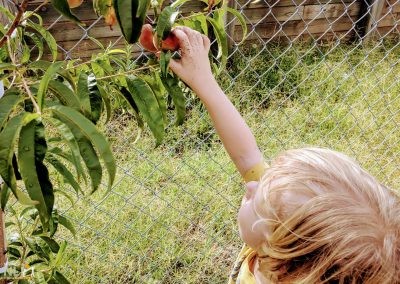
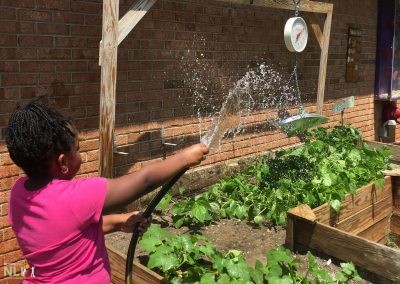
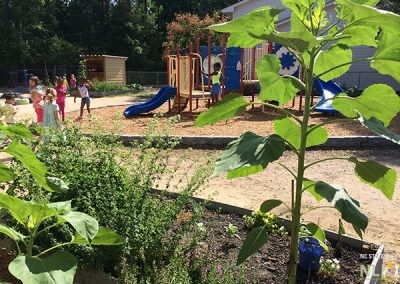
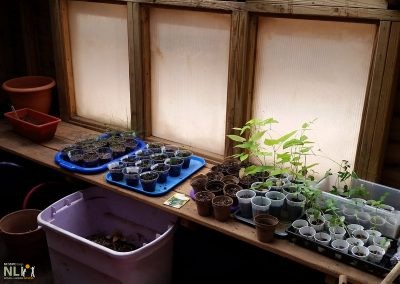
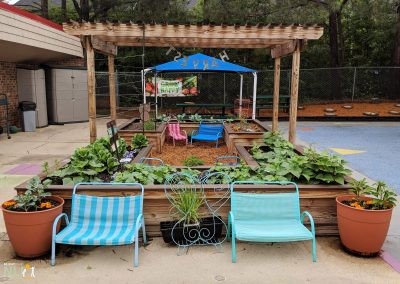
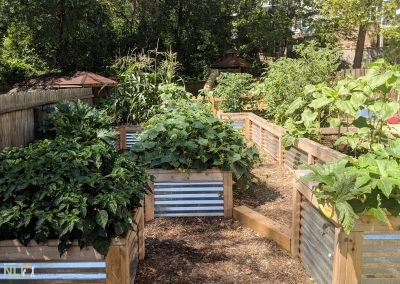
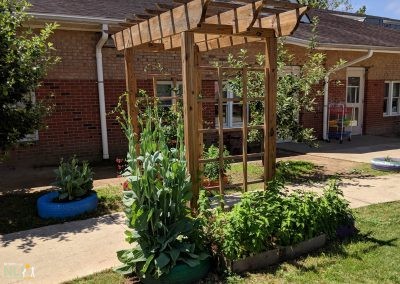
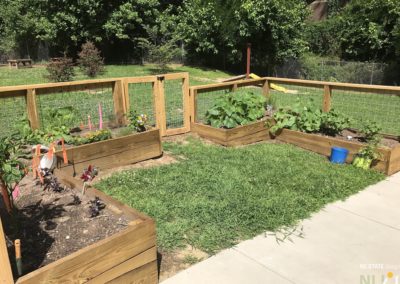
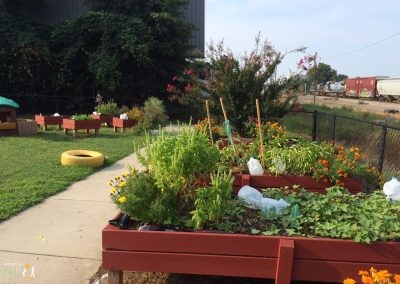
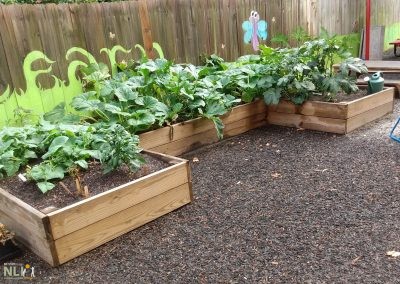
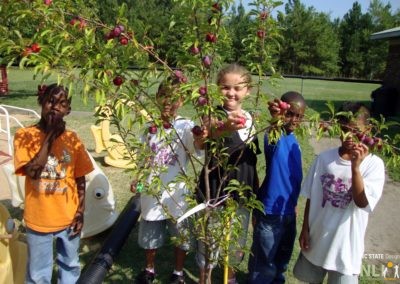
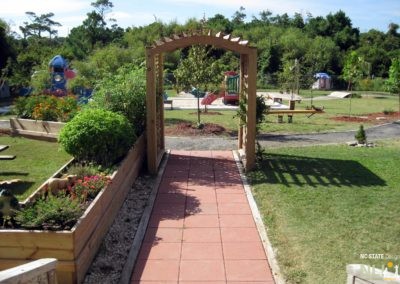
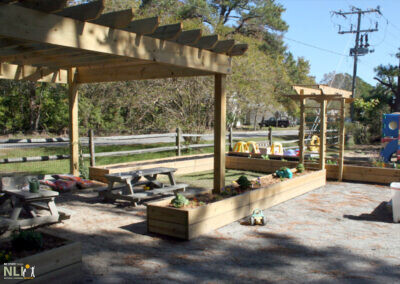
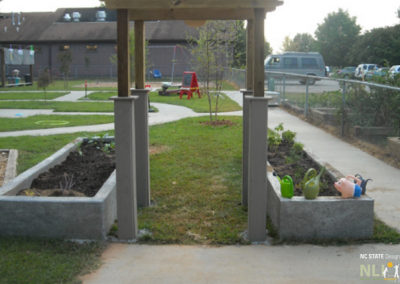
The POD approach offers naturalization as a cost-effective means of improving OLE environmental quality. The preschool outdoors is already a strong determinant of children’s physical activity. Naturalization adds value by supporting play with nature, improving microclimatic comfort for children and teachers, and motivating extended time outdoors to achieve higher levels of physical activity. “Edible landscape” is a complementary health promotion component consisting of permanent, fruiting species integrated into the OLE, along with designated vegetable gardens.
These gardening activities remind me of my childhood. Activities like canning are becoming a lost art and it is important to pass them onto future generations… if they grow up and can’t buy food, they will at least have the skills to plant a seed.