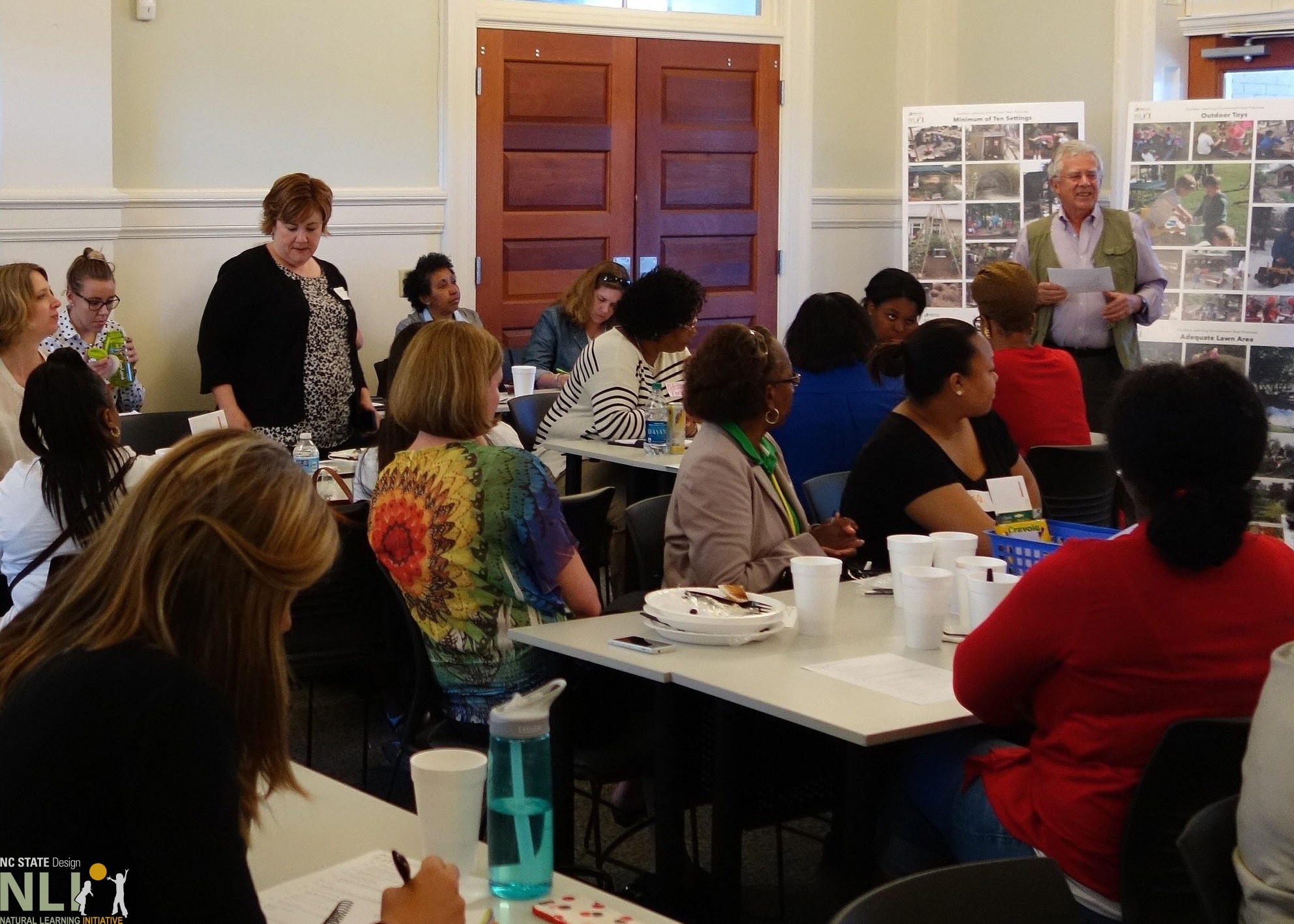
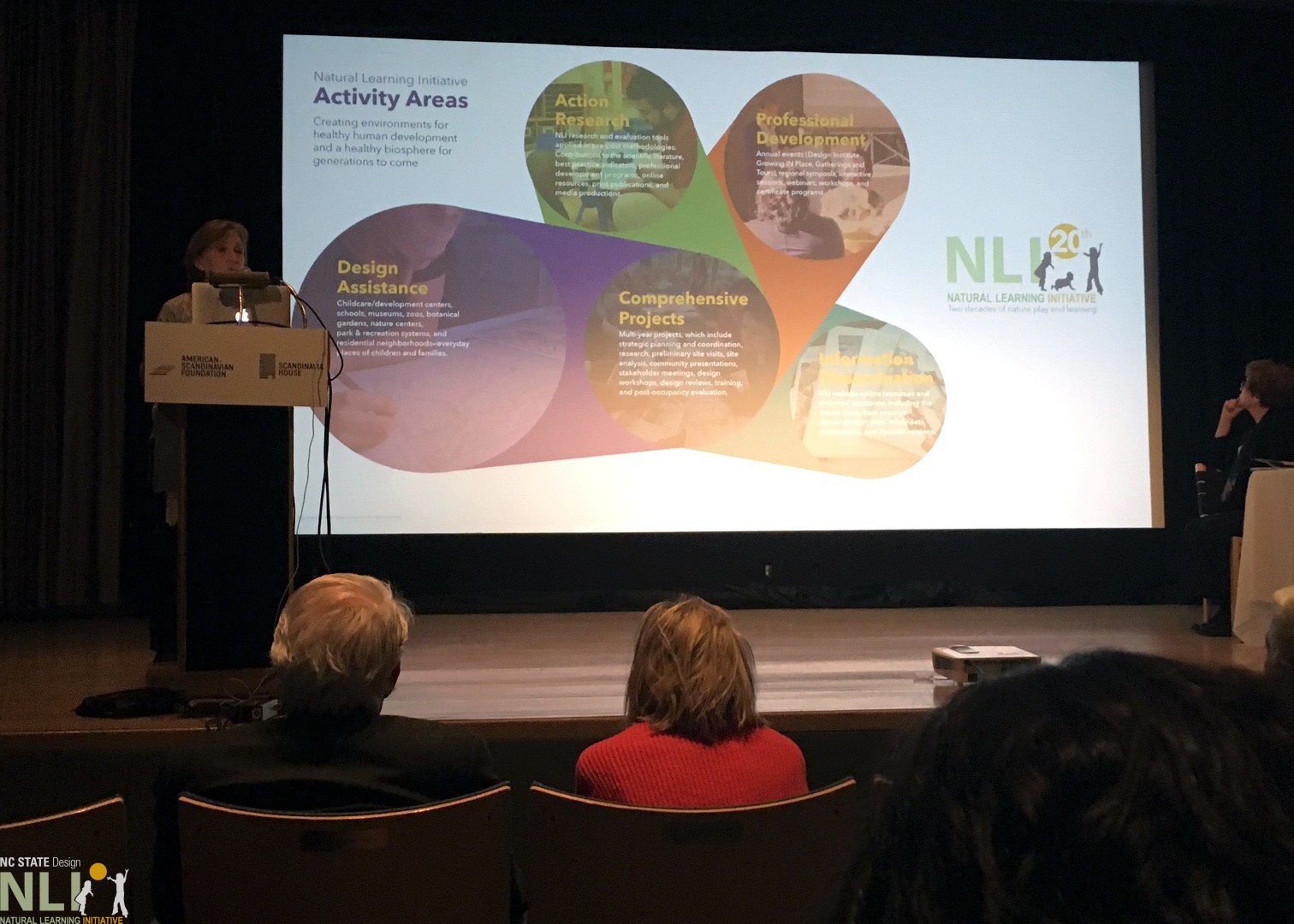
PROFESSIONAL DEVELOPMENT and training includes theory, principles, and techniques that guide the design of play and learning environments with an emphasis on the design and management of natural environments to support healthy child development.
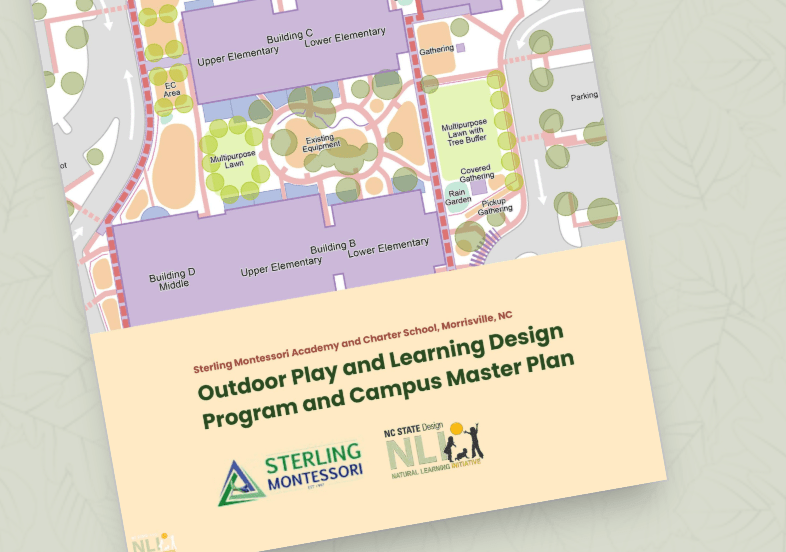
PROGRAMS integrate many multi-year PROJECTS with the aim of achieving higher levels of sustained quality. Projects are typically concentrated, short duration efforts that focus on specific design issues (e.g., design assistance, evaluation, professional development, or policy initiative).
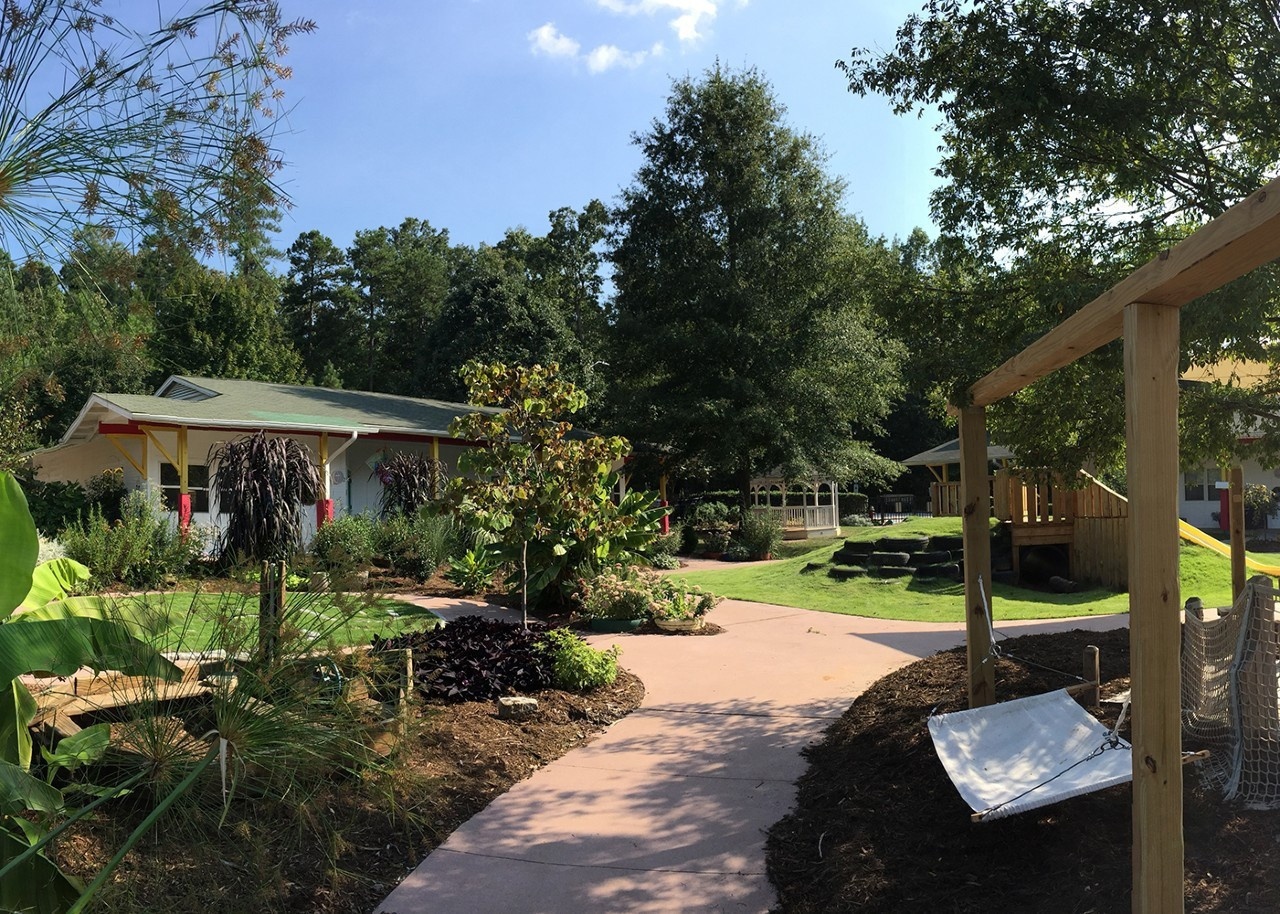
RESOURCES are created, often in collaboration with NLI’s interdisciplinary partners, to support technical assistance, professional development, and generally to promote the importance of the natural environment in the daily experience of all children. Please use and share.
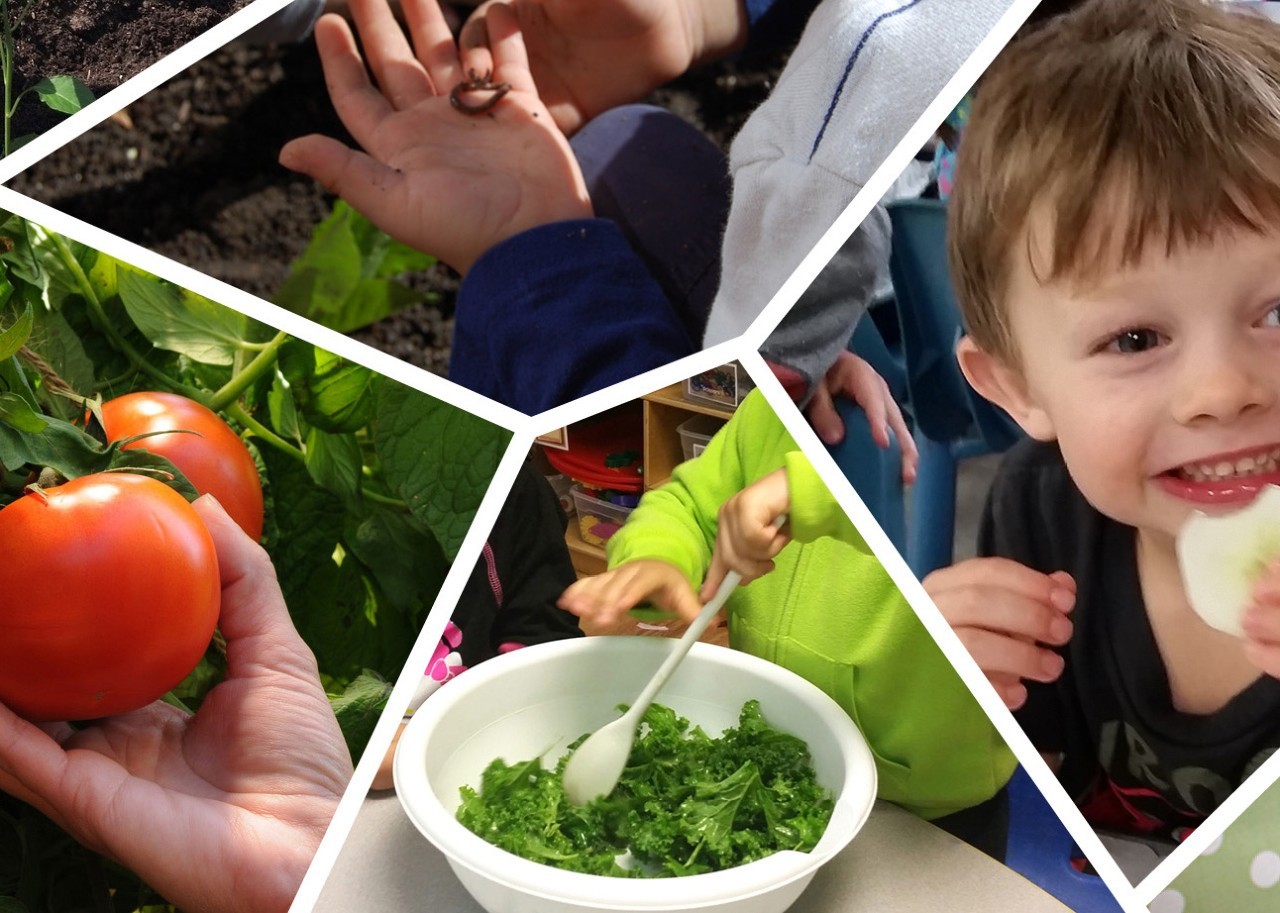
THE GREEN DESK contains numerous resources meant to improve outdoor learning environments and promote healthy, natural child development, physical activity, and nature-based learning.
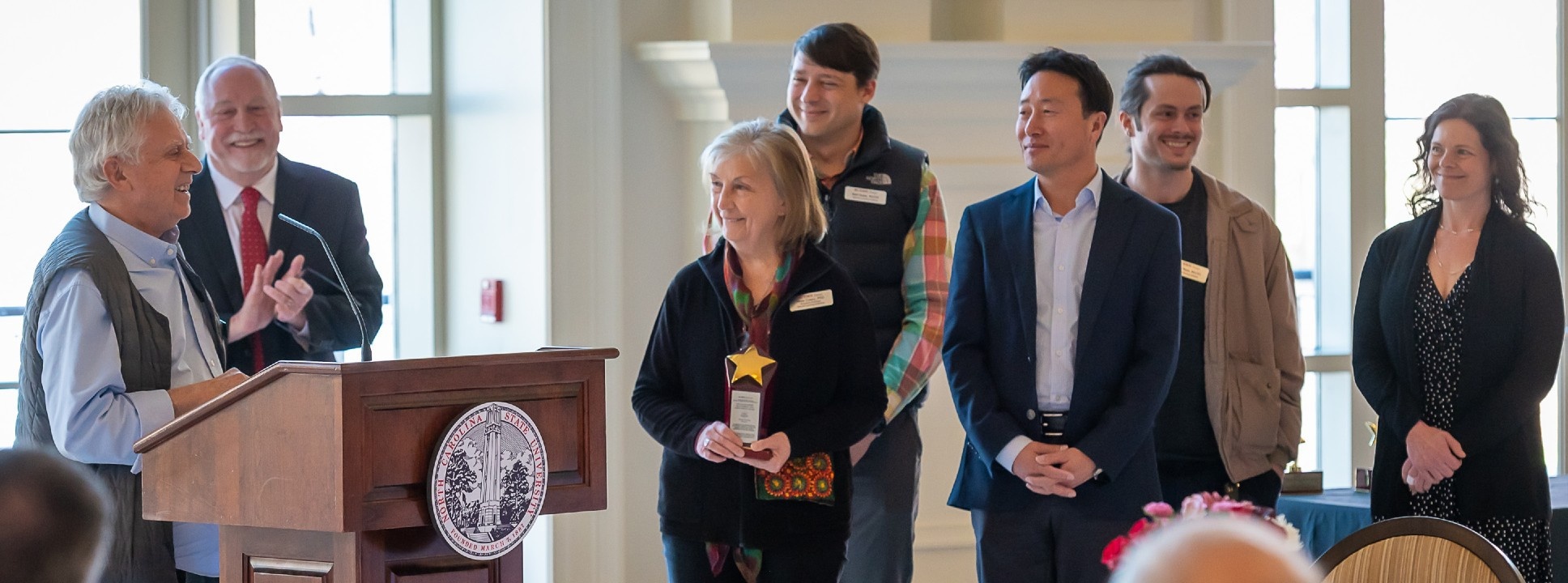
As an exciting kickoff to our 25th Anniversary Year, the Natural Learning Initiative (NLI) received the prestigious Opal Mann Green Engagement and Scholarship Award. This award recognizes a team of individuals whose significant contributions and accomplishments have demonstrated excellence as engaged scholars who practice collaborative democratic strategies reflected in the Kellogg Commission Seven Part Test…read more
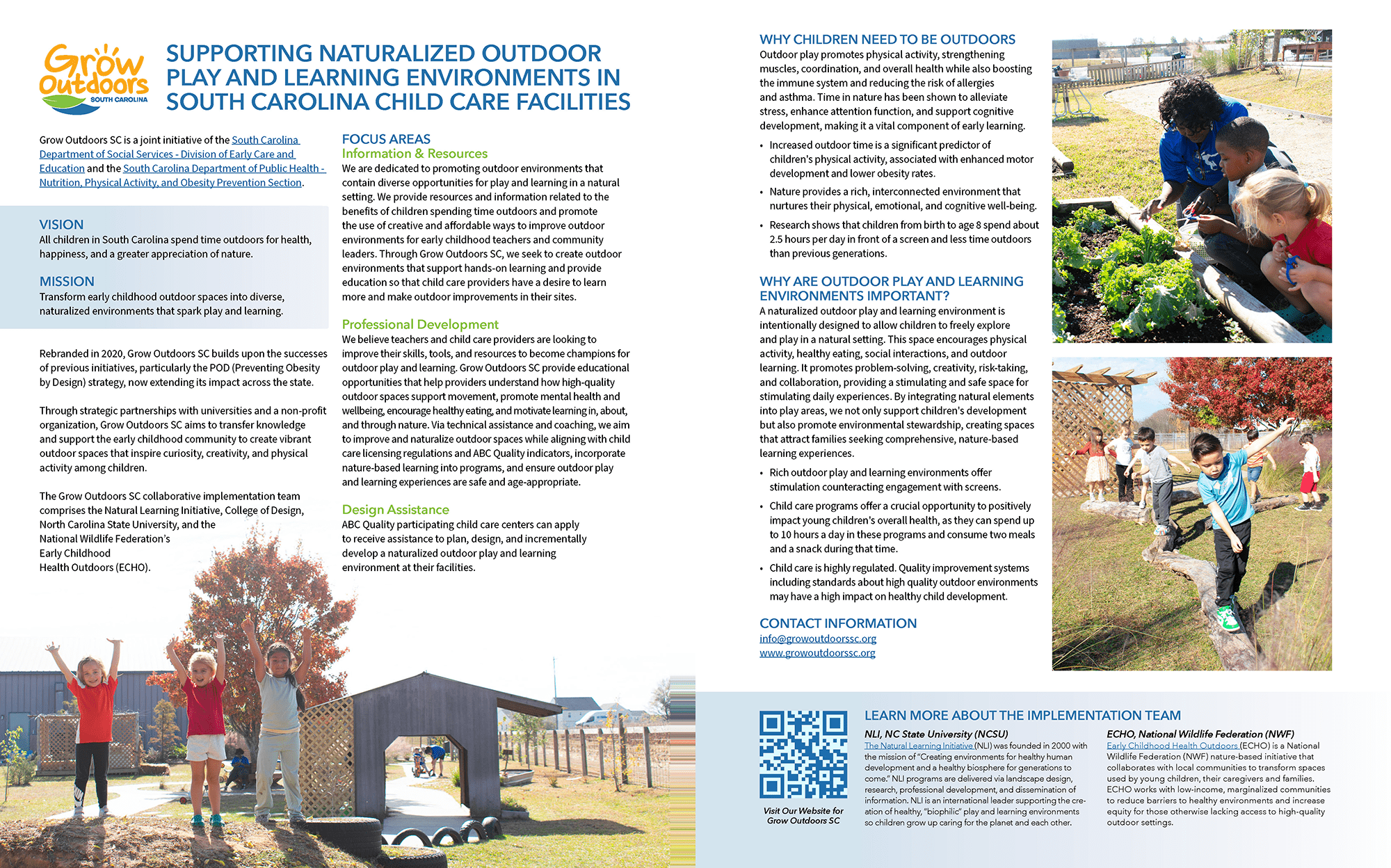
In 2007, the Natural Learning Initiative (NLI) launched the POD (Preventing Obesity by Design) strategy. In 2015, POD was piloted in South Carolina by the Departments of Social Services (DSS) and Health and Environmental Control (DHEC), beginning with a design workshop in Florence.
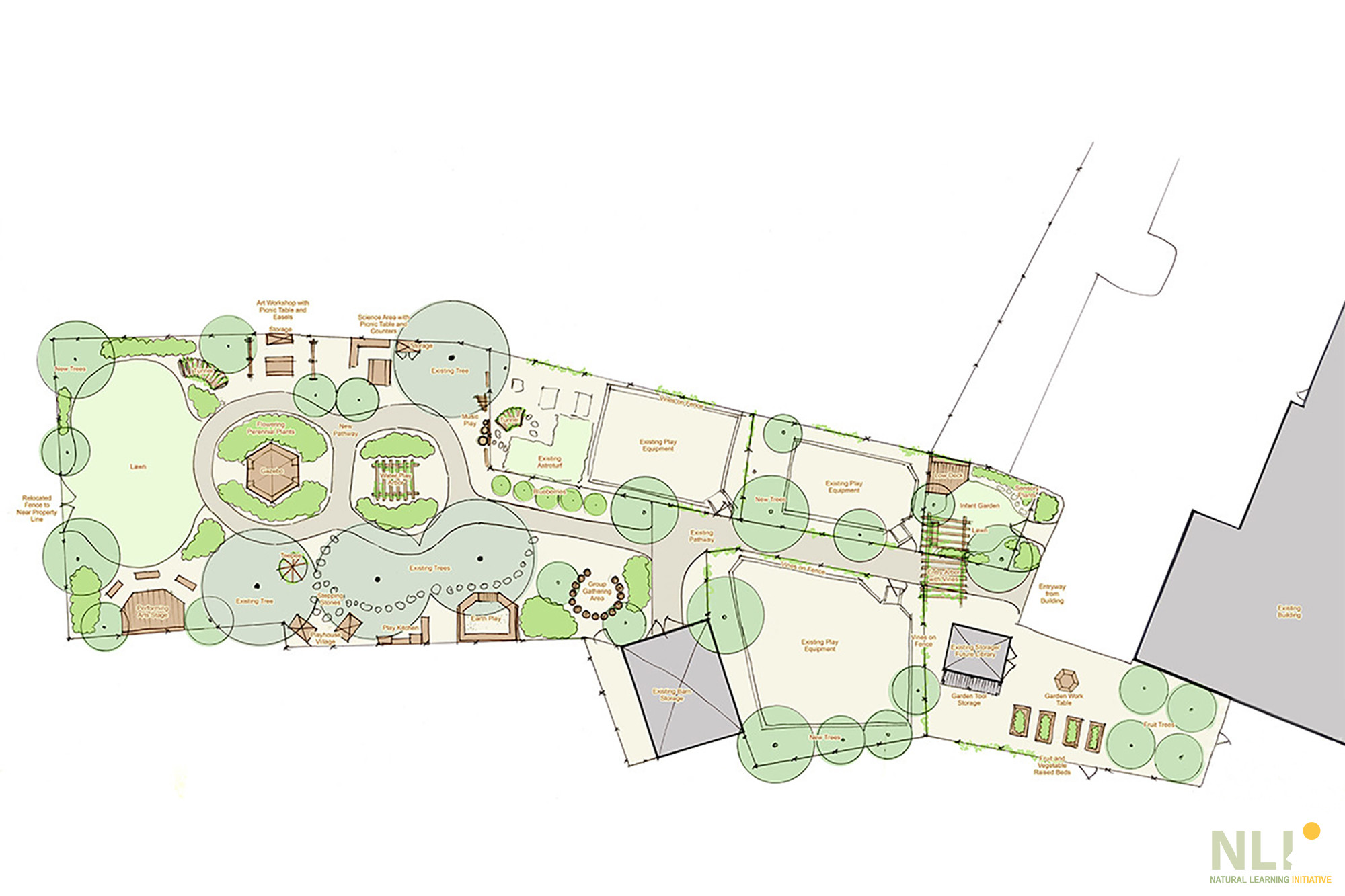
The POD strategy is a built environment, nature-based intervention in the outdoor spaces of licensed childcare facilities. The aim is to enrich outdoor play and learning environments to foster life-long healthy habits by increasing physical activity, healthy eating, outdoor learning, and social-emotional development of young children during their formative years. Key components include landscape design, rigorous evaluation, cross-sector professional development, and website-based information dissemination. POD implementation employs collaborative participatory processes to engage stakeholders, including designers, technical assistants (TAs), owners, center directors, teachers, parents, children, community supporters, and state regulatory staff.
Grow Outdoors South Carolina (SC) was launched in 2020 to extend the reach of prior POD initiatives and celebrate POD achievements already on the ground. The new Grow Outdoors SC Expansion Project will implement POD statewide in continuing partnership with NLI, plus the implementation expertise of the National Wildlife Federation (NWF) Early Childhood Health Outdoors (ECHO) program.
The aim of Grow Outdoors SC Expansion is to greatly increase the rate of implementation by creating a suite of new resources, delivering a diverse professional development program, engaging families in the process, providing financial installation support to individual sites, and instituting a rigorous evaluation process to support continuous improvement of implementation processes and results on the ground. The goal of this joint initiative of DSS and DPH is to transform early childhood outdoor spaces into diverse, naturalized environments that spark play and learning.
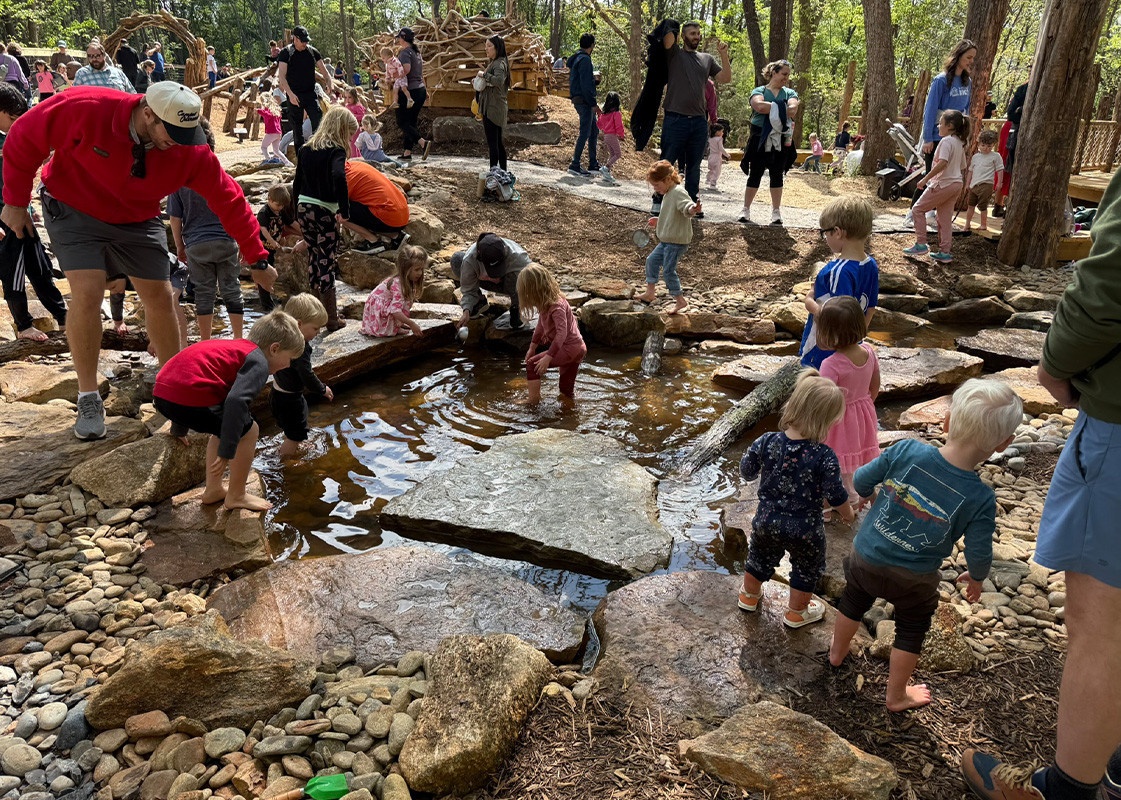
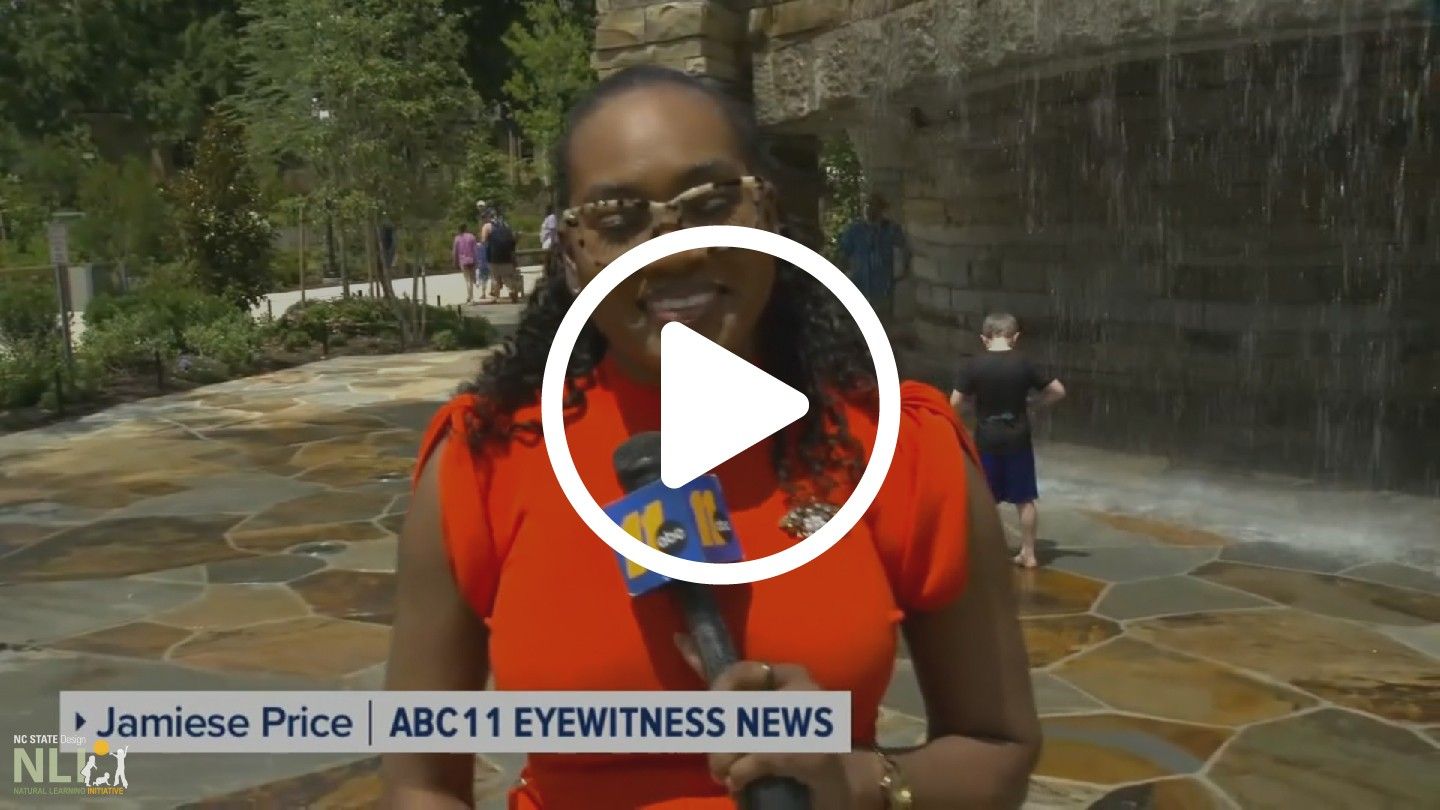
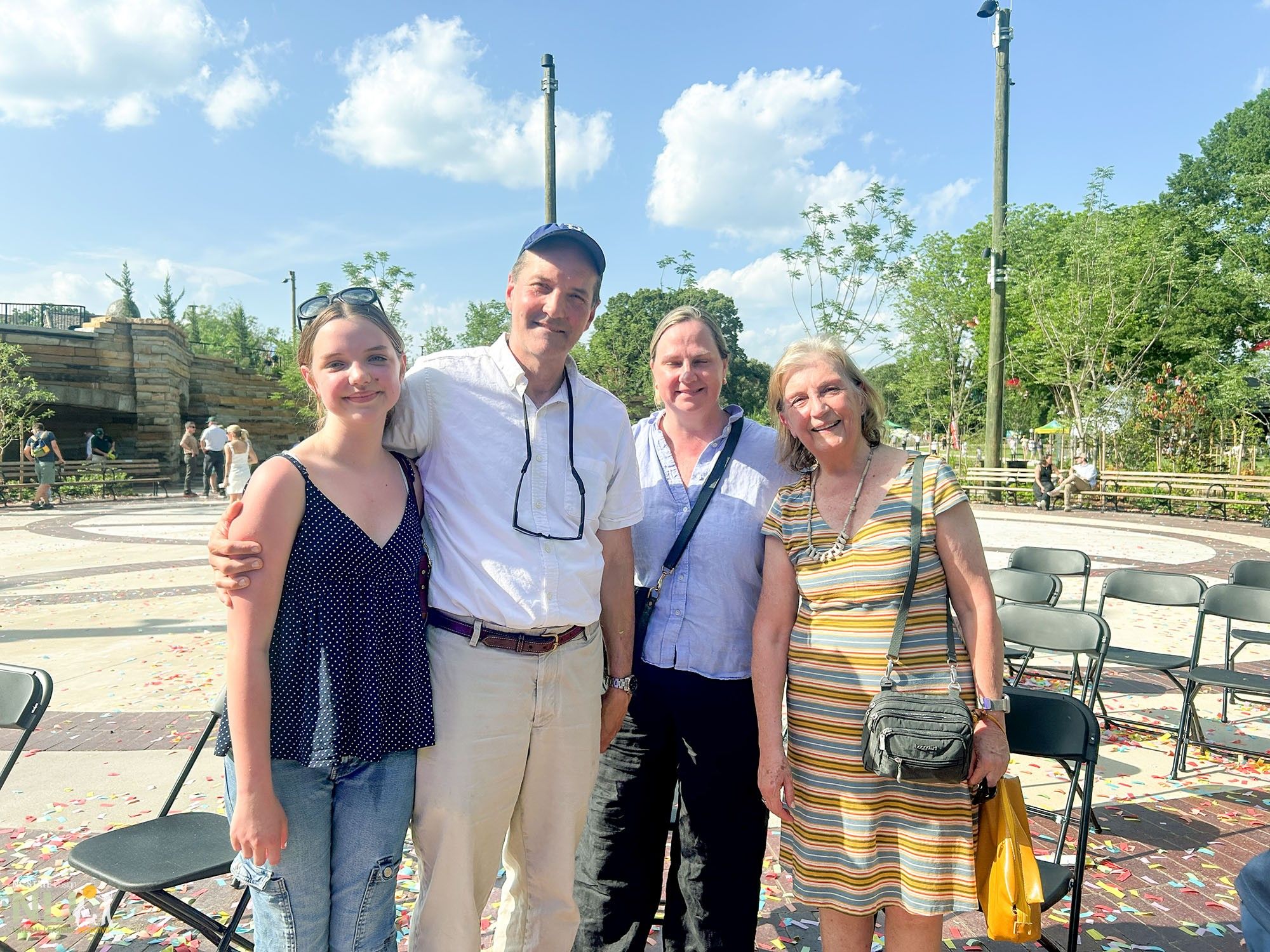
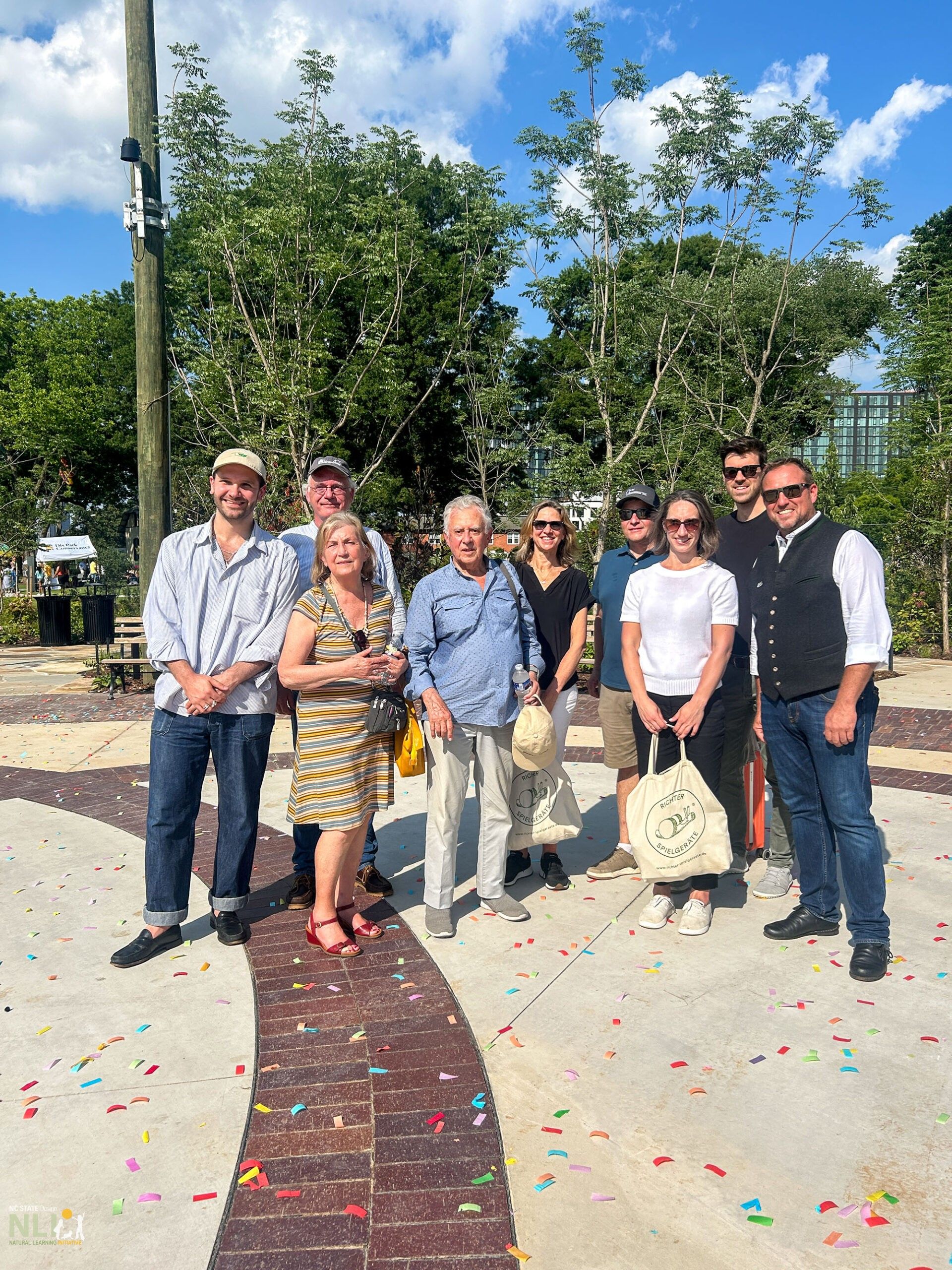
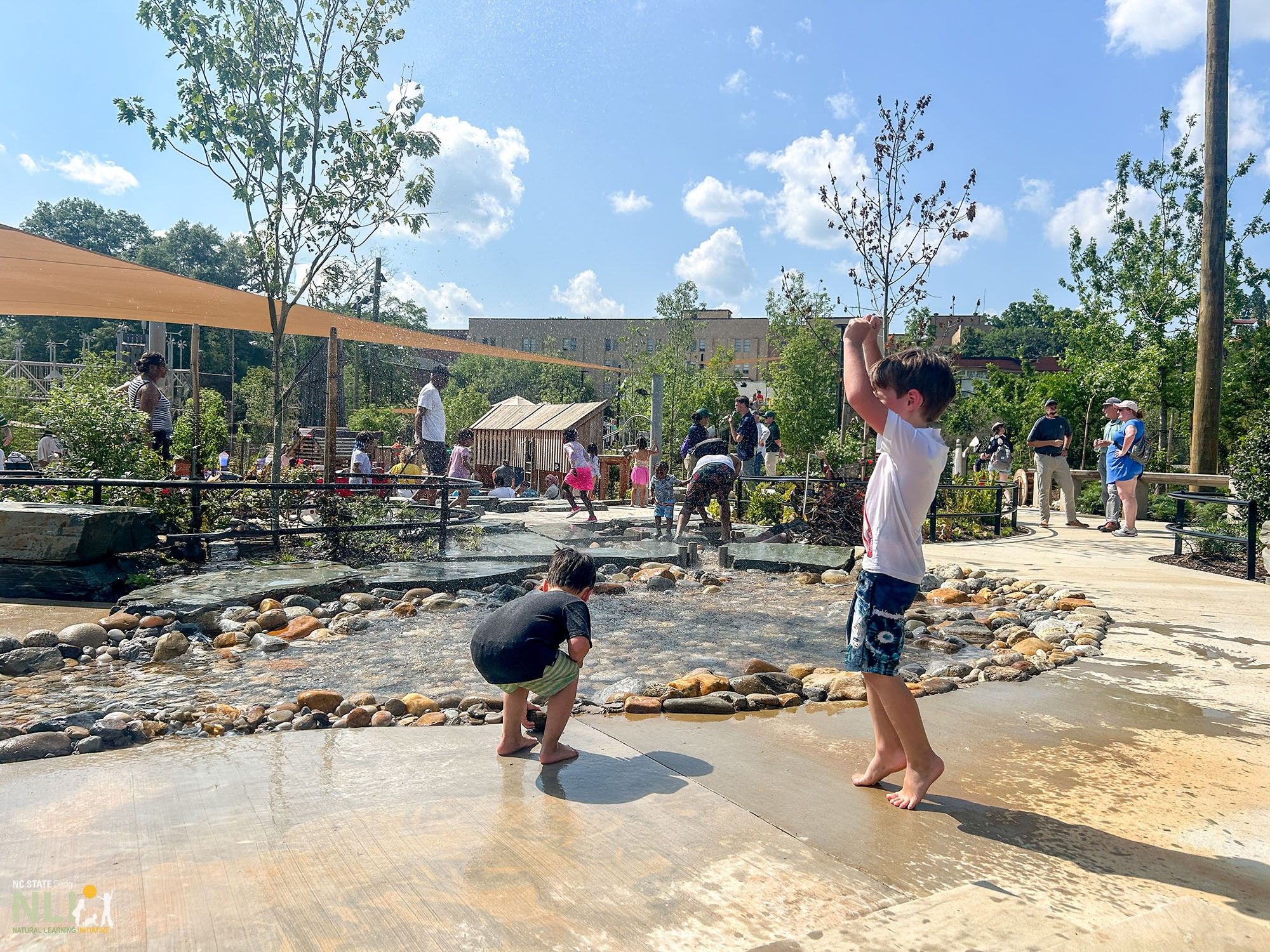
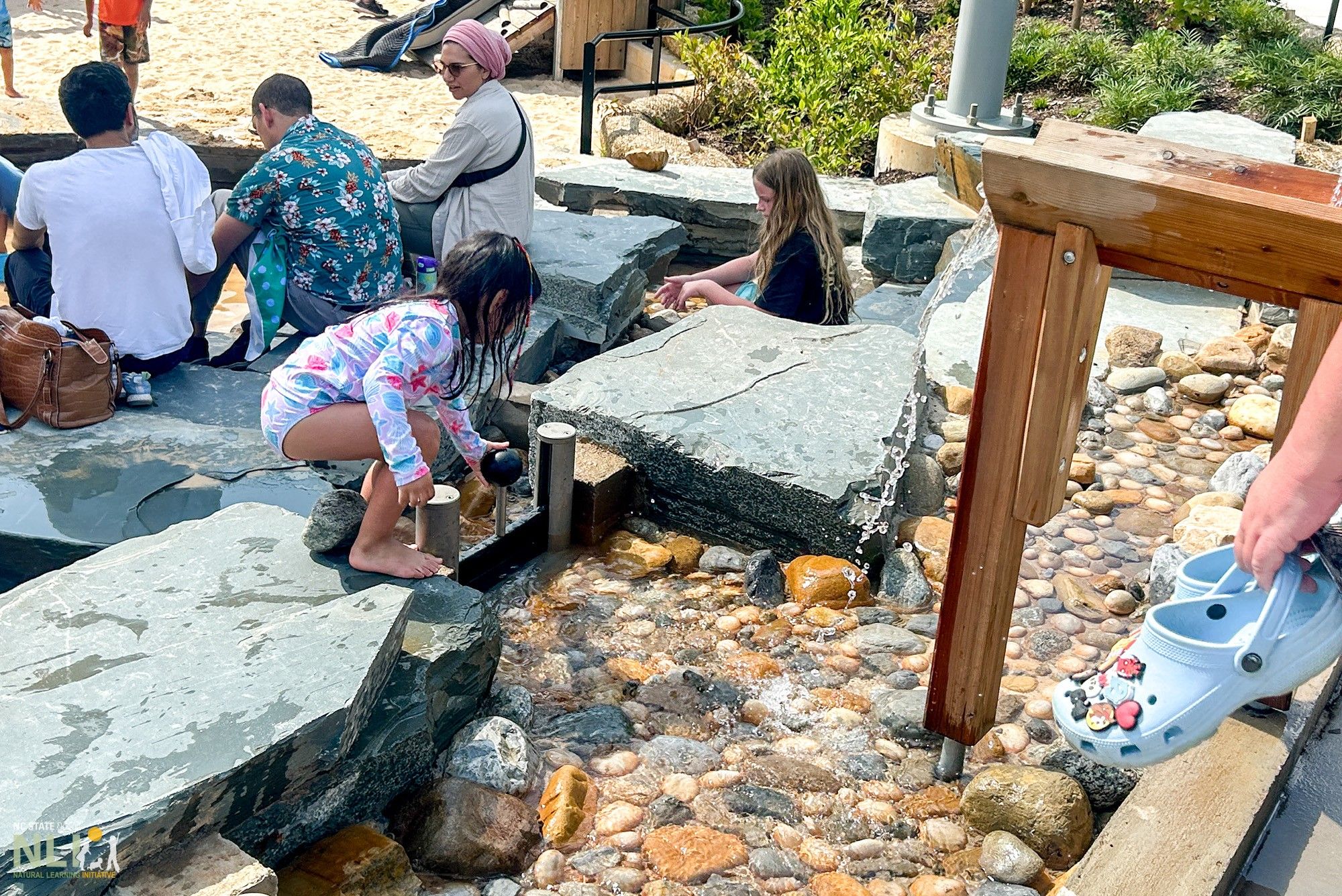
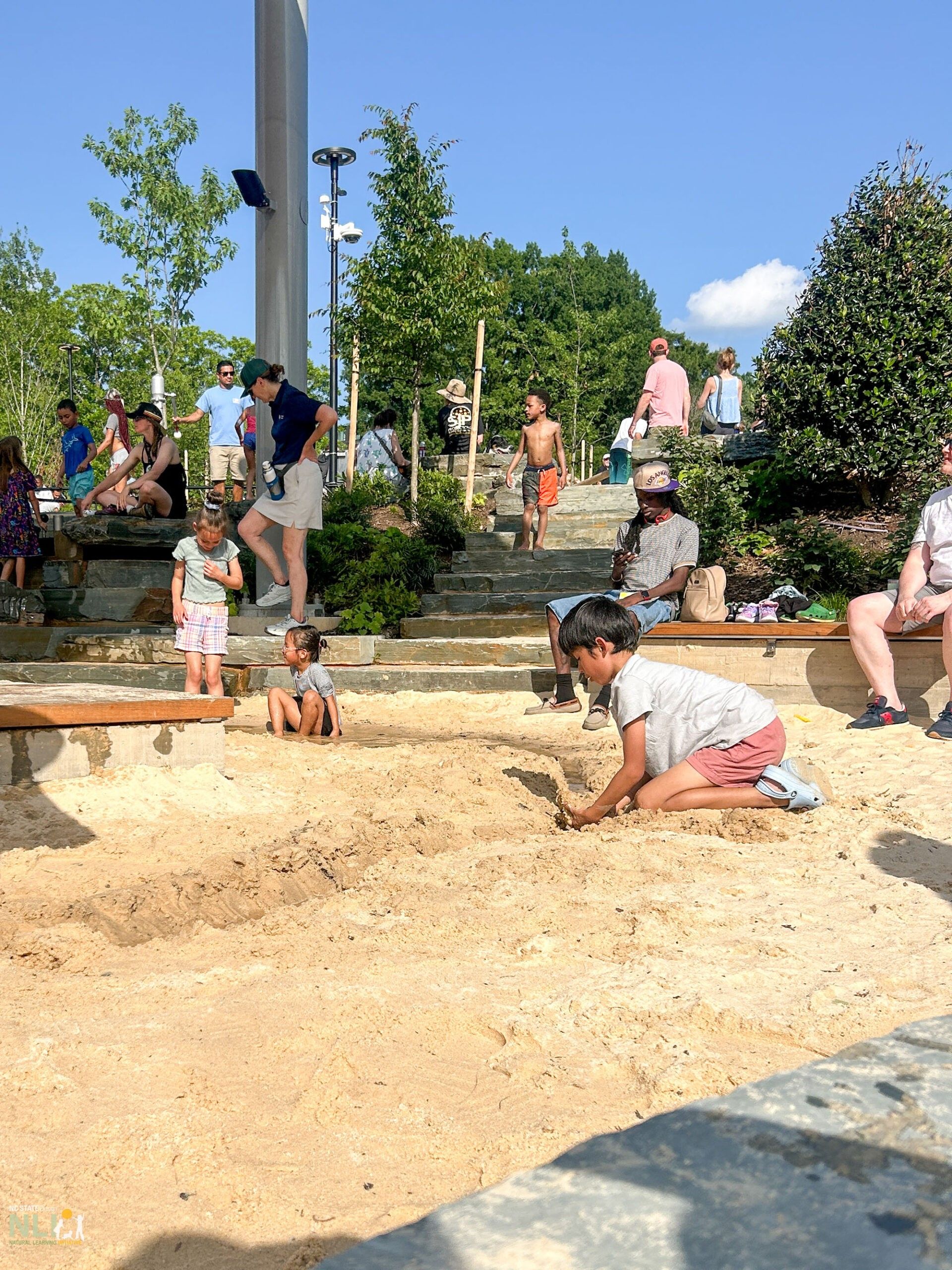
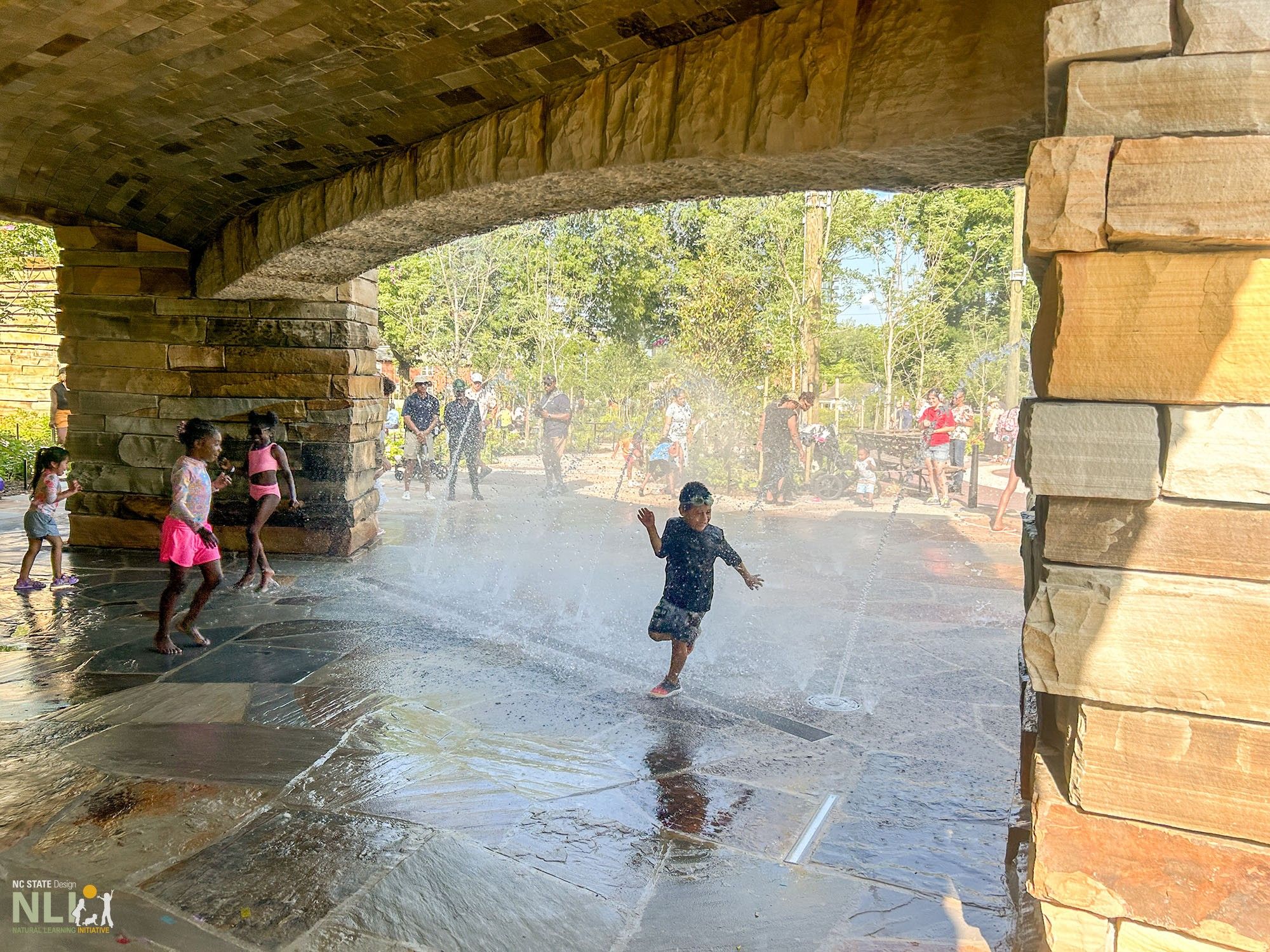
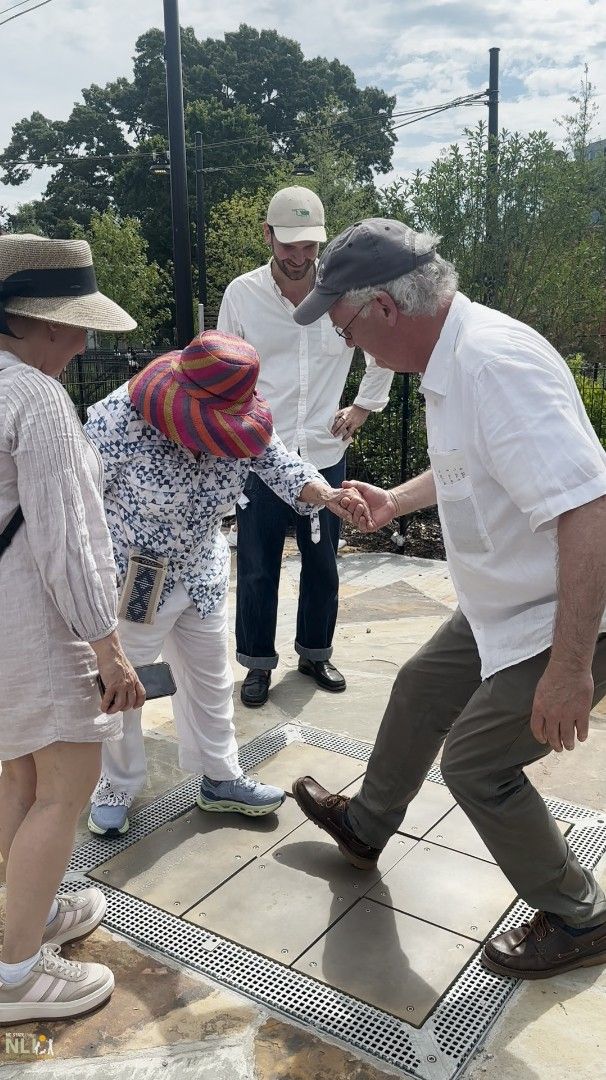
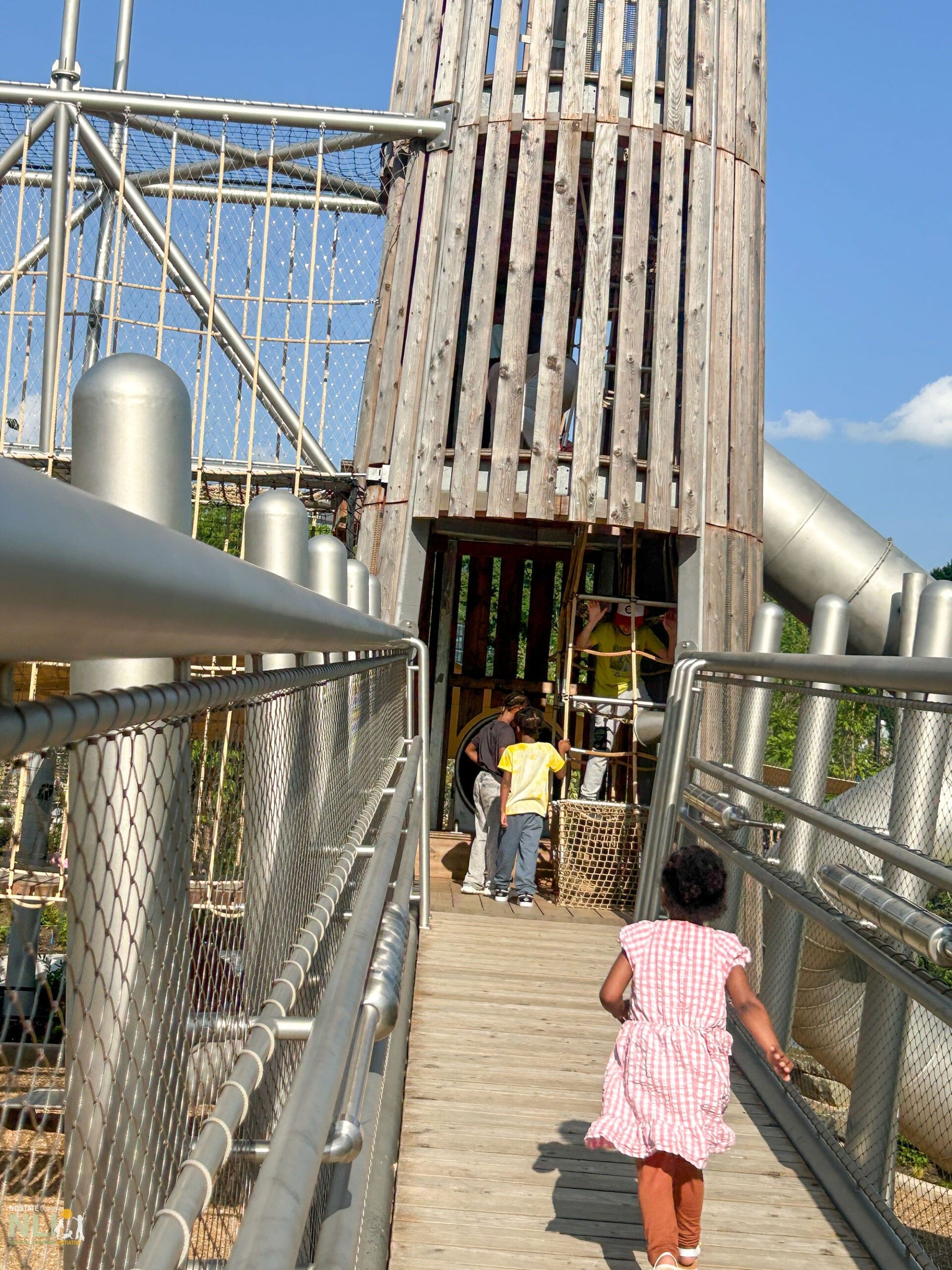
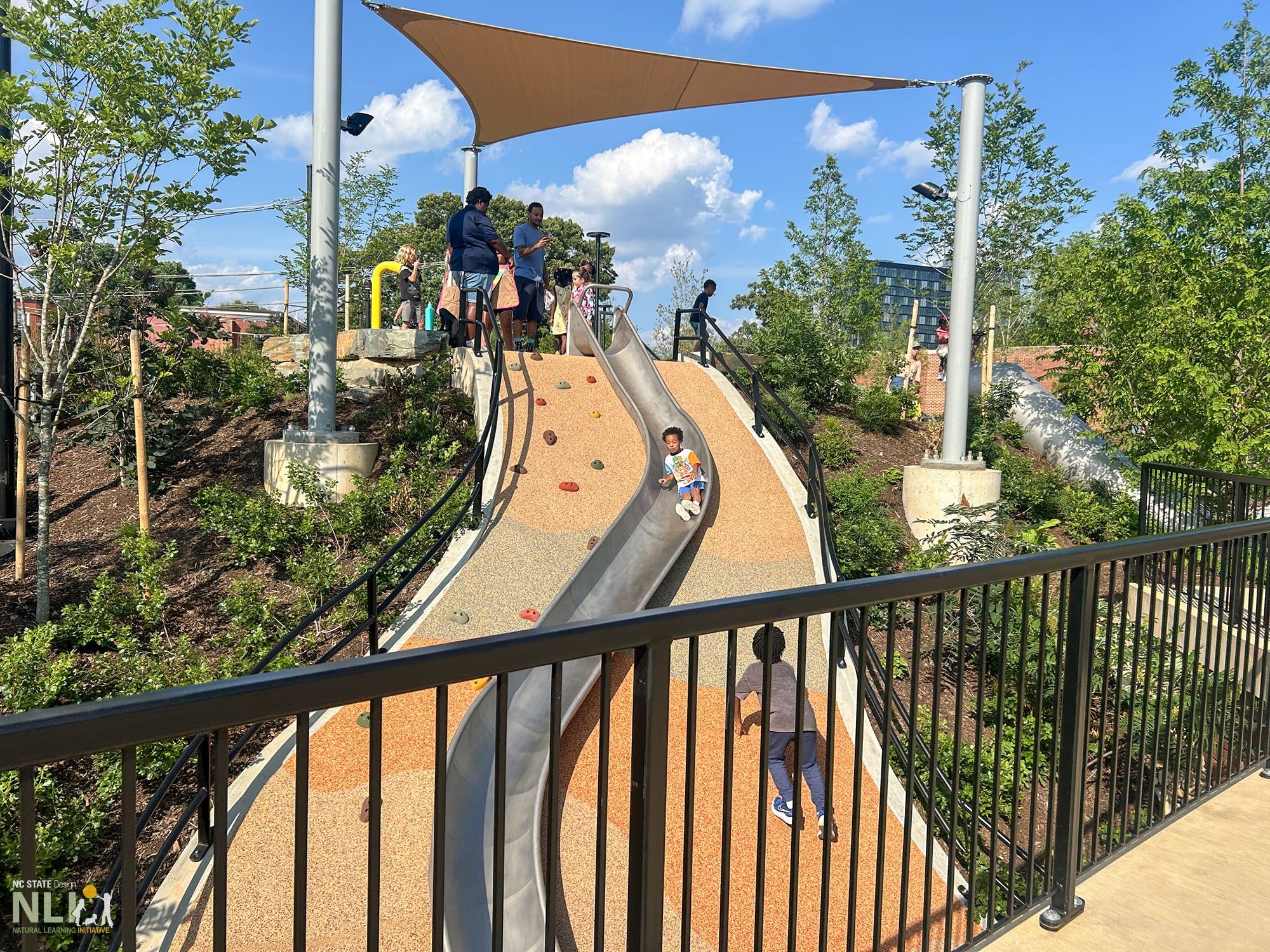
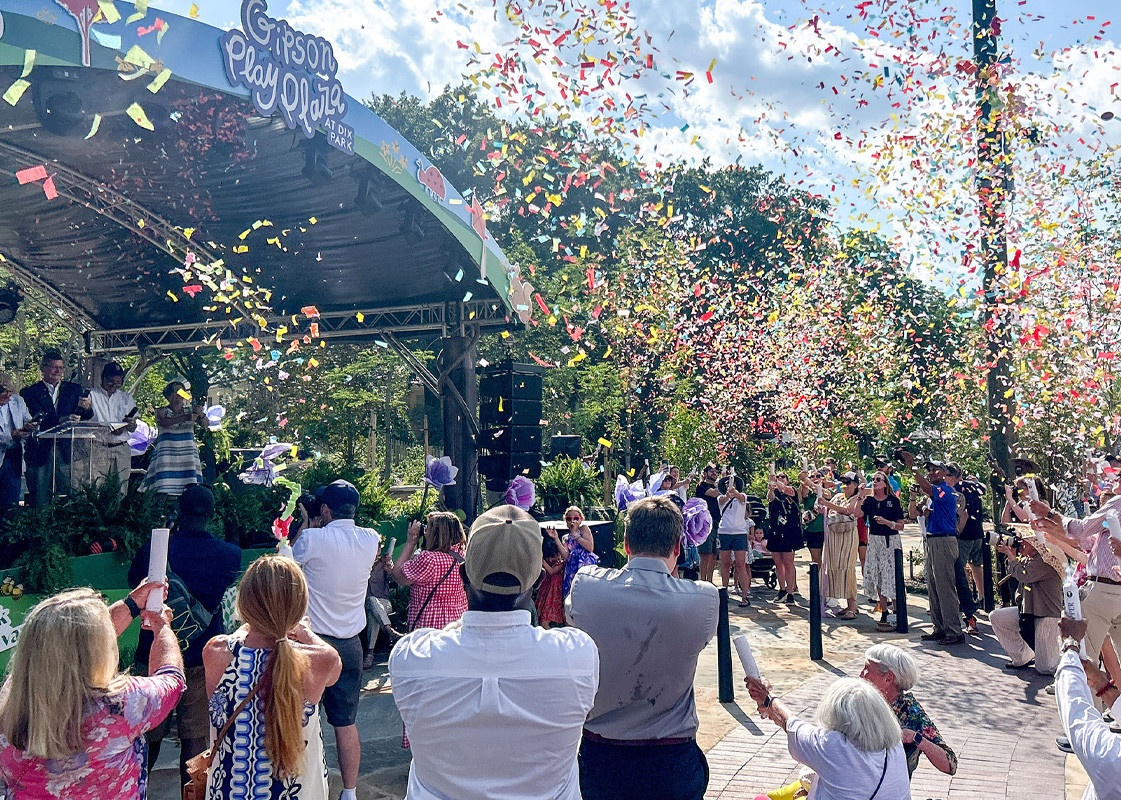
On June 6, GPP opened as the first major investment and iconic, welcoming entrance to Raleigh’s 308-acre Dix Park, as specified in the 2019 park master plan created by Michael Van Valkenburg Associates (MVVA). The park honors Dorothea Dix, mental health reformer, founder of the farm-based institution previously established on the site.
When MVVA was selected to design GPP (in reality, an 18.5-acre family play park), the Natural Learning Initiative (NLI), longtime MVVA collaborator, continued as a play environment expert, along with APE Studio, U.S. arm of the German Richter Spielgeräte company, creators of unique playground structures, playful sensory art installations, and engaging sculptures.
As the landscape architect and lead designer, MVVA collaborated with numerous consultants, together Implementing the overall design concept inspired by the social/cultural history of “Dix Hill” and the surrounding Piedmont landscape. Design philosophy framed:
An adventurous, free-range play place, where kids can move without limits, climb, take risks, and “mess around,” internally motivated, following their own desires.
A place where children of all ages, abilities, and backgrounds can play together.
A health-promoting, constantly changing, interactive, biodiverse, three-dimensional, complex space, where discoveries are made around every corner, with each visit, from toddlerhood to teen.
A community gathering ground, picnicking with family and friends, making new ones, relaxing at the House of Many Porches, strolling, exploring, enjoying the ever-changing, immersive landscape, prompting playful activities in every direction, above and below.
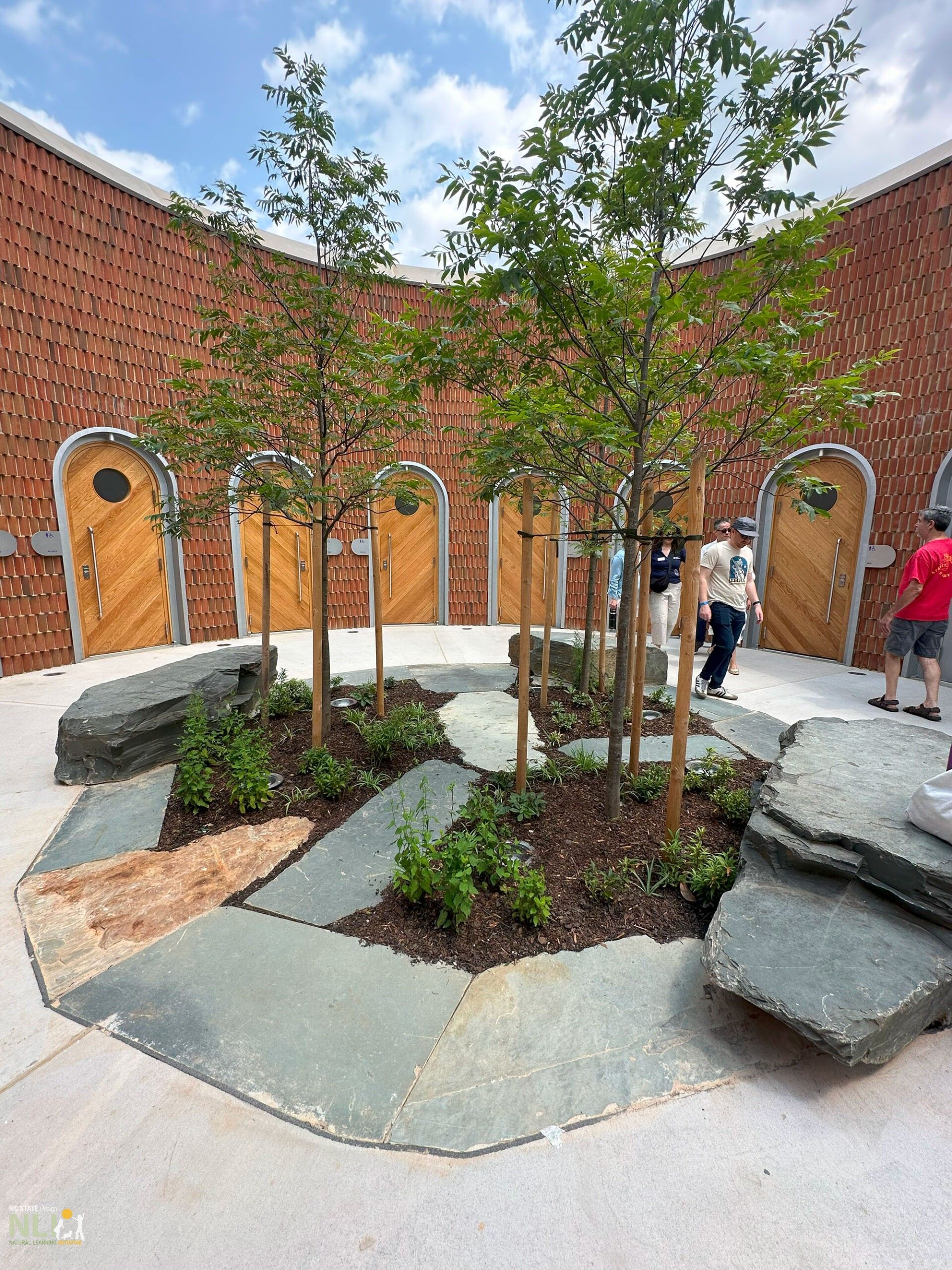
A kaleidoscope of indelible, visually memorable spots, including the circular restroom courtyard, with an archway entry framing a tree grove shading sitting stones. Unforgettable!
The MVVA team, led by Matthew Urbanski, Hillary Archer, and Martin Roura, managed day-to-day coordination with Dix Park Director, Kate Pierce, other City of Raleigh staff, monitoring design progress, public engagement, scheduling and budgeting, managing subconsultants, overseeing every stage of construction, to ensure a high quality built environment.
Dedicated to sustainability, MVVA, city staff, and consultants collaborated to design and implement innovative stormwater management practices, integrating green infrastructure as part of the landscape.
Impeccable installation quality reflects the tireless efforts of a dedicated construction crew, day after day, regardless of weather, applying artisan skills to achieve an undeniable result to be proud of.
NLI at EDRA 56: Communicating Interdisciplinary Research-Based Design
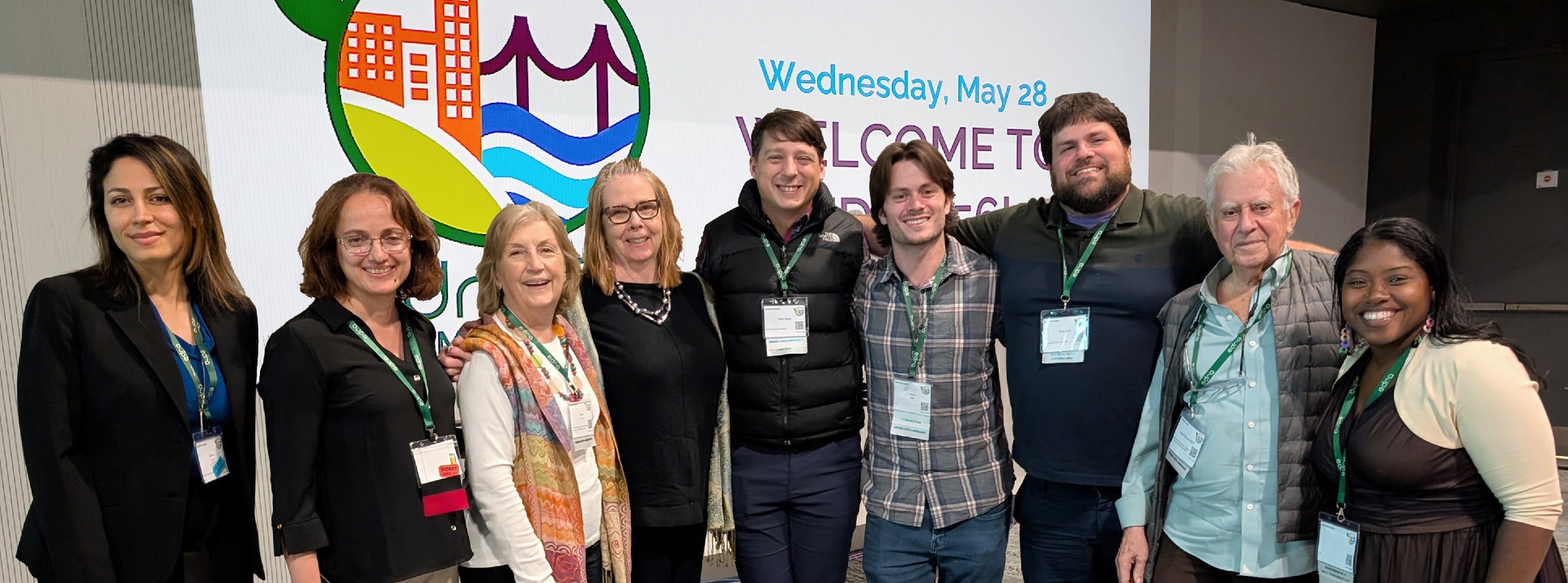
The Natural Learning Initiative (NLI) participated in EDRA 56 with a substantial group of College of Design colleagues. NLI showcased five distinct but interconnected presentations at the 56th Environmental Design Research Association (EDRA 56) conference in Halifax, Canada. Spanning participatory design, regulatory navigation, childcare ecosystems, and immersive digital media, the NLI team provided a rich, interdisciplinary perspective on how spaces serving children and communities—from playgrounds to policy—shape human development and community well-being.
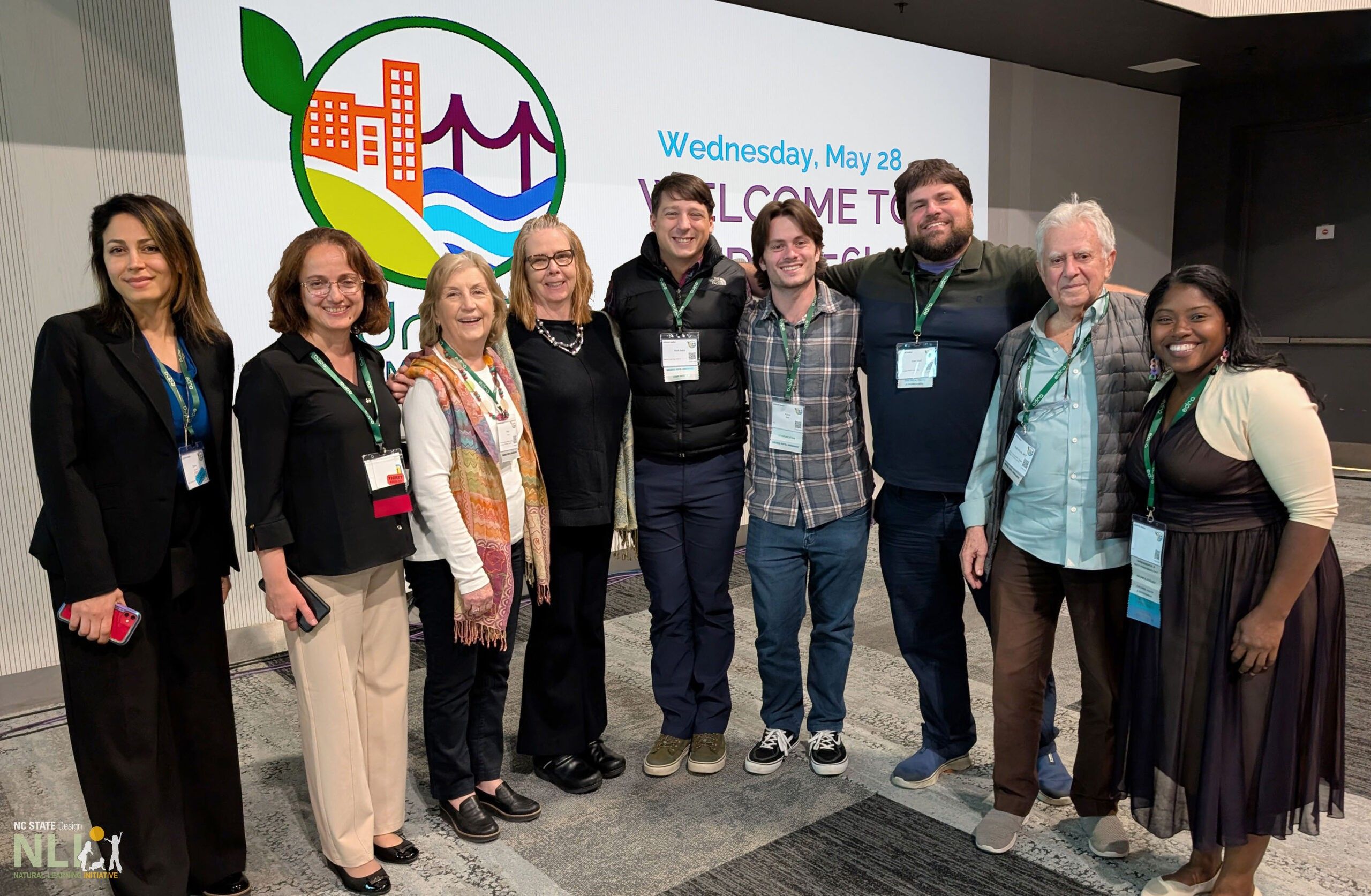
(Left to Right) Zahra Zamani, Celen Pasalar, Nilda Cosco, Carla Delcambre, Matt Babb, Adam Noel, Dan Jost, Robin Moore, Rosa McDonald
(Left to Right) Zahra Zamani, Celen Pasalar, Nilda Cosco, Carla Delcambre, Matt Babb, Adam Noel, Dan Jost, Robin Moore, Rosa McDonald
1-2. Symposia & Media Short
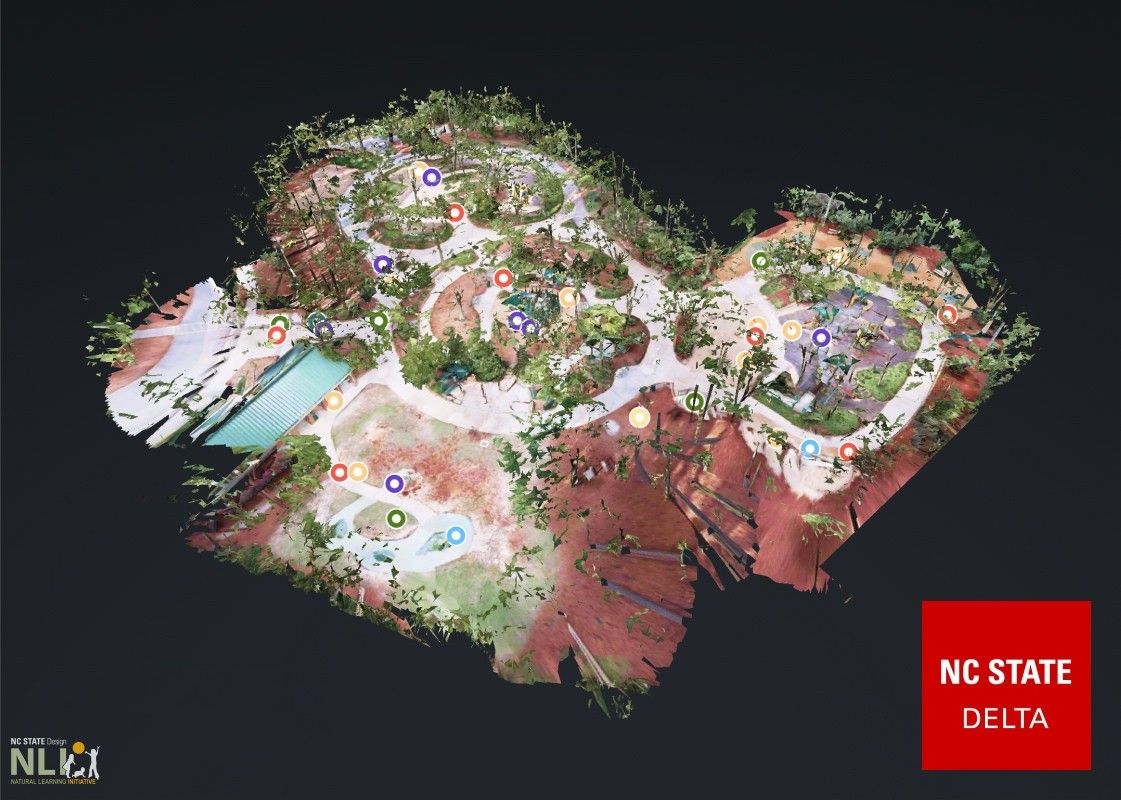
Kids Together! – an innovative research translation digital media short, developed by NLI’s Adam Noel and Robin Moore – is a LiDAR-based, Interactive Virtual Tour (IVT) of the universally designed Kids Together Playground. As they navigate the space, “visitors” can activate pop-up, hotspot research links, and voice-over commentary at each play setting to explore inclusive design principles remotely. At EDRA, Kids Together! was showcased at a Symposium organized by the Children, Youth, and Environments, EDRA “Knowledge Network,” and the Digital Media Shorts Program.
The first IVT was developed by Dr. Muntazar Monsur, TTU, in collaboration with NLI for childcare center outdoor spaces. Kids Together was developed by NLI with NC State’s DELTA (Distance Education Learning Technology Applications) team, demonstrating how technology can democratize access to research and extend real-world learning far beyond physical site visits.
Kids Together Playground (KTP) in Cary, NC, opened in 2000, and continues to serve as an NLI research site, previously with the Center for Universal Design, College of Design. Recently, the focus has been on the development of educational and immersive digital tools that extend KTP’s reach from a physical playground to a global teaching resource, blending design, psychology, and digital media.
An Interactive Virtual Tour (IVT) featuring research hotspots, user narratives, and 3D exploration.
A Deconstructed Design Model for educational use.
An EBMAP-driven interface for applying environmental behavior mapping.
3. Poster Session
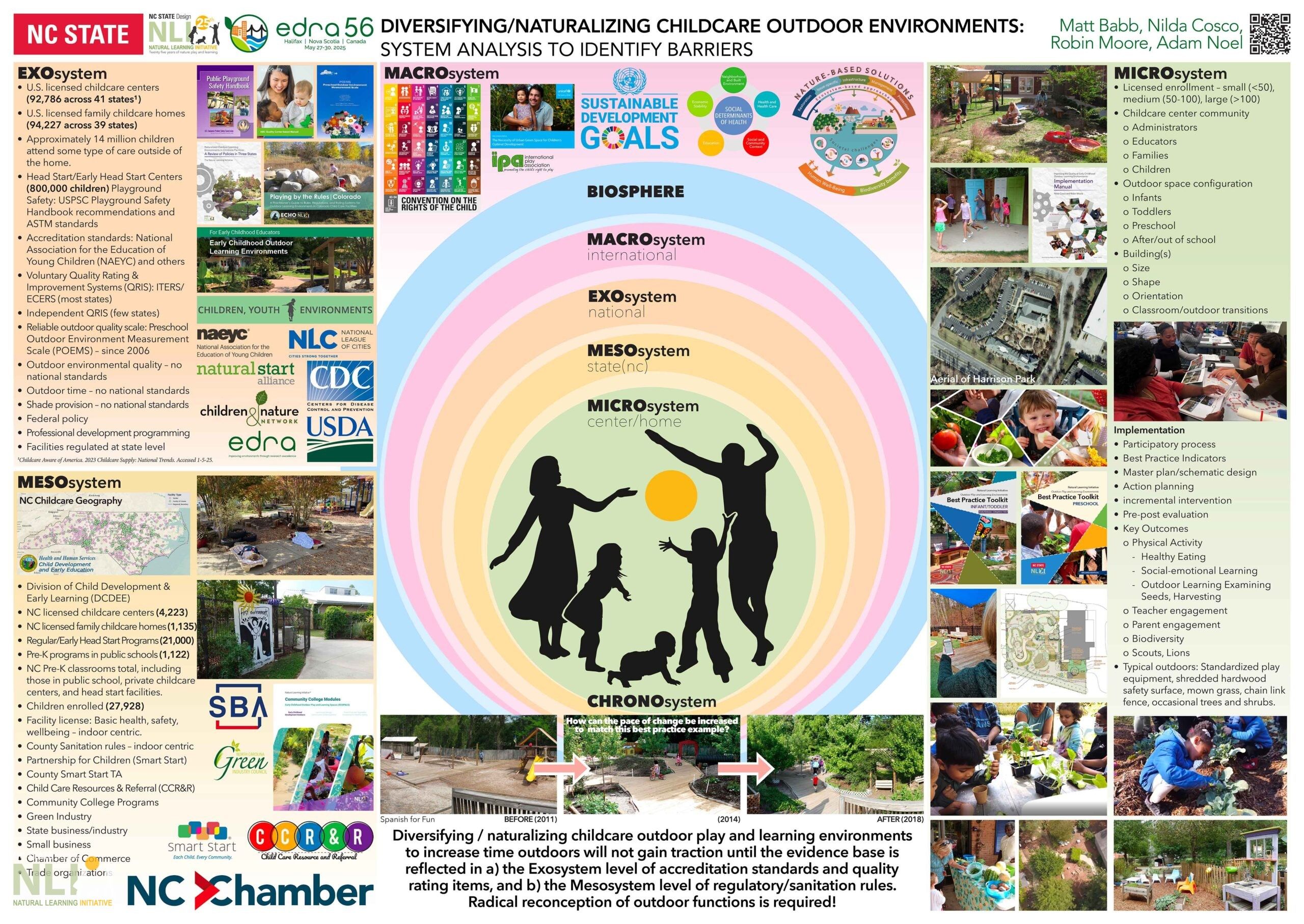
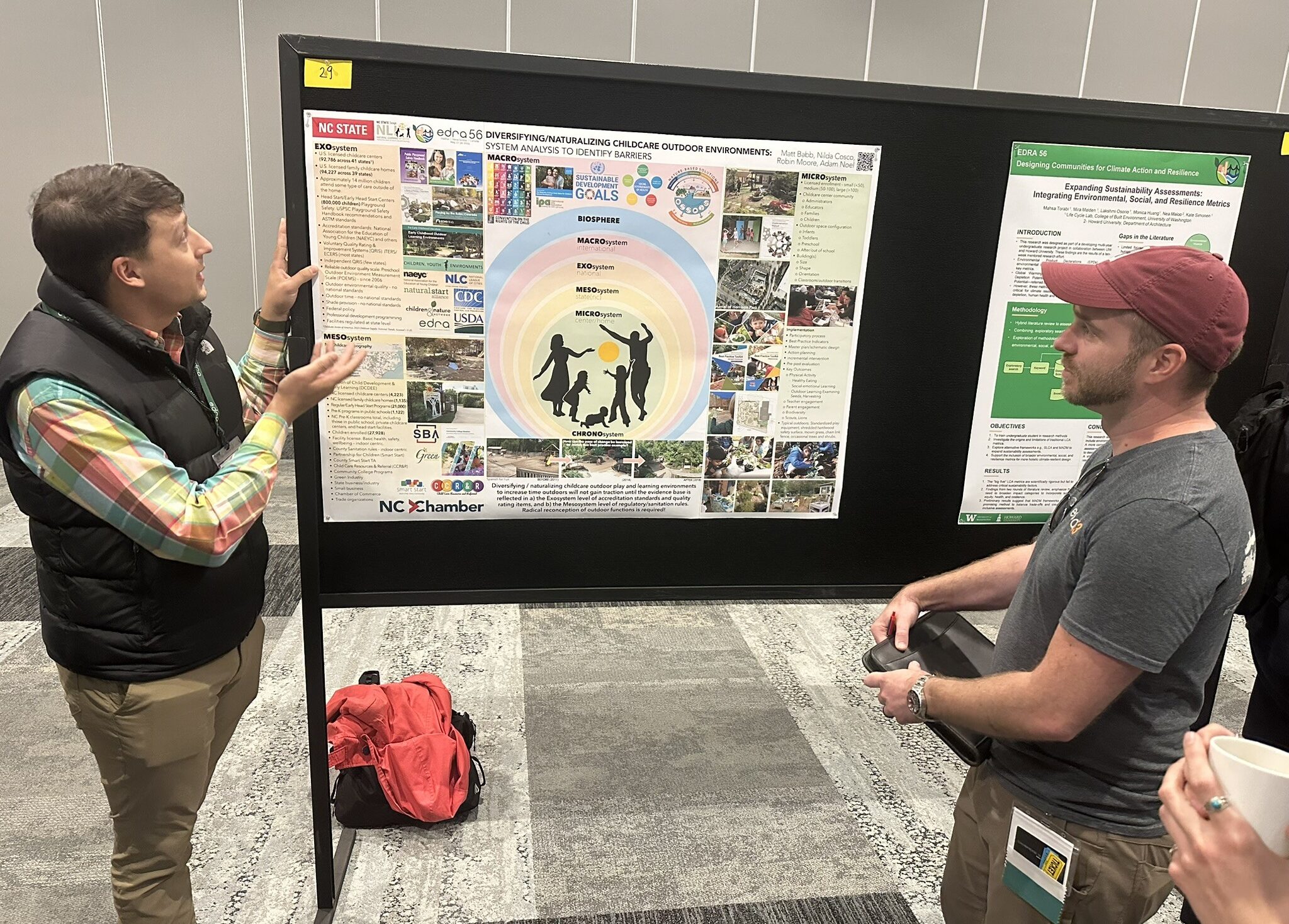
A poster created by Matt Babb and Robin Moore showcased NLI’s systemic approach to naturalizing childcare centers, using the socio-ecological model to explain the multi-level structure of childcare system influences from global to local, recognizing the NLI collaborative achievement of over 220 demonstration sites across North Carolina. Since helping reframe “playgrounds” as “outdoor learning environments” in 2007 licensing policy, NLI has worked to align design innovation with North Carolina regulatory and economic realities.
4. Symposia
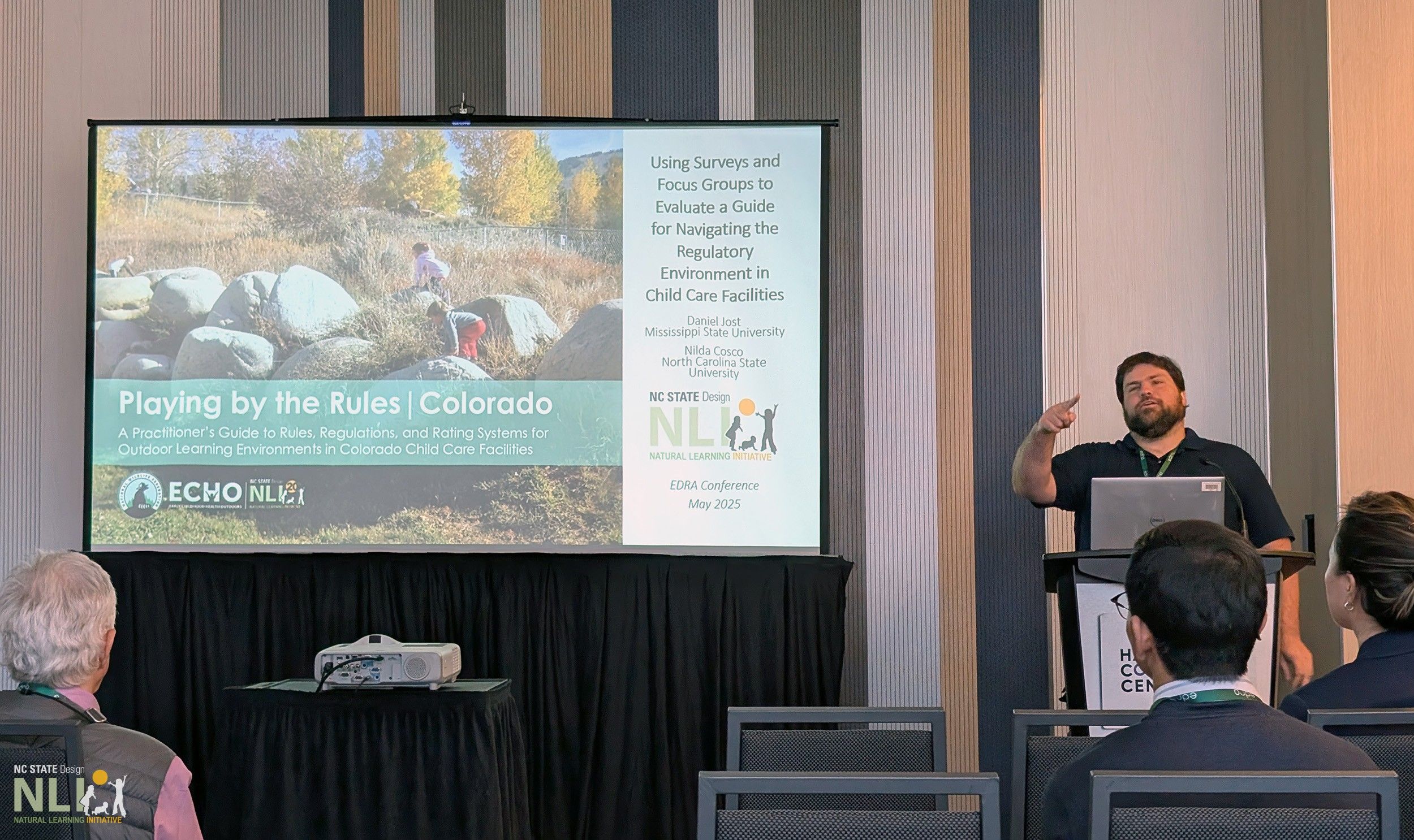
Dan Jost, former NLI team member, now on the landscape faculty at Mississippi State, and Nilda Cosco (NLI) evaluated a downloadable guide that helps childcare providers navigate outdoor-related licensing regulations. With over 2,800 downloads:
96% of surveyed users said the guide made them more likely to recommend nature play.
Providers praised its simplicity, calling for tailored formats by facility type.
Focus groups highlighted its role in empowering providers to improve outdoor environments while remaining compliant.
This work connects research, landscape architecture, and policy advocacy to support systemic improvements in early childhood settings.
5. Symposia
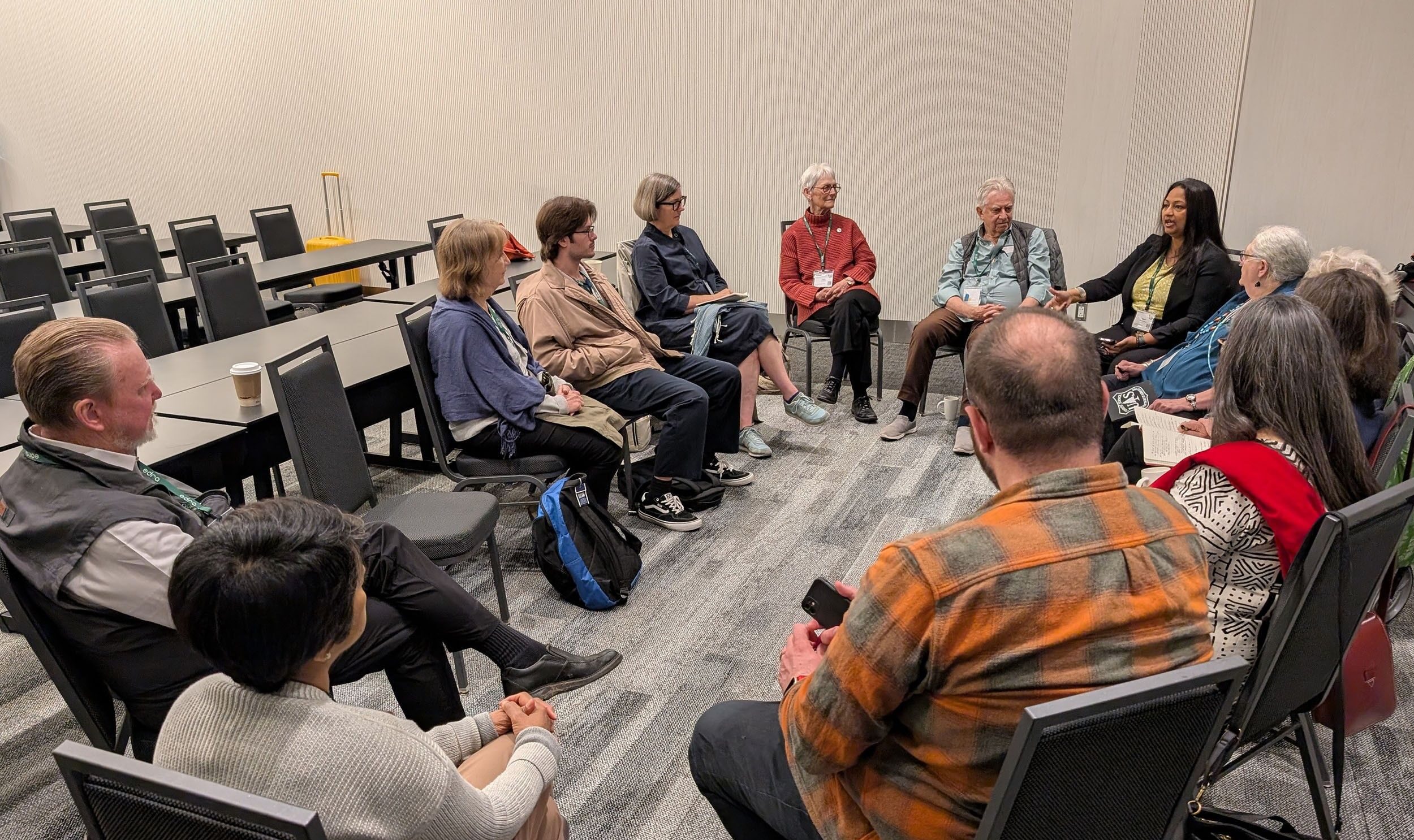
Nilda Cosco and Robin Moore also participated in a symposium panel exploring how EDRA has shaped careers in architecture, design, and research. Panelists described EDRA as a nurturing interdisciplinary space, where solo practitioners in behavior-focused work found collaboration and inspiration across sectors—from policy to education to public health.
Conclusion
NLI’s work entered at EDRA 56 reflected a powerful, interdisciplinary approach—blending design, research, digital media, and community engagement within an overarching communications strategy.
Whether through naturalized play areas, professional development, or policy resources, NLI’s message was clear: inclusive, sustainable design emerges when public needs, practice, and research converge.
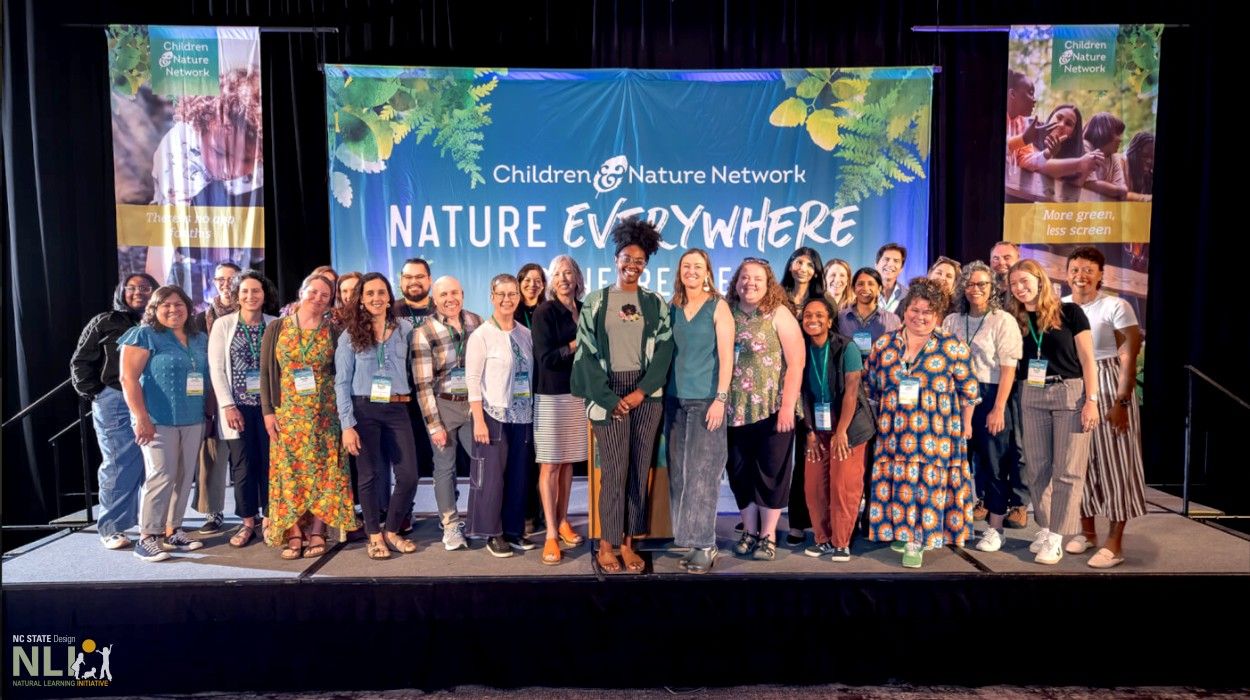
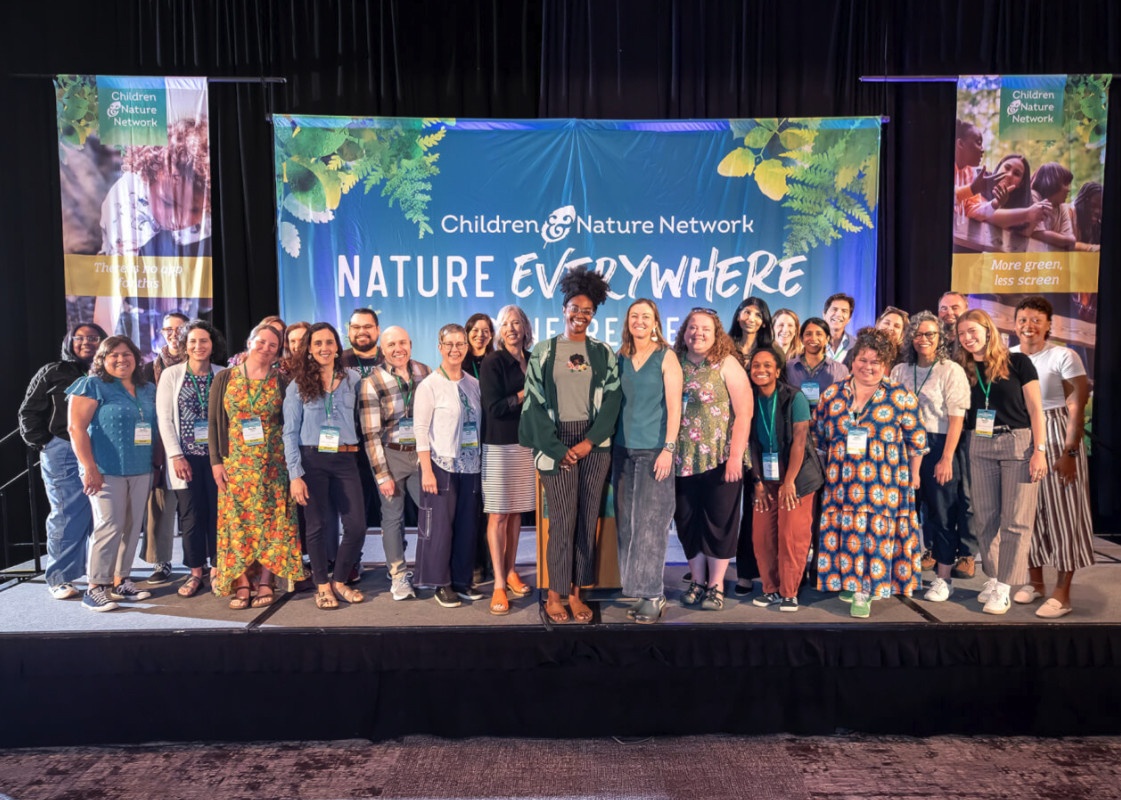
The 2025 Nature Everywhere Conference, held from May 13–16 at the RiverCentre in St. Paul, Minnesota, brought together over 600 global advocates for children and nature, including NLI’s Nilda Cosco and Robin Moore.
The annual conference, reputed to be the world’s largest gathering of the children and nature movement, attracts experts and advocates across multiple fields, disciplines, professions, and sectors, collectively energized by the creative spirit of the young adult majority – reinforced by the opening words of Board Chair Dr. Hanaa Hamdi: “Hope lives here.”
Cosco and Moore contributed to four conference sessions:
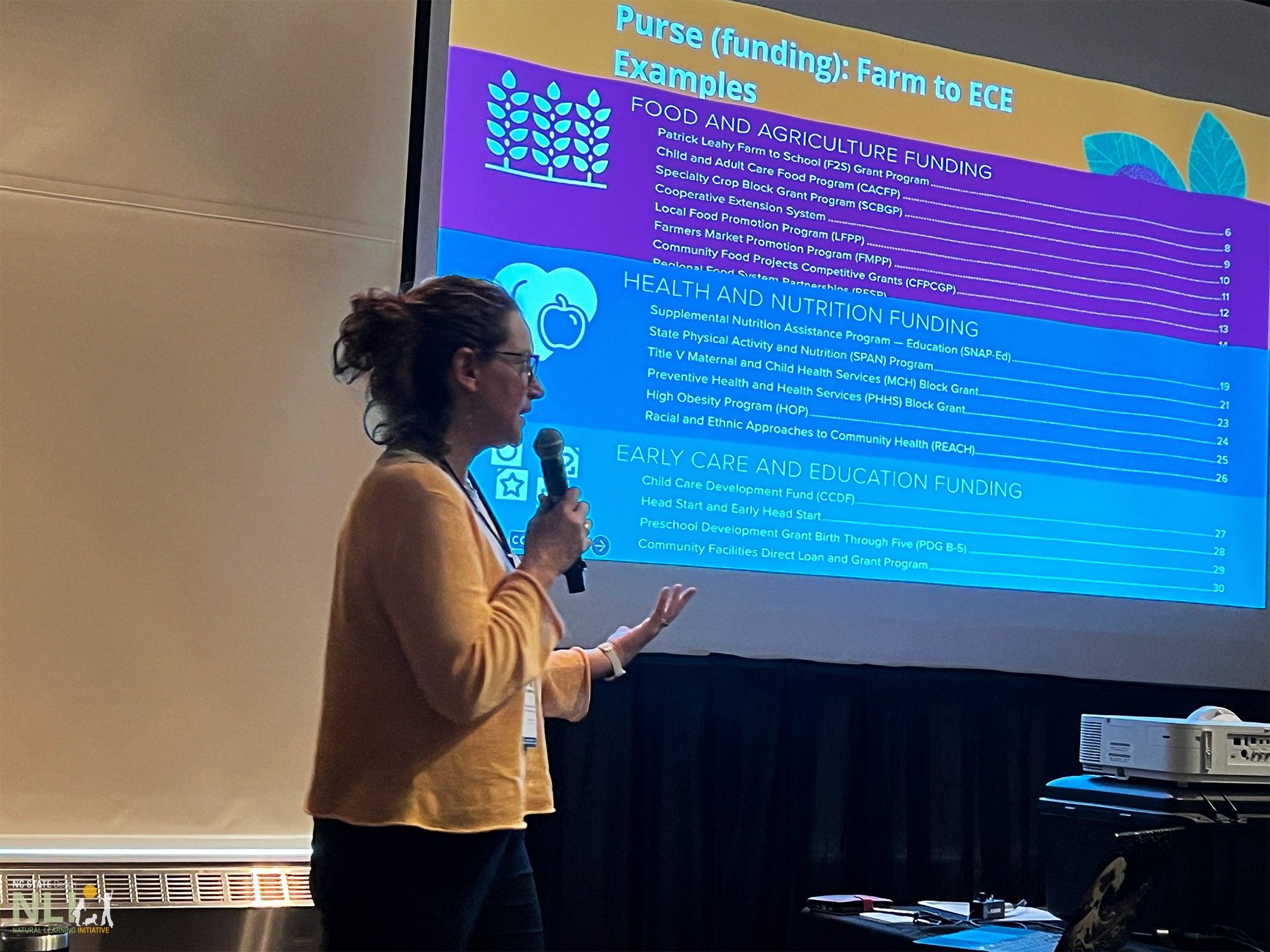
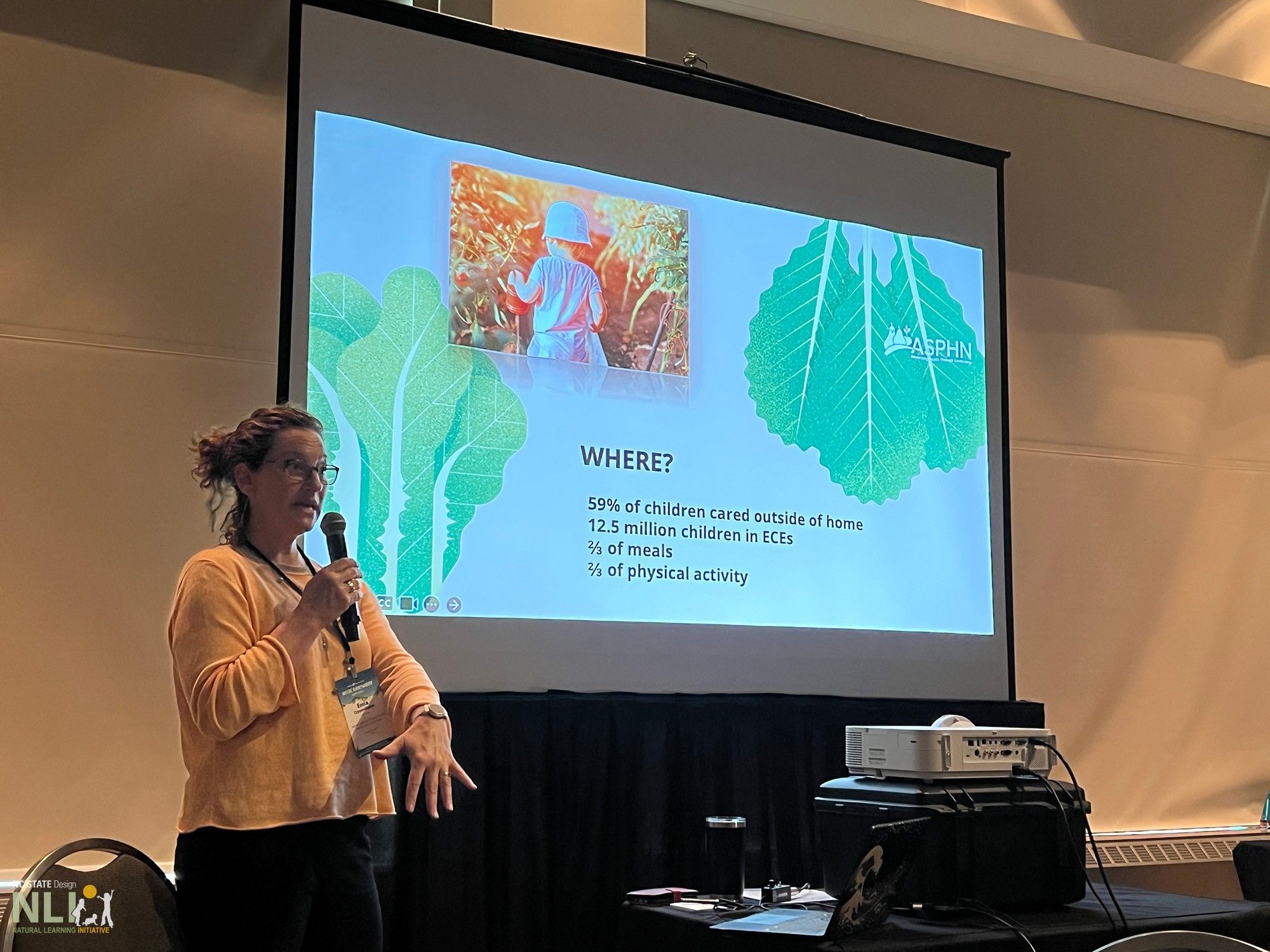
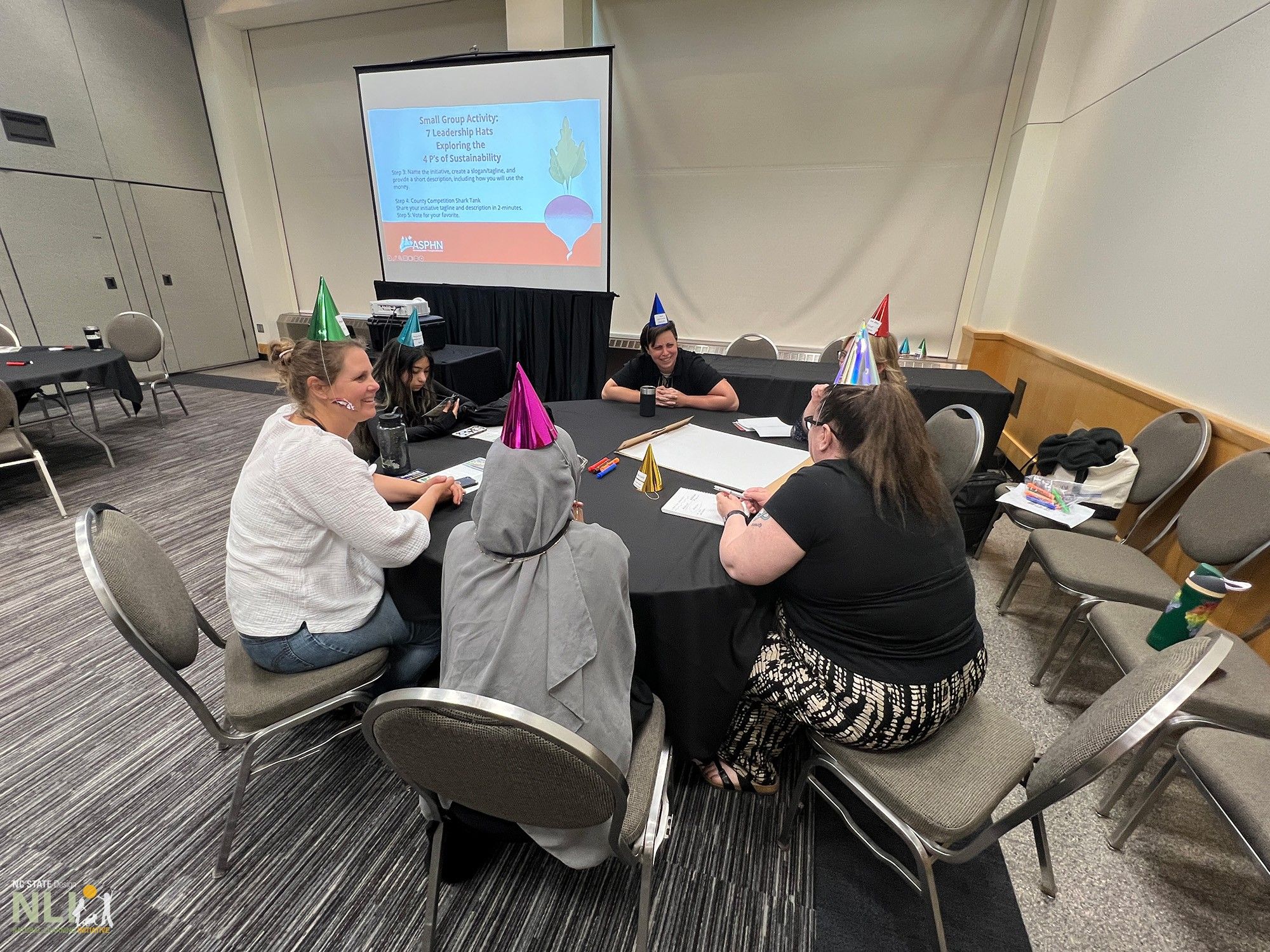
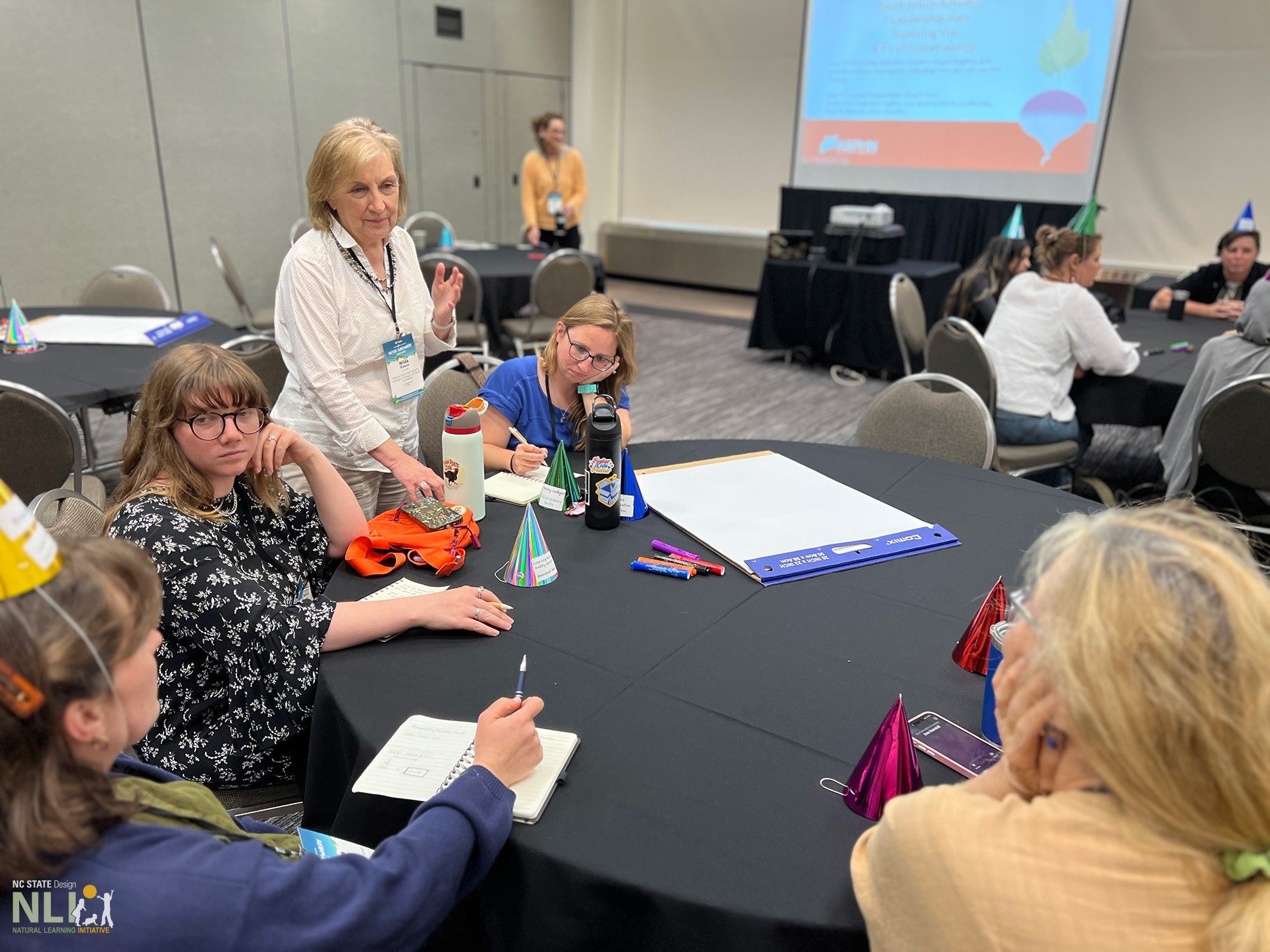
Natural Connections: Early Care & Education (ECE) Partnerships & Programming for Health & Well-Being. Hands-on workshop presented by Emia Oppenheim, PhD, RDN, Association of State Public Health Nutritionists (ASPHN); Kelly Dahl, MPH, CDC, Division of Nutrition, Physical Activity, and Obesity (not present); Nilda Cosco, PhD, NLI, NC State University.
Natural Connections workshop
1. Emia Oppenheim explains available farm to early childhood education funding pathways.
2. The Farm to Early Care and Education (ECE) initiative targets 12.5 million children (59% of total U.S. child population), in care programs outside of home, where they receive 2/3 of meals.2. Funding recipients are 12.5 million children or 59% of children who receive care outside of home.
3. Groups wear “thinking caps” to brainstorm program plans using ASPHN’s social marketing “4 Ps”: Purse, Product, Place, Promotion.
4. Nilda Cosco comments on group ideas.
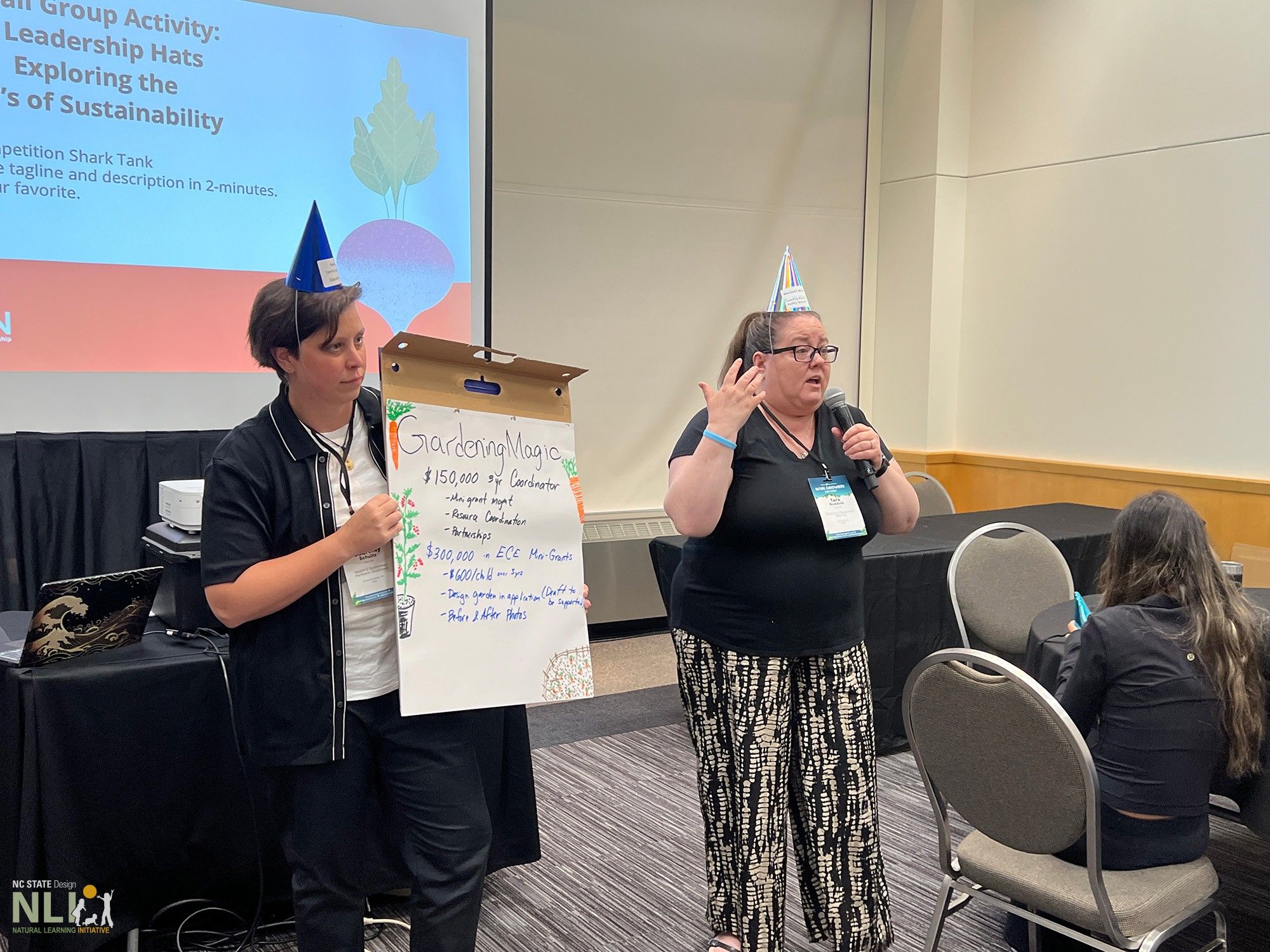
5. “Garden Magic” plan!
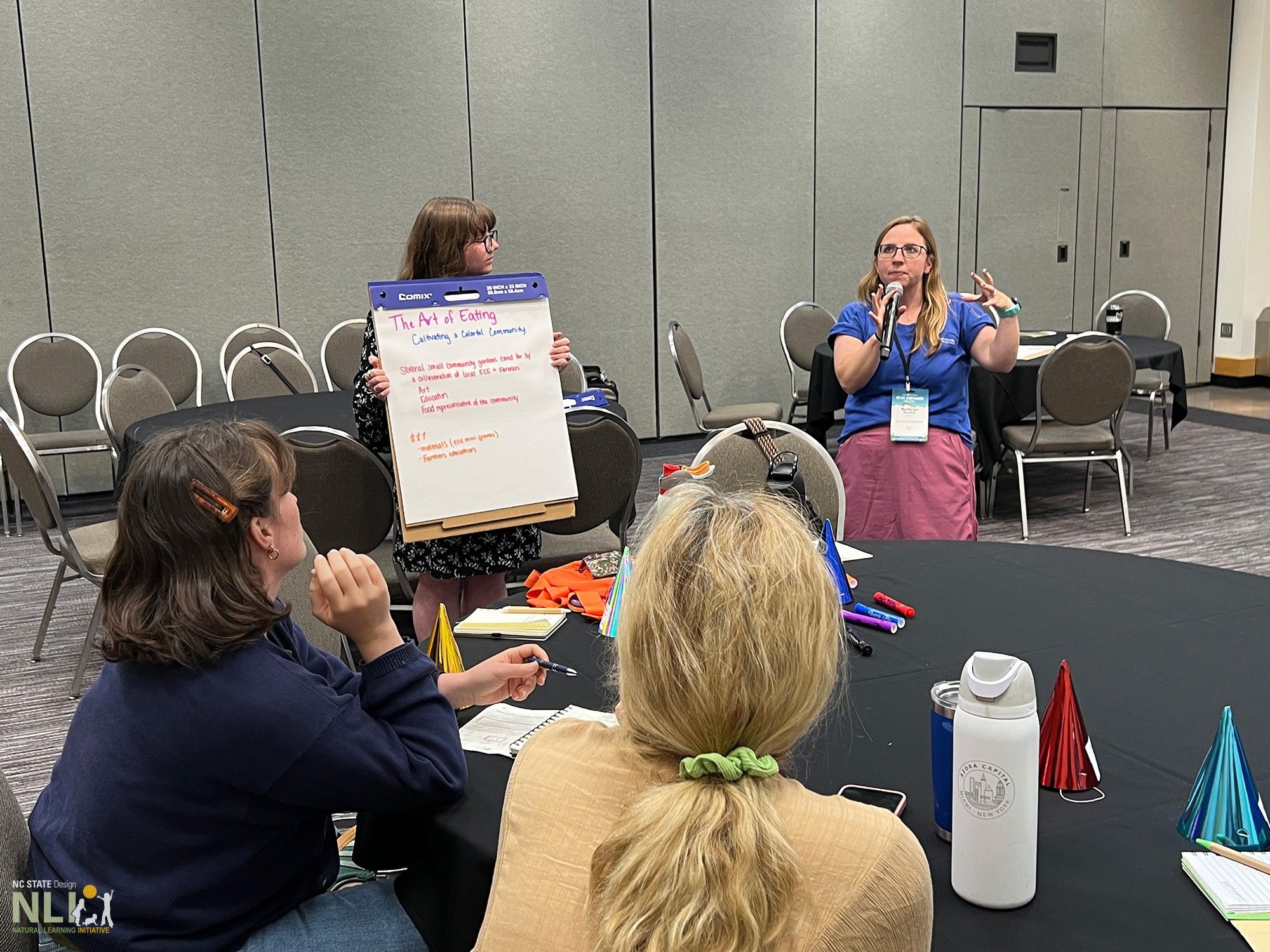
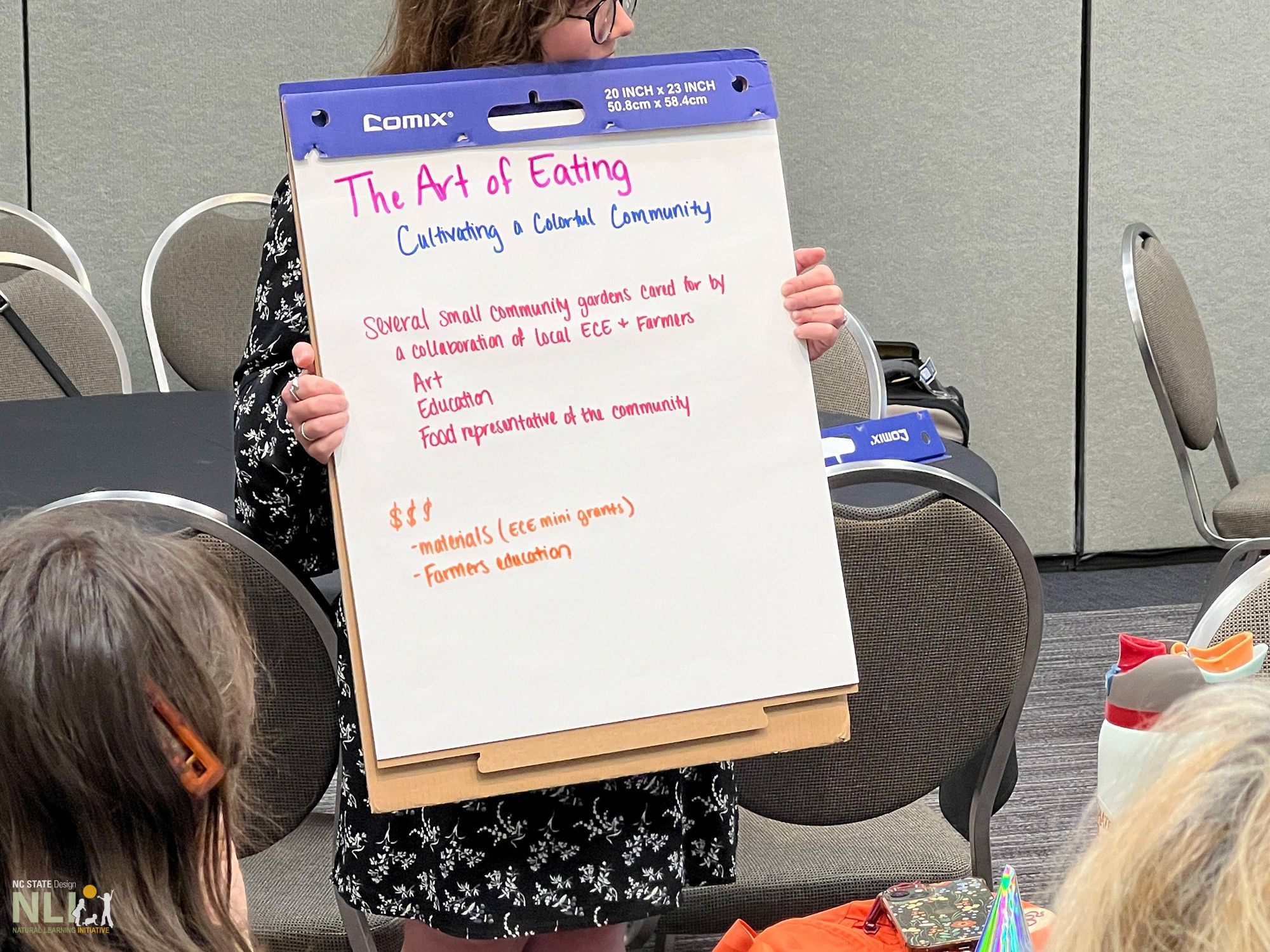
6. “Art of Eating” plan.
7. “Art of Eating” close-up.
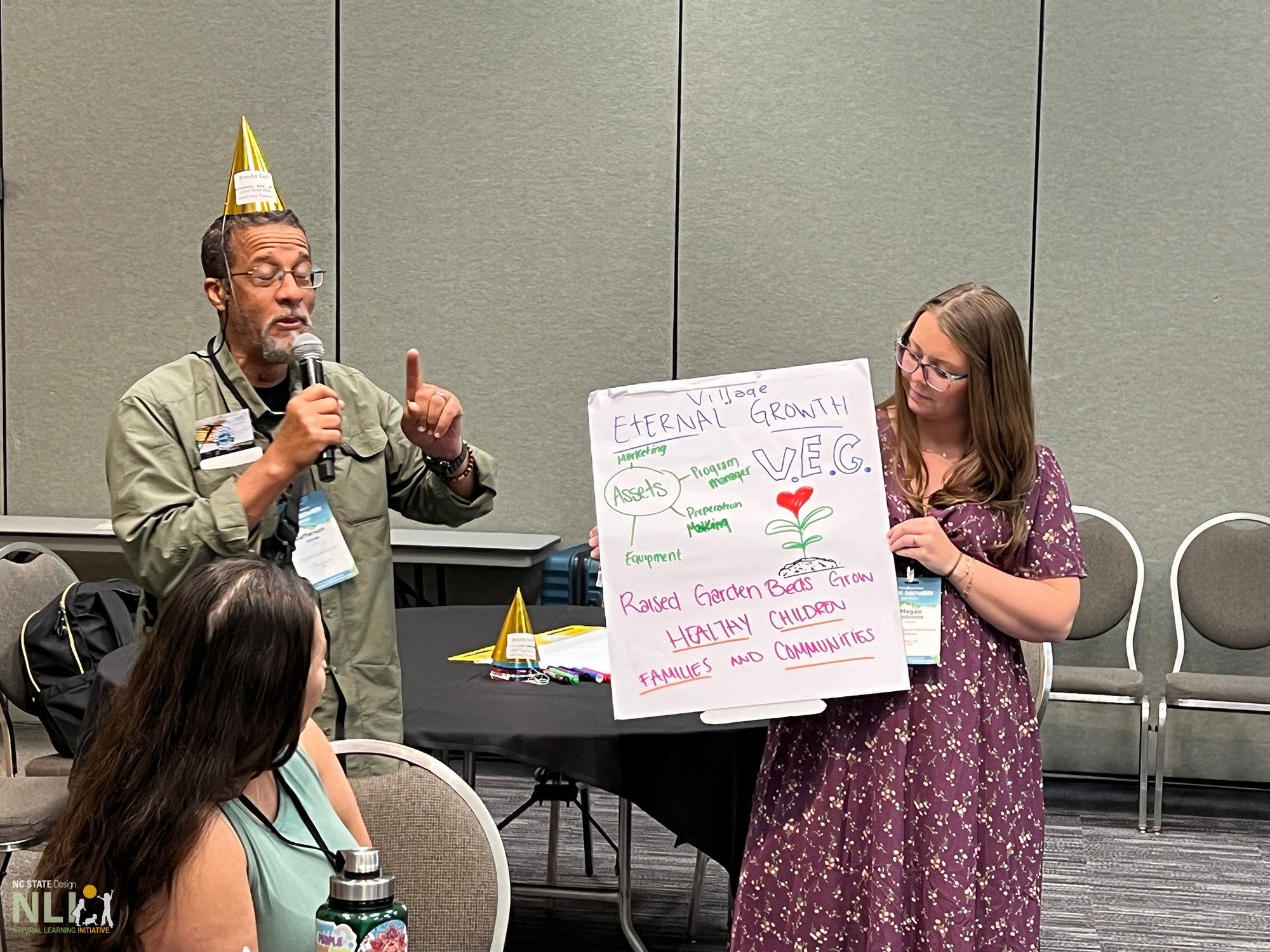
8. “Eternal Growth” plan.
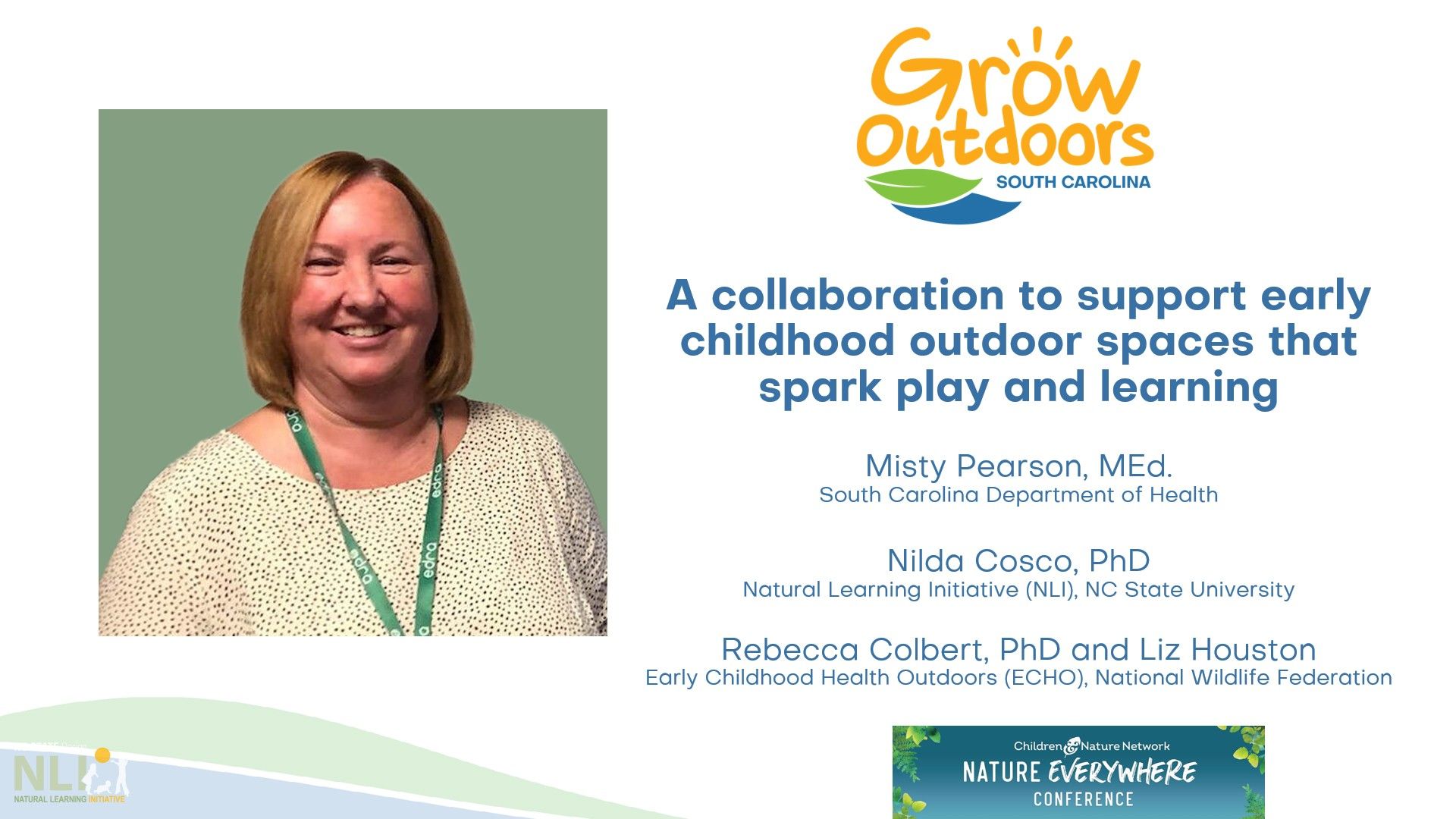
Grow Outdoors South Carolina (GO SC): A Collaboration for Early Childhood Outdoor Learning. Presented by Misty Pearson (remote), SC Department of Health; Nilda Cosco, PhD, NLI, NC State University; Rebecca Colbert, PhD, Early Childhood Health Outdoors (ECHO), National Wildlife Federation.
Misty Pearson, MEd., SC Dept. of Health (remote), presents background history and goals of Grow Outdoors South Carolina (GO SC)
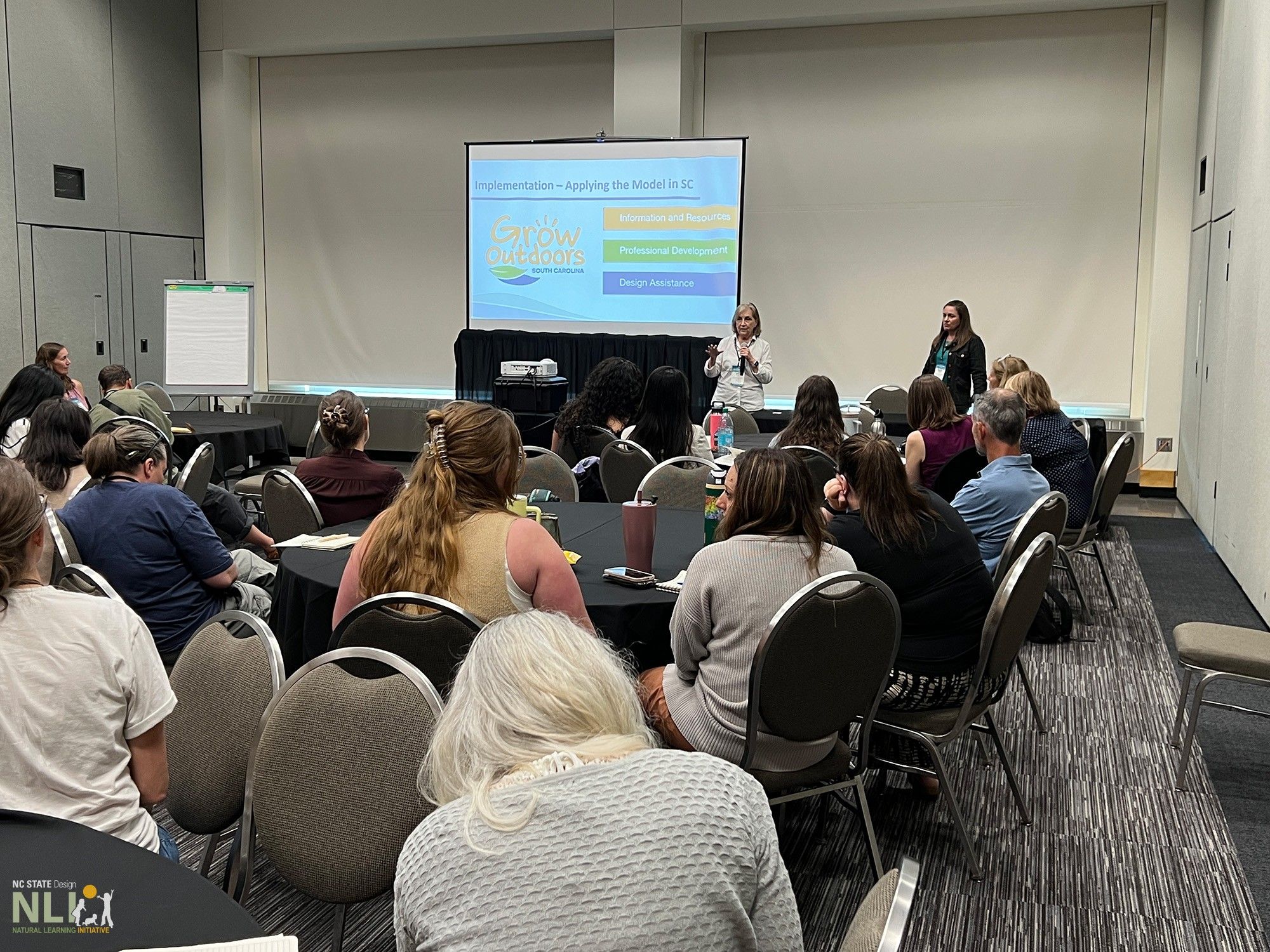
Nilda Cosco, NLI (left) describes the NLI Preventing Obesity by Design (POD) strategy, resource production, website design, and evaluation process. Rebecca Colbert, ECHO (right), describes outdoor design process for selected sites and implementation to date.
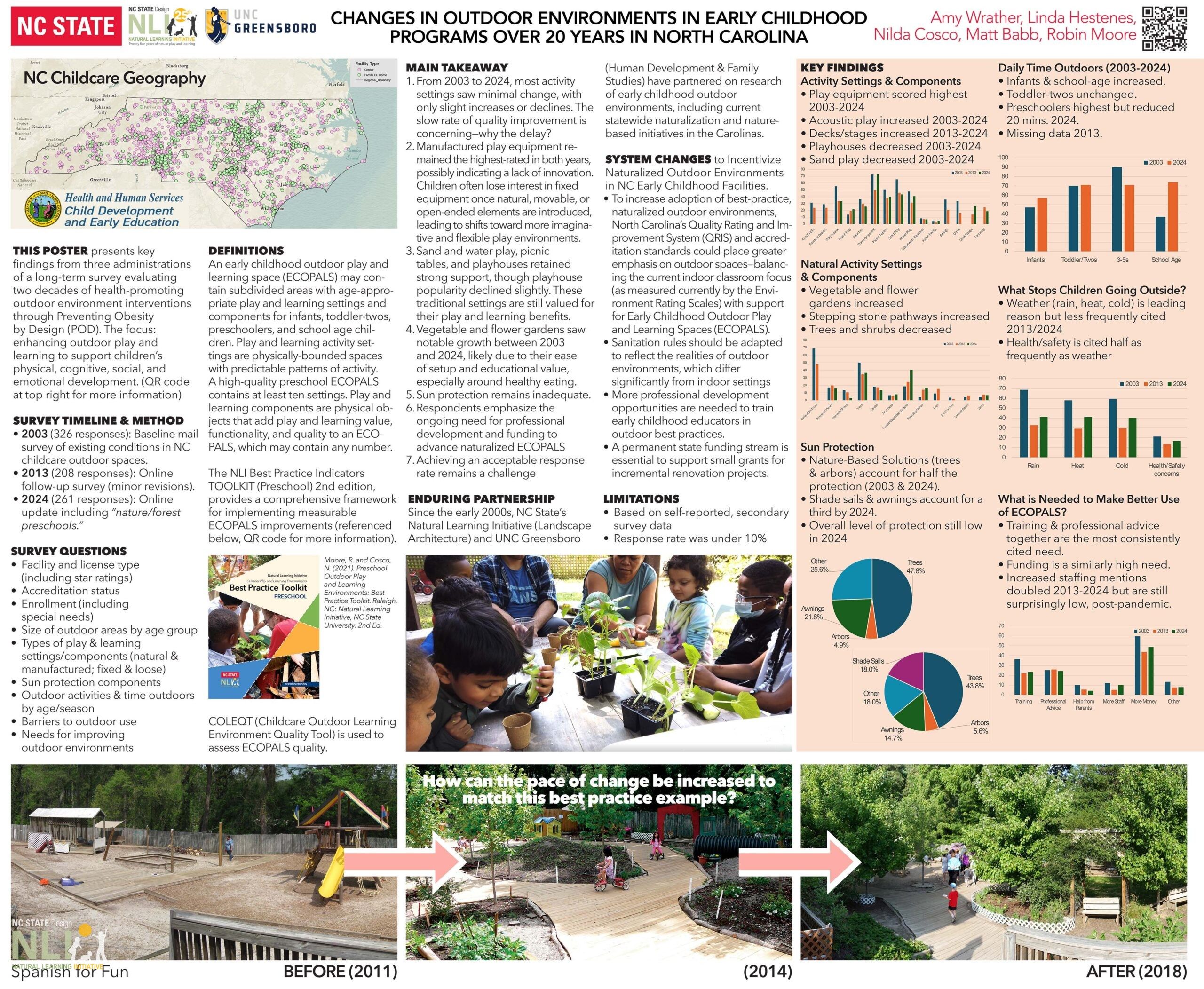
Changes in Outdoor Environments in Early Childhood Programs Over 20 Years in North Carolina. Poster presenting results of three waves of NC statewide longitudinal survey created & administered by NLI (poster design, Matt Babb). Analysis by UNC-Greensboro collaborators, Amy Wrather and Linda Hestenes, PhD.
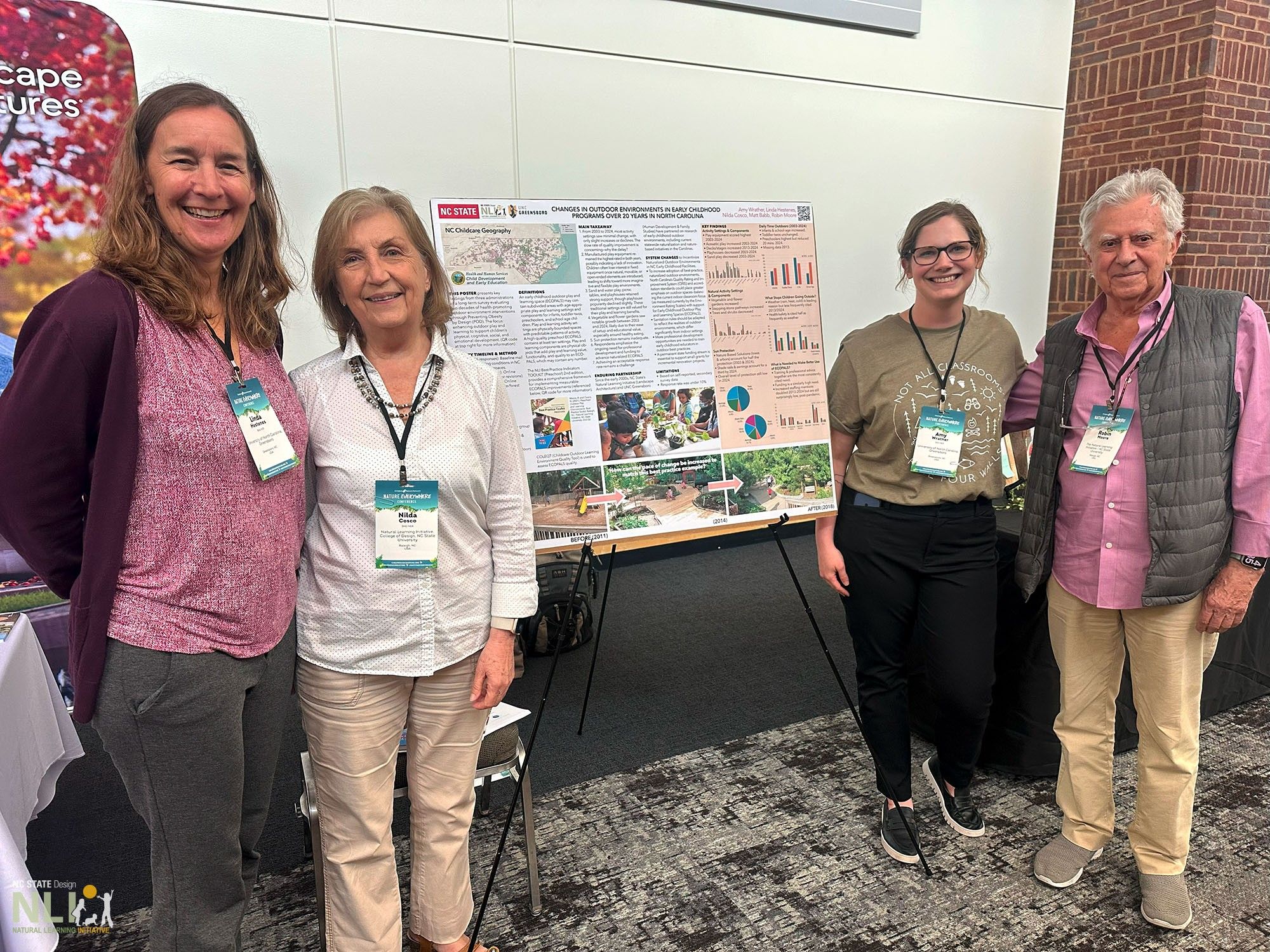
Poster presentation: (L-R) Linda Hestenes, University of North Carolina-Greensboro (UNC-G); Nilda Cosco, NLI, NC State University (NCSU); Amy Wrather, graduate student, UNC-G.
“Changes in Outdoor Environments in Early Childhood Programs Over 20 Years in North Carolina.” Data analysis, Amy Wrather & Linda Hestenes, UNC-G. Poster design, Robin Moore & Matt Babb, NLI.
2025 Green Schoolyards Action Agenda Advisory Committee. Nilda Cosco, PhD, NLI, NC State University – Committee Member.
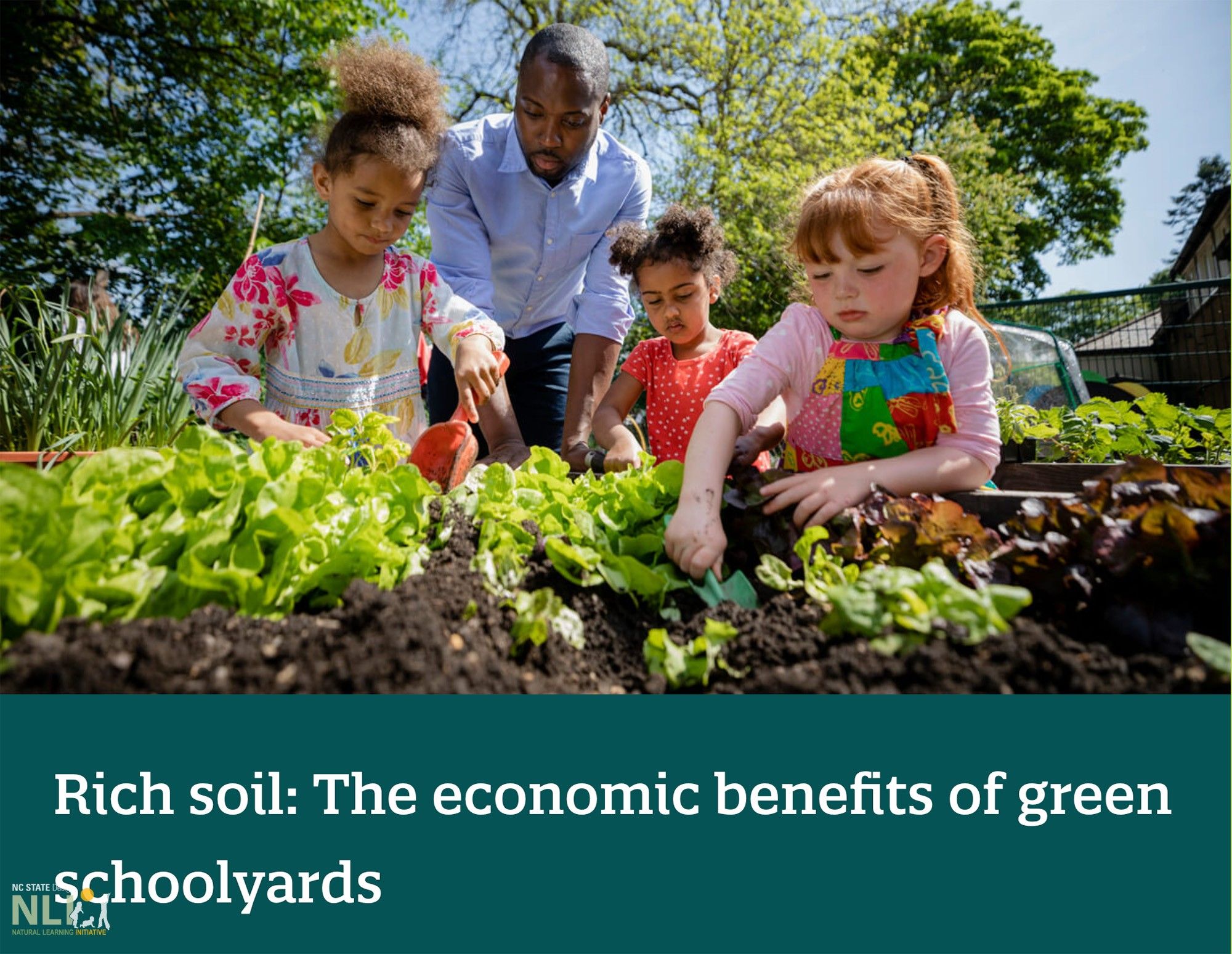
Rich Soil: The economic benefits of green schoolyards (click for more info).
The C&NN conference created a space for meeting long-time collaborators, colleagues, supporters, and funders, including C&NN Founders Cheryl Charles and Richard Louv, veteran supported and Board Member Nancy Herron, as well as leaders of C&NN’s Green Schoolyards Action Agenda and Outdoor and Nature-Based Early Care and Education Collaborative. Also noteworthy were meetups with Green Schoolyards America, the National League of Cities, Kaboom, Kompan’s Play Institute, and PlayCore’s, Center for Outreach, Research, & Education (CORE).
The Conference focused on practical, hopeful solutions that support both ecological resilience and the well-being of young people. With nearly 100 sessions, including technical talks, workshops, and panels, the conference provided a platform for sharing ideas and creating nature-rich futures for children. Highlights included discussions on universal design in green spaces, evaluating nature-based programs, and collaborative songwriting as a tool for community engagement.
A central initiative was the Green Schoolyards Action Agenda, aimed at all U.S. communities achieving access to green schoolyards by 2050, to improve climate resilience by reducing heat islands, managing stormwater effectively, and above all supporting healthy youth development and well-being.
Conference panels expanded on early childhood and youth development. A related session underscored the importance of time in nature and its impact brain development, emotional regulation, and healthy adult-child relationships.
A youth leadership panel highlighted the importance of connecting young people with the land, cultural practices, identity, and education. Panelists emphasized the integration of self-care and mental well-being into leadership, noting that grounded adults can more effectively mentor future environmental stewards.
Indigenous leadership played a vital role throughout the conference. Poet and scholar Kachina Yeager reminded attendees of the Dakota people’s deep-rooted relationship with the Twin Cities’ landscape. Shelley Buck, president of Owámniyomni Okhódayapi, presented her organization’s efforts to restore a sacred Dakota site in Minneapolis, a project praised by Minnesota Lt. Governor Peggy Flanagan. Flanagan encouraged attendees to continue nurturing children’s natural connections as a path toward healthy lives.
Dakota author Diane Wilson delivered a keynote highlighting kinship, reciprocity, and storytelling as means of reconnecting children with the natural world. She invoked the Dakota concept Mitakuye owas’iƞ — “we are all related” — emphasizing our collective responsibility to co-create a more hopeful and balanced future.
The conference concluded with the presentation of the Richard Louv Prize for Innovation in Nature Connection to CJ Goulding, co-founder of Boyz N The Wood, recognized for empowering youth through nature engagement and challenging harmful life situations.
Ultimately, the 2025 Nature Everywhere Conference was a demonstration of union-in-action — where professionals and youth came together not only to reflect but to envision and build a nature-connected world for all children.
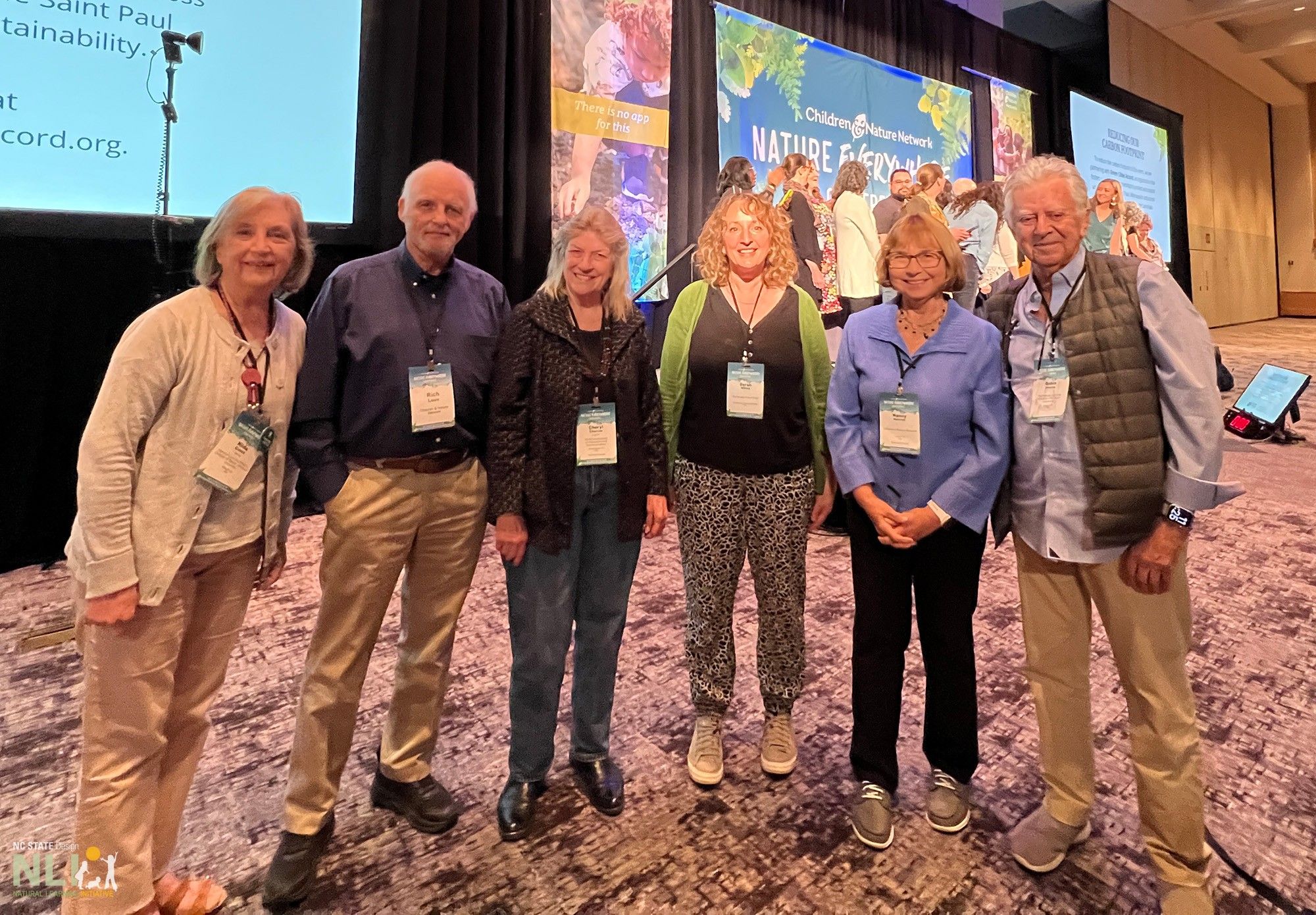
(L-R) Nilda Cosco (NLI cofounder), Richard Louv & Cheryl Charles (C&NN cofounders), Sarah White (Ernest Cook Trust, UK), Nancy Herron (C&NN Board Member), Robin Moore (NLI cofounder).
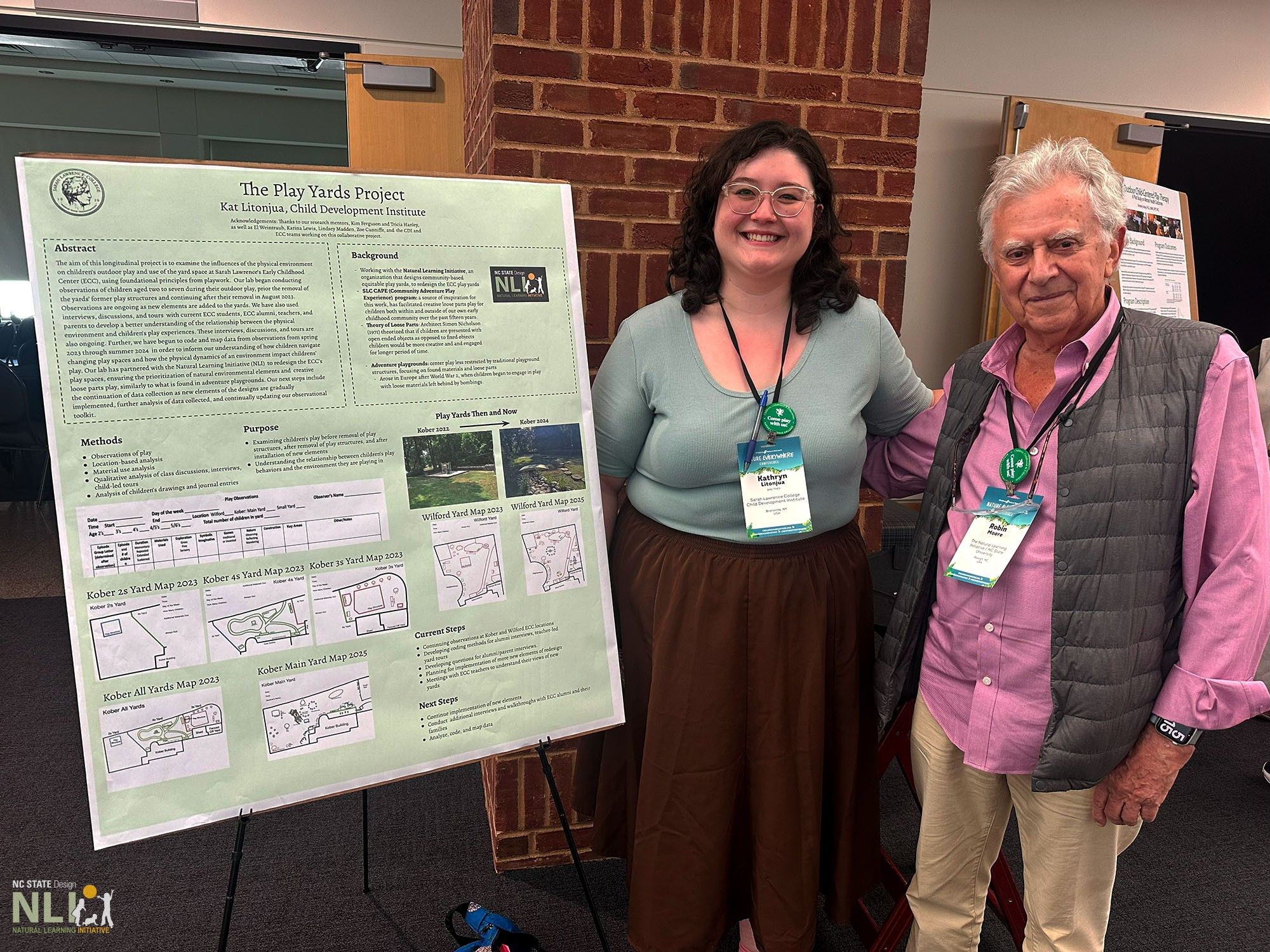
Kat Lituonja, Sarah Lawrence College, discusses her research project based on NLI’s design and evaluation framework, with Robin Moore.
ECHO is based on a decade of research on the Preventing Obesity by Design model. The results show that improving the design of outdoor spaces through affordable interventions and training early childhood educators, young children, and care providers produces substantial benefits including:
Children are more physically active in the outdoors and engage in social interactions more often.
Children and providers enjoy naturalized outdoor spaces and spend more time outside, supporting healthy behaviors.
Hands-on gardening encourages the consumption of fresh fruit and vegetables.
And parents are more likely to linger at care centers, improving the community experience.
Celebrate the Natural Learning Initiative’s 25th Year of promoting healthy childhoods on a healthy planet through outdoor play, learning, and education.
Tuesday October 21st
“NLI at 25 -Greening Childhoods Retrospective”
Exhibition opening & reception late afternoon.
College of Design, NC State University.
Wednesday October 22nd
NLI 18th Design Institute
“NLI at 25 – Reflecting on Progress, Exploring & Expanding Future Directions.”
With help from long-time speaker colleagues & friends.
Venue: Renovated All-Faiths Chapel, Dix Park, Raleigh. Lunch in 18.5-acre, just opened Gipson Play Plaza.
Celebrating 25 years of design, research, professional development, resource creation, dissemination & communication.
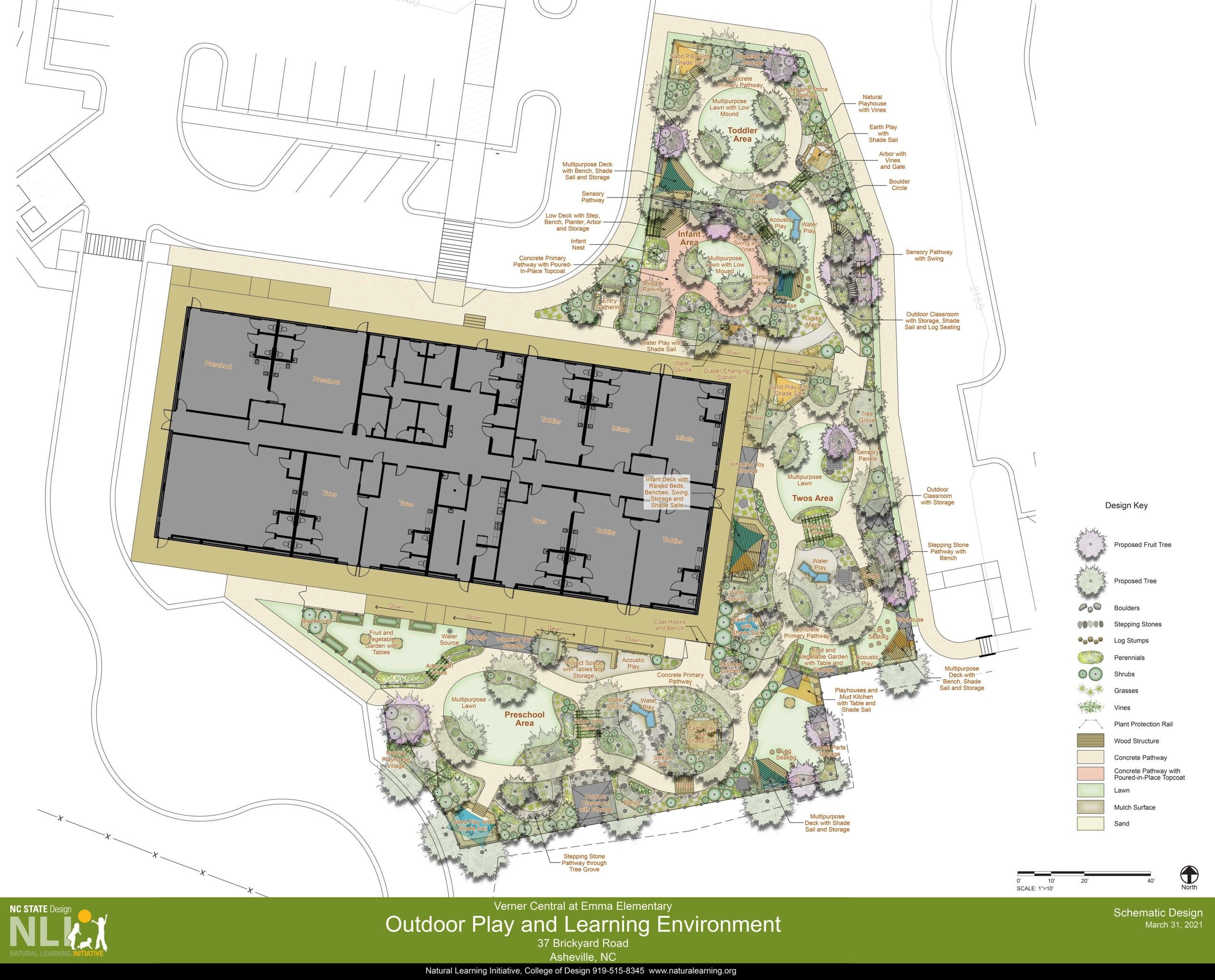
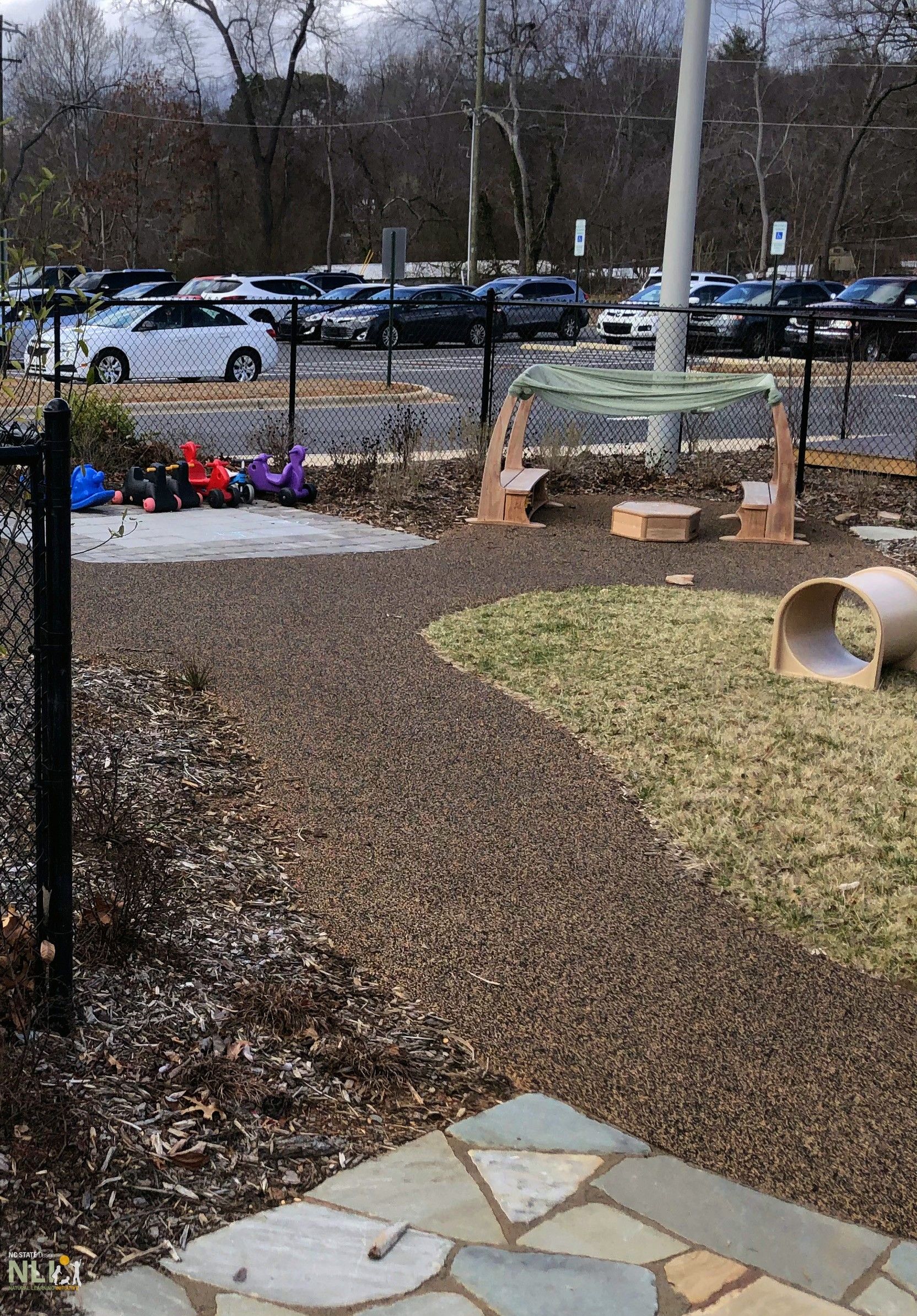
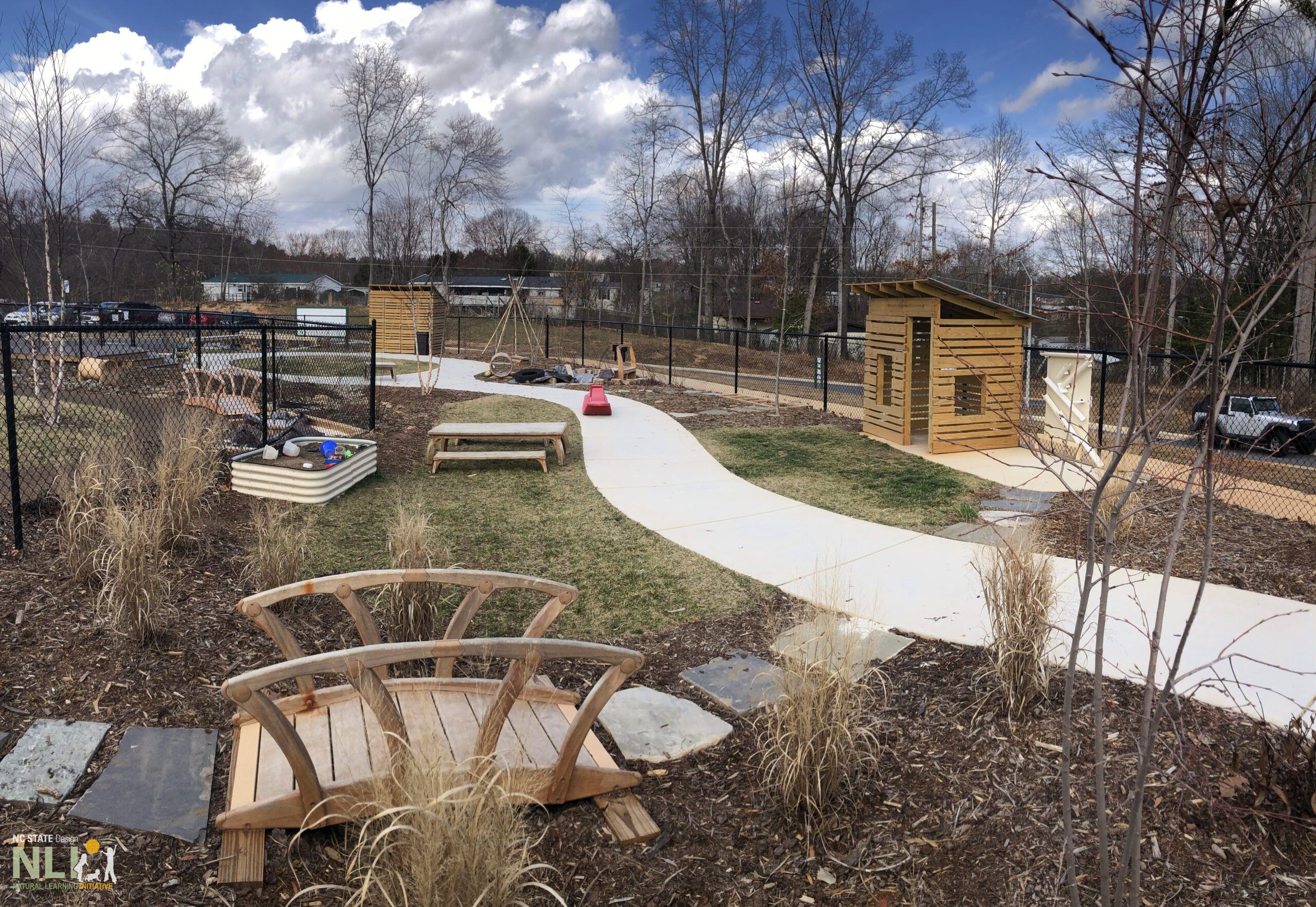
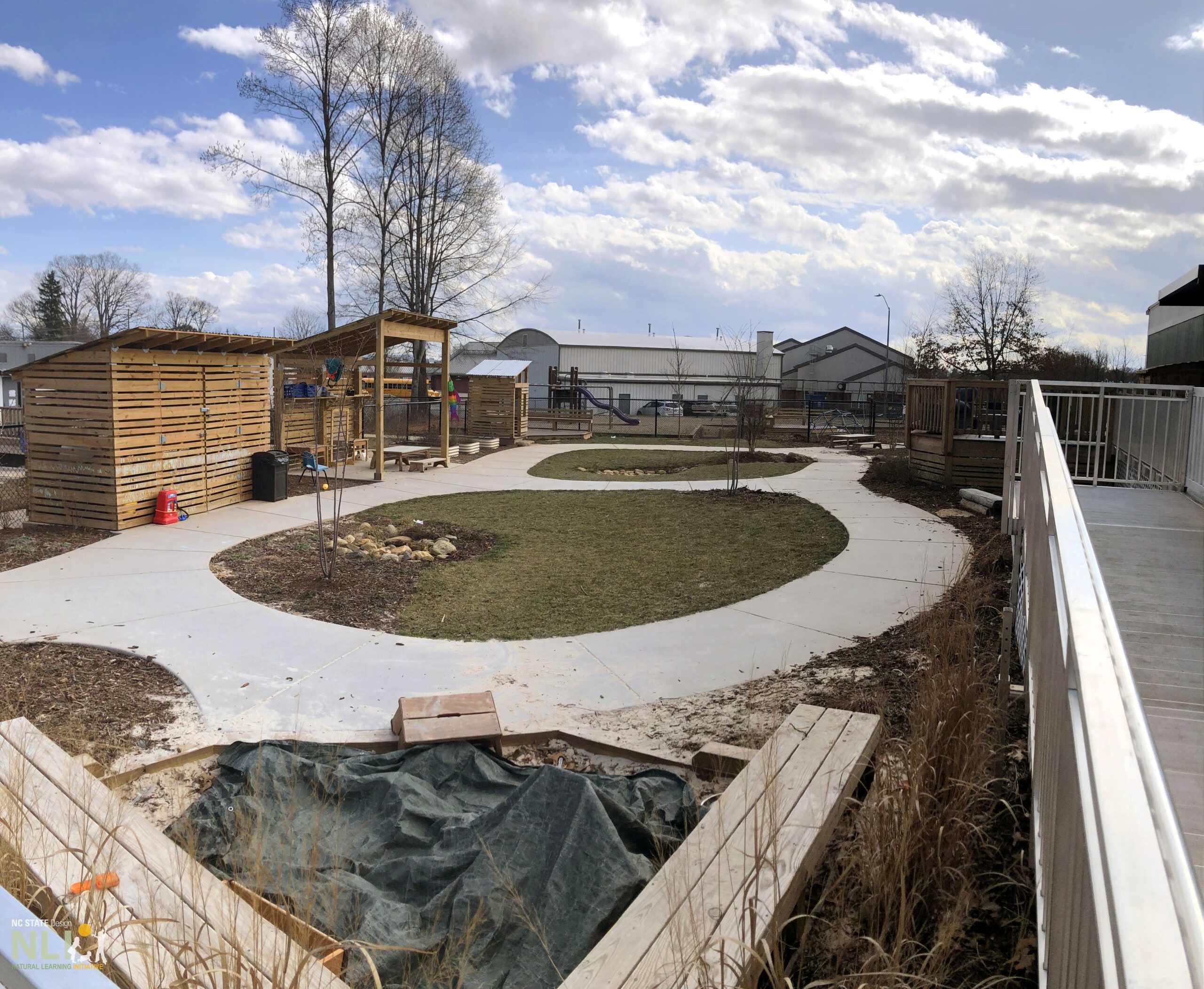
In collaboration with Verner leadership, Buncombe County Schools, Buncombe County Smart Start, and local consultants, NLI was tasked with designing “best practice” outdoor play and learning spaces to serve children enrolled in infant, toddler, twos, and pre-K programs. During construction, NLI worked closely with the project architects, on-site contractors, and the VC team to ensure effective project implementation.
Classrooms in the innovative, above-ground center (manufactured off-site), open onto a surrounding terrace. Ramps provide accessible routes to the play and learning spaces. Infants are provided a sheltered, easy-access outdoor space where the eastern terrace broadens.
Financial support for the project came from Buncombe County Early Childhood Education and Development Fund (ECEDF), Dogwood Health Trust, Glass Foundation, and WNC Bridge Foundation.
Photos provide a mid-winter sense of the recently installed outdoor play and learning spaces. Everyone is waiting for the trees to leaf out and welcome the spring!
Site Photos
1. Infant Play and Learning Space, just set up for mid-winter outdoors. The fence line will soon turn colorfully green and hide the parked cars behind.
2. Toddler Play and Learning Space. A looping pathway for wheeled toys provides daily increases in health-promoting physical activity. A bridge with stepping stones over a vegetated swale provides a secondary pathway across the loop, connecting the playhouse opposite. Earthplay is offered in a raised container accompanied by a worktable and benches.
3. Two’s Play and Learning Space. Broad, looping paths continue the physical activity learned in the Toddler Space. Covered sandplay is in the foreground, beside the ramp access from the center building. Storage, outdoor classroom, and playhouse border the pathway on the left.
4. Preschool fruit and vegetable garden and worktable await the spring and summer gardening seasons.