Sand is spreading across our site. What can we do?
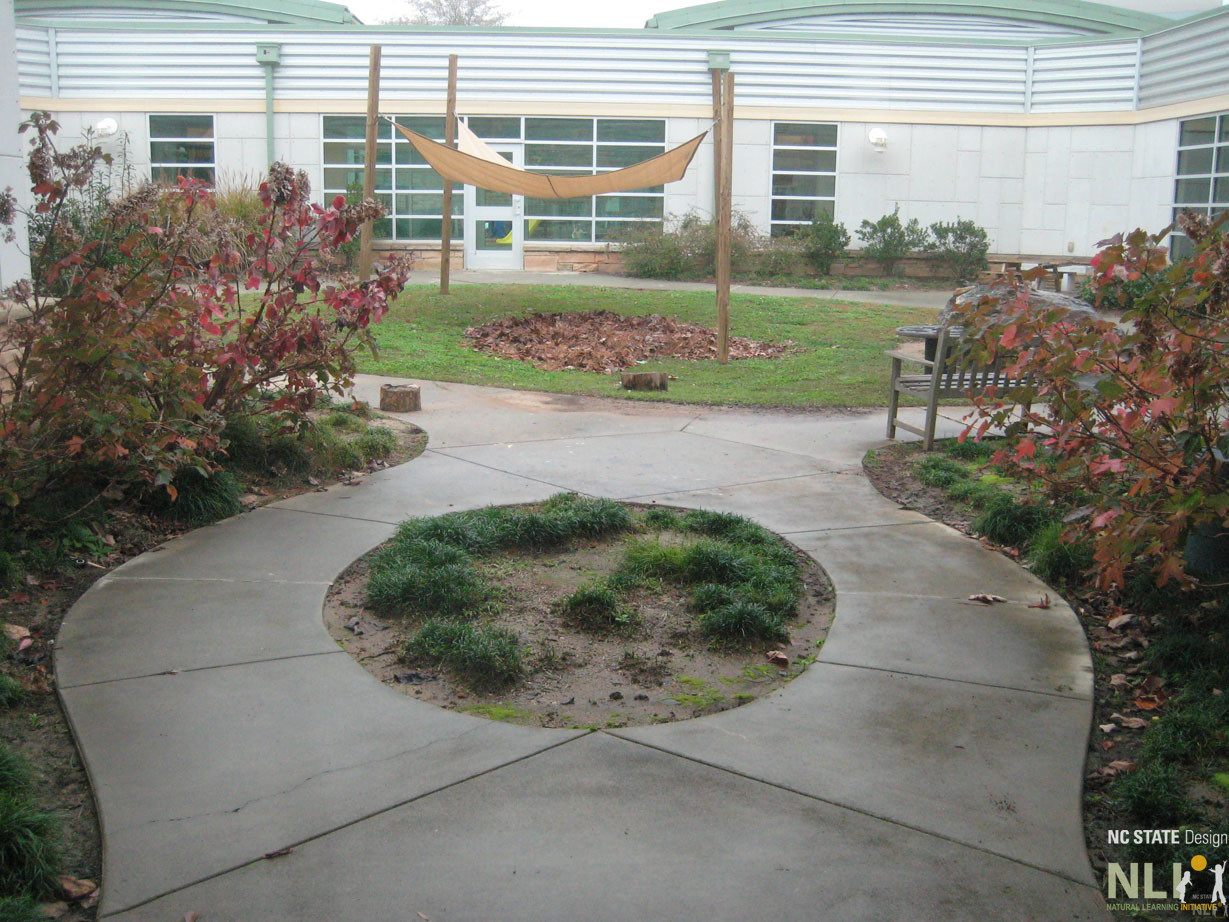
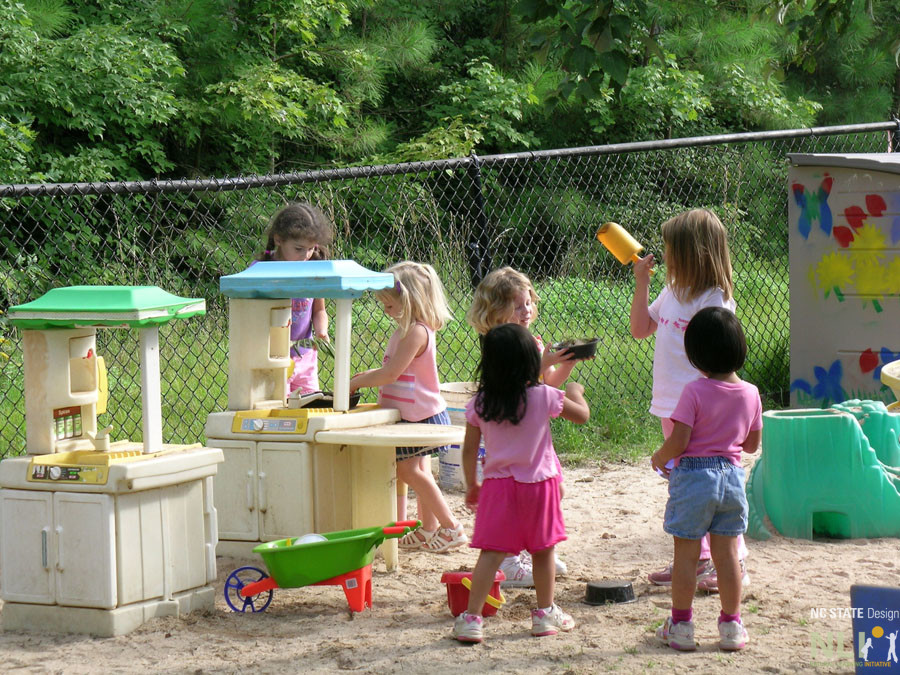
Sand play is one of the most valuable natural behavior settings for children from toddlerhood through the early school years. However, to stop sand from spreading across other outdoor learning environment settings, the following should be carefully considered:
Location
Locate the sand play area away from primary circulation pathways and building entrances to avoid tracking sand indoors. Usually corners of the site or locations along the site boundary fence work well. Avoid locating it in low spots where water gathers when it rains.
Defined and enclosed
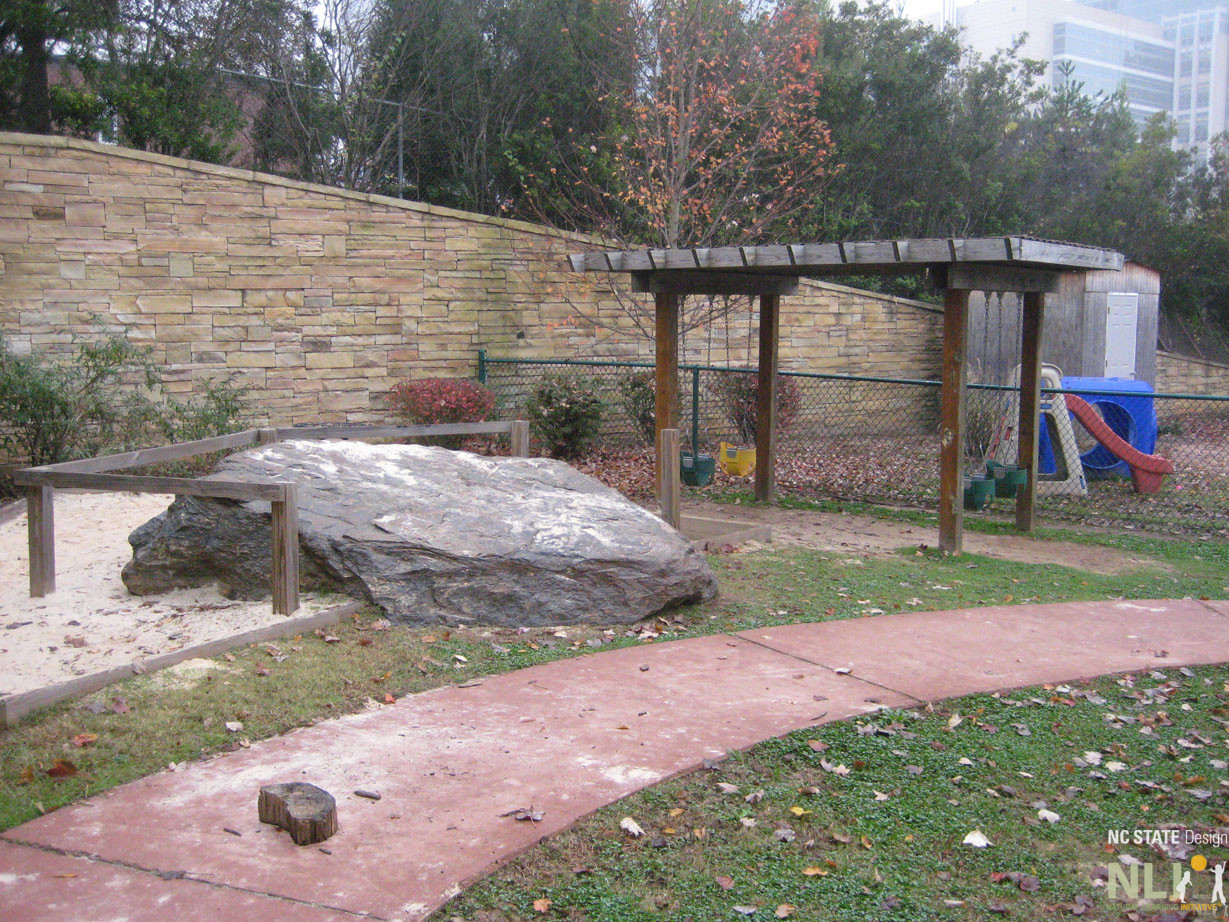
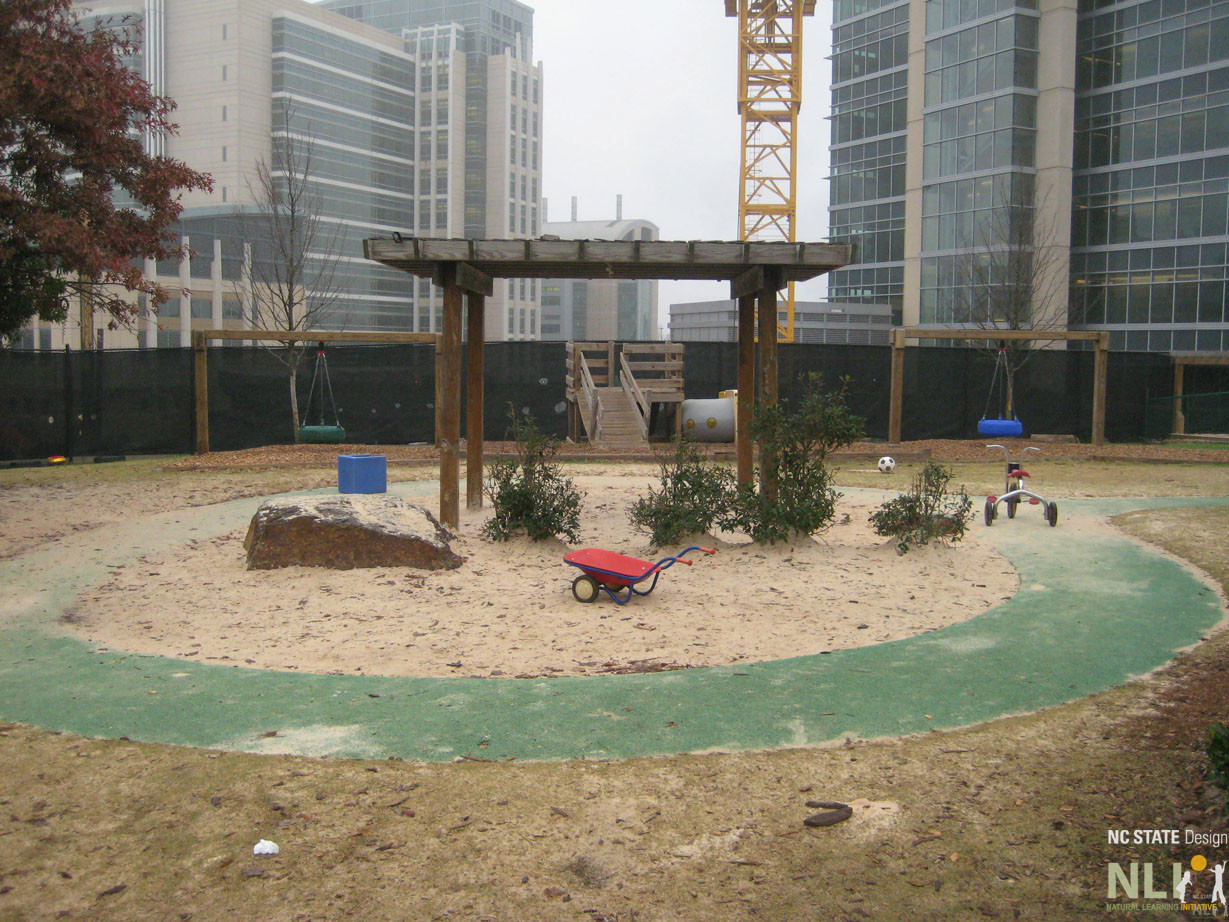
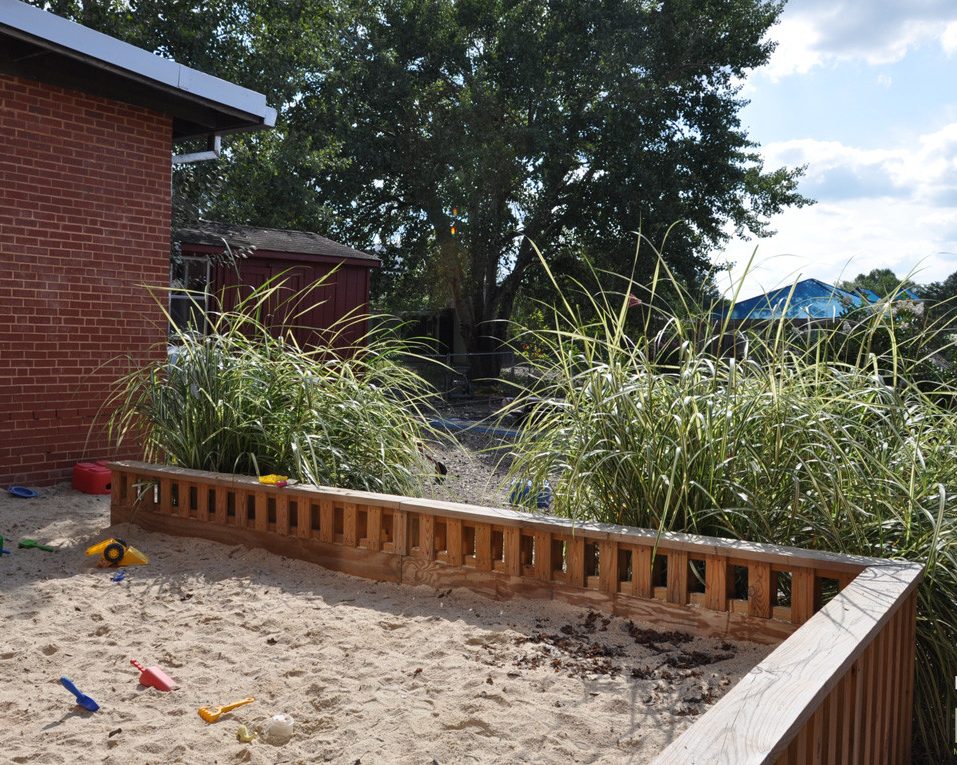
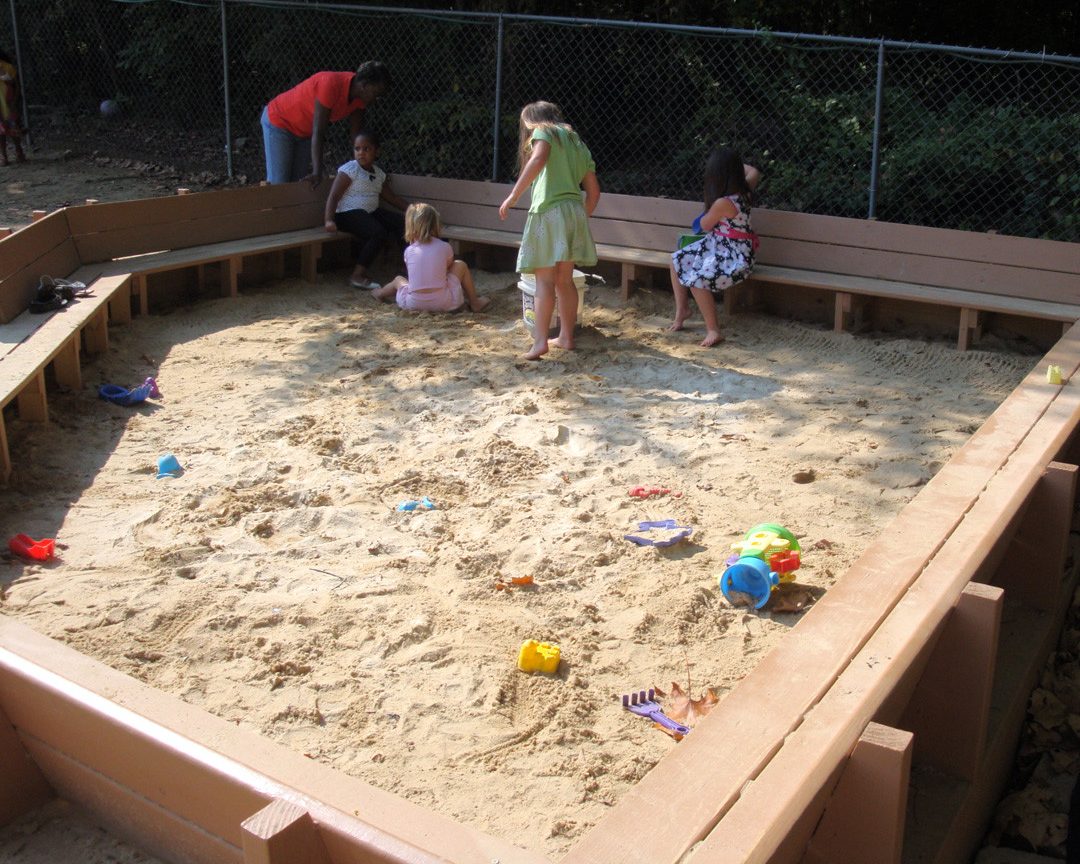
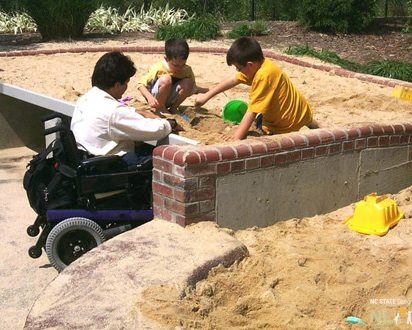
Enclose the sand play area on all sides, leaving a defined entrance/exit. This helps to limit the sand from spreading across the outdoor learning environment. Use cedar, pressure-treated pine, or recycled plastic timber to construct the enclosure. If this is too costly, logs, laid vertically or horizontally, or large, smooth rocks could be used to enclose the sand play area.
Single entrance
Install a grate or boardwalk threshold at the exit to knock the sand off shoes.
Seating and storage
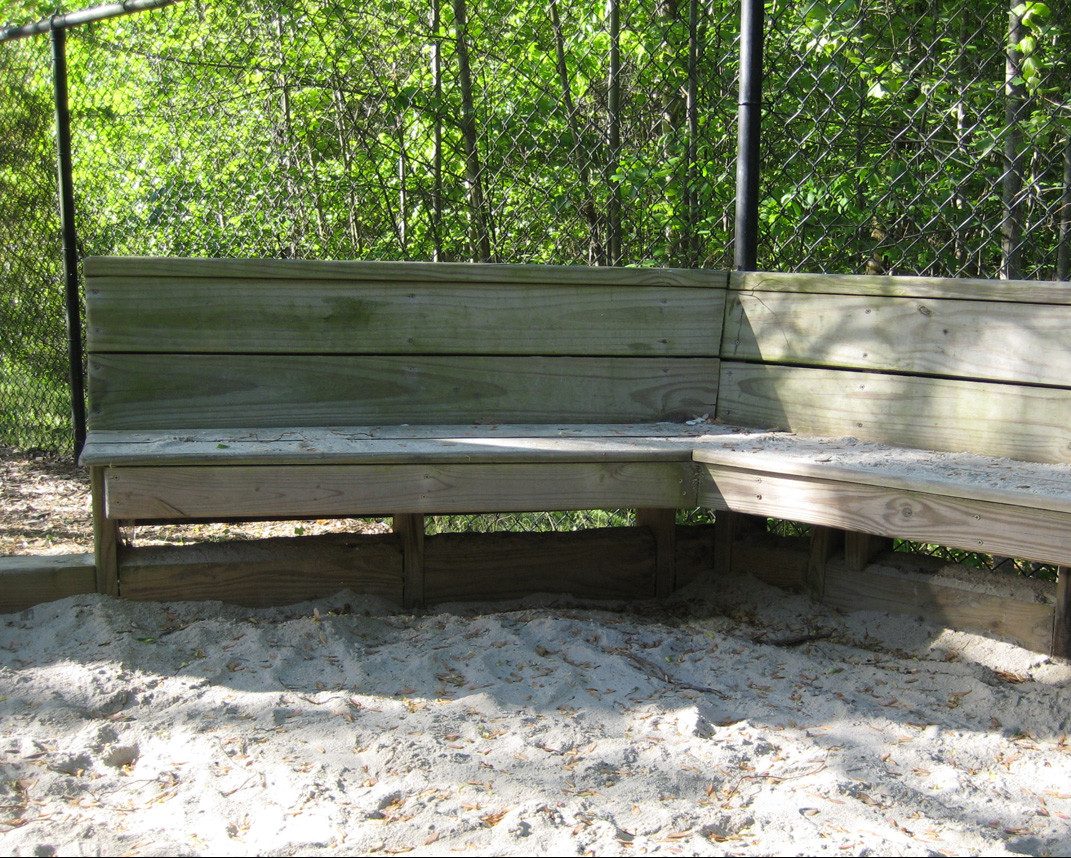
Construct a continuous seating bench inside the sand play area to serve the dual purpose of seating and offering a play platform. Storage cubbies for play props (shovels, trucks, scoops, molds and other loose parts) could be located under the seating bench or on the sides of the sand play area, easily accessible to children.
Shade
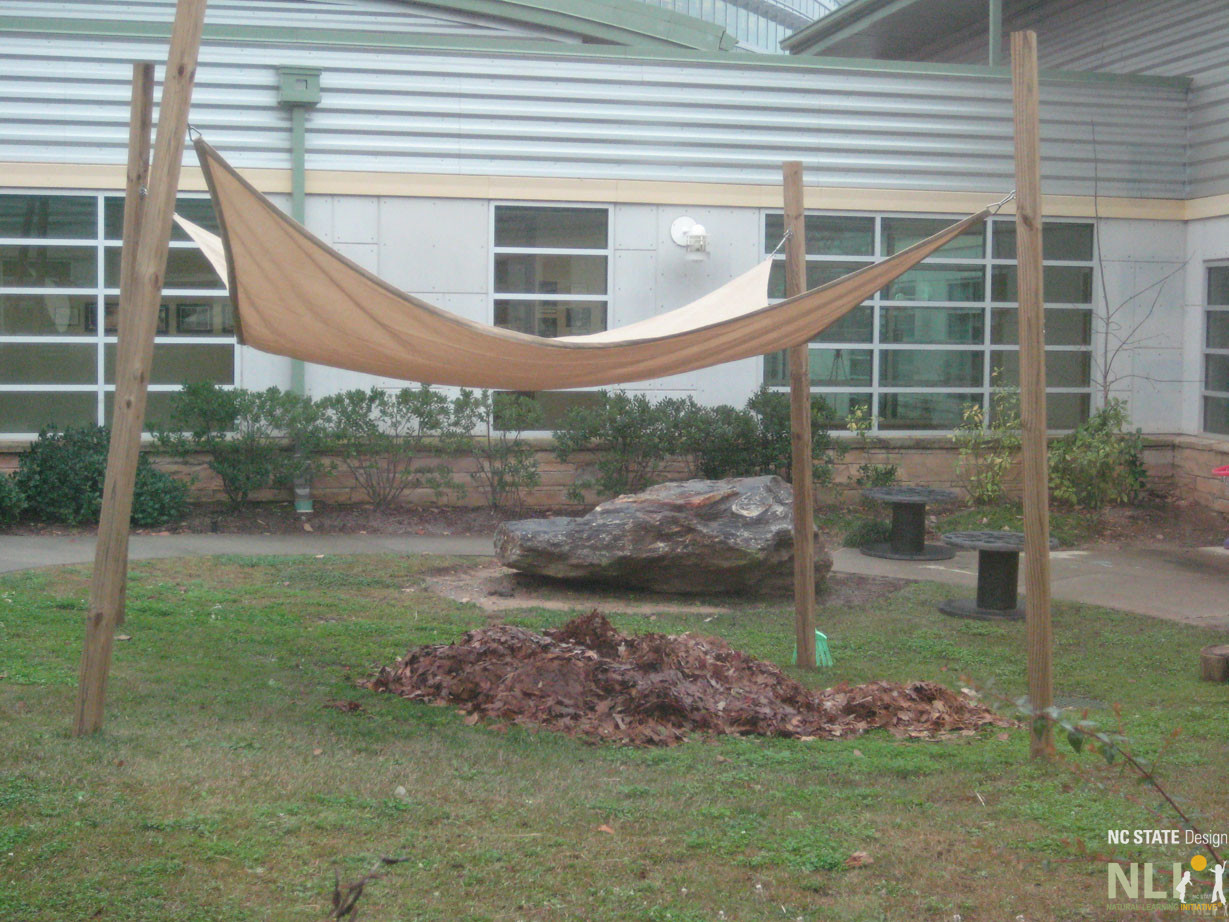
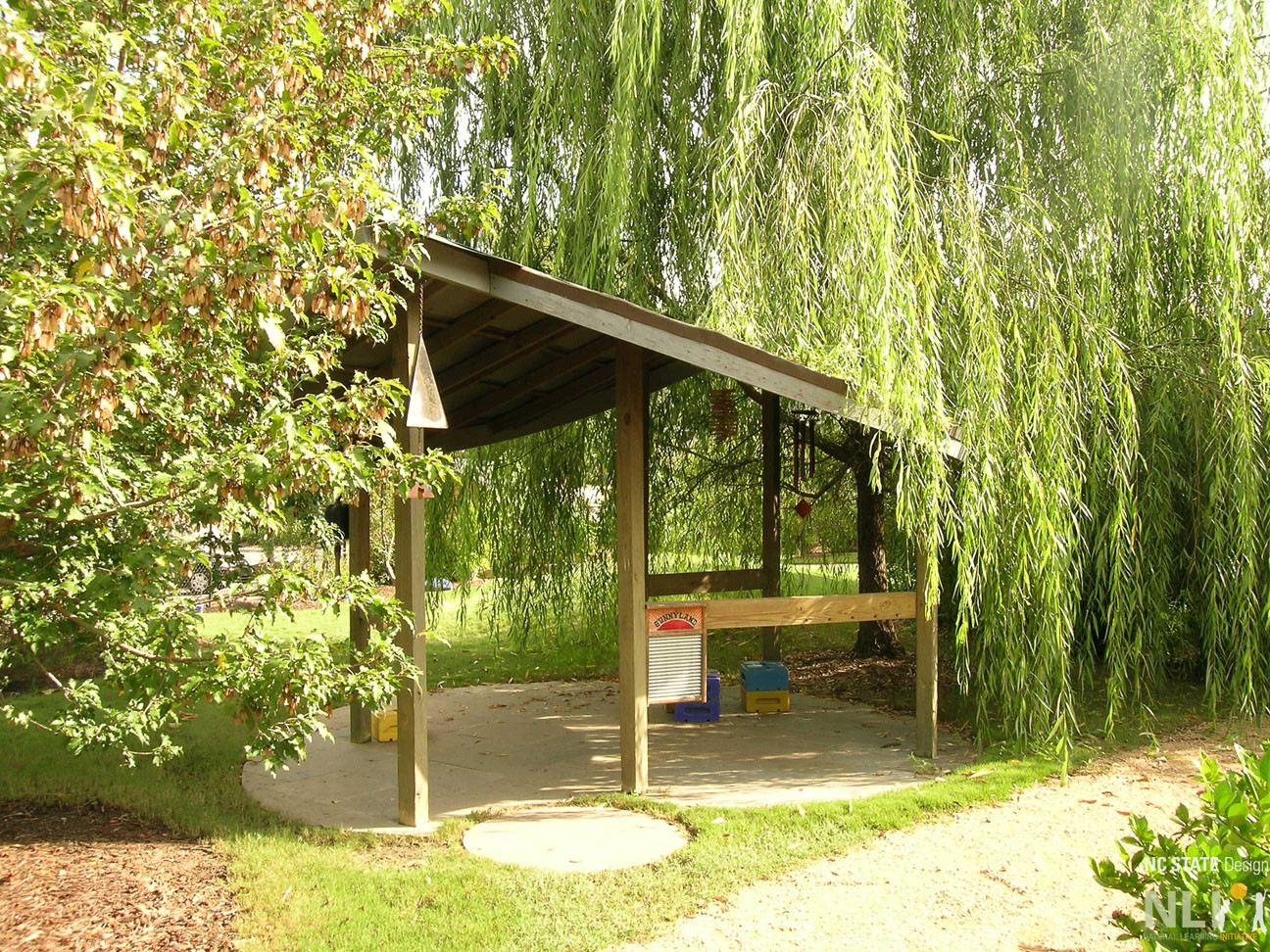
Provide some type of shade canopy cover the sand play area to protect from harmful sun exposure. Trees, shade sails or timber shade structures offer alternative solutions.
Planting buffer
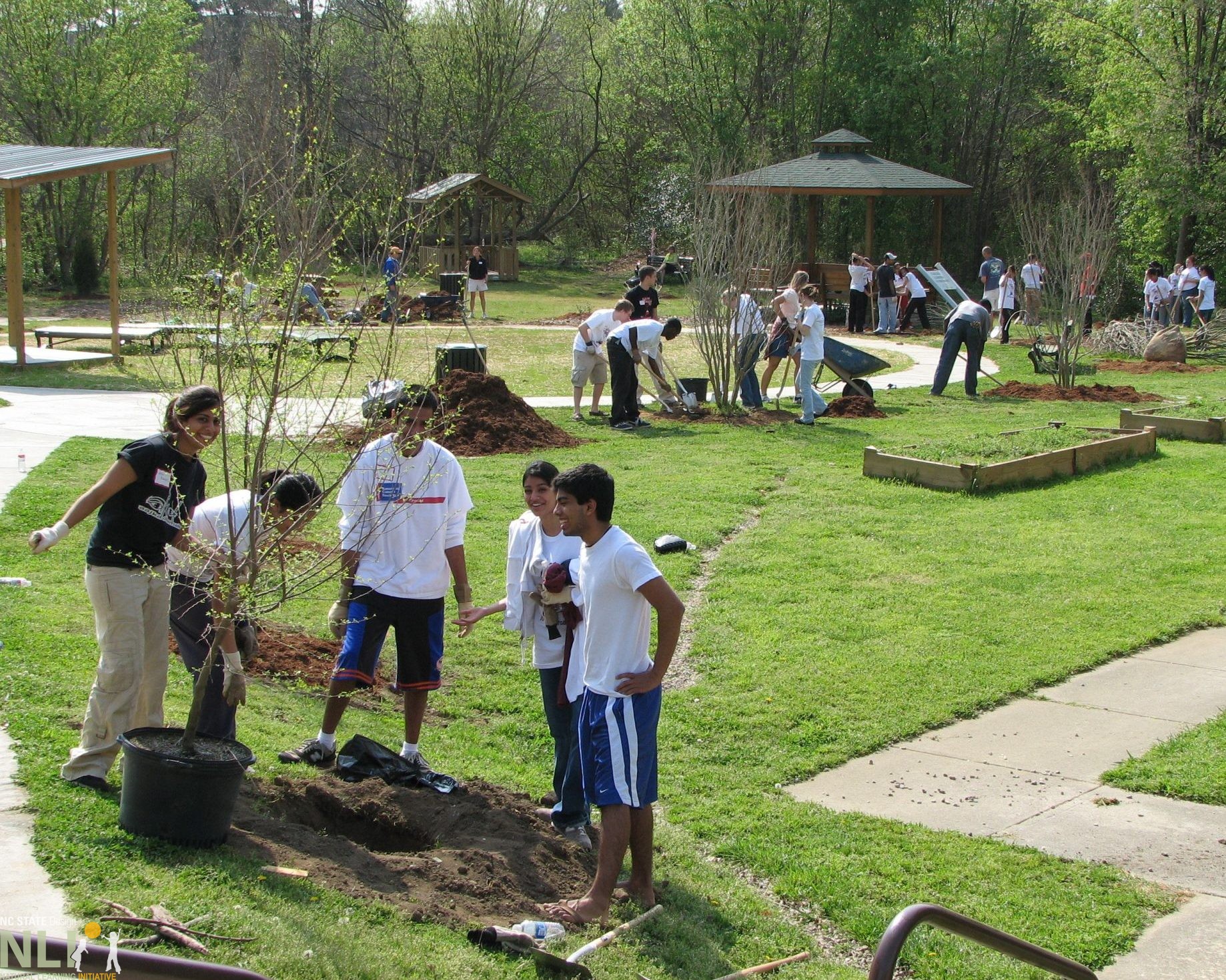
Surround the sand play area with a planting buffer to help contain the sand and provide natural loose parts.
Cover
Cover the sand play area with a fine mesh net when not in use to prevent the sand from becoming contaminated by cats and other critters. A net will allow sun, rain and fresh air to get to the sand.
Avoid using sand as a safety surface. Although, sand is an approved use zone safety surface, it is very difficult to contain and not an ideal safety surface. If possible, replace sand with an approved mulch safety surface.
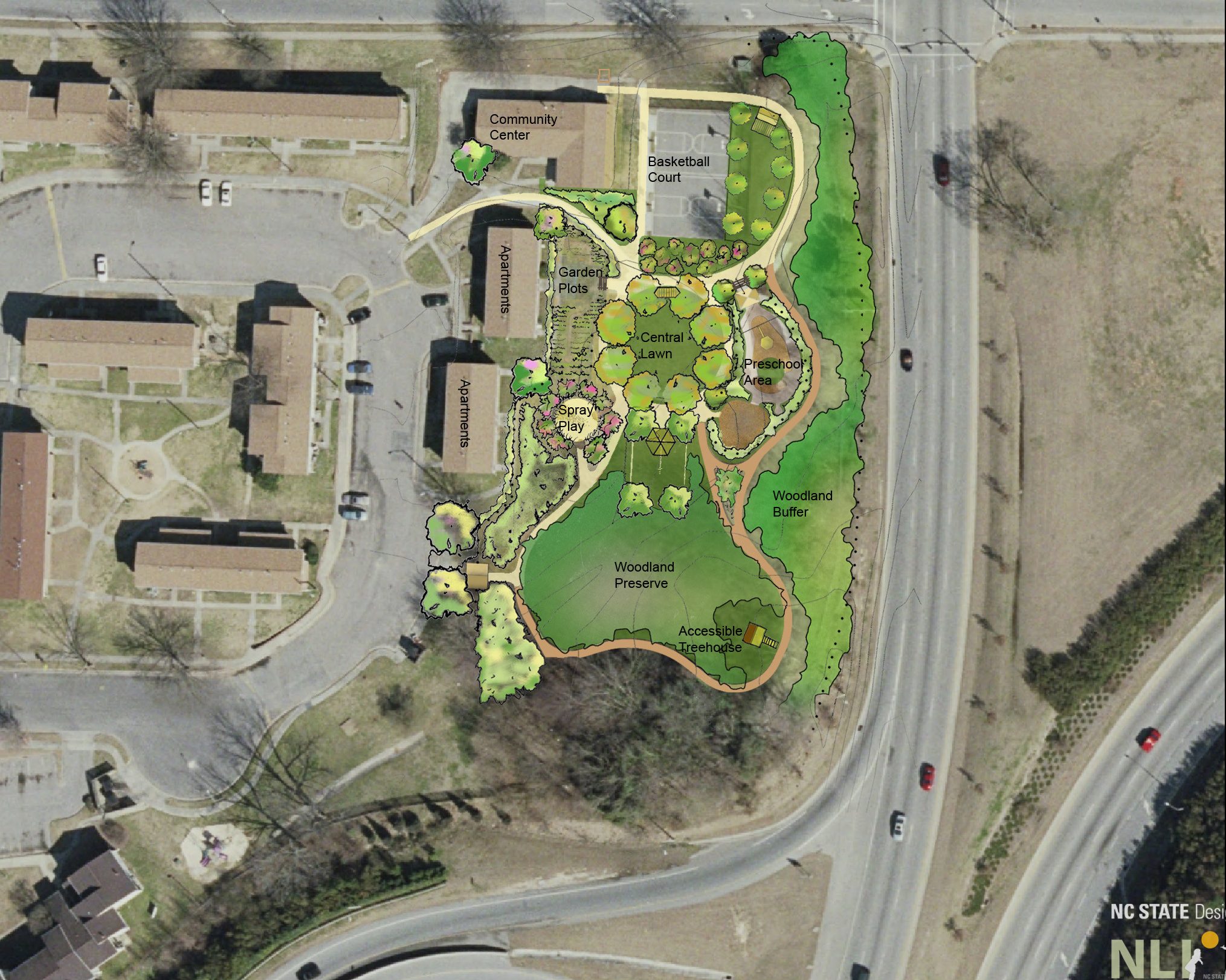
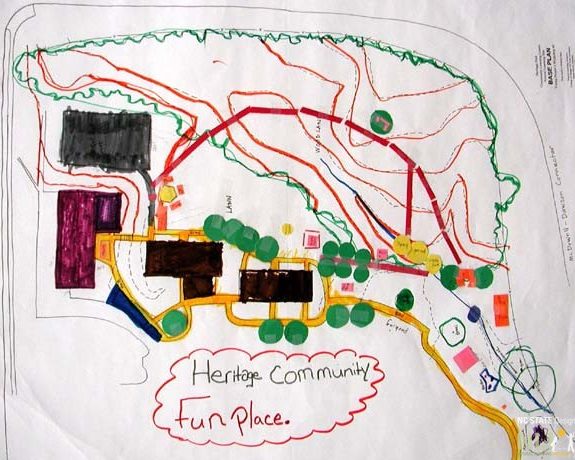
Many other organizations have been involved in implementation on the ground. Landscape designer Harriet Bellerjeau created the construction documents and supervised the construction of Phase One. Trees Across Raleigh and Service Raleigh installed trees donated by Taylors Nursery, Raleigh. Local contractors donated construction of a transition deck and new entrance from the Community Center building to the Natural Learning Environment so that children would remain in a secure outdoor environment
Purpose
Enhance the quality of life of the children living in Heritage Park.
Provide playing and learning opportunities to support their healthy development.
Create environments that improve professional effectiveness of the CLCNC staff.
Support community development – and identity, by creating outdoor spaces that reflect the cultural values of the residents of Heritage Park.
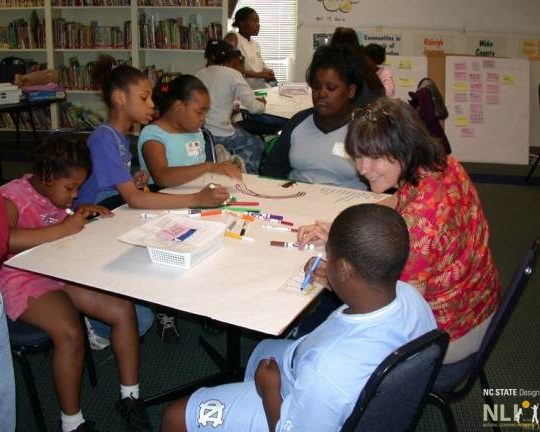
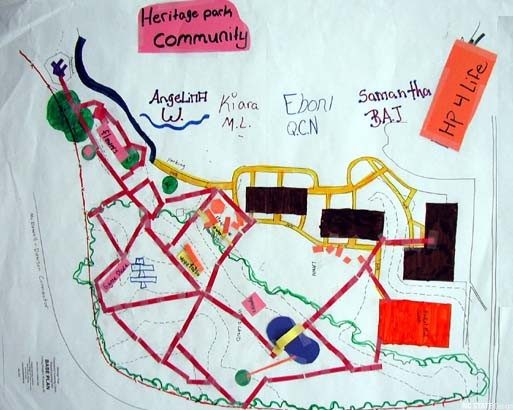
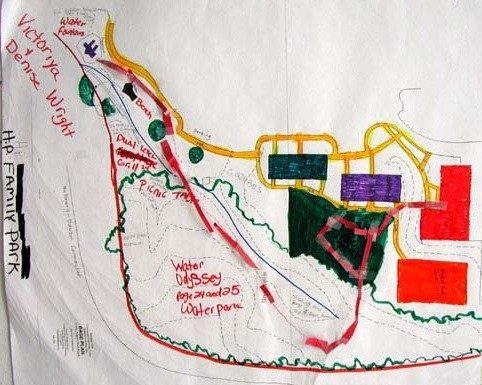
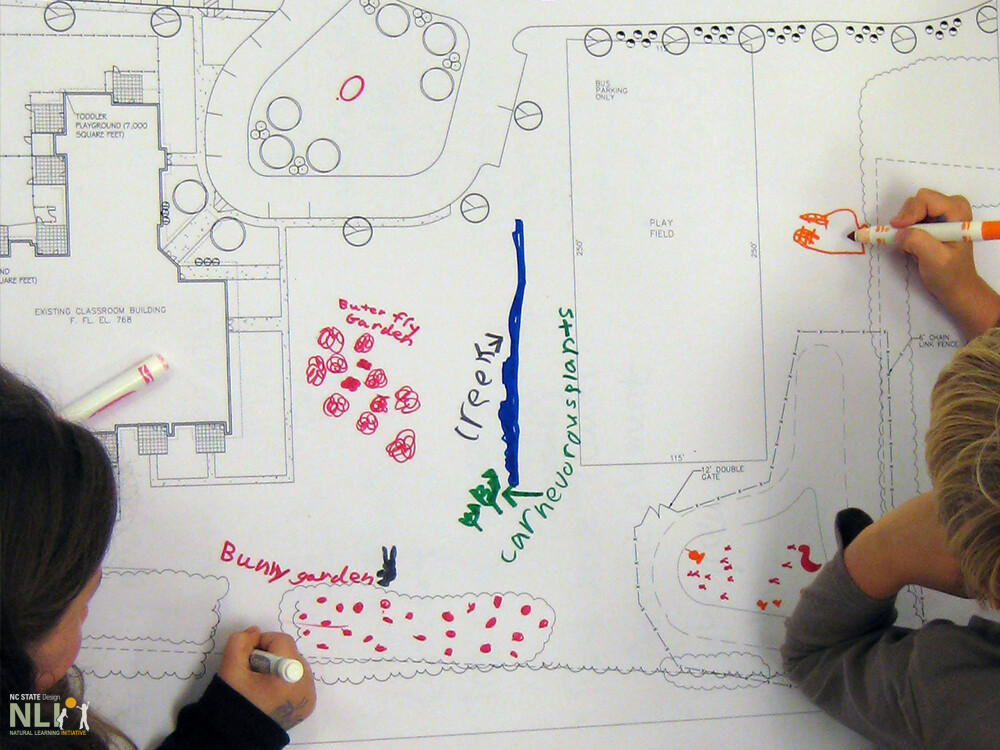
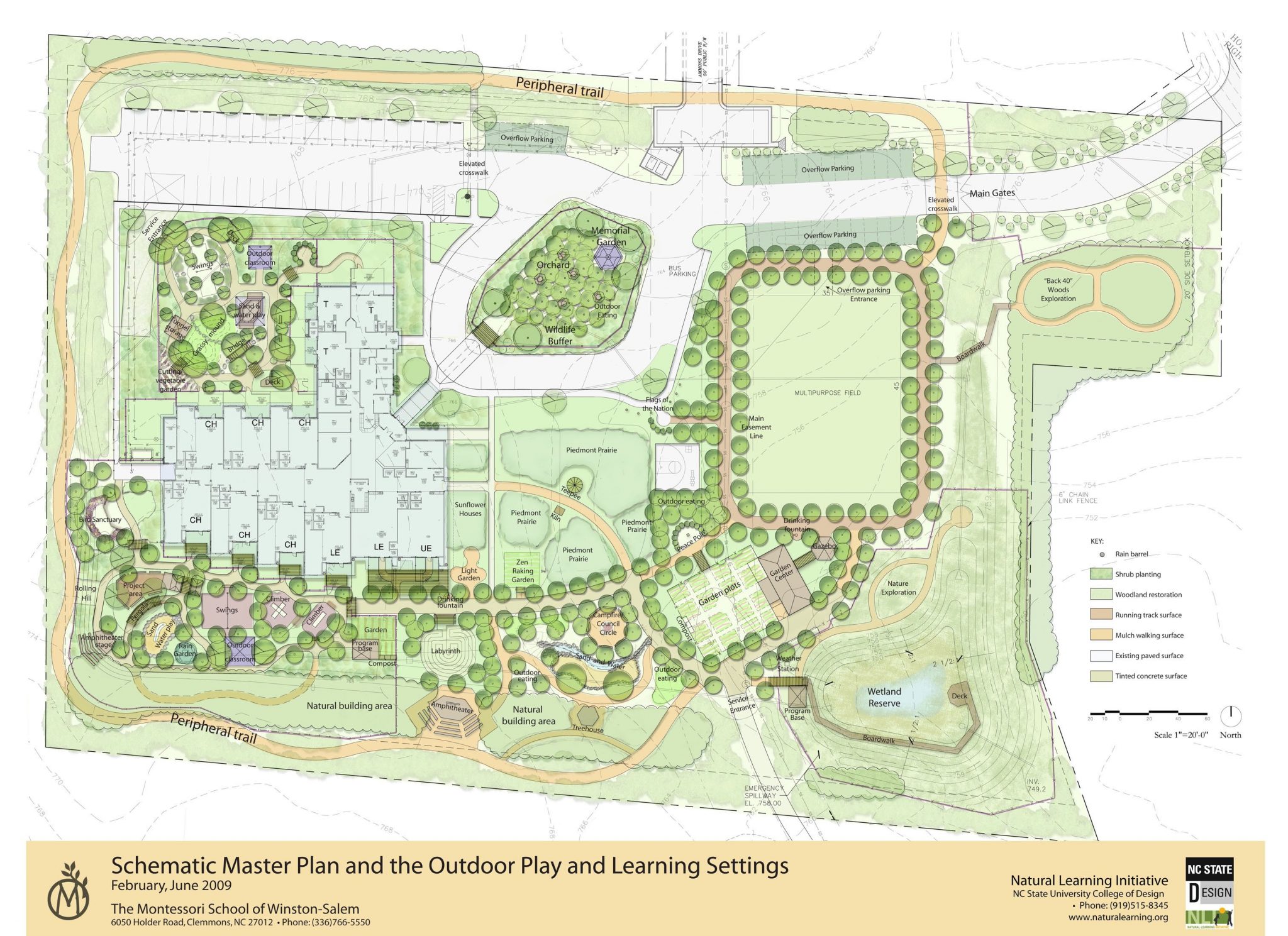
The mission of the Montessori School of Winston-Salem is “to provide a nurturing and secure environment to promote the development of each child physically, emotionally, socially, as well as academically.” The community design process embraced a series of workshops with teachers, children, parents, and administrators. Workshop participants brainstormed programming needs, and suggested physical settings necessary to support them.
The Design Program and Master Plan for the school grounds offer the vision of a restored natural environment for playing and learning, including sensory plantings, habitat, and woodland restoration.
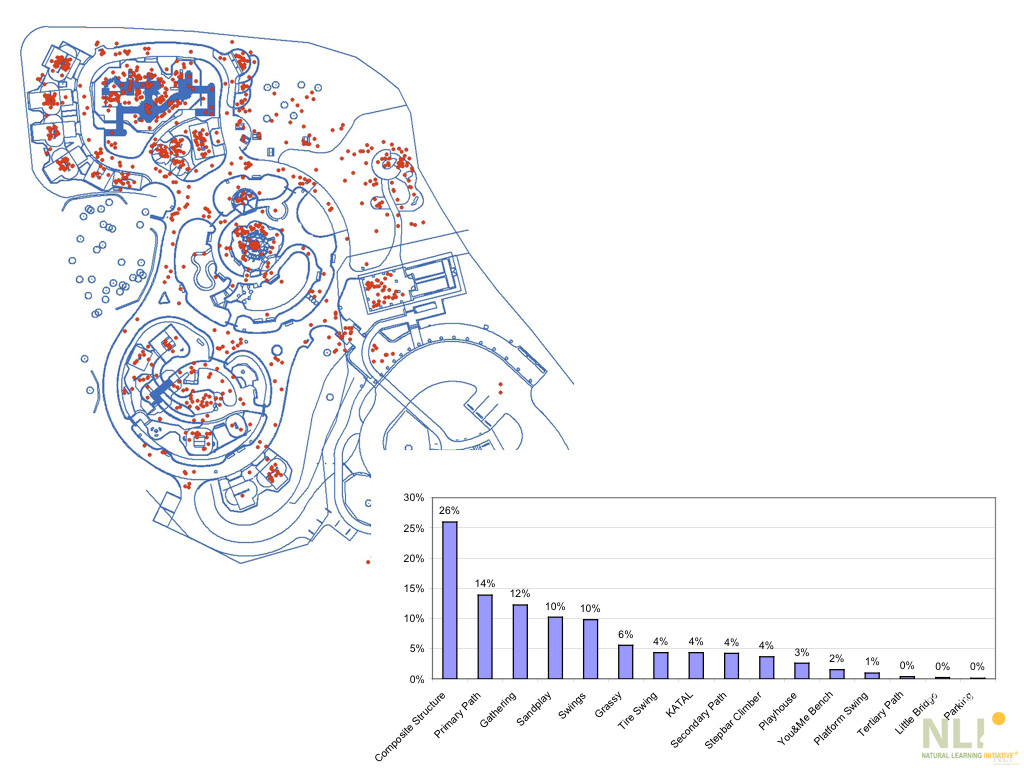
Kids Together Playground Post Occupancy Evaluation (POE)
Even though, a conservative estimate of the number of municipal parks and playgrounds in the US is almost 110 thousand, representing a continuing investment of hundreds of millions of taxpayer dollars, almost no attempt has been made to evaluate their level of success, how much they are used, and to what extent they respond to user needs.
The goal of the study was to assess and compare the behavior settings in an urban, universally designed family recreation area designed to meet two well-defined criteria: universal design or inclusion, and naturalization or the integration of manufactured equipment and the living (designed) landscape.
The purpose of the POE was to learn about the users and to observe how the design served their needs, producing findings to contribute to evidence-based guidelines to support universal design of settings in public parks.
The study was conducted in association with the Center for Universal Design (CUD), College of Design, NC State University, and supported by a grant from the National Institute on Disability and Rehabilitation Research NIDRR. Professor Robin Moore and CUD Director, Laurie Ringaert, were co-principal investigators
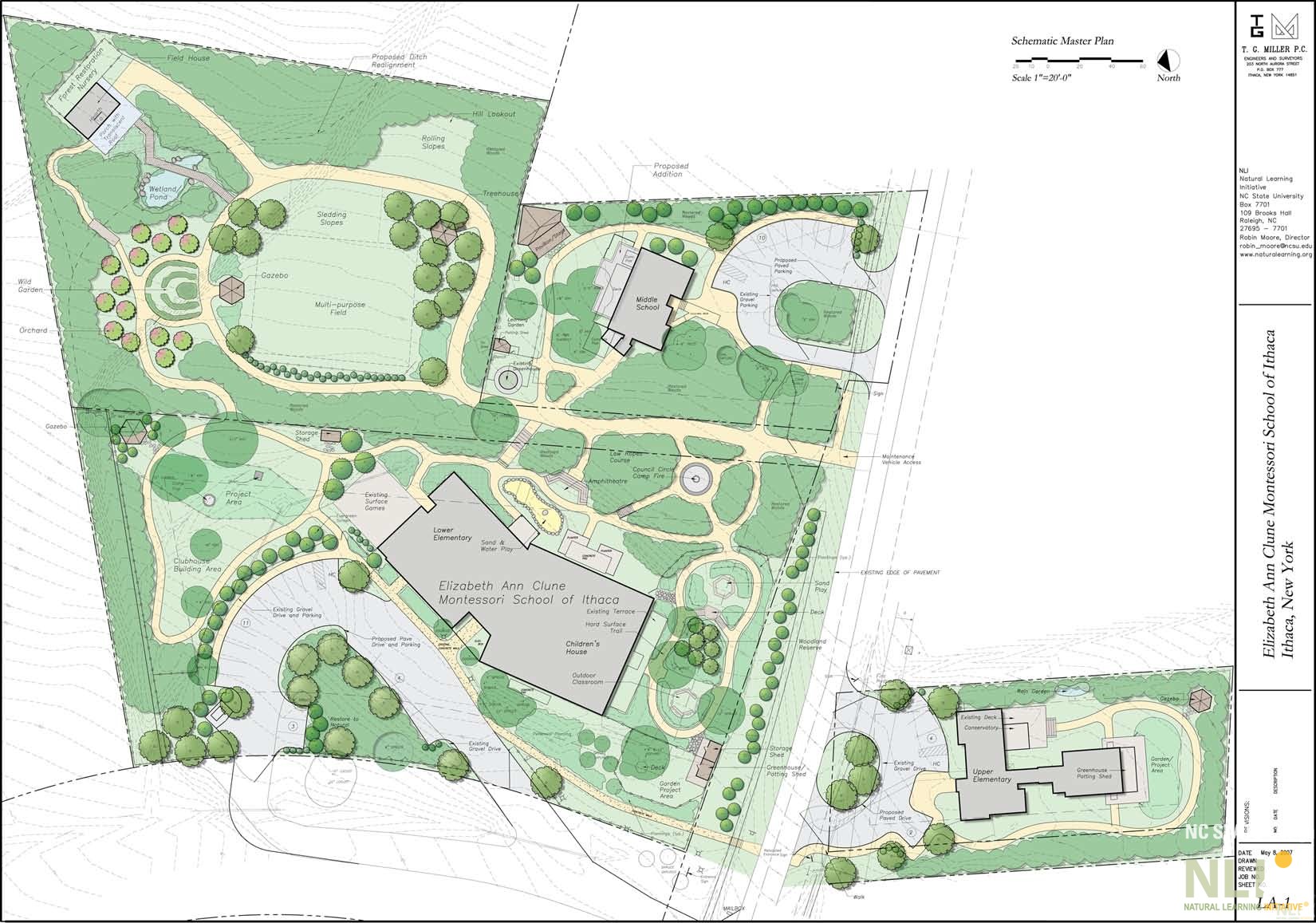
The Elizabeth Ann Clune Montessori School of Ithaca
The Elizabeth Ann Clune Montessori School of Ithaca, New York consulted the Natural Learning Initiative to create a comprehensive design program and master plan for the school grounds, with the mission “to nurture the hearts, minds, and spirits of children and adults in the Ithaca community through stewardship of the land.”
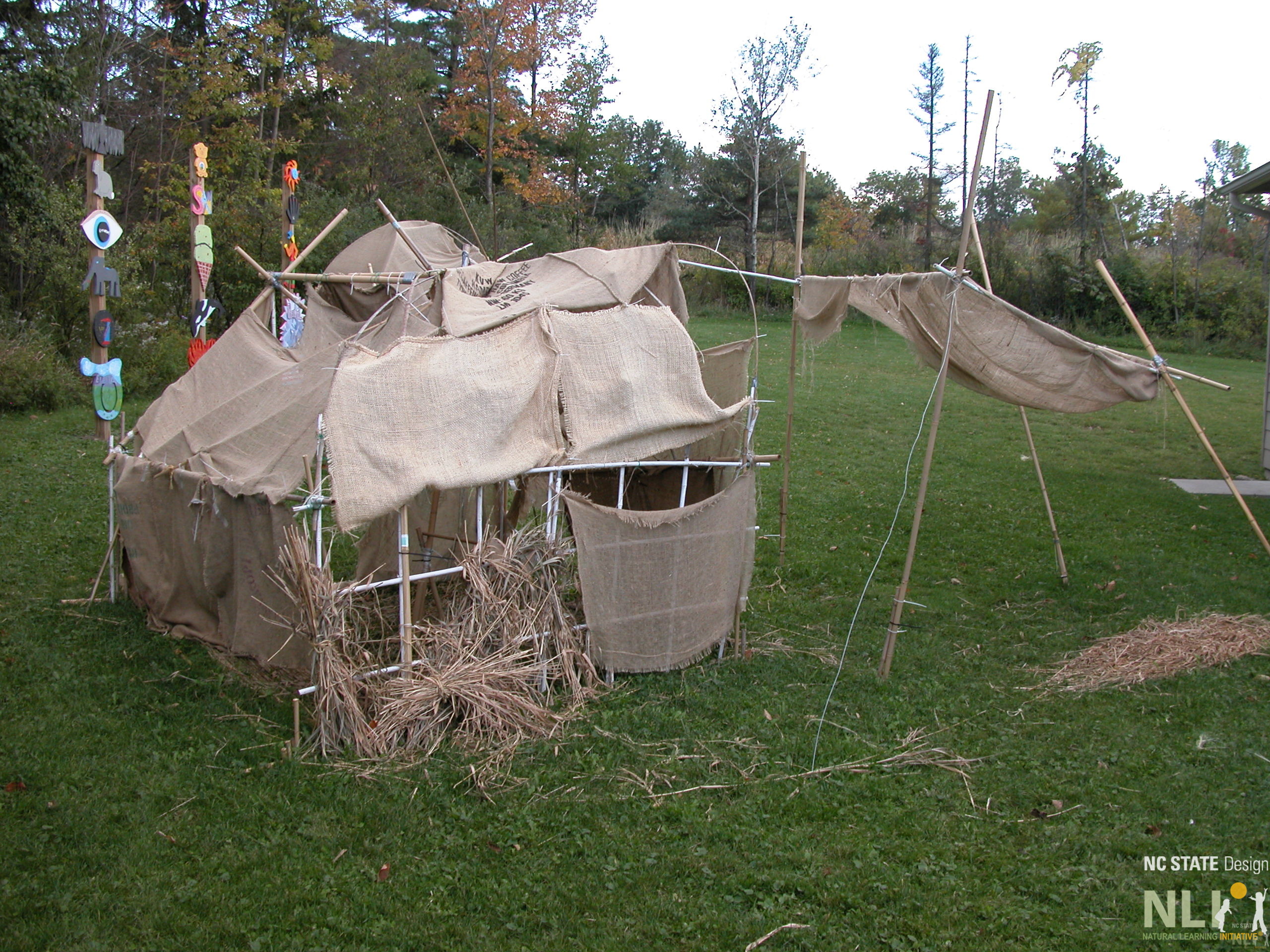
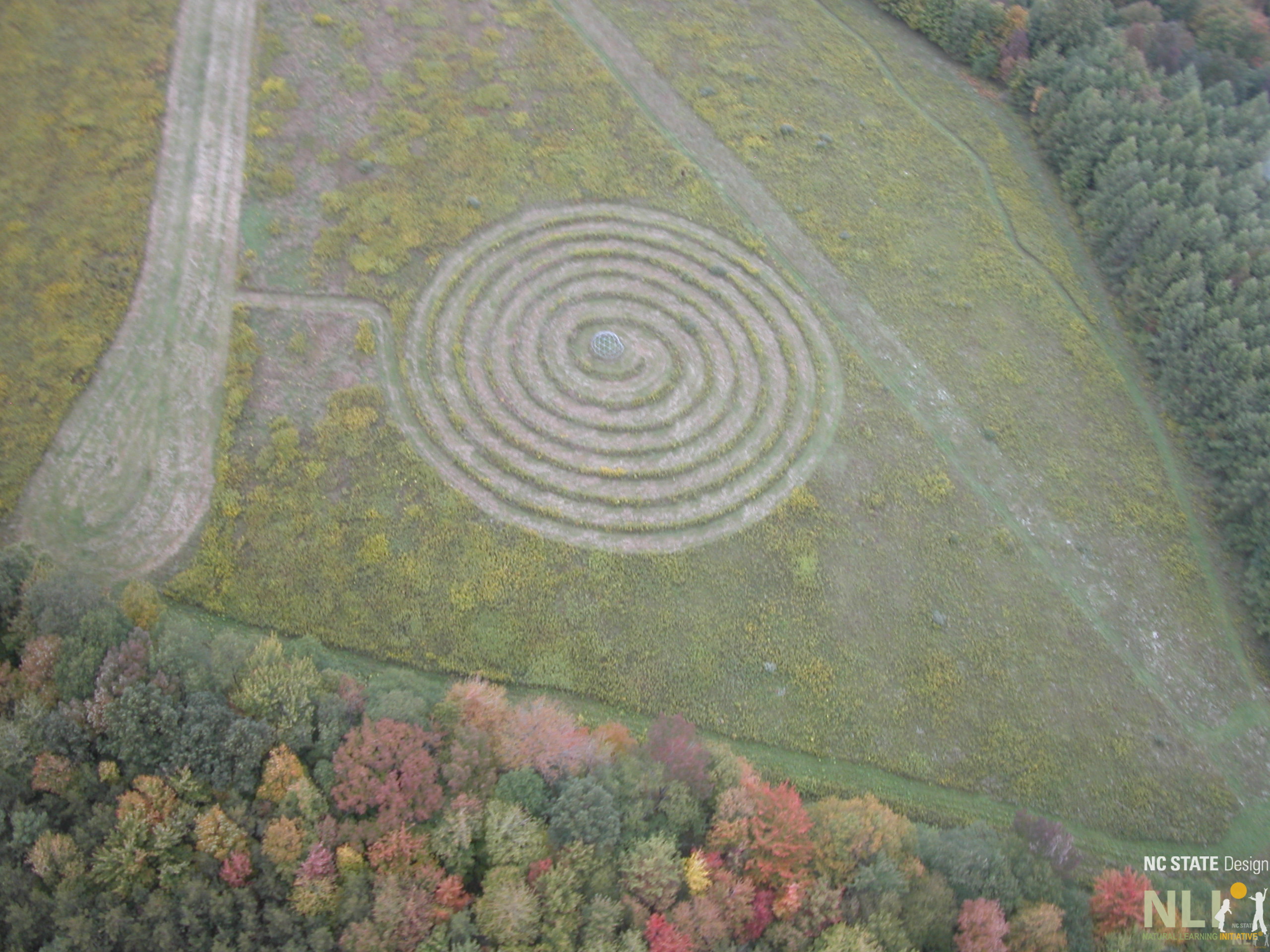
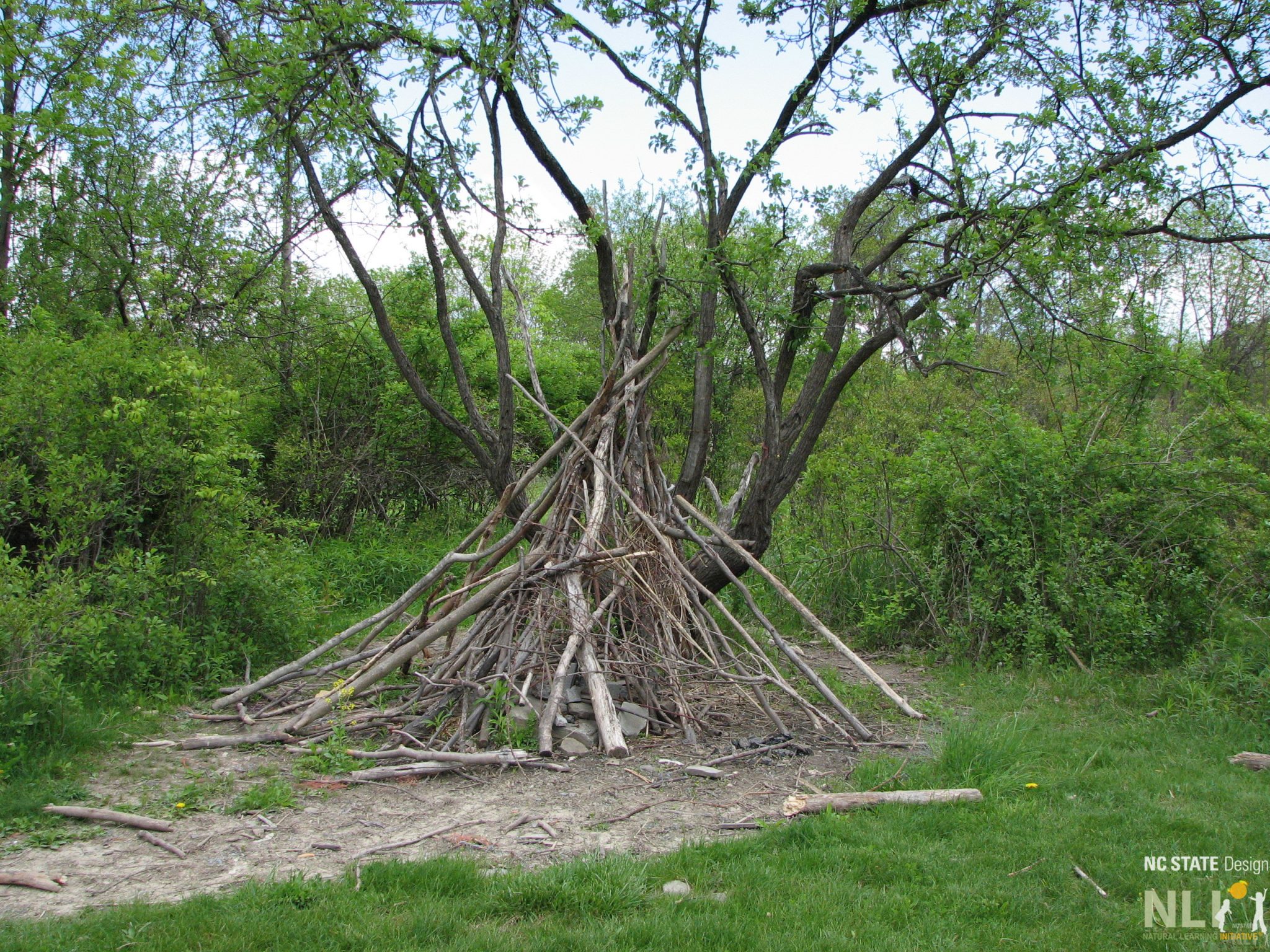
The mission is supported by a multitude of play and learning settings, including a variety of pathways, animal habitats, gardens, wetlands, and nature play and learning areas – including clubhouse building with natural materials.
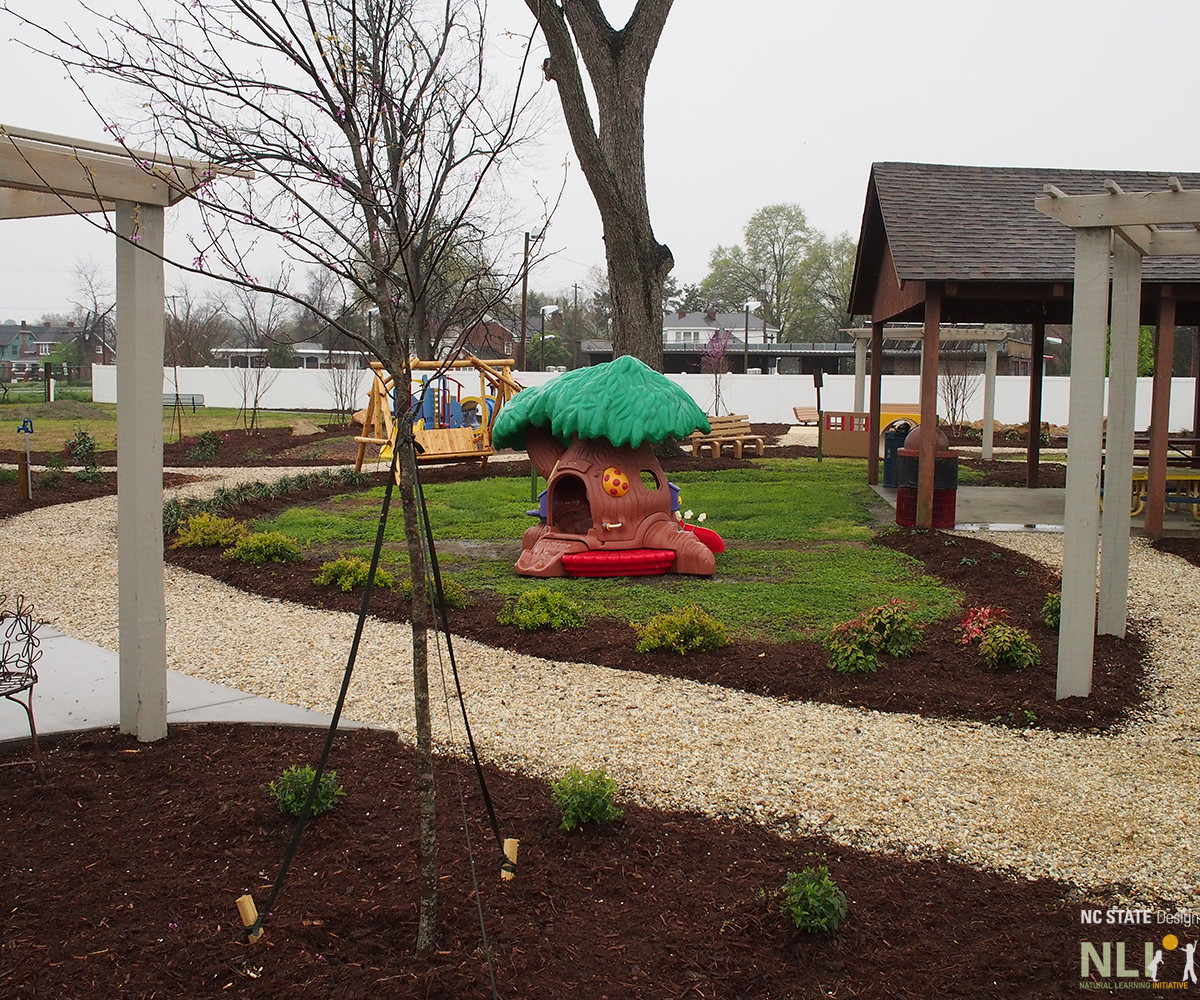
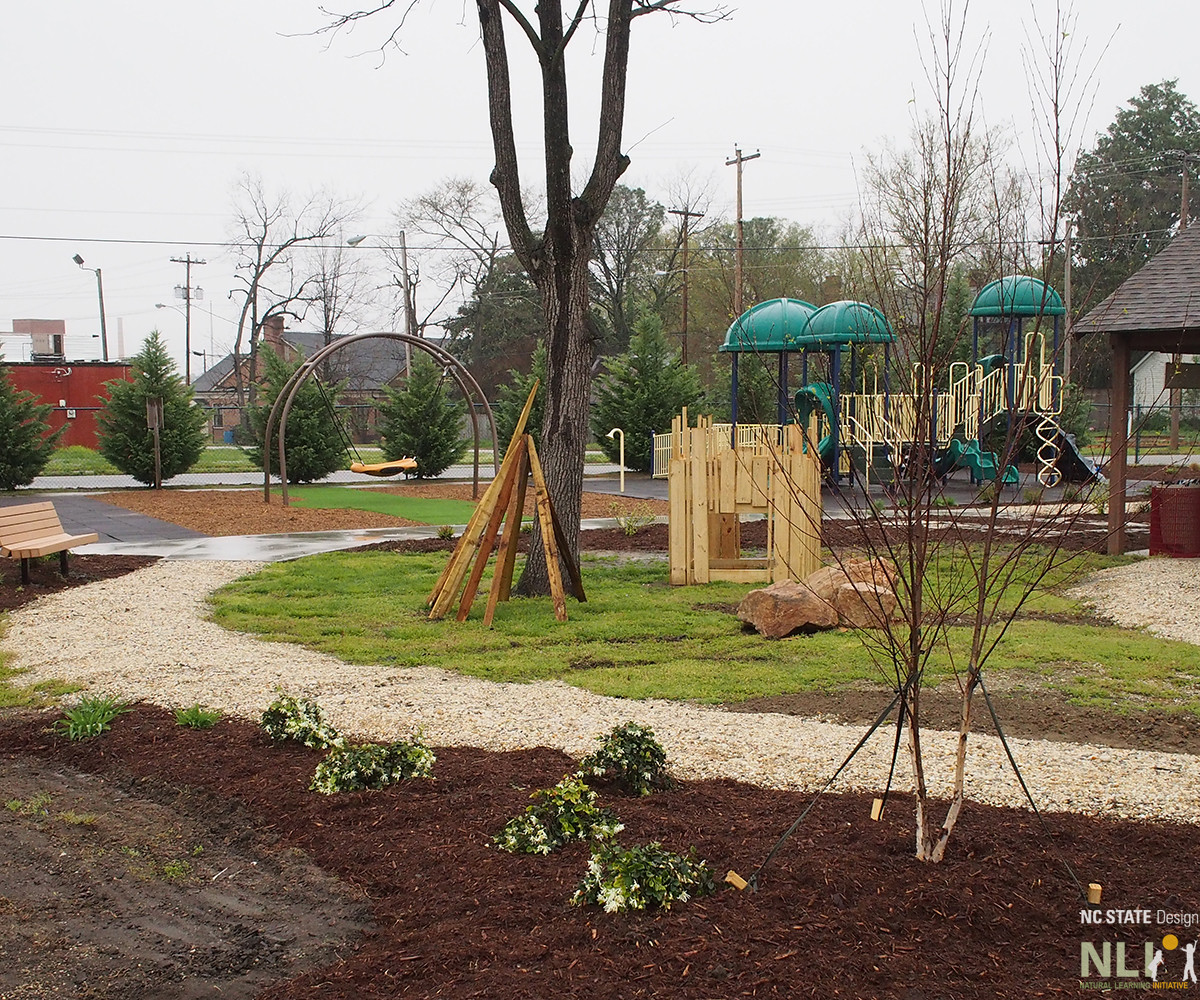
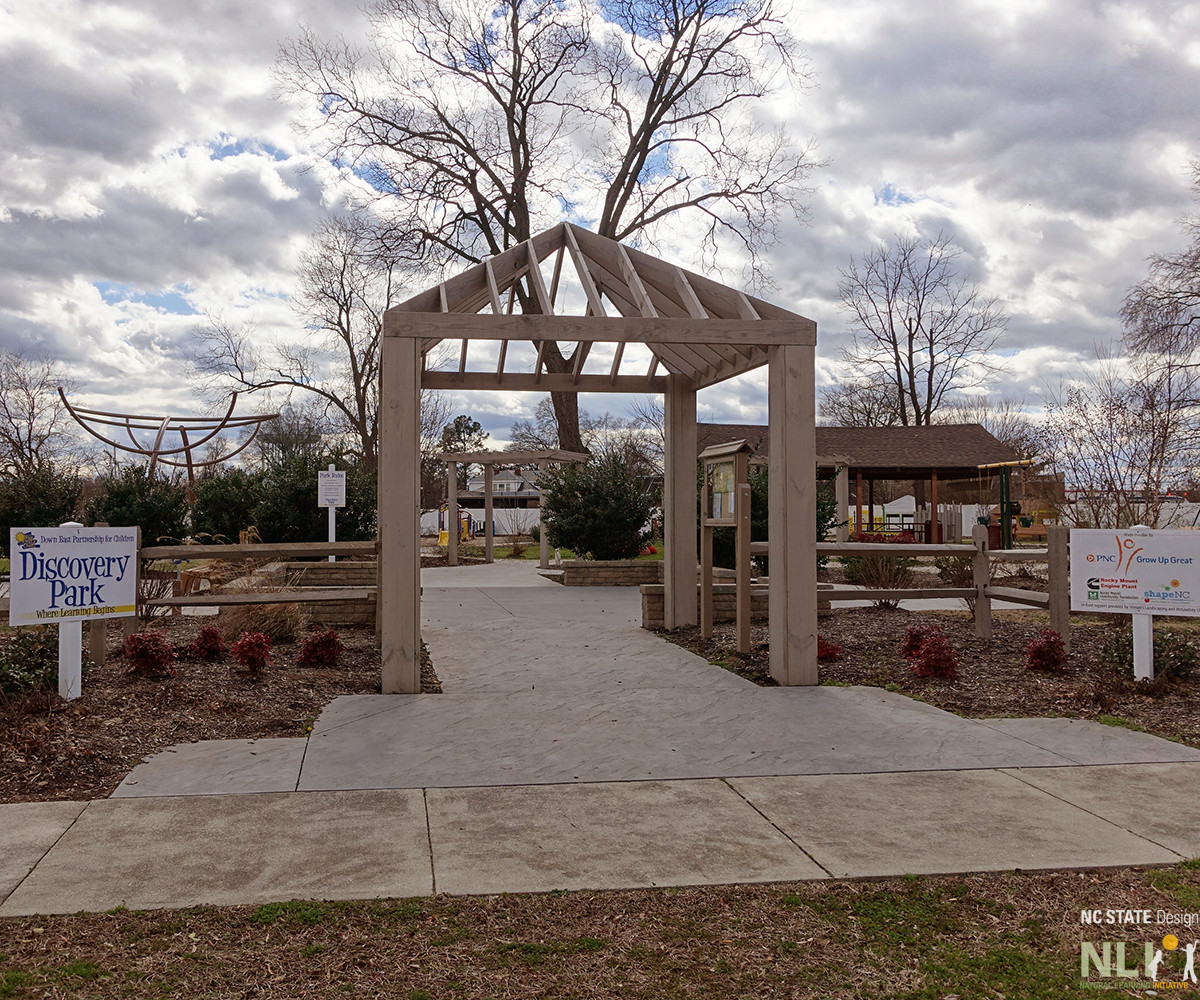
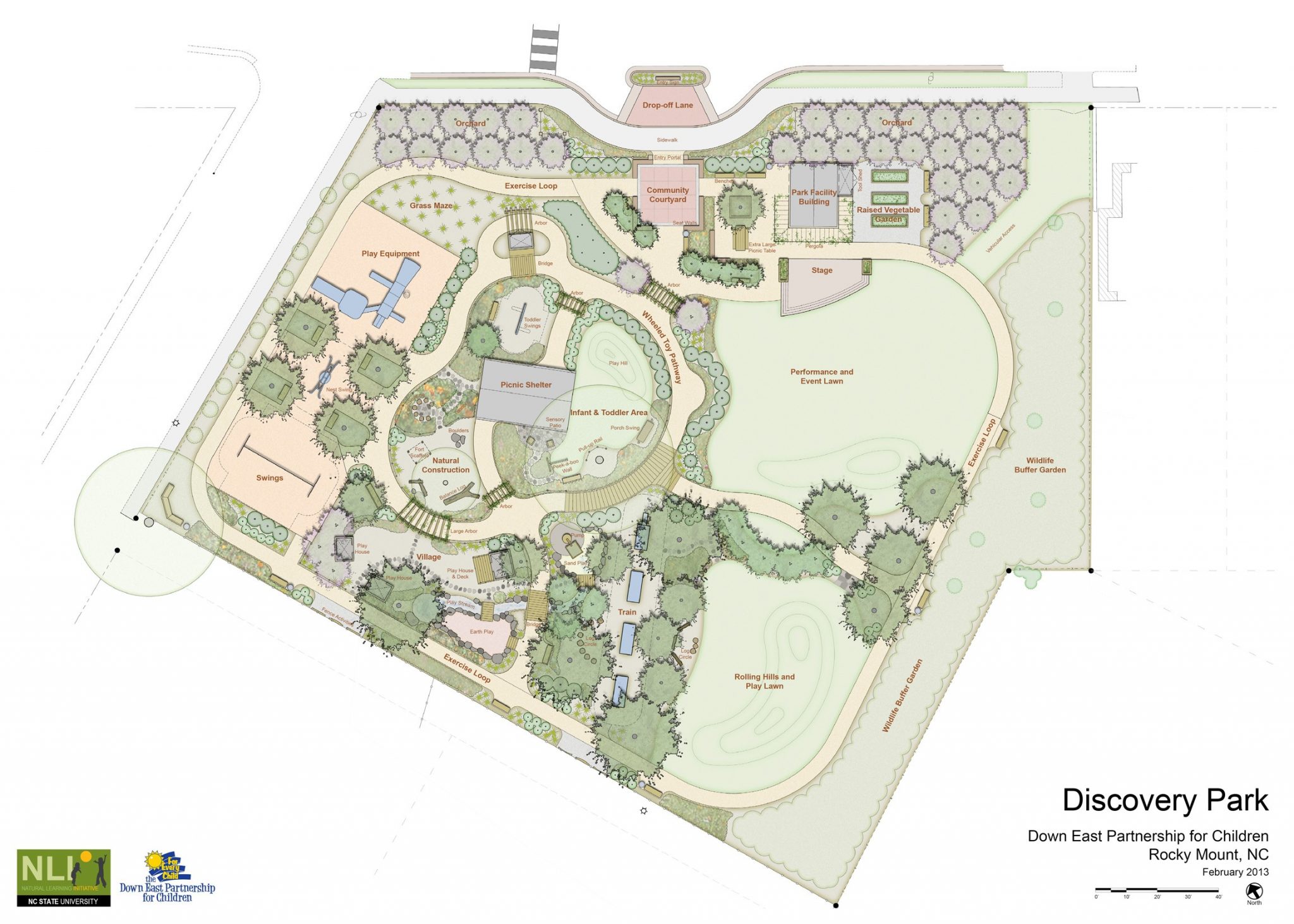
Down East Discovery Play and Learning Park in Rocky Mount, NC
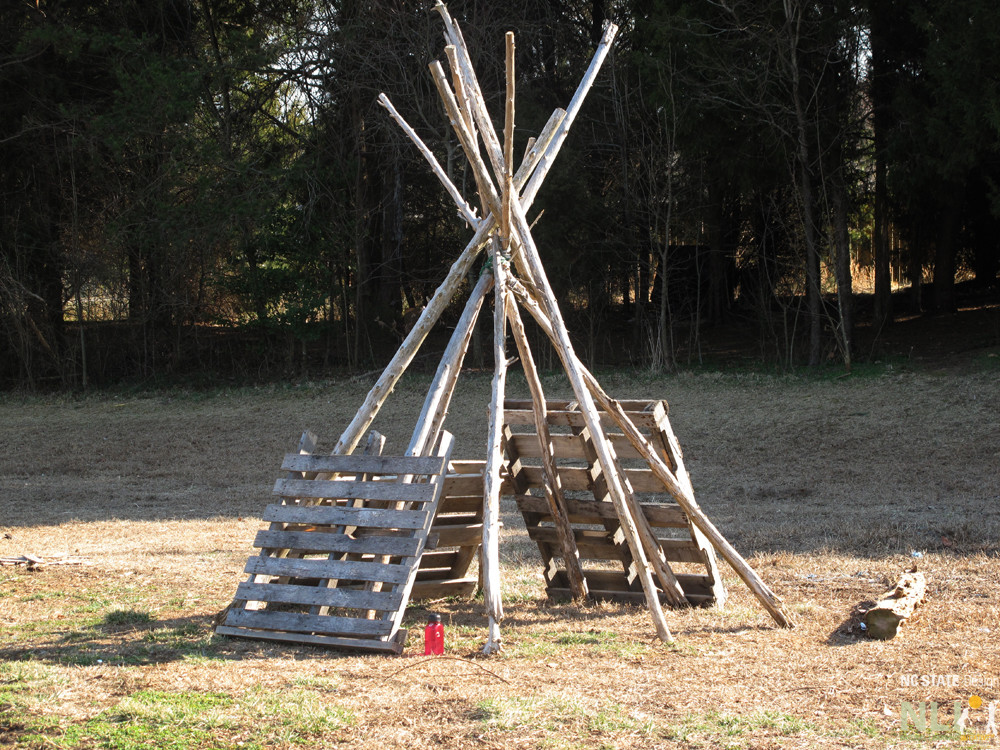
The Down East Partnership for Children in Rocky Mount, NC contracted with NLI to provide design assistance for a park to be used as a demonstration site for early childcare professionals, as well as a public gathering space for the neighboring community. Settings include edible gardens, looped pathways, a gathering lawn, and “Natural Construction” zone, all of which provide opportunities for training with childcare directors and teachers and also offer opportunities for children in the surrounding neighborhood to engage with nature.
Motivation to Move: Physical Activity Affordances in Outdoor Preschool Areas
The goal of this cross sectional, multi-method study is to investigate the association between different types of play area designs in childcare centers and physical activity of 3-5 year old children. A key purpose of the study is to influence childcare licensing policy and accreditation regulations so that outdoor play areas include characteristics that support daily physical activity of preschool children.
Study supported by the Robert Wood Johnson Foundation (through Active Living Research, Sand Diego State University). Dissertation grant.
Principal Investigator: Nilda Cosco, Education Specialist, Natural Learning Initiative, College of Design, NC State University.
What are the best landscape plants for play and learning?
“Plants add a critical dimension of change and diversity to children’s environments. They greatly extend the range of sensory stimulation beyond that which can be provided by synthetic, manufactured objects. Ever-changing, instantly responding to variations in the weather, expressing seasonal cycles, presenting fluctuating palettes of texture, color, form, fragrance, and sound, plants are unmatched in their ability to stimulate the senses and create a positive aesthetic effect.” (Moore, R. 2002. Plants for Play; A Plant Selection Guide for Children’s Outdoor Environments.)
Building on the above quote, this article provides a crash course in understanding the role of plants in children’s environments. There are many publications that deal with planting design theory but few that deal specifically with the benefits of plants in children’s environments. NLI hopes to spark an interest in installing plants for children’s spaces.
How Plants Function for Children
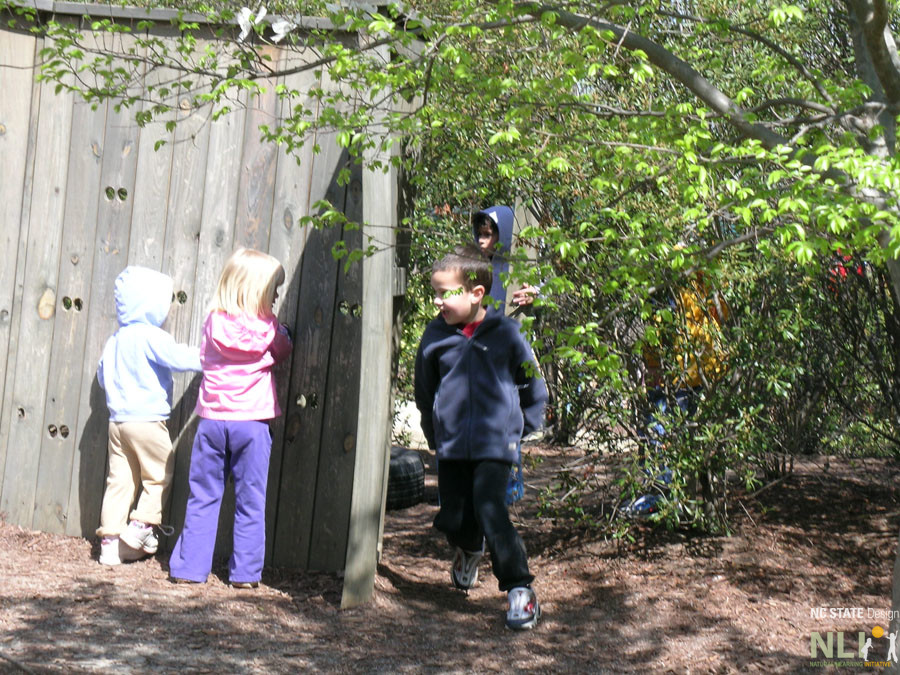
The most important function is the ability of plants to enrich the experience in the natural world of a child where plants provide sensory stimulation, produce shade, and attract interesting visitors from the animal kingdom. As adults, we know that plants provide shade, visual screens, and wind barriers, but to children plants create a magical world where imaginations can endlessly roam. Leaves and other natural loose parts become toys and props. Indoor curricular activities can be taken outside where science, math, art, and literature can be learned through interactions with nature. Plants make it possible for outdoor games like hide-and-go-seek to promote higher levels of physical activity. Providing the opportunity for these experiences requires adults to put themselves in the mind of a child, looking for those extra special qualities that plants can bring to outdoor play and learning.
Plant Basics
Basic differences exist between types of plants: Evergreen plants keep their leaves all year and deciduous plants lose their leaves each year. Perennial plants come back every year and annual plants do not. These basic differences are the foundation for plant selection decisions.
Here are some examples of how these basic differences impact decision making: Evergreen trees provide shade year round. Is that a positive quality in your space? Do you want shade in the winter, or only in the summer? Annual plants provide instant color, but die every year. They provide great opportunities for children to get involved in planting, but areas of annuals should be limited to aviod re-planting the entire space every year. These basic considerations can help in the plant selection process.
Plant Types
The following list of plant types will help you organize your plant selections:
Trees – mainly for shade and as visual screens. Some are good for climbing!
Shrubs – flowering or purely “greenery” and many species attract butterflies and other pollinators.
Vines – perfect for planting on arbors and fences, some have edible fruits.
Ornamental grasses – tough affordable plants can take lots of foot traffic.
Groundcovers – plants that can be used instead of mulch or sand to cover large areas.
Herbs – special plants that can introduce new scents and tastes to the landscape. Some can be used as groundcovers.
Perennial flowering plants – beautiful and intricate flowers that come back every year.
Annual flowering plants – this type of plant is re-planted every year and kids can get involved.
Right Plant, Right Place: Where do plants want to live?
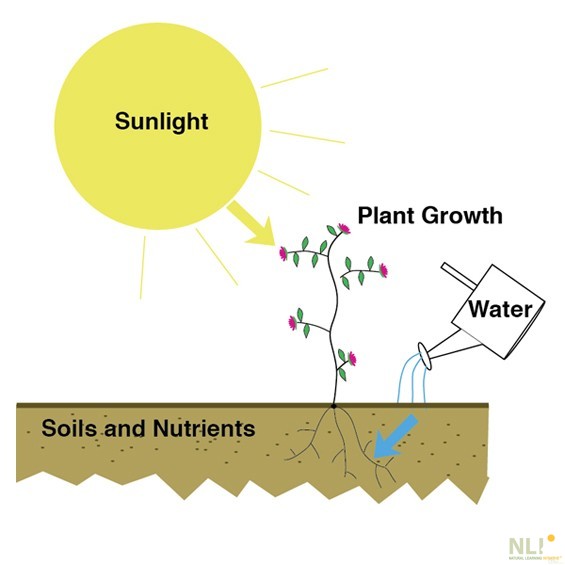
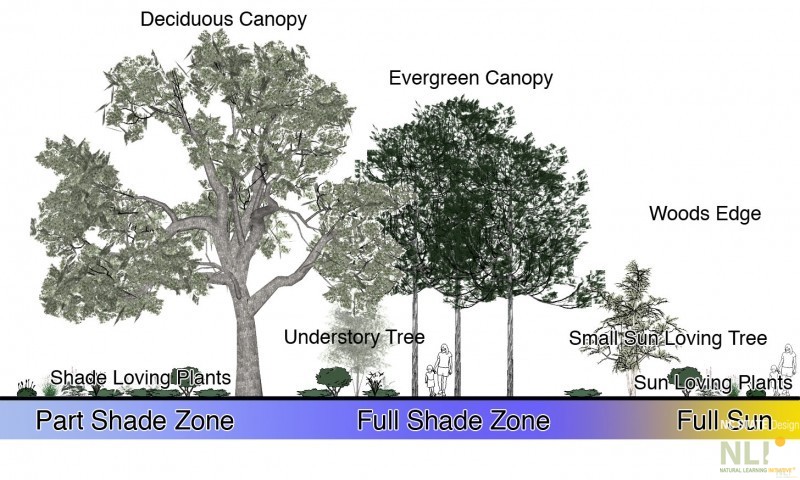
Plants are engineered by nature to survive in specific environments. Horticulture, the science of growing plants, provides us with plants that have been selected from nature to thrive in conditions that we prepare. Knowing some basics about how plants relate to each other and grow as a unit can help with understanding how to put the right plant in the right place. There are many factors that contribute to a successful planting effort where all of the plants continue to grow and thrive. The diagrams below illustrate the essential needs of plants and identify the basic sun/shade conditions that plants need to survive.
What are good landscape plants for North Carolina?
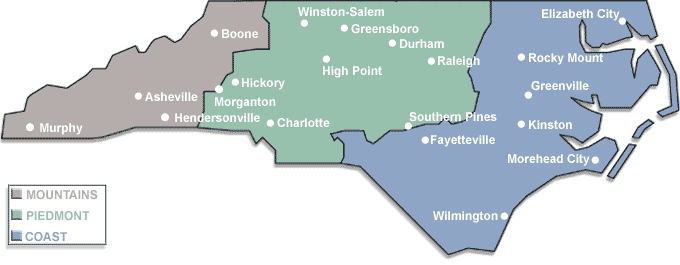
NLI provides a suggested plant list for each region of North Carolina, divided into the following categories: Mountains, Piedmont, and Coastal Plain. Click a link below to download a PDF version of the plant list that is appropriate for your region. These lists have been cross-referenced with the Division of Child Development’s Toxic Plants List as well as the NC State Cooperative Extension’s Toxic Plants List, but the responsibility of providers to verify that plants are chosen appropriate for their intended use.
The following information is provided for each plant:
Botanical Name: This is the genus and species name of the plant. Use this name when discussing plant selections with nurseries in order to get the exact plant species that you are asking for.
Common Name: Common names are fine for general purpose, but since they widely vary it is a good idea to use botanical names when purchasing plants or discussing them with a plant expert.
Recommended Cultivars: A cultivar is a plant that has been selected based on specific traits that provide an improvement over the plant it was selected from. Cultivars are always selections of a specific species of plant and are used along with the botanical name to further specify a specific plant. For instance: October Glory Red Maple (common name) would have the botanical name Acer rubrum ‘October Glory’.
Notable Features: This column will help you understand what unique traits each plant has.
Exposure Requirement: This column will help you understand the amount of sun or shade a plant will tolerate. Here are the options shown in the list:
Shade: always receives shade
Sun: always receives sun
Full Sun/Part Shade: receives shade in the morning and sun in the afternoon in the summer
Shade/Part Sun: receives sun in the morning and shade in the afternoon in the summer
Native: Indicates if the plant is regionally native to the Southeastern US.
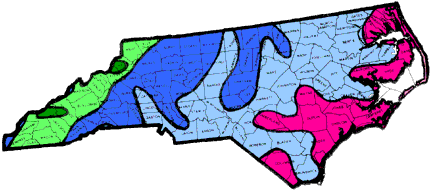
USDA Hardiness Zone: The USDA provides a map (see below) that assists in selecting plants that are appropriate for the zone that they are being used in. Plants will generally survive a range of zones, as indicated on the list.
Max. Mature Height: This indicates the expected height of the plant at maturity. Note that soil, moisture, and climate conditions will affect the growth of plants. Some plants, such as oaks, will not reach their mature height for decades so be sure to check on the plant’s growth rate.
Max. Mature Width: Same notes as above.
Very Wet/Very Dry/Moist &Well Drained/Occasionally Dry: Indicates the plant’s preferred soil moisture condition.
Landform Regions in North Carolina
Hardiness Zones
Dark Green = Zone 6a Light Green = Zone 6b Dark Blue = Zone 7a Light Blue = Zone 7b Magenta = Zone 8a