Blog

  • 5th Annual NLI Design Institute

    5th Annual NLI Design Institute

    Design for Children IN Nature

    The Natural Learning Initiative, a unit of North Carolina State University, is committed to promoting the importance of the natural environment in the daily experience of all children and families, through environmental design, research, education, and dissemination of information.

    Program

    For the 5th year in a row, we’ve conducted the Annual Design Institute, which is geared towards education and practice in designing for children in nature. The Design Institute continues to grow every year due to the high demand for professional training from various institutions such as museums, zoos, childcare centers, schools, etc.

    This year the Design Institute was hosted by the U.S. Fish & Wildlife Service at the National Conservation Training Center in West Virginia, from August 9-11, 2007. The theme this year was “Design for Children IN Nature”. For two and a half days, participants learned:

    • Why is community design for children and families important?
    • What can be done through design to address the lack of contact with nature?
    • How can outdoor environments for children and families be better designed?

    During the conference, participants also experienced an outdoor activity with children where they rediscovered their inner child and learned how to create a magical and imaginative outdoor environment.

    Speakers

    Robin Moore, Director, Natural Learning Initiative, College of Design, NC State University.

    Nilda Cosco, Initiative for Inclusive Design, Coordinator, College of Design, NC State University. 

    Dogan Arthur, Architect, D.W. Arthur Associates Architects, Boston. What is the Connection between Nature and Architecture?

    David Becker, Associate Director of Learning Experiences, Hamill Family Zoo. Interactive Nature Play at the Hamill Family Play Zoo.

    Cam Collyer, Program Manager, Learning Grounds Evergreen, Canada. Insights from 6 yrs of Institutionalizing Green School Grounds.

    Nancy Easterling, Coordinator of Horticulture Therapy and Children’s Programs, NC Botanical Garden. Panel Discussion.

    Andrea Faber-Taylor, University of Illinois at Urbana-Champaign. Evidence that Green Spaces are Children’s Growing Places.

    Jim Greenman, SVP for Education, Bright Horizons Family Solutions, Child Development Center. Panel Discussion.

    Rick Lemon, Director, National Conservation Training Center, U.S. Fish & Wildlife Service. Welcome Session.

    Martin Maudsley, Coordinator, Wild About Play, United Kingdom. Playwork and the Built Environment.
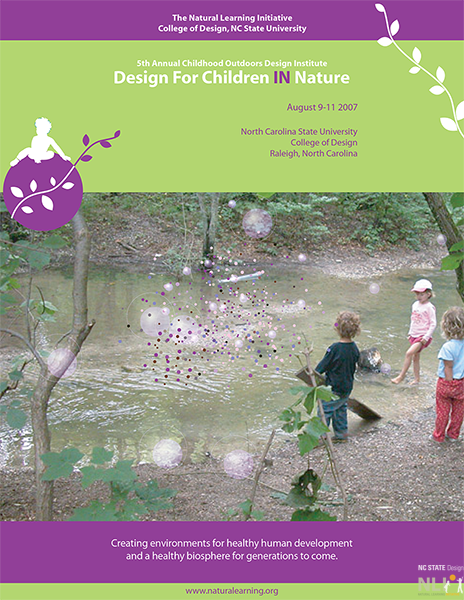
    5th Annual NLI Design Institute flyer

    August 9-11, 2007

    Sponsors
  • 4th Annual NLI Design Institute

    4th Annual NLI Design Institute

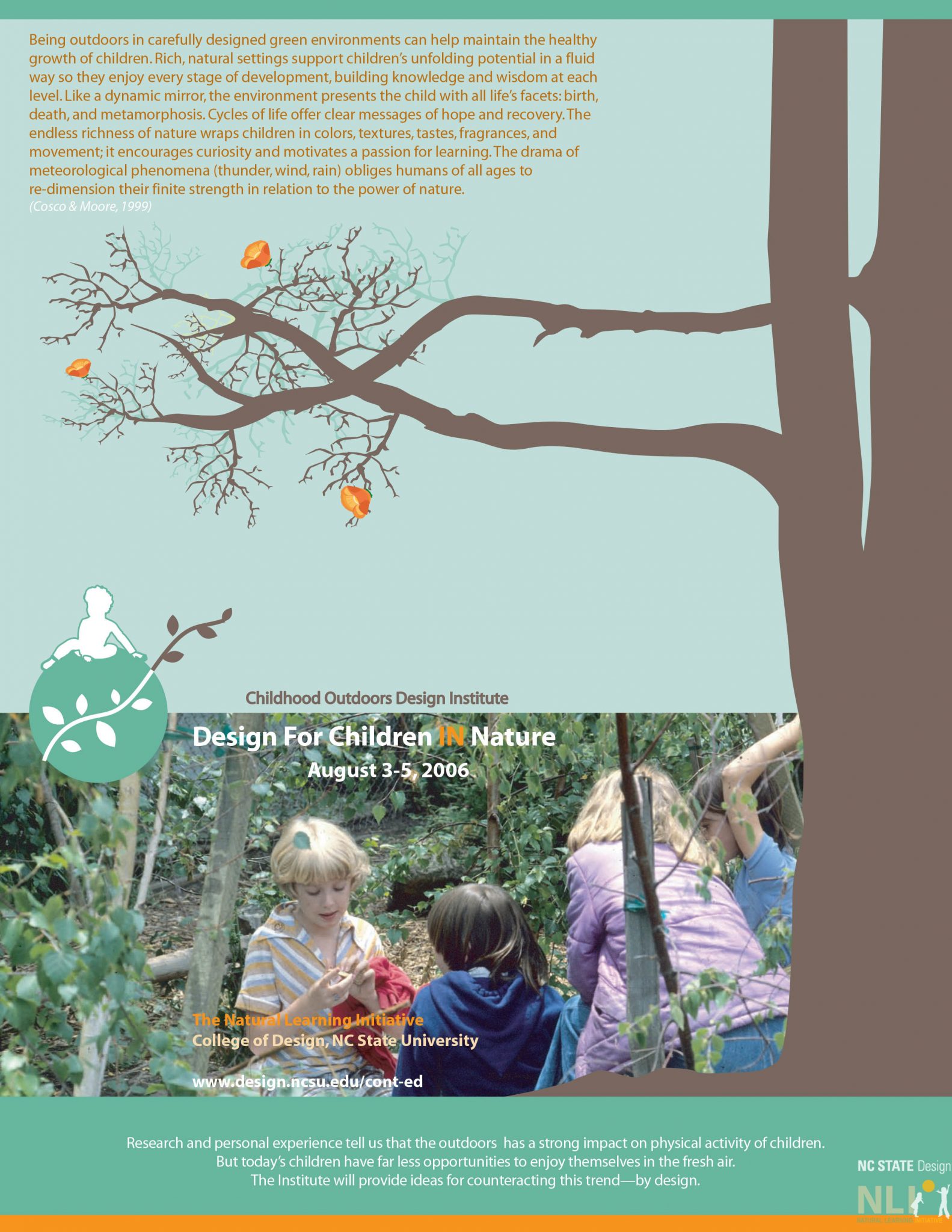
    Design for Children IN Nature

    Regardless of children’s abilities, nature has a positive impact on well-being and helps children acquire harmonious, healthy lifestyles. Well-being is achieved through a delicate balance between healthy human processes (psychological, physical, spiritual) and healthy environments (landscapes, weather, built environments, and the social circumstances of daily life).

    Program

    Being outdoors in carefully designed green environments can help maintain the healthy growth of children. Rich, natural settings support children’s unfolding potential in a fluid way so they enjoy every stage of development, building knowledge and wisdom at each level. Like a dynamic mirror, the environment presents the child with all life’s facets: birth, death, and metamorphosis. Cycles of life offer clear messages of hope and recovery. The endless richness of nature wraps children in colors, textures, tastes, fragrances, and movement; it encourages curiosity and motivates a passion for learning. The drama of meteorological phenomena (thunder, wind, rain) obliges humans of all ages to re-dimension their finite strength in relation to the power of nature (Cosco & Moore, 1999).

    Think back to your childhood. It is likely some of your fondest memories are of being outdoors. Do you remember exploring, picking berries, playing with mud, building forts, climbing trees, fishing, and playing with water? Although research and personal experience tells us that being outdoors has a strong impact on healthy development, today’s children lack such opportunities. Progressive educators embraced this critical healthy development path long ago.

    This Symposium featured presentations, discussions, and an interactive design workshop. Participants visited model outdoor environments for play, learning, and healthy living at a Montessori School, a Waldorf School, a childcare center working with Reggio Emilia principles, and a universally-designed community park. We built on the well-documented positive effect of nature on children’s behavior, to demonstrate how environments designed for daily contact with nature support early and middle childhood learning and active lifestyles. We explored the design of environments for children and their families from the first year of life (welcome to planet Earth!) to pre-adolescence in formal settings such as schools and childcare centers, non-formal settings such as children’s museums, botanical gardens, and zoos, and informal settings such as residential areas, neighborhood parks, playgrounds, and vacant lots. Our goal is to raise awareness about the role of designed natural environments for healthy child development and providing information and tools for creating them. Participants will include architects, landscape architects, designers, public health professionals, childcare providers, educators, extension agents, master gardeners, parks and recreation professionals, horticultural therapists, and other individuals interested in creating natural environments for children to improve their quality of life.

    Speakers

    David Kahn, Executive Director NAMTA. The child in nature: A developmental perspective from early childhood through adolescence.

    Jim Greenman, Senior Vice President for Education, Bright Horizons Family Solutions. The role of childcare design to ensure daily outdoor play.

    Andrea Faber-Taylor, Child Environment & Behavior Researcher and Co-Director of the Landscape and Human Health Laboratory, University of Illinois at Urbana-Champaign. Healthy development by design: Evidence of the benefits of nearby nature.

    Lori Little, Bright Horizons Family Solutions (BHFS). Close with nature: The impact of design for integrating Reggio Emilia perspectives in a natural outdoor environment.

    Betsy Thigpen, Training and Technical Assistance Services, Western Kentucky University. Why we are here.

    Dr. Karen DeBord, Dr. Linda Hestenes, Dr. Nilda Cosco, Robin Moore, and Janet McGinnis, Measuring outdoor quality with POEMS—The Preschool Outdoor Environment Measurement Scale.

    Nilda Cosco, the Natural Learning Initiative, College of Design, NC State University. Evidence to support the design of rich environments for children.

    Robin Moore, the Natural Learning Initiative, College of Design, NC State University. Designing-IN nature in middle-childhood settings.

    4th Annual NLI Design Institute flyer

    August 3-5, 2006

    Sponsors

    Ncdepartmentofnaturalandculturalresources E1508355534350
    Bak Shape
  • 2nd Annual NLI Design Institute

    2nd Annual NLI Design Institute

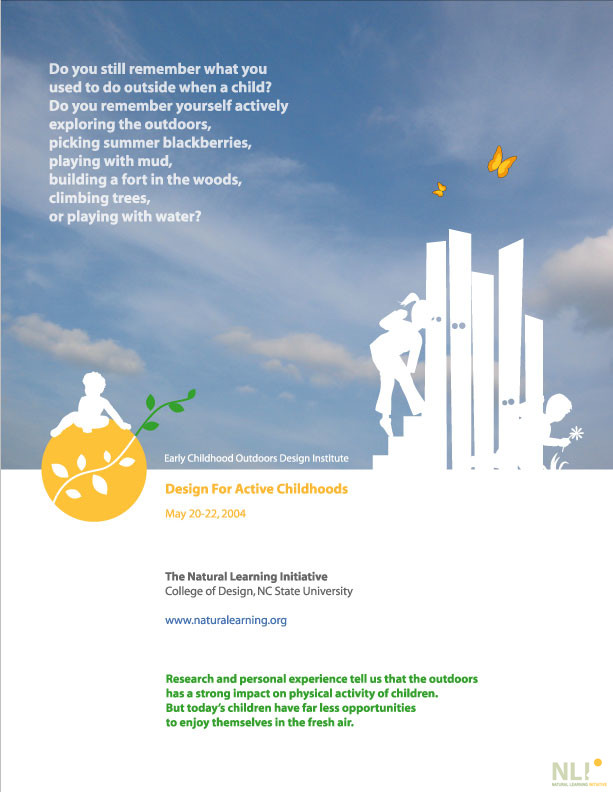
    Design For Active Childhoods

    The goal of Design for Active Childhoods is to help designers, recreation professionals, and educators bring back the richness of the outdoors as a resource for education and healthy child development.

    Program

    Think back to when you were four, five, or six years old. It is likely some of your fondest memories are of the outdoors. Do you still remember what you used to do outside? Do you remember yourself actively exploring the outdoors, picking summer blackberries, playing with mud, building a fort in the woods, climbing trees, or playing with water? Research (and personal experience) tell us that the outdoors has a strong impact on physical activity of children. But today’s children have far less opportunities to enjoy themselves in the fresh air.

    Participants will:

    1. Learn about the impact of outdoor spaces in early childhood development.
    2. Recognize the relationship between young children’s lifestyles and the built environment.
    3. Understand the role of landscape design in improving the quality of outdoor environments for healthier development.
    4. Understand the range of community groups that can benefit from environments designed for active living for young children including families, childcare centers, museums, botanical gardens, parks, hospitals, environmental centers.
    5. Acquire knowledge of specific design solutions to counteract sedentary lifestyles in early childhood.
    6. Become familiar with the design programming process, including young children’s participation.
    7. Understand how to translate design programs into site designs.
    8. Learn about the network of professionals and researchers working in the field of public health.

    Speakers

    Robin Moore, Dipl.Arch, MCP, Professor of Landscape Architecture and Director of the Natural Learning Initiative, NC State University. Presenter

    Nilda Cosco, Psp, Education Specialist at the Natural Learning Initiative, NC State University. Presenter

    Eva-Carin Banka Johnson, Safety & Knowledge Manager at Children’s IKEA, Sweden. Learning from families to develop products for active living

    William Crain, PhD, Professor of Developmental Psychology, City College of New York. Endangered childhood.

    Patrik Grahn, PhD, Professor of Landscape Planning, SLU (Swedish Land Grant University), Alnarp, Sweden. Children’s pre-school environments. The impact of the design of the school environment on children’s behavior in play, their power of concentration, and their motor skills.

    Jim Greenman, Senior Vice President for Education, Bright Horizons Family Solutions. Children in child care: Losing ground and gaining pounds—off to bad a start.

    Richard E. Killingsworth, Director of Active Living by Design, School of Public Health, UNC, Chapel Hill. Active living and children.

    Laurie Ringaert, Director, Center for Universal Design, College of Design, NC State University. Universal Design: a tool for creating spaces for active children.

    2nd Annual NLI Design Institute flyer

    May 20-22, 2004

    Sponsors

  • POD Wake Co. Gathering and Tour 2017

    POD Wake Co. Gathering and Tour 2017

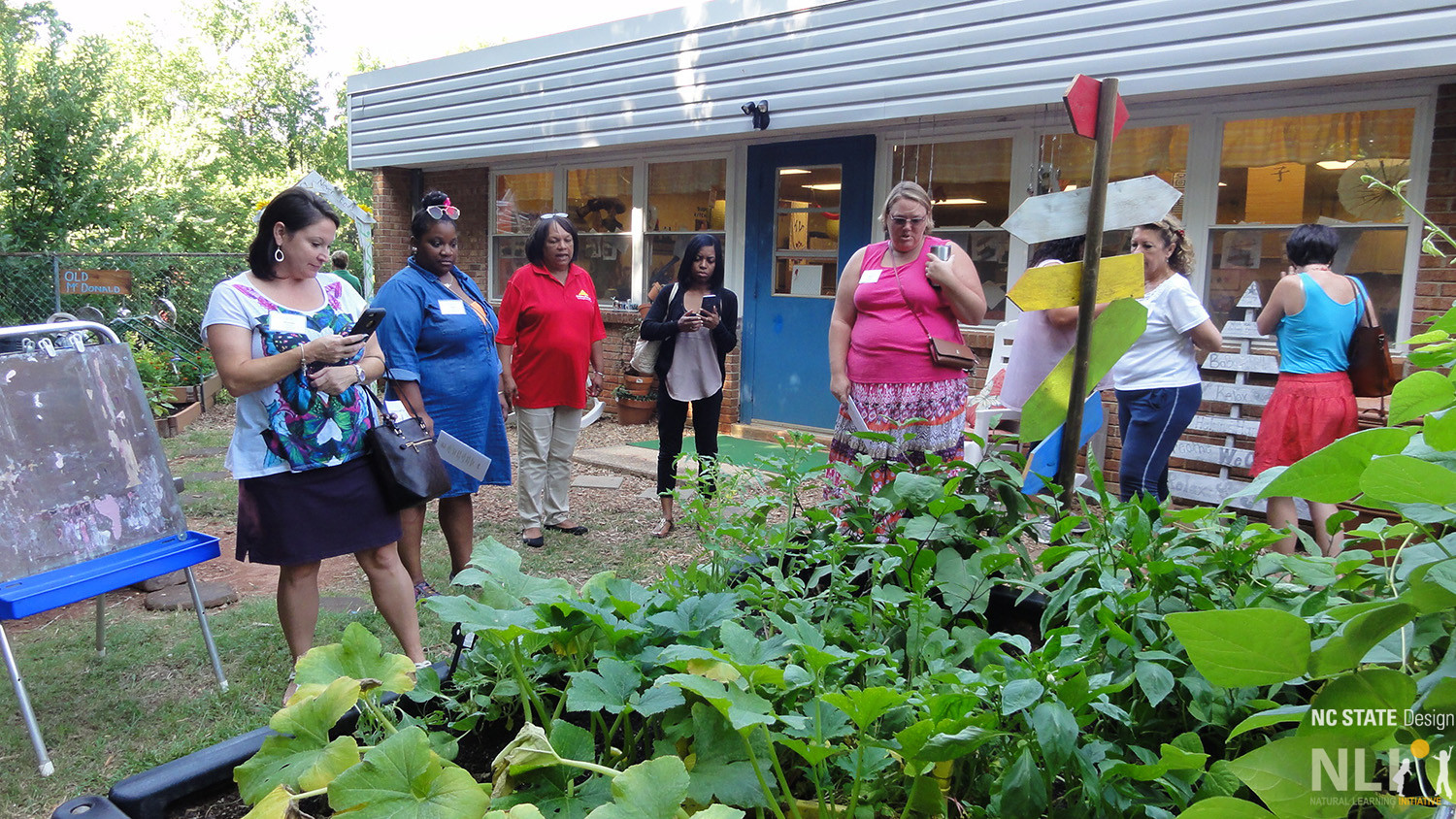
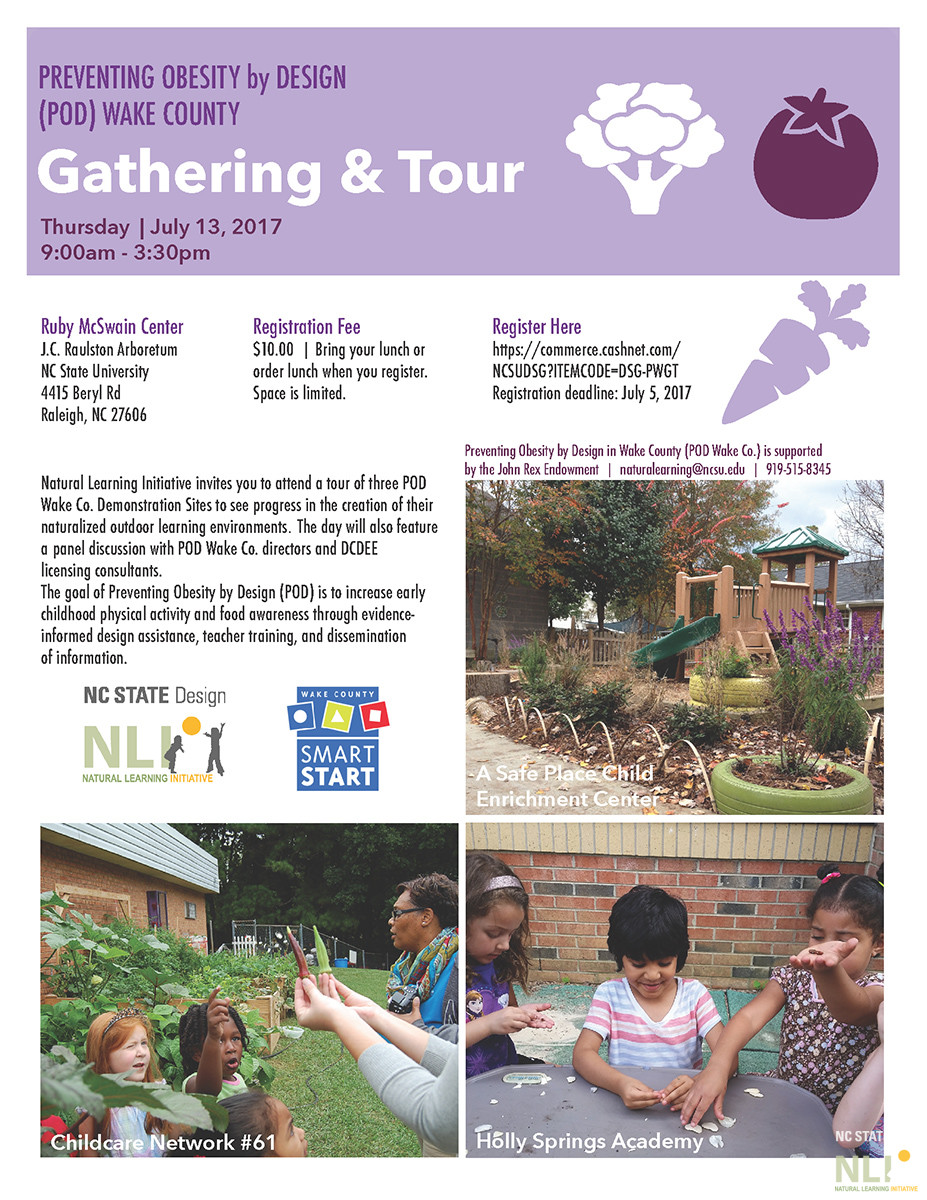
    Natural Learning Initiative invites you to attend a tour of three POD Wake Co. Demonstration Sites to see progress in the creation of their naturalized outdoor learning environments. The day will also feature a panel discussion with POD Wake Co. directors and DCDEE licensing consultants. The goal of Preventing Obesity by Design (POD) is to increase early childhood physical activity and food awareness through evidence-informed design assistance, teacher training, and dissemination of information.

    people touring the gardens at a safe place enrichment center
    people touring childcare network #61
    people at holly springs academy for the tour
    POD Wake Co. Gathering and Tour 2017 flyer

    July 13, 2017

  • POD Wake Co. Gathering and Tour 2018

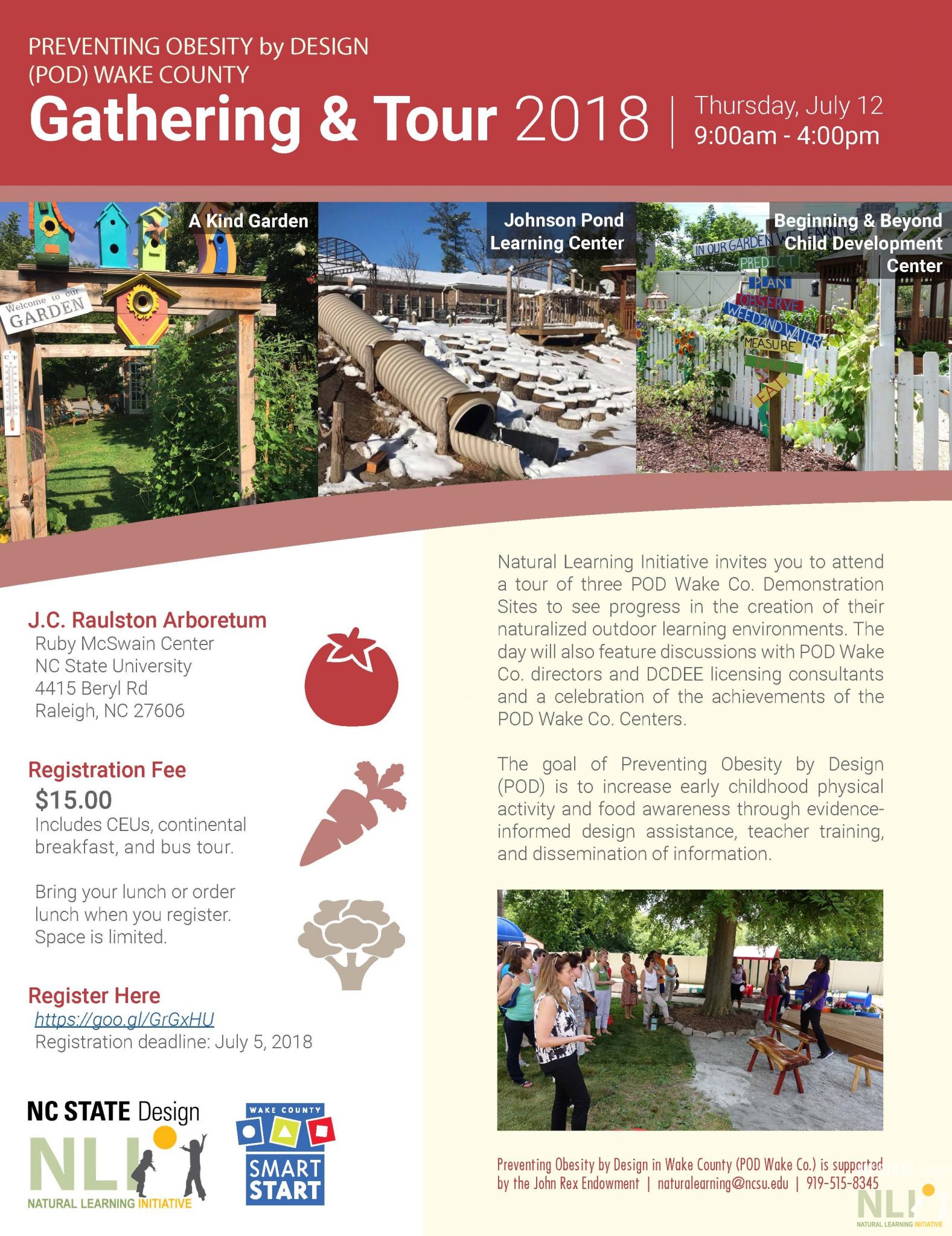
    POD Wake Co. Gathering and Tour 2018

    Natural Learning Initiative invites you to attend a tour of three POD Wake Co. Demonstration Sites to see progress in the creation of their naturalized outdoor learning environments. The day will also feature a panel discussion with POD Wake Co. directors and DCDEE licensing consultants.

    The goal of Preventing Obesity by Design (POD) is to increase early childhood physical activity and food awareness through evidence informed design assistance, teacher training, and dissemination of information.

    Pano 20180712 095854 E1532373288957

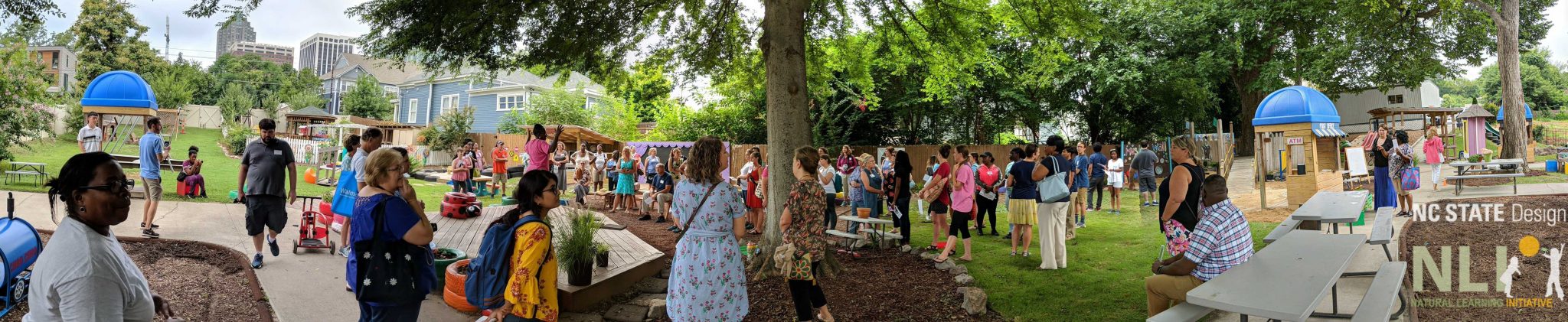
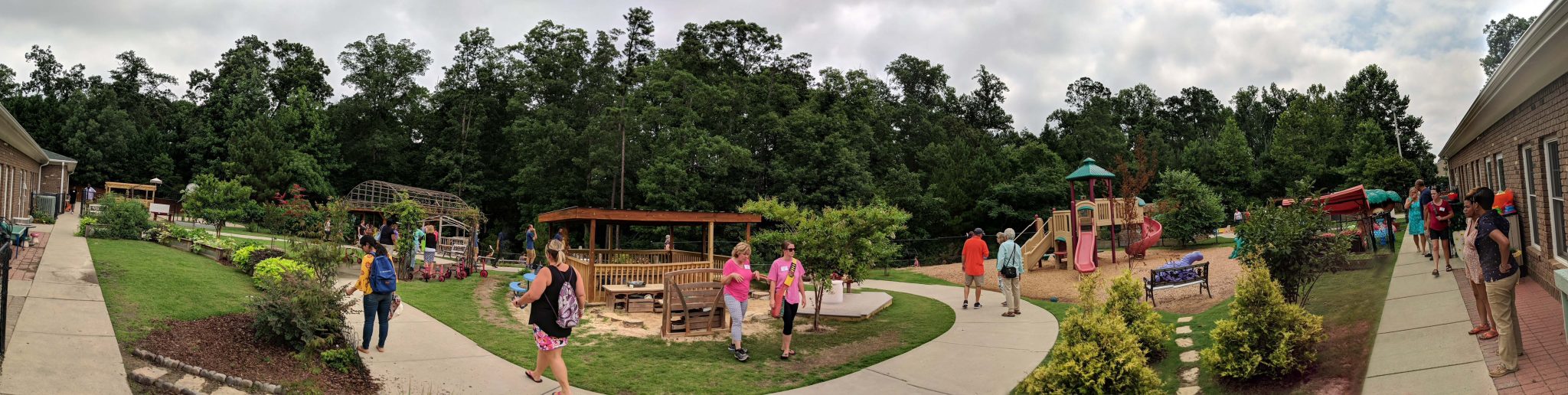
    Beginning and Beyond Child Development Center Owner, Rosalind Blair, welcomes visitors to their renovated OLE. They have continuously added to the OLE since the last time they hosted tour visitors in 2015.

    POD wake tour

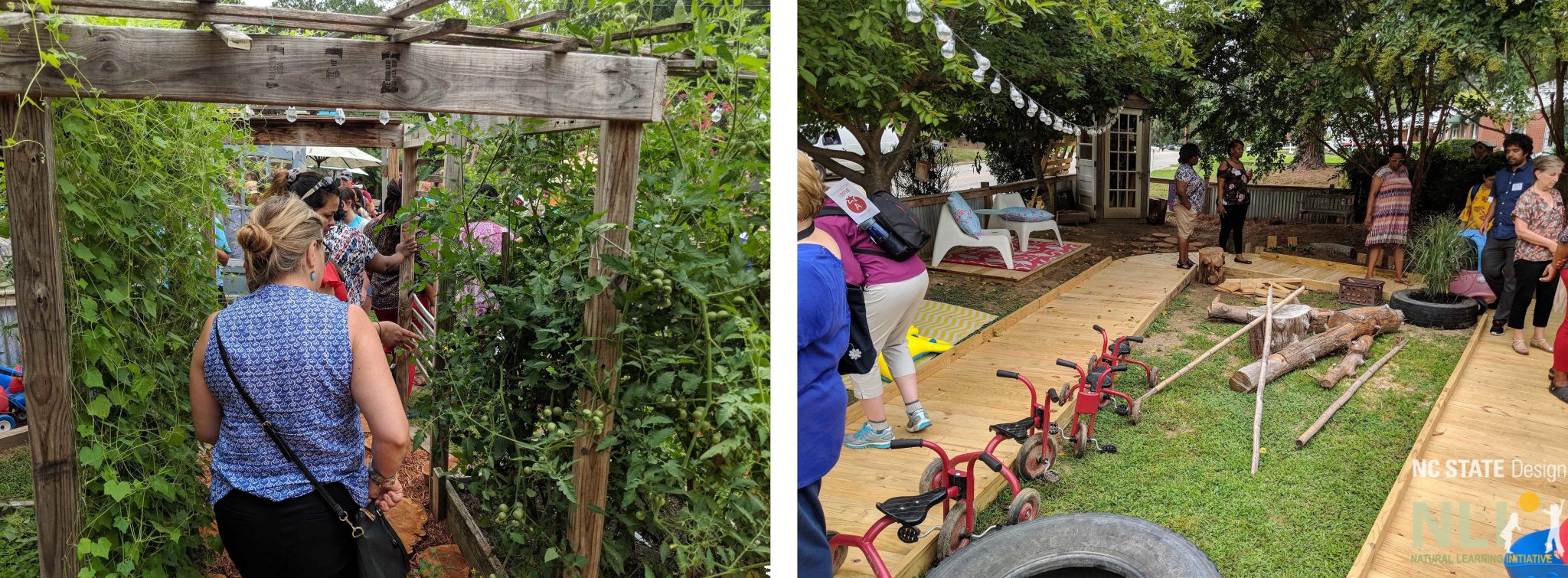
    Visitors take in the fruited arbor at A Kind Garden (left) and walk along the wooden plank wheeled toy pathway (right). No matter what size, the potential for an OLE is great!

    Pano 20180712 122918

    Visitors tour Johnson Pond Learning Center as they learn how an OLE can be adapted to young children of all age groups in a large center.

    gathering and tour 2018 flyer

    July 12, 2018

  • Research to Practice: Maximizing Child Outcomes in the Outdoors

    Research to Practice: Maximizing Child Outcomes in the Outdoors

    Early Head Start

    Reconnecting children to nature and maximizing children’s learning and development for improved child outcomes.

    Program

    During a time when expectations are clear that high quality Head Start programs should prepare children for school readiness, it is useful to take a careful look at what the research shows regarding learning environments that produce the most impressive child outcomes for infants and toddlers as well as preschoolers. For example, research shows that outcomes in all developmental domains are maximized by more time and activity in the outdoor environment.

    Specifically, research shows that attention span and cognitive development are enhanced by learning in the out-of-doors. In addition, research shows that challenging behaviors that often interrupt the learning process, such as impulsivity and aggression, decrease with more time and activity in natural environments.

    This training event was designed for education managers, specialists, training coordinators, center directors, area supervisors, program staff who train Early Head Start and Head Start teaching staff, and program leadership in the process of planning new or renovated Head Start and Early Head Start outdoor play areas.

    Speakers

    Robin Moore, DiplARch, MCP, Professor of Landscape Architecture and Director, Natural Learning Initiative, NC State University.

    Betsy Thigpen, MS, Child Development Consultant, Natural Learning Initiative, NC State University.

    Nilda Cosco, PhD, Education Specialist, Natural Learning Initiative; Research Associate Professor, College of Design, NC State University.

    Shweta Nanekar, MLA, Design Associate, Natural Learning Initiative, College of Design, NC State University.

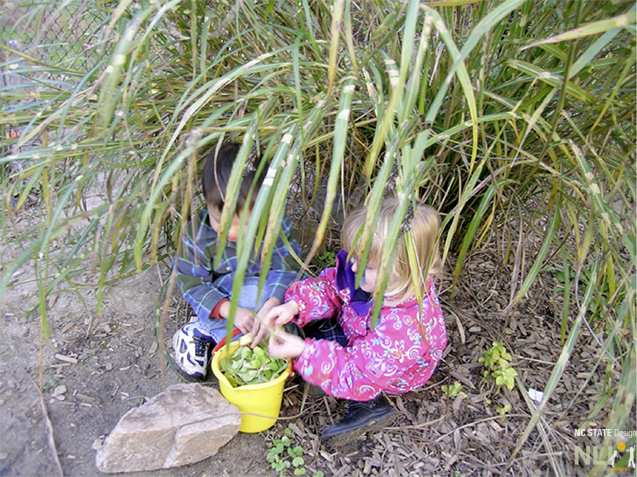
    children collecting natural loose parts

    September 28-29, 2010

  • Playwork IN Nature Training 2009

    Playwork IN Nature Training 2009

    Playwork IN Nature Training Program

    The Playwork IN Nature Training Program trained individuals in basic playwork approaches for working with children in institutional and public settings where engagement with nature is the primary vehicle for creative enjoyment and healthy child development.

    Program

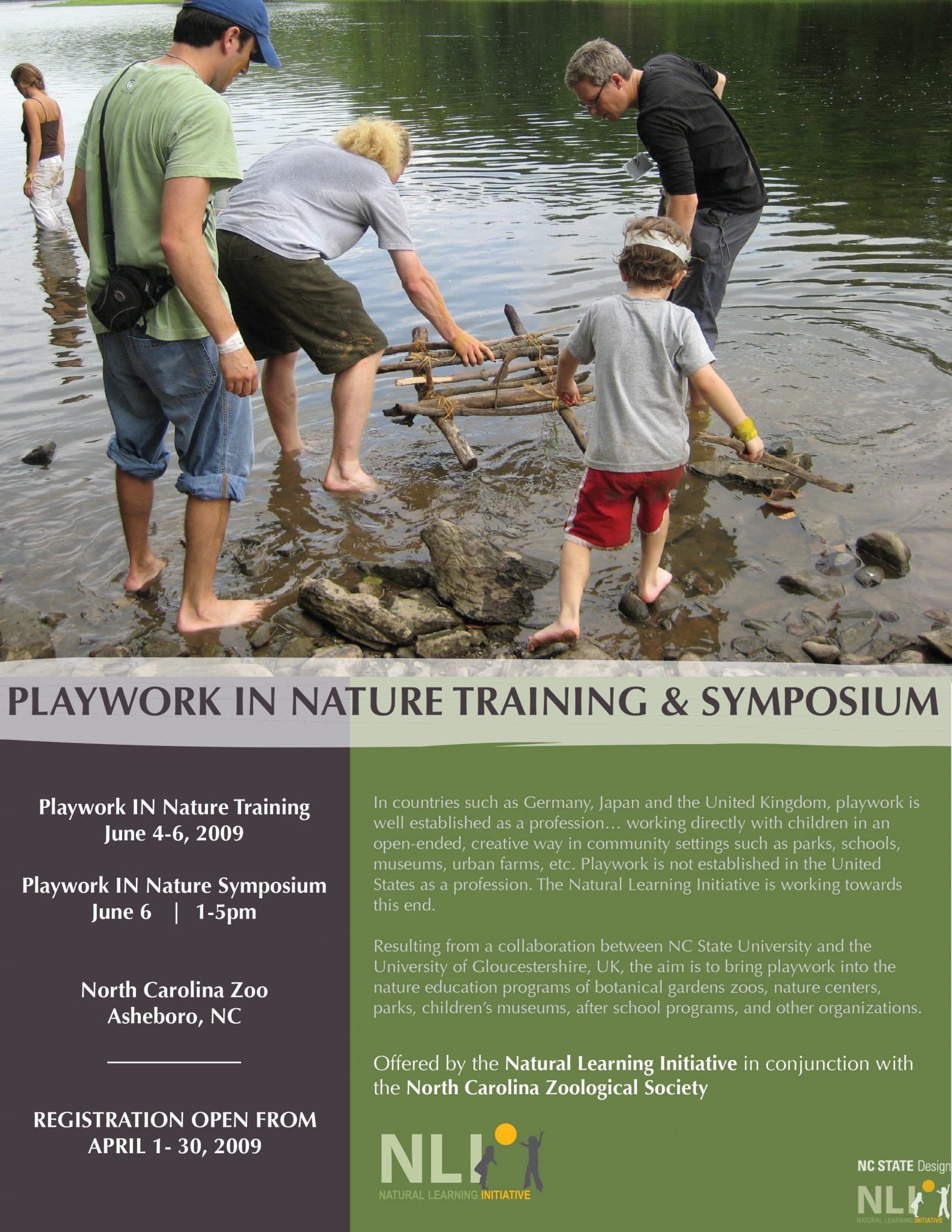
    In countries such as Germany, Japan and the United Kingdom, playwork is well established as a profession… working directly with children in an open-ended, creative way in community settings such as parks, schools, museums, urban farms, etc. Playwork is not established in the United States as a profession. The Natural Learning Initiative is working towards this end. Resulting from a collaboration between NC State University and the University of Gloucestershire, UK, the aim is to bring playwork into the nature education programs of botanical gardens zoos, nature centers, parks, children’s museums, after school programs, and other organizations.

    We shared personal anecdotes about nature play from our own childhoods, learned about natural affordances and constrained action, explored how to build relationships with kids, discussed how to overcome obstacles of working with different types of institutions, fantasized what the world would be like without play, considered risk management in children’s environments, reflected on the attributes of an effective playworker – and how to play with sticks (video), among many topics.

    Speakers

    Nilda Cosco, Natural Learning Initiative, NC State University

    Randy Fulk, North Carolina Zoo

    Jessica Hoffmire, North Carolina Zoo

    Linda Kinney, North Carolina Zoo

    Martin Maudsley, Playwork Partnerships, University of Gloucestershire

    Robin Moore, Natural Learning Initiative, NC State University

    Daniel Rees Jones, Playwork Partnerships, University of Gloucestershire

    playwork in nature training and symposium flyer

    June 4-6, 2009

  • 30. Tire Planters

    Infosheets

    30. Tire Planters

    Download the PDF – English

    Tire planters are universally available and inexpensive, making them a great addition to any low-cost outdoor learning environment (OLE) naturalization. Used tires can be found at almost any local car repair shop or tire store — explore options in your community and see if a local business will donate tires for free!

    SINGLE TIRE PLANTERS

    Wash the tires thoroughly with soap and water to ensure that paint will adhere to the rubber. A non-toxic degreaser may also be required to remove tougher grime.

    Prime the tires with a spray primer once dry. This will also help paint adhere to the tires. Allow the primer to fully dry before applying a layer of paint.

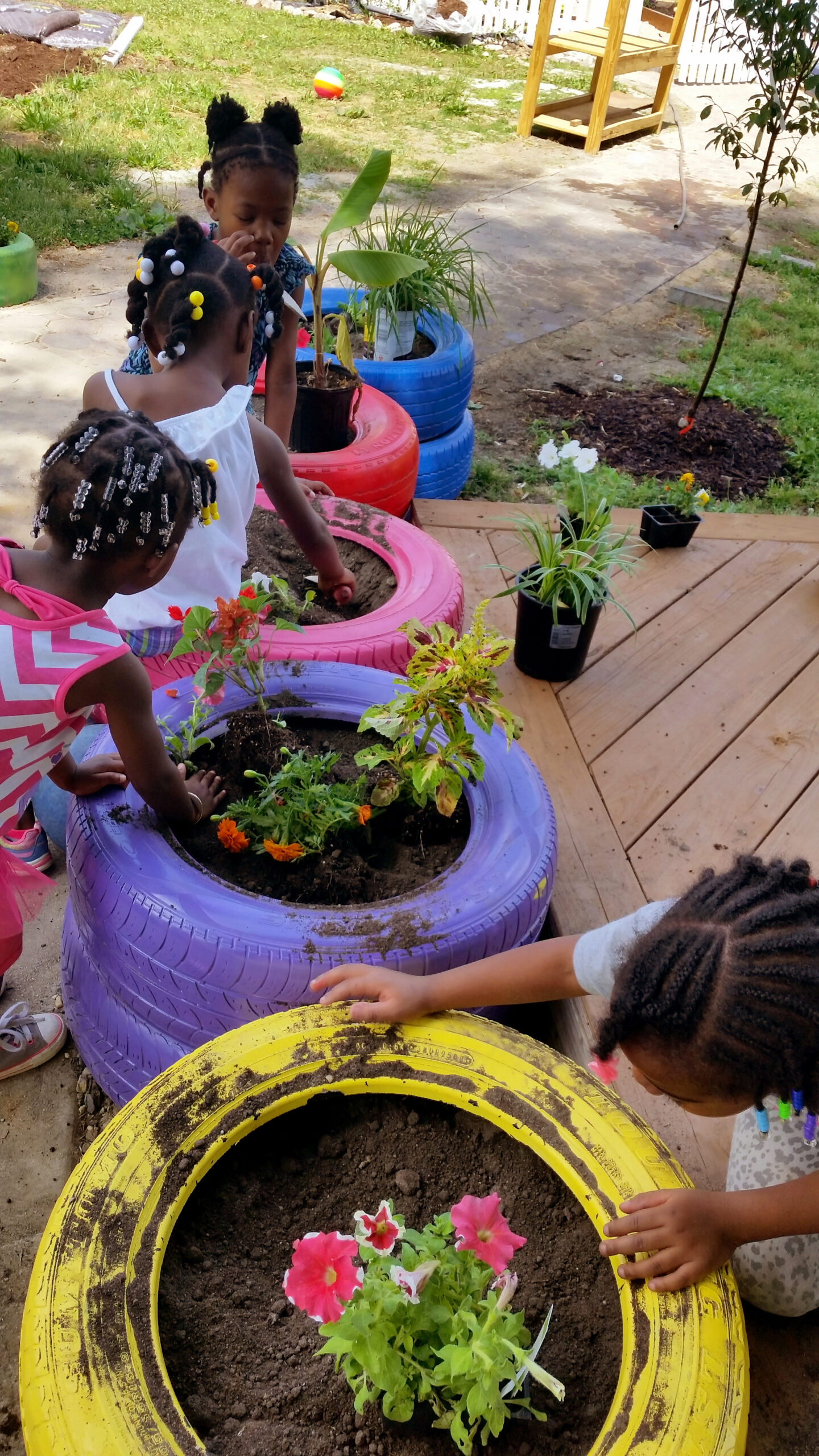
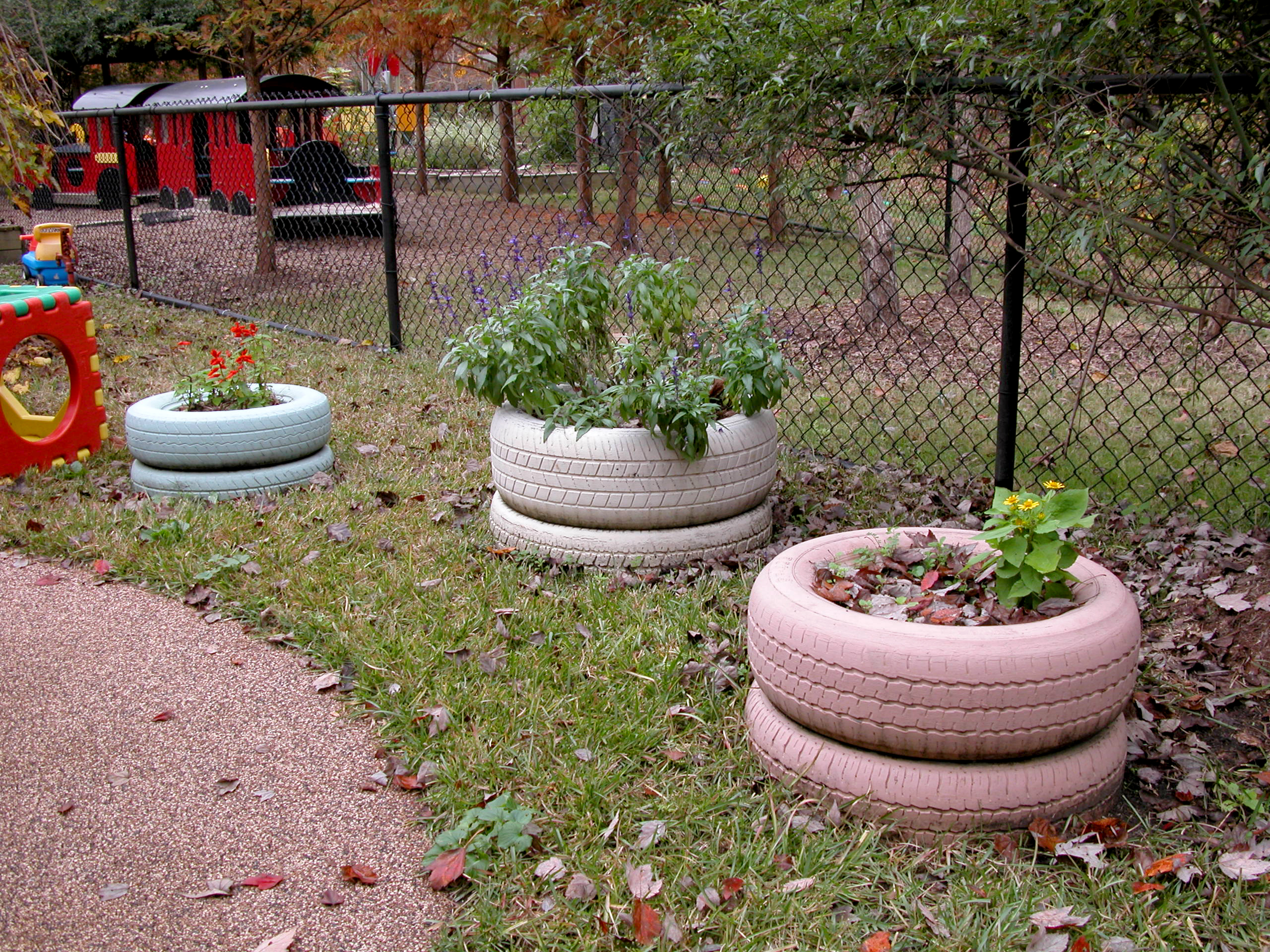
    Apply a layer of paint once the primer has dried. Commercial grade paint is best but any durable, non-toxic outdoor paint will do. When choosing paint, remember that black tires absorb sunlight and can get hot, which is not good for the plants or children. Painting tires with light colors reflects light and helps keep the plants and children cool. Be creative with decorations, and let the children help — they’ll enjoy the OLE “masterpieces.”

    Fill the tires with soil after choosing the location. Once filled with soil, they will be difficult to move. Add compost to the top layer of soil and mix.

    Plant heat-tolerant, non-edible annuals, and perennials to bring color and texture to the OLE. Don’t plant edibles in recycled tires. They degrade over time so plants may absorb chemicals from the rubber. Once planted, water frequently as plants are likely to dry out quickly.

    STACKED TIRE PLANTERS

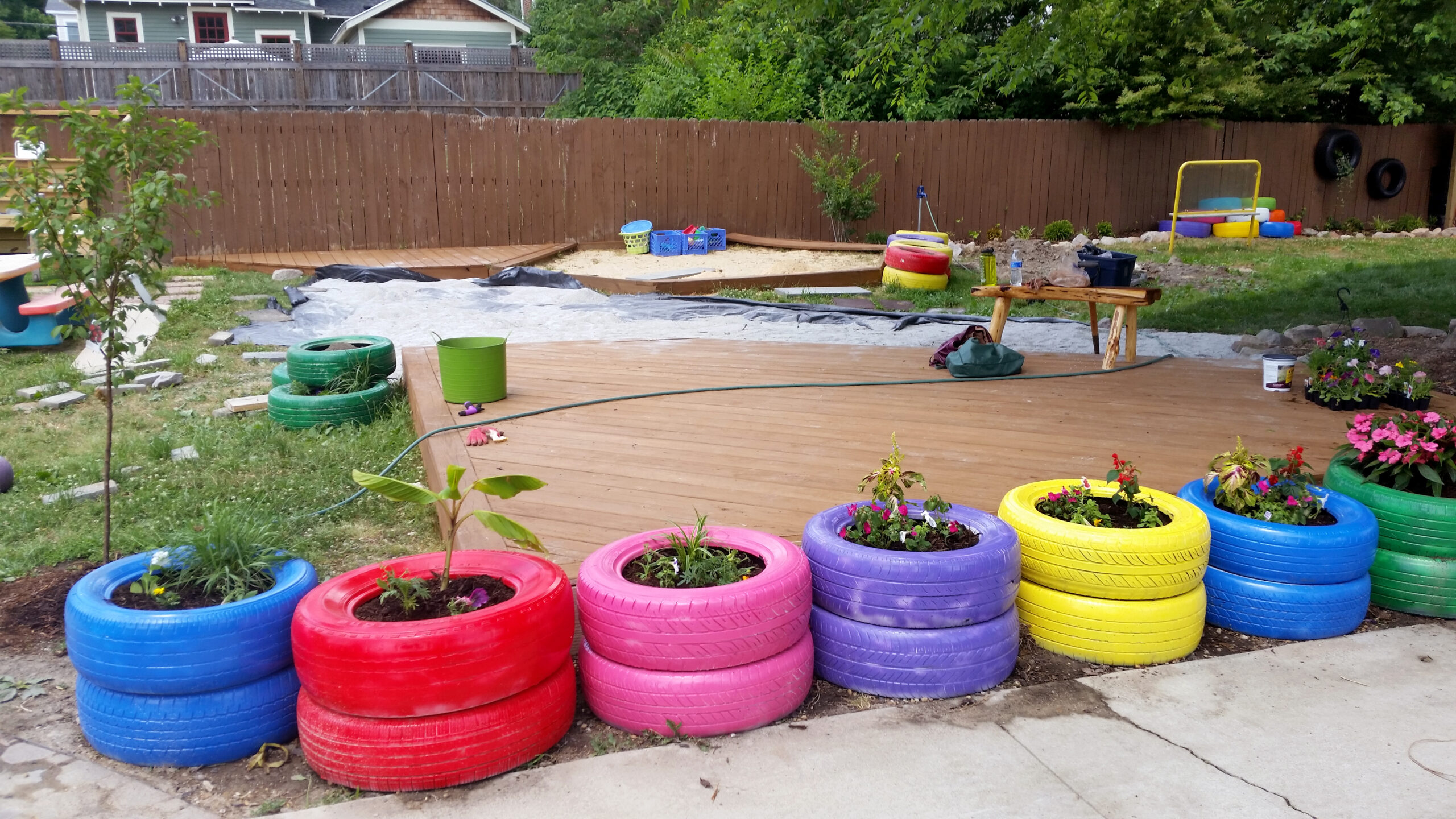
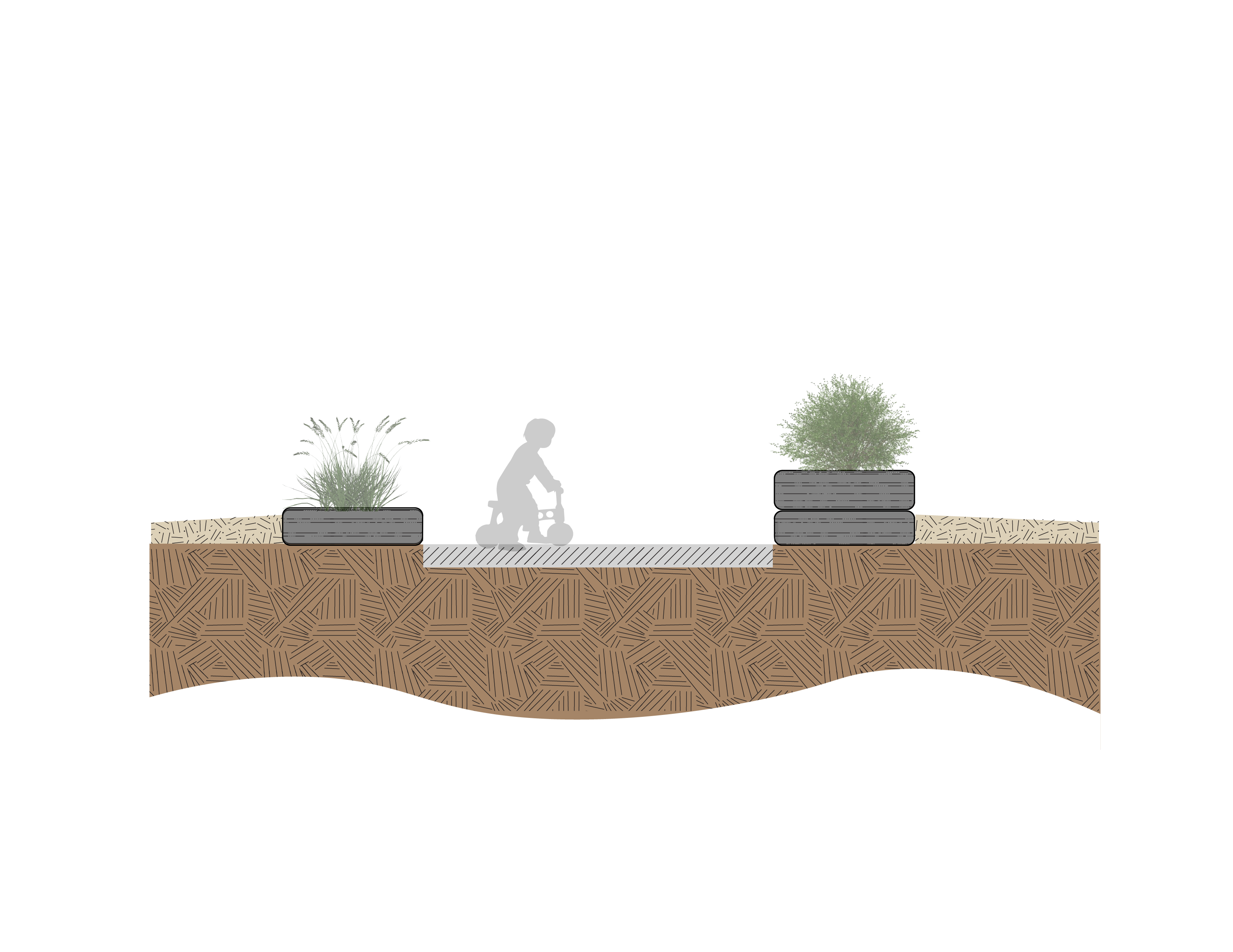
    Stacked tire planters can be used to edge a pathway, create screening, or otherwise define an outdoor space.

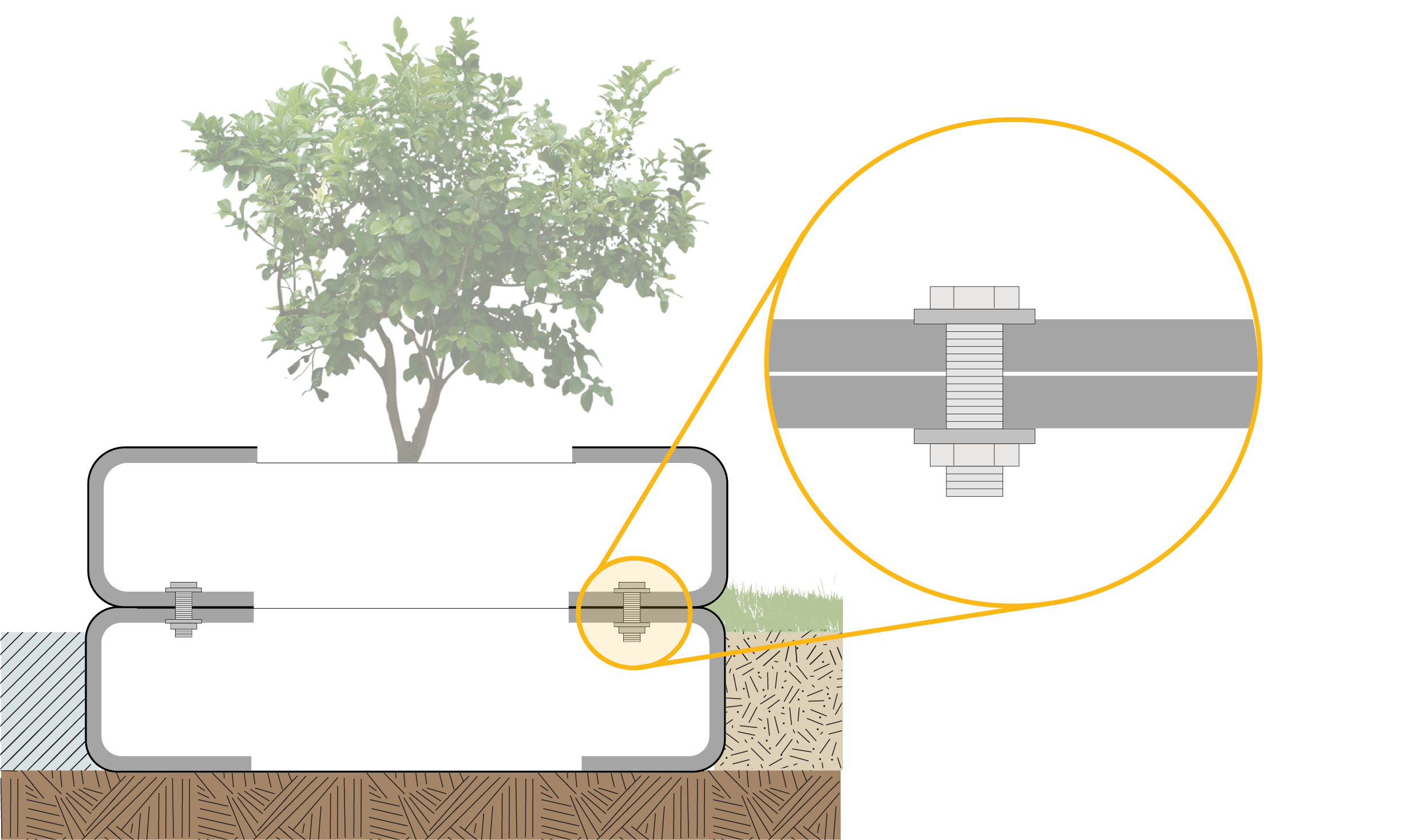
    Repeat steps above. Before filling with soil secure the tires together. Drill holes through the sidewalls and use three equidistant bolts, each paired with two washers and a nut to join them together. As stacked tires will require additional filler, use poorer grade soil, broken brick, stones, or gravel in a bottom layer if needed.

    TIRE PLANTERS ON HARDSCAPE

    For tire planters on top of hardscapes such as asphalt or concrete, line the inside bottom of the tire with landscape fabric before filling with soil to prevent it from “migrating” out of the bottom. Fabric can be held in place by heavy stones. Landscape fabric can be found at most local hardware stores.

    Resources

    • Old tires
    • Primer and non-toxic outdoor paint
    • Liquid soap and non-toxic degreaser
    • Garden soil and compost
    • Drill*
    • 2 washers*
    • Bolts and nuts*
    • Landscape/filter fabric**

    For stacked tires*For tires placed on hardscape surface**

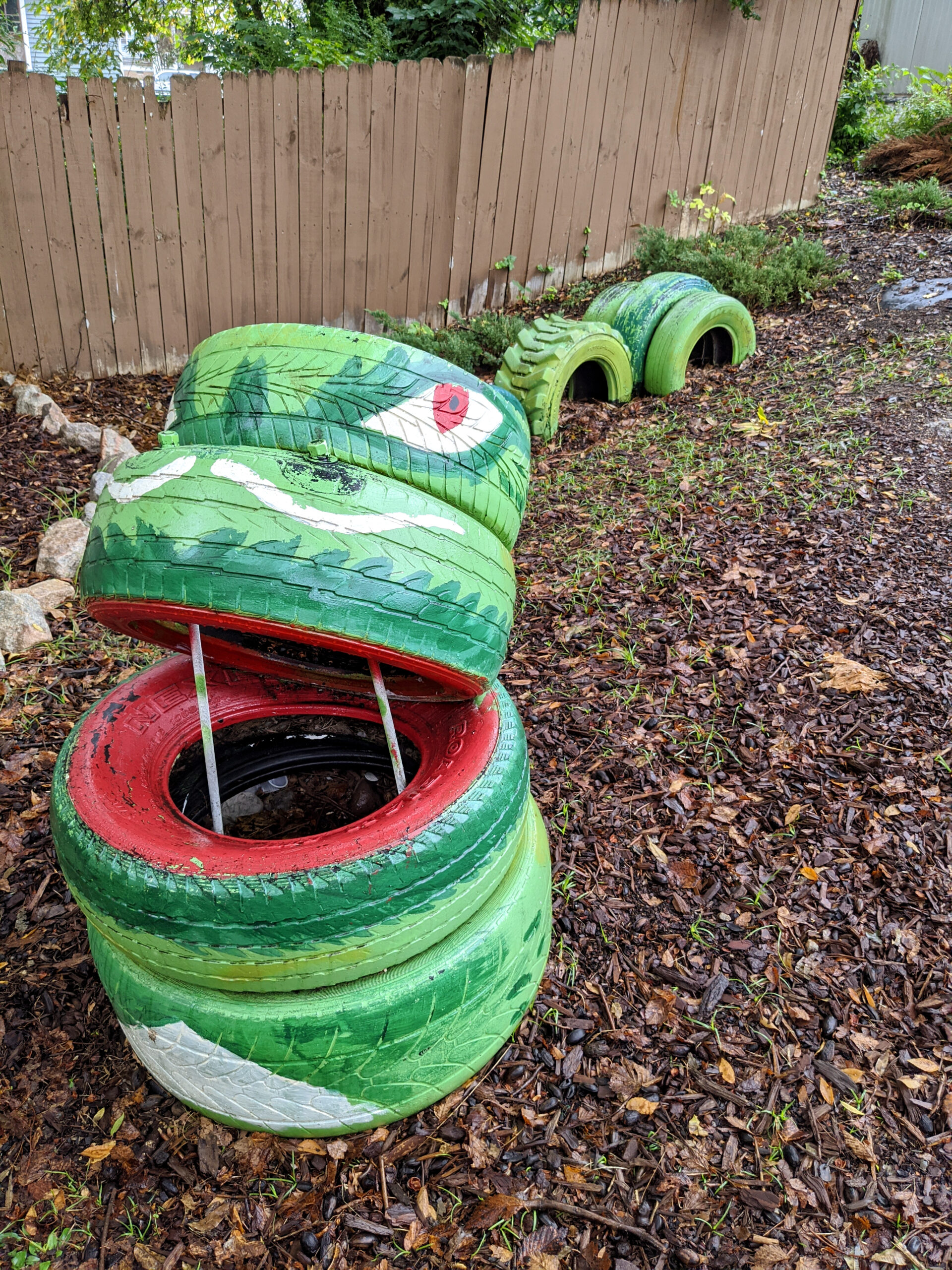
    recycled tires used to make a "dragon" shape

    A “dragon” made from recycled tires.

    tire planters used as a boundry

    Colorful stacked tire planters act as a boundary between play settings.

    children planting in different colored tires

    Children planting in painted tires.

    different colored tire planters

    Stacked tire planters painted in light colors.

    diagram showing how to secure stacked tire planters

    Bolt stacked tires together before filling with soil.

    diagram of using tire planters as edging

    Cross section of single and double tire planters used to edge a wheeled toy, primary pathway.

  • Having a Picnic

    The Green Desk

    Having a Picnic

    How can we eat outside and still meet licensing and/or ECERS requirements?

    We are concerned with hand washing, family style dining, etc. (Having a picnic can be a lot of fun.)

    From the North Carolina Rated License Assessment Project:
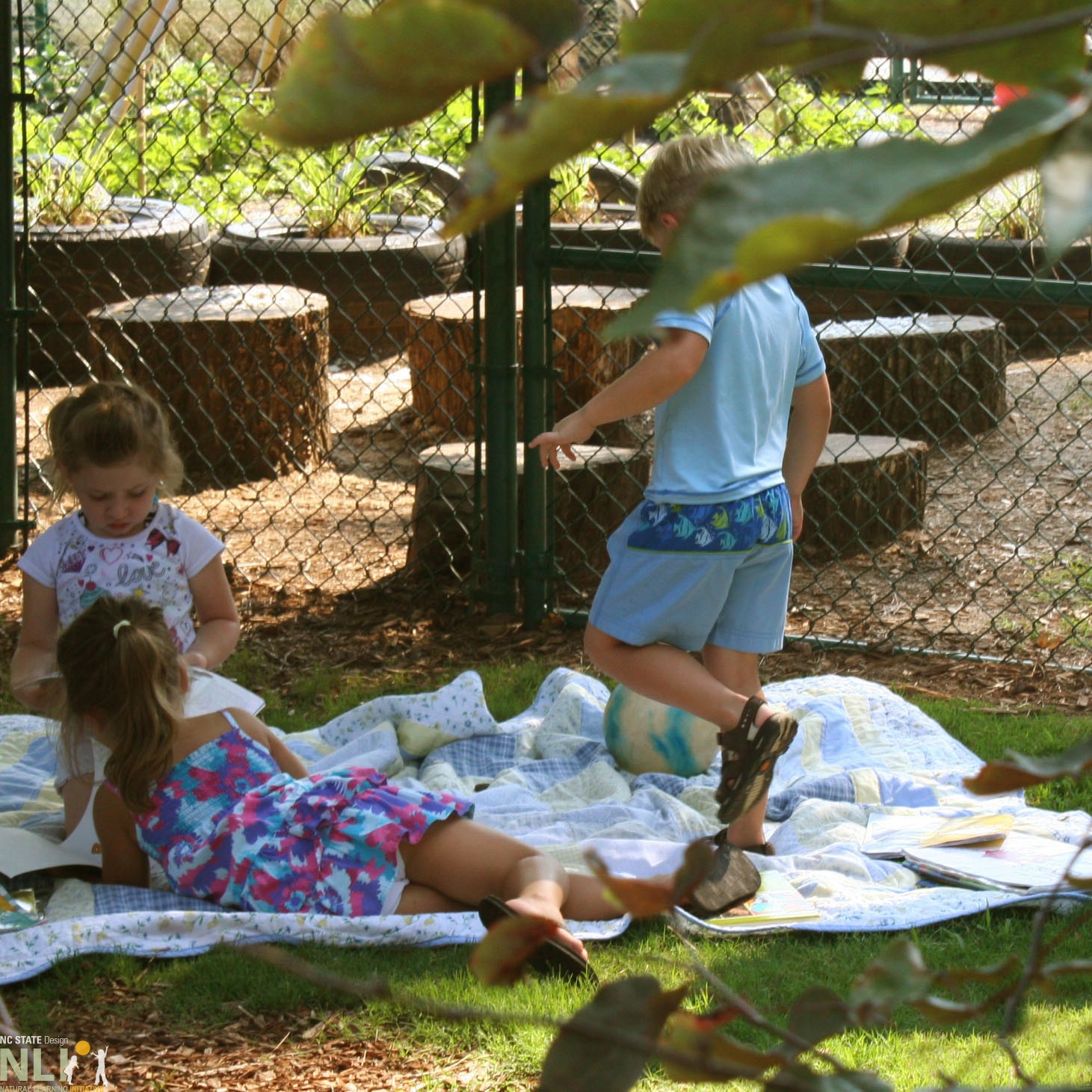
    All of the health requirements still apply for outdoors and since tables outside usually cannot be cleaned/sanitized properly, table cloths may be used to cover wooden picnic tables. Handwashing is required so programs may figure out a way to have running water outdoors or have the picnic first so children wash hands and head to the tables right away before playing. Remember that if having a picnic causes some challenges to the regular sanitation practices, a lower score on a single ERS item will not greatly impact the overall average score across all items. So, higher scores in other items will balance out a lower score in the meals/snacks item.

    From the North Carolina Division of Child Development and Early Education:
    Handwashing and a table cloth should address any licensing concerns.

    From the North Carolina Children’s Environmental Health Branch:
    When food service is provided in the OLE, food shall be protected, stored, prepared and served in accordance to 15A NCAC 18A.2806, 2807 & 2808. Employees and children shall wash their hands in accordance with 2803 and food service tables shall be cleaned or covered prior to use.

    children laying on blankets in the grass
    children having healthy snacks
    child eating a strawberry

    Overview from the North Carolina Outdoor Learning Environments Alliance:

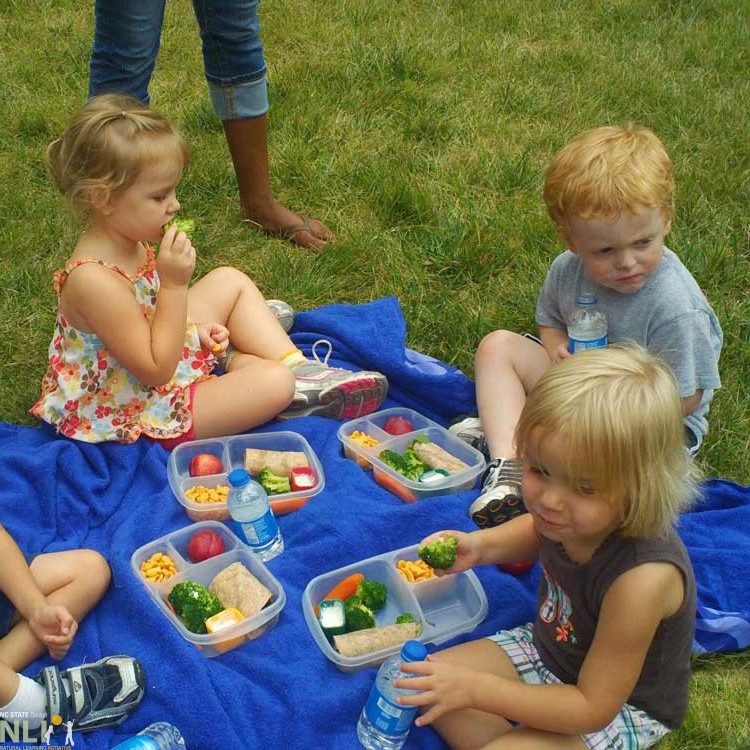
    Anything you can do inside, you can do outside – but it may take some planning and forethought to do it in an early care and education setting. Picnics are a good example. The good news is that once the system is worked out, it is easy to repeat and even make having a picnic a regular practice. We often rush through meal time to move on to the next activity. Just taking the care and time to be outdoors to eat creates a more relaxing environment for appreciating food. It is a wonderful way to have time for conversations about the things children are seeing and hearing and clean-up is much easier outdoors.

    *This post is from a series of FAQ about child care outdoor learning environment regulations in North Carolina. Please see the intro post, here, for more information.

  • Sittable Stones and Boulders

    The Green Desk

    Sittable Stones and Boulders

    What are some ways to improve an outdoor learning environment without breaking the bank?

    Stones and boulders are one of many easy and cost effective ways to improve an outdoor learning environment.

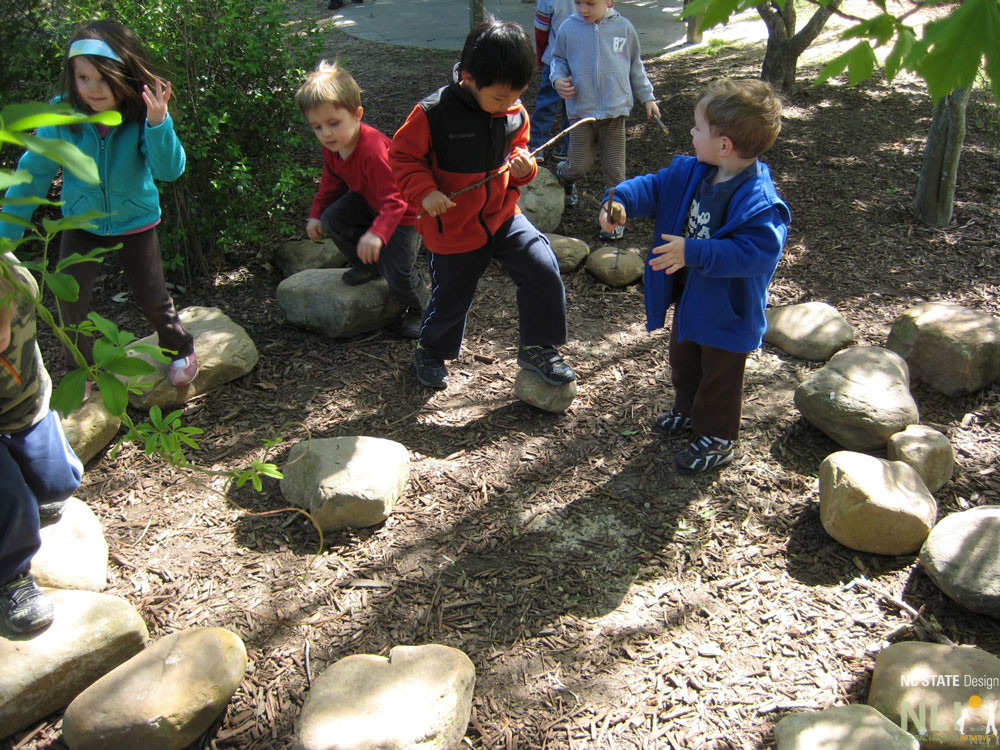
    Large stones = instant gathering place, council circle, or sitting nook. Smaller stones = a border for sand or earth play, or active science – turn over the rocks to see what lives underneath!

    Stones are valuable for their simplicity and variety of uses. When a child sees a collection of stones, what could it become? Perhaps a “secret” spot to chat with a friend, a place for balancing games, things to turn over and discover what’s underneath, a playhouse foundation, a challenge to roll along the ground and rearrange, a work surface for sorting seeds and leaves, or simply a resting spot.

    If you live in a rocky region, smooth, rounded stones may be easy to find. If not, they may add some cost to your installation. Either way, they last forever, and have many uses, including seating, climbing, loose parts, and path edging. It’s best to make sure they don’t have sharp edges. For more information, see our information sheet specifically on stones and boulders, coming soon to the Green Desk.

    children playing in a stone circle
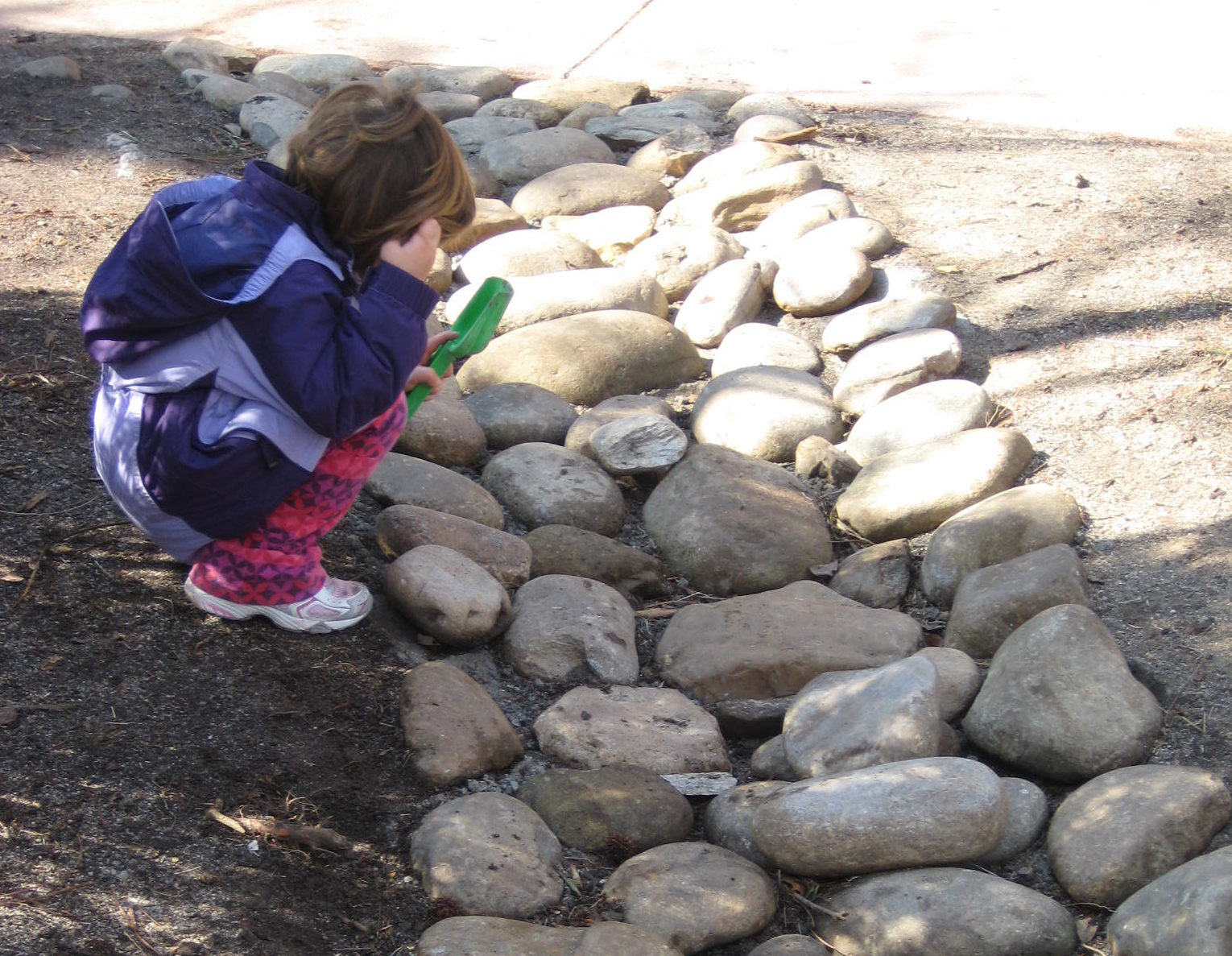
    child inspecting stones in a dry creek bed
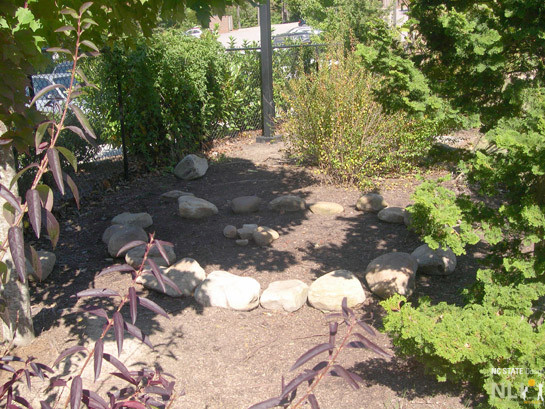
    circle of stones
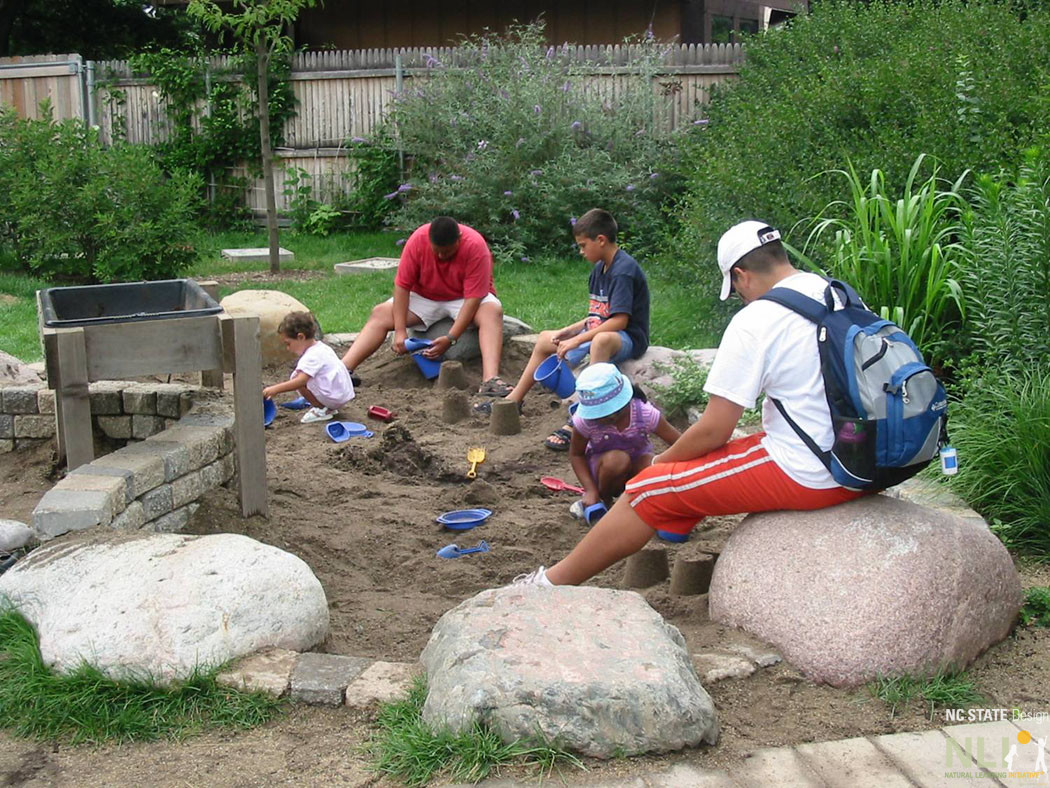
    people sitting on boulders and children engaging in earth play

    Download the PDF